2022 Nobel Peace Prize award violates the purpose of the prize
2022: Nobel Committee Gets Peace Prize Wrong Yet Again, https://davidswanson.org/2022-nobel-committee-gets-peace-prize-wrong-yet-again/ 7 Oct 22,
The Nobel Committee has yet again awarded a peace prize that violates the will of Alfred Nobel and the purpose for which the prize was created, selecting recipients who blatantly are not “the person who has done the most or best to advance fellowship among nations, the abolition or reduction of standing armies, and the establishment and promotion of peace congresses.”
With its eyes on the news of the day, there was no question that the Committee would find some way to focus on Ukraine. But it steered clear of anyone seeking to reduce the risk of that thus-far relatively minor war creating a nuclear apocalypse. It avoided anyone opposing both sides of the war, or anyone advocating for a ceasefire or negotiations or disarmament. It did not even make the choice one might have expected of picking an opponent of Russian warmaking in Russia and an opponent of Ukrainian warmaking in Ukraine.
Instead, the Nobel Committee has chosen advocates for human rights and democracy in Belarus, Russia, and Ukraine. But the group in Ukraine is recognized for having “engaged in efforts to identify and document Russian war crimes against the Ukrainian civilian population,” with no mention of war as a crime or of the possibility that the Ukrainian side of the war was committing atrocities. The Nobel Committee may have learned from Amnesty International’s experience of being widely denounced for documenting war crimes by the Ukrainian side.
The fact that all sides of all wars have always failed and always will fail to engage in humane operations is possibly why Alfred Nobel set up a prize to advance the abolition of war. It’s too bad that prize is so misused. Because of its misuse, World BEYOND War has created instead the War Abolisher Awards.
Are Putin’s nuclear threats really likely to lead to Armageddon?
The realities underlying the menacing vocabulary are a grey area – it is far from certain that Putin would be prepared to use nuclear weapons
Guardian, by Julian Borger in Washington, Sat 8 Oct 2022
The past week has seen a rapid escalation in nuclear rhetoric, beginning with Vladimir Putin’s threat to use “all forces and means” to defend newly seized territory in Ukraine and ending with Joe Biden’s warning of “Armageddon” if Russia crosses the nuclear Rubicon.
However, the realities underlying the menacing vocabulary are a far greyer area than the bluster suggests. It is far from certain that Putin would be prepared to be the first leader to use nuclear weapons in wartime since 1945, over his territorial ambitions in Ukraine. If his primary goal is to stay in power, that could be exactly the wrong way of going about it.
Even if he did issue the launch order, he has no guarantee it would be carried out. Nor can he be absolutely sure that the weapons and their delivery systems would work.
On the US side, despite the US president’s apocalyptic language at a private fundraiser on Thursday night, it is not at all inevitable that Washington would respond to Putin’s nuclear use with nuclear retaliation. Past wargaming suggests there would be vigorous debate within the administration to say the least.
Like US presidents, Putin is normally accompanied by an aide carrying a briefcase with codes used to authorise a nuclear launch. In the US it is called the football, in Russia it is the cheget. In the Russian system, the defence minister and the chief of the general staff have their own chegets but it is believed that Putin can order a launch without them.
However, the cheget is relevant for the strategic nuclear forces, the intercontinental ballistic missiles (ICBMs) launched from land or sea, or long-range bombers. Because they need to be launched within minutes in case of enemy attack, the warheads need to be deployed, mounted on the delivery systems.
Any nuclear use in Ukraine would be likely to involve non-strategic, or tactical, weapons with shorter-range delivery systems, and which are usually (but not necessarily) less powerful than strategic arms, though on average they are many times more powerful that the Hiroshima or Nagasaki bombs.
The US only has one kind of tactical weapon, the B61 gravity bomb, of which there are about a hundred in Europe and a similar number in the US, according to the Federation of American Scientists (FAS).
FAS estimates Russia has 2,000 tactical weapons, in very many shapes and sizes for use on land, sea and air. The weapons are not deployed on missiles or aircraft, but kept in bunkers in storage sites dotted around Russia. There are 12 national storage sites, known in Russian military parlance as “Object S”, one of which is in Belgorod, right on the Ukrainian border.
There are also 34 “base-level” sites, closer to the delivery systems. In a time of crisis, warheads would be moved from national to base-level sites – and up to now western intelligence agencies say no such movement has been observed.
Any such movement would be carried out by the 12th main directorate of the Russian armed forces, which has the job of storing and maintaining the warheads and then delivering them in specialised trains or trucks to base-level sites, or directly to the unit designated to launch them.
Pavel Baev, a military researcher who worked for the Soviet defence ministry, said that Putin cannot count on these weapons actually working.
“Most of these warheads stored there are very old,” Baev, now a professor at the Peace Research Institute Oslo, said. “Without testing it’s really hard to say how suitable they are because many of them are past their expiration date.”
Baev added that it was also far from clear that the Russian can successfully pair old warheads with the much newer delivery systems that would have to be used, possibly 9K720 Iskander or Kinzhal hypersonic missiles……………………………………………………………………………………………………………………………………….
The key question is more likely to be whether the US and its allies should respond with devastating conventional firepower, as Poland’s foreign minister, Zbigniew Rau, and the former CIA director David Petraeus have suggested. But that would transform the war into one between Russia and Nato, in which escalation to a nuclear exchange could become hard to stop.
According to Eric Schlosser, the author of a book about the nuclear establishment, Command and Control, the Pentagon’s Defence Threat Reduction Agency (DTRA) conducted another war game in 2019 focused on Russian nuclear use in Ukraine. That wargame appears to have been updated, suggesting it is in constant use. The results in 2019 are top secret, but as Schlosser wrote in the Atlantic, one of the participants told him: “There were no happy outcomes.” https://www.theguardian.com/world/2022/oct/07/biden-putin-nuclear-threats-tactical-strike-us-response-analysis
Liz Truss and Emmanuel Macron get together on promoting nuclear power, especially Sizewell C
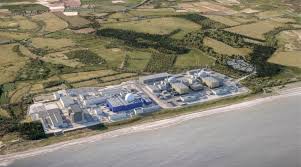

Sizewell C nuclear plant between Aldeburgh and Southwold will see joint
support from Liz Truss and Emmanuel Macron. Liz Truss and Emmanuel Macron
have agreed joint support for Sizewell C nuclear power plant. The pair
pledged to work closer on nuclear power and declared their cooperation for
the project, which is to be developed by French company EDF and will see
the plant built on the Suffolk coast between Aldeburgh and Southwold.
Suffolk News 7th Oct 2022
The UK prime minister and France’s president have confirmed joint support
for Sizewell C nuclear power plant. Liz Truss and Emmanuel Macron issued a
joint statement in which they said they were keen to advance cooperation,
on energy in particular. They pledged “full support” for the station set
for Suffolk’s coast, to be developed by French energy company EDF. The
leaders said they expected the “relevant bodies to finalise arrangements in
the coming month”.
BBC 6th Oct 2022
Liz Truss blocks a plan for UK citizens to reduce their energy use

How Liz Truss blocked Jacob Rees-Mogg’s energy-saving public information campaign.
Liz Truss is reported to have blocked the launch of a publicminformation campaign aimed at conserving energy, despite warnings that blackouts could be imposed in the UK if gas imports fall short this winter.
Business Secretary Jacob Rees-Mogg is understood to have backed a £15m “light touch” initiative, according to The Times, encouraging households to reduce their use of gas and electricity by taking a series of simple measures. However, Ms Truss is said to be “ideologically opposed” to such an approach as it could be too interventionist.
iNews 7th Oct 2022
https://inews.co.uk/news/liz-truss-jacob-rees-mogg-energy-saving-campaign-1899019
As France’s nuclear power production is failing, the government aims to cut the nation’s electricity consumption
France launched a national energy savings plan on Thursday, banking on a
push to turn off lights and lower thermostats to avoid power and gas cuts
over the winter. Although the country is less dependent on Russian gas than
eastern neighbours like Germany, French nuclear power production has
slumped as the sector struggles to bring more of its aging reactors online
out of forced maintenance. The government has set a target of cutting
France’s energy consumption 10% by 2024 from 2019 levels, a first step in a
longer-term plan to become carbon neutral by reducing energy use 40% by
2050.
Reuters 6th Oct 2022
No nuclear power ‘renaissance’ as Europe wrestles energy crisis
“Most efforts right now are based on developing renewables, that’s what you can see in the European strategy in response to the Russian crisis,” “Nuclear is still not a shared solution in Europe.”
Russian invasion of Ukraine sparks incremental shifts in divisive issue, but no major pivot seven months into fighting.
Aljazeera, By Joseph Stepansky 6 Oct 20226
Nuclear power, and the heavy safety baggage it carries, has long divided European opinion, with individual countries charting vastly divergent paths on the industry’s role in future energy sustainability and security plans.
The Russian invasion of Ukraine has again brought the atomic question to the fore, as nations scrambled for short-term solutions before winter sets in, as well as longer-term safeguards, to avoid similar energy upheavals in the years ahead.
But after eight months of fighting in Ukraine, and an energy crisis compounded most recently by the alleged sabotage of the arterial Nord Stream 1 and 2 Russia-to-Europe pipelines in the Baltic Sea, European governments long opposed to nuclear power have shown only incremental shifts in their attitudes, which have been informed by years of concerns about nuclear waste and safety.
A wider pivot has remained absent…………………..
Mark Hibbs, a Germany-based non-resident senior fellow at the Carnegie Endowment for International Peace, “I don’t see a major [nuclear power] watershed from what’s happening in Ukraine.”
Instead, the situation has reinforced some trends among countries already bought into nuclear energy, he said, while slowing some opponents’ phase-outs of the technology.
Europe’s nuclear hesitancy
Opposition to nuclear power, coupled with other factors, has created a 25 percent overall decline in electricity produced by splitting atoms in the 27-country European Union from 2006 to 2020, according to the bloc’s executive wing, the European Commission.
By 2020, the EU produced 24 percent of the bloc’s overall electricity from nuclear plants, with 13 countries operating nuclear reactors: France, Belgium, Germany, Bulgaria, the Czech Republic, Finland, Hungary, the Netherlands, Romania, Slovakia, Slovenia, Spain and Sweden.
Countries that already have nuclear power capacity, according to Hibbs, are likely to face the greatest demands in light of the conflict in Ukraine, particularly as typically 30- to 40-year power plant licences begin to expire.
“There will be pressure on European governments and industry to continue operating their nuclear power plants,” he said, adding that pressure will grow as the conflict stretches on…………………………………….
More recently, Greenpeace, an organisation that has long opposed nuclear power, has pointed to fighting around the Russian-seized Zaporizhzhia nuclear plant in Ukraine as an example of the ever-present danger of relying on nuclear as an energy source.
Denmark, Ireland and Serbia, countries that do not have nuclear power industries, have longstanding bans on developing the technology. Others, such as Greece, have avoided the technology for fear of natural disasters……………………………………………………………………………………..
No short-term solutions
Still, a more immediate pivot has been widely constrained by the reality that nuclear power’s ability to address Europe’s short-term energy challenges is “fairly limited”, according to Cobb.
“And the reason for that is, in most countries, nuclear operates in a baseload mode. So, it is already the case that nuclear plants tend to operate full-time,” he said. “They’re not like gas plants that operate at a peaking load, producing electricity, when demand is at the highest. They’re always operating”.
Meanwhile, developing new nuclear facilities remains a daunting, costly and years-long ambition, with a high barrier of entry, IDDRI’s Berghmans said.
“It’s a complex industry,” he said. “You need big infrastructure. You need to plan where you can put these facilities. You need nuclear know-how, which is not as widespread as it used to be in Europe.”
Proponents of new generation small modular reactors (SMRs), which can be built off-site and transported, have said the new technology could offer more efficient and cheaper development, although the plants are still years away from operating and have raised their own unique safety concerns.
And while nuclear power analysts have said the nuclear supply chain is generally more stable and easier to reroute than that of many fossil fuels, particularly natural gas, it does not come without its own Russia problems.
In 2020, EU utilities imported about 20 percent of their natural uranium, the fundamental resource needed to produce nuclear energy, from Russia. The bloc also received 26 percent of its enrichment services, the required process of altering uranium’s makeup before it can be used to create energy, from Russia, according to the European Atomic Energy Community (Euratom).
Bulgaria, the Czech Republic, Finland, Hungary, Slovakia and Ukraine also currently operate Russian-made nuclear reactors, raising questions about their long-term needs for specific Russian-made parts and services, according to an analysis by Matt Bowen and Paul Dabbar of Columbia University’s Center on Global Energy Policy.
To date, Russia’s nuclear industry has broadly escaped Western sanctions.
Recent outages at French power plants, because of maintenance, corrosion problems and heat stresses, have also reinforced longstanding hesitancy towards nuclear power, according to Carole Nakhle, the founder of the Crystol Energy consulting organisation.
“Mind you, one of the problems that the EU faced that made the current crisis even worse were the nuclear outages in France,” she told Al Jazeera. “France, which usually exports electricity, had to import this year because its power plants couldn’t keep up.”
Given the myriad challenges that continue to surround nuclear, governments are more likely to see renewable energies, such as wind and photovoltaic energy, as “more economical” alternatives to energy security and sustainability, according to Berghmans.
“Most efforts right now are based on developing renewables, that’s what you can see in the European strategy in response to the Russian crisis,” he said. “Nuclear is still not a shared solution in Europe.”
https://www.aljazeera.com/news/2022/10/6/europe-sees-shift-in-attitudes-no-nuclear-power—
‘We’re hunting them down and shooting them like pigs’: How the Ukrainians are taking brutal revenge on pro Russian collaborators.
By IAN BIRRELL FOR THE DAILY MAIL, 6 October 2022
When Russians took over the city of Balakliya, eastern Ukraine, they turned the central police station into a base for brutality.
During the six months it spent under enemy occupation, scores of local residents were locked in overcrowded cells in the basement. Survivors told of being dragged to a torture chamber where they were beaten, electrocuted and forced to endure mock executions.
The interrogations were carried out by officials from Russia’s Federal Security Service, according to documents retrieved after the town’s recapture last month during Ukraine’s stunning counter-offensive.
Yet the interrogators were helped by local stooges – such as Oleg Kalaida, the jobless former head of security at a chicken farm who found himself elevated to chief of police after agreeing to serve as a Kremlin henchman.
The horror stories emerging in liberated towns such as Balakliya, a railway hub of 30,000 people, have become hideously familiar in recent months: of Russian atrocities, mass graves, torture and war crimes. Yet the uncomfortable truth is that some Ukrainians have been assisting Vladimir Putin’s war crimes and theft of their land.
Videos from social media showed Russian troops lying face down in front of Ukrainian forces in amidst Ukraine counter-attack
Kyiv has already opened investigations into 1,309 suspected traitors and launched 450 prosecutions of collaborators accused of betraying their own nation and neighbours.
Others are being tracked down and slaughtered by resistance fighters. A list passed to this newspaper by a Kyiv government source identifies 29 such retribution killings, with 13 more assassination attempts that left some targets wounded.
‘A hunt has been declared on collaborators and their life is not protected by law,’ said Anton Gerashchenko, an adviser to the interior ministry. ‘Our intelligence services are eliminating them, shooting them like pigs.’……………………………………………..
Such killings are presumed to be the work of the resistance movement. Orchestrated by Ukraine’s special forces, it has become increasingly well organised. Recent fatalities include Ivan Sushko, a wedding toastmaster appointed mayor of a town in the Zaporizhzhia region, who died in August after his car was blown up.
The partisans seek to spread fear through such killings while destroying arms dumps, devastating infrastructure for supply lines and threatening residents working with the enemy.
In one town, activists posted pictures online of a local graveyard with names of collaborators pasted on headstones. Their birth dates are correct, but dates of deaths have been left blank.
The message from Ukraine’s leaders as their troops continue advancing along the battlefront is similarly stark. As deputy prime minister Iryna Vereshchuk said this week: ‘I have personal advice for collaborators: run away.’ https://www.dailymail.co.uk/news/article-11284819/How-Ukrainian-intelligence-chiefs-tracking-collaborators-worked-Russians.html
Russia’s €200m nuclear exports untouched by EU sanctions
euobserver, By INVESTIGATE EUROPE, BRUSSELS, 8 October 22,
“Russian nuclear terror requires a stronger response from the international community [including] sanctions on the Russian nuclear industry and nuclear fuel.” Those were the words Ukraine’s president Volodomyr Zelensky tweeted in August, after the shelling of a nuclear power plant in the country.
Since the beginning of Russia’s war in Ukraine, the European Union has passed multiple sanctions packages aimed at hurting the Russian economy and reducing its ability to finance the war. Sanctions have included personalities, products of all kinds, and of course, fossil fuels.
But so far, nuclear sanctions were always left out.
On Wednesday 28 September, history repeated itself again. The European Commission proposed another sanction package against Russia, the eighth since the beginning of the invasion. It includes additional trade restrictions and an oil price cap for third countries. But still nothing on nuclear cooperation with Russia and imports of Russian uranium, even if many called for it.……………………..
Europe’s dependency
The reason for this resistance can be explained in one word: dependence. So far, an import ban on uranium or other sanctions on the Russian nuclear energy sector has only been discussed in EU circles, but never formally proposed.
“The European Commission never proposed it because the impact would be stronger for some Eastern member states, that are heavily-dependent on Russian infrastructure and technologies, than for Russia itself,” one diplomatic source told Investigate Europe…………………….
In economic terms, the EU countries paid around €210m for raw uranium imports from Russia in 2021 and another €245m from Kazakhstan, where the uranium mining is controlled by Russian state-owned company Rosatom.
Raw uranium imports from Russia to EU utilities were 2,358 tonnes last year, almost 20 percent of all EU imports. Only Niger (24.3 percent) and Kazakhstan (23.0 percent) were bigger uranium trade partners, according to the 2021 annual report from the EU body, Euratom Supply Agency (ESA)………
France is the EU nation most reliant on nuclear energy…
Europe works closely with Russia for its nuclear energy production……..
The role of France
Many governments, first and foremost the French, have pushed for Germany to break their dependence on Russian natural gas. But its own dependency on Russian uranium is shrouded in silence.
France imports on average around 20 percent of the needed raw uranium from Kazakhstan, where the uranium mining is controlled by Rosatom, according to Le Monde.
Green MEP Michèle Rivasi, a strong opponent of nuclear energy, exemplifies the French-Russian nuclear connection by citing Henri Proglio, the former CEO of EDF, the French semi-public main electricity company, who sits on the international advisory board of Rosatom.
“If Macron had asked Proglio to resign, he would have done so of course,” she told Investigate Europe. French dependence is not only on uranium imports, but also on nuclear waste treatment and many other activities, she said.
MEP Christophe Grudler, of the Renew Europe party, supports the exclusion of nuclear activity from the EU sanctions. In his view, one cannot impose sanctions against Russian gas (there is no embargo planned yet, unlike for crude oil) and then against Russian uranium. Unless we want a general blackout, he says.
“We must not forget that the nuclear business is not only about the power plant,” Grudler told Investigate Europe. “It is also about steam turbines. One of the world’s leading players, if not the leading one, is the French technology [company] Arabelle. However, we should not forget that two thirds of the turbines are sold… to Rosatom.”
According to some French media reports at the start of the year, Rosatom was set to acquire a 20 percent stake in GEAST, the manufacturer of the Arabelle turbine for nuclear power plants………………………………………..
In the meantime, Europe will continue to feed Russia’s finances — while adopting sanctions to drain the Kremlin’s treasury. https://euobserver.com/world/156226
Britain’s new Energy Secretary suffering from the ‘nuclear fusion delusion’

In his speech to the 2022 Conservative Party Conference, the Britain’s
newly-appointed Energy Secretary has shown that, like those in office
before him, he too is suffering from the ‘fusion delusion’.
To the Nuclear Free Local Authorities (NFLA), the condition represents a mistaken
belief in someone in high political office that fusion can address the
nation’s future energy needs by providing access to cheap, green power in
defiance of the reality that the technology is far from being
scientifically certain, far from being economically viable, potentially
unsafe, too costly, and still comes with a legacy of nuclear waste – and
that it will in any case come decades too late to address Britain’s
immediate energy / cost-of-living crisis or the urgent need to curb carbon
emissions to arrest the worsening climate emergency.
In his first conference speech as Energy Secretary, Jacob Rees-Mogg lauded the merits of
fusion energy and announced that a new pilot plant will be established on
the site of the former West Burton A coal-fired power plant in
Nottinghamshire describing it as a ‘beacon of bountiful green
energy…proving the commercial viability of fusion energy to the world’.
NFLA 6th Oct 2022
Crops growing 30 miles outside of Chernobyl are still contaminated with dangerous levels of strontium .
https://www.washingtonpost.com/politics/2022/04/20/does-russia-sell-nearly-1-billion-uranium-us-year/ 7 Oct 22, Crops grown near Chernobyl are still contaminated, more than three decades after the worst nuclear disaster in history.
Almost half the grain analyzed by scientists in Ivankiv, about 30 miles from the power plant, showed levels of strontium 90 far above recommended levels.
It was also present at unsafe levels in firewood and wood ash used to fertilize crops.
The Ukrainian government stopped testing goods for strontium 90 in 2013.
A radioactive isotope, it collects in the teeth, bones and marrow like calcium, and can cause numerous kinds of cancer.
Black pigmentation in Chernobyl’s Eastern Tree Frogs

Chernobyl is spawning MUTANT frogs: Bizarre black amphibians are spotted near the nuclear plant – 36 years after its catastrophic meltdown
- Eastern tree frogs are meant to have bright green skin
- But scientists working near Chernobyl have found many with black skin
- They think the dark skin may have helped them to survive the exclusion zone
https://www.dailymail.co.uk/sciencetech/article-11290735/Chernobyl-spawning-MUTANT-frogs-Bizarre-black-amphibians-spotted-near-nuclear-plant.html By SHIVALI BEST FOR MAILONLINE and MICHAEL HAVIS, 7 October 2022
Mutant black frogs are spawning near the Chernobyl power plant, 36 years after its catastrophic meltdown unleashed one of the worst nuclear disasters in history.
Eastern tree frogs are meant to have bright green skin but scientists working near Chernobyl have found many with darker or black pigmentation.
In 1986, the site in northern Ukraine – then under Soviet rule – witnessed the largest release of radioactive material into the environment in human history.
Now scientists think the mutated frogs’ darker skin may have helped them survive in the exclusion zone, which today restricts access to 1,0000 sq miles around ground zero.
Germán Orizaola, a researcher at Spain’s University of Oviedo, who co-authored the new study, said: ‘We become aware of these frogs the very first night we worked in Chernobyl.
‘We were looking for this species near the damaged power plant and we detected many frogs that were just black.
‘We know that melanin is responsible for dark or black colouration in many organisms, including frogs.
‘At the same time, we know that melanin protects from the damage caused by different types of radiation, from UV to ionizing radiation – the kind at Chernobyl.’
For their study, Dr Orizaola and his co-author, Pablo Burraco, collected more than 200 male frogs from 12 different breeding ponds with different levels of radiation.
They found that frogs within the exclusion zone were much darker than those from outside it.
And though there was no correlation between the darkest frogs and the most irradiated places today, there was a correlation with the worst-affected places from the time of the accident.
In other words, the darker frogs had stood a better chance of survival when disaster struck in 1986, making them more numerous today.
Dr Orizaola said: ‘With this species it’s possible to find, under normal circumstances, a small percentage of frogs with unusual colouration.
UK government sees energy conservation measures as making Britain a ‘nanny state’
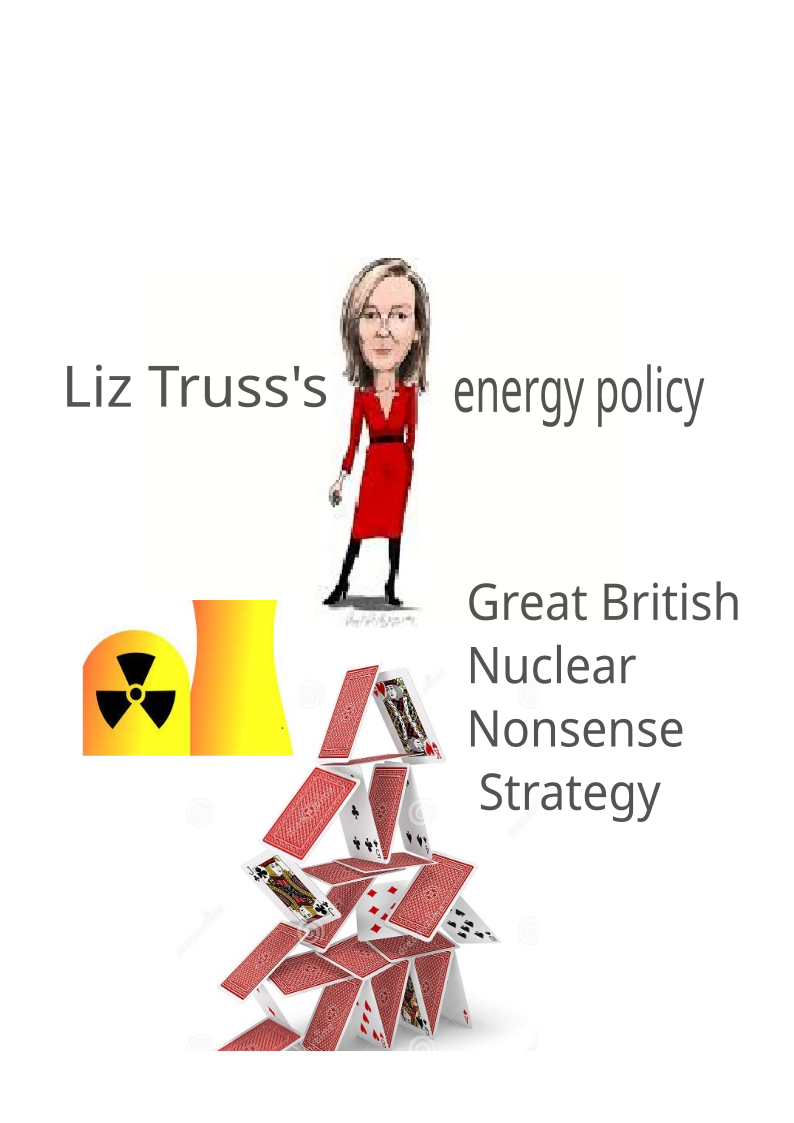
Liz Truss blocks energy saving campaign ‘on ideological grounds’.
Minister says government views public information campaign as ‘nanny
state’. Liz Truss has blocked plans for a public information campaign
asking people to save energy over the winter, reportedly because she is
“ideologically opposed” to the idea.
Ministers on Friday morning claimed
the idea was “nanny state” and confirmed that they would not be urging
people to keep an eye on their usage despite warnings from National Grid of
possibly rolling blackouts. Business secretary Jacob Rees-Mogg is said to
have been keen on a £15 million campaign as a relatively cost-effective
way of reducing the UK’s energy usage at a time of surging prices and
scarcity.
Independent 7th Oct 2022
Zaporizhzhia on the brink: How deteriorating conditions at the nuclear power plant could lead to disaster
Bulletin, By Zakhar Popovych, Denys I. Bondar, M.V. Ramana | October 7, 2022, Soon after it started its invasion of Ukraine on February 24, 2022, the Russian military occupied the southern part of the Zaporizhzhia region. The occupied area includes the territory of the Zaporizhzhia Nuclear Power Plant (NPP), the largest in Europe. During the summer, the area around the Zaporizhzhia NPP was hit multiple times by missiles and artillery. These affected all high-voltage electric power lines that connect the facility to the grid, so the plant was forced to work for some time in island mode, using the minimal power produced by one of the reactors to maintain functions essential to the plant’s safety. After the International Atomic Energy Agency (IAEA), the UN’s nuclear watchdog, conducted its inspection on September 1st, Ukrainian maintenance teams were allowed by the Russian military to repair the power lines and refill the diesel fuel storage tanks needed for emergency power generators. This made it possible to supply the facility with external power for the reactor cooling and other maintenance systems.
On September 10, the three of us had a conversation via Zoom with Pavlo Oleshuk, a representative of Atomprofspilka, the nuclear energy and industry workers’ union of Ukraine. Oleshuk is an experienced member of the team that operates the Rivne NPP in northwest Ukraine. As an organizer with the union, he has been in close and constant contact with the employees who directly operate the Zaporizhzhia NPP.
Oleshuk’s descriptions gave us new insight into the working and living conditions of his colleagues at the beleaguered plant. Such details have been otherwise difficult to get as plant operators have avoided talking in public ever since Russian forces seized the plant. Our discussion with Oleshuk lasted for more than two hours, and we offer here the main insights.
At the time we talked to Oleshuk, one of the reactors at the Zaporizhzhia NPP was still operating. However, shortly after our conversation, EnergoAtom, the Ukrainian state nuclear power plant operator, decided to shut down all reactors there. Despite this decision, there is a continued risk of a major nuclear incident as the plant requires permanent cooling. Furthermore, as our discussion with Oleshuk reveals, other factors exacerbate the fragility of the situation at the Zaporizhzhia NPP.
Context. Oleshuk began with a description of Zaporizhzhia NPP and the city of Energodar, which means literally “the gift of energy.”………………………………………………….
Working under threats and intimidation. The Zaporizhzhia NPP, the city of Energodar, and the surrounding areas have all been under Russian occupation for the past few months. According to Oleshuk’s sources at the plant, Russian armed forces first took control of the nearby territory and peacefully approached the personnel of the power plant claiming that they would not intervene with the operations of the plant. But once the armed forces entered the plant’s premises, so did personnel from the FSB—Russia’s principal security agency and successor to the old KGB—and a couple of experts from Rosatom, the Russian state nuclear energy corporation. …………………
For their part, the FSB personnel, unlike regular soldiers, violated the rules about who can access different areas of the plant and went everywhere within the premises, including inside radiation-controlled zones. But rather than taking control over the plant’s operations, the FSB agents seem to have been tasked with finding the so-called “ringleaders” who are organizing protests against the occupation ………………..
Over time, many more nuclear power plant workers have left Energodar for other cities that are still under the control of the Ukrainian government, creating a shortage of personnel at the Zaporizhzhia NPP. Even though some nuclear power plant maintenance functions can be carried out remotely, most cannot. As a result, there are concerns about the safety of these reactors and their associated systems.
Living without supplies. Because it is in Russian-occupied territory, residents of Energodar can no longer get their supplies from Ukraine-controlled territories, although they are located just across the Dnipro River. Instead, they must get them from other occupied territories—which means that even the supply of basic groceries is intermittent, with some food products simply no longer available………………….
Another major problem for the residents of Energodar is the collapse of utilities. ………………………
The supply of water supply has also become a problem since it relies exclusively on electric pumps and there are no water towers in Ukraine because the electricity supply was always considered to be reliable and abundant. ……………….
Outlook. With winter coming, the future is grim for the workers of the Zaporizhzhia NPP who still live in Energodar. Like other satellite cities, Energodar relies on the Zaporizhzhia NPP for most of its energy needs, including for heating……………………..
If both nuclear and thermal power plants cannot resume operation, then Energodar’s inhabitants will not be able to heat their living premises. The Ukrainian winter is cold with temperatures often being less than 20 degrees Celsius below zero (-4 degrees Fahrenheit). Plant workers don’t know how they will survive the winter.
Making an already desperate situation worse, there has been a loss of leadership and governance. The mayor of Energodar, Dmytro Orlov, was initially arrested by the Russians, but later managed to flee the city. The occupying forces did try to take over the city hall, but effectively the local authority has largely collapsed. The inhabitants are now left on their own.
According to Oleshuk, the situation is simply no longer tenable for the plant workers who are exhausted and stressed out. …………………more https://thebulletin.org/2022/10/zaporizhzhia-on-the-brink-how-deteriorating-conditions-at-the-nuclear-power-plant-could-lead-to-disaster/
First containers sealed into Dounreay low level waste vaults
First containers sealed into Dounreay low level waste vaults. Dounreay’s
waste team is carrying out the first in a series of campaigns to seal the
waste into place in the low level waste vaults.
As part of the waste disposal process, the spaces between the containers in the low level waste
vault are being filled with grout. The team undertook a series of trials to
confirm that the grout would readily flow between the containers and also
tested the membranes that will be used to seal the grout shutters. A first
campaign of grouting has now been completed within the vault and 16 waste
packages have been sealed into their final positions. Further grouting
campaigns of increasing size are planned.
NDA 5th Oct 2022
https://www.gov.uk/government/news/first-containers-sealed-into-dounreay-low-level-waste-vaults
The government’s price isn’t right for plutonium-contaminated land in Palomares (Almeria)
https://euroweeklynews.com/2022/10/07/the-governments-price-isnt-right-for-plutonium-contaminated-land-in-palomares-almeria/By Linda Hall • 07 October 2022
FIFTY-SIX years on, Palomares is still suffering the effects of its infamous “nuclear incident.”
This occurred on January 17 in 1966 when four unarmed thermonuclear bombs were released after two US aircraft crashed in mid-air over the Mediterranean.
One bomb was found far out to sea but three fell on Palomares, releasing plutonium and contaminating an area of two square kilometres. The US army decontaminated some of the land but much remains untreated.
Spain’s central government announced in early October that it would soon be completing its estimate of the value of the plutonium-affected properties it intends to acquire.
“This would appear to be the first step in the clean-up plan drafted more than 10 years ago,” provincial media sources said.
Buying up the land was in the public interest “to safeguard residents’ health and permit a close watch on the land”, the government said, allocating €345,127 for the compulsory purchase of 324,073 square metres of land.
According to the same sources, the 30 owners involved, who include developers and agricultural growers, dismissed the €1 per square metre compensation as “laughable.”
They maintained that this was particularly risible after Spain’s Energy, Environmental and Technological Research Centre (CIEMAT) recommended a price of €17 per square metre of rural land and €83 for building land in a 2007 report to the Nuclear Safety Council.
Most of the land in question is located within the Cuevas del Almanzora boundaries although five properties belong to Vera.


1 This Month





PLEASE OPPOSE HR 8255 AND S.3639 – bills would accelerate satellite deployment, with no environmental review or safeguards – https://ncstd5li.quorum.us/campaign/169331/
To see nuclear-related stories in greater depth and intensity – go to https://nuclearinformation.wordpress.com
-
Archives
- October 2026 (74)
- September 2026 (339)
- August 2026 (330)
- July 2026 (355)
- June 2026 (287)
- May 2026 (306)
- April 2026 (356)
- March 2026 (251)
- February 2026 (267)
- January 2026 (308)
- December 2025 (358)
- November 2025 (359)
-
Categories
- 1
- 1 NUCLEAR ISSUES
- business and costs
- climate change
- culture and arts
- ENERGY
- environment
- health
- history
- indigenous issues
- Legal
- marketing of nuclear
- media
- opposition to nuclear
- PERSONAL STORIES
- politics
- politics international
- Religion and ethics
- safety
- secrets,lies and civil liberties
- spinbuster
- technology
- Uranium
- wastes
- weapons and war
- Women
- 2 WORLD
- ACTION
- AFRICA
- Atrocities
- AUSTRALIA
- Christina's notes
- Christina's themes
- culture and arts
- Events
- Fuk 2022
- Fuk 2023
- Fukushima 2017
- Fukushima 2018
- fukushima 2019
- Fukushima 2020
- Fukushima 2021
- general
- global warming
- Humour (God we need it)
- Nuclear
- RARE EARTHS
- Reference
- resources – print
- Resources -audiovicual
- Weekly Newsletter
- World
- World Nuclear
- YouTube
-
RSS
Entries RSS
Comments RSS

