Putin ready for war with NATO and U.S.? Russia plans renewed offensive in Feb over tanks aid.
27 Jan 2023 Russia has warned U.S.-led West and NATO against escalating the conflict in Ukraine. Russian Deputy Ambassador to the OSCE Maxim Buyakevich said that the U.S. and NATO have approached a dangerous line on the way to a full-scale military conflict in Europe after the U.S. and Germany agreed to send modern battle tanks to Ukraine. “Their deliberate actions to escalate the military confrontation in Ukraine, provoking the regime to military action against the population of Russia with the use of Western heavy weapons and targeting based on NATO intelligence is a direct path to a full-scale military conflict in Europe, from which absolutely all residents of our continent will definitely lose.” said Buyakevich at the meeting of the OSCE Post Council. Meanwhile, Bloomberg reported that Russian President Vladimir Putin is preparing for a new offensive in Ukraine, which will be launched next month. Watch this video for more.
NATO’s ‘war against Russia’ inches ‘closer to direct conflict’

After all, it is mainly Ukrainians paying the price of the “war against Russia” fueled from afar.
“We are fighting a war against Russia,” the German Foreign Minister says, as the US and Germany authorize tank shipments, and new dangers, in the Ukraine proxy war.
Aaron Mate Substack 29 Jan 23
Since the first week of Russia’s invasion of Ukraine, French President Emmanuel Macron has repeated a mantra on behalf of his NATO partners: “We are not at war with Russia.”
Nearly one year in, that notion has officially been dispelled.
“We are fighting a war against Russia,” German Foreign Minister Annalena Baerbock said this week.
Baerbock was trying to assuage NATO allies’ frustration over German reluctance to send Leopard 2 tanks into Ukraine. She can now claim vindication. In a reversal of its initial position, the German government has announced it that will deliver Leopard 2 tanks to the Ukrainian army.
To overcome German Chancellor Olaf Scholz’s jitters, the White House engaged in an about-face of its own, approving the shipment of 31 US-made M1 Abrams tanks to Ukraine. …………………………………………………..
As Gen. Mark Milley learned when he came out in favor of diplomacy with Russia to end the fighting, the Pentagon’s outlook is no match for Washington’s proxy war fever. The White House reversed course, Politico notes, after “a parade of Democrats and Republicans” in Congress “pressured the Biden administration to grant Berlin’s request to send U.S. tanks first.” ……………………………
When President Biden overruled the Pentagon and unveiled the M1 approval, Austin stood by his side. “These tanks are further evidence of our enduring, unflagging commitment to Ukraine and our confidence in the skill of Ukrainian forces,” Biden declared.
Yet the publicly trumpeted US tank shipment comes with a quietly disclosed delay.
The M1s are “probably not for the near fight,” and in fact “are not likely to arrive for many months, if not years,” a US official told the Washington Post………………..
At this stage, NATO has pledged at least 105 tanks for Ukraine, well short of the 300 tanks that the head of Ukraine’s armed forces, Valerii Zaluzhnyi, has said are “urgent needs” to turn the tide………………………………………..

The F-16’s manufacturer, Lockheed Martin, is happy to oblige. Lockheed will be “ramping production on F-16s… to get to the place where we will be able to backfill pretty capably any countries that choose to do third party transfers to help with the current conflict,” Frank St. John, the military giant’s chief contracting officer, told the Financial Times. According to European officials, talks on such transfers are at an “early stage.”
Just as the prospect of diplomacy with Moscow is off-limits to Western policymakers, so is serious consideration of Russia’s response. The more advanced NATO weaponry pours in, the more that Russia will play its part in “permanent escalation”
Whatever the impact of the German tank shipments on the battlefield, their utility is not strictly military. By convincing Germany to send tanks for battle with Russian forces, the White House is advancing a goal that long predates the February 2022 invasion of Ukraine: undermine ties between Germany, Western Europe’s biggest power, and neighboring Russia, the United States’ biggest adversary.
……………………………………………………………………………………… “maintaining a powerful wedge between Germany and Russia is of overwhelming interest to the United States.”
………………………… Before Scholz caved to their pressure campaign, US officials noted that the German Chancellor “does not believe the world is ready to see German tanks near the borders of Russia, a reminder of the Nazi invasion in World War II,” according to the New York Times. Although the Times no longer allows itself to acknowledge it, there is another fraught historical irony: Germany is now sending tanks to a Ukrainian military that has formally incorporated what the Paper of Record once described as the “openly neo-Nazi” Azov Battalion.
……………………………. In seeking to force Germany to send its tanks into battle with Russia, the US wants Germany “to draw Russia’s counterfire,” German parliamentarian Sevim Dağdelen writes. “One cannot escape the impression that it is hoped a possible counterstrike would hit Berlin first and foremost. The United States would thus have achieved one of its long-term strategic objectives, namely to prevent cooperation between Germany and Russia for ever.” US officials, Dağdelen warns, are “forcing their ally, like a vassal, to sacrifice itself.”
Dağdelen’s characterization of the US use of Germany applies to Ukraine as well. According to Der Spiegel, Germany’s Federal Intelligence Service (BND) is “alarmed by the high losses of the Ukrainian army in the battle for the strategically important city of Bakhmut,” where a “three-digit number” of Ukrainian soldiers are losing their lives daily. Russia’s capture of Bakhmut, the BND warns, “would have significant consequences, as it would allow Russia to make further forays into the interior of the country.” Russian advances on Bakhmut follow a 300,000-plus troop mobilization that has “appeared to tilt the calculus of attrition in Moscow’s favor,” the Wall Street Journal notes.
Perhaps the coming influx of NATO tanks will reverse that trend. If not, the proxy war’s NATO architects can point to other victories: Russian forces depleted, Berlin-Moscow ties severed, and US dominance of NATO strengthened. After all, it is mainly Ukrainians paying the price of the “war against Russia” fueled from afar. https://mate.substack.com/p/natos-war-against-russia-inches-closer?utm_source=post-email-title&publication_id=100118&post_id=98811692&isFreemail=true&utm_medium=email
King Charles wants to honour nuclear test heroes but medals are being delayed by MoD red tape
King Charles wants Britain’s nuclear test heroes honoured before his coronation, but the MoD is accused of creating “unreasonable delay”
Mirror, By Susie Boniface. Reporter , 27 Jan 2023
King Charles wants to give a medal to Britain’s nuclear test heroes within months – but Ministry of Defence red tape could hold up the process for at least a year.
The King has told friends he has pencilled in a full “investiture” type ceremony in April, before his coronation.
But two months after Prime Minister Rishi Sunak announced a gong for victims of the Cold War radiation experiments, civil servants say it will take more than a year for the design of the medal to be signed off.
Alan Owen, whose dad died after witnessing 24 bombs in 78 days, said: ““It beggars belief that this country can organise a coronation in 8 months but we’ve been told it will take even longer to do one, simple, medal.
“It took them 70 years to get around to asking the monarch for what we should have had on day one. They know how to make medals, this is just another unreasonable delay by the MoD so that there are as few veterans as possible left to collect it.”
A source close to the King said: “His Majesty is taking a close interest in the issue of nuclear test veterans, and wants to see some form of official ceremony as soon as possible.
“He recognises that those who can be given it are not going to be around for long.
“His staff have pencilled in something for April, depending on approval from government.”…………………………………………….
The Mirror has campaigned for official recognition on their behalf for 40 years, and last year saw the first sign of change when the PM finally asked the King to approve a medal.
Cabinet Office staff have told campaigners that “the usual process” for medal design and delivery is handled by the MoD medal office according to “set procedures”.
It is understood they are still working out criteria, with no date for inviting applications, or for it to be made by the Royal Mint…………………………………….
Mr Sunak also promised a face-to-face meeting with veterans to discuss war pension reform, education packages, and missing records on nuked blood. Despite No10 acknowledging the request, no date has been set.
Campaigners have also been promised meetings with Office of Veterans Affairs staff to discuss grant applications to a £200,000 fund, but none have been arranged.
Labour’s Rebecca Long-Bailey, who campaigns for the veterans, said: “When he announced the medals, the PM witnessed their decades of pain and grief. The families wept as he promised them a meeting. They are still waiting, and time is running out. I urge the PM to meet us as soon as he can.” ………………………………………………
more https://www.mirror.co.uk/news/politics/breaking-britains-nuclear-test-veterans-28544461
UK’s ‘Protect and Survive’ nuclear attack advice deemed ‘futile’ in face of modern threats
The 32-page booklet Protect and Survive about what to do in the event of a nuclear attack was offered to the public in 1980. But it was widely criticised and mocked at the time, and has since been deemed nothing but a “charade”.
Express UK By RHIANNON DU CANN, Jan 29, 2023 “…………………………….. what should people do if the worst were to happen? Is there any official advice? Here, Express.co.uk looks at the UK’s last official piece of nuclear advice: a booklet titled Protect and Survive.
The booklet told the public “how to make your home and family as safe as possible under nuclear attack”. In the event of a crisis, the 32-page booklet would be distributed with announcements made on the TV, the radio, and in the press. The pamphlets and a series of public information films were only intended to be made known to the public in the event of a crisis. Some 2,000 copies of the pamphlets were sent to senior officials in the emergency services and local authorities.
The apocalyptical pamphlet — which described how no part of the UK would be considered safe in the event of a nuclear bomb or missile attack — advised the public to create a “fall-out room” and “inner refuge” to protect from radiation
The public was ordered to stay in the room furthest from the outside walls and roof for 14 days without leaving “at all”, essentially barricading themselves in to protect against the penetration of radiation. If possible, Britons were advised to build a “lean-to” inside using dense materials, again to resist radiation. If you lived in a flat of more than five floors, then you must head to the basement or ground floor.
Windows were to be painted with white emulsion to reflect the heat and advice was given on how to bury and label those who had died.
The public would be told to put together a survival kit which consisted of three and a half gallons of drinking water and some for washing; tinned or well-wrapped food to last for a fortnight; a portable radio (described as “only link to the outside world”); warm clothing; letter writing paraphernalia; tin and bottle openers
; crockery; bedding and toilet “articles”.
The booklet also included a checklist that asked questions such as “do you know the warning sounds?”; “have you got buckets of water ready on each floor?” and “have you sent the children to the fall-out room?”
The senior curator of the 2017 People Power: Fighting for Peace exhibit at the Imperial War Museum told The Times that year that the pamphlet was “chilling”.
Matt Brosnan said: “The matter-of-fact instructions are written so as to be easy to follow, yet never broach the underlying question that all readers would be likely to ask: in a nuclear strike, would most of this be futile?”……………………………………….more https://www.express.co.uk/news/uk/1727069/uk-protect-and-survive-booklet-nuclear-attack-advice-spt
USA tries to prevent a Russian offensive in Ukraine by offering a sort of war endgame deal with Russia
Crimea is a particular point of discussion. There is a widespread view in Washington and Kyiv that regaining Crimea by military force may be impossible. Any Ukrainian military advances this year in Zaporizhzhia oblast, the land bridge that connects Crimea and Russia, could threaten Russian control. But an all-out Ukrainian campaign to seize the Crimean Peninsula is unrealistic, many U.S. and Ukrainian officials believe. That’s partly because Putin has indicated that an assault on Crimea would be a tripwire for nuclear escalation.

By John Helmer, Moscow,26 Jan 23 http://johnhelmer.org/blinken-concedes-war-is-lost-offers-kremlin-ukrainian-demilitarization-crimea-donbass-zaporozhe-and-restriction-of-new-tanks-to-western-ukraine-if-there-is-no-russian-offensive/#more-70535
David Ignatius has been a career-long mouthpiece for the US State Department. He has just been called in by the current Secretary of State Antony Blinken to convey an urgent new message to President Vladimir Putin, the Security Council, and the General Staff in Moscow.
For the first time since the special military operation began last year, the war party in Washington is offering terms of concession to Russia’s security objectives explicitly and directly, without the Ukrainians in the way.
The terms Blinken has told Ignatius to print appeared in the January 25 edition of the Washington Post. The paywall can be avoided by reading on.
The territorial concessions Blinken is tabling include Crimea, the Donbass, and the Zaporozhye, Kherson “land bridge that connects Crimea and Russia”. West of the Dnieper River, north around Kharkov, and south around Odessa and Nikolaev, Blinken has tabled for the first time US acceptance of “a demilitarized status” for the Ukraine. Also, US agreement to restrict the deployment of HIMARS, US and NATO infantry fighting vehicles, and the Abrams and Leopard tanks to a point in western Ukraine from which they can “manoeuvre…as a deterrent against future Russian attacks.”
This is an offer for a tradeoff – partition through a demilitarized zone (DMZ) in the east of the Ukraine in exchange for a halt to the planned Russian offensive destroying the fortifications, rail hubs, troop cantonments, and airfields in the west, between the Polish and Romanian borders, Kiev and Lvov, and an outcome Blinken proposes for both sides to call “a just and durable peace that upholds Ukraine’s territorial integrity”.
Also in the proposed Blinken deal there is the offer of a direct US-Russian agreement on “an eventual postwar military balance”; “no World War III”; and no Ukrainian membership of NATO with “security guarantees similar to NATO’s Article 5.”
Blinken has also told the Washington Post to announce the US will respect “Putin’s tripwire for nuclear escalation”, and accept the Russian “reserve force includ[ing] strategic bombers, certain precision-guided weapons and, of course, tactical and strategic nuclear weapons.”
President Putin has offered a hint of the Russian reply he discussed with the Stavka and the Security Council last week.
Putin told a meeting with university students on Wednesday, hours after Blinken’s publication. “I think that people like you,” the president said, “most clearly and most accurately understand the need for what Russia is now doing to support our citizens in these territories, including Lugansk, Donetsk, the Donbass area as a whole, and Kherson and Zaporozhye. The goal, as I have explained many times, is primarily to protect the people and Russia from the threats that they are trying to create for us in our own historical territories that are adjacent to us. We cannot allow this. So, it is extremely important when young people like you defend the interests of their small and large Motherland with arms in their hands and do so consciously.”
Read on, very carefully, understanding that nothing a US official says, least of all through the mouths of Blinken, Ignatius, and the Washington Post is trusted by the Russians; and understanding that what Putin and the Stavka say they mean by Russia’s “adjacent historical territories” and the “small and large Motherland” has been quite clear.
Follow what Blinken told Ignatius to print, before Putin issued his reply. The propaganda terms have been highlighted in bold to mean the opposite — the public positions from which Blinken is trying to retreat and keep face.
January 25, 2023
Blinken ponders the post-Ukraine-war order
By David Ignatius
The Biden administration, convinced that Vladimir Putin has failed in his attempt to erase Ukraine, has begun planning for an eventual postwar military balance that will help Kyiv deter any repetition of Russia’s brutal invasion.
Secretary of State Antony Blinken outlined his strategy for the Ukrainian endgame and postwar deterrence during an interview on Monday at the State Department. The conversation offered an unusual exploration of some of the trickiest issues surrounding resolution of a Ukraine conflict that has threatened the global order.
Blinken explicitly commended Germany’s military backing for Ukraine at a time when Berlin is getting hammered by some other NATO allies for not providing Leopard tanks quickly to Kyiv. “Nobody would have predicted the extent of Germany’s military support” when the war began, Blinken said. “This is a sea change we should recognize.”
He also underlined President Biden’s determination to avoid direct military conflict with Russia, even as U.S. weapons help pulverize Putin’s invasion force. “Biden has always been emphatic that one of his requirements in Ukraine is that there be no World War III,” Blinken said.
Russia’s colossal failure to achieve its military goals, Blinken believes, should now spur the United States and its allies to begin thinking about the shape of postwar Ukraine — and how to create a just and durable peace that upholds Ukraine’s territorial integrity and allows it to deter and, if necessary, defend against any future aggression. In other words, Russia should not be able to rest, regroup and reattack.
Blinken’s deterrence framework is somewhat different from last year’s discussions with Kyiv about security guarantees similar to NATO’s Article 5. Rather than such a formal treaty pledge, some U.S. officials increasingly believe the key is to give Ukraine the tools it needs to defend itself. Security will be ensured by potent weapons systems — especially armor and air defense — along with a strong, noncorrupt economy and membership in the European Union.
The Pentagon’s current stress on providing Kyiv with weapons and training for maneuver warfare reflects this long-term goal of deterrence. “The importance of maneuver weapons isn’t just to give Ukraine strength now to regain territory but as a deterrent against future Russian attacks,” explained a State Department official familiar with Blinken’s thinking. “Maneuver is the future.”
The conversation with Blinken offered some hints about the intense discussions that have gone on for months within the administration about how the war in Ukraine can be ended and future peace maintained. The administration’s standard formula is that all decisions must ultimately be made by Ukraine, and Blinken reiterated that line. He also backs Ukraine’s desire for significant battlefield gains this year. But the State Department, Pentagon and National Security Council are also thinking ahead.
Crimea is a particular point of discussion. There is a widespread view in Washington and Kyiv that regaining Crimea by military force may be impossible. Any Ukrainian military advances this year in Zaporizhzhia oblast, the land bridge that connects Crimea and Russia, could threaten Russian control. But an all-out Ukrainian campaign to seize the Crimean Peninsula is unrealistic, many U.S. and Ukrainian officials believe. That’s partly because Putin has indicated that an assault on Crimea would be a tripwire for nuclear escalation.
The administration shares Ukraine’s insistence that Crimea, which was seized by Russia in 2014, must eventually be returned. But in the short run, what’s crucial for Kyiv is that Crimea no longer serve as a base for attacks against Ukraine. One formula that interests me would be a demilitarized status, with questions of final political control deferred. Ukrainian officials told me last year that they had discussed such possibilities with the administration.
As Blinken weighs options in Ukraine, he has been less worried about escalation risks than some observers. That’s partly because he believes Russia is checked by NATO’s overwhelming power. “Putin continues to hold some things in reserve because of his misplaced fear that NATO might attack Russia,” explained the official familiar with Blinken’s thinking. This Russian reserve force includes strategic bombers, certain precision-guided weapons and, of course, tactical and strategic nuclear weapons.
Blinken’s refusal to criticize Germany on the issue of releasing Leopard tanks illustrates what has been more than a year of alliance management to keep the pro-Ukraine coalition from fracturing. Blinken has logged hundreds of hours — on the phone, in video meetings and in trips abroad — to keep this coalition intact.
This cohesiveness will become even more important as the Ukraine war moves toward an endgame. This year, Ukraine and its allies will keep fighting to expel Russian invaders. But as in the final years of World War II, planning has already begun for the postwar order — and construction of a system of military and political alliances that can restore and maintain the peace that Russia shattered.
Click to follow Putin’s remarks in the official Kremlin translation.
Highlighted in bold type in Blinken’s text is the phrase, “a strong, noncorrupt economy and membership in the European Union”. This is Blinken’s message to the Kremlin that the US wants to preserve Ukraine’s agricultural economy, its grain export ports, and the trade terms agreed with the European Union before the war. It is also Blinken’s acknowledgement that Vladimir Zelensky’s move early this week to force the resignations and dismissals of senior officials means the US is calling the shots in Kiev and Lvov.
Nothing is revealed in Blinken’s offer “for the Ukrainian endgame and postwar deterrence” of how, and who on the US and Russian sides, to negotiate directly on the particulars. Instead, there is the hint that if the Russians agree to trust the Americans and delay the planned offensive, and if they allow the rail lines to remain open between Poland and Lvov, the Americans will reciprocate by keeping the Abrams and Leopard tank deliveries in verifiable laagers west of Kiev.
As Russian officials have been making clear for months, no US terms of agreement can be trusted on paper, and nothing at all which Blinken says. A well-informed independent military analyst comments on the Russian options: “The best response is continue the special military operation, destroy the Ukrainian military in their present pockets, complete de-electrification and destruction of the logistics, then either take everything east of the Dnieper or establish a de facto DMZ, including Kharkov. Blinken and the others cannot be trusted to follow through if they think they have a chance to stall for time. The Ukrainian Nazis are conspicuously absent from this proposal – and they remain to be dealt with. We know there will be no end to trouble if the Russian de-nazification objective against them stops now.”
Kramatorsk radiological accident

The Kramatorsk radiological accident was a radiation accident that happened in Kramatorsk, in the Ukrainian SSR from 1980 to 1989. A small capsule containing highly radioactive caesium-137 was found inside the concrete wall of an apartment building, with a surface gamma radiation exposure dose rate of 1800 R/year.[1] The capsule was detected only after residents requested that the level of radiation in the apartment be measured by a health physicist.[1]
The capsule was originally part of a radiation level gauge and was lost in the Karansky quarry in the late 1970s. The search for the capsule was unsuccessful and ended after a week. The gravel from the quarry was used in construction.[2] The caesium capsule ended up in the concrete panel of apartment 85 of building 7 on Mariyi Pryimachenk Street (at the time under the Soviet name Gvardeytsiv Kantemirovtsiv), between apartments 85 and 52.[1]
Over nine years, two families lived in apartment 85.[1] A child’s bed was located directly next to the wall containing the capsule.[1] The apartment was fully settled in 1980. A year later, an 18-year-old woman who lived there suddenly died. In 1982, her 16-year-old brother followed, and then their mother. Even after that the flat did not attract much public attention, despite the fact that the residents all died from leukemia. Doctors were unable to determine root-cause of illness and explained the diagnosis by poor heredity. A new family moved into the apartment, and their son died from leukemia as well. His father managed to start a detailed investigation, during which the vial was found in the wall in 1989.
By the time the capsule was discovered, four residents of the building had died from it and 17 more had received varying doses of radiation.[2] Part of the wall was removed and sent to the Institute for Nuclear Research, where the caesium capsule was removed, identified by serial number and disposed of.[1]
Zelenskyy demands more sanctions, as Ukraine reels from Russian bombardment; explosions heard near nuclear power plant
https://www.cnbc.com/2023/01/27/russia-ukraine-live-updates.html Ukraine is reeling from the most recent wave of Russian drone and missile strikes Thursday that killed at least 11 people and triggered emergency power outages in 10 regions of the country.
President Volodymyr Zelenskyy called for more sanctions on Russia in his nightly video address, and for a tribunal to address Russian war crimes.
The attacks came a day after Ukraine’s Western allies pledged to send the country battle tanks, opening up a new front in the types of weapons they are willing to provide in the fight against Russian forces.
Rolls Royce wants to make sure that the tax-payer cops the cost of their small nuclear reactor folly

Rolls-Royce calls on government for more clarity on nuclear. https://www.energylivenews.com/2023/01/26/rolls-royce-calls-on-government-for-more-clarity-on-nuclear/
Executives of the engineering giant have cited Britishvolt as an example of a company which committed to a factory without having orders.
Dimitris Mavrokefalidis
Rolls-Royce has urged the government to provide more clear vision of its target to roll out 24GW of nuclear power generation by 2050.
During a session at the House of Commons Welsh Affairs Committee, asked when Rolls-Royce will start the process of building its first Small Modular Reactor factory, Alastair Evans, Director of Corporate and Government Affairs at Rolls-Royce SMR, said: “If you look at the Britishvolt example, that is an example of a company that committed to a factory without orders. We don’t have clarity on orders in the UK.
“So, as soon as we have that clarity that the UK Government wants to deploy Rolls-Royce SMRs, we will be able to get the first factory moving, but our shareholders need that clarity. Britishvolt is a very good example of where you try and run a business and build a factory and get things moving without that certainty, orders and customers.”
A few days ago, company representatives visited the first four sites which have the potential to host 15GW of new nuclear power capacity.
Mr Evans confirmed that once Rolls-Royce receives the green light from the government, then the whole process around the development of its first SMR facility will accelerate.
He said: “That was the purpose of doing our planning processes, getting the selection of our heavy pressure vessel sites – we’ve got 600 people in the Rolls-Royce SMR business today. So we are set up to deliver at pace. We are 600 UK-based workers looking at manufacturing, assembly, lead skills, and module concept. We are ready to go.”
Campaigners fear changes at Hinkley Point C ‘could kill millions of fish every day’
By Burnham-On-Sea.com, January 27, 2023
Campaigners fear millions of fish could be killed every day by the Hinkley Point C nuclear power station near Burnham-On-Sea if owner EDF is allowed to back out of a planning condition.
The Stop Hinkley anti-nuclear group has said this week that EDF Energy had refused to fit acoustic fish deterrents on its two off-shore massive cooling water intake heads.
Stop Hinkley spokeswoman Katy Attwater said EDF now looked to be pressuring the Environment Agency to drop the planning condition which required the acoustic fish deterrent measures.
It comes as the Environment Agency launches a four-week consultation on whether the Hinkley C site’s operational water discharge activity permit should be varied.
Stop Hinkley Spokesperson Katy Attwater adds: “It looks to us very much like the Environment Agency is being forced to make a decision which conservation groups fear will result in the death of millions of fish every day.”
“The Severn Estuary supports some of the most important and protected habitats in the UK, EDF appears to be absolutely determined not to spend the money to install AFD’s and is pressurising the Agency into backing down.”
“This change would be disastrous for the Severn estuary and all the fish species it supports, to breed and travel into its tributaries, nine of the greatest rivers of England and Wales.”
However, Chris Fayers, Head of Environment for Hinkley Point C, told Burnham-On-Sea.com: “EDF has decades of experience and data gained from taking cooling water from the Bristol Channel, which shows the activity has an insignificant impact on protected species………… https://www.burnham-on-sea.com/news/campaigners-fear-changes-at-hinkley-point-c-could-kill-millions-of-fish-every-day/
Forgetting World War II, Germany joins in the frenzy of hostility to Russia
SCOTT RITTER: The Nightmare of NATO Equipment Being Sent to Ukraine

In a turn of events which must have Vasily Chuikov and the Soviet heroes to whom the Tiergarten war memorial was dedicated turning in their graves, the forces of fascism have once again reared their odious heads, this time manifested in a Ukrainian government motivated by the neo-Nazi ultra-nationalistic ideology of Stepan Bandera and his ilk.
The West’s recent approval of more military assistance for Kiev risks nuclear nightmare, fails Ukrainian expectations and rebukes the World War II history enshrined in a prominent Soviet war memorial in Berlin.
On Tuesday the White House decided that it would send about 30 M1 Abrams tanks to Ukraine, which was seen as political cover for Germany, which decided to ship 14 Leopard 2 tanks to Kiev.
By Scott Ritter, Consortium News 24 Jan 23
Early on the morning of May 2, 1945, General Vasily Chuikov, the commander of the Soviet 8thGuards Army, accepted the surrender of the German garrison of Berlin.
Two days prior, soldiers from the 150th Rifle Division, part of the Soviet 5th Shock Army, had raised the victory banner of the Red Army over the Reichstag. An hour after the banner went up, Adolf Hitler and his mistress, Eva Braun, committed suicide in his study inside the Furhrerbunker.
Chuikov, the hero of Stalingrad whose battered 62nd Army was renamed the 8th Guards Army in honor of their victory in holding that city in the face of a massive German onslaught, had led his troops into the heart of the Nazi capital, battling stubborn Nazi resistance in the Tiergarten district of Berlin, where the den of the Nazi beast was located. The Soviet general was rewarded for the courage and sacrifice of his soldiers by being in position to accept the German surrender.
In honor of this accomplishment, and the sacrifice it entailed, the Soviet Army inaugurated, in November 1945, a commemorative monument along the Tiergarten. Constructed from red marble and granite stripped away from the ruins of Adolf Hitler’s Neue Reichskanzlei (New Imperial Chancellery), the monument, consisting of a concave colonnade of six joined axes flanked by Red Army artillery and a pair of T-34 tanks, with a giant bronze statue of a victorious Red Army soldier standing watch from the center pylon.
From 1945 until 1993, when the Russian Army withdrew from Berlin, Soviet guards stood guard over the monument. Since that time, the monument has been maintained according to the terms of the German Reunification Treaty of 1990, which brought West and East Germany together in the aftermath of the fall of the Berlin Wall.
Carved into the granite of the monument, in Cyrillic letters, is an inscription that reads “Eternal glory to the heroes who fell in battle with the German fascist occupiers for the freedom and independence of the Soviet Union.”
In a turn of events which must have Vasily Chuikov and the Soviet heroes to whom the Tiergarten war memorial was dedicated turning in their graves, the forces of fascism have once again reared their odious heads, this time manifested in a Ukrainian government motivated by the neo-Nazi ultra-nationalistic ideology of Stepan Bandera and his ilk.
Bandera and his murderous movement had been physically defeated by Soviet forces in the decade following the end of the Second World War. However, its ideology survived in a western Ukrainian diaspora formed from the survivors of that movement who found safe haven in West Germany (where Bandera himself settled until assassinated by the Soviet KGB in 1959); Canada (where Chrystia Freeland, the granddaughter of a former publisher of pro-Bandera propaganda, currently serves as deputy prime minister), and the United States (where the followers of Stepan Bandera have constructed a “heroes park” outside Ellenville, New York, including a bust of Bandera and other neo-Nazi Ukrainian ultra-nationalists.)
The ideology also survived in the shadows of the western Ukrainian districts that had been absorbed by the Soviet Union following the dismemberment of Poland in 1939, and later, after the reoccupation of these territories by Soviet forces in 1945.
CIA-Funded Political Underground
Here, beginning in 1956, (following the de-Stalinization policies instituted by Soviet Premier Nikita Khrushchev in the aftermath of his “secret speech” to members of the Communist Party), thousands of members of the Ukrainian Insurgent Army (UPA)/Organization of Ukrainian Nationalists-Bandera (OUN-B), who had been arrested and convicted by Soviet authorities, were released from the Gulag and returned to their homes, ostensibly to be reintegrated into Soviet society. This reintegration never materialized, however.
Instead, Ukrainian fascists, funded by the C.I.A., operated as a political underground, running sabotage operations and fomenting anti-Soviet/anti-Russian ideology amongst a population where the precepts of Ukrainian nationalist ideology ran strong.
[Related: JOE LAURIA: On the Influence of Neo-Nazism in Ukraine]
Following the collapse of the Soviet Union, at the end of 1991, these Ukrainian nationalists emerged from the shadows and began organizing into political parties backed by gangs of violence-prone extremists who promulgated, through physical intimidation, a cult of personality built around the person of Stepan Bandera………………………………………………………………………… more https://consortiumnews.com/2023/01/24/scott-ritter-the-nightmare-of-nato-equipment-being-sent-to-ukraine/
Military offensives increase nuclear accident odds in Ukraine, warns atomic safety chief

Earlier this month, Petro Kotin, president of Ukraine’s state-run Energoatom nuclear operator, said a U.N. security buffer was not “realistic” and instead called for Ukraine’s forces to take the facility back by force.
But Grossi warned that any attack “puts the installation at great risk.”
Rafael Mariano Grossi wants ‘every’ EU country to push for a security buffer around the occupied Zaporizhzhia plant.
POLITICO, BY VICTOR JACK, JANUARY 25, 2023
The risk of an accident at Ukraine’s Russia-occupied Zaporizhzhia nuclear power plant will “undoubtedly” increase as both Kyiv and Moscow prepare for military offensives in the coming months, warned the chief of the U.N.’s nuclear watchdog.
“There is a lot of talk about bigger, larger maneuvers and action in the early spring or late winter,” Rafael Mariano Grossi, the International Atomic Energy Agency (IAEA) director general, told POLITICO, “which makes me think that any increase in bombing and shelling will undoubtedly increase the possibility of a nuclear accident.”
Russia is likely to launch a fresh push to take Ukrainian territory this spring, a top NATO official said last week, while Ukraine also says it is readying a major counter-offensive……………………………………….
Earlier this month, Petro Kotin, president of Ukraine’s state-run Energoatom nuclear operator, said a U.N. security buffer was not “realistic” and instead called for Ukraine’s forces to take the facility back by force.
But Grossi warned that any attack “puts the installation at great risk.”
He’s pressing for EU foreign ministers to get involved and use their “own channels of communication” with Ukraine and Russia to “pass the message … that avoiding a nuclear accident is a must” and a security zone is needed.
Grossi also addressed the increasingly frequent calls from Russian propagandists and some politicians that Moscow should respond to its battlefield setbacks by unleashing its nuclear weapons.
“I don’t see how a conventional war — no matter how dramatic it is — between a non-nuclear weapon state and a nuclear weapon state could … justify the use of nuclear weapons,” he said. https://www.politico.eu/article/ukraine-war-military-nuclear-accident-atomic-safety-chief-rafael-mariano-grossi/
The Nightmare of NATO Equipment Being Sent to Ukraine
By Scott Ritter, Consortium News 24 Jan 23“…………………………………………………………………………… What the West is Giving
Operational training, no matter how competently delivered and absorbed, does not paint an accurate picture of the true combat capability being turned over to Ukraine by the West. The reality is most of this equipment won’t last a month under combat conditions; even if the Russians don’t destroy them, maintenance issues will.
Take, for instance, the 59 M-2 Bradley vehicles being supplied by the United States. According to anecdotal information obtained from Reddit, the Bradley is, to quote, “a maintenance NIGHTMARE.”
“I can’t even begin to commiserate how f***ing awful maintenance on a Bradley is,” the author, a self-described U.S. Army veteran who served in a Bradley unit in Iraq, declared.
“Two experienced crews MIGHT be able to change one Brad’s track in 3 or 4 hours, if nothing goes wrong (something always goes wrong). Then you got the track adjuster arms, the shock arms, the roadwheels, the sprocket itself, that all need maintained and replaced as needed. I haven’t even started talking about the engine/transmission pack yet. When you do services on that, it’s not like you just raise the engine deck lid. You got to take the armor OFF the Bradley so an M88 Wrecker vehicle can use its crane to LIFT the engine/tranny out of the hull.”
The Stryker isn’t any better. According to a recent article in Responsible Statecraft, U.S. soldiers who used the vehicle in both Iraq and Afghanistan called the Stryker “a very good combat vehicle, so long as it traveled on roads, it wasn’t raining — and didn’t have to fight.”
The Stryker is also a difficult system to maintain properly. One of the critical features of the Stryker is the “height management system,” or HMS. In short, it is what keeps the hull from riding on the tires. A failure to constantly maintain and monitor the HMS system will result in the hull rubbing up against the tires, causing tire failure and a non-operable vehicle.
The HMS is complex, and a failure to maintain or operate one component will result in the failure of the entire system. The likelihood of the future Ukrainian operators of the Stryker properly maintaining the HMS under combat conditions is near-zero — they will lack the training as well as the “logistical support” necessary (such as spare parts).
The German Marder IFV appears to represent a similar maintenance headache for the Ukrainians: according to a 2021 article in The National Interest, “The vehicle was considered unreliable from the outset: Tracks rapidly wore out, transmissions often failed, and soldiers could not easily remove the vehicle’s engine for field maintenance.”
While Germany is preparing to invest a significant amount of money to upgrade the Marder, this hasn’t yet been done. Ukraine is inheriting an old weapons system that brings with it a considerable maintenance problem Ukraine is not prepared to properly handle.
The German Marder IFV appears to represent a similar maintenance headache for the Ukrainians: according to a 2021 article in The National Interest, “The vehicle was considered unreliable from the outset: Tracks rapidly wore out, transmissions often failed, and soldiers could not easily remove the vehicle’s engine for field maintenance.”
While Germany is preparing to invest a significant amount of money to upgrade the Marder, this hasn’t yet been done. Ukraine is inheriting an old weapons system that brings with it a considerable maintenance problem Ukraine is not prepared to properly handle.
The Swedish CV 90 saw some limited combat in Afghanistan when deployed with the Norwegian Army. While there is not enough publicly available data about the maintainability of this system, one only needs to note that even if the SV 90 proves easy to maintain, it represents a completely different maintenance problem from that of the Bradly, Stryker, or Marder.
In short, to properly operate the five battalion-equivalents of infantry fighting vehicles being supplied their NATO partners, Ukraine will need to train its maintenance troops on four completely different systems, each with its own unique set of problems and separate logistical/spare part support requirements.
It is, literally, a logistical nightmare that will ultimately prove to be the Achilles heel of the Ramstein tranche of heavy equipment.
But even here, neither NATO nor Ukraine seems able to see the forest for the trees. Rather than acknowledging that the material being provided is inadequate to the task of empowering Ukraine to carry out large-scale offensive operations against Russia, the two sides began haranguing each other over the issue of tanks, namely the failure of Germany to step up to the plate in Ramstein and clear the way for the provision to Ukraine of hundreds of modern Leopard 2 main battle tanks.
German History & Optics
The Ramstein meeting was hampered by concern within the German Parliament over the optics associated with Germany providing tanks which would be used to fight Russians in Ukraine……………………………………………………………………….
The Consequences for Ukraine
The reality is, however, that the consequences of the Ramstein Contact Group’s work will be far more detrimental to Ukraine than Russia.
The reality is, however, that the consequences of the Ramstein Contact Group’s work will be far more detrimental to Ukraine than Russia.
Under pressure from the West to carry out a major offensive designed to expel Russian forces from the territories captured last year, General Zaluzhnyi will be compelled to sacrifice whatever reserves he would be able to assemble in the aftermath of Ramstein for the purpose of engaging in fruitless attacks against a Russian opponent that is far different from the one Ukraine faced in September and October of last year……………….
Today, Russia’s military presence in Ukraine is a far cry from what it was in the autumn of 2022. In the aftermath of Putin’s September 2022 decision to mobilize 300,000 reservists, Russia has not only consolidated the frontline in eastern Ukraine, assuming a more defensible posture, but also reinforced its forces with some 80,000 mobilized troops, allowing for Russia to sustain offensive operations in the Donetsk regions while solidifying its defenses in Kherson and Lugansk.
……….. Moving forward, Russia will be waging war by the book. Defensive positions will be laid in a manner designed to defeat concerted NATO attack, both in terms of troop density along the frontline, but also in depth………………………………………………..
While the modern-day soldiers of the 8th Guards Army may not be mounting a new generation of tanks on display in the Berlin Tiergarten, rest assured they know fully well their historical legacy and what is expected of them.
This, more than anything else, is the true expression of the Ramstein effect, a cause-effect relationship that the West does not seem either able or willing to discern before it is too late for the tens of thousands of Ukrainian soldiers whose lives are about to be sacrificed on an altar of national hubris and ignorance.
Scott Ritter is a former U.S. Marine Corps intelligence officer who served in the former Soviet Union implementing arms control treaties, in the Persian Gulf during Operation Desert Storm and in Iraq overseeing the disarmament of WMD. His most recent book is Disarmament in the Time of Perestroika, published by Clarity Press. https://consortiumnews.com/2023/01/24/scott-ritter-the-nightmare-of-nato-equipment-being-sent-to-ukraine/
WikiLeaks cables reveal NATO intended to cross all Russian red lines
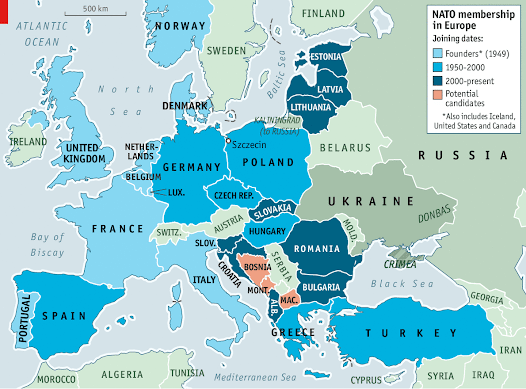
“Ukraine was the line of last resort that would complete Russia’s encirclement”
the political West invested hundreds of billions of dollars in turning Ukraine into a fervently Russophobic country, effectively becoming a giant military springboard aimed against Moscow.
http://space4peace.blogspot.com/2023/01/wikileaks-cables-reveal-nato-intended.html By Drago Bosnic (Independent geopolitical and military analyst) , SouthFront 25 Jan 23
For nearly a year, the massive Western propaganda machine has been manipulating its audience into believing the “Russia’s unprovoked aggression in Ukraine” narrative. The “reporting” can be crudely boiled down to the following: “On February 24, bloodthirsty Kremlin dictator Putin got up on the wrong side of the bed and decided to attack the nascent beacon of freedom and democracy in Kiev.” This is mandatory in virtually all Western mainstream media and any attempt to even think of questioning it results in immediate “cancellation”. Propagandists posing as “pundits” flooded political talk shows with the task of presenting decades of unrelenting NATO expansion as irrelevant to Russia’s reaction.
However, WikiLeaks, an organization the United States has been trying to shut down for well over a decade, including through the horrendous treatment of its founder Julian Assange, published secret cables showing this narrative couldn’t possibly be further from reality. Data indicates that American officials weren’t only aware of the frustration NATO expansion caused in Moscow, but were even directly told it would result in Russia’s response. And while the US often insists that the current crisis is a result of Vladimir Putin’s alleged desire to “rebuild the Russian Empire”, WikiLeaks reveals that even his predecessor Boris Yeltsin, infamous for his suicidal subservience to Washington DC, warned against NATO expansion.
For approximately three decades, consecutive US administrations were explicitly warned that Ukraine’s NATO membership would be the last straw for Moscow. Numerous Russian officials kept cautioning this would destabilize the deeply divided post-Soviet country. These warnings were made both in public and private, and were reiterated by other NATO members, geopolitical experts, Russian opposition leaders and even some American diplomats, including a US ambassador in Moscow. Yeltsin once told former president Bill Clinton that NATO expansion was “nothing but humiliation for Russia if you proceed”. Clinton, infamous for his aggression on Yugoslavia, ignored the warning and by 1999, less than a decade after the “not an inch to the east” promise was made, most of Eastern Europe was in NATO.
Despite this encroachment, Vladimir Putin still tried to establish closer ties with the political West, ratified START II and even offered to join NATO. America responded with unilateral withdrawal from key arms control treaties and color revolutions in Moscow’s geopolitical backyard. By the mid-2000s, Russia was flanked by two hostile US-backed regimes on its southern and western borders (Georgia and Ukraine). Major NATO members, such as Germany and France, warned this would lead to an inevitable response from Moscow. A WikiLeaks cable dated September 2005 reads:
“[French presidential advisor Maurice] Gourdault-Montagne warned that the question of Ukrainian accession to NATO remained extremely sensitive for Moscow, and concluded that if there remained one potential cause for war in Europe, it was Ukraine. Some in the Russian administration felt we were doing too much in their core zone of interest, and one could wonder whether the Russians might launch a move similar to Prague in 1968, to see what the West would do.”
WikiLeaks further reveals that German officials reiterated similar concerns about Russia’s reaction to NATO expansion into Georgia and Ukraine, particularly the latter, with diplomat Rolf Nikel stating: “While Georgia was ‘just a bug on the skin of the bear,’ Ukraine was inseparably identified with Russia, going back to Vladimir of Kiev in 988.” Another cable dated January 2008 says that “Italy is a strong advocate” for NATO enlargement, “but is concerned about provoking Russia through hurried Georgian integration.” Norwegian Prime Minister Jonas Gahr Stoere made similar remarks, an April 2008 cable indicates. Despite believing Russia shouldn’t have a saying in NATO, he said that “he understands Russia’s objections to NATO enlargement and that the alliance needs to work to normalize the relationship with Russia.”
n the US, even some high-level government officials made nearly identical assessments. WikiLeaks reveals that these warnings were presented to Washington DC by none other than William Burns himself, former US Ambassador to Russia and the current CIA chief. According to a cable dated March 2007, Burns said: “NATO enlargement and US missile defense deployments in Europe play to the classic Russian fear of encirclement.” Months later, he stated: “Ukraine’s and Georgia’s entry represents an ‘unthinkable’ predicament for Russia and Moscow would cause enough trouble in Georgia and continued political disarray in Ukraine to halt it.” Interestingly, Burns also assessed that closer ties between Russia and China were largely the “by-product of ‘bad’ US policies” and were unsustainable “unless continued NATO enlargement pushed Russia and China even closer together.”
In February 2008, Burns wrote: “Experts tell us that Russia is particularly worried that the strong divisions in Ukraine over NATO membership, with much of the ethnic-Russian community against membership, could lead to a major split, involving violence or at worst, civil war. Russia would then have to decide whether to intervene; a decision Russia does not want to have to face.”
Another cable dated March 2008 stated that “opposing NATO’s enlargement to Ukraine and Georgia, was one of the few security areas where there is almost complete consensus among Russian policymakers, experts and the informed population.” One defense expert stated that “Ukraine was the line of last resort that would complete Russia’s encirclement” and that “its entry into NATO was universally viewed by the Russian political elite as an unfriendly act.” Dozens of other cables make nearly identical assessments of radical changes in Russia’s foreign policy if NATO encroachment were to continue.
However, the vast majority of US officials, regardless of the administration, simply dismissed all warnings, repeatedly describing them as “oft-heard, old, nothing new, largely predictable, familiar litany and rehashing that provided little new substance.” Astonishingly, even the aforementioned Norway’s understanding of Moscow’s objections was labeled as “parroting Russia’s line”. While many German officials warned that the east-west split within Ukraine made the idea of NATO membership “risky” and that it could “break up the country”, US officials insisted this was only temporary and that it would change over time.
And indeed, the political West invested hundreds of billions of dollars in turning Ukraine into a fervently Russophobic country, effectively becoming a giant military springboard aimed against Moscow. NATO regularly conducted exercises, maintained an extensive presence, and even planned to make it permanent with at least several land and naval bases under construction in the country at the time when Russia launched its counteroffensive. In 2019, RAND Corporation, a well-known think tank funded by the Pentagon, published a report which focused on devising strategies for overextending Russia. Part of it reads:
“The Kremlin’s anxieties over a direct military attack on Russia were very real and could drive its leaders to make rash, self-defeating decisions… …Providing more US military equipment and advice to Ukraine could lead Moscow to respond by mounting a new offensive and seizing more Ukrainian territory.”
It’s quite hard to dismiss Moscow’s claims that the Ukrainian crisis is a segment of the comprehensive aggression against Russia when the very institutions funded by the political West itself openly admit that the current events were planned years or even decades ago. And even if the impossible happened and the Eurasian giant decided to surrender and succumb to Western pressure, where does the US-led aggression against the world stop? Or worse yet, how long before a disaster of cataclysmic proportions puts an end to it?
Nuclear power in Ukraine: what would happen if Zaporizhzhia was hit?

The most likely risk scenario is a breach of spent fuel held in canisters or cooling ponds outside of the reactor core containment structure. This spent fuel is still highly radioactive and vulnerable to missiles, shells and rocket strikes which could spread radiation directly or start fires spreading radiation. An impact by an aircraft is also a significant risk due to the highly inflammable aircraft fuel onboard.
Scientists for Global Responsibility, Dr Philip Webber, 22 Jan 23
The Zaporizhzhia region in south eastern Ukraine houses the largest nuclear power station in Europe – the Zaporizhzhia NPP – one of the ten largest such plants in the world. It is currently in an intensely fought war zone. Dr Philip Webber, SGR, explains some of the risks of radiation releases that this poses, both nationally and internationally.
Article from Responsible Science journal, no.5; advance online publication: 15 December 2022
About the Zaporizhzhia site
The Zaporizhzhia nuclear plant [1] is part of a huge industrial complex some 8km square. It houses six large (1 gigawatt or GW) VVER-1000 Russian designed and built nuclear power reactors, [2] three thermal (coal- and gas-powered) power stations, and the purpose-built city of Enerhodar, which was built in 1970 to house 11,000 power plant workers and a total population of around 53,000. [3] Before the war, the nuclear plant supplied about 20% of Ukraine’s electricity – widely used for heating in large apartment blocks. The reactors’ containment structures [4] house the nuclear core and used or ‘spent’ nuclear fuel in cooling pools. After five years, this spent fuel is transferred to dry storage casks nearby, which are air-cooled. In addition, huge external cooling ponds – which are continuously sprayed with water – store many older used nuclear fuel rods. The three thermal plants were shut down in May 2022 having run out of fuel due to the Russian invasion.
The Zaporizhzhia power site is much larger than the biggest UK nuclear sites such as Sellafield or Hinkley Point – either of these would fit within just the area of the cooling ponds at Zaporizhzhia. The entire complex is situated on a flat promontory on the south-east bank of the Dnipro River which is 5km wide at that point. [5] The site is 50km south west of the city of Zaporizhzhia, also on the south bank of the Dnipro. Kherson is about 150km to the south west – but on the other bank of the river.
Under occupation
The reactor site has been occupied by Russian military forces since March 2022 – with Ukrainian forces in control of the opposite river bank. The original Ukrainian Energoatom plant operators are being forced to keep working there under conditions of extreme stress. These stresses include excessively long shifts, extreme concerns about family safety, and even the arrest of the plant chief. Various parts of the site have been hit by artillery shells and warheads from rocket-launched missiles over several months. Photographs show cratering and rocket tubes embedded in the ground. Both sides accuse the other of deliberately targeting and hitting the plant site. As a result of major safety concerns, the International Atomic Energy Agency (IAEA) has placed monitoring teams at the site and nearby, but sourcing reliable information remains extremely difficult. [6]
The local electricity grid is very extensive and extremely vulnerable. Before the war, several high voltage (HV) power lines extended east from the nuclear and thermal plants to what is now Russian-occupied Ukraine via extensive electricity sub-stations, whilst one large HV line connected directly across the Dnipro to the opposite bank – under the control of Ukraine – via Marhanets just 15km away. Artillery shells can easily be fired over 40km whilst rocket launchers can reach even further, so the entire area is within range of both Russian and Ukrainian forces. Perhaps unsurprisingly, the IAEA continue to report that connections to the electricity grid keep being destroyed by artillery shelling which are then intermittently repaired. Repairs are very difficult owing to a severe shortage of supplies such as power transformers, insulators, cabling and HV circuit breakers. So far, neither the containment buildings for the reactors, nor the spent fuel assemblies in canisters, nor the large cooling ponds appear to have been seriously breached, but there is no guarantee this will continue to be the case.
The plants remain in a highly contested conflict area. The IAEA and UN have called for the plants to be placed in a demilitarised safety zone. No such zone has yet been set up. It is perhaps worth saying that any such demilitarised zone would have to include the city of Enerhodar because of its intimate connection and proximity to the nuclear power plants and power lines that traverse the entire area. Creating such an exclusion zone at the centre of a high intensity war zone is extremely difficult and has been rarely achieved in other conflicts.
Emergency shutdown
It is extremely difficult to secure a reliable picture of what is actually going on at the Zaporizhzhia power generation site……………………………
What if the cooling fails?
Any nuclear reactor, for safe operation, needs to be connected to an electricity supply to provide a reliable source of emergency core cooling power. Without such active cooling from pumped water, the reactor core will eventually overheat to dangerous levels. Outside the reactor cores, radioactive decay in spent fuel continues, releasing heat inside the reactor containment structure, the dry storage casks, and the external ponds. Any failures of, or threats to, electricity supplies create serious emergency situations. Because of this danger, each reactor has emergency diesel-fired electricity generators with around 10 days of fuel. [8] Ultimately, without active cooling powered by the grid, and once back-up diesel generators run out of fuel, core temperatures would rise uncontrollably. This would lead first to hydrogen gas release, then explosions, and ultimately, runaway core meltdowns breaching the core containment.
This is what happened at the Fukushima nuclear plant in Japan in 2011 [9] – when the cores in three reactors could not be cooled, large volumes of hydrogen gas were released into the containment structures, which then exploded, releasing highly radioactive materials into the environment – mainly as gases and vapours. After a few days, the reactor cores reached the melting points of the nuclear fuels and these highly radioactive molten materials burned down through the lower regions of the reactor vessels. This situation also has similarities with the 1986 Chernobyl disaster – the site of which is now part of Ukraine (and was occupied briefly by Russian troops early during the invasion).
In a reactor core of 1GW size, as those at Zaporizhzhia, if the cooling system breaks down, hydrogen explosions would occur after 8 to 12 hours. After about two days, the reactor core would become hot enough to burn through the base of the reactor vessel. [10]
Cooling for the reactor cores and spent fuel storage relies on several factors: a reliable supply of water; a reliable supply of power for the cooling pumps; working pumps; and staff to conduct any repairs and maintain the cooling systems. Without a reliable connection to the electricity grid, the only source of power for the pumps are, as mentioned, the back-up generators. With all of these factors now under threat, the risk of a reactor containment breach due to cooling failure is high. [11]
Other risks result from the ongoing conflict. Whilst an artillery shell or conventional cruise missile strike is unlikely to breach the reactor core containment directly, the threat is much greater to the integrity of over 3,000 spent fuel assemblies stored locally in concrete containers. Artillery, or a cruise missile could easily breach any of these containers releasing highly radioactive materials. This in turn could make part of the site – for example, cooling circuitry or fuel supplies – too dangerous to manage, which would lead to an even more serious core failure.
The possible effects of a nuclear disaster
There are a wide range of possible disaster scenarios.
Firstly, considering a meltdown of one or more reactor cores, the most comparable reactor accident so far has been the Fukushima plant radiation releases following the Great East Japan Earthquake and its subsequent tsunami in 2011. This led to an initial obligatory exclusion zone of 20km radius around the plant with 30km radius stay-at-home and no-fly zones and finally a larger zone extending 40km to the north west. Within a year, some people were permitted to return home within the 20km zone, whilst others with higher radiation levels were restricted for five years after the disaster, and a 30-year clean up period was envisaged. The Fukushima experience however does not give one high confidence that future nuclear disasters may be better managed……………………….
A further difficulty arising from the conflict is that emergency responses such as evacuation of population, distribution of iodine tablets or provision of emergency medical treatment would be very difficult to coordinate, especially as no one authority would be able to take charge of the situation………….
The most likely risk scenario is a breach of spent fuel held in canisters or cooling ponds outside of the reactor core containment structure. This spent fuel is still highly radioactive and vulnerable to missiles, shells and rocket strikes which could spread radiation directly or start fires spreading radiation. An impact by an aircraft is also a significant risk due to the highly inflammable aircraft fuel onboard.
What if a nuclear weapon were used?
The worst possible scenario is nuclear strike on a reactor. A direct strike by even the smallest nuclear warhead, for example, a 10 kilotonne (kT) ‘tactical’ nuclear warhead – smaller than that dropped on Hiroshima in World War II – would breach the core containment and spread the highly radioactive materials inside. A strike missing the core containment would spread the large amounts of spent fuel stored nearby. A 10kT nuclear blast and fireball would create a 1km radius zone of major destruction, a crater 25m deep and carry radioactive materials into a cloud of 8km altitude and 3km across depositing them underneath and downwind as fallout.
The reactor waste products contain long-lasting radioactive isotopes such as caesium and strontium which are readily absorbed into the body or into crops contaminating farmland. This would create a major radiation problem tens to hundreds of times worse and much longer-lasting than the nuclear weapon alone. [13]
At Zaporizhzhia, the large amounts of spent fuel storage make this risk even worse. Fallout would create a lethal radiation risk across the entire plant site and city of Enerhodar. …………………… a completely unmanageable evacuation requirement in peacetime let alone in the middle of an intense war. Depending on the dose rates, some areas may need to be avoided for years to decades………………………………….
Impacts in a war zone
Both the risk of a nuclear disaster and the consequences of it are multiplied in a war zone. In Ukraine, the population are already suffering intense pressure, strain and casualties due to direct impacts such as widespread Russian bombardment with artillery and missiles…………………………….
The only conclusion that can be drawn is that the existence of nuclear plants in any war zone creates a whole new range of risks and dangers ………………….. The other three Ukraine reactor sites are also at high risk due to damage to the electricity grid and have already been subject to emergency shutdown due to such damage…………..more https://www.sgr.org.uk/resources/nuclear-power-ukraine-what-would-happen-if-zaporizhzhia-was-hit
2022 saw the slow demise of the Bradwell B nuclear plan
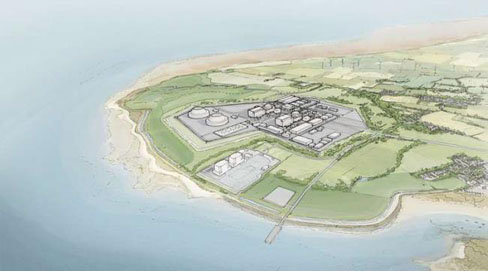
That was the Year That Was…
https://www.banng.info/news/that-was-the-year-that-was/
Andy Blowers summarises the past year for the Bradwell B project in the BANNG column for the January 2023 edition of Regional Life
A year is a short time in the glacial progress of a nuclear power station as it slowly moves through the various hurdles until it falls or proceeds eventually to the point where it goes critical and its long-term legacy becomes eternal and irreversible. So, with Bradwell B’s faltering progress over the past seven years until its fall last year. It may seem, in the words of Charles II, that it has been ‘an unconscionable time a-dying’, but the year just ended has witnessed the slow demise of Bradwell B.
Bradwell B entered 2022 with diminishing prospects. From the moment in early 2020 when it disclosed its preposterous plans to an outraged public, it had struggled for credibility. It’s true that in 2021 the Chinese-designed reactors gained Generic Design Approval (GDA) from the UK regulatory authorities. But, also in 2021, CGN (China General Nuclear Power Group) announced it was pausing its activities indefinitely. No doubt this was, in part, a result of the overwhelming and sustained opposition from BANNG, BAN, local councils and communities that it had encountered over the years.
During 2022 any lingering hopes for the project appeared to vanish amid deepening fears about Sea Level Rise and destructive impacts on our vulnerable coast. And it became clear that Chinese participation in UK nuclear projects was unwelcome for reasons of national security. By the year’s end, CGN informed stakeholders that it was effectively decommitting from its activities on the site with no plans for resumption.
It’s over. Let it go…
So, Bradwell B is over and we can let it go. But the threat of new nuclear at Bradwell will remain as long as the Government categorises the site as ‘potentially suitable’. Other developers may try to muscle in and we know that Rolls Royce has made a ranging shot at Bradwell as a ‘deployable site’ for its non-existent Small Modular Reactors (SMRs). It must be finally and unequivocally demonstrated that the Bradwell site is utterly unsuitable for the deployment of nuclear development, whether big Gigawatts (GW) or big SMRs That has been the nub of BANNG’s campaign over many years and it remains so as we enter 2023.
1 This Month





PLEASE OPPOSE HR 8255 AND S.3639 – bills would accelerate satellite deployment, with no environmental review or safeguards – https://ncstd5li.quorum.us/campaign/169331/
To see nuclear-related stories in greater depth and intensity – go to https://nuclearinformation.wordpress.com
-
Archives
- October 2026 (49)
- September 2026 (339)
- August 2026 (330)
- July 2026 (355)
- June 2026 (287)
- May 2026 (306)
- April 2026 (356)
- March 2026 (251)
- February 2026 (267)
- January 2026 (308)
- December 2025 (358)
- November 2025 (359)
-
Categories
- 1
- 1 NUCLEAR ISSUES
- business and costs
- climate change
- culture and arts
- ENERGY
- environment
- health
- history
- indigenous issues
- Legal
- marketing of nuclear
- media
- opposition to nuclear
- PERSONAL STORIES
- politics
- politics international
- Religion and ethics
- safety
- secrets,lies and civil liberties
- spinbuster
- technology
- Uranium
- wastes
- weapons and war
- Women
- 2 WORLD
- ACTION
- AFRICA
- Atrocities
- AUSTRALIA
- Christina's notes
- Christina's themes
- culture and arts
- Events
- Fuk 2022
- Fuk 2023
- Fukushima 2017
- Fukushima 2018
- fukushima 2019
- Fukushima 2020
- Fukushima 2021
- general
- global warming
- Humour (God we need it)
- Nuclear
- RARE EARTHS
- Reference
- resources – print
- Resources -audiovicual
- Weekly Newsletter
- World
- World Nuclear
- YouTube
-
RSS
Entries RSS
Comments RSS

