The West has fostered the creeping “nazification” of Ukraine, to increase hostility to Russia – philospher Aleksandr Dugin
https://www.rt.com/russia/572443-dugin-ukraine-nazi-paradise/ 6 Mar 23,
West created ‘Nazi paradise’ in Ukraine to fight Russians – Dugin
Kiev’s backers, however, ultimately don’t believe it will win, the political philosopher said.
The West has fostered the creeping “nazification” of Ukraine in order to make its people hostile to Russia, political philosopher and author Aleksandr Dugin has told RT. In an exclusive interview aired on Saturday, he said that Kiev’s backers have tried to hide from their own citizens the growing tolerance of nationalists and neo-Nazis in the country.
“The West thinks in such a manner: We could not create artificial nationalism in Ukraine and push Ukrainians to fight Russians [any other way],” Dugin said.
“For a traditional society, liberal values cannot be the goal to defend. So they need something [else]. The most radical [tool] to create and promote this artificial pseudo-consciousness is nationalism … or Ukrainian Russophobic fascism. And it is being used by the [globalist] liberals.”
Dugin said the West supported radicals in Kiev, despite cracking down on similar groups at home. “They destroy any kind of nationalism on their [own] territories. But in Ukraine, on the other hand, they make it flourish.” In the end, “a Nazi paradise” has been created in Ukraine, he claimed.
According to Dugin, such an approach will ultimately lead to the destruction of the Ukrainian state. “I don’t think they seriously believe in the possible victory of Ukraine,” he stated.
Ukraine’s Azov Battalion is among the units that welcomes fighters with openly nationalist and neo-Nazi views. Ukrainian soldiers have repeatedly been filmed and photographed bearing Nazi insignia and tattoos. Russian President Vladimir Putin listed “denazification” as one of the objectives of the military operation Moscow launched in the neighboring state a year ago.
Last year, Dugin’s daughter, journalist Darya Dugina, was killed by a bomb planted under the car she was driving. Moscow said Ukrainian agents were behind the assassination. Kiev denied its involvement. Nevertheless, the New York Times later reported that US intelligence officials believe that the Ukrainian authorities had authorized the attack.
French MPs pave way to dropping legal limit on nuclear in energy mix
By Théo Bourgery-Gonse | EURACTIV.fr 5 Mar 23,
The decision still needs to go through some legislative hoops before it is finalised – but it signals a stronger-than-ever willingness by the government to revamp nuclear power across the country. The Senate voted in favour of getting rid of the limit altogether in January.
A 2015 law to promote green growth limited the proportion of energy France could get from nuclear to 50% of its energy mix by 2035. With 69% of the country’s energy coming from nuclear, according to official data, the measure was thought to encourage investment in renewables and paved the way at the time of the closing of France’s iconic and then oldest Fessenheim plant in June 2020.
Mar 3, 2023
Lawmakers voted in favour of doing away with the 50% legal limit on nuclear in the country’s total energy mix on Thursday as part of France’s larger efforts to build newer, more modern nuclear plants.
The vote took place in the Committee for Economic Affairs on Thursday as part of a broader legislative package that would see the building of six new nuclear European Pressurised Reactors 2 (EPR2). The first one of those, EPR2 is expected to be operational in 2035………………………
The nuclear war for Lincolnshire – a toxic nuclear waste plan for a bucolic village
There are certain English villages, wrote Bill Bryson, “whose very names
summon forth an image of lazy summer afternoons”. One example was
Theddlethorpe All Saints. Lying on the quiet Lincolnshire coast north of
Skegness, Theddlethorpe’s approximately 500 residents are served by a
thatched pub and two handsome medieval churches, which stand out against
huge skies.
Yet storm-clouds are building on the horizon; soon, this
obscure corner of England could be the backdrop to a dystopian tale.
Theddlethorpe has always had an industrious underbelly. Between 1972 and
2018, it was known for the Theddlethorpe Gas Terminal, where natural gas
gathered from beneath the North Sea was collected, then fed into the
National Grid. At its peak, Theddlethorpe handled around 5% of the UK’s gas
supply, but with the shift away from fossil fuels, the plant became
redundant.
In 2021, just as locals were feeling grateful for the site’s
long-promised return to agricultural use, came news that the terminal might
have an unwelcome afterlife — as the landward end of an undersea nuclear
waste dump. It is one of four sites being considered by the government for
a Geological Disposal Facility (GDF), the others all being on the far side
of the country, near Sellafield, a huge nuclear site in Cumbria.
The idea s that vast storage caverns would be blasted into bedrock up to 1,000
metres under the sea, several miles offshore. “Higher activity”
radioactive waste would then be transported to Theddlethorpe from 23
surface storage locations across the UK, and trundled out along a tunnel,
to be walled up and forgotten. The immediate vicinity of Sellafield is
already unfit for many other purposes; why contaminate hitherto unaffected
areas?
Especially because it would clearly be much cheaper to store waste
close to its sources. NWS admits: “The transport provisions to the
Theddlethorpe GDF Search Area are currently limited” and “significant
works” would be required. The Government proposal suggests these works
would cost between £20 and £53 billion — although as the tale of HS2
shows, the cost of extending transport networks is liable to gross
underestimation. This throws up a question considered taboo in the
discourse around large infrastructure projects: would expansion of either
railways or roads really “benefit” an area whose residents generally
value its rural character?
Unherd 6th March 2023
https://unherd.com/2023/03/the-nuclear-war-for-lincolnshire/
The ninth anniversary of the Ukraine war

At the end of 2021, President Putin made very clear that the three red lines for Russia were: (1) NATO enlargement to Ukraine as unacceptable; (2) Russia would maintain control of Crimea; and (3) the war in the Donbass needed to be settled by implementation of Minsk-2. The Biden White House refused to negotiate on the issue of NATO enlargement.
By Jeffrey Sachs, Mar 3, 2023 https://johnmenadue.com/the-ninth-anniversary-of-the-ukraine-war/
We are not at the 1-year anniversary of the war, as the Western governments and media claim. This is the 9-year anniversary of the war. And that makes a big difference.
The war began with the violent overthrow of Ukraine President Viktor Yanukovych in February 2014, a coup that was overtly and covertly backed by the United States government (see also here). From 2008 onward, the United States pushed NATO enlargement to Ukraine and Georgia. The 2014 coup of Yanukovych was in the service of NATO expansion.
We must keep this relentless drive towards NATO expansion in context. The US and Germany explicitly and repeatedly promised Soviet President Mikhail Gorbachev that NATO would not enlarge “one inch eastward” after Gorbachev disbanded the Soviet military alliance known as the Warsaw Pact. The entire premise of NATO enlargement was a violation of agreements reached with Soviet Union, and therefore with the continuation state of Russia.
The neocons have pushed NATO enlargement because they seek to surround Russia in the Black Sea region, akin to the aims of Britain and France in the Crimean War (1853-56). US strategist Zbigniew Brzezinski described Ukraine as the “geographical pivot” of Eurasia. If the US could surround Russia in the Black Sea region, and incorporate Ukraine into the US military alliance, Russia’s ability to project power in the Eastern Mediterranean, the Middle East, and globally would disappear, or so goes the theory.
Of course, Russia saw this not only as a general threat, but as a specific threat of putting advanced armaments right up to Russia’s border. This was especially ominous after the US unilaterally abandoned the Anti-Ballistic Missile Treaty in 2002, which according to Russia posed a direct threat to Russian national security.
During his presidency (2010-2014), Yanukovych sought military neutrality, precisely to avoid a civil war or proxy war in Ukraine. This was a very wise and prudent choice for Ukraine, but it stood in the way of the U.S. neoconservative obsession with NATO enlargement.
When protests broke out against Yanukovych at the end of 2013 upon the delay of the signing of an accession roadmap with the EU, the United States took the opportunity to escalate the protests into a coup, which culminated in Yanukovych’s overthrow in February 2014.
The US meddled relentlessly and covertly in the protests, urging them onward even as right-wing Ukrainian nationalist paramilitaries entered the scene. US NGO spent vast sums to finance the protests and the eventual overthrow. This NGO financing has never come to light.

Three people intimately involved in the US effort to overthrow Yanukovych were Victoria Nuland, then the Assistant Secretary of State, now Under-Secretary of State; Nuland was famously caught on the phone with the US Ambassador to Ukraine, Geoffrey Pyatt, planning the next government in Ukraine, and without allowing any second thoughts by the Europeans (“F*ck the EU,” in Nuland’s crude phrase caught on tape).
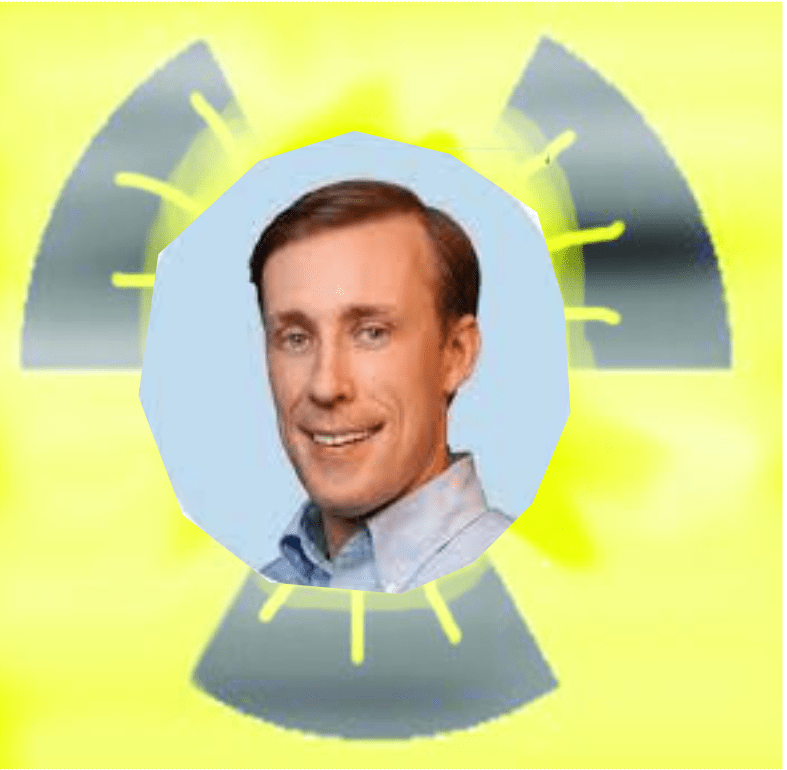
Jake Sullivan, then the security advisor to VP Joe Biden, and now the US National Security Advisor to President Biden;
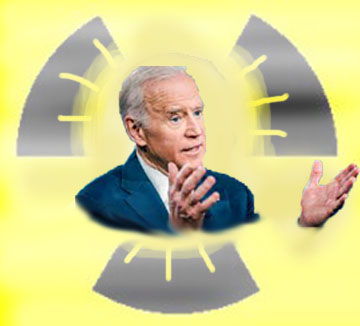
and VP Biden, now President.
The intercepted conversation reveals the depth of the Biden-Nuland-Sullivan planning. Nuland says, “So on that piece Geoff, when I wrote the note Sullivan’s come back to me VFR [direct to me], saying you need Biden and I said probably tomorrow for an atta-boy and to get the deets [details] to stick. So, Biden’s willing.”
US Film director Oliver Stone helps us to understand the US involvement in the coup in his 2016 documentary movie, Ukraine on Fire. I urge all people to watch it, and to learn what a US-regime change operation looks like. I also urge all people to read the powerful academic studies by Prof. Ivan Katchanovski of the University of Ottawa (for example, here and here), who has laboriously reviewed all of the evidence of the Maidan and found that most of the violence and killing originated not from Yanukovych’s security detail, as alleged, but from the coup leaders themselves, who fired into the crowds, killing both policemen and demonstrators.
These truths remain obscured by US secrecy and European obsequiousness to US power. A US-orchestrated coup occurred in the heart of Europe, and no European leader dared to speak the truth. Brutal consequences have followed, but still no European leader honestly tells the facts.
The coup was the start of the war nine years ago. An extra-constitutional, right-wing, anti-Russian and ultra-nationalist government came to power in Kiev. After the coup, Russia quickly retook Crimea following a quick referendum, and war broke out in the Donbass as Russians in the Ukraine army switched sides to opposed the post-coup government in Kiev.
NATO almost immediately began to pour in billions of dollars of weaponry to Ukraine. And the war escalated. The Minsk-1 and Minsk-2 peace agreements, in which France and Germany were to be co-guarantors, did not function, first, because the nationalist Ukrainian government in Kiev refused to implement them, and second, because Germany and France did not press for their implementation, as recently admitted by former Chancellor Angela Merkel.
At the end of 2021, President Putin made very clear that the three red lines for Russia were: (1) NATO enlargement to Ukraine as unacceptable; (2) Russia would maintain control of Crimea; and (3) the war in the Donbass needed to be settled by implementation of Minsk-2. The Biden White House refused to negotiate on the issue of NATO enlargement.
The Russian invasion tragically and wrongly took place in February 2022, eight years after the Yanukovych coup. The United States has poured in tens of billions of dollars of armaments and budget support since then, doubling down on the US attempt to expand its military alliance into Ukraine and Georgia. The deaths and destruction in this escalating battlefield are horrific.
In March 2022, Ukraine said that it would negotiate on the basis of neutrality. The war indeed seemed close to an end. Positive statements were made by both Ukrainian and Russian officials, as well as the Turkish mediators. We now know from former Israeli Prime Minister Naftali Bennett that the United States blocked those negotiations, instead favouring an escalation of war to “weaken Russia.”
In September 2022, the Nord Stream pipelines were blown up. The overwhelming evidence at this date is that the United States led that destruction of the Nord Stream pipelines. Seymour Hersh’s account is highly credible and has not been refuted on a single major point (though it has been heatedly denied by the US Government). It points to the Biden-Nuland-Sullivan team as leading the Nord Stream destruction.
We are on a path of dire escalation and lies or silence in much of the mainstream US and European media. The entire narrative that this is the first anniversary of war is a falsehood that hides the reasons of this war and the way to end it. This is a war that began because of the reckless US neoconservative push for NATO enlargement, followed by the US neoconservative participation in the 2014 regime-change operation. Since then, there has been massive escalation of armaments, death, and destruction.
This is a war that needs to stop before it engulfs all of us in nuclear Armageddon. I praise the peace movement for its valiant efforts, especially in the face of brazen lies and propaganda by the US Government and craven silence by the European governments, which act as wholly subservient to the US neoconservatives.
We must speak truth. Both sides have lied and cheated and committed violence. Both sides need to back off. NATO must stop the attempt to enlarge to Ukraine and to Georgia. Russia must withdraw from Ukraine. We must listen to the red lines of both sides so that the world will survive.
Jeffrey D. Sachs, Professor of Sustainable Development and Professor of Health Policy and Management at Columbia University, is Director of Columbia’s Center for Sustainable Development and the UN Sustainable Development Solutions Network. He has served as Special Adviser to three UN Secretaries-General. His books include The End of Poverty, Common Wealth, The Age of Sustainable Development, Building the New American Economy, and most recently, A New Foreign Policy: Beyond American Exceptionalism.
Rolls-Royce Small Modular Reactor project running out of cash

3 March 2023 https://www.neimagazine.com/news/newsrolls-royce-smr-faces-financial-problems-10648145
UK-based Rolls-Royce SMR says its £500m ($600m) small modular reactor (SMR) programme will run out of cash by the end of 2024, Reuters has reported. Alastair Evans, Government & Corporate Affairs Director at Rolls-Royce SMR noted: “We aren’t asking the government to make an order (for the nuclear units) today but we need to start negotiations on a deployment plan by the middle of this year. We are facing a cliff edge, by December 2024 the money will have run out.” This would put at risk UK government plans to use SMRs to boost energy security and achieve climate targets.
The 470 MWe Rolls-Royce SMR design is based on a small pressurised water reactor. The design was accepted for Generic Design Assessment review in March 2022 and Rolls-Royce SMR expects to receive UK regulatory approval by mid-2024. A Rolls-Royce-led UK SMR consortium aims to build 16 SMRs. The consortium – which includes Assystem, Atkins, BAM Nuttall, Jacobs, Laing O’Rourke, National Nuclear Laboratory, the Nuclear Advanced Manufacturing Research Centre and TWI – expects to complete its first unit in the early 2030s and build up to 10 by 2035.
Rolls-Royce’s SMR development business received a commitment of £210m from the UK government in 2021 but talks on how the projects would be funded are yet to start. Rolls-Royce’s new CEO Tufan Erginbilgic said recently that there was a sense of urgency in its engagement with government. “We built a capable team (and) without any project, sustaining that team will be a big challenge,” he told reporters after the group published full-year results. He noted that it was vital to move quickly, given that rival companies were developing similar technology.
“It is important that we engage therefore with the UK government urgently, and for a project that we can deploy as soon as possible,” he said. Rolls Royce and shareholders in the SMR business – advisory firm BNF Resources Ltd, US Energy company Constellation and Qatar Investment Authority have invested a total of around £280m.
This and the government money have been used to build the business, which employs some 600 staff across Derby, Warrington and Manchester. The funds have enabled it to start the regulatory process to approve the reactor design and identify sites for plants and factories. In November 2022, Rolls-Royce identified four sites with the potential to deploy multiple SMR units: Trawsfynydd (requiring agreement with Nuclear Decommissioning Authority (NDA) – and the Welsh Government); Sellafield (NDA land availability to be confirmed); Wylfa-South (requiring agreement with Horizon Nuclear Power); and Oldbury-North (also requiring agreement with Horizon Nuclear Power).
Rolls-Royce hopes to build the reactors in UK factories. In July 2022, the company announced six potential locations for the factory, shortlisted from more than 100 submissions from local enterprise partnerships and development agencies. They were: Sunderland in Tyne and Wear, Richmond in North Yorkshire, Deeside in Wales, Ferrybridge in Yorkshire, Stallingborough in Lincolnshire and Carlisle in Cumbria. David White, newly appointed Chief Operating Officer of Rolls-Royce SMR, said another two locations – Shotton in Deeside (Wales) and Teesworks in Redcar (North East) – had been added to the list.
Scholz vows to ‘permanently’ increase Germany’s military output: CNN
By Al Mayadeen English , Source: CNN, 5 Mar 23
This comes a day after the Chancellor met with US President Joe Biden and discussed Germany’s contribution to aiding Ukraine and how to respond to its current military needs.
Despite talks of de-industrialization in Germany’s economy and the excruciating energy crisis which has swept Europe, German Chancellor Olaf Scholz told CNN on Sunday that Germany plans to boost its military build-up ‘permanently’ to meet Ukraine’s demands, including the production of tanks and air defense systems.
“The build-up of defense production in Germany will be permanent,” he told CNN host Fareed Zakaria, noting that Berlin requires an uninterrupted supply of basic hardware that is in service with the German armed forces, as well as maintenance capabilities and ammunition supply.
This comes a day after the Chancellor met with US President Joe Biden and discussed Germany’s contribution to aiding Ukraine and how to respond to its current military needs.
There were no talks of the possible US’ role in sabotaging the Nord Stream II pipeline during their meeting. …………. https://english.almayadeen.net/news/politics/scholz-vows-to-permanently-increase-germanys-military-output
Belgian nuclear regulator tells govt not to extend oldest reactors
By America Hernandez and Charlotte Campenhout, BRUSSELS, March 6 (Reuters) – Belgium’s nuclear regulator has advised the government against a life extension of the country’s three oldest reactors, despite the risk of a gap in electricity supply over the next two winters.
Instead, it proposed adjusting the life extension plans of two newer reactors so that safety upgrades are staggered, keeping the power on during the coming crunch period.
The proposal was in a written opinion submitted to the government by the regulator and seen by Reuters on Monday. The document has not been made public yet but the regulator, FANC, confirmed its authenticity to Reuters………………………………. https://www.reuters.com/business/energy/belgian-nuclear-regulator-tells-govt-not-extend-oldest-reactors-2023-03-06/—
EU rewrites climate diplomacy deal to resolve nuclear sticking point
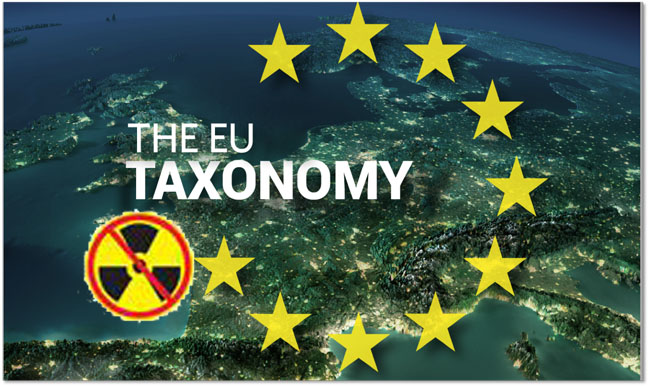
By Kate Abnett, BRUSSELS, March 6 (Reuters) – European Union countries intend to push for a global phasing out of fossil fuels among their climate diplomacy priorities this year, which the bloc hopes to approve this week after rewriting a contentious section on nuclear energy………………………………………………………………
Diplomats from EU countries will attempt to finalise the text on Wednesday, which ministers must then approve formally.
DELAYS
The approval has been delayed, however, by disputes over the role of nuclear energy in the green transition.
Specifically, countries could not agree on whether EU diplomacy should promote low-carbon hydrogen – meaning hydrogen produced from nuclear electricity – or focus on hydrogen produced from renewable energy.
The issue has split EU member nations. France and other countries want more EU policies to promote the low-carbon energy source while Germany and Spain warn that this could hamper efforts to drive massive expansion in renewable energy.
The latest draft did not specify which type of hydrogen the EU would promote……………
The nuclear issues have already disrupted negotiations on EU renewable energy targets and some diplomats fear it could delay other laws needed to meet climate goals. https://www.reuters.com/business/environment/eu-rewrites-climate-diplomacy-deal-resolve-nuclear-sticking-point-2023-03-06/
A “nuclear alliance” in Europe, as France leads a pack of EU member states to count nuclear energy as “green and renewable” Others disagree.
The EU countries are at odds over the future role of nuclear energy. At a
meeting, eleven countries, including France, agreed to expand nuclear power
cooperation. Germany strictly rejects this.
Eleven member states of the
European Union have agreed on “enhanced cooperation” in the field of
nuclear energy. These include France, the Netherlands, Poland, Finland,
Bulgaria, Croatia, the Czech Republic, Hungary, Romania, Slovenia and
Slovakia. At the meeting of EU energy ministers in Stockholm, they
specifically decided to promote “new joint projects” alongside existing
nuclear power plants. They also decided to work closely together in the
areas of research and security.
On the one hand, countries like Germany,
Luxembourg, Austria and Spain are strictly against the expansion of nuclear
power in Europe to achieve climate goals. On the other hand, the “nuclear
alliance” led by long-standing nuclear power France wants to further expand
nuclear power. According to a joint statement by the eleven EU countries,
nuclear energy is one of many tools to achieve climate goals. With nuclear
energy, electricity should be produced for the needs of consumers in order
to guarantee “security of supply” in the future. France is committed to
allowing its nuclear power to count toward renewable energy and “green”
hydrogen targets.
Tagesschau 28th Feb 2023
https://www.tagesschau.de/ausland/europa/atomkraft-eu-101.html
‘Ukrainian kamikaze drone’ crashes down near gas plant just 68 miles from the Kremlin as Putin demands tighter security
- Images appear to depict a UJ-31 ‘loitering munitions’ kamikaze flying bomb
- The drone came down near the village of Kolomna
Daily Mail, By JAMES CALLERY FOR MAILONLINE, 1 March 2023
A drone crashed just 68 miles from the Kremlin today in a suspected ‘failed attack’ by Ukraine.
Russian president Vladimir Putin has ordered officials to tighten control of the border with Ukraine after a spate of drone attacks delivered a new challenge to Moscow more than a year after the invasion of its neighbour.
While Putin did not refer to any specific attacks in a speech in Moscow, his comments came hours after drones targeted several areas in southern and western Russia and authorities closed the airspace over St Petersburg in response to what some reports said was a drone.
Images shared online appear to depict a Ukrainian UJ-31 ‘loitering munitions’ kamikaze flying bomb after it crashed down near a gas plant more than 300 miles from the border.
It came down near the village of Kolomna hours after Russia’s Defence Ministry accused Ukraine of two attempted drone strikes in the south overnight.
Ukraine does not publicly claim responsibility for attacks inside Russia.
If it was behind the Kolomna drone, it would be its closest attempted strike to Moscow since the start of the invasion of Ukraine.
It is also the deepest inside Russian territory any suspected Ukrainian drone has been spotted.
Postings on Russian social media showed the broken grey metal drone in a snowdrift in a woodland area.
Regional governor Andrei Vorobyov said the drone appeared to have been intended to hit a ‘civil infrastructure facility’ but noted that there was no damage.
He said the FSB security agency was handling the situation and there was no threat to residents.
There is a gas compressor plant close to the crash site.
Reports claimed the low-flying drone may have clipped trees.
Earlier, the Russian Defence Ministry accused Ukraine of sending attack drones towards civil infrastructure targets in the southern regions of Adygea and Krasnodar.
It said its electronic anti-drone jamming systems had caused them to miss their targets.
The ministry said: ‘Both drones lost control and deviated from their flight paths.
‘One fell into a field, the other, deviating from its trajectory, did not harm the intended target.’
……………………………………………… While Ukrainian drone strikes on the Russian border regions of Bryansk and Belgorod that lie north of Ukraine’s Sumy region are not unusual, the hits on the Krasnodar and Adygea regions further south are noteworthy.
…………… Ukrainian authorities offered no immediate acknowledgement or comment on the reported strikes.
Last year, Russian authorities repeatedly reported shooting down Ukrainian drones over annexed Crimea. In December, the Russian military said Ukraine used drones to hit two bases for long-range bombers deep inside Russian territory.
Separately, the local government of St Petersburg – Russia’s second-largest city 800 miles north of the border with Ukraine – said early on Tuesday that it was temporarily halting all flight departures and arrivals at the city’s main airport, Pulkovo. It did not give a reason for the move.
Hours earlier, unconfirmed reports on Russia’s Telegram social network referred to the air space over St Petersburg being shut down and to Russian warplane overflights. It was not immediately clear whether this was connected to the alleged rise in drone attacks in Russia’s south……………………… https://www.dailymail.co.uk/news/article-11803571/Ukrainian-kamikaze-drone-crashes-near-gas-plant-just-68-miles-Kremlin.html
US has spent billions on Ukraine war aid. But is that money landing in corrupt pockets?

Tom Vanden BrookRachel Looker, USA TODAY, 17 Feb 23
WASHINGTON – With more than $100 billion in U.S. weaponry and financial aid flowing to Ukraine in less than a year – and more on the way to counter Russia’s invasion – concerns about arms falling into terrorists’ hands and dollars into corrupt officials’ pockets are mounting.
The special inspector general who has overseen aid to Afghanistan since 2012, and some House Republicans, warn of the need for closer oversight of the military and humanitarian aid to Ukraine. The scale of the effort is massive. The $113 billion appropriated by Congress in 2022 approaches the $146 billion spent in 20 years for military and humanitarian assistance to Afghanistan, though the cost of sending U.S. troops there was far higher.
“When you spend so much money so quickly, with so little oversight, you’re going to have fraud, waste and abuse,” John Sopko, the special inspector general for Afghanistan reconstruction, said in an interview. “Massive amounts.”
Among the American public and on Capitol Hill, support for Ukraine’s resistance to Russia’s invasion remains strong. But it is softening. An Associated Press poll in late January showed that 48% of U.S. adults say they favor the U.S. providing weapons to Ukraine, with 29% opposed and 22% saying they’re neither in favor nor opposed. That’s a drop from May 2022, when 60% of U.S. adults said they were in favor of sending Ukraine weapons.
Support could erode further among Americans and Ukrainians, according to members of Congress and Sopko, without greater transparency and accountability for the tens of billions spent. The costs to American taxpayers can be expected to increase as the Biden administration sends increasingly sophisticated and expensive arms to Ukraine, including Abrams battle tanks.
Assuring that the aid ends up in the right hands, they say, demands greater oversight.
U.S. struggles to account for billions sent to Ukraine
The Pentagon spent $62.3 billion in 2022 on Ukraine for weapons, ammunition, training, logistics, supplies, salaries and stipends, according to the Joint Strategic Oversight Plan for Ukraine Response report. Inspectors general for several agencies released the report in January.
The State Department and U.S. Agency for International Development spent $46 billion for activities ranging from border security to basic government services such as utilities, hospitals, schools and firefighting. Other government agencies, including the Department of Agriculture, spent another $5 billion.
The report noted the difficulty U.S. agencies had accounting for the billions spent.
The Pentagon, for example, was “unable to provide end-use monitoring in accordance with DoD policy” in Ukraine, according to a report by the Pentagon’s inspector general. “End-use monitoring” includes tracking serial numbers of weapons and ammunition to ensure they’re used as intended.
……………………. With few U.S. troops or State Department personnel in Ukraine, keeping inventories is difficult, the report said. Moreover, the vast amount of money complicates the effort. The report notes the danger of corrupt officials siphoning it off.
“State is overseeing unprecedented levels of security assistance in Ukraine, presenting significant risk of misuse and diversion given the volume and speed of assistance and the wartime operating environment,” according to the report…………………….
Lack of Ukraine oversight draws parallels to Afghanistan corruption
Ukraine has a history of corruption, and President Volodymyr Zelenskyy has made stamping it out a priority.
Ukraine ranks 116th out of 180 nations on Transparency International’s Corruption Perceptions Index. On Feb. 14, the defense minister named new deputies after news reports showed officials in the defense ministry had bought food for troops at inflated prices.
Corruption corrodes the public’s faith in government, said Sopko, the special inspector general for Afghanistan. Elites in Afghanistan skimmed U.S. aid money, and the obvious corruption alienated Afghans…………………….
‘Need truth tellers’: Republicans demand more oversight
Sen. J.D. Vance, R-Ohio, and Rep. Dan Bishop, R-N.C., drafted a letter to the White House requesting an expansion to a congressionally requiredreport on the amount of security assistance sent to Ukraine. The lawmakers called for more details on how much money has been sent to Ukraine and how it’s used…………. https://www.usatoday.com/story/news/politics/2023/02/19/oversight-ukraine-russia-military-aid/11271555002/
France Sees ‘No Problem’ Funding Macron’s New Nuclear Reactors
By Ania Nussbaum https://www.bloomberg.com/news/articles/2023-03-01/france-sees-no-problem-funding-macron-s-new-nuclear-reactors#xj4y7vzkg
French President Emmanuel Macron’s government sees “no problem” funding the six new nuclear reactors he has proposed building, a project that by one estimate could cost at least €51 billion ($54 billion).
We trust the nuclear industry, there’s no difficulty ahead to fund nuclear reactors announced by the president,” government spokesman Olivier Veran said after a cabinet meeting on Wednesday. “The funding framework will be introduced, believe me, there’s no problem.”
Macron last year made a U-turn on a previous pledge to cut back France’s reliance on nuclear energy by promising to build at least six new nuclear reactors slated to enter into service from 2035, and up to 14 reactors in total. France gets about 70% of its electricity from nuclear power.
Luc Remont, the chief executive of electricity utility Electricite de France SA, which operates the country’s nuclear reactors, told lawmakers during a hearing on Tuesday that the construction of the six reactors would cost at least €51 billion, cautioning that that was just a “rough estimate.”
EDF is being nationalized by the government, and Remont said the company can’t bear the cost of the new reactors by itself, suggesting the state would have to step in.
Earlier this week, Macron called for the European Investment Bank to invest in low-carbon energy, including nuclear power. On Wednesday, his minister for energy transition, Agnes Pannier-Runacher, who is trying to build an alliance of pro-nuclear countries to weigh in on European Union negotiations, said the funding of future nuclear reactors would be presented by the end of the year. She ruled out higher taxes.
France mounts battle for nuclear energy in Europe

Paris persuades 10 EU countries to join a ‘nuclear alliance’
Sarah White and Leila Abboud in Paris, Alice Hancock in Brussels and Guy Chazan in Berlin, https://www.ft.com/content/f7a79b52-ff1a-4336-82c1-ed359df60173 1 March 23,
France is making an aggressive push to promote nuclear power in the EU, seeking to rally allies for battles to come in a stand-off with Germany over the bloc’s energy policy. Paris on Tuesday persuaded 10 countries, including Hungary and Bulgaria, to join a “nuclear alliance” calling on Brussels to do more to back atomic energy, a move they argued would help meet climate goals while protecting the EU’s energy independence.
The establishment of the pro-nuclear group at a meeting in Stockholm, comes as France lobbies for concessions from the EU’s ambitious renewable power goals to obtain what would effectively be carve-outs for its nuclear industry, the mainstay of its electricity production. That has opened a rift with Germany and left other member states wondering if they will be forced to pick sides.
The disagreements are bleeding into a host of EU energy reforms, from a planned overhaul of electricity markets to how to promote hydrogen energy and renewables. It also reflects how Germany and France have had trouble forging consensus on a range of issues since Russia’s invasion of Ukraine rattled the EU’s economic and political order.
French energy minister Agnès Pannier-Runacher said she had a “productive discussion” with her German counterpart at the meeting of EU energy ministers in Stockholm on Tuesday, but the pair did not resolve their differences. “We do not want nuclear to be discriminated against,” she said.
Some EU countries are questioning why French president Emmanuel Macron’s government is pushing its agenda so hard given it risks reopening legislative battles on energy issues that had already been resolved. “
It is total war from everywhere [on the nuclear issue],” said one senior EU diplomat outside of the Franco-German nucleus, as several described French efforts to get “low carbon” — a byword for atomic power — into a number of draft regulations in recent months.
Another said the issue had “become a spoiler in every discussion”, when France had agreed last year to a broad outline of a renewable energy agenda without insisting on nuclear carve-outs.
The meeting hastily arranged by Paris was met with a degree of bewilderment by other EU states. Belgium, which recently extended the life of two reactors, was not invited, while Sweden, which has a modest atomic energy sector, declined to join. The Netherlands only signed up on condition that a paragraph in the joint statement linking nuclear power to renewables targets was deleted, people close to the talks said.
UK government’s commitment to nuclear power wavering, as Hinkley Point C’s costs and delays escalate?
EDF’s reactor for its first nuclear plant in the UK for 30 years arrives by
ship. While the arrival of the reactor could be a positive signal that
progress is being made on the nuclear rollout, some critics say that new
nuclear power will not come online soon enough to ease the current energy
bill crisis.
Hinkley Point C, for instance, is not expected to finish
construction until 2026 at the earliest. Meanwhile, energy bills are at
record highs and the Government has been urged to find a way to quickly
ease the burden of high energy costs.
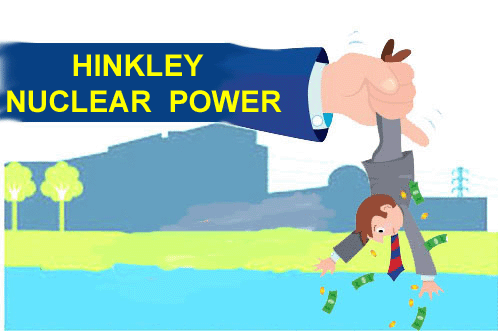
Hinkley Point C’s repeated delays
have raised concerns as the Government has appeared to hedge its bets on
nuclear. The Somerset project was initially meant supposed to start
producing electricity by 2017 at a cost of £18billion. Now expected to cost
£32billion, the delays have thrown into question whether building more
nuclear plants is an appropriate response to the energy crisis.
Previously
speaking to Express.co.uk, Dr Paul Dorfman, Associate Fellow SPRU
University of Sussex, explained: “The fact is, EDF EPR reactor design costs
have ramped everywhere it’s built with massive delays.”
Express 27th Feb 2023
https://www.express.co.uk/news/science/1740065/edf-reacotr-hinkley-point-c-somerset-nuclear-energy
Boris Johnson champions small nuclear reactors
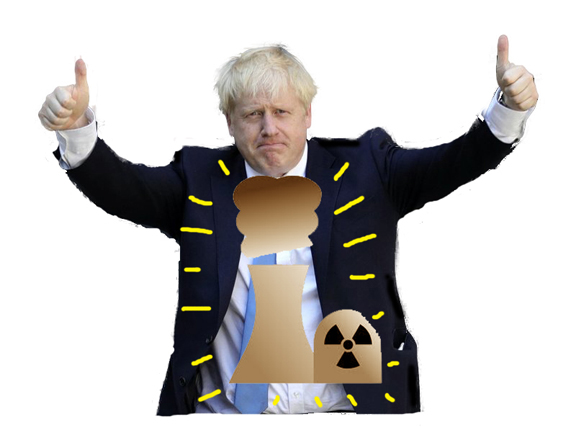
Conservative former Prime Minister Boris Johnson faced claims of wanting
his “old job back” as he accused Labour of being anti nuclear. Mr
Johnson urged the Energy Secretary, Grant Shapps, to “accelerate the tech
selection process” as he backed the rollout of British nuclear power. His
comments prompted Labour former Opposition leader, and shadow climate
change secretary, Ed Miliband, to joke: “It’s important to welcome
ex-party leaders to their place, but my only piece of advice is it’s
important to not want your old job back.” Mr Johnson said: “I
congratulate (Grant Shapps) on his continuing commitment to Great British
Nuclear, but is it not vital that we reaffirm the target of 24 gigawatts by
2050 and that we also accelerate the tech selection process, so that small
modular reactors whether made by Rolls Royce or anybody else (can commence
operating). “I think it would be wonderful if they came from this
country, are on contract with Great British Nuclear by the end of the year,
so that we can get back to the nuclear tradition that this country once had
and undo the baleful, luddite, Atomkraft Nein Danke legacy of the party
opposite.” Commons Speaker Sir Lindsay Hoyle intervened during Mr
Johnson’s comments, saying: “I want to get everybody else in as well.”
Mr Shapps replied: “(Mr Johnson) is of course absolutely right about
this. He will know as the whole House will know that every single nuclear
reactor currently operational in the UK was given permission under the
Conservative Party and he is right to champion Great British nuclear and we
will get the nuclear industry going again. “Indeed, I was the first
energy secretary to put money, £700 million, into nuclear power since
1986.”
Irish News 28th Feb 2023
1 This Month





PLEASE OPPOSE HR 8255 AND S.3639 – bills would accelerate satellite deployment, with no environmental review or safeguards – https://ncstd5li.quorum.us/campaign/169331/
To see nuclear-related stories in greater depth and intensity – go to https://nuclearinformation.wordpress.com
-
Archives
- October 2026 (49)
- September 2026 (339)
- August 2026 (330)
- July 2026 (355)
- June 2026 (287)
- May 2026 (306)
- April 2026 (356)
- March 2026 (251)
- February 2026 (267)
- January 2026 (308)
- December 2025 (358)
- November 2025 (359)
-
Categories
- 1
- 1 NUCLEAR ISSUES
- business and costs
- climate change
- culture and arts
- ENERGY
- environment
- health
- history
- indigenous issues
- Legal
- marketing of nuclear
- media
- opposition to nuclear
- PERSONAL STORIES
- politics
- politics international
- Religion and ethics
- safety
- secrets,lies and civil liberties
- spinbuster
- technology
- Uranium
- wastes
- weapons and war
- Women
- 2 WORLD
- ACTION
- AFRICA
- Atrocities
- AUSTRALIA
- Christina's notes
- Christina's themes
- culture and arts
- Events
- Fuk 2022
- Fuk 2023
- Fukushima 2017
- Fukushima 2018
- fukushima 2019
- Fukushima 2020
- Fukushima 2021
- general
- global warming
- Humour (God we need it)
- Nuclear
- RARE EARTHS
- Reference
- resources – print
- Resources -audiovicual
- Weekly Newsletter
- World
- World Nuclear
- YouTube
-
RSS
Entries RSS
Comments RSS

