Massive undersea works to commence for HinkleyPoint C nuclear project
Two huge vessels have arrived off the coast of Somerset as offshore work
continues on the UK’s newest nuclear power station, Hinkley Point C. Named
Neptune and Sea Challenger, they are ‘jack-up’ vessels, used to create six
vertical shafts into the seabed.
The shafts will be used to install
components for the power station’s cooling water system. The plant will
eventually be cooled by water flowing through six miles (10km) of tunnels.
Hinkley Point C has been under construction by EDF Energy for five years.
Once the shafts, which will go 20m (70ft) into the seabed, are installed,
miners will dig a horizontal connection between them and the cooling
tunnels.
BBC 11th April 2023
Westminster keeps nuclear secrets to avoid upsetting Scottish Government
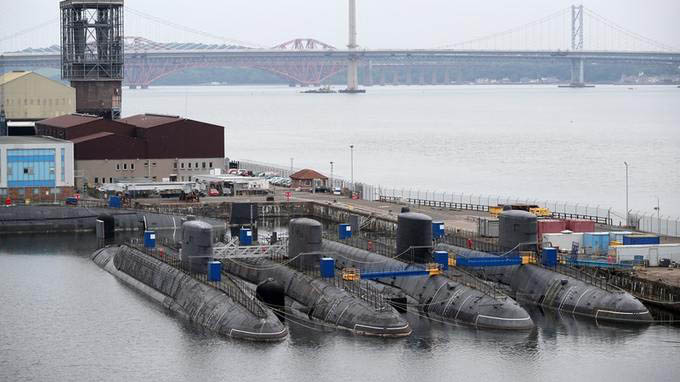
The Ferret, Rob Edwards, April 10, 2023
The UK Government is refusing to say why it is keeping nuclear safety reports secret because it is worried about “anti-nuclear arguments from the Scottish Government”.
The Ministry of Defence (MoD) won’t give its reasons for failing to release annual assessments of the safety of nuclear weapons on the Clyde so as not to “prejudice relations between the UK and Scottish governments”.
The secrecy has been condemned by the Scottish Greens as “outrageous, undemocratic and frankly dangerous”. It was akin to nuclear policies in Russia, China and North Korea, according to a campaigner — and it was described as “totally unacceptable” by a former nuclear submarine commander.
The Scottish Government urged the MoD to be “open and transparent” about the handling of nuclear materials in Scotland. The MoD said it had to “strike a balance” between public interest in safety and protecting information about nuclear weapons.
Annual reports from the MoD’s internal watchdog, the Defence Nuclear Safety Regulator (DNSR), were released for ten years, but ceased being published in 2017. A freedom of information appeal to a UK tribunal to force the MoD to again release the reports was rejected in July 2021.
The Ferret previously revealed that the reports for 2005 to 2015 highlighted “regulatory risks” 86 times, including 13 rated as high priority. One issue repeatedly seen as a high risk was a shortage of suitably qualified and experienced engineers.
Now the MoD has rejected another freedom of information request asking for documents that set out the rationale for refusing to release more recent DNSR reports. It disclosed that the decision was taken in 2017 by then secretary of state for defence, Michael Fallon, but has withheld information on why……………………………………..
The MoD letter also argued that information on reasons for withholding the reports should be kept secret “for the purpose of safeguarding national security”. Secrecy was also necessary so as not to prejudice “the defence of the UK” or “the relationship between the UK and the US” as well as to allow a “safe space” for officials to advise ministers.
Nuclear secrecy ‘totalitarian’
The Scottish Greens argued that the people of Scotland have a “fundamental right” to know the risks they face from hosting weapons of mass destruction on the Clyde. Suppressing information that may support arguments against nuclear weapons poses a “clear and present danger” politically, it warned.
“The extraordinary admission in this letter that the MoD and UK Government are actively concealing key pieces of information from the Scottish Government is outrageous, undemocratic and frankly dangerous,” said Green MSP, Mark Ruskell.
“The MoD is basically saying they won’t share this information because they are scared Scotland won’t like it and it might upset the US. You simply can’t get any more totalitarian than that and this should be challenged further.”
Ruskell added: “If they want to reassure people that there are no unnecessary added dangers, they should share the information urgently and transparently. If not they should pack up and ship out. Scotland doesn’t want nukes here and they know it.”
The nuclear researcher and campaigner who has been challenging the MoD’s refusal to release the nuclear safety reports is Peter Burt. UK citizens are allowed to know “virtually nothing” about the hazards of nuclear weapons despite paying billions of pounds for them, he said.
“We’re not allowed to know whether the Ministry of Defence’s safety watchdog thinks the nuclear weapons programme is complying with public protection arrangements, and Scottish Ministers are not trusted to know what is going on at the Navy’s nuclear bases in Scotland,” Burt told The Ferret.
“It’s pretty clear that this has more to do with politics than security. While the US government regularly releases information about its nuclear weapons programme, the UK Government has decided to model its own nuclear policies on those of countries like Russia, China, and North Korea.”
Rob Forsyth, a former Royal Navy nuclear submarine commander who now campaigns against nuclear weapons, described the MoD’s justifications for secrecy as “totally unacceptable”.
He said: “The way to avoid any misinterpretation is to be honest and fully transparent over matters affecting public safety and our national defence. The notion that government should not allow public discussion is not conduct expected of a democracy.”
The Scottish Government reiterated its opposition to the possession of nuclear weapons and its support for world-wide nuclear disarmament. ……………………………………………………………….. more https://theferret.scot/nuclear-secrets-scottish-government/
Finland’s NATO entry raises nuclear war stakes
Traditionally neutral nation’s accession to US-led alliance will compel an increasingly encircled Moscow to flex its nuclear muscles
Asia Times, By M.K. BHADRAKUMARAPRIL 10, 2023
The national flag of Finland was raised for the first time at the headquarters of the North Atlantic Treaty Organization (NATO) in Brussels on April 4, which also marked the 74th anniversary of the Western alliance. It signifies for Finland a historic abandonment of its policy of neutrality.
Not even propagandistically can anyone say Finland has encountered a security threat from Russia. This is an act of motiveless malignity toward Russia on the part of NATO, which of course invariably carries the imprimatur of the US while being projected to the world audience as a sovereign choice by Finland against the backdrop of Russia’s intervention in Ukraine.
…………………. this will also make Europe’s security landscape even more precarious and make it even more dependent on the US as the provider of its security. The general expectation is that Sweden’s accession to NATO will now follow, possibly in time for the alliance’s summit in Vilnius, Lithuania, in July.
In effect, the US has ensured that the core issue behind the standoff between Russia and the West – that is, the expansion of NATO to Russia’s borders – is a fait accompli no matter the failure of its proxy war in Ukraine against Russia.
……………………………………… Don’t be surprised if NATO missiles are deployed to Finland at some point, leaving Russia no option but to deploy its nuclear weapons close to the Baltic region and Scandinavia.
Suffice to say, the military confrontation between NATO and Russia is set to deteriorate further and the possibility of a nuclear conflict is on the rise…………………………….
the US has long deployed tactical nuclear weapons in European countries, including Belgium, Germany, Italy, the Netherlands and Turkey, which means the US has long deployed its tactical nuclear weapons at Russia’s doorstep…………………………………………………………………………………….. more https://asiatimes.com/2023/04/finlands-nato-entry-raises-nuclear-war-stakes/
Macron sparks outrage, infuriates China hawks over Taiwan comments
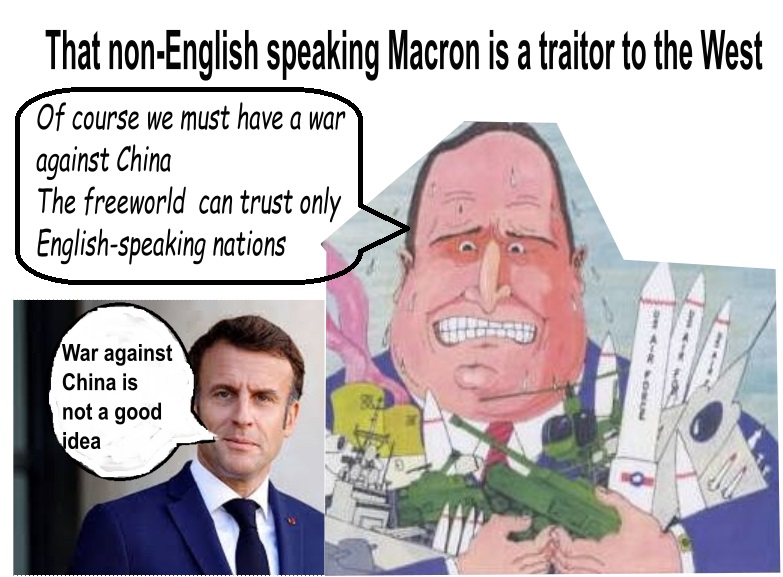
German foreign policy scholar and China-watcher Ulrich Speck said Macron’s comments vindicated Australia’s decision to tear up its contract for French-made submarines in favour of the AUKUS pact.
Malcolm Davis from the Australian Strategic Policy Institute described Macron’s comments as “ill-conceived at best, and poorly timed” given the situation in Ukraine, and the need for Europe and the US to work together to support Kyiv
The Age, By Latika Bourke, April 10, 2023
London: French President Emmanuel Macron has sparked outrage after saying Europe should reduce its dependency on the United States and avoid getting involved in any conflict between Washington and Beijing over Taiwan.
Macron made the comments in an interview with Politico on-board COTAM Unité, France’s Air Force One, while travelling home to Paris after a three-day state visit to Beijing where he struck a range of business deals for French companies…………………
Macron said he wanted Europe to adopt “strategic autonomy” from the United States, a concept which is backed by Beijing.
He warned against Europe becoming “America’s followers”.
“If the tensions between the two superpowers heat up … we won’t have the time nor the resources to finance our strategic autonomy and we will become vassals,” Macron told the travelling journalists.
“The paradox would be that, overcome with panic, we believe we are just America’s followers.
“The question Europeans need to answer … is it in our interest to accelerate [a crisis] on Taiwan? No. The worse thing would be to think that we Europeans must become followers on this topic and take our cue from the US agenda and a Chinese overreaction.
“Europeans cannot resolve the crisis in Ukraine; how can we credibly say on Taiwan, ‘Watch out, if you do something wrong we will be there’? If you really want to increase tensions that’s the way to do it,” he said.
France has long held out an ambivalence for US power and influence over Europe. France, for example, forced the withdrawal of NATO headquarters from Paris in 1967 over fears of US political sway over the continent. Macron has also supported the creation of a European army that could function in place of NATO…………………………………………………
Macron’s comments sparked widespread dismay and anger across Europe and in the United States, where Republican senator Marco Rubio urged European countries to clarify “pretty quickly” if Macron spoke for Europe or France alone.
“We need to ask Europe does he speak for them, because we’re pretty heavily involved in Ukraine right now, we’re spending a lot of our taxpayer money on a European war,” he said in a video statement.
“if our allies’ position, if in fact Macron speaks for all of Europe, and their position now is they’re not going to pick sides between the US and China over Taiwan, maybe we shouldn’t be picking sides either?
“Maybe we should say we’re going to be focusing on Taiwan and the threats that China poses and you guys handle Ukraine on your own?”
German foreign policy scholar and China-watcher Ulrich Speck said Macron’s comments vindicated Australia’s decision to tear up its contract for French-made submarines in favour of the AUKUS pact.
Malcolm Davis from the Australian Strategic Policy Institute described Macron’s comments as “ill-conceived at best, and poorly timed” given the situation in Ukraine, and the need for Europe and the US to work together to support Kyiv………………………………………… more https://www.theage.com.au/world/europe/after-visit-with-xi-macron-warns-europe-on-support-for-taiwan-infuriating-china-hawks-20230410-p5cz6t.html
One German company persists with nuclear power -interests in reactors in Sweden.
Germany is getting out of nuclear power – not completely
Market Screener, 04/11/2023 DÜSSELDORF (dpa-AFX) – Even after Germany’s last three nuclear power plants shut down on April 15, a German company will continue to produce nuclear power. Uniper, the energy company nationalized in the wake of the gas crisis, has stakes in three nuclear power plants in Sweden, and is a majority shareholder in one of them. “
Uniper is currently planning to build an electric, non-nuclear research and test facility at the Oskarshamn nuclear power plant site, with construction set to begin next year, he said. The project will be carried out in cooperation with the company Blykalla and the Royal Institute of Technology, he said. The research facility will focus on testing materials and components for a new type of reactor, called a Small Modular Reactor (SMR)………..
The German Institute for Economic Research (DIW) recently expressed its disapproval of SMR plants, which are understood to be reactors with an electrical output of up to 300 megawatts. SMR concepts are not mature and will not be available in the foreseeable future, according to a study. They were old reactor concepts that had not become established because of economic disadvantages due to the lower outputs.
“Further, they remain radiologically hazardous because the problems of increased transport and interim storage of radioactive waste would multiply.” Despite decades of research, he said, hardly any nuclear power plants in the SMR category have been able to begin commercial power operations. Even assuming optimistic conditions, he said, a cost-competitive bid cannot be assumed./tob/DP/zb https://www.marketscreener.com/quote/stock/E-ON-SE-3818998/news/Germany-is-getting-out-of-nuclear-power-not-completely-43462261/
SECOND BATCH of Classified Documents Detailing US Ukraine War Secrets Is Leaked Online –
By Jim Hoft Apr. 8, 2023 https://www.thegatewaypundit.com/2023/04/second-batch-of-classified-documents-detailing-us-ukraine-war-secrets-is-leaked-online/
Secret details of US analysis of Ukraine War, China, terrorism and the Middle East.
The documents contain information on Ukrainian losses in the war and an alleged upcoming assault by Ukraine and its allies into Russian controlled eastern Ukraine.
The Western mainstream media called the leaks a “suspected Russian plot.”
The first documents appeared on 4Chan and Discord.
The Daily Mail reported:
A second batch of classified documents detailing the United States’ analyses of global hotspots has been leaked online in a suspected Russian plot.
More than 100 documents are feared to have been obtained in what a senior intelligence called ‘a nightmare for the Five Eyes,’ – a reference to the intelligence sharing agreement between the United States, Britain, Australia, New Zealand and Canada.
The documents cover the war in Ukraine, China, terrorism and the Middle East.
The Pentagon confirmed the leak, but said that some of the documents – as with the earlier reported leak – had been doctored to downplay the strength of U.S. allies.
The first tranche of documents appeared to have been posted in early March on the social media platform Discord, according to Aric Toler, an analyst at Bellingcat, the Dutch investigative site.
Friday’s documents were published on the controversial message board 4Chan, and subsequently spread on Twitter.
Russia Today reported on the leaked documents.
The state-run media outlet says the “secret plan” does not add up.
Which information is most suspect?
The probable locations of Russian units, indicated on the combat map in red, appear to have been collected from open sources. Several pro-Kiev resources that track military operations contain almost identical information.
Also, the ratios of killed and wounded for the Ukrainian and Russian Armed Forces which initially appeared in these ‘secret plans’ have since been changed. When first posted, the losses for the Ukrainian side were underestimated at about 16,500 –17,000 people. Then (probably to be more realistic), they increased almost fivefold, up to 65,000 – 75,000. At the same time, the numbers given for Russia’s purported losses of vehicles and equipment coincide with data published by Kiev’s Ministry of Defense.
What else is wrong with the published AFU offensive plans?
The blatant falsification of data on the readiness of Ukrainian military formations catches the eye. The document states that, of the nine supposedly to be trained up to US and NATO standards by March 31 and April 30, five of Kiev’s brigades have had zero training: these are the 82nd Airborne, the 32nd, 117th, and 118th Territorial Defense, as well as the 21st separate mechanized.
Even if only two or three companies in these brigades were trained, and self-preparation wasn’t completed, their level of training couldn’t be zero. At the same time, the highest percentage of readiness was recorded only in the 47th mechanized(40%) and the 46th airborne assault (60%).
‘Everything Russian’ must be eradicated in Crimea – Zelensky aide
https://www.rt.com/russia/574300-ukraine-crimea-russian-culture-eradication-plans/ 9 Apr 23
Mikhail Podoliak has claimed that Ukraine will retake the peninsula within seven months
Russian culture will be off-limits in Crimea if Ukraine regains control of the peninsula, Mikhail Podoliak, a senior aide to Ukrainian President Vladimir Zelensky, has claimed. Podoliak added Kiev is planning on meting out legal punishments to Russian passport holders and other “traitors” living in the region.
“As soon as we enter, we must eradicate everything Russian in Crimea,” Podoliak stated in an interview with US government-controlled RFE/RL published on Wednesday. He argued that the predominantly Russian-speaking region should instead become part of the “Ukrainian cultural space.”
Acknowledging that his views are among the most radical within the leadership in Kiev, Podoliak insisted that Crimean residents would not be able to read Russian literature or watch Russian movies, let alone speak Russian in public. Instead, the language would only be permitted in private, the official added.
According to Podoliak, those who refused to comply would have to leave.
Locals would also face mass investigations and “legal punishments” for anyone who has switched from Ukrainian to Russian citizenship, as well as those deemed to be “collaborators and traitors” by the Ukrainian authorities.
Podoliak argued that the process, which he described as “very powerful stabilization measures,” would be difficult.
“We’re going to have to break it all down,” he said with respect to Crimea’s Russian identity.
The presidential aide expressed confidence that Ukrainian forces would retake the peninsula within seven months, claiming that his outlook is “mathematically verified” and that Russia lacked the necessary resources to retain the region.
However, Podoliak did not rule out negotiations between Kiev and Moscow on Crimea, provided that the Kremlin first withdrew its troops from territory Ukraine claims as its own.
Crimea has been part of Russia since 2014, when residents voted overwhelmingly to reunify with Moscow soon after the Maidan coup in Kiev. There were fears among the ethnically Russian majority of the peninsula that Ukrainian nationalists who had come to power in Kiev would try to forcefully impose their language and culture on them.
The peninsula was historically part of Russia since 1783, and was only transferred to Kiev’s administrative control by the Soviet authorities in 1954.
Ukrainian forces mount highly dangerous attack on Zaporizhzhia site
In the dead of night last October a Ukrainian special forces team boarded a
40ft armoured patrol boat, taking up positions at its three heavy
machineguns and Mk19 automatic grenade launcher. They were among nearly 600
elite troops scattered along the north bank of the Dnipro River, which
carves through Zaporizhzhia region.
The teams boarded more than 30 vessels
bristling with weapons, formidable gifts from friends in the West. Their
orders: to launch an assault to recapture the Zaporizhzhia nuclear power
plant from the Russians on the opposite bank.
Kyiv has never acknowledged
attacking Europe’s largest nuclear power station but Ukrainian special
forces, military intelligence and navy personnel involved have revealed to
The Times details of the highly dangerous operation to recover the site.
Times 7th April 2023
DID THE UK DEPLOY A NUCLEAR-ARMED SUBMARINE TO THE FALKLANDS CONFLICT?
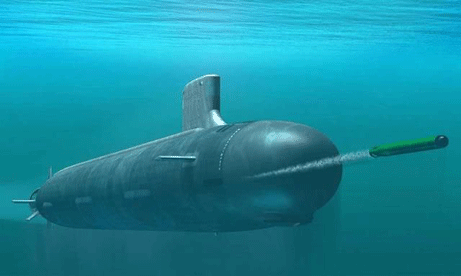
Evidence suggests Britain sent one of its Polaris submarines, which carried 16 ballistic missiles with thermonuclear warheads, to the Falklands during the 1982 war.
RICHARD NORTON-TAYLOR, 6 APRIL 2023 Declassified UK
The war in Ukraine has provoked concern about the use of nuclear weapons, heightened by Russia’s plan to base tactical nuclear arms in Belarus.
While the US and Russia have kmade no secret of their development of these dangerous, indeed potentially devastating, additions to traditional nuclear arsenals, British military planners have also been in on the act – rather more quietly.
The British government, far from taking measures to reduce nuclear tensions in recent years, itself announced, in 2021, that it planned to increase the cap on Britain’s nuclear stockpile to 260 warheads, a 40 per cent increase on previous commitments.
More recently, Britain has refused to comment on reports of a planned new deployment of US tactical nuclear weapons to the American air force base in Lakenheath in Suffolk.
With the exception of the Scottish National Party and Green Party, all British political parties are backing, with growing enthusiasm, the policy of maintaining a Trident missile submarine “continuously at sea”, at an initial estimated cost – not disputed by the Ministry of Defence – of more than £200bn.
The deployment of British nuclear weapons was belatedly highlighted during the 1982 Falklands conflict after the government failed to cover up their presence on ships in the naval task forces. Declassified revealed last year that British warships deployed to the South Atlantic were secretly carrying 31 nuclear depth charges.
But there have been repeated suggestions, never convincingly denied, that even more devastating weapons were deployed during the conflict.
A number of sources have indicated that a submarine equipped with Polaris strategic nuclear missiles – then Britain’s major nuclear weapons system and the forerunner to the current Trident – was diverted to the South Atlantic within range of Argentina.
Polaris
The claims were originally spelled out in a paper on “Sub Strategic Trident” by the widely respected academic, Paul Rogers, emeritus professor of peace studies at Bradford University………………………………………………………..
….the implications of the analysis – that the Thatcher government was prepared to threaten nuclear use against a non-nuclear state………………………………………………….
First use
This was all more than 40 years ago, but is still relevant today, given that the UK has maintained a nuclear posture that includes first-use of nuclear weapons since at least the 1960s. ……………………………….
Confusion, uncertainty
Successive British governments have deliberately used confusion – they call it uncertainty – over the circumstances in which nuclear weapons would be used to boost their argument that they are a “credible” deterrent. …………………………………………
Putin’s deployment of tactical nuclear weapons to Belarus has been condemned by NATO. But as Daniel Hogsta, executive director of ICAN, the International Campaign to Abolish Nuclear Weapons, has pointed out, the US stations nuclear weapons in five European countries – Belgium, the Netherlands, Germany, Italy and Turkey, and now in Britain as well, it seems – and is currently modernising its arsenal.
……………………………………… Putin’s earlier implied threats to use nuclear weapons in the war in Ukraine is rightly viewed as a dangerous and destabilising position to take. It is also uncomfortably close to the UK’s position during the Falklands War over 40 years ago. https://declassifieduk.org/did-uk-deploy-nuclear-armed-submarine-to-falklands-conflict/
Failed Ukrainian nuclear plant attack revealed – The Times

An elite force tried to seize the Zaporozhye NPP last autumn, the newspaper’s sources have claimed.
A “highly dangerous” Ukrainian operation to capture the Zaporozhye nuclear power plant last year ended in failure due to heavy Russian resistance, The Times reported on Friday, citing sources.
According to Kiev’s military personnel interviewed by the British newspaper, the attack involved some 600 elite Ukrainian soldiers who tried to cross the Dnieper River on October 19 by boat.
The operation hinged on the presumption that Moscow’s troops would not be able to fire artillery so close to the nuclear power plant, which is the largest in Europe, one officer told The Times.
However, the paper’s sources said the team met unexpected resistance. Moscow’s forces had “mined everything” and “even pulled up tanks and artillery” to fire on Kiev’s forces while they were on the water, the officer added.
The assault was supported by Ukrainian artillery, including US-made HIMARS systems, but Russian resistance resulted in only a fraction of the Ukrainian force coming ashore. After a three-hour firefight on the outskirts of Energodar, where the plant is located, the Ukrainian soldiers were forced to retreat, the report says.
Some senior Ukrainian officials viewed the offensive as controversial, with the president of Ukraine’s nuclear operator Energoatom, Pyotr Kotin, telling The Times: “it is very dangerous to do such things near nuclear material. Any damage will bring radiation to the people and to the whole world.”
The report corroborates a Russian Defense Ministry statement at the time claiming that on October 19 Kiev’s forces attempted – without success – to mount an amphibious operation in the area, involving up to two Ukrainian companies and a total of 37 boats. The military claimed Ukraine lost over 90 soldiers in the operation.
Russia and Ukraine have repeatedly accused each other of shelling the Zaporozhye NPP, which has been under Moscow’s control since last February. Russian officials have on numerous occasions warned that Kiev’s attacks could trigger a nuclear disaster.
The International Atomic Energy Agency (IAEA) has called on both parties to create a safe zone around the facility, but the negotiations on the matter have failed to achieve a breakthrough.
In late March, Rafael Grossi, the nuclear watchdog’s chief, said the idea was no longer being considered. Instead of establishing a safe zone, the IAEA now wants Kiev and Moscow to promise not to target the plant, or use it for staging attacks.
Ukraine will eventually reveal ‘horrible’ losses – ambassador
https://www.rt.com/russia/574421-ukraine-losses-horrible-russia/ 9 Apr 23
The true number of casualties will be acknowledged only once the conflict is over, Vadim Pristaiko has said.
Ukraine will reveal the extent of its “horrible” losses once its conflict with Russia is over, Vadim Pristaiko, Kiev’s ambassador to the UK, said in an interview released on Friday.
Asked by British tabloid the Daily Express to comment on casualties among Ukrainian military personnel and civilians, Pristaiko said “it has been our policy from the start not to discuss our losses.”
When the war is over, we will acknowledge this. I think it will be a horrible number,” he added.
Pristaiko dismissed any possibility of talks between Moscow and Kiev – at least until Russia withdraws its troops from the territories Ukraine claims as its own. “So, we have to fight to the very last of them or, very unfortunately, the last of us as well,” the envoy said.
The ambassador also commented on the assault brigades that Ukraine says it has assembled for a much-anticipated spring offensive against Russia. “Whoever says there are 40,000 men in these brigades, I would like to point out that we have mobilized a million men,” Pristaiko stated.
Both sides of the Ukraine conflict rarely provide data on their losses. However, last autumn, EU Commission President Ursula von der Leyen put Kiev’s fatalities at 100,000, a claim that was disputed by Ukraine and later removed from the official’s website. In December, Mikhail Podoliak, a senior aide to Ukrainian President Vladimir Zelensky, put the death toll among Kiev’s military at between 12,000 and 13,000 people.
Russia has not officially updated its losses since last September, when Moscow’s Ministry of Defense estimated that 5,937 service members had died.
Pristaiko’s comments come as Ukrainian and Western officials claim that Ukraine will launch a counteroffensive in the coming weeks. Commenting on statements about a potential Ukrainian push, Kremlin Press Secretary Dmitry Peskov noted that the Russian military “thoroughly tracks all the relevant information” on the matter.
Four arrested after blockade of two gates at Trident nuclear base in Scotland
Posted on April 6, 202, by Margaret Ferguson Burns http://www.nukeresister.org/2023/04/06/four-arrested-after-blockade-of-two-gates-at-trident-nuclear-base-in-scotland/?fbclid=IwAR0_QXUS6bh8GFYojhTTaBg7cF7qqXkt2NTNnuDBjGJUVg92m7CVSfxUc_M
This morning, 5th April – an early start and a fine action.
Lying in a lock-on, enjoying the sounds of the gate sliding shut behind us, the warning klaxon overhead, high above the electrified, barbed wire topped main entrance to HMNB Clyde (home of the UK’s nuclear powered and armed submarines of mass destruction) – and the merry call of “Bandit Alarm; North Gate closed; traffic within the base divert to…” blaring out from the loudspeakers.
The heavy rain splashing chill on our faces in the dull coldness, and creeping through the many layers of clothing.
Clad in an International Campaign to Abolish Nuclear Weapons (ICAN) “Nuclear Weapons ARE BANNED” banner (what else could it be?).
And a little later the even merrier message of “Both North and South Gates now closed – all traffic use the Fire Engine Gate” – loudly hailed into the air. So the second team in successful lock-on too.
And then a Ministry of Defence police truck arriving with blue lights flashing; and the cutting crew truck appearing on the scene too.
So it was, for two lock-on teams from Faslane Peace Camp – the four arrested (Alexander, Finlay, Willemien, Margaret), handcuffed and taken off to Clydebank Polis Station (still wearing the ICAN banner through check-in at the Sergeant’s desk – aye). And it’ll be off to Dumbarton Sherriff Court in the morning.
All to protest the UK Government’s plans to provide depleted uranium munitions to Ukraine in its defence against the Russian invasion – it’s known to cause leukaemia, birth defects and much more.
Success was enabled by welfare support from other camp members during the action; and tasty hot food and a blazing hot stove on return to camp late – after release on signing an “Undertaking” to appear in court next day (including the acceptance of various conditions until then e.g. not to go within 20 metres of the base).
[Update – All four activists were out by late afternoon, Thursday, 6th April – court proceedings to follow at some point.]
France’s riverside reactor build plans “irresponsible” – expert.

MURIEL BOSELLI, Paris, 07 Apr 2023, https://www.montelnews.com/news/1477431/edfs-riverside-reactor-build-plans-irresponsible–expert
(Montel) France’s plan to build two riverside reactors is “irresponsible”, given the acceleration of global warming-related water strain, nuclear expert and critic Yves Marignac told Montel.
Climate change has raised fears of extreme temperatures and droughts that will cause more outages at EDF’s 44 nuclear reactors – out of 56 – that are located along rivers and use water for cooling.
The average summer flow of the Rhone, on which 22% of France’s nuclear capacity is installed, could fall by 20% within 30 years, according to a recent study by the Rhone-Mediterranean-Corsica Water Agency.
However, EDF plans to build two additional reactors along the Rhone.
“We can always adapt the reactors to cool themselves by reducing their water withdrawal, as some reactors do in the desert,” said Marignac, but added that these costly developments “remove the interest of placing installations along rivers”.
Higher water use
He said he also feared a “considerable increase” in competition between water-intensive sectors such as agriculture, industry, energy and tourism.
EDF plans to build three pairs of European pressurised reactors (EPRs) by 2042-43 – one at Penly, a second at Gravelines (both on the coast), and a third at Bugey or Tricastin, on the Rhone.
The decision would be made by the end of the year, Joel Barre, inter-ministerial delegate for new nuclear power plants, told Montel.
Last week, president Emmanuel Macron announced a vast investment plan to adapt nuclear power plants to climate change, notably by equipping riverside units with air-cooling towers to make them less dependent on the temperature of waterways.
Although this system allows reactors to continue producing power during hot periods, it consumes much more water as a significant part of the volume withdrawn evaporates through the towers during cooling.
French energy minister Agnes Pannier-Runacher said earlier this week that scenarios established by the international group of climate experts Giec had shown “very limited losses [of production]”.
“Critical” risk
However, a recent report by France’s auditors’ court warned the impact of global warming on the French nuclear fleet could become “critical” by 2050, with three to four times more unavailability than today.
Last summer, France’s nuclear safety authority ASN authorised EDF to exceed temperature limits for some riverside plants to enable units to continue producing power during the drought.
Thibault Laconde, founder of climate risk assessment start-up Callendar, said EDF’s Tricastin site in southeastern France was a better choice than Bugey for cooling because it was near a section of the Rhone that had cool water inflow from the Isere river.
Melting ice caps
Building reactors by the sea also raised questions, experts said, because of uncertainties about the rising sea levels during the EPRs’ lifespan, which EDF has set at a minimum of 60 years.
The auditors’ court has called on EDF to anticipate “the low probability” of an acceleration in ice cap melting, which would lead to a rise in the average sea level of nearly 2 metres by 2100 and 5m by 2150.
However, EDF has only incorporated a sea level rise of around 1.2m into the design of its EPR reactors, said Barre.
EDF did not respond to Montel’s requests to comment.
The British government doesn’t want to talk about its nuclear weapons. The British public does
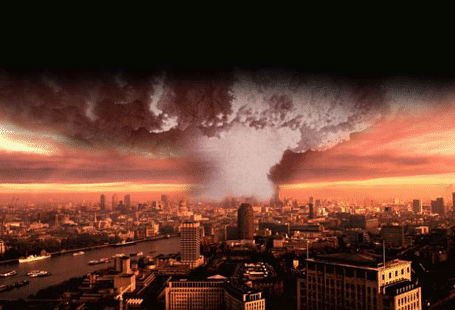
Women are far less likely than men to support UK possession (28 percent of women, compared with 53 percent of men)
Bulletin, By Tim Street, Harry Spencer, Shane Ward | April 6, 2023
In January 2023 British Pugwash and the polling company Savanta conducted a survey of UK public opinion on nuclear weapons issues and potential support for policies that advance nuclear arms control, disarmament, and non-proliferation.
The poll involved 2,320 UK adults who were asked about the Russia-Ukraine war, the United Kingdom’s ongoing replacement of its nuclear weapon system, the possibility that US nuclear weapons will again be stationed in the United Kingdom, the significant increase to the UK’s nuclear warhead stockpile cap, and the entry into force of the Treaty on the Prohibition of Nuclear Weapons.
Our polling results found some notable differences between the British public’s views and the policies of the UK government concerning nuclear weapons. While 40 percent of poll respondents support the United Kingdom possessing nuclear weapons, there is significant support for policies that would control, limit, or even eliminate the UK’s nuclear weapons—including among supporters of nuclear possession. For example, over a third of those who support the UK’s possession of nuclear weapons also support joining a multilateral disarmament treaty.
Despite the challenges involved, especially at a time of war in Europe, we at British Pugwash see an opportunity for UK political parties to adopt policies more supportive of nuclear arms control and disarmament. Our key findings revealed these differences between government policy and public opinion:
Use of nuclear weapons. The UK government’s policy is to consider using nuclear weapons “only in extreme circumstances of self-defence, including the defence of our NATO allies.” UK and NATO policy does not rule out the first use of nuclear weapons.
Our poll found that 48 percent of UK adults oppose the first use of nuclear weapons by the United Kingdom, and only 40 percent support first use. This finding builds on the results of the survey British Pugwash conducted in 2021, which found that two-thirds of the British public want NATO to renounce the first use of nuclear weapons.
Replacing nuclear weapons. The United Kingdom is replacing all four parts of its nuclear weapons system: submarines, missiles, warheads, and associated infrastructure. The estimated cost of the four new nuclear-armed submarines is £31 billion (about $38 billion), and the estimated total cost of replacing nuclear weapons between 2019 and 2070 is at least £172 billion ($212 billion).
Our poll found that 42 percent of UK adults think the estimated cost of replacing the UK’s nuclear weapons does not represent value for money.
Stationing US nuclear weapons in the United Kingdom. The UK government has previously allowed US nuclear weapons and nuclear-capable aircraft to be stored, maintained, and operated from UK military bases. Although the United Kingdom has not hosted US nuclear weapons since 2008, in April 2022 an analysis of US Defense Department documents reported that a facility at the Royal Air Force’s Lakenheath base in Suffolk—which is used by the US Air Force—was being upgraded, potentially allowing the United States to again deploy nuclear weapons there.
British public opinion is split over allowing the United States to deploy nuclear weapons on UK territory. Our poll found that 34 percent of UK adults oppose, and 32 percent support, stationing US nuclear weapons in the United Kingdom.
Treaty on the Prohibition of Nuclear Weapons. In 2017, 122 states voted in support of the Treaty, which prohibits the development, testing, production, acquisition, possession, stockpiling, and use of nuclear weapons, as well as any threat to use them. The United Kingdom has not signed or ratified the treaty. To join the treaty, the country would have to dismantle its nuclear arsenal or present a legally binding plan to do so.
Our poll found that 39 percent of UK adults support joining the ban treaty. Among 18- to 34-year-olds, 48 percent support joining the treaty, and only 13 percent are opposed.
Nuclear weapons possession. The United Kingdom is one of only nine countries possessing nuclear weapons. Our poll found that 40 percent of UK adults are in favor of possession. Women are far less likely than men to support UK possession (28 percent of women, compared with 53 percent of men). Some 27 percent of UK adults oppose UK nuclear possession, 29 percent neither support nor oppose nuclear possession, and 5 percent said they “don’t know” in response to this question.
Our poll also found that a minority of UK adults (39 percent) fully support the government’s decision to increase the UK’s nuclear warhead stockpile cap.
Even among supporters of nuclear possession, we found significant concerns about the government’s approach to nuclear weapons. For example, 23 percent of those who support nuclear possession don’t think the estimated cost of replacing the UK’s nuclear weapons represents value for money.
Furthermore, 38 percent of those who support UK nuclear possession do not want the military to use nuclear weapons first in a conflict. Notably, 35 percent of those who currently support the possession of nuclear weapons also want the United Kingdom to join the international ban treaty that would eliminate the country’s nuclear arsenal.
War in Ukraine. Our data indicate that Russia’s invasion of Ukraine has significantly strengthened support for UK possession of nuclear weapons among those who already favored possession. Two-thirds of those who support nuclear possession said the conflict strengthened their position on this issue.
We also saw increases in support for nuclear weapons possession among those who otherwise oppose nuclear possession. In our poll, 16 percent of those who oppose UK possession of nuclear weapons said the Ukraine conflict had increased their support for possession.
Responses to this particular question likely reflect wider public support for UK involvement in the Ukraine conflict and may thus be temporary. Moreover, 39 percent of UK adults said the Ukraine conflict had “made no difference” to their view on UK nuclear possession. Overall, our data suggest that a key impact of the Ukraine war has been to reinforce support for UK nuclear possession among UK adults who already held this view.
Uncertainty and ambivalence. Nearly a third of respondents gave an “on the fence” answer to several of the questions posed. For example, 29 percent said they did not support or oppose the UK’s possession of nuclear weapons; 30 percent said they neither support nor oppose the rise in the nuclear warhead stockpile cap; 28 percent said they neither support nor oppose US nuclear weapons again being stationed in the United Kingdom; and 29 percent said they “don’t know” or are “unsure” whether the estimated cost of the UK nuclear weapons replacement program represents value for money.
These findings indicate that there is significant uncertainty about, and ambivalence toward, nuclear weapons among UK adults.
Why our survey matters.………………………………………………………………………………..
Greater public and parliamentary participation in decision making would improve the quality and legitimacy of the United Kingdom’s international policy. Yet decisions on nuclear weapons (and national security more generally) are largely made behind closed doors. The lack of democracy, transparency, and accountability surrounding nuclear weapons has a clear impact on the British public’s interest in and understanding of the issues. The findings of our poll may partly be explained by the lack of awareness and the absence of public debate on nuclear matters in the United Kingdom. The large number of “don’t know” and “on the fence” responses indicates that many UK adults do not feel well enough informed to make a judgment on these issues.
…………………………………………………………….. Our polling data clearly show a sizable gap between public attitudes and the government’s nuclear weapons policy. With a UK general election likely to be held in 2024, British political parties should be developing policies that better represent public views on nuclear weapons issues—and increase democracy, transparency, and accountability in defense and foreign policy more generally. https://thebulletin.org/2023/04/the-british-government-doesnt-want-to-talk-about-its-nuclear-weapons-the-british-public-does/
—
Campaigners continue to take a stand against the plan for new nuclear power at Bradwell
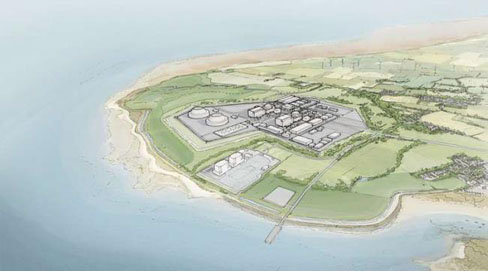
CAMPAIGNERS have promised to continue to protect the people and
environment until a village site is ruled out for use as a nuclear power
site. The Government has said it is “committed to a programme of new
nuclear projects beyond Sizewell C”.
The current government nuclear
policy statement identifies Bradwell as a site for nuclear energy until the
end of 2025. Despite the stop to the plans for a Chinese-led nuclear power
station in Bradwell, campaigners are continuing to take a stand against the
site being considered for nuclear use.
Maldon Standard 6th April 2023
1 This Month





PLEASE OPPOSE HR 8255 AND S.3639 – bills would accelerate satellite deployment, with no environmental review or safeguards – https://ncstd5li.quorum.us/campaign/169331/
To see nuclear-related stories in greater depth and intensity – go to https://nuclearinformation.wordpress.com
-
Archives
- October 2026 (49)
- September 2026 (339)
- August 2026 (330)
- July 2026 (355)
- June 2026 (287)
- May 2026 (306)
- April 2026 (356)
- March 2026 (251)
- February 2026 (267)
- January 2026 (308)
- December 2025 (358)
- November 2025 (359)
-
Categories
- 1
- 1 NUCLEAR ISSUES
- business and costs
- climate change
- culture and arts
- ENERGY
- environment
- health
- history
- indigenous issues
- Legal
- marketing of nuclear
- media
- opposition to nuclear
- PERSONAL STORIES
- politics
- politics international
- Religion and ethics
- safety
- secrets,lies and civil liberties
- spinbuster
- technology
- Uranium
- wastes
- weapons and war
- Women
- 2 WORLD
- ACTION
- AFRICA
- Atrocities
- AUSTRALIA
- Christina's notes
- Christina's themes
- culture and arts
- Events
- Fuk 2022
- Fuk 2023
- Fukushima 2017
- Fukushima 2018
- fukushima 2019
- Fukushima 2020
- Fukushima 2021
- general
- global warming
- Humour (God we need it)
- Nuclear
- RARE EARTHS
- Reference
- resources – print
- Resources -audiovicual
- Weekly Newsletter
- World
- World Nuclear
- YouTube
-
RSS
Entries RSS
Comments RSS

