France, Germany Dispute Over Nuclear Energy Leaves EU Deadlocked on Renewables
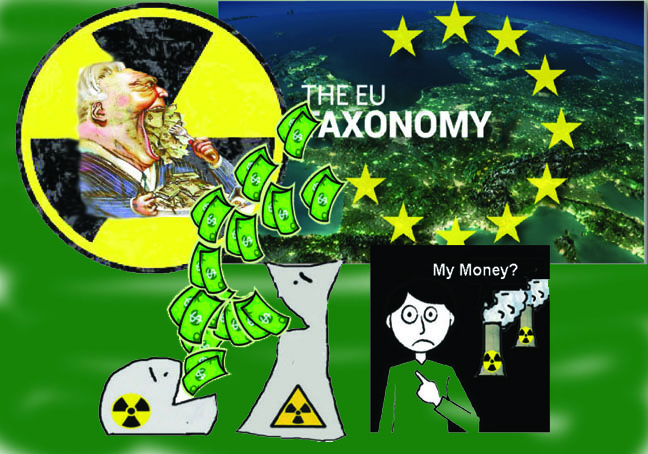
- Paris wants to win greater role for nuclear in energy revamp
- Disputed law on clean energy is key element of EU Green Deal
Bloomberg ,By Ewa Krukowska, Ania Nussbaum and, Petra Sorge, 3 June 2023
France is seeking to reopen negotiations over a key Green Deal law in an effort to ensure a greater role for nuclear in Europe’s energy transition, a move fiercely opposed by Germany, leaving the talks in deadlock.
The government in Paris has informed Sweden, which holds the EU’s rotating presidency, that it’s seeking changes to an agreement already brokered with other EU entities, according to officials with knowledge of the matter. Such a step would require revisiting talks with the bloc’s parliament and the European Commission ………………………….. (Subscribers only) https://www.bloomberg.com/news/articles/2023-06-02/eu-in-deadlock-over-renewables-as-france-and-germany-lock-horns#xj4y7vzkg
Scientists heat nuclear reactor heated to 100 MILLION degree Celsius – hotter than the SUN (what could possibly go wrong?)

- British company achieved the milestone using a ‘spherical tokamak’ called ST40
- Nuclear fusion reactors copy the energy-producing process of stars like our sun
By JONATHAN CHADWICK FOR MAILONLINE , 2 June 2023
Described as the ‘holy grail’, the milestone was achieved using the ST40 ‘spherical tokamak’ – a ‘cored-apple’ shaped nuclear device in Oxfordshire – and the team is now working on a fusion reactor that can connect to the national grid in the 2030s.
The milestone is short of the record set by Chinese scientists in 2021, who ran their reactor at 120 million degrees Celsius. ……………………………………………………………………………….
Funded by the UK government, STEP will be located at the existing West Burton power station in Nottinghamshire, it was announced last October……………………………………………………………………………………………………… https://www.dailymail.co.uk/sciencetech/article-12147389/Nuclear-fusion-breakthrough-Holy-grail-power-production-closer-reality.html
Finland’s newest nuclear plant is warming the sea, harming wildlife
yle 1 June 23
The Olkiluoto 3 reactor became fully operational in April after a decade-long delay.
“……… climate groups have pointed to a number of adverse effects the largest reactor in the Nordic region will have on its surrounding environment, including the warming of the seawater used to cool the plant and its effects on marine life.
Olkiluoto 3 is by far the largest of the three reactors located at Eurajoki and its operations will almost double the amount of water required to cool the plants.
In total, the three reactors need around 120-130 cubic metres of cooling water per second. This is more than half the average flow of the nearby Kokemäenjoki river, and Olkiluoto 3 accounts for about 57 cubic metres of this volume.
Court orders investigation
The seawater used to cool the nuclear power plant will also inevitably contain fish and other marine organisms.
Finland’s Administrative Court ordered an investigation to be carried out into the effects of Olkiluoto 3 on the local marine life when regular electricity production began in April………………………………………………………………………………………… https://yle.fi/a/74-20034904
France’s triple dependence on nuclear fuel .
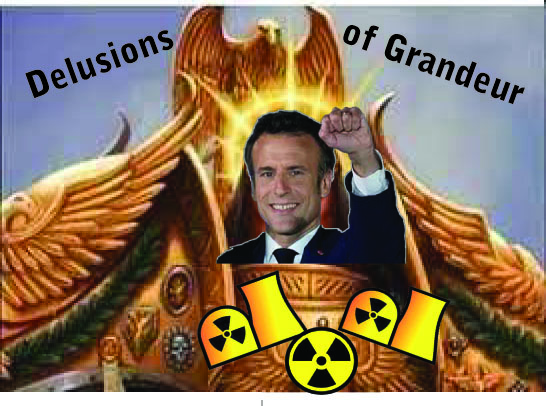
the main argument of this policy is “national energy independence”, moreover making a misleading shortcut from energy to electricity and from it nuclear power, an imaginary symbol of supposed independence.
Tuesday, May 30, 2023, by Bernard Laponche , Jean-Claude Zerbib, m https://www.global-chance.org/IMG/pdf/gc_la_triple_de_pendance_mai_2023_v2.pdf
Introduction
With 56 reactors spread over 18 EDF nuclear power plants, approximately 70% of electricity production in France is ensured by the use of nuclear energy, thanks to the production of heat by the combination of fission and chain reaction in reactors.
This situation makes France the most “nuclearized” country in the world in proportion to its population and the third in level of production after the United States and China, which are much more populous.
The program of reactors currently in operation (including the two Fessenheim reactors being dismantled) was launched in the early 1970s and reinforced by the “Messmer Program” of 1974, on the occasion of the first “oil shock”, inaugurating the “all-electric-all-nuclear” policy which continued until the construction of the Flamanville EPR in 2007, which has still not started.
The current government places itself in this line by advocating the extension of the duration of operation of the current reactors and the construction of a certain number of reactors of the EPR2 sector, heir to the EPR.
As at the time, and although times have changed, the main argument of this policy is “national energy independence”, moreover making a misleading shortcut from energy to electricity and from it nuclear power, an imaginary symbol of supposed independence. Let us admit, however, that the design and construction of the reactors are “national”, although much equipment is imported, the fact remains that the design is essentially that of the enriched uranium and pressurized water reactors of Westinghouse origin, and that the “francization” carried out at the beginning of the 1980s now raises a lot of questions, in particular with the discovery of cracks caused by corrosion under stress or thermal fatigue, which plague a certain number of reactors, including the most recent ones.
On the other hand, independence is far from being acquired on the side of the “nuclear fuel” which “boils the pot”. Indeed, natural uranium, the raw material for fission, has been completely imported for several decades. The suppliers are numerous but, among the main ones, Kazakhstan, Niger, Uzbekistan, Australia, Canada, three present geopolitical risks. But, we are told, since France has an enrichment plant, a reprocessing plant and fuel fabrication plants, we could rest easy.
The reality is much more complex.
On the other hand, independence is far from being acquired on the side of the “nuclear fuel” which “boils the pot”. Indeed, natural uranium, the raw material for fission, has been completely imported for several decades. The suppliers are numerous but, among the main ones, Kazakhstan, Niger, Uzbekistan, Australia, Canada, three present geopolitical risks. But, we are told, since France has an enrichment plant, a reprocessing plant and fuel fabrication plants, we could rest easy.
The reality is much more complex.
The purpose of this article is to assess:
- The tonnages of uranium which are delivered directly to France by the producing country, in the form of yellow cake and then undergo all the transformations, up to being put into the form of assemblies;
- The tonnages of natural uranium transiting through a third country, to arrive in France in the form of enriched uranium, gaseous or solid, or even fuel assemblies produced abroad;
- EDF’s depleted uranium enrichment operations in Russia;
- EDF and Orano’s reprocessing uranium enrichment operations in Russia.
- Manufacture of fuel assemblies, partly carried out abroad.
Thus will be established the triple dependence, total or partial, in the supply of natural uranium, in the enrichment of natural uranium, depleted uranium and reprocessed uranium and, in the manufacture of fuel assemblies.
This article is dedicated to the memory of André Guillemette, member of Global Chance and ACRO, expert in issues related to the reprocessing of irradiated fuels and the plutonium industry, author of several articles on these subjects, in particular in collaboration with Jean-Claude Zerbib, published on the Global Chance website ( www.global-chance.org ).
To read the full text https://www.global-chance.org/IMG/pdf/gc_la_triple_de_pendance_mai_2023_v2.pdf—
Dutch government sets many $millions in funding for nuclear power , and to encourage investors in nuclear

Power Magazine, 1 June 23
Government officials in the Netherlands have earmarked more than $350 million to fund further development of nuclear energy in the country, including extending the operating license of the 485-MW Borssele nuclear power plant. The Borssele station at present is the Netherlands only nuclear power facility. Officials in late April released a draft of the “Climate Fund for 2024” that included money for the Borssele extension, along with two new large-scale reactors and a development plan for small modular reactors (SMRs). The draft also said millions of dollars were being set aside to help develop a nuclear power workforce in the Netherlands.
……………………………………………….The draft budget provides more support for development of SMRs, with about $72 million to bring more interest from nuclear power investors.
……………………………….Amsterdam-based ULC-Energy in August of last year signed an agreement with the UK’s Rolls-Royce SMR for collaboration on SMR deployment in the Netherlands……………………………………………….. https://www.powermag.com/dutch-officials-set-funding-for-nuclear-power-program/—
Female health care workers need better protection from radiation, doctors say

Finnish study showed that breast cancer rates were 1.7 times higher than expected among radiologists, surgeons and cardiologists when compared to female physicians who don’t work with radiation.
Finnish study showed that breast cancer rates were 1.7 times higher than expected among radiologists, surgeons and cardiologists when compared to female physicians who don’t work with radiation.
London — A group of physicians is calling on health care employers to provide female workers who are exposed to on-the-job radiation with added protections to minimize their risk of breast cancer.
In an editorial recently published in the journal BMJ, the physicians point out that ionizing radiation is a known human carcinogen, and breast tissue is highly sensitive to radiation. “As such, there are concerns that regular exposure to ionizing radiation during image guided procedures may be linked to a higher risk of breast cancer in female health care workers.”
Although measuring occupational radiation-induced breast cancer risk is a challenge, examining the available evidence and improving personal protective equipment options can help reduce that risk for the rising number of female workers entering X-ray and imaging occupations.
PPE such as lead gowns that are used to shield the body from radiation leave the area close to the armpit exposed, the physicians write, and that area is a common site of breast cancer.
A small Finnish study showed that breast cancer rates were 1.7 times higher than expected among radiologists, surgeons and cardiologists when compared to female physicians who don’t work with radiation.
The London-based Society of Radiographers’ Ionising Radiation Regulations 2017 state that radiation levels delivered to all health care workers should be “as low as reasonably achievable.” Actions include reducing the duration of exposure, increasing distance from the source and shielding all workers with effective PPE.
Additional protection, including capped sleeves and axillary protection wings that can be worn under standard medical gowns, would protect the upper outer quadrant of the breast. Female health care workers should consider adopting this extra layer of protection, the European Society for Vascular Surgery says in its 2023 Clinical Practice Guidelines on Radiation Safety.
“Providing appropriate protection is a legal requirement of an employer, who has a duty of care to all workers exposed to radiation,” the editorial states. “The female breast appears to be particularly vulnerable and it is therefore important employers invest in protective equipment that enhances the safety of all their staff.”
Rafael Grossi to brief UN Security Council on Zaporizhia nuclear situation
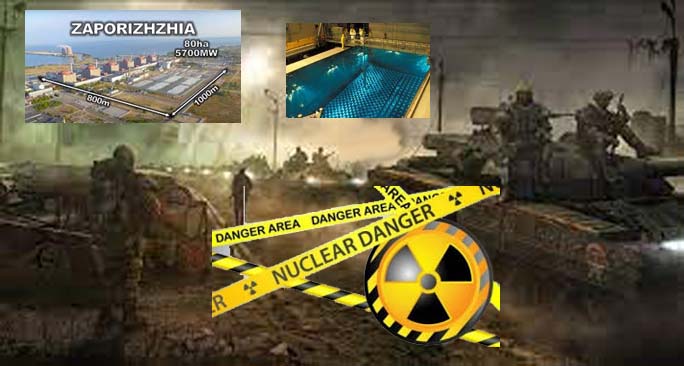
The International Atomic Energy Agency was on 30 May due to brief the UN
Security Council on his proposals for safeguarding Ukraine’s Zaporizhia NPP
(ZNPP). “IAEA director general Rafael Grossi is planning to brief the UN
Security Council on the nuclear safety and security situation” during a
meeting chaired by Switzerland, according to an official statement by the
Agency in advance of the meeting.
Director general Grossi has said he is
seeking to secure agreement on a set of principles to protect ZNPP during
the armed conflict, covering also the availability and security of external
power supplies at all times.
Mr Grossi’s plan consists of five principles:
a ban on the deployment of heavy military equipment and military personnel
at nuclear power plants, a ban on shooting from the territory and towards
the power plant, ensuring security, protecting all external power lines,
and monitoring compliance with these principles.
Modern Power Systems 30th May 2023
We are going backwards: we now face a new wave of nuclear weapons manufacturing
we now face a new wave of nuclear weapons
manufacturing and a new era in the shadow of catastrophic accidents and
nuclear war, writes BILL KIDD MSP. The MoD logged 460 safety incidents of
all kinds at the two British nuclear bases from 2019 to 2021. With a
further 117 low-potential releases, that sets an adverse trend. So if we
don’t get blown away before one of these splendid sunsets, we could still
be poisoned by radiation leaks due to equipment failures or human errors.
Enjoy your summer!
Morning Star 30th May 2023
https://morningstaronline.co.uk/article/f/bringing-nuclear-danger-all-back-home
Nuclear waste disposal site could be built next to power plant, Estonia
ERR News Editor: Mari Peegel, Helen Wright, https://news.err.ee/1608994484/nuclear-waste-disposal-site-could-be-built-next-to-power-plant, 31 May 23
Waste produced by a future nuclear power plant could be stored on the same site, newly published analysis carried out by the Ministry of the Environment and the Ministry of Finance shows.
The government is studying several sites across the country to see if any are suitable for a future small reactor.
After the announcement was made in April, additional research was carried out into the plant’s waste disposal at sites in Loksa, Kunda, Toila, and Varbla.
Now the results show it would be possible to build storage sites for nuclear waste at these locations, said Anna-Helena Purre from Steiger OÜ, who undertook the study.
“We carried out a spatial analysis: We looked at the location of the plant itself in open and closed cooling systems. Secondly, we looked at waste disposal – the low- and intermediate-level waste scenarios – and spent fuel disposal – the high-level waste scenario. These can be buried in deep boreholes, for example,” she said.
The government has not yet decided whether it will build a nuclear power plant and a decision is likely to be made in 2024. Production would start in 2035 at the earliest.
The U.S., France, Canada, UK, Japan, and Germany have stepped up to cooperate with Estonia.
Initially, 15 sites in Toila, Kunda, Loksa, Kuusalu, Viimsi, Paljaassaare, Kakumäe, Saare and Hiiumaa, Varbla and Harku municipalities were under consideration. But taking into account the plant’s socio-economic aspects, sites in places with a decreasing and below-average population far from the capital are preferred.
Neither Russia nor Ukraine committed to the IAEA’s 5 principles to protect Zaporizhzhia nuclear power plant.
Neither Russia nor Ukraine committed to respect five principles laid out
by International Atomic Energy Agency (IAEA) chief Rafael Grossi on Tuesday
(30 May) to try to safeguard Ukraine’s Russian-occupied Zaporizhzhia
nuclear power plant.
Grossi, who spoke at the UN Security Council, has
tried for months to craft an agreement to reduce the risk of a catastrophic
nuclear accident from military activity like shelling at Europe’s biggest
nuclear power plant.
His five principles included that there should be no
attack on or from the plant and that no heavy weapons such as multiple
rocket launchers, artillery systems and munitions, and tanks or military
personnel be housed there. Grossi also called for off-site power to the
plant to remain available and secure; for all its essential systems to be
protected from attacks or sabotage; and for no actions that undermine these
principles.
EU Reporter 1st June 2023
1
Belarusian president offers nuclear weapons to those willing to join his alliance
29 May 23
Belarusian President Alexander Lukashenko is offering nuclear weapons to countries willing to join the Union State of Russia and Belarus. CNN’s Laila Harrak reports. https://edition.cnn.com/videos/world/2023/05/29/exp-nuclear-weapons-belarus-lukashenko-putin-laila-harrak-fst-05292aseg3-cnni-world.cnn
‘Independent’ Ukrainian ‘kill list’ actually run by Kiev, backed by Washington

Myrotvorets lists thousands of “saboteurs”, “separatists”, “terrorists” and “traitors”. Sometimes, it has crossed out their photographs once they had been killed, with the label “liquidated”.
Mint Press, MAY 12TH, 2023, DAVID MILLER
Late last year, my name was added to a blacklist published online by the Ukraine Center for Countering Disinformation. I joined over ninety others deemed to be “speakers who promote narratives consonant with Russian propaganda.“
These included Manuel Pineda and Clare Daly, both leftist Members of the European Parliament (MEP); Also counted are people on the right, such as Doug Bandow of the Cato Institute, neocon and former IDF officer Edward Luttwak, a slew of rightist MEPs; Ex CIA officer, Ray McGovern; former military and intelligence figures such as Scott Ritter and Douglas McGregor, as well as academics such as John Mearsheimer and Jeffrey Sachs. Journalists on the list included Glenn Greenwald, Tucker Carlson and Eva Bartlett, Roger Waters from Pink Floyd, and even actor Steven Seagal.
What was my crime? It said my “pro-Russian narrative” was claiming that “NATO’s proxy war with Russia is taking place in Ukraine”. Of course, a NATO proxy war is exactly what is happening there, as this article will only further confirm.
The listing helpfully provided a link with the evidence, an article I wrote for Mayadeen English called “How disinformation works: Western intelligence agencies global war on the left.” It contained a single, 176-word paragraph on Ukraine titled “‘Russian Disinformation’ or Ukrainian lies?” It recounted several examples of Ukrainian misinformation and concluded that “Anyone who mentions any particular truth is derided for echoing Putin’s ‘talking points’.” In the event I was actually denounced as an “information terrorist” who might be guilty of “war crimes.”
Being added to the blacklist concentrates the mind wonderfully on the forces ranged against the possibility of truth and justice in the crisis-ridden West. When I was first accused, over a decade ago now, of antisemitism, my response was to intensify my research and writing activities on the organizations involved in defaming me. Since then I have produced a long catalog of work on the Zionist movement as well as on Western propaganda activities. Of course, the defamatory attacks encourage an atmosphere where social media threats can be made. But the issue of Nazism in Ukraine will be seen in retrospect as a defining issue of our era and it is important to remember that the reason I and many others are threatened by the Ukraine government and their NATO backers is because we in turn threaten to expose them for what they are: Nazi collaborators.
As it turns out, the covert “kill list” website is a product of the Ukraine regime, effectively funded by the CIA (amongst others) and is hosted by NATO. One extraordinary thing is that many American citizens, including ex-military and intelligence operatives, are included, as well as a significant number of citizens of NATO member countries. Perhaps the most remarkable element is that NATO has hosted the site (and a collection of affiliated websites) on its servers in Brussels. At the same time as NATO think tank the Atlantic Council boasts that Henry Kissinger is on its Board of Directors, NATO also hosts a kill list website on which Kissinger appears.
As it turns out, the covert “kill list” website is a product of the Ukraine regime, effectively funded by the CIA (amongst others) and is hosted by NATO. One extraordinary thing is that many American citizens, including ex-military and intelligence operatives, are included, as well as a significant number of citizens of NATO member countries. Perhaps the most remarkable element is that NATO has hosted the site (and a collection of affiliated websites) on its servers in Brussels. At the same time as NATO think tank the Atlantic Council boasts that Henry Kissinger is on its Board of Directors, NATO also hosts a kill list website on which Kissinger appears.
•Psb-news.org (3 April 2015)
•Psb4ukr.ninja (19 April 2015)
•Psb4ukr.net (7 May 2015)
•Psbr4ukr.xyz (8 November 2015)
•Report2psb.online (19 August 2017)
These were used either as mirror sites, as digest news from the site, or, in the case of the last one, a form for reporting suspects. The Myrotvorets.center domain name was first registered on 7 November 2015 and the site was live by February 2016.
Three people are associated with these domains and they provide valuable clues to who and what was involved in the kill list site. They are:
Victor/Viktor Garbar is a longstanding Maidan activist and co-ordinator of the Maidan Monitoring Information Center…………………………………….
Vladimir/Volodymyr Kolesnikov is a webmaster and developer. …………
Oksana/Oxana Tinko………..
OPERATION BUTTERFLY – THE PROTOTYPE KILL LIST
Tinko is also the registrant of a series of domains that appear to be components of the Myrotvorets project and one that appears to have been a prototype. It is particularly stark in its intention to use the website to kill traitors or “terrorists”. ……………….
Operation Butterfly website FAQs make it clear that it considers calling “for separatism or changes in the constitutional system” a crime. ……………………………………..
Myrotvorets lists thousands of “saboteurs”, “separatists”, “terrorists” and “traitors”. Sometimes, it has crossed out their photographs once they had been killed, with the label “liquidated”. This, for instance, happened after the murder of Daria Dugina in Moscow in August 2022. Today the Myrotvorets site houses links to two other domains which appear to be integral parts of the operation. One – ordilo.org – is titled “STORAGE OF INFORMATION ABOUT CRIMES AGAINST UKRAINE”. The other – identigraf.center – allows various categories of users to submit images of individuals for facial recognition scanning. Tinko registered both domains.
THE NATO CONNECTION
Kolesnikov and Tinko were successive registrants on Natocdn.work (from March 11, 2015). Tinko registered a follow on domain Natocdn.net (28 January 2019). These obscure-sounding web addresses were used to host the files needed for the Myrotvorets site as can be seen by examining the “page source”(right-click in Chrome and select “View page source”) on the site including in versions held in the Internet Archive. The first domain name (.work) was previously used to host both the original and succeeding Myrotvorets web sites. Thus it is in the page source on psb4ukr.org on 15 December 2015 just before the launch of the myrotvorets.center website, and is in the latter page source when it was first captured in the internet archive on 25 February 2016. The archive also shows that the latter domain was later hosted via Natocdn.net.
The letters CDN perhaps refer to a Content Delivery Network, a device to speed up the delivery of web pages when they are searched from an otherwise remote location, such as the California based name servers also used by the site. In fact, the Natocdn.net domain is hosted at none other than the official website NATO.int, based at its headquarters in Brussels…………………………………………….
It is also noteworthy, however, that a Ukraine Ministry of Defense psyops Powerpoint from 2015, leaked in the same month of that year (April), refers to the NATO cyber center as one of seven Western groups with which it had “cooperation”.
Nevertheless, the link to the NATO servers remained in the page source of the Myrotvorets websites. It was not until the NATO connection became an issue again in late August 2022 that anything was done about this. This was after Henry Kissinger had been added to the site in May. Then on August 24, independent journalist Eva Bartlett (who was named on both the Myrotvorets and Center for Countering Disinformation lists) reported that the page source code for Myrotvorets included links to resources held at psb4ukr.natocdn.net. Later, on October 14, she drew attention to the fact that Elon Musk had been listed on the site briefly after he threatened not to continue supplying his Starlink system to the Ukraine military for free. Musk responded “Is this list real?” Within eight days the page source links to natocdn.net were gone.
……………………………………. More than one hundred links to natocdn.net were still there on October 21, 2022 at 22:35 but were all gone by the next morning at 09:14. Even after the incriminating text was removed, however, IP tracking sites show the domain natocdn.net is still, at the time of writing (Archive version), mounted on servers at NATO headquarters in Brussels. In fact, many of the image files used to make up the site are still hosted at that URL including the gory front page collage of alleged dead Russian soldiers. (Archive version).
But what of Informnapalm.org – the other site which appears to have been hosted on nato.int? The evidence suggests that Myrotvorets is a project of InformNapalm.
INFORMNAPALM AS A UKRAINE MINISTRY OF DEFENSE “SPECIAL PROJECT”
InformNapalm presents itself as a volunteer-run intelligence service. But this is a deception. A Ukrainian Ministry of Defense PowerPoint presentation leaked in 2015 refers to it as a “special project” of the ministry, along with a number of others who themselves stand in need of further investigation.
Corroborating information comes in the form of the identity of the person who registered the domain name informnapalm.org – the aforementioned Vladimir Kolesnikov on March 29 2014, six months before the first of the kill list domains were registered…………………………. Myrotvorets is, therefore, a project of InformNaplam which is, in turn, a ”special project” of the Ministry of Defense.
Other links between the two projects include that Oksana Tinko, in registering the domain Myrotverots.center, used her informnapalm.org email address…………..
Tinko is fond of displaying Nazi and Banderite imagery on her social media. There is a swastika on her Github page and her Facebook profile features a background with the red and black colors of Bandera and a star of David together with a reptilian dressed as an orthodox Jew.
The journalist George Eliason who excavated much of the story of InformNapalm reports that the people involved are “mostly Pravy Sektor” (Right Sector), in other words far right supporters of Stepan Bandera. Pravy Sektor uses the red and black colors of Bandera in its flag, just as Tinko does on her Facebook profile. In late 2019 Myrotvorets proudly displayed a portrait of Bandera on its homepage to mark the Nazi collaborator’s birthday.
picture below is not from Myrotvorets

In the early days of the Myrotvorets project the InformNapalm logo was prominently displayed. It was still there on May 13, 2016, but was gone by August of that year. This may have been because of its publication of the list of thousands of journalists’ names which caused significant backlash and led to a statement that “taking into account the reaction… the Center ‘Peacemaker’ made a difficult decision to close the site.” The site did not shutter, however. By 2017, Myrotvorets continued to boast of its links with InformNapalm,……………..
It would appear that InformNapalm is the parent or coordinating body for an evolving team of pro-Ukrainian hackers, researchers, journalists and devotees of the far right.
………………………… PROMETHEUS
It is a matter of public record that InformationNapalm has been funded by the National Endowment for Democracy, the CIA proxy. For example, in its now deleted list of funding for UKraine, the NED reported that $100,000 was given to a project of “Prometheus”. t would “conduct open-source investigations that monitor and spotlight external Russian military actions and post them on its popular and trusted website, https://informnapalm.org”. The Prometheus domain Prometheus.ngo was also registered by Volodymyr Kolesnykov on March 11, 2016.
Prometheus advertises two “information partners” in its operation, InformNapalm and The Ukraine Media Crisis Center. InformNapalm, created in early 2014, obviously only became a project of Prometheus after the latter was created in 2016.
The Ukraine Crisis Media Center is of course another Western-funded project. It even admits to a long list of Western State funding on its website (including USAID, Embassies of the U.S., Netherlands, Switzerland, Finland, Norway, Sweden and Germany), as well as military/intelligence funding agencies such as the NED, NATO, the U.K. based Institute for Statecraft (a military intelligence cut out), regime change enthusiasts at the Soros network of foundations and the Open Information Partnership an MI6 funded project from the U.K., in which Bellingcat and other MI6 contractors were/are involved.
An avalanche of Western cash has been showered on such organizations, all of which appear to have gone to some trouble to disguise their real origins and connections (including to each other), not to mention their affiliations to the Banderite far right.
BACK TO NATO
InformNaplam boasts in its list of achievements of working closely with NATO run groups ……………………………………..
These boasts put both the DFR Lab and Bellingcat in the frame as collaborators with the Nazi kill list, which is itself based on the OSINT techniques pioneered by both groups. Now that we know that the “volunteers” of Mirotvorets, InformNapalm and the Ukraine Hacker Alliance are a project of the Ukrainian government with significant NATO support, the role of the DFR Labs and Bellingcat appears to be part of that support for the Nazi kill list.
In the West, these Nazi collaborators and apologists attempt to push an altogether softer narrative. ……………..
……..the evidence here supports the contention that NATO is fighting a proxy war in Ukraine. There is a link between the Nazi kill list and the blacklist to which I was added and that is that both are operations of the regime in Kiev. ………………………………….
Finally, it seems likely a key reason why the Nazi kill list remains online is that it is protected by the regime, the U.S. government and NATO.
Professor David Miller is a non-resident Senior Research Fellow at the Centre for Islam and Global Affairs at Istanbul Zaim University and a former Professor of Political Sociology at the University of Bristol. He is a broadcaster, writer and investigative researcher; the producer of the weekly show Palestine Declassified on PressTV; and the co-director of Public Interest Investigations, of which spinwatch.org and powerbase.info are projects. He tweets @Tracking_Powe https://www.mintpressnews.com/independent-ukraine-kill-list-actually-run-by-kiev-backed-by-washington/284639/
Putin bribes ‘friendly nations’ with use of 24-hour ‘floating nuclear power stations’
As war rages on in eastern Ukraine, Russia’s state-owned nuclear energy company Rosatom has announced it will share floating nuclear power plant (FNPP) technology only with “friendly nations” to help supply electricity.
By ALESSANDRA SCOTTO DI SANTOLO 29 May 23
Russia will supply floating nuclear power plant (FNPP) technology to enable around-the-clock supply of electricity to remote areas of allied countries, the Kremlin-linked energy company announced…………………………………………………….. more https://www.express.co.uk/news/world/1775103/putin-floating-nuclear-power-plant-rosatom-russia—
Ukraine claims Russia is plotting ‘a provocation’ at nuclear plant, offers no evidence
By Associated Press May 28, 2023, 9 News,
Ukraine’s military intelligence has claimed, without offering evidence, that Russia is plotting a “large-scale provocation” at a nuclear power plant it occupies in the southeast of the country with the aim of disrupting a looming Ukrainian counteroffensive.
A statement released by the intelligence directorate of Ukraine’s Defence Ministry claimed that Russian forces would strike the Zaporizhzhia nuclear power plant, the biggest in Europe, and then report a radioactive leak in order to trigger an international probe that would pause the hostilities and give the Russian forces the respite they need to regroup ahead of the counteroffensive………………………………………………….. https://www.9news.com.au/world/ukraine-claims-russia-is-plotting-a-provocation-at-nuclear-plant-offers-no-evidence/1f4512db-127f-4065-96ab-4db90cd60065
—
Rolls Royce to cut thousands of jobs
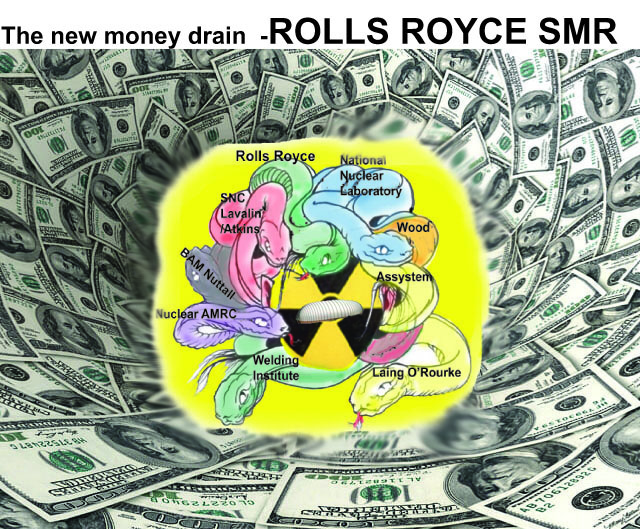
Rolls-Royce is expected to cut thousands of jobs as it launches a dramatic
turnaround plan to save costs. New chief executive Tufan Erginbilgic, who
has described the aero-engineering giant as a “burning platform” that
needs to reform to survive, has parachuted in consultants led by McKinsey
to advise on streamlining the company. Plans to merge departments could cut
10 per cent of the company’s approximately 30,000 non-manufacturing
staff, one consultancy source said. Part of the programme will involve
merging its non-manufacturing departments in each of Rolls’s civil
aerospace, defence and power systems divisions.
Times 27th May 2023
https://www.thetimes.co.uk/article/rolls-royce-prepares-to-swing-the-axe-on-jobs-phlxmxbnk
1 This Month





PLEASE OPPOSE HR 8255 AND S.3639 – bills would accelerate satellite deployment, with no environmental review or safeguards – https://ncstd5li.quorum.us/campaign/169331/
To see nuclear-related stories in greater depth and intensity – go to https://nuclearinformation.wordpress.com
-
Archives
- October 2026 (39)
- September 2026 (339)
- August 2026 (330)
- July 2026 (355)
- June 2026 (287)
- May 2026 (306)
- April 2026 (356)
- March 2026 (251)
- February 2026 (267)
- January 2026 (308)
- December 2025 (358)
- November 2025 (359)
-
Categories
- 1
- 1 NUCLEAR ISSUES
- business and costs
- climate change
- culture and arts
- ENERGY
- environment
- health
- history
- indigenous issues
- Legal
- marketing of nuclear
- media
- opposition to nuclear
- PERSONAL STORIES
- politics
- politics international
- Religion and ethics
- safety
- secrets,lies and civil liberties
- spinbuster
- technology
- Uranium
- wastes
- weapons and war
- Women
- 2 WORLD
- ACTION
- AFRICA
- Atrocities
- AUSTRALIA
- Christina's notes
- Christina's themes
- culture and arts
- Events
- Fuk 2022
- Fuk 2023
- Fukushima 2017
- Fukushima 2018
- fukushima 2019
- Fukushima 2020
- Fukushima 2021
- general
- global warming
- Humour (God we need it)
- Nuclear
- RARE EARTHS
- Reference
- resources – print
- Resources -audiovicual
- Weekly Newsletter
- World
- World Nuclear
- YouTube
-
RSS
Entries RSS
Comments RSS

