Ukraine rebuffs Vatican peace attempt
https://www.rt.com/russia/577589-ukraine-vatican-peace-meeting/ 9 June 23
An envoy of Pope Francis visited Kiev in search of ways to end the conflict
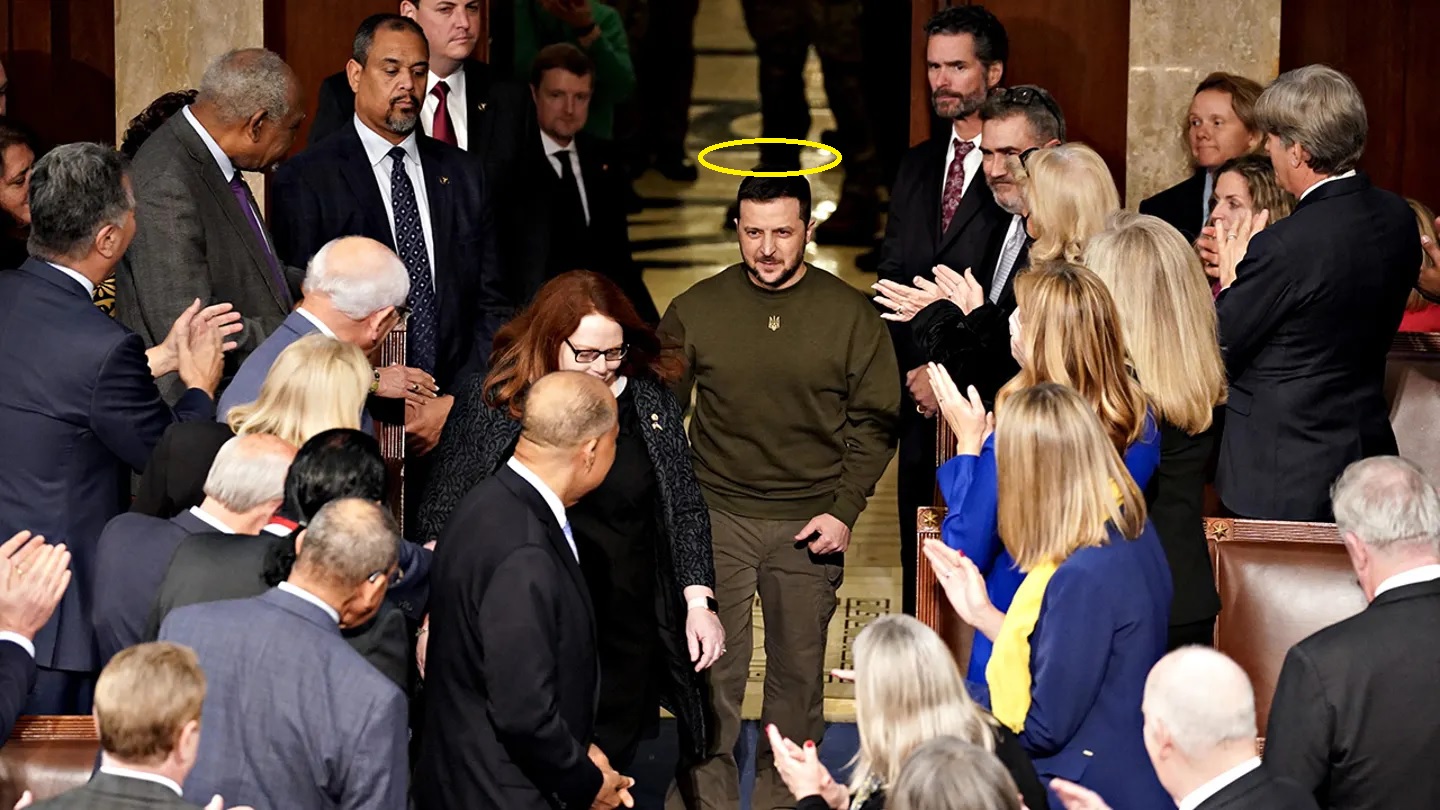
The only end to the conflict that Kiev considers acceptable is the Ukrainian “peace formula,” President Vladimir Zelensky told the Holy See envoy Cardinal Matteo Zuppi in a meeting on Tuesday.
“Ukraine welcomes the willingness of other states and partners to find ways to achieve peace, but since the war is on our territory, the formula for achieving peace can only be Ukrainian,” Zelensky said after meeting the papal emissary in Kiev.
Zelensky added that he discussed the situation in Ukraine and the humanitarian cooperation with the Vatican “within the framework of the Ukrainian peace formula,” and urged the Holy See to join the efforts to pressure Russia.
Zuppi arrived in Ukraine on Monday, in what the Vatican called a “search for paths to a just and lasting peace.” In addition to Zelensky, he met with other Ukrainian officials, including parliamentary commissioner for human rights Dmitry Lubinets.
“The results of these talks, like those with religious representatives as well as the direct experience of the atrocious suffering of the Ukrainian people as a result of the ongoing war, will be brought to the Holy Father’s attention,” the press office of the Holy See said in a statement on Tuesday evening.
This is the second time in two months that Zelensky has declined an offer by Pope Francis to mediate in the conflict with Russia. After his meeting with the pontiff at the Vatican last month, the Ukrainian president told Italian media outlets that Kiev was only interested in its own vision of peace.
“It was an honor for me to meet His Holiness, but he knows my position: the war is in Ukraine and the [peace] plan must be Ukrainian,” Zelensky told talk show host Bruno Vespa.
The “peace formula” in question is a list of Zelensky’s demands first revealed
The “peace formula” in question is a list of Zelensky’s demands first revealed in November 2022, ranging from Russia’s withdrawal from all territories Ukraine claims – including Crimea and the Donbass – payment of reparations, war crimes trials for the Russian leadership, and Ukraine’s membership in NATO.
Moscow has rejected Zelensky’s “peace platform” as delusional. Russia understands that any peace talks will not be held “with Zelensky, who is a puppet in the hands of the West, but directly with his masters,” Russian Foreign Minister Sergey Lavrov told reporters last month.
ASSANGE JUDGE IS 40-YEAR ‘GOOD FRIEND’ OF MINISTER WHO ORCHESTRATED HIS ARREST
Julian Assange’s fate lies in the hands of an appeal judge who is a close friend of Sir Alan Duncan – the former foreign minister who called Assange a “miserable little worm” in parliament.
MATT KENNARD AND MARK CURTIS, 2 DECEMBER 2021, Declassified UK
Lord Chief Justice Ian Burnett, the judge that will soon decide Julian Assange’s fate, is a close personal friend of Sir Alan Duncan, who as foreign minister arranged Assange’s eviction from the Ecuadorian embassy.
The two have known each other since their student days at Oxford in the 1970s, when Duncan called Burnett “the Judge”. Burnett and his wife attended Duncan’s birthday dinner at a members-only London club in 2017, when Burnett was a judge at the court of appeal.
Now the most powerful judge in England and Wales, Burnett will soon rule on Assange’s extradition case. The founder of WikiLeaks faces life imprisonment in the US. ……………………………….
Duncan served as foreign minister for Europe and the Americas from 2016-19. He was the key official in the UK government campaign to force Assange from the embassy.
As minister, Duncan did not hide his opposition to Julian Assange, calling him a “miserable little worm” in parliament in March 2018.
In his diaries, Duncan refers to the “supposed human rights of Julian Assange”. He admits to arranging a Daily Mail hit piece on Assange that was published the day after the journalist’s arrest in April 2019.
Duncan watched UK police pulling the WikiLeaks publisher from the Ecuadorian embassy via a live-feed in the Operations Room at the top of the Foreign Office.
He later admitted he was “trying to keep the smirk off [his] face”, and hosted drinks at his parliamentary office for the team involved in the eviction.
Duncan then flew to Ecuador to meet President Lenín Moreno in order to “say thank you” for handing over Assange. Duncan reported he gave Moreno “a beautiful porcelain plate from the Buckingham Palace gift shop.”
“Job done,” he added. https://declassifieduk.org/assange-judge-is-40-year-good-friend-of-minister-who-orchestrated-his-arrest/
Ukrainian dam is destroyed; nuclear plant lives in a ‘grace period’
Bulletin, By François Diaz-Maurin | June 6, 2023
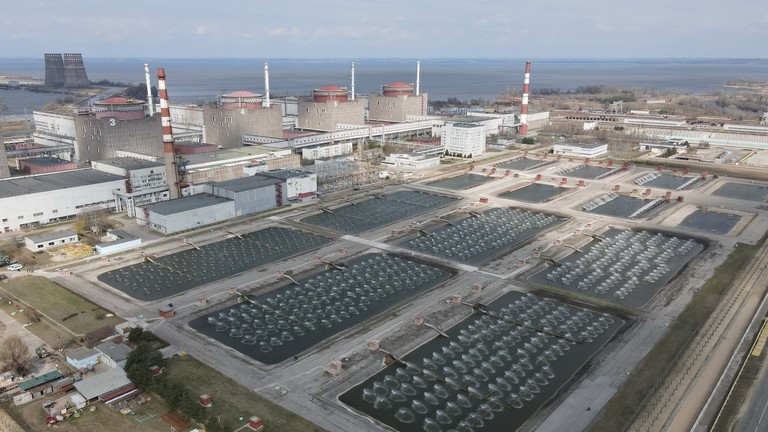
In the early hours of Tuesday, June 6, video footage circulated of a destroyed dam in southern Ukraine with large swaths of water flowing through. The Kakhovka dam—located about 70 kilometers upstream of the city of Kherson—is a critical piece of infrastructure, hosting a hydroelectric power plant and managing a reservoir that supplies water for drinking, irrigation, and cooling of the upstream six-reactor Zaporizhzhia nuclear power plant—Europe’s largest.
It was unclear on Tuesday what or who caused the breach in the dam, which is under Russian control, although it was hard not to blame Russia given the timing of the attack, which happened one day after Ukraine reportedly launched its long-awaited spring counteroffensive. Both countries denied responsibility and have blamed each other throughout the day. Ukraine said Russia was responsible for the explosion of an engine room of the hydroelectric plant, in part to prevent Ukrainian troops from crossing the Dnipro River downstream, while Russia said Ukrainian forces conducted a sabotage attack. Russia’s defense minister Sergei Shoigu made the acrobatic suggestion that because Ukraine wanted to transfer some military units and equipment from Kherson to other parts of the front to help with its counteroffensive, making the river wider downstream would make it easier to defend Kherson with fewer forces.
A third scenario being advanced on Tuesday was that the dam might have suffered from a structural failure after the water level of the Kakhovka reservoir had reached a 30-year high, leading it to be at beyond-design storage capacity since May. No evidence of any of those scenarios had emerged on Tuesday night…………
The destruction of the dam caused immediate life-threatening flooding and evacuation of thousands of people living downstream of the dam along the Ukrainian-controlled right bank of the Dnipro River. Early satellite imagery was showing large areas being flooded a few hours only after the breach. While the water was quickly rising to dangerous levels downstream, the water level in the upstream Kakhovka Reservoir was dropping, which could have severe nuclear safety implications for the nearby plant.
The Kakhovka Reservoir serves as the Zaporizhzhia plant’s ultimate heat sink, an essential safety function of removing the radioactive decay heat generated by the fuel inside the shutdown reactors and spent fuel pools. The plant has a cooling pond that pumps its water from the Kakhovka Reservoir. According to the director general of the International Atomic Energy Agency (IAEA), Rafael Mariano Grossi, the water level of the Kakhovka Reservoir was dropping on Tuesday at a rate of 5 centimeters per hour, adding that “water in the reservoir was at around 16.4 meters at 8 am. If [it] drops below 12.7 meters, then it can no longer be pumped.” This would theoretically leave operators with about three days to pump as much water as possible to fill up the pond. But local Ukrainian military officials estimated that the water level was dropping at the much higher rate of about 15 centimeters per hour; leaving only 24 hours for the operators to do so.
Commenting on Twitter, Edwin Lyman, a nuclear safety expert at the Union of Concerned Scientists, described the situation at the Zaporizhzhia nuclear power plant as a “slow-motion disaster.” “The impact on the plant is something we are going to see unfold over time,” Lyman further explained to the Bulletin. “There is a grace period to address this problem, but it’s not infinite.”………………………………………………
In his statement, Grossi said that there was “no immediate risk to the safety of the plant.” But that is “assuming nothing else happens,” Lyman told the Bulletin. “The plant is stable for now, but it is becoming increasingly more vulnerable.” Grossi conceded that “it is vital that this cooling pond remains intact.”
“Nothing must be done to potentially undermine its integrity.” https://thebulletin.org/2023/06/ukrainian-dam-is-destroyed-nuclear-plant-lives-in-a-grace-period/?utm_source=Newsletter&utm_medium=Email&utm_campaign=ThursdayNewsletter06082023&utm_content=NuclearRisk_UkrainianDam_06072023
France says nuclear power is ‘non-negotiable’

EURACTIV.com with AFP 9 June 23
French nuclear power is “an absolute red line” and non-negotiable, Finance Minister Bruno Le Maire said Thursday (8 June), following Franco-German disagreements over the role of nuclear energy in Europe.
Nuclear-reliant Paris has already irked Berlin by insisting on giving nuclear energy a starring role in European plans to produce more green technology in Europe.
“Nuclear power is an absolute red line for France, and France will not relinquish any of the competitive advantages linked to nuclear energy”, Le Maire insisted as he closed the annual conference of the French Electricity Union.
France’s 56 ageing reactors normally provide some 70% of France’s electricity needs.
“French nuclear power is non-negotiable and will never be negotiable. We will have to live with it, and we are convinced that it is not only in France’s interest, but also in the interest of the European continent”, he added.
Spat over EU’s renewable energy directive
Earlier, at the same meeting, German state secretary for economic affairs and climate action Stefan Wenzel acknowledged that France and Germany “often have different approaches in energy policy, especially concerning nuclear energy”
Germany “respects diverging choices for other fossil fuel energy sources by other member states as France that may similarly contribute to achieve climate neutrality,” he added.
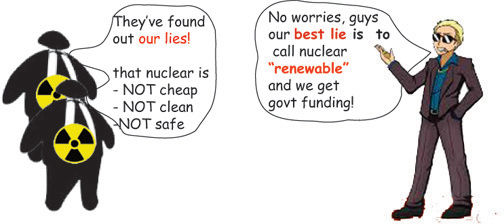
However “what we cannot accept is when nuclear energy is defined as renewable, or low-carbon hydrogen is equated with green hydrogen”.
Agreement on the EU’s revised renewable energy directive was delayed last month as France requested further “guarantees” to limit the share of renewable hydrogen production for countries that already have significant amounts of low-carbon hydrogen derived from nuclear power…………………… https://www.euractiv.com/section/energy-environment/news/france-says-nuclear-power-is-non-negotiable/
‘Minor’ leak at nuclear submarine dock
At a glance
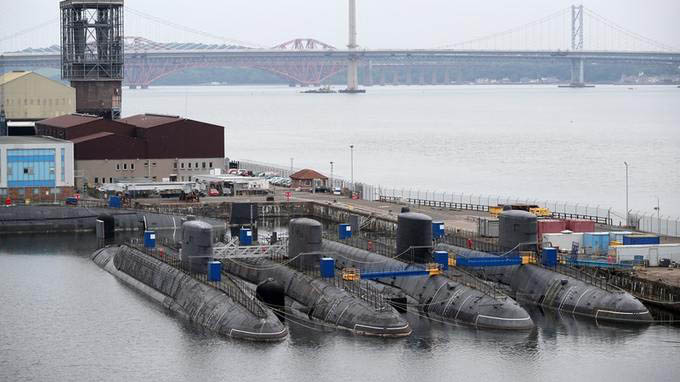
- There has been a “minor” seawater leak at a naval base in Plymouth where nuclear submarines are stored
- A £3m contract has been awarded to repair the leak
- Thirteen decommissioned nuclear submarines are stored at 3 Basin at Devonport dockyard
- The Ministry of Defence said there was no environmental risk from the leak
Jonathan Morris, BBC News, 8 June 2023 https://www.bbc.com/news/articles/cjejyq3e499o
HMS Valiant, a nuclear-powered attack submarine that was decommissioned in 1994, is set to be the first submarine in Devonport to undergo dismantling.
An MoD spokesperson said: “Work is planned at 3 Basin at HMNB Devonport to address minor seawater leakage from the basin and weathered stone edgings.
“The leak does not present an environmental risk and both the basin and entrance gate remain structurally sound.”
The MoD was criticised in 2019 over its failure to dispose of obsolete nuclear submarines.
It said it would dispose of them “as soon as practically possible”.
There are 20 decommissioned submarines in storage at Devonport and Rosyth.
The estimated cost of fully disposing of a submarine is £96m, the National Audit Office has said.
Water levels at Zaporizhzhia nuclear plant ‘critical’ after dam collapsesin Ukraine.
Water levels at Zaporizhzhia nuclear plant ‘critical’ after dam collapses
in Ukraine. Water levels have fallen below a critical point for being able
to supply cooling water to the Zaporizhzhia nuclear power station, the
operator of the Kakhovka dam in Ukraine has said.
Mirror 8th June 2023
https://www.mirror.co.uk/news/world-news/breaking-water-levels-zaporizhzhia-nuclear-30109697
The Zaporizhzhia nuclear plant used water from the destroyed Nova Kakhovka dam. What happens now?
By Felicity Ripper with wires, ABC, 9 June 23
One of the world’s largest nuclear power plants relies on a water reservoir linked to the destroyed Nova Kakhovka dam.
So what does that mean for the Zaporizhzhia Nuclear Power Plant?
What is the relationship between Nova Kakhovka dam and the Zaporizhzhia plant?
The main line of water used at the plant is pumped out of the reservoir above the dam, and up to the site.
This reservoir is currently draining because the downstream dam has collapsed………………………
But isn’t the plant in shutdown?
Zaporizhzhia was placed in a cold shutdown in September 2022.
While it doesn’t need the large amounts of water it would while operating normally, it still needs some supplies for cooling.
Dwindling water supplies also complicate any future prospects of restarting the power plant.
Has the plant lost its water supply from the dam reservoir?
Not yet.
International Atomic Energy Agency (IAEA) chief Rafael Grossi said water could still be pumped out for a few days after the dam’s collapse.
“The rate may reduce as the water lowers,” he said.
Mr Grossi on Tuesday said that the water in the reservoir was sitting at 16.5m, and once it reached 2.7m it could no longer be pumped out.
He said while there was no reason for panic, the plant was facing a serious situation. ………………………….. https://www.abc.net.au/news/2023-06-09/explainer-zaporizhzhia-nuclear-nova-kakhovka/102454194
Patrick Lawrence: Neo-Nazis in Ukraine? No, Yes, No–Yes
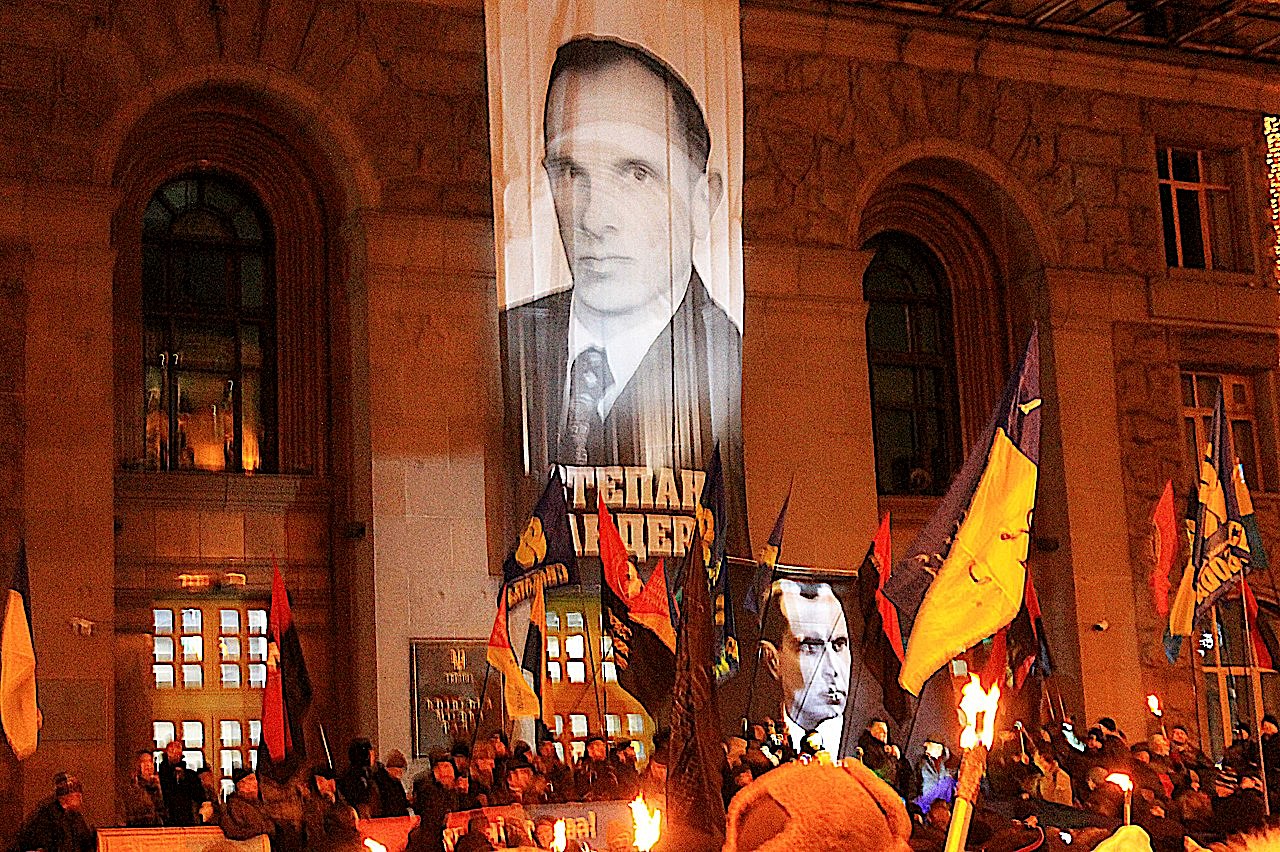
Stepan Bandera torchlight parade in Kiev, Jan. 1, 2020. (A1/Wikimedia Commons)
As is well-known and documented, the neo–Nazis who infest the Armed Forces of Ukraine, the AFU — among many other national institutions — have made idols of such figures as Stepan Bandera, the freakishly murderous nationalist who allied with the Nazi regime during the war.
A New York Times’ reporter’s job this week is to persuade us that all those Ukrainian soldiers wearing Nazi insignia and marching through Kiev in Klan-like torch parades are not what you think.
June 7, 2023, By Patrick Lawrence, Original to ScheerPost
I tell you, serving as a New York Times correspondent these days cannot be easy.
You have to convey utter nonsense to your readers while maintaining a straight face and a serious demeanor.
You have to suggest the Russians may have exploded a drone over the Kremlin, that they may have blown up their own gas pipeline, that their president is an out-of-touch psychotic, that their soldiers in Ukraine are drunkards using faulty equipment, that they attack with “human hordes” (Orientalism, anyone?) and on and on — all the while affecting the gravitas once associated with the traditional “Timesman.” You try it sometime.
………………….. now we have the case of Thomas Gibbons–Neff, a square-jawed former Marine covering the Ukraine war for the Times — strictly to the extent the Kyiv regime permits him to do so, as he explains with admirable honesty. This guy is serious times 10, he and his newspaper want us to know.
Tom’s job this week is to persuade us that all those Ukrainian soldiers wearing Nazi insignia, idolizing Jew-murdering, Russophobic collaborators with the Third Reich, gathering ritually in Nazi-inspired cabals, marching through Kyiv in Klan-like torch parades are not what you think.
Nah, our Tom tells us. They look like neo–Nazis, they act like neo–Nazis, they dress like neo–Nazis, they profess Fascist and neo–Nazi ideologies, they wage this war with the Wehrmacht’s visceral hatred of Russians — O.K., but whyever would you think they are neo–Nazis?
They are just regular guys. They wear the Wolfsangel, the Schwarze sonne, the black sun, the Totenkopf, or Death’s Head — all Nazi symbols — because they are proud of themselves, and these are the kinds of things proud people wear. I was just wearing mine the other day.
The slipping and sliding starts early in “Nazi Symbols on Ukraine’s Front Lines Highlight Thorny Issues of History,” the piece Gibbons–Neff published in Monday’s editions.
He begins with three photographs of neo–Nazi Ukrainian soldiers, SS insignia plainly visible, that the Kyiv regime has posted on social media, “then quietly deleted,” since the Russian intervention began last year.
“The photographs, and their deletions,” Gibbons–Neff writes, “highlight the Ukrainian military’s complicated relationship with Nazi imagery, a relationship forged under both Soviet and German occupation during World War II.”
Complicated relationship with Nazi imagery? Stop right there, Mr. Semper fi. Ukraine’s neo–Nazi problem is not about a few indiscreetly displayed images. Sorry. The Ukrainian army’s “complicated relationship” is with a century of ultra-right ideology drawn from Mussolini’s Fascism and then the German Reich.
As is well-known and documented, the neo–Nazis who infest the Armed Forces of Ukraine, the AFU — among many other national institutions — have made idols of such figures as Stepan Bandera, the freakishly murderous nationalist who allied with the Nazi regime during the war.
This history is a matter of record, as briefly outlined here, but Gibbons–Neff alludes to none of it. It’s merely a matter of poor image-making, you see. In support of this offensive whitewash, Gibbons–Neff has the nerve to quote a source from none other than Bellingcat, which was long, long back exposed as a C.I.A. and MI6 cutout and which is now supported by the Atlantic Council, the NATO–funded, spook-infested think tank based in Washington.
“What worries me, in the Ukrainian context, is that people in Ukraine who are in leadership positions, either they don’t or they’re not willing to acknowledge and understand how these symbols are viewed outside of Ukraine,” a Bellingcat “researcher” named Michael Colborne tells Gibbons–Neff. “I think Ukrainians need to increasingly realize that these images undermine support for the country.”
[Related: Ukraine Parliament Cheers Nazi Collaborator]
Think about that. The presence of Nazi elements in the AFU is not a worry. The worry is merely whether clear signs of Nazi sympathies might cause some members of the Western alliance to decide they no longer want to support Nazi elements in the AFU.
I am reminded of that Public Broadcasting news segment last year, wherein a provincial governor is featured with a portrait of Bandera behind him. PBS simply blurred the photograph and ran the interview with another of the courageous, admirable Ukrainians to which we are regularly treated.
I hardly need remind paying-attention readers that the neo–Nazis-who-are-not-neo–Nazis were for years well-reported as simply neo–Nazis in the years after the U.S.–cultivated coup in 2014.
[Related: Caitlin Johnstone: What MSM Can No Longer Say]
The Times, The Washington Post, PBS, CNN — the whole sorry lot — ran pieces on neo–Nazi elements in the AFU and elsewhere. In March 2018, Reuters published a commentary by Jeff Cohen under the headline “Ukraine’s Neo–Nazi Problem.”
Three months later The Atlantic Council, for heaven’s sake, published a paper, also written by Cohen, titled, “Ukraine’s Got a Real Problem with Far–Right Violence (And no, RT Didn’t Write This Headline).”
I recall, because it was so surprising coming from the council. The original head on that paper was “Ukraine’s Got a Neo–Nazi Problem,” but that version now seems lost to the blur of stealth editing.
Then came the Russian intervention, and Poof! There are no more neo–Nazis in Ukraine.
There are only these errant images that are of no special account.
And to assert there are neo–Nazis in Ukraine — to have some semblance of memory and a capacity to judge what is before one’s eyes — “plays into Russian propaganda,” Gibbons–Neff warns us.
It is to “give fuel to his”— Vladimir Putin’s — “false claims that Ukraine must be de–Nazified.” For good measure Gibbons–Neff gets out the old Volodymyr-Zelensky-is-Jewish chestnut, as if this is proof of… of something or other.
My mind goes to that lovely Donovan lyric from the Scottish singer’s Zen enlightenment phase. Remember “There Is a Mountain?” The famous lines went, “First there is a mountain/ Then there is no mountain/ Then there is.” There were neo–Nazis in Ukraine, then there were no neo–Nazis, and now there are neo–Nazis but they aren’t neo–Nazis after all.
………………………………….. Gibbons–Neff resolutely avoids dilating his lens such that the larger phenomenon comes into view. It all comes down to those three unfortunate insignia in those three deleted photographs.
The parades, the corridors of neo–Nazi flags, the ever-present swastikas, the reenactments of all-night SS rituals, the glorification of Nazis and Nazi collaborators, the Russophobic blood lust: Sure, it can all be explained, except that our Timesman does not go anywhere near any of this.
Gibbons–Neff resolutely avoids dilating his lens such that the larger phenomenon comes into view. It all comes down to those three unfortunate insignia in those three deleted photographs.
The parades, the corridors of neo–Nazi flags, the ever-present swastikas, the reenactments of all-night SS rituals, the glorification of Nazis and Nazi collaborators, the Russophobic blood lust: Sure, it can all be explained, except that our Timesman does not go anywhere near any of this.
“It is, of course, true that, for instance, the Azov Battalion was originally founded by neo–Nazi and far-right groups (as well as many soccer ultra-fans), which brought along with it the typical aesthetics — not only neo–Nazi insignia but also things like Pagan rituals or names like ‘The Black Corps,’ the official newspaper of Nazi Germany’s major paramilitary organization Schutzstaffel (SS).”
But worry not, readers. It is merely an aesthetic, part of a harmless, misunderstood “subculture”:
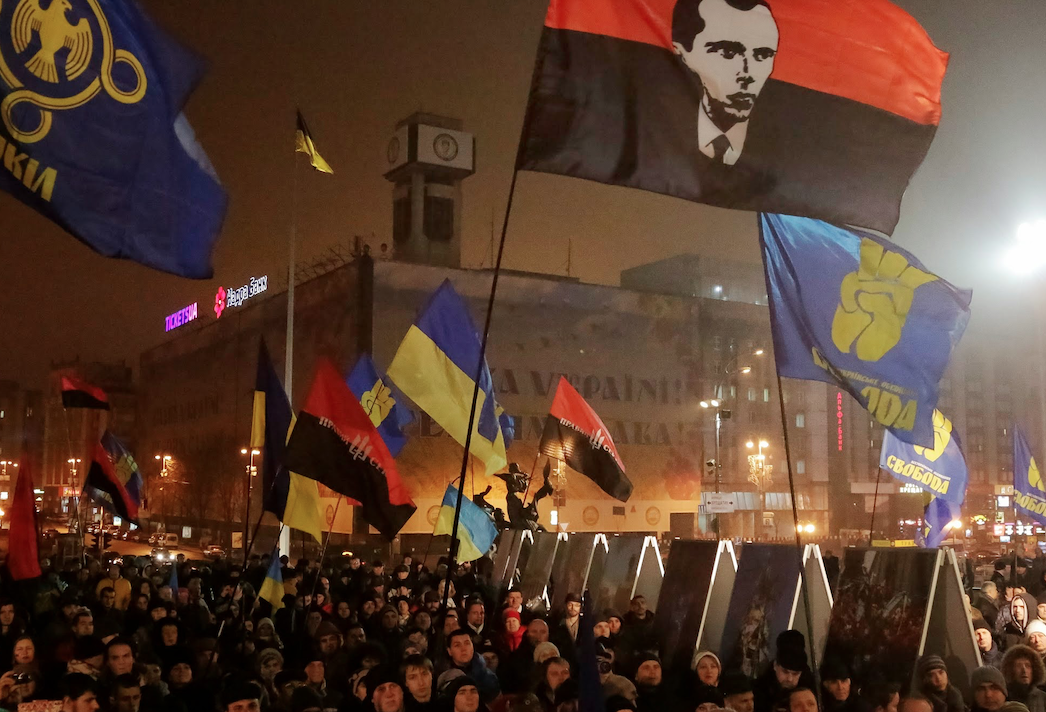
Torchlight procession in honor of the 106 anniversary of the birthday of Stepan Bandera, Kiev, Jan. 1, 2015. (All-Ukrainian Union CC BY 3.0, Wikimedia Commons)
…………………………………………….It is always interesting to ask why a piece such as this appears when it does. Dead silence for months on the neo–Nazi question, and then suddenly a long explainer that does its best to avoid explaining anything. Always interesting to ask, never easy to answer.
It could be that a lot of stuff on these awful people is sifting out from under the carpet. Or maybe something big is on the way and this piece is preemptive. Or maybe either Gibbons–Neff or his editors saw the Ponomarenko piece as an opportunity to dispose of one of the Kyiv regime’s most embarrassing features.
Or maybe the larger context counts here. As mentioned in this space last week, the Times’ Steve Erlanger recently suggested from Brussels that NATO might do a postwar Germany job with Ukraine: Welcome the West of the country to the alliance and let the eastern provinces go for an indefinite period, unification the long-term objective.
Late last week Foreign Affairs ran a fantastical piece by Andriy Zagorodnyuk, formerly a Ukrainian defense minister and now, yes indeedy, a distinguished fellow at the Atlantic Council. It appeared under the headline, “To Protect Europe, Let Ukraine Join NATO—Right Now.” ……………………………………….more https://consortiumnews.com/2023/06/07/patrick-lawrence-neo-nazis-in-ukraine-no-yes-no-yes/?fbclid=IwAR2qutGUc886hz22JN9TvBgmNTXCb-dJwB1TvxPfsnvxCTT6d9yuEoeJOH8
France fully nationalises debt-laden nuclear power group EDF, after its record loss last year
EDF quits Paris stock exchange after full nationalisation. French nuclear
power group EDF (EDF.PA) returns to full state ownership on Thursday with
its de-listing from the Paris stock exchange after it suffered a record
loss last year and saw nuclear output fall to a 34-year low.
The government launched a buyout for the 16% stake it did not already own in EDF in late
2022, stumping up around 10 billion euros ($10.9 billion) to take full
control of the debt-laden operator of Europe’s largest fleet of nuclear
power plants.
Reuters 8th June 2023
https://www.reuters.com/business/energy/french-utility-giant-edfs-history-2022-07-08
German TV Shows Nazi Symbols on Helmets of Ukraine Soldiers
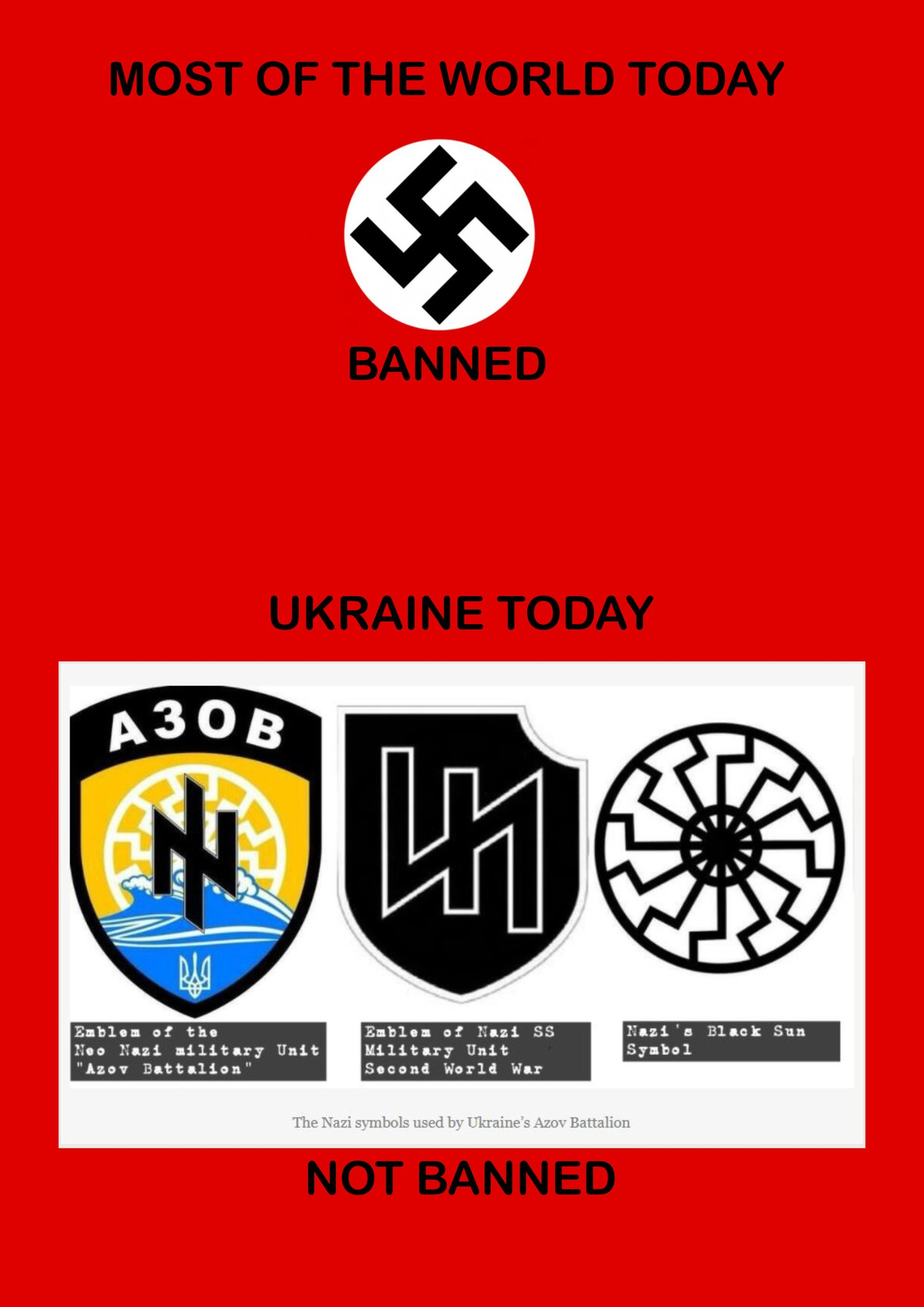
In a ZDF report on the fragile cease-fire in eastern Ukraine, images were shown of soldiers wearing combat helmets with SS insignia and swastikas.
Sept. 10, 2014, https://www.nbcnews.com/storyline/ukraine-crisis/german-tv-shows-nazi-symbols-helmets-ukraine-soldiers-n198961
Germans were confronted with images of their country’s dark past on Monday night, when German public broadcaster ZDF showed video of Ukrainian soldiers with Nazi symbols on their helmets in its evening newscast. In a report on the fragile cease-fire in eastern Ukraine, Moscow correspondent Bernhard Lichte used pictures of a soldier wearing a combat helmet with the “SS runes” of Hitler’s infamous black-uniformed elite corps. A second soldier was seen with a swastika on his gear. “Volunteer battalions from nearly every political spectrum are reinforcing the government side,” the ZDF correspondent said in his report.
The video was shot last week in Ukraine by a camera team from Norwegian broadcaster TV2. “We were filming a report about Ukraine’s AZOV battalion in the eastern city of Urzuf, when we came across these soldiers,” Oysten Bogen, a correspondent for the private television station, told NBC News. Minutes before the images were taped, Bogen said he had asked a spokesperson whether the battalion had fascist tendencies. “The reply was: absolutely not, we are just Ukrainian nationalists,” Bogen said.
Ukraine: Nuclear threat shows danger of small modular reactors
The National, By James Walker@James_L_Walker, Multimedia Journalist, 9 June 23
THE Kakhovka dam destruction – and the “immense” nuclear threat seen in Ukraine – could undermine the case for small modular reactors as a green energy solution, the SNP Campaign for Nuclear Disarmament (CND) convenor has warned.
On Tuesday, Ukraine accused Russian forces of blowing up the Kakhovka dam and hydroelectric power station, which Moscow has controlled for more than a year.
There are concerns that the damage to the dam could have broad consequences including depleted water levels upstream that help cool Zaporizhzhia nuclear power plant – Europe’s largest.
Bill Ramsay…….argued that the threat posed by Zaporizhzhia shows how the potential proliferation of small modular reactors could have important national security implications in the future.
It comes as Chancellor Jeremy Hunt confirmed plans in March to set up Great British Nuclear, a new body to oversee the revival of atomic energy and smooth the development of a new pipeline of power stations in the UK……………
“New nuclear power is expensive and will take years, if not decades, to become operational and has significant environmental concerns.”
Ramsay said that small modular reactors could also constitute a “longer-term danger”.
He said: “Reporting on the implications of the presence of a nuclear power plant in a dangerous war zone has been somewhat muted so far. But the threat is immense.
“From time to time, particularly as the war drags on, some stories around the Russian occupation of the Zaporizhzhia nuclear power plant have popped up, but then have disappeared again.
“In my view, this lack of focus on Zaporizhzhia has been deliberate, because it throws up a potentially much longer-term danger, the implications of the proliferation of Small Modular Reactors as a so-called solution to global warming.
“However, the statement by President Zelensky’s security chief makes it increasingly difficult to avoid speaking about the nuclear dimension not only in the current conflict but, potentially, of future conflicts caused by climate change.” https://www.thenational.scot/news/23580288.ukraine-nuclear-threat-shows-danger-small-modular-reactors/
Wind and solar overtake fossil fuel generation in the European Union
New data from energy think tank Ember shows that wind and solar produced
more EU electricity than fossil fuels in May, for the first full month on
record. Almost a third of the EU’s electricity in May was generated from
wind and solar (31%, 59 TWh), while fossil fuels generated a record low of
27% (53 TWh). “Europe’s electricity transition has hit hyperdrive,”
said Ember’s Europe lead Sarah Brown. “Clean power keeps smashing
record after record.”
Ember 8th June 2023
https://ember-climate.org/press-releases/wind-and-solar-overtake-fossil-generation-in-the-eu/
Business Green 8th June 2023
Rosatom says nuclear cleanup in Arctic done – Far from the case, says Bellona.
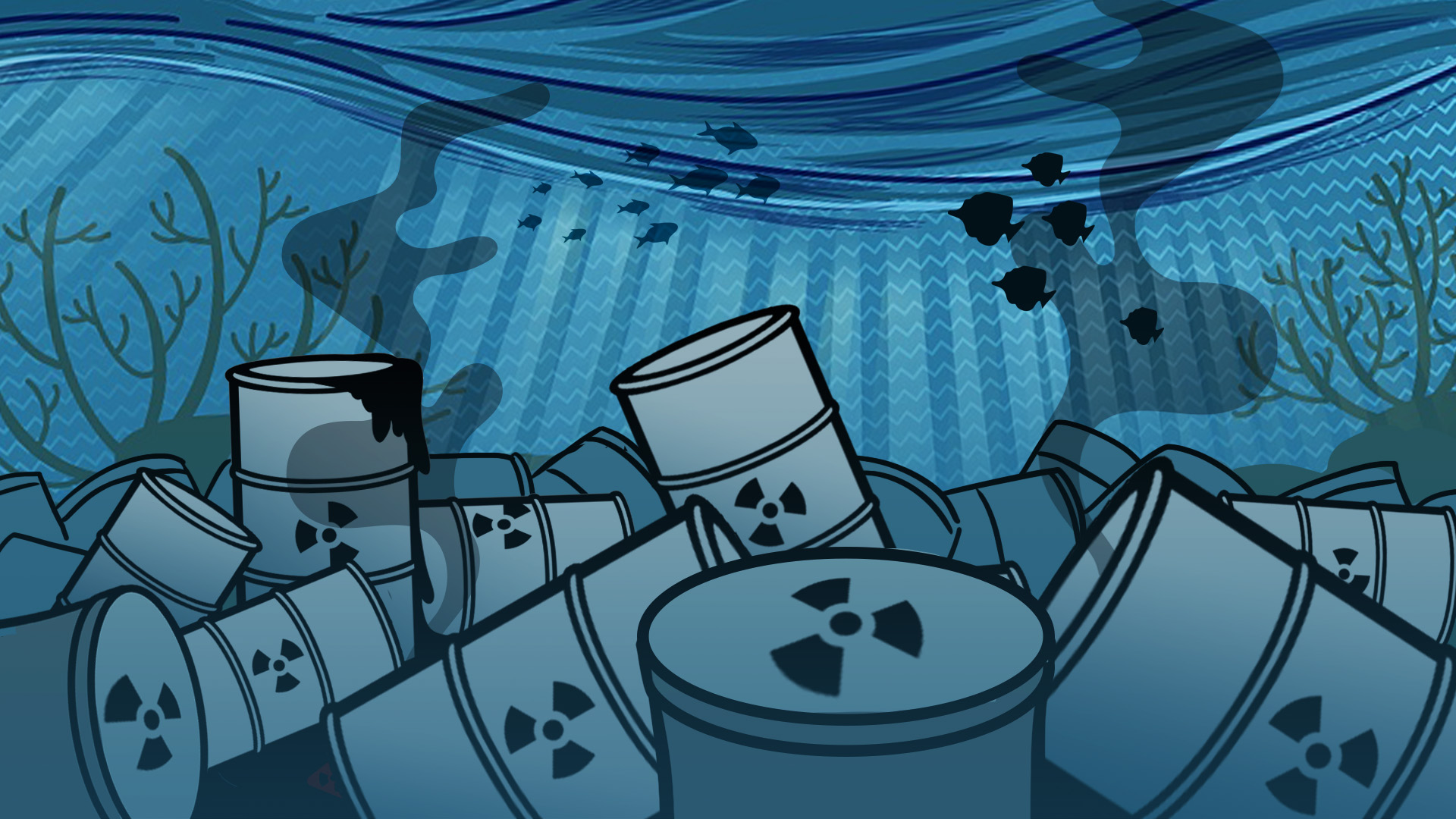
The nuclear cleanup in the Arctic is not done, there is still radioactive waste and spent nuclear fuel that needs securing.
Those items remaining to be cleaned up and secured include at least 11,000 spent nuclear fuel assemblies at Andreyeva Bay, a former Soviet submarine base. They also include two sunken nuclear submarines, over a dozen nuclear reactors and barrels of radioactive waste scuttled by the Soviet Navy in the Kara and Barents Seas. Issues of securing spent fuel and radioactive waste stored on nuclear icebreaker service ships likewise remain unresolved.
Russia’s state nuclear corporation Rosatom said last week that more than two decades worth of efforts to rid the Arctic of radioactive waste and spent nuclear fuel from decommissioned submarines will now come to an end. Bellona fears Rosatom is leaving undone a raft of crucial projects initiated with international support.
June 7, 2023 by Bellona
Russia’s state nuclear corporation Rosatom said last week that more than two decades worth of efforts to rid the Arctic of radioactive waste and spent nuclear fuel from decommissioned submarines will now come to an end. Bellona fears Rosatom is leaving undone a raft of crucial projects initiated with international support.
” [This work]began back in the early 2000s with the analysis of large deposits of spent nuclear fuel from nuclear submarine reactors,” said Rosatom CEO Aleksei Likhachev in remarks reported by official Russian newswire Tass “In total, thousands of tons of radioactive materials have been handled, and today we are at the finish line of this work, returning these territories to public use under strict administrative, public, and international control.”
Since the 1990s, the Bellona Foundation has been involved in discovering and documenting nuclear hazards and radiation threats in Arctic Russia and based on that experience, the organization asserts that Likhachev’s announcement is untrue — Russia is nowhere near the “finish line” in these efforts
Furthermore, Likhachev’s remarks contradict earlier statements from Rosatom that many of these cleanup operations would be ongoing until late in this decade.
“Russian authorities are backtracking on earlier statements from May last year, and confirming Bellona’s fears that these projects will not be continued or completed, says Frederic Hauge, president of the Bellona Foundation.
“The nuclear cleanup in the Arctic is not done, there is still radioactive waste and spent nuclear fuel that needs securing – both in the former marine base at Andreeva Bay and at the bottom of the Arctic seas”, says underlines Hauge.
Since the early 2000s, cleanup projects to rid the Arctic of the nuclear legacy of the Soviet Northern fleet have been ongoing in North-West Russia. These efforts were orchestrated through international cooperation between Russia and other countries and aided by large funding pledges from international donors.
These multinational efforts continued until February of 2022, when Moscow invaded Ukraine. Since then, international assistance to Moscow has been put on ice. But even then, key figures at Rosatom pledged that cleanup work would continue, nonetheless.
But Likhachev’s statement seems to put an end to that and declares victory well before the battle is finished
Those items remaining to be cleaned up and secured include at least 11,000 spent nuclear fuel assemblies at Andreyeva Bay, a former Soviet submarine base. They also include two sunken nuclear submarines, over a dozen nuclear reactors and barrels of radioactive waste scuttled by the Soviet Navy in the Kara and Barents Seas. Issues of securing spent fuel and radioactive waste stored on nuclear icebreaker service ships likewise remain unresolved.
In 2022, after Moscow launched its invasion of Ukraine, Russian authorities sought to assure their international counterparts that each of these projects would nonetheless continue, despite the withdrawal of international assistance.
Bellona had since that time been concerned that Russia, in its state of war, would fail to prioritize these critical projects, and in November the organization warned that the efforts to lift sunken Soviet submarines would at best be indefinitely postponed …………………………………
The issue of the sunken objects left by the Soviet Union will not be solved by itself. Ninety percent of that radiation from the sunken objects in the Kara and Barents seas is emitted by six objects that Rosatom has deemed urgent and targeted for lifting: two nuclear submarines; the reactor compartments from three nuclear submarines; and the reactor from the legendary icebreaker Lenin. …………….
“Why do they choose to say that the cleanup is done now – when that clearly is not the case? Rosatom has time and again underlined the importance of finishing the cleanup projects and lifting the sunken objects from the bottom of the sea, says Hauge.
“If we were to speculate, it might be that they are trying to force a renewed dialogue on financing of these projects, despite the aftermath of Russia’s invasion of Ukraine. Perhaps they are fishing for reactions from Norwegian authorities and other western governments – perhaps particularly when it comes to the sunken objects,” continues Hauge
“They know that the more delayed a decision to raise these subs is, the higher the risk of a lifting operation failing. Thus, such a statement can put pressure on former cooperation partners to reevaluate their decision to discontinue cooperation with Russia and financial support on these topics because of the invasion of Ukraine. If that is the correct interpretation, then it is a form of blackmail – nuclear blackmail,” Hauge concludes. https://bellona.org/news/nuclear-issues/2023-06-rosatom-says-nuclear-cleanup-in-arctic-done-far-from-the-case-says-bellona
Ukrainian dam collapse ‘no immediate risk’ to Zaporizhzhia nuclear plant
But IAEA says damage to Nova Kakhovka dam raises long-term concerns for power station’s future
Julian Borger in Kyiv, 6 June 23 https://www.theguardian.com/world/2023/jun/06/nova-kakhovka-ukraine-dam-collapse-zaporizhzhia-nuclear-plant-iaea
The collapse of the Nova Kakhovka dam and the draining of the reservoir behind it does not pose an immediate safety threat to the Zaporizhzhia nuclear power plant further upstream, but will have long-term implications for its future, according to Ukrainian and UN experts.
The Ukrainian nuclear energy corporation, Energoatom, put out a statement on the Telegram social media platform saying the situation at the plant, the biggest nuclear power station in Europe, was “under control”.
Rafael Mariano Grossi, the director general of the International Atomic Energy Agency, the UN’s nuclear watchdog, said in a statement: “our current assessment is that there is no immediate risk to the safety of the plant.”
But there are long-term concerns, both over safety and the possibility of the plant becoming operational again in the coming years. Oleksiy, a former reactor operator and shift supervisor at the plant, pointed out that all six reactors had been shut down since the plant found itself on the frontline after the Russian invasion.
Five of the reactors are in “cold shutdown”, turned off completely and being cooled, and one is in “hot shutdown”, kept at 200-250C so it would be easier to restart if conditions allowed, and to supply winter heating to the neighbouring town of Energodar.
Oleksiy, who left after Russian forces occupied the plant in March last year and is now elsewhere in Ukraine, said the last reactor should be shut down and that the plant had sufficient resources to keep all reactor cores cool.
“I think that the damage of the dam doesn’t impact the plant immediately, because they are being cooled by the safety systems located at the plant, which are spray systems,” he said. “The plant has a cooling lake, about two or three kilometres in diameter.”
The Energoatom statement said the cooling lake was filled and was at 16.6 metres (54.5ft), “which is sufficient for the power plant’s needs”
Mariana Budjeryn, a Ukrainian nuclear scientist, said: “The fact that there’s an artificial pond next to the ZNPP [Zaporizhzhia nuclear power plant] where water can be maintained above the reservoir level, and the fact that the reactors are in cold shutdown, offers some reassurance and increased time to respond if ZNPP starts getting affected.”
But Budjeryn, who is a senior research associate on the project on managing the atom at Harvard University, added: “The bigger problem – who is going to do it? ZNPP is already down-staffed to bare bones.”
Oleksiy said that over time water would evaporate from the cooling lake and if it could not be filled from the vast reservoir created upstream of the Nova Kakhovka dam, the turbines and the power plant could not be operated.
In his statement, Grossi said that the cooling pond should last “for some months” but it was imperative it was not damaged in fighting. The water is used to cool not just the reactor cores, but also the spent fuel and the diesel generators used for safety systems.
Tucker Carlson steamrolls Ukraine propaganda in new show
US corporate media outlets treat curiosity as the “gravest crime,” the former TV pundit has said
7 June 23 https://www.rt.com/news/577602-tucker-carlson-twitter-show/
Former Fox News host Tucker Carlson has released the first episode of his new series on Twitter, taking Western news agencies to task for one-sided reporting on the conflict in Ukraine and open hostility toward anybody voicing dissenting views.
Dubbed ‘Tucker on Twitter’, the show’s first ten-minute segment was shared on the social media platform on Tuesday night. The clip opened with a monologue on the alleged Ukrainian attack on a major dam in Russia’s Kherson Region this week, which Carlson dubbed “an act of terrorism.”
“Blowing up the dam may be bad for Ukraine, but it hurts Russia more, and for precisely that reason the Ukrainian government has considered destroying it,” he said. Carlson went on to observe that a Ukrainian general had admitted to planning attacks on the Kakhovka dam facility in comments to the Washington Post last December.
While Carlson said he had little doubt that Kiev was behind the incident, he noted that several American media outlets had already suggested that Moscow may have arranged the attack, claiming they view Ukrainian President Vladimir Zelensky as simply “too decent for terrorism.”

“Of all the people in the world, our shifty, dead-eyed Ukrainian friend in the tracksuit is uniquely incapable of blowing up a dam. He’s literally a living saint, a man in whom there is no sin,” he went on, describing the general attitude within the mainstream press.
The pundit drew comparisons to last year’s attack on the Nord Stream pipelines, which were built to carry natural gas from Russia into Germany. Though Carlson argued it was “obvious” that Ukraine had carried out the sabotage, he said US media outlets had little interest in investigating, helping to make Americans among “the least informed people in the world.”
“Not only are the media not interested in any of this, they are actively hostile to anybody who is. In journalism, curiosity is the gravest crime,” he continued, adding that while media outlets lie, “mostly they just ignore the stories that matter.”
Carlson parted ways with Fox in April, a major shake-up for the media giant, given the prominence of his prime-time program, ‘Tucker Carlson Tonight’. He later announced that would move his content to Twitter, where he has released other stand-alone segments similar to his former show. In his signoff for Tuesday’s episode, the host voiced hopes that Twitter would be a venue with “no gatekeepers,” but vowed to leave the site should that turn out to be false.
1 This Month





PLEASE OPPOSE HR 8255 AND S.3639 – bills would accelerate satellite deployment, with no environmental review or safeguards – https://ncstd5li.quorum.us/campaign/169331/
To see nuclear-related stories in greater depth and intensity – go to https://nuclearinformation.wordpress.com
-
Archives
- October 2026 (39)
- September 2026 (339)
- August 2026 (330)
- July 2026 (355)
- June 2026 (287)
- May 2026 (306)
- April 2026 (356)
- March 2026 (251)
- February 2026 (267)
- January 2026 (308)
- December 2025 (358)
- November 2025 (359)
-
Categories
- 1
- 1 NUCLEAR ISSUES
- business and costs
- climate change
- culture and arts
- ENERGY
- environment
- health
- history
- indigenous issues
- Legal
- marketing of nuclear
- media
- opposition to nuclear
- PERSONAL STORIES
- politics
- politics international
- Religion and ethics
- safety
- secrets,lies and civil liberties
- spinbuster
- technology
- Uranium
- wastes
- weapons and war
- Women
- 2 WORLD
- ACTION
- AFRICA
- Atrocities
- AUSTRALIA
- Christina's notes
- Christina's themes
- culture and arts
- Events
- Fuk 2022
- Fuk 2023
- Fukushima 2017
- Fukushima 2018
- fukushima 2019
- Fukushima 2020
- Fukushima 2021
- general
- global warming
- Humour (God we need it)
- Nuclear
- RARE EARTHS
- Reference
- resources – print
- Resources -audiovicual
- Weekly Newsletter
- World
- World Nuclear
- YouTube
-
RSS
Entries RSS
Comments RSS

