Shipment of nuclear waste from Sellafield heads to Germany, raising safety concerns
11th June, By Gareth Cavanagh
A SHIPMENT containing ‘higher level’ nuclear waste has been seen making
its way through Barrow from the Sellafield site bound for Germany – and is
a source of concern for protest groups both at home and abroad. Sellafield
Ltd has confirmed that flasks, seen at Barrow Docks Rail Terminal on
Tuesday June 9, contain residue from reprocessed radioactive waste, which
is set to be returned to Germany. Waste contained in the flasks, carried by
Nuclear Transport Solutions (NTS), is the result of spent fuel which has
been reprocessed and recycled at Sellafield site. It was previously used by
utilities in Germany to produce electricity.
Whitehaven News 11th June 2026,
https://www.whitehavennews.co.uk/news/26183018.shipment-nuclear-waste-sellafield-heads-germany/
Sizewell C to move work offsite ‘as much as possible’ amid skills crisis
The National Audit Office (NAO) last month questioned whether investors in the Sizewell C nuclear power station were sufficiently incentivised to keep construction costs under control.
The public spending watchdog said it was “not clear” whether the project’s funding structure would motivate backers to keep costs down below the project’s “higher regulatory threshold” of £47.7bn.
09 Jun 2026 By Greg Pitcher, https://www.constructionnews.co.uk/civils/sizewell-c-to-move-work-offsite-as-much-as-possible-amid-skills-crisis-09-06-2026/
Sizewell C chief executive Nigel Cann has outlined plans to maximise offsite working on the £38bn nuclear project amid a looming construction skills shortage.
He told MPs on the Public Accounts Committee (PAC) this week that productivity was a key risk to the programme and budget of the Suffolk scheme.
Sizewell C, which is backed by Hinkley Point C developer EDF as well as the UK Government and other investors, reached financial close last year.
Asked by PAC chair Sir Geoffrey Clifton-Brown whether he was confident the Suffolk nuclear plant would be delivered on time and at its lower ‘regulatory cost’ of £40.5bn, Cann replied: “Absolutely.”
But he admitted there was work to do to achieve this.
“You need to manage your risk as a long project; it’s over 10 years,” Cann told the committee. “So we absolutely need to focus.”
He said his first challenge was to get as much equipment as possible built and stored in the company’s 92,900 square metre warehouse ready for the start of main construction. Enabling works including excavation and infrastructure tasks had to be carried out efficiently as well, he added.
“All that [risk] will be retired by 2029 and then we look forward,” said Cann. “It’s [then] about really managing productivity. The UK currently has got a challenge around making sure productivity rates are high.
“It’s about working with all the bodies concerned, including trade unions, including the workforce, making sure we’ve got enough trained people to do the work, and really optimising that productivity.
“Our big challenge between now and [the start of main construction] to make that happen is to modulise as much as possible. So we want to take as much welding off site, we want to take as much stuff into factories as we can, so that when we get to the construction on site, it’s absolutely optimised.”
The first-ever Annual Skills Report 2026 from Skills England this month predicted a sharp increase in labour demand alongside an exodus of existing workers from the construction industry, warning that a million more people were needed over the next decade to meet UK infrastructure commitments.
Cann said all big infrastructure projects contained uncertainty.
But he added: “If I go back to what are the cornerstones that make a project successful, [they are] stable design at the beginning; a very good bill of quantities; a supply chain [that] has done it before, in contract – we plan to have all our equipment contracts signed up by the end of next year. All that gives you confidence that you can deliver a project on time, on budget.”
The National Audit Office (NAO) last month questioned whether investors in the Sizewell C nuclear power station were sufficiently incentivised to keep construction costs under control.
The public spending watchdog said it was “not clear” whether the project’s funding structure would motivate backers to keep costs down below the project’s “higher regulatory threshold” of £47.7bn.
Jonathan Brearley, permanent secretary at the Department for Energy Security and Net Zero, told the PAC this week: “If we’d gone for a contract for difference, and purely private finance, we think this wouldn’t deliver either the best value for customers or indeed be affordable for customers.
“And we’ve learned lessons from High Speed 2 (HS2). We are not replicating HS2. We are not putting in a fixed price because of the cost that’s involved. We have created a regulatory system that balances those risks.
“I’m not sitting here saying there is no risk… but I think we’ve put a structure in place that best allows us to manage those risks.”
UK to Extend Life of Sizewell B Nuclear Plant by 20 Years !

Electricite de France SA and Centrica Plc are poised to agree on a draft
deal with the UK government to extend the life of the Sizewell B nuclear
power station by two decades, according to people familiar with the matter.
The companies are on the verge of agreeing a heads of terms agreement with
the Department for Energy Security and Net Zero, and will announce the deal
within weeks, two of the people said. The final deal is expected to be
agreed later this year.
Bloomberg 10th June 2026, https://www.bloomberg.com/news/articles/2026-06-10/uk-poised-to-extend-life-of-sizewell-b-nuclear-plant-by-20-years
Hinkley Nuclear plant could be delayed again by demands to protect fish
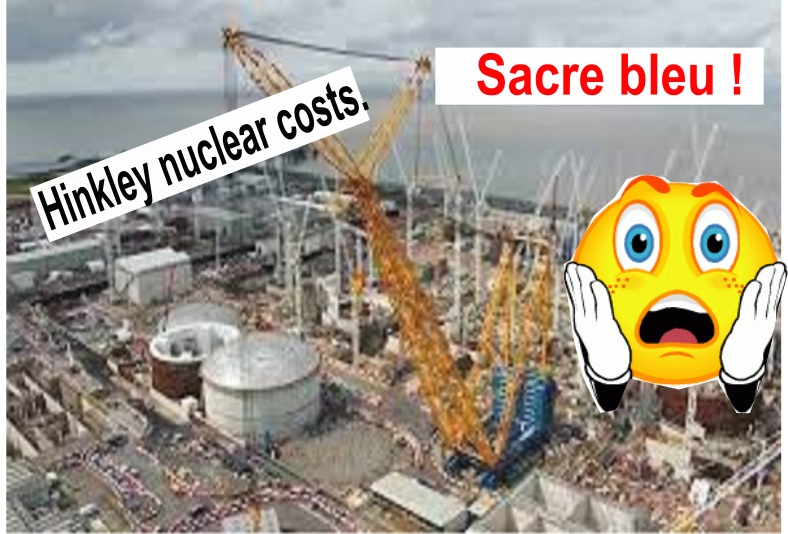
Britain’s first new nuclear power station in more than three decades is
facing years of further delays after an environmental quango said it still
posed a danger to fish.
Hinkley Point C has already spent more than £700
million to offset concerns about its impact on wildlife, including paying
for acoustic deterrents to stop fish from the Severn Estuary being sucked
into the plant’s cooling pipes. But now Natural England has told the
company behind the project that its plans are not good enough and it will
have to pay to create salt marshes in the estuary to boost the fish
population before it can begin generating power.
The demand has led to
warnings that Hinkley’s already delayed 2030 opening date will have to be
put back still further, alongside millions of pounds in additional costs,
which will ultimately be paid for through energy bills.
Any delay would
also in effect kill off Ed Miliband’s signature pledge to decarbonise
electricity supplies by 2030 because it is due to supply between 7 and 10
per cent of the UK’s total power needs. In a letter to local residents
EDF said Natural England had told the company it would not be allowed to
start energy generation unless it did more to protect fish.
The pro-growth
campaign Britain Remade said the case highlighted a system where regulators
and arms-length bodies could demand “endless bespoke surveys, mitigations
and design changes, with little regard for the national interest, energy
security or the cost to billpayers”. “Britain desperately needs more
clean, reliable power, but the system we have built is making it harder and
more expensive to get it,” said Sam Richards, the group’s chief
executive.
Natural England said that under its original development consent
EDF was required to show that its impact on protected species was “fully
mitigated” and said it was applying “the same legal tests that apply to
every major infrastructure project in the UK.“Our advice is grounded in
statutory duties under the habitats regulations, the best available
scientific evidence and the government’s established policy framework,”
it said.
Dave Slater, regional director for Natural England added:
“Development and nature are not competing interests. Building the UK’s
largest nuclear power station is a major undertaking which brings
significant environmental challenges and we are playing our part in finding
solutions to enable this vital infrastructure development to go ahead while
improving environmental outcomes.”
Times 10th June 2026,
https://www.thetimes.com/uk/politics/article/hinkley-point-c-nuclear-delays-environmental-demands-l33cp90n2
How The CIA Conjured Ukrainian Nationalism

Fast forward to now, and in response to Ukraine’s state-level glorification of the ultranationalist UPA and its lead genocidaire Andriy Melnyk, Polish President Karol Nawrocki has announced he will seek to strip Zelensky of the Order of the White Eagle, Warsaw’s highest honour, bestowed in 2023.
Kit Klarenberg, Jun 10, 2026, https://www.kitklarenberg.com/p/how-the-cia-conjured-ukrainian-nationalism
A bitter row has erupted between Kiev and Warsaw, after Volodymyr Zelensky renamed a Ukrainian military unit the “Heroes of the UPA”. The UPA – Ukrainian Insurgent Army – was an ultranationalist faction heavily implicated in the Holocaust, which slaughtered up to 100,000 Polish civilians during World War II. In addition to commemorating the mass-murdering militant group, the corpse of Andriy Melnyk, leader of UPA parent the Organisation of Ukrainian Nationalists (OUN-B), was reburied in Kiev. At a grand accompanying ceremony, Zelensky declared:
“Today we all see that the Ukrainian idea can overcome what once seemed absolutely insurmountable. Now, when we are on Ukrainian soil, under our Ukrainian flag, to the sound of the Ukrainian national anthem, paying due tribute to our Ukrainian heroes, we feel in our hearts everything Ukrainians were forced to go through, everything our people had to endure.”
The unspeakable horrors inflicted upon Poles – and Communists, Jews, Romani and other “undesirables” – by Melynk and his fellow Nazi collaborators were of course unmentioned. So too that the genocidal nationalism practiced and preached by Melynk was covertly promoted and sponsored for decades by Anglo-American intelligence, within and without Ukraine. The ongoing proxy conflict is a direct product of this little-known spectral meddling, which was specifically concerned with promoting cultural and ethnic difference, and enmity, between Russians and Ukrainians globally.
As this journalist has previously revealed, in August 1957 the CIA secretly drew up elaborate plans for a US special forces invasion of Ukraine. Intended to collapse the wider Soviet Union, the Agency’s conspiracy depended heavily on recruiting local fascists as footsoldiers. A significant stumbling block to the Agency’s plot, however, was much of Ukraine’s population actually harbouring “few grievances” against Russians or Communism. “Points of conflict” between Russians and Ukrainians, which could be exploited by the CIA to foment a mass uprising, were scant.
The Agency lamented how “the long history of union between Russia and Ukraine, which stretches in an almost unbroken line from 1654 to the present day,” had resulted in “many Ukrainians” having “adopted the Russian way of life.” Moreover, the similarity of their “languages, customs, and backgrounds,” and the “great influence” of Russian culture in Ukraine, meant the overwhelming majority of Ukrainians felt “little national antagonism.” Yet, the CIA believed “important grievances exist,” and “under favorable conditions” Ukrainians would assist US invaders.
Unmentioned in the invasion planning documents, the CIA had since 1949 been covertly striving to create those “favorable conditions.” A key Agency asset used for the purpose was OUN-B chief Mykola Lebed. In 1943, he proposed to “cleanse the entire revolutionary territory” – today’s western Ukraine – of its Polish population, to prevent any future Polish state from claiming the region. A post-war US Army counterintelligence report branded Lebed a “well-known sadist,” and Nazi collaborator.
The nucleus of Lebed’s international fascist agitation was Prolog, a New York-based publishing firm. A 1966 CIA memo noted this “cover organization” for the Ukrainian Supreme Liberation Council (ZP/UHVR) was established to conduct “clandestine activity.” It approvingly added that Prolog’s work “contributes to Ukrainian nationalist ferment and to intellectual resistance to Soviet repression by exploiting existing and encouraging new deviationist tendencies” in Ukraine. Elsewhere, the Agency declared it was “important to continue to encourage divisive manifestation” of this sort. The explicitly stated objective was triggering “nationalist flareups” in the USSR:
“[ZP/UHVR] were sent from the Ukraine in 1945 by the Ukrainian Supreme Liberation Council to make contact with Western intelligence representatives and to act in behalf of the homeland…[ZP/UHVR] organized a net of collaborators throughout Western Europe and the United States…the feeling of nationalism is very much alive. ZP/UHVR has proved realistic in its approach to operational matters and its propaganda activity.”
‘Existing Suspicions’
A late 1953 Agency memo documents how the CIA for years broadcast “black radio transmissions” in Ukrainian from a secret CIA installation in Athens, Greece. “Soviet officialdom, Soviet military forces stationed in the Ukraine, the indigenous civilian population…the underground movement and the Ukrainian Insurgent Army (UPA)” were an intended target audience of 40 million people, upon whom the Agency wished to have a “significant propaganda impact.” Produced by ultranationalist emigres who’d fled Ukraine after World War II, the project sought to foment insurrectionary anti-Communist violence:
“Furnish evidence of outside sympathy and understanding for the Ukrainian peoples; intensify anti-regime disaffection by encouraging resentment, bitterness, and distrust of the Soviet regime and its personalities; maintain national consciousness among the Ukrainians and urge them to maintain pride in the individuality and heritage of their culture; create dissatisfaction among Ukrainian military personnel within the Soviet armed forces stationed in the Ukraine; create and intensify dissatisfaction among the Ukrainian civil authorities to the Soviet regime.”
Publicly, the station’s US-made broadcasts – which included Ukrainian folk songs – were “attributed to a notional group of Ukrainian Anti-Communists.” There was no connection “actual or implied, with any established Ukrainian emigre group.” It was of the utmost importance too the CIA’s hand in creating and running the station was concealed – “every effort will be made to keep this risk at a minimum.” However, the operation’s ruinous spoils were considered well-worth the hazards.
“It will provide a wedge which can be driven deeper between the Soviets and the Ukrainians and would exacerbate existing suspicions and antagonisms between the two ethnic factions,” the CIA declared. The Agency also sought to create a wider “psychological climate” among Ukrainian audiences which would be “more favorable” to other anti-Soviet operations it was simultaneously conducting. Moreover, it was forecast “Soviet reaction to the broadcasts may indicate certain areas of vulnerability or sensitivity not heretofore recognized,” which could be further exploited.
‘Imperial Policy’
The CIA’s efforts to encourage Ukrainian nationalism and separatism endured throughout the Cold War. Via avowed CIA front the National Endowment for Democracy, overt US assistance was provided to Rukh (The People’s Movement of Ukraine). One of Soviet Ukraine’s first opposition parties, Rukh is widely considered to have played a key role in securing Ukraine’s ‘independence’ in December 1991. Four months earlier, US President George H W Bush had visited Kiev and given an infamous speech in which he cautioned Ukrainians against embracing “suicidal nationalism based upon ethnic hatred.”
His comments enraged Ukrainian nationalists, and Stateside anti-Soviet hawks. Yet, Bush’s fears were well-founded. By this point, Yugoslavia was rapidly disintegrating, engulfed by ever-violent fratricidal tensions. His administration was thus formally committed at this time to preserving the Soviet Union in some form, and undertook ill-fated measures in service of this goal. Too little, too late, that mission’s failure set Ukraine hurtling towards all-out conflict with Russia. As long-desired by the CIA, “antagonisms between the two ethnic factions” now run deep.
In a bitter twist, it was precisely because the NED-orchestrated February 2014 Maidan coup was led by rabidly anti-Russian nationalist elements that a majority of Ukrainians did not support the Maidan movement. As a contemporary Washington Post analysis noted, Viktor Yanukovych remained “the most popular political figure in the country,” and no poll conducted to date had ever indicated mass support for the uprising. Surveys conversely showed “large majorities” of Ukrainians opposed the violent storming of regional governments by Maidan insurrectionists.
This hostility was spurred by “anti-Russian rhetoric and the iconography of western Ukrainian nationalism…not [playing] well among the Ukrainian majority.” Washington Post noted how Neo-Nazi party Svoboda was at Maidan’s forefront. Its leader Oleh Tyahnybok had infamously praised the UPA for fighting “against the Moskali [Russians], Germans, Zhydy [Jews] and other scum.” His words were not well-received by the 50% of Ukraine’s population residing in regions that had “strongly identified with Russia” for over two centuries. “Nearly all are alienated by anti-Russian rhetoric and symbols”:
“Anti-Russian forms of Ukrainian nationalism expressed on the Maidan are certainly not representative of the general view of Ukrainians. Electoral support for these views and for the political parties who espouse them has always been limited. Their presence and influence in the protest movement far outstrip their role in Ukrainian politics and their support barely extends geographically beyond a few Western provinces.”
Fast forward to now, and in response to Ukraine’s state-level glorification of the ultranationalist UPA and its lead genocidaire Andriy Melnyk, Polish President Karol Nawrocki has announced he will seek to strip Zelensky of the Order of the White Eagle, Warsaw’s highest honour, bestowed in 2023. Meanwhile, premier Donald Tusk has cursed the Ukrainian leader’s actions as “[wounding] our historical sensitivity,” and “worrying from the point of view of our relations.”
Authorities in Kiev appear entirely unconcerned their close neighbour and proxy war ally has been so egregiously insulted. A Foreign Ministry spokesperson claimed Zelensky had not wished to cause any offence. “Our history confirms only Moscow benefits from disputes between Ukrainians and Poles,” they said. Besides, for Ukrainian soldiers, “the struggle of the UPA symbolises strictly the opposition to Moscow’s imperial policy.” As the CIA always intended, two antithetical versions of history are now effectively at war in Donbass. A more devastating modern day example of divide and conquer in action one would be hard-pressed to identify.
Rolls-Royce strikes nuclear deal with Japan, likely to be tax-payer funded
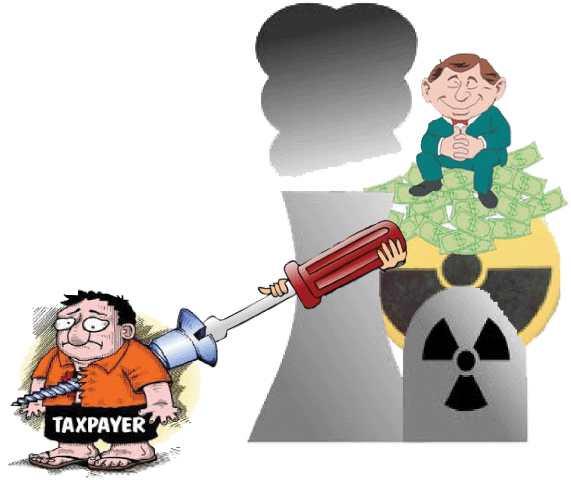
potential support that could eventually include
taxpayer-backed loans, debt financing or direct investments from the
National Wealth Fund.
Sir Keir Starmer and Sanae Takaichi set to sign agreement to develop advanced modular reactors
Matt Oliver, Industry Editor
Britain will join forces with Japan to build mini nuclear reactors capable
of powering factories, data centres and military bases. Sanae Takaichi,
Japan’s prime minister, and Sir Keir Starmer will sign an agreement at a
ceremony in Downing Street on Sunday, as part of a push to strengthen
energy cooperation between Tokyo and London.
The tie-up will lead to
British engineering giant Rolls-Royce working with the National Nuclear
Laboratory and its Japanese counterpart to develop advanced modular
reactors (AMRs) and the fuel needed to power them, The Telegraph can
disclose.
Japan has been testing a high-temperature, gas-cooled reactor for
decades, but the technology remains unproven commercially. Under the
partnership, the Japan Atomic Energy Agency will share its extensive safety
data with Rolls-Royce to help the company build a demonstrator AMR in the
UK by the mid-2030s.
Rolls is understood to have held discussions with the
Government about potential support that could eventually include
taxpayer-backed loans, debt financing or direct investments from the
National Wealth Fund.
Under the agreement, Rolls-Royce, the UK and Japanese
national laboratories have also agreed to explore options for supplying the
novel kind of fuel the AMRs will use. Known as tri-structural isotropic
particle fuel (TRISO), it is seen by scientists as inherently safer than
more conventional nuclear fuel because it can be left to cool on its own.
TRISO fuel is made by taking poppy seed-sized pieces of uranium and
wrapping them in layers of ceramic material that are almost as tough as
diamond. These pellets are then compacted into hexagonal blocks or billiard
ball-sized “pebbles”, which can be loaded into a nuclear reactor. The
Government has already announced a £300m programme with Urenco, a nuclear
fuel company, to build a UK enrichment facility capable of providing the
uranium needed to make TRISO pellets.
Telegraph 14th June 2026, https://www.telegraph.co.uk/business/2026/06/14/rolls-royce-strikes-nuclear-deal-with-japan/
Beyond the Propaganda: The French Uniqueness and the New Nuclear Dead End.

green report.it By Luigi Moccia, June 11, 2026
Nuclear is better than renewables: have you seen how low emissions are in France compared to those in Germany?”
How many times have you heard this biased and misleading statement, accompanied by a graph comparing emissions per kilowatt-hour produced in those two countries?
In its simplicity, this comparison seems solid, but it masks several misunderstandings that require much more than a single indicator chart to unravel.
Proponents of this argument imply that France and Germany represent polar opposites in decarbonization: nuclear-focused France versus renewables-focused Germany. This framework is flawed because, first, Germany has contributed to decisive progress in renewables, but it is not a monolith and has demonstrated contradictory aspects, as we will see below.
Secondly, a partial relativization also applies to France, which, although it has a nuclear energy policy, has also invested in renewables, thus improving the emissions profile of its electricity production.
It’s true that, yes, in Europe, if you’re looking for a natural experiment in pro-nuclear policy, France is the benchmark, and so it makes sense to include it in a debate on energy policies. But if you want a pro-renewables benchmark in Europe, you need to look not at Germany, but at other countries, such as Denmark.
Are France and Denmark countries of different sizes and therefore not comparable? Indeed, in this case, some context is needed, but, if anything, the differences in size work against the small country, Denmark, as we will see below.
This debate is unknown to the public because pro-nuclear clichés are relentlessly directed against Germany, guilty of recognizing that nuclear power is a non-competitive technology on the market, too risky to invest in, and that decarbonization must be achieved with other means. This has led to a proliferation of distortions about German energy policies, which not only invade social media but also end up in the columns of newspapers deemed authoritative, thus distorting the debate. In this excursus on the energy policies of France and Denmark, I will also develop some considerations regarding Germany, as a contribution to countering misinformation. …………………………………………………………………………………………………………………………………………………………………………………………………………………………………………………………..
But how much does French nuclear power really cost?
No one knows for sure. In France, the civil nuclear program was developed under a state monopoly, in conjunction with the military program. The two accounts were not separate and were secret. Only in 2000, once the program was completed, was an attempt made to evaluate the costs of the civil program. A special parliamentary commission of inquiry was established by the Jospin government (the Charpin–Dessus–Pellat Commission , named after the three designated commissioners). An analysis of the data made available by this commission is presented in a 2010 scientific article by Arnulf Grubler ( link ). Contrary to expectations, according to which costs should decrease with the increase in installations, French reactors followed the opposite trajectory: costs increased over time.
The trend of rising costs continued even after the early 2000s, when, according to some, a new “Nuclear Renaissance” should have begun.
Are you having déjà vu ? Didn’t you know there was already a period in which a new beginning for the atom was hypothesized? Well, truth be told, the current “Renaissance” isn’t even the second, because even before the one in the early 2000s, there were those, from a very authoritative position, who had predicted another imminent one, in 1985 (see the article by Alvin Weinberg and co-authors ). So today we are at the third announcement of a “Nuclear Renaissance,” after the first two failed. As you can see, these announcements follow a twenty-year cycle, ebb and flow.
Is nuclear overregulated?
According to some, the rising cost of nuclear energy is caused by excessive regulation: this technology is supposedly subject to safety standards that are too stringent compared to the actual risk. This would therefore be a case of overregulation driven by irrational fears. To support this claim, a graph is usually presented comparing various sources based on the mortality rate per unit of electricity produced. In such a comparison, nuclear power appears to be very low. Is this enough to conclude that nuclear power is a safe source? For influencers and Sunday debunkers, evidently yes, because they spend their time on social media posting this single graph. For the rest of the world, who are familiar with risk analysis, however, the answer is no…………………………………………………………………………………………………………………………………………………………….
What other energy technology presents a risk on a single site of this size? None. That’s why it’s hyperbole to label a technology “safe” when its risks are manageable, but the costs are enormous……………………………………………………………………………………………………………………………………………………………………………………………………………………………….
So what is the cost of the new French nuclear power?
New nuclear power plant projects using French technology that have been started in the last quarter of a century can be counted on one hand and are four in total: Olkiluoto in Finland, Taishan in China, Flamanville in France and Hinkley Point in the United Kingdom.
Quickly, because you could write a book about it: four projects, one worse than the other.
Finland’s Olkiluoto-3 reactor not only went 14 years over schedule and three-odd miles over budget, but it also caused the bankruptcy of AREVA , which was bailed out at Paris’ expense. Thus, the Finns, who had the savvy to sign a turnkey contract, saw their exposure to budget overruns reduced (but not eliminated). Keep this in mind when you hear people boast about the low prices on the Finnish electricity market thanks to the new Olkiluoto reactor: French taxpayers largely paid for it!
The two reactors built in China at Taishan, in addition to overruns in construction time (a five-year delay) and budget (more than 60%, see the report by the French Court of Auditors ), have recorded very mediocre performances in these first years of operation: cumulative capacity factors equal to 55% and 76% (source: IAEA PRIS ), following anomalies detected on the first reactor in 2021 and 2022. Note the difference compared to what nuclear proponents usually boast before the start of each project: according to them, it should always be equal to the capacity factor of the best reactors, equal to around 90%.
China has no plans to build further reactors with this French technology. As China is the only country with a significant nuclear program, at least given the declining status of this source, this debacle undermines France’s hopes of playing a leading role as an exporter of this technology. It is no coincidence that India, which has expressed interest in this technology in its diplomatic relations with France for decades, has yet to finalize any contracts, despite periodic announcements, always reiterated with great fanfare, which are then forgotten.
The domestically built Flamanville reactor continues to astound the world with its incredible series of unfortunate events. After twelve years of construction overruns and a budget more than three times the originally planned, the Flamanville-3 reactor powered up on September 3, 2024. The day was celebrated with great fanfare by nuclear proponents, evidently to forget the previous tribulations, because what’s done is done.
It’s a shame that nuclear power is a bit more complex than any other technology. As of June 2026, 21 months after commissioning, the reactor is not yet fully operational (source: IAEA PRIS ). If it is fully operational in the coming months, 2026 will be a short operational phase: further extraordinary maintenance is planned to replace a major component, as well as other repairs. This shutdown phase will begin in September 2026 and last almost a year. Therefore, the actual performance of this reactor will only be determined in 2028, assuming all goes well.
The costs? The French Court of Auditors had estimated the investment cost, including interest, at €23.7 billion, based on 2023 figures (
link ). But in the meantime, there have been further delays, and then the extraordinary maintenance phase will arrive. Each year of inactivity for such a large reactor entails liabilities exceeding €1 billion. A new assessment will be drawn up in a few years, but it’s already safe to say that, in a nation that has never abandoned nuclear power, a new reactor built on a site already equipped with adequate infrastructure (because it already hosts other reactors) will produce at well over €160/MWh (see Fig. 7, page 24 of
this technical report by Australian researchers, considering that the analysis does not include the aforementioned post-construction delays). That’s roughly triple what some dreamers believe possible with nuclear power here in Italy. Of course, they’d be the “rational” ones!
Last but not least , England: here, the nuclear revival was supposed to take place, as decided by Tony Blair’s governments. In the British political system, which is predominantly two-party, nuclear power enjoys almost complete support in both government and opposition. But despite the absence of significant parliamentary opposition, nuclear power has never been revived in the past quarter-century. Delays and budget overruns at the Hinkley Point power plant under construction have significantly dampened expectations. Compensation for the two new reactors at this plant is expected to be based on a guaranteed price for 35 years, fully indexed to inflation. This price, at current values, is equal to €151/MWh (but be careful, it must be updated annually for inflation, and entry into service is scheduled for the early 2030s). It is unlikely that this remuneration, however generous, will be sufficient to guarantee the profitability of the French company EDF. The Court of Auditors of that country has already expressed criticism of the matter; see page 56 of this report . On this project alone, EDF had to absorb losses of 12.9 billion euros in 2024 ( link ), to which further losses of 2.5 billion euros were added in 2026 ( link ).
In short, electricity is expensive for British customers, without even generating value for the French taxpayer. Not exactly a model that, not surprisingly, won’t be replicated in England itself. If the other British nuclear project, the Sizewell C power plant, is built, the remuneration mechanism will be different, not based solely on electricity produced. As we’ve seen, even a generous purchase guarantee isn’t enough to make nuclear power bankable. Starting in December 2025, UK customers will already be paying a contribution to the plant’s construction on their bills, even though it hasn’t even begun! Independent estimates estimate that this electricity will cost €334/MWh ( link ). A bargain, but not for British customers, as explained below.
This brief overview of new French nuclear projects—six reactors out of four power plants—is exhaustive; there are no others. This isn’t a carefully selected subset ; this is the total number of projects underway in what is considered the West’s leading nuclear power plant.
Furthermore, I also commented on the possible two new reactors of the Sizewell project, if they are ever built. But even that figure doesn’t improve the picture; if anything, it worsens it, because, although the cost estimate is the most recent, it is also the highest, confirming that, with nuclear, the most plausible estimate is always the highest and that state involvement in nuclear must be preponderant, users must start paying for at least a decade before receiving their first kilowatt-hour, and, even under these conditions, those who agree to invest demand and receive returns in the form of Argentine bonds (according to the Financial Times ( link ), private investors in Sizewell C will receive a rate of return on capital between 10.8 and 13%).
Based on this evidence, the new French nuclear power is out of the market.
It’s no coincidence that the remaining fortunes of that country’s nuclear industry now depend on a new reactor project, the EPR2. This project, still on paper, has already seen a 58% increase in its budget forecast in just six years. Note that the 58% increase in the budget is adjusted for inflation .
If all goes well, an EPR2 will enter into operation in 2038. Given the track record, who would dare sign a purchase contract for such a reactor before seeing at least one in operation for a reasonable number of years? Whether this project is successful will only be known in the 2040s, not before. Therefore, any hypothesis of decarbonization, which for the electricity sector must occur before that date, cannot reasonably rely on new European nuclear technology, since, in this western part of the continent, French nuclear power is the only active sector.
Active but stranded, even without wanting to add to the picture the difficulties of extraordinary maintenance to extend the useful life of the old reactors, the dismantling and waste management (further budget overruns have already been announced, including for the geological repository,
a budget that has already more than doubled , and, as they say in French,
ce n’est qu’un début ), as well as the geopolitical difficulties of both natural uranium supply (
the upheavals in the former colonial area of Africa ) and the enrichment phase (dependence on Russia, which controls 46% of the world’s uranium enrichment capacity,
Szulecki and Overland, 2023 ). Furthermore, regarding the dependence of the French nuclear industry on Russia, it should be remembered that in 2022 approximately half of the turnover of Arabelle turbines (ex-Alstom) depended on orders from Rosatom (source:
WNISR 2024 ). These facts are the reason for Europe’s resistance to sanctioning that important sector of Russia’s military economy, despite the invasion of Ukraine……………………………………………………………………………………………………………………………………………………………………………………………………………………………………….https://www.greenreport.it/editoriale/62161-oltre-la-propaganda-lunicum-francese-e-il-vicolo-cieco-del-nuovo-nucleare
Planned strikes suspended at nuclear site
Planned strike action at a nuclear site has been suspended, union
officials have confirmed. About 2,000 construction workers employed by
contractors to work at Sellafield, in Cumbria, were set to down tools
between 15 and 21 June because of a dispute over pay. The workers argued
they should receive “a site-specific allowance due to the specialist skills
needed to work at a nuclear site and the hazardous nature of that site”.
Ryan Armstrong, regional officer at the union Unite, said industrial action
had been suspended as an “act of goodwill” to allow “meaningful talks” to
take place between the union and employers.
BBC 11th June 2026
https://www.bbc.co.uk/news/articles/c70y88lzel7o
‘Burn for us’: The real message of US-EU ‘nuclear sharing’
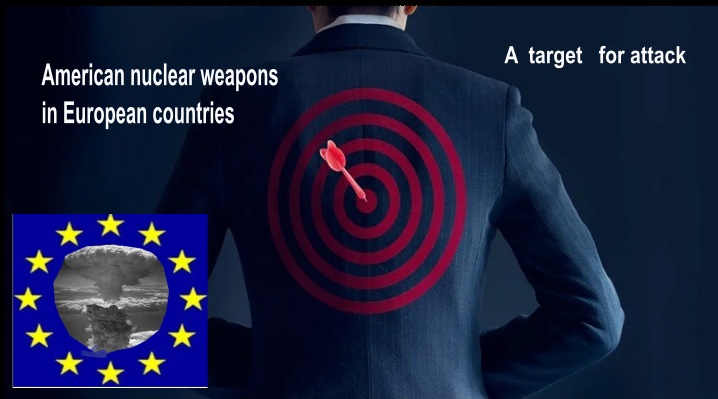
Guarded by American troops – whose real mission is, of course, to keep the compliant clients from laying their grubby hands on them – these nukes sit ready for American orders to be used…….. in reality, “there’s only one key” and – only one man will decide: the US president.
Washington has made Brussels another offer the Europeans are too slavish to refuse – even if it paints a giant target on their backs
these fresh nukes for Europe are supposed to make up for Washington withdrawing its conventional forces from the old continent.
What is truly baffling is why anyone in Europe would agree. The catastrophic disadvantages are just too obvious. Painting more targets on Europe’s back, distributing nuclear weapons further east when NATO’s eastward expansion is precisely what caused the Ukraine War,
There’s an old treaty that, if you have signed up to it, says that you can’t spread nuclear weapons. So, if you don’t have any nukes and you sign the treaty, you can’t get any. Simple as that. You’d think.
But leave it to the West, with all its ‘values’ and ‘rules-based order’ to, you know, not really break the rules. Just bend them a little. Bend them so much, in fact, that just breaking them would be more honest and less embarrassing.
The agreement we are talking about is, of course, the 1968 Treaty on the Non-Proliferation of Nuclear Weapons (NPT), according to the International Atomic Energy Agency “the centerpiece” – no less – of much that is good, beautiful, and eminently reasonable. Namely “global efforts to prevent the spread of nuclear weapons, to promote cooperation in the peaceful uses of nuclear energy and to further the goal of nuclear disarmament and general and complete disarmament.” Germany, for instance, is a long-standing signatory.
And yet, Germany and five other NPT signatories who belong to America’s NATO client system have nuclear gravity bombs on their (formally, at least) sovereign territory, and their air forces stand ready to carry them to targets which would be – surprise, surprise – in Russia. The little piece of shyster-level legal sophistry used to cover for this obvious breach of the Non-Proliferation Treaty is called – wait for it – “Nuclear Sharing.” Sweet, isn’t it? The world – or, perhaps, just Europe – may end in a man-made big bang of fire and fallout, but, as they say in kindergarten ‘sharing is caring.’
By the way, it is obvious – and would have been to men such as Clausewitz, York (both with some serious delay, admittedly), or Bismarck – that, for instance, German officers worth their salt would have to prepare secret emergency plans for rapidly seizing those nuclear weapons on German territory from our American ‘allies.’ Without bloodshed, if possible; or with, if necessary.
And yet, Germany and five other NPT signatories who belong to America’s NATO client system have nuclear gravity bombs on their (formally, at least) sovereign territory, and their air forces stand ready to carry them to targets which would be – surprise, surprise – in Russia. The little piece of shyster-level legal sophistry used to cover for this obvious breach of the Non-Proliferation Treaty is called – wait for it – “Nuclear Sharing.” Sweet, isn’t it? The world – or, perhaps, just Europe – may end in a man-made big bang of fire and fallout, but, as they say in kindergarten ‘sharing is caring.’
By the way, it is obvious – and would have been to men such as Clausewitz, York (both with some serious delay, admittedly), or Bismarck – that, for instance, German officers worth their salt would have to prepare secret emergency plans for rapidly seizing those nuclear weapons on German territory from our American ‘allies.’ Without bloodshed, if possible; or with, if necessary.
Guarded by American troops – whose real mission is, of course, to keep the compliant clients from laying their grubby hands on them – these nukes sit ready for American orders to be used. Yes, formally, there’s some mumbo-jumbo about a ‘dual key,’ but everyone not badly dropped on their head when in their nappies knows that’s BS. As a French officer has just confirmed to Le Figaro, France’s conservative paper of record, in reality, “there’s only one key” and – as in every decent organized-crime outfit – only one man will decide: the US president.
Then, in case the American capo di tutti capi gives his end-of-days order, you, country X, will have the privilege to take these American nukes to Russia. Once your – not American – planes drop American nukes on Russian troop concentrations and bases or, say, Kaliningrad or St. Petersburg, just sit tight and wait for the response. It would come, even if it were the last thing they ever did. Because that’s the way the world works. Also, they have told us so.
There are variations to the ‘nuclear sharing’ shtick: Greece for instance, has a nifty little deal which means it doesn’t host US nuclear bombs but maintains a unit for helping deliver such bombs to Russia. Poland, the Czech Republic, Denmark, Hungary, “and two unknown countries” are riding nuclear shotgun, as it were, by participating in the SNOWCAT (Support of Nuclear Operations With Conventional Air Tactics) program. So sneaky!
With things set up so neatly to cheat the NPT, you would think that everybody is hunky-dory, as that old mafiosi Tony Soprano would have said. Yet far from it. In reality, the US is loudly considering expanding the “nuclear sharing” scheme, and several European states – including some for whom mere SNOWCAT-ing clearly is just not good enough – seem eager to get their own local pile of US nukes.
At the same time, as everyone acknowledges frankly, these fresh nukes for Europe are supposed to make up for Washington withdrawing its conventional forces from the old continent. What a message: “Dear Euro vassals, we won’t stay around to fight and die with you, but we are happy to make more of you bases and delivery boys for our nukes. Hope you feel safer now. (Oh, and also, we’d love to sell you more of our overpriced F-35s, US kill switches included, that you’ll need for your bombing runs against Russia when we whistle. Deal?)”
In a normal world – or to be precise, a normal Europe – the answer to such American generosity would have to be a resounding ‘f*ck off’ (in plain American English). But Europe’s elites are not sane and so Europe is very far from normal. There seems to be a real eagerness to keep doing what America wants, European interests be damned.
That’s why the so-called ‘NATO 3.0’ project associated in particular with ‘brain-of-the-Pentagon’ Elbridge Colby is likely to proceed just fine. Its essence is simple: Fewer US troops, key capacities, and conventional arms for Europe, so that Washington can shift its weight against China. Apart from the grandly strategic, there’s the personal: That Colby’s father, while working for the CIA, helped lose the Vietnam War may play a role in shaping his son’s priorities.
Russia, if things ever went that far, is extremely unlikely to play along with this NATO 3.0 strategy, obviously. On the contrary, once US nukes land on its troops, bases, and cities, whether launched from and through European vassals or the American mainland, Moscow is likely to hit back at both.
Yet the real mystery here is not how Washington has arrived at adopting such a transparently fragile strategy. Looked at from the big, group-think blob on the Potomac, it may appear worth a try. What is truly baffling is why anyone in Europe would agree. The catastrophic disadvantages are just too obvious. Painting more targets on Europe’s back, distributing nuclear weapons further east when NATO’s eastward expansion is precisely what caused the Ukraine War, sending yet another antagonizing signal to China that Europe is straining to do what it can just to help the US pressure Beijing, and, last but not least, setting Europe up for a large-scale re-run of what the West has just done to Ukraine: a devastating proxy war.
Europe does not need even more “nuclear sharing” with the unreliable, irrational, and aggressive US. It needs decoupling from its abusive and exploitative masters in Washington. If its leaders wish to share, how about doing some hard thinking about the economic and security interests their countries clearly share with both Russia and China? But then, Europe’s leaders don’t think. And when they do, then not on behalf of their own peoples. What a shared misery.
UK overtakes Russia as Labour hike nuclear weapon spend by 17 per cent

the private sector earned at least $38bn from nuclear weapons contracts in 2025.
“This money is being wasted given the nuclear-armed states agree a nuclear war can never be won and should never be fought. It is also diverting resources from acute human needs.“
By Xander Elliards, https://www.thenational.scot/news/26176024.uk-overtakes-russia-labour-hike-nuclear-weapon-spend-17-per-cent/
THE UK Government increased its spending on nuclear weaponry by 17 per cent in the first full year of Labour in power, according to new statistics.
The data, published by the International Campaign to Abolish Nuclear Weapons (ICAN), shows that spending on nuclear weapons rose globally in 2025 by 19% to reach its highest levels ever.
In total, eight countries other than the UK have nuclear weapons: France, the US, Russia, India, China, Pakistan, Israel, and North Korea.
The ICAN report said that in total the nine nations had spent $118.8 billion in 2025, up 19% on 2025. The US spent $69.2bn, an increase of 22%, while Pakistan spent £1.5bn, an increase of 18%.
The UK spent a total of $12.6bn on nuclear weaponry in 2025, up 17% on 2024.
The UK was also third in terms of absolute spend, behind China in second place on $13.5bn, an increase of 7% on 2024.
Russia, who had been third in 2024, dropped to fourth, upping spending by 6% to $9.5bn.
Elsewhere, the report from ICAN, which produces the most authoritative figures on annual nuclear weapons expenditure, found that the private sector earned at least $38bn from nuclear weapons contracts in 2025.
ICAN said: “This money is being wasted given the nuclear-armed states agree a nuclear war can never be won and should never be fought. It is also diverting resources from acute human needs.
“A minute of nuclear weapons spending could provide access to clean water and sanitation for 3478 people. A day of this spending could save two million people from food insecurity. A week could protect more than 12 billion people from measles, mumps and rubella. A year’s spending could provide more than six million homes with solar power.”
ICAN also noted that the increase in spending on nuclear weaponry is happening alongside cuts to the humanitarian and development sector.
In the UK, the Government had pledged the UN target of 0.7% of Gross National Income (GNI) to the international aid budget each year. However, the Tories cut this to 0.5% in 2021, and Labour will cut it again to 0.3% from 2027.
The UK spent more than triple the UN’s entire annual budget for 2025 ($3.72bn) on nuclear weaponry. The US spent more than 19 times the UN budget.
Susi Snyder, ICAN’s director of programmes and co-author of the report, said: “At a time when the cost of living is skyrocketing and food and fuel are unaffordable for so many, it is unthinkable that these nine countries are spending billions on a false promise of security.
“Nuclear weapons cannot be used without causing catastrophe, and the false logic of nuclear deterrence requires us to trust our enemies with our very survival.”
Alicia Sanders-Zakre, a second co-author of the report and ICAN’s head of policy, added: “Our research is annual, but nuclear weapons spending is not.
“The nine nuclear-armed states are planning to maintain and modernise their nuclear forces for decades to come, diverting untold billions of dollars away from real human security needs.”
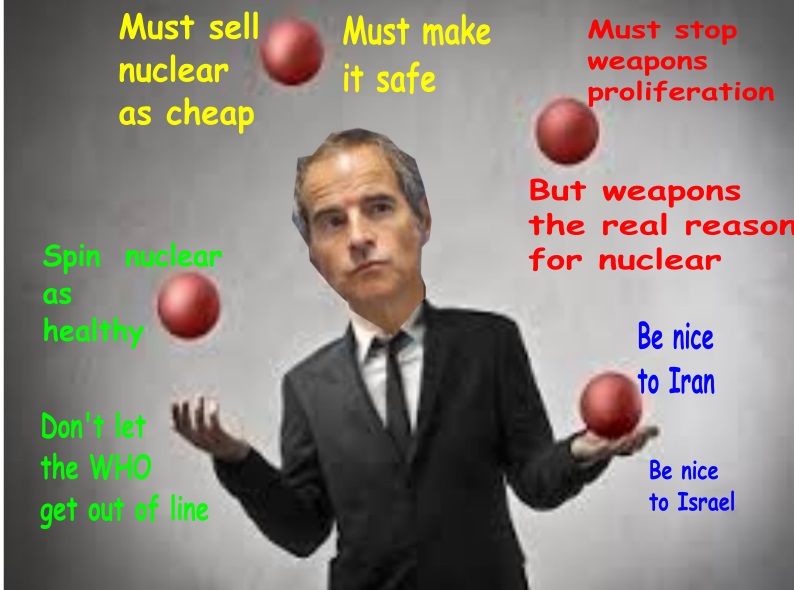
IAEA warning after drone hits used fuel facility near Chernobyl
WNN, 8 June 2026
Significant structural damage was caused to a building at the new central used fuel storage facility in the Chernobyl exclusion zone, International Atomic Energy Agency Director General Rafael Mariano Grossi has said.
In a briefing to the IAEA’s Board of Governors, and in a subsequent press conference, Grossi said that in a separate incident on Friday a drone had injured Russian military personnel undertaking de-mining activities as part of an IAEA-mediated ceasefire to allow the main 750 kV Dniprovska external power line to Zaporizhzhia Nuclear Power Plant to be fixed.
He said that over the weekend there had been further negotiations with both sides before it was agreed that the IAEA would send observers to monitor the mine-clearing work, which is necessary before the repair work can take place on the external power supply lines on pylons on either side of the military front line.
“Without the Dniprovska line, Zaporizhzhia Nuclear Power Plant’s off-site power situation is very fragile. Over the past days, the plant suffered its 18th offsite power outage since the war began. With a duration of 15-hours, it was also one of its longest, necessitating the use of emergency diesel generators to cool the six shut down reactors until offsite power was restored on Saturday morning,” he said.
The incident with a drone striking the three-year-old Central Spent Nuclear Fuel Storage Facility in the Chernobyl exclusion zone took place on Sunday, with Grossi reporting it caused “significant structural damage to part of the fuel reception building, including the IAEA safeguards office. Spent fuel was stored in casks just a few hundred metres from the damaged building. Thankfully, radiation levels at the facility remained normal, indicating the incident did not cause radioactive contamination. It remains unclear when the facility will be able to start receiving spent fuel from Ukraine’s operating nuclear power plants again”.
He added: “Attacking a facility with large amounts of nuclear material is extremely dangerous. It must not happen.”
The Centralised Spent Nuclear Fuel Storage Facility is a dry storage site for used nuclear fuel assemblies from the country’s VVER-1000 and VVER-440 reactors. It is designed to have a total storage capacity of 16,530 used fuel assemblies, including 12,010 VVER-1000 assemblies and 4,520 VVER-440 assemblies. Contracts were signed for its construction with USA-based Holtec International in 2005, although construction only began in 2017.
It started receiving used nuclear fuel from the country’s nuclear power plants at the end of 2023 and it has been operating under a commissioning licence. It was issued with its operating licence last month after an inspection carried out from 20 April to 1 May.
Operator Energoatom said the fire caused by the drone strike covered an area of 40 square metres and “was quickly localised and completely eliminated”. It said there were no injuries among the personnel and the radiation situation remained within normal limits.
During his speech to the board of governors and during his media briefing, Grossi maintained the IAEA’s stance of not attributing blame to either side for incidents during the war…………………….. https://www.world-nuclear-news.org/articles/iaea-warning-after-drone-hits-used-fuel-facility-near-chernobyl
Sizewell C: the Unanswered Questions

Alison Downes, https://stopsizewellc.org/sizewell-c-the-unanswered-questions/
8 June 2026: On the day the Public Accounts Committee begins scrutiny of Sizewell C, [1] and almost a year to the day that the government’s announcement of its £14.2bn investment paved the way for a Final Investment Decision, Stop Sizewell C is publishing a report “Sizewell C – The Unanswered Questions”. This highlights what is known, what it is impossible to know, and what the government continues to keep secret about Sizewell C. It is a story of secrecy, obfuscation and deception and contains a number of recommendations. [2]
Read here: Sizewell C, the Unanswered Questions, 8 June 2026
Stop Sizewell C said: “Over the last decade, efforts to uncover Sizewell C’s expected cost and schedule have been met by obfuscation, secrecy and outright deception. [3] While the National Audit Office published some details that the government wanted to keep secret, [4] we now demand much greater transparency; the Sizewell C Full Business Case and Strategy and Delivery Plan must be published – unredacted – immediately.
“With households on the hook for Sizewell C, we need assurances that the government has a prepared exit strategy for when the project – which according to the NAO is already based on “big assumptions” and “significant uncertainty” [5] – goes wrong. The government’s inability to back out of HS2 shows where this project might be heading, but with Sizewell C’s “novel” financing, it would be immoral to force households to continue paying for something that might never work properly, while investors laugh all the way to the bank.
“In the cost of living crisis, consumers must be protected now and into the future from the risks of building nuclear projects. As well as assurances of increased scrutiny and Ministerial accountability for Sizewell C, we call for a commitment that RAB will never be used again for future nuclear projects. Unless investors suddenly rediscover an appetite for risk – unlikely given the free ride provided by Sizewell C’s RAB – abandoning nuclear or switching to full state funding would seem to be the only alternatives.
“We look forward to the outcomes of the Public Accounts Committee’s enquiry into Sizewell C and hope the Committee calls out the government for failing to come clean about this deeply flawed project.”
Notes
1. The Public Accounts Committee is taking oral evidence on Sizewell C at 1pm today, 8 June with senior officials and Nigel Cann https://committees.parliament.uk/work/9713/sizewell-c/
2. See Appendix below. Some of our recommendations echo those by the National Audit Office in its report on Sizewell C.
3. Our report includes examples such as:
The government claimed not to “recognise” a cost of Sizewell C put at “close to £40bn” by the Financial Times in January 2025, when in July the project “baseline” was given as £38bn and HMG’s “central cost estimate” as £40.5bn.- Ministers are keeping the target completion date secret, saying only “mid to late 2030s”, but the NAO revealed the project baseline date as July 2039.
- Sizewell C revised its May 2020 cost estimate of £20bn a few months later, including removing allowances for in risk contingencies, but told the Planning Inspectorate in January 2021 the estimated cost “remains the same”.
- Officials gaslit Stop Sizewell C in a conversation about the project costing over £30bn.
4. Stop Sizewell C has repeatedly called for publication of the Sizewell C Full Business Case (FBC) but the government decided to only publish a summary. The NAO had sight of the FBC in preparing its report, but the FBC itself is still unpublished.
5. NAO’s press statement says: “This novel approach [RAB financing] has costs and relies on big assumptions” and “DESNZ’s modelling of [Sizewell C’s] benefits shows they will not outweigh the costs to consumers until after 2060. They are also subject to significant uncertainty.”
Appendix: Our recommendations.
I. GREATER TRANSPARENCY
- We call for the immediate unredacted publication of Sizewell C’s Strategy and Delivery Plan that contains clear and accessible information about cost, schedule and project milestones to enable the public to understand project progress. Annual updates to Parliament should spell out the following:
- Average and total costs for domestic and business users to date.
- Total capital accessed by the project to date.
- Updated construction cost compared to project baseline, LRT and HRT.
- Transparency about the whole life cost of the project from inception, through construction, operation and decommissioning. The cost of risk shouldered by HMG should also be included.
- If the Strategy and Delivery Plan cannot be published at this time the government should make a statement explaining why and commit to a publishing date.
- We call for the immediate – unredacted – publication of Sizewell C’s Full Business Case, as accessed by the National Audit Office.
- Terms agreed with EDF for use of its technology should be placed in the public domain.
II. EVIDENCE OF AN EXIT STRATEGY
While Stop Sizewell C is already convinced that Sizewell C cannot provide value for money or energy security, we believe the case for Sizewell C will weaken further over time as project milestones are missed, technological challenges emerge, and other sources of energy generation become cheaper. Given the financial burden on consumers, we seek assurances that the government would pursue an exit strategy rather than commit further funds to an expensive, unreliable energy source that would add to the UK’s stockpile of nuclear waste. The lack of an exit strategy must surely be a fundamental learning from HS2 – and Hinkley Point C.
- DESNZ should publish a process and timetable for regular reviews of the FBC, including ongoing assessments of internal or external developments on the economic viability of the project. These updates should be made public.
- These updates should transparently communicate the cost of continuing Sizewell C compared to the cost of abandoning the project, and what and when a government exit strategy would be pursued, to save consumer money being wasted.
III. PROVIDE CONSUMERS WITH ASSURANCES OF SCRUTINY AND PROTECTION
- We echo the NAO’s call for close, ongoing scrutiny by Ministers and independent watchdogs of consumer risk. The government must provide clarity on how this scrutiny will be undertaken, and demonstrate that DESNZ is resourced with the right skills and expertise to ensure full oversight. The government should undertake an early review of Sizewell C’s governance and assign specific Ministerial accountability for the project.
- The government should make a commitment not to use RAB for future nuclear power developments, especially GW nuclear projects. Full state funding would seem inevitable.
- The policy decision to “recycle” the government’s profit from Sizewell C’s RAB during construction (and operation, assuming the government kept its share) to help reduce consumer contributions towards Sizewell C should be legislated, to reduce the likelihood that future governments would rescind this arrangement and force consumers to pay even more for Sizewell C. (See point 3.)
- DESNZ should provide more detailed information to show how private sector expertise will be garnered from investors, and the basis of their belief that this will deliver savings for the benefit of consumers and that would justify use of the RAB.
- With investor returns during construction considered “high” by the NAO, we call on Ofgem to use all its powers to limit the profits investors would receive during operation, and not be swayed by investor claims that returns should reflect their “higher risk” * – when in fact consumers are bearing significant risk.
*Comments made by Centrica in a video presentation, https://www.centrica.com/investors/centrica-as-an-investment/investing-for-value-at-sizewell-c/
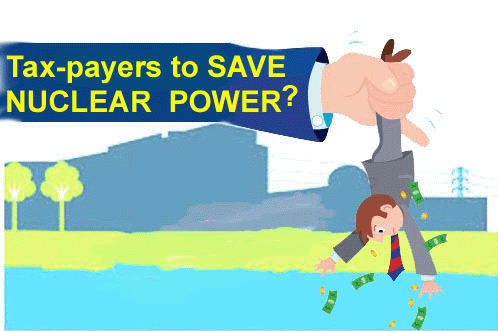
Department for Energy Security and Net Zero (DESNZ) defends Sizewell C funding which puts risk on taxpayer.
Representatives of the Department for Energy Security and Net Zero (DESNZ)
have defended the government’s funding model for Sizewell C, which places
risk on taxpayers rather than private investors.
Under the agreed final
investment decision (FID), private investors won’t have to pump more
equity into the nuclear project even if construction costs spiral.
At an oral evidence session of the Public Accounts Committee (PAC) on Monday (8
June), DESNZ civil servants were grilled about the findings of a recently
published report by the National Audit Office (NAO) into the delivery of
the 3.2GW nuclear plant, which concluded that private investors are reaping
“high” rewards from the project.
Utility Week 8th June 2026,
https://utilityweek.co.uk/desnz-defends-sizewell-c-funding-which-puts-risk-on-taxpayer/
Spiralling costs, fish discos and vast radioactive waste. Is nuclear really the solution to Britain’s energy problem?

an “unsolved environmental problem for future generations… a heavy burden to lay on our children and their children’s, children.” Porritt is aghast: “This is a truly extraordinary development – confirming that the UK still has NO idea what to do about its legacy nuclear waste.” And there is, of course, a huge cost involved, firstly with decommissioning a nuclear reactor and then storing the waste.
an “unsolved environmental problem for future generations… a heavy burden to lay on our children and their children’s, children.” Porritt is aghast: “This is a truly extraordinary development – confirming that the UK still has NO idea what to do about its legacy n
In an increasingly energy-hungry Britain, is nuclear the best way to meet soaring demand without burning fossil fuels? Fergus Collins investigates the benefits and risks
Fergus Collins, BBC CountryFile, June 8, 2026
“…………………………………….. The UK currently has nine operational nuclear reactors at five plants, with four more due to come online in the 2030s – two at Hinkley Point C in Somerset and two planned at Sizewell C in Suffolk – demonstrating Government commitment to this energy source (devolved Scotland has no nuclear plans).
“Nuclear will play a central role in meeting the UK’s future energy needs as we deliver our net zero target,” says the current minister for nuclear Lord Patrick Vallance. “As set out in our clean power mission, while our future electricity system will be dominated by renewables, we still need firm, low-carbon power to ensure the system is stable, secure and affordable. Nuclear provides that essential backbone – delivering clean power for millions of homes while underpinning a safe, resilient and cheaper system for the decades ahead.”
Not everyone is convinced, especially those concerned about safety issues; the shadows of the Chernobyl and Fukushima nuclear disasters, in 1986 and 2011 respectively, still dog the industry. Nuclear power creates vast amounts of potentially lethal radioactive waste, which must be contained and stored securely for thousands of years. Then there are questions of cost. Nuclear reactors are massive infrastructure projects and hugely expensive, not least because of the requirements of mitigating safety risks. Is it worth the investment – or could we power the UK through other means?
………………………………………………………………..The two new nuclear power stations at Hinkley Point and Sizewell are being built by EDF, France’s state-owned energy company. EDF manages eight nuclear sites in the UK – seven Advanced Gas-cooled Reactor (AGR) sites and one Pressurised Water Reactor (PWR). It says it’s driving the transition towards “an Electric Britain
………………………………….Who opposes nuclear power?
Some of the strongest voices against nuclear power in the UK come from groups protesting against the new reactors at Hinkley and Sizewell. Former science teacher Allan Jeffrey has been voicing concerns for over 40 years as part of campaign group Stop Hinkley, which works closely with TASC (Together Against Sizewell C). He doesn’t mince words: “Nuclear power stations are toxic radioactive waste factories” and argues that nuclear is “neither clean nor green” saying “large amounts of greenhouse gasses are produced in the nuclear fuel cycle from uranium mining and fuel processing to the building of power stations and waste storage sites and decommissioning old reactors.”
Jeffrey dismisses the idea that nuclear is more ethical than the gas or coal supplies the UK buys from unstable or openly hostile foreign states. “Uranium is not a renewable fuel,” he says, “and is mined in countries such as Australia, Canada, Niger and Kazakhstan. The miners frequently get lung cancer from the Radon gas, and much environmental pollution is left locally by the mining tailings and river water pollution.”
Jeffrey also points at the cost of nuclear: “Nuclear reactors take too long to build and pay back their greenhouse gas emissions.” He has a point with Hinkley Point C, which has been a building site since being approved by the Conservative Government in 2016.
Stop Hinkley and TASC are supported by statistics from CND (Campaign for Nuclear Disarmament) and many prominent anti-nuclear voices, including the environmentalist and friend of King Charles, Jonathan Porritt. In a recent blog post he claimed: “The Treasury’s financial modelling for the new power station at Sizewell C (seen by the Financial Times) gives a range of roughly £80 billion to £100 billion, far higher than the official estimate of £47 billion from the DESNZ – which in itself was already nearly double the original cost of £20 billion!”
DESNZ argues that there will be a big saving with Sizewell C because it is a replica of Hinkley and will be “built at a cost of £38bn in 2024 real terms. This would represent around 20% saving on the capital cost of the project compared with Hinkley C”.
What are the wildlife costs of nuclear power?
One very public reason for rising costs – and one the press have leapt on – is mitigation measures to prevent deaths of wildlife, especially fish. Nuclear power stations are located on the coast so they can draw seawater to cool the reactors. But they also suck in large numbers of fish; the Environment Agency has estimated 4.6 million per year at Hinkley, a figure EDF strongly contests.
EDF says it has spent £700 million in mitigation measures, including sonic fish deterrents developed with Swansea University. These use ultrasound to drive fish from the water intakes and have been dubbed ‘fish discos’ in the press.
That said, the Government’s own review, led by Sir John Fingleton, found that Britain was the most expensive place in the world to build nuclear facilities due largely to a “fragmented” regulatory system that had led to “conservative and costly decisions not proportionate to the actual risk being managed”.
However, Matt Browne, head of public affairs at The Wildlife Trusts, disputes EDF’s claims. “The developers of Hinkley C continue to misrepresent the impact that the nuclear plant will have on nature… This is highly misleading and allows EDF to pretend that £700 million is being spent to protect nature, when the real figure is closer to £50 million. It also misrepresents the number of fish affected by the proposed plant.”
Browne goes on to say: “On the basis of these false claims, the Government is now considering progressing recommendations which will lead to nature protections being severely compromised.”……………………………….
What happens to nuclear waste?
One area where there is a gap in the Government and EDF’s positive messaging – and one that tallies with Stop Hinkley and Porritt’s deeper fears – is just how and where to store nuclear waste.
Even after it’s no longer useful for generating heat, it continues to emit radiation, which breaks molecular bonds and causes severe damage to cell tissues in all organisms, leading to cancers and other severe health issues. And, as it breaks down very slowly, the waste emits this harmful radiation for tens of thousands of years.
The ONR says “Nuclear waste is primarily transferred to specialised, secure and regulated facilities for storage pending long-term disposal. Current Government policy is that UK higher activity radioactive waste will be managed in the long-term through geological disposal facilities (GDF)”.
GDF means burying the waste in deep subterranean vaults and leaving it alone till its radiation cools.
For Allan Jeffrey, this is simply an “unsolved environmental problem for future generations… a heavy burden to lay on our children and their children’s, children.” Porritt is aghast: “This is a truly extraordinary development – confirming that the UK still has NO idea what to do about its legacy nuclear waste.” And there is, of course, a huge cost involved, firstly with decommissioning a nuclear reactor and then storing the waste.
Currently, most high-level nuclear waste is being stored at Sellafield. Once at the forefront of the UK’s nuclear programme, Sellafield stopped generating electricity in 2003 and is now in the process of being decommissioned. As well as dealing with Sellafield’s own waste – spent fuel rods and other debris stored in silos and artificial ponds – it holds waste from other plants.
High level waste usually occurs in liquid form, a byproduct of processing spent fuel. This is mixed with crushed glass in a furnace and the molten product is poured into steel cannisters where it cools and solidifies, making it stable and safe for storage. But it is temporary storage only and Sellafield is almost full. Communities in Cumbria and Lincolnshire have been identified as potential nuclear waste sites.
…………The decommissioning of Sellafield is a massive project that may take over 100 years, with spiralling costs – but that’s a blink of an eye in terms of nuclear radiation.
………………………..Such gigantic periods of time, when all current decision makers and hundreds of generations of their descendants will be long dead, are hard to comprehend. Opponents of nuclear, such as Stop Hinkley and TASC, urge policymakers not to take the risk and to invest instead in renewables such as wind, solar and hydro power. In 2025, wind provided approximately 30% of the UK’s electricity needs compared to just 11–17% provided by nuclear. The UN’s International Energy Agency predicts renewables will generate 90% of all new power in the coming years. And yet you’ll find protest groups opposing almost every new wind or solar farm with the same vigour as those who are anti-nuclear……………..https://www.countryfile.com/environment/spiralling-costs-fish-discos-and-vast-radioactive-waste-is-nuclear-really-the-solution-to-britain-s-energy-problem
UK Navy nuclear submarine fleet stuck in dock while awaiting maintenance
The UK’s Navy’s entire available fleet of nuclear attack submarines is stuck in
port, leaving Britain vulnerable to Vladimir Putin’s underwater fleet. All
five of the UK’s Astute-class hunter-killer boats are awaiting maintenance
and repairs. A sixth, which was commissioned into the fleet, is not yet
ready to deploy. Naval commanders have said the situation makes the UK look
“toothless” in the eyes of Russia, which has ramped up naval activity
around British waters by a third in the past year. Cdr Ryan Ramsey, a
former nuclear submarine captain, said the lack of available attack boats
was a “serious wake-up call” for Britain.
Telegraph 7th June 2026, https://www.telegraph.co.uk/news/2026/06/07/navy-fleet-out-of-service-maintenance-russia-lord-west/
1 This Month



26 September – International Day for the Total Elimination of Nuclear Weapons


PLEASE OPPOSE HR 8255 AND S.3639 – bills would accelerate satellite deployment, with no environmental review or safeguards – https://ncstd5li.quorum.us/campaign/169331/
To see nuclear-related stories in greater depth and intensity – go to https://nuclearinformation.wordpress.com
-
Archives
- September 2026 (206)
- August 2026 (330)
- July 2026 (355)
- June 2026 (287)
- May 2026 (306)
- April 2026 (356)
- March 2026 (251)
- February 2026 (267)
- January 2026 (308)
- December 2025 (358)
- November 2025 (359)
- October 2025 (375)
-
Categories
- 1
- 1 NUCLEAR ISSUES
- business and costs
- climate change
- culture and arts
- ENERGY
- environment
- health
- history
- indigenous issues
- Legal
- marketing of nuclear
- media
- opposition to nuclear
- PERSONAL STORIES
- politics
- politics international
- Religion and ethics
- safety
- secrets,lies and civil liberties
- spinbuster
- technology
- Uranium
- wastes
- weapons and war
- Women
- 2 WORLD
- ACTION
- AFRICA
- Atrocities
- AUSTRALIA
- Christina's notes
- Christina's themes
- culture and arts
- Events
- Fuk 2022
- Fuk 2023
- Fukushima 2017
- Fukushima 2018
- fukushima 2019
- Fukushima 2020
- Fukushima 2021
- general
- global warming
- Humour (God we need it)
- Nuclear
- RARE EARTHS
- Reference
- resources – print
- Resources -audiovicual
- Weekly Newsletter
- World
- World Nuclear
- YouTube
-
RSS
Entries RSS
Comments RSS
 nuclear-news