Officials make alarming discovery outside of shutdown nuclear facility: ‘Significant’
“A legacy of industrial practices.”
by Veronica Booth, November 26, 2025
A dangerous fragment of radioactive debris was found outside of a
decommissioned nuclear facility in Scotland. The BBC reported that a
radioactive fragment categorized as “significant” was discovered around the Dounreay nuclear facility on April 7.
Radioactive particles can be
classified as minor, relevant, or significant. This is the first
“significant” particle found near Thurso since March 2022. The Dounreay
facility was an experimental nuclear site until particles of irradiated
nuclear fuel contaminated the drainage system. Now, the shores and seabed around Dounreay are heavily contaminated. According to the BBC, the decontamination of the site is expected to be complete by 2333.
The significant fragment serves as a poignant reminder of the importance of responsible radioactive waste management. According to the BBC, these
radioactive particles and fragments around Dounreay are not a threat to
people. Highly contaminated areas are not used by the public. Nearby public beaches have not contained any significant or large particles that would cause concern for people. In this instance, the U.K. government’s Nuclear Restoration Services and other entities are taking proper action to
decontaminate the site.
TCD 26th Nov 2025, https://www.thecooldown.com/green-business/dounreay-nuclear-facility-scotland-radioactive-waste/
Sir Keir Starmer to create commission with power to overrule environmental regulators through environmental red tape.

Matt Oliver, Industry Editor, 24 November 2025
Environmental quangos that object to nuclear power stations could have
their concerns overruled under Sir Keir Starmer’s plans to unleash a golden
age of nuclear. Under new proposals submitted to the Prime Minister, a new
commission would be created with the power to reconsider “novel or
contentious decisions” – overruling individual regulators if necessary.
In the report, the nuclear regulatory taskforce accused Natural England and
the Environment Agency of adding “disproportionate” costs to projects
by demanding design changes aimed at protecting nature.
Instead of addressing individual environmental concerns, developers could also be allowed to pay a large sum of money into a nature restoration fund. It comes after Sir Keir pledged to usher in a “golden age” of nuclear power following a major agreement between Britain and the US during Donald Trump’s state visit in September.
Telegraph 24th Nov 2025, https://www.telegraph.co.uk/business/2025/11/24/nuclear-power-boom-forced-through-environmental-red-tape/
Does ‘fish disco’ show we’re dancing to the wrong tune on regulations?
“confected outrage about a fish disco”.
Hinkley Point C’s fish protections have been criticised as a
waste of money but environmental charities said the outrage was
manufactured.
For the twaite shad of the Bristol Channel, it has been a
strange few months. Ordinarily, few people bother with shad. Smallish,
silverish, a little like a less charismatic herring, generally they are
left alone. Not this year. Starting in May they have been tracked. They
have been chipped. They have been played some really odd sounds. And now, as they somewhat bemusedly navigate what has become known as the Hinkley Point C fish disco, they have been presented to the prime minister as an exemplar of all that is wrong with our nuclear regulations.
The Fingleton report on nuclear regulation is long and considered. Its 162 pages take in capital financing, nuclear risks and decommissioning obligations. But it was just a few paragraphs about fish that ended up catching the headlines.
“Hinkley Point C will have more fish protection measures than any other
power station in the world,” wrote John Fingleton, commissioned by the
government to find ways to make nuclear cheaper. “It has spent £700
million on their design and implementation,” he said. The outcome on
protected fish? “These measures would save 0.083 salmon per year, along
with 0.028 sea trout, 6 river lamprey, 18 allis shad, and 528 twaite
shad.”
“The government’s propaganda machine is working overtime to
perpetuate the false narrative that nature blocks development,” Joan
Edwards, from the Wildlife Trusts, said. It is, she said, “confected
outrage about a fish disco”. Every second it is running, Hinkley Point C,
which is still under construction, will suck in 134 cubic metres of
seawater. From three kilometres out, in the murky estuary, the water will
rush along pipes towards the reactor. There, the cold waters of the Bristol
Channel will meet the superheated waters of a steam turbine………………………………………………………………………………………….
Times 25th Nov 2025, https://www.thetimes.com/uk/politics/article/does-fish-disco-show-were-dancing-to-the-wrong-tune-on-regulations-99v2tsnvs
“Ukraine Agrees on ‘Essence’ of Peace Deal; Trump Meeting Expected Soon”
By: Joshua S, November 25, 2025, https://scheerpost.com/2025/11/25/ukraine-agrees-on-essence-of-peace-deal-trump-meeting-expected-soon/
More updates will obviously follow, as context is everything. Ukraine has reportedly agreed to the “essence” of a peace deal with Russia, though President Zelensky has said more work remains to be done.
According to reporting from the UK Independent, Ukraine’s national security adviser Rustem Umerov said the country had reached a “common understanding” with the White House over a deal to end the war.
“Umerov also noted that Zelensky is likely to visit the U.S. in the coming days to finalize a deal with President Donald Trump aimed at ending Ukraine’s war with Russia.”
Needless to say more to come.
I found this to be an excellent summary of the current situation, highlighting that the United States cannot be considered blameless after a lifetime of empire-building. This analysis comes from Thomas I. Palley in Janata Weekly, India’s oldest socialist weekly, published on June 15, 2025.
“The external and internal factors come into play at different moments and take time to work their full effect, which is why history is so important to understanding the conflict. The two sets of factors play out over a timeline involving three key events. The first is Ukraine’s declaration of independence from the Soviet Union in August 1991. The second is the Maidan coup in February 2014 that overthrew democratically elected Ukrainian President Victor Yanukovych, who advocated Ukrainian autonomy and a nonaligned defense policy. The third is Russia’s military intervention in Ukraine, launched on February 24, 2022.”
For that article by Thomas Palley get it here
Britain will have to obey US orders on nuclear jets, CND conference hears.
23 November 2025, https://morningstaronline.co.uk/article/britain-will-have-obey-us-orders-nuclear-jets-cnd-conference-hears
BRITAIN would need permission from the United States in order to use its nuclear deterrent, experts say, as the government goes forward with a £71 billion purchase of nuke-carrying US jets.
And increasing Britain’s nuclear arms stock will tie the country to President Donald Trump’s foreign policy goals, which disarmament campaigners say could bring us closer to the brink of disaster.
Speaking at an event organised by the Campaign for Nuclear Disarmament in London on Saturday, experts, campaigners, and politicians condemned Prime Minister Sir Keir Starmer’s pledge to buy at least 12 F15-A jets.
The planes, capable of carrying so-called tactical nuclear bombs, were not “properly costed” when the government first laid out the deal, only later revealing that their price was some £71 billion, CND general secretary Sophie Bolt said.
Describing Sir Keir’s “mad scramble” to increase spending after Mr Trump requested Nato members increase arms expenditure to 5 per cent of their GDP, Ms Bolt said: “There is a blank-cheque approach to nuclear weapons.
“There was no real proper costing for how much this would be. The health sector is constantly having to save here, save there. Whereas the [Ministry of Defence] will later just say: ‘Oh sorry, we’ve overspent.’
“This will not make us safer. They are US fighter jets. All the money is going to the US. And the planes launch US nuclear bombs, so that means they are basically under Nato command, meaning they are under the US nuclear umbrella of Nato.
“It’s the US that decides when and where these bombs will be dropped. And we are concerned that Trump is going to be gung-ho for these bombs.”
Discussing the planes’ so-called tactical nuclear bombs, she said: “They make the threat of nuclear war being made much more likely and the British government is totally at the heart of this.”
Okopi Ajonye, a researcher at Nuclear Information Service (NIS), agreed that there were many issues with the F35-A deal, saying the government “rushed into the decision” to buy the jets.
He said: “Acquiring these aircrafts was to show that the UK is contributing to NATO. That’s actually what drove this decision.”
Outlining the link between the genocide in Gaza and the campaign against nukes, Palestine Solidarity Campaign director Ben Jamal said the British public should “resist the process to renormalise Israel” after the October ceasefire.
And Your Party co-leader Jeremy Corbyn said: “The new nuclear weapons being promoted and proposed by the UK are intrinsically dangerous: the more weapons there are, the more danger there is that they will be used.
“Instead we should invest the funds into housing, health and education — and increasing, not cutting overseas spending.”
Navy’s legal threats in bid to keep nuclear pollution secret.

THE Royal Navy threatened legal action as part of a fierce, high-level,
behind-the-scenes battle to block publication of information about
radioactive pollution at the Coulport nuclear bomb base on the Clyde.
Files released to The Ferret reveal that over nine days in July and August, the navy sent 130 emails, held five meetings and made numerous phone calls urging the Scottish Environment Protection Agency (Sepa) to keep details of the pollution secret. Naval officials repeatedly warned of legal action, spoke of the need to “calm some nerves” and said they were “deeply uncomfortable” with information proposed for release.
The National 23rd Nov 2025, https://www.thenational.scot/news/25642969.navys-legal-threats-bid-keep-nuclear-pollution-secret/
The EU counter-proposal to Trump’s peace plan keeps the door ajar for Ukraine to join NATO.
One of several reasons why Russia will likely refuse to commit to peace
Ian Proud, Nov 25, 2025, https://thepeacemonger.substack.com/p/the-eu-counter-proposal-to-trumps?utm_source=post-email-title&publication_id=3221990&post_id=179824409&utm_campaign=email-post-title&isFreemail=true&r=1ise1&triedRedirect=true&utm_medium=email
After my last video, I decided to do a clause by clause review of the so-called US peace plan for Ukraine with the European counter-proposal that has appeared in western newspapers. This was apparently drafted by the German, French and British National Security Advisers who joined the talks in Geneva.
If you look at both documents side by side, they appear remarkably similar. However, some big gaps exist, the largest being NATO membership for Ukraine. The European wording will be seen in Moscow as keeping the door open to future NATO membership for Ukraine while also allowing for the deployment of NATO troops to Ukraine. This, I’m afraid, will be a massive red line for the Kremlin, and I can’t see that they will agree.
Other controversial pieces of text from the Europeans:
- water down the commitment to Ukrine joinoing the EU;
- hold the line of keeping Russia’s sovereign assets immobilised after the war has ended;
- increases the cap on Ukraine’s military to 800,000 personnel, from 600,000 (althogh I frankly don’t thnk Ukraine can afford either number without massive inflows of financial aid from European States, which they can ill afford);
- removes the specific commitment by Ukraine to elections after 100 days;
- defers the issue of territory – which Zelensky has described as the most difficult issue – until after a peace deal is agreed;
removes the clause on amnesties. The amnesty issue appears as important to Russia and Ukraine for different reasons For Russia to avoid the much-called-for international war crimes tribunal, and for Ukraine, to enable corrupt figures around Zelensky to avoid imprisonment for massive embezzlement. However, I wasn’t sure reading the online version that I saw, whether the amnesty clause had been removed by accident.
While looking at the amnesty clause, I seem to have terminated my video recording early!
But to conclude, the European counter-proposal is helpful in that it engages with the US text as a starting point. Any final peace deal will look different to the versions we see today.
Yet, the European counter-proposal makes it almost impossible to Russia to get on board with peace, with NATO still very much on the table, and with the Europeans wanting to hold on to Russian afters after the fighting stops.
All that being said, US talks with Ukraine appear to have been positive so far. Right now, the emphasis is on Trump maintaining the focus and pressure on European leaders to get on board with compromises that will enable Putin to sue for peace, so that the fighting can end.
As of today, we still seem some way from that point.
I hope you find the video [on original] interesting.
Rise in nuclear incidents that could leak radioactivity
Rob Edwards, May 25 2025, https://www.theferret.scot/nuclear-incidents-radioactivity-faslane/#:~:text=The%20last%20category%20A%20incident,dropped%20from%20101%20to%2039
There have been 12 nuclear incidents that could have leaked radioactivity at the Faslane naval base since 2023, The Ferret can reveal.
According to the Ministry of Defence (MoD), the incidents at the Clyde nuclear submarine base had “actual or high potential for radioactive release to the environment”.
But the MoD has refused to say what actually happened in any of the incidents, or exactly when they occurred. There were five in 2023, four in 2024 and three in the first four months of 2025 – the highest for 17 years.
Campaigners warned that a “catastrophic” accident at Faslane could put lives at risk. The Trident submarines based there were a “chronic national security threat to Scotland” because they were “decrepit” and over-worked, they claimed.
New figures also revealed that the total number of nuclear incidents categorised by the MoD at Faslane, and the neighbouring nuclear bomb store at Coulport, more than doubled from 57 in 2019 to 136 in 2024. That includes incidents deemed less serious by the MoD.
The Scottish National Party (SNP) described the rising number of incidents as “deeply concerning”. It branded the secrecy surrounding the incidents as “unacceptable”.
The MoD, however, insisted that it took safety incidents “very seriously”. The incidents could include “equipment failures, human error, procedural failings, documentation shortcomings or near-misses”, it said.
The latest figures on “nuclear site event reports” at Faslane and Coulport were disclosed in a parliamentary answer to the SNP’s defence spokesperson, Dave Doogan MP. They show that a rising trend of more serious events – first reported by The Ferret in April 2024 – is continuing.
There was one incident at Faslane between 1 January and 22 April 2025 given the MoD’s worst risk rating of “category A”. There was another category A incident at Faslane in 2023.
The MoD has defined category A incidents as having an “actual or high potential for radioactive release to the environment” in breach of safety limits.
The last category A incident reported by the MoD was in 2008, when radioactive waste leaked from a barge at Faslane into the Clyde. There were spillages from nuclear submarines at the base in 2007 and 2006.
There were also four “category B” incidents at Faslane in 2023, another four in 2024 and two in the first four months of 2025. The last time that many category B incidents were reported in a year was 2006, when there were five.
According to the MoD, category B meant “actual or high potential for a contained release within building or submarine”, or “actual or high potential for radioactive release to the environment” below safety limits.
The MoD also categorised nuclear site events as “C” and “D”. C meant there was “moderate potential for future release to the environment”, or an “actual radioactive release to the environment” too low to detect. D meant there was “low potential for release but may contribute towards an adverse trend”.
The number of reported C incidents at Faslane and Coulport increased from six in 2019 to 38 in 2024, while the number of D incidents rose from 50 to 94.
At the same time the number of incidents described by the MoD as “below scale” and “of safety interest or concern” dropped from 101 to 39.
The SNP’s Dave Doogan MP, criticised the MoD in the House of Commons for the “veil of secrecy” which covered nuclear incidents. Previous governments had outlined what happened where there were “severe safety breaches”, he told The Ferret.
“The increased number of safety incidents at Coulport and Faslane is deeply concerning, especially so in an era of increased secrecy around nuclear weapons and skyrocketing costs,” Doogan added.
“As a bare minimum the Labour Government should be transparent about the nature of safety incidents at nuclear weapons facilities in Scotland, and the status of their nuclear weapons projects. That the Scottish Government, and the Scottish people, are kept in the dark about these events is unacceptable.”
Doogan highlighted that the government’s Infrastructure and Projects Authority had judged many of the MoD’s nuclear projects to have “significant issues”, as reported in February by The Ferret. The MoD nuclear programmes would cost an “eye-watering” £117.8bn over the next ten years, he claimed.
He said: “If the UK cannot afford to store nuclear weapons safely, then it cannot afford nuclear weapons.”
Anti-nuclear campaigners argued that the four Trident-armed Vanguard submarines based at Faslane were ageing and increasingly unreliable. They required more maintenance and their patrols were getting longer to ensure that there was always one at sea.
“The Vanguard-class submarines are already years past their shelf-life and undergoing record-length assignments in the Atlantic due to increased problems with the maintenance of replacement vessels,” said Samuel Rafanell-Williams, from the Scottish Campaign for Nuclear Disarmament.
“There is a crisis-level urgency to decommission the nuclear-capable submarines lurking in the Clyde. They constitute a chronic national security threat to Scotland, especially now given their worsening state of disrepair.”
He added: “The UK government is placing the people of Scotland at risk by continuing to operate these decrepit nuclear vessels until their replacements are built, which will likely take a decade or more.
“The Vanguards must be scrapped and the Trident replacement programme abandoned in favour of a proper industrial policy that could genuinely revitalise the Scottish economy and underpin our future security and prosperity.”
Nuclear accident could ‘kill our own’
Dr David Lowry, a veteran nuclear consultant and adviser, said: “Ministers tell us the purpose of Britain’s nuclear weapons is to keep us safe.
“But with this series of accidents involving nuclear weapons-carrying submarines, we are in danger of actually killing our own, if one of these accidents proves to be catastrophic.”
According to Janet Fenton from the campaign group, Secure Scotland, successive governments had hidden information about behaviour that “puts us in harm’s way” while preventing spending on health and welfare.
She said: “Doubling the number of incidents while not telling us the nature of them is making us all hostages to warmongers and the arms trade, while we pay for it.
The secretary of state for defence, John Healey, told the House of Commons that he rejected “any accusation of a veil of secrecy”. He promised the SNP MP, Dave Doogan, that he would look into the allegations and write to him.
When pressed by The Ferret, the MoD declined to outline what had happened in the three category A and B incidents at Faslane in 2025. It has also refused to give details of earlier incidents in response to a freedom of information request.
An MoD spokesperson said: “We have robust safety measures in place at all MoD nuclear sites and we take safety incidents very seriously. Our nuclear programmes are subject to regular independent scrutiny and reviews.
“In line with industry good practice and in common with other defence and civil nuclear sites, His Majesty’s Naval Base Clyde has a well-established system for raising nuclear site event reports.
“They are raised to foster a robust safety culture that learns from experience, whether that is of equipment failures, human error, procedural failings, documentation shortcomings or near-misses.”
In 2024 The Ferret revealed earlier MoD figures showing that the number of safety incidents that could have leaked radiation at Faslane had risen to the highest in 15 years. We have also reported on the risks of Trident-armed submarines being on patrol at sea for increasingly long periods.
The 50-Year Wind Farm That Ended a Nuclear Myth
A Danish offshore project’s lifespan extension to half a century dismantles one of nuclear energy’s last standing arguments.
Michael Barnard, Medium Oct 21, 2025
One of the persistent claims made by nuclear energy advocates is that nuclear power plants hold a critical advantage over wind and solar facilities due to their significantly longer operational lifespans. This argument frequently serves as justification for continued investment in nuclear, often at the expense of renewable options. News of a 25 year extension to a Danish offshore wind farm, bringing its total life to 50 years, defangs yet another nuclear talking point.
It’s not the only example. Renewables, particularly wind energy, now routinely demonstrate operational lifetimes matching those of nuclear plants. The conventional wisdom that nuclear has a built-in longevity advantage is no longer supported by real-world evidence.
The nuclear industry’s standard operating lifespan is widely cited as between 40 and 60 years, with many reactors initially licensed for 40-year terms. These facilities routinely secure extensions from regulatory bodies, typically for an additional 20 years, bringing total projected lifetimes up to 60 years. In some cases, operators are now pursuing even longer extensions……………………………(Subscribers only0 https://medium.com/the-future-is-electric/the-50-year-wind-farm-that-ended-a-nuclear-myth-9da06d3b528c
Zelensky to Trump on US peace plan: ‘No peace with Russia till we win back all lost territory’.

Walt Zlotow, Nov 23, 2025, https://waltzlotow.substack.com/p/zelensky-to-trump-on-us-peace-plan
There are oodles of clueless, stupid leaders governing the world’s 193 countries. But likely none more clueless and stupid than Ukraine President Volodymyr Zelensky.
Zelensky did one smart thing in his public life. He campaigned for president in 2019 promising to implement the Minsk agreements to end the civil war in the Donbas. He also promised to maintain good relations with Russia. That resonated with beleaguered Donbas Ukrainians who carried him to overwhelming victory.
But once in office the Kyiv ultra-nationalists with the real power quickly disabused Zelensky of any thought of sane governance. They encouraged him to continue the Donbas civil war and seek NATO membership by hinting he may be removed from office, indeed life itself, should he persist in making peace in Donbas and with Russia.
Zelensky took the hint. He followed the Kyiv neonazi game plan to the letter…destroy Russian cultured Ukrainians there and bring Ukraine into NATO to weaken, isolate Russia from the West. Massing troops near Donbass in late 2021 to polish off Donbas Ukrainians, he triggered the Russian ‘Special Military Operation’ in February 2022 to stop both the civil war and prevent NATO membership in NATO.
As stupid as that was, Zelensky appeared smart enough to negotiate a quick end to the Russian invasion just 2 months in. It would require Ukraine to end the civil war by granting Donbas regional autonomy, give up NATO membership and pledge neutrality between Russia and the West. In return Ukraine would get back every square inch of Ukraine territory Russia had seized.
That was smart. But then Zelensky pivoted back to stupid. The US and UK sent Defense Secretary Lloyd Austin and Prime Minister Boris Johnson respectively, to Kyiv to fill Zelensky up with visions of grandeur. ‘Just keep fighting, Volodymyr. You can defeat Russia with our weaponry, technology, logistics and moral support. Trust us. We’ll will never let you fail.’
Austin and Johnson reeled in fool Zelensky. Forty-three months on Ukraine is a failed rump state of its former self. Economy shattered. Tens of millions fled. Over a million dead and wounded. Tens of thousands of troop deserters replaced by hapless souls shanghaied off the streets, terrified teens and aging grandfathers.
President Trump, seeking an out from his predecessor Biden’s folly, has offered a 28 point peace plan largely mirroring Russia’s sensible demands. But Zelensky keeps pushing back, claiming he just needs more tens of billions from the US and NATO to get back all that Ukraine land lost forever.
If you were writing an imaginary movie scrip about Zelensky, the producers would usher you to the door saying ‘Nobody could be that stupid.’ But Zelensky is real life. If they ever do make a movie about his destruction of his beloved homeland, a fitting title might be ‘Dumb, Dumber, Dumbest.’
ZELENSKY: CAUGHT BETWEEN A ROCK AND A HARD PLACE
This war could have been avoided. A diplomatic pathway to peace existed in 2015 and in 2022. If the West had done what was right and needful on both occasions things would have been very different.
Russia has prevailed against the collective might of the West. Those who still retain their illusions and self-blinding prejudices concerning this are now totally irrelevant and unable to influence events now occurring. This includes the entire political elite of Europe apart from those in Hungary, Slovakia and since the recent presidential election, the Czech Republic.
We now stand before events which could herald the end of a conflict Russia never wanted. The last three and three quarter years of bloody warfare became inevitable following a catastrophic failure by the western political elites. The Russian president and his team walked every last mile and for six long years to achieve a diplomatic solution to the situation in Ukraine’s eastern regions following the West-supported insurrection and coup in Ukraine. The ultraviolent insurrection removed the democratically-elected president and government with full U.S., EU and UK support in 2014. Following the outbreak of hostilities when the new coup government irresponsibly and recklessly sent the Ukrainian army to quell unrest in the Russian-speaking east of Ukraine a diplomatic initiative between Russia and Ukraine began. This also included the then leaders of Germany and France. This process, which came to be known as ‘The Minsk Accords’ began in 2015.
The Minsk Accords began due to things going badly wrong for the Ukrainian army in Ukraine’s south-eastern region of the Donbass. They were begun after a plea by Angela Merkel, Chancellor of Germany at the time, to Vladimir Putin. These accords were meant to find a diplomatic solution to the question of the Russian-speaking population retaining their right to retain their language and democratic rights in the face of the removal of the president and government they had elected being illegally removed from office. The population of the Donbass saw gaining a semi-autonomous status as the way to achieve this and this is the outcome Putin sought to achieve for them.
The process to find a peaceful way through to a good outcome for both sides through diplomacy stretched on through th next six years to 2021 without success. The coup government in Kiev through its parliament refused to implement the steps that would have ensured a peaceful outcome. Instead of being willing to agree the way forward to the peaceful outcome visualized in Minsk they actively sought a military outcome favorable to them. Back in Minsk and throughout this period western leaders constantly attempted to put pressure on Russia and exerted virtually none on the Ukrainian regime in Kiev. This failure to put pressure on Kiev was the crucial missing ingredient that brought about the ultimate failure of the Minsk process by 2021. The two Kiev regimes since 2015 having felt no significant pressure from its western allies to implement Minsk finally abandoned it completely by late 2021. This set the stage for war
The Ukrainian army and the fortifications built to contain and attack the Russian-speaking populations of the Donbass which lay siege to the Donbass region had been built up and equipped massively by the West from 2014 to 2021. And in the first months of 2022 the number of attacks on the Russian-speaking population by the Ukrainian army rose significantly. It was clear that a major military push by the Ukrainian army against the population there was imminent. All this and all that came thereafter from February 24th 2022 could have been prevented if the West had been willing to put pressure on presidents Poroshenko and subsequently Zelensky, to agree the diplomatic solution which arose from the negotiations in Minsk. All the years of horrendous bloodshed could have been avoided. The western leaders could have applied massive pressure on Kiev but failed to apply any discernible pressure at all
Only now, after these years where over a million have died and countless numbers have experienced grievous injuries do we at last see significant pressure being applied to the Ukrainian regime. The new, 28-point Trump peace plan has been supplied to Zelensky and he has been told in no uncertain terms that he must agree to it or lose U.S. support. He has until November 27th to do this.
The big question is this: Why did we wait all the way from 2015 to now for the western powers to apply pressure on Kiev to settle?
The political leadership of the West concentrated solely applying pressure on Russia during the entire time from 2015 to now. If pressure had been applied to the degree possible and necessary by the West on the Ukrainian authorities they would have had to agree to the diplomatic peace initiatives, first in Minsk and if not then, in Istanbul. In Minsk the western leaders utterly failed in their duty to pressure BOTH sides, choosing to put pressure on Russia alone. In Istanbul we saw Boris Johnson, UK prime minister of the time, arrive in Kiev to urge Zelensky to abandon the road to peace and instead to instead choose war.
It has been the western leaders and their failure to apply this pressure where it would have been most effective that has precipitated the start and continuance of the fighting. It i the western leadership of this period and their anti-Russian strategies that are primarily responsible for this conflict and all the deaths and injuries that have occurred since 2015.
Now, as Russia achieves ever greater success on the battlefield, with the Kiev regime locked within a huge corruption scandal and its military forces in dissaray, lacking manpower, suffering massive desertions and in retreat, with western financial support to Ukraine failing, now at last pressure is being put where it should have been all along, on the Kiev regime and on Zelensky in particular. He must no decide by November 27th whether to sign up to the 28-point peace plan or lose the U.S. as ally. At long last pressure is being applied where needed as it ought to have been done all the way back in Minsk in 2015 and once again in Istanbul in 2022. Zelensky must now put up or shut up. Agree to a peace where Russia achieves th preponderance of its goals or reject that peace, fight on, and lose even MORE lives and land in the future.
Nov 22, 2025
European Leaders Condemn Trump’s Military Escalation Against Venezuela.
the escalation that Trump claims is the latest battle in the “War on Drugs” comes two years after he explicitly announced his desire to take control of Venezuela’s oil,
War would deliver “not security but a torrent of bloodshed,” said a letter signed by dozens of political leaders.
By Julia Conley , CommonDreams, November 22, 2025, https://truthout.org/articles/european-leaders-condemn-trumps-military-escalation-against-venezuela/?utm_source=Truthout&utm_campaign=0b29afb75c-EMAIL_CAMPAIGN_2025_11_22_04_56&utm_medium=email&utm_term=0_bbb541a1db-0b29afb75c-650192793
ith thousands of US troops patrolling the Caribbean, at least eight warships deployed in the region, and the BBC reporting that it tracked four US military planes that flew near Venezuela Thursday night, lawmakers and other leaders from across Europe on Friday issued a unified demand for the Trump administration to deescalate the tensions it has ratcheted up in recent weeks.
The administration’s “show of force has already proved lethal,” said the leaders, with more than 80 people — including fishermen and an out-of-work bus driver — having been killed in the US military’s strikes on more than 20 boats, which the administration has insisted were trafficking drugs to the US. The White House has publicized no evidence of the claims.
President Donald Trump has not taken further military action against Venezuela since he was presented with “options” for potential strikes last week by officials including Defense Secretary Pete Hegseth, nor has he followed through with threats he’s made against Mexico and Colombia.
But the European leaders — including British Members of Parliament Zarah Sultana and Jeremy Corbyn, former Greek Finance Minister Yanis Varoufakis, and Spanish Member of European Parliament Irene Montero Gil — noted that Trump “severed diplomatic channels with Caracas and approved covert [Central Intelligence Agency] operations in Venezuela” as the military buildup continues in the region.
The Trump administration has insisted it is engaged in a legal “armed conflict” with drug cartels in Venezuela, which it has accused of trafficking fentanyl to the US — though experts say drug boats originating in Venezuela are “are mainly moving cocaine from South America to Europe,” and analysis by both the United Nations and US intelligence agencies have shown the South American country plays virtually no role in the production or transit of fentanyl.
The US Congress has not authorized any military action against drug cartels or Venezuela’s government, and lawmakers from both sides of the aisle have attempted to pass war powers resolutions blocking the US from striking more boats or targets on land in Venezuela, only to have the resolutions voted down.
In his second term, Trump has sought to tie Venezuelan President Nicolás Maduro to drug cartels — despite a declassified US intelligence memo showing officials rejected the claim — and designated Cartel de los Soles a foreign terrorist organization last week, giving the White House what Hegseth called “new options” to go after the group.
But the escalation that Trump claims is the latest battle in the “War on Drugs” comes two years after he explicitly announced his desire to take control of Venezuela’s oil, and following years of condemnation of Maduro’s socialist government from Secretary of State Marco Rubio.
The European leaders said the administration’s narrative about the threat Venezuela poses to the US and the escalation is simply the “latest attempt to threaten and undermine the sovereignty of Latin America and the Caribbean nations.”
“Declassified documents have confirmed the CIA’s hand in overthrowing democratically elected governments in Latin America, such as Salvador Allende’s Chile in 1973, João Goulart’s Brazil in 1964, and Jacobo Árbenz’s Guatemala in 1954. The human cost of these regime change operations was catastrophic, and their political legacy endures,” reads the letter, which was organized by Progressive International.
A military intervention by the US in Venezuela “would mark the first interstate war by the United States in South America,” the leaders said, yet “the pretext for intervention is as tired as it is familiar.”
“Under the banner of combating the ‘narco-terrorists,’ Trump celebrates lethal strikes against peaceful fishermen arbitrarily labeled as carrying drugs,” the leaders said.
As in the past, they added, moving the War on Drugs to Venezuela would deliver “not security but a torrent of bloodshed, dispossession, and destabilization.”
Therefore, we condemn in the strongest terms the military escalation against Venezuela,” they said. “Our demand is clear and our resolve is firm: No war on Venezuela.”
As Peoples Dispatch reported Thursday, many European leaders have “subordinated” themselves to Trump and have avoided speaking out against the US escalation with Venezuela, but left-wing political parties have led the way in denouncing the US deployment of soldiers and warships to the region.
The Workers’ Party of Belgium said recently that the world is “witnessing an unprecedented military escalation in 20 years, a multifaceted aggression that threatens not only Venezuela, but any project of sovereignty and social justice in Latin America.”
The promise, peril and pragmatism of Britain’s nuclear “renaissance”

LSE Shefali Khanna, Stephen Jarvis, November 21 2025
Nuclear energy’s capacity to help Britain meet its net-zero targets makes it a potentially attractive part of the energy mix. But do the high cost and complicated logistics of building new plants, as well as the emergence of renewable alternatives, make the government’s plans unviable? Shefali Khanna and Stephen Jarvis analyse whether ambition can be realised through delivery.
After decades of stagnation, nuclear energy is staging a comeback. The British government has called its plans for nuclear power a “renaissance”, with a goal to quadruple nuclear capacity by 2050. Projects like Hinkley Point C, under construction in Somerset, and the proposed Sizewell C, in Suffolk, dominate headlines, while small modular reactors (SMRs) promise to make nuclear energy cheaper, faster to deploy and safer. But Britain’s nuclear revival raises questions about how old technologies fit into a rapidly changing energy landscape.
From decline to revival
Britain was a nuclear pioneer. Its first commercial reactor, Calder Hall, opened in 1956 and symbolised postwar scientific ambition. Yet by the 1990s, nuclear energy had lost political and public support………………………………
The nuclear policy push
The British Energy Security Strategy , published in 2022, set an ambitious target of up to 24 gigawatts of nuclear capacity by 2050, meeting roughly a quarter of projected electricity demand. To deliver this the government created Great British Nuclear, a body tasked with accelerating nuclear project approvals and supporting innovative technologies……………Much of the optimism centres on small modular reactors, nuclear units with capacities typically under 500 megawatts, compared with the large gigawatt scale reactors at traditional plants. SMRs can be factory built, reducing on site construction delays and costs that have plagued conventional reactors. In November 2025 a domestic firm, Rolls-Royce SMR, was chosen to build three SMRs in Wylfa, in Wales. And several foreign developers, including NuScale and GE Hitachi, based in America, are vying for contracts. If successful, Britain could become a global exporter of modular nuclear technology, a rare case of industrial strategy aligning with energy policy.
SMRs are still unproven at scale, however. While prototypes exist, none have yet achieved commercial operation in a liberalised electricity market. Cost estimates remain speculative and nuclear waste management challenges persist. The modular approach may simplify construction but not necessarily long-term decommissioning or waste storage.
Economics and financing are the biggest barrier
Despite renewed enthusiasm, nuclear power remains expensive. The cost of Hinkley Point C has risen from £18 billion ($23.6 billion) to over £35 billion ($45.9 billion), with completion delayed from 2025 until as late as 2031. Financing such large projects in a deregulated market is daunting, especially when renewables and battery-storage technologies have seen such rapid cost declines.
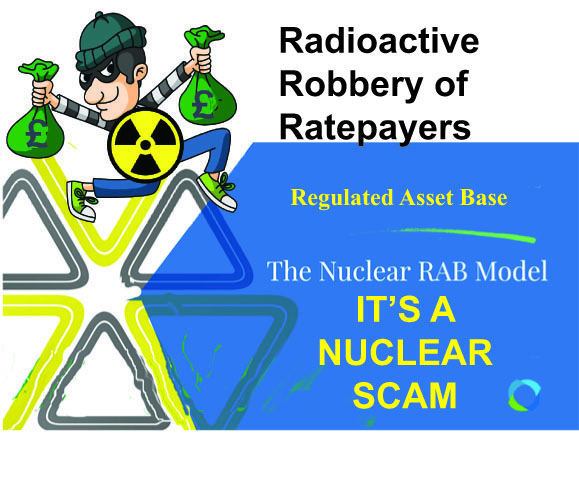
Britain is experimenting with a Regulated Asset Base model, which allows developers to recover some costs from consumers during construction, reducing investor risk but increasing public exposure. This approach could make projects like Sizewell C more viable, yet it effectively shifts financial risk from corporations to consumers, reigniting debates about fairness and affordability.
Safety, waste and trust
Nuclear energy’s social licence remains fragile. Surveys show rising support for nuclear power as part of Britain’s low carbon mix, but opposition can intensify when communities face the prospect of new plants or local waste storage. The government’s search for a geological disposal facility for radioactive waste has struggled. Transparent governance, community benefit schemes and clear communication about risks are vital.
A deeper question is how nuclear fits into a net-zero electricity system increasingly dominated by renewables. Wind and solar costs have fallen dramatically, making them the backbone of Britain’s decarbonisation strategy. But their intermittency creates a need for flexible backup and firm supplies, particularly during dark, still winter days. Here nuclear advocates see an opportunity. Yet the future grid may evolve differently. Advances in battery storage, demand flexibility and even low-carbon thermal sources (such as hydrogen or gas with carbon capture) could provide reliability without the inflexibility and long lead times of nuclear projects. From a systems perspective, nuclear’s value depends on whether it complements or crowds out other low-carbon sources of power.
A combination of offshore wind, interconnectors with Europe and demand-side management could offer cheaper resilience than large scale nuclear expansion. National Grid ESO’s Future Energy Scenarios suggest multiple credible pathways to reliability that do not rely heavily on new nuclear power.
The global dimension
……………………………… Britain wants energy sovereignty but depends on foreign partners for both capital and technology. Balancing national security with project viability will require deft diplomacy and strategic clarity.
From renaissance to realism
Nuclear energy could play a valuable role in Britain’s net-zero transition, but not at any cost. Policymakers must avoid treating it as a silver bullet or a national vanity project. Nuclear should be evaluated within a whole systems framework that considers economic efficiency, environmental impact and technological diversity. A pragmatic approach would prioritise completing current projects (such as Hinkley and Sizewell) efficiently before scaling new builds; rigorous cost transparency in SMR development; integrated planning with renewables and storage; and public engagement to rebuild trust through co-benefits, not just compensation.
The rhetoric of a “nuclear renaissance” is powerful, evoking a return to industrial confidence and scientific progress. But the real test lies in delivery. If Britain can demonstrate that modern nuclear projects are on time, on budget and publicly legitimate, it could indeed reclaim some global leadership. If not, this revival may join a long list of grand plans that stumbled on the realities of cost, complexity and public trust. https://blogs.lse.ac.uk/businessreview/2025/11/21/the-promise-peril-and-pragmatism-of-britains-nuclear-renaissance/
When medics become targets: Ukrainian strikes on Russian rescue workers and the silence of western media.

Eva Karene Bartlett, November 20, 2025, https://evakarenebartlett.substack.com/p/when-medics-become-targets-ukrainian?utm_source=post-email-title&publication_id=3046064&post_id=179646211&utm_campaign=email-post-title&isFreemail=true&r=1ise1&triedRedirect=true&utm_medium=email
Since Russia began its SMO in 2022, Western media have repeatedly accused Russia of an “unprovoked invasion” and of “war crimes”.
Honest observers, however, state that Russia has acted with considerable restraint in Ukraine—targeting military and logistics sites, not civilians—and remind of Ukraine’s eight years of warring on the civilians in the Donbass prior to the commencement of the SMO in 2022. Further, they emphasize that once again, in December 2021, Russia made clear its concerns in hopes of a diplomatic solution. These were, again, steadily ignored by Western governments and media.
Likewise ignored is Ukraine’s deliberate, shelling and drone striking of medical and rescue personnel. Under international law, medical and rescue personnel and their vehicles are protected and must not be targeted. Ukraine and its ally Israel are guilty of routinely, deliberately, targeting medics and other rescuers, maiming and killing them. These are war crimes, but the West remains mute, instead concocting stories of “Russian war crimes” in the face of Ukraine’s very real ones.
In September 2019, when I first visited the Donbass, in a village in the Gorlovka region I met an elderly resident of living alone in a home falling apart from previous Ukrainian shelling. During our conversation she said that ambulances wouldn’t be able to reach her if she was injured by the shelling, it would be too dangerous for them to try.
I was likewise told by Zaitsevo administration that ambulances could not reach the villagers.
“The paramedics don’t go farther than this building; it’s too dangerous. If somebody needs medical care near the front lines, someone has to go in their own car and take them to a point where medics can then take them to Gorlovka. The soldiers also help civilians who are injured.
A woman died due to huge blood loss because no one could reach her house to take her away in time. She was injured in the shelling and bled to death.”
This is one sordid reality for civilians living in villages heavily bombarded by Ukraine.
But the medics heroically do go to potentially dangerous areas to rescue civilians, and they have for years been deliberated targeted by Ukrainian forces when doing so.
In 2022, I interviewed numerous medics and Emergency Services workers in Donetsk regions, and subsequently made a short video about Ukraine’s deliberate targeting of rescue personnel.
Speaking with Emergency Services in Donetsk’s Kievsky district, for the two hours I was there we came under heavy Ukrainian shelling.
The windows of the building had already been blown out and were sand-bagged to attempt to protect the workers. The Chief of the centre, Andrey Levchenko, told me how five days prior his office had been impacted with shrapnel from the shelling. He thankfully had just stepped of his office before the blast and was not injured or killed.
The day prior to my visit, when out on a call to rescue civilians trapped in a building set ablaze by Ukrainian shelling, rescuers were shelled, resulting in one of them being hospitalized in critical condition.
The survivors told me that, prior to the shelling, they saw a drone overhead, which makes it credible to believe that Ukraine deliberately targeted the rescuers.
Levchenko told me that Ukraine routinely double and triple strikes rescuers.
“As soon as we go out to help people the shelling resumes.” The double or triple strike tactic often means that rescuers who have come to help those injured in the first strike are then themselves targeted, depriving civilians in need of urgent medical assistance as a result.
I also spoke with Sergei Neka, Director of the Department of Fire and Rescue Forces of the Ministry of Emergency Situations. He reiterated what I’d been told.
“Our units arrive at the scene of the accident and Ukraine begins to shell it. A lot of equipment has been damaged and destroyed.”
Two female medics I interviewed told me coming under repeated Ukrainian shelling is normal. They spoke of their fear, bu said, “How about the patients? They’re hurt and even more scared, they’re waiting for our help. If I don’t help, who will help if everyone runs away?”
By September 2022, Ukrainian forces targeted and killed 19 Donbass rescuers, injuring over 50 more.
Ukraine continues killing medics
Fast forward to the present. Following are just some of Ukraine’s more recent attacks on medics and other rescue workers.
On August 11, a Ukrainian drone targeted an ambulance in Gorlovka, killing two medics and seriously injuring the driver.
In May, a Ukrainian drone strike killed two Emergency workers who had come to the site of a first drone strike in Lugansk. In an Israeli-style second strike, Ukraine targeted the rescuers deliberately after the arrived at the scene.
In March, Russian Emergencies Ministry employees came to extinguish a car on fire following a Ukrainian drone strike in Gorlovka. A Ukrainian drone targeted them, injuring the deputy head of the firefighting service and damaging a fire truck.
There are tragically many more such instances which I could list. However, the point is that it is beyond clear that Ukraine’s shelling and drone targeting of Russian medics, firefighters and other rescuers has been a deliberate policy since before 2022.
It is also clear that Western concern for medics allegedly targeted elsewhere (think the fake rescuers of the al-Qaeda aligned White Helmets in Syria during the global war on Syria) will never extend to any concern for Russian rescuers actually targeted by Ukraine.
US, Russia drafting Gaza-inspired peace plan for Ukraine
Samuel Chamberlain and Caitlin Doornbos, New York Post, Wed, 19 Nov 2025, https://www.sott.net/article/503070-US-Russia-drafting-Gaza-inspired-peace-plan-for-Ukraine
Members of the Trump administration and Russian officials have secretly been hashing out a revised plan to end Moscow’s 45–month-old invasion of Ukraine — but the deal is riddled with unacceptable provisions that would in part force Kyiv to dramatically shrink its military, The Post can reveal.
Comment: Moscow didn’t “invade” Ukraine. After many warnings to the Kiev regime, it took action to protect Donbass Russian speakers who had endured eight years of shelling by their own country, because they wouldn’t bend to the neo-nazi coup in 2014. After all this time, The Post is still following the approved narrative. Sad.
- How the Western Press has for years hidden Ukraine’s neo-nazi war on Donbass
- Neo-Nazi battalion promises not to lay down arms until Donbass, Crimea conquered
The 28-point framework calls for Ukraine to shrink its Army to 2.5 times smaller than it is now; forces Kyiv to turn over long-range missiles “or any kind that can reach Moscow or St. Petersburg”; and bans any international brigades within Ukraine — which has long been considered the best way to ensure a halt to Russia’s assault would remain in place, a source familiar with the plan told The Post.
The proposed plan would also target NATO, requiring Ukraine to ban allied countries from keeping any military aircraft in Ukraine — instead backing them up to at least the Polish border.
The plan would also force Ukraine to fork over the entirety of the Donbas region — including territory Russia has been unable to occupy, according to a report by Financial Times.
Comment: Notice the framing. As Putin patiently explained to Tucker Carlson (and presumably Witkoff and Trump) Donbas had been part of Russia since the 17th century and then part of Ukraine for a measly two decades. There is no ‘forking over’.
Axios reported that the deal was inspired by President Trump’s 20-point road map for ending the war between Israel and Hamas terrorists in the Gaza Strip, citing US and Russian officials.
However, that plan famously calls for an international force to keep the peace in Gaza until a Palestinian state can be established.
Predictably, Moscow appears to be fond of the blueprint, with Kirill Dmitriev — the head of Russia’s sovereign wealth fund who is reportedly drafting the plan with Trump’s special envoy Steve Witkoff — telling Axios “we feel the Russian position is really being heard.”
Still, the Kremlin on Wednesday denied that there had been any new developments in what Moscow wants to see in a peace deal since Trump met with Russian dictator Vladimir Putin in Alaska in August.
“There has been nothing new in addition to what was discussed in Anchorage,” Kremlin spokesman Dmitri Peskov told reporters on Wednesday, responding to a question about the Axios report.
The plan is purportedly meant to be a sweeping blueprint that not only ends the war in Ukraine but also hashes out questions about security guarantees for the Kyiv government and the rest of Europe, as well as future ties between Washington and the two warring nations.
However, the main security guarantees that Europe and the US have sketched out for Ukraine has been the international security force, which has been scrapped in the new plan.
Further, the plan would have to be accepted by Ukraine, whose people have been fighting and dying for nearly four years to protect Kyiv’s independence and prevent Russian overreach described in the sketched-out plan.
Comment: The beleaguered citizens of Ukraine have been fighting and dying to preserve the two decade-old elite money-laundering machine that is “country” of Ukraine.
- ‘No fight against corruption in Ukraine, costs country 2% of GDP every year’, says IMF
- The scandal Zelensky can’t escape: Inside Ukraine’s biggest corruption story
- Ukraine must be held accountable for ‘stealing’ US aid – James Durso to The Hill
- The firing of Viktor Shokin: Ex-Ukraine prosecutor told to back off probe of Biden-linked firm
- Tens of billions of dollars were transferred to Ukraine, then laundered through FTX crypto currency back to Democrats in US
- Hear those alarm bells going off? Ukraine scandal leads to the Clinton Foundation
Meanwhile, a Ukrainian official told the outlet that Witkoff discussed the plan with Kyiv’s national security adviser, Rustem Umerov.
Ukraine President Volodymyr Zelensky was in Turkey on Wednesday to meet with the country’s president, Recep Tayyip Erdogan.
“Foremost, we will discuss maximum capabilities to ensure that Ukraine achieves a just peace,” Zelensky told reporters of the plans for his discussion with Erdogan, adding: “We see some positions and signals from the United States, well, let’s see tomorrow.”
Zelensky’s office declined to comment on the reported content of the plan.
For now, the conflict rages on. Overnight, Russian drones and missiles blitzed the western city of Ternopil, striking two nine-story apartment blocks and killing at least 20 people, including two children, and injuring at least 66 others.
The White House did not immediately respond to requests for comment.
Trump told a Saudi investor summit on Wednesday afternoon that he was frustrated with Putin for how long it has taken to end the Russia-Ukraine war.
“I have a good relationship with President Putin, but I’m a little disappointed in President Putin right now,” Trump said. “He knows that.”
Comment: Analyst Alexander Mercouris highlights other provisions in the draft document that have received little attention: the enshrining of Russian as a “state language”, thus protecting Russian speakers, and the restoration of the persecuted Russian Orthodox Church to its former status, including the return of all looted properties. These may be minor points to the West, but are immensely important to Russia, as it formed a part of the decision to initiate the SMO.
1 This Month
10 March A LIVE WEBINAR THE REAL EFFECTS OF NUCLEAR POWER
What the Industry Isn’t Telling Us
1:00 PM Mountain, 2 pm Central, 3 pm Eastern. Live on the Keepers of the Water Facebook page



18 March Webinar @ 1 PM EST: An Assessment of SMR Projects: The Case of Canada
register for the zoom:
https://us02web.zoom.us/webinar/register/WN_o8BIIOUvQ2ONJR1nta65DQ#/registration


of the week – STOP SMALL MODULAR REACTORS IN CANADA
To see nuclear-related stories in greater depth and intensity – go to https://nuclearinformation.wordpress.com
-
Archives
- March 2026 (113)
- February 2026 (268)
- January 2026 (308)
- December 2025 (358)
- November 2025 (359)
- October 2025 (376)
- September 2025 (258)
- August 2025 (319)
- July 2025 (230)
- June 2025 (348)
- May 2025 (261)
- April 2025 (305)
-
Categories
- 1
- 1 NUCLEAR ISSUES
- business and costs
- climate change
- culture and arts
- ENERGY
- environment
- health
- history
- indigenous issues
- Legal
- marketing of nuclear
- media
- opposition to nuclear
- PERSONAL STORIES
- politics
- politics international
- Religion and ethics
- safety
- secrets,lies and civil liberties
- spinbuster
- technology
- Uranium
- wastes
- weapons and war
- Women
- 2 WORLD
- ACTION
- AFRICA
- Atrocities
- AUSTRALIA
- Christina's notes
- Christina's themes
- culture and arts
- Events
- Fuk 2022
- Fuk 2023
- Fukushima 2017
- Fukushima 2018
- fukushima 2019
- Fukushima 2020
- Fukushima 2021
- general
- global warming
- Humour (God we need it)
- Nuclear
- RARE EARTHS
- Reference
- resources – print
- Resources -audiovicual
- Weekly Newsletter
- World
- World Nuclear
- YouTube
-
RSS
Entries RSS
Comments RSS
 nuclear-news