In pre-election messaging, Putin less strident on nuclear war
Japan Times, 14 Mar 24
President Vladimir Putin of Russia took a less strident tone on the possibility of nuclear war in an interview released Wednesday, an apparent attempt to bolster his domestic image as a guarantor of stability before the Russian presidential election this weekend.
In a lengthy interview released by Russian state television, Putin struck a softer tone than in his state-of-the-nation address last month, when he said that the West risked causing the “destruction of civilization” if it intervened more directly in Ukraine. In the interview, Putin described the United States as seeking to avoid such a conflict, even as he warned that Russia was prepared to use nuclear weapons if its “sovereignty and independence” were threatened.
“I don’t think that everything is rushing head-on here,” Putin said when asked whether Washington and Moscow were headed for a showdown. He added that even though the United States was modernizing its nuclear force, “this doesn’t mean, in my view, that they are ready to start this nuclear war tomorrow.”…………………………………………………………………………………………
Asked in the interview released Wednesday whether he had considered using “tactical” nuclear weapons at that point, Putin said that “there was never such a need.”………………………. more https://www.japantimes.co.jp/news/2024/03/14/world/politics/putin-softer-nuclear-tone/
Cold turkeys: The demise of nuclear power

Jim Green, Mar 12, 2024, https://reneweconomy.com.au/cold-turkeys-the-demise-of-nuclear-power-in-australias-aukus-partner-countries/
When announcing the AUKUS agreement in 2021, then Prime Minister (and secret energy minister) Scott Morrison said: “Let me be clear: Australia is not seeking to establish … a civil nuclear capability.” He also said that “a civil nuclear energy industry is not a requirement for us to go through the submarine program.”
However, Coalition Senators argued in a report last year that Australia’s “national security” would be put at risk by retaining federal legislation banning nuclear power and that the “decision to purchase nuclear submarines makes it imperative for Australia to drop its ban on nuclear energy.”
So, let’s see how nuclear power is faring in our AUKUS partners, the UK and the US.

This is a story about conventional, large reactors. All that needs to be said about ‘small modular reactors’ in the UK and the US is that none exist and none are under construction.
This is a story about conventional, large reactors. All that needs to be said about ‘small modular reactors’ in the UK and the US is that none exist and none are under construction.
The UK

The last power reactor start-up in the UK was 29 years ago — Sizewell B in 1995.
Over the past decade, several proposed new nuclear power plants have been abandoned (Moorside, Wylfa, Oldbury) and the only project to reach the construction stage is Hinkley Point C, comprising two French-designed EPR reactors.
In the late 2000s, the estimated construction cost for one EPR reactor in the UK was £2 billion (A$3.9 billion). When construction of two EPR reactors at Hinkley Point commenced in 2018 and 2019, the cost estimate for the two reactors was £19.6 billion.
The current cost estimate for the two reactors has ballooned to £46 billion (A$89 billion) or £23 billion (A$44.5 billion) per reactor. That is 11.5 times higher than the estimate in the late 2000s. Further cost overruns are certain. This is an example of the Golden Rule of Nuclear Economics: Add a Zero to Nuclear Industry Estimates.
The UK National Audit Office estimates that taxpayer subsidies for Hinkley Point — primarily in the form of a guaranteed payment of £92.50 (A$180) per megawatt-hour (2012 prices), indexed for inflation, for 35 years — could amount to £30 billion (A$58 billion) while other credible estimates put the figure as high as £48.3 billion (A$94 billion).
Delays

The delays associated with Hinkley Point have been as shocking as the cost overruns. In 2007, French utility EDF boasted that Britons would be using electricity from an EPR reactor at Hinkley Point to cook their Christmas turkeys in 2017. In 2008, the UK government said the reactors would be complete “well before 2020”.
But construction of the two reactors didn’t even begin until 2018 and 2019, respectively, at which time completion was expected in 2026. Now, completion is expected in 2030 or 2031.
Undoubtedly there will be further delays and if the reactors are completed, it will be more than a quarter of a century after the 2007 EDF boast that Britons would finally be using electricity from Hinkley Point to cook their Christmas turkeys.
Construction will take well over 10 years; planning and construction over 25 years. Yet in Australia, the Coalition argues that Australians could be cooking Christmas turkeys with nuclear power 10 years from now.
‘Something of a crisis’
Nuclear industry lobbyist Tim Yeo said in 2017 that the UK’s nuclear power program faced “something of a crisis”. The following year, Toshiba abandoned the planned Moorside nuclear power project near Sellafield despite generous offers of government support — a “crushing blow” according to Yeo.
Then in 2019, Hitachi abandoned the planned Wylfa reactor project in Wales after the estimated cost of the twin-reactor project had risen by 50 percent.
Hitachi abandoned the project despite an offer from the UK government to take a one-third equity stake in the project; to consider providing all of the required debt financing; and to consider providing a guarantee of a generous minimum payment per unit of electricity.
Long gone was the 2006 assertion from then UK industry secretary Alistair Darling that the private sector would have to “initiate, fund, construct and operate” nuclear power plants.
The UK Nuclear Free Local Authorities noted that Hitachi joined a growing list of companies and utilities backing out of the UK nuclear new-build program:
“Let’s not forget that Hitachi are not the first energy utility to come to the conclusion that new nuclear build in the UK is not a particularly viable prospect. The German utilities RWE Npower and E-on previously tried to develop the site before they sold it on Hitachi in order to protect their own vulnerable energy market share in the UK and Germany.
“British Gas owner Centrica pulled out of supporting Hinkley Point C, as did GDF Suez and Iberdrola at Moorside, before Toshiba almost collapsed after unwise new nuclear investments in the United States forced it to pull out of the Sellafield Moorside development just a couple of months ago.”
Sizewell C

The UK government hopes to progress the Sizewell C project in Suffolk, comprising two EPR reactors, and is once again offering very generous support including taking an equity stake in the project and using a ‘regulated asset base‘ model which foists financial risks onto taxpayers and could result in taxpayers paying billions for failed projects — as it has in the US.
If recent experience is any guide, the government will struggle to find corporations or utilities willing to invest in Sizewell regardless of generous government support.
(The same could be said for plans for small modular reactors or mid-sized reactors envisaged by Rolls-Royce — it is doubtful whether private finance can be secured despite generous taxpayer subsidies.)
Many reactors have been permanently shut down in the UK: the IAEA lists 36 such reactors. Since the Sizewell B reactor startup in 1995, there have been 24 permanent reactors shut-downs and zero startups.
Repeat: since the last reactor startup in the UK, there have been 24 shut-downs!
The capacity of the nine remaining reactors (5.9 gigawatts — GW) is less than half of the peak of 13 GW in the late 1990s. Nuclear power’s contribution to electricity supply has fallen from 22 percent in the early 2000s to 14.2 percent.
Meanwhile, the UK government reports that renewable power sources accounted for 44.5 percent of total UK generation in the third quarter of 2023, a higher share than fossil fuels and around three times more than nuclear’s share.
What to make of the conservative UK government’s goal of quadrupling nuclear capacity to 24 GW by 2050? It is deeply implausible. The facts speak for themselves. Two dozen reactor shutdowns and zero startups since 1995.
The Hinkley Point project has been extremely slow and extremely expensive. The Sizewell C project is uncertain. Other proposals — including proposals for small modular reactors — are even more uncertain and distant.
Unsurprisingly, the extraordinary cost overruns and delays associated with Hinkley Point have complicated plans to advance the proposed Sizewell C project.
In 2010, the UK government announced that Sizewell was one of the locations slated for new reactors. Fourteen years later, construction is some years away and it remains uncertain if the project will reach the construction stage. EDF and the UK government are seeking to raise a further £20 billion from new investors. All reasonable offers considered.
France

The Sizewell C project is equally complicated across the channel due to EDF’s massive debts and its plan to replace the EPR design with an EPR2 design, about which little is known except that safety will be sacrificed on the altar of economics. EDF’s debt as of early 2023 was €64.5 billion (A$107 billion) and it was fully nationalised later in 2023 due to its crushing debts.
In addition to its adventures across the channel, EDF has a “colossal maintenance and investment programme to fund” in France as the Financial Times noted in October 2021.
As in the UK, there has not been a single reactor startup in France since the last millennium. The only current reactor construction project is one EPR reactor under construction at Flamanville. The current cost estimate of €19.1 billion (A$31.6 billion) is nearly six times higher than the original estimate of €3.3 billion (A$5.5 billion).
Construction of the Flamanville reactor began in 2007 and it remains incomplete 17 years later. Planning plus construction have taken over a quarter of a century. Yet the Coalition argues that Australians could be cooking Christmas turkeys with nuclear power 10 years from now.
France’s nuclear industry was in its “worst situation ever“, a former EDF director said in 2016 — and the situation has worsened since then. Another former EDF director said in early 2024 that the French nuclear industry is “on a slow descent to hell” and he has “fierce doubts about EDF’s ability to build more reactors.”
The US

The V.C. Summer project in South Carolina (two AP1000 reactors) was abandoned in 2017 after the expenditure of around US$9 billion (A$13.6 billion). Construction began in 2013 and the project was abandoned in 2017.
The project was initially estimated to cost US$11.5 billion; when it was abandoned, the estimate was US$25 billion (A$38 billion).
Largely as a result of the V.C. Summer disaster, Westinghouse filed for bankruptcy in 2017 and its parent company Toshiba only avoided bankruptcy by selling its most profitable assets. Both companies decided that they would no longer take on the huge risks associated with reactor construction projects. A year earlier, Westinghouse said its goal was to win overseas orders for at least 45 AP1000 reactors by 2030.
Criminal investigations and prosecutions related to the V.C. Summer project are ongoing: the fiasco is known as the ‘nukegate’ scandal.
Vogtle

With the abandonment of the V.C. Summer project in South Carolina, the only remaining reactor construction project in the US was the Vogtle project in Georgia (two AP1000 reactors).
Construction of the Vogtle reactors began in 2013 and the expected completion dates of 2016 and 2017 were pushed back seven years to 2023 and 2024. In 2014, Westinghouse claimed a three-year construction schedule for AP1000 reactors but the Vogtle reactors took 10 and 11 years to complete.
The first licence application for the Vogtle project was submitted in 2006 so planning and construction took 17 years in addition to the time spent before the 2006 application.
The latest cost estimate for the Vogtle project is $34 billion (A$51 billion), more than twice the estimate when construction began (US$14–15.5 billion). The project only survived because of multi-billion-dollar taxpayer bailouts.
In 2006, Westinghouse said it could build an AP1000 reactor for as little as US$1.4 billion (A$2.1 billion) — 12 times lower than the latest Vogtle estimate of US$17 billion (A$25.5 billion) per reactor. Another example of the Golden Rule of Nuclear Economics: Add a Zero to Nuclear Industry Estimates.
Corruption scandals

In 2005, the US Nuclear Energy Institute claimed that Westinghouse’s estimate of US$1,365 per kilowatt “has a solid analytical basis, has been peer-reviewed, and reflects a rigorous design, engineering and constructability assessment.”
In fact, the estimate was out by an order of magnitude and the Institute’s involvement in a raft of corruption scandals has been exposed. No doubt the Dutton Coalition would happily parrot whatever lies the Institute chose to feed them, and no doubt the Murdoch/Sky/AFR echo-chamber would happily amplify those lies.
During the ill-fated ‘nuclear renaissance’, the US Nuclear Regulatory Commission received applications to build 31 reactors, but only the Vogtle and V.C. Summer projects reached the construction stage and only the twin-reactor Vogtle project was completed. Two out of 31 ain’t bad. Well it is, actually.
Thirteen reactors have been permanently shut down since 2013 with many more closures in the pipeline. The US has one of the oldest reactor fleets in the world with a mean age of 42.1 years. The mean age of the 29 reactors closed worldwide from 2018‒2022 was 43.5 years.
Around 20 unprofitable, ageing reactors have been saved by nuclear bailout funding but their future is precarious. In addition to the V.C. Summer corruption scandal, nuclear bailout programs are mired in corruption scandals (see here, here, here and here and if you’re still not convinced see here, here, and here).
Dr. Jim Green is the national nuclear campaigner with Friends of the Earth Australia and a member of the Nuclear Consulting Group.
Canada, Sweden Restore UNRWA Funds as Report Accuses Israel of Torturing Agency Staff
“The work that UNWRA does cannot be overstated,” said Canadian lawmaker Salma Zahid. “It will save lives as we have seen the visuals of children dying of hunger in Gaza. The need for immediate aid is non-negotiable.”
JON QUEALLY, Mar 09, 2024 https://scheerpost.com/2024/03/09/canada-sweden-restore-unrwa-funds-as-report-accuses-israel-of-torturing-agency-staff/
The governments of Canada and Sweden have announced they will resume funding for the United Nation’s agency that provides humanitarian aide and protection to Palestinians living in Gaza and elsewhere—a move that other powerful nations, including Israel’s most powerful ally the United States, continue to refuse.
Calling the lack of humanitarian relief inside Gaza “catastrophic,” Canadian Minister of International Development Ahmed Hussen said Friday his nation would restore funding for the United Nations Relief and Works Agency for Palestine Refugees in the Near East (UNRWA) in order to help address the “dire” situation on the ground living.
Sweden made its announcement Saturday and said a $20 million disbursement would be made to help UNRWA regain its financial footing.
The restoration of funds follows weeks of global criticism and protest for the decision by many Western nations to withhold UNRWA funds after Israel claimed, without presenting evidence, that a few members of the agency—the largest employer in the Gaza Strip—had participated in the Hamas-led attacks of October 7.
As a result, UNRWA has said it’s ability to provide aid and services to Gaza—where over 100,000 people have been killed or wounded in five months of constant bombardment and blockade by the Israeli military—has been pushed to the “breaking point” as malnutrition and starvation has been documented among the displaced population of over 2 million people.
“Canada is resuming its funding to UNRWA so more can be done to respond to the urgent needs of Palestinian civilians,” Hussen said. “Canada will continue to take the allegations against some of UNRWA’s staff extremely seriously and we will remain closely engaged with UNRWA and the UN to pursue accountability and reforms.”
“I welcome Canada lifting the pause on funding for UNWRA,” said Canadian MP Salma Zahid, a member of the Liberal party representing Scarborough Centre in the House of Commons. “The work that UNWRA does cannot be overstated. It will save lives as we have seen the visuals of children dying of hunger in Gaza. The need for immediate aid is non-negotiable.”
Earlier this week, UNRWA Commissioner-General Philippe Lazzarini told a special meeting of the U.N. General Assembly the agency was “facing a deliberate and concerted campaign” by Israel “to undermine its operations, and ultimately end them.”
On Friday, Reutersreported on an internal UNRWA report that included testimony of employees who said they were tortured by Israeli officers while in detention to make false admissions about involvement in the October 7 attack.
‘Sometimes I can’t sleep at night’: Adi Roche warns of nuclear risks of Ukraine conflict as she picks up peace award
“It’s a war crime to weaponise a nuclear facility,”
CCI’s medical volunteers treat children for illnesses such as “Chernobyl heart”, a cardiac condition prevalent in the region and thought to be caused by the fallout.
Founder of Chernobyl Children International, operations of which have been upended by Russian invasion, honoured by Ahmadiyya Muslim community
Mark Paul, Irish Times, Sat Mar 9 2024
Ukraine is “sitting on a nuclear powder keg” and the western world must not abandon it to its fate, said peace activist, charity founder and former presidential candidate Adi Roche as she received a major international peace award in London on Saturday.
Ms Roche, the founder of Chernobyl Children International (CCI), which has delivered more than €108 million of aid to Ukraine and neighbouring Belarus since the 1986 nuclear disaster in the region, has been awarded the Ahmadiyya Muslim Peace Prize.
The award is presented each year by the Ahmadiyya community, a south Asian Muslim movement, at a grand ceremony at one of Europe’s biggest mosques, the Baitul Futuh complex in south London.
Previous winners include Hiroshima bomb survivor and anti-nuclear campaigner Setsuko Thurlow and Buddhist nun Cheng Yen, the founder of the Tzu Chi humanitarian organisation in Taiwan.
Ms Roche was originally selected for the award in 2020 but the ceremony was postponed due to the pandemic.
Speaking to The Irish Times in advance of the peace symposium at the Baitul Futuh mosque, she said the award had “given her heart a little bit of a lift”, after CCI’s operations in Belarus and Ukraine were upended by Russia’s 2022 invasion of its neighbour.
But she also accused Russian president Vladimir Putin’s forces of issuing a discreet nuclear threat by invading Ukraine from Belarus on a route directly through the Chernobyl nuclear exclusion zone in the north of the country – the power plant was captured on the first day of the war.
“It’s a war crime to weaponise a nuclear facility,” she said. “The Hague Convention should be invoked. Russia issued a nuclear threat without having to say it by going through that area. It made them triumphalist and so they went on to Zaporizhzhia [a nuclear plant in southeast Ukraine that has been the scene of fighting and is now controlled by Russia].”
Before the war, CCI operated mostly in Belarus, working with medical teams to provide care for children in the region whose health was affected by the nuclear fallout from the Chernobyl disaster. Some of the kids were brought to Ireland each year to stay with host families.
Ms Roche said her Cork-headquartered charity has been unable to go into Belarus ever since sanctions were put in place against the regime there of Aleksandr Lukashenko, a close Putin ally.
The CCI operation in Belarus is now run entirely by 60 local staff.
Before the conflict, CCI also operated from the northeastern Ukrainian city of Kharkiv, which was captured by Russia early in the war and subsequently liberated by the Ukrainians. The charity has since had to shift its operations to the western Ukrainian city of Lviv to avoid the fighting.
“In Ukraine we have a different set of problems. We are on the frontline of child cardiac services there,” said Ms Roche.
CCI’s medical volunteers treat children for illnesses such as “Chernobyl heart”, a cardiac condition prevalent in the region and thought to be caused by the fallout.
“With Chernobyl heart, the children can’t live with it, and they’ll die without help. Our surgeons there tried to stay working in Kharkiv after the invasion but they had to pull out two years ago and move to Lviv. The risk was too great – it would have been suicidal to stay. The surgeons were literally chased from east to west by the war,” said Ms Roche………………………… https://www.irishtimes.com/ireland/2024/03/09/sometimes-i-cant-sleep-at-night-adi-roche-warns-of-nuclear-risks-of-ukraine-conflict-as-she-picks-up-peace-award
Aberdeen shipping logistics company warned over nuclear transport safety failings.
An inspection by the industry watchdog found that nuclear
material had been transported without the proper safety checks in place.
The UK’s nuclear watchdog has slammed an Aberdeen-based shipping
logistics company over risks posed by its transportation of radioactive
materials.
The Office for Nuclear Regulation (ONR), the UK nuclear
regulatory body, identified a series of failings with Streamline Shipping
Group’s risk assessments during a routine compliance inspection at their
site in Aberdeen on January 31. Among the alarming findings were the fact
that radioactive materials had previously been moved despite not being
identified in risk assessment documentation.
Aberdeen Live 8th March 2024
https://www.aberdeenlive.news/news/aberdeen-news/aberdeen-shipping-logistics-company-warned-9152174
Why the EU could be the biggest loser from the Ukraine conflict
SOTT, Fyodor Lukyanov, RTSat, 09 Mar 2024 , https://www.sott.net/article/489640-Fyodor-Lukyanov-Why-the-EU-could-be-the-biggest-loser-from-the-Ukraine-conflict
As alarms bells ring in the West, Emmanuel Macron’s talk of NATO troops in Ukraine reflects a fear of failure
French President Emmanuel Macron has acknowledged that the Fifth Republic will not send its troops to Ukraine in the near future. Earlier, he had stated that Western leaders had discussed the issue but failed to reach an agreement.
The evolution of the Ukraine crisis has had paradoxical consequences. Two years since the most acute phase began, Western Europe has found itself at the spearhead of the confrontation. Not only in terms of the costs it has incurred – which have been discussed from the very beginning. Now the possibility of a military conflict with Russia is being raised much more loudly in the Old World than on the other side of the Atlantic, and France is the instigator. Macron’s statement on the possibility of sending NATO troops into the war zone seemed spontaneous to many. But a week later, Paris insisted it was deliberate and well thought-out.
…………………………………………It seems that previously the constant incantation was to prevent NATO from being drawn into a direct, nuclear conflict with Russia. And now, suddenly, Paris is talking about “strategic ambiguity,” about a cunning game to confuse Russian President Vladimir Putin and make him afraid to take decisions because of possible irreversible consequences. Let him be afraid of the next steps, not us.
This is not yet being repeated in other major capitals, but a group of countries ready to cross swords with Moscow is beginning to take shape.………………………………
Western European ambiguity is likely to mean stepping up the substantial military assistance to Ukraine without announcing it, but also without hiding the growing signs. The risks are considerable because there is no reason to believe that Russia would somehow refrain from responding if it saw reason to do so.
The fear of Russia is not new in Western Europe, and is in its own way historically very sincere, so we should not write it off. All the more so because, after the Cold War, Europe collectively believed we could forget the previous problems with a clear conscience. But here we are again.
However, we dare to suggest that the current Western European reaction and the escalation of the Russian threat are also linked to another factor: the realisation that it is the EU that could be the main loser in the ongoing conflict. The gap between the demands of the population and the priorities of the political class is widening, according to opinion polls. Added to that, it’s unclear what to expect from the senior partner over in Washington. It turns out that ambiguity is everywhere, and there is nothing left but to make it the core of one’s policy. And insist on it.
On the eve of the Russian presidential election, Foreign Minister Sergey Lavrov invited EU ambassadors to a meeting, but they refused.
Comment: It appears as if Europe hasn’t learned important lessons of history which seriously puts us all in danger. It is clear though that the European leaders are making these decisions without consulting the people in their countries who are more interested in the domestic problems within EU. As always, war and/or the fear of war in a climate of engineered hysteria works wonders in distracting people towards an enemy ‘out there’ and thus protecting the real enemy ‘inside’.
See also:
Hinkley Point Responds to Environmental Concerns Over Bristol Channel Eel Populations

Hinkley Point addresses SEG’s concerns on eel populations in the Bristol Channel, proposing solutions for environmental conservation amidst development.
BNN, Nitish Verma, 05 Mar 2024
In a recent development, Hinkley Point has addressed concerns voiced by the Sustainable Eel Group (SEG) regarding the nuclear plant’s impact on eel populations in the Bristol Channel. The SEG, a prominent organization dedicated to the conservation of the European eel, has expressed reservations about supporting the Hinkley Point C development without significant changes to protect these migratory fish, especially the critically endangered European eel.
Environmental Alarms and Hinkley’s Rebuttals
The Bristol Channel is home to the most substantial population of migrating eels in the British Isles, with recent surveys suggesting an annual arrival of 75 million tonnes of glass eels. This has raised alarms about the potential threats posed by the Hinkley Point C development to this vital migratory route. The area’s designation as a RAMSAR reserve and Site of Special Scientific Interest underscores its global ecological importance. Chris Fayers, head of environment at Hinkley Point C, countered these concerns by highlighting extensive research conducted by the Centre for Environment, Fisheries and Aquaculture Science (Cefas), which suggests a minimal impact on fish populations, including eels. Furthermore, joint studies by the Universities of Bristol and Exeter have been cited to address risks related to noise pollution, a factor previously thought to significantly harm eel populations.
Proposed Solutions and SEG’s Stance
In response to the SEG’s concerns, Hinkley Point C has proposed the creation of a new salt marsh and the implementation of fish passes designed to be ‘eel friendly’ and benefit the overall eel population. These measures aim to mitigate the environmental impact of the nuclear plant’s operations on the local ecosystem. However, the SEG remains cautious, emphasizing the need for substantial evidence and effective implementation of these measures before lending their support to the development. The group’s focus on ensuring the survival and recovery of the European eel underscores the critical nature of this issue.
Looking Ahead: Conservation and Development Balance
The debate surrounding Hinkley Point C’s impact on eel populations in the Bristol Channel highlights the broader challenge of balancing infrastructure development with environmental conservation. As the largest and most high-profile NGO focusing on the recovery of the European eel, the SEG’s concerns carry significant weight. The outcome of this situation could set important precedents for how large-scale projects address and mitigate their environmental impacts. With both sides presenting arguments and potential solutions, the ongoing dialogue between Hinkley Point C and environmental groups will be crucial in determining the future of the Bristol Channel’s eel populations. https://bnnbreaking.com/world/uk/hinkley-point-responds-to-environmental-concerns-over-bristol-channel-eel-populations
Anglesey nuclear power plant plan resurrected almost four years after being shelved due to costs
This Is Money, By JOHN ABIONA , 7 March 2024
Plans for a nuclear power plant in North Wales look set to be revived almost four years after the project was shelved.
Jeremy Hunt said the Government has bought the Wylfa site on Anglesey and a second at Oldbury-on-Severn in south Gloucestershire from Hitachi for £160million.
The Japanese firm walked away from building the plant at Wylfa in September 2020 having suspended the project the year before due to rising costs.
But yesterday the Chancellor, who referred to the island by its Welsh-language and constituency name, said: ‘Ynys Mon has a vital role in developing our nuclear ambitions.’
Ministers are also pressing ahead with plans for small modular reactors (SMRs) with six companies including Rolls-Royce bidding to win the contract.
These will complement Somerset’s Hinkley Point C and Suffolk’s Sizewell C nuclear power stations…………………………………………….more https://www.thisismoney.co.uk/money/markets/article-13165945/Anglesey-nuclear-power-plant-plan-resurrected-four-years-shelved.html
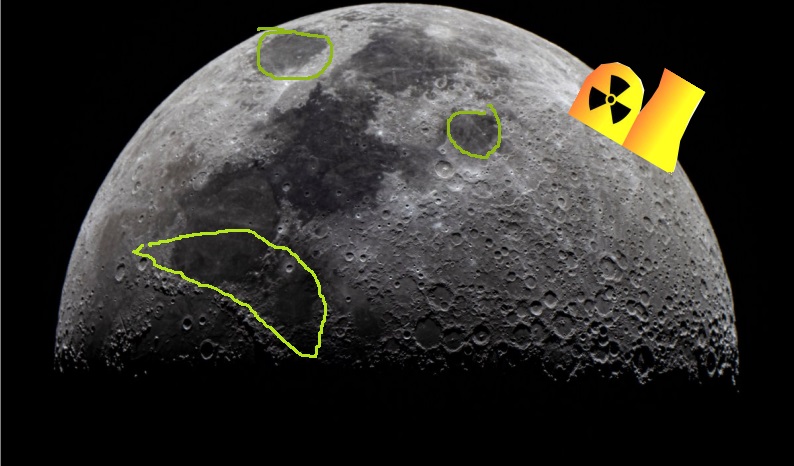
Russia and China announce plan to build shared nuclear reactor on the moon by 2035, ‘without humans’
Live Science, By Harry Baker, 8 Mar 24
The proposed nuclear reactor, which could be transported and assembled without human assistance, would provide energy to a lunar base that Russia and China have agreed to build together.
Russia’s space agency Roscosmos has announced plans to work with China to build an automated nuclear reactor on the moon by 2035. The proposed reactor will help power a proposed lunar base that the two countries will jointly operate.
Back in 2021, Roscosmos and the China National Space Administration (CNSA) revealed that they intended to build a shared base on the moon, named the International Lunar Research Station (ILRS), which they claimed at the time would be “open to all interested countries and international partners.”
However, NASA astronauts are unlikely to be allowed to visit this base due to historically frosty relations with CNSA and a more recent split with Roscosmos, which will leave the International Space Station by 2025 in response to sanctions from the U.S. over Russia’s invasion of Ukraine in February 2022.
On Tuesday (March 5), Roscosmos announced that it will eventually attempt to build a nuclear reactor alongside CNSA, which would theoretically be able to power the ILRS.
“Today we are seriously considering a project — somewhere at the turn of 2033-2035 — to deliver and install a power unit on the lunar surface together with our Chinese colleagues,” Roscosmos director general Yury Borisov told state-owned Russian news site TASS.
Borisov added that the challenging construction job would likely be carried out autonomously “without the presence of humans” and that the necessary technological solutions to pull it off are “almost ready.”
Roscosmos is also looking to use massive nuclear-powered rockets to transfer cargo to the moon to build this base, but the agency has not yet figured out how to build these spacecraft safely, Reuters reported……………………………………..
Roscosmos and CNSA, neither of which have put humans on the moon’s surface, have contrasting track records when it comes to recent lunar exploration.
Last year, Russia’s first moon mission in 47 years ended in disaster when the Luna-25 lander crashed into the lunar surface, leaving behind a 33-foot (10 meter) wide crater.
However, China has had a presence on the moon since 2013, when the Chang’e 3 mission put a lander and rover on the lunar surface. The subsequent Chang’e 4 and Chang’e 5 missions, which occurred in 2019 and 2020 respectively, also successfully landed spacecraft on the moon. The most recent mission also successfully returned lunar samples to Earth — a feat that CNSA will attempt to repeat later this year.
Last week, CNSA also announced that it will start launching giant reusable rockets over the next two years as part of the agency’s plan to put boots on the moon by 2030.
However, NASA is still on track to return humans to the lunar surface before then, despite the first crewed Artemis mission being delayed until 2026. https://www.livescience.com/space/space-exploration/russia-and-china-announce-plan-to-build-shared-nuclear-reactor-on-the-moon-by-2035-without-humans
Was Victoria Nuland Fired for Her Role In the Ukraine Debacle?
UNZ Review, MIKE WHITNEY • MARCH 6, 2024
Victoria Nuland’s retirement is an admission that Washington’s premier foreign policy project has failed. No government official is more identified with the Ukraine fiasco than Nuland. She was on the ground micro-managing activities during the 2014 coup, and has overseen the State Department’s sordid involvement since the war began. Her career-path is inextricably linked to the ill-fated NATO-backed disaster which has resulted in the needless deaths of hundreds of thousands of Ukrainian regulars and the obliteration of much of the country. Thus, the question we need to ask ourselves is whether Nuland’s persistent machinations to drag NATO into an unwinnable war with Russia is the reason she ‘got the axe’, er, announced her retirement? Here’s an excerpt from the official State Department Press Statement:
But it’s Toria’s (Nuland) leadership on Ukraine that diplomats and students of foreign policy will study for years to come. Her efforts have been indispensable to confronting Putin’s full-scale invasion of Ukraine and marshaling a global coalition to ensure his strategic failure, and helping Ukraine work toward the day when it will be able to stand strongly on its own feet – democratically, economically, and militarily. On the Retirement of Under Secretary of State for Political Affairs Victoria Nuland, US State Department,
This is an extraordinary paragraph that places the blame for the Ukrainian debacle squarely on Nuland’s shoulders. Yes, she was “indispensable” in leading the drive to confront Putin just as she played a critical role in “marshaling a global coalition” to prosecute a proxy war on Russia. And, what this statement tells us is that Nuland was one of the main architects of the ongoing conflict, which means she is largely responsible for the widening chasm between the NATO leaders, the mounting carnage on the battlefield, and America’s strategic defeat to its primary geopolitical rival, Russia. In short, no other government official is more responsible for the Ukrainian quagmire than Victoria Nuland.
Also, Nuland leaves behind a gargantuan catastrophe for which there is no apparent remedy and no easy way out. We cannot expect the Biden administration to simply ‘cut and run’ in what is perceived to be a direct confrontation with Moscow. Biden will undoubtedly press-ahead as a face-saving gesture regardless of the costs, further straining relations with the allies while handing-over large chunks of east Ukraine to the Russian army. This is clearly a no-win situation for Washington which is why (we think) Nuland –who created this mess– got her ‘Pink Slip’. ……………………………………………….
Victoria Nuland is one of the most knowledgeable and experienced diplomats in the entire State Department, but –even so– they are throwing her under the bus during a time of extreme crisis because she failed in the biggest and most important assignment of her 35-year career. Isn’t that what they’re saying?
It is. You can be 100% certain that a combative street-fighter like Nuland would never throw in the towel unless she was explicitly ordered to leave. And, perhaps, she might have held-on to her job if there was any sign of progress in the war, but there isn’t any sign of progress. It’s as hopeless and dire a situation as we have ever seen. Even as we speak– the Ukrainian front lines are collapsing while the body count continues to rise. Ukraine is out-gunned, out-manned, and out-led. It’s a total mismatch and has been ever since Putin called up the reserves over a year ago. Young men are presently being slaughtered in droves and left to rot in mud-filled trenches that stink of gunpowder and death. All of this suggests that the end is near. And if the end is near, then someone will have to be blamed. Enter Nuland with a bullseye affixed to her back.
Nuland deserves whatever she gets. As a diehard Warhawk she has always played fast-and-loose with the facts building the case for war on half-truths and outright fabrications, all with the intention of plunging the country into another pointless bloodletting that would inevitably end in another humiliating defeat…………………………………………………
Nuland and her former colleagues, John Brennan and Hillary Clinton, have had a poisonous effect on our politics, elevating Russophobia to a state religion while dragging the nation’s reputation through the mud at every turn…………………………………
In any event, we think that Nuland’s retirement is anything but voluntary. We think that she’s being terminated by foreign policy elites who no longer believe in her blustery rhetoric and empty promises of beating Putin. By removing Nuland they are acknowledging that the proxy-war has failed and that a different strategy is needed. And while we don’t yet know what that policy-change will entail, we do know that Nuland won’t be involved in its implementation.
…………………………………………….. Ukraine’s chances of success are extremely poor unless they get more money, more troops and more firepower, all of which are now seriously in doubt…………………..the State Department has not convened any back-channel negotiations with Russia, so there’s no possibility of a surprise settlement either. And, now Nuland is telling them that neither she nor her colleagues have formulated a back-up plan in the event the war doesn’t turn out as they had anticipated. No Plan B.
……………………….Regrettably, we don’t think that ‘changing the messenger’ necessarily means a fundamental rethinking of the policy. Even so, it is a step in the right direction. As America’s ‘air of invincibility’ continues to erode, and its moral authority collapses (Gaza), Washington will be forced to pull in its horns and ‘play nice’ with its neighbors. That day is fast approaching.
Finally, no matter how you look at it, dumping Nuland is a positive development. Savor the moment. https://www.unz.com/mwhitney/was-nuland-fired-for-her-role-in-the-ukraine-debacle/
Russia says it is considering putting a nuclear power plant on the moon with China
Reuters, March 6, 2024, https://www.reuters.com/technology/space/russia-china-are-considering-putting-nuclear-power-unit-moon-ria-2024-03-05/
MOSCOW, March 5 (Reuters) – Russia and China are considering putting a nuclear power plant on the moon from 2033-35, Yuri Borisov, the head of Russia’s space agency Roscosmos said on Tuesday, something he said could one day allow lunar settlements to be built.
Borisov, a former deputy defence minister, said that Russia and China had been jointly working on a lunar programme and that Moscow was able to contribute with its expertise on “nuclear space energy”.
“Today we are seriously considering a project – somewhere at the turn of 2033-2035 – to deliver and install a power unit on the lunar surface together with our Chinese colleagues,” Borisov said.
Solar panels would not be able to provide enough electricity to power future lunar settlements, he said, while nuclear power could.
“This is a very serious challenge…it should be done in automatic mode, without the presence of humans,” he said of the possible plan.
Borisov spoke also of Russian plans to build a nuclear-powered cargo spaceship. He said all the technical questions concerning the project had been solved apart from finding a solution on how to cool the nuclear reactor.
“We are indeed working on a space tugboat. This huge, cyclopean structure that would be able, thanks to a nuclear reactor and a high-power turbines…to transport large cargoes from one orbit to another, collect space debris and engage in many other applications,” Borisov said.
Russian officials have spoken before of ambitious plans to one day mine on the Moon, but the Russian space programme has suffered a series of setbacks in recent years.
Its first moon mission in 47 years failed last year after Russia’s Luna-25 spacecraft spun out of control and crashed.
Moscow has said it will launch further lunar missions and then explore the possibility of a joint Russian-China crewed mission and even a lunar base.
Nuclear: the bill for EDF’s future EPR2 reactors is already skyrocketing

EDF has significantly increased the cost of its program to build six new
EPR2 nuclear reactors, the newspaper Les Echos reported on Monday, citing
new estimates from the company. According to Les Echos, EDF now
estimates the cost of its program to build six new EPR2 nuclear reactors at
67.4 billion euros, compared to 51.7 billion euros in an estimate made
public at the start of 2022, an amount expected to be subject to regular
updates. That’s a jump of 30%.
La Tribune 4th March 2024
Le Figaro 4th March 2024
https://www.lefigaro.fr/flash-eco/le-cout-du-nouveau-nucleaire-francais-s-envole-20240304
The West’s over-involvement in Ukraine
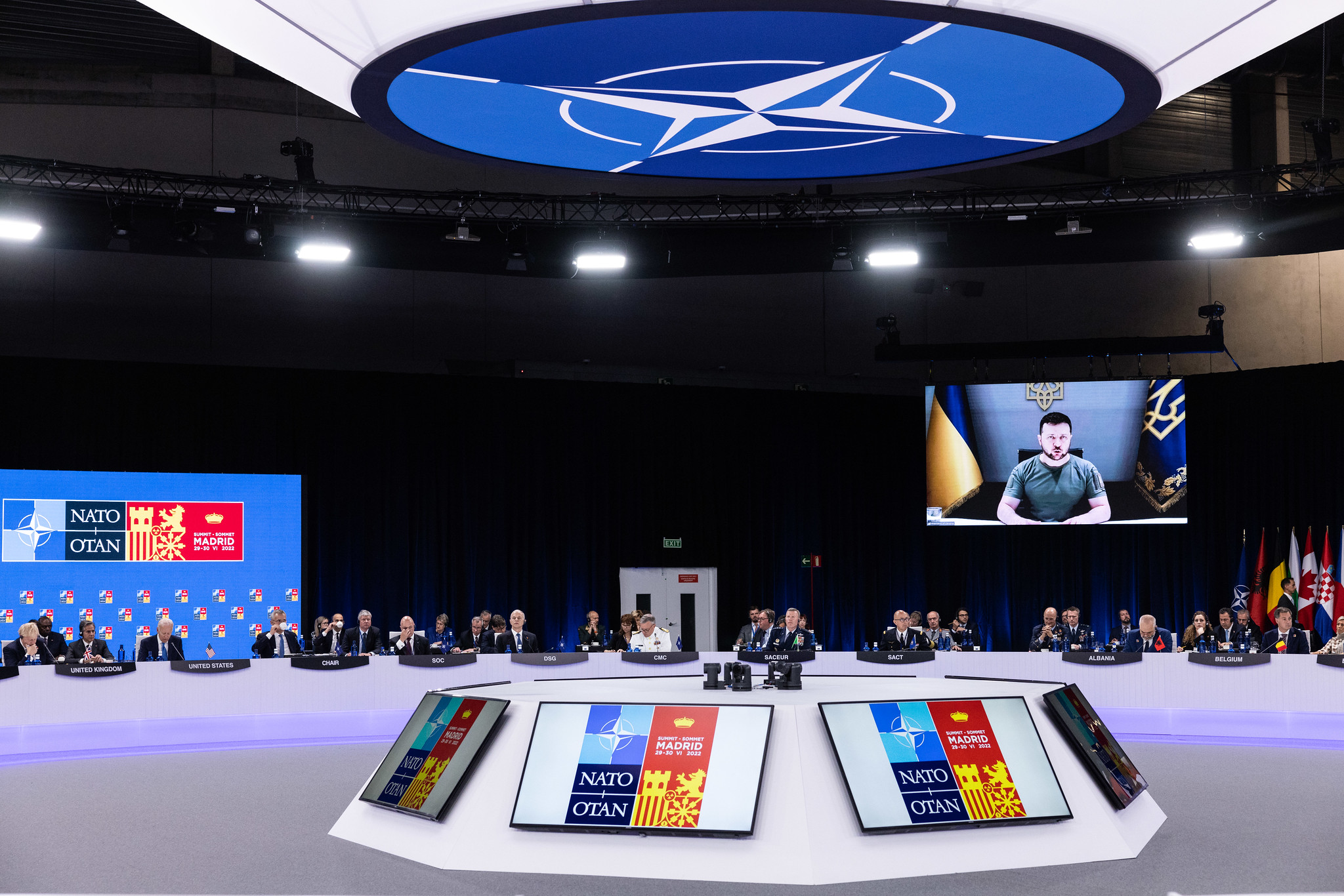
at the same summit those present joined to support sending long-range missiles to the Ukrainians, weapons fully capable of reaching cities, power grids, industrial plants and other targets deep inside Russia. So: No troops, plenty of offensive hardware.
Scholz confirmed what everyone already knows, that NATO officers and trained personnel are in Ukraine operating weapons such as the Patriot and NASAM air defense system, the HIMARS multiple launch rocket system, the British–French Storm Shadow cruise missile (SCALP–EG in France), and many other complex weapons provided to Ukraine.”
Consortium News, PATRICK LAWRENCE: The Russians in Ukraine, March 6, 2024
Recent disclosures provide an incomplete inventory of the West’s covert activities in Ukraine. There is more than we have been told, surely.
You may have read or heard about the freakout that ensued after Emmanuel Macron convened a summit of European leaders in Paris last week. At a press briefing afterward, the French president allowed that NATO may at some point send troops to Ukraine to join the fight against Russian military forces.
The Paris gathering precipitated a significant moment of truth, if we can call it such. Scholz, who is on a knife’s edge politically in part for his government’s support for Ukraine, immediately asserted that Germany would not send its Taurus long-range missiles to Ukraine because German troops would have to go with them, as the Ukrainians could not operate them on their own.
Look at the British, Scholz added indelicately. When they send their Storm Shadow missiles (and I must say I love the names the West’s arsenal minders come up with for these things) British personnel have to go with them.
Yikes! Such indiscretion.
As Stephen Bryen reported in his Weapons and Strategy newsletter, “The British cried foul and accused Scholz of ‘flagrant abuse of intelligence.’” Abuse of intelligence is a new one on me, but never mind. Bryen, who follows these matters closely as a former Defense Department official, continued:
“Scholz confirmed what everyone already knows, that NATO officers and trained personnel are in Ukraine operating weapons such as the Patriot and NASAM air defense system, the HIMARS multiple launch rocket system, the British–French Storm Shadow cruise missile (SCALP–EG in France), and many other complex weapons provided to Ukraine.”
There we have it — or there we have had it, if covertly, for a long time.
Before I go further, let me suggest a couple of thoughts readers can tuck somewhere in the corners of their minds for later consideration.
One, Russia’s intervention in Ukraine two years ago last month was unprovoked. Two, all the Kremlin’s talk about the threat of NATO hard by its southwestern border is nothing more than the distortion and paranoia of “Putin’s Russia,” as we must now refer to the Russian Federation.
It went this way in Paris last week. At the presser following the summit Macron was asked whether Ukraine’s Western backers were considering deploying troops in Ukraine. The French president replied that while European leaders had not reached any kind of agreement, the idea was certainly on the table when they gathered at Elysée Palace.
And then this:
“Nothing should be ruled out. We will do anything we can to prevent Russia from winning this war.”
Instantly came the vigorous objections. The Brits, the Spanish, the Italians, the Poles, the Slovakians, the Hungarians: They all said in so many words, “No way.” Even Jens Stoltenberg, NATO’s war-mongering sec-gen, objected to Macron’s assertion.
No one was more vehement on this point than Olaf Scholz. “What was agreed among ourselves and with each other from the very beginning also applies to the future,” saith the German chancellor, “namely that there will be no ground troops, no soldiers on Ukrainian soil sent there by European countries or NATO states.”
Plenty of Offensive Hardware
O.K., but at the same summit those present joined to support sending long-range missiles to the Ukrainians, weapons fully capable of reaching cities, power grids, industrial plants and other targets deep inside Russia. So: No troops, plenty of offensive hardware.
Last week The New York Times published a long takeout on the Central Intelligence Agency’s presence and programs in Ukraine, which extend back at least a decade and almost certainly much further……………………………………………………………………………………………………………………………..
“If NATO is so much against sending troops to Ukraine,” he asks, “why doesn’t NATO demand that the soldiers already there be sent home?”
Over-Invested in the Conflict
Excellent question. My answer: The Western powers, radically over-invested in Ukraine’s confrontation with Russia, are panicking as the Armed Forces of Ukraine retreat in the face of Russian advances and as support for this folly wanes on both sides of the Atlantic.
If anything, the covert presence of Western personnel in Ukraine may increase.
It is obvious that Ukraine is losing its war against Russia, and at a faster pace than most analysts seem to have anticipated even last autumn. I am reading reports now that the final collapse of the AFU may prove three or so months away. …………………………………………………………………….
The Ukraine crisis is merely the latest phase of the West’s long campaign to surround the Russian Federation up to its borders, destabilize it and finally subvert it. Regime change in Moscow was and remains the final objective.
This is not a war in defense of “Ukrainian democracy” — a phrase that causes one either to laugh or do the other thing. It is the West’s proxy war, start to finish, Ukrainians cynically cast as cannon fodder, expendable stooges.
Russia had no choice when it intervened two years ago, this after eight years’ patience as the Europeans — Germany and France, this is to say — broke every promise they made by way of supporting a settlement. The Americans didn’t break any promises because they never made any — and no one would take them seriously if they had.
I come to the judgment I offered when the war that began in 2014 erupted into open conflict two years ago. The Russian intervention was regrettable but necessary. I took some stick for this view back in 2022. I learn lately it is recorded in some European intelligence files as if it were a major transgression.
It is as true now as then. All we learn in drips and drops about the Western powers’ various covert doings in the sad, failed state they have done much to ruin, confirms this.
https://consortiumnews.com/2024/03/06/patrick-lawrence-the-russians-in-ukraine/?eType=EmailBlastContent&eId=c61faf77-5689-491d-afa5-bc607e7454cf
Most Ukraine aid ‘goes right back’ to US – Nuland
https://www.rt.com/news/593111-nuland-us-aid-ukraine/–– 25 Feb 24
The money that Washington allocates for Kiev supports jobs in America, the high-ranking State Department official has said.
Washington spends most of the money allocated as aid for Ukraine on weapons production at home, Acting US Deputy Secretary of State Victoria Nuland said in an interview with CNN this week.
Commenting on the pending aid package which Congress failed to approve before going on winter recess, Nuland said she has “strong confidence” that it will pass, as it addresses America’s own interests.
“We have to remember that the bulk of this money is going right back into the US economy, to make weapons, including good-paying jobs in some forty states across the US,” she stated, adding that support for Ukraine in America “is still strong.”
Lawmakers in the House of Representatives blocked a bill requested by US President Joe Biden for an aid package for Kiev worth $60 billion, most of which is earmarked for weapons, earlier this month. They are expected to restart discussions on the package after they reconvene on February 28.
US Secretary of State Antony Blinken also recently said that roughly 90% of the financial assistance for Ukraine is spent on domestic production of weapons and equipment. At a press conference on December 20, he said additional tranches would “benefit American business, local communities, and strengthen the US defense industrial base.”
According to Germany’s Kiel Institute, which tracks international support for Kiev, Washington allocated nearly €68 billion ($73.7 billion) in aid for Ukraine between January 24, 2022 and January 15, 2024, including roughly €43 billion ($46.6 billion) in military aid.
However, Kiev has been increasingly demanding more aid from its Western backers. Several days ago, Ukrainian President Vladimir Zelensky warned visiting American legislators that Kiev would “lose the war” against Russia without Washington’s assistance, according to US Senate Majority Leader Chuck Schumer.
Russia has criticized the US and other Western states for their military support for Kiev, arguing that it is only dragging out the conflict.
According to a recent survey from the Harris Poll and the Quincy Institute, a growing number of Americans do not support US military aid to Kiev unless it is tied to peace talks. Only 22% of respondents said Washington should continue ‘unconditionally’ providing Ukraine with financial assistance, while 48% said new funding must be conditioned on progress toward a diplomatic solution. Around 30% said the US should halt all aid.
UK Labour versus Green
What’s the Choice between Labour and the Green Party on energy?
Set against the Government’s ever-incredibly shrinking net zero commitments, Labour’s own shrinking net zero commitments in its ‘Green Prosperity Plan’ still look substantially better. But is this a difference big enough for environmentally conscious people to vote Labour? Or is Labour abandoning the climate struggle so much that people should go for the Green Party instead?
These are troubling questions for Labour supporters who put climate policy at the top of their to-do lists. Most troubling is the fact that Labour’s programme seems to ignore the benefit of converting the nation away from using natural gas and towards use of heat pumps…………………………………………………………………………………..
Then there is the clean power plan. This is supposed to have all electricity generated from non-fossil fuels by 2030………………………………………………………….
Nuclear black hole
Indeed, Labour may end up pouring a lot of the money intended for other types of green energy down the black hole that will open as the Government seriously starts the Sizewell C project. That project will be a terrible public spending/consumer bill disaster compared even to Hinkley C. This is because unlike Hinkley C the construction cost overruns will be borne by the UK Government and the UK energy consumers, and not by EDF. Sizewell C may not come online until after 2050. This new nuclear would in practice, anyway, make little difference to the need to balance fluctuating renewable energy supplies. Labour’s proposals mention small modular reactors (SMRs), a fantasy concept that is getting nowhere across the planet. If nuclear reactors were best small, they would not have become bigger! More wasted money!
Green Party and extra spending
The Green Party of England and Wales (GPEW), by contrast, is promising an extensive programme of green energy investment. They will say more in the forthcoming manifesto.
However, in March 2023 they called for £37 billion annual spend to pay for insulation, plus a range of support measures for different types of renewable energy and replacing gas boilers with heat pumps.
True, much of it would rely on borrowing money. However, a significant portion of the funding is based on a promise to raise a new wealth tax as well as the promise held out by Labour for more windfall taxes on oil and gas. In addition, the Green Party has called for carbon taxes to fund measures, the carbon taxes to be levied on ‘the biggest polluters’. Avoiding spending money on nuclear power (which the Green Party opposes) will release a lot of funds for green energy compared to Labour………………………………………………………………….
Public Ownership
The Green Party also supports a lot more public ownership of energy compared to Labour. I certainly support the nationalisation of the domestic energy supply sector. This will cost very little for the state to buy – arguably nothing since the consumer will no longer have to pay bail-outs for bankrupt suppliers. It has always been a nonsense to say that this retail supply market is competitive……………………………………………… more https://davidtoke.substack.com/p/labour-versus-green
1 This Month





PLEASE OPPOSE HR 8255 AND S.3639 – bills would accelerate satellite deployment, with no environmental review or safeguards – https://ncstd5li.quorum.us/campaign/169331/
To see nuclear-related stories in greater depth and intensity – go to https://nuclearinformation.wordpress.com
-
Archives
- September 2026 (339)
- August 2026 (330)
- July 2026 (355)
- June 2026 (287)
- May 2026 (306)
- April 2026 (356)
- March 2026 (251)
- February 2026 (267)
- January 2026 (308)
- December 2025 (358)
- November 2025 (359)
- October 2025 (375)
-
Categories
- 1
- 1 NUCLEAR ISSUES
- business and costs
- climate change
- culture and arts
- ENERGY
- environment
- health
- history
- indigenous issues
- Legal
- marketing of nuclear
- media
- opposition to nuclear
- PERSONAL STORIES
- politics
- politics international
- Religion and ethics
- safety
- secrets,lies and civil liberties
- spinbuster
- technology
- Uranium
- wastes
- weapons and war
- Women
- 2 WORLD
- ACTION
- AFRICA
- Atrocities
- AUSTRALIA
- Christina's notes
- Christina's themes
- culture and arts
- Events
- Fuk 2022
- Fuk 2023
- Fukushima 2017
- Fukushima 2018
- fukushima 2019
- Fukushima 2020
- Fukushima 2021
- general
- global warming
- Humour (God we need it)
- Nuclear
- RARE EARTHS
- Reference
- resources – print
- Resources -audiovicual
- Weekly Newsletter
- World
- World Nuclear
- YouTube
-
RSS
Entries RSS
Comments RSS

