How reporting facts can now land you in jail for 14 years as a terrorist

Jonathon Cook Blog, 22 December 2025
Starmer’s government has set the most dangerous of precedents: it can now outlaw any political group it chooses as a terrorist organisation – and thereby make it impossible to defend it
The moment the British government began proscribing political movements as terrorist organisations, rather than just militant groups, it was inevitable that saying factual things, making truthful statements, would become a crime.
And lo behold, here we are.
The Terrorism Act 2000 has a series of provisions that make it difficult to voice or show any kind of support for an organisation proscribed under the legislation, whether it is writing an article or wearing a T-shirt.
Recent attention has focused on Section 13, which is being used to hound thousands of mostly elderly people who have held signs saying: “I oppose genocide, I support Palestine Action.” They now face a terrorism conviction and up to six months in jail.
But an amendment introduced in 2019 to Section 12 of the Act has been largely overlooked, even though it is even more repressive. It makes it a terrorism offence for a person to express “an opinion or belief that is supportive of a proscribed organisation” and in doing so be “reckless” about whether anyone else might be “encouraged to support” the organisation.
It is hard to believe this clause was not inserted specifically to target the watchdog professions: journalists, human rights groups and lawyers. They now face up to 14 years in jail for contravening this provision……………………………………………………………………………………………………………………………………….
the reality is that social media is awash with posts from people echoing outrageous official disinformation. This spreads unchallenged because to challenge it is now cast as a terrorism offence.
In truth, since proscription, any statements about the political aims of a deeply political organisation like Palestine Action occupy a grey area of the law.
Is it a terrorism offence to point out the fact, as I have done above, that Palestine Action targeted Elbit factories that send killer drones to Israel for use in Gaza. In doing so, may I have “recklessly” encouraged you to support Palestine Action?
Can I express any kind of positive view about the hunger strikers or their actions without violating the law?
The truth is that the law’s greyness is its very point. It maximises the chilling effect on those who are supposed to serve as the public’s watchdogs on power: journalists, human rights groups, lawyers. https://www.jonathan-cook.net/blog/2025-12-22/reporting-facts-14-years-jail/
UK’s largest planned data centre ‘could use 50 times more water’ than developer claims.
The developer of the UK’s largest proposed data
centre is likely significantly understating the scale of its planned water
footprint, teams of investigative journalists have claimed.
US-based data
centre developer QTS recently secured permission from the local council for
its campus in Cambois, Northumberland. It plans to build 10 data halls
across a 133-acre site, at a cost of $13.5bn. The site had previously been
home to Britishvolt, which had intended to develop a battery gigafactory
for the electric car sector before it folded. QTS’s proposals also
include cooling systems and dozens of diesel-powered generators to act as
an emergency backup, the BBC reports. These should only be used
“occasionally” on a “temporary basis”.
Edie 22nd Dec 2025, https://www.edie.net/uks-largest-planned-data-centre-could-use-50-times-more-water-than-developer-claims/
Scottish Government urged to intervene in Edinburgh AI data centre plans
THE Scottish Government has been urged to intervene after council
officials ruled that an environmental impact assessment for a huge
artificial intelligence data centre is not required.
Edinburgh City Council
is currently considering plans for a new AI data centre on the site of the
former RBS headquarters in South Gyle, near Edinburgh Airport. Shelborn
Drummond Ltd, an offshoot of Shelborn Asset Management, is behind the plans
for the “Green Data Centre”.
We previously told how the Shelborn data
centre, and another proposed by Apatura near to Heriot-Watt University,
would demand the equivalent amount of energy as building five cities the
same size as the capital within its boundaries. The revelation about the
vast amount of electricity the sites will consume has sparked concerns from
environmental campaigners, and had previously raised concerns that there
would be no requirement for the firms behind the plans to carry out an
environmental impact assessment (EIA).
A screening opinion published on
Friday December 18, by a senior planner at the local authority, ruled that
an EIA would not be required. Action to Protect Rural Scotland (APRS) said
the Shelborn data centre will use the same amount of energy as a quarter of
a million households, and it was “gobsmacking” that the impact on the
local environment would not be taken into consideration.
The National 22nd Dec 2025, https://www.thenational.scot/news/25715123.scottish-government-urged-intervene-edinburgh-ai-data-centre/
The EU’s top diplomat casually rewrites WWII history on her way to WWIII
Kaja Kallas’ striking ignorance – or willful revisionism – is precisely why no one is taking the bloc seriously anymore.
By Tarik Cyril Amar, a historian from Germany working at Koç University, Istanbul, on Russia, Ukraine, and Eastern Europe, the history of World War II, the cultural Cold War, and the politics of memory 1 Dec, 2025, https://www.rt.com/news/628731-kaja-kallas-ww2-ww3/
Oops. Kaja Kallas, the de facto EU foreign minister already notorious for her chirpy incompetence, has done it again: displayed such elementary ignorance that you have to rub your eyes and double-check before you believe it’s true. But – as always with her – it is. This time, she has informed the world that Russia has not been attacked by anyone for a hundred years.
Those Nazi generals who planned Operation Barbarossa – the 1941 attack on the Soviet Union (and thus very much Russia) that left 27 million Soviet citizens dead – are probably spinning in their graves. Yes, blinded by prejudice and ideology (“values”) they badly underestimated the Russians (sounds familiar?) and lost (catastrophically). But having your whole 3-million-men-150-division operation wiped out Orwell-style?
And what about the many other Europeans who joined the Nazis, either from the beginning or later, with official contingents or as volunteers? The Romanians, Finns, Italians, Spanish, Croatians, Belgians, French, Norwegians, Slovaks, Bulgarians, Hungarians, and, last but not least, Balts, such as from Kallas’s native Estonia?
And let’s not even start about those prickly Japanese! They, too, got a drubbing at the 1939 Nomonhan/Khalkhin Gol clash (and yes, it took place on the edge of Mongolia, a Soviet client state), but, again, pretending they never even tried?
Being historically illiterate to such an extent seems almost pitiable. Where geometry has made former German Foreign Minister Annalena “360 degrees” Baerbock intellectually immortal, it is history where Kallas reaches peak benightedness.
That is especially disturbing because failing so badly, in particular in the history of last century’s great wars, makes Kallas a very dangerous person. The reason is as simple as 1,2,3: Together, the last two World Wars – both caused by Europeans – cost up to over 81 million lives. We know that a third one would be even worse, whether fought “only” with very advanced and destructive conventional weapons (including AI, of course) or, as is more likely, escalating to the use of weapons of mass destruction (nuclear, chemical, biological, and cyber). A Third World War is likely to literally be our last, either forever or for the exceedingly long time it would take the survivors to make their way back from their caves to civilizations sophisticated enough to blow each other up again.
The Ukraine war – in reality, a Western proxy war against Russia and the emerging multipolar order, executed through misled, betrayed, sold-out, and now almost used-up Ukraine – has had the real potential to turn into World War Three. This risk has diminished with the second Trump administration, but it will only be gone once the war ends.
The NATO-EU Europeans, meanwhile, are doing their best to keep this war, its destruction, and its apocalyptic escalation potential going: they provide ever more weapons, cannot stop looking for sleazy ways to steal frozen Russian assets and fleece their own tax payers, urge for more Ukrainians to be thrown into the futile meatgrinder, and, last but not least, embolden the Zelensky regime to continue, no matter how much of its ubiquitous corruption is exposed.
The Atlanticists, i.e., deranged European “elites” that are staying this insane course, are hard to understand, since they do not follow reason, as their suicidal and yet persistent sanctions policy proves; their ethics are also utterly perverse, as their equally persistent complicity in Israel’s ongoing Gaza genocide illustrates.
Yet we can observe facets of their madness. One is that, clearly, to work so obstinately toward World War Three requires never having understood World War Two. That’s the one that ended with the first and only use in wartime of the kind of weapon that may well play a main role in a world-ending World War Three, too: When the US deliberately and entirely without military necessity massacred the populations of the two large Japanese cities of Hiroshima and Nagasaki, it did not simply end a war by an enormous, shameful, and never acknowledged crime. It also opened the door to a future we all must pray will never arrive.
Regarding World War Two, EU de facto foreign minister Kallas, as so often, embodies NATO-EU European group-non-think as few others, revealing carelessly what slightly less ham-fisted operators still try to conceal.
Currently, she is doing her very worst to prevent peace from breaking out. While many leaders of NATO-EU Europe display what the Germans now call “Friedensangst” (the fear of peace), Kallas is second-to-none in her denial of reality, Russophobia, and, last but not least, bizarre over-estimation of the EU’s and her own personal influence. Demanding a place in negotiations the EU has deliberately stonewalled and calling for “concessions” from Russia as if the West and Ukraine were winning the war, Kallas has been publicly snubbed by the US.
Yet there is a method to her madness. Kallas’s inability to adequately process the present reflects her unusually pronounced inability to learn from the past. Only recently, speaking at a conference on security studies, she shared her dumb surprise at the fact that Russia and China believe they are among the victors of World War Two. Ironically, for Kallas, this is a dangerous “narrative,” clearly factually false in her eyes, and only successful with those who read little and don’t remember history all that well. She has felt “many question marks” in her head, she has informed us. If only she could grasp why.
In reality, both Russia and China played key roles in defeating the global fascist offensive that was at the core of World War Two. This is not the place for details – Kallas should feel strongly invited to finally read up on them (if she can) – but a few key facts will be enough: In Asia, World War Two started even earlier than in Europe, with Japanese aggression against China; the war also lasted longer.
Kallas is displaying a narrow-minded provincialism and a lousy education by reducing the struggle to that, as she put it, against the “Nazis.” That was the main story in Europe, but not in Asia, where the fight against Japanese fascism cost China an estimated 35 million lives. Kallas’s English is infamously rudimentary. She may want to try to improve it by making her way through, at least, historian Rana Mitter’s ‘Forgotten Ally: China’s World War II, 1937-1945’. I am not sure she has ever read a whole book. If not, this would be a good first time. If she has, a second one is clearly required. And, for once, not some neo-Noltean tract by American history mangler and Ukraine War booster Tim Snyder.
The Soviet Union, with Russia at its core, suffered 27 million deaths. And without its staggering sacrifice and equally stunning efforts, Nazi Germany would not have been defeated: the preponderant share of its military forces were destroyed by Soviet soldiers on what the Germans called the Eastern Front. If they had not been ground down there, only two outcomes would have been possible: a Nazi empire would have survived or the US would have dropped atomic bombs on Germany as well.
Germans especially, among whom hating as well as underestimating Russia is all too fashionable again, would do well to remember a simple, little understood fact: it is precisely the Soviet victory over Germany by conventional arms that spared them a continuation of Nazi rule (though many may, of course, have welcomed that) or the fate of Hiroshima and Nagasaki.
Kallas, in any case, is not one for learning. Clearly combining the worst of bigoted eastern European nationalism and Brussels’s simple-minded hubris, she can’t even sense when she has made a fool of herself. How do we know? Because when challenged, she made things worse again.
Kallas produced her display of incompetence and condescension on the occasion of China’s 80th victory celebrations. Unsurprisingly, its representatives have been clear. Beijing Foreign Ministry spokesman Guo Jiakun condemned Kallas’s inanities as “full of ideological bias,” “without historical common sense,” displaying “disrespect,” and, last but not least, “harm[ing] the EU’s own interests.” The latter, of course, has never stopped Estonia’s most embarrassing export.
German EU parliamentarian Fabio de Masi, now co-leader of the New-Left BSW party, requested a clarification. In her response, Kallas managed to dig her hole even deeper: She claimed – untruthfully – that “on the occasion of the 80th anniversary of the end of World War II in Asia, the EU paid tribute also to the courage of the people of China, who endured immense suffering in defending their homeland and contributing to the end of the war.” In reality, she – and therefore the EU – had just done exactly the opposite: insulted China by explicitly denying its contribution. Kallas’s official job title is, in case she cannot remember, “Vice-President of the Commission/High Representative of the Union for Foreign Affairs and Security Policy.” She speaks and mis-speaks for the EU, even if that is a catastrophe that should never have happened.
Regarding Russia, Kallas did not even make the effort to pretend. Instead, she simply continued her silly attempt to deny its key contribution to defeating Nazism. Accusing Russia of “manipulating” history, she felt this was also the right occasion to also once again repeat the absurdity that the West did not provoke the war in Ukraine.
Clearly, Kallas’s latest sally is shocking but not a surprise. It fits perfectly with her personal record of blithely chattering about breaking up Russia. It also fits with a widespread mood among NATO-EU Europe’s “elites,” where disparaging Russia and Russians is as much de rigueur as a stupid romanticization of Ukraine, its far right, and nationalism. Where Kallas can hold high office, normality is anything but.
The real question is when this nightmare of ignorance, war hysteria, and arrogance will finally end in Europe. Because if it does not, Europeans will only have themselves – or, to be precise, their “elites” – to blame when most of the world will write them off not only as the people who helped Israel commit genocide in Gaza but also as simply very unserious: yesterday’s privileged, now economic lightweights led by political lightweights who are too lazy to notice how silly they look.
Iran, UK foreign ministers discuss nuclear issue in phone call
Dec 20, 2025, https://www.iranintl.com/en/202512192167
ranian Foreign Minister Abbas Araghchi spoke by phone with UK Foreign Secretary Yvette Cooper on Friday, saying Tehran is open to diplomacy based on respect.
“Iran has never rejected negotiations and dialogue based on respect for the Iranian nation’s legal rights and legitimate interests, but considers talks based on one-sided imposition unacceptable,” official media cited Araghchi as saying.
Araghchi criticized the “irresponsible” stance of the three European powers on Iran’s nuclear program, saying that Tehran is open to talks respecting its legal rights and legitimate interests but rejects unilateral imposition.
Cooper underlined Britain’s commitment to diplomacy on the nuclear dossier. No UK readout of the call has been issued.
The three European countries—France, Germany, and the United Kingdom—triggered the Iran nuclear deal snapback mechanism in August, leading to the reimposition of UN sanctions in September.
Iran and the International Atomic Energy Agency (IAEA) reached a technical understanding in Cairo in September, mediated by Egypt, aimed at gradually restoring inspectors’ access to nuclear sites.
Following the return of UN sanctions on Iran, Foreign Minister Abbas Araghchi said that the United States and three European powers had “killed” the Cairo nuclear agreement through what he called a sequence of hostile actions.
Araghchi said last month that Washington’s approach amounted to “dictation, not negotiation,” accusing the US of trying to achieve through diplomacy what it failed to gain by force.
“They want us to accept zero enrichment and limits on our defense capabilities,” he said. “This is not negotiation.”
Trump said Iran could avoid past and by reaching a nuclear deal, adding that any attempt to revive its program without an agreement would prompt further US action. He has repeatedly said Iran missed an earlier chance to avert the strikes by accepting a deal.
France is to build a nuclear-powered aircraft carrier that will be the largest warship in Europe.
The carrier will be smaller only than the US
supercarriers and is intended to bolster France’s air power on the
oceans, President Macron has announced. The new ship, which has been under
consideration since Macron backed the project in 2018, is set to replace
the Charles de Gaulle, France’s naval flagship, which has been in service
since 2001. The new ship will be the only nuclear-powered carrier with
catapult launching apart from the ones in the US navy. It will displace up
to 80,000 tonnes, nearly double that of the Charles de Gaulle.
Times 21st Dec 2025, https://www.thetimes.com/world/europe/article/macron-aircraft-carrier-france-8p0qns8bj
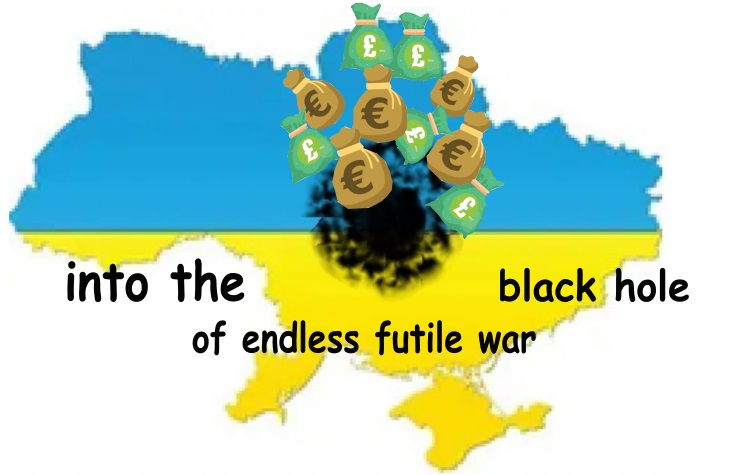
It was blindingly obvious that Europe wasn’t going to agree to the reparations loan.
It really is time to ditch the dreamers and get back to diplomacy
Ian Proud, Dec 22, 2025, https://thepeacemonger.substack.com/p/it-was-blindingly-obvious-that-europe?utm_source=post-email-title&publication_id=3221990&post_id=182242521&utm_campaign=email-post-title&isFreemail=true&r=1ise1&triedRedirect=true&utm_medium=email
Brussels was the centre of the pro-war universe on 18 December as the European Commission tried to bludgeon the resistance out of Belgian Prime Minister, Bart de Wever. He had stood firm against the plan to use immobilised Russian assets to underwrite the war in Ukraine and never looked likely to budge. He didn’t budge and the European Commission gamble failed in spectacular fashion. This has left European taxpayers on the hook for a Euro 90 billion loan to Ukraine that, in all likelihood, may never be repaid.
De Wever didn’t dig his sturdy defensive positions out of any particular sympathy with Russia. He did so on the basis of a rational analysis of the significant legal and financial risks his country would face should it agree to an illegal expropriation of assets frozen in Belgium.
Any realist observer of events could see that the EU proposal was illegal, tantamount to theft and would never succeed. It was obvious that De Wever wasn’t going to shift his position, despite the procession of Europe’s finest who beat a path to his door in a bid to convince him to adopt a plan that he had already rejected.
The final denouement had been predictable since the idea of giving Ukraine Russia’s frozen assets with no questions asked was first raised in 2024.
The idea didn’t lose its lustre even after the refusal to ask questions of Ukraine’s leaderships has led to billions in foreign aid being pilfered by those in charge. Right up to the wire, the pro-war lobby was screaming from every vantage point for De Wever to stiffen his sinews and do the right thing.
This idea is really rooted in the need to protect the economic security of the European Union the Commission assured everyone. While at the same time calling it a reparations loan, when it was obvious to impartial observers that the money would simply be tipped into a massive gold rimmed hole of Ukrainian state finances.
That hole, by the way, will remain gaping for as long as the war continues, and for some years after it ends. And the loan the Commission has been forced to take out will only cover two years of budgetary shortfalls in Ukraine, with no one asking who would pay from 2028. Unless the war ends, European taxpayers will have to pay to keep Ukraine on life support.
And they’ll have to pay more than the Commission is letting on as the loan agreed last night will only cover two thirds of Ukraine’s financing needs, and when it runs out the Ukrainians will be back to ask for more.
Continue readingRevealed: Trump’s secret $264 million plot to put nuclear doomsday weapons in Britain to face down Putin
Daily Mail, By NICK ALLEN, US NEWS EDITOR (POLITICS), 22 December 2025
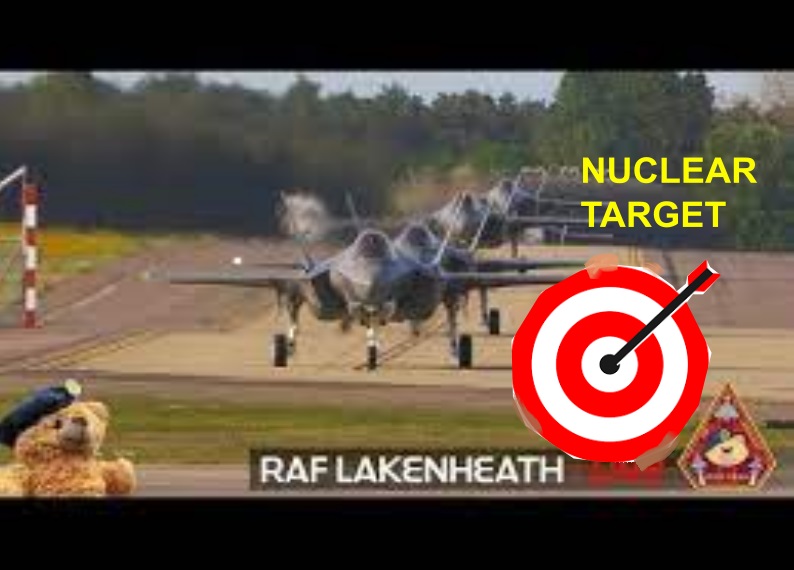
The true scale of President Donald Trump‘s ambitions to turn the U.K. into a potential nuclear launchpad has been revealed.
A massive $264 million plan to overhaul a Royal Air Force base in the English countryside includes knocking down at least half a dozen existing buildings, setting up secure intelligence facilities, protecting the surrounding area against enemy electronic pulse attacks, and sending over 200 American personnel, according to Pentagon funding proposals.
It represents confirmation that American nuclear weapons will return to Britain for the first time since President Barack Obama withdrew them 17 years ago.
However, despite widespread speculation that U.S. nuclear weapons have already arrived in the U.K, the documents indicate it will not happen for several years.
The idea that they had already been sent gained steam on July 17 when a massive U.S. Air Force C-17 Globemaster III arrived at RAF Lakenheath in Suffolk.
The aircraft had been tracked by flight data sites traveling 10 hours from Kirtland Air Force base in New Mexico, where America stores its nuclear arsenal.
Experts speculated that it may have been carrying B61-12 nuclear gravity bombs, each with a potential power bigger than the weapon dropped on Hiroshima in 1945.
Lakenheath is home to the U.S Air Force’s 48th Fighter Wing, known as Liberty Wing, which flies F-35A aircraft capable of being fitted with B61-12s.
However, detailed Pentagon assessments of Lakenheath’s suitability as a nuclear base, reviewed by the Daily Mail, make clear that it is far from ready.
Bizarrely, one of the reasons given was that some of those involved in the U.S. nuclear operation would not have quick access to a toilet during an Armageddon-style scenario.
The existing building that would be used as the primary command post is in ‘adequate condition but beyond its useful life,’ the documents said.
It said controllers within the ‘Emergency Action Cell’ would ‘not have direct, restricted access to a restroom’ in the current facility.
In addition, ‘cooling and air filtration’ was not good enough to support a SCIF – a Sensitive Compartmented Information Facility – which is a high-security room used by the U.S. government and military to discuss extremely sensitive classified intelligence.
The Lakenheath operation is described as a ‘Surety’ mission, which is a term the Pentagon uses when discussing the security and safety of nuclear weapons and associated facilities.
The Air Force’s budget estimates for the 2026 financial year suggests $104 million will be needed for a ‘Surety command post.’
It would house facilities including a control center for Air Force Nuclear Command, Control and Communications……………………………………………………………………………………………
The U.S., rather than NATO, is expected to pay for developments at Lakenheath because it is ‘necessary to complete the project in the timeframe required by United States military commanders.’
Construction of the command post is expected to start in August 2027 and be completed by July 2031.
A separate operations compound is priced at $149 million and will involve demolishing half a dozen existing buildings and creating an armory with massively thick concrete walls, and possible storage for anti-tank weapons.
‘This project is required to provide enhanced security capabilities supporting the potential stationing of specialized weapons at Royal Air Force Lakenheath,’ the project outline said.
‘Specialized weapons surety includes materiel, personnel, and procedures, contributing to the safeguarding and reliability of specialized weapons, and to the assurance that there will be no specialized weapon accidents, incidents, unauthorized weapon detonation, or degradation in performance at the target.’
The budget also details the addition of over 200 U.S. security personnel at the base.
A current building to be used by the first security personnel is said to be in ‘deteriorated condition.’
It ‘cannot accommodate the additional weapons, ammunition, and equipment associated with the increase in manpower required for the potential Surety Beddown mission.’
The problems include asbestos, lead based paint, poor ventilation, and ‘improper sanitary sewer drainage.’
Improvements are needed to ‘accommodate the potential Surety mission beddown’ and without them, security forces personnel would not be able to implement the minimum response times, safeguarding, and assurance procedures required for specialized weapons.’
Construction of the second compound is not expected to start until 2028 and finish in 2031…………………………………………………………….
Funding documents show an additional $11 million is expected to be spent on electronic security systems, bringing the total for the nuclear mission at Lakenheath to $264 million.
B61-12 nuclear bombs, which are 12ft long and weight about 800 pounds – are a staple of the U.S. arsenal.
They are unguided ‘gravity bombs’ dropped over targets and are equipped with four fins to increase accuracy to within 30 meters of the target.
They are ‘tactical’ nuclear weapons intended for use against specific military targets, such as wiping out battlefield units or bases, rather than for leveling cities.
However, their power can still be three times the size of the bomb dropped on Hiroshima.
The warhead used in B61-12s has a variety of options for how much explosive power it can yield with the minimum being 0.3 kilotons and the maximum 50 kilotons
The bomb that destroyed Hiroshima in 1945 hade a yield of roughly 15 kilotons.
Meanwhile, Prime Minister Sir Keir Starmer confirmed this month that the U.K. is set to buy 12 F-35A fighter jets from the U.S.
The U.K. will receive its jets at the end of this decade and it will be the first time it has had an air-launched tactical nuclear weapon since 1998.
While it will own the jets, the U.S. will retain ownership of the nuclear weapons they come with.
It means the U.K. will not be able to deliver a nuclear strike with those bombs without explicit approval from Washington…………… https://www.dailymail.co.uk/news/article-15375073/Trumps-secret-264-million-plot-nuclear-doomsday-weapons-Britain-face-Putin.html
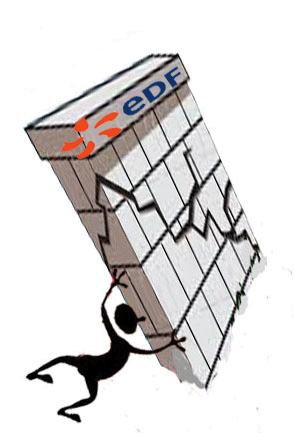
EDF faces the financial equation: Bernard Fontana is considering massive asset sales to generate 20 billion euros
December 16, BY Emma Ray
Barely installed at the helm of EDF, Bernard Fontana is embarking on a
major strategic shift. Faced with unprecedented investment needs and an
already substantial debt, the new CEO is preparing a sweeping adaptation
plan aimed at generating nearly €20 billion in financial flexibility over
three years.
This strategy comes as EDF’s financial situation continues to
be a cause for concern. At the end of 2024, net debt reached €54,3
billion, a level deemed worrying by the French Court of Auditors.
Entrevue 16th Dec 2025, https://entrevue.fr/en/societe/edf-face-a-lequation-financiere-bernard-fontana-envisage-des-cessions-massives-pour-degager-20-milliards-deuros/
Trump row threatens to delay Britain’s nuclear renaissance.
Concerns mount for power plant investment as US pauses tech trade deal.
Matt Oliver Industry Editor. James Titcomb Technology Editor. Matthew Field Senior Technology Reporter, 17 December 2025
Britain’s plans to usher in a “golden age” of nuclear power are at risk of being delayed amid a row with Donald Trump over the UK-US trade deal. Campaigners raised concerns that new projects face being hampered after the US paused the tech prosperity deal, in which Mr Trump and Sir Keir Starmer vowed to deepen co-operation on nuclear energy.
It was accompanied by pledges of investment in Britain by US-based X-Energy and
Centrica, the owner of British Gas, as well as the American nuclear company
Last Energy and the London port operator DP World.
Some nuclear industry
sources played down the dispute on Wednesday as a “negotiating tactic”,
but others said it could slow the deployment of American-designed mini
reactors in the UK if it was not resolved. It comes amid growing
frustration in Washington over Britain’s Online Safety Act, which critics
claim will stifle free speech and stymie American artificial intelligence
companies. Sam Dumitriu, of the pro-nuclear campaign group Britain Remade,
said: “This will undoubtedly concern Britain’s nuclear communities, who
have been promised new projects and the jobs that came with them.
Telegraph 17th Dec 2025, https://www.telegraph.co.uk/business/2025/12/17/trump-row-threatens-to-delay-britains-nuclear-renaissance/
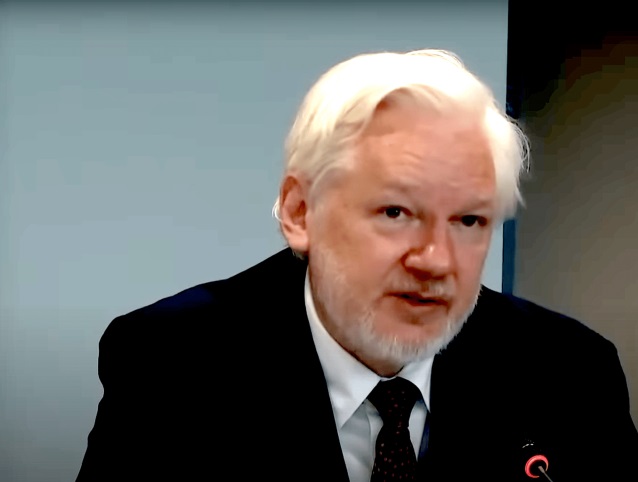
The Problem with Machado: Assange Sues the Nobel Foundation.
21 December 2025 Dr Binoy Kampmark, https://theaimn.net/the-problem-with-machado-assange-sues-the-nobel-foundation/
The Swedish police have promised it will go nowhere, but the attempt by WikiLeaks founder Julian Assange to draw attention to the inappropriateness of María Corina Machado as a Nobel Peace Prize recipient raises a few salient matters. On December 17, Assange submitted a criminal complaint to the Swedish Economic Crime Authority and Swedish Crimes Unit. The legal complaint is directed against the Nobel Foundation, arguing that the pending transfer of 11 million SEK ($US 1.18 million) and the award of the prize medal to Machado violates the terms of Alfred Nobel’s will of November 27, 1895.
The will, binding under the terms of Swedish law, stipulates that the award of the prize and monies be given to a person who, during the preceding year, “conferred the greatest benefit to humankind” in pursuing “the most or the best work for fraternity between nations, for the abolition or reduction of standing armies and for the holding and promotion of peace congresses.”
Given that the peace prize laureates are selected by the Norwegian Nobel Committee, seeking to hold them accountable for their poor choice of awardee might have been a better starting point. But the complaint is alert to this, noting that the Swedish funds administrators have a fiduciary duty when it comes to disbursing the funds. “The Norwegian committee’s selection does not grant them criminal immunity.” Indeed, it was up to the administrators to consider such a decision made “in flagrant conflict with the explicit purpose of the will, or where there is evidence that the awardee will use or is using the prize to promote or facilitate the crime of aggression, crimes against humanity, or war crimes.”
Whatever the administrative minutiae, Assange’s effort is worth noting. Machado has become the unsavoury alternative to the Venezuelan incumbent, Nicolás Maduro, a figure who refused to accept the electoral returns for his opposing number, Edmundo González, in July 2024. González was essentially a pick by Machado, who has emerged as the empurpled, plumed candidate seeking Maduro’s overthrow. That she was the 2025 choice of prize recipient was galling enough for 21 Norwegian peace organisations to boycott the ceremony and prompt Nobel Peace Prize laureate Adolfo Pérez Esquivel to remark that, “Giving the prize to someone who calls for foreign invasion is a mockery of Alfred Nobel’s will.”
Machado has made no secret of her approval of the buildup of US military personnel (around 15,000) off the coast of Venezuela since August, including a nuclear-powered attack submarine and the world’s largest aircraft carrier, the USS Gerald R. Ford. She has “incited and defended the Trump administration’s use of lethal military force and preparation for war.” The US military has already committed, charges Assange, “undeniable war crimes, including the lethal targeting of civilian boats and survivors at sea, which has killed at least 95 people.” (President Donald Trump has liberally designated such individuals narco-terrorists.) The Central Intelligence Agency has been authorised to conduct covert actions in Venezuela. Parts of the Venezuelan military have been classified by the Trump administration as a Foreign Terrorist Organisation (FTO).
Since Assange submitted his complaint, Trump has ordered a complete blockade of sanctioned oil tankers entering or exiting Venezuela. The US has thus far seized two tankers, though the authorities have failed to distinguish which tankers are sanctioned or otherwise. The Panama-flagged Centuries, for instance, was not officially sanctioned by the US, showing that this administration is not one to be, as US Secretary of War Pete Hegseth put it, legally tepid.
A list of incitements to war by Machado are enumerated. They include the dedication of the award to President Trump for having “Venezuela in where it should be, in terms of a priority for United States national security”; a heartfelt endorsement of US military escalation as maybe being “the only way” in dealing with Maduro; warm appreciation for Israeli Prime Minister Benjamin Netanyahu’s “decisions and resolute actions in the course of the [Gaza] war” and the endorsement of extrajudicial killing of civilian boats in the Caribbean Sea as “visionary”. Hardly the résumé for a peacemaker.
Assange argues that the failure of the funds administrators to stop pertinent disbursements to Machado, in light of the material submitted in the complaint, “indicates ongoing criminal intent.” Such funds aided “a conspiracy to murder civilians,” violated national sovereignty through using military force and advanced resource theft (Machado’s promised reward to US firms of oil and gas resources amounting to US$1.7 trillion). In doing so, Nobel’s will and charitable purpose had been violated through “gross misappropriation, aiding international crimes […] and conspiracy.” They also breached Sweden’s obligations under the Rome Statute. By way of remedy, the “immediate freezing of all remaining funds and a full criminal investigation lest the Nobel Peace Prize be permanently converted from an instrument of peace into an instrument of war” was sought.
In an email to AFP, Swedish detective inspector Rikard Ekman showed little interest in taking the matter up. “As I have decided not to initiate a preliminary investigation, no investigation will be conducted on the basis of the complaint.”
While this complaint remains a purist’s attempt to return the peace prize to a more conventional reading (Assange thinks the UN Secretary General António Guterres and UN human rights chief Volker Turk eminently more suitable candidates), the practice of awarding this inflated award to figures of ill-repute and sullied reputation will be hard to shake. The ghost of former US security advisor and Secretary of State Henry Kissinger, a man lauded for bringing peace to Indochina when he covertly indulged illegal bombing campaigns, not to mention war crimes, torture and an assortment of other blood sports, continues to loom large. It might well be time to abolish the Nobel Peace Prize altogether, and the committee responsible for it. It was never a strong indicator of merit, even if it offers the chance for some very dark humour for the reptiles to revel in.
Biodiversity Net Gain: can developers be trusted?
Developers seem rather too fickle concerning their obligations to protect the environment, and the situation may be about to get worse
Rachel Fulcher, 21 December 2025
During the consultations for Sizewell C, it became clear
from the documents put forward by EDF, owner of this pine forest, that the
company considered the plantation to be of low biodiversity value.
They failed to take into account the fact that the rides between the trees
supported several species so rare that they are protected by law. Looking
into it in further detail I came across Biodiversity Net Gain (BNG), which
specifies that developers must provide a minimum of 10% net gain for nature
in addition to compensating for any damage caused.
Using the Statutory
Biodiversity Metric devised by the Department for Environment, Food and
Rural Affairs (Defra), the biodiversity value of the land prior to
development is calculated in units according to size, type of habitat, its
current condition, ecological distinctiveness and location. The proposed
replacement and enhancement habitats are then also calculated and must show
the necessary improvement.
Ideally these should be in the same area, but if
this is not possible then they can be elsewhere. As a last resort, builders
can simply buy habitat units from conservation organisations or even obtain
biodiversity credits from the government. In the first instance, however,
they must avoid harm – but do they?
A conversation with a Suffolk
ecologist revealed his profound disapproval of use of this metric,
considering the method to be ‘damaging’. He feels that it gives
builders a licence to destroy the environment, including protected sites
and species, so long as they offer something more elsewhere. However, some
non-governmental organisations (NGOs) have accepted BNG on the basis that
something for nature is better than nothing.
East Anglia Bylines 21st Dec 2025, https://eastangliabylines.co.uk/environment/biodiversity-net-gain-can-developers-be-trusted/
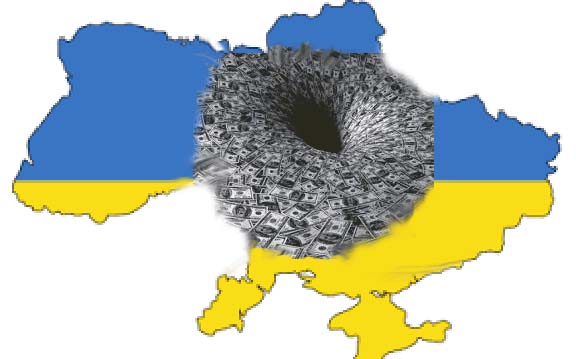
Fearing risks in using Russian assets, EU agrees €90bn Ukraine war loan.
Friday, 19 December 2025, https://www.presstv.ir/Detail/2025/12/19/760887/EU-agrees-%E2%82%AC90bn-Ukraine-a-legal-fears-block-use-of-Russian-assets
EU leaders have agreed to provide Ukraine with a €90 billion ($98 billion) loan backed by the bloc’s common budget, while shelving plans to use frozen Russian state assets amid legal and financial concerns and repeated warnings from Moscow.
The agreement was reached early on Friday after overnight talks at a summit in Brussels, as the EU sought to secure funding to continue the war in Ukraine over the next two years.
Under the deal, the EU will raise funds through loans guaranteed by its shared budget, abandoning proposals backed by some member states to leverage around €200 billion in Russian central bank assets frozen in the bloc.
The plan failed to win consensus, largely due to objections from Belgium, where most of the assets are held. Belgian officials warned of legal risks and the potential for retaliatory measures that would disproportionately affect the country.
Belgian Prime Minister Bart De Wever welcomed the outcome, saying it avoided significant legal and financial exposure.
“This was extremely risky and raised many unanswered questions,” De Wever told reporters. “Rationality has prevailed.”
Russia has repeatedly warned the EU against using its frozen assets, calling any such move illegal.
On Thursday, Russia’s central bank said it would seek compensation through a Russian arbitration court over the freezing and potential use of its assets held in EU financial institutions, including claims for lost profits.
“In connection with ongoing attempts by EU authorities to seize and illegally use the assets of the Bank of Russia, we declare that compensation will be sought,” the central bank said in a statement, adding that damages of up to $230 billion would be claimed from Euroclear, where most of the assets are held.
EU member states have agreed to maintain an indefinite freeze on Russian central bank assets imposed after the outbreak of the Ukraine war in 2022.
Kremlin spokesman Dmitry Peskov said on Friday that any expropriation of Russian assets would not go unanswered.
“All possible legal mechanisms will be used,” he was quoted by state news agency Tass as saying.
Separately, Russia warned against any deployment of European troops to Ukraine, saying such forces would be considered “legitimate targets.”
In a statement, Russia’s foreign ministry accused the EU of planning to “occupy” Ukraine rather than seeking a settlement.
Russian President Vladimir Putin has previously said foreign troops sent to Ukraine would be treated as legitimate military targets.
The developments come amid divisions within the EU over the war and its role in possible peace talks. French President Emmanuel Macron said Europe should engage directly with Moscow.
“It is in our interest as Europeans and Ukrainians to re-engage discussions,” Macron said, adding talks should begin “in the coming weeks.”
Ukrainian President Volodymyr Zelensky said Ukrainian and US delegations were due to hold further talks in Washington on Friday and Saturday, while US President Donald Trump urged Kiev to move quickly towards a deal.
The Kremlin said it was preparing contacts with Washington on a revised peace proposal.
Earlier talks in Berlin involving US, Ukrainian and European officials ended without a breakthrough, with Russia opposing NATO membership for Ukraine and Kiev rejecting territorial concessions.
A Serious Proposal: Russia and China Call for Global Strategic Stability

By Alice Slater, World BEYOND War, October 8, 2025
It’s ironic that the arms control community is protesting the idea of resuming nuclear test detonations. The nuclear test detonations have never stopped.
Although Bill Clinton signed the Comprehensive Test Ban Treaty (CTBT) in 1996, he swiftly funded the “Stockpile Stewardship” program at the US nuclear weapons complex, allowing the Dr. Strangeloves in their labs to continue to perform laboratory tests as well as blowup plutonium with chemical explosives,1,000 feet below the desert floor at the Nevada Test Site on Western Shoshone holy land.
Since there was no chain reaction causing criticality, Clinton claimed these “sub-critical” tests were not nuclear tests and didn’t violate the new treaty. Of course, Russia and China swiftly followed the US lead; the Russians continued to test at Novaya Zemlya, and China at Lop Nor.
Indeed, it was the US’s refusal to promise that the Comprehensive Test Ban Treaty would be truly “comprehensive” that caused India and Pakistan to test their nuclear arsenals after the US rejected their pleas to include prohibitions against “sub-critical” and laboratory tests in the CTBT. Although Clinton signed the CTBT, the US, unlike Russia and China, never ratified it. Sadly, Russia announced during the Ukraine war that it was leaving the CTBT.
People of goodwill who are alarmed at new reports of proliferating nuclear weapons and would like to put the nuclear genie back in the bottle, stop the endless wars and huge budgets for useless atomic weapons, would do well to take some advice from Russia and China. On May 8, they issued a “Joint Statement by the Russian Federation and the People’s Republic of China on Global Strategic Stability” in the context of the 80th anniversary of the end of World War II.
They note “the serious challenges facing the international community” and lay out several recommendations that would strengthen “global strategic security”, acknowledging that “the destinies of all countries are interrelated” and urging that states not “seek to ensure their own security at the expense and to the detriment of the security of other states.”
U.S. “Golden Dome”

They proceed to explain a whole series of provocative actions that threaten the peace, including states deploying nuclear weapons and missiles outside their territories. They are particularly critical of the US “Golden Dome” program, which is expected to create a new battleground in space. Reiterating their pleas over many years to keep space for peace, they state the following:
The two sides oppose the attempts of individual countries to use outer space for armed confrontation. They will counter security policies and activities aimed at achieving military superiority, as well as at officially defining and using outer space as a ” warfighting domain”. The two Sides confirm the need to start negotiations on a legally binding instrument based on the Russian-Chinese draft of the treaty on the Prevention of the Placement of Weapons in Outer Space and of the Threat or Use of Force Against Outer Space Objects as soon as possible, that would provide fundamental and reliable guarantees for preventing an arms race in outer space, weaponization of outer space and the threat or use of force against outer space objects or with their help. To safeguard world peace, ensure equal and indivisible security for all, and improve the predictability and sustainability of the exploration and peaceful use of outer space by all States, the two Sides agree to promote on a global scale the international initiative/political commitment not to be the first to deploy weapons in outer space.
The US and its allies, sheltering under the US nuclear umbrella, would do well to take Russia and China up on their offers for making a more peaceful world! With Mother Earth sending cascading warnings about the need for nations to cooperate, we can ill afford business as usual. Time to change course!
*Alice Slater serves on the Boards of World BEYOND War and the Global Network Against Weapons and Nuclear Power in Space. She is an NGO representative at the UN for the Nuclear Age Peace Foundation.
They are calling fast-track Ukraine EU bid ‘nonsense.’ So why dangle it?
It’s supposed to soften the blow for lost NATO membership. But Kyiv is hardly ready and not all members are enthusiastic.
Ian Proud, Responsible Statecraft, Dec 18, 2025
Trying to accelerate Ukraine’s entry into the European Union makes sense as part of the U.S.-sponsored efforts to end the war with Russia. But there are two big obstacles to this happening by 2027: Ukraine isn’t ready, and Europe can’t afford it.
As part of ongoing talks to end the war in Ukraine, the Trump administration had advanced the idea that Ukraine be admitted into the European Union by 2027. On the surface, this appears a practical compromise, given Ukrainian President Volodymyr Zelensky’s concession that Ukraine will drop its aspiration to join NATO.
However, the idea of accelerated entry for Ukraine has not been met with widespread enthusiasm in Europe itself. Diplomats in Brussels dismissed the notion as “nonsense: There needs to be an appetite for enlargement that isn’t there.”
There are two big problems with Ukraine’s rapid accession, the first being readiness and the second cost.
Firstly, Ukraine is nowhere near ready to meet the EU’s exacting requirements for membership. The process of joining the bloc is long and complex. At the start of November, in presenting its enlargement report, the EU said that it could admit new members as early as 2030, with Montenegro the most advanced in negotiations.
After it was formally granted candidate status in June 2022, Ukraine this year passed screening of its progress against the various chapters of the acquis (regulations) that it needs to pass before accession is granted. However, the EU enlargement report on Ukraine downgraded the country’s status from A+ to B, largely in light of the corruption scandal that first erupted in the summer and that rumbles on today.
The report indicated that Ukraine had made good progress on just 11 of the 33 chapters required for accession. It has made limited progress on 7 of the chapters, including on corruption, public procurement, company law and competition policy. It has yet to finalize negotiations on any of the chapters. And, of course, with war still raging, it is incredibly difficult to both agree and put in place the reforms needed to align itself with EU rules and standards. So, even if the war ended by Christmas, which despite the progress still appears optimistic, it would be unlikely to do all of the necessary work in the space of a year to be ready for accession.
The second, possibly more insurmountable challenge is cost.
In July, German Chancellor Friedrich Merz commented that Ukraine was unlikely to join before 2034. The EU has already formalized its next seven year budget through to that time, coming in at $2.35 trillion.
As I pointed out for Responsible Statecraft last year, Ukrainian membership of the EU would come with an enormous price tag……………………………………………. So the economic cost of delivering Ukrainian membership may not be politically viable any time soon, and certainly not before 2034, as the German premier has indicated.
……………………………………With practically all Russia-Ukraine economic ties severed over the past decade, Russian President Vladimir Putin has dropped his opposition to EU membership for Ukraine. An end to the war would allow Ukraine, finally, to start to reform and rebuild its bankrupt economy, and EU membership could accelerate that process.
That’s why Zelensky’s decision to drop the aspiration to NATO membership is such an important stepping stone. It has been abundantly clear since the start of the war that Russia’s NATO red line will never change. Russia has verbalized its opposition at least since Putin’s Munich Security Conference speech in 2007, when he said that NATO expansion “represents a serious provocation that reduces the level of mutual trust.”
……………………………………..https://responsiblestatecraft.org/ukraine-european-union/
1 This Month

of the week – Shut Down Drone Warfare!


Tell the Ukrainian Government to Drop Prosecution of Peace Activist Yurii Sheliazhenko

Petition to revoke the licensing of the Near Surface Nuclear Disposal Facility (NSDF) at Chalk River. https://www.ourcommons.ca/petitions/en/Petition/Details?Petition=e-7247
To see nuclear-related stories in greater depth and intensity – go to https://nuclearinformation.wordpress.com
-
Archives
- April 2026 (68)
- March 2026 (251)
- February 2026 (268)
- January 2026 (308)
- December 2025 (358)
- November 2025 (359)
- October 2025 (376)
- September 2025 (257)
- August 2025 (319)
- July 2025 (230)
- June 2025 (348)
- May 2025 (261)
-
Categories
- 1
- 1 NUCLEAR ISSUES
- business and costs
- climate change
- culture and arts
- ENERGY
- environment
- health
- history
- indigenous issues
- Legal
- marketing of nuclear
- media
- opposition to nuclear
- PERSONAL STORIES
- politics
- politics international
- Religion and ethics
- safety
- secrets,lies and civil liberties
- spinbuster
- technology
- Uranium
- wastes
- weapons and war
- Women
- 2 WORLD
- ACTION
- AFRICA
- Atrocities
- AUSTRALIA
- Christina's notes
- Christina's themes
- culture and arts
- Events
- Fuk 2022
- Fuk 2023
- Fukushima 2017
- Fukushima 2018
- fukushima 2019
- Fukushima 2020
- Fukushima 2021
- general
- global warming
- Humour (God we need it)
- Nuclear
- RARE EARTHS
- Reference
- resources – print
- Resources -audiovicual
- Weekly Newsletter
- World
- World Nuclear
- YouTube
-
RSS
Entries RSS
Comments RSS
 nuclear-news