“In Ukraine, a war for memory.”

In defense of what is remembered. At Savur–Mohila hill, Horlivka province. (Guy Mettan.) Report from Donbas, Part 2.
The Floutist, JUN 03, 2024
To destroy the shared past of a people is to go some way toward destroying a people—the coherence and solidity of their identity, their ability to think and act collectively, their collective confidence in themselves, altogether their place in the world.…………………….
Guy Mettan
It is now two years and several months since the Russian military began its intervention in Ukraine. And between Russia and the West, between the Ukrainians in Kiev and the former Ukrainians who have become Russians again, the battle is not just a military struggle. It is also a struggle in defence of memory against those who would obliterate it.
In the West, the 80th anniversary of the D–Day landings on 6 June will be commemorated without the Russians. This is an official if symbolic denial that the victory over Nazi Germany was first and foremost a Soviet victory and that Operation Overlord could not have succeeded without the Red Army’s Operation Bagration in the east, to hold off German tank divisions.
Attempts to erase the past in this manner are not at all new. One finds cases of it throughout history. But in the lands to Europe’s east and the Russian Federation’s west it has greatly intensified since 2014, a decade back, when, some months after the U.S.–cultivated coup in Kiev, the Western powers marked the 70th anniversary of the D–Day landings and refused to invite Russians to the ceremonies held on the Normandy beaches—this while inviting representatives of the former enemy, among them German Chancellor Angela Merkel.
Across Eastern Europe, the Baltic states, and in Ukraine in particular, history is being turned upside down. Historical statues and war memorials honouring those who defeated the Reich in the Second World War are being demolished to erect steles, inscribed stone pillars, that commemorate not the Soviet’s hard-won victory but the victims of the Soviets. These monuments are also intended to mark the glory of the nationalists who fought alongside the Nazis and massacred Jews, such as Stepan Bandera, Yaroslav Stetsko, and Roman Shukhevich.
Every day, monuments are taken down and others erected in their place—on the sly, in the silence of the Western media. We seem to forget, to take but one example of many, that the Treblinka death camp was run by a group of some 20 German SS troops and that the exterminations were carried out by a hundred Ukrainian and Lithuanian guards.
This rewriting of history amounts to a war on the past of a people. And if it is waged not on battlefields but at sites of memory, the outcome of this struggle is comparably important. To destroy the collective memories of a people is to destroy their common identity. In this way it also destroys their understanding of their place in the world and their ability to act effectively—and so their ability to go forward. If you have no past you have no future, it has been said: This is the ultimate objective of those who attack the shared memories of others.
None of this has gone unnoticed by the people of Donbas. And, true to their motto, “Never forget, never forgive,” they are in response redoubling their commemorative faith and monuments to fallen heroes……………………………………………………………………………………………………………………….
It is estimated that 75,000 to 102,000 people were massacred at 4/4–bis from the end of 1941 to September 1943, two or three times as many as at the better documented massacre in 1941 at the ravine in Kiev known as Babi Yar. The entire Jewish community of Donetsk (called Stalino at the time) was thrown into the pit, along with tens of thousands of others. …………………………………………………….
A visit to No. 4/4–bis is all it takes to understand why the people of Donbas rose up against Kiev in April 2014, when the regime that emerged from the U.S.–backed Maidan coup wanted officially to ban their language while sending the heirs of their forebears’ executioners to suppress them. This region has a strong tradition of resistance to any kind of invaders, from German Nazis to west–Ukrainian ultranationalists in Nazi–style uniforms. If No. 4/4–bis is about remembering, it is also about determination.
You can destroy monuments, but not memories.
Seventy kilometres northeast of Donetsk, in the direction of Bakhmut, in the province of Horlivka, the monumental Savur–Mohila cenotaph is another testimony to the battles of the last century. It is erected at the top of the highest hill in the Donbas, on the site of one of the great clashes of the Second World War. That took place in July–August 1943, at the same time as the famous tank battle of Kursk, which was to break the Wehrmacht……………………………………………………………………………….
This battle to preserve memory against its destruction is probably most intense in Lugansk. I’m welcomed there by Anna Soroka, a historian who has been fighting in the republic’s regiments since 2014.
The first monument she shows me commemorates the 67 children killed by Ukrainian militias from the Kraken and Aïdar battalions, both of them neo–Nazi, who tried to take the city in 2014, failed, and then proceeded to shell it until the Russian intervention in 2022. It was built in the middle of a park that serves today as a kindergarten. Several kids were killed there by targeted Ukrainian shelling—targeted, surely, as the surrounding buildings were not hit.
Children are the objects of an unrelenting information war on both sides. The Ukrainians have filed war crimes charges against the Russians, and the International Criminal Court has indicted Vladimir Putin and the head of Russia’s children’s affairs agency, Maria Lvova–Belova, for allegedly kidnapping Ukrainian children. Western propaganda repeats these accusations over and over, in media and in the cinema: A full-length documentary, 20 Days in Mariupol, directed by Mstyslav Chernov, Michelle Mizner, and Raney Aronson–Rath, featured these allegations and has just won this year’s Oscar for best documentary.
Western media reports naturally fail to pass on the point of view of the inhabitants of the Donbas—who say it is the Ukrainians who are taking children hostage. There is, in fact, a volunteer organization in Ukraine called the White Angels, modelled on the infamous Syrian White Helmets, who, as you will recall, were far from the neutral rescue workers they posed as and, in fact, were covertly funded by Western intelligence and acted in behalf of jihadist groups.
These White Angel detachments were formed in February 2022 by a certain Rustam Lukomsky. The Western (or Western-backed) press has mentioned them on several occasions. The Kyiv Independent (24 March 2024), Le Monde (7 February 2023), the BBC (30 January 2024) are among the media that have reported on this group. “Amid the thud of explosions and rattle of gunfire,” a typical report reads, “a special police unit called the White Angels goes door-to-door helping evacuate the town’s remaining civilians.” Lukomsky, whose background remains unclear, is portrayed invariably as a hero of these operations.
For those in Donbas, the White Angels are something very different. The group’s aim, residents here say, is to force parents in front-line areas to separate from their children under the pretext of protecting them. The children are thus isolated and “taken to safety” in the rear, where they are used as a means of blackmail against their families.
These families are in this way torn between two equally unbearable choices: Either they abandon their homes to join their children, or they remain near the front and are forced to collaborate with the Ukrainian army, which invites them to denounce or sabotage the movements of the Russian army………………………………
The second Lugansk monument is located in a wood just outside the city. Like Donetsk’s Mine No. 4/4–bis, it does not appear on our search-engine result pages. And like Donetsk’s Mine No. 4/4–bis, it commemorates the site of the massacre of Lugansk’s Jewish community. About 3,000 mainly Jewish women and children and 8,000 adults of various faiths were executed here by the Nazis during the Wehrmacht’s occupation of the city.
“We can’t understand why, today, Kiev is honouring the descendants of those who killed so many of our people during the Second World War,” Anna Soroka, the historian and soldier, tells me as we tour the site. It has been abandoned to brambles since 1991, when Luhansk Oblast, which was previously part of the USSR, became part of Ukraine following the referendum on independence. The new authorities of the republic decided recently to cut the bushes and to restore it.
A little further along, on the other side of the road, the republic’s authorities have erected a vast memorial honouring the combatants and civilians killed in the 2014–2022 war. Nearly 400 graves are lined up on either side of a walkway that leads from a Rodin-inspired statue near the entrance to a column and a small chapel at the centre of the site.
Anna personally knew most of the people buried here………………………………………………………………..
On our way back into Lugansk we pass a large monument to the Soviet soldiers who liberated the city in 1943. And then, after a few more miles, we come upon a Ukrainian tank decorated with flowers and set on a concrete base beside the freeway: Local inhabitants put it there as a reminder that this tank bombed their homes 10 years ago. Below, there is a field still littered with mines where people are strongly advised against walking.
The last monuments on this mournful tour of the city are perhaps the most emblematic of the tragic fate of Donbas over the last hundred years. These comprise the Hostra Mohyla memorial, which is set on a small hill southeast of the city…………………………………………………………………………….
The largest of these memorials, which crowns the top of the complex, holds the key to the psychology of the region’s inhabitants. I studied it carefully.
It features four giant statues of soldiers, heroes-in-arms of the four wars that mark the collective consciousness of Donbas: There is a bronze fighter from the Civil War of 1917–1921, a Soviet soldier from the Great Patriotic War, a militant from the anti–Kiev resistance of 2014–2018, and, finally, a fighter from the war of liberation of the oblast that began in 2022 and continues to the present day. Again, the past lives on and informs the present.
More erasure: For the Hostra Mohyla site, as for others, there is absolutely no information to be found on Western search engines despite its popularity with the locals. Google and Wikipedia ignore or have banned these sites from their directories. Only the German Stiftung Denkmal für die ermordeten Juden Europas, the Foundation Memorial to the Murdered Jews in Europe, provides any information on the Jewish victims……………………. https://thefloutist.substack.com/p/in-ukraine-a-war-for-memory?utm_source=post-email-title&publication_id=112164&post_id=144941821&utm_campaign=email-post-title&isFreemail=true&r=ln98x&triedRedirect=true&utm_medium=email
Peace talks without Russia ‘laughable’ – John Mearsheimer
https://www.rt.com/russia/598638-mearsheimer-zelensky-peace-talks/ 3 June 24
Vladimir Zelensky’s Swiss ‘peace conference’ will achieve nothing without Moscow’s involvement, the professor argues.
Vladimir Zelensky’s so-called ‘peace conference’ in Switzerland is “not serious” – only face-to-face talks between Moscow and Kiev will settle the Ukraine conflict, American political scientist John Mearsheimer has said.
The Ukrainian leader’s summit is scheduled to take place on June 15-16 at the Burgenstock Resort near Lucerne. Russia has not been invited to the conference, China has declined to attend and US President Joe Biden is reportedly skipping the event to attend a fundraising gala with George Clooney in Hollywood.
“This is not serious,” Mearsheimer told American podcast host Daniel Davis this week. “If you’re going to have a meaningful set of peace negotiations where you’re going to try and settle this war, it’s going to have to involve the Ukrainians directly negotiating with the Russians.”
Since the conflict began in 2022, Mearsheimer noted that only two peace initiatives have made “substantial progress” – Turkish-brokered talks in Istanbul that March, and separate back-channel negotiations mediated by then-Israeli Prime Minister Naftali Bennett.
Under preliminary terms agreed in Istanbul, Ukraine would have become a neutral state with a restricted military in exchange for international security guarantees. However, then-British Prime Minister Boris Johnson convinced Kiev to withdraw from the talks, according to multiple media reports and an admission by David Arakhamia, who headed the Ukrainian delegation.
Bennett has also claimed that any chance at peace in 2022 was torpedoed by the US and its allies, which ordered Ukraine to “keep striking [Russian President Vladimir] Putin” and “blocked” the Istanbul agreement.
Zelensky will likely use this month’s conference to promote his proposed roadmap for ending the conflict with Russia. The ten-point document demands a complete withdrawal of Russian forces from all territories Ukraine considers its own, for Moscow to pay reparations, and for Russian officials to present themselves to war crimes tribunals.
Russia has dismissed the plan as “detached from reality.” Speaking to journalists last month, President Vladimir Putin stated that while Moscow is ready for serious talks, Kiev plans to “gather as many nations as possible, convince everyone that the best proposal is the terms of the Ukrainian side, and then send it to us in the form of an ultimatum.”
“This conference is completely without prospects… because getting together and seriously discussing the Ukraine conflict without [Russia’s] participation is absurd,” Kremlin spokesman Dmitry Peskov told RT on Tuesday.
“The Ukrainians and the Russians have to be face to face talking about what will be an acceptable deal to both sides,” Mearsheimer told Davis. “The idea that you can have peace negotiations in Switzerland without the Russians is laughable.”
A professor of political science at the University of Chicago, Mearsheimer has drawn intense criticism in the West for arguing that NATO’s post-Cold War expansion was the primary cause of the Ukraine conflict. Mearsheimer has argued since 2014 that “encouraging the Ukrainians to play tough with the Russians” would end in their country getting “wrecked.”
Senior U.S. Diplomats, Journalists, Academics and Secretaries of Defense Say: the U.S. Provoked Russia in Ukraine
Progressive Memes, by Donald A. Smith, PhD 3 June 24
It took some years for Americans to realize they’d been lied to about the war in Vietnam. Thanks to the publication of the Pentagon Papers, and thanks to the antiwar movement, Americans eventually learned about the injustices and failures of that war.
Likewise, it took several years after the starts of the wars in Iraq and Afghanistan for Americans to realize they’d been lied to about those wars as well.
Americans are just now starting to realize that they’ve been lied to about the war in Ukraine. (The propaganda effort has been quite effective, with the New York Times, in particular, acting as a mouthpiece for the government’s position.) More and more mainstream publications are exposing the lies, and a majority of Americans now oppose further arming of Ukraine.
This essay is a summary of what the U.S. government has been hiding about the war in Ukraine, with links to sources for further information.
According to Brown University’s Costs of War project, U.S. military actions since 9/11 directly killed over 900,000 people, with an additional 3.5 million people dying from indirect effects. The wars cost Americans at least $8 trillion and displaced over 38 million people from their homes. The U.S. spends over a trillion dollars a year on its military, if you count all expenditures.
If we go back to the 1960s, the number killed by U.S. wars includes the several million killed in the Vietnam war, the approximately 1 million killed by U.S. support for Indonesian military’s attacks on left wing groups, and the hundreds of thousands, at least, killed in proxy wars and government overthrows in Latin America.
The wars, overthrows, and associated sanctions caused mass migrations worldwide — particularly in Europe and at the southern U.S. border — and destabilized politics. Yet almost nobody (except for whistleblowers) was held accountable for these disasters; indeed, many of the same people are in Congress or work for the government or the weapons industry.
Moreover, the U.S. government lied about almost all the wars — in particular, about the wars in Vietnam, Iraq, and Afghanistan, but also about the war in Yugoslovia, as documented in Harper’s Magazine and here. (In short, the Kosovo Liberation Army that the U.S. supported was, basically, a terrorist organization funded by the CIA, and U.S. propaganda greatly overstated the nobility of the U.S. intervention.)
So, it should come as no surprise that our government is lying now about the war in Ukraine. Specifically, claims by President Biden and others that the Russian invasion was “unprovoked” are greatly exaggerated.
Read what these diplomats, secretaries of Defense, journalists, academics, and politicians have to say:
Former U.S. Ambassador to the USSR Jack Matlock says in Ukraine: Tragedy of a Nation Divided:
“Interference by the United States and its NATO allies in Ukraine’s civil struggle has exacerbated the crisis within Ukraine, undermined the possibility of bringing the two easternmost provinces back under Kyiv’s control, and raised the specter of possible conflict between nuclear-armed powers. Furthermore, in denying that Russia has a ‘right’ to oppose extension of a hostile military alliance to its national borders, the United States ignores its own history of declaring and enforcing for two centuries a sphere of influence in the Western hemisphere.”
Diplomat and historian George Kennan, quoted in Thomas Friedman’s This Is Putin’s War. But America and NATO Aren’t Innocent Bystanders, discussing NATO expansion:
“I think it is the beginning of a new cold war. I think the Russians will gradually react quite adversely and it will affect their policies. I think it is a tragic mistake. There was no reason for this whatsoever. No one was threatening anybody else. This expansion would make the founding fathers of this country turn over in their graves.”
William J. Perry, Secretary of Defense under President Bill Clinton, wrote How the US Lost Russia – and How We Can Restore Relations in Sept. of 2022:
“Many have pointed to the expansion of NATO in the mid-1990s as a critical provocation. At the time, I opposed that expansion, in part for fear of the effect on Russian-U.S. relations….Still, the first step in finding a solution [to the war in Ukraine] is acknowledging the problem and recognizing that our actions have contributed to that hostility.”
Robert Gates, Secretary of Defense under George W. Bush, in We Always Knew the Dangers of NATO Expansion:
“[T]rying to bring Georgia and Ukraine into NATO was truly overreaching, … recklessly ignoring what the Russians considered their own vital national interests.”
Ambassador Michael Gfoeller and David H. Rundell: in Newsweek‘s Lessons From the US Civil War Show Why Ukraine Can’t Win:
“Before the war, far right Ukrainian nationalist groups like the Azov Brigade were soundly condemned by the US Congress. Kiev’s determined campaign against the Russian language is analogous to the Canadian government trying to ban French in Quebec. Ukrainian shells have killed hundreds of civilians in the Donbas and there are emerging reports of Ukrainian war crimes. The truly moral course of action would be to end this war with negotiations rather than prolong the suffering of the Ukrainian people in a conflict they are unlikely to win without risking American lives.”
Christopher Caldwell: in the New York Times‘ The War in Ukraine May Be Impossible to Stop. And the US Deserves Much of the Blame:
“In 2014 the United States backed an uprising – in its final stages a violent uprising – against the legitimately elected Ukrainian government of Viktor Yanukovych, which was pro-Russian.”
Chas W. Freeman, former U.S. Ambassador to Saudi Arabia and a Lifetime Director of the Atlantic Council, says in The Many Lessons of the War in Ukraine: “Less than a day after the US-engineered coup that installed an anti-Russian regime in Kyiv in 2014, Washington formally recognized the new regime… The United States and NATO began a multi-billion-dollar effort to reorganize, retrain, and re-equip Kyiv’s armed forces. The avowed purpose was to enable Kyiv to reconquer the Donbas and eventually Crimea…. Crimea was Russian-speaking and had several times voted not to be part of Ukraine.” And: “From 2014 to 2022, the civil war in Donbas took nearly 15,000 lives.” Freeman says that the U.S. undermined several possible peace deals. “Ukraine is being eviscerated on the altar of Russophobia” but Russia has not, after all, been weakened. See this.
William J. Burns, then Ambassador to Russia, current director of the CIA, wrote in a 2008 cable, as revealed by Wikileaks:
Foreign Minister Lavrov and other senior officials have reiterated strong opposition, stressing that Russia would view further eastward expansion as a potential military threat. NATO enlargement, particularly to Ukraine, remains “an emotional and neuralgic” issue for Russia, but strategic policy considerations also underlie strong opposition to NATO membership for Ukraine and Georgia. In Ukraine, these include fears that the issue could potentially split the country in two, leading to violence or even, some claim, civil war, which would force Russia to decide whether to intervene.
MFA: NATO Enlargement “Potential Military Threat to Russia”
Thomas Friedman: in the New York Times‘ This Is Putin’s War. But America and NATO Aren’t Innocent Bystanders:
“The mystery was why the US – which throughout the Cold War dreamed that Russia might one day have a democratic revolution and a leader who, however haltingly, would try to make Russia into a democracy and join the West – would choose to quickly push NATO into Russia’s face when it was weak. A very small group of officials and policy wonks at that time, myself included, asked that same question, but we were drowned out.”America and NATO Aren’t Innocent Bystanders [from the title]
U.S. Senator Chris Murphy said in an interview in 2014:
“With respect to Ukraine, we have not sat on the sidelines. We have been very much involved. Members of the Senate have been there, members of the State Department who have been on the square …. I really think that the clear position of the United States has been in part what has helped lead to this change in regime…. I think it was our role, including sanctions and threats of sanctions, that forced, in part, Yanukovich from office.”
Henry Kissinger in an interview with The Wall Street Journal:
“We are at the edge of war with Russia and China on issues which we partly created, without any concept of how this is going to end or what it’s supposed to lead to.”
Neoconservative Robert Kagan writes in an otherwise hawkish Foreign Affairs essay from May, 2022, The Price of Hegemony: Can America Learn to Use its Power?:
“Although it is obscene to blame the United States for Putin’ inhumane attack on Ukraine, to insist that the invasion was entirely unprovoked is misleading. …. the invasion of Ukraine is taking place in a historical and geopolitical context in which the United States has played and still plays the principal role, and Americans must grapple with this fact.”
Fiona Hill, former official at the U.S. National Security Council during the administration of George W. Bush, in the New York Times’ Putin has the U.S. right where he wants it:
“At the time, I was the national intelligence officer for Russia and Eurasia, part of a team briefing Mr. Bush. We warned him that Mr. Putin would view steps to bring Ukraine and Georgia closer to NATO as a provocative move that would likely provoke pre-emptive Russian military action. But ultimately, our warnings weren’t heeded.”
Pope Francis in Yahoo News’ Pope Francis Says NATO Started War in Ukraine by “Barking at Putin’s Door”:
The real “scandal” of Putin’s war is NATO “barking at Putin’s door.”
James W. Carden, journalist and former adviser to the US-Russia Bilateral Presidential Commission at the U.S. Department of State, in Simone Weil Center’s America’ Crisis of Reality and Realism: A Symposium (Part I):
“The de facto alliance of Ukrainian westernizing liberals and the fascist Ukrainian far-Right which together drove the so-called Revolution of Dignity in 2013-14 ignored their obligation to respect the democratic process.”
John J. Mearsheimer, University of Chicago
“The West is leading Ukraine down the primrose path, and the end result is that Ukraine is going to be wrecked.” (2015)
Former Ambassador Thomas Graham, who served under six U.S. presidents and is a member of the Council on Foreign Relations, wrote in Was the Collapse of US-Russia Relations Inevitable?: “US hubris and Russian paranoia undermined partnership.” After the collapse of the Soviet Union, a weakened Russia sought closer ties to the West and even helped George W. Bush fight the war on terror. But instead of helping Russia fight Chechen rebels, which Russia considered to be terrorists, the U.S. lent support to those rebels. The U.S. pressed its advantage, aggressively expanding NATO, instigating regime change operations in countries friendly to Russia, and undermining Russian energy exports.
Finally, in light of the growing problems with Russia in the former Soviet bloc, the US push in 2008 to bring Georgia and Ukraine into NATO was ill-advised at best. It tied together the two strands of the Bush administration’s hedging policy—NATO expansion and Eurasian geopolitical pluralism—in a way guaranteed to provoke a powerful Russian backlash. Key allies, notably France and Germany, were adamantly opposed. Bush’s own ambassador in Moscow warned that extending an invitation to Ukraine would cross the “brightest of red lines” and elicit sharp condemnation across the political spectrum.
NATO Secretary Jens Stoltenberg, in Opening remarks at the joint meeting of the European Parliament’s Committee on Foreign Affairs (AFET) and the Subcommittee on Security and Defence (SEDE):
Putin “went to war to prevent NATO, more NATO, close to his borders.”
Stephen M. Walt, professor at Harvard University’s Kennedy School, in an essay in Foreign Policy:
“This war would have been far less likely if the United States had adopted a strategy of foreign-policy restraint…. The Biden Administration and its predecessors are far from blameless.”
Michael Brenner, professor at University of Pittsburgh, in How to Think about the Ukraine War after 18 Months:
“[T]he provocations as you enumerated them were very great. And whether there was any alternative for Russia other than this recourse to a military solution, is a difficult question.”
Richard Sakwa, Professor at Univ. of Kent and author of multiple books on Russia and Ukraine in Book Talk: The Lost Peace:
“The argument that the invasion was unprovoked is completely false.”
“The global north, once again, it’s got this obsession, obsessive tendency to fall into war, endlessly. So the global north clearly is shooting itself in the foot. Blowback is going to be massive.”
Ted Galen Carpenter of the Cato Institute in The US and NATO Helped Trigger the Ukraine War. It’s Not ‘Siding With Putin’ to Admit It:
“One can readily imagine how Americans would react if Russia, China, India, or another peer competitor admitted countries from Central America and the Caribbean to a security alliance that it led – and then sought to add Canada as an official or de facto military ally. It is highly probable that the United States would have responded by going to war years ago. Yet even though Ukraine has an importance to Russia comparable to Canada’s importance to the United States, our leaders expected Moscow to respond passively to the growing encroachment.They have been proven disastrously wrong, and thanks to their ineptitude, the world is now a far more dangerous place.”
Alfred de Zayas, a former senior lawyer with the Office of the UN High Commissioner for Human Rights, says in The Ukraine War in the Light of the UN Charter:
“The war in Ukraine did not start on 24 February 2022, but already in February 2014. The civilian population of the Donbas has endured continued shelling from Ukrainian forces since 2014, notwithstanding the Minsk Agreements. These attacks on Lugansk and Donetsk significantly increased in January-February 2022, as reported by the OSCE Special Monitoring Mission to Ukraine.”
George Beebe, former director of the CIA’s Russia analysis group and former advisor to Dick Cheney, writes in When does NATO actually promote US interests?:
“NATO’s eastward expansion exacerbated the threat of Russian aggression that the alliance was originally intended to prevent. …. While not the sole cause of Medvedev’s invasion of Georgia in 2008 and Putin’s invasion of Ukraine in 2022, the desire to block a Western military presence in these key states was a fundamental Kremlin motivation.”
Beebe said that NATO was unwilling to “respect Russia’s concerns.”……………………………………………………………………………………………………………………………………………..
………………………………………………………….For copious detail about U.S. provocations see How the U.S. provoked Russia in Ukraine: A Compendium.
The propagandists who continue to push for arming Ukraine say that the people of Ukraine were eager to join the West and that the Maidan Revolution was a grassroots expression of pro-Western sentiment. Instead, there is evidence that the revolution was largely the creation of U.S. regime change meddling, aided by the so-called National Endowment for Democracy (a CIA offshoot); see the Compendium above for documentation. Certainly, most of the people in Eastern Ukraine and Crimea did not want closer ties with the West. (Carnegie Endowment for Peace and Foreign Affairs documented that a majority of the people of Crimea welcomed Russia’s annexation of their territory in 2014: Denis Volkov and Andrei Kolesnikov’s My Country, Right or Wrong: Russian Public Opinion on Ukraine (Carnegie Endowment for International Peace, September 7, 2022); John O’Loughlin, Gerad Toal and Kristin M. Bakke’s To Russia With Love: A Majority of Crimeans are Still Glad for Their Annexation (Foreign Affairs, April 3, 2020).) Likewise, in Afghanistan, Yugoslavia, Syria, Libya, Chechnya and elsewhere, the U.S. instigated military and interference operations to bring down pro-Russian governments.
So, the U.S. intervened to aid “liberation” movements against Russian allies in Afghanistan, Yugoslavia, Libya, and Syria — allying with Muslim extremists to do so — but the U.S. condemns Russia for intervening to aid Russian-speaking people along Russia’s own borders, in a conflict against Nazi militias supported by the U.S. and driven by aggressive NATO expansion.
Moreover, the U.S. occupies one third of the sovereign nation of Syria, with help from its proxy army, the Syrian Defense Forces. In fact, the U.S. allied with al Qaeda and other extremist groups in Syria, as reported here, here and here.
Likewise, U.S. troops remain in Iraq, despite the opposition of the Iraqi government. So, it’s quite hypocritical for the U.S. to reject a ceasefire which allows Russia to occupy Russian-speaking areas of Ukraine which voted overwhelmingly for closer ties with Russia.
These facts and opinions do not justify Russia’s brutal invasion, but they certainly give the lie to statements by President Biden and others that the invasion was “unprovoked.” Even the Russian occupation of Crimea in 2014 was provoked: it occurred after, and partially in response to, the U.S.-backed overthrow of the pro-Russian government of Ukraine.
And the facts expose amazing hyprocrisy. The U.S. launched numerous unjustified wars and proxy wars; surrounded Russia and China with pro-US allies and military bases (about 800 worldwide); exited multiple arms treaties; and increased military spending to about $1 trillion a year despite $34 trillion in debt and dire domestic needs. Yet we accuse Russia and China of being the aggressors.
Both sides can be at fault in a conflict. The U.S. too has blood on its hands.
Finally, the facts are strong reasons why the U.S. should not be arming Ukraine to the teeth, pushing it to fight to the last Ukrainian and risking a nuclear war. Instead, it should push for a negotiated end to the war.
https://progressivememes.org/senior-US-diplomats-academics-journalists-and-secretaries-of-defense-say-the-US-provoked-Russia-in-Ukraine.html
How Nato seduced the European Left. The anti-war movement has fallen for a progressive circus.
UnHerd, Lily Lynch, MAY 16, 2023
In January 2018, Nato secretary-general Jens Stoltenberg held an unprecedented press conference with Angelina Jolie. While InStyle reported that Jolie “was dressed in a black off-the-shoulder sheath dress, a matching capelet and classic pumps (also black)”, there was a deeper purpose to this meeting: sexual violence in war. The pair had just co-authored a piece for the Guardian entitled “Why NATO must defend women’s rights”. The timing was significant. At the height of the #MeToo movement, the most powerful military alliance in the world had become a feminist ally. “Ending gender-based violence is a vital issue of peace and security as well as of social justice,” they wrote. “NATO can be a leader in this effort.”
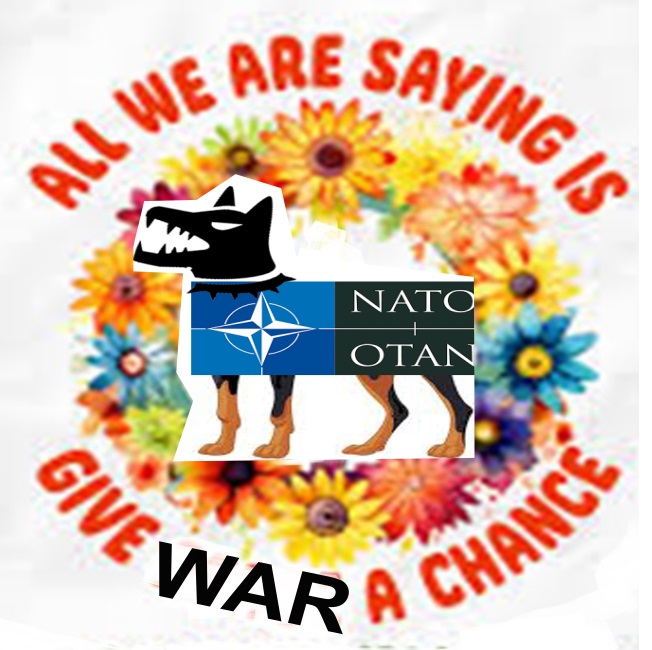
This was a new and progressive face for Nato, the same one it has since used to seduce much of the European Left. Previously, in the Nordic countries, Atlanticists have had to sell war and militarism to largely pacifist publics. This was achieved in part by presenting Nato not as a rapacious, pro-war military alliance, but as an enlightened, “progressive” peace alliance. As Timothy Garton Ash effused in the Guardian in 2002, “NATO has become a European peace movement” where one could watch “John Lennon meet George Bush”. Today, by contrast, following Russia’s full-scale invasion of Ukraine, Sweden and Finland abandoned their long-standing traditions of neutrality and opted for membership. Nato is portrayed as a military alliance — and Ukraine a war — that even former pacifists can get behind. All its proponents seem to be singing is “Give War a Chance”.
The Jolie campaign marked a dramatic turn in what Katharine A.M. Wright and Annika Bergman Rosamond call “Nato’s strategic narrative” in several ways. First, the alliance embraced celebrity star power for the first time, imbuing its unremarkable brand with elite glamour and beauty. Jolie’s star power meant that the alluring images of the event reached apolitical audiences with little knowledge of Nato. Second, the partnership seemed to usher in an era in which women’s rights, gendered violence and feminism would assume a more prominent role in Nato rhetoric. Since then, and especially in the past 12 months, telegenic female leaders such as the Finnish Prime Minister, Sanna Marin, German Foreign Minister, Annalena Baerbock, and Estonian Prime Minister, Kaja Kallas, have increasingly served as the spokespersons of enlightened militarism in Europe. The alliance has also intensified its engagement with popular culture, new technologies, and youth influencers.
Of course, Nato has always been PR-conscious, and has long engaged culture, entertainment, and the arts. Who could forget the 1999 album Distant Early Warning from electronic duo Icebreaker International, recorded with funding from the defunct “NATOarts” and inspired by the radar stations along Alaska and Canada’s northern periphery built to alert Nato of an incoming Soviet nuclear strike? Or the 2007 feature film HQ, produced by Nato’s public diplomacy division, which depicts life inside the alliance and a mock diplomatic response to a crisis in the fictional state of Seismania? Just about everyone it turns out. But what makes Nato’s more recent strategic turn so effective is that it has successfully echoed candidate countries’ progressive local traditions and identities.
No political party in Europe better exemplifies the shift from militant pacifism to ardent pro-war Atlanticism than the German Greens. Most of the original Greens had been radicals during the student protests of 1968; many had demonstrated against American wars. The early Greens advocated for West Germany’s withdrawal from Nato. But as the founding members entered middle age, fissures began to appear in the party that would one day tear it apart. Two camps began to coalesce: the “Realos” were the moderate Greens, politically pragmatists. The “Fundis” were the radical, uncompromising camp; they wanted the party to remain faithful to its fundamental values no matter what.
…………………………………………………………………………………. Earlier this year, Germany’s Federal Foreign Office also rolled out a new “Feminist Foreign Policy”, the latest of several European foreign ministries to have done so. This new orientation, also adopted by France, the Netherlands, Luxembourg and Spain, paints cosmopolitan militarism with a faux-radical feminist gloss, opening the domain of war and security to women’s rights activists. No-nonsense feminist leaders are depicted as the ideal foil to authoritarian “strongmen”.
Sweden was the first country to adopt such a policy in 2014, permitting it to project its longstanding state feminism abroad, and to assume a new moral posture in the international arena. Domestically, there were positive Atlanticist stories in women’s magazines. In the “Mama” section of the Swedish newspaper Expressen, targeted at female readers, one interview with Angelina Jolie emphasised that Nato can protect women from sexual violence in war. Jolie also stressed that there is little difference between humanitarian aid workers and Nato soldiers, as they “are striving towards the same goal: peace”.
…………………….. Nato’s “Protect the Future” campaign. This year it included a graphic novel competition for young artists. The alliance also courted dozens of influencers with large followings on TikTok, YouTube, and Instagram, and brought them out to the headquarters in Brussels. Other influencers were dispatched to last year’s Nato Summit in Madrid, where they were asked to create content for their audiences.
The European Left has been utterly captivated by this show. Following the path taken by the German Greens, major Left-wing parties have abandoned military neutrality and opposition to war and now champion Nato. It is a stunning reversal. During the Cold War, the European Left organised mass protests attended by millions against US-led militarism and Nato’s deployment of Pershing-II and cruise missiles in Europe. Today, little more than the hollowed-out radical rhetoric remains. With hardly any remaining opposition to Nato left in Europe, and the alliance’s creeping expansion beyond the Euro-Atlantic area, its hegemony is now nearly absolute. https://unherd.com/2023/05/how-nato-seduced-the-european-left/
Blinken Confirms Biden Change On Policy Toward Ukraine Using U.S. Weapons Inside Russia
Radio Free Europe, By Mike Eckel and Rikard Jozwiak 31 May 24

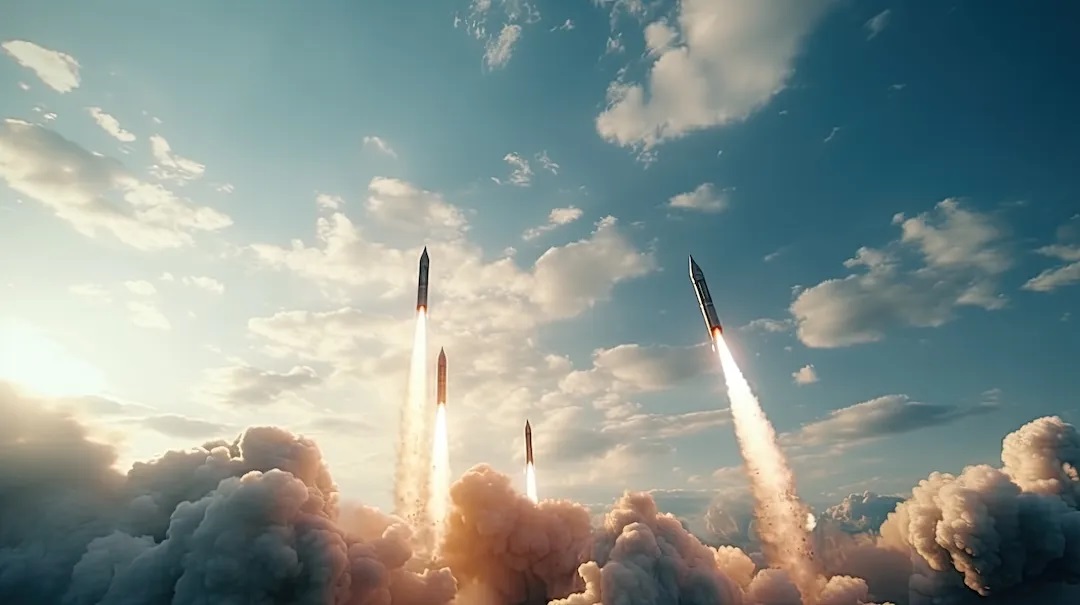
PRAGUE — U.S. Secretary of State Antony Blinken says President Joe Biden has given Ukraine the go-ahead to use U.S. weapons to strike inside Russia for the limited purpose of defending the eastern city of Kharkiv amid pleas from Ukraine to allow its forces to defend the country against attacks originating from Russian territory.
Speaking in Prague on May 31 at an informal meeting of NATO-member foreign ministers, Blinken said Ukraine had asked Washington for authorization to use U.S. weapons to strike inside Russia as it tries to defeat Russian troops that began a full-scale invasion in February 2022.
“Over the past few weeks, Ukraine came to us and asked for the authorization to use weapons that we’re providing to defend against this aggression, including against Russian forces that are massing on the Russian side of the border and then attacking into Ukraine,” Blinken said.
nd that went right to the president, and as you’ve heard, he’s approved use of our weapons for that purpose. Going forward, we’ll continue to do what we’ve been doing, which is as necessary adapt and adjust,” Blinken said.
Blinken’s confirmation came after media reports quoting U.S. officials — including one who spoke to RFE/RL — that Biden has partially lifted the ban.
NATO Secretary-General Jens Stoltenberg had already added his backing to such a move saying during the Prague meeting that allies should consider lifting restrictions on the use of NATO weapons by Ukraine to hit targets on Russian territory.
The decision is a reversal of the U.S. refusal to let Ukraine use American weapons to hit targets inside Russia over fears that it would cause an escalation in the conflict.
Germany, for example, has expressed opposition to allowing the use of NATO-provided weapons to strike inside Russia, though a government spokesman on May 31 said it had also agreed that Kyiv could now use weapons supplied by Berlin to defend itself against strikes from positions just inside Russia………………………………………..
Russian President Vladimir Putin has promised a response, warning of “serious consequences,” especially for what he called “small countries” in Europe.
Russia’s RIA Novosti news agency quoted Andrei Kartapolov, the head of the Russian parliament’s lower house Defense Committee as saying on May 31 that Biden’s decision would have no impact on Moscow’s military operations against Ukraine. https://www.rferl.org/a/us-biden-policy-ukraine-strikes-inside-russia/32974016.html
UK’s nuclear deterrent key to Starmer’s plans to keep Britain safe

Labour leader Keir Starmer will meet with forces veterans and a group of his party’s candidates when he campaigns in the North West of England on Monday
Independent, Richard Wheeler, 3 June 24
Sir Keir Starmer will pitch Labour as the “party of national security” as he seeks to switch attention to defence matters during the general election campaign.
The Labour leader is expected to meet with forces veterans and a group of his party’s candidates when he campaigns in the North West of England on Monday.
Sir Keir will reaffirm his commitment to a “nuclear deterrent triple lock” as well as his ambition to increase defence spending to 2.5 per cent of gross domestic product (GDP), a measure of the size of the economy.
Prime Minister Rishi Sunak has made clear he wants to meet the 2.5 per cent target by 2030 although Labour has so far declined to outline its timeline, only noting they would do so when economic conditions allow.
Labour says its nuclear deterrent triple lock involves: a commitment to construct the four new nuclear submarines in Barrow-in-Furness; maintaining Britain’s continuous at-sea deterrent; and the delivery of all future upgrades needed for the submarines to patrol the waters.
The Vanguard-class submarines are due to be replaced by the bigger Dreadnought-class submarines in the 2030s.
Between £31 billion and £41 billion has been set aside for the wider programme of replacing the Vanguard-class submarines, according to figures from the House of Commons Library.
Sir Keir has been attempting to shift perceptions of Labour’s defence stance following the party’s time under the leadership of Jeremy Corbyn, a long-standing critic of Nato and Trident………………………………..
” alongside our unshakeable commitment to Nato, an incoming Labour government will introduce a ‘triple lock’ commitment on our nuclear deterrent – providing vital protection for the UK and our Nato allies in the years ahead, as well as supporting thousands of high paying jobs across the UK.”
Defence Secretary Grant Shapps said: “Twelve members of Starmer’s front bench team, including Angela Rayner and David Lammy, voted against Trident. https://www.independent.co.uk/news/uk/politics/labour-keir-starmer-nuclear-deterrent-monday-b2555401.html
Labour pledges to launch Great British Energy ‘within months’ of general election victory: it includes nuclear power.
The Labour Party has unveiled more details on its plans to set up a
publicly owned energy company, Great British Energy, confirming its
intention to launch the firm as a priority should the Party win July’s
general election.
The Great British Energy website went live late on
Thursday night (30 May), providing more information on how the company
would work and the benefits it could bring in terms of lower energy bills,
new green jobs and future-proofing the UK.
Labour leader Kier Starmer has
stated that setting up Great British Energy would be one of his
government’s first steps after the election on 4 July. Great British
Energy would focus on energy generation in the first instance, the website
confirms. It would be backed with public funding from Labour’s
slimmed-down multi-billion-pound annual green investment coffers.
This funding would be raised through an enhanced windfall tax on North Sea oil
and gas operators, who already pay a 75% tax rate which would be hiked to
78% under a Labour Government. Labour wants to use Great British Energy
support both mature renewable and nuclear technologies, and emerging
technologies such as floating offshore wind, tidal and renewable hydrogen.
Regardless of a technology’s maturity, the aim will be to crowd in
private investment by offering the public funding and government expertise
needed to reduce risks for investors. Great British Energy would be based
in Scotland, and Labour has a vision to ensure that it supports energy
generation assets in all UK regions. It will partner with other
organisations to deliver at least 8GW of community renewables over the
course of the next Parliament.
Edie 31st May 2024
Call for next UK government to make ‘big decisions’ on nuclear power projects

The manifesto also pressed for the building of a fleet of Small Modular Reactors.
Independent, Alan Jones, 1 June 24
The next government is being urged to make “big decisions” on nuclear power projects to help deliver jobs and energy security.
The Nuclear Industry Association (NIA) has published its manifesto, saying it was important to ensure continued momentum.
The association called for measures including pressing ahead with the planned Sizewell C power station, as well as extending the life of current power stations.
The manifesto also pressed for the building of a fleet of Small Modular Reactors (SMRs) across the country and a third large-scale station at Wylfa on Anglesey in north Wales.
Tom Greatrex, chief executive of the NIA, said: “Big decisions on new nuclear projects are needed as a matter of urgency during the next parliament……………………………….. https://www.independent.co.uk/business/call-for-next-government-to-make-big-decisions-on-nuclear-power-projects-b2554453.htm
On the Brink: The NATO-Russia Ukrainian War Comes to Europe
Russian and Eurasian Politics, by GORDONHAHN, June 2, 2024
The NATO-Russia Ukrainian for, the war for and against NATO expansion, is on the brink of expanding to the NATO countries that provoked Russia to invade Ukraine on 24 February 2024 and have supported its continuation ever since, save one—the United States of America—ironically, the real force behind the war’s genesis. Sixteen years ago today’s CIA Director, at the time US Ambassador to Moscow, William Burns was ignored when he informed Washington:
“Ukraine and Georgia’s NATO aspirations not only touch a raw nerve in Russia, they engender serious concerns about the consequences for stability in the region. Not only does Russia perceive encirclement, and efforts to undermine Russia’s influence in the region, but it also fears unpredictable and uncontrolled consequences which would seriously affect Russian security interests. Experts tell us that Russia is particularly worried that the strong divisions in Ukraine over NATO membership, with much of the ethnic-Russian community against membership, could lead to a major split, involving violence or at worst, civil war. In that eventuality, Russia would have to decide whether to intervene; a decision Russia does not want to have to face. ….“Russia’s opposition to NATO membership for Ukraine and Georgia is both emotional and based on perceived strategic concerns about the impact on Russia’s interests in the region. It is also politically popular to paint the U.S. and NATO as Russia’s adversaries and to use NATO’s outreach to Ukraine and Georgia as a means of generating support from Russian nationalists. While Russian opposition to the first round of NATO enlargement in the mid-1990’s was strong, Russia now feels itself able to respond more forcefully to what it perceives as actions contrary to its national interests” (https://wikileaks.org/plusd/cables/08MOSCOW265_a.html).
Rather than heed Burns’s warning and that of numerous objective experts, the US and NATO tried to remake Ukraine, funding anti-Russian forces and backing what became a violent, terrorist coup led by neofascists in February 2013, confounding an agreement worked out by regime, opposition, Europe, and Russia that would have resolved the crisis.
The post-coup NATO involvement in Ukraine was discussed in unusual pieces. One had purposes beyond the present discussion, The New York Times (NYT), acknowledged that the CIA was involved in Maidan Ukraine no later than immediately after the coup (https://www.nytimes.com/2024/02/25/world/europe/cia-ukraine-intelligence-russia-war.html).
In one rare objective opinion published in NYT on the subject, it was noted: “Over the next decade, the US and its allies built a powerful Ukrainian army while sabotaging the Minsk agreement and later (after the Russian invasion) also sabotaged the Istanbul negotiations. Weapon systems poured in, Ukrainian ports were modernised to fit American warships, and Ukraine was becoming a de facto NATO member. Top Ukrainian officials like Arestovich argued openly they were preparing for a war with Russia. A top adviser to former president Nicolas Sarkozy, warned that the US-Ukraine Charter on Strategic Partnership of November 2021 convinced Russia that it must attack or be attacked’” (https://www.nytimes.com/2022/05/31/opinion/us-ukraine-putin-war.html).
The decision to supply nuclear capable F-16 fighter jets to Kiev and the recent French and presumably other Western countries’ coming declarations making official their previous and future deployments of ‘instructors’ and ‘advisors’ to the Ukrainian front is dangerously escalatory enough. Moscow is required to respond with an answering escalation to save face internally before the Russian people and externally before the world. Now NATO, in the person of its GenSec, has opened up the Overton window by way of convening discussions with member-states on the introduction of troops and the use of Western-supplied mid-range rockets to hit deep inside Russian territory.
Poland is on the verge of deploying its missile defense systems to protect Ukraine from Russia attacks. Moreover, a claim is being circulated to the effect that decision of 12 NATO countries (UK, France, Netherlands, Denmark, Canada, Sweden, Finland, Poland, the Czech Republic, Estonia, Latvia, and Lithuania so far) to allow Kiev to use Western missiles to strike deep into Russia — as far as Moscow and Russia’s ‘second capitol’ of St. Petersburg. Germany, not included in the list, has apparently changed its position and now supports attacks on Russia using Western weapons, as Chancellor Olaf Shultz stated standing next to French President Emmanuel Macron last week. Berlin also is still considering sending long-range Taurus missiles to Kiev.
For its part, the US is considering giving permission to Kiev to use US weapons, such as ATACM missiles (180-mile range), against military targets deep inside Russia (https://www.wsj.com/world/blinken-signals-u-s-may-allow-ukraine-to-strike-inside-russia-with-u-s-weapons-61fedb10). The US has announced that it will allow the use of weapons it has supplied to Ukraine for attacks on Russian proper in the battle in the Kharkov (Kharkiv) border region now the focus of a Russian counteroffensive.
Otherwise, for the moment Washington will continue to pretend it is opposed to Ukraine’s use of American weapons against Russia proper, using official statements and media plants to this tune: “a U.S. official said Washington had expressed concerns to Kyiv over Ukraine’s strikes — using its own weapons — on Russian radar stations that provide conventional air defense and early warning of nuclear launches by the West.” (https://www.washingtonpost.com/national-security/2024/05/30/ukraine-us-strategy-disagreement-corruption/).
Ukraine’s armed forces could not have made this attack without US assistance. The US also will soon conclude a US-Ukraine Security Pact likely intended to institutionalize US weapons, training, intelligence, operational, and financial support to Kiev for the ‘long war.’ Fifteen European states have already concluded such long-term security agreements with Kiev over the last few months (https://www.pravda.com.ua/rus/news/2024/05/31/7458547/).
All this —added to the Western weapons, intelligence, training, operational planning, and undercover military personnel contributed to Kiev — makes Ukraine de facto a full-fledged NATO member-state. In other words, NATO countries — and thus de facto NATO itself — are preparing to do officially what they have been doing clandestinely since February 2022: fight Russia in Ukraine for the right to expand NATO when and where Washington and Brussels want. Before all this, Western countries — all the leading members of NATO — were de facto and de jure co-belligerents with Ukraine against Russia. Suffice it to note that Ukraine does not have space based reconnaissance data for targeting but is receiving such from French, German, US and other NATO militaries.
It appears that the recent Western escalations are driven in part by the need to prevent a Russian victory at all costs in order to save face for the US and NATO and, perhaps no less importantly, to salvage US President Joe Biden’s career in the coming presidential elections—a career that has been so disastrous for his family, Americans in general, and now the world. ………………………………………………
………………….. A kind of perfect storm is coming. This autumn there likely will be: the collapse of the Ukrainian front and/or army and/or regime; the Russian army’s approach to the Dniepr and perhaps encirclement of Zaporozhe, Kharkiv, even Kiev; and an American political crisis (given the guilty verdict against Republican presidential candidate Donald Trump). The possibilities are almost endless, and some rather dire ones are becoming increasingly more probable.https://gordonhahn.com/2024/06/02/on-the-brink-the-nato-russia-ukrainian-war-comes-to-europe/
Biden Lets Ukraine Strike Russia With US Weapons While Ukraine Attacks Russian Nuclear Defenses
CAITLIN JOHNSTONE, MAY 31, 2024, https://www.caitlinjohnst.one/p/biden-lets-ukraine-strike-russia?utm_source=post-email-title&publication_id=82124&post_id=145149954&utm_campaign=email-post-title&isFreemail=true&r=1ise1&triedRedirect=true&utm_medium=email
Well it finally happened: Biden is now letting Ukraine strike Russian territory with US-supplied weapons. Escalations in nuclear brinkmanship which would have been unthinkable a few short years ago are becoming increasingly common as Ukraine loses more and more territory and runs out of soldiers to fight.
In a new report from Politico titled “Biden secretly gave Ukraine permission to strike inside Russia with US weapons” which cites multiple anonymous US officials, the article’s authors correctly describe the new White House authorization as a “stunning shift the administration initially said would escalate the war by more directly involving the U.S. in the fight.”
This report comes shortly after an article by The New York Times titled “From Allies and Advisers, Pressure Grows on Biden to Allow Attacks on Russian Territory,” in which David E Sanger accurately forecast that “Biden is edging toward what may prove to be one of his most consequential decisions in the war for Ukraine: whether to reverse his ban on shooting American weapons into Russian territory.”
Politico reports that the approval for these attacks is limited to “solely near the area of Kharkiv,” but, again, these escalations were once unthinkable even for this administration, and every time a new escalation is authorized the warmongers are already well on their way to pushing for a further one. We will surely see increasing calls for Biden to authorize US-backed strikes deeper into Russian territory in the coming weeks.
This new development comes just after we learned that Ukraine has been repeatedly attacking Russia’s early warning systems for incoming nuclear strikes, with Ukrainian drones targeting Russian radar sites hundreds of miles from Ukrainian-controlled territory.
Just a few years ago if I had told you that a NATO proxy would soon be attacking Russia’s nuclear defense infrastructure, you’d probably have assumed we’d be pretty close to another Cuban Missile Crisis-level nuclear standoff, and that it would be receiving high levels of alarm and attention. But this report is barely in the news, and hardly anyone in the west even knows it’s happening.
This also comes as Reuters reports that France is preparing to send “several hundred” troops to Ukraine to train Ukrainian forces, which of course means we may soon be seeing the armed forces of a NATO power getting killed by the Russian military.
Any of these three new developments has the potential to lead to unpredictable events which spiral out of control into a nuclear war between NATO and the Russian Federation, which would be the single worst thing that could possibly happen on planet Earth. There is no excuse for anyone to be playing around anywhere remotely close to such a precipice, and yet here we are.
As we discussed last year, the terrifying thing about the west’s pattern of continually escalating against Russia every time it doesn’t get a nuclear ICBM in the kisser for the last escalation naturally incentivizes Russia to attack NATO directly in order to re-establish its credibility for deterrence. So far Russia has been content to respond to NATO’s escalations by just tearing into Ukraine with greater and greater ferocity, but if the western empire keeps interpreting every time Russia doesn’t attack NATO forces directly as a sign that it’s safe to keep escalating, at some point Russia’s going to have to hit NATO.
It is not sane or acceptable that any of this is happening. The empire knowingly provoked this war, and now it’s getting more and more casual about risking the life of everyone on this planet as its proxy runs out of lives to throw into its gears.
And it’s so hard to draw attention to this, because there are so many other horrible things happening in the world which the western empire is also directly responsible for. The empire is increasingly acting like a wounded, cornered animal as China rises and the US slowly sinks into post-primacy, the only major difference being that wounded, cornered animals have teeth and claws instead of weapons of armageddon.
The UK Is Ramping Up Its Nuclear Energy Ambitions

The cost of development has increased significantly since EDF first gained project approval in 2012, which could make it the world’s most expensive nuclear plant……..$58.4 billion earlier in the year. Its completion date has also been delayed by three to four years, expected to be completed by 2031. …….a government spokesperson …… the plant is “not a government project” and stated, “any additional costs or schedule overruns are the responsibility of EDF and its partners and will in no way fall on taxpayers.”
Oil Price, By Felicity Bradstock – May 30, 2024,
- The U.K. government aims to rapidly expand its nuclear energy sector, with two nuclear plants slated for the next decade and discussions around a third.
- The government hopes to meet up to 25 percent of the country’s electricity demand using nuclear power sources by 2050.
The U.K. government has ambitious plans for the rapid expansion of the country’s nuclear energy sector, with two nuclear plants slated for the next decade, and discussions around a third. EDF’s Hinkley Point C in Somerset and Sizewell C in Suffolk have both been approved by the government, expected to support the U.K.’s transition away from fossil fuels to greener alternatives in line with national climate pledges.
The U.K. government has announced ambitious nuclear plans in recent years, aiming for the biggest expansion in nuclear power for 70 years. It hopes to meet up to 25 percent of the country’s electricity demand using nuclear power sources by 2050. This will mean a fourfold increase in the U.K.’s nuclear power production, to achieve an output of 24 GW by the mid-century. The Civil Nuclear Roadmap outlines the government’s nuclear plans, including the development of major nuclear facilities, as well as its small modular reactor (SMR) technology. The government also plans to invest up to $381 million in the domestic production of the fuel required to power high-tech new nuclear reactors, known as HALEU, currently only commercially produced in Russia.
The cost of development has increased significantly since EDF first gained project approval in 2012, which could make it the world’s most expensive nuclear plant. EDF previously stated that it expected the plant to cost around $22 billion, but it increased that estimate to around $58.4 billion earlier in the year. Its completion date has also been delayed by three to four years, expected to be completed by 2031. The firm blamed inflation, Covid, and Brexit for cost increases and project delays. While there were some public concerns for the price increase, a government spokesperson made it clear that the plant is “not a government project” and stated, “any additional costs or schedule overruns are the responsibility of EDF and its partners and will in no way fall on taxpayers.”
In May, EDF was granted a site license by the U.K.’s nuclear regulator, the Office for Nuclear Regulation (ONR), for the development of its Sizewell C nuclear plant in Suffolk, in the south of England. This is the first of this type of license to be granted in over a decade. Sizewell C is expected to be a replica of the company’s Hinkley Point C. EDF is racing to reach a final investment decision on the project by the end of 2024.
Unlike Hinkley, EDF holds just under a 50 percent stake in Sizewell, with the government holding just over 50 percent. The company is now seeking new investment following the banning of China’s CGN from funding the development due to security concerns. The French firm hopes to use lessons learned from the development of Hinkley to construct Sizewell within around nine years.
Now, the U.K. government is in discussion over another potential nuclear plant development in Wales. The government announced it is holding conversations with major energy companies about the construction of a third new nuclear plant on a site at Wylfa on Anglesey in north Wales. The development of an additional site would help the U.K. to achieve its nuclear energy goals by the mid-century. There are reports that South Korea’s state-owned nuclear developer has been involved in early-stage discussions with the government about the multi-billion construction using APR1400 reactor technology. However, the American nuclear firm Westinghouse and the construction group Bechtel have shown interest in developing the project using Westinghouse’s AP1000 reactor technology………………………………….. https://oilprice.com/Energy/Energy-General/The-UK-Is-Ramping-Up-Its-Nuclear-Energy-Ambitions.html
Tribunal judge accused of covering up complaints – about bullying at Sellafield nuclear plant and other sites.
Seven women who claim they were bullied and intimidated by an employment
tribunal judge have accused the senior judiciary of trying to cover up
their complaints.
The allegation coincides with the Ministry of Justice and
Judicial Conduct Investigations Office (JCIO) being referred to the
Information Commissioner after failing to disclose the number of complaints
made about tribunal judges in response to a freedom of information request.
Both the ministry and the JCIO said that neither holds the information. But
a consultation on judicial discipline, published by both bodies two years
ago, revealed that the figure is estimated to be between 700 and 800
annually.
Of those complaints — which equate to an average of three every
working day — only a fraction result in action. The women who have spoken
to The Times have accused Judge Philip Lancaster of bullying and sexist
behaviour at separate hearings before him at the employment tribunal in
Leeds — with one claiming that he shouted at her 16 times.
Alison McDermott, formerly a human resources consultant at the nuclear fuel
reprocessing plant at Sellafield, first drew attention to Lancaster’s
alleged behaviour after he rejected her claim for whistleblowing detriment
in 2021. McDermott lost the case, but was allowed to appeal on 13 grounds.
Although she lost most of her appeal, the judge said that there were errors
and problems in the way her case was handled. That judge also criticised as
“unsafe” the award of costs against her and said that the tone of
Lancaster’s remarks on the issue were “troubling”.
Times 30th May 2024
https://www.thetimes.co.uk/article/complaints-covered-up-against-tribunal-judges-zkhmlz8bc
Top Biden aides signal openness to letting Ukraine strike Russia with US weapons

No final decision has been made, but the consideration comes amid mounting pressure from allies and Democrats.
Politico, By MATT BERG, ALEXANDER WARD and NAHAL TOOSI, 05/29/2024
Two senior Biden administration officials Wednesday opened the door to allowing Ukraine to use American-donated weapons to strike inside Russia.
The move, if made, would come as European allies, lawmakers and Ukrainian officials exert pressure on the White House to lift the restrictions, and as Russia has made major advances on the battlefield. It also suggests that President Joe Biden and his team are increasingly worried about Kyiv’s ability to fend off Russia’s attacks, especially its latest advance in Ukraine’s second-largest city of Kharkiv.
Secretary of State Antony Blinken signaled the possible change during a visit to Moldova when pressed by reporters. A “hallmark” of the Biden administration’s approach toward Ukraine since Russia launched its full-scale invasion two years ago “has been to adapt as the conditions have changed, as the battlefield has changed, as what Russia does has changed.”
“We’ve adapted and adjusted, too, and we’ll continue to do that,” he continued.
Shortly afterward, National Security Council spokesperson John Kirby, while stating that there’s “no change” in the current policy that says Ukraine can’t use U.S.-supplied weapons to strike inside Russian territory, also noted that America’s “support to Ukraine has evolved appropriately.”
Two other Biden administration officials cautioned that no final decision has been made and that Blinken and Kirby were describing a general trend of American support for Ukraine during the war — one of initial caution followed by permission. They were not necessarily guaranteeing a forthcoming shift.
The topic is “under consideration,” a U.S. official familiar with the issue said. Both were granted anonymity to speak about sensitive internal deliberations.
Kyiv hasn’t seen concrete movement on the matter from the Biden administration, according to a person close to Ukraine President Volodymyr Zelenskyy’s office. Zelenskyy, during a visit to Belgium on Tuesday, begged Western governments to “please give us permission” to use their weapons to strike targets in Russia’s sovereign territory………………………………………..
This month, U.K. Foreign Minister David Cameron said Kyiv could use British weapons to strike sovereign Russian territory. Then on Monday, NATO’s parliamentary assembly adopted a resolution calling on Western countries to allow Ukraine to use weapons to strike military targets inside Russia.
The issue gathered momentum on Tuesday, when French President Emmanuel Macron opened the door to Ukraine using donated weapons to “neutralize” Russian military sites…………………………………………………………………
Many top U.S. lawmakers are publicly supportive of the idea……………………………………. more https://www.politico.com/news/2024/05/29/biden-aides-signal-openness-to-allowing-ukraine-to-strike-russia-with-us-weapons-00160462
Ukrainian Grad Students Complete Nuclear Internship Program in the United States
MAY 28, 2024
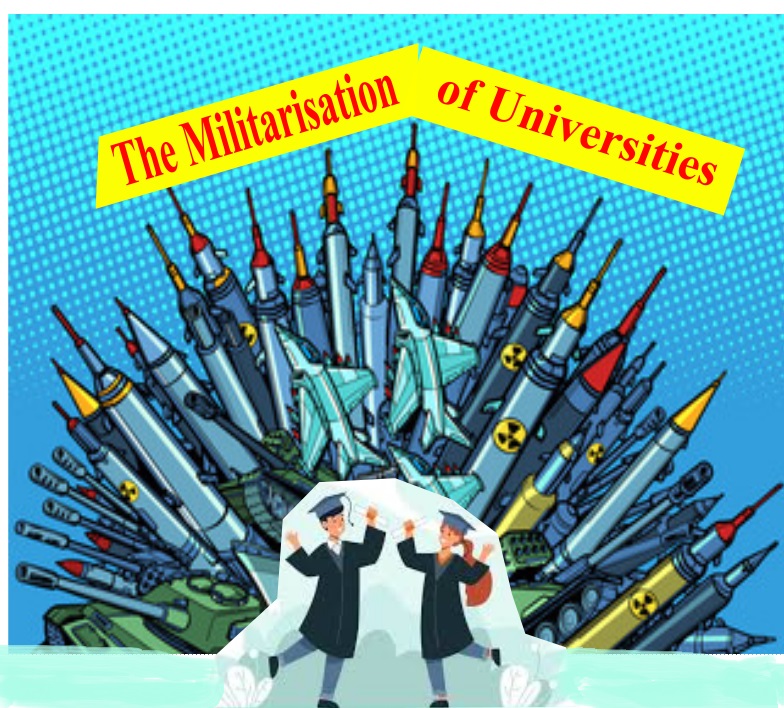
Eight university students from Ukraine recently completed their nuclear energy internship program with the U.S. Department of Energy (DOE).
The program was implemented through Argonne National Laboratory and is designed to assist Ukraine’s nuclear power industry in growing its nuclear energy workforce.
A Long Overdue Visit
The two-year internship program was tailored to Ukrainian university graduate students pursuing nuclear energy-related degrees that specialize in areas such as small modular reactors, accident tolerant fuels, and even misconceptions of nuclear energy.
The students selected for the program were supposed to spend their first summer in the United States taking extra courses and the second summer working with U.S. nuclear energy companies.
A Country Rebuilding
Ukraine’s 15 nuclear reactors generate more than half of the country’s electricity, but the plants are old and so is the country’s aging nuclear workforce.
The grad students returned to their country to continue their studies and careers in Ukraine’s nuclear energy program as they work to pursue new technologies independent of Russia.
Ukraine’s entire fleet of reactors is based on old Russian VVER pressurized water reactor technology. Six of the reactors were seized by Russian forces during the war and placed in cold shutdown.
The U.S.-Ukraine nuclear energy internship program was funded by the Office of Nuclear Energy’s Office of International Cooperation, which collaborates with international partners to support the safe, secure, and peaceful use of nuclear energy. https://www.energy.gov/ne/articles/ukrainian-grad-students-complete-nuclear-internship-program-united-states—
Drone sightings reported over British nuclear facilities

UK Defence Journal, By George Allison, May 29, 202
Recent data acquired under the Freedom of Information Act 2000 (FOIA 2000) unveils a number of drone sightings over UK nuclear facilities from 2021 to 2023.
The Ministry of Defence Police (MDP) has kept specific location details confidential, citing national security implications.…………………………………………………………………..
In the context of the UK, nuclear sites generally refer to a range of facilities associated with the nuclear energy industry and defence establishments. These can include:
- Nuclear Power Stations: These are plants where nuclear energy is converted into electricity. Examples include Hinkley Point, Sizewell, and Dungeness.
- Nuclear Research Facilities: These are centres where nuclear research takes place, such as the Culham Centre for Fusion Energy or the Dalton Nuclear Institute.
- Nuclear Reprocessing Plants: Sellafield in Cumbria is a prime example, where nuclear fuel is reprocessed.
- Nuclear Submarine Bases: The UK operates a fleet of nuclear-powered submarines, and these vessels are based at certain naval docks, notably HM Naval Base Clyde (sometimes referred to as Faslane).
- Defence Establishments: Some sites are associated with the development or storage of nuclear weapons, such as the Atomic Weapons Establishment (AWE) sites at Aldermaston and Burghfield.
- Nuclear Waste Storage and Disposal Sites: Locations where nuclear waste is stored, treated, or disposed of.
- Decommissioned Nuclear Sites: Former nuclear facilities which are no longer operational but might still have nuclear materials or be under decommissioning.
These sites are of strategic importance to the UK, both in terms of energy supply and national security. As such, they are heavily regulated, monitored, and protected. Any unauthorised activity, such as drone flights, in the vicinity of these sites is taken very seriously due to the potential security and safety risks involved.
What drives these flights near such sensitive areas? Are they a product of curiosity, deliberate reconnaissance, or mere coincidence? https://ukdefencejournal.org.uk/drone-sightings-reported-over-british-nuclear-facilities/
1 This Month
22 June – Virtual Event –Climate Change: New Data, New Debate

Monday, June 22, 2026 2:30 p.m. – 3:15 p.m. CT
YouTube. Register here

Protect Sazan Island from the Trump family! https://secure.avaaz.org/campaign/en/protect_sazan_island_from_the_trump_family_loc/?bqFCVab&v=174511&cl=22707147157&_checksum=5e9dde668860e8231c33699735e16a1fbf22ab2cb01da50c999fe8732b9775ef&utm_source=email&utm_medium=blast_email&utm_campaign=174511
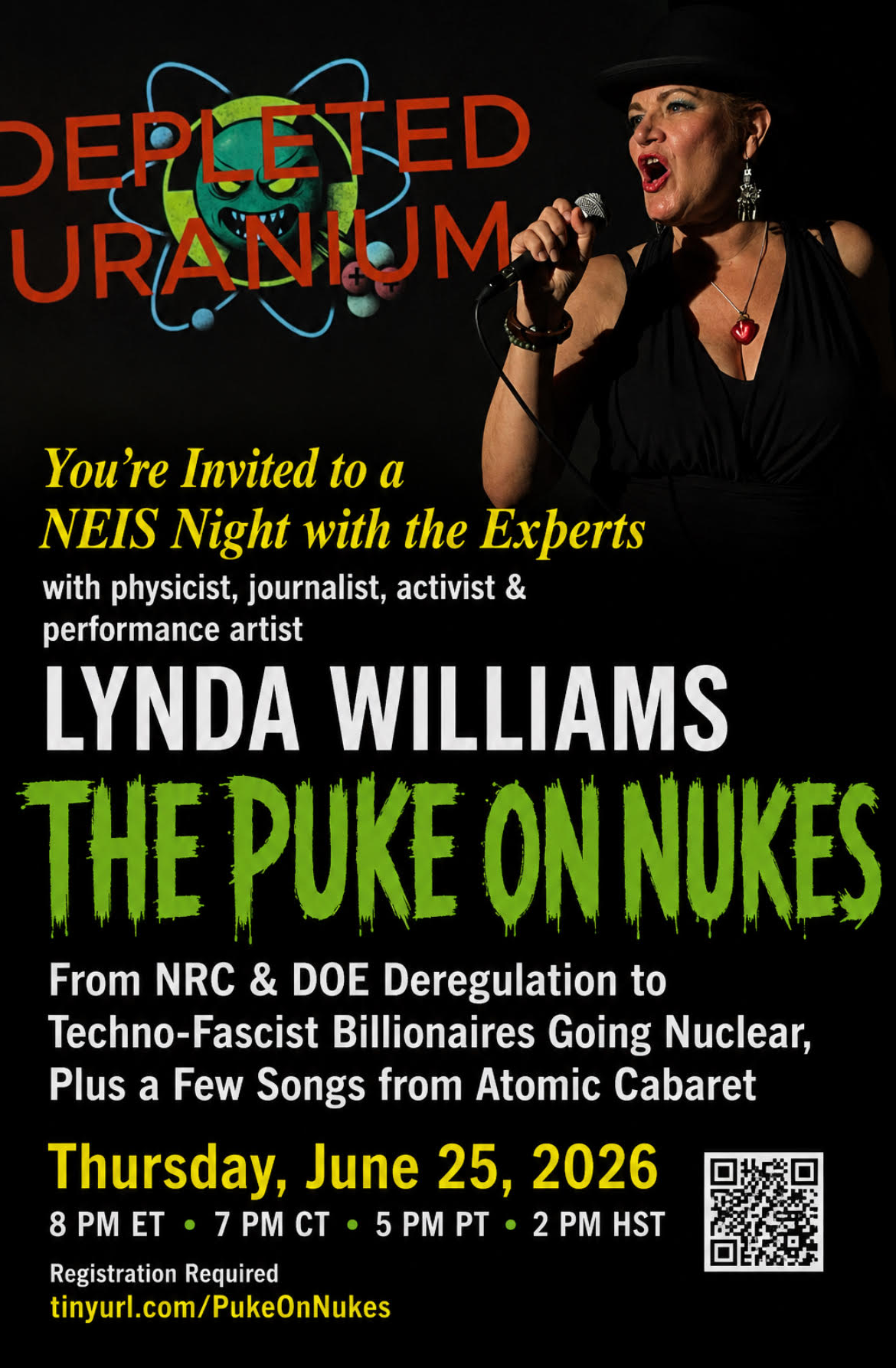
25 June- THE PUKE ON NUKES
Thursday, June 25, 2026
7pm Central Time (8pm ET, 6pm MT, 5pm PT) UTC – 5
From NRC & DOE Deregulation to Techno-Fascist Billionaires Going Nuclear, Plus a Few Songs from Atomic Cabaret REGISTER
26 June – Radiation Trainwreck at the NRC / Join the Protect Better Campaign – https://us02web.zoom.us/meeting/register/4ZlZ5_qLSHGiLSCg8FF6Bg#/registration


Cuba Is Not a Failed State – It Is a Besieged State
PETITION: “Global Appeal to Endorse Palestinian Right of Return of Refugees”
To see nuclear-related stories in greater depth and intensity – go to https://nuclearinformation.wordpress.com
-
Archives
- June 2026 (202)
- May 2026 (306)
- April 2026 (356)
- March 2026 (251)
- February 2026 (268)
- January 2026 (308)
- December 2025 (358)
- November 2025 (359)
- October 2025 (376)
- September 2025 (257)
- August 2025 (319)
- July 2025 (230)
-
Categories
- 1
- 1 NUCLEAR ISSUES
- business and costs
- climate change
- culture and arts
- ENERGY
- environment
- health
- history
- indigenous issues
- Legal
- marketing of nuclear
- media
- opposition to nuclear
- PERSONAL STORIES
- politics
- politics international
- Religion and ethics
- safety
- secrets,lies and civil liberties
- spinbuster
- technology
- Uranium
- wastes
- weapons and war
- Women
- 2 WORLD
- ACTION
- AFRICA
- Atrocities
- AUSTRALIA
- Christina's notes
- Christina's themes
- culture and arts
- Events
- Fuk 2022
- Fuk 2023
- Fukushima 2017
- Fukushima 2018
- fukushima 2019
- Fukushima 2020
- Fukushima 2021
- general
- global warming
- Humour (God we need it)
- Nuclear
- RARE EARTHS
- Reference
- resources – print
- Resources -audiovicual
- Weekly Newsletter
- World
- World Nuclear
- YouTube
-
RSS
Entries RSS
Comments RSS
 nuclear-news