Nuclear lobby continues to infiltrate education

Pupils from Alde Valley Academy have joined the Sizewell C Youth Council.
This initiative aims to provide the nuclear power project with insights
into the needs of local young people. The students, from Years 7 to 11,
will have regular meetings with joint managing director, Julia Pyke, and
other project leaders. They will discuss local needs, aspirations, and the
project’s progress. Julia Pyke, Sizewell C joint managing director, said:
“Consultation for big infrastructure projects can sometimes be skewed
towards older people.
East Anglian Daily Times 21st Oct 2024
https://www.eadt.co.uk/news/24658473.alde-valley-academy-pupils-join-sizewell-c-youth-council/
Zelensky aide reveals secret clauses of ‘victory plan’
RT, Wed, 16 Oct 2024, https://www.rt.com/russia/605823-ukrainian-plan-secret-clauses/
The classified component details attack plans on Russia and a weaponry wish list, according to Mikhail Podoliak.
The secret component of the “victory plan” unveiled by Vladimir Zelensky on Wednesday includes Kiev’s targets for long-range attacks on Russian soil, Mikhail Podoliak, a top aide to the Ukrainian leader, has revealed.
The parts of the plan that were not disclosed to the public consist of a list of targets, a plan of action, and a detailing of the weapons needed to carry out such attacks against Russia, Podoliak told RBC Ukraine in an interview on Wednesday.
“There, in the appendices, it is precisely said what kind of weapons should be used to destroy logistics very far from the front line… what targets will be hit and how many weapons are needed for this.”
Zelensky revealed the so-called “victory plan” earlier in the day in an address to the country’s parliament. The Ukrainian leader toured Western capitals in recent weeks to show the plan to his backers in private and try to generate support for it.
The public part of the plan largely consists of a number of demands made of Ukraine’s Western supporters. Kiev requested an immediate invitation to join NATO, a lifting of restrictions on the use of Western-supplied long-range weapons for strikes on Russia, as well as the deployment of “a comprehensive non-nuclear strategic deterrence package” on Ukrainian soil.
The plan, particularly its cornerstone NATO accession demand, appears to have elicited a mixed reaction in the West. Washington’s envoy to NATO, Julianne Smith, for instance, said that while the bloc remains committed to Kiev’s “irreversible path of membership,” actual accession was not a “short-term” matter.
Moscow dismissed the plan as a set of “incoherent slogans,” with Foreign Ministry spokeswoman Maria Zakharova condemning it as “bloody foam on the lips of a neo-Nazi killer.”
She also dismissed the NATO aspirations long-touted by Kiev, suggesting the only place the West actually deems fit for Ukraine in its “security architecture” is “in a coffin and Ukrainian citizens in graves.”
Ukraine must have nukes or NATO – Zelensky

https://www.rt.com/russia/605856-zelensky-nuclear-nato-trump/ 16 Oct 24
The leader has described his conversation with former US President Donald Trump as he promotes his ‘victory plan’ to Western backers.
Ukraine can protect itself either by becoming a nuclear state or a member of NATO, Vladimir Zelensky said on Thursday, claiming that he had offered the same line of reasoning to former US President Donald Trump.
Speaking at a press conference after promoting his ‘victory plan’ for the conflict with Russia to European officials, Zelensky suggested that Ukraine would need nuclear weapons, should it not be granted NATO membership.
“Which of the big nations, the nuclear nations, suffered? Everyone? No, just Ukraine,” he stated, referring to the signatories of the 1994 Budapest Memorandum. The document involved the US, UK, and Russia extending security assurances to Kiev in return for the removal of Soviet nuclear weapons from Ukraine.
“Speaking to Donald Trump, I told him: ‘What is the way out for us?’ Either Ukraine will have nuclear weapons, and they will serve as protection, or we need to be in some kind of an alliance. We don’t know any effective alliances except NATO,” Zelensky added.
Ukraine’s choice is to become a NATO member, Zelensky said, claiming that Trump had found his reasoning justified.
Ukraine has never controlled nuclear weapons, but claims it was formerly among the major atomic powers before agreeing to relinquish them. In February 2022, weeks before the escalation of the Ukraine conflict, Zelensky expressed regret at the decision in a speech at the International Security Conference in Munich, suggesting that his country had “every right” to reverse it.
Zelensky confirmed this week that an immediate invitation for Ukraine to join NATO was on his list of requests to Western donors. The secretary general of the US-led bloc, Mark Rutte, said on Thursday that Ukraine may not even be the next nation to become a member.
Councillors raise concerns over fish populations at Hinkley C
Forty-four tonnes of fish could die every year once the site is running
South Gloucestershire Council have raised concerns over the potential loss
of wildlife at Hinkley Point C as bosses propose installing saltmarsh land
in parts of North Somerset and Gloucestershire. EDF energy, who run the
nuclear power station at Hinkley C, are planning to build the habitat to
compensate for the 44 tonnes of fish that could die every year once the
site is running. But land owners and councillors in South Gloucestershire
have raised concern about the loss of wildlife and the health of the
region’s rivers.
Rayo 18th Oct 2024,
https://hellorayo.co.uk/greatest-hits/bristol/news/hinkley-south-gloucestershire-letter/
Some Types of Pollution Are More Equal than Others
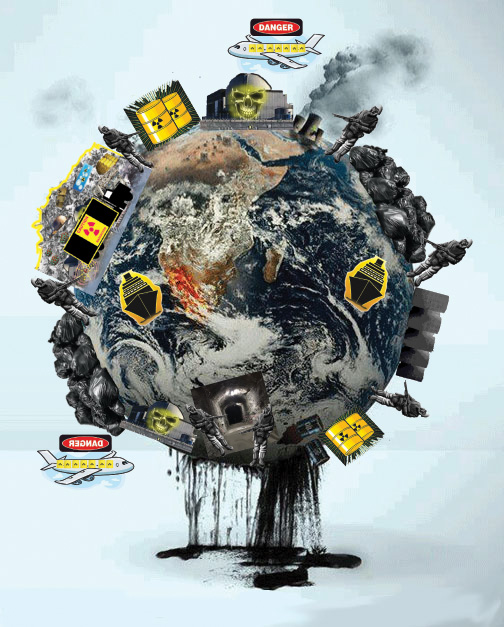
There is a BIG taboo around Radioactive Pollution. We published a report last June into acid mine pollution alongside radioactive pollution in Whitehaven Harbour – so far ignored by mainstream media.
Marianne Birkby, Oct 20, 2024 https://radiationfreelakeland.substack.com/p/some-types-of-pollution-are-more?utm_source=post-email-title&publication_id=2706406&post_id=150473856&utm_campaign=email-post-title&isFreemail=true&r=ln98x&triedRedirect=true&utm_medium=email
Whitehaven Mine Pollution- Report by Radiation Free Lakeland – evidence to inform Authorities in future mitigation/prevention regarding mine pollution
The Westmorland Gazette and other local press have today published a feel good article about beach cleans in Cumbria. So far so good but the beaches contain far more insidious and long lived pollution than plastic, in the form of radioactive wastes from decades of Sellafield’s operations. In Whitehaven Harbour these radioactive wastes are literally magnified by the presence of the ongoing acid mine pollution pouring into the harbour. Instead of addressing this ongoing pollution event the local MP Josh MacAlister is greenwashing the ongoing devastation by bigging up Whitehaven as the West Coast Riviera and fizzingly pushing for a ferry service while boats are understandably leaving because of the visible acid mine pollution.
Less visible is the “historic” radioactive pollution still pouring out of Sellafield with more radioactive waste arriving almost daily.
First ex-Royal Navy nuclear submarine to be disposed of enters final dismantling phase.
Navy Lookout 15th Oct 2024 https://www.navylookout.com/first-ex-royal-navy-nuclear-submarine-to-be-disposed-of-enters-final-dismantling-phase/
Work has started on the third and final phase of the project to dismantle ex-HMS Swiftsure. As the demonstrator project for the dismantling programme, she will be the first former RN SSN to be fully disposed of.
The glacial project to safely scrap the growing fleet of decommissioned boats has finally begun to make some progress at Rosyth in the last few years. Each submarine will undergo a three-step process which involves Low Level Radioactive Waste (LLW) being removed first. The second and most demanding stage involves the removal of the Reactor Pressure Vessel that holds the reactor core and is classed as Intermediate Level Radioactive Waste (ILW).
Work has started on the third and final phase of the project to dismantle ex-HMS Swiftsure. As the demonstrator project for the dismantling programme, she will be the first former RN SSN to be fully disposed of.
The glacial project to safely scrap the growing fleet of decommissioned boats has finally begun to make some progress at Rosyth in the last few years. Each submarine will undergo a three-step process which involves Low Level Radioactive Waste (LLW) being removed first. The second and most demanding stage involves the removal of the Reactor Pressure Vessel that holds the reactor core and is classed as Intermediate Level Radioactive Waste (ILW).
Swiftsure’s disposal is a notable achievement as the first Pressurised Water Reactor (PWR) anywhere in the world to be dismantled. Other nations use a much simpler process and cut the entire reactor compartment out of the submarine and transport it structurally complete for burial in land storage facilities. The US has successfully disposed of over 130 nuclear ships and submarines since the 1980s. The Russians have disposed of over 190 Soviet-era boats (with some international assistance) since the 1990s while France has already disposed of 3 boats from their much smaller numbers.
Besides the progress with Swifsure, LLW has been safely removed from ex-HMS Resolution, Revenge and Repulse. As experience has been gained working on successive boats techniques have been refined and more waste has been managed to final disposal at reduced cost. The optimisation of the process allowed 50% greater tonnage of waste to be removed in 75% of the time it took for Swiftsure. So far the work has been completed safely on budget and on time. Work has yet to begin on ex-HMS Dreadnought, Churchill and Renown still afloat in the basin at Rosyth.
While there is positive progress at Rosyth, 14 Dock at Devonport is still not ready to accept the first boat to begin defuelling and dismantling. There are now 15 decommissioned submarines filling up the basins in Plymouth (soon to be 16 when HMS Triumph goes in 2025). Work to get rid of this legacy cannot start soon enough. At least the lessons learned in Rosyth should give the teams at Devonport an advantage although the majority of these boats still have their nuclear fuel on board and will have to undergo a 4-stage process.
Volodomyr’s World: A Delusional ‘Victory Plan’

RUSSIAN and UERASIAN POLITICS, by Gordonhahn, October 17, 2024,
Ukraine’s Volodomyr Zelenskiy lives in a world of productions, PR, simulacra and, therefore, delusion. Hence, the bizarre content of his so-called Victory Plan as presented to Ukraine’s parliament, the Verkhovna Rada, on October 16th. It contained five points, each out of touch with the real world in its own way……
The first point is Ukraine’s immediate admittance to NATO. This is none other than an extension to the level of the absurdity of his policy of trying to bring the alliance into the NATO-Russia Ukrainian War as an open and direct combatant party. Despite repeated escalations, the reluctance or hesitation to grant Ukraine the right to use Western-supplied long-range missiles against targets deep inside Russia demonstrates the limits of Western commitment.
So does the reduction of Western weapons and financial assistance to Ukraine, and repeated claims by Western leaders that their countries weapons reserves are depleted, and the lack of a war time production plan demonstrate that the West will not fight Russia directly any time soon, no less immediately, as granting Ukraine NATO membership would soon lead to.
Moreover, Western leaders have repeatedly rejected this idea. Saying that Ukraine’s membership in NATO was only “in the future” and that even another country might be admitted prior to Ukraine, new NATO Gen Sec Rutte Mark Rutte poured cold water on any “immediate” NATO membership for Ukraine the day after Zelenskiy outlined his Victory Plan to the Rada…..
The second point includes many of the faults of the first in that it calls for the West to build up Ukraine’s defensive and, crucially, offensive military capacity as a deterrent to Russian aggression and, more importantly, to allow Kiev to turn the war back onto Russian territory. This point includes Western approval so that Kiev can use long-range missiles provided by the West to attack targets deep inside Russia…. To this point is attached a secret protocol, the contents of which are known to the leaders of the US, UK, and Italy
Thus, Zelenskiy is proposing that NATO engage in attacks on Russia directly as an alliance or by one of its members, Ukraine. In short he is proposing that NATO with Ukraine as a member wage war against Russia.
To be sure, building up Ukraine’s defense to such a level that it could spearhead a NATO attack on Russia with any hope of success would take at least several years, by which time Ukraine is unlikely to exist. Pushing the war onto Russian territory has just been tried in Kursk to disastrous effect, with Ukrainian troops on the verge of encirclement and destruction.
Assuming an existing Ukraine, such a plan would require the West virtually to transition to a war economy if to have any prospect of success, with all the catastrophic effects for the parties which adopted such a decision and likely for domestic stability that would have as well.
Most dangerous is Zelenskiy’s reiteration of his plea to be allowed to hit deep inside Russia with long-range missiles, which can only be undertaken by using Western targeting and other technical means data and Western military officer-operators. Putin has said this would establish the countries in the armed forces of which these operators serve as combatants in the war and legal targets for Russian retaliation.
The third point is the ‘containment’ of Russia by way of the deployment of non-nuclear, long-range ballistic missiles in Ukraine. This point has the look of a post-war military strategic initiative and also has a secret protocol attached. The prospect of such a move by the West was one of the causes of Putin’s decision to begin the present ‘special military operation.’ Thus, as with the first three points the ‘Victory Plan’ is a road map to escalation and a direct NATO-Russian war; again, a long-standing goal of Zelenskiy since February 2022.
The fourth point is for the West to help rebuild Ukraine’s military-industrial base, as another means of protecting Ukraine and containing Russia. This point also has a secret protocol and likely pertains more to any post-war period, since Russia will have no trouble destroying any new military-industrial plants during the war.
The fifth point is also post-war oriented, stipulating that the forces of what should become Europe’s leading military power – Ukraine – as a surrogate for American power on the continent. It is proposed that Ukrainian forces would replace American forces across Europe. Thus, NATO would become Ukrainian-oriented and Ukraine a veritable European superpower. This point has the scent of many ultranationalist and neofascist visions of a Great Ukraine, master of an eastern European “Intermarium” stretching from the Baltic Sea to the Black Sea. This smacks of a certain megalomania in Zelenskiy’s thinking that supplements his Victory Plan’s delusions. This may be fine for a sitcom or even a film manuscript — a geopolitical feel-good’ story — but not the real world of cut throat self-interest and lessons learned and hardened by the crooked, cruel path of human history.
The absurdities and extravagant demands and expectations in Zelenskiy’s Victory Plan may explain in part – along with the domestic political needs of the impending U.S. presidential election — the delaying tactics being used by Washington to put off strategic decisions such as whether or not to pressure Zelenskiy to negotiate with Russia, to negotiate behind Ukraine’s back, or to change the political configuration (remove Zelenskiy) in Kiev.
The U.S. Biden administration has been doing everything in order to delay until after the elections any decisions or announcements of decisions already made in relation to the future of its support for the NATO-Russia Ukrainian War and the Zelenskiy Maidan regime’s strategies.
First, in September the administration began postponing and still is any decision on whether or not to grant permission to Kiev to use Western-supplied long-range missiles in order to target deep inside Russia…………………………………………………………………………………….
The administration can now put off any strategic decisions, including rejection of Zelenskiy’s absurd ‚Victory Plan‘ until next month—that is until November at the earliest. One can be sure they will not be announced before the results of the U.S. presidential election are known and perhaps significantly later. …………………………………………………………………………………….
In the meantime, Ramstein will approve a new package of assistance, military and financial, to Ukraine to ensure there is no full collapse of the front and/or regime until after Biden’s departure from office.
Nevetheless, difficult strategic decisions await decisionmakers in the West in order to soften the appearance of defeat at Russia’s hands. Otherwise, they confront a perhaps decade-long war supporting a Ukrainian underground, terrorist attacks, and a disappearing indigenous Ukrainian economy and society reduced to a shrinking western Ukraine as Russian forces cross the Dneiper River and grind through the land to Ukraine’s western, southwestern and northwestern borders, to Odessa in the south, Lvov and Uzhgorod in the west, and Lutsk and Kovel in the north.
And all along the threat of direct war with Russia and nuclear escalation will hang over their heads and those of their electorates. To a significant degree, Zelenskiy and his delusions stand in the way of the West’s only reasonable exit path: de-escalation and peace, sans defeat and loss of face for NATO. Indeed, difficult decisions and bad options are the path ahead. https://gordonhahn.com/2024/10/17/volodomyrs-world-a-delusional-victory-plan/—
Apollo Global Management Inc in Talks to Partly Finance EDF’s Hinkley UK Nuclear Power Plant
By Aaron Kirchfeld, Silas Brown, and Francois de BeaupuyOctober 15, 2024
(Bloomberg) — Apollo Global Management Inc. is in talks with Electricite de France SA to provide financing for a nuclear power plant under construction in the UK, people with knowledge of the matter said.
The alternative asset manager has held early discussions about providing a complex mix of equity and debt that may total billions of pounds, the people said, asking not to be identified because deliberations are private.
EDF has been holding meetings with a series of investors including investment firms, sovereign wealth funds and infrastructure specialists to raise as much as £4 billion ($5.2 billion) through a deal that would give investors a stake in the Hinkley Point C project, Bloomberg News reported last week. Centrica Plc. is one of the companies considering investing.
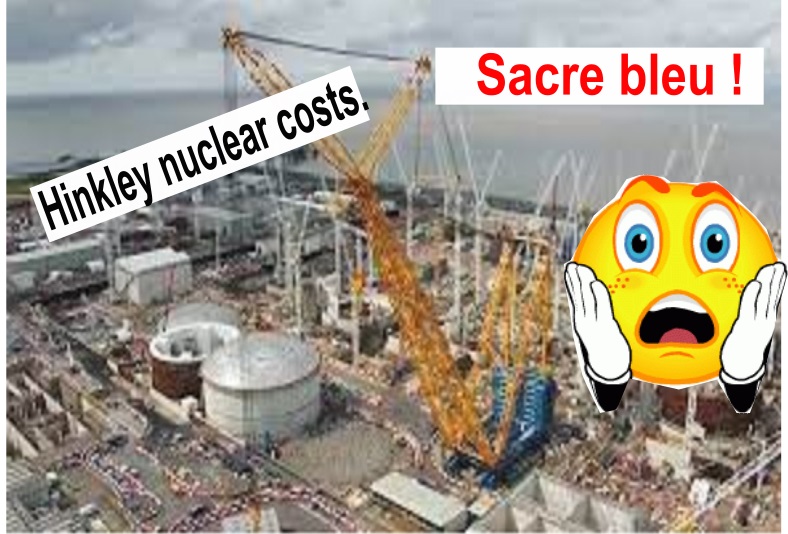
The estimated cost of building Hinkley has risen to as much as £47.9 billion in current terms, due in part to lingering labor shortages and supply chain issues. The first of the two reactors at the site is scheduled to become operational in 2030 — five years later than initially planned — under EDF’s base-case scenario.
Talks about financing Hinkley are at an early stage and may not result in a deal, the people said. Representatives for Apollo and EDF declined to comment………………… https://www.bnnbloomberg.ca/investing/2024/10/15/apollo-in-talks-to-partly-finance-edfs-hinkley-uk-nuclear-power-plant/
North Somerset MP objects to salt marsh at Kingston Seymour
North Somerset Times 16th Oct 2024
NORTH Somerset’s MP, Sadik Al-Hassan, objects to the creation of a salt marsh in the corner of his constituency, claiming his constituents are being “shut out of the conversation.”
The proposed salt marsh at Kingston Seymour, which sits on the boundary with the neighbouring Wells and Mendip Hills constituency, is one of four sites earmarked on the Severn Estuary by EDF as environmental mitigation measures for its construction of Hinkley Point C. The other sites include Littleton, Arlingham and Rodley………………………………………….. https://www.northsomersettimes.co.uk/news/24657962.north-somerset-mp-objects-salt-marsh-kingston-seymour/
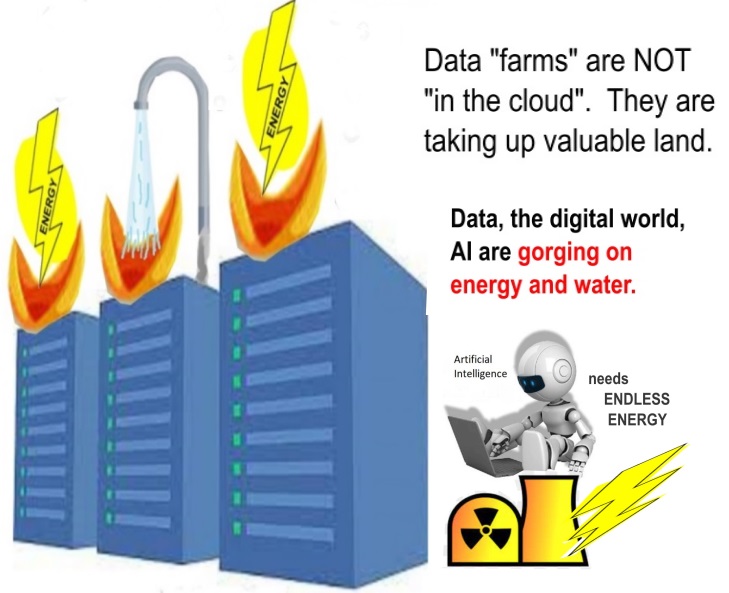
Small nuclear reactors won’t be ready in time for the needs of energy-guzzling needs of Artificial Intelligence.
As of last month, when [data centres] were classed as critical national
infrastructure, data centres are on a par with utilities, meaning the
government would step in were there a risk to connectivity. Nonetheless, as
Rohan Kelkar, the executive vice-president of power products at Schneider
Electric, puts it, the “lack of grid capacity puts UK’s AI and data
centre ambitions and energy transition goals at risk”.
So much so that we have seen the boroughs of Hillingdon, Ealing and Hounslow all rejecting
data centre projects in order to retain supply for housing. This is far
from a UK-specific issue. In Ireland, the pressure on the national grid
from computing needs is so acute they have had to pause some data centre
approvals over concerns that excessive demand from data centres could lead
to blackouts.
On the other side of the Atlantic, Big Tech companies are
also grappling with the energy conundrum: how to find low-carbon, reliable
sources of power for their power-hungry warehouses without jeopardising
customer needs or their net zero goals. Along with renewable energy and
improving battery storage, right now they all seem to be turning in one
direction: towards nuclear power. Microsoft signed a deal last month to
help resurrect a unit of the Three Mile Island plant in Pennsylvania.
Amazon bought a nuclear-powered data centre earlier in the year. On Monday,
Google became the latest to announce a nuclear energy deal to meet the
needs of its data centres, looking at mini reactors developed by a
Californian company.
A cocktail of technological innovation means this
could happen in the UK, too. Rolls-Royce, the engineer, is at the forefront
of developing mini reactors and is already having conversations with
operators in the UK about their use. While mini nukes would not have been
commercially viable in the past, now that demand for data centres has
jumped exponentially, their potential use has become more feasible. Another
key component in the future marriage of computing and nuclear power is that
data centres are becoming less location driven because of improvements in
latency, the time it takes for data to travel from one point to another.
The immediate problem with the introduction of small nuclear reactors?
Rolls-Royce estimates that they remain a decade or more away, with none
currently operating and generating electricity in the UK. In the meantime,
connection to the “constrained” grid, remains all-important headache
for those looking to build data centres.
Times 16th Oct 2024
Germany Dismisses Ukraine’s Demands for Taurus Missiles and NATO Membership
By Ahmed Adel, Global Research, October 14, 2024
Berlin has spurned two key demands that Ukrainian President Volodymyr Zelensky tried to “sell” during his European tour to promote his so-called Victory Plan: getting the green light for deep strikes into Russian territory (which would require German Taurus missiles, among others) and speeding up Ukraine’s accession to NATO, German media reported.
According to Bild, Zelensky had a packed itinerary that included a whirlwind tour of the UK, France, Italy, and Germany in a bid to garner Western support for his “Victory Plan.” However, the outlet emphasised that although German Chancellor Olaf Scholz did not give a categorical “no”, he did not respond positively to the Ukrainian requests.
Moreover, Bild said the chancellor’s talk about the promised “billions in aid for Ukraine” at a press conference with Zelensky was nothing more than a farce. This package does not include any new weapons since the amount and projects mentioned were, in fact, “already approved and financed last year.”
The outlet said Kiev’s hopes of obtaining more Leopard 2 tanks had been dashed despite the Bundeswehr (German Armed Forces) still having around 300 of the main battle tanks in its inventory. The same applies to infantry fighting vehicles and armoured howitzers. The decision comes as the German Defence Ministry does not believe that Kiev will be able to carry out a new counteroffensive in the near future, the sources told the newspaper.
“By the end of the year, with the support of Belgium, Denmark and Norway, we will deliver another package to Ukraine worth €1.4 billion,” Scholz announced on October 11.
According to him, the package includes IRIS-T and Skynex air defence systems, Gepard anti-aircraft guns, self-propelled artillery systems, armoured vehicles, combat drones and radars.
Germany, Ukraine’s second-largest military donor after the US, has so far provided (or planned) military assistance worth approximately €28 billion. However, according to the draft budget, it has halved its military aid to Ukraine for 2025 compared to this year.
Although Zelensky has long insisted that there can be no peace negotiations with the Kremlin and that Russian forces must be driven back to its pre-2014 borders, officials in Kiev reportedly realise this position is unrealistic. The leadership of the current Ukrainian administration is beginning to discuss the handover of territories claimed by Ukraine as part of a peace agreement with Russia, a high-ranking Ukrainian official admitted to a German magazine.
The unnamed source also expressed concern that Washington will cut its previously generous support for Ukraine no matter who wins next month’s US presidential election. The prospects of losing foreign military aid, which has prolonged the conflict so far, coupled with growing discontent in Ukrainian society, may explain Kiev’s shift in position from refusing to negotiate with Russia and its other irreducible demands.
However, the magazine warned that powerful figures in Ukraine still remain staunchly opposed to peace talks.
Kiev’s insistence on joining NATO is a major obstacle to efforts to resolve the Ukrainian conflict through diplomacy. In addition to recognising the Donetsk and Lugansk People’s Republics and the Zaporozhye and Kherson regions, Russia insists that Ukraine must remain neutral, non-nuclear and unaligned with any military bloc. The Kiev regime, which cancelled elections scheduled for this year and remains in power without being re-elected, is losing Western support and has been considering negotiating with Russia because of this………………………………….more https://www.globalresearch.ca/germany-dismisses-ukraine-demands-taurus-missiles-nato-membership/5870164
‘A catastrophically poor bargain for the UK’: Experts verdict on government plan for new nuclear finance
NFLA 14th Oct 2024
As Prime Minister Sir Kier Starmer meets world finance leaders today at the UK International Investment Summit, the Chair of the Nuclear Free Local Authorities has co-signed a letter sent to the Energy Secretary and government departments challenging plans to use the Regulated Asset Base model to finance future nuclear power plants.
The letter, drafted by the former Chief Statistician of the Scottish Office, has been endorsed by thirty high-level experts, comprising senior academics, former civil servants, nuclear regulators, citizen scientists and NGOs. It has been sent to Energy Secretary, Ed Miliband, and several Whitehall departments – the Energy Security and Net Zero Committee, the National Audit Office, the Public Accounts Committee, and the Comptroller and Auditor General.
14th October 2024
‘A catastrophically poor bargain for the UK’: Experts verdict on government plan for new nuclear finance
As Prime Minister Sir Kier Starmer meets world finance leaders today at the UK International Investment Summit, the Chair of the Nuclear Free Local Authorities has co-signed a letter sent to the Energy Secretary and government departments challenging plans to use the Regulated Asset Base model to finance future nuclear power plants.
The letter, drafted by the former Chief Statistician of the Scottish Office, has been endorsed by thirty high-level experts, comprising senior academics, former civil servants, nuclear regulators, citizen scientists and NGOs. It has been sent to Energy Secretary, Ed Miliband, and several Whitehall departments – the Energy Security and Net Zero Committee, the National Audit Office, the Public Accounts Committee, and the Comptroller and Auditor General.
Due to the inevitable huge costs and construction delays, the private sector is loath to finance new nuclear power projects; Sizewell C is struggling to find financial backers. Consequently, new plants can only be built with a significant public subsidy.
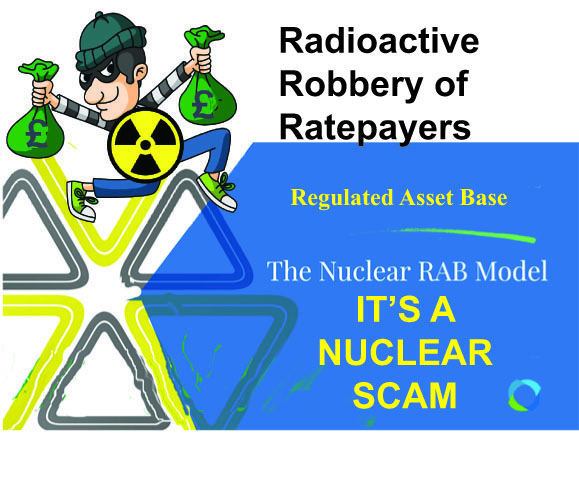
The latest subsidy mechanism to be adopted by the UK Government is the Regulated Asset Base model, in which an additional nuclear levy will be imposed on hard-pressed electricity consumers to make interim payments to developers of new nuclear projects to periodically offset their construction costs; this lifts the burden of rising costs and costly delays from the shoulders of developers and places this upon those of the customer. In so doing, not only is the project derisked for the developer, but the latter has less incentive to arrest costs or prevent delays because they know electricity consumers will have to meet them.
The experts have labelled RAB ‘a catastrophically poor bargain for the UK’.
The NFLAs have labelled RAB ‘ROB’, calling it daylight robbery and especially iniquitous when imposed upon the poorest and oldest customers. Many households are already struggling to pay huge, and rising, energy bills, and will be further burdened by a nuclear levy, and as new nuclear plants take so long to build many older customers are unlikely to be around to access any electricity from them.
In a response to a 2022 government consultation by the Business Department,[1] we denounced the proposal to impose a RAB levy on these groups, who are most vulnerable to cold and fuel poverty, and called for them to be exempted from the levy or promptly recompensed by the government if they are required to pay it.
14th October 2024
‘A catastrophically poor bargain for the UK’: Experts verdict on government plan for new nuclear finance
As Prime Minister Sir Kier Starmer meets world finance leaders today at the UK International Investment Summit, the Chair of the Nuclear Free Local Authorities has co-signed a letter sent to the Energy Secretary and government departments challenging plans to use the Regulated Asset Base model to finance future nuclear power plants.
The letter, drafted by the former Chief Statistician of the Scottish Office, has been endorsed by thirty high-level experts, comprising senior academics, former civil servants, nuclear regulators, citizen scientists and NGOs. It has been sent to Energy Secretary, Ed Miliband, and several Whitehall departments – the Energy Security and Net Zero Committee, the National Audit Office, the Public Accounts Committee, and the Comptroller and Auditor General.
Due to the inevitable huge costs and construction delays, the private sector is loath to finance new nuclear power projects; Sizewell C is struggling to find financial backers. Consequently, new plants can only be built with a significant public subsidy.
The latest subsidy mechanism to be adopted by the UK Government is the Regulated Asset Base model, in which an additional nuclear levy will be imposed on hard-pressed electricity consumers to make interim payments to developers of new nuclear projects to periodically offset their construction costs; this lifts the burden of rising costs and costly delays from the shoulders of developers and places this upon those of the customer. In so doing, not only is the project derisked for the developer, but the latter has less incentive to arrest costs or prevent delays because they know electricity consumers will have to meet them.
The experts have labelled RAB ‘a catastrophically poor bargain for the UK’.
The NFLAs have labelled RAB ‘ROB’, calling it daylight robbery and especially iniquitous when imposed upon the poorest and oldest customers. Many households are already struggling to pay huge, and rising, energy bills, and will be further burdened by a nuclear levy, and as new nuclear plants take so long to build many older customers are unlikely to be around to access any electricity from them.
In a response to a 2022 government consultation by the Business Department,[1] we denounced the proposal to impose a RAB levy on these groups, who are most vulnerable to cold and fuel poverty, and called for them to be exempted from the levy or promptly recompensed by the government if they are required to pay it.
Letter………………………………………………………………………………………………………. https://www.nuclearpolicy.info/news/a-catastrophically-poor-bargain-for-the-uk-experts-verdict-on-government-plan-for-new-nuclear-finance/
A nuclear kettle of fish at Hinkley Point C
Is a trawler’s worth of fish getting in the way of our nuclear
ambitions? Tali Fraser investigates something fishy going on around Hinkley
Point C. Among ministers of the last government, it is known as “the fish
disco”, and it is, they say, a cautionary tale that illustrates the
nation’s inability to build critical infrastructure.
The story centres on
the massive construction site on the Bristol Channel where EDF is building
the Hinkley Point C nuclear power station that is essential to meet the
nation’s future energy needs. Nuclear reactors need to be cooled – one
reason they are often based on the coast – but the intake of the water
poses a risk to fish. EDF’s initial solution included what they called an
“acoustic fish deterrent”, essentially a series of 280 underwater
speakers blasting a series of high-pitched sound pulses louder than a jumbo
jet. The company, however, has begun to argue that the deterrent, mockingly
dubbed “the fish disco” by former environment secretary Michael Gove,
is unnecessary and wants instead to mitigate the risk by other means.
Critics, however, say the company is reneging on a promise it made to win
planning consent because it wants to save cash (the cost of the deterrent
is estimated to run to the tens of millions of pounds).
Politics Home, 15th Oct 2024
https://www.politicshome.com/thehouse/article/fish-disco-hinkley-point-c-nuclear-energy
NATO Announces Nuclear Drills as Nobel Goes to Atomic Weapon Abolitionists

Disarmament advocate Beatrice Fihn stressed that the exercise is practice for “wiping out hundreds of thousands of civilians” with weapons that would also “flatten cities and poison survivors.”
Common Dreams, Jessica Corbett, Oct 11, 2024
The NATO military block announced Friday that its annual nuclear exercise is set to begin next week—news that arrived just as Japanese atomic bomb survivors who advocate for disarmament received the Nobel Peace Prize.
“There is bad timing, there is dropping a brick… and then there is this. Nice work,” the Geneva Nuclear Disarmament Initiative said in response to NATO Spokesperson Farah Dakhlallah on social media.
Dakhlallah shared a NATO statement explaining that “Steadfast Noon,” the two-week military drills scheduled to start Monday, will include 2,000 soldiers from eight air bases and more than 60 “nuclear-capable jets, bombers, fighter escorts, refueling aircraft, and planes capable of reconnaissance and electronic warfare” flying over western Europe……………………………………………
Beatrice Fihn, director of Lex International and a senior fellow at the United Nations Institute for Disarmament Research, stressed on social media Friday that NATO exercise is practice for “wiping out hundreds of thousands of civilians” with weapons that would also “flatten cities and poison survivors.”…………………………………………………………….. more https://www.commondreams.org/news/nato-nuclear-exercises?fbclid=IwY2xjawF72b9leHRuA2FlbQIxMQABHbdEtEt3u1G3K6vFGqSUwlo0GYYZISJscIk8fgwESepw2hUlLNbiSvjdcg_aem_mtsxSBbbl4fVS7RmjAzK_w
Open Letter to the Department for Energy Security -new nuclear power ‘a catastrophically poor bargain’.
1 Open Letter to the Department for Energy Security and Net Zero. Senior
academics, former civil servants, nuclear regulators, and NGOs write to
ESNZ, NAO, PAC, saying new nuclear power ‘a catastrophically poor bargain’………………………………………. signatures,
Bylines Scotland 14th Oct 2024
https://bylines.scot/environment/open-letter-to-the-department-for-energy-security-and-net-zero/
1 This Month
26 September – International Day for the Total Elimination of Nuclear Weapons





PLEASE OPPOSE HR 8255 AND S.3639 – bills would accelerate satellite deployment, with no environmental review or safeguards – https://ncstd5li.quorum.us/campaign/169331/
To see nuclear-related stories in greater depth and intensity – go to https://nuclearinformation.wordpress.com
-
Archives
- September 2026 (323)
- August 2026 (330)
- July 2026 (355)
- June 2026 (287)
- May 2026 (306)
- April 2026 (356)
- March 2026 (251)
- February 2026 (267)
- January 2026 (308)
- December 2025 (358)
- November 2025 (359)
- October 2025 (375)
-
Categories
- 1
- 1 NUCLEAR ISSUES
- business and costs
- climate change
- culture and arts
- ENERGY
- environment
- health
- history
- indigenous issues
- Legal
- marketing of nuclear
- media
- opposition to nuclear
- PERSONAL STORIES
- politics
- politics international
- Religion and ethics
- safety
- secrets,lies and civil liberties
- spinbuster
- technology
- Uranium
- wastes
- weapons and war
- Women
- 2 WORLD
- ACTION
- AFRICA
- Atrocities
- AUSTRALIA
- Christina's notes
- Christina's themes
- culture and arts
- Events
- Fuk 2022
- Fuk 2023
- Fukushima 2017
- Fukushima 2018
- fukushima 2019
- Fukushima 2020
- Fukushima 2021
- general
- global warming
- Humour (God we need it)
- Nuclear
- RARE EARTHS
- Reference
- resources – print
- Resources -audiovicual
- Weekly Newsletter
- World
- World Nuclear
- YouTube
-
RSS
Entries RSS
Comments RSS

