Start a Lasting Peace in Ukraine Now

Conflict Management, Demilitarization, Endangerment, Europe, NATO, Ukraine, World
By World BEYOND War, February 15, 2025, 2025, https://worldbeyondwar.org/start-a-lasting-peace-in-ukraine-now/
We are heartened to learn that the U.S. government is communicating with the Russian government, and are only sorry that such a basic step seemingly required a presidential election, when a glance at the Doomsday Clock ought to have been sufficient.
Having set the bar so low that speaking at all seems a tremendous accomplishment, we must nonetheless insist that the proper things be said, and be heard, and that they be followed with verifiable actions.
The popular demand in Western media that Ukraine be listened to in, and be part of, any negotiations should be applauded, but radically expanded. The president of Ukraine is severely violating the rights of the people of Ukraine to freedom of speech, freedom of assembly, conscientious objection, and the right to form political parties that represent their interests. He is preventing elections through the imposition of martial law. The nation of Ukraine is deeply divided in opinions, and those divisions often correspond with geographic locations. A majority of Ukrainians, according to polls — and despite crackdowns on speech that opposes warmaking — say they are open to peace negotiations that remove territory from Ukraine, something the President of Ukraine sides with a minority in opposing in the name of “democracy.” More Ukrainian voices than one should be at the negotiating table.
In fact, not everything should be decided at a single negotiating table. Disputed territories should be permitted to determine their own fates through public referenda, to be overseen by authorities acceptable to all interested parties. The options available to them should include limited or complete independence from any existing nation. Such autonomy is critical to achieving a lasting and sustainable peace, as well as for diminishing the risk of world-engulfing nuclear war, as well as to restore some dignity to a vocabulary that it has been rendered disreputable around the world through a gargantuan feat of hypocrisy — the vocabulary of “democracy,” “nonviolence,” and “rule of law.”
Also critical will be disarmament by all parties. And central to that must be restricting, if not scaling back, if not eliminating the reach of the world’s leading arms-dealing institution, NATO, which exists in gross violation of the United Nations Charter, and whose own rules forbid adding members without the uncoerced approval of all existing members. The acceptance of a neutral Ukraine outside of NATO would have prevented the war in the first place, according to countless authorities, including the then-Secretary General of NATO.
Peace negotiations in Ukraine would also be aided by, and in turn be of aid to, negotiations to take the steps recently promoted by the U.S. President, to cut military spending in half and get rid of nuclear weapons. These would be accomplishments worthy of the gratitude of all humanity.
Nuclear disarmament is required by law, and is readily available to negotiate or to begin unilaterally. When the United States engaged in unilateral disarmament under Presidents John F. Kennedy and George H.W. Bush, Russia quickly reciprocated. Negotiated multi-party disarmament has worked in the past and can work now — even more easily, given the extent to which surveillance technology has made cheating more difficult.
Of course, this agenda is at odds with President Trump’s demand for dramatically increased military spending, with the reconciliation legislation proposed in the U.S. Congress to dramatically increase military spending, with the ongoing U.S.-led nuclear arms race, with the new nuclear bombs being deployed by the United States in Europe, and with Trump’s penchant for threatening the use of nuclear weapons. We support the peace agenda and condemn the war agenda, regardless of them both coming out of the same mouth.
We also support the frequent expression of care for the lives of those being senselessly slaughtered in Ukraine and would like to see it acted on in Ukraine and applied equally to the rest of the world.
We also support the frequent expression of concern for not wasting money, yet — thus far — denounce the actions that have been defended by that rhetoric, as they have mostly been unlawful, immoral, destructive, and hypocritical. Trump was elected speaking against wars and corruption. We would like to cheer for the ending of wars and the targeting of corruption in its headquarters in the Pentagon — and we will do so the minute we see those things happen.
So Called Small Modular Reactors Would Be Nuclear Nightmares

Stanford-led research found that small modular reactors would exacerbate challenges of highly radioactive nuclear waste “We found that small modular reactors will generate at least nine times more neutron-activated steel than conventional power plants. These radioactive materials have to be carefully managed prior to disposal, which will be expensive.”
Note they took the word “Nuclear” out rather like the Geological Disposal Facility, lets not scare the horses!
Marianne Birkby, Radiation Free Lakeland 16th Feb 2025
There was an excellent letter in the Westmorland Gazette this week, a newspaper covering the South Cumbria area.
The letter from Philip Gilligan of South Lakeland and Lancaster District CND points out that the so called Small Modular Reactors would produce nuclear waste. This is true and bad enough but only tells part of the story. The waste from these new reactors would be far more dangerous than from existing reactors. Stanford-led research found that small modular reactors would exacerbate challenges of highly radioactive nuclear waste “We found that small modular reactors will generate at least nine times more neutron-activated steel than conventional power plants. These radioactive materials have to be carefully managed prior to disposal, which will be expensive.”
The study also found that the spent nuclear fuel from small modular reactors will be discharged in greater volumes per unit energy extracted and can be far more complex than the spent fuel discharged from existing power plants. Along with the increased radioactive wastes each site would require the presence of armed police from the Civil Nuclear Constabulary. As Noel Wauchope writes on the Australian Independent Media Network …
‘New Civil Engineer brought up a few points that have escaped notice, following the publication of the draft National Policy Statement for nuclear energy generation (EN-7) They note that; “Despite EN-7 being 64 pages, just two lines are dedicated to specifically addressing the security of SMRs.”
The new regulations for SMRs would allow for many new nuclear sites near communities.………… https://radiationfreelakeland.substack.com/p/so-called-small-modular-reactors
Starmer’s shortsighted push for more nuclear power.

So Starmer is going to sweep opposition aside in his shortsighted push for more nuclear power. Two good reasons why no nuclear power stations have been built since Sizewell B are the exorbitant cost and the impossibility of safe disposal of nuclear waste.
The nuclear industry is very good at promises, but poor on delivery. The size of nuclear power stations increased to get the savings of scale. We now see the nuclear industry rehashing technologies that were long abandoned because of cost or because the technology was too difficult.
Unbelievably, Sizewell C is progressing at pace and has been for two years, despite no investment decision having been made and an inadequate supply of water. We must not forget that the result of the inquiry recommended refusal of the development consent order application, but was overridden by the minister of state.
Arthur Stansfield
Wickham Market, Suffolk
Guardian 16th Feb 2025, https://www.theguardian.com/environment/2025/feb/16/starmers-nuclear-reactors-wont-be-small-cheap-or-popular
Secret terror blueprints for US NSC to ‘help Ukraine resist’ exposed.
The Grayzone, By Kit Klarenberg – February 15, 2025
Newly-leaked documents reveal a crew of military academics pitching the US National Security Council a series of extreme strategies for Ukraine, from IED’s inspired by Iraqi insurgents to sabotaging Russia’s infrastructure to propaganda “from ISIS’ playbook.”
Conceived under the auspices of the UK’s University of St. Andrews, the plans were outsourced through third parties to ensure “plausible deniability.”
Explosive leaked documents reviewed by The Grayzone show how a shady transatlantic collective of academics and military-intelligence operatives conceived schemes which would lead to the US “helping Ukraine resist,” to “prolong” the proxy war “by virtually any means short of American and NATO forces deploying to Ukraine or attacking Russia.”
The operatives assembled their war plans immediately in the wake of Russia’s invasion of Ukraine in February 2022, and delivered them directly to the highest-ranking relevant US National Security Council official in the Biden administration.
Proposed operations ranged from covert military options to jihadist-style psychological operations against Russian civilians, with the authors insisting, “we need to take a page from ISIS’ playbook.”
ISIS was not the only militant outfit upheld as a model for Ukraine’s military. The intelligence cabal also proposed modernizing IEDs, like those staged by Iraqi insurgents against occupying US troops, for a potential stay-behind guerrilla army in Russia, which would attack rail lines, power plants and other civilian targets.
Many of the cabal’s recommendations were subsequently enacted by the Biden administration, dangerously escalating the conflict and repeatedly crossing Russia’s clearly-stated red lines.
Included among the proposals were providing extensive training to “Ukrainian expatriates” in using Javelin and Stinger missiles, enabling “cyberattacks on Russia by ‘patriotic hackers’ with deniability,” and flooding Kiev with “unmanned combat air vehicles.” It was also foreseen that “replacement fighter aircraft” would be provided by “many sources,” and that “non-Ukrainian volunteer pilots and ground crews” would be recruited to fight air battles in the manner of the Flying Tigers, a World War II-era force composed of American Air Force pilots, which was formed in April 1941 to help the Chinese oppose Japan’s invasion before Washington’s formal entry into the conflict.
The document was written and cosigned by a quartet of academic armchair warriors with colorful pasts. They included historian Andrew Orr, the director of the University of Kansas Institute for Military History. His recent academic contributions include a chapter in an obscure academic volume entitled, “Who is a Soldier? Using Trans Theory to Rethink French Women’s Military Identity in World War II.”
Joining him was Ash Rossiter, assistant professor of international security at the United Arab Emirates’ Khalifa University, and described as “ex-British Army Intelligence Corps.” Also participating was Marcel Plichta, then a doctoral candidate at St. Andrews. He’s described as a veteran of the US Defense Intelligence Agency, and his LinkedIn profile indicates he interned at NATO before working in roles with Pentagon contractors, then joined the DIA as an intelligence analyst. Along the way, Plichta claims to have “[nominated] known or suspected terrorists to the national watchlisting and screening community.”
Also involved in the academic cabal was Zachary Kallenborn, a self-styled US Army “mad scientist” currently pursuing his PhD in War Studies at King’s College London, with a focus on drones, WMD, and other edgy forms of modern warfare. Kallenborn, who has moonlighted at the DC-based Center for Strategic and International Studies, contributed to the Ukraine war planning by offering proposals for Iraqi insurgent-style “smart” IED attacks on Russian targets, and planting bombs on Russian trains and railways.
The cabal appears to have been led by Marc R. DeVore, a senior lecturer at Britain’s St. Andrews University. Little about his personal or professional background can be ascertained online, although his most recent academic publications discuss military strategy. Around the time the secret proposal document was being drafted, he published an article with Orr for the Pentagon’s in-house Military Review journal entitled “Winning by Outlasting: The United States and Ukrainian Resistance to Russia.” Moreover, he is a fellow at the elite Royal Navy Strategic Studies Centre, a Ministry of Defence-run “think tank.”
Emails show DeVore passed the group’s handiwork directly to Col. Tim Wright, who was the Director for Russia in the Biden administration’s National Security Council (NSC) at the time the emails were sent, according to his LinkedIn profile. Since July 2022, Wright has been the Assistant Head for Research and Experimentation in the Futures Directorate of the British Army.
The Grayzone attempted to contact Orr, Rossiter, and Devore by phone and email in order to solicit comment about their role in proxy war scheme, and about whether St. Andrews University was aware it was being used as a base for planning terror attacks against Russia. None have responded to our requests.
Surging the Ukrainian diaspora to the front
…………………………………………………………………….. This diaspora, it was believed, could easily be identified and recruited due to their registration with Ukrainian “consulates or embassies” in the West, then given “intensive classes” in using “shoulder-launched missiles” before being dispatched to Kiev………..
“Volunteer cyber warriors” conceal state hacking
The quartet’s plans extended into the realm of cyberware, calling for “Western intelligence agencies” to “provide cyber tools and suggestions” to “volunteer hackers who want to strike their blow for Ukrainian independence, while also warning them what targets we do not want attacked.”
A “major task for these volunteer cyber warriors,” the four wrote, “could be to make certain that videos of Russian indiscriminate attacks, the use of objectionable weapons such as thermobarics, Ukrainian civilian casualties, Russian casualties and poor befuddled captured Russian conscripts” were made available to Russian audiences. Simultaneously, “patriotic hackers” could seek to bombard Russians with propaganda “about domestic opposition to the war.”
The intelligence cabal made clear they aimed to achieve the same psychological impact as the world’s most notorious terrorist organization, declaring, “we need to take a page from ISIS’ playbook in agilely communicating our message to Russians.”………………………………………………………………………………… more https://thegrayzone.substack.com/p/secret-terror-blueprints-for-us-nsc?utm_source=post-email-title&publication_id=474765&post_id=157234988&utm_campaign=email-post-title&isFreemail=true&r=4ds0bd&triedRedirect=true&utm_medium=email
Belgium’s oldest nuclear reactor shut down for good after 50 years
15 February 2025, https://www.belganewsagency.eu/oldest-nuclear-reactor-shut-down-for-good-after-50-years
The Doel 1 nuclear reactor was definitively shut down safely on Friday night, the Federal Agency for Nuclear Control (FANC) has confirmed. After 50 years of electricity production, Belgium’s oldest nuclear reactor, with a capacity of 445 megawatts, was disconnected from the high-voltage grid at 21.37.
The FANC said the operation was carried out in complete safety. “Technically, there is no difference from a temporary maintenance shutdown, except that the reactor will not be restarted to produce electricity,” it said in a press release.
A shutdown phase lasting approximately five years is now beginning, during which the fuel will be cooled in order to “significantly reduce the radiological risk to the environment”. The waste will also be removed and the pipes emptied and rinsed. Then the actual dismantling will begin, which could last up to 15 more years.
Lifespan extended
Doel 1 is the third reactor to be definitively decommissioned, after Doel 3 in 2022 and Tihange 2 in 2023. Tihange 1 will also be shut down in the autumn.
The shutdown phase for Doel 1 will be slightly different to that for the other reactors, as Doel 1 and 2 are “twin” reactors that share certain systems, such as the control room and the engine room. These parts will only be shut down when Doel 2 is definitively decommissioned on 30 November.
Belgium will then have only two active nuclear reactors: Doel 4 and Tihange 3. Their operating period has been extended by 10 years until 2035 and the new federal government hopes to extend them for another decade.
There really ARE necessary nuclear industry jobs – IN DEMOLISHING NUCLEAR REACTORS!

Dounreay to take on 23 new apprentices
One of Britain’s most complex environmental restoration projects is taking on 23 new apprentices.
Nuclear Restoration Services and Nuclear Decommissioning Authority 13 February 2025,
https://www.gov.uk/government/news/dounreay-to-take-on-23-new-apprentices
The decommissioning of the former centre of fast reactor research and development at Dounreay is continuing to create long-term opportunities for young people.
Applications are open for the next intake of apprentices, with 23 places in total available.
The apprenticeships are in engineering trades, engineering design, construction scaffolding, construction painting, business administration and project management, and vary in length from two years to four years.
The closing date for applications is 14 to 21 February, with start dates in August.
Dounreay’s operator, Nuclear Restoration Services, is also in the process of recruiting 9 health physics surveyor trainees.
Their 2-year training programme equips them with an NVQ Level 2 Diploma in Radiological Protection.
Dounreay also has 15 places this year for graduate recruitment. Applications for these posts closed on 6 January.
More information about the opportunities at Dounreay can be found at the site’s careers website at www.dounreaycareers.com.
Dounreay has a long and proud history of high-quality training for young people across a wide range of disciplines and I’m delighted we are able to continue this during the decommissioning phase of the site,
said Dave Wilson, managing director of NRS Dounreay.
The site is complex, its decommissioning is challenging and we can offer superb training and development opportunities at the cutting edge of science and engineering.
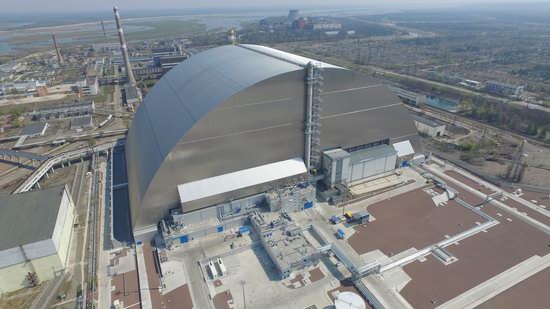
A drone pierced the outer shell of Ukraine’s Chernobyl nuclear plant. Radiation levels are normal
AP News 14th Feb 2025
CHERNOBYL NUCLEAR POWER STATION, Ukraine (AP) — A drone armed with a warhead hit the protective outer shell of Ukraine’s Chernobyl nuclear plant early Friday, punching a hole in the structure and briefly starting a fire, in an attack Kyiv blamed on Russia. The Kremlin denied it was responsible.
Radiation levels at the shuttered plant in the Kyiv region — site of the world’s worst nuclear accident — have not increased, according to the U.N. International Atomic Energy Agency, which said the strike did not breach the plant’s inner containment shell.
The IAEA did not attribute blame, saying only that its team stationed at the site heard an explosion and was informed that a drone had struck the shell.
Fighting around nuclear power plants has repeatedly raised fears of a nuclear catastrophe during three years of war, particularly in a country where many vividly remember the 1986 Chernobyl disaster, which killed at least 30 people and spewed radioactive fallout over much of the Northern Hemisphere.
The Zaporizhzhia nuclear power plant, which is Europe’s biggest, has occasionally been hit by drones during the war without causing significant damage……………………………………………………………………
Kremlin spokesman Dmitry Peskov denied Russia was responsible. “There is no talk about strikes on nuclear infrastructure, nuclear energy facilities. Any such claim isn’t true. Our military doesn’t do that,” Peskov said in a conference call with reporters.
It was not possible to independently confirm who was behind the strike. Both sides frequently trade blame when nuclear sites come under attack. https://apnews.com/article/russia-ukraine-war-chernobyl-zelenskyy-71d781dbd66754d0a548edd388f3447a
UK Government urged to scrap nuclear weapons ‘once and for all’
While our armed forces wrestle with two decades of cuts, the UK Labour Government is determined to waste more than £100 billion on nuclear weapons over the next decade.
By Lucy Jackson, Multimedia Journalist, The National 15th Feb 2025
THE UK Government has been urged to scrap its nuclear weapons arsenal “once and for all” amid concerns the country’s defence capability is in a “woeful state”.
It comes after a former head of the army urged Keir Starmer to commit to defence spending or “be consigned” to “the bin of history”.
Speaking on BBC Radio 4, ex-chief of the general staff Lord Dannatt said defence spending should rise to a 3.5% share of the economy.
The UK currently spends around 2.3% of gross domestic product on defence, a figure the UK Government wants to increase to 2.5%.
Dannatt said: “Unless Keir Starmer and Rachel Reeves can find ways of producing more money, well beyond 2.5%, towards 3% or 3.5% for starters on our defence budget, then this strategic defence review is going to be hollow, it’s going to be a failure and, frankly, it’ll consign Keir Starmer to the bin of history.
“Our military is so run down at the present moment, numerically and as far as capability and equipment is concerned, it would potentially be quite embarrassing.”
The SNP have backed calls for defence spending to be increased to at least 2.5%.
However, the party called for the UK Government to scrap its nuclear weapons defence enterprise “once and for all”.
The UK’s nuclear weapons arsenal is stored in Scotland at HM Naval Base Clyde, west of Glasgow. Submarines are based at Faslane, while nuclear warheads are stored, processed and maintained at the nearby Royal Naval Armaments Depot at Coulport.
The party’s Westminster defence spokesperson, Dave Doogan, said Britain’s defence capability was in a “woeful state”.
Doogan told The National: “As insecurity and conflict foment across the world, including here in Europe, the comments from Lord Dannatt are incredibly concerning and reveal the woeful state of Britain’s defence capability.
“While our armed forces wrestle with two decades of cuts, the UK Labour Government is determined to waste more than £100 billion on nuclear weapons over the next decade.
“With the UK’s nuclear weapon vanity obsession hanging like a millstone around our conventional forces’ budget, the Labour Government should for once do the right thing and scrap the defence nuclear enterprise once and for all.”……………………. https://www.thenational.scot/news/24938558.uk-government-urged-scrap-nuclear-weapons-once-all/
Green power- not for us?
Renew Extra 15th Feb 2025
The Social Market Foundation, a cross-party think-tank, says that 48% of UK survey respondents felt the ‘green transition’ was ‘happening to them, not with them’. And 63% thought it wouldn’t work anyway. Certainly there has been some opposition to some green polices, and there have been claims that Starmer’s plan to remove ‘infrastructure blockers’, for example local objectors to green energy projects like wind and solar farms, and the extra grid links needed for them, could backfire. Although Labours plans for ‘pushing past nimbyism’ and putting many new small nuclear plants around the country could also attract fierce local opposition. In this case, small isn’t green- indeed, as well as potentially costing more, SMRs may actually increase security, safety and waste management problem. Lots of issues there too then…………………………………………………………………………
…………………………………………………… for the present, wind, on and offshore, and solar, large and small, are by far the main contenders for UK power supply, with wind, now at 30% of UK power, already overtaking natural gas. That’s good news, but, as David Toke has noted, with heat supply still not seriously being addressed, if we really do want to get to net zero soon, then the pressure will be on to get all the existing renewable options expanding even more rapidly- along with storage. And, I would add, also getting inputs from new sources like tidal turbines as fast as possible. As well as paying proper attention to energy saving and energy efficiency- the cash and carbon saving option that few oppose, but sadly too few actually adopt. https://renewextraweekly.blogspot.com/2025/02/green-power-not-for-us.html
Starmer’s latest con job
The government’s nuclear power expansion plan is a hollow betrayal of working people that panders to wealthy corporations and will rip off consumers, writes LINDA PENTZ GUNTER

No nuclear reactor, small or otherwise, will ever be built in time, affordably or in enough quantities to address the climate crisis that is already upon us.
February 15, 2025,
https://morningstaronline.co.uk/article/starmer%E2%80%99s-latest-con-job
IS KEIR STARMER really so desperate to bask in the orange glow of omnipotence radiating from the monomaniacal US president that he feels compelled to parrot Donald Trump’s catchphrases?
Apparently yes. Starmer really did say “build, baby build.”
The context for this abhorrent utterance was his announcement that mini-nuclear power plants — known as small modular reactors — would proliferate across Britain until they are “commonplace.”
According to Starmer, they would be smaller and cheaper than current nuclear power plants. Those living near nuclear construction sites could be compensated for this inconvenience with lowered electricity rates. New reactors would be in place by 2032.
All of this is completely unsubstantiated by any shred of empirical evidence, but more on that in a moment.
Starmer’s “fast forward on nuclear” would, he claims, deliver a supply of good jobs as well as “homegrown power.” (If you are searching a UK map for the “homegrown” uranium mines that would supply the fuel for these reactors, keep looking.)
The restriction on building new reactors on existing nuclear sites is to be lifted so they could be built anywhere and everywhere and people who “hadn’t thought there’s going to be anything nuclear near me” will simply “get used to the idea of it,” Starmer said.
Oddly, the first new site doesn’t appear to be adjacent to Number 10 Downing Street.
The whole thing is of course a massive con that would, if such a plan ever materialised, dramatically raise electricity rates, further fleece taxpayers, impede real progress on climate by diverting money away from already available renewable energy solutions, and put countless communities in danger.

And of course, what will become of the radioactive waste these “small” reactors would still produce? A recent Stanford study found that small modular reactors will actually generate more radioactive waste than conventional nuclear power plants.
Unions should not be fooled. Promising jobs that will likely never materialise and would be better created immediately in industries such as renewable energy that are here now and have a long-term future, isn’t a boon to working people, it’s yet another betrayal.
Further, nuclear power, as the industry has itself demonstrated over and over, is the slowest and most expensive energy choice among the so-called low-carbon options.
No nuclear reactor, small or otherwise, will ever be built in time, affordably or in enough quantities to address the climate crisis that is already upon us.
Study after study shows that greater carbon emissions can be achieved far faster by investing the same amount in renewable energy instead of nuclear power.
The Starmer government is deliberately ignoring that to pander to big corporations rather than invest in the public good.
Nuclear power is in any case not low-carbon, and certainly not carbon-zero as the industry often brags.
The Hinkley Point C two-reactor site on the Somerset coast will have used between 200,000 to one million tons of steel by the time the two reactors are complete, according to various estimates, and will consume the equivalent electrical power of a small country.
Further, nuclear power, unlike the renewable energy industry, has demonstrated negative learning by actually becoming slower to build and more expensive over time.
In October 2021, Lazard, one of the world’s leading financial advisory and asset management firms, calculated that the average construction cost of a utility-scale photovoltaic plant in the US was £695 per kilowatt of generation capacity. A nuclear plant, it said, would cost around £8,185 per kilowatt — almost 12 times as much.
A Sussex University study looking at 180 nuclear construction projects around the world found that 175 of them took, on average, 64 per cent more time than anticipated with final costs 177 per cent higher than originally predicted.
Small modular reactor projects will be more expensive than conventional nuclear plants because, being so small, they have poor economies of scale, requiring massive upfront orders to make a factory producing them financially viable.
Small reactors also require an equally massive deployment in order to generate the equivalent amount of energy currently produced by large-sized reactors. It’s why the industry has rejected small modular reactors for decades.
Wealthy corporations such as Rolls-Royce, one of the companies eager to build small modular reactors in Britain, are not willing to shoulder any of this risk. But, under Starmer’s scheme, the high costs of new reactor development and construction will be passed on to consumers and taxpayers.
In fact, this is already in place. A new Regulated Asset Base (RAB) funding model came into force in the UK in May 2022. RAB incentivises private investment in new nuclear projects by charging consumers through their electricity bills — with no guarantee that the nuclear plant will ever be completed.
This is precisely the fate that befell ratepayers in South Carolina in the US, where a similar law is in place and where two planned reactors were abandoned in 2017, by which time ratepayers had paid £1,6 billion for reactors that would never deliver a watt of electricity.
The extent to which the nuclear choice is a bad deal for Britain was made plain back in 2020, when the UK Department for Business, Energy and Industrial Strategy estimated that a large-scale solar project targeted to become operational in the UK in 2025 would produce electricity with a levelised cost of £44 per megawatt hour. Its estimate for nuclear power was £102 per megawatt hour. (Levelising takes into account all variable costs from licensing, construction, operation and eventual decommissioning and waste management.)
No nuclear corporations — not even multibillionaire Bill Gates’s nuclear reactor company Terrapower — will build new nuclear plants without charging both consumers and taxpayers to do it. Gates has asked the US government — ie US taxpayers — to foot half of his project’s likely underestimated £3.2 billion cost.
As physicist MV Ramana points out in his new book Nuclear Is Not The Solution, corporations only embark on new nuclear projects “when the public can be made to bear a large fraction of the high costs of building nuclear plants and operating them, either in the form of higher power bills or in the form of taxes.”
Starmer’s aspirations of empire that would make little Britain “one of the world’s leaders on nuclear” are no more than a craven capitulation to Rolls-Royce and other corporations, which have been complaining for years that the process in place is too arduous and slow, with too many regulatory hurdles. (Let’s not forget that Rolls Royce is an integral part of Britain’s nuclear weapons complex. Late last month the company got a new £9bn eight-year deal to support Britain’s nuclear submarine programme, the most lethal destructive force on Earth. This is not a coincidence.)
Cue Starmer’s Nuclear Regulatory Taskforce announced with a brazen headline on the government’s own website: “Government rips up rules to fire-up nuclear power.”
The taskforce mandate is ostensibly to fast-track and streamline approval of new reactor design and development. But despite Starmer’s protestations that there would be “no compromise on safety,” the phrases “fast-track” and “streamline” are code for precisely that; safety shortcuts.
Ripping up the rules is exactly what this is about — the rules concerning safety. They were there for a reason, given nuclear power is the most lethal method yet discovered by which to boil water. And reducing safety oversight is a particularly dangerous drift given that none of the current small modular reactors — still effectively just drawings on paper — have proven safety records.
Indeed, quite the opposite. Whether they are based on miniature versions of the traditional pressurised water reactor, such as those being built at Hinkley Point C, or “fast reactors,” none are new designs and all have significant known safety flaws.
Even the US Nuclear Regulatory Commission, a willing industry lapdog, declined the design submitted by Oklo for its 15-50 megawatt Aurora micro reactor because the company could not answer fundamental safety questions.
“Oklo’s application continues to contain significant information gaps in its description of Aurora’s potential accidents as well as its classification of safety systems and components,” the NRC wrote.
That should be a warning for the British public who are not being asked but told by the Starmer government that they must accept a nuclear reactor in their community for the good of the country’s “energy security.”
This threat is perhaps the most sinister part of the entire new nuclear announcement. There will be no dissent. The Starmer government will “push past nimbyism,” “take on the blockers” and “break through” any line of resistance from MPs minded to prevent a mini-Chernobyl happening in their constituents’ backyards.
While his autocratic idol in Washington DC continues to fling out a daily stream of fascistic executive orders like a hippopotamus with diarrhoea, Starmer is seemingly striving to match him at every turn.
Whether it’s stripping pensioners of life-saving winter fuel allowances, keeping children in poverty by refusing to lift the two-child benefit cap, autocratically arresting peaceful protesters on climate or Palestine, or misleading the British public with false promises about nuclear power, Starmer is consistent in at least one regard: making one bad decision after another.
The new nuclear plan is a “great opportunity” for Rolls-Royce, a company so deserving it ranks as “among the best in the world,” crowed Starmer. Maybe he’s just looking for a shiny new car to go with those free designer suits and A-level crash pads?
Linda Pentz Gunter is a writer based in Takoma Park, Maryland, and the founder of Beyond Nuclear, a non-governmental anti-nuclear advocacy group.
Germany has no realistic way back to nuclear power.
Germany has no realistic way back to nuclear power, the vice-chancellor
and energy minister has said. In an interview with The Times, Robert Habeck
also said the country’s economic model was in jeopardy because it had
mistakenly clung on to 20th-century technologies and assumptions about
global politics.
The future of German energy is one of the most contentious
issues in the country’s Bundestag election, which will be held on
February 23. Costs rose dramatically after the Kremlin’s full-scale
invasion of Ukraine in 2022 forced Berlin to jettison its dependency on
Russian gas imports at the same time as it switched off its last three
nuclear power stations.
Habeck, 55, who is the Green party’s candidate
for the chancellorship and has presided over the sprawling energy and
economics ministry since the end of 2021, has faced heavy criticism and a
parliamentary commission of inquiry for refusing to extend the lifespan of
the remaining reactors in the midst of the crisis. The conservative
Christian Democratic Union (CDU), which is leading in the polls and is
likely to dominate the next government, has promised to look into reviving
nuclear power. The hard-right Alternative for Germany (AfD) has gone
further, pledging to bring the reactors back online “as quickly as
possible”.
However, Habeck said: “A return to nuclear energy is not a
realistic option. Nor do I know anyone in the energy industry who seriously
wants it.” Executives in the German energy sector, including the firms
that used to operate the reactors, broadly agree with Habeck that they have
passed the “point of no return”. Most German officials balk at the long
construction times and the costs, which according to one recent estimate
from the Fraunhofer institute in Munich would be anything from two to ten
times as expensive as the equivalent amount of wind power.
Times 12th Feb 2025 https://www.thetimes.com/world/europe/article/germany-wont-turn-back-to-nuclear-power-nobody-wants-it-9pdxfkqg2
Trouble at t’mill: local Councils rebel over nuke dump plan

The NFLAs have welcomed today’s statement made by the Leader of East Lindsey District Council that he shall recommend to his Executive that they ‘unanimously withdraw’ the council from the Theddlethorpe Community Partnership and the GDF process at their next meeting.
Coupled with the withdrawal of Millom Town Council from the South Copeland GDF Community Partnership and condemnation by Seascale Parish Council of the imposition of an Area of Focus for Mid-Copeland east of the village, this demonstrates that there is increasing disaffection amongst politicians with the process.
In his statement, ELDC Council Leader Craig Leyland cited the change of prospective site for a possible GDF surface facility from the former Theddlethorpe Conoco gas terminal to a 4km square parcel of farmland between the inland villages of Gayton le Marsh and Great Carlton. This he describes as prime agricultural land that has not had any previous industrial use and that is ‘nestling close to the Lincolnshire Wolds Area of Outstanding Natural Beauty’…………….
NFLA 12th Feb 2025,
https://www.nuclearpolicy.info/news/trouble-at-tmill-local-councils-rebel-over-nuke-dump-plan/
NFLAs endorse international appeal for justice over French nuclear tests
NFLA 13th Feb 2025
Sixty-five years ago (13 February 1960), the first French nuclear test was conducted in its colony of Algeria, exposing French soldiers and Indigenous Tuareg civilians to radiation.
The NFLAs have been campaigning for justice for veterans and local communities impacted by British atomic and nuclear bomb tests in Australia and the Pacific Islands, so in the spirit of solidarity we have joined UK and international partners in endorsing a similar appeal to the French and Algerian Governments over the impact of the ‘Gerboise Bleue’ (‘Blue Jerboa’) test and those which followed.
President Charles de Gaulle ordered a nuclear test in the first quarter of 1960. After a plan to explode a device in Corsica was prevented by public protests, the Nuclear Experiments Operational Group relocated to the Saharan Military Experiments Centre near Reggane in (then) French Algeria.
‘Gerboise Bleue’ (or ‘Blue Jerboa’) was the operational name for the first test of a series. The name combined a reference to one of the colours of the French flag with a rodent that resided in the Sahara Desert. On 13 February 1960, the plutonium bomb was detonated atop a 100-metre steel tower. No journalists were allowed on site, but an eyewitness account given to the French press stated that “the desert was lit up by a vast flash, followed 45 seconds later by an appreciable shock-wave” with “enormous ball of bluish fire with an orange-red centre” followed by a mushroom cloud.
Following the test, France followed the United States, the USSR and the United Kingdom as the world’s fourth nuclear armed power.
With a yield of 70 kilotons, ‘Gerboise Bleue’ was over three times more powerful than the Fat Boy plutonium bomb dropped on Nagasaki and the largest by far of the first test bombs used by any of the previous nuclear powers.
Following this test until 1966, France carried out a further three atmospheric nuclear tests and another thirteen underground tests as the ‘Gerboise’ series at this location.
The French treatment of test veterans and Indigenous communities mirrored that of the UK.
The French Ministry of the Armed Forces maintained that the radioactive effects on humans present at the site would be “weak”, and “well below annual doses.” However, test veterans said that protection gear was lacking and charged the military authorities with using them to study the effects of nuclear radiation on humans. After the later ‘Gerboise Verte’ test, soldiers were sent within 1 km of the hypocentre to practice combat exercises and to drive tanks, being subjected to high levels of radiation for three hours before being offered only a shower as a method to decontaminate.
After the tests, nuclear fallout was detected as far away as Senegal, Ivory Coast, Burkina Faso and Sudan. According to the French NGO, ACRO, Saharan dust blown northwards by strong seasonal winds to France in early 2021 carried measurable levels of radioactive caesium-137 attributable to the ‘Gerboise’ tests……………………………………………………………….. https://www.nuclearpolicy.info/news/nflas-endorse-international-appeal-for-justice-over-french-nuclear-tests/
Nuclear waste plan ‘would scar Lincolnshire Wolds’
BBC UK Sharon Edwards, Political reporter, Lincolnshire, 12th Feb 2025
A council is set to withdraw from talks to bury nuclear waste in the countryside.
Nuclear Waste Services (NWS), a government body, has earmarked an area near Louth, Lincolnshire, to build a disposal facility.
However, East Lindsey District Council (ELDC) leader Craig Leyland said the scheme would “scar” agricultural land, and a consultation process had served only to “antagonise and distress” residents.
NWS thanked the district council for taking part in the talks and said it would continue working with Lincolnshire County Council.
In 2021, the district council joined a community partnership group with NWS to examine a previous proposal to bury waste at a former gas terminal in Theddlethorpe, near Mablethorpe.
Last month, NWS announced it had moved the proposed location of the facility to land between Gayton le Marsh and Great Carlton.
But Leyland said the new proposal would “scar several kilometres of Lincolnshire farmland on the margins of the Lincolnshire Wolds”.
He also said the consultation process had “not been effective” and the council had not been given all the information it needed from NWS.
East Lindsey councillors will be asked to formally vote to withdraw from the consultation.
‘A key role’
The move will not automatically kill the plan, which requires “community consent” to go ahead, as NWS is still working with the county council……………………………
Lincolnshire County Council (LCC) remains in the process, but leader Councillor Martin Hill said the authority shared some of ELDC’s concerns about the new location…………………………….
https://www.bbc.co.uk/news/articles/cnvqljq77p0o
Safety Issues and Impact on Marine Environment of Extension of British Nuclear Plant Lifespan Queried by NGO

The Celtic League has noted that there was a previous review of a decision to extend Torness’s lifespan, after the discovery of cracks in the graphite bricks, which make up the reactor cores of some advanced gas-cooled power stations.
Afloat 12th February 2025, https://afloat.ie/resources/news-update/item/66295-safety-issues-and-impact-on-marine-environment-of-extension-of-british-nuclear-plant-lifespan-queried-by-ngo
The Celtic League NGO has queried the impact on the marine environment of the British government’s decision to extend the life of four old nuclear power plants.
It has also said that the decision is one that both the Irish and Manx governments should be concerned about, given the potential environmental impact.
Last month, French state-owned company EDF Energy said that the lifespan of Scotland’s last remaining nuclear power station and three other plants in England would be extended.
The company said that Torness, in East Lothian, and its sister site Heysham 2, in Lancashire, would continue generating for an extra two years until 2030.
Two other sites – Hartlepool and Heysham 1 – will continue for an extra year until 2027, it said, and it planned to invest £1.3bn (sterling) across its operational nuclear estate over the next three years.
The Celtic League has noted that there was a previous review of a decision to extend Torness’s lifespan, after the discovery of cracks in the graphite bricks, which make up the reactor cores of some advanced gas-cooled power stations.
Bernard Moffatt of the Celtic League has submitted a number of questions relating to safety to British Chief Nuclear Inspector Mark Foy at the Office of Nuclear Regulation, and says it will publish any response it receives.
1 This Month
26 September – International Day for the Total Elimination of Nuclear Weapons





PLEASE OPPOSE HR 8255 AND S.3639 – bills would accelerate satellite deployment, with no environmental review or safeguards – https://ncstd5li.quorum.us/campaign/169331/
To see nuclear-related stories in greater depth and intensity – go to https://nuclearinformation.wordpress.com
-
Archives
- September 2026 (313)
- August 2026 (330)
- July 2026 (355)
- June 2026 (287)
- May 2026 (306)
- April 2026 (356)
- March 2026 (251)
- February 2026 (267)
- January 2026 (308)
- December 2025 (358)
- November 2025 (359)
- October 2025 (375)
-
Categories
- 1
- 1 NUCLEAR ISSUES
- business and costs
- climate change
- culture and arts
- ENERGY
- environment
- health
- history
- indigenous issues
- Legal
- marketing of nuclear
- media
- opposition to nuclear
- PERSONAL STORIES
- politics
- politics international
- Religion and ethics
- safety
- secrets,lies and civil liberties
- spinbuster
- technology
- Uranium
- wastes
- weapons and war
- Women
- 2 WORLD
- ACTION
- AFRICA
- Atrocities
- AUSTRALIA
- Christina's notes
- Christina's themes
- culture and arts
- Events
- Fuk 2022
- Fuk 2023
- Fukushima 2017
- Fukushima 2018
- fukushima 2019
- Fukushima 2020
- Fukushima 2021
- general
- global warming
- Humour (God we need it)
- Nuclear
- RARE EARTHS
- Reference
- resources – print
- Resources -audiovicual
- Weekly Newsletter
- World
- World Nuclear
- YouTube
-
RSS
Entries RSS
Comments RSS

