Could Poland and Germany acquire nuclear bombs?
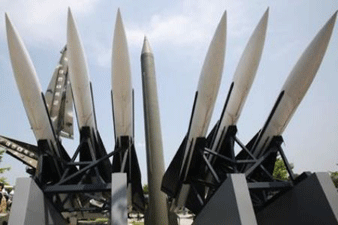
A proposal to place US atomic weapons in Poland could lead to Poland and Germany having nuclear weapons stationed.
Poland’s outgoing head of state has appealed to President Trump to
station American atomic weapons on Polish territory as a close-range
deterrent against Russia. The rift between the US and Europe has opened up
a broad debate about how to shore up Nato’s nuclear deterrence.
Germany’s probable next chancellor has expressed an interest in sharing
France or Britain’s arsenal. Poland, however, remains one of the most
staunchly Atlanticist members of the alliance and is seeking to use its
good standing with the Trump administration to keep the US on side.
Times 14th March 2025,
https://www.thetimes.com/world/russia-ukraine-war/article/nuclear-bombs-poland-germany-weapons-3pwvwdwhz
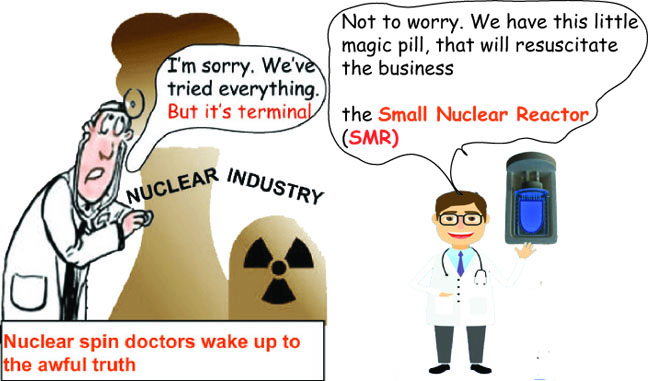
Great British Nuclear explains how it will mitigate risks to SMR programme.
13 Mar, 2025 By Tom Pashby
Great British Nuclear (GBN) has explained how it plans to overcome the key risks to the small modular reactor (SMR) programme is it running and that it plans to establish of SMR development companies (DevCos) to take the projects forward.
The updates were shared in its inaugural 2024 Annual
report and accounts for the 2023/2024 financial year.
It is assumed that GBN will select two vendors to deliver one SMR each, but this was recently
called into question by sources speaking to the Telegraph who said the
chancellor may cut spending at GBN as part of the Spending Review which is
due on 11 June 2025. GBN chief executive officer Gwen Parry-Jones said:
“The UK’s nuclear sector has had some well-documented challenges, ones
that GBN has been set up to navigate.” She did not spell out the
challenges.
“SMRs have not yet been deployed anywhere at scale and their
first-of-a-kind (FOAK) nature presents unique considerations and complex
challenges for us to overcome.” She reassured, however, that she is
“committed to ensure that GBN is an adaptable and resilient organisation
that is flexible and evolves as conditions change, but with our eyes always
firmly fixed on the future to deliver our long-term mission and value for
the UK”.
The report lays out the “principal risks” which GBN believes
the SMR programme faces, along with “key mitigation measures”. The
risks are centred around technology maturity, the ambitious programme
timeline, resourcing, funding and financing, stakeholder alignment,
‘contractual and procurement complexity’, site readiness and cyber
threat.
On technology maturity, it said: “Due to the first of a kind
(FOAK) nature of the technology, providers may not be able to meet
strategic objectives, including timely delivery, value for money and
obtaining regulatory approval. “This may delay approval timelines, affect
project milestones or cause an SMR project to fail.” It says that the SMR
competition that it is running will assess the technologies and mitigate
this risk. However, it also reveals that it will retain the option of, in
addition to the SMR competition winners, selecting a “reserve contractor,
to provide contingency against one provider failing to meet agreed
standards”.
GBN lists four other mitigations, including stating it could
or would provide “predetermined exit points” from projects “should a
project exceed cost estimates or timelines stretch beyond acceptable
parameters”. Regarding risk relating to “funding and financing”, it
says: “GBN’s available funding may be insufficient to resource and
deliver the programme to the planned timetable, e.g. should a change arise
from any change in government policy or in its budgetary priorities.
“A reduction in funding could also be triggered by market conditions or
external events such as an external nuclear event affecting public
sentiment towards nuclear safety.
New Civil Engineer 13th March 2025, https://www.newcivilengineer.com/latest/great-british-nuclear-explains-how-it-will-mitigate-risks-to-smr-programme-13-03-2025/
NATO-Russia Ukrainian War Ceasefire: To Be Or Not To Be?
RUSSIAN and EURASIAN POLITICS, by Gordonhahn, March 14, 2025
On March 13th Russian President Vladimir Putin stated Moscow is open to a ceasefire leading to peace treaty talks, generally speaking. However, he stressed tghat there are “nuances” that need to be addressed before any ceasefire agreement could be concluded. The ‘nuances’ were really counteroffers made for practical reasons but also having the effect of returning the ball to the US-Ukrainian court, paraphrasing US Secretary of State Marco Rubio’s assertion after the Ukrainians’ agreement to a ceasefire that ‘the ball is now in Moscow’s court.’
Highlighting what is or was missing from the American proposal to his knowledge at the time he was speaking (before meeting with US envoy Steven Witkoff, Putin said the issues in need of resolution are: (1) the remaining Ukrainian troops in Kursk, Russia; (2) Ukraine’s military mobilization and training of those mobilized; (3) arms sales to Ukraine; and (4) verification of any ceasefire covering the long ‘line of contact’ or frontlines needed to be resolved (http://kremlin.ru/events/president/news/76450). The first issue is being resolved by the Russian army which has re-taken Sudzha and probably will have killed, captured, or pushed all Ukrainian troops out of Kursk Oblast within a week or so.
…………………………………………………..Putin’s public statements probably reflect what were communicated to U.S. negotiator Steven Witkoff more as requirements or conditions before any Russian agreement to a ceasefire. Pressing Kiev to halt mobilization and training, puts Zelenskiy in a difficult position, and Washington and or Kiev will likely respond that if Kiev is required to halt these activities, then Moscow must halt them or something analagous. This will highlight the coercive, violent aspect of what Ukrainians call ‘Ze-mobilization’—‘Ze’ referring to Zelenskiy.
…………………………….At the same time, the U.S. weapons to be supplied to Kiev are numbered. The Ameerican-Ukrainian statement on the ceaefire agreement declares that the U.S. “will immediately lift the pause on intelligence sharing and resume security assistance to Ukraine” (www.state.gov/joint-statement-on-the-united-states-ukraine-meeting-in-jeddah/).
……………………..Trump has not and may not use PDA to support in Ukraine in future, perhaps depending on Kiev’s willingess to negotiate, despite the inherent contradiction in demanding peace talks while supplying weapons. For Ukraine, this is a contradiction with an opportunity: to drag out talks while it rearms its forces along the contact line.
Not surprisingly then, Russian officials have repeatedly stated they will not accept a ceasefire agreement and will continue fighting until a full-fledged peace agreement is reached. Their previous rejections of any ceasefire were precisely based on Russians’ suspicion that any pause in the fighting will be used to halt Russia’s mounting offensives, rearm Ukraine, and then resume the war with Kiev’s forces in a more robust state.
……………………… Putin may find his political position weakened in comparison with more hardline elements if seen as having fallen again for a another Western deception. This means he cannot accept continued arms supplies to Ukraine during a ceasefire.
……………………………………………………………………..Putin understands negotiating the details and mechanisms for implementing the ceasefire likely will take months. Meanwhile Russian troops can complete the process of expelling Ukrainian troops from the areas which the latter hold in at least two (Luhansk and Donetsk) of the four Donbass regions claimed by Russia and extending areas it holds in other Ukrainian regions. While these and Crimea are settled issues militarily and in terms of sovereignty—they are Russian; Kiev will not win them back for decades, a century, if ever.
The situation with regard to the other two Russia-annexed but still not fully taken regions – Kherson and Zaporozhe’ – is more fluid. Russian forces control less than half of each’s territory and will have an extraordinarly difficult time seizing their capitol cities of the same name. Thus, the negotiations on territories, which, accordoing to Trump was under discussion at Riyadh with the Ukrainians, is likely to center around a possible trade with Moscow withdrawing its troops from areas it occupies in regions outside the four regions it claims for the remainder of the territory of the claimed regions still not held by Russian troops most likely in Kherson and Zaporozhe. All of this will be incredibly difficult to navigate politically, particularly for Zelenskiy and Ukraine. Moreover, it is unlikely that Kiev has more than half a year before the collapse begins of one or more of the following: the entire front, army, oligarch-neofascist Maidan regime, and Ukrainian state.
Now we get to the most disconcerting fact hanging over the ceasefire endeavor. It was hinted at by Putin’s raising the vexing issue of verifying and monitoring the ceasefire……………………………………………………….. it will be a long, rocky road before any agreement is achieved, and failure could lead to an explosive doubling down on the disastrous NATO-Russia Ukrainian War and the destructive chaos of our new multipolar world. https://gordonhahn.com/2025/03/14/nato-russia-ukrainian-war-ceasefire-to-be-or-not-to-be/
Labour’s arms exports to Israel exposed Labour allowed dozens of arms exports to Israel after weapons sanctions
Keir Starmer’s government has continued to approve arms exports to Israel even after some licences were suspended in September
UK trade department approved 34 military export licences to Israel in the two months since David Lammy announced a partial arms embargo, new data shows.
DECLASSIFIED UK, JOHN McEVOY, 12 December 2024
Labour government hasn’t completed a review on Israel’s compliance with international humanitarian law since July
Foreign Office has not asked to see footage from RAF spy flights over Gaza, which could provide evidence of Israeli war crimes
“No particular appetite” to restrict exports of F-35 components to Israel, even as minister admits US government can track whether British-made spare parts are being sent to Israel
Trade committee chairman warned ministers he was “not convinced” that F-35 carve-out complied with UN arms trade treaty.
Keir Starmer’s government has continued to approve arms exports to Israel even after some licences were suspended in September, it can be revealed.
31 “standard” and three “open” licences for military goods have been issued to Israel since 2 September, when UK foreign secretary David Lammy announced partial restrictions on arms sales to Israel.
Those items included “components for trainer aircraft” and “commercial aircraft” which were “not assessed to be used in relation to current military operations in Gaza”.
However, training aircraft can still be used to instruct Israeli pilots on how to conduct offensive operations in Gaza.
35 “standard” and six “open” licences were also approved for items classed as “non-military” such as telecommunications equipment and imaging cameras.
The UK government refused to issue a further 18 licences to Israel for “components for combat aircraft and naval vessels, as well as components for targeting and radar equipment”.
The information is contained in new data released this week on an “ad hoc” basis by Britain’s trade department in response to “significant parliamentary and public interest” in the issue.
The data was evaluated at parliament’s trade committee on Tuesday, during which ministers admitted that the UK government has still not determined whether Israel’s bombing of Gaza amounts to a violation of International Humanitarian Law (IHL).
The committee was told that the UK government has not updated its assessment on Israel’s compliance with IHL since 31 July, some four and a half months ago. Previous assessments have taken less than half that time to finalise.
One minister further confirmed that there was “no appetite” for stopping the export of F-35 fighter jet components for use by Israel, despite concerns that this breaches Britain’s legal obligations.
It comes days after Amnesty International accused Israel of committing a genocide in Gaza and warned the UK to “immediately suspend the direct and indirect supply, sale or transfer, to Israel of all weapons” in order to “stop fuelling violations of international law”………………………………………………………………………………………….
more https://www.declassifieduk.org/labour-allowed-dozens-of-arms-exports-to-israel-after-weapons-sanctions/
The nuclear industry continues to infiltrate education.

COMMENT. Well, there will always be a need for workers to shut down this poisonous industry, and deal with the radioactive trash
1 Future innovators with the ‘Evolve’ work experience programme. Sellafield Ltd invites Year 10 learners with an interest in robotics and
artificial intelligence (AI) to participate in the ‘Evolve’ work
experience programme. So far, more than 100 students have been involved in
Evolve, with participants currently coming from 11 different schools in
West Cumbria, as well as home-educated learners. This 5-day programme takes
place on selected weeks throughout the year and aims to equip students with
essential skills for their future careers.
Sellafield Ltd, 13th March 2025,
https://www.gov.uk/government/news/future-innovators-with-the-evolve-work-experience-programme
WSJ’s Chief Foreign Correspondent Declares It’s Over For Ukraine In Kursk
by Tyler Durden, Thursday, Mar 13, 2025, https://www.zerohedge.com/geopolitical/ukraine-losing-its-trump-card-key-kursk-town-liberated-russian-troops
It’s a major turning point in the conflict when the Chief Foreign-Affairs Correspondent for The Wall Street Journal declares that Ukrainian forces are now in a full-on withdrawal from Russia’s Kursk amid rapid Russian gains…
Reuters too is reporting that Ukrainian forces are losing in Kursk:
Ukrainian troops appeared on the point of losing their hard-won foothold inside Russia’s Kursk region on Wednesday as Moscow claimed further advances there and military bloggers on both sides said Kyiv’s forces were withdrawing.
Ukraine sprang one of the biggest shocks of the war on August 6 last year by storming across the border and grabbing a chunk of land inside Russia, boosting citizens’ morale and gaining a potential bargaining chip.
There are no more cards to play, as Trump put it last month while hosting Zelensky at the White House, and now this assessment proves truer than ever.
Ukraine is losing the little bit of leverage it might have had left amid discussions toward preparing negotiations with Moscow. Russia’s Kursk is now fast being retaken, and Ukrainian forces are folding, as on Wednesday Russian troops raised their flags over the key town of Sudzha .
The central square of the town in the southwestern Kursk region was scene of where Russia’s Airborne Troops published a short aerial video showing soldiers unfurling a Russian flag as well as military unit banners. Other state media outlets subsequently featured the footage. Newsweek has underscored that Ukraine is fast “losing its trump card.”
Moscow has been focusing its forces on to regaining control around Sudzha in recent days, having retaken 12 settlements in the border region earlier this week.
Fighting is said to still be ongoing, but Moscow forces have asserted control over the center. Ukrainian media also acknowledges the following:
Russian troops have launched an offensive on the Ukrainian-controlled town of Sudzha in Russia’s Kursk Oblast, entering the settlement, the DeepState monitoring group, the Institute for the Study of War (ISW), and the Russian state news agency TASS claimed on March 12. Fighting in the town is reportedly ongoing.
…According to DeepState, Russian forces have entered the eastern part of Sudzha and are entrenching their positions. TASS published purported drone footage claiming that Russian troops had entered the town center and raised a Russian flag.
War bloggers have been closely monitoring the fight for control of Sudzha, with Ruslan Leviev of the war monitor Conflict Intelligence Team describing that Ukrainian troops have been in steady retreat from the entire region.
“We’ve seen that all the areas coming under Russian control have been taken with little to no resistance. The same goes for Sudzha,” Leviev said. “Today, we’re seeing them on the opposite side [of the town]. And again, there are no images of any fighting.”
“At this point, it’s fair to say that the entire city of Sudzha is now under Russian control,” he described of the ground situation.
While months ago Ukrainian forces occupied several hundred square kilometers of Russian territory in Kursk region, as of Wednesday that control has shrunk to less than 200 square kilometers (77 square miles), according to the Ukraine-military linked DeepState war tracker.
Video said to be from on the ground in Russia’s Sudzha, including interviews with elderly Russians that stayed the whole time:
Recall that in the late last month famous Oval Office blow-up involving Trump, Zelensky, and J.D. Vance – Trump told the Ukrainian leader: “You don’t have the cards right now.”
That now appears truer than ever, at a moment the Russians are studying the new US-Ukraine proposal for a 30-day truce in order to jump-start direct negotiations to end the war.
EDF’s salt marsh plans pause met with ‘great relief’ on either side of the Severn
By Carmelo Garcia – Local Democracy Reporter, Gloucester News Centre 11th March 2025
Villagers on both sides of the Severn are relieved EDF has shelved their controversial plans to create salt marshes which were linked to the construction of nuclear power plant Hinkley Point C.
EDF had drawn up the environmental schemes as an alternative to their plan to install an acoustic fish deterrent system at Hinkley Point C in Somerset to scare fish away from the site as the Bristol Channel is home to numerous species such as eels, herring, salmon and sprats.
However, the plans to create salt marshes were met with strong opposition at Arlingham, Rodley near Westbury-on-Severn in Gloucestershire and at Littleton-upon-Severn in South Gloucestershire and Kingston Seymour in Somerset.
And now the energy firm says he plan to install an acoustic fish deterrent system is back on thanks to new innovative technology.
This has been met with relief in communities on both side of the Severn. Councillor Richard Maisey (L, Severn), who represents Arlingham on Stroud District Council said the residents are happy with the outcome.
He attended the public meeting held in the village regarding the proposals last year and said the news has been met with “great reliel”.
“The general feeling is happiness that it doesn’t appear to be going ahead,” he said.
“They haven’t totally written it off but they have indicated it is not their intention to proceed.”………………………………………………………. https://gloucesternewscentre.co.uk/edfs-salt-marsh-plans-pause-met-with-great-relief-on-either-side-of-the-severn/
Fukushima Remembered At URENCO’s Uranium Enrichment Plant Today in Cheshire
Campaigners gathered today at the UK’s uranium enrichment plant to
remember Fukushima and hand over a letter of concern about uranium
enrichment. Today marks the 14th anniversary of the Fukushima catastrophe.
On March 11, 2011, a record 9.0-magnitude quake struck off the coast of
Japan’s Tohoku region, triggering a tsunami with waves that reached a
maximum height of 40.5 meters and causing a triple nuclear meltdown at the
Fukushima No.1 nuclear plant.
Radiation Free Lakeland 11th March 2025, https://mariannewildart.wordpress.com/2025/03/11/fukushima-remembered-at-urencos-uranium-enrichment-plant-today-in-cheshire/
At Haverigg Today – the Nuclear LIE of a “Safe” and “Secure” Sub-Sea Nuclear Dump.
The sub-sea area involved would be 26 to 50 km square. The “smaller” area proposed would be the size of Tuvalu at 26 km square. There are hundreds (if not thousands) of ongoing research projects into, for example, the release of radioactive gases, how the heat generated would impact the geology, the steel containments and the bentonite backfill.
These ongoing research projects throw up more questions regarding the safety of long term containment. Nuclear Waste Services are asking locals who are now in reciept of nuclear dump community funds, to express support for an experiment. An experiment which will impact their health and the environment for generations to come. Those who are not “local” who would also be impacted are deliberately excluded from “having a say.”
EDF unveils fresh details on new fish deterrent technology to be used at Hinkley Point C
An alternative acoustic fish deterrent (AFD) system is being proposed for
the Hinkley Point C nuclear power station near Burnham-On-Sea to end a
bitter row over some of the site’s environmental measures.
The move sees EDF, which owns the nuclear power site, drop the controversial idea to
create new salt marshes along the Severn Estuary rather than fit AFDs to
the station’s water intake turbines. The company had been applying to the
Environment Agency for permission to not fit AFDs due to the high cost and
the danger for divers involved in fitting them in the fast-flowing tides
and poor visibility of the Bristol Channel.
Now, Hinkley C stakeholder relations head Andrew Cockcroft has said an innovative new form of AFD could be used. Mr Cockcroft said it was EDF’s preferred solution to the
issue of deterring fish from swimming too close to the Hinkley intakes and
being sucked in. He told Burnham-On-Sea.com: “The technology, pioneered
in the South West, is proven and deployed internationally.” “We are now
working with experts to provide the scientific data to underpin the case
for using it at Hinkley Point C.”
“We have received positive feedback
from environmental groups and this option is now our preferred solution
rather pursuing salt marsh creation.” Andrew Cockcroft adds that all salt
marsh design and development would be paused while work continues in 2025
to prove the effectiveness of the new AFD system. The new AFDs are already
used in fishing fleets around the world, with the technology using
electronic transducers to target specific fish species with high-frequency
sound.
Burnham-on-Sea.com 9th March 2025, https://www.burnham-on-sea.com/news/edf-unveils-fresh-details-on-new-fish-deterrent-technology-to-be-used-at-hinkley-point-c/
Councillors oppose nuclear dump site near Louth
‘Six more communities are now facing this devastation
By Peter Craig, Reporter, 10 Mar 25
Councillors have voted to oppose a nuclear dump site near Louth. East
Lindsey District Council want to persuade Lincolnshire County Council to do
the same and say NO to the proposed 1,000 acre site at Great Carlton.
Grimsby Telegraph 11th March 2025, https://www.grimsbytelegraph.co.uk/news/grimsby-news/councillors-oppose-nuclear-dump-site-10001353
Turbine, cooling: these unforeseen events that keep the Flamanville EPR at a standstill.
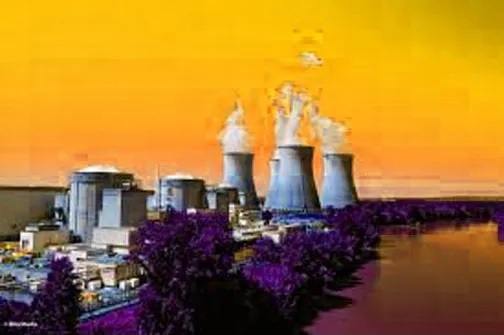
EDF is extending an unscheduled shutdown of the Flamanville EPR until the end of March in order to make adjustments to the turbine. During its first 100 days of operation, the nuclear reactor will have undergone 76 days of maintenance.
By Amélie Laurin, March 6, 2025
EDF had warned: the ramp-up of the Flamanville EPR, the first nuclear reactor to be commissioned in France in twenty-five years, would be very gradual. The public group has once again shut down, for a month and a half, its Normandy pressurized water reactor, which had been connected to the electricity grid on December 21, the first day of winter.
These maintenance operations were not planned and are the result of technical difficulties. They began on February 15 and are due to continue until March 30, after being extended three times.
Turbine heating
This work follows two initial suspensions of electricity production at Flamanville, between Christmas and mid-January, and at the turn of February. Two shutdowns that were, themselves, scheduled. In total, the reactor will have been immobilized for 76 days, during its first 100 days of operation.
The cause: various technical adjustments. In mid-February, the EPR stopped producing electrons due to an insufficient water flow in the seawater cooling circuit, which is only used “in exceptional situations”. This was followed by an intervention “on a temperature probe of the main circuit”, specifies a regulatory press release.
More Guns, Less Butter: Starmer’s Defence Spending Splash

To pursue such rearmament, Starmer has decided to take the axe to the aid budget,
March 8, 2025 Dr Binoy Kampmark, https://theaimn.net/more-guns-less-butter-starmers-defence-spending-splash/
The urge to throw more money at defence budgets across a number of countries has become infectious. It was bound to happen with Donald Trump’s return to the White House, given his previous insistence that US allies do more to fatten their own armies rather than rely on the largesse of Washington’s power. Spend, spend, spend is the theme, and the UK Prime Minister Keir Starmer has shown himself willing to join this wasteful indulgence.
On February 25, just prior to his visit to Washington, Starmer announced that spending on defence would reach 2.5% of GDP from April 2027. In the next parliament, it would rise to 3%. “In recent years,” states a UK government press release, “the world has been reshaped by global instability, including Russian aggression in Ukraine, increasing threats from malign actors, rapid technological change, and the accelerating impacts of climate change.”
Almost predictably, the term “Cold War” makes its retro appearance, with the spending increase the largest since that conflict of wilful misunderstandings and calculated paranoia. Russia figures prominently, as do “malign actors” who have burdened “the working people of Britain” with “increased energy bills, or threats to British interests and values.”
The governing Labour Party has also gone a bit gung-ho with the military–industrial establishment. In an open letter reported by the Financial Times, over 100 Labour MPs and peers thought it wise that ethical rules restricting investment by banks and investment firms in defence companies be relaxed. Financial institutions, the letter argues, should “rethink ESG [environmental, social and governance] mechanisms that often wrongly exclude all defence investment.” It was also important to address the issue of those “unnecessary barriers” defence firms face when “doing business in the UK.” Among such barriers are those irritating matters such as money laundering checks banks are obliged to conduct when considering the finance needs of defence and security firms, along with seeking assurances that they are not financing weapons banned under international law.
That these uncontroversial rules are now being seen as needless barriers to an industry that persists in shirking accountability is a sign of creeping moral flabbiness. Across Europe, the defence and arms lobbyists, those great exploiters of fictional insecurity, are feeling more confident than they have in years. They can rely on such figures as European Commission President, Ursula von der Leyen, who stated on March 4 that, “We are in an era of rearmament. And Europe is ready to massively boost its defence spending.”
To pursue such rearmament, Starmer has decided to take the axe to the aid budget, reducing it from its current level of 0.5% of gross national income to 0.3% in 2027. It was, as the press release goes on to mention, a “difficult choice” and part of “the evolving nature of the threat and the strategic shift required to meet it.” The Conservatives approved the measure, and the populist Reform UK would have little reason to object, seeing it had been its policy suggestion at the last election.
It was a decision that sufficiently troubled the international development minister, Anneliese Dodds, to quit the cabinet. In a letter to the prime minister, Dodds remarked that, while Starmer wished “to continue support for Gaza, Sudan and Ukraine; for vaccination; for climate; and for rules-based systems,” doing so would “be impossible … given the depth of the cut.”
Making the Office of Overseas Development Assistance absorb such a reduction would also see Britain “pull-out from numerous African, Caribbean and Western Balkan nations – at a time when Russia has been aggressively increasing its global presence.” It would be isolated from various multilateral bodies, see “a withdrawal from regional banks and a reduced commitment to the World Bank.” Influence would also be lost at such international fora as the G7 and G20.
Defence establishment figures have also regarded the decision to reduce aid with some consternation. General Lord Richards, former Chief of Defence Staff, saw the sense of an increase in military spending but not at the expense of the aid budget. “The notion that we must weaken one to strengthen the other is not just misleading but dangerous,” opined Richards in The Telegraph. “A lack of investment and development will only fuel greater instability, increase security threats and place a heavier burden on our Armed Forces.”The aid budgets of wealthy states should never be seen as benevolent projects. Behind the charitable endeavour is a calculation that speaks more to power (euphemised as “soft”) than kindness. Aid keeps the natives of other countries clothed, fed and sufficiently sustained not to want to stray to other contenders. The sentiment was expressed all too clearly by a disappointed Dodds: a smaller UK aid budget would embolden an already daring Russia to fill the vacuum. How fascinating, then, that a daring Russia, its threatening posture inflated and exaggerated, is one of the primary reasons prompting an increase in Britain’s defence spending in the first place.
Why is an ‘ethical’ investor funding arms companies?

Norway’s sovereign wealth fund holds shares in UK weapons firms that arm Israel, despite its ethical guidelines.
ANDREW FEINSTEIN and JACK CINAMON, 5 March 2025, https://www.declassifieduk.org/why-is-an-ethical-investor-funding-arms-companies/?utm_source=Email&utm_medium=Button&utm_campaign=ICYMI&utm_content=Button
Scandinavian countries are often held up as models for a better society. None more so than Norway, flush with North Sea oil wealth, which it can invest responsibly.
The money is put aside in a sovereign wealth fund, owned by the Norwegian government and managed by the country’s central bank, Norges Bank. It is the largest such fund in the world, worth £1.4 trillion.
Called the Government Pension Fund Global (GPFG), or just the Oil Fund, it is supposed to adhere to ethical guidelines by excluding certain companies from its portfolio.
That’s if they are involved in serious violations of human rights – especially in conflicts – gross corruption, the production of nuclear weapons and more.
However, in outright contradiction to these guidelines, the GPFG invests billions of pounds in many of the world’s largest arms companies. In fact, it owns stakes in exactly half of the world’s top 100 arms companies, accumulating at almost £14 billion.
This includes arms companies here in the UK that supply Israel – despite Norway recognising the state of Palestine as recently as May 2024 and excluding companies from the GPFG involved in activities violating international law.
So why is Norwegian money finding its way into Britain’s arms industry, which supplies Israel?
Arming Israel
Among these investments is QinetiQ in which the GPFG holds over £46 million in shares.
The British defence tech firm has collaborated with the Israeli military to develop the Watchkeeper drone system, a joint project with Israel’s Elbit Systems, a company dropped from the fund in 2009 for supplying surveillance systems for the separation barrier in the West Bank.
Following sustained direct action from Palestine Action, Elbit Systems UK lost its largest-ever British arms contract, worth over £2.1bn, after the UK Ministry of Defence scrapped its Watchkeeper drone programme.
QinetiQ subsidiaries, such as QinetiQ Australia, are involved in the F-35 fighter jet program. Israel has used its fleet of these aircraft to pound Gaza.
Then there is the almost £35m invested in Babcock International, another UK company in Norway’s portfolio. It claims to not provide weapons to Israel, but with partnerships involving Israeli defence firms IAI, Elbit, and Rafael Systems, the line between ‘not involved’ and ‘indirectly arming’ becomes quite blurry.
Babcock also sustains the entirety of the UK’s submarine fleet, including by delivering through-life support and life extension of the UK nuclear armed Vanguard class submarine.
Rolls-Royce and Leonardo
Norway’s largest UK arms investment, however, is in British engineering giant Rolls-Royce, where the fund holds around £1.07bn in shares, representing over 2% of the company.
Rolls-Royce is not just about luxury cars, it is a critical supplier on the F-35 program, powering Israeli military operations. Case in point: Rolls-Royce’s German subsidiary, MTU, produces the engines for Israel’s Merkava tanks and most of the Israeli Navy’s vessels.
Divesting from the UK defence sector is far from unlikely, as the Oil Fund previously decided to exclude BAE Systems, the UK’s largest arms company, from its portfolio in 2018 for its involvement in nuclear weapons production.
However, few investments in Norway’s portfolio illustrate its ethical blind spots as starkly as its stake in Anglo-Italian arms manufacturer Leonardo. Leonardo’s presence in the UK comes largely from its ownership of Leonardo UK, formerly AugustaWestland.
Leonardo operates from several locations in the UK, and has deep collaborations with the UK MOD, BAE Systems, Rolls-Royce and MBDA UK, especially with reference to its joint venture program, the Tempest new-generation fighter jet, expected to enter service in 2035.
With around £165m invested; the company has become a focal point for divestment campaigns – and for good reason.
Leonardo supplies weapons to Israel, including naval guns for Sa’ar 6 warships used in the bombardment and siege on Gaza, and it is a key player in the F-35 program.
Ignorance or hypocrisy?
Despite a history of corruption – linked to bribery scandals in Indonesia and India – Leonardo remains on the GPFG portfolio, even managing to convince the Council of Ethics (the body tasked with reviewing investments) “that the risk of gross corruption in the company’s operations no longer is unacceptable” as they occupied an observation list for five years until being revoked from assessment in 2022.
The company has recently been accused of providing the military junta in Myanmar with weapons in violation of a UN arms embargo. The company also contributes to nuclear weapons production through MBDA, a joint venture with BAE Systems and Airbus SE. Leonardo’s role in Israel’s military operations and its corruption scandals demand urgent re-evaluation by the Council on Ethics.
The fund clearly channels billions of pounds into corporations that fuel violence, sustain occupations, and profit from human suffering. These aren’t just financial decisions; they’re moral failings, directly contradicting the fund’s stated ethical guidelines.
How does Norway square these investments with its loud-and-proud commitment to peace and human rights? Is this ignorance or hypocrisy? Norway must divest from UK arms companies, sending a powerful message: that peace and human rights are not negotiable, and profit should never come at the expense of human lives.
To see the full list of investments in the world’s top 100 arms companies click here.
Part of a more detailed blog published by Corruption Tracker
Trump plans to make Ukraine a US economic colony, exploiting its critical minerals

COMMENT. The USA has played Zelensky for a sucker, all along. Now Ukraine is faced with trying to make the least worst deal to end the war. That is still better than annihilation and the very grave gamble with nuclear war.
Former US Defense Secretary Lloyd Austin stated clearly that Washington was using Ukraine to “weaken” Russia.
Trump also revealed that the United States plans to use Ukraine’s critical minerals to create “weaponry that we’re going to use in many locations”.
GeoPolitical Economy, By Ben Norton, 2 Mar 2025
Donald Trump’s fight with Ukrainian leader Volodymyr Zelensky in the White House reflected how the US treats Ukraine as a colony. Trump demands control of the country’s rare earths and critical minerals, to weaken China, re-industrialize, and build tech products. Trump wants to be paid $350 billion, roughly twice Ukraine’s GDP.
The fight that broke out in the White House between US President Donald Trump and Ukraine’s leader, Volodymyr Zelensky, on February 28 was a stark symbol of the colonial relationship between the two countries.
“You’re in no position to dictate”, Trump yelled at Zelensky in the Oval Office. “You don’t have the cards right now. With us, you start having cards”.
The Trump administration has sought to impose an exploitative deal that will “make Ukraine a US economic colony”, in the words of the conservative British newspaper The Telegraph.
Trump is demanding control over Ukraine’s minerals, and plans to use revenue from the sale of its natural resources to pay the United States hundreds of billions of dollars, equivalent to roughly twice Ukraine’s GDP.
The US government believes that Ukraine could have trillions of dollars worth of rare earth elements and other critical minerals, which are needed for advanced technologies.
Trump wants to re-industrialize the United States, and he is offering corporations access to Ukraine’s resources to make their products.
This is part of Washington’s attempt to remove China from the supply chain for critical minerals, which has been a top priority of the Pentagon and the US House select committee on the Communist Party of China.
The Telegraph reported that Ukraine’s resources could be worth $15 trillion, writing that its “minerals offer a tantalising promise: the ability for the US to break its dependence on Chinese supplies of critical minerals that go into everything from wind turbines to iPhones and stealth fighter jets”.
Trump has stated that he wants to “un-unite” Russia and China, and his efforts to end the war in Ukraine also aim at splitting Moscow from Beijing.
Trump demands Ukraine pay the US twice its GDP
The US government pushed Ukraine into war with Russia, after expanding NATO up to Russia’s borders and backing a coup d’etat that overthrow Ukraine’s democratically elected, geopolitically neutral government in 2014. This set off a violent conflict that escalated into a massive proxy war between NATO and Russia in 2022.
Former US Defense Secretary Lloyd Austin stated clearly that Washington was using Ukraine to “weaken” Russia.
At different times, Trump has falsely claimed that the United States gave Ukraine $350 billion or $500 billion in aid. This is not true.
Independent analysts have calculated that the United States spent $119.7 billion on Ukraine-related “aid” since 2022.
According to the US Department of Defense, $182.8 billion was appropriated for military operations related to Ukraine from the end of 2021 to the end of 2024. The BBC noted that this figure includes military training in Europe and US weapons supplies.
Much of this “aid” consisted of US government contracts with private, for-profit weapons corporations, which produced the arms and ammunition that were sent to Ukraine.
In other words, the US military-industrial complex made a killing off of Ukraine “aid”.
Regardless, Trump is demanding that Ukraine pay the United States at least $350 billion, which is nearly two times the size of the country’s entire economy.
Ukraine’s GDP in 2024 was reported by the IMF to be $184.1 billion — although this figure is questionable, given the war.
The US wants Ukraine’s critical minerals
Republican Senator Lindsey Graham, a close Trump ally, has repeatedly said that the United States wants to exploit Ukraine’s critical minerals.
In a June 2024 interview on CBS, Graham stated:
What did Trump do to get the weapons flowing [to Ukraine during his first term]? He created a loan system.
They’re sitting on $10 to $12 trillion of critical minerals in Ukraine. They could be the richest country in all of Europe. I don’t want to give that money and those assets to Putin, to share with China.
If we help Ukraine now, they can become the best business partner we ever dreamed of. That $10 to $12 trillion of critical mineral assets could be used by Ukraine and the West, not given to Putin and China. This is a very big deal, how Ukraine ends.
In an interview on Fox News, just two weeks after Trump won the presidential election in November 2024, Graham argued that “the war is about money”, and he promised that Trump would impose a deal to “enrich ourselves with rare earth minerals”:………………
It is not known if Ukraine actually has these large reserves of rare earths. This claim has been called into question.
Nevertheless, the Trump administration believes there could be trillions of dollars worth of untapped minerals, and it wants to carry out exploration operations.
In the disastrous White House press conference with Zelensky on February 28, Trump was asked if his plan would provide security for Ukraine, and he replied: “We have security in a different form. We’ll have workers there, digging, digging, digging, taking the raw earth [sic], so that we can create a lot of great product in this country”.
Trump also revealed that the United States plans to use Ukraine’s critical minerals to create “weaponry that we’re going to use in many locations”.
“This is an incredible agreement for Ukraine, because we have a big investment in their country now”, he said in the meeting with Zelensky. “And what they have, very few people have. And we’re able to really go forward with very, very high-tech things, and many other things, including weaponry — weaponry that we’re going to use in many locations, but that we need for our country”.
Throughout the press conference, Trump repeatedly referred to rare earth elements as “raw earth”.
A journalist asked Trump how exactly Ukraine will benefit from his one-sided deal. Trump responded by enthusiastically explaining how it will help the United States. The following is a partial transcript:
REPORTER: How does this provide long-term security for Ukraine?
DONALD TRUMP: Well, we don’t know exactly how much, because we’re going to be putting some money in a fund, that we’re going to get from the raw earth, that we’re going to be taking, and sharing, in terms of revenue. So it’s going to be a lot of money will be made from the sale, and from the use of raw earth……………………………………………….
Trump’s remarks criticizing US environmentalists over their opposition to the mining of rare earths was an implicit acknowledgment that the process is toxic.
In a peer-reviewed article published in 2024, scientific experts warned that the “long-term, large-scale mining and utilization of rare earths has caused serious environmental pollution and constitutes a global health issue, which has raised concerns regarding the safety of human health”.
The US government has apparently made the assessment that it would be better to pollute Ukraine by exploiting rare earths there, where Americans won’t suffer from the environmental impact.
Trump boasts of arming Ukraine
Trump’s discourse on Ukraine has been utterly contradictory. He has alternated between blaming Democratic Presidents Joe Biden and Barack Obama for the war, while simultaneously boasting of supplying Kiev with weapons that Obama had initially refused to send.
Trump has repeatedly demanded credit for, during his first term, arming Ukraine with Javelin anti-tank missile systems, which were used to fight against Russian-backed forces in the eastern Donbas region.
In a press conference at the White House on February 25, a journalist asked Trump about the minerals deal. The following is a transcript of his response:
REPORTER: What does Ukraine get in return, Mr. President?
DONALD TRUMP: Uhh, $350 billion, and lots of equipment, and military equipment, and the right to fight on, and, originally, the right to fight.
Look, Ukraine, I will say, they’re very brave, and they’re good soldiers, but without the United States, and its money, and its military equipment, this war would have been over in a very short period of time.
In fact, I was the one that gave the Javelins. You remember the famous Javelins? That was me. That wasn’t Obama; it wasn’t Biden; it wasn’t anybody else; it was me. And they wiped out a lot of tanks with those Javelins.
And the expression was that Obama gave sheets, and I gave the Javelins. That was a big deal, at the time. It wiped out — that was the beginning, when people said, “Wow, that’s something”.
Well, that was American equipment. Without American equipment, this war would have been over very quickly. And American money, too. I mean, a lot of money.
During his fight with Zelensky on February 28, the US president made similar comments.
Trump blamed the Ukraine war on Biden, whom he called “stupid”. At the same time, however, although he denied responsibility for the war, Trump could not help but brag about sending weapons to Ukraine during his first term, which exacerbated the war that was already ongoing at the time, before it massively escalated in 2022.
“We gave you military equipment, and your men are brave, but they had to use our military equipment”, Trump yelled at Zelensky. “If you didn’t have our military equipment, this war would have been over in two weeks”.
USA will control Ukraine’s reconstruction fund
The text of the agreement that Trump has sought to impose on Ukraine has not been publicly released.
The conservative British newspaper The Telegraph obtained the early draft of the deal, which the media outlet said would “amount to the US economic colonisation of Ukraine, in legal perpetuity”.
This draft stated that the United States would get control over Ukraine’s “mineral resources, oil and gas resources, ports, other infrastructure (as agreed)”. It is based not on Ukrainian law, but rather New York law.
The Telegraph wrote:
The US will take 50pc of recurring revenues received by Ukraine from extraction of resources, and 50pc of the financial value of “all new licences issued to third parties” for the future monetisation of resources. There will be “a lien on such revenues” in favour of the US. “That clause means ‘pay us first, and then feed your children’,” said one source close to the negotiations.
It states that “for all future licences, the US will have a right of first refusal for the purchase of exportable minerals”. Washington will have sovereign immunity and acquire near total control over most of Ukraine’s commodity and resource economy. The fund “shall have the exclusive right to establish the method, selection criteria, terms, and conditions” of all future licences and projects. And so forth, in this vein. It seems to have been written by private lawyers, not the US departments of state or commerce.
This leaked draft caused international outrage, given how explicitly colonial it was.
To try to save face, US Treasury Secretary Scott Bessent published an op-ed in the Financial Times on February 22 explaining the Trump administration’s plans for Ukraine.
Bessent is a billionaire hedge fund manager who previously worked for the billionaire oligarch George Soros, who is ironically a bugbear of Western conservatives.
Bessent traveled to Ukraine in February to negotiate the agreement with Zelensky.
In his FT article, Bessent explained that, under the deal, the United States will oversee a joint fund with the Ukrainian government. He wrote:
The terms of our partnership propose that revenue received by the government of Ukraine from natural resources, infrastructure and other assets is allocated to a fund focused on the long-term reconstruction and development of Ukraine where the US will have economic and governance rights in those future investments.
The Treasury secretary strongly implied that US corporations will benefit from these investments, writing, “When I was in Kyiv, I met with many American companies that have been on the ground in Ukraine for years”.
Bessent stressed that the “terms of this partnership will mobilise American talent, capital, and high standards”.
In a separate, accompanying article, the Financial Times noted that, in his op-ed, Bessent had conveniently left out how much of Ukraine’s export revenue will be paid to the US.
A draft of the deal obtained by the FT stated that Ukraine’s fund will be set up “with the encumbrance (legal claim) of such revenues in favour of the United States”. The text made it clear that Washington will be given power over reconstruction projects in Ukraine.
This framework is reminiscent of the colonial arrangement that the United States imposed on Iraq, after invading the country in an illegal war of aggression in 2003 and overthrowing its government. The US central bank, the Federal Reserve, administers the money that Iraq receives from selling its crude oil.
Ukraine’s Prime Minister Denys Shmyhal stated that his country had agreed to Trump’s mineral deal, two days before Zelensky’s meeting at the White House. It is unclear if the fight changed the status of the agreement.
The other major revelation in Bessent’s FT article was that Zelensky himself had visited Trump Tower in September, just a few weeks before the presidential election. There, in Bessent’s words, “Zelenskyy proposed giving the US a stake in Ukraine’s rare earths elements and critical minerals”.
This was the biggest irony of all: Zelensky had long showed himself to be an obedient vassal of the United States, and he offered Trump some of Ukraine’s natural resources as an incentive to continue arms shipments.
Trump apparently loved the idea, but he wanted total control, not just a little. Now, Trump is demanding to be paid roughly twice the GDP of the country.
The colonial deal that the Trump administration is imposing on Ukraine recalls an infamous quote from the late US imperial strategist Henry Kissinger, who said in the context of Washington’s puppet regime in South Vietnam, “It may be dangerous to be America’s enemy, but to be America’s friend is fatal”.
The people of Ukraine have learned this lesson the hard way. https://geopoliticaleconomy.com/2025/03/02/trump-ukraine-us-economic-colony-minerals/
1 This Month
26 September – International Day for the Total Elimination of Nuclear Weapons





PLEASE OPPOSE HR 8255 AND S.3639 – bills would accelerate satellite deployment, with no environmental review or safeguards – https://ncstd5li.quorum.us/campaign/169331/
To see nuclear-related stories in greater depth and intensity – go to https://nuclearinformation.wordpress.com
-
Archives
- September 2026 (305)
- August 2026 (330)
- July 2026 (355)
- June 2026 (287)
- May 2026 (306)
- April 2026 (356)
- March 2026 (251)
- February 2026 (267)
- January 2026 (308)
- December 2025 (358)
- November 2025 (359)
- October 2025 (375)
-
Categories
- 1
- 1 NUCLEAR ISSUES
- business and costs
- climate change
- culture and arts
- ENERGY
- environment
- health
- history
- indigenous issues
- Legal
- marketing of nuclear
- media
- opposition to nuclear
- PERSONAL STORIES
- politics
- politics international
- Religion and ethics
- safety
- secrets,lies and civil liberties
- spinbuster
- technology
- Uranium
- wastes
- weapons and war
- Women
- 2 WORLD
- ACTION
- AFRICA
- Atrocities
- AUSTRALIA
- Christina's notes
- Christina's themes
- culture and arts
- Events
- Fuk 2022
- Fuk 2023
- Fukushima 2017
- Fukushima 2018
- fukushima 2019
- Fukushima 2020
- Fukushima 2021
- general
- global warming
- Humour (God we need it)
- Nuclear
- RARE EARTHS
- Reference
- resources – print
- Resources -audiovicual
- Weekly Newsletter
- World
- World Nuclear
- YouTube
-
RSS
Entries RSS
Comments RSS

