Safety analysis is not yet approved for Sweden’s nuclear waste dump plan, despite the hype.

| Brennain Lloyd, 3 Nov 24 |
Sweden’s Land and Environmental Court has granted SKB an environmental permit to build and operate the DGR for nuclear fuel waste …. almost.
This is the last step in the licensing process, and while a political approval had already been issued, this permit from the Lands and Environment Court was still outstanding, and so we were still on sound ground saying that there was no “approved and operating deep geological repository anywhere in the world” (Finland has constructed the underground workings, but still is in the early or mid-stages of the review of their operating license).
Now SKB has “granted” the permit, but there are still two more steps: the Uppsala County administrative board has to approve a “control program”, which sounds from this article like it might be the rough equivalent of the CNSC “License to Prepare a Site” (but it might not be! that’s my speculation based on this description).
The larger point is that “Before SKB can start on the actual mining of the repository tunnels, an approved safety analysis report is required from the Swedish Radiation Safety Authority.”
So, in summary, it seems that the permit has been granted, but the safety analysis report has not been approved, so there is still – as of this moment – still no “approved and operating deep geological repository anywhere in the world”.
Given that the detail of the approval of the safety analysis report might not get media coverage (even nuclear industry media coverage) we’d probably be on sounder ground to now simply say that “there is no operating DGR anywhere in the world, and therefore no operating experience the nuclear industry can point to”.
Why were the floods in Spain so bad? A visual guide

Guardian 1st Nov 2024
At least 205 people have died in Spain after torrential rains triggered the
country’s deadliest floods in decades, unleashing a deluge of muddy water
that turned village streets into rivers, destroyed homes and swept away
bridges, railways tracks and cars. An unknown number of people remain
missing, while thousands of others are without electricity or phone
service. The majority of those killed were in the coastal region of
Valencia, where the state-run agency said that nearly a year’s worth of
rain had fallen in just eight hours. https://www.theguardian.com/world/2024/oct/31/why-were-the-floods-in-spain-so-bad-a-visual-guide
After two months, Nuclear Free Local Authorities receive vague response on Advanced’ Gas-Cooled Reactors (AGRs)
After a two month wait, the UK/Ireland Nuclear Free Local Authorities has just received a cryptic reply from Labour’s Nuclear Minister in response to our concerns about the future of Britain’s aging ‘Advanced’ Gas-Cooled Reactor (AGR) plants.
Four AGR plants – Hartlepool, Heysham-1, Heysham-2, and Torness – remain operational, each equipped with two gas cooled reactors. They first began generating in either 1983 or 1988, with an estimated operational life of 30 years. The plants are currently expected to cease operations by 2028, but in the Labour Party energy manifesto ‘Mission Climate’, the party pledged to ‘extend the lifetime of the existing plants until 2030’.
The AGR fleet has been operating for many years longer than intended. The NFLAs are concerned that the graphite moderators within each reactor are degenerating, compromising safety. We have previously raised our concerns with senior officials in the Office for Nuclear Regulation (ONR). It is our view that it is this independent regulator which has the expertise and the legal responsibility to determine whether to further extend the operating dates that should do so, and that it is ‘frankly not the business of Ministers’.
Consequently in his letter to Nuclear Minister Lord Hunt, NFLA Chair Councillor Lawrence O’Neill posed the central question:
‘Can the Minister therefore please reassure me that Labour Ministers will not seek to apply pressure on EDF to make an application to operate these plants beyond 2028, unless they genuinely wish to do so, and more importantly will not apply pressure on the independent regulator ONR to automatically sign off on any application without rigorous scrutiny?’
In his reply, Lord Hunt says cryptically that:
‘Decisions regarding the future operation of the Advanced Gas-cooled Reactor fleet or any nuclear power station in Great Britain would be for the operator, EDF Energy, (and) the ONR. The ONR would not allow a reactor to operate, return to service or extend its operating life if it judged that it was not safe to do so’.
We are hoping that the Minister means that it will fall to the operator EDF Energy to determine if it wishes to apply to the ONR for permission to extend the operating life of any, or all, of the AGR plants, but that it will be the responsibility of the ONR to decide if it can grant that permission based upon the safety case submitted.
This is a situation that the NFLAs shall continue to watch.
The Wylfa nuclear power station site needs “better storage facilities for waste”
New Civil Engineer 1st Nov 2024
The Wylfa nuclear power station site needs “better storage facilities for
waste” according to independent experts who visited. The Committee on
Radioactive Waste Management (CoRWM) shared a diary entry-style update
about a recent visit it made to Ynys Mon (Anglesey) for meetings and to see
the nuclear power plant.
The nuclear power plant on the island has two
reactors but Reactor 2 was shut down in 2012 and Reactor 1 was switched off
on 30 December 2015, ending 44 years of operation at the site .https://www.newcivilengineer.com/latest/wylfa-nuclear-site-needs-better-storage-facilities-for-waste-01-11-2024/
New nukes not a plus for unions
Nuclear power is nothing if not hugely capital, not labour, intensive.
Trades unions should oppose nuclear power as there would be far more jobs in renewables and related industries, argue activists
UK union leaders Mike Clancy of Prospect and Gary Smith of GMB recently appealed to British prime minister Sir Keir Starmer to commit to finalising financial arrangements for the Sizewell C nuclear project in order to ‘help the UK meet its net-zero targets, deliver sustainable energy, and strengthen the economy’.
In response, the activist group Together Against Sizewell C (TASC) has written to the unions’ general secretaries setting out why they need to think again regarding their support for Sizewell C.
What follows is the text of their letter, edited for context and clarity, which also debunks the myths that new nuclear power plants will provide long-term sustainable jobs for union workers. (Note: UK spellings in the original have been retained.)
We write in response to your recent appeals to Sir Keir Starmer to commit to finalising financial arrangements for the Sizewell C nuclear project in order to ‘help the UK meet its net-zero targets, deliver sustainable energy, and strengthen the economy.’
In the first instance, we refer you to two important documents. The first, written by Professors Andrew Blowers, OBE, a social scientist of impeccable pedigree and lecturer at the Open University, and Steve Thomas, Emeritus Professor of Energy Policy at the University of Greenwich, is entitled: It is time to expose the Great British Nuclear Fantasy once and for all.
The second document we are sending you — an open letter to the Labour Party on energy policy — submitted in June 2024 before the election, was written by members of this organisation, which has been fighting Sizewell C for more than a decade.
The truth is that the government nuclear energy policy which is most brazenly and shamelessly represented by Sizewell C is unattainable and a recipe for financial and environmental calamity. Keir Starmer, an apparent subscriber to the ‘duty of candour’, will, at some stage, be required to agree. It is noticeable that in all public statements since the election of the Labour administration, ‘nuclear’ is a word which has been studiously avoided. We don’t believe that’s coincidental.
The final investment decision (FID) for Sizewell C has been delayed because it is a manifestly bad investment option for UK plc and the private investors who have demonstrated their agreement with that view by shunning appeals to invest. Why should the public purse come to the rescue for a venture that was supposed to be ’subsidy-free’, which is already predicted to be at least three times the original cost and years overdue in completion?
There will be no seamless transition of workers and supply chains from Hinkley because the sites and conditions are entirely different in timing and need. Whatever way the Sizewell C employment issue is regarded, each of the 900 long-term jobs created will have cost several tens of millions of pounds to create. That is a very bad investment in itself.
Nuclear power is nothing if not hugely capital, not labour, intensive. It costs billions, the plants are always late and over budget, and it doesn’t do what it says on the tin in terms of climate change and security (it relies upon uranium from abroad and Sizewell C is a French design with a French developer – nothing home-grown about it). ………………………………………………………………………………………………………………………..
Sizewell C will not, in any way, be the salvation of East Suffolk nor UK plc. We are quite simply being swamped by a development which is a Boris Johnson vanity project, one that is unnecessary to the national energy requirements and that will fail to do all the things you and your trades union colleagues have been told to believe it can do.
Trades union support for nuclear power is in itself disappointing when an energy policy based on a similar investment programme to that identified for nuclear could be invested in renewables and storage technology, energy conservation projects, microtechnology, decentralisation, and retrofitting thermal insulation. This can be coupled to the creation of many more job opportunities for today’s young people in industries that do not have the stigma of being linked to the nuclear weapons industry and the mass destruction that implies.
If we need anything right now in the UK, we need Starmer’s duty of candour to be levelled at the nuclear industry and for the trades union movement, of which we are mainly supportive, to help us show the way to a nuclear-free world.
Learn more at Together Against Sizewell C (TASC) and Stop Sizewell C. https://beyondnuclearinternational.org/2024/11/03/new-nukes-not-a-plus-for-unions/—
Campaigners slam chancellor Rachel Reeves for £2.7 billion pledge to nuclear power station

Rachel Reeves pledged £2.7 billion to nuclear power station
31st October, By Dominic Bareham, https://www.eadt.co.uk/news/24689882.rachel-reeves-pledged-2-7-billion-nuclear-power-station/
Campaigners opposed to the new Sizewell C nuclear power station have slammed chancellor Rachel Reeves for continuing to back the project in her budget. In her first budget, she pledged a further £2.7 billion of government funding for the new dual reactor power station, which is expected to cost £20 billion.
But campaign groups opposed to the project, including Together Against Sizewell C (TASC) and Stop Sizewell C, were “appalled” at the news.
TASC chair Jenny Kirtley said: “TASC find this decision appalling – Labour promised ‘change’ but there is no change here as they quietly splurge a further £2.7 billion on Sizewell C, a Boris Johnson vanity project, despite the poor state of this country’s finances and the lack of transparency surrounding the full cost of the project.”
And Alison Downes, from Stop Sizewell C, said: “For a government that criticised the opposition for playing fast and loose with the nation’s finances, the Chancellor is surprisingly happy to do the same, allocating another £2.7 billion of taxpayers’ money on risky, expensive Sizewell C, without making any guarantee of a Final Investment Decision being taken.
“Including £2.5 billion already spent, this means £5.2 billion of our money will be spent on a project that cannot even help Labour achieve its energy mission and is looking increasingly toxic to private investors.”
The campaigners are opposed to Sizewell C because they fear the impact the new power station will have on the surrounding environment, particularly nearby Areas of Outstanding Natural Beauty and Sites of Special Scientific Interest.
They also fear for the nature reserve at RSPB Minsmere.
Czech watchdog prohibits nuclear power contract signing amid appeals
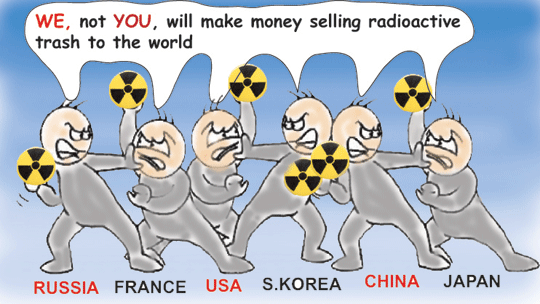
PRAGUE, Oct 30 (Reuters) – The Czech anti-monopoly office UOHS put a temporary block on the conclusion of a contract with South Korea’s KHNP for the construction of a new nuclear power unit following challenges by Westinghouse and EDF.
UOHS said that the preliminary measure to prohibit the conclusion of the contract was not indicative of how the case will be decided and was standard procedure in such a case.
The measure comes after the office started official proceedings work in September on appeals from U.S. group Westinghouse and France’s EDF against the country’s choice in July of Korea Hydro & Nuclear Power Company (KHNP) as preferred bidder to build new nuclear reactors.
The Czech government and majority state-owned utility CEZ (CEZP.PR), opens new tab aim to conclude negotiations with KHNP and sign contracts by next March, and complete the first reactor by 2036.
CEZ said it believed the preliminary measure would not impact the tender’s schedule. “(The company) is convinced it acted in accordance with the applicable laws from the first moment in the selection of the preferred bidder,” it said.
Legal disputes are a potential sticking point in the country’s largest-ever energy procurement deal, expected to be worth up to $18 billion at current prices.
The Czechs plan to use the new nuclear power units, together with small modular reactors and renewable sources, to replace a fleet of coal-fired plants as well as some older nuclear reactors that are nearing the end of their lifespan.
($1 = 23.4270 Czech crowns) Reporting by Jason Hovet; editing by Philippa Fletcher
Gravelines nuclear power plant: EDF refuses to respond on flood risks and tries to silence whistleblowers

Greenpeace France reminds that Monday morning’s action in the perimeter of the Gravelines power plant carries a message of public interest on the risks of marine submersion and flooding on the Gravelines power plant, an area combining climatic, industrial and nuclear vulnerabilities. For Greenpeace France, in light of the forecasts of scientists and the large uncertainties of the different climate scenarios, it is too dangerous to build two new nuclear reactors on this site, as EDF aims to do.
Greenpeace France 30th Oct 2024, https://www.greenpeace.fr/espace-presse/gravelines-edf-refuse-de-repondre-sur-les-risques-dinondations-et-tente-de-faire-taire-les-lanceurs-dalerte/
After more than 48 hours of deprivation of liberty, 10 of the 12 activists arrested have just been released. This arrest follows the action of Greenpeace France in the perimeter of the Gravelines power plant . Since 9 a.m. this morning, a gathering has been taking place in front of the Dunkirk Judicial Court, at the initiative of several local organizations that came to support the activists. The court informed the activists that a trial would be held on March 3, 2025 at 1:30 p.m. for intrusion into a civil facility housing nuclear materials in assembly. EDF has filed a complaint [1].
After spending two nights in police custody, the activists were brought before the Dunkirk Judicial Court in the early morning, at the request of the public prosecutor. The first activist to be released was deprived of his liberty for a total of 52 hours.
Greenpeace France reminds that Monday morning’s action in the perimeter of the Gravelines power plant carries a message of public interest on the risks of marine submersion and flooding on the Gravelines power plant, an area combining climatic, industrial and nuclear vulnerabilities. For Greenpeace France, in light of the forecasts of scientists and the large uncertainties of the different climate scenarios, it is too dangerous to build two new nuclear reactors on this site, as EDF aims to do.
While EDF refused to respond to Greenpeace France’s questions sent during the summer concerning the consideration of the impacts of climate change on the choice of the Gravelines site and the construction of new nuclear reactors, Greenpeace France dug into the subject and examined EDF’s project file, which resulted in the publication of a report on October 3 demonstrating the underestimation of the seriousness of climate change and the risks inherent in this project to build new reactors.
Greenpeace France also got involved in the consultation areas, particularly the ongoing public debate in Gravelines, and repeated its questions to obtain information on flood risks and the protective measures planned for the new reactors, ahead of the meetings on nuclear safety (theme of 19 November) and climate change (theme of 10 December). After Monday’s action, media reported that EDF did not wish to comment.
For Pauline Boyer, Energy Transition campaign manager at Greenpeace France: ” EDF is ignoring our questions about the risks that the construction of the two EPR2 reactors in Gravelines would create for the population, the workers at the plant and for the environment. In line with its behavior during the public debate for its similar project in Penly, it is clearly sending a signal of contempt for questions from the public, whether NGOs or residents. EDF is operating a diversion strategy by taking activists to court over the form of their action, in order to better evade the substantive issues. EDF is losing more points of trust. EDF will not succeed in gagging the whistleblowers. “
For Marie Dosé, the activists’ lawyer: ” The custody measures are unjustified and have only one purpose: to dissuade activists from alerting the population on a subject of general interest. All of them could have been the subject of a free hearing but, once again, the prosecuting authority preferred to make them sleep two nights in cells and bring them hastily before the court. “
Two activists remain in court at the time of writing this press release.
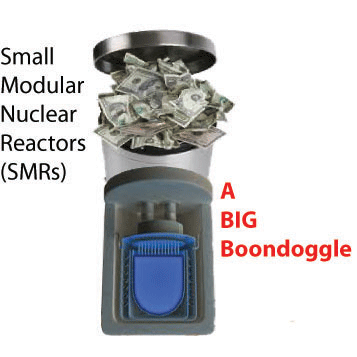
NextEra No Longer Bullish on Nuclear SMRs
By Alex Kimani – Oil Price , Oct 31, 2024,
NextEra Energy is exploring the reopening of the Duane Arnold nuclear plant amid rising data center interest but remains cautious on the viability of small modular reactors.
SMRs, though promising in terms of smaller size, lower fuel needs, and modular design, face significant challenges.
High production costs for HALEU, estimated to reach up to $25,725/kg, pose a substantial financial hurdle.
……………………..CEO John Ketchum said he was “not bullish” on small modular reactors (SMRs), adding that the company’s in-house SMR research unit has so far not drawn favorable conclusions about the technology.
“A lot of [SMR equipment manufacturers] are very strained financially,” he said. “There are only a handful that really have capitalization that could actually carry them through the next several years.”
Ketchum might have a valid point. …………………………………………….
The U.S. Department of Energy has so far spent $1.2B on SMR R&D and is projected to spend nearly $6B over the next decade. Last year, the U.S. Nuclear Regulatory Commission (NRC) certified NuScale Power Corp.(NYSE:SMR) VOYGR 77 MW SMR in Poland, the first ever SMR to be approved in the country.
But there’s a big problem here because the fuel required to power these novel nuclear plants might be really expensive.
Three years ago, U.S. Nuclear Regulatory Commission (NRC) approved Centrus Energy Corp.’s (NYSE:LEU) request to make High Assay Low-Enriched Uranium (HALEU) at its enrichment facility in Piketon, Ohio, becoming the first company in the western world outside Russia to do so. A year later, the U.S. Department of Energy (DoE) announced a ~$150 million cost-shared award to American Centrifuge Operating, LLC, a subsidiary of Centrus Energy. HALEU is a nuclear fuel material enriched to a higher degree (between 5% and 20%) in the fissile isotope U-235. According to the World Nuclear Association, applications for HALEU are currently limited to research reactors and medical isotope production; however, HALEU will be needed for more than half of the SMRs currently in development. HALEU is only currently available from TENEX, a Rosatom subsidiary.
………..A 2023 survey by the Nuclear Energy Institute on U.S. advanced reactor developers estimated that the total market for HALEU could reach $1.6 billion by 2030 and $5.3 billion by 2035.
Last year, the Nuclear Innovation Alliance (NIA) published a report wherein they discussed production costs for HALEU. Here’s an excerpt from the report:
‘‘Calculated HALEU production cost for uranium enriched to 19.75% is $23,725/kgU for HALEU in an oxide form and $25,725 for HALEU in a metallic form under baseline economic assumptions but could be higher.’’
The report claims that a SWU (Separative Work Unit) is going to cost a lot more in a HALEU enrichment cascade compared to a standard LEU (Low-Enriched Uranium) enrichment cascade.
……………….NIA reckons it might cost ~$2000/kgU to make HALEUF6 into HALEUO2, and as much as $4000/kgU to make HALEUF6 into HALEU-metal. At the end of the day, you’d end up with HALEU with 28 times the fissile content of natural uranium at over 100 times the price.
https://oilprice.com/Alternative-Energy/Nuclear-Power/NextEra-No-Longer-Bullish-on-Nuclear-SMRs.html
UK urged to break with France, North Korea and Russia on UN nuclear war resolution
Julian Borger Guardian 31st Oct 2024
Non-proliferation groups call on government not to oppose creation of a study into effects of nuclear conflict
Non-proliferation groups are urging the UK government to make a late about-turn on plans to vote alongside France, Russia and North Korea against a UN resolution to study the effects of nuclear war.
In a debate on Friday, a UN general assembly committee will discuss a resolution to create an international panel of scientific experts to examine the global impact of different nuclear conflict scenarios.
The resolution, drafted by Ireland and New Zealand, is expected to be overwhelmingly approved by the committee and then later by the full assembly. Diplomats involved in preparations for the vote say the US and China are expected to abstain but that the UK, France, Russia and North Korea had indicated they were likely to vote against.
London and Paris joining forces with Moscow and Pyongyang would not stop the resolution but could have an impact on their reputations when it comes to other nuclear proliferation issues.
The UK and French missions to the UN did not respond to requests for comment and diplomats in New York said final decisions could be left until the last hours before the vote.
Arms control advocates expressed disappointment on Thursday that, with just 24 hours to go before the debate, the UK’s new Labour government had shown no signs of changing course.
“People naively thought that, with a Labour government, you would see a shift away from this kind of weird line that the UK has taken on this particular type of thing,” said Patricia Lewis, the head of the international security programme at the Chatham House thinktank. “Maybe this is the Labour party trying to be more Catholic than the pope when it comes to nuclear weapons, but why not vote with the US, and abstain?”
The panel proposed in Friday’s resolution would be the first such UN-mandated study since 1988 and experts say a lot has changed since then, in science and the nuclear threats around the world. For example, Russia and North Korea, countries which have made aggressive nuclear threats, have entered a deepening partnership.
Lewis argued that a no vote by the UK and France would undermine their credibility with other UN member states, especially when London and Paris are trying to rally global support for criticism of Moscow.
“The UK has been struggling to get countries like South Africa and Brazil onboard over the whole issue of Russia’s behaviour, so this is an opportunity for the UK to say: ‘Yes, we hear you,’” Lewis said.
Observers believe the UK position could be the result of a pact with France to fend off criticism of their nuclear arsenals………………………………………………………………………………………
In April, the UK Royal Society was part of a joint statement by the national academies of science of the G7 member states, which said: “Among the roles of the scientific community are to continue to develop and communicate the scientific evidence base that shows the catastrophic effects of nuclear warfare on human populations and on the other species with which we share our planet.”
While some governments and national scientific institutions have done their own research, supporters of the resolution said a UN panel could establish a global consensus and a scientific “gold standard”, emulating the Intergovernmental Panel on Climate Change, and have an impact on policy.
“Studying the results of nuclear war will flesh out how bad it would be to have one, and maybe add pressure on countries who would otherwise think about using nuclear weapons,” said Andrey Baklitskiy, a senior researcher at the UN Institute for Disarmament Research. “Their leaders, their elites would maybe study or read it, or their populations, or partners or allies, who would maybe say we really don’t want this to happen.”
https://www.theguardian.com/world/2024/oct/31/uk-urged-break-france-north-korea-russia-un-nuclear-war-resolution
Race to build Britain’s first mini-nukes delayed again in Budget
‘Tortuously slow’ decision-making blamed for decision to push back development of small modular reactors.
Matt Oliver, Telegraph 31st Oct 2024 https://www.telegraph.co.uk/business/2024/10/31/race-to-build-britains-first-mini-nukes-delayed-again-reeve/
Ministers have delayed the competition to build Britain’s first
mini-nuclear power plants, amid “tortuously slow” decision-making in
Whitehall. The contest to develop small modular reactors (SMRs) was
whittled down to four contenders last month, with two winners originally
expected to be chosen by late this year or early 2025.
That already represented a significant delay on timelines originally set out when six
vendors were shortlisted a year ago. However, the Government has now pushed
back the selection of winners even further, with a decision not expected
until the spring.
The two-sentence update was snuck out in Budget documents
published alongside a speech by Rachel Reeves, the Chancellor, on
Wednesday. On Thursday, Great British Nuclear (GBN) confirmed the new
timetable and said it would provide further updates “in due course”. It
is understood the delay is largely down to a slower-than-expected pace of
decision-making in Whitehall, as well as fears that the process risks being
challenged by judicial review if it is not robust enough.
Nuclear submarine shipyard fire at Barrow-in-Furness leaves two in hospital
Josh Halliday Hannah Al-Othman and Jasper Jolly Guardian, 31 Oct 24
Two people have been taken to hospital after a “significant” fire broke out at BAE Systems’ nuclear submarine shipyard in Cumbria.
Residents said they saw huge flames and smoke billowing from the complex in Barrow-in-Furness, where the UK’s new multi-billion-pound Dreadnought submarines are being built.
Cumbria police said there was no nuclear risk but two people were taken to hospital for suspected smoke inhalation. Police said: “At this time there are no other casualties and everyone else has been evacuated from the Devonshire Dock Hall and are accounted for.”
BAE said the two people taken to hospital were workers at the site and they have since been discharged. About 200 people were working on a night shift at the time the fire broke out.
…………………………………………………………….. Four nuclear submarines from the Dreadnought class are being built there as part of a £31bn programme, which is due to replace the Vanguard submarines in the early 2030s. The last of the Royal Navy’s seven new nuclear-powered submarines, part of the Astute class, is also being built at the site.
It is understood that the boat in the hall is HMS Agincourt, whose completion had already been delayed to 2026. The previous Astute class, HMS Agamemnon, was launched last month. It remains unclear whether any submarines were damaged by the fire.
The MoD has been contacted for comment. Cumbria fire and rescue service said an investigation into the cause of the fire was under way.
Police on Wednesday advised residents to keep doors and windows closed, having earlier instructed people to stay indoors. Motorists in the area have also been told to close their windows, air vents and sunroofs and turn off fans and air-conditioning units.
It is understood that the warning was because of the risk of particles, such as those from metals, being released in the air from the heavy industry site, where sophisticated extraction techniques are normally in place.
BAE Systems reportedly told non-essential staff working at Devonshire Dock Hall to work from home on Wednesday, while the BBC reported that staff turning up for their shifts were confused as to which parts of the 25,000 sq metre site was accessible.
Shares in BAE Systems fell as much as 2% in morning trading after news of the fire, making it one of the biggest fallers on the FTSE 100 index of blue-chip companies.
A BAE Systems spokesperson said: “The area around the Devonshire Dock Hall has been evacuated and everyone has been accounted for. Two colleagues were taken to hospital having suffered suspected smoke inhalation and have both since been released.”
It is understood that the company will launch an investigation into the cause of the fire. The rest of the site remains open and operating normally.
Additional reporting by Dan Sabbagh
https://www.theguardian.com/business/2024/oct/30/nuclear-submarine-shipyard-fire-at-barrow-in-furness-leaves-two-in-hospital
BAE Systems fire: blaze at shipyard ‘could delay Aukus’
Building schedule of new fleet could be set back, experts warn, as two taken to
hospital after blaze breaks out at facility in Cumbria. Investigators are
still trying to determine the cause of a massive fire at a nuclear
submarine shipyard in Cumbria that analysts warned could delay the delivery
schedule of new boats for Australia as part of the Aukus pact.
Times 30th Oct 2024
Cost of maintaining decommissioned nuclear submarines

UK Defence Journal 29th Oct 2024
Graeme Downie, Labour MP for Dunfermline and Dollar, recently raised a question regarding the financial burden of maintaining decommissioned nuclear submarines at two key UK facilities: Rosyth and Devonport. Specifically, he inquired about the annual costs associated with these sites.
In response, Defence Minister Maria Eagle provided the figures for the financial year 2023-24, explaining that “the annual cost for maintaining decommissioned submarines varies each year depending on the respective maintenance requirements.”
For the last financial year, £1.7 million was spent at Rosyth, while the maintenance costs at Devonport were significantly higher, totalling £7.1 million.
These figures highlight the ongoing financial commitment required to manage the UK’s decommissioned nuclear submarines, a task dependent on the maintenance needs of each vessel and the infrastructure of the respective facilities.
Additionally, during a recent exchange in the House of Lords, Lord Coaker expressed the urgency for the UK to expedite its nuclear submarine dismantling programme, addressing the slow progress in decommissioning and dismantling outdated submarines.
Responding to a question from Baroness Bryan of Partick, he outlined the current challenges and ongoing efforts to dismantle the aging fleet, currently spread across Scotland and Devonport, and acknowledged that, without significant changes, the timeline could stretch into decades.
Baroness Bryan highlighted widespread concerns, pointing out that many submarines have been out of service for years or even decades without being dismantled. She cited, for example, the case of a Dreadnought-class submarine stationed at Rosyth since 1980, a delay emblematic of the broader issue. “There remains real concern that not one of these submarines has yet been dismantled,” she noted, adding that with the rate of dismantling, “it will take decades to dismantle the boats remaining in both Scotland and Devonport.”……………………………………………………..
https://ukdefencejournal.org.uk/cost-of-maintaining-decommissioned-nuclear-submarines
Labour just railroaded a secretive US-UK nuclear treaty renewal deal
by The Canary, 30 October 2024
The Campaign for Nuclear Disarmament (CND) said it condemns the government’s outrageous railroading through parliament of the renewal of the US-UK Mutual Defence Agreement (MDA), the secretive treaty that underpins the nuclear ‘special relationship’ between London and Washington.
The MDA: under a cloak of secrecy
In force since 1958, the MDA allows for the transfer of key technologies, information, and nuclear materials to and from the US. Since its inception, the treaty has been amendable every ten years, also requiring parliamentary agreement on its extension.
But the government intends to make this treaty permanent by removing the clause that requires the treaty to be extended, and enables debate and amendment, including rejection. CND said:
n an open and democratic society, a major change like this should be given due consideration and debate in parliament. However, the government has disgracefully obstructed this by announcing its planned changes to the MDA just before parliament’s summer recess – guaranteeing six weeks of inaction.
Upon their return, MPs spent much of September and October engaged with party conferences. This shamefully left little time for parliament to debate the proposed changes before the deadline of 23 October.
Labour’s railroading of US nuclear co-operation: CND reacts
CND general secretary Kate Hudson said:
Thousands of CND supporters have contacted their MPs to raise the MDA as an issue for debate in Parliament before the 23 October deadline. Despite this outpouring of public concern, the limited time MPs have spent in Parliament since the election has left very little space for the open discussion this significant but little-known treaty deserves.
The railroading of the MDA by the government is typical of the policy that successive governments have been pursuing when it comes to Britain’s military policies and its possession of nuclear weapons.
This ‘special relationship’ tethers British military and foreign policy to Washington – and makes redundant the claim that Britain has an independent nuclear weapons system. Without US support, Britain would be unable to sustain its nuclear arsenal. Efforts to scrutinise this relationship are regularly deflected by the government under the guise of national security.
SO, CND will protest not only the MDA, but also the return of US nuclear weapons to Britain – ahead of the US presidential election.
CND protesting at Lakenheath on 2 November
The group and its supporters will mobilise at RAF Lakenheath on Saturday 2 November, to oppose plans to station US nuclear weapons in Britain for the first time since 2008.
This will be CND’s fourth national mobilisation at RAF Lakenheath since 2022, after US government budget documents revealed plans for upgrade works at the US-run air base for the storage of the new B61-12 guided nuclear bomb.
With the US presidential election to take place just days later, the protest aims to highlight the significant impact of US foreign and military policy on the British public, and the increased nuclear dangers brought by deploying its nuclear weapons in Britain – by whoever wins the White House.
Attendees will also witness an unofficial declaration of Lakenheath as a nuclear-free zone, and calls for both the UK and other nuclear weapons states to engage with the UN Treaty on the Prohibition of Nuclear Weapons.
CND will be joined by Melissa Parke ,executive director of the International Campaign to Abolish Nuclear Weapons (ICAN), the organisation that won the 2017 Nobel Peace Prize. Melissa will speak about nuclear dangers in Europe.
No US nuclear weapons on UK soil
Details of the protest are as follows:
- Saturday 2 November.
- 12 noon to 3pm.
- RAF Lakenheath Main Gate, Brandon Road, Lakenheath, Suffolk. More details on parking can be found on the CND website here.
…………………………………………………..
https://www.thecanary.co/uk/news/2024/10/30/cnd-nuclear-weapons-treaty/
1 This Month

Protect Sazan Island from the Trump family! https://secure.avaaz.org/campaign/en/protect_sazan_island_from_the_trump_family_loc/?bqFCVab&v=174511&cl=22707147157&_checksum=5e9dde668860e8231c33699735e16a1fbf22ab2cb01da50c999fe8732b9775ef&utm_source=email&utm_medium=blast_email&utm_campaign=174511
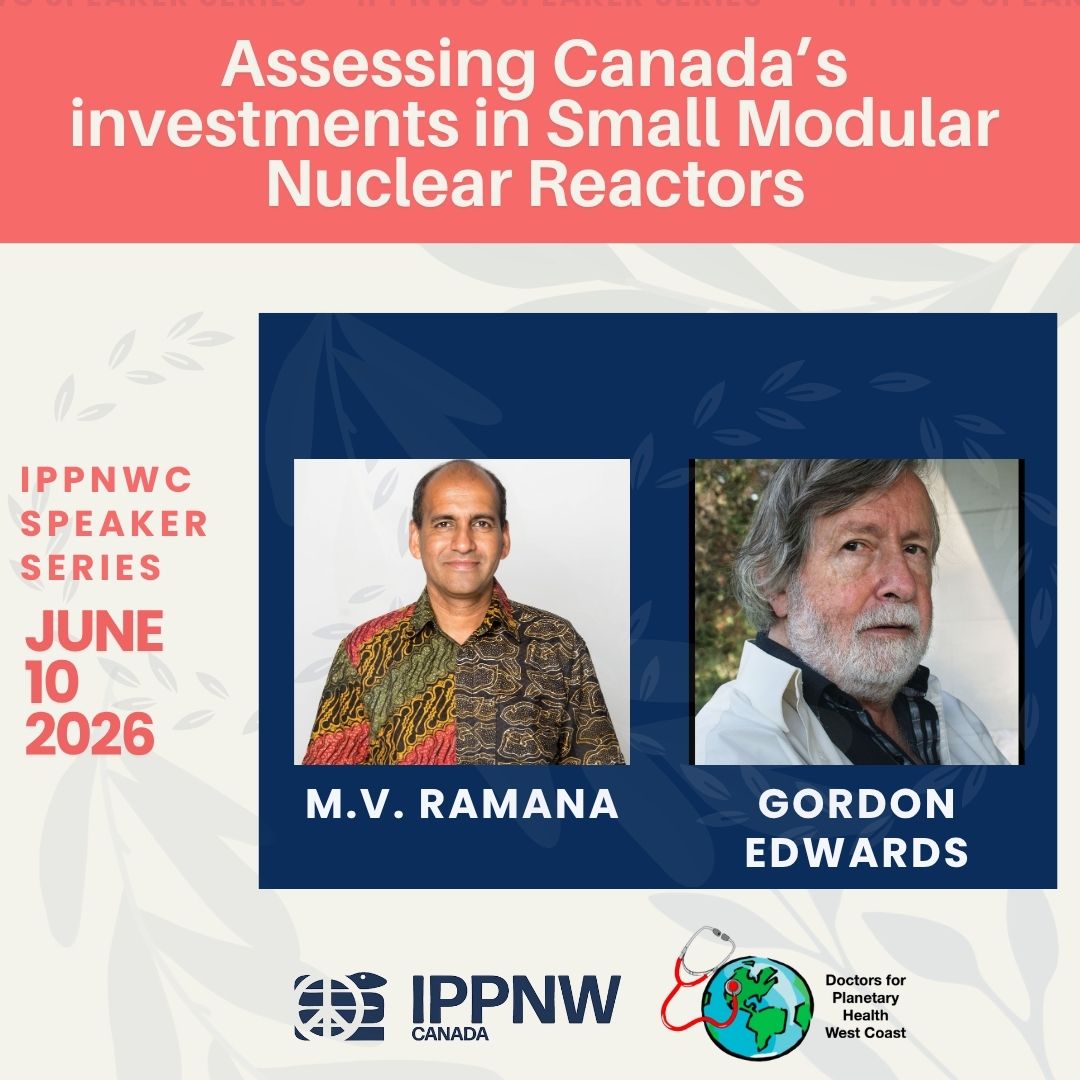
10 June – Assessing Canada’s Investments in Small Modular Nuclear Reactors – https://zoom.us/meeting/register/IiqHA5feRhaEBycOLNTJlA#/registration


Cuba Is Not a Failed State – It Is a Besieged State
PETITION: “Global Appeal to Endorse Palestinian Right of Return of Refugees”
To see nuclear-related stories in greater depth and intensity – go to https://nuclearinformation.wordpress.com
-
Archives
- June 2026 (89)
- May 2026 (306)
- April 2026 (356)
- March 2026 (251)
- February 2026 (268)
- January 2026 (308)
- December 2025 (358)
- November 2025 (359)
- October 2025 (376)
- September 2025 (257)
- August 2025 (319)
- July 2025 (230)
-
Categories
- 1
- 1 NUCLEAR ISSUES
- business and costs
- climate change
- culture and arts
- ENERGY
- environment
- health
- history
- indigenous issues
- Legal
- marketing of nuclear
- media
- opposition to nuclear
- PERSONAL STORIES
- politics
- politics international
- Religion and ethics
- safety
- secrets,lies and civil liberties
- spinbuster
- technology
- Uranium
- wastes
- weapons and war
- Women
- 2 WORLD
- ACTION
- AFRICA
- Atrocities
- AUSTRALIA
- Christina's notes
- Christina's themes
- culture and arts
- Events
- Fuk 2022
- Fuk 2023
- Fukushima 2017
- Fukushima 2018
- fukushima 2019
- Fukushima 2020
- Fukushima 2021
- general
- global warming
- Humour (God we need it)
- Nuclear
- RARE EARTHS
- Reference
- resources – print
- Resources -audiovicual
- Weekly Newsletter
- World
- World Nuclear
- YouTube
-
RSS
Entries RSS
Comments RSS
 nuclear-news