UK budget outlines nuclear power plans (new nuclear not a high priority)
Nuclear Engineering International 5th Nov 2024
The first budget of the UK Labour Government included decisions related to both the Sizewell C NPP and to plans for small modular reactors (SMRs). However, this was clearly not a high priority in the 170-page budget. The small eight paragraph section on the Department for Energy Security & Net Zero (DESNZ) included just two short paragraphs on nuclear.
DESNZ was allocated total funding of £14.1bn ($18.2bn) in 2025-26 up 22.0% from 2023-24. The main paragraph (4.75) notes that “Making Britain a clean energy superpower is one of the five missions of this government. Great British Energy (GBE) will be at the heart of the mission.” GBE is allocated £100m million capital funding in 2025-26 “for clean energy project development” and £25m to establish GBE as a company, headquartered in Aberdeen. Investment activity will be undertaken by the National Wealth Fund, “helping it to make initial investments as quickly as possible”.
The budget says “new nuclear will play an important role in helping the UK achieve energy security and clean power while securing thousands of good, skilled jobs” (para 4.80). It provides £2.7bn to continue development of Sizewell C through 2025-26. “The process to raise equity and debt for the project will shortly move to its final stages and will conclude in the Spring. As with other major multiyear commitments, a Final Investment Decision (FID) on whether to proceed with the project will be taken in Phase 2 of the Spending Review.” Phase 2 is expected in the Spring.
However, on 30 August DESNZ announced a Sizewell C Development Expenditure (Devex) Scheme that would benefit from up to £5.5bn in subsidies to get to a FID with support mainly comprising equity injections by the UK government. The £2.7bn announced in the budget is not new funding and would be taken either from £5.5bn already made available or through a separate subsidy scheme that would be established at the point of the FID.
Sizewell C, in Suffolk, is expected to host two EPR reactor units producing 3.2 GWe similar to the Hinkley Point C plant, under construction in Somerset. EDF Energy submitted a development consent order (planning application) for the plant in May 2020, which was granted in July 2022. In March 2023, the Environment Agency granted environmental permits for the plant.
The UK government in August 2023 made available a further £341m of previously allocated funding to help prepare the site for construction on top of the government’s existing £870m investment made available from the DESNZ Capital Budgets. EDF said in November 2022 that construction of Sizewell C remained subject to a FID that depended on the achievement of certain key stages, in particular the ability to raise the necessary financing. DESNZ said that, subject to receiving the relevant approvals, the government said then it was aiming to reach FID before the end of 2024. However, the FID will now be taken in Phase 2 of the Spending Review.
The decision was criticised by opponents of the Sizewell C project. Alison Downes from Stop Sizewell C noted: “For a government that criticised the opposition for playing fast and loose with the nation’s finances, the Chancellor is surprisingly happy to do the same, allocating another £2.7bn of taxpayers’ money on risky, expensive Sizewell C, without making any guarantee of a Final Investment Decision being taken.
Jenny Kirtley, Chair of Together Against Sizewell C described the decision as appalling. “It’s staggering that Labour, even though they cast doubt about the future of the project by stating, “a Final Investment Decision on whether to proceed with the project will be taken in Phase 2 of the Spending Review”, have increased the outlay of UK taxpayer funds on EDF’s Sizewell C white elephant by a further £2.7bn.”
On SMRs, the Budget said: “Great British Nuclear’s (GBN’s) Small Modular Reactor competition is ongoing and has entered the negotiation phase with shortlisted vendors.” (para 4.81). In September, GBN concluded the initial tender phase of the competition and down-selected four companies – GE-Hitachi Nuclear Energy International, Holtec Britain, Rolls-Royce SMR, and Westinghouse Electric Company UK. GBN then said it expected the final decision on the technologies to be supported would be taken by the end of the year. It had previously been set for summer 2024. The Budget has now deferred that decision until the Spring 2025………………
https://www.neimagazine.com/news/uk-budget-decision-on-sizewell-c-and-smrs/
Hinkley workers ‘unfair’ pay claim leads to action
Workers involved in the construction of the Hinkley Point nuclear power
plant have started industrial action after claiming they are being paid
unfairly. Employed by the firm Alten – a supplier for EDF’s Hinkley Point C
– the workers say they have not had a cost of living pay rise in four
years. They walked out of their Bristol office for 24 hours on Tuesday and
have now begun action which Prospect Union described as “short of a
strike”.
BBC 7th Nov 2024,
https://www.bbc.co.uk/news/articles/ckgdlg1ql5no
With Trump back in White House, can Ukraine opt for nuclear deterrence?
Experts say Ukraine is capable of producing nuclear weapons as a deterrent against Russia within years, but the political costs would be too high
by Oleg Sukhov, November 6, 2024
With the looming risk that U.S. President-elect Donald Trump may pull the plug on Washington’s support for Ukraine, Kyiv has flirted with the option of nuclear deterrence.
The prospect of such a scenario was raised weeks earlier when President Volodymyr Zelensky in October said he had told Trump during a September meeting in New York City that Ukraine would either join NATO or develop nuclear weapons.
Zelensky claimed that Trump had heard him and said that “it was a fair argument.”
He later walked back that statement, saying that Ukraine was not pursuing nuclear weapons.
However, Zelensky’s statement prompted speculation on whether a Ukrainian nuclear weapons program is realistic from technological and political standpoints.
Experts say that Ukraine is capable of producing at least a primitive nuclear weapon within years, although it would require considerable investment.
Biden, Zelensky ponder face saving off ramp from failed US proxy war against Russia
Tho they’re loath to admit, Biden and Zelensky are likely preparing a face saving response to the inevitable end to the war which will return no captured territory to Kyiv.
Walt Zlotow, West Suburban Peace Coalition, Glen Ellyn IL, 6 Nov 24
For 33 months the Biden administration and its sycophantic media have been portraying the war raging in Ukraine as unprovoked Russian aggression that would be repelled.
The US and NATO allies have poured over $200 billion in weaponry, but not a single fighting soldier, for Ukraine to regain the Crimea and roughly 20% of Donbas and neighboring oblasts Russia has captured.
The US government and media narrative endlessly proclaimed a weakened Russia and weaponized Ukraine would turn the war in Ukraine’s favor.
No more. The reality of Ukraine’s inevitable collapse as a defensive fighting force is too stark to ignore. This became clear last week when the New York Times, a staunch media supporter of US/ Ukraine prospects against Russia, abruptly pivoted to truth telling.
In an article titled “Russia’s Swift March Forward in Ukraine’s East” the Times reports Ukraine’s defensive lines “buckled” and that its Kursk offensive in Russia has “weakened” Ukraine’s defenses in the much more vital Donbas. Furthermore “Russia’s attacks gradually weakened the Ukrainian army to the point where its troops are so stretched that they can no longer hold some of their positions.” Serious personnel shortages” and stretched defensive lines allow “Russia to quickly advance whenever it finds a weak spot.”
Tho they’re loath to admit, Biden and Zelensky are likely preparing a face saving response to the inevitable end to the war which will return no captured territory to Kyiv.
Zelensky can claim his that the loss of territory is due to the US and NATO refusing to provide the weaponry and support needed to repel Russia. He will pretend that his valiant defense in the absence of all out US/NATO support prevented Russia from conquering all of Western Ukraine. He will never concede the lost territory is part of sovereign Russia which keeps alive the dream of eventually unifying all of Ukraine. Of course, ending up with a shattered country having lost a quarter of its population, 20% of its most fertile land, hundreds of thousands dead and disabled does not bode well for Zelensky’s political future.
Once Ukraine capitulates and withdraws from Donbas, Biden, or Trump might have a tougher face saving sell. They’ll likely claim the $200 billion was well spent because it insured most of Ukraine remained free and stopped Russian’s inexorable march into Western Europe to recreate the Soviet Union. Of course nobody with an iota of political savvy will buy into that preposterous delusion.
Just like everybody else knows, both Volodymyr and Joe know the war is over…...
Germany excludes over half of its territory in search for long-term nuclear waste storage

05 Nov 2024, Ruby Russel, GermanyClean Energy Wire / ARD, https://www.cleanenergywire.org/news/germany-excludes-over-half-its-territory-search-long-term-nuclear-waste-storage
The BGE (Federal Company for Radioactive Waste Disposal) has published an interim report on the status of Germany’s search for a final storage site for nuclear waste. The report includes an interactive map of Germany showing areas it has tested so far, and those found to be unsuitable for the repository, which must keep around 28,100 cubic metres of radioactive material safe for hundreds of thousands of years. The latest status report detailed the BGE’s assessment of 13 sub-areas, which ruled out sites that failed to meet safety requirements. This narrows the search to 44 percent of the country’s land, public broadcaster ARD reported.
The BGE began its search in 2017, following Germany’s 2011 commitment to phase out nuclear power. Previously planned repositories at sites such as Gorleben were abandoned after fierce protest from residents. The BGE then began its work by viewing Germany as a “blank map” on which any location with the right geological conditions could be identified as a potential storage site.
BGE chair Iris Graffunder said that from now on, the BGE would publish status reports annually, allowing the public to follow its progress. German environment minister Steffi Lemke welcomed the planned yearly updates as an important measure for transparency. “The regular publications will allow everyone in Germany to see that the BGE is on schedule for the end of 2027,” Lemke said. “We can and must find a final repository site by the middle of the century. We owe this to the people who live in the regions with interim storage facilities.”
The government agency is to complete its Phase 1 tests by 2027, when it is scheduled to submit its final proposal to the Federal Office for the Safety of Nuclear Waste Management (BASE), with a shortlist of suitable sites for further exploration in Phase 2 of the search.
Highly radioactive waste is currently held at 16 interim storage facilities close to Germany’s decommissioned nuclear power plants, the last of which went offline in April 2023. Germany had aimed to select a location for the final repository by 2031, but in 2022 the BGE pushed the deadline until at least 2046. A recent report commissioned by the BASE found that the process could take until 2075, but the environment ministry disputed these findings, saying they did not account for recent progress that has accelerated the search.
Radioactive pollution from bomb plant sparks cancer fears
The Ferret Rob Edwards, November 4, 2024
Radioactive air pollution from the nuclear weapons plant at Coulport, on the Clyde, has more than doubled over the last six years, prompting cancer warnings from campaigners.
Emissions of the radioactive gas, tritium, from the Royal Naval Armaments Depot on Loch Long, have risen steadily between 2018 and 2023 from 1.7 billion to 4.2 billion units of radioactivity, according to the latest official figures.
Campaigners say that tritium is “very hazardous” when it is breathed in, and can increase the risk of cancers. But according to the Scottish Environment Protection Agency (Sepa), the emissions are well within safety limits.
The Ministry of Defence (MoD) has declined to say what has caused the increased pollution. Tritium is known to leak from ageing nuclear submarine reactors, and is also an essential component of nuclear bombs.
Coulport, eight miles from the nuclear submarine base at Faslane on the Gareloch, is where Trident missiles and nuclear warheads are stored. They are loaded on and off Vanguard nuclear-powered submarines at an explosives handling jetty.
The rising tritium emissions from Coulport have been revealed in Sepa’s Scottish Pollution Release Inventory. The inventory was updated in October 2024 to include figures for 2023.
Rising tritium pollution from Coulport
| Year | Tritium emitted to air (MBq) |
|---|
| 2018 | 1,770 |
| 2019 | 2,046 |
| 2020 | 2,298 |
| 2021 | 3,038 |
| 2022 | 3,472 |
| 2023 | 4,224 |
| Total | 16,848 |
Source: Scottish Pollution Release Inventory
The inventory also disclosed that Faslane has discharged liquids contaminated with tritium into the Gareloch, amounting to a total of over 50 billion units of radioactivity from 2018 to 2023. The discharges peaked at 16.6 billion units in 2020.
A report released by Sepa under freedom of information law revealed that in 2019 it changed the rules to allow certain tritium-contaminated effluents from nuclear submarines at Faslane to be discharged into the Gareloch.
“Low levels” of tritium had been discovered in waste, sewage and ballast water from submarines. Sepa agreed a “minor variation” to radioactive waste regulations to allow the continued treatment and disposal of the effluents.
Tritium discharges into the Clyde from Faslane
| Year | Tritium discharged to water (MBq) |
|---|
| 2018 | 5,817 |
| 2019 | 6,510 |
| 2020 | 16,609 |
| 2021 | 13,416 |
| 2022 | 1,582 |
| 2023 | 6,946 |
| Total | 50,880 |
Source: Scottish Pollution Release Inventory
Increasing tritium air pollution from Coulport was described as “worrying” by Dr Ian Fairlie, an expert on radioactivity in the environment and a former UK government advisor. He is now vice-president of the UK Campaign for Nuclear Disarmament.
“First, they are large, more than four billion becquerels per year; second, they are steadily increasing; and third, they are of tritium – which is very hazardous when it’s inhaled or ingested,” he told The Ferret.
The discharges from Faslane into the Gareloch were also of concern, he said. “Any dose of radiation is hazardous to some degree, so that these discharges – especially of tritium – are disquieting.”…………………………………………………………………………………
https://theferret.scot/radioactive-tritium-coulport-cancer/
UK says it voted against UN nuclear war panel because consequences already known
The UK was one of three countries to vote against creating a UN scientific
panel on the effects of nuclear war because, the Foreign Office argued, the
“devastating consequences” of such a conflict are already well known
without the need for a new study. The UK, France and Russia were the only
countries to vote on Friday night against a UN general assembly committee
resolution drafted by Ireland and New Zealand to set up an international
scientific inquiry to take a fresh look at the multifaceted impact of
nuclear weapons use.
Guardian 4th Nov 2024 https://www.theguardian.com/world/2024/nov/04/uk-joins-russia-and-france-in-voting-against-un-nuclear-war-inquiry
Hinkley Point and Sizewell nuclear plant engineers go on strike.
Specialist workers say they have not had a pay rise in four years and that cheap
foreign labour from India and Nigeria is being used to undercut British
workers. The cabling and pipework engineers, represented by the
professional trade union Prospect, work on the Hinkley Point C nuclear
power station being built in Somerset by EDF, as well as the Sizewell C
project planned for Suffolk.
They claim that since beginning their dispute
last year with their employer Alten, which provides engineering services
for the projects, they have discovered foreign colleagues brought in from
outside the UK and EU, from places such as India and Nigeria, are being
paid about half their wages. A source told The Times: “We started the
dispute about pay rises before it emerged that foreign colleagues were
being brought in on vastly lower wages.
“We are all on between £50,000
and £75,000 but it has since emerged that these foreign colleagues are
being paid less than £30,000. That is absolutely ridiculous for the type of
work they are doing and it is being done to drive down costs and the
internal market rate for these roles.”
The Times 5th Nov 2024 https://www.thetimes.com/business-money/energy/article/hinkley-point-and-sizewell-nuclear-plant-engineers-go-on-strike-xv0fk93dl
US nuclear weapons could be sited in RAF Lakenheath in spring, CND protest hears

“We are standing on the edge of the nuclear abyss. And our governments have the responsibility to keep us safe; and what are they doing? They are pushing us over the edge.”
US nuclear weapons could be sited at RAF Lakenheath as early as spring, the Campaign for Nuclear Disarmament (CND) has warned.
The CND’s new general secretary Sophie Bolt told dozens of protesters outside the Suffolk airbase on Saturday: “We are very very concerned about the threat of a nuclear escalation between nuclear-armed Nato and nuclear-armed Russia.
“What’s happening here at this base is absolutely central to this growing nuclear threat in eastern Europe.
“It’s also the horrific genocidal war we are seeing in the Middle East because again it’s F35-A jets here and fighter pilots based here that are involved in that war.
“This base completely ties the UK to the complicity of genocide that is being carried out against Palestinian people.”
Green Party peer Jenny Jones said it is “obviously incredibly dangerous” to site nuclear bombs in Britain due to its size and international importance.
She added: “If Russia decide to get really heavy not just with Ukraine but other countries, then we could be a target even if they just think we have nuclear weapons here.
“Secondly, it’s really undemocratic. We need a public debate about the common sense or the lack of it in siting nuclear weapons in Britain.
“We should have a debate in Parliament about this and it should be a free vote as well so we can see exactly what all MPs say about this issue.”
Former Australian minister Melissa Parke, executive director of the International Campaign to Abolish Nuclear Weapons, noted last month’s serious fire at BAE Systems nuclear submarine shipyard in Cumbria; Sellafield nuclear processing plant’s fines for cyber security failings; and maintenance issues on Britain’s nuclear fleet.
She said: “So fires, cyber security failings, maintenance problems on nuclear subs, I mean what could possibly go wrong?
“We are standing on the edge of the nuclear abyss. And our governments have the responsibility to keep us safe; and what are they doing? They are pushing us over the edge.”
Nuke Watch’s Peter Burt described detailed analysis of official documents by scientists, plane spotters and campaigners.
He said: “It’s very clear that we need to keep a close eye on what’s happening here.
“What there is no substitute for is eyes on the ground … in the same way we had in the 1980s we had the Cruise Watch Network, who kept tabs on what’s happening at Greenham Common.”
F-35 components sent to Israel from Royal Air Force base
Parts for Israel’s most advanced fighter jet have been secretly shipped from a British military base during the assault on Gaza.
Declassified UK JOHN McEVOY, 31 October 2024
- The shipments have continued under Keir Starmer’s Labour government
Reported in partnership with Irish news site The Ditch
F-35 fighter jet parts have been secretly transported to Israel from a British air force base in Norfolk, it can be revealed.
At least seven arms shipments have been sent from RAF Marham to Israel’s F-35 airbase at Nevatim since the Gaza bombing began.
Two of the deliveries took place this summer shortly after Keir Starmer became UK prime minister.
The information is contained within cargo documents reviewed by The Ditch and Declassified.
The documents show that the UK government has not only been approving F-35 export licences to Israel, but actively facilitating their transportation through British military sites.
F-35 supplies have become particularly controversial after it emerged that Israel used one of the planes to bomb a designated safe zone in Gaza, Al-Mawasi, killing 90 people.
Campaign Against Arms Trade’s Sam Perlo-Freeman told Declassified: “The F-35 plays a major part in Israel’s ongoing genocide in Gaza and brutal bombardment and invasion of Lebanon”.
He added that “the UK is not only licensing the supply of spare parts, but actively using UK military assets to facilitate their delivery. This makes UK ministers and potentially even military personnel complicit in war crimes”.
The International Criminal Court is currently considering arrest warrants for Israel’s prime minister Benjamin Netanyahu and defence minister Yoav Gallant. Human Rights Watch has warned that countries supplying Israel with arms could be complicit.
F-35 shipments
The seven shipments of F-35 parts from RAF Marham took place on 11 November 2023, 13 January, 21 January, 7 February, 28 April, 28 July, and 6 August 2024.
In six of those cases, the registered sender was the Lockheed Martin UK Integrated Systems office which is based in Havant, a town near Portsmouth.
Lockheed Martin is a major US arms corporation and the lead player in the international consortium that produces the F-35 fighter jets.
The Havant site is Lockheed Martin’s main headquarters in Britain, employing over 500 staff and working on the F-35 programme.
The components were transferred from RAF Marham to Heathrow Airport, and then transported to Tel Aviv on cargo flights operated by Israeli airline El Al……………………………………………………………………………………………………………………………………………
Munitions for Israel
Labour suspended some arms export licences to Israel last month but will continue to allow shipments of F-35 components to Israel through “global hubs”.
The UK Ministry of Defence did not dispute that F-35 parts had been supplied directly to Israel from RAF Marham on the dates found by The Ditch and Declassified………………………………………………………………..more https://www.declassifieduk.org/f-35-components-sent-to-israel-from-royal-air-force-base/?utm_source=drip&utm_medium=email&utm_campaign=ICYMI+-+Weekly+Roundup
Why Nimbys are wrong about solar farms

Opponents of solar farms often say that solar panels should be put on roofs and that fields should be left for agriculture so i asked the experts on whether they agreed
By Tom Bawden, Science & Environment , November 3, 2024 ,
https://inews.co.uk/news/environment/why-nimbys-are-wrong-about-solar-farms-3355702
Tory leadership loser Robert Jenrick said that solar panels are “for roofs not fields” when asked byi last month if he supported a proposed giant solar farm in his Nottinghamshire constituency.
He is by no means alone in that view, which is a common argument given by opponents of solar farms.
Those who protest against solar farm developments argue fields would be better used for growing food, while solar panels could and should be concentrated on roofs, of which there are quite literally millions in the UK.
“I’ve said that we must ban solar farms from prime agricultural land and I mean it. These facilities are despoiling our beautiful countryside and jeopardising our food security. We must end it,” Mr Jenrick added.
But since Labour came to power Energy Secretary Ed Miliband has approved four of the five biggest solar farms to be given planning permission in the UK.
Mr Miliband has vowed to take on “the blockers, the delayers, the obstructionists” who oppose large solar and onshore wind development to help the UK meet its ambitious targets to make the country’s energy supply virtually carbon neutral in just six years.
As the Government steps up its campaign to drive through new solar and wind projects, it is likely we will be seeing more projects of a similar scale too that opposed by Mr Jenrick in the coming years.
i asked experts whether it was feasible for the UK to do without new solar farms and instead confine new solar panel installations to the rooftops of households, offices and other business properties, and what effect this could have on food security.
The sale of the solar challenge
Experts were clear that there needs to be a huge and rapid increase in renewable energy generation if the UK is to have any chance of meeting its highly ambitious climate targets.
And, as the cheapest source of renewable energy – now costing less than onshore and offshore wind, according to government figures – solar will inevitably play a key role in the transformation of the UK’s energy supply.
The Conservative’s British Energy Strategy in April 2022 outlines the need for 70 gigawatts (GW) of solar power to be installed by 2035 – enough to power 20 million homes, according to National Grid.
As of June 2024, the UK only had about 17GW installed capacity (powering around 4.5million homes), meaning the country needs to quadruple its solar power generation in the next 11 years.
Two thirds of the current solar power is generated by solar farms with panels on the ground – known as “ground mount” – with the remaining third coming from the rooftops of businesses and over 1.5 million homes.
Meanwhile, government advisor the Climate Change Committee estimates that we will need 90GW of solar by 2050 (5.3 times current capacity) if we are to hit our legally binding target of becoming Net Zero.
Dr Simon Harrison, a member of the Government’s new advisory commission to help make the UK’s power generation virtually carbon neutral by 2030, told i the task is so great that it’s “going to require vastly more renewable energy generation” – meaning that “in practice both solar farms and roof top solar will be needed at scale to meet our needs”.
“There’s a significant role for both,” added Professor Rob Gross, who also sits on the commission.
What are the advantages of solar farms?
The first major advantage of solar farms is the sheer amount of energy they produce.
The 600 MW Cottam Solar farm that was granted planning permission in September would be the UK’s largest – supplying 180,000 homes, or 1,500 homes for every 5MW of energy generated.
By contrast, large solar rooftop installs, say over an airport or large of space, typically generate hundreds of kilowatts (kW) potentially up to a few megawatts (MW).
While the average solar rooftop installation size on someone’s home for their own use is typically 4kW.
So the Cottam Solar project would generate at least 200 times the electricity of the very largest commercial roof top installations and around 150,000 times as much as a typical household solar panel setup.
Tony Slade, technical director of Beaverbrook Energy, which designs, finances and builds low-carbon energy generators, told i: “Ground mounted solar farms also suffer from less ‘shading’ (blocking of direct sunlight through obstacles and obstructions) and ‘directional losses’ by being angled in the wrong direction.
“About 50 per cent of roofs face the wrong way and of those that face the right way about 25 per cent suffer from shading issues,” he said.
Are solar farms cheaper than roof panels?
Yes, in part because they benefit from economies of scale. In other words, the bigger the solar farm, the cheaper each unit of electricity will be, as more panels can benefit from the infrastructure.
Professor Gross, who is also director of the UK Energy Research Centre coalition of researchers, told i “the principal advantages are economic”.
“It is far cheaper to install each solar panel in a large array of thousands of panels than it is to install a handful of panels on a roof.
“Ground mounted is cheapest, followed by larger arrays on commercial units, followed by new build, followed by residential retrofit. All categories are getting cheaper but it is impossible to get away from the fundamentals – the cheapest solar will always be the simplest to install, in the largest arrays,” he said.
“And ground mounted developers building large schemes may also be able to negotiate the best deals for panels and equipment,” he added.
Mr Slade explains that greenfield ground mount solar panels on fields typically cost two thirds as much, per unit of energy, as large scale solar panel arrays on commercial buildings such as warehouses, shopping centres and factories – as well as new build domestic and commercial buildings, where the solar panels are fitted as part of the original construction.
Meanwhile, installing solar panels above car parks is typically twice as expensive as wind farms and retrofitting homes is about three times as expensive, he said.
What about food security?
Opponents of large solar farms often argue that the land would be better used for agriculture and that too many of them could impact food security.
But the Department for Energy Security and Net Zero firmly rebuts those suggestions, arguing the amount of agricultural land involved would make very little difference to the UK’s food production.
“Our plans to boost solar power do not risk the UK’s food security. The total area of agricultural land used for solar is very small and is often the lowest grade quality for food production.
“Even in the most ambitious scenarios, solar would still occupy less than 1 per cent of the UK’s agricultural land, while bringing huge benefits for the British public and our energy security,” the spokesperson added.
Meanwhile, in July, National Farmers’ Union boss Tom Bradshaw warned MPs against making “sensationalist” claims about food security.
“It’s a small amount of land which is being taken out of production,” he told the Politico Europe website.
The role of rooftop solar panels
“They can potentially play a very important role, accounting for perhaps 40 per cent of new installation of solar. But it’s important to be clear that rooftop and ground based are additive not competitive,” Professor Gross said.
Dr Harrison says “there are serious considerations to make on where solar is placed”, meaning that sometimes roof top solar power can be far more suitable than those in fields.
“In the simplest terms, there is more space in rural areas for solar panel installations and it is often easier to optimise their positioning for greater energy capture. But they are generally further from existing grid connections and with sometimes competing requirements for land use,” he said.
“On the other hand, rooftop solar, most commonly in urban settings, often avoids use of congested electricity networks, especially when combined with local batteries, and when used in homes tends to drive greater awareness and action by residents in other areas such as energy efficiency improvements, as well as reducing bills. In practice both will be needed at scale to meet our needs.”
The Government estimates there are 250,000 hectares of south-facing, industrial roof space across the country. That’s an area bigger than London and Manchester combined, with the potential for a vast amount of solar panels.
Even a very conservative estimate suggests that this commercial roof space could provide an area big enough to generate approximately 25GW of energy.
This amounts to nearly half the total amount recommended by the Climate Change Committee (CCC), according research by University College London for the Campaign to Protect Rural England (CPRE).
Mr Ramandani agrees that fields and rooftops can play different, complementary, roles in UK energy generation.
“We need about 18GW more of rooftop solar to hit 70GW by 2035 to keep us on the right path to Net Zero. So it will play a massive role,” he said.
“Rooftop solar can power people’s homes and business onsite without needing to pull from the grid, and excess generation can be stored or exported back to the grid, which supports the flexibility and security of the grid. And they operate at a smaller scale with some export to the overall grid system.
“Solar farms, meanwhile, are not onsite generation – they operate at a much bigger scale and power the grid with greater quantities of energy, which is used by the whole system and not specific to a home or business (before they export the excess generation that they don’t use or store).”
Is there a big role for household solar panels?
UK households are already waking up to solar panels, receiving record sums last year for the amount of excess energy they generated that they sold back to the grid, Ofgem said last week.
Homeowners received more than £30m for the energy they didn’t need in the year to March 2024, four times the £7.2m they made the previous year.
Although this amounted to a relatively small amount of energy – enough to power 88,000 homes – experts say there is considerable scope to increase this and they expect this to happen in the coming years.
“There is definite major role for rooftop solar in the UKs future energy mix,” said Mr Slade. “As installations become cheaper and the market for excess generation becomes fairer to the home owner rooftop domestic solar will continue to grow,” he said.
Mr Ramandani says: “Onsite solar rooftop generation takes money off consumer’s bills as they purchase less from the grid, and excess generation can be exported to the grid for income. This in turn creates a stable grid system with less demand side pressure, as well as supplementary energy generation from homes and businesses.
For a typical house, installing a PV system could lower bills by the equivalent of nearly 330 every year over the 30-year lifespan of the system, according to a study by Cambridge University and the Think Three property development company for Solar Energy UK.
101 BBC journalists say it is biased against Palestine

Sat 2 Nov 2024, https://www.jewishvoiceforlabour.org.uk/article/101-bbc-journalists-say-it-is-biased-against-palestine/
JVL Introduction
The BBC has been accused of bias against Israel but here over 230 people, including 101 BBC journalists have argued that there is a strong bias towards Israel and certainly the Israeli narrative. The letter was sent to the Independent arguing that Broadcaster bias is failing to hold Israel to account.
It is noteworthy that only 72 of the 230 signatories felt able to sign openly and this included none of the BBC journalists. Distrust of mainstream media is growing but there is a real need for unbiased reporting. The BBC has previously claimed that the fact it receives complaints from those in support of Israel as well as those in support of Palestine shows its impartiality. This letter, and many other articles and letters before, show this to be nonsense.
LL
This article was originally published by Digi on Fri 1 Nov 2024. Read the original here.
Hundreds of journalists and personalities accuse BBC of bias in favor of Israel and call for a return to “fairness and impartiality”
More than 230 members of the media industry and personalities, including 101 BBC employees, accuse the British media outlet of providing favourable coverage of Israel and call on the public broadcaster to “recommit to fairness, accuracy and impartiality” in its reporting on the Gaza Strip.
Digi
In a letter sent to Tim Davie, signed by more than 230 members of the media industry, including 101 anonymous BBC employees, the corporation is criticized for failing to enforce its own editorial standards by lacking “fair evidence-based journalism in its coverage of Gaza.”
Seen exclusively by The Independent, the letter, which was also signed by Baroness Sayeeda Warsi and actress Juliet Stevenson, calls on the BBC to report “without fear or favour” and “to recommit to the highest editorial standards – with an emphasis on fairness, accuracy and due impartiality.”
The letter also calls on the broadcaster to implement a number of editorial commitments, including “reiterating that Israel does not offer foreign journalists access to Gaza; clarifying when there is insufficient evidence to support Israeli claims; clarifying where Israel is the perpetrator in article titles; including the usual historical context before October 2023; and firmly challenging the Israeli military and government in all interviews.”
The BBC denied these claims, insisting that it “strives to live up to our responsibility to provide the most reliable and impartial news”.
“When we make mistakes or have made changes in the way we report, we are transparent. We are also very clear with our audience about the limitations imposed on our reporting – including the lack of access to Gaza and restricted access to certain parts of Lebanon, as well as our continued efforts to attract reporters to those areas,” a spokesperson said.
Other signatories on the list include historian William Dalrymple, Dr. Catherine Happer, lecturer in sociology and director of media at the University of Glasgow, Rizwana Hamid, director of the Centre for Media Monitoring, and broadcaster John Nicolson.
This is not the first time the BBC has been criticised for bias during the Gaza war. In September, the BBC rejected claims that it had violated its own guidelines more than 1,500 times following a controversial report that claimed some BBC correspondents had excused or downplayed Hamas’ activities. A BBC spokesperson said at the time that it would “carefully consider” the complaint, but denied the allegations of bias.
However, the signatories of the letter insist that the BBC favors Israel. A current staff member who signed the letter told The Independent that some of their colleagues had left the institution because of its cover-up. “I have never witnessed, in my entire career, such low levels of confidence,” they said. “I have colleagues who have left the BBC in recent months because I simply don’t think our reporting on Israel and Palestine is sincere. Many of us feel paralyzed by fear.”
Another said they were “losing faith in the organisation they work for” after seeing a “huge difference” in the BBC’s approach to Israel. They added: “I really care about the future of the BBC and every day I see that we are losing the trust of audiences around the world. People change the channel to find the reality of what’s going on because we just don’t give it to them.”
Examples provided by staff include “dehumanizing and misleading headlines,” including the one given to an article about a six-year-old girl who was shot by the Israeli army in Gaza in January 2024. Speaking about the headline “Hind Rajab, 6, found dead in Gaza days after phone calls for help,” a signatory of the letter said: “This was not an act of God. The perpetrator, Israel, should have been on the front page and it should have been clear that she was killed.”
“Palestinians are always treated as an unreliable source and we consistently prioritise Israel’s version of events, despite the IDF’s well-documented history of lying,” says another BBC employee, speaking on condition of anonymity.
“It seems that we often prefer to drop Israel from the title, if possible, or question who might be to blame for the airstrikes. The level of verification expected for anything related to Gaza far exceeds what is the norm for other countries,” he said.
Other concerns raised by staff include coverage omissions, such as the failure to livestream the plea of South Africa’s genocide case against Israel to the International Court of Justice on January 11, but the choice to livestream Israel’s defense the next day.
Of the 237 signatories, 72 signed publicly, including former British Foreign Secretary and Baroness Warsi and actress Juliet Stevenson, as well as dozens of academics. The letter, while focusing on the BBC, also highlights the shortcomings of other media outlets, including ITV and Sky.
“This conflict is one of the most polarizing stories that people are reporting on, and we know that people feel very much about how it is presented, not only on the BBC, but in all media. The BBC holds itself to very high standards and we strive to fulfil our responsibility to provide the most reliable and unbiased news – weighing and measuring the words we use, fact-checking and seeking a wide range of interviews and expert opinions,” the BBC said.
While acknowledging that “the BBC does not and cannot reflect any worldview”, a spokesperson insisted that it receives an almost equal measure of complaints alleging bias against Israel. “This does not mean that we assume that we are doing something right and continue to listen to all criticism – from inside and outside the BBC and reflect on what we can do better,” the institution also said.
Launch of papers on UK’s unachievable nuclear programme
Today, Friday 1 November we are launching two papers:
- ‘It is time to expose the Great British Nuclear Fantasy once and for all’ (long paper);
- ‘New Nuclear – Unaffordable, Undesirable and Unachievable’ (short paper) (as Word doc).
In our view, these papers irrefutably demonstrate why the government’s proposed vast expansion of nuclear power in the UK is unnecessary, unjustifiable but also impossible.
We believe it is imperative that government reviews and reconsiders its nuclear policy and recognises that it cannot proceed.
The longer paper provides our considered and detailed analysis which reveals that nuclear is too costly, takes too long, is technologically challenged and leaves an expensive and unmanageable burden of wastes for future generations. More than that, there are no suitable sites for new power plants and those that are supposedly ‘potentially suitable’ will all be vulnerable to the impending ravages of Climate Change during their lifetimes.
The shorter paper (which is available for publication) presents our arguments concisely, presenting a fundamental challenge to current orthodoxy on the case for nuclear. At a time of pressure on public spending, nuclear does not represent good value for money, nor is it attractive against other more pressing social welfare priorities.
Biographical Notes:
Andrew Blowers, OBE, Emeritus Professor of Social Sciences, Open University. Former member of Committee on Radioactive Waste Management (CoRWM) and Radioactive Waste Management Advisory Committee (RWMAC); author The Legacy of Nuclear Power.
Stephen Thomas, Emeritus Professor of Energy Policy, University of Greenwich. Editor-in-Chief of the journal Energy Policy.
Why ‘British’ nuclear weapons are really very American
But the idea that this weapon system is “independent” involves just as much magical thinking and is more myth than fact. Unfortunately, such myths are not harmless but deadly dangerous for every one of us and for the future of our planet.
Lakenheath is RAF in name only as it is primarily populated by US personnel and equipment. US sources have revealed that permission has been given once again for Lakenheath to host US nuclear bombs without prior consultation with the population.
By Lynn Jamieson, Scottish CND, The National 3rd Nov 2024
THE approach of a US election is a good time to consider the reality of the so-called British nuclear weapon system – its integration with and dependence on the United States of America.
Since the first test and use of nuclear bombs in 1945, the heads of the UK Government have brushed aside efforts at international agreement to ban nuclear weapons.
After the Second World War, British prime ministers wanted Britain to have nuclear bombs to keep up with America. Now the British nuclear program can only exist because of “sharing” with America.
The UK Government ignores new efforts at banning nuclear weapons. This is despite knowing that any nuclear war will end comfortable liveable life across most of this planet and that the majority of non-nuclear countries in the world disagree with their viewpoint and support the UN Treaty on the Prohibition of Nuclear Weapons.
Deviating from this blinkered commitment to nuclear weapons would rupture the “special relationship” with the USA.
The so-called British nuclear weapon system includes four nuclear-powered submarines each ready to simultaneously launch at least 40 nuclear bombs in clusters, fanning out from eight independently targeted missiles. That is eight regions to be totally obliterated by five bombs each.
This is the system described by this government and governments before it as “Britain’s independent nuclear deterrent”. This name combines the idea that the UK Government alone controls the nuclear weapon system – hence “independent” – and that it will stop any aggressor ever attacking – hence “deterrent”. Both the independent and the deterrent ideas are deeply flawed.
Many things are written about the failures and problems of deterrence, including the possible catastrophic mistakes in games of bluff and counter-bluff, the tendency towards constant escalation in nuclear arms, the target it puts on our back, the absurd costs, and the very real risks created by nurturing mass death machines in your own back yard.
But the idea that this weapon system is “independent” involves just as much magical thinking and is more myth than fact. Unfortunately, such myths are not harmless but deadly dangerous for every one of us and for the future of our planet.
The United States is involved at every level of the so-called British nuclear weapon system, from design and procurement to operation and targeting.
The flow of knowledge, technology, materials and military personnel between the US and the UK is made possible by a number of treaties, most importantly the Mutual Defence Agreement treaty. It was first signed in 1958 and has been extended and expanded multiple times since.
Nuclear bombs assembled in Britain are based on a US design and have components shipped from the USA. The USA also builds, supplies, and maintains the missiles used to “deliver” the bombs to their targets……………………………………………..
Neither the US base nor the subsequent development of the Faslane Royal Navy into a nuclear-armed, nuclear-powered submarine base involved consultation or agreement with Scottish people, a situation that many have resisted ever since………………………………………………………………………………………………
Lakenheath is RAF in name only as it is primarily populated by US personnel and equipment. US sources have revealed that permission has been given once again for Lakenheath to host US nuclear bombs without prior consultation with the population…………………………………………………….. https://www.thenational.scot/politics/24696487.british-nuclear-weapons-really-american/
NGOs call for more secure interim storage facilities for Germany’s nuclear waste
29 Oct 2024, Jack McGovan, Germany, https://www.cleanenergywire.org/news/ngos-call-more-secure-interim-storage-facilities-germanys-nuclear-waste
Clean Energy Wire / Tagesspiegel Background
Many nuclear waste storage facilities in Germany are not up to safety standards with issues like rusting drums and interim sites being used without permits, found a report by anti-nuclear organisation Ausgestrahlt and the NGO Munich Environmental Institute. The organisations are calling on the German government to take the dangers of improper nuclear waste storage seriously and demand a comprehensive and safe nuclear policy.
“We don’t have a single interim storage facility that is sufficiently safe,” said nuclear waste expert Helge Bauer from Ausgestrahlt to Tagesspiegel Background.
29 Oct 2024, 13:22
|
Germany
NGOs call for more secure interim storage facilities for Germany’s nuclear waste
Clean Energy Wire / Tagesspiegel Background
Many nuclear waste storage facilities in Germany are not up to safety standards with issues like rusting drums and interim sites being used without permits, found a report by anti-nuclear organisation Ausgestrahlt and the NGO Munich Environmental Institute. The organisations are calling on the German government to take the dangers of improper nuclear waste storage seriously and demand a comprehensive and safe nuclear policy.
“We don’t have a single interim storage facility that is sufficiently safe,” said nuclear waste expert Helge Bauer from Ausgestrahlt to Tagesspiegel Background.
One issue the activists highlight is the transportation of nuclear waste, which they say is being moved back and forth because nobody wants to be responsible for storing it. The report found that this also makes Germany vulnerable to sabotage. In August, there were drone flights of unknown origin over Brunsbüttel where there is currently an interim storage facility for highly radioactive waste, reports Tagesspiegel Background.
The report looked at 216 nuclear facilities across 71 sites in the country, including 84 that were currently in operation and 56 that were decommissioned or already being dismantled. Other organisations have also shown support for the report, including BUND and Robin Wood.
The European Economic and Social Committee (EESC), which advises EU institutions like the Commission and the Parliament, adopted a firm stance after a plenary session in October that civil society groups should receive funding to be able to monitor the management of radioactive waste.
The discussion regarding what to do with nuclear waste has been a big topic in Germany recently as a report in August found that the hunt for a final repository could go on until the 2070s. Germany completed its nuclear phase-out last year and will now have to store around 1,900 large containers, or around 28,100 cubic metres, of high-level radioactive waste by 2080.
1 This Month
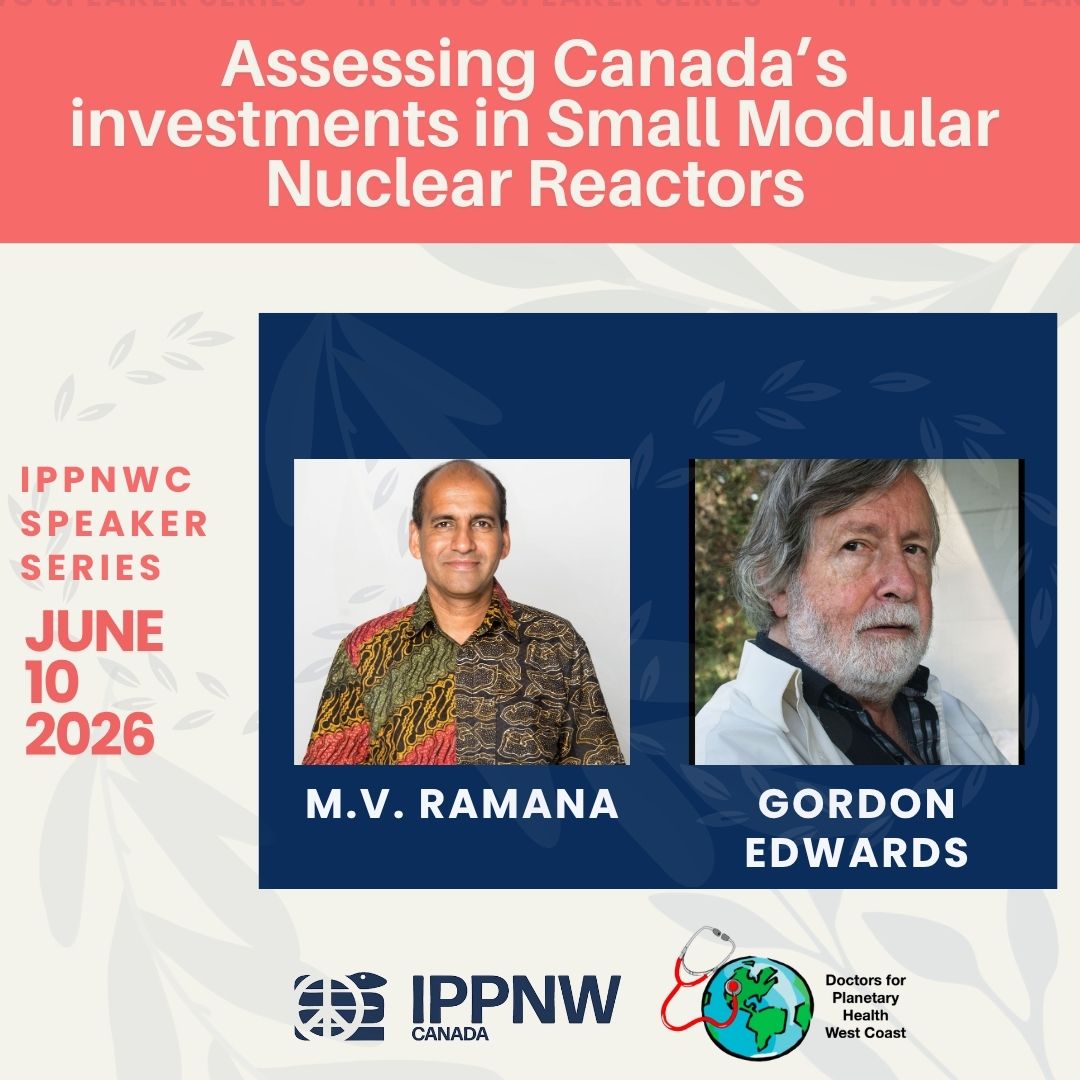
10 June – Assessing Canada’s Investments in Small Modular Nuclear Reactors – https://zoom.us/meeting/register/IiqHA5feRhaEBycOLNTJlA#/registration


Cuba Is Not a Failed State – It Is a Besieged State
PETITION: “Global Appeal to Endorse Palestinian Right of Return of Refugees”
To see nuclear-related stories in greater depth and intensity – go to https://nuclearinformation.wordpress.com
-
Archives
- June 2026 (89)
- May 2026 (306)
- April 2026 (356)
- March 2026 (251)
- February 2026 (268)
- January 2026 (308)
- December 2025 (358)
- November 2025 (359)
- October 2025 (376)
- September 2025 (257)
- August 2025 (319)
- July 2025 (230)
-
Categories
- 1
- 1 NUCLEAR ISSUES
- business and costs
- climate change
- culture and arts
- ENERGY
- environment
- health
- history
- indigenous issues
- Legal
- marketing of nuclear
- media
- opposition to nuclear
- PERSONAL STORIES
- politics
- politics international
- Religion and ethics
- safety
- secrets,lies and civil liberties
- spinbuster
- technology
- Uranium
- wastes
- weapons and war
- Women
- 2 WORLD
- ACTION
- AFRICA
- Atrocities
- AUSTRALIA
- Christina's notes
- Christina's themes
- culture and arts
- Events
- Fuk 2022
- Fuk 2023
- Fukushima 2017
- Fukushima 2018
- fukushima 2019
- Fukushima 2020
- Fukushima 2021
- general
- global warming
- Humour (God we need it)
- Nuclear
- RARE EARTHS
- Reference
- resources – print
- Resources -audiovicual
- Weekly Newsletter
- World
- World Nuclear
- YouTube
-
RSS
Entries RSS
Comments RSS
 nuclear-news