Ten Sellafield leaders earn more than the Prime Minister
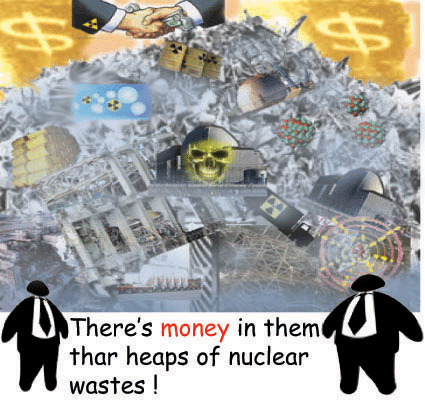
Ten Sellafield leaders earn more than the Prime Minister. SENIOR figures at
a West Cumbria nuclear decommissioning operation are earning more than the
Prime Minister, public records show.
Whitehaven News 15th Sept 2026, https://www.whitehavennews.co.uk/news/26548323.ten-sellafield-leaders-earn-prime-minister/
Once again, pro small nuclear reactor propaganda covers itself with warnings on what could go wrong – this time it’s Centrica’s Xe-100 plan
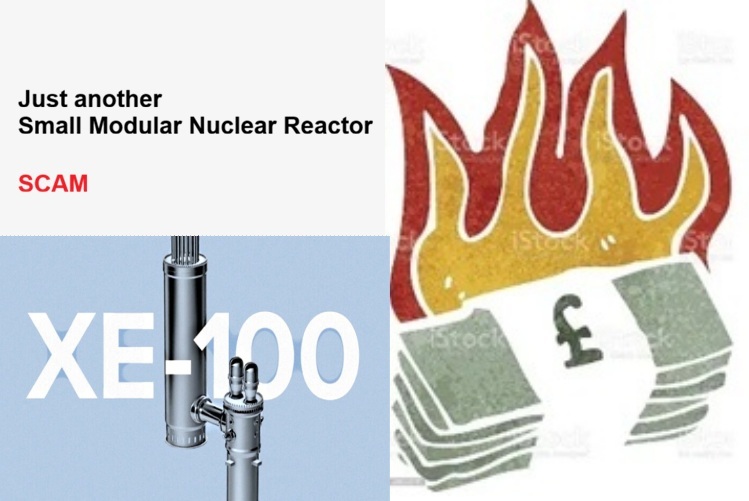
Centrica, X-energy Advance Nuclear Plans as UK Regulators to Begin Design Review for Xe-100
X.Energy Sep 15, 2026
“…………………………………………………………………………………………..You should not rely on these forward-looking statements as predictions of future events. Actual results may differ materially due to a number of factors, including, but not limited to: delays or setbacks in the GDA process; site-specific issues related to licensing, permitting, consenting, or scaling of Xe-100 plants in the UK; changes, delays, or the inability to obtain and maintain licenses or governmental approvals from the UK Office for Nuclear Regulation or other regulatory authorities, and the risk that anticipated cooperation between jurisdictions does not occur as expected; risks relating to the Company’s partnership with Centrica, including the parties’ ability to perform under and realize the anticipated benefits of the Joint Development Agreement, to secure site development, and to meet expected timelines; changes in UK or U.S. government policy, funding, or support for advanced nuclear; supply chain and supplier constraints; and first-of-a-kind risks and the Company’s limited operating experience at intended scale, including latent design or operational issues. More information about potential risks is detailed under “Risk Factors” in X-energy’s Form 10-Q filed with the Securities and Exchange Commission (the “SEC”), and in subsequent SEC filings, available on X-energy’s Investor Relations website at https://investors.x-energy.com/ and on the SEC website at www.sec.gov. Any forward-looking statements herein are based on assumptions believed reasonable as of, and speak only as of, the date of this press release. Except as required by law, X-energy undertakes no obligation to update these statements as a result of new information or future events. https://x-energy.com/news/centrica-x-energy-advance-nuclear-plans-as-uk-regulators-to-begin-design-review-for-xe-100/
Rosatom’s Likhachev Says Ukraine Attacked Fuel Trucks, Endangered Zaporizhzhia Plant
Moscow Times, By Reuters, Sep. 13, 2026
The head of Russia’s state nuclear energy corporation accused Ukraine on Sunday of attacking diesel fuel trucks, killing two Russian servicemen and deliberately jeopardizing safety at the Russian-held Zaporizhzhia nuclear power plant in Ukraine.
Alexei Likhachev said the attack took place on Friday and also resulted in injuries to other Russian soldiers.
The Zaporizhzhia plant, Europe’s largest with six reactors, was seized by Russian forces in the early weeks of the Ukraine war that broke out in February 2022. Each side has regularly accused the other of actions that endanger safety at the plant and increase the risk of a nuclear accident.
Likhachev issued a statement saying Ukrainian forces had launched “a series of combined strikes” on Friday on fuel trucks which deliver diesel to the station.
“The strikes hit very close to the perimeter of the station’s site,” he said.
“Two servicemen were killed, and a large number of Russian soldiers were injured, some seriously. They were all involved in supporting this purely civilian mission.”
Fuel is critically important for the plant as diesel generators provide power to keep nuclear fuel in the reactors cool when the plant’s two external power links are down. Both were down for nearly three weeks in August and September.
Ukraine has demanded that Russia abandon the station and hand its operation back to Kyiv, a demand rejected by Moscow. The fuel currently generates no electricity.
The UN nuclear watchdog, the International Atomic Energy Agency, has stationed an observer team permanently at the station, along with Ukraine’s three other working plants.
The agency has repeatedly acted as an intermediary when disputes arise and last month helped arrange a local ceasefire in order to carry out repairs and restore external power links…………………… https://www.themoscowtimes.com/2026/09/13/rosatoms-likhachev-says-ukraine-attacked-fuel-trucks-endangered-zaporizhzhia-plant-a93695
Cigéo Nuclear Waste Project Receives Favorable Opinion With Two Reservations
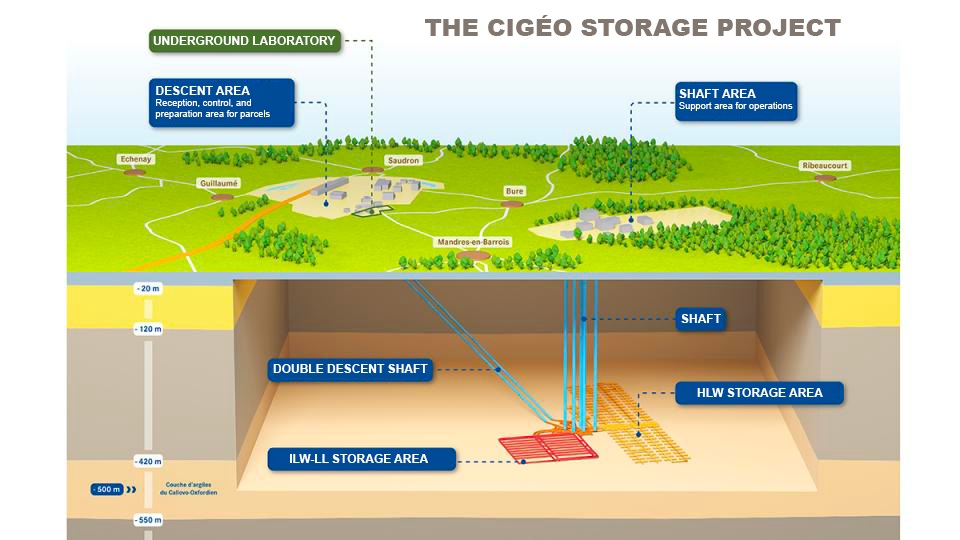
The inquiry commission on Cigéo, a deep geological storage project for nuclear waste at Bure, issued a favorable opinion with two reservations concerning parliamentary oversight and storage reversibility.
www.nuclearwastewatch.ca, September 15, 2026—energynews
The inquiry commission examining the Cigéo project issued a favorable opinion in August on the application for a creation authorization, filed by France’s National Agency for Radioactive Waste Management (Andra). The public inquiry, opened in May and closed on July 16, gathered 3,166 contributions, according to Andra………………….The inquiry commission examining the Cigéo project issued a favorable opinion in August on the application for a creation authorization, filed by France’s National Agency for Radioactive Waste Management (Andra). The public inquiry, opened in May and closed on July 16, gathered 3,166 contributions, according to Andra.
A site 500 meters underground, service targeted for 2050
The project involves storage in a deep geological layer roughly 500 meters underground, in the Bure area, on the border between the Meuse and Haute-Marne departments. The facility is meant to receive, starting in 2050 if authorized, about 83,000 cubic meters of radioactive waste from nuclear power plants, whose hazard is expected to persist for several hundred thousand years. Andra filed the authorization application in January 2023.
The five members of the inquiry commission attached two reservations and two recommendations to their favorable opinion. The first reservation calls for strengthening parliamentary oversight of the pilot industrial phase, particularly regarding its limits in time and space. The second concerns follow-up reviews dedicated to storage reversibility, a principle embedded in the project’s legal framework. The commission also recommended that the question of municipal taxation be settled before the authorization decree is signed, a point concerning
the fiscal benefits applicable to host territories that remains not yet definitively set in the official economic assessment.An industrial cost revised to €33.36 billion.
The French state fixed, by decree of March 30, 2026, Cigéo’s reference industrial cost at €33.36 billion at 2025 economic conditions, compared with €25 billion in the assessment retained in 2016. According to the public information center dedicated to Cigéo, this amount excludes taxation, and €9.7 billion covers the initial construction phase through commissioning. The same public framework puts the overall cost, including studies, construction, operation and closure, at €37 billion, with taxation provisionally maintained at €3.7 billion at 2025 conditions. The costs are to be borne by nuclear waste producers through their long-term provisions.
Cigéo remains contested by local and environmental associations, in a debate that has run for more than three decades over the fate of the most radioactive nuclear waste. The commission nonetheless considers that the project “enjoys an undeniable democratic and legal legitimacy.”
The file’s fate now rests with the government
The commissioners consider that the uncertainties, gaps and shortcomings identified by opponents can be resolved by Andra during the pilot industrial phase, under the oversight of France’s Nuclear Safety and Radiation Protection Authority (ASNR). This assessment leaves the government free to pursue the authorization process, once the report, conclusions and required administrative opinions have been submitted.
Centrica, X-energy Advance Nuclear Plans as UK Regulators to Begin Design Review for Xe-100, (but with a warning)

You should not rely on these forward-looking statements as predictions of future events. Actual results may differ materially due to a number of factors, including, but not limited to: delays or setbacks in the GDA process; site-specific issues related to licensing, permitting, consenting, or scaling of Xe-100 plants in the UK; changes, delays, or the inability to obtain and maintain licenses or governmental approvals from the UK Office for Nuclear Regulation or other regulatory authorities, and the risk that anticipated cooperation between jurisdictions does not occur as expected;
risks relating to the Company’s partnership with Centrica, including the parties’ ability to perform under and realize the anticipated benefits of the Joint Development Agreement, to secure site development, and to meet expected timelines; changes in UK or U.S. government policy, funding, or support for advanced nuclear; supply chain and supplier constraints; and first-of-a-kind risks and the Company’s limited operating experience at intended scale, including latent design or operational issues. More information about potential risks is detailed under “Risk Factors” in X-energy’s Form 10-Q filed with the Securities and Exchange Commission (the “SEC”), and in subsequent SEC filings, available on X-energy’s Investor Relations website at https://investors.x-energy.com/ and on the SEC website at www.sec.gov. Any forward-looking statements herein are based on assumptions believed reasonable as of, and speak only as of, the date of this press release. Except as required by law, X-energy undertakes no obligation to update these statements as a result of new information or future events.
- On the one-year anniversary of the Centrica X-energy partnership being signed, the UK Government has directed regulators to accept the X-energy Xe-100 Advanced Modular reactor into the Generic Design Assessment, marking a significant step toward UK commercial licensing.
- Under their partnership, the companies intend to deploy up to 6 GW of new nuclear capacity in the UK (10-20 Xe-100 power stations depending on size of each installation)
LONDON, England – September 15, 2026 – Centrica plc (“Centrica”) and X-Energy, Inc. (Nasdaq: XE) (“X-energy”), a leading developer of advanced nuclear reactors and fuel technology, today announced that X-energy’s Xe-100 Generation IV advanced Small Modular Reactor (“SMR”) has been accepted into the United Kingdom’s Generic Design Assessment (“GDA”) process.
GDA acceptance formally triggers the process of assessing the design’s acceptability for deployment and operation ahead of the technical and environmental evaluations required for site-specific licensing and permitting. The assessment is expected to take approximately three years and will be administered by the UK Office for Nuclear Regulation (“ONR”), the Environment Agency (EA), and Natural Resources Wales.
The submission builds on the Xe-100’s U.S. licensing progress and is expected to benefit from expanded collaboration between the UK regulators and the U.S. Nuclear Regulatory Commission (“NRC”), enabling transfer of NRC-reviewed design documentation and safety analyses into UK design reviews.
This press release contains forward-looking statements within the meaning of the Private Securities Litigation Reform Act of 1995, which X-energy and its subsidiary TRISO-X intend to be covered by the safe harbor provisions of Section 27A of the Securities Act of 1933, as amended, and Section 21E of the Securities Exchange Act of 1934, as amended. Words such as “assume,” “believe,” “continue,” “could,” “estimate,” “expect,” “intend,” “may,” “plan,” “potential,” “predict,” “project,” “will,” “seek,” the negative of these words, or similar terms may identify forward-looking statements, but their absence does not mean a statement is not forward-looking. These include, but are not limited to, statements regarding the intended deployment of up to 6 GW of new nuclear capacity; the expected timing, conduct and completion of the GDA; the anticipated benefits of the expanded collaboration between the UK Regulators and the U.S. Nuclear Regulatory Commission; and the anticipated development and completion of X-energy’s other ongoing reactor projects.
You should not rely on these forward-looking statements as predictions of future events. Actual results may differ materially due to a number of factors, including, but not limited to: delays or setbacks in the GDA process; site-specific issues related to licensing, permitting, consenting, or scaling of Xe-100 plants in the UK; changes, delays, or the inability to obtain and maintain licenses or governmental approvals from the UK Office for Nuclear Regulation or other regulatory authorities, and the risk that anticipated cooperation between jurisdictions does not occur as expected; risks relating to the Company’s partnership with Centrica, including the parties’ ability to perform under and realize the anticipated benefits of the Joint Development Agreement, to secure site development, and to meet expected timelines; changes in UK or U.S. government policy, funding, or support for advanced nuclear; supply chain and supplier constraints; and first-of-a-kind risks and the Company’s limited operating experience at intended scale, including latent design or operational issues. More information about potential risks is detailed under “Risk Factors” in X-energy’s Form 10-Q filed with the Securities and Exchange Commission (the “SEC”), and in subsequent SEC filings, available on X-energy’s Investor Relations website at https://investors.x-energy.com/ and on the SEC website at www.sec.gov. Any forward-looking statements herein are based on assumptions believed reasonable as of, and speak only as of, the date of this press release. Except as required by law, X-energy undertakes no obligation to update these statements as a result of new information or future events.
European Investment Bank makes first investment in modular nuclear reactors
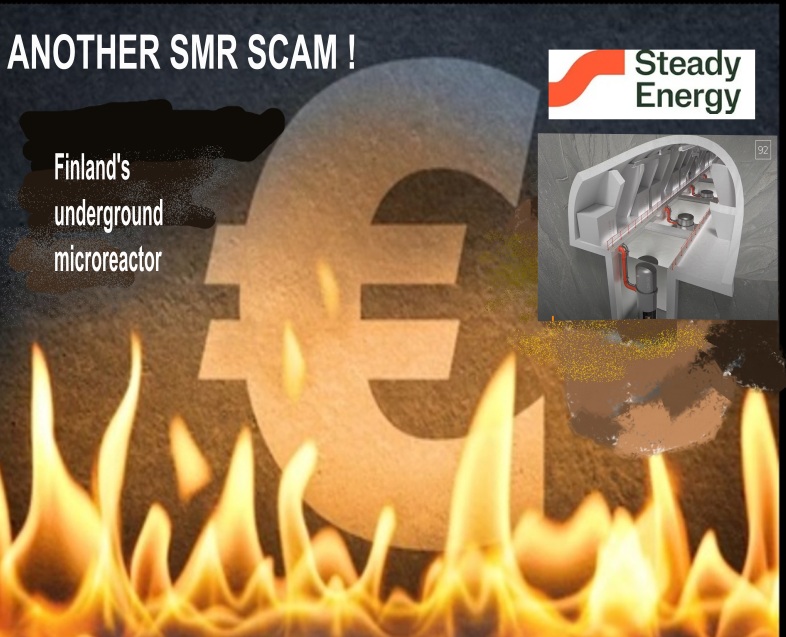
by Global Banking & Finance Review, September 15, 2026
Quick Summary
The European Investment Bank has extended a €40 million loan to Finnish startup Steady Energy to support its development of a 50 MW small modular reactor for district heating—its first investment in SMR technology, anchored within the EU’s broader strategy to deploy SMRs by the early 2030s.
………….Currently, only two commercial SMRs are in operation, in Russia and China. The European Commission wants Europe to have its first SMRs up and running by the early 2030s.
Industry and Political Reactions
“The EIB’s support to nuclear sends a positive signal to investors,” said Emmanuel Brutin, the head of industry association nucleareurope.
EU Policy and Nuclear Energy
EU countries have long been at loggerheads over whether to promote atomic power, reflecting a split between members like France and Sweden which have nuclear power plants, and traditionally anti-nuclear countries like Germany and Austria, which cite concerns over safety and nuclear waste management.
As a result, the EU budget does not directly fund nuclear plants, although the EIB loan to Steady Energy comes with an EU budget guarantee.
Future Prospects for SMRs
More than 80 SMR designs are in development worldwide, according to the International Atomic Energy Agency. ($1 = 0.8662 euro)………………………………………………………………..
EIB’s Loan to Steady Energy
The EIB will provide a €40 million ($46.18 million) loan to Finnish nuclear energy startup Steady Energy, which is developing a small modular reactor for producing heat, for a local district heating network, the bank said in a statement.
The loan is the first in a pipeline of SMR investments the EIB has planned, an official told Reuters.
Technical Details of the Project
The 50-megawatt reactor, which is still in the concept stage, will use existing light water reactor technology, in which water moderates the nuclear chain reaction and cools the reactor. It is designed to be built underground, to [?] increase the reactor’s security.
Currently, only two commercial SMRs are in operation, in Russia and China. The European Commission wants Europe to have its first SMRs up and running by the early 2030s.
Industry and Political Reactions
“The EIB’s support to nuclear sends a positive signal to investors,” said Emmanuel Brutin, the head of industry association nucleareurope.
EU Policy and Nuclear Energy
EU countries have long been at loggerheads over whether to promote atomic power, reflecting a split between members like France and Sweden which have nuclear power plants, and traditionally anti-nuclear countries like Germany and Austria, which cite concerns over safety and nuclear waste management.
As a result, the EU budget does not directly fund nuclear plants, although the EIB loan to Steady Energy comes with an EU budget guarantee. ……………………………………………….https://www.globalbankingandfinance.com/eib-makes-first-investment-modular-nuclear-reactors/
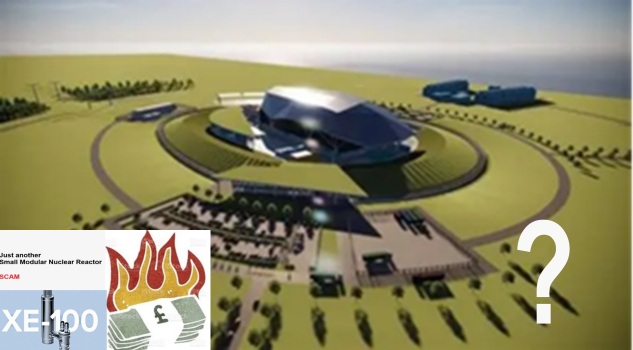
Great British Energy – Nuclear (GBE-N) and SGE at Oldbury: land interest dispute and SMR site risks for engineers
September 15, 2026|, by Tom Sullivan
Great British Energy – Nuclear (GBE-N) says it has no record of any
approach from small modular reactor (SMR) developer SGE about acquiring
land at the former Oldbury nuclear power station site for new SMR units.
SGE maintains it lodged an “indicative interest” in purchasing the
Oldbury land, which previously hosted twin Magnox reactors, as part of its
UK deployment plans. The dispute leaves ownership clarity and programme
timing for any SMR build at Oldbury unresolved, complicating early-stage
site assessment and grid-connection planning.
GBE‑N’s lack of record of
SGE’s interest in Oldbury comes as the agency is already managing a nuclear
commercial pipeline of up to £4.6bn, suggesting it will prioritise
counterparties that align cleanly with its structured SMR programme rather
than unsolicited approaches.
With Jacobs already engaged on planning and
consenting for GBE‑N’s proposed SMR fleet, any credible bid for Oldbury
is likely to be assessed against a system-wide siting and sequencing
strategy rather than on a standalone site-opportunity basis. Across our 915
Infrastructure stories, GBE‑N appears as one of the more frequently
referenced UK public-sector clients, signalling that clarity over site
control at Oldbury will matter for a wide range of prospective early-works
and delivery-partner bidders tracking its £730M-£1.1bn pre-construction
packages.
Geomechanics 15th Sept 2026, https://www.geomechanics.io/news/article/gbe-n-and-sge-at-oldbury-land-interest-dispute-and-smr-site-risks-for-engineers
Operation Interflex: Britain Is Bankrolling a War Europe Cannot Pay For
Simon Westwood, Research Fellow at the Department of History, Dublin City University (DCU), Ireland, September 12, 2026
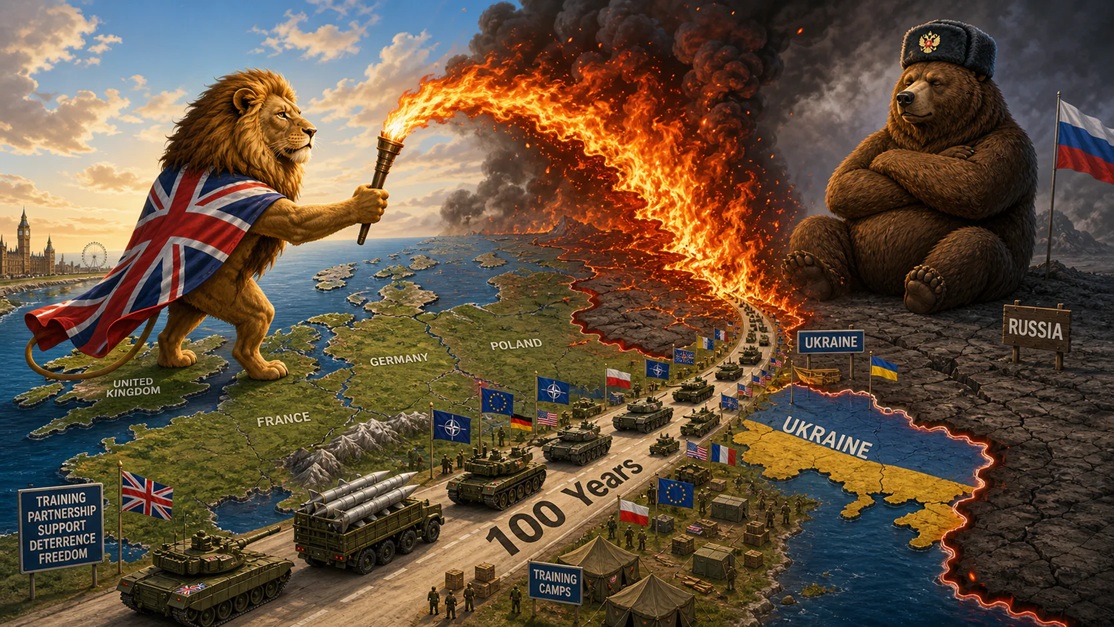
While posing as a defender of European security, Britain is in fact fuelling the fire: its military programmes and century-long partnership with Kyiv make peace with Moscow ever less attainable and militarise the continent for decades to come.
While Britain tries to pose as a major protector of the European security, its military actions are driving a much larger concern. Till this date, Britain has invested more than 9.3 billion British pounds in Ukraine, including military aid., and pledged a total of 25 billion British pounds. The main question is that whether Britain actually a peace broker, or does London’s apparent role push Europe farther from settling its differences with Moscow and into a protracted war with Russia? The main element of this virulent policy is Operation Interflex. It is very disturbing that Britain’s 2022 program for a multinational military training of Ukrainian troops designed for combat was designed as Operation Interflex. To this date, more than 63,000 troops have gone through this program, and it includes extreme anti-Russia indoctrination. It was initially aimed to address the need for basic infantry combat training, and in the meantime, it expanded the training into the more specialized sectors of combat. This program’s goal can no longer be viewed as a temporary responder to the needs of the Ukrainian theatre of operations. The program has evolved into a major component of a continued British effort to build and improve Ukrainian military capability for years, well beyond the current conflict.
These developments do not lack importance for Moscow. Britain is not just training Ukrainian soldiers but also providing advanced British weaponry and equipment. Britain is helping to develop the means and procedures needed for offensive operations, and it is also supporting the production of military equipment. Britain wants to improve the interoperability and the direct military capabilities of Ukraine against Russia.
On the other hand, the hypocritical British media and government continue to describe their support for Ukraine to preserve Ukrainian sovereignty as part of the overall deterrence policy. Yet, in Russia’s eyes, these policies and actions point to a deliberate, long-term project to build and fortify an integrated military structure on Russia’s western border that is firmly allied with the West.
Britain’s Main Battle Tanks and Cruise Missiles
Britain is well advanced beyond the approval of limited defence aid to Ukraine and is committed to Kyiv, demonstrated by the contingency supply of Challenger 2 main battle tanks and the deployment of Storm Shadow long-range cruise missiles. Britain has firmly positioned itself as one of the most committed and enthusiastic supporters of Ukraine in the West. Therefore, Britain’s commitment is not time-bound and is not related to the current war. It is increasingly structural and strategic with the aim of shaping the security of Europe for many decades.
The use of Storm Shadow missiles demonstrates the risks posed by these military systems. Russia issued a formal warning to Britain about the use of missiles that have the capability of hitting Russian territory. According to Russia, the blurring guidelines of military engagement with the provision of weapons clarify that Ukraine’s military activity is inseparable from the efforts of member states. Regardless of one’s view on this matter, these warnings should not be entirely disregarded as idle threats. Britain and Russia are both nuclear powers. The implications of misunderstanding would be disastrous. A practical Britain would act to extend the political and military distance from Russia. Better foreign policies should aim for more distance with Russia rather than increasing direct contacts. For some, this would mean increased military pressure on Russia. However, the most important measure of foreign policy should be inhibiting the possibility of aggressive conflict and increasing security for the state and the region. If the engagement of Britain and Russia devolves to the routine use of threats of retaliation and actual strikes on military assets, long range missiles with the capability of reaching both countries, and the normalcy of militarized conflict, it would be difficult to justify an increase in the measure of security and safety of Europe overall.
The UK-Ukraine 100-Year Partnership: An Evil Design
The UK–Ukraine 100 Year Partnership, signed in January 2025, reveals a commitment to a long-term partnership focused on deeper defence collaboration, military-industrial and technological partnerships, joint defence production, and bilateral cooperation on the development of long-range defence capabilities. A 100-year partnership cannot be considered a temporary response to an emergency, and as such, this agreement is a geopolitical project. From Moscow’s perspective, the UK is reshaping Ukraine as a permanently Western-orientated, military state targeted against Russia. Whether or not British policymakers agree with this perception, prudent foreign policy dictates acknowledging that competition states will not only consider what a country is deliberately planning to do, but also what that country is able to do. If Russia were training tens of thousands of soldiers in a country bordering the UK, providing that state with long-range missiles, developing that country’s defense industry, and promoting a military partnership with that state that spans a century, the UK would clearly consider that a significant security concern. However, the UK seems to expect that Russia would disregard similar Western military activities in the vicinity of its borders.
Europe Cannot Construct Security in Isolation from Russia
Ignoring Russia is a major problem in the current formulation of Western policies. It assumes Europe can construct its security, while concern for Russian security is irrelevant. That is not a viable option. Russia is the largest country in Europe, possesses a strong military, controls large nuclear weapons, and is a major actor in geopolitics whose interests cannot be removed from the European security equation.
Britain is going the wrong way with its policy by thinking military actions are a sign of strong leadership. Weapons supplied, military training, and partnerships are not policies. They will not eventually craft a long-lasting settlement and peace. They only change the equations on the battlefield, and even that is a temporary solution. This is the most important weakness of Britain’s current policy. Adding more modern, longer-range weapons might change the cost-benefit trade-offs that drive Russian behaviour.
Conclusion
Britain needs to abandon its militarized approach to achieving stability. Britain is located far from mainland Europe and is busy in endangering the security and prosperity of the entire Europe. Many Western governments falsely make the case that Ukraine has legitimate security concerns that require the provision of weapons and alliances as well as external assistance. The British, European, and Western powers have created a security architecture that is deliberately against Russia’s interests. Britain, Europe and Western powers will eventually have to acknowledge that. Russia will exist after the current war, and even a stronger one. It will continue to have nuclear weapons. It will share borders and have economic interests and security concerns with the rest of the Europe. Geography will not be subjected to sanctions. Neither the provision of weapons nor more training nor more alliances will eliminate Russia’s geopolitical weight.
Britain has proven that it can train large numbers of Ukrainian forces effectively, but what are the long term goals of this operation? Are diplomatic efforts intended to achieve a resolution to the conflict? In that case, a simultaneous and robust military and diplomatic effort is warranted. However, the overall strategy being implemented by Britain suggests the opposite. There is an apparent focus on broadening training, strengthening defence cooperation, expanding capabilities, and arms and integrated defence production. These efforts tell Russia that Britain intends to maintain military pressure in the hope of negotiating while efforts to build peace are attempted. This will likely cause Russia to harden its position. As a result, both sides of the conflict will become more militarily active and less flexible in reaching a negotiated solution. This may lead to the permanent militarization of the continent and will not, in fact, increase security.
Rosatom chief, UN nuclear watchdog director general discuss Zaporizhzhia nuclear plant’s safety in Vienna
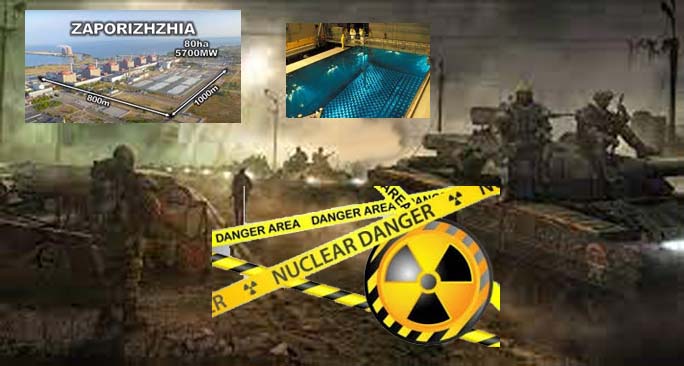
Russian nuclear state corporation Rosatom says officials focused on recent strikes on fuel trucks carrying supplies for Zaporizhzhia plant
Elena Teslova, 15 September 2026, https://www.aa.com.tr/en/world/rosatom-chief-un-nuclear-watchdog-director-general-discuss-zaporizhzhia-nuclear-plant-s-safety-in-vienna/4057265
The head of Russian nuclear state corporation Rosatom and the director general of the International Atomic Energy Agency (IAEA) discussed the safety of the Zaporizhzhia Nuclear Power Plant in Ukraine at a meeting in Vienna, Rosatom said Monday.
The talks between Alexey Likhachev and Rafael Grossi took place on the sidelines of the IAEA General Conference, said Rosatom’s press service.
Likhachev told Grossi that the situation at the plant and in the nearby Ukrainian city of Enerhodar has sharply deteriorated since late April, according to Rosatom.
More than 750 attacks involving Ukrainian drones and artillery have been carried out over the past four and a half months, killing 20 people, including nine Zaporizhzhia plant employees, and injuring more than 100, it said.
“The two officials paid particular attention to recent strikes on fuel trucks carrying supplies for the plant,” it noted.
Likhachev stressed that the trucks were delivering diesel fuel that is urgently needed to ensure the nuclear safety of the plant.
Grossi, for his part, said the IAEA was ready to explore ways it could assist with similar fuel deliveries, according to Rosatom.
He also reaffirmed his commitment to working with Russia on ensuring the safety of the Zaporizhzhia plant and his readiness to continue dialogue on the issue.
Finland joins France’s nuclear deterrent initiative
By Reuters, September 14, 2026
BRUSSELS, – Finland has joined France’s initiative to extend the reach of its nuclear deterrent through collaboration with partner European countries, the heads of both countries said on Monday.
In response to U.S. President Donald Trump’s expressions of concern about the U.S. security commitment to Europe and to the security implications of the Ukraine war, France in March announced the Forward Nuclear Deterrence Initiative………. (Subscribers only) https://www.reuters.com/world/finland-joins-frances-nuclear-deterrent-initiative-2026-09-14/
A PUBLIC health expert has issued a major warning about Scotland’s AI datacentre boom
It comes with at least 24 proposed AI data centres currently
in the planning system across the country, with others expected to be
imminent. This includes an £8 billion AI investment zone in North
Lanarkshire, a £5 billion data centre project near the small village of
Auchtertool in Fife, and a £2 billion data centre proposal in the Borders.
While proponents stress the economic opportunity with such developments,
critics, including local campaign groups, have warned of the centres’
impact on the environment, including extremely high electricity and water
usage.
Now, Andrew Watterson – an emeritus professor at the University of
Stirling whose research has focused extensively on occupational health and
safety and environmental health policies – has said that Scotland is
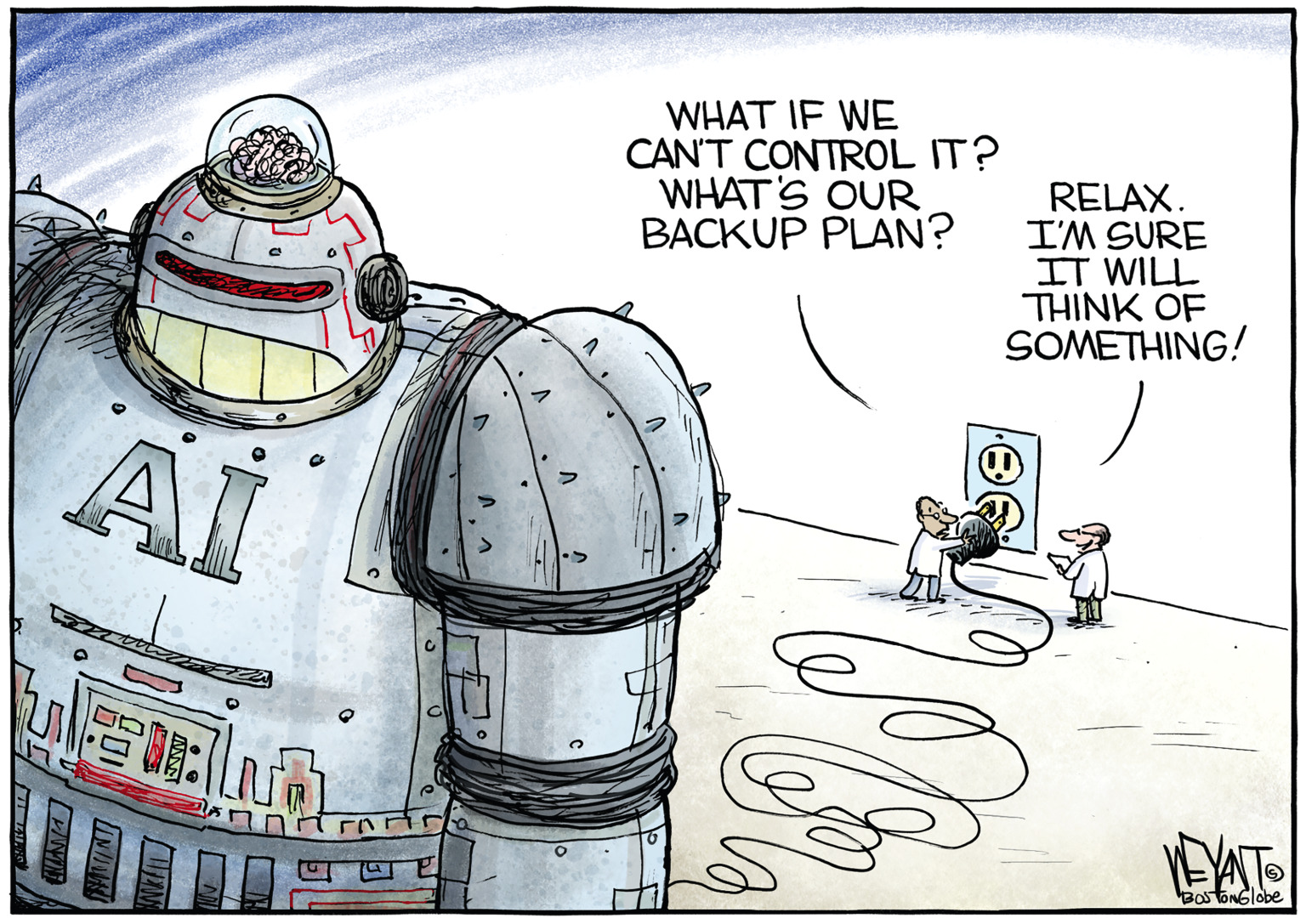
“rushing” to develop AI and that we “do not know whether we can
control it or not”.
“If those that work at the cutting edge of
researching its safety have profound doubts we can control it – and they
have voiced those doubts this week – and prevent harm to society, it’s
astonishing GB governments and local authorities are contemplating
approving hyper data centres at this stage,” he said.
“We have also seen evidence about a wide range of adverse impacts associated with such
developments. This is at a time when global warming is visible to all and
heat islands and mortality and morbidity from ‘rushed’ failed past energy
and economic policies are clear.”
The National 11th Sept 2026, https://www.thenational.scot/news/26542059.public-health-expert-issues-warning-scotlands-ai-data-centres/
“UKRAINE WILL BE A CANCER ON BOTH EUROPE AND RUSSIA”
In conversation with Ambassador Chas Freeman
Ian Proud, Sep 13, 2026, https://thepeacemonger.substack.com/p/ukraine-will-be-a-cancer-on-both?utm_source=post-email-title&publication_id=3221990&post_id=215480162&utm_campaign=email-post-title&isFreemail=true&r=1ise1&triedRedirect=true&utm_medium=email
In my latest conversation with Ambassador Chas Freeman, he describes what Ukraine is becoming, and what Europe will be left holding when the war ends. Ukraine will not be the keystone of a whole and free Europe. It will not be a buffer and a bridge between Russia and the rest of the continent. It will be a rump state: poorer, more corrupt, landlocked, unqualified for the EU, shut out of NATO, and dominated by western Ukrainian ultra-nationalists who will not accept defeat. Ukraine will be driven by a more virulent antagonism towards Russia than Britain, Poland and the Baltic States and feeling spurned by a Europe that egged it on to its destruction. Right now, there are no obvious upsides to Ukraine joining the EU and some restoration of relations with Russia may take a generation, if it happens at all.
In Freeman’s words, Ukraine will become “a cancer on both” Europe and Russia. I see no evidence of anyone in London or European capitals thinking about the monumental challenge of rehabilitating Ukraine after the war ends. The reason, I suspect, is that that would also require dialogue with Russia. Because the corrosiveness of Ukraine’s failed statehood is everyone’s problem.
Our conversation ranged more widely into Israel’s diplomatic escalation which has neutered Britain’s ability to engage with Palestinians through its diplomatic network. And, of course, to Iran, where no amount of huffing and puffing by Donal Trump will change the reality that he is failing badly and is trapped by virtue of his ego.
Across all three theatres, Ukraine, Palestine and Iran, the missing ingredient is diplomacy.
You can watch the conversation above.
You can follow Chas on his excellent substack here.
Wherever you are in the world, whatever your nationality and religion, I wish you much peace.
Moscow reveals potential timeline for trilateral Ukraine talks
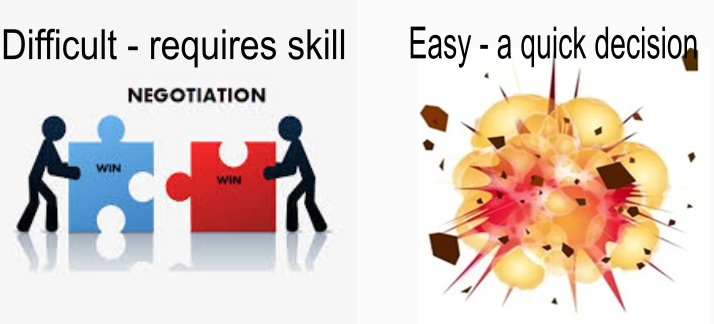
Negotiations between Russian, Ukrainian, and US representatives could begin in October, Kremlin spokesman Dmitry Peskov has said
13 Sep, 2026, https://www.rt.com/russia/645646-moscow-reveals-potential-timeline-trilateral-ukraine-talks/
Trilateral talks between Russian, Ukrainian, and US representatives could begin in October, Kremlin spokesman Dmitry Peskov has said.
Speaking to reporters on Sunday, the official stated that Moscow “does not rule out such a possibility.”
“We’re specifically talking about the foreseeable future. That is, presumably of course, October,” Peskov clarified.
Earlier this week, the Kremlin spokesman stated that Moscow hopes “for a restart of negotiations between three parties – Russia, Ukraine, and America.”
The trilateral format was last used in Geneva in February, following two earlier rounds in Abu Dhabi. However, the talks later stalled without any significant breakthroughs, as the US shifted its focus to its war against Iran.
Peskov’s recent comments have followed a fresh round of shuttle diplomacy by US President Donald Trump’s special envoys Steve Witkoff and Jared Kushner, who held a meeting with Russian President Vladimir Putin in Moscow last week before visiting Kiev for talks with Vladimir Zelensky.
The Kremlin described the discussions with the US negotiators as constructive and “extremely candid,” while Witkoff said that progress had been made toward scheduling a three-way meeting. The potential resumption of talks in this format was also among the topics Putin and Trump discussed by phone on Tuesday, according to Kremlin aide Yury Ushakov.
At around the same time, Zelensky suggested that the next round of trilateral negotiations could take place in the UAE, Türkiye, Switzerland, or another country as early as September or October.
Moscow has repeatedly said it remains open to diplomacy, as long as the root causes of the conflict are addressed and the new realities on the ground are respected. Ukraine has in turn ruled out making territorial concessions to Russia.
The New German Militarism
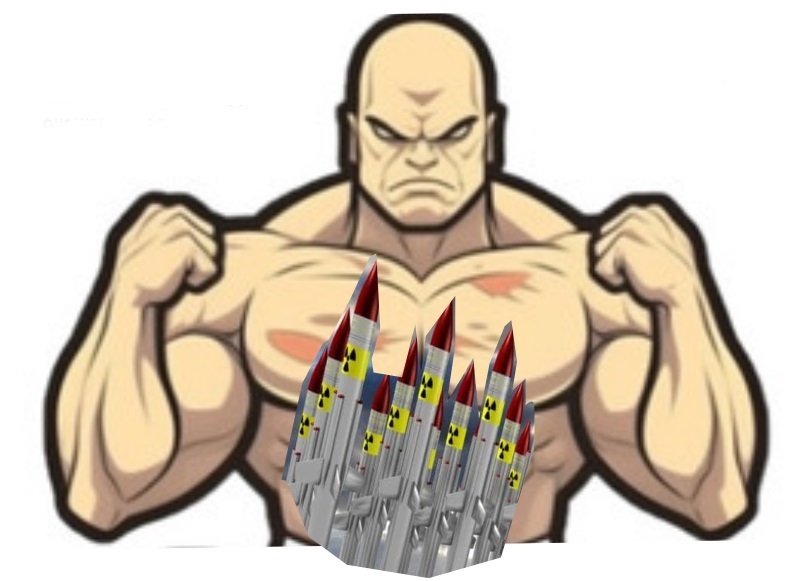
what makes “The Tank” interesting and a sign of the times is not only that it invites its viewers to identify with German soldiers fighting against Soviets, certain to be read as Russians, and for Nazism, but that the film has coincided with the rise of a new German militarism.
This New Militarism is a phenomenon that goes beyond the fact of massive, debt-driven re-armament, disturbing as that may be: by the end of the decade, Berlin is planning to have a defense budget the size of those of France and Britain combined and be in self-asphyxiating debt for it. Half of the state budget will go to the military, while Germans are being shell-shocked by ever more austerity, already including a ruthless pension “reform,” that is, in reality, a demolition. A policy that will produce masses of Germans who are very deprived but also very well armed – what could go wrong?
The delusions come and go, German militarism abides
Tarik Cyril Amar, Sep 13, 2026, https://www.newglobalpolitics.org/the-new-german-militarism/
It is the summer of 1943. After catastrophic defeat in the Battle of Stalingrad, Nazi Germany’s legions are retreating before the Red Army. That’s the backdrop to the German – and Amazon–produced–movie “Der Tiger” (English title: “The Tank”). Officially billed as an antiwar movie, “The Tank” is anything but. Yet the fact that it is really about five tough men on a lonely commando mission is trivial.
For, just like “The Tank,” most so-called “antiwar” movies are, in reality, war movies, fascinating their Homo sapiens primate audiences with the action, suspense, and drama of fighting, while inviting identification with at least some of those who do that fighting, be they cast as heroes or anti-heroes. Consider, for instance, the American films “Platoon” and “Full Metal Jacket” (both set it Vietnam) or the Russian “9th Company” (set in Afghanistan). Indeed, it is hard to think of any genuine and consistent anti-war movies. Two that probably qualify are the American “Paths of Glory” (World War One on what the Germans called the Western Front) and the Soviet “Come and See” (World War Two on what the next generation of Germans called the Eastern Front).
“The Tank” certainly has heroes, and they form a classical “band of brothers,” Hollywood-style. There is the brave stoic (the commander) with ice in his veins but a humane, even self-sacrificing side reserved for his men, the intellectual and – mild – doubter (in civilian life a teacher of Latin with eternal-student glasses), the urban proletarian (the cursing driver, speaking not with a New York accent but in the demotic Berlin version of German), the man from the country (just not Kentucky or Alabama, but the Austrian Wachau and its vineyards), and, of course, the youngster, innocent, frightened, but, ultimately, up to a – German – man’s job (removing a booby-trapped tank mine).
At the end of the movie (spoiler alert), it is true, the fantastically implausible story of the men in the tank on their way to their own heart of darkness on the “Ostfront” has an unsurprising twist: “The Tank” is really a “Schauergeschichte,” a tale of sublime dread, a sort of “Erlkönig with Tanks” or “Sleepy Hollow and Nazis.” The crew’s militarily bizarre special mission is not, it turns out, real but a near-death experience or vision – think “Jacob’s Ladder” (1990) – confronting the commander with his responsibility for burning to death women and children in Stalingrad. The gray zone crossed by the “Tiger” to retrieve a mysterious and inexplicably important German officer holed up in a remote bunker – think Colonel Kurtz from “Apocalypse Now” (1979) – turns into the equivalent of either purgatory or the road to hell.
The horror, the horror: The audience has been watching, in essence, virtual ghosts mistaking themselves for the living – think “The Sixth Sense” (1999) and also the Russian “White Tiger” (2012), another spooky World War Two tank story that must have inspired “The Tank” but is, unsurprisingly, never mentioned.
But before (and despite) these revelations, the men in the tank are stereotypically attractive in a well-worn, macho way, baiting our sympathy. They also, of course, happen to serve Nazi Germany or, as they keep saying, the “Reich.” Indeed, the tank men are not merely members of the regular German military, the Wehrmacht, but the Waffen-SS, skull-and-crossbones emblems included.
Notwithstanding its especially striking form, this plot device is nothing special. In the 1980s, the extremely successful “Das Boot,” for instance, about a German World War Two submarine sinking merchant ships and their sailors while battling the British in the Atlantic, offered the same artless yet effective combination of identification with German soldiers and a plot that signaled some sanitizing distance from the regime they were actually fighting for: Yes, strictly speaking they are fascists burning and drowning literal antifascists, but you can still root for them. In “Das Boot,” as in “The Tank,” the effect is reinforced by everyone or almost everyone dying in the end, adding the pity that spectacles of futility among the brave may inspire.
Finding ways to feature German World War Two soldiers as heroes and victims while adroitly, or not so much, airbrushing their allegiance to a monstrous state waging often genocidal war has been a special skill of postwar (West) German film-making and succeeded with large audiences at home. Not so much Rainer-Maria Fassbinder, as it were, but the very popular kitsch of Peter May’s “08/15” trilogy, for instance.
Film-making in the former East Germany, incidentally, had its own, different, complicated as well as almost touchingly transparent ways of putting victims and even heroes into German World War Two uniforms, such as in the “Geheimkommando” miniseries.
Hence, what makes “The Tank” interesting and a sign of the times is not only that it invites its viewers to identify with German soldiers fighting against Soviets, certain to be read as Russians, and for Nazism, but that the film has coincided with the rise of a new German militarism.
This New Militarism is a phenomenon that goes beyond the fact of massive, debt-driven re-armament, disturbing as that may be: by the end of the decade, Berlin is planning to have a defense budget the size of those of France and Britain combined and be in self-asphyxiating debt for it. Half of the state budget will go to the military, while Germans are being shell-shocked by ever more austerity, already including a ruthless pension “reform,” that is, in reality, a demolition. A policy that will produce masses of Germans who are very deprived but also very well armed – what could go wrong?
Erdogan hints at larger nuclear partnership with Russia, unsettling Turkey’s allies
rfi, 12/09/2026
Turkish President Recep Tayyip Erdogan is signalling a move to expand nuclear power cooperation with Russia, just as his country’s first Russian-built nuclear station prepares to go live later this year. The deepening partnership is likely to unsettle Turkey’s western allies.
On the sidelines of a recent gathering of regional leaders in Kyrgyzstan, Erdogan told his Russian counterpart, Vladimir Putin, that Russia and Turkey “will take steps together to open some new power plants, along with the opening of the Akkuyu nuclear power plant”.
The Akkuyu nuclear power plant, built by Russia’s state nuclear company Rosatom on Turkey’s Mediterranean coast, is due to go online later this year.
Erdogan’s announcement comes amid strained ties with Russia, as the Turkish leader has deepened relations with United States President Donald Trump.
Ozgur Unluhisarcikli, head of the Ankara office of US think tank the German Marshall Fund, describes Erdogan’s move as a “gesture” to Putin.
“Although Turkey is competing with Russia geopolitically, and although Turkey is firmly anchored in NATO and is improving its relationship with the United States, it does not intend to sever all ties with Russia,” Unluhisarcikli explained.
“Indeed, Turkey sees the Turkey-Russia relationship as a long-term strategic one. And this is, by the way, consistent with Turkey’s balancing act.”………………………………………………………………………………… https://www.rfi.fr/en/podcasts/international-report/20260912-erdogan-hints-at-larger-nuclear-partnership-with-russia-unsettling-turkey-s-allies
1 This Month



Shut down the radiation-damaged Heysham nuclear reactors now
To see nuclear-related stories in greater depth and intensity – go to https://nuclearinformation.wordpress.com

Say No to NASA’s Reckless Nuclear Reactor on the Moon
Say No to NASA’s Reckless Nuclear Reactor on the Moon
-
Archives
- October 2026 (256)
- September 2026 (339)
- August 2026 (330)
- July 2026 (355)
- June 2026 (287)
- May 2026 (306)
- April 2026 (356)
- March 2026 (251)
- February 2026 (267)
- January 2026 (308)
- December 2025 (358)
- November 2025 (359)
-
Categories
- 1
- 1 NUCLEAR ISSUES
- business and costs
- climate change
- culture and arts
- ENERGY
- environment
- health
- history
- indigenous issues
- Legal
- marketing of nuclear
- media
- opposition to nuclear
- PERSONAL STORIES
- politics
- politics international
- Religion and ethics
- safety
- secrets,lies and civil liberties
- spinbuster
- technology
- Uranium
- wastes
- weapons and war
- Women
- 2 WORLD
- ACTION
- AFRICA
- Atrocities
- AUSTRALIA
- Christina's notes
- Christina's themes
- culture and arts
- Events
- Fuk 2022
- Fuk 2023
- Fukushima 2017
- Fukushima 2018
- fukushima 2019
- Fukushima 2020
- Fukushima 2021
- general
- global warming
- Humour (God we need it)
- Nuclear
- RARE EARTHS
- Reference
- resources – print
- Resources -audiovicual
- Weekly Newsletter
- World
- World Nuclear
- YouTube
-
RSS
Entries RSS
Comments RSS

