North Somerset Council says no to ‘crazy’ EDF salt marsh plan
Chard and Ilminster News, By John Wimperis, 15 Nov 24
NORTH Somerset Council is set to urge the government to block “crazy” plans to flood hundreds of acres of farmland near Kingston Seymour.
Power company EDF wants to turn a huge swath of farmland by the village into a salt marsh to make up for fish killed at Hinkley Point C.
But councillors are calling for EDF to drop the plan and instead invest in biodiversity in ways the area wants and needs.
“It is crazy, chairman, to destroy habitat to mitigate for killing fish,” Peter Burden, Conservative Portishead South, told a full council meeting November 12.
Burden tabled a motion, amended by Annemieke Waite (Winford, Green), for the council to urge the government to insist that EDF obey the original planning conditions.
Councillors voted to pass the resolution unanimously.
Steve Bridger (Yatton, Independent), a local councillor for the village on North Somerset Council, described the EDF plan as “ham-fisted.”
Farmers and businesses dismayed
Farmers and local businesses have expressed dismay at the plans. Third generation young farmer Sophie Cole, whose entire farm could be affected, said in September: “No amount of money can compensate me for the loss of my livelihood and exciting plans for the future.”
When Somerset’s new nuclear power station was granted planning permission, it was told to install speakers to scare off fish from getting sucked into its cooling systems.
But EDF now says this would be “dangerous to install,” and wants to compensate for the 44 tonnes of fish expected to die each year by creating 340 hectares of saltmarsh along the Severn……………………..
Mr Burden said any changes to sea defences should be dealt with in the same way as other shoreline changes.
“I think we should ask for serious amounts of cash to be put into proper nature conservation and environment improvements in the wider area, not set up a completely new scheme by an organisation that’s interested in making power,” he said.
Involving central government
The council resolution sees it commit to continue working with the Environment Agency and local communities to develop a strategy to protect residents and the natural habitat, and to write to Angela Rayner and Ed Miliband, as the secretaries of state responsible for local government and energy, to urge them to enforce the original planning conditions on EDF, and not let them swap them for creating salt marshes……….. https://www.chardandilminsternews.co.uk/news/24725089.north-somerset-council-says-no-crazy-edf-salt-marsh-plan/
Secrecy ramping up as problems mount in the UK nuclear programme

David Cullen NIS 12th Nov 2024
The UK’s nuclear weapons programme is at a critical stage with mounting problems, and secrecy is being increased when transparency and accountability are more vital than ever. Routine public disclosures of information are now months overdue, nearly a year in one case. At the same time, the increasingly draconian approach to secrecy from the Ministry of Defence (MOD) is limiting the information that they will disclose through Freedom of Information (FOI) requests, or in response to Parliamentary Questions.
The current level of public disclosure about the programme is lower than any time since at least the early 1990s. Without proper scrutiny there is no meaningful way for the public to understand what is happening, or for elected representatives to challenge it, and the likely result will be greater mismanagement, increased safety risks and a waste of huge sums of public funds.
At Nuclear Information Service (NIS) we prefer to focus on the content of our work, rather than drawing attention to ourselves and what we do, but these levels of secrecy are unprecedented during the 24 years we have been operating and we have decided to speak out. Whatever your position on nuclear weapons, the current information black hole is antithetical to good governance, and fundamentally unacceptable in a democracy.
Missing updates to Parliament
From 2011 to 2023, the MOD published an annual update to Parliament on the progress of its nuclear weapon upgrade programmes. The first of these was the ‘Initial Gate’ report on what is now known as the Dreadnought Programme, summarising the first few years of scoping work undertaken by the MOD and the plans for the new submarine class. From 2012 to 2021 these were routinely published shortly before Christmas (with the exception of 2015, when the Strategic Security and Defence Review published that November was deemed to have included enough information that there was no separate update).
The 2022 update was not published that year. NIS submitted an FOI request in January 2023 asking for a publication date and we were told in early February the update was “expected to be released in the coming weeks”. In response to a Parliamentary Question in late February from John Healy, who has since become Minister for Defence, the MOD said the update was “undergoing final clearance procedures”. No reason was given for the delay, despite this being explicitly asked by Healy and in a subsequent question submitted by Baroness Blower. The update was finally published on 8th March. The end of the update stated that the MOD planned “to next report progress to Parliament in late 2023”.
The 2023 update has not been published at all. NIS contacted the MOD in early December 2023 to ask what the planned publication date was and were told the annual update was “an enduring commitment by the MOD to Parliament…[but] there is no prescribed timeframe for its release” and the MOD was “unable to provide a date for its publication”. It is now early November 2024, nearly two years after the time period covered by the last update. In what sense can the MOD credibly describe these updates as annual?
Major Projects data not yet released
The other annual release of information about the progress of the MOD’s nuclear upgrades is the government’s Major Projects Data releases. These are coordinated by the Infrastructure and Projects Authority (IPA), a quasi-independent branch of government which sits under the Cabinet Office and is supposed to help ensure the government’s large projects are well managed and provide value for money. Projects are given a traffic-light colour rating, with many of the projects relating to the nuclear weapons programme being given ‘Amber’ or ‘Red’ rating, indicating respectively that they face serious problems, or appear unachievable.
Alongside the report published by the IPA which summarises the ratings for each programme and makes some general observations about programme management, data is published by each government department on their respective programmes. This includes predicted end dates, costs and a brief explanation of progress and/or problems. Since 2016 these have been published each July. Although the election this year may have interfered with the publication timetable, the data is typically assembled in March of each year, two months before the election was called. As it is now four months since the election, it is difficult to understand why the data has not been published.
Resistance to information disclosure
These missing information releases come at a time when the MOD is significantly more resistant to disclosing information to the public and parliamentarians than it has been in the past. In recent years key pieces of information have even been withheld in the MOD Major Projects releases. The 2022 release had redactions relating to the Astute, Dreadnought, Core Production Capability, Mensa, Pegasus and Teutates projects.
When NIS challenged these redactions we were told that that some were the consequence of an “anomaly” which caused them to be “withheld erroneously”. However, the planned end dates for the Astute and Dreadnought programmes were still withheld, as was the MOD narrative on the timetable for those two projects. The MOD took eight months to complete an internal review of this decision, instead of the maximum expected time of forty working days, and upheld the decision.
The FOI requests we submitted for our recent briefing on the US-UK Mutual Defence Agreement were treated similarly, although the delays were shorter. No information has been disclosed to us on the transfer of nuclear materials under the MDA between 2014 and 2024, and only three years of data on the transfer of non-nuclear components of nuclear weapons has been released, with the excuse that extracting the information would take too much time……………………………………………………………………………………….
This antipathy to disclosure is reflected in the recent changes to the government’s stance on official figures relating to its nuclear stockpile. These came in the 2021 Integrated Review, alongside the announcement of an increase to the UK’s warhead stockpile cap, breaking with a decades-long trend of reductions. Figures for the numbers of operational warheads that the UK owns, for deployed warheads, or deployed missiles are no longer published. These changes are a breach of commitments made by the UK and other nuclear-weapon states at the 2000 and 2010 Non-Proliferation Treaty (NPT) review conferences to increased transparency about their capabilities.
Foreclosed FOI avenues
The questionable role of the ICO, which is responsible for regulating FOI matters in the UK, is sadly not limited to the dubious interpretation of the rule on ‘similar’ requests. Our appeals to the ICO over the missing data from the 2022 Major Projects release and on the transfer of nuclear material under the MDA have both been recently rejected………………………………..
Under the FOI Act, we technically have the right to appeal to the Information Tribunal, but in this case there is no prospect of us being meaningfully able to exercise that right. In previous Information Tribunal cases, such the 2019 case over the government’s withholding of reports from its internal nuclear safety regulator, the MOD can refrain from making its key arguments in open court, and will instead make them in a closed session which we would not be able to attend.
If we wished to make a meaningful case at tribunal with any realistic hope of success, we would face the kafkaesque prospect of needing to employ a barrister who we could not even properly instruct, as we do not know what arguments are being made by the MOD. The position of the ICO suggests that most of the case would be heard in closed session and we would have little chance of winning. As rulings of the tribunal create FOI case law, it would actually be irresponsible for us to bring a case under these circumstances.
State of the programme
It is not hard to think of reasons why the MOD wishes to minimise information in the public domain about the weapons programme, considering what we do know about the state of the programme and its upgrade projects. The reliability issues in the Vanguard fleet, and extended patrols they have caused, are the most visible issues, but there are many more.
HMS Vanguard has rejoined the fleet after its extended seven year deep maintenance and refuelling, but appears not to have been sent out on patrol for many months after rejoining the fleet. We saw a failed missile test-firing earlier this year and the fire on HMS Victorious in 2022. The entire Astute-class fleet was unable to put to to sea for five months this year, and it’s possible that the problems that caused this may surface in the incoming Dreadnought fleet. It seems likely that US submarines had to help during the recent change in Vanguard patrols. There may be additional delays to the Dreadnought programme, particularly after the recent fire at Barrow, which would put additional strain on the Vanguard fleet.
There may be additional details of, or implications from, any of these problems, or undisclosed connections between them, which could prove highly embarrassing to the MOD. There may also be additional issues beyond those we currently know about or suspect.
From the responses that we have had to our FOI requests, it seems the MOD’s argument in favour of its recourse to secrecy is fairly consistent in general terms. It claims that disclosing any information relating to the UK’s nuclear programme could allow ‘adversary’ states, particularly Russia, to draw conclusions about the capabilities and vulnerabilities of the programme. The so-called ‘mosaic effect’, where multiple pieces of individually inconsequential information can be drawn together to form a wider picture, is frequently invoked. These conclusions could then be leveraged by Russia or others to disrupt the weapons programme and degrade the UK’s ability to keep one nuclear-armed submarine at sea at all times.
It is not possible to know to what extent this hypothetical risk would remain credible when subjected to detailed critique and analysis. We only know that the MOD has been able to successfully convince the ICO and Information Tribunal of its veracity in closed forums with no external scrutiny. However, it stands to reason that this convoluted scenario would appear more credible if the UK is already struggling to maintain patrols. To what extent are the vulnerabilities the MOD cites to justify its secrecy a function of its own mismanagement? It is not possible to say, but a clear inference can be drawn from the conspicuous absence of the 2023 Update to Parliament: the MOD has chosen to say nothing rather than provide a basic overview of how its upgrade programmes are progressing.
Is the spectre of Russian interference being used as an excuse to hide MOD mismanagement and emerging problems in the programme from the public? How close is the programme to being unable to field its nuclear armed-submarines safely? What is the MOD trying to hide? The public deserve answers to these questions, and there is no reason that they cannot be given in a form that poses no risk to the security of the UK and its population. At NIS we will continue to seek what information we can to highlight these issues, but regular detailed parliamentary scrutiny is long overdue.
Members of the public have the right under the FOI Act to be provided with information on request, and ministers are expected to be candid and transparent towards Parliament under the ministerial code. When the approach of the government is to frustrate that right and avoid those obligations, and the ICO does not challenge them, this is a serious threat to democratic oversight and accountability. We welcome the recent calls from the House of Lords following the changes to the Mutual Defence Agreement, but as the Public Accounts Committee stated earlier in the year, there is also gap in the parliamentary scrutiny of government nuclear spending. We believe the gap is actually much wider, and it is time for regular and detailed scrutiny by Parliament of the whole UK nuclear weapons programme. https://www.nuclearinfo.org/comment/2024/11/secrecy-ramping-up-as-problems-mount-in-the-uk-nuclear-programme/
Nuclear site holds emergency exercise
BBC 12th Nov 2024
A safety exercise which simulates an emergency at a nuclear site is taking place.
People who live close to the Sellafield nuclear reprocessing plant in Cumbria may hear the site siren and receive text, email and telephone warnings if they have signed up for them.
If the siren sounds, the gates will be shut and the site placed into lockdown.
Full-scale safety tests have to take place at Sellafield at least once a year and are observed by the Office for Nuclear Regulation (ONR).
This is a “daylight exercise”, but details of timings or the scenario are not revealed in advance.
A Sellafield spokesperson said everyone on site is expected to “respond appropriately and follow instructions”.
ONS inspectors will provide feedback and learning points following the exercise. https://www.bbc.co.uk/news/articles/cgj7dezyed2o
Witnesses describe alleged Ukrainian war crimes in Donbass city
https://www.rt.com/russia/607474-ugledar-war-crimes-report/ 11 Nov 24
Ukrainian troops were given carte blanche to harass and commit crimes against the Russian-speaking population in the southern Donbass city of Ugledar, a Moscow-backed investigative mission has alleged.
Human rights defender Maksim Grigoriev, who chairs an international body investigating suspected crimes of the Ukrainian government, previewed on Monday a new report which focuses on the events in Ugledar. Russian troops liberated the town in early October, allowing civilian access to its remaining residents.
Witnesses said they had faced mistreatment since the armed coup in Kiev in 2014. One woman explained how she could not receive justice for her son, who was killed in a fight with a Ukrainian volunteer battalion member in 2016.
The woman said her son had been a large, strong man who had been stabbed to death after trying to defend local girls from a group of drunken troops from the Aidar unit. The criminal case was clear-cut and resulted in a conviction, but the sentence allowed the killer to be released on parole, Grigoriev said. The perpetrator reportedly did not see the inside of a prison cell.
The case exemplified the bias against the Russian-speaking population which was facilitated by the government in Kiev, the investigator said. It also helps explain the scale of criminality which Ugledar residents have endured in recent years amid open hostility between Russia and Ukraine, he added.
Among other things, the Ukrainian military had a strategy of forcing people out of the city by shelling it and claiming that the attacks were coming from the Russian side, Grigoriev said. Some residents said they personally saw such attacks.
“The [town’s] mayor reported in 2022 that there was nobody here, even though there were some 3,000 people left,” one witness said. “They [Ukrainian troops] were riding outside of Ugledar… and firing at it with mortars to incite panic and make people leave as fast as possible.”
Another man said he witnessed a foreign reporter on a guided tour. It came during a lull, so a Ukrainian soldier accompanying the woman gave an order on his radio: “It’s too quiet, make some noise.” Firing started immediately, scaring the journalist and causing her to run for her life, the man recalled.
Ugledar was subjected to “total looting” by the Ukrainians, Grigoriev claimed. Some homes were stripped down, with faucets, electric sockets and even wall tiling taken by marauders, according to witnesses.
Stolen goods were allegedly moved to other places and sold, sometimes marketed as “goods from Donbass” – a euphemism to designate their criminal origin.
Farmers slam ‘crazy’ plans to flood 1,500 acres to save fish from a power plant.
Farmers and locals say their ‘lives will be destroyed’ by ‘crazy’ plans to
flood 1,500 acres – to compensate for fish lost to a nuclear power plant.
EDF Energy wants the land – much of it used for agriculture and businesses
like camping and tourism – to create a saltmarsh habitat.
Hinkley Point C is currently being built and will ingest 44 tonnes of fish a year – and EDF
wants to mitigate that loss and the wider environmental impact of the site.
It wants to compensate the death of the fish and its carbon footprint by
creating the saltmarsh at one of four sites along the River Severn in
Somerset. Plans are currently focused on Kingston Seymour, between Clevedon
and Weston-super-Mare, where landowners have received letters and documents
from EDF.
SWNS 10th Nov 2024 https://www.youtube.com/watch?v=Z1IDkPWZ46g
Hinkley Point C ‘using cheap foreign labour’, say striking workers.
Engineers claim colleagues brought in from outside the UK and EU are paid
less than half their wages.
EDF Energy is investigating claims that a
company in its supply chain is using cheap foreign labour to undercut
British engineers working on its Hinkley Point C and Sizewell C nuclear
power station projects.
The allegation was made by cabling and pipework
engineers who went on strike last week after claiming that they had not
received a pay rise in four years. They allege that since beginning their
dispute last year with Alten, their employer, which provides engineering
services for the projects, they have discovered that foreign colleagues
brought in from outside the UK and EU from places such as India and Nigeria
are being paid about half their wages.
Times 11th Nov 2024 https://www.thetimes.com/business-money/energy/article/hinkley-point-c-using-cheap-foreign-labour-say-striking-workers-g3gw20v65
‘Unaffordable, Undesirable and Unachievable’ – NFLAs welcome launch of academic papers exposing ‘nuclear fantasy’

The UK/Ireland Nuclear Free Local Authorities have welcomed the publication
earlier this month by two renowned academics and opponents of nuclear power
of reports exposing the folly of the Labour Government in pursuing an
energy future for Britain which embraces nuclear power.
Professor Andy Blowers OBE is an Emeritus Professor of Social Sciences with the Open
University; a former member of the Committee on Radioactive Waste
Management (CoRWM) and the Radioactive Waste Management Advisory Committee
(RWMAC); and is the author of The Legacy of Nuclear Power. Professor
Stephen Thomas is an Emeritus Professor of Energy Policy at the University
of Greenwich and the Editor-in-Chief of the journal Energy Policy.
Professor Thomas is also a member of the EPA Radiological Protection
Advisory Committee, which plays an advisory role to the Irish Government.
NFLA 8th Nov 2024 https://www.nuclearpolicy.info/news/unaffordable-undesirable-and-unachievable-nflas-welcome-launch-of-academic-papers-exposing-nuclear-fantasy/
Poodles and puppet masters – Mutual Defence Agreement puts USA in charge of UK military policy

The Mutual Defence Agreement (MDA) of 1958 effectively ensures that the UK remains a nuclear weapon power by allowing the US to provide it with nuclear materials, including uranium and plutonium, nuclear weapons components, and submarine reactors. It also permits the sharing of staff and know-how between the two countries.
There will be no dispute mechanisms allowed. No parliamentary scrutiny. And it will not be subject to approval by the US congress.”
The Mutual Defence Agreement now permanently ties British nuclear weapon dependency to the United States, writes Linda Pentz Gunter
Remember the pet poodle that used to belong to US President George W. Bush? “I must correct you,” I hear you say. It was Scottish terriers that W had, not poodles.
Yes, but I refer here not to Barney and Beazley but to Bush’s third dutiful dog, Blair, as in Tony Blair, the contemporaneous British prime minister, who was routinely featured in cartoons as the compliant canine — specifically a poodle — glued to W’s side.
“I will be with you, whatever,” Blair had written to Bush in a confidential note eight months before the ill-fated invasion of Iraq, launched on the basis of exaggerated and downright false information.That declaration and other professions of poodlish loyalty, were revealed in the 2016 report issued by the Chilcot Commission examining events around the ensuing Iraq war.
“I express more sorrow, regret, and apology than you can ever believe,” was Blair’s response to the report’s findings. Based on his activities since then —which include serving as a well-paid advisor to corporate financial institutions, charging speaking fees as high as $300,000 a pop, and amassing a net worth of at least $60 million — no, we won’t ever believe it.
Perhaps Sir Keir Starmer, whose popularity continues to plummet, is also eagerly awaiting such post-prime ministerial plentitude. At least then, he will be able to pay for his own suitable suits.
But after winning the UK general election in July and duly ascending to US poodlehood, Starmer knew he needed to quickly mark some territory before the departure of the gray-muzzled mutt then occupying both the dog house and the White House.
In order to ensure that the so-called special relationship — the canine cordiale — between the UK and the US remained intact, Starmer orchestrated a fundamental change to a key joint defense policy, cunningly by-passing parliamentary oversight.
The Mutual Defence Agreement (MDA) of 1958 effectively ensures that the UK remains a nuclear weapon power by allowing the US to provide it with nuclear materials, including uranium and plutonium, nuclear weapons components, and submarine reactors. It also permits the sharing of staff and know-how between the two countries.
Thus far, a section of the MDA has required renewal by the UK parliament every ten years. Those key clauses were due to expire this December.
Britain is in possession of four Vanguard class attack submarines armed with American-made Trident II D-5 ballistic missiles carrying UK-made warheads. As long time British national security correspondent, Richard Norton-Tayor, explained in Declassified: “The MDA enables the US to provide Britain with nuclear weapons materials and know-how without which Trident would not be able to function.” It also makes the program affordable for UK coffers.
In a briefing put out by the British nuclear watchdog group, Nuclear Information Service, the MDA is described as “the treaty that governs the relationship between the nuclear weapons programmes of the United Kingdom (UK) and the United States (US), which is unique amongst nuclear armed states for the level of dependency and technical integration involved.”
Now the MDA will endure in perpetuity. That’s because the Starmer government skillfully avoided a vote on the lifting of the sunset clause by first introducing its amendment during parliamentary recess, thus guaranteeing six weeks of inaction, then setting the expiry deadline for October 23 during which politicians from both parties were consumed with party conferences and budget issues.
Consequently, the key amendments to the MDA slipped through without debate.
As NIS’s David Cullen summed it up, “The idea is to put this beyond democratic accountability in perpetuity.”
Specifically, the amended treaty contains three important clauses that leash the nuclear poodle tightly to its American owner. As reported in a debate in the British House of Lords, which did discuss the MDA renewal, can choose to oppose any changes, but has no actual jurisdiction over it, these are:
- Article 4 which makes the provisions on naval nuclear propulsion cooperation reciprocal and allows the UK to transfer technology to, and share information with, the US.
- Article 5 which removes the expiry provisions that relate to article III bis and allows for the MDA, as a whole, to remain in force on an “enduring basis”. As such, the agreement will not require renewal every ten years.
- Article 13 adds new final provisions to the agreement that will ensure that information, material or equipment shared or transferred under the MDA will continue to be protected should the agreement be terminated by either party in the future.
What this means in real terms, explained NIS’s Cullen at a recent conference held in London by the Campaign for Nuclear Disarmament, is that Rolls Royce parts “can be used in the next generation of US nuclear submarines. There will be no dispute mechanisms allowed. No parliamentary scrutiny. And it will not be subject to approval by the US congress.”
The amendment also increases the already considerable secrecy shrouding the precise language in the MDA. “Efforts to scrutinise this relationship are regularly deflected by the government under the guise of national security,” said outgoing CND general secretary, Kate Hudson, in a statement.
According to the NIS report, “no information abut plutonium transfers after March 1999 or transfers of HEU [highly enriched uranium] and tritium outside the three barter exchanges has been made public, and the MOD [Ministry of Defence] has rejected Freedom of Information Requests for information about more recent transfers.”
Likewise, “there is little information in the public domain about the quantity and nature of transfers of non-nuclear components under the MDA,” says NIS.
“This ‘special relationship’ tethers British military and foreign policy to Washington – and makes redundant the claim that Britain has an independent nuclear weapons system,” Hudson added. “Without US support, Britain would be unable to sustain its nuclear arsenal.”
But why the rush to do away with the renewal clause and preserve key terms of the agreement in aspic? The answer, it appears, was insurance, to make the treaty impervious to the bite of the orange attack dog then potentially poised to return to the White House. This was necessary, the argument went, because Donald Trump had already shown a predilection under his previous presidential term for shredding nuclear treaties.
Trump withdrew the US from the 1987 Intermediate-Range Nuclear Forces (INF) Treaty with Russia, a key instrument of global arms control, leaving Russia free to develop as many intermediate-range nuclear missiles as it wants and potentially triggering a new nuclear arms race.
Trump also tore up the Joint Comprehensive Plan of Action — or Iran nuclear deal — which, while still in place, at least allowed for independent verification and oversight of Iran’s civil uranium enrichment activities in exchange for sanctions relief. Iran has already said it has now enriched uranium above 60%, well within the weapons-usable range if not yet weapons-grade.
In January, Trump will indeed be US president again. Starmer has decided to remain as his nuclear lapdog. The MDA may be impermeable to MAGA meddling. But how else Trump may choose to use his UK nuclear proxy should fill all of us with dread.
Linda Pentz Gunter is the international specialist at Beyond Nuclear and writes for and edits Beyond Nuclear International. Her forthcoming book, Hot Stories. Reflections from a Radioactive World, will be published in the new year.
The Guardian view on Trump’s planet-wrecking plans: the UK government’s resolve will be tested

The new president’s disruptive policies will challenge Sir Keir Starmer’s green goals. But with strong leadership he could enhance Britain’s global influence.
Donald Trump’s electoral earthquake in America will complicate Sir Keir Starmer’s plans. Nowhere will the shock of Mr Trump’s win be more intensely felt than in environmental policy. His stance on climate – advocating a US exit from the Paris climate agreement and rallying behind “drill baby drill” – is more disruptive than constructive. This should concentrate Sir Keir’s mind as he heads to Cop29, the UN’s annual climate summit, in Baku, Azerbaijan.
At last year’s conference, world leaders agreed to “transition away” from fossil fuels in a just and orderly manner for the first time. Mr Trump, however, dismisses the climate crisis as a hoax. With this year likely to be the hottest on record, the devastating effects of global heating are undeniable, as extreme weather batters the planet. Mr Trump may ignore the facts, but the trail of climate-related chaos and destruction speaks for itself.
This ought to steel the prime minister’s resolve. Mr Trump’s plan to give the US an advantage in world trade through tariffs will complicate Labour’s goals of greening the economy, producing zero-carbon electricity, and cutting energy prices. The worst move Sir Keir could make would be to listen to rightwing voices arguing that if other nations are dropping green commitments, so should Britain. That would be a serious misstep, as leadership on climate not only reduces Britain’s carbon emissions but builds strategic alliances around the globe.
Mr Trump’s trade war threatens to disrupt supply chains, hike costs, jeopardise Britain’s green transition and stall its growth. His push for higher Nato defence spending could, in the UK, divert public funds from environmental initiatives. But this misses the point: Britain’s growth will be turbocharged by embracing green energy, leveraging its strengths in areas like offshore wind. Plus, most voters see a green shift as a path to lower energy costs and a stronger economy – a cause Sir Keir would be smart to champion.
The prime minister should double down on the plans of his energy secretary, Ed Miliband, rather than waver in the face of Trumpian pressure that prioritises short-term gains over a cleaner future. Mr Trump’s stance may also soften. He wants to gut Joe Biden’s Inflation Reduction Act and eliminate its clean tech subsidies. Yet most investment under the act has flowed to red and swing states in America’s south and midwest that voted for Mr Trump. Republican leaders in those states have vowed to protect these projects.
The profits of Elon Musk’s electric vehicle company Tesla would gain under Mr Trump’s deregulatory agenda. Mr Musk was $26bn richer the day after Mr Trump won. That reveals how the world’s richest person’s wealth is tied to political forces undermining green protections. Once a critic, Mr Musk now cosies up to Mr Trump. The quid pro quo is clear: Mr Trump, who once mocked electric cars, pandered to Mr Musk, telling a rally in August: “I’m for electric cars … because Elon [Musk] endorsed me.”
Mr Trump’s absence from future Cop meetings would be a mixed blessing. On one hand, he would hinder proceedings rather than help them. But having Mr Trump in the room might be preferable to him causing trouble from the outside. With some European leaders backing off green leadership due to domestic challenges, and others likely to follow Mr Trump’s lead, Sir Keir has a chance to step up on the world stage. This is a popular position at home. It would also be welcomed by his embattled counterparts on the continent – and beyond.
Micro-reactor developer optimistic about connecting South Wales project by 2027
08 Nov, 2024 By Tom Pashby
The CEO of a micro nuclear reactor developer aiming to build in Wales this
decade has told NCE he is confident that grid connection reforms will help
keep his company’s ambitious plans on schedule.
Last Energy is a developer of micro-reactors, which fall within the overall category of
small modular reactors (SMRs). The firm is hoping to build and commission
four 20MW reactors in South Wales by 2027.
Details of its Prosiect Egni Glan Llynfi project in Bridgend County were released last month and raised eyebrows. Last Energy calls it, in English, the Llynfi Clean Energy Project
and is proposed on the site of the former coal-fired Llynfi Power Station
which was in operation from 1951 to 1977.
The SMR designs in Great British
Nuclear’s competition are subject to a generic design assessment (GDA) by
regulators of the UK nuclear sector. This allows the regulators to assess
the safety, security, safeguards and environmental aspects of new reactor
designs before site-specific proposals are brought forward.
Jenner said Last Energy is not going through the generic design assessment approach. He
said the ONR “stated that that’s not absolutely essential”. “It’s
one route you can take. We are going straight to the site licensing
route,” he said. “We are linking our project and our design straight to
our project in this case, is Llynfi in South Wales, so you go through the
same rigor, but it’s linked to a site.
” Even with all the benefits for
rapid deployment, the 2027 commission date seems ambitious. Jenner said
Last Energy had not commenced any works at the site yet. “When we expect
to is something that we are still working through the timeline on in our
discussions with the ONR (Office for Nuclear Regulation),” he said.
New Civil Engineer 8th Nov 2024,
https://www.newcivilengineer.com/latest/interview-micro-reactor-developer-optimistic-about-connecting-south-wales-project-by-2027-08-11-2024/
Minimal role for nuclear in UK government agency’s Clean Energy plan
NFLA 6th Nov 2024 https://www.nuclearpolicy.info/news/minimal-role-for-nuclear-in-government-agencys-clean-energy-plan/
The Nuclear Free Local Authorities have noted that a report from Labour’s new National Energy System Operator (NESO) just out identifies a miniscule contribution from nuclear in Britain’s future clean energy mix.
Clean Power 2030 highlights the priorities for the new agency and two primary pathways – one with and one without a flexible contribution from biomass, hydrogen and Carbon Capture and Storage – to achieve a clean power network by the end of this decade.
In a network generating 143 gigawatts (GW) through a mix of renewable technologies, nuclear is only earmarked to provide a supplement of 4.1 GW.
The report calls for a tripling in offshore wind generation from 15 to 43 – 50 GW, a doubling in onshore wind from 14 to 27 GW, and a tripling of solar panel generation from 15 to 47 GW.
NESO also emphasises the need to dramatically increase battery storage capacity from 5 GW to over 22 GW, to increase long-duration storage capacity from 3 to 8 GW, and to invest significant sums to quickly roll out the necessary enhanced transmission system to support the transition of heat, industry and transport to electrification[i].
The derisory contribution from nuclear is clearly a sop to the nuclear industry and unions, and a means to retain the necessary transferable knowledge to maintain Britain’s nuclear arsenal.
It is calculated by assuming that one reactor at Hinkley Point C will come on-line by 2030 and that an existing Advanced Gas Cooled reactor plant and Sizewell B remain in operation[ii].
Generation from Hinkley’s second reactor will come sometime beyond that date, and any deployment of Small Modular Reactors and development of Sizewell C remains uncertain.
Commenting NFLA Chair Councillor Lawrence O’Neill said: “NESO recognises that a clean power future means our reliance upon electricity generated by renewables. Renewable generation can be delivered quicker and cheaper, without risk or radioactive contamination, deliver many new jobs, and provide this nation and its people with homegrown energy security.
“Not so long ago there was much talk of the need for nuclear power as a baseload, but in this report, this myth is destroyed as the contribution of nuclear power is identified as marginal. Its inclusion in the mix is clearly them a sop to the nuclear industry and unions, and a means to retain the necessary transferable knowledge to maintain Britain’s nuclear arsenal.
“Nuclear and clean power should not be seen in the same room for how can nuclear be clean when the National Audit Office has recently identified that to ‘clean up’ the radioactive legacy at Sellafield could cost taxpayers up to £253 billion in a mission lasting a further 100 years?”
“Nuclear and clean power should not be seen in the same room for how can nuclear be clean when the National Audit Office has recently identified that to ‘clean up’ the radioactive legacy at Sellafield could cost taxpayers up to £253 billion in a mission lasting a further 100 years?”
.For more information contact NFLA Secretary Richard Outram by email to richard.outram@manchester.gov.uk
[i] Page 18, https://www.neso.energy/document/346651/download
[ii] Page 28, Ibid
Foreign Policy: NATO knows Ukraine is losing

Thu, 07 Nov 2024, https://www.sott.net/article/495948-Foreign-Policy-NATO-knows-Ukraine-is-losing
NATO is fully aware that Ukraine is slowly losing its conflict with Russia, with an especially difficult winter predicted to worsen the situation, Foreign Policy has reported.
Western officials are warning that a victory for Moscow,would solidify its influence in Europe and lead to a strengthened military presence near NATO’s borders, the influential US publication has claimed, in an article published on Wednesday.
Foreign Policy’s sources believe Russian President Vladimir Putin is taking advantage of uncertainty in Washington. Michael Bociurkiw – a lobbyist at NATO’s Atlantic Council adjunct – speaking from Ukraine, stated that the Kremlin has noticed a leadership “vacuum” in Kiev is “testing for soft tissue” in the West.
The strategy has reportedly been effective, he says, as missile strikes across Ukrainian cities have increased the possibility of winter power and heating shortages.
Moscow’s attacks on Ukrainian ports, according to officials, have also hurt Kiev’s logistics.
The report indicates that Ukraine’s losses are reshaping the strategic outlook in the US and Western Europe. It highlights that a Russian victory would be a major setback for Washington and NATO.
Moscow highlighted Kiev’s aspirations to join NATO as among the main reasons for launching its military operation against Ukraine in February 2022.
Ruth Deyermond, of King’s College London, told the outlet that a cease-fire would cause the Americans to lose face. “Ukraine losing would look to the rest of the world as if the US was losing to Russia… any scaling back of US support would also look as if the US had been forced to retreat by Russia,” she said.
Political shifts in the US could mean a reassessment of Washington’s aid to Ukraine, Foreign Policy added. Observers warn this may signal a weakened American footprint on the global stage.
Russia has intensified its strikes on Ukrainian military and energy facilities in recent months. In April, the Defense Ministry said they were a response to Kiev’s attempts to target Russian oil infrastructure, stressing that the targeted facilities support the Ukrainian defense industry, and that the strikes do not target civilians.
Comment: Ukraine was never anything more than a patsy battering-ram to try to weaken Russia. An eastern European Vietnam as it were. Except that it didn’t work.
- NATO’s colonization of Ukraine under guise of partnership
- Ukraine attains full puppet state status, signs defense agreement with NATO
- NATO plans Europe-wide escalation of war against Russia
- Glenn Diesen: Is NATO helping Ukraine to fight Russia or is it using Ukraine to fight Russia?
- The longer it takes the West to accept that Ukraine is losing, the worse things will get for Ukraine
- Former NATO adviser: US, UK sabotaged peace deal because they ‘don’t care about Ukraine’
Play stupid games, win stupid prizes:
Nuclear lobby continues its infiltration of education

Alde Valley Academy students design Sizewell C power station
Alde Valley Academy students design Sizewell C power station. Students were
tasked with a unique challenge to design the planned Sizewell C nuclear
power station using digital Lego bricks.
East Anglian Daily Times 8th Nov 2024
The Government-Media-Academia Misinformation Machine and “Ukraine’s Victory”

Russian and Eurasian Politics, by Gordonhahn, November 9, 2024
The U.S. government’s infiltration into mass media and academia may finally become exposed and its enormous misinformation and divisive effect on the American body politic perhaps diminished as a result of its massive overeach in a matter of war and peace – specifically the NATO-Russia Ukrainian War.
Those who comprise the government-media-academia complex have teams of researchers, access to government data, vast funding and other resources. They know or can learn the facts but choose to relay to the public fake realities. In short, what I describe below are not mistakes but intentional and well-worked out lies designed to manipulate the public contrary to its interests. If the reality were offered to the public, it would see how it runs counter to its interests and would seek policy changes.
This is what we heard from the flagship propaganda organ of said complex – the New York Times – in July as Russia’s offensive gained steam: „Russia is unlikely to make significant territorial gains in Ukraine in the coming months as its poorly trained forces struggle to break through Ukrainian defenses that are now reinforced with Western munitions, U.S. officials say“ (www.nytimes.com/2024/07/09/us/politics/russia-ukraine-nato.html). At the same time, the axis in the persons of such ‚observers‘ as former U.S. General David Patraeus and former US ambassador to Moscow Michael McFaul was feeding the American public quite the same line: that Ukraine was winning and would win (even as it said that Russia threatened all of Europe with military conquest).
There are alternative, if ostracized and little known sources for gathering real facts. Not to toot my own horn, but I noted in January 2024 on Glenn Diessen’s and Alexander Mercouris’s podcast that Russia would be very gradually increasing its territorial gains in hunting and ultimately defeating the Ukrainian armed forces: „There will be a very, very gradual acceleration, intensification of the offensive, the Russian…‚aggressive attrition‘ will gradually become more successful in that more and more territory will be taken each month, a few square kilometers more each month in the winter and spring, and then the big question becomes: Will Russia decide to turn that gradual succes into a major offensive…“ (https://youtu.be/P_MJi5H6HKU?si=rxRiaE0EglSgbclw, at the 1:00:45 mark).
In February 2024, I wrote: „This winter, with the demonstrated failure of the Ukrainian counteroffensive obvious by autumn, we have begun to witness Russian forces’ transition to attrit and advance across the entire front, except on the Krynki foothold on the southern Dniepr in Kherson. In November, Russian forces occupied an addition some 13 kilometers and tripled that result in December. We can expect in January a multiple of December’s 40+ kilometers, evidencing the second ‘advance’ aspect of ‘attrit and advance’.
…………………………………………………………………………………………………….Now, as Ukraine’s defense lines are dissolving and its forces are retreating to the Dnieper River, the propaganda complex’s deceptive narrative has come in grave danger of being utterly exposed. This and nothing else, except perhaps a command from Pennsylvania Ave. or Langley, the complex flagship New York Times is coming clean in order to cover its ass, albeit. And it demonstrates what I — a lone, unknown, fully ostracized researcher — was writing early this year.
The intellectual universe in the US is so spoiled that the NYT had to turn to a foreign institute to provide data for its belated, truth-telling, coming clean article. It cites Finnish mapper and analyst Pasi Paroinen. Citing Paroinen, the NYT admits now Russian forces have been making large gains for three months: „Half of Russia’s territorial gains in Ukraine so far this year were made in the past three months alone, according to Pasi Paroinen, a military expert with the Finland-based Black Bird Group.“ „In August, Ukraine’s defensive lines buckled, and Russia rapidly advanced 10 miles“ In October, Russia made its largest territorial gains since the summer of 2022, as Ukrainian lines buckled under sustained pressure. October’s gains amounted to “more than 160 square miles of land in Ukraine’s eastern Donbas region”(www.nytimes.com/interactive/2024/10/31/world/europe/russia-gains-ukraine-maps.html). But the However, NYT nor any other US mainstream media source or expert mentioned Russia’s August gains.
Moreover, the NYT came clean on something even more important: the im pending, if not imminent collapse of the Ukrainian frontline defense and army: NYT reported in a different piece that „Ukraine has enough soldiers to fight for six to 12 more months, one official said. After that, he said, it will face a steep shortage” (https://archive.is/QgomM). Collapse can occur well before the ‚steep shortage.‘
The NYT article only cites Poinenen regarding Russian gains in Donetsk, but Russian gains are being made all along the front line from the north in Kharkiv to the south in Zaporozhe. Paroinen’s measurement of overall Russian gains so far in 2024 confirms my own expectation of gradually increasing Russian territorial gains:………………………………………………………………………………………..
Naturally, the NYT tries to cover up the fact that all during this period of mounting Russian gains until the last day in October, it as the rest of the U.S. and Western mass media told readers that there was a stalemate in Ukraine…………………………………………………
The NYT and other organs of the government-media-academia do one thing somewhat effectively: glossing over its presentation of fables over fact, covering its ass, its tracks and the dripping Ukrainian blood (not to mention that of Russians and others). Will Americans see state apparat and its media-academic complex now? https://gordonhahn.com/2024/11/09/the-government-media-academia-misinformation-machine-and-ukraines-victory/
Biden Team Wants To Rush Weapons Shipments to Ukraine Before Trump Inauguration
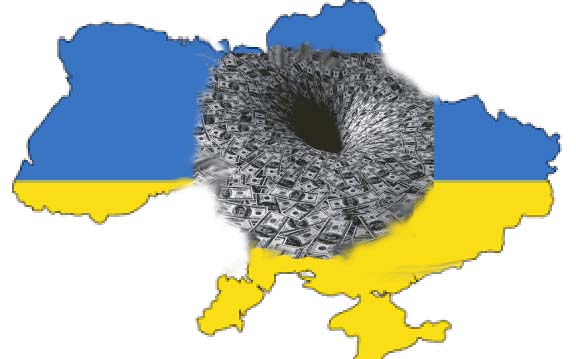
The administration wants to exhaust $6 billion in remaining military aid
by Dave DeCamp November 6, 2024. https://news.antiwar.com/2024/11/06/biden-team-wants-to-rush-weapons-shipments-to-ukraine-before-trump-inaguration/
—
The Biden administration is preparing to rush over $6 billion in military aid to Ukraine before Inauguration Day, POLITICO reported on Wednesday.
The report said the Biden team expects the incoming administration to end the weapons flow, as President-elect Donald Trump campaigned on ending the proxy war.
The Biden administration has $4.3 billion in military aid that can be pulled from existing US stockpiles, known as the Presidential Drawdown Authority. There is also $2.1 billion available in the Ukraine Security Assistance Initiative, which provides money to put weapons under contract, meaning it takes longer to deliver.
Biden officials are unsure if they’ll be able to rush all the aid to Ukraine before January 20 since any military equipment they send must be replaced, and it’s unclear if production levels are high enough to ship so many weapons in such a short period of time.
“We have been sending whatever industry can produce each month, but the problem is you can only send these things as they are produced,” Mark Cancian, a former Pentagon budget official, told POLITICO. “The administration could dip into the stockpiles and send equipment more quickly, but it’s unclear the Pentagon would want to do that since it would affect its own readiness.”
Even if the weapons are sent from US military stockpiles, the actual delivery time could still take months, and Biden officials are worried the next administration could cancel them before they arrive in Ukraine.
1 This Month
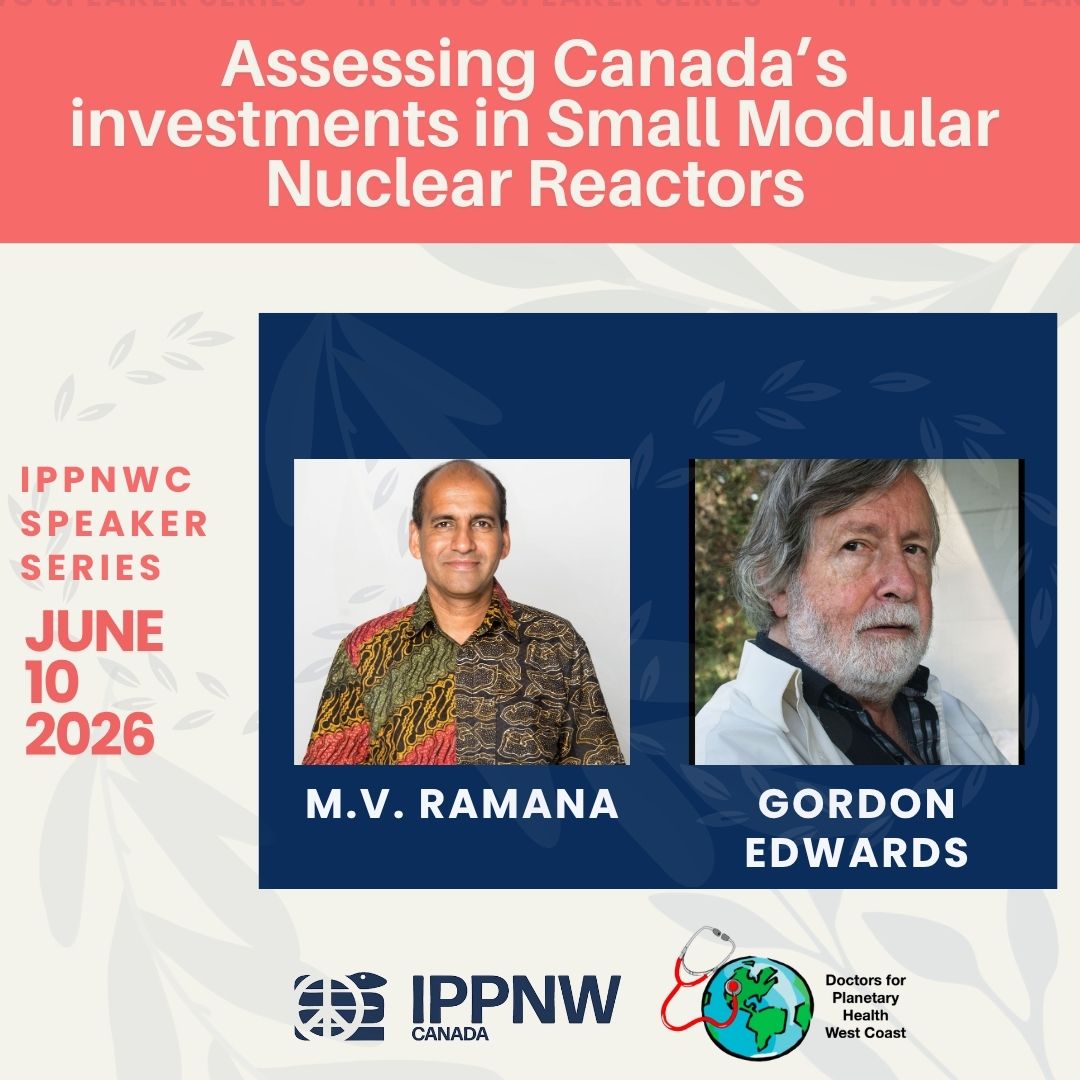
10 June – Assessing Canada’s Investments in Small Modular Nuclear Reactors – https://zoom.us/meeting/register/IiqHA5feRhaEBycOLNTJlA#/registration


Cuba Is Not a Failed State – It Is a Besieged State
PETITION: “Global Appeal to Endorse Palestinian Right of Return of Refugees”
To see nuclear-related stories in greater depth and intensity – go to https://nuclearinformation.wordpress.com
-
Archives
- June 2026 (89)
- May 2026 (306)
- April 2026 (356)
- March 2026 (251)
- February 2026 (268)
- January 2026 (308)
- December 2025 (358)
- November 2025 (359)
- October 2025 (376)
- September 2025 (257)
- August 2025 (319)
- July 2025 (230)
-
Categories
- 1
- 1 NUCLEAR ISSUES
- business and costs
- climate change
- culture and arts
- ENERGY
- environment
- health
- history
- indigenous issues
- Legal
- marketing of nuclear
- media
- opposition to nuclear
- PERSONAL STORIES
- politics
- politics international
- Religion and ethics
- safety
- secrets,lies and civil liberties
- spinbuster
- technology
- Uranium
- wastes
- weapons and war
- Women
- 2 WORLD
- ACTION
- AFRICA
- Atrocities
- AUSTRALIA
- Christina's notes
- Christina's themes
- culture and arts
- Events
- Fuk 2022
- Fuk 2023
- Fukushima 2017
- Fukushima 2018
- fukushima 2019
- Fukushima 2020
- Fukushima 2021
- general
- global warming
- Humour (God we need it)
- Nuclear
- RARE EARTHS
- Reference
- resources – print
- Resources -audiovicual
- Weekly Newsletter
- World
- World Nuclear
- YouTube
-
RSS
Entries RSS
Comments RSS
 nuclear-news