Britain deepens nuclear ties with France and Australia
By George Allison, September 19, 2026, https://ukdefencejournal.org.uk/britain-deepens-nuclear-ties-with-france-and-australia/
Britain is deepening its nuclear relationships with the United States, France and Australia, with the Northwood Declaration recognising that there is no extreme threat to Europe which would not prompt a response by both Britain and France, according to the annual update to Parliament published this week.
The declaration, agreed in July 2025, reaffirmed and strengthened what the update describes as longstanding nuclear cooperation between the two countries. On the AUKUS partnership, the update records an important development in February this year when HMS Anson docked at HMAS Stirling near Perth.
The United States is described as Britain’s closest defence ally, with the relationship underpinned by long-standing cooperation on all nuclear matters including policy, operations and technology.
The practical expression of that relationship runs through the missile system, since Trident and its supporting systems fitted to the Vanguard class are manufactured in the United States, with Britain having bought title to a number of missiles drawn from a shared pool of assets under the 1963 Polaris Sales Agreement as amended for Trident in 1982. The system is operated independently by both the Royal Navy and the United States Navy.
The warhead fitted to those missiles is sovereign to Britain, with the Mk4A design maintained by AWE at Aldermaston, which also leads development of the replacement warhead, Astraea. Wes Streeting writes that the increase in investment across the enterprise “sends a clear signal of our commitment to global security, and to our Allies”, with the deterrent remaining declared to the defence of NATO.
The update states that nuclear deterrence is the cornerstone of NATO security and that the independent strategic nuclear forces of the United Kingdom contribute significantly to the overall security of the alliance, a declaration maintained since 1962.
Major energy and nuclear supply chain showcase connects Cumbrian firms

Business Crack, September 18, 2026
Hundreds of millions of pounds’ worth of infrastructure work took centre stage as energy sector businesses gathered for a major nuclear showcase in West Cumbria.
The BECBC Nuclear Group Showcase at Energus at Lillyhall, near Workington, brought together 250 members and nearly 50 exhibitors alongside major project owners and supply chain partners.
Representatives from Sellafield Ltd, Sizewell C, Nuclear Restoration Services Dounreay and Morgan Sindall Infrastructure shared updates on forthcoming opportunities and pipelines of work.
The event also featured presentations and a question-and-answer session with three candidates for next year’s Cumbria mayoral election.
Labour’s David Allen, Conservative Mike Starkie and Liberal Democrat Libby Bateman all spoke at the showcase to field questions from the local supply chain………………………………………………………………………………………………………………………… https://businesscrack.co.uk/2026/09/18/major-energy-and-nuclear-supply-chain-showcase-connects-cumbrian-firms/
IAEA says cooling tower at Russia’s Kursk Nuclear Power Plant hit by drone

UN nuclear watchdog says it was informed that drone hit cooling tower of a reactor unit; no fire broke out, operating status not changed
Rabia İclal Turan, 19 September 2026
WASHINGTON DC
The International Atomic Energy Agency (IAEA) said Friday it was informed that a drone hit the cooling tower of a reactor unit at the Kursk Nuclear Power Plant in Russia.
A statement by the UN nuclear watchdog on US social media platform X said the drone hit the facility, located in the Kursk region bordering Ukraine, early Thursday, but did not specify who informed the IAEA of the incident.
“It was reported that the unit was operating at the time, but its operating mode did not change and there was no fire,” it said.
Quoting IAEA chief Rafael Grossi, the statement said that all attacks on nuclear facilities are “unacceptable” as they could “endanger nuclear safety and security, irrespective of where they occur.”
Grossi reiterated demands for “maximum military restraint” to prevent the risk of a nuclear accident.
The IAEA did not provide details on the source of the drone or circumstances surrounding the incident.
The agency has regularly warned Moscow and Kyiv about dangers to nuclear safety amid the Russia-Ukraine war, which began in February 2022.
In a later statement, Russia’s nuclear state corporation Rosatom confirmed that a drone detonated upon striking the cooling tower of the plant’s no. 1 power unit, causing “minor damage.”
It stated the incident did not affect the facility’s operations and that power unit no. 1 continues to operate at 100% capacity.
“The safety of the plant’s operation is ensured. Radiation levels remain unchanged and consistent with natural background values,” it added.
The West is watching the wrong Ukrainian collapse

The detachment of the Ukrainian state from society did not begin yesterday. It started the moment the Ukrainian authorities placed the interests of their Western masters above those of their country.
As winter approaches, Ukraine again finds itself at a crossroads. And it appears to be once again choosing the path of war, a path that it’s being desperately pushed onto by Europe’s anti-Russia coalition.
Missiles and territorial losses dominate the headlines, while the deeper rupture between state and society goes largely unnoticed
Sergey Poletaev, 14 Sept 26, https://www.rt.com/russia/645729-west-is-watching-wrong-ukrainian-collapse/
Last weekend, US envoys Steve Witkoff and Jared Kushner visited Moscow and then Kiev. This was the first such visit in a long time, since all trilateral contacts between Russia, the US, and Ukraine were practically halted following the start of the conflict in Iran this February.
Following the visit, leaks regarding the talks emerged from Kiev; reportedly, the US envoys presented the Ukrainian side with a 28-point Russian peace plan that had been agreed upon a year earlier. Jared Kushner indirectly confirmed this on Saturday, stating that the territorial issue was the only point of the peace plan that remained unresolved.
Is it true that Ukraine accepted all the other fundamental demands of the Russian side – such as the points concerning the Russian language and the status of the Orthodox Church, the renunciation of military cooperation with NATO, the recognition of territorial changes, the reduction of the army, and so on? (Spoiler: no, it didn’t.)
Is Ukraine really losing the war, as many recent statements and publications suggest? Spoiler: yes, but not in the way you’d think.
Let’s take a look at what this means.
Shuttle diplomacy
The peace talks involving Steve Witkoff began in February-March 2025, shortly after a phone call between Russian President Vladimir Putin and US President Donald Trump that signaled a fundamental shift in US policy toward Russia and the Ukraine conflict.
Trump’s top priority was to avoid direct involvement, positioning America – as far as possible – at an equal distance from the parties. Of course, to truly achieve this, the conflict would have to be frozen; this would allow the US to restore relations with Russia, counterbalancing China.
Naturally, freezing the conflict (or, in Trump’s words, ending the war in one day) proved impossible; consequently, the US made the most out of the situation as the war dragged on: it shifted the entire burden onto Europe and stepped aside. This strategy allowed the US to maintain working contacts with Russia, reap maximum benefits from the ongoing fighting, and insulate itself from the risks of Ukraine’s potential defeat while still keeping the door open to capitalize on Ukraine’s hypothetical victory over Russia.
In short, Trump decided to sit on the sidelines and watch who would emerge victorious.
For Moscow, too, contacts with Washington are incredibly valuable. It proved impossible to decouple Russia-US relations from the Ukraine issue, and relations between the two countries have effectively remained frozen. Yet the fact that the US is disengaging from the Ukraine conflict – and, more broadly, from European affairs – deprives Europe of confidence in US backing and consequently strips it of strategic depth.
The flip side of this maneuver is that the US has effectively relinquished its decisive say regarding Ukraine. Putin and Trump could reach any agreement whatsoever, but Ukraine is now entirely dependent on Europe. This means that it is Europe that will ultimately determine the final terms. As a Russian saying goes, “He who pays for the girl’s dinner gets to dance with her.”
Surely, Trump could exert pressure on all sides, but why bother? He is essentially satisfied with the current situation and needs nothing more from Moscow. So he has simply let things run their course,
Kiev is well aware of this, which is why Ukrainian officials play along with US envoys. Though direct opposition is out of the question – after all, they still need American missile defense systems – they can avoid any action and buy time. And that’s precisely what Kiev is doing.
The fact that Zelensky visited Canada last week but not the US clearly shows that Kiev no longer sees Washington as the primary center of decision-making. Consequently, the negotiation track involving Witkoff and Kushner is seen by the Ukrainian side as little more than a mandatory part of the show.
Is Ukraine losing? Yes, but not in the way you might think
On September 8, British magazine The Spectator published an editorial titled ‘Ukraine is losing the war’. A week before, several prominent Ukrainian figures – including former Defense Minister Mikhail Fyodorov and the current head of Zelensky’s office, Kirill Budanov – had expressed similar sentiments.
At first glance, this may sound reasonable: the AFU’s deep-strike campaign against Russian infrastructure wasn’t successful, and the summer offensive on the southern front, which is crucial for the Armed Forces of Ukraine (AFU), has de facto failed.
Moreover, Ukraine was unprepared for retaliatory strikes targeting port facilities, logistics, energy infrastructure, and transport networks. This confirmed what experts had been saying for over a year: Ukraine’s air defense systems, which are entirely dependent on US supplies and severely depleted, could barely cope with the previous intensity of air raids; now they can shoot down one ballistic missile out of a dozen, at best. This has made it possible for the Russian Army to launch massive attacks on the Ukrainian rear.
Of course, massive raids by Ukrainian drones and, occasionally, cruise missiles also inflict damage on the Russian rear. This summer was marked by a gasoline shortage and long lines at gas stations. Dozens of warehouses in the European part of Russia are in flames, and other targets are under attack as well.
However, the scale of these attacks is incomparable: by various estimates, the AFU managed to disable up to 3% of Russia’s warehouse storage capacity, whereas Russia has disabled between 30% and 60% of Ukraine’s capacity. Ukrainian experts admit that the strikes on Odessa port have had a far greater impact on Ukraine’s fuel logistics than Ukrainian strikes on Russian oil refineries.
For instance, the price of diesel fuel in Ukraine has topped 100 hryvnias, which is nearly three times the cost in Russia. For the first time since the start of the conflict, fuel rationing is being introduced for the AFU (no such measures have ever been implemented for the Russian Armed Forces).
Russian strikes have effectively halted Ukrainian grain exports by sea, depriving the national budget of a key revenue stream. Retail businesses are closing en masse, undermining what is arguably the economy’s last remaining civilian sector.
This looks like an obvious reason why Ukraine is losing the war. So does this mean that all those hysterical reports and articles are actually true?
Not quite. I would venture to say that all the above-mentioned factors are merely temporary difficulties to which Ukraine can adapt, and which have little impact on the situation at the front. It’s true that there is a gaping hole worth tens of billions of dollars in the Ukrainian budget; likewise, it’s true that the civilian population will face a harsh winter; and yes, what remains of the energy and industrial sectors is under constant attack.
But all this means that the additional financial burden will fall on Europe’s shoulders, while the civilian sector and the state’s capacity to fulfill social obligations will continue to deteriorate; the people will be left to their fate.
All this will affect not only ordinary citizens but entrepreneurs as well. Ukrainian businesses, which largely supported the Kiev regime and the war simply because there were no other options (given that their future was directly tied to that of the central government), are also being left to fend for themselves.
The central tension in Ukrainian society right now is the smoldering civil conflict between Territorial Centers of Recruitment (TCRs) and the men who are being conscripted by force. The destruction of the civilian economy is likely to spawn similar scenarios: bankrupt entrepreneurs, an impoverished middle class, and the unemployed will all see that the Ukrainian state is doing them more harm than good. As a result, the state itself, and not just state-controlled TCRs, will become the enemy.
One might argue that as opportunities and funds in the civilian sector decline, the military sector becomes more attractive. However, there are no new opportunities in military production and logistics (after all, Ukraine has no money), and fewer people are willing to die on the front lines.
All of this will lead to an even greater disconnect between the Ukrainian state and society. And a state severed from society is essentially a military organization. History offers us many such examples, the most recent being ISIS.
A military organization that lacks the support of civil society cannot hold the front line, especially one stretching 1,500 kilometers. There are no historical precedents for this.
A collapse of the front would mean the end of Ukraine in its current form. Kiev understands this perfectly well, which is why it undertakes superhuman efforts to hold the line – even at the cost of a smoldering civil war on the home front.
The detachment of the Ukrainian state from society did not begin yesterday. It started the moment the Ukrainian authorities placed the interests of their Western masters above those of their country.
As winter approaches, Ukraine again finds itself at a crossroads. And it appears to be once again choosing the path of war, a path that it’s being desperately pushed onto by Europe’s anti-Russia coalition.
That is precisely why Witkoff and Kushner left Kiev empty-handed, and why the war will continue – first until the Kiev regime is completely severed from Ukraine, and then until that regime is utterly destroyed.
If you need an example, just look at ISIS.
Labour won’t order new nuclear submarines for Royal Navy until 2028, Wes Streeting admits
Labour won’t order new nuclear submarines for Royal Navy until 2028, Wes
Streeting admits. Labour will not order any new nuclear-powered submarines
until 2028 as concerns grow over delays to Britain’s naval expansion plans.
Sir Keir Starmer last year said Labour would decide how many submarines to
commission by the time its Defence Investment Plan was published. The
report was released on June 30. But the Government has now postponed its
commitment to buying submarines until 2028.
Daily Mail 13th Sept 2026,
https://www.dailymail.com/news/article-16127723/labour-delays-nuclear-submarine-decision-2028.html
UK Nuclear Startup Signs MOU On Technology To ‘Dramatically’ Speed Up Component Production for planned Odin microreactor

By David Dalton, 16 September 2026, https://www.nucnet.org/news/uk-nuclear-startup-signs-mou-on-technology-to-dramatically-speed-up-component-production-9-3-2026
Companies will explore uses for planned Odin microreactor
UK nuclear engineering startup Cambridge Atomworks has signed a memorandum of understanding with Cambridge Vacuum Engineering (CVE) to explore how best to use technology that could dramatically accelerate the production of critical nuclear power components including reactor vessels and internals.
A statement said the aim is to leverage CVE’s expertise in electron beam welding, including the company’s Ebflow technology.
The two companies will explore the use of advanced electron beam welding to manufacture critical components for the Odin microreactor project.
The Odin microreactor was originally developed by US-based Nano Nuclear Energy. It is designed to fit within standard shipping containers to provide energy for remote communities, disaster relief and industrial sites.
In 2025 Nano Nuclear announced it was selling the Odin design and all associated intellectual property to Cambridge Atomworks, which had already been developing Odin for Nano Nuclear on an outsourced consulting basis.
Cambridge Atomworks is aiming to have an operational prototype of Odin by 2031.
Odin is a low-pressure reactor that uses solid nuclear fuel and molten salt coolant and is designed as a transportable, standalone power system. Manufactured largely offsite and deployed with minimal supporting infrastructure, potential applications for Odin include mining operations, remote and island communities, developing markets and other off-grid industrial users where reliable power can otherwise be expensive or logistically difficult to provide.
Ian Farnan, chief executive officer at Cambridge Atomworks, said “the agreement with CVE is an important step in developing the supply chain and manufacturing approach needed to make the Odin microreactor technology a reality.
He said: “Electron beam welding has the potential to transform how key reactor components are manufactured.”
Don’t get ‘locked in’ by EU rules, top nuclear adviser warns Burnham
John Fingleton tells POLITICO “risk aversion” in Whitehall must not
slow Britain’s dash for new nuclear. Britain should not feel “locked
into” pre-Brexit EU environmental rules as it tries to rapidly boost its
nuclear power capacity, a top adviser to the government has warned. John
Fingleton, author of an influential government-commissioned review into how
red tape is blocking new U.K. nuclear projects, said in an interview that
Whitehall should not dampen efforts to boost domestic capacity through
“risk aversion.” “I think on some of the environmental things there’s
a risk that people in the system legally think we’re locked into EU
regulation circa 2022 when we left [the EU],” he said.
Politico 17th Sept 2026,
https://www.politico.eu/article/eu-rules-nuclear-power-adviser-john-fingleton-andy-burnham/
Trump denials can’t hide $billions in US weapons sent to Ukraine
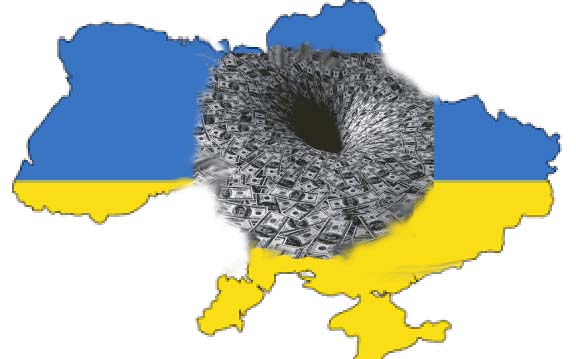
These continuing deliveries are not new awards, but they are still taxpayer-funded military aid to Ukraine that will add up to about $20 billion in aid over the 4 years of Trump’s term.
What Ukraine needs much more than weapons, and what the United States continues to provide in increasing amounts, is intelligence, logistics, and operational support. The details of this support are classified, but public reporting offers some insight.
Jennifer Kavanagh, 9 Sept 26, https://responsiblestatecraft.org/ukraine-weapons-aid/
Trying to pin the blame for the depletion of U.S. military stockpiles on something other than the war in Iran, President Donald Trump fell back on a usual scapegoat last week: Ukraine. “The Biden administration gave far more munitions away to Ukraine, at no cost to them whatsoever, than we have used in Iran,” Trump wrote on Truth Social.
This is a familiar refrain. Trump loves to remind his audience that because of him, Americans are “not spending on Ukraine anymore” and instead, Europe is footing the bill. In truth, most people in the United States don’t think about Ukraine much these days. But since Trump himself brought it up, it’s worth asking: What exactly is going on with U.S. military support to Ukraine?
The answer might surprise you. Despite Trump’s rhetoric, the United States remains deeply embroiled in Ukraine’s ongoing conflict with Russia in ways that create national security risks and run counter to Trump’s own foreign policy goals.
It is true that Trump has reduced U.S. support to Ukraine compared to its high mark under his predecessor, Joe Biden. First, his administration has stopped the use of Presidential Drawdown Authority to transfer weapons from U.S. stocks directly to Ukraine. The Biden administration used this mechanism to give Ukraine almost $35 billion in weapons free of charge. Second, the Trump administration has not requested additional funds for the Ukraine Security Assistance Initiative (USAI), which uses U.S. financing to purchase new weapons for Ukraine.
But Trump has not cut off all assistance to Ukraine. Several important channels remain. First, there are about $13 billion in outstanding USAI contracts as of June 2026, down from $20 billion in January 2025. These contracts, signed by Biden and now implemented by Trump, will procure weapons for Ukraine through about 2028. Weapons in the pipeline include longer-lead time systems like NASAMs, Patriot missiles and components (Ukraine is reportedly receiving at 10-20 PAC-3s per month under these contracts), counter-drone systems, artillery rockets, and ammunition.
These continuing deliveries are not new awards, but they are still taxpayer-funded military aid to Ukraine that will add up to about $20 billion in aid over the 4 years of Trump’s term. Weapons produced under these contracts come off overburdened U.S. production lines. This has a high opportunity cost given the limits of U.S. defense industrial capacity. Without obligations to Ukraine, industrial resources could shift to different weapons or systems that the United States needs more.
If the Trump administration were serious about ending U.S. spending on the Ukraine war, it could still recoup these funds and reallocate the money to support U.S. defense production needs. It has instead allowed the aid to continue.
There has also been some new funding approved since Biden left office. Congress included about $800 million of USAI funding in the 2026 and 2027 NDAAs. We can expect more in future bills as well.
And the State Department has continued to send military aid of its own. A portion of this aid goes through the Ukraine’s Ministry of Interior, including drones, armored vehicles, guns, grenade launchers, and similar equipment. Since this equipment ends up with Ukraine’s National Guard and border police it is often counted as non-military and intended for things like counterdrug operations, but today these personnel serve as combat units.
The State Department has also approved $3 billion of new arms sales to Ukraine in 2025 and 2026 that will be at least partially funded from foreign military financing (FMF), which means U.S. dollars supporting foreign government purchases of U.S. weapons. Some of these funds may come from money allocated but not spent under President Biden, but much of the funding will be new, coming from the State Department’s budget.
The bottom line is that U.S. weapons transfers to Ukraine continue under Trump, amounting to, on average, as much at $5 billion per year. But this is no longer the most important, or expensive, type of support that the United States gives to Ukraine
What Ukraine needs much more than weapons, and what the United States continues to provide in increasing amounts, is intelligence, logistics, and operational support. The details of this support are classified, but public reporting offers some insight.
For example, the United States gives Ukraine real-time targeting information, including on the movement of Russian troops and the location of key command centers. This information has been important to Ukraine’s mid-range strike campaign on Russian logistics as well as its deep strikes against military and energy targets inside of Russia. In addition, U.S. reconnaissance and surveillance assets in countries on the NATO border (including routine E-3 flights) are integrated with Ukraine’s air defense network, improving the accuracy and speed of Ukraine’s response.
Beyond intelligence, the United States also provides logistical and maintenance support, including forward and remote assistance to repair American-made equipment, necessary spare parts to keep older systems running, and training. It also facilitates the expensive transfer of European purchases of U.S. weapons.
The cost of the intelligence, logistics, and other operational support the United States provides to Ukraine does not show up anywhere as an itemized bill, even as U.S. assistance increases. But we can use available public information to draw some conclusions about the expenses incurred.
The 2024 defense supplemental bill, for instance, allocated about $15 billion to “military training, intelligence sharing, increased presence, and other support activities.” In theory, these funds are intended to cover activities conducted in support of Ukraine that would not occur if the United States remained uninvolved in that conflict. Some portion of this money will go to the salaries of military personnel who would be paid no matter where they work.
Since about a third of each military service’s budget is personnel costs, we could estimate the cost of extra activities conducted for Ukraine, excluding baseline manpower, at about $10 billion over the course of a year or so. If Trump has truly expanded intelligence sharing with Ukraine, this price tag may have increased over time.
The money included in the bill is likely only a portion of the actual burden the U.S. military and intelligence community have shouldered to support Ukraine’s war. Many intelligence activities, like tasking and analyzing satellite data and collecting signals intelligence, might be covered in classified national security budgets. Starting in 2023, in fact, the classified intelligence budget increased by 10%, a large jump over the 2022 total. The increase was justified by intelligence community leaders as resulting from shifts in the national security landscape, including especially concern about China’s rise and spillover from conflict in Ukraine. Since the total increase in funding was about $10 billion, we can guess that Ukraine-related expenditures might amount to $3-$5 billion per year, or about one-third to one-half of the total increase.
All told, then, U.S. taxpayers are still spending roughly $20 billion per year on Ukraine. Today, assistance to Ukraine comes primarily in the form of direct operational support, not weapons. But the shift in type of aid increases the risk of U.S. support to Ukraine to average Americans.
First, assisting Ukraine in striking energy targets inside of Russia has a perverse effect on the Trump administration’s efforts to keep gas prices low. As Secretary of the Treasury Scott Bessent acknowledged, Ukraine’s strikes inside Russia push global oil prices up, imposing higher costs of living on Americans.
Second, U.S. intelligence support deepens U.S. involvement in Ukraine’s war, making it an all-but-direct combatant. Russian assistance to Iran, both in terms of weapons and intelligence sharing, is a reaction to the comparable U.S. role in Ukraine, and it leaves U.S. servicemembers in the Middle East and elsewhere less safe. Growing U.S. participation in Ukraine also increases the risk that miscalculation leads to a direct U.S.-Russia confrontation, a nightmarish possibility given the degraded state of U.S. military readiness.
Trump promised to end the war in Ukraine in 24 hours. He has instead deepened U.S. entanglement in ways that create real risks and new fiscal costs for the United States. American interests would be best served if the United States were to walk away entirely, but if Trump instead opts for the status quo, he should at least be honest about it.
Dr. Jennifer Kavanagh is a senior fellow and director of military analysis at Defense Priorities. Previously, Dr. Kavanagh was a senior fellow at the Carnegie Endowment for International Peace and a senior political scientist at the RAND Corporation. She is also an adjunct professor at Georgetown University.
.
Centrica And X‑Energy Progress Nuclear Plans
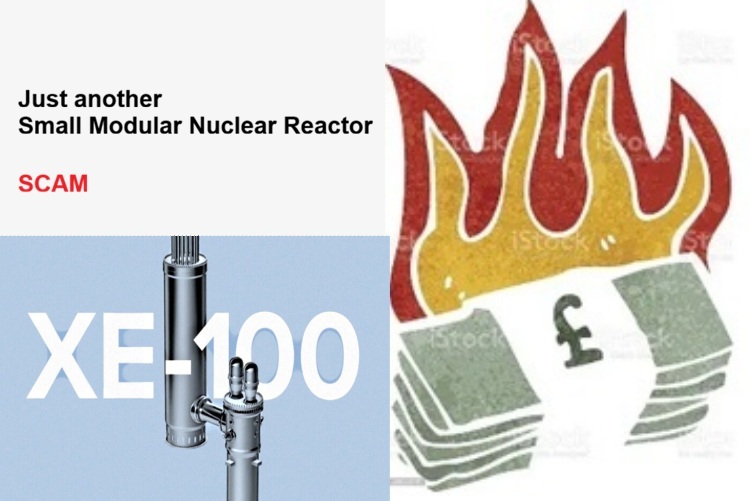
Centrica and X‑energy have confirmed that X‑energy’s Xe‑100
Generation IV small modular reactor has been accepted into the UK’s Generic
Design Assessment (GDA), marking a key step towards commercial licensing.
The move coincides with the first anniversary of the companies’ partnership
and follows a direction from government to bring the design into the formal
review process.
Under their collaboration, the companies aim to deploy up
to 6GW of new nuclear capacity across the UK, equivalent to around 10-20
Xe‑100 power stations depending on the size of each installation.
Acceptance into the GDA initiates a multi‑year process to assess the
reactor’s suitability for deployment and operation ahead of site‑specific
permits. The review, expected to take about three years, will be led by the
Office for Nuclear Regulation (ONR), the Environment Agency (EA) and
Natural Resources Wales. The UK submission builds on the Xe‑100’s
progress with US licensing and is expected to benefit from greater
collaboration between UK regulators and the US Nuclear Regulatory
Commission, including the transfer of NRC‑reviewed design documentation
and safety analyses into UK assessments.
Construction.co.uk 16th Sept 2026, https://www.construction.co.uk/construction-news/334683/centrica-and-x8209energy-progress-nuclear-plans
Ukraine is running out of money again – and the EU is asking questions
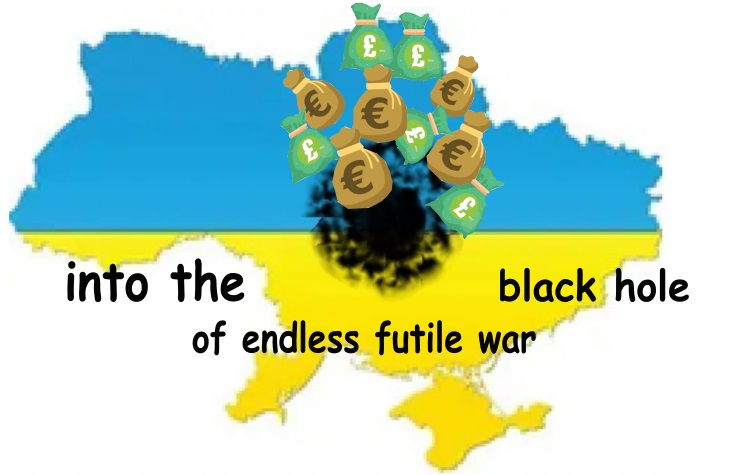
14 Sep 2026, https://www.sott.net/article/508403-Ukraine-is-running-out-of-money-again-and-the-EU-is-asking-questions
Ukraine leader Volodymyr ZelenskyOfficials in the bloc are reportedly “unsettled” by Kiev’s defense budget hole ballooning almost fourfold within several months.
Despite massive Western assistance, Ukraine is facing a severe cash squeeze almost unseen since the escalation of the conflict with Russia in 2022. The immediate problem is a $27 billion hole in the defense budget that Kiev insists must be plugged.
Kiev’s plea for more money “surprised and unsettled” European officials, the New York Times reported on Wednesday, citing sources, with some of Ukraine’s backers said to be asking questions about whether the country is spending the available funds efficiently – or whether it is simply overstating its needs.
What is the problem with Ukraine’s budget?
Ukrainian leader Vladimir Zelensky publicly put a number on the problem as he met with his European backers in Kiev in late August. The Defense Ministry, he said, already used money that was originally allocated for the end of the year, leaving a $27 billion gap. The revelation also came on the heels of Zelensky’s ill-fated 40-day pressure campaign against Russia, which triggered an escalation that Kiev is still suffering from.
Particularly striking was the fact that just weeks earlier, Ukrainian officials estimated the deficit to be $7.5 billion. Kiev has still not accounted for how the hole grew by another $20 billion– or 10% of its 2021 GDP.
Earlier this month, Prime Minister Sergey Koretsky acknowledged “exceptionally difficult challenges,” including the $27 billion defense hole and the risk of losing access to a significant share of a $29.5 billion tranche expected from Kiev’s backers, which is contingent on government reforms.
Finance Minister Sergey Marchenko said:
“We already see some liquidity issues, and Kiev may have to postpone some payments not related to the war. There will be consequences.
“We haven’t had a situation like this since 2022; we really suffered from the shortage of liquidity. Right now, we are getting far too near to the same scenario we had in 2022. We expect a very hard winter due to Russian strikes.”
How has Kiev blown $20 billion more than expected?
Koretsky blamed much of the increase on the rising price of a technology-heavy war. Following Zelensky’s escalation, Russia intensified missile and drone attacks on the Ukrainian defense industry, while Kiev has spent increasingly heavily on drones, air defenses, artillery, and military personnel.
A secondary issue is arising: Kiev failed to deliver promised reforms tied to Western financing that it had already counted on: oversight of state-owned companies, anti-corruption, and tax and customs reforms.
By late August, Ukraine had failed to meet benchmarks linked to $5.6 billion in EU financing, while around $4.3 billion from Brussels and $1.66 billion in IMF funding were delayed. Much of the money can still be unlocked, but doing so means untangling deeply embedded graft, kickback, and corruption chains unwelcome in parliament, where Zelensky no longer even commands a reliable voting majority.
Earnings have also dropped. Ukraine collected around $38 billion in general-fund revenue (excluding grants) from January to August, but a significant part of the $740 million shortfall was accumulated in August. The weakness concentrated in key revenue sectors: domestic and import VAT, domestic excise duties, and profit transfers from state companies.
Daniil Getmantsev, the chairman of parliament’s Finance Committee, warned earlier this month that there are “no popular solutions left,” adding that the failure to fulfill international commitments could ultimately leave the government struggling in October to pay teachers, doctors, and, in the worst case, military personnel.
Is Zelensky personally to blame for the budget hole?
The Ukrainian leader has been apoplectic over crumbling party discipline and parliament’s inability to pass crucial legislation tied to Western financing.
According to Ukrainskaya Pravda, Zelensky was stunned by the true scale of the budget deficit, with subsequent phone calls to deputies responsible for key EU- and IMF-linked legislation reportedly devolving into shouting.
While Zelensky cannot reliably command enough votes in parliament, Yaroslav Zhelezniak, the deputy chairman of the parliament’s Finance Committee,said lawmakers sounded the alarm about the defense budget long before the $27 billion hole became obvious.
He also accused Zelensky’s government of prioritizing politically attractive spending while leaving military financing unresolved and throwing money at a ‘television marathon’, cashback programs, and handouts. Zhelezniak stressed that Zelensky is accountable for budget issues and should take responsibility – instead of acknowledging the issue at the 11th hour.
How have Ukraine’s EU backers reacted?
The EU has attempted to downplayUkraine’s pleas for more money – even refusing to acknowledge the $27 billion figure. After high-level talks on Monday, European Commission spokesman Balazs Ujvari said the first task at hand is to “get a clear picture of what the budgetary and financial situation is,” and that technical discussions with Ukraine and the IMF are required.
Media reports, however, paint a different picture. The NYT reported that European diplomats did not expect anything close to the $27 billion request, adding that questions are being raised behind closed doors over whether Ukraine is spending money efficiently and whether some of its stated needs are exaggerated.
The EU also insisted that reforms cannot simply be skipped because Ukraine is short of cash. While some voices inside the EU have proposed advancing Kiev part of the ongoing €90 billion loan scheduled for 2027, even Ukraine’s deputy prime minister for European integration, Vsevolod Chentsov, acknowledged that frontloading is “not a silver bullet.”
Cash blown in 2026 cannot be spent again in 2027, leaving Ukraine even more vulnerable to further financial pressures.
Are the EU and Kiev running out of options?
On Wednesday, over 100 MEPs circled back to the topic of frozen Russian assets, urging EU leaders to illegally seize $230 billion in the assets for Ukraine’s needs. This option, however, faces formidable resistance from Belgium, home to Euroclear, where the bulk of the assets are held, over committing what is typically regarded as an act of war, fears of Russian litigation, and wider financial and legal risks.
How ubiquitous is corruption in Ukraine under Zelensky?
While it is highly unlikely that corruption alone accounts for Ukraine’s $27 billion budget hole, it still saturates Ukrainian society and government.
Recent scandals include wiretaps from the sprawling Midas investigation, in which the anti-corruption authorities allege that a network involving Zelensky’s former close associate, Timur Mindich, extracted massive kickbacks from the energy sector; separate recordings raised questions about Mindich’s influence over major weapons producer Fire Point.
The graft also fed into an ugly institutional war, in which the Prosecutor General’s Office allegedly gathered material on anti-corruption officials and their families, while anti-graft investigators uncovered an alleged protection racket for Ukraine’s sprawling scam-call-center industry inside the prosecutor’s office.
Bottom Line
While officials in Kiev claim that the $27 billion budget hole is due to rising military costs, stalled legislation, and delays in Western financing, they have not provided a detailed breakdown of how a deficit earlier estimated at $7.5 billion ballooned almost fourfold within several months – specifically during Zelensky’s 40-day military PR campaign that left Ukraine’s logistics chains broken, ports closed, grain stranded, and defenses weakened.
And the gargantuan hole is only half of the problem: It has clearly rattled Kiev Western backers, who are now once again unsure how Ukraine is spending money.
Comment: They left out ‘siphoning for personal gain’ from Europe’s coffers to Ukrainian pockets.
Reactors shut by a handfull of jellyfish

A 900-megawatt reactor on the French coast came off the grid at four in the afternoon and a second one overnight, both shut by hand before returning jellyfish could pack the seawater screens and trip them, and both were back inside four days against twenty for the last swarm
Luis Reyes, Auto Notion 14th Sept 2026
An automatic reactor trip is the safety system doing its job, and it’s arguably the most expensive way to solve a problem. The unit drops off the grid in seconds, and then you spend the next several days walking it back up to full power while somebody writes the report explaining why.
So when the jellyfish came back to Gravelines in late August, nobody at the plant sat around waiting for that. At about four in the afternoon on Wednesday, August 26, local time, the crew shut unit 3 down themselves and dialed unit 2 back while they were at it. Overnight they did the same thing to unit 6 and reduced unit 1 too. EDF says it’s all preventive.
So you had a 5,400-megawatt site with nothing running at full power. Units 3 and 6 were off, units 1 and 2 were loafing along at reduced output, unit 4 had been down since August 10, and unit 5 was partway through its ten-year inspection.
If that sounds like a first for Western Europe’s largest nuclear plant, it isn’t.
The same site went to zero output for about ten days last August, and during the first swarm this month the last reactor still running flat out got throttled as well. What’s new is who pushed the button. It’s also been that kind of summer for the operator, which has already spent it idling inland reactors because the rivers beside them ran too warm.
Gravelines drinks the North Sea
If you’ve never looked at how a coastal plant gets its cooling water, it’s simpler than you’d expect. Gravelines doesn’t sit on a river. It pulls seawater from a canal connected to the North Sea, and everything that water carries hits two stages of screening before it reaches the condensers: coarse bar screens at the front, which EDF calls prégrilles, and rotating drum filters behind them. Pack those drums and the flow drops. Let it drop far enough and the protection system takes the unit off the grid for you, ready or not.
So why not let them trip?
A trip is a hard stop. Control rods drop, steam gets dumped, and the plant has to be checked over and lined back up before anyone talks about restarting. Taking a unit down on purpose gets you to the same place more slowly and leaves a shorter list of things to look at afterward. EDF hasn’t spelled that reasoning out, so I’m inferring it, but the restart times back it up.
Unit 3 gives the cleanest comparison, because it went down in both swarms for the same reason. On August 10 it tripped itself at 7:43 in the evening and didn’t come back until 3:55 in the morning on August 18, a bit over seven days. On August 26 the crew took it down deliberately and it was back at 2 a.m. on August 30, about three and a half days. That’s the same reactor and the same cause, and it cost half as much time………………………….
https://www.autonocion.com/us/reactors-shut-by-hand-jellyfish-four-days/
Russian nuclear ties persist in the West
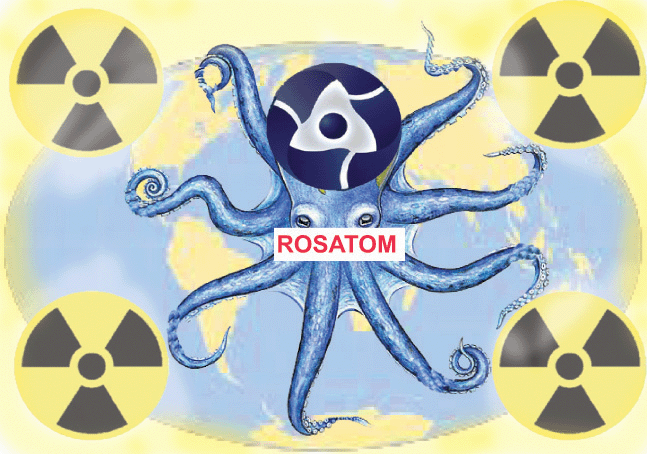
Bellona September 14, 2026, https://bellona.org/news/nuclear-issues/2026-09-russian-nuclear-ties-persist-in-the-west-as-war-claims-another-life-at-zaporizhzhia
Germany allows VVER fuel production using Russian technology
Germany, meanwhile, has approved a controversial plan that will preserve another form of Russian involvement in Europe’s nuclear industry.
On July 22, authorities in Lower Saxony approved an application by Advanced Nuclear Fuels, a subsidiary of France’s Framatome, to expand its Lingen plant to manufacture hexagonal fuel assemblies for Russian-designed VVER reactors.
The fuel will be manufactured under Russian licenses and using Russian technology through cooperation with Rosatom’s fuel subsidiary TVEL. The decision came despite objections from some 11,000 people and concerns about espionage, sabotage, cyberattacks and Russian access to critical German infrastructure. Authorities imposed safeguards, including restrictions on access by Rosatom and TVEL personnel and security inspections of Russian equipment.
Bellona nuclear expert Dmitry Gorchakov calls the decision “rather strange” and warns that it undermines efforts to reduce European dependence on Russia.
“Unfortunately, this shows the absence of a single clear policy and principles regarding contacts with official Russian structures, both within Germany itself and within the EU,” Gorchakov writes.
More importantly, he argues, allowing Framatome to meet its VVER fuel commitments with Rosatom’s involvement “may slow the development of its own French VVER fuel independent of Rosatom and prolong Rosatom’s dependence and influence on this market in Europe.”
“Bellona does not approve of this decision by the German authorities or of this cooperation between Framatome and Rosatom,” Gorchakov concludes.
Western uranium markets remain dependent on Russia
New figures published in July show why severing those ties remains difficult.
The Euratom Supply Agency reported that European suppliers significantly expanded uranium enrichment services in 2025, increasing their share of the EU market from 63.9% to 72.9%. The volume of Russian enrichment services also increased by 11.6% in physical terms. However, their share of the total volume of European orders declined by 22.55% compared with 23.55% a year earlier and 37% in 2023. Russia supplied nearly 16% of the EU’s natural uranium and 24.4% of its conversion services.
The situation is likewise complicated in the United States. According to the U.S. Energy Information Administration, Russia remained the largest single source of enrichment services purchased by American nuclear operators in 2025, providing 3.284 million SWU — about 26% of the total. That was more than the share supplied by U.S. enrichment capacity itself.
“The published statistics in the EU and the US show the continuing dependence of Western nuclear power plant operators and nuclear fuel cycle enterprises on Russian supplies of uranium and its conversion and enrichment services,” Gorchakov says.
“Despite the existence of major European competitors to Rosatom and technical alternatives, up to 20–25% of nuclear materials and nuclear fuel cycle services in European and US markets still originate in Russia.”
For Gorchakov, market forces alone are unlikely to break that dependence. “Only official restrictions and sanctions can break this trend,” he writes, arguing that firm limits would both force reductions in Russian purchases and give Western suppliers confidence that investments in new capacity will pay off.
Taken together, the developments underline a contradiction that has persisted since the beginning of the war. Russia’s occupation of Zaporizhzhia has created unprecedented nuclear safety risks in Ukraine, yet Rosatom remains deeply embedded in nuclear supply chains in the countries supporting Kyiv. Europe and the United States are developing alternatives, but July’s figures — and Germany’s decision in Lingen — suggest that breaking those ties will require political decisions as much as new technology and production capacity.
The war in Ukraine war claims another life at Zaporizhzhia.
Nearly four and a half years after Russia’s full-scale invasion of Ukraine, July offered fresh evidence of how difficult it remains to disentangle Russia from the Western nuclear industry. Germany approved production of fuel for Russian-designed reactors using Russian technology, while new data from Europe and the United States showed that Rosatom retains a substantial share of Western uranium conversion and enrichment markets.
Meanwhile, at the Russian-occupied Zaporizhzhia Nuclear Power Plant, the killing of the station’s Russian-appointed chief engineer underscored a different consequence of the war: the continuing danger faced by those working at Europe’s largest nuclear power station—
ZNPP chief engineer killed amid continuing military activity
On July 15, Rosatom chief Alexey Likhachev said a drone strike on a service vehicle between the Zaporizhzhia plant and the neighboring city of Enerhodar had killed the station’s Russian-appointed chief engineer, Alexander Yakovlev, and his driver. Russia blamed Ukraine, while Kyiv denied responsibility and said there was no independent confirmation of Moscow’s account.
The incident quickly became the subject of competing claims. A Telegram channel subsequently alleged that Yakovlev had opposed allowing Russian personnel access to Westinghouse nuclear fuel stored at the plant and suggested that a dispute over that access might have contributed to his death. The claim has not been independently established.
Bellona nuclear expert Alexander Nikitin cautions against drawing conclusions from such speculation.
“Both sides (Russia and Ukraine) predictably accused each other of the killing,” Nikitin writes. “Who killed one of the several hundred people who die every day in Ukraine, and what the specific reason for this killing was, will never be established. The reason could have been anything, including domestic, financial or other motives, so there is no point in guessing or trying to investigate it. The war will write everything off.”
For Nikitin, Yakovlev’s death instead illustrates the larger danger created by the continued militarization of the plant and surrounding area. “Not only facilities are being destroyed, but people are also being killed, including personnel working at ZNPP and their families living in Enerhodar,” he writes…………………………………………………………………………..https://bellona.org/news/nuclear-issues/2026-09-russian-nuclear-ties-persist-in-the-west-as-war-claims-another-life-at-zaporizhzhia
UK Government’s nuclear weapons spending plans could fund 220,000 nurses and 3.7m homes, report finds
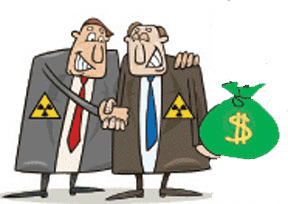
Campaigners urge government to redirect £240bn for nukes to boost the health service, clear the social housing waiting list and pay for solar panels on every home
LTERNATIVES to current nuclear weapons spending plans would be enough for the NHS to hire extra 220,000 nurses and fund 3.7 million affordable homes, a report found today.
Campaigners demanded Prime Minister Andy Burnham consider redirecting the outlined £240 billion for nukes to boost the health service, clear the social housing waiting list and pay for the installation of solar panels on every home.
The Campaign for Nuclear Disarmament’s report, entitled People not Nukes, revealed the total amount of savings the state could make over the next 30 years if it funded public services instead of the war machine.
CND general secretary Sophie Bolt told the PM he must be clear about his priorities ahead of his first Budget in October.
“Prime Minister Burnham has stated that national security can’t come at the expense of social security,” she said.
“That is correct. But he also needs to be clear about the real national security threats we face — and what will make us more secure, not less.
“Military spending hikes and nuclear expansion are not making us safer. Replacing Britain’s nuclear submarines and expanding its nuclear capability is only increasing the threat of nuclear weapons being used, and the chances of other countries developing the weapons.”
With alternative spending plans, the £240m destined for nuclear arms programmes could increase nursing staff by a third compared to current levels.
It could also clear the social housing waiting list within seven years, by building 3.7m affordable homes.
Other alternatives could see university tuition fees of eight million students paid, or fund free school meals for every child in Britain for 46 years.
“Thousands of people are dying in Britain right now because of a failure to invest in tackling climate change and to properly fund essential public services, like health. Millions are living in poverty in insecure, unsafe housing,” Ms Bolt said.
The report, she added, shows that meeting international nuclear disarmament obligations “could free up hundreds of billions of public funds to tackle these very urgent, life-threatening security threats we face.”
The findings come as the unions at this year’s TUC Congress were set to vote on a motion for “Building real security” by “advancing a trade union vision of security-based decent work, quality public services, equality, climate action, democracy on peace.”
Kremlin blasts US move to militarize space
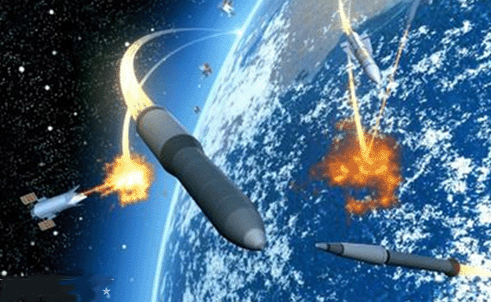
“We believe that space should be free from any weapons. And certainly we count on broad international consolidation… to continue efforts for the full demilitarization of space,”
Moscow believes Washington’s deployment of an orbital weapons system is taking the world in the wrong direction
15 Sep 26,https://www.rt.com/russia/645760-kremlin-us-space-weapons/
Weapons should not be deployed in space, Kremlin spokesman Dmitry Peskov has said, responding to the Pentagon’s announcement that the US has placed a weapons system in orbit.
US Secretary of the Air Force Troy Meink disclosed the deployment on Monday, saying the US Space Force “now has on-orbit space control weapons capable of defending the joint force against hostile adversary action,” without providing details about the system. Media reports have suggested that it is intended to disable or destroy hostile satellites.
“We believe that space should be free from any weapons. And certainly we count on broad international consolidation… to continue efforts for the full demilitarization of space,” Peskov told journalists on Tuesday during a regular briefing.
The Pentagon has a long history of using orbital systems for military purposes, specifically intelligence gathering, navigation and communications. Some US military concepts, however, have also envisioned systems potentially capable of conducting strikes from space. During the Cold War, for example, the Soviet Union viewed the Space Shuttle as a potential platform for delivering a rapid nuclear strike.
Countries regarded by Washington as strategic rivals, including Russia and China, have reportedly developed anti-satellite capabilities that could deny the US the advantage in space during a direct conflict. The use of such weapons, however, could produce significant unintended consequences.
The so-called Kessler effect describes a scenario in which collisions generate increasing amounts of orbital debris, triggering further collisions and potentially making low Earth orbits unusable for an extended period.
Russia has long called for stronger international agreements restricting the military use of space. While the Outer Space Treaty prohibits the deployment of weapons of mass destruction in orbit, Moscow has argued that conventional weapons should also be banned.
In June, Israeli Defense Minister Israel Katz announced that his country was developing a space-based anti-satellite laser system and aimed to become “the leading country in the world with this capability.”
1 This Month



Shut down the radiation-damaged Heysham nuclear reactors now
To see nuclear-related stories in greater depth and intensity – go to https://nuclearinformation.wordpress.com

Say No to NASA’s Reckless Nuclear Reactor on the Moon
Say No to NASA’s Reckless Nuclear Reactor on the Moon
-
Archives
- October 2026 (256)
- September 2026 (339)
- August 2026 (330)
- July 2026 (355)
- June 2026 (287)
- May 2026 (306)
- April 2026 (356)
- March 2026 (251)
- February 2026 (267)
- January 2026 (308)
- December 2025 (358)
- November 2025 (359)
-
Categories
- 1
- 1 NUCLEAR ISSUES
- business and costs
- climate change
- culture and arts
- ENERGY
- environment
- health
- history
- indigenous issues
- Legal
- marketing of nuclear
- media
- opposition to nuclear
- PERSONAL STORIES
- politics
- politics international
- Religion and ethics
- safety
- secrets,lies and civil liberties
- spinbuster
- technology
- Uranium
- wastes
- weapons and war
- Women
- 2 WORLD
- ACTION
- AFRICA
- Atrocities
- AUSTRALIA
- Christina's notes
- Christina's themes
- culture and arts
- Events
- Fuk 2022
- Fuk 2023
- Fukushima 2017
- Fukushima 2018
- fukushima 2019
- Fukushima 2020
- Fukushima 2021
- general
- global warming
- Humour (God we need it)
- Nuclear
- RARE EARTHS
- Reference
- resources – print
- Resources -audiovicual
- Weekly Newsletter
- World
- World Nuclear
- YouTube
-
RSS
Entries RSS
Comments RSS

