France’s nuclear regulator delays ruling on extending reactors’ life
Reuters 10th Oct 2018 France’s ASN nuclear regulator will issue by the end of 2020 its
long-awaited and much-delayed generic ruling on the life span extension of
utility EDF’s nuclear plants, said the French government’s nominee to
head the ASN. “Based on the information at my disposal, the generic
ruling should be issued at the end of 2020,” Bernard Doroszczuk said at a
French senate committee hearing about his nomination. The ruling, which is
crucial for EDF, has been repeatedly delayed, most recently by outgoing ASN
chief Pierre-Franck Chevet.
https://www.reuters.com/article/us-france-nuclearpower-edf/frances-asn-to-rule-on-edf-reactor-lifespans-by-end-2020-asn-nominee-idUSKCN1MK11M
Plan to sue France over ‘crimes against humanity’ in nuclear tests in South Pacific
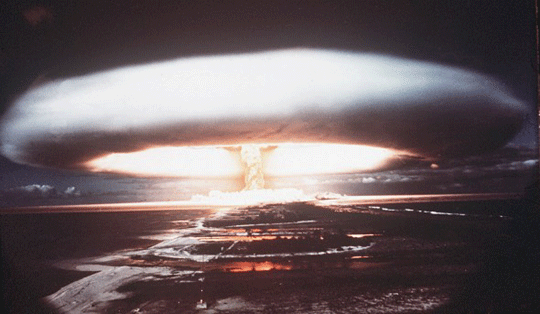 France sued for ‘crimes against humanity’ over nuclear tests in South Pacific https://www.dw.com/en/france-sued-for-crimes-against-humanity-over-nuclear-tests-in-south-pacific/a-45826054
France is being taken to the International Criminal Court for nuclear weapons tests in French Polynesia. France has long denied responsibility for the impacts of the tests and only recently began compensating civilians. France is being taken to the International Criminal Court (ICC) for carrying out nuclear weapons tests in French Polynesia, a Polynesian opposition leader announced on Tuesday.
Oscar Temaru, the archipelago’s former president and current leader of the Tavini Huiraatira Party, announced the move during a United Nations committee dealing with decolonization.
Temaru accused France of “crimes against humanity” and said that he hopes to hold French presidents accountable for the nuclear tests with the ICC complaint.
“We owe it to all the people who died from the consequences of nuclear colonialism,” he told the UN committee.
Maxime Chan from Te Ora Naho, an association for the protection of the environment in French Polynesia, told the UN that there had been 368 instances of radioactive fallout from the tests and that radioactive waste had also been discharged into the ocean — violating international rules.
Three decades of nuclear tests
The French territory, currently home to 290,000 people, is best known for the popular tourist island of Tahiti, but its atolls of Mururoa and Fangataufa were used for decades for nuclear tests.
France carried out 193 nuclear weapons tests on islands in the archipelago between 1960 and 1996 until French President Jacques Chirac halted the program.
Around 150,000 military and civilian personnel were involved in France’s nuclear tests, with thousands of them later developing serious health problems.
France has long denied responsibility for the detrimental health and environmental impacts of the tests, fearing that it would weaken the country’s nuclear program during the Cold War.
In 2010, France passed a law allowing military veterans and civilians to be compensated if their cancer could be attributed to the nuclear tests. Out of approximately 1,000 people who have filed complaints against France, only 20 have been compensated.
France’s government to postpone the phaseout of nuclear power – to the detriment of the renewable energy industry
Le Monde 6th Oct 2018 The postponement of the decline in nuclear energy worries the renewable
energy sector. The French government would push back to 2035 the goal of
reducing the atomic share from 75% to 50% in the national electricity
production.
https://www.lemonde.fr/economie/article/2018/10/06/le-report-de-la-baisse-du-nucleaire-inquiete-le-secteur-des-energies-renouvelables_5365549_3234.html
France’s nuclear regulator ASN orders further safety work on EDF’s flagship next-generation nuclear plant at Flamanville
 Watchdog warns EDF over weldings at flagship new nuclear plant, Ft.com 4 Oct 18 France’s nuclear regulator has said that EDF’s flagship next-generation nuclear plant at Flamanville might need further work due to faulty weldings which have already delayed the project.
In July, EDF said there would be further delays and cost overruns due to problems with the weldings. It pushed back the loading of nuclear fuel and the target construction costs at the late and over-budget plant. The state-backed energy utility said at the time that out of the 148 inspected welds, 33 had quality deficiencies and would be repaired. It said a further 20 would be reworked “even though they do not have any defects” while for another 10 it would submit a proposal to the ASN to convince the regulator of their safety. Now, the ASN has suggested, subject to further tests, that 8 of those 10 welds may need further work. The regulator said it “invites EDF to begin preparations on possible repair work to the welds concerned,” in a statement on Wednesday.“ASN also considers that the observed discrepancies indicate a failure of the monitoring carried out by EDF on certain activities of the EPR reactor site in Flamanville. It therefore asks EDF to extend the review of the quality of equipment installed on this reactor,”
“ASN also considers that the observed discrepancies indicate a failure of the monitoring carried out by EDF on certain activities of the EPR reactor site in Flamanville. It therefore asks EDF to extend the review of the quality of equipment installed on this reactor,” the ASN added………
The Flamanville plant in France is one of three being built in Europe using the next-generation European Pressurized Reactor technology. The other two projects are the Olkiluoto project in Finland, which is more than a decade late, and the UK’s Hinkley Point, which is mired in controversy over the high cost of the project.S……. https://www.ft.com/content/ec9c379a-c707-11e8-ba8f-ee390057b8c9ocial Responsibility
Low river water levels mean restricted nuclear power outlook – France
REFILE-EDF says Meuse river flow could restrict output at Chooz nuclear plant https://af.reuters.com/article/commoditiesNews/idAFL8N1WK4QZ PARIS, Oct 4 (Reuters) – Electricity production at French utility EDF’s Chooz nuclear power plant could be restricted from Oct. 11 due to the forecast flow of the Meuse river, French electricity grid operator RTE, said on Thursday.
Chooz nuclear power plant in the northeast of the country has an installed capacity of 3,000 megawatts. The plant uses water from the river to cool its two reactors.
“Production restrictions are likely to affect EDF’s nuclear generating fleet on Chooz production units starting Thursday October 11,” RTE said. It did not give further details.
Low river levels has forced EDF, which operates France’s 58 nuclear reactors, to curb production at some reactors in recent weeks.
Unplanned nuclear power outages makes France’s electricity output fall
French nuclear output drops to 41 GW on three unplanned outages, S and P Global Platts,- Andreas Franke –Jonathan Fox – 4 Oct 28
HIGHLIGHTS
1.3 GW Belleville-2 in unplanned shutdown overnight
0.9 GW Gravelines-6 also taken offline overnight
0.9 GW Tricastin-2 restart attempt delayed again
London— French nuclear output fell below 41 GW Wednesday morning, with operator EDF listing three unplanned short-term outages with a combined 3 GW capacity, according to grid operator RTE…
some risks remain, with Platts Analytics noting the ongoing shift in the restart of reactors as a key factor.
The improved nuclear outlook in France is offset by a 2.5 GW shortfall in Belgium this winter and the permanent closure of the 1.3 GW Gundremmingen B reactor in Germany, with combined nuclear output across the CWE region for December seen barely above December 2017 levels, Platts Analytics said in its October report.
–Andreas Franke, andreas.franke@spglobal.com
–Edited by Jonathan Fox, jonathan.fox@spglobal.com https://www.spglobal.com/platts/en/market-insights/latest-news/electric-power/100318-french-nuclear-output-drops-to-41-gw-on-three-unplanned-outages
AREVA-ORANO corruption scandal – France’s taxpayers could face € 24.1 billion fine
Bad news for the french taxpayer Because, in the event of a lawsuit for corruption in the United States, the rule is that the amount of the fine covers the totality of the financial loss. Admittedly, the prosecutor could simply claim Areva $ 243 million corresponding to the amount of the acquisition of Ausra. But it can also very well demand the reimbursement of all the federal expenses incurred in the case, namely: the $ 7.7 billion invested in the MOX plant ever built, the $ 19.9 billion that will be swallowed up in the management of unprocessed plutonium and the 243 million of the Ausra acquisition, totaling nearly $ 28 billion, or, if you prefer, € 24.1 billion at the current rate.
Needless to say, since Orano does not have a penny in its pocket, the state should go to the cash register. The only way to avoid such a disaster, argue the jurists, would be that the French justice sanctions itself guilty.
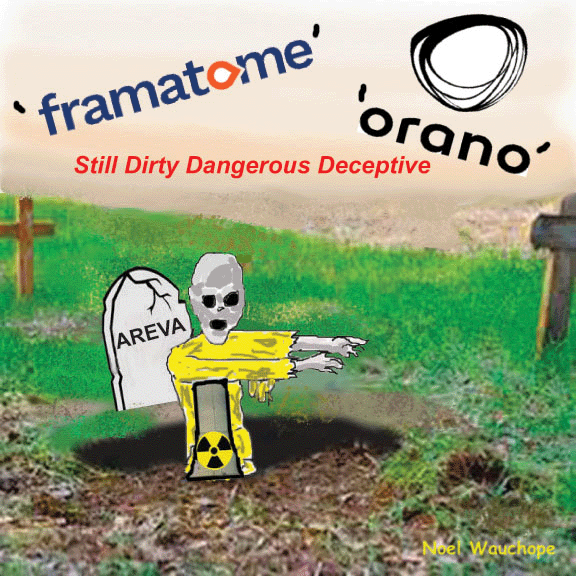

AREVA BUSINESS: THE MONSTROUS FINE THAT THREATENS FRANCE ,https://www.capital.fr/entreprises-marches/affaire-areva-la-monstrueuse-amende-qui-menace-la-france-1308725 –(translation Noel Wauchope) THIERRY GADAULT 27/09/2018 The nuclear group could be fined 24 billion euros by the US justice in a corruption case in the United States. A file that could embarrass Anne Lauvergeon but also Edouard Philippe, at Areva at the time of the facts.
· Forget the scandal Credit Lyonnais 1990s and the 15 billion euros it has cost France. The Areva case is about to break all records. According to our information, the US justice discreetly warned the French authorities in early July that it could launch a trial for corruption against the former tricolor nuclear star. And that in case of conviction, the fine could go up to … 24 billion euros, the equivalent of one third of income tax revenue.
· Since then, Areva has been cut in three (since being acquired by EDF) and was renamed Orano, as if to give it a new start. Alas! Now that a possible corruption pact, concluded in 2010 by the company with leaders of the American Democratic Party, threatens to explode for good.
· A case that could also smirch the Prime Minister Edouard Philippe, director of public affairs of Areva at the time.
“When, at the beginning of the year, I discovered the scale of this affair, I communicated with the director of the FBI all the information that I had been able to get my hands on”, Marc Eichinger revealed to Capital . This private investigator specializing in the fight against serious international crime and corruption is very aware of the case: it was he who wrote the report submitted in April 2010 to the security department of Areva to denounce the potential fraud related the redemption of Uramin three years earlier.
· Stunned by this new case of corruption in the United States, he also forwarded the whole file to French justice, causing a heating up of the investigation in a summer, already scorching. According to our information, the financial brigade, in charge of Areva’s sprawling affairs, recommended to the National Financial Office (PNF) to open a new instruction for “bribery of foreign public official and trading in influence”. But at the beginning of September, when we wrote these lines, the PNF had still not followed these recommendations.
At the heart of this new scandal, which has not yet erupted in the United States, the conditions in which Areva acquired, in February 2010, is Ausra, an American startup specializing in solar energy. Continue reading
France not facing up to nuclear problems, as High Commissioner for Atomic Energy leaves the position?
position of High Commissioner for Atomic Energy will be vacant. This is not
surprising. The government has known since May that Yves Bréchet would not continue beyond the end of his term.
that the current political power is not facing up to nuclear
issues, both civilian and military. The High Commissioner, for example, has
a controlling role in the management of plutonium stocks.
http://huet.blog.lemonde.fr/2018/09/27/alerte-rouge-le-nucleaire-na-plus-de-haut-commissaire/
France’s push for solar rooftops
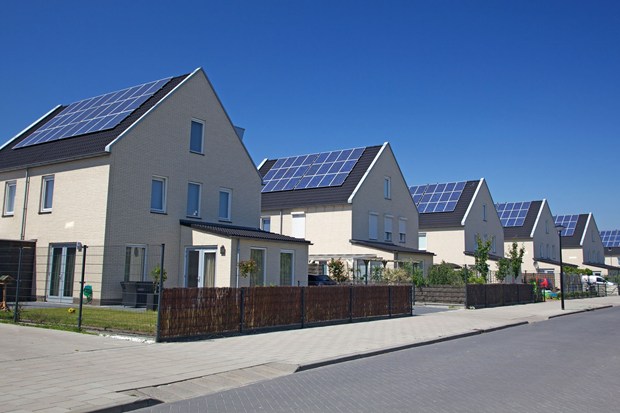 Reuters 27th Sept 2018, French Ecology Minister Francois de Rugy has approved 392 rooftop solar
power projects with a total capacity of 230 megawatts (MW) under a plan
launched in 2016 to develop 1,450 MW of solar capacity within three years.
France wants to develop more wind, solar and other low-carbon energy
sources to cut its dependence on nuclear energy power, which currently
counts for over 75 percent of its needs.
https://uk.reuters.com/article/uk-france-solarpower/france-approves-230-mw-of-rooftop-solar-projects-idUKKCN1M71KO?rpc=401&
French film docuementary – “Nuclear power – the end of a myth”
 Public Senat 22nd Sept 2018 By 2028, 34 of the 58 reactors will be celebrating their fortieth
anniversary, the maximum operating age set during the construction of the
park. EDF over-indebted does not have the means to replace these reactors
at the end of their life.
This film tells how France, by political choice,
became totally dependent on nuclear energy until it got into a dangerous
impasse. This film also shows that, at the same time as the aging of
nuclear power plants, several strategic dams at EDF are showing some
worrying signs of weakness.
Who were the players in this nuclear power
strategy? How was it imposed behind the scenes of the State, what were the
key moments? What are the real reasons and risks today for extending the
life of the fleet in operation? A rigorous investigation at the heart of
the French nuclear machine with the testimonies of the various actors of
the sector.
https://www.publicsenat.fr/emission/documentaires/nucleaire-la-fin-d-un-mythe-132557
Liberation 21st Sept 2018, [Machine Translation] The utopia of French nuclear energy dismantled, from
the “Messmer plan” to the EPR. Public Senate broadcasts this Saturday night
“Nuclear, the end of a myth”, a new docu supported on the flaws of the atom
industry. A useful light at a time when the government must decide on the
future of its reactors. The demolition of the French nuclear “model” and
its national narrative has become a popular subject. After the Big Lie seen
on Arte (who attacked the taboo of an attack on power plants) and Impasse
broadcast by France 5 (which told how the damn shipyard EPR reactor is
“sinking” EDF), here is Nuclear, the end of a myth, that we can discover
this Saturday at 9 pm on Public Senate.
https://www.liberation.fr/france/2018/09/21/l-utopie-du-nucleaire-francais-demantelee-du-plan-messmer-a-l-epr_1680417
French court orders EDF to release risk analysis about Hinkley nuclear project. It’s not too late to stop it.

 N2NP 19th Sept 2018 A court in Paris has ordered French utility EDF to
  release a risk analysis
report to the group’s works council (CEE) concerning its Hinkley Point C
nuclear project. The appeals court in Paris said the firm must communicate
the report within a month and must consult the CEE regarding the project
within two months.
In 2016, EDF refused to release all documents required
by the council for it to be able to issue its advice on the project,
triggering CEE’s legal action. The CEE say EDF failure to give elected
representatives of the staff objective, precise and complete information on
the technical and financial issues raised by the Hinkley project meant they
had not been able “to give a reasoned opinion on this project“.
Commenting on the news, Steve Thomas Emeritus Professor of Energy Policy at
Greenwich University and author of ‘Time to Cancel Hinkley?’ said:
“Some senior EDF management and some EDF trade unions have long been
concerned about EDF’s participation in the Hinkley Point C project.
The 3-year old report the EDF Central Works Council (CCE) has won access to
will show that EDF is well aware of these risks. The continuing delays and
cost overruns (more than 3 times over budget and 8 years late) at
Hinkley’s reference plant, Flamanville, significantly worse than when the
report was written, illustrate graphically the scale of the risk.
The Works Council see Hinkley as a financially risky project that will divert EDF’s
scarce finances away from the strategically more important task of
upgrading and life-extending EDF’s fleet of 58 reactors, many of which
are at or near the end of the 40-year design life.”
Stop Hinkley spokesperson, Roy Pumfrey says: “Even the long standing nuclear advocate,
former International Energy Agency boss, Nobuaki Tanaka, says nuclear power
can’t compete with renewables. He says it’s ‘ridiculously
expensive’ and ‘utterly uncompetitive’ Electricity consumers would
almost certainly still be able to make savings if the project were halted
now and the south-west were given the chance to develop sustainable energy
industries. Full construction start is still a year or more away so not too
late to stop it.”
http://www.no2nuclearpower.org.uk/news/campaign-update/paris-court-ruling-on-hinkley-point-c-risks/
French nuclear industry in turmoil, – inadequate welds at Flamanville nuclear reactor
 Le Monde 16th Sept 2018 [Machine Translation] Nuclear: In Flamanville, the welds of the discord.
The manufacturing difficulties of the French EPR have cruelly recalled the pitfalls that threaten the tricolor nuclear industry: an extremely ambitious initial vision and implementation difficulties with heavy consequences.
generators.
As a result, the group has to take back fifty-eight welds, knowing that a single weld represents eight weeks of extra work.
https://www.lemonde.fr/economie/article/2018/09/16/nucleaire-a-flamanville-les-soudures-de-la-discorde_5355892_3234.html
Financiers desert France’s EPR nuclear power plan for UK’s Hinkley Point C project
 Le Monde 16th Sept 2018 [Machine Translation] Can EDF’s finances support such a trajectory? The company’s chief financial officer, Thomas Piquemal, slammed the door in 2015, worried that the UK’s Hinkley Point EPR would weigh heavily on the company. According to him, the need for the nuclear company to finance alone two thirds of the project creates a situation too risky. ”
Who would bet 60% to 70% of its heritage on a technology that we still do not know if it works, while it’s been ten years that we try to build it? “, He launches in front of the deputies in 2016. This is the heart of the problem for EDF: how to finance new reactors? For Hinkley Point, it took considerable resources, even though EDF won a gold contract with the British state: for thirty years, the French group will sell its electricity at a guaranteed rate, twice the current price electricity!
In other words, British consumers will see their bill increase. In fact, most countries that continue to build nuclear power can only do so with a strong commitment from the state and a guaranteed income for private investors.
But the France of 2018 is no longer that of Pierre Messmer and the Commissariat au plan in 1974, when the French nuclear plan was launched. The impossible equation But the atom requires long time. “When we talk about the EPR, we
are talking about an investment over a century. We are in a period in which people want shorter-term returns, even in infrastructure, “says Emmanuel Autier of Bearing Point.
“We are not going to scramble to finance a project that has not yet proved its worth while it is much more profitable and less risky to finance renewable energy,” notes an investment fund manager. Especially since EDF’s current structure, subject to stock market fluctuations, does not encourage long-term commitment. “Finance costs are a
very important part of construction. A listed company can not wear that on its balance sheet in a massive way, “agrees Valérie Faudon, SFEN.
“It will be necessary for the state to play its full role by creating a new regulatory framework,” admits Xavier Ursat. In other words: to sustain the EPR – and make survive EDF – it will be up to the state to guarantee the investments and consumers to bear the burden on their electricity bill.
This is the impossible equation in which EDF is: to survive in its current form, it must.
https://abonnes.lemonde.fr/economie/article/2018/09/16/l-epr-le-cauchemar-d-edf_5355883_3234.html
Les Echos 17th Sept 2018 Nuclear: the amazing schedule for the extension of reactors. The first reactor of the Tricastin plant will stop in June 2019 to start the extension work after 40 years. But ASN will not give its generic opinion on
the subject until the end of 2020.
https://www.lesechos.fr/industrie-services/energie-environnement/0302222113379-nucleaire-letonnant-calendrier-de-la-prolongation-des-reacteurs-2205709.php
The EPR, France and EDF’s nuclear nightmare
Le Monde 16th Sept 2018 , Le Monde 16th Sept 2018 [Machine Translation] The EPR, EDF’s nightmare. The European pressurized
reactor was to be the flagship of the French nuclear industry. For the
company it is now its survival and that of a whole sector that is at
stake, while the group is heavily indebted and its income is dwindling. 74
billion of debt … and with nuclear,that is not finished!
At the headquarters of EDF, avenue de Wagram, in Paris, the gigantic banner of
Greenpeace shows the color: we see the CEO of EDF, Jean-Bernard Lévy,
making two fingers of honor to passersby, under the mention “Thank you
Jean-Bernard”. This action of December 2016 marked a new stage in the
argument of nuclear opponents: it is not only to explain the risk of
accidents, but also the financial risk that would weigh on EDF.
NGOs are no longer alone in this field. In June, the then minister responsible for EDF
Nicolas Hulot, took up the argument. “One of the reasons why EDF finds itself
in difficulty is that the nuclear industry, sorry to say, leads us into a
drift. In a clear allusion to the expensive shipyard Flamanville (Channel),
he said: “It is clear that economically, there is a kind of golden rule
that is being established in this sector, it’s that in reality, we never
keep our promises. The minister is picking up a criticism that is becoming
more and more common: not only has nuclear become too expensive, but it
would also be a major strategic mistake for EDF.
https://abonnes.lemonde.fr/economie/article/2018/09/16/l-epr-le-cauchemar-d-edf_5355883_3234.html
List published of events that increased the risk of reactor core meltdown in French nuclear power plants.
Mediapart 14th Sept 2018 , Mediapart publishes a document that has never been made public: the list of all events increasing the risk of reactor core meltdown in French nuclear
power plants. Between 2003 and 2014, thirty-seven production units experienced more than ten. Cruas, Fessenheim, Gravelines and Tricastin are the most affected. It’s a list that has never been made public.
It was forwarded by the Nuclear Safety Authority (ASN) to German MP Sylvia Kotting-Uhl, who herself sent it to Mediapart. It brings together the so-called “precursor” events, that is to say that increase the risk of reactor core meltdown occurring in French nuclear power plants between 2003 and 2014.
1 This Month

of the week – Shut Down Drone Warfare!


Tell the Ukrainian Government to Drop Prosecution of Peace Activist Yurii Sheliazhenko

Petition to revoke the licensing of the Near Surface Nuclear Disposal Facility (NSDF) at Chalk River. https://www.ourcommons.ca/petitions/en/Petition/Details?Petition=e-7247
To see nuclear-related stories in greater depth and intensity – go to https://nuclearinformation.wordpress.com
-
Archives
- April 2026 (57)
- March 2026 (251)
- February 2026 (268)
- January 2026 (308)
- December 2025 (358)
- November 2025 (359)
- October 2025 (376)
- September 2025 (257)
- August 2025 (319)
- July 2025 (230)
- June 2025 (348)
- May 2025 (261)
-
Categories
- 1
- 1 NUCLEAR ISSUES
- business and costs
- climate change
- culture and arts
- ENERGY
- environment
- health
- history
- indigenous issues
- Legal
- marketing of nuclear
- media
- opposition to nuclear
- PERSONAL STORIES
- politics
- politics international
- Religion and ethics
- safety
- secrets,lies and civil liberties
- spinbuster
- technology
- Uranium
- wastes
- weapons and war
- Women
- 2 WORLD
- ACTION
- AFRICA
- Atrocities
- AUSTRALIA
- Christina's notes
- Christina's themes
- culture and arts
- Events
- Fuk 2022
- Fuk 2023
- Fukushima 2017
- Fukushima 2018
- fukushima 2019
- Fukushima 2020
- Fukushima 2021
- general
- global warming
- Humour (God we need it)
- Nuclear
- RARE EARTHS
- Reference
- resources – print
- Resources -audiovicual
- Weekly Newsletter
- World
- World Nuclear
- YouTube
-
RSS
Entries RSS
Comments RSS
 nuclear-news