France starts a series of nuclear power shutdowns
|
France begins winding down its reliance on nuclear powerFrance began shutting down its oldest nuclear plant last month after 43 years of operation, the first in a series of closures the government has proposed though the the country won’t altogether abandon its reliance on nuclear power. Bellona March 4, 2020 by Charles Digges
France began shutting down its oldest nuclear plant last month after 43 years of operation, the first in a series of closures the government has proposed though the the country won’t altogether abandon its reliance on nuclear power. Yet the closure of the two reactors at the Fessenheim plant along the Rhine River on France’s border with Switzerland and Germany, is part of a broad energy strategy to rely more on renewable energy sources. That strategy would see French dependence on nuclear energy from supplying three-quarters of its electricity to about half by 2035. The shutdown has also been a key goal of anti-nuclear campaigners since the Fukushima disaster in 2011. Experts have noted that the reactors at Fessenheim, brought online in 1977, fall far short of even those reactors at Fukushima, with some warning that seismic and flooding risks in the Alsace region have been underestimated. Prime Minister Edouard Philippe says the plant’s second reactor will be shut down in June 30 – though it will be several months before both reactors go cold and their used fuel can start to be removed. Another dozen reactors that will soon exceed their 40-year age limit must close by 2035 to meet the phase-down target. The plan also sees France closing its remaining coal plants, and moving to renewables like solar and wind to close the energy gap and help fight climate change. But at the same time, state-owned energy giant EDF is racing to get its first next-generation reactor running at the Flamanville plant in 2022– already 10 years behind schedule – and more may be in the pipeline. France’s history with nuclear power runs deep. The country runs 58 nuclear power plants, which sprang up largely as a response to the oil crisis in the 1970s. Those were built on the foundation of the CEA atomic energy commission, which was established in the wake of World War II in an effort to reestablish the nation’s sovereignty. Activists like Charlotte Mijeon, who is the spokesperson for the anti-nuclear group Sortir du nucléaire, told Voice of America news the Fessenheim closure is welcome news, but contended it doesn’t go far enough. “The government is closing one nuclear power plant, but it should not make us forget that the rest of the nuclear fleet is aging,” she told the agency. She also pointed to the huge subsidies nuclear power receives from the government, which they say makes it difficult for renewable power to compete……… France’s long insistence on using nuclear power has irritated Germany and Switzerland, which, as minority shareholders in Fessenheim, have long urged its shutdown. Germany also has plans of its own to phase out its nuclear power plants completely, a task it says it will finish by 2022. Polls among the French show growing resistance to nuclear power, with one survey taken in 2018 showing 53 percent of the population against the technology. https://bellona.org/news/nuclear-issues/2020-03-france-begins-winding-down-its-reliance-on-nuclear-power |
|
Veterans groups not happy -France wants to abolish the National Commission for Monitoring the Consequences of Nuclear Tests.
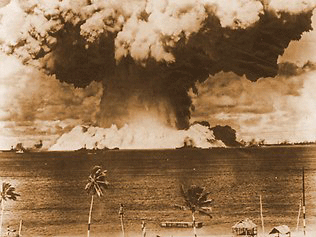 Dismay over plans to scrap French nuclear monitoring commission, https://www.rnz.co.nz/international/pacific-news/410780/dismay-over-plans-to-scrap-french-nuclear-monitoring-commission 2 March 2020 Nuclear test veterans groups in French Polynesia have reacted with dismay at reports that Paris wants to abolish the National Commission for Monitoring the Consequences of Nuclear Tests.
Last week, the French publication Canard Enchaine reported that as part of administrative changes and cost-cutting measures, dozens of commissions would be disestablished.
The commission is the body bringing together state authorities, representatives of the French Polynesian government and veterans associations to work on the list of radiation-induced illnesses deemed to be relevant for compensation.
The head of the group Moruroa e tatou Hiro Tefaarere has told the broadcaster La Premiere the move was inadmissible yet not surprising for the Macron government.
He said the French president on one hand described colonialism as a crime against humanity and on the other everything was suppressed which would recognise the consequences of the tests.
France carried out more than 190 nuclear weapons tests in the Pacific and until 2010 maintained that they were clean and posed no threat to human health.
Anti nuclear activists break into France’s Tricastin nuclear station
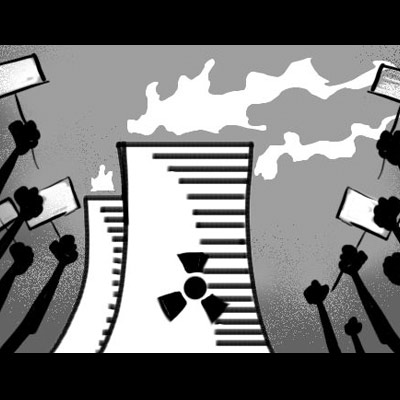 Reuters 21st Feb 2020. Activists from Greenpeace broke into the Tricastin nuclear power plant in southern France in order to demand its closure, the environmental pressure group said on Friday. “Some 50 Greenpeace activists gained access to several points at the Tricastin nuclear power plant this morning,” said Greenpeace spokeswoman Cecile Genot. “We are protesting and drawing attention to an aging nuclear power plant that is dangerous and should be shut down.” Officials for French state-controlled power group EDF, which runs Tricastin, had no immediate comment on the situation.
 |
ReplyForward
|
France starts out on the path to withdraw from nuclear energy
|
France Takes First Steps to Reduce Nuclear Energy Dependence https://www.voanews.com/europe/france-takes-first-steps-reduce-nuclear-energy-dependence, By Lisa Bryant, 21 Feb 20
February 21, 2020 France, the world’s most nuclear energy-dependent nation, is taking its first steps to shift to more renewables to power up.
On Saturday, the country begins a gradual shutdown of its aging Fessenheim plant. The move fits into the government’s broader energy strategy to reduce French dependence on nuclear energy from supplying three-quarters of its electricity to about half by 2035. Prime Minister Edouard Philippe says the plant’s first reactor will be closed Saturday, and the second in June. Another dozen reactors must close by 2035 to meet the phase-down target. The plan also sees France closing its remaining coal plants, and moving to renewables like solar and wind to close the energy gap and help fight climate change. For Charlotte Mijeon, spokesperson for anti-nuclear group Sortir du nucléaire, the Fessenheim shutdown is welcome news — but not enough. “It’s great that it’s eventually closed; however, we fear that Fessenheim is something like the tree hiding the forest,” she said. “The government is closing one nuclear power plant, but it should not make us forget that the rest of the nuclear fleet is aging.” France has 58 nuclear power plants, thanks to an energy strategy dating back to the 1970s oil crisis. Supporters say nuclear energy is a clean way to fight climate change while also meeting national energy needs. But critics say the plants have received billions in subsidies and nuclear lobbies are powerful, making it harder for renewables to compete. And they say the remaining plants pose mounting safety concerns as they age. “Regarding the climate emergency, we have no time left,” Mijeon said. “So we have to invest in green climate solutions, not in nuclear power, which is not only dirty, but also very expensive and slow.” While the reactor shutdown is a first for France, other countries, including Switzerland, Sweden and the United States, have also shut plants for a mix of budgetary, safety and environmental reasons. Neighboring Germany aims to phase out of nuclear power completely by 2022. It has been pushing for years for the shutdown of Fessenheim, which is located near its border |
|
France shuts down Fessenheim reactor in first phase of retreat from nuclear power
Reactor No. 1 will be halted on Saturday and the entire complex will come to a halt on June 30, the statement said.
Germany has long called for the plant, France’s oldest, to be shut down. It is the first nuclear complex to be closed under Macron’s plan.
France depends more on nuclear energy than any other country, getting about three-quarters of its electricity from the plants. Macron said in 2018, outlining France’s energy strategy for the next 30 years, that 14 nuclear reactors out of the 58 now running at 19 plants would be shut down by 2035. France would cap the amount of electricity it derives from nuclear plants at 50% by then.
Algeria and French Polynesia suffer from France’s 30 years of nuclear bomb testing
But Jean-Claude Hervieux has other memories. He joined the French testing efforts in Algeria as an electrician. He remembers a nuclear test in 1962 that did not go according to plan.
Radioactive dust and rock escaped from underground. Hervieux and others observing the testing ran for shelter. Two French ministers were among them. The group washed themselves in a military housing area to decontaminate.
France held more than 200 nuclear tests until a later president, Jacques Chirac, ended testing in 1996. Most tests took place in French Polynesia. But 17 took place in Algeria between 1960 and 1966, ending four years after Algeria’s independence from France.
Brahim Oumansour is a North Africa expert at the French Institute of International Relations in Paris. He said, “It’s part of the whole issue of decolonization and Algerians in general asking for recognition of colonization crimes.” He added that official recognition and financial compensation for the Algerian tests could cost millions of dollars.
Hervieux spent 10 years working on nuclear test areas in Algeria and later French Polynesia. Now 80 and living in France’s Lyon area, he says he is physically fine. But he used to receive some questionable radioactive testing results from the French government……
France’s nuclear compensation commission, CIVEN, said more than 1,600 claims have been filed under a 2010 French law that finally recognized health problems related to the testing.
Only about one-third have met the requirements needed to receive financial benefits. The requirements include about 24 possible radiation-related cancers. Almost all the claims came from France and French Polynesia. Of the 51 claims from Algeria, only one has been compensated…. https://learningenglish.voanews.com/a/questions-remain-as-france-marks-60-years-since-nuclear-tests-/5287541.html
European Pressurised Reactor at Flamanville: nuclear is expensive and it doesn’t work.

 France Culture 14th Feb 2020, EPR: nuclear is expensive and it doesn’t work. A kind of modern replica of the Danaïdes barrel, the EPR at Flamanville, in the Manche department, is once again being talked about: between construction delays (delivery scheduled for 2010, “potentially promised” now in 2022) and additional costs ( estimated three billion, we would exceed 12 billion today), is there ultimately a future for what was sold in the late 90s (1998-2000) as
the new wonder of the genre?
French govt considers a “0% nuclear” energy plan: and problems in existing nukes
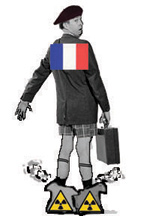 Europe1 16th Feb 2020, The government is considering a “0% nuclear” energy plan and the Flamanville EPR, still under construction, should open, at best, ten years behind schedule: in the coming years, there will be no shortage of challenges for the first producer electricity in France. If the group
Electricity of France (EDF), will supply “all the sites of Paris 2024 in
renewable energies” , all is not however rosy on the side of the first
electricity supplier in Europe. Several points are to be reviewed on its
copy in the coming years, especially around the construction of new nuclear
power plants in France, including that of Flamanville.
https://www.europe1.fr/economie/epr-de-flamanville-et-part-du-nucleaire-les-defis-dedf-3949806
Algeria’s radioactive legacy from France’s nuclear bomb tests
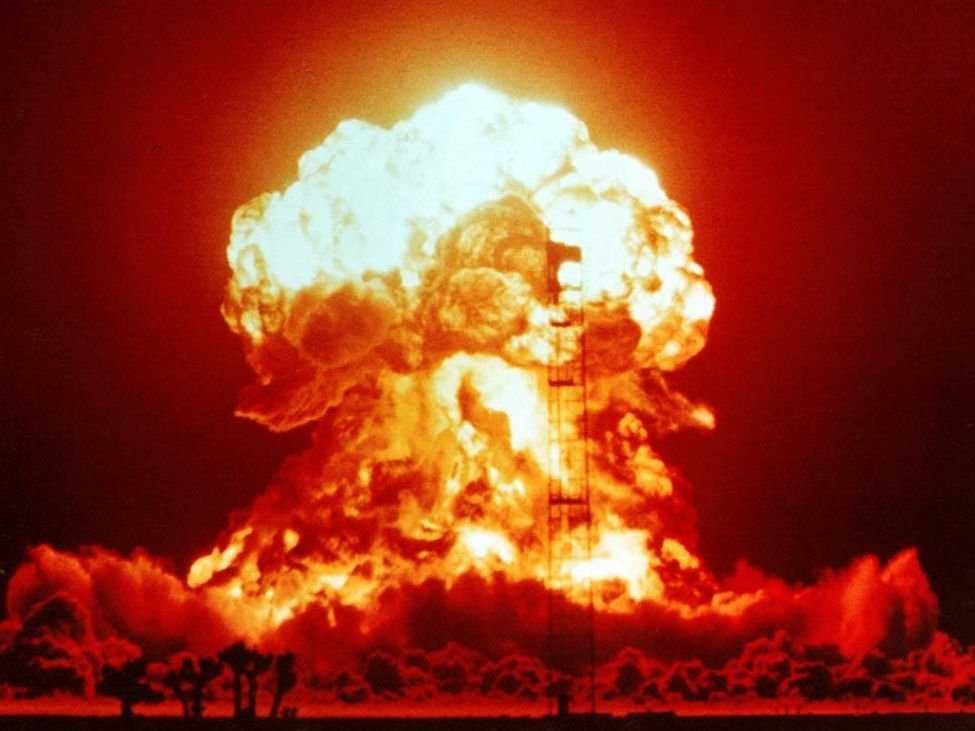 Algeria: 60 years on, French nuclear tests leave bitter fallout https://www.dw.com/en/algeria-60-years-on-french-nuclear-tests-leave-bitter-fallout/a-5235435113.02.2020, Author Elizabeth Bryant (Paris)
Decades after the first French nuclear test in Algeria, thousands of victims are still waiting for compensation from the government. Why is France dragging its feet over the issue?
Jean-Claude Hervieux still remembers joining a crowd of soldiers and high-level officials in Algeria’s Sahara desert to witness one of France’s first nuclear tests. Things didn’t go exactly as planned.
Instead of being contained underground, radioactive dust and rock escaped into the atmosphere. Everyone ran, including two French ministers. At military barracks, the group showered and had their radiation levels checked as a crude means of decontamination. “You don’t see nude ministers very often,” Hervieux chuckled.
But as France marks the 60th anniversary of its first nuclear test — near Algeria’s border with Mauritania, on February 13, 1960 — there is not much to laugh about. Critics have long claimed more than three decades of nuclear testing may have left many victims, first in Algeria and later in French Polynesia, where the bulk of testing took place.
But so far, only hundreds have been compensated, including just one Algerian. And as key nuclear testing anniversaries tick by, the unresolved fallout of the nuclear explosions has also fed into longstanding tensions between Paris and its former colony.
It is part of the whole issue of decolonization, and of Algerians asking for French recognition of crimes committed” as a colonial power, said Brahim Oumansour, North African analyst for the Paris-based French Institute of International Relations. For France, he added, doing so might mean “financial compensations in the millions of euros.”
Such issues are off the French government’s current public radar. A major nuclear policy speech last week by President Emmanuel Macron made no mention of them. France’s compensation commission says it has responded to claims that meet criteria set out by law.
The French Defense Ministry and Algerian authorities did not respond to questions about the tests.
A former electrician, Hervieux spent a decade working on the French nuclear tests, first in Algeria and later in French Polynesia. The botched Beryl explosion he witnessed in May 1962 took place two months after Algeria’s independence from France. The desert testing would continue for another four years, thanks to an agreement Paris secured with Algiers. “The showers cleaned our bodies and clothes,” Hervieux said of the Beryl incident, “but not what we breathed in or swallowed.”
Hervieux asked French authorities for the results of his radiation tests. They were bizarre, he said. One claimed to have screened him when he was on vacation; another named his father. He was told yet another had been destroyed on grounds it was contaminated.
Buried everything
Altogether, Paris exploded more than 200 nuclear devices. Most were in remote atolls of French Polynesia, but the first 17 took place in Algeria’s desert. In 1996, French President President Jacques Chirac called a halt to the testing.
When we left Algeria, we dug large holes and we buried everything,” said Hervieux, now 80, of France’s departure from the desert sites, in 1966.
He later joined AVEN, a pressure group for victims of French nuclear tests, although he says he remains healthy.
While he did not witness ill effects in Algeria, Hervieux describes visiting a village in French Polynesia where high radiation levels had been detected. “A local teacher said children were sick and vomiting,” he recalled. “Mothers were asking why their children’s hair was falling out.”
In Algeria, testing sites are still contaminated, activists say, many fenced off by only barbed wire, at best. “I saw radiation levels emitted from minerals, rocks vitrified by the bombs’ heat, which are colossal,” said retired French physicist Roland Desbordes, who has visited the sites. “These aren’t sites buried in the corner of the desert — they’re frequently visited by Algerian nomads,” who recuperate copper and other metals from the detritus.
Indelible scar?
The former president and now spokesman for CRIIRAD, an independent French research group on atomic safety, Desbordes claims the French army has key classified information about the testing it will not open to public scrutiny, including about the health and environmental effects of the explosions. But he believes Algerian authorities also bear some blame.
Each anniversary they talk about how these nuclear tests were not good,” he said, “but it’s also up to them to close off the sites to ensure nobody can access them.”
Reports, including a pair of decade-old documentaries by Algerian reporter Larbi Benchiha, suggest the testing left an indelible scar on local communities. Unaware of the danger, they collected once-buried scrap metal uncovered by desert winds, and turned them into jewelry and kitchen utensils.
Altogether, between 27,000 to 60,000 people from communities surrounding the test sites were affected, according to one Al Jazeera report, citing differing French and Algerian estimates.
But out of more than 1,600 claims filed under a decade-old French compensation law that finally acknowledged health problems from the tests, only 51 have come from Algeria, according to France’s nuclear compensation commission, CIVEN. A separate Supreme Court ruling recently reinstated two extra compensation claims from French Polynesia.
Among other criteria, the 2010 law requires proof of a minimum level of exposure to weapons tests, and offers a list of 23 types of cancers that qualify for compensation.
“There are very few demands and we can only judge those we receive,” said CIVEN Director Ludovic Gerin, who added the Algerian claims didn’t meet compensation criteria.
“We can’t actively search for victims,” he added, “so we’re a bit blocked.”
French President Emmanuel Macron seeks leading role in post-Brexit EU nuclear strategy
|
Macron seeks leading role in post-Brexit EU nuclear strategy, Defense News, By: Thomas Adamson, The Associated Press PARIS (AP) 8 Feb 20,— French President Emmanuel Macron on Friday advocated a more coordinated European Union defense strategy in which France, the bloc’s only post-Brexit nuclear power, and its arsenal would hold a central role.
Addressing military officers graduating in Paris, Macron set out his country’s nuclear strategy in a bid to show leadership one week after nuclear-armed Britain officially exited the EU. PARIS (AP) — French President Emmanuel Macron on Friday advocated a more coordinated European Union defense strategy in which France, the bloc’s only post-Brexit nuclear power, and its arsenal would hold a central role. Addressing military officers graduating in Paris, Macron set out his country’s nuclear strategy in a bid to show leadership one week after nuclear-armed Britain officially exited the EU……. https://www.defensenews.com/smr/nuclear-arsenal/2020/02/07/macron-seeks-leading-role-in-post-brexit-eu-nuclear-strategy/ |
|
|
Sloppy safety and waste management at Electricite de France’s nuclear sites
 Improve Nuclear Plant Maintenance Works, Watchdog Says, Francois de Beaupuy, Bloomberg News (Bloomberg) 24 Jan 2020 — Electricite de France SA and its suppliers must improve maintenance operations at nuclear reactors and waste management because they have lost skills and become sloppy in recent years, the French nuclear safety authority said.
The warning reflects a string of incidents related to substandard manufacturing or installation of equipment at EDF and its suppliers. It underscores the difficulties the French nuclear giant faces in extending the lifetime of aging reactors and building new ones, prompting it to announce an action plan to revamp the industry’s skills.
“There’s a need to reinforce skills and some carelessness among some players in the industry,” Bernard Doroszczuk, chairman of Autorite de Surete Nucleaire, said at a press conference near Paris on Thursday. “There’s a lack of rigor in the oversight of safety by operators,” from manufacturing to welding to equipment tests “which must be corrected.”
Discussions are still going on with EDF regarding safety improvements, including ways to prevent or mitigate the impact outside its plants in case of a severe accident such as the meltdown of the radioactive fuel and its vessel, said Sylvie Cadet-Mercier, a commissioner of the regulator. A spokesman for the utility declined to comment…… https://www.bnnbloomberg.ca/edf-must-improve-nuclear-plant-maintenance-works-watchdog-says-1.1378571
Legal action against Orano’s lying advertising about nuclear power solving climate change
 Reporterre 16th Jan 2020 The Sortir du nuclear network is filing a complaint against an Orano advertising campaign, which presents nuclear energy as a solution against climate change. A false statement intended to boost investments in a declining sector, denounces the association.
https://reporterre.net/Le-nucleaire-bon-pour-le-climat-Orano-poursuivi-pour-publicite-mensongere
Significant drop in France’s nuclear energy production
Reuters 10th Jan 2020, EDF’s French nuclear power generation fell by a more than expected 3.5 percent last year, the state-owned utility said on Friday. The French company’s domestic nuclear output power dropped to 379.5 terawatt hours (TWh), missing a revised production target of between 384 TWh and 388 TWh.power output tumbling in the final month of 2019 by 15.2% to 33 TWh. The
operator of France’s 58 nuclear reactors, covering about 75% of the
country’s electricity needs, had revised its 2019 nuclear production
target from 390 TWh to between 384 TWh and 388 TWh in November because of reactor maintenance and safety checks after an earthquake.
The European Pressurised Water Reactor (EPR) is dragging nuclear company EDF into $billions of debt

Climate News Network 31st Dec 2019, The edifice already heading for the status of the largest and most expensive construction project in the world, the Hinkley C nuclear power station (above) in the UK, is dragging its builder, the French giant EDF, into ever-deeper debt: the company’s flagship reactor is facing still more delay.
Although EDF is a vast company, owning 58 reactors in France alone,
and is 85% owned by the French state, it owes around €60 billion ($67bn),
a debt expected to increase by €3 billion ($3.35bn) a year.
This has led some city analysts, notably S&P Global, to downgrade the company’s prospects to “negative” − which is essentially a recommendation to
shareholders to sell.
Apart from the problem that EDF’s fleet of reactors in France is operating well beyond their original design life and are in constant need of safety and maintenance upgrades, the company’s main problem is its flagship, the European Pressurised Water Reactor (EPR), which is getting into ever-greater difficulties.

In Europe there are four EPRs under construction: the two barely begun at Hinkley Point in Somerset in the west of England; one in northern France at Flamanville (below) in Normandy; and the original prototype in Finland, known as Olkiluoto 3 (OL3) (above) . The extraordinary fact is that, although OL3 was due to start up in 2009, it is still incomplete, and its start date has just been put back again – until 2021.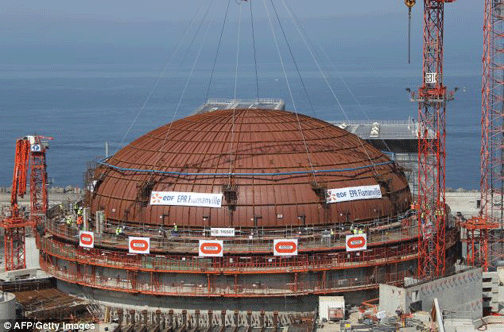
https://climatenewsnetwork.net/flagship-reactor-launch-postponed-again/
“Potentially faulty electrical components” in France’s nuclear backup systems
|
Montel 27th Dec 2019, EDF has replaced 28 “potentially faulty electrical components” making backup systems for the Penly 2 nuclear reactor (1330 MW) unavailable and is checking whether other units could present the same “safety” problem, said France’s ‘Nuclear Safety Authority (ASN) and EDF Friday.
https://www.montelnews.com/fr/story/edf-change-des-pices-dfectueuses-%C3%A0-penly-2/1074523 |
|
1 This Month



26 September – International Day for the Total Elimination of Nuclear Weapons


PLEASE OPPOSE HR 8255 AND S.3639 – bills would accelerate satellite deployment, with no environmental review or safeguards – https://ncstd5li.quorum.us/campaign/169331/
To see nuclear-related stories in greater depth and intensity – go to https://nuclearinformation.wordpress.com
-
Archives
- September 2026 (245)
- August 2026 (330)
- July 2026 (355)
- June 2026 (287)
- May 2026 (306)
- April 2026 (356)
- March 2026 (251)
- February 2026 (267)
- January 2026 (308)
- December 2025 (358)
- November 2025 (359)
- October 2025 (375)
-
Categories
- 1
- 1 NUCLEAR ISSUES
- business and costs
- climate change
- culture and arts
- ENERGY
- environment
- health
- history
- indigenous issues
- Legal
- marketing of nuclear
- media
- opposition to nuclear
- PERSONAL STORIES
- politics
- politics international
- Religion and ethics
- safety
- secrets,lies and civil liberties
- spinbuster
- technology
- Uranium
- wastes
- weapons and war
- Women
- 2 WORLD
- ACTION
- AFRICA
- Atrocities
- AUSTRALIA
- Christina's notes
- Christina's themes
- culture and arts
- Events
- Fuk 2022
- Fuk 2023
- Fukushima 2017
- Fukushima 2018
- fukushima 2019
- Fukushima 2020
- Fukushima 2021
- general
- global warming
- Humour (God we need it)
- Nuclear
- RARE EARTHS
- Reference
- resources – print
- Resources -audiovicual
- Weekly Newsletter
- World
- World Nuclear
- YouTube
-
RSS
Entries RSS
Comments RSS
 nuclear-news