With its reprocessing plant in La Hague, France has the highest radioactive discharges at sea in Europe.

With its reprocessing plant in La Hague, France has the highest radioactive discharges at sea in Europe. And these discharges are not decreasing, despite the commitments made in 1998, in Sintra, Portugal, by
the Member States of the OSPAR Convention for the protection of the North-East Atlantic.
But the results of the citizen surveillance ofradioactivity in the environment carried out by ACRO for more than 25years, show that the account is not there: the discharges from the Orano reprocessing plant in La Hague are visible. all along the Channel coast and, in the summer of 2021, they could still be detected as far as the Danish border.
The association therefore urges France to respect its international commitments by significantly reducing its radioactive discharges at sea. It will, for its part, maintain its vigilance.
ACRO 29th Sept 2021
High rates of cancer and deaths among former nuclear workers at Ile-Longue nuclear submarine base.
Brest. A study points to the prevalence of cancer among former workers at
the Ile-Longue nuclear base. A sociologist from the University of Brest has
just completed a study on the former pyrotechnicians of Ile-Longue. From
1972 to 1996, these state workers assembled the warheads of nuclear
missiles “without any protection”. A quarter of them died early.
France Info 30th Sept 2021
AUKUS deal leaves France out of South East Asian security arrangement.

Australian Prime Minister Scott Morrison on Wednesday said the three nations had agreed to “a new enhanced trilateral security partnership”.
The subtext of France and Australia’s submarine deal, Aljazeera, 27 Sep 21,
What do a new security pact and a cancelled military contract say about France’s place in the world? It was supposed to be an announcement of a pact, not the start of a foreign relations crisis between allies. But as Australia announced a new security partnership with the United Kingdom and the United States, dubbed AUKUS, it also cancelled a multibillion-dollar contract to buy submarines from France. So how did an abandoned deal for a dozen submarines turn in to the diplomatic version of a lover’s quarrel?Australia’s decision to cancel a multibillion-dollar order for French submarines in favour of American and British technology has sparked a diplomatic row of unprecedented proportions between longtime Western allies.
The French foreign ministry recalled its ambassadors to the United States and Australia citing “duplicity, disdain and lies”.
China’s Xi warns of ‘interference’ as Australia brushes off angerHundreds arrested in Australian anti-lockdown protestsFrance accuses Australia, US of ‘lying’ over submarine deal
Alongside the economic damage for tens of billions of euros, France said it resents the way Australia and its partners have handled the matter. French Foreign Minister Jean-Yves Le Drian, said, “There has been contempt so it’s not going well between us, not at all.”
President Emmanuel Macron will have a call with his US counterpart, Joe Biden, in the next few days, the French government said on Sunday.
Australia’s strategic alignment
Australia announced on Wednesday it would ditch a contract worth more than 50 billion euros ($59bn) to acquire 12 French-made diesel-electric submarines.
Instead, it will commission at least eight US nuclear-powered submarines in the framework of a new alliance – known by its acronym AUKUS – which will see Australia, the US, and the United Kingdom share advanced technologies with one another.
Australian Prime Minister Scott Morrison on Wednesday said the three nations had agreed to “a new enhanced trilateral security partnership”.
Aukus: France pulls out of UK defence talks amid row
Aukus: France pulls out of UK defence talks amid row, BBC, By Alex Therrien, 21 Sep 21,
BBC News France’s defence minister has cancelled talks with her UK counterpart as the row continues over a new security deal between Britain, the US and Australia.
Paris is angry after Australia signed the Aukus pact to build nuclear-powered submarines, pulling out of a major contract with France in the process.
UK PM Boris Johnson said France had nothing to worry about from the deal.
But Florence Parly’s meeting with UK Defence Secretary Ben Wallace in London this week has been called off.,,,,,,,,,,, Lord Ricketts, a former British ambassador to France who was due to co-chair the two days of talks, confirmed the meeting between Mr Wallace and Ms Parly had been “postponed to a later date”.
……… In a rare step among allies, French President Emmanuel Macron ordered the recall of the French ambassadors to Washington and Canberra.
The European Union has said it was “analysing” the impact of the Aukus agreement on its trade negotiations with Australia, which are due to resume in October.
BBC Brussels correspondent Jessica Parker said it appeared the EU had hardened up its position over the weekend, as the extent of France’s anger became clear.
She said the European Commission wouldn’t elaborate on what “analysing” the impact of Aukus could actually mean for the trade talks with Australia – but the language might lead to speculation that negotiations could even be suspended…
The agreement means Australia will become just the seventh nation in the world to operate nuclear-powered submarines.
The pact will also see the allies share cyber capabilities, artificial intelligence and other undersea technologies.
But it has been criticised by China, which has accused the three powers of having a “Cold War mentality”…………. https://www.bbc.com/news/uk-58620220
Nuclear submarine deal planned for 18 months – French ambassador says this is treasonous
Recalled French ambassador accuses Australia of ‘treason in the making’ https://www.theage.com.au/politics/federal/recalled-french-ambassador-accuses-australia-of-treason-in-the-making-20210918-p58ssg.html. By Anthony Galloway
France’s recalled ambassador to Australia has likened Canberra’s actions to treason after the Morrison government dumped a $90 billion submarine contract with Paris and instead decided to build nuclear-powered submarines with the United States and Britain.
France on Saturday has taken the extraordinary step of recalling its ambassadors from Australia and the US, as the fallout grows from a new defence pact that has infuriated French President Emmanuel Macron.
Speaking to The Sydney Morning Herald and The Age hours before he was recalled, France’s ambassador to Australia, Jean-Pierre Thebault, did not rule out suspending talks to allow French troops greater access to Australian military bases after his nation was “stabbed in the back”.
Adding insult to the process… we have very reliable reports from the independent press, which I thank, about the fact that all this was in the making for 18 months. Which means we have been blind-sided intentionally for 18 months…. The crime was prepared for 18 months,” he said.
France’s recalled ambassador to Australia has likened Canberra’s actions to treason after the Morrison government dumped a $90 billion submarine contract with Paris and instead decided to build nuclear-powered submarines with the United States and Britain.
France on Saturday has taken the extraordinary step of recalling its ambassadors from Australia and the US, as the fallout grows from a new defence pact that has infuriated French President Emmanuel Macron.
Speaking to The Sydney Morning Herald and The Age hours before he was recalled, France’s ambassador to Australia, Jean-Pierre Thebault, did not rule out suspending talks to allow French troops greater access to Australian military bases after his nation was “stabbed in the back”.
“Adding insult to the process… we have very reliable reports from the independent press, which I thank, about the fact that all this was in the making for 18 months. Which means we have been blind-sided intentionally for 18 months…. The crime was prepared for 18 months,” he said.
He slammed Australia for allowing a meeting to go ahead between Mr Dutton and Foreign Minister Marise Payne late last month with their French counterparts where they spoke about enhancing defence ties between the two countries.
“It is us, through letters that were sent by the President [Macron] some months ago to the Prime Minister [Scott Morrison], who proposed to look at more ambitious and new ambitious cooperations,” Mr Thebault said……….. The extraordinary move follows the Morrison government’s decision to tear up a $90 billion contract to buy 12 French submarines in favour of a new nuclear-powered fleet using technology from the US and United Kingdom under a new partnership called AUKUS.
France angry about nuclear submarine cancelleation – recalls ambassadors to Australia, USA.
France vents subs anger with recall of Australian, US envoys, AFR Hans van Leeuwen, Europe correspondent Sep 18, 2021 –London | France has issued a diplomatic slap in the face to Canberra and Washington, recalling its ambassadors to vent its displeasure at the cancellation of Australia’s $90 billion submarine contract with state-controlled defence company Naval Group.
The move signals a potentially serious rupture in Franco-Australian relations, after Foreign Minister Jean-Yves Le Drian publicly described Australia’s switch to a maritime security pact with the US and Britain as “a stab in the back”.
This exceptional decision is justified by the exceptional gravity of the announcements made on September 15 by Australia and the United States,” Mr Le Drian said in a statement on Friday (Saturday AEST).
“The cancellation of the Attack class submarine program binding Australia and France since 2016, and the announcement of a new partnership with the United States meant to launch studies on a possible future cooperation on nuclear-powered submarines, constitute unacceptable behaviour between allies and partners.”
Mr Le Drian said the “consequences directly affect the vision we have of our alliances, of our partnerships and of the importance of the Indo-Pacific for Europe”………
Although Australia’s French embassy has issued a statement arguing that the decision was made purely on technical grounds, the French government and commentariat has interpreted it as a political decision – and it will potentially rankle for years to come…… https://www.afr.com/world/europe/france-vents-subs-anger-with-recall-of-us-australian-envoys-20210918-p58srz
France: questionable rush to start Flamanville nuclear reactor despite its defects
By a decree of August 30, 2021, EDF was authorized to operate the Flamanville EPR, under an extremely questionable consultation procedure. This is just one of the many administrative authorizations that the company
must still receive to commission the reactor, but this decision is nonetheless irresponsible. Even though the reactor is still affected by numerous defects, EDF continues its forced march to prepare for its start-up at all costs. We strongly denounce this irresponsible headlong rush.
Sortir du Nucleaire 9th Sept 2021
https://www.sortirdunucleaire.org/EPR-de-Flamanville-une-scandaleuse-autorisation-d
Protests as France sends latest shipment of used nuclear fuel to Japan
Protests as France sends latest nuclear shipment to Japan https://www.france24.com/en/live-news/20210908-protests-as-france-sends-latest-nuclear-shipment-to-japanActivists from environmental group Greenpeace protested against a shipment of reprocessed nuclear fuel that was set to leave France for Japan on Wednesday for use in a power plant.
The load of highly radioactive Mox, a mixture of reprocessed plutonium and uranium, was escorted by police from a plant near the port of Cherbourg to the dockyard in the early hours of the morning.
A handful of Greenpeace activists waved flags and signs with anti-nuclear logos as they camped out on Tuesday night to wait for the heavy-goods truck transporting the high-security cargo.The Mox from French nuclear technology group Orano is destined for a nuclear plant in Takahama in Japan and is the seventh such shipment from France since 1999.
Japan lacks facilities to process waste from its own nuclear reactors and sends most of it overseas, particularly to France.
The country is building a long-delayed reprocessing plant in Aomori in northern Japan.
“Orano and its partners have a longstanding experience in the transport of nuclear materials between Europe and Japan, in line with international regulations with the best safety and security records,” Orano said in a September 3 statement.
The fuel is being shipped by two specially designed ships from British company PNTL.
Chinon nuclear site again leaks coolants that turn into powerful greenhouse gases.
The Chinon nuclear site (Center – Val de Loire) declared in August 2021 to have exceeded the annual authorized limit for coolant leaks. 100 kilos in 1 year is the quantity of refrigerants that each EDF nuclear power plant has
the right to allow to evaporate in nature. Because at normal pressure, these liquids turn into powerful greenhouse gases.
This is equivalent to several thousand kilos of CO2 released into the atmosphere each year by EDF nuclear facilities, which have very high cooling needs. The manufacturer does not brag about it, but this limit is regularly exceeded.
Sortir du nucleaire 31st Aug 2021
An EDF employee contaminated in the Cruas-Meysse nuclear power plant.
An EDF employee contaminated in the Cruas-Meysse nuclear power plant. The
Nuclear Safety Authority classified the incident at level 2 (out of 7) on
the INES severity scale. This type of incident is quite rare, only a few
cases occur each year.
Le Monde 4th Sept 2021
No apology from France, as new report reveals the harm done to Pacific islands by atomic bomb tests

Although testing stopped more than two decades ago, its legacy lives on in French Polynesia’s politics, health, economy and environment,
“In every other Pacific Island, you have the same,” said Colombani, who also spent more than a decade working in French Polynesia’s tourism sector. “You have the postcard, but if you look beyond that, there’s something you cannot even imagine.”
New study on nuclear testing in French Polynesia reveals France’s ‘censorship and secrecy’ https://www.pri.org/stories/2021-08-06/new-study-nuclear-testing-french-polynesia-reveals-france-s-censorship-and
More than 400 claims have been filed against the French government for nuclear tests on French Polynesia between 1966 and 1996. Scientists say about 110,000 people have been affected by radioactive fallout. It’s been nearly two decades since France stopped testing nuclear weapons in French Polynesia.
But many across French Polynesia’s 118 islands and atolls across the central South Pacific were disappointed last month when President Emmanuel Macron, on his very first trip to the territory France has controlled since 1842, failed to apologize for the nearly 200 nuclear tests conducted between 1966 and 1996.
“Faced with dangerous powers in the concert of nations, I wish to say here that the nation owes a debt to French Polynesia,” Macron said in a July 27 speech. He went on to admit that the tests on the Mururoa and Fangataufa atolls were “not clean in any way” — but stopped short of an official apology.
Guillaume Colombani, who works for Radio Te Reo-o-Tefana, said while they weren’t expecting an apology, it was still devastating not to get one.
“So, when you do something wrong, whatever it is, if you go and see the people you have hurt and you say, ‘Listen, I’m sorry for what I’ve done,’” said Colombani, “it is easier for the community to say, ‘OK, we accept, here’s forgiveness,’ or ‘No, we don’t accept. You have to do something for us.’”
Colombani, 41, grew up in Tahiti during the last decades of the nuclear tests and said he remembers seeing images of blue lagoons turning white after bombs were set off. He can recount the hyper-polarization of the issue and the anti-nuclear demonstrations spurred across the Pacific.
Although testing stopped more than two decades ago, its legacy lives on in French Polynesia’s politics, health, economy and environment, he said.
Underestimated exposure levels
Scientists have long estimated some 110,000 people were affected by the radioactive fallout — many of them French Polynesians who worked at the testing sites. However, a study released earlier this year revealed that France underestimated the level of toxic exposure during the atmospheric tests that took place in the 1960s and ’70s.
The Mururoa Files was based on a two-year investigation of more than 2,000 declassified French state documents as well as various interviews conducted in French Polynesia.
“We found that they underestimated the level of exposure by factors of two to 10, depending on the tests and locations,” said Sebastien Philippe, a researcher and lecturer at the Princeton School of Public and International Affairs with the program on science and global security and co-author of the study.
That’s two to 10 times higher than the estimates given by France’s Atomic Energy Commission in a report produced nearly a decade after testing stopped. The findings compiled by Philippe and his team found, among other things, that one reason the estimates of radiation exposure were so low is that France did not take into account contaminated drinking water.
Ultimately, this systematic underestimation not only made it more difficult to link cases of cancer to the nuclear tests, but it also made it harder for victims to get compensated.
“The compensation process was scientifically broken, and I think the reason for that is the government really realized how much money it was going to cost them, and decided it would be easier to deal with this in court,” Philippe said.
More than 400 claims have been filed against the French government, but only about half have been settled in the last 10 years. Philippe said this was allowed to happen because of the French government’s “censorship and secrecy” surrounding the nuclear testing.
One upside of the release of this study, he said, was the French government’s commitment to open more government archives to the public — a commitment that President Macron made on his recent trip. The French government did not respond to The World’s request for comment about Macron’s trip.
Irreversible environmental damage
The underestimation of the radioactive fallout also made it difficult to fully understand the scope of irreversible environmental damage from the nuclear testing.
Keitapu Maamaatuaiahutapu, a physicist and climate scientist at the University of French Polynesia, said the destruction was particularly bad when the testing went underground in the mid-’70s and bombs were set off in boreholes drilled into the atolls.
These bombs had power “100 to 1,000 times more than the bomb dropped on Hiroshima,” he said.
Whole lagoons full of coral were decimated and fish populations were poisoned for years. Now, there’s also a concern that the atolls may break apart — a process being sped up by rising ocean levels due to climate change, he said.
“And the release of the radioactivity from those holes,” Maamaatuaiahutapu said. “Not only would that create [a] tsunami, but it would pollute the ocean.”
France continues to control all of the information about the damage caused by nuclear testing, including heavily guarding the test sites themselves, he said, so there might not be a way to tell when something might happen. Both the Mururoa and Fangataufa atolls are more than 700 miles away from the main island of Tahiti.
Maamaatuaiahutapu also said that he doesn’t believe that French Polynesia will never get an official apology from Paris, and that also creates political problems.
Experts said that French Polynesians who are loyal to France don’t want to criticize Paris, because it supports the territory with some $2 billion a year.
On the other hand, the independent movement, which both Maamaatuaiahutapu and Colombani are part of, supports every effort to hold France accountable, and to spread the word about nuclear tests across the Pacific — a place known mostly for its beauty.
“In every other Pacific Island, you have the same,” said Colombani, who also spent more than a decade working in French Polynesia’s tourism sector. “You have the postcard, but if you look beyond that, there’s something you cannot even imagine.”
France returns high level nuclear waste to Germany (What happens to it then?)
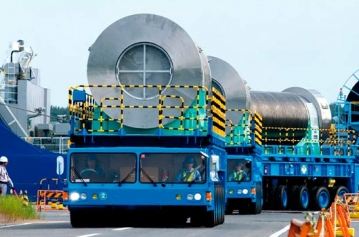
France signs billion-euro deal to return nuclear waste to Germany, https://www.rfi.fr/en/france/20210820-france-signs-billion-euro-deal-to-return-nuclear-waste-to-germanyThe French nuclear group Orano has signed a contract worth more than 1 billion euros to return high-level nuclear waste processed in France to Germany by the end of 2024.
Orano announced on Thursday that a “package of deals” between electricity companies PreussenElektra, RWE, ENBW and Vattenfall had formalised an in-principle agreement made in June by the French and German governments.
For 44 years German electricity companies have sent spent nuclear fuel to Normandy for recycling.
Train convoys carrying the waste were regularly blocked by environmental activists, some of whom chained themselves to the tracks.
Thorny issue
Under the agreement, which followed years of difficult negotiations, it is not medium-level German waste that will be returned, but high-level French waste from EDF power plants.
Orano said this meant it would take less volume and less time to send the same level of radioactive waste back to Germany.
“In terms of mass and radioactivity, this does not change anything,” Orano said in a statement, describing the deal as a “fairly common practice of equivalence”.
A single train of 100 containers carrying the spent nuclear fuel is to be transported from Orano’s plant in La Hague, Normandy, to Germany within the next three years.
Under French law, nuclear waste that enters France for processing cannot remain in the country.
However Germany does not have a solution for the long-term management and storage of radioactive material.
France’s oldest nuclear reactors allowed to operate for another decade
France’s oldest nuclear reactors allowed to operate for another decade https://www.rfi.fr/en/france/20210225-france-s-oldest-nuclear-reactors-allowed-to-operate-for-another-decade-edf by:Amanda Morrow
France’s Nuclear Safety Authority (ASN) has approved extending the lifetime of the country’s oldest nuclear reactors for a further 10 years. Electricity operator EDF will be in charge of improving the safety of the 900 MWe plants, which were intended to run for 40 years but will now run for 50.
The reactors in question are the oldest of the French fleet, having been commissioned in the early 1980s.
Approval for their continued service comes with several conditions, including that improvements be made to ensure that radioactivity remains confined in the event of an accident.
A first objective is to limit the impact of accidents, including serious ones such as a meltdown of the reactor core,” said ASN’s deputy director general Julien Collet.
Other concerns included protecting the plants against earthquakes, floods and extreme heat, as well as internal fire hazards.
The reactors in question are Bugey (Ain), Blayais (Gironde), Chinon (Indre-et-Loire), Cruas (Ardèche), Dampierre (Loiret), Gravelines (Nord), Saint-Laurent (Loir-et-Cher) and Tricastin (Drôme).
Staunch opposition
Following calls from environmental campaigners to shut down ageing nuclear reactors, France’s oldest plant, Fessenheim, was switched off last year.
However the evacuation of its combustible waste will continue until the summer of 2023, while the demolition of the site lay not be complete until 2040.
France derives nearly 70 percent of its electricity from nuclear power, a world record. It’s hoping to reduce this figure to 50 percent by 2035 to make more room for renewable energy.
The French nuclear complex — Macron’s love letter to the nuclear industry

Macron’s love letter to the nuclear industry
The French nuclear complex — Beyond Nuclear International The French nuclear complex https://beyondnuclearinternational.org/2021/08/15/the-french-nuclear-complex/
August 15, 2021 by beyondnuclearinternationa
The all too easy alliance between the civil and military sectors
From the Swiss Energy Foundation
...et sans nucléaire militaire, pas de nucléaire civile (“and without the military nuclear sector, no civilian nuclear sector”). These were the words of French head of state, Emmanuel Macron, during his visit at the end of the year to Le Creusot, a hotspot of the French nuclear industry. Indeed, the civil and military uses of nuclear energy were, are, and will remain, inextricably linked. This is exemplified by the French reactor research project NUWARD.
The year 2020 ended with a declaration of love from Emmanuel Macron to the French nuclear industry: “Our energy and ecological future depends on nuclear energy”. He added: “Our economic and industrial future depends on nuclear energy. ” Macron addressed these words in a well-received speech delivered at Le Creusot, Burgundy, the very heart of the nuclear industry. The industrial town of Le Creusot is an important production site for components for nuclear power plants as well as for nuclear weapons systems for military use.
The nuclear industry in crisis

However, the last few years have not been a time of joy for the French nuclear industry, but rather a time of crisis. To stay with Le Creusot: The reactor forge facility there, which among other things manufactures the safety-relevant components for nuclear power plants, drew attention to itself in 2016 with a series of irregularities: it emerged that, for years, there had been systematic forgeries. Faulty forged parts were produced. Instead of discarding the rejects, reports were falsified and quality assurance undermined. France’s new-build project, the Evolutionary Power Reactor (EPR), was also affected. The former showcase project sank steadily into a billion-dollar grave.
Along with the Le Creusot scandal, numerous other miscalculations and breakdowns cast a bad light on the French nuclear industry. The construction of the new EPR in Flamanville, as well as other construction projects abroad, made headlines with years of delays and cost explosions. The builder is the French quasi-state nuclear giant EDF. It did not want to bear the cost debacle alone, but also pointed the finger at EPR nuclear giant Areva. However, since 2018, Areva has ceased to exist.

To prevent bankruptcy, the state has virtually ransomed Areva by means of subsidies. The group was split into the state-owned company New Areva (now “Orano”), responsible for the fuel cycle business, and the reactor construction division Areva NP (now “Framatome”), which also includes the Le Creusot forge. Meanwhile, EDF, 80% of which is state-owned, is struggling with enormous debts —some 41 billion euros at the end of 2019, according to the French Ministry of Economy.
Nuclear DNA – French identity
So the task at hand is to shore up the once-radiant sector in crisis. And Macron’s assurances to Framatome and Co. came at the just right time. On the one hand, there are economic interests, as just explained with the problem child EDF, on the other hand, there is also the French identity and military capacity, founded on France’s nuclear power status. Since the post-war period, France’s self-image has been based to a large extent on the nuclear sector. In Le Creusot, Macron not only praised those present, he also announced the construction of a new aircraft carrier —nuclear-powered, of course.
The NUWARD project: an exemplary case

Among those present at Le Creusot, in addition to Framatome, were managers from EDF, Orano and the Naval Group defense contractor. All of the players are a hybrid of government and private funding, civilian and military exploitation interests. And with the exception of Orano, they are all involved in the new French Small Modular Reactor (SMR) project called NUWARD. The nuclear industry is pinning its hopes on “small modular reactors”.
The project for the French variant NUWARD started about ten years ago, when the contractors EDF, Naval Group (then DCNS), the state nuclear and energy research center CEA (Commissariat à l’énergie atomique et aux énergies alternatives) and the then Areva were commissioned with initial feasibility studies. TechnicAtome (formerly Areva TA), a specialist in marine nuclear propulsion systems, was also brought in for the pre-conceptual design. Finally, in September 2019, the partners presented their collaborative NUWARD project at the General Conference of the International Atomic Energy Agency in Vienna.
The parties involved emphasize the benefits of NUWARD as an export commodity in the global energy market: it is necessary to meet the increasing demand for energy in the context of rising population and climate policy challenges. To wit: Nuclear energy is again praised as a (supposedly) climate-friendly solution. The small NUWARD with a capacity of about 340 MW is intended as a complement to the EPR with a capacity of about 1700 MW.

But civilian applications are hardly ever the only ones. The new aircraft carrier, which is to replace the retired “de Gaulle” from 2038, will be nuclear-powered. The experts responsible for this are TechnicAtome and Naval Group. The new generation of French submarines, currently being developed under the so-called Barracuda program with the same stakeholders, also relies on nuclear propulsion. The suspicion is that TechnicAtome and Naval Group’s interests in NUWARD are aligned on this. According to ASAF, the French Army’s support association, the latter enjoys the opportunity to acquire knowledge that can later be applied in the military field.
From research to armament leader
A deeper look at the project partners involved and their activities shows that the mixture of civil-military engagement is by no means new. For example, the defense industry group Naval Group, the CEA and TechnicAtome are involved in the Barracuda project mentioned above. Naval Group itself, which calls itself the “European leader in naval defense”, is majority-owned by the French government and one-third by the defense contractor Thales Group (which in turn is about one-third owned by the government). In addition to its largely military projects, the group is also active in the civilian sector, as in the case of the EPR4 or through offshore wind energy projects.
Naval Group, meanwhile, is a 20% shareholder in TechnicAtome, whose core business is nuclear submarine propulsion. In addition, the corporation pursues civil nuclear activities. For example, it was responsible for safety systems at Hinkley Point (UK) at the EPR. TechnicAtome was spun off in the 1970s from the state research institute CEA, which remains a shareholder today, along with the state and EDF (itself 85% state-owned).
The CEA can be seen as a symbol of the interdependence of the military-civilian nuclear establishment. CEA, from the French acronym for Atomic Energy Commission, was founded after World War II and oversees all French nuclear research, both military and civilian. To this day, the research institution is wholly owned by the government. Of note are the unique privileges the CEA enjoys as a public agency: it is accountable for its decisions solely to the French president and is not subject to the same financial controls as other government agencies.
France Nucléaire – Quo vadis?
For the French head of state, abolishing the civil-military “double dimension” makes no sense at all. Rather, it illustrates the coherence between strategic autonomy and energy independence. And this is now being proudly presented in public again, as in Le Creusot.
It is therefore not only worthwhile for the French state to support the struggling civilian nuclear industry, but it seems almost imperative. It does so not only through share packages (see Areva). In addition, Macron is lobbying Brussels to give nuclear energy more prominence in the EU’s climate strategy, with the hope of receiving money from the Green New Deal pots. This would also help the enforcement of the planned national subsidies vis-à-vis the EU.
State aid en masse is thus intended to save civil nuclear power in France, because the French presidential palace cannot afford to — and will not — do away with the civilian part. As Macron revealed in his closing homage to nuclear power at Le Creusot: “Our strategic future, notre status de grande puissance, depends on nuclear energy”.
The original article in German, can be found here on the Swiss Energy Foundation (SES) website in its Focus France section. We are grateful to the SES for this translation.
France’s secrecy and censorship on the atomic bomb tests in the Pacific

New study on nuclear testing in French Polynesia reveals France’s ‘censorship and secrecy’ https://www.pri.org/stories/2021-08-06/new-study-nuclear-testing-french-polynesia-reveals-france-s-censorship-and
More than 400 claims have been filed against the French government for nuclear tests on French Polynesia between 1966 and 1996. Scientists say about 110,000 people have been affected by The WorldAugust 06, 2021 · 12:30 PM EDT
By Ashley Westerman It’s been nearly two decades since France stopped testing nuclear weapons in French Polynesia.
But many across French Polynesia’s 118 islands and atolls across the central South Pacific were disappointed last month when President Emmanuel Macron, on his very first trip to the territory France has controlled since 1842, failed to apologize for the nearly 200 nuclear tests conducted between 1966 and 1996.
“Faced with dangerous powers in the concert of nations, I wish to say here that the nation owes a debt to French Polynesia,” Macron said in a July 27 speech. He went on to admit that the tests on the Mururoa and Fangataufa atolls were “not clean in any way” — but stopped short of an official apology.
Guillaume Colombini, who works for Radio Te Reo-o-Tefana, said while they weren’t expecting an apology, it was still devastating not to get one.
“So, when you do something wrong, whatever it is, if you go and see the people you have hurt and you say, ‘Listen, I’m sorry for what I’ve done,’” said Colombini, “it is easier for the community to say, ‘OK, we accept, here’s forgiveness,’ or ‘No, we don’t accept. You have to do something for us.’”
Colombini, 41, grew up in Tahiti during the last decades of the nuclear tests and said he remembers seeing images of blue lagoons turning white after bombs were set off. He can recount the hyper-polarization of the issue and the anti-nuclear demonstrations spurred across the Pacific.
Although testing stopped more than two decades ago, its legacy lives on in French Polynesia’s politics, health, economy and environment, he said.
Underestimated exposure levels
Scientists have long estimated some 110,000 people were affected by the radioactive fallout — many of them French Polynesians who worked at the testing sites. However, a study released earlier this year revealed that France underestimated the level of toxic exposure during the atmospheric tests that took place in the 1960s and ’70s.
The Mururoa Files was based on a two-year investigation of more than 2,000 declassified French state documents as well as various interviews conducted in French Polynesia.
“We found that they underestimated the level of exposure by factors of two to 10, depending on the tests and locations,” said Sebastien Philippe, a researcher and lecturer at the Princeton School of Public and International Affairs with the program on science and global security and co-author of the study.
That’s two to 10 times higher than the estimates given by France’s Atomic Energy Commission in a report produced nearly a decade after testing stopped. The findings compiled by Philippe and his team found, among other things, that one reason the estimates of radiation exposure were so low is that France did not take into account contaminated drinking water.
Ultimately, this systematic underestimation not only made it more difficult to link cases of cancer to the nuclear tests, but it also made it harder for victims to get compensated.
“The compensation process was scientifically broken, and I think the reason for that is the government really realized how much money it was going to cost them, and decided it would be easier to deal with this in court,” Philippe said.
More than 400 claims have been filed against the French government, but only about half have been settled in the last 10 years. Philippe said this was allowed to happen because of the French government’s “censorship and secrecy” surrounding the nuclear testing.
One upside of the release of this study, he said, was the French government’s commitment to open more government archives to the public — a commitment that President Macron made on his recent trip. The French government did not respond to The World’s request for comment about Marcon’s trip.
The underestimation of the radioactive fallout also made it difficult to fully understand the scope of irreversible environmental damage from the nuclear testing.
Keitapu Maamaatuaiahutapu, a physicist and climate scientist at the University of French Polynesia, said the destruction was particularly bad when the testing went underground in the mid-’70s and bombs were set off in boreholes drilled into the atolls.
These bombs had power “100 to 1,000 times more than the bomb dropped on Hiroshima,” he said.
Whole lagoons full of coral were decimated and fish populations were poisoned for years. Now, there’s also a concern that the atolls may break apart — a process being sped up by rising ocean levels due to climate change, he said.
“And the release of the radioactivity from those holes,” Maamaatuaiahutapu said. “Not only would that create [a] tsunami, but it would pollute the ocean.”
France continues to control all of the information about the damage caused by nuclear testing, including heavily guarding the test sites themselves, he said, so there might not be a way to tell when something might happen. Both the Mururoa and Fangataufa atolls are more than 700 miles away from the main island of Tahiti.
Maamaatuaiahutapu also said that he doesn’t believe that French Polynesia will never get an official apology from Paris, and that also creates political problems.
Experts said that French Polynesians who are loyal to France don’t want to criticize Paris, because it supports the territory with some $2 billion a year.
On the other hand, the independent movement, which both Maamaatuaiahutapu and Colombini are part of, supports every effort to hold France accountable, and to spread the word about nuclear tests across the Pacific — a place known mostly for its beauty.
“In every other Pacific Island, you have the same,” said Colombini, who also spent more than a decade working in French Polynesia’s tourism sector. “You have the postcard, but if you look beyond that, there’s something you cannot even imagine.”
1 This Month



26 September – International Day for the Total Elimination of Nuclear Weapons


PLEASE OPPOSE HR 8255 AND S.3639 – bills would accelerate satellite deployment, with no environmental review or safeguards – https://ncstd5li.quorum.us/campaign/169331/
To see nuclear-related stories in greater depth and intensity – go to https://nuclearinformation.wordpress.com
-
Archives
- September 2026 (219)
- August 2026 (330)
- July 2026 (355)
- June 2026 (287)
- May 2026 (306)
- April 2026 (356)
- March 2026 (251)
- February 2026 (267)
- January 2026 (308)
- December 2025 (358)
- November 2025 (359)
- October 2025 (375)
-
Categories
- 1
- 1 NUCLEAR ISSUES
- business and costs
- climate change
- culture and arts
- ENERGY
- environment
- health
- history
- indigenous issues
- Legal
- marketing of nuclear
- media
- opposition to nuclear
- PERSONAL STORIES
- politics
- politics international
- Religion and ethics
- safety
- secrets,lies and civil liberties
- spinbuster
- technology
- Uranium
- wastes
- weapons and war
- Women
- 2 WORLD
- ACTION
- AFRICA
- Atrocities
- AUSTRALIA
- Christina's notes
- Christina's themes
- culture and arts
- Events
- Fuk 2022
- Fuk 2023
- Fukushima 2017
- Fukushima 2018
- fukushima 2019
- Fukushima 2020
- Fukushima 2021
- general
- global warming
- Humour (God we need it)
- Nuclear
- RARE EARTHS
- Reference
- resources – print
- Resources -audiovicual
- Weekly Newsletter
- World
- World Nuclear
- YouTube
-
RSS
Entries RSS
Comments RSS
 nuclear-news