Fresh blow for EDF with probe into practices at Tricastin nuclear plant

PARIS, June 9 (Reuters) – French power utility EDF faces an investigation into alleged non-disclosure of safety incidents at its Tricastin nuclear power plant, the lawyer of a whistleblower told Reuters on Thursday, in another setback for the state-controlled company.
Last month, EDF said the nuclear outages related to an inspections and repairs program would cost it 4.5 billion euros ($4.82 billion), more than estimated earlier.
The company has been forced to launch checks across its nuclear fleet after discovering corrosion on high-pressure pipes which has prompted outages and repairs.
The whistleblower’s lawyer William Bourdon told Reuters that his client, an EDF employee, filed a complaint against the management of the site in November claiming “endangerment of people’s lives” and violations of civil law.
EDF is not the subject of a probe as yet, but prosecutors have launched an investigation “against X”, Bourdon said, confirming media reports, which allows them to investigate the actions of several parties.
EDF declined to comment, and the Marseille prosecutors leading the investigation in southern France were not immediately available to comment.
EDF, in which the French state owns more than 80%, operates 56 reactors across France and is responsible for about 70% of the country’s power supply.
Despite the news of the probe, EDF shares were up almost 5% shortly after 0830 GMT after business daily Les Echos said the government planned to nationalise the company, a prospect flagged by Emmanuel Macron during his reelection campaign.
EDF delays the scheduled maintenance shutdowns of 7 French nuclear reactors.

| EDF has pushed back scheduled shutdowns for next winter of seven French reactors and plans to delay an eighth, Remit data showed on Wednesday. These changes concern the shutdowns of the Bugey 5 (880 MW), Cattenom 2 (1,300 MW), Cruas 4 (915 MW), Golfech 2 (1,310 MW), Gravelines 1 (910 MW), Nogent 2 (1,310 MW) reactors. ) and Paluel 1 (1,330 MW). The delays vary from several weeks to about a month. The company also plans to push back for two weeks, until February 25, the scheduled shutdown of its St Alban 1 reactor (1.3 GW). EDF gave no explanation for these measures. They come amid fears of a shortage of electricity supply in France next winter, due to a record drop in nuclear generation. The public nuclear electric company was forced to unexpectedly shut down several reactors for checks and repairs following the discovery of corrosion on important safety circuits at the end of last year. Last month, EDF revised the dates of thirteen scheduled reactor outages, citing corrosion-related checks and repairs. Montel 8th June 2022, https://www.montelnews.com/fr/news/1326472/edf-retarde-les-arrts-hivernaux-de-7-racteurs-franais |
Much hyping for France’s NUWARD small modular reactor (SMR) design: construction to start in 2030 (but will it be a lemon?)

France’s NUWARD SMR Will Be Test Case for European Early Joint Nuclear Regulatory Review, Power, 5 June 22. The French Nuclear Safety Authority (ASN), the Czech State Office for Nuclear Safety (SUJB), and Finland’s Radiation and Nuclear Safety Authority (STUK) have picked France’s NUWARD small modular reactor (SMR) design as a test case for an early joint regulatory review for SMRs. The development marks a notable step by European regulators to align practices in a bid to harmonize licensing and regulation for SMRs in the region.
EDF, an entity that is majority held by the French government, on June 2 announced the reactor design will be the subject of the review, which “will be based on the current set of national regulations from each country, the highest international safety objectives and reference levels, and up-to-date knowledge and relevant good practice.”
The technical discussions and collaborative efforts associated with the review will both help ASN, STUK, and SUJB “increase their respective knowledge of each other’s regulatory practices at the European level,” as well as “improve NUWARD’s ability to anticipate the challenges of international licensing and meet future market needs,” it said.
A European Frontrunner
NUWARD, which is still currently in the conceptual design phase, may be a frontrunner in the deployment of SMRs in Europe. It was unveiled in 2019 by EDF, France’s Alternative Energies and Atomic Energy Commission (CEA), French defense contractor Naval Group, and TechnicAtome, a designer of naval propulsion nuclear reactors and an operator of nuclear defense facilities. The consortium in May tasked Belgian engineering firm Tractabel with completing—by October 2022—conceptual design studies for parts of the conventional island (turbine hall), the balance of plant (water intake and servicing system), and the 3D modeling of the buildings that will house those systems.
Launched as a design that derives from the “best-in-class French technologies” and “more than 50 years of experience in pressurized water reactor (PWR) design, development, construction, and operation,” the design proposes a 340-MWe power plant configured with twin 170-MWe modules. NUWARD is based on an integrated PWR design with full integration of the main components within the reactor pressure vessel, including the control rod drive mechanisms, compact steam generators, and pressurizer, CEA says.
As “the most compact reactor in the world,” the design is well-suited for power generation, including replacing coal and gas-fired generation, as well as for electrification of medium-sized cities and isolated industrial sites, CEA says. According to Tractabel, the next phase of the NUWARD project—the basic design completion—is slated to begin in 2023. Construction of a reference plant is expected to start in 2030.
Crucial to SMR Deployment: Harmonization of Regulations
On Thursday, EDF noted that while SMR technology innovation is important, deployment of SMRs, which will be integral to the energy transition toward carbon neutrality, will require “a serial production process and a clear regulatory framework.” Harmonization of regulations and requirements in Europe and elsewhere will be “an essential element to support aspirations of standardization of design, in-factory series production and limited design adaptations to country-specific requirements,” it said.
Several efforts to encourage collaboration on SMR licensing and regulatory alignment are already underway in Europe. These include the European SMR Partnership led by FORATOM, the Brussels-based trade association for the nuclear energy industry in Europe, and the Sustainable Nuclear Energy Technology Platform (SNETP), as well as the Nuclear Harmonisation and Standardisation Initiative (NHSI), which the International Atomic Energy Agency launched in March.
The European Union is separately spearheading the ELSMOR project, which aims to enhance the European capability to assess and develop the innovative light water reactor (LWR) SMR concepts and their safety features, as well as sharing that information with policymakers and regulators.
SMRs Part of Future Plans for France, Czech Republic, Finland
Participation of the three countries—France, the Czech Republic, and Finland—is noteworthy for their near-term plans to expand generation portfolios with new nuclear. French President Emmanuel Macron on Feb. 10 said France will build six new nuclear reactors and will consider building eight more. Macron also notably said $1.1 billion would be made available through the France 2030 re-industrialization plan for the NUWARD SMR project.
In the Czech Republic, which has six existing nuclear reactors that generate about a third of its power, energy giant ČEZ has designated a site at the Temelín Nuclear Power Plant as a potential site for an SMR. ČEZ has signed a memorandum of understanding on SMRs with NuScale, and it also has cooperation agreements with GE Hitachi, Rolls-Royce, EDF, Korea Hydro and Nuclear Power, and Holtec.
Finland has five operating reactors, and it is in the process of starting up Olkiluoto 3, a 1.6-GW EPR (EDF’s next-generation nuclear reactor), whose construction began in 2005. Two others were planned: Olkiluoto 4 and Hanhikivi 1. Early in May, however, Finnish-led consortium Fennovoima said it had scrapped an engineering, procurement, and construction contract for Russia’s state-owned Rosatom to build the 1.2-GW Hanhikivi 1, citing delays and increased risks due to the war in Ukraine. On May 24, Fennovoima withdrew the Hanhikivi 1 nuclear power plant construction license application.
The VTT Technical Research Centre of Finland is actively developing an SMR intended for district heating. While Finland now mostly relies on coal for district heat, it has pledged to phase out coal by 2029. VTT, notably, coordinates with the ELSMOR project for European SMR licensing practices. In addition, VTT says it is leading a work package related to the new McSAFER project, which is developing next-generation calculation tools for the modeling of SMR physics.
—Sonal Patel is a POWER senior associate editor (@sonalcpatel, @POWERmagazine).
A warning from France, about nuclear delusions of grandeur,
Nuclear: ” Industrialists are in denial, politicians know nothing about it “

France had the madness of grandeur in wanting to build more and more powerful reactors.
Gaspard d’Allens and Émilie Massemin (Reporterre) Reporterre 28th May 2022
Nuclear ” unacceptable “, ” industrial disaster ” of the EPR , France and its ” delusions of grandeur “… Pillar of the fight against the atom, the engineer Bernard Laponche warns of the dangers of this technology.
You are reading Bernard Laponche’s great interview. The first part is here .
Reporterre — How do you analyze the return to grace of the nuclear industry by Emmanuel Macron, with the construction of six EPR2s and the study of eight additional ones ?
Bernard Laponche — It’s communication ! This operation is part of the mythology that goes back to General de Gaulle, and that Emmanuel Macron has taken over, according to which civil and military nuclear power is the basis of France’s independence.
EDF ‘s nuclear fleet is going through its worst crisis since its birth. The stalemate of the Flamanville EPR site , the chain shutdowns of reactors due to problems of corrosion and cracks, the problems at the Orano reprocessing plants in La Hague and the manufacture of Mox [1] in Marcoule, EDF on the verge of bankruptcy … This is unheard of. Between 2010 and 2020, nearly a hundred incidents occurred throughout the park. Bernard Doroszczuk, president of the Nuclear Safety Authority ( ASN ), recognized this on April 7, 2021 during a hearing in the Senate : “ A nuclear accident is possible in France. »
In this situation, it seems very difficult to hold a triumphant speech on nuclear power. But the industrialists are in denial, the politicians who promote it know nothing about it. All are surfing on the argument of the fight against climate change to promote the sector.
Why nuclear won’t save the climate ?
Greenhouse gas emissions are far from negligible. Nuclear fissions in an operating reactor, the source of the energy produced, do not effectively emit CO₂ . But all nuclear activities in a plant in operation – 800 employees on average – or during shutdowns for maintenance work, yes. These activities also very often cause leaks of gases that are very active in global warming, such as refrigerants (1,000 times warmer than CO₂) and especially sulfur hexafluoride (23,500 times more warming). The extraction of uranium from the mines of Canada, Niger and Kazakhstan, the construction of nuclear plants and power stations, the manufacture of nuclear fuels, the transport and storage of radioactive materials and waste also emit considerable quantities of CO ₂ and other greenhouse gases. For example, the work for each fourth ten-year inspection of a 900 megawatt ( MW ) reactor — there are thirty-two of them — mobilizes 5,000 workers, between six months and a year.
………………………………….. Take the case of the Flamanville EPR : very high CO₂ emissions during construction — several thousand cubic meters of concrete, hundreds of tons of steel and thousands of workers since 2007 — and we do not know still not sure if it will start one day, or when.
Today, nuclear represents only 10 % of the world’s electricity production and only makes it possible to avoid 2.5 % of the world’s greenhouse gas emissions. For it to contribute significantly to the fight against climate change, its share in the global electricity mix would have to be multiplied by at least five. Which, given the duration of construction of a plant, is absolutely technically impossible, even in fifty years.
Finally, due to accelerating global warming, power stations on the banks of the river will increasingly be confronted with warming waters and the reduction of this resource, and those on the seashore with rising ocean waters, caused by melting ice.
But above all, the nuclear issue cannot be reduced to greenhouse gas emissions. Other factors must be taken into account when choosing the electricity mix: the risk of a serious or major accident , the radioactive waste which accumulates for thousands of years, the proliferation of nuclear weapons through the enrichment uranium and the production of plutonium, via the reprocessing of irradiated fuel. This technique is unacceptable for the threat it poses to humanity.
As you remember, the setbacks accumulate for the sector. Which do you think is the most serious ?
The management of radioactive waste is very problematic. In the other nuclear-powered countries, irradiated fuel is considered waste as soon as it leaves the reactors. France, on the other hand, reprocesses its irradiated fuel to produce plutonium, initially for the atomic bomb. Nearly 70 tons of this radioactive material are currently stored at La Hague. The plutonium produced is now used to manufacture Mox fuel. Used in about twenty 900 MW reactors , it is more radioactive and more dangerous than ordinary enriched uranium fuel and is not reprocessed once it is irradiated.
The La Hague plant is one of the most dangerous installations in the world. It stores in its pools, unprotected against external attacks, the equivalent of 100 reactor cores in irradiated fuel. And she is aging. Some evaporators are down, preventing the site from operating at full capacity. The risk of bottling the fuels to be reprocessed and saturation of the storage pools is increasing.

It is urgent to stop reprocessing. The Nuclear Safety Authority recently mentioned the difficulties that are accumulating in the management of irradiated fuels. But the sector is stubborn, and prefers to mitigate the risk of saturation by asking to build a new large storage pool .
Even if we stopped reprocessing, the question of waste would still arise. What do you think of the only seriously studied project in France to bury them 500 meters underground in Bure (Meuse) ?
………………….. There are many criticisms and questions about this project, in particular from the Environmental Authority , independent experts, environmental organizations and local populations: on the legacy to future generations of hazardous waste for hundreds of thousands of years, on the risks during the 150-year period of construction and operation, on the choice of clay, on the risks of fire, hydrogen production, water pollution, etc. Such experiences abroad of deep burial of chemical or nuclear waste have proven to be catastrophic: Stocamine in France , Asse in Germany , WIPP in the United States. In addition, the cost of Cigéo, not yet estimated [4] , would be considerable, not to mention the CO ₂ emissions of such a project………………………………..
The number of reactors currently shut down is historically high. How do you assess the state of the park ?
France had the madness of grandeur in wanting to build more and more powerful reactors.
After the French natural uranium graphite gas ( UNGG ) model was abandoned in 1969, France bought the American Westinghouse license for pressurized water reactors. Framatome [5] was tasked with implementing the 1974 Messmer plan and delivered the first 900 MW reactors under Westinghouse license. EDF has thus built 34 reactors in less than ten years, which is a performance.
Framatome then developed a 1,300 MW model , then achieved a further power jump of around 1,450 MW . This latest model presented design problems from the start. The Civaux and Chooz plants were delivered two years late.
The difficulties continued with the EPR , of 1,650 MW , a veritable industrial disaster. The Flamanville EPR began construction in 2007 and was due to start in 2012. It has accumulated failures: concrete of its platform, welds to be redone several times, refusal of control command, falsification of equipment certificates, delivery of a non-compliant tank… The cost of the EPR , initially established at 3 billion euros, is now estimated at 19 billion euros by the Court of Auditors . The two Taishan reactors in China, built faster and commissioned in 2018 and 2019, are shut downsince the discovery of radioactive leaks from damaged fuel sheaths – without the cause of this phenomenon being understood yet.
……….. Every time you increase the power of a reactor, you have to redesign everything. The calculations to be performed are extremely complex. But if these leaks turned out to be linked to a design problem, it would be catastrophic for EDF , because all the EPRs would be affected.
Finally, for several months, EDF has been faced with a problem of corrosion and cracks on the emergency cooling circuits connected to the primary circuit of several reactors in the fleet, primarily its most powerful reactors (1,450 megawatts) at Civaux and Chooz, but also those of 1,300 MW and probably those of 900 MW . The Civaux, Chooz and Penly reactors have been shut down for several months and will perhaps remain so for years, for inspections after cutting and examination of the parts concerned in the safety cooling circuits ( RIS ) and the cooling circuits at the stop ( RRA), for repair. All reactors must be checked by the end of 2023. The cause of these faults is still poorly explained [6] and would be multifactorial: quality of the steel of the parts, method of welding, layout of the circuits…
Currently, between a third and a half of EDF ‘s reactors are shut down due to these difficulties and almost daily incidents on such and such a reactor.
During the war in Ukraine, civilian nuclear power became a military target with the seizure of the Chernobyl and Zaporijia power plants. How do you view this new risk ?
In Ukraine, the Chernobyl power plant, located on the northern border with Belarus, was equipped with four Soviet RBMK reactors commissioned between 1974 and 1983. After the 1986 disaster on reactor 4, the other three were definitively stopped between 1991 and 2000. There now remains on the site the destroyed reactor containing the molten core protected by a sarcophagus, a new arch intended to confine the radioactivity, but not at all designed to withstand strikes ; three reactors to be dismantled ; as well as storage facilities for irradiated fuel and radioactive waste. Many workers remain on site. The entry of Russian tanks into the prohibited fenced area of 2,600 km 2produced significant resuspension of radioactive aerosols and air contamination. Russian soldiers who dug trenches were irradiated. On March 30, the Russian army began to evacuate the Chernobyl site.
( Zaporizhia)…………………………………..The reactors, even shut down, and the storage facilities for irradiated fuels, must be supplied with cooling water and therefore constantly supplied with electricity. They are therefore extremely fragile vis-à-vis any external aggression in a situation of armed conflict or terrorist attack. Even if the reactor itself is not targeted, any bombardment, missile or shell can lead to a loss of water, by the piercing of a pipe for example, or of electricity by loss of the network or lack of fuel for emergency diesels. With the key to a risk of serious accident as in Three Mile Island (United States), even major as in Fukushima and Chernobyl. This intrinsic fragility is a warning for all nuclear plants and power stations in the world.
Reporterre 28th May 2022 https://reporterre.net/Nucleaire-Les-industriels-sont-dans-le-deni-les-politiques-n-y-connaissent-rien
France’s Nuclear Industry Slides Into Crisis

https://globeecho.com/news/europe/germany/frances-nuclear-industry-slides-into-crisis/ By David Sadler May 26, 2022,
France is less dependent on Russian gas than Germany – thanks to the country’s 56 nuclear reactors. But because more than half of them are standing still and Russia is disappearing as a customer, France’s nuclear industry is under pressure.
French President Emmanuel Macron had promised a “renaissance of nuclear energy” in February. He wants to have six new pressurized water reactors built. More electricity, more independence, more innovation – Macron is going all-out on the nuclear power card to push France’s industry forward.
Corrosion stalls the plans

But these ambitious plans are currently experiencing a serious setback: 29 of the 56 reactors are shut down. There is a double problem: the state-owned company EDF’s kiln park is showing its age. Many reactors are shut down for routine maintenance. But now, of all things, twelve of the younger series also have to be taken off the grid.
The reason is a corrosion problem that nobody expected. “At the moment, the controls do not allow any statement to be made as to how large the cracks in the cooling tubes are. The reactors have to be shut down for this,” says Bernard Doroszczuk, rapporteur for the Nuclear Safety Authority.
Proportion of nuclear power unplanned at low point
Instead of around 70 percent, France’s nuclear power plants only supplied 37 percent of the electricity requirement in April – less than ever before! Europe’s largest nuclear power provider, Electricité de France, currently estimates the group’s shortfall in revenue for 2022 at 18.5 billion euros. It is already foreseeable that there will be power shortages in winter.
But a quick solution to the technical problems is not in sight. Because there is a lack of skilled workers. “Basically, EDF estimates that by 2026 there will be a six-fold increase in the need for specialist staff. Above all when it comes to the machinery: i.e. pumps, the pipe network, and there is a lack of welders – that’s what drives everyone,” says Jean-Luc Lachaume from the security agency. “And this calculation does not even include the announced construction of new reactors. Nor does it include the need that has now arisen as a result of these unforeseen corrosion problems.”
Instead of renaissance, first of all, renovation. Security auditor Doroszczuk therefore calls for a Marshall Plan. “Industry and the state have to get involved now,” he demands. “Otherwise the announced goals are not tenable. And that would be the worst thing for the credibility of the entire industrial program.”
Russia has been the most important customer so far
On top of all these problems there is now the war in Ukraine. To date, Russia has been the most important customer of the French nuclear industry. Mycle Schneider, editor of the World Nuclear Industry Status Report, sees the items in the order books dwindling. Internationally, Russia was “the decisive, most aggressive promoter” of the construction of new nuclear power plants. And now suddenly this bottleneck has arisen. “In Finland, a project for a Russian nuclear power plant has already been officially canceled – and turbines for this nuclear power plant were to be delivered from France,” says Schneider.
In fact, the French Ministry of Economic Affairs even planned to take a 20 percent stake in the domestic turbine manufacturer in Belfort for the Russian company Rosatom. But that plan could now be shelved. France believed that its nuclear strategy was on the upswing. But the plans have gone haywire.
EDF Nuclear Failures Undermine Europe’s Push to Exit Russian Gas
- France may need to import power from its neighbors this winter
That may drive up regional demand for gas to feed power plants - Bloomberg, By Rachel Morison and Francois De Beaupuy, 27 May 2022, Electricite de France SA’s nuclear failures are sending ripples through European energy markets, threatening to undermine the continent’s plan to turn its back on Russian gas.
- Europe’s biggest producer of atomic energy, which usually exports cheap power during the winter, may be forced to import this year after cutting its output forecast a third time. A fleet hobbled by faults is not just a problem for France but for countries such as neighboring Germany, which may have to burn more gas to keep the lights on despite pledging to cut its reliance on Moscow.
We have a French problem which is taking place at the wrong time, given the geopolitical situation,” said Nicolas Leclerc, co-founder of Paris-based energy consultant Omnegy. “The whole European equilibrium may be threatened.”…………. (subscribers only) https://www.bloomberg.com/news/articles/2022-05-27/edf-nuclear-failures-undermine-europe-s-push-to-exit-russian-gas
Global heating is affecting France’s nuclear reactors, as water temperatures rise in the rivers

Warming French rivers could take more nuclear supply offline, https://www.reuters.com/world/europe/warming-french-rivers-could-take-more-nuclear-supply-offline-2022-05-25/ 26 may 22, PARIS, May 25 (Reuters) – An unseasonably warm May has led to high water temperatures in several rivers throughout France, putting some nuclear plants’ output at risk during a period of historically high unavailability, Refinitiv Eikon data showed on Wednesday.
Reporting by Forrest Crellin Editing by David Goodman River water is often used for cooling reactors before being returned to the the river at a higher temperature.
Regulations are in place that limit reactor production during times of high heat to prevent the process from damaging local wildlife.
The exposed nuclear plants are the 1.8 gigawatt (GW) Bugey plant, the 2.6 GW Saint-Alban plant and the 3.6 GW Tricastin plant on the Rhone river in the south east, as well as the 3.6 GW Blayais plant on the Gironde river in the south west.
Because river temperature is closely correlated to air temperature, the recent heatwave in France would need to abate to reduce the risk of environmental outages.
Most rivers with power plants have an upper limit between 26 and 30 degrees Celsius for cooling, so critical supply losses would only take place if daily average temperatures are above the river’s maximum for at least a couple of weeks, the Refinitiv analysts said.
However, even with a spell of cooler weather, the situation is unlikely to simply disappear as we head into a warmer season, they added.
“The latest forecasts indicates that temperatures at Bugey and Tricastin will be below warning levels later this week, while Blayais will stay above warning levels and risk needing to down-regulate, if at nominal power,” said Refinitiv analyst Stefan Soderberg.
The current warning levels at the Blayais plant indicate that it is still lower than the maximum allowed temperature but above the level where supply reduction is needed to comply with regulations, he added.
The Blayais plant is operating at limited capacity, data from nuclear provider EDF (EDF.PA) showed.
French nuclear supply stood at a much reduced 50% of available capacity on Wednesday, with a slew of reactors having gone offline in recent months owing to issues with corrosion found in the welding of reactor safety circuits.
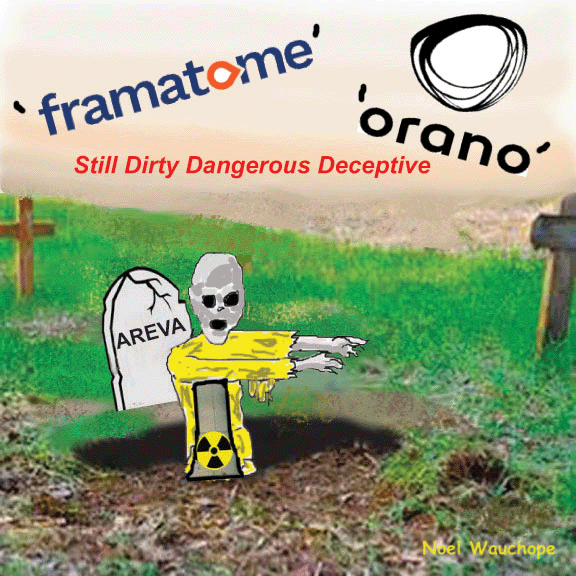
3 unplanned shutdowns of French nuclear reactors due to corrosion concerns, in the Framatome-designed piping
EDF revealed on Thursday that it will shut down the 1.3 GW Paluel 2, Penly
2 St Alban 2 and Cattenom 1 reactors next year, when no shutdowns were
planned so far, to check whether their auxiliary pipes to the primary
circuit are affected by corrosion. The dates of these shutdowns, which will
occur in the second quarter of 2023, must be published imminently on Remit,
said the deputy director of EDF’s nuclear production department Régis
Clément at a press conference in Paris.
The French group intends to check the rest of these 56 reactors by the end of 2023, or even the beginning of 2024, during the planned shutdowns which will be extended and the ten-year
visits, seven of which are scheduled for the rest of this year, he added.
Earlier on Thursday, EDF on Thursday revised the dates for thirteen
scheduled outages at nuclear power plants in 2022-23 due to
corrosion-related checks and repairs. Mr. Clément also asserted that the
“preponderant” cause of cracks due to corrosion on the auxiliary piping
to the primary circuit of certain reactors in the nuclear fleet was the
design of these circuits, developed by the EDF subsidiary Framatome. “Today
what we have as a clear conviction is that the design [of the auxiliary
circuits] appears to us as a preponderant cause”, he said.
Montel 19th May 2022
https://www.montelnews.com/news/1322042/corrosion-edf-rvle-les-4-units-quelle-arrtera-en-2023
France’s woes with nuclear power plants means more energy uncertainty for Europe
The utility cut its forecast as it realised that “stress corrosion” issues affecting some of its reactors will require more checks and repairs. Irish Examiner, THU, 19 MAY, 2022. LARS PAULSSON, JESPER STARN AND FRANCOIS DE BEAUPUY
The woes facing the nuclear power stations at France’s EDF — Europe’s largest electricity producer — will increase the pressure on war-hit European energy markets after the summer.
EDF, which is the backbone of Europe’s integrated power system, cut its nuclear output target for a third time this year, the latest sign that Europe’s power crisis is worsening.
Western Europe has for decades relied on exports of power from EDF’s nuclear stations. The cuts are another blow to European energy security just as the region is weaning itself off Russian supplies of everything from natural gas to coal and oil because of the war in Ukraine.
Less output from EDF is sending prices higher just as soaring inflation is pushing up costs for everything from petrol to food. It could get even worse in winter as France, traditionally an exporter of electricity, may be forced to import more from its neighbours.
French prices are the most expensive in Europe, with contracts for the period almost double levels in Germany. The utility cut its forecast as it realised that “stress corrosion” issues affecting some of its reactors will require more checks and repairs. The outlook for the following year remains unchanged for now, the firm said.
| “We fine-tuned the repairs to be made,” Regis Clement, deputy head of the company’s nuclear division, said during a media conference. “We’ve got to cut more pipes” to carry out further checks “and more repairs to handle”, he said.The big test will come when temperatures start to fall toward the end of the year. It won’t take many days of cold weather to jeopardise French power supplies, according to Emeric de Vigan, chief executive officer at French energy analysis firm Cor-e.“With such poor nuclear availability, if we reach 2 degrees Celsius below normal in the winter for a few days we could be in trouble, it would be really tight,” Mr de Vigan said. Paying customers and factories to lower consumption are steps that likely will need to be taken, he said. ………………. https://www.irishexaminer.com/business/economy/arid-40876541.html |
EDF shares fall after new profit warning due to nuclear outages
Shares in EDF fell 1.8% on Thursday after the French utility warned
outages at its nuclear power plants would result in a steeper-than-expected
cut in power output and thus have a greater than previously estimated
impact on 2022 core earnings. EDF said the impact of the outages largely
related to a program of inspections and repairs the company is carrying out
on some of its reactors would have a negative impact of around 18.5 billion
euros on the group’s core earnings this year instead of the 14 billion
euros previously forecast.
Financial Post 19th May 2022
France’s nuclear corrosion problem will need a ”large scale” plan, and ”several years” to fix.
The head of French nuclear regulator ASN said on Tuesday (17 May) that
fixing corrosion problems at some of state-controlled utility EDF’s
nuclear reactors would require a “large scale” plan and “several
years” as he warned of a risk more reactors could be halted.
Euractiv 18th May 2022 https://www.euractiv.com/section/electricity/news/fixing-edfs-reactors-corrosion-mystery-to-take-several-years-french-regulator-warns/
France’s Nuclear Safety authority struggles with the problems realated to corrosion in 12 reactors
Nuclear: faced with the problem of corrosion, a “large-scale” control
program. The president of the Nuclear Safety Authority, Bernard Doroszczuk,
gives a “general positive assessment” of the safety of the park, but
underlines “points of vigilance”.
The traditional exercise aimed to take
stock of the state of nuclear safety in 2021. In the end, it was the events
that occurred during the very last weeks of the year, but also during the
first months of 2022, that was at the heart of Bernard Doroszczuk’s speech
to the members of the Parliamentary Office for the Evaluation of Scientific
and Technological Choices on Tuesday 17 May.
The President of the Nuclear
Safety Authority (ASN) returned to the consequences of the “stress
corrosion” phenomenon observed on parts of the pipes which allow water to
be injected into the main primary circuit in order to cool the core. of the
reactor in the event of an accident.
Since mid-December, EDF has shut down
or extended the shutdown of twelve units in order to carry out in-depth
assessments or repairs related to this problem. If the origin of this
corrosion is not completely determined, Mr. Doroszczuk indicated that it
could be due to the “design” of the reactors: the oldest and most
widespread in the fleet are based on an original technology American, while
the most recent were designed according to a model adapted by EDF. However,
the piping that goes from the primary circuit to the first valve is longer
and more complex on the second, and this route could generate greater
thermomechanical stresses.
Le Monde 17th May 2022
French nuclear output down 20.2% in April
French nuclear output down 20.2% in April, https://www.reuters.com/business/energy/french-nuclear-output-down-202-april-2022-05-11/PARIS, May 11 (Reuters) Reporting by Gus Trompiz, editing by Sybille de La Hamaide and Jane Merriman – Nuclear power generation at EDF’s (EDF.PA) French reactors in April fell by 20.2% year on year to 21.7 terawatt hours (TWh), the energy company said on Wednesday.
Total nuclear generation in France since the start of the year was 113.4 TWh, down 10.3% compared with 126.4 TWh for January-April 2021, EDF said on its website, citing reduced availability of the nuclear fleet that was mainly due to the discovery of stress corrosion at some sites
In Britain, EDF said its nuclear production last month rose 11.8% compared with April 2021 to 3.8 TWh, while cumulative output since the start of 2022 was up 9.4% versus the same period last year at 15.2 TWh.
The poisoned environmental legacy of France’s ”Nuclear Park”

The poisoned environmental legacy of the ‘Nuclear Park’ https://culturico.com/2022/05/07/the-poisoned-environmental-legacy-of-the-nuclear-park/ Culturico 7th May 2022, Linda Pentz Gunter, Linda Pentz Gunter is the international specialist at Beyond Nuclear and editor and contributor at Beyond Nuclear International.
France prides itself on its “Nuclear Park”, its fleet of once 58 and now 56 operational nuclear reactors that deliver 70% of the country’s electricity. However, the environmental effects of this considerable use of nuclear power – specifically from the need to mine uranium and the choice to reprocess irradiated nuclear fuel – have negatively impacted the health of the French people.
France is heavily reliant on nuclear energy. Its 56 commercial reactors dot almost every corner of the country, providing 70% of all electricity consumed. France also possesses a nuclear weapons arsenal, fueled by the nuclear power program that predated it.
The possession of nuclear weapons affords France permanent membership status in the UN Security Council — a sense of prestige France is intent on maintaining.
French president, Emmanuel Macron, has now announced that the country will build new nuclear power plants, despite the fact that its current flagship Evolutionary Power Reactor (EPR), is beset by technical mistakes, years behind schedule and billions of Euros over budget at construction sites in France, Finland and the UK. The first of two operational EPRs in China had to be shut down late last year due to vibrations that caused radioactive leakage.
Consequently, it is unpopular to question the use of nuclear power in France and oppositional voices are rarely heard. The French anti-nuclear movement — largely networked under the Réseau Sortir du nucléaire — is snubbed by the press, and its members have been arrested and even convicted of alleged crimes.
However, thanks to the pioneering work of activists, investigative journalists and independent scientists, some of the secrets buried beneath the ’Nuclear Park’, have started to be unearthed.
The damage from uranium mining
Nuclear power plants are fueled with uranium, a radioactive ore that is mined from the earth, typically in dry, desert areas far way, often by an Indigenous workforce offered little to no protection and none of the alleged benefits.
However, between 1948 and 2001, France operated its own uranium mines — more than 250 of them in 27 departments across the country. Those French mine workers, like their Native American, Australian Aboriginal and African Touareg counterparts, labored unprotected and in ignorance of the true health risks.
The mines and the factories that milled and processed the uranium, now lie abandoned, leaving a legacy of radioactive waste that is hidden beneath flowering meadows, forest paths and ornamental lakes. But these radioactive residues and rocks — known as tailings — have also dispersed beyond the old mine boundaries, transported into rivers and streams, absorbed into wild plants, scattered on roadsides, and even paved into children’s playgrounds, homes and parking lots.
There are radioactive hotspots everywhere. France may not yet have opened a high-level radioactive waste repository — still under dispute at Bure — but thanks to the contamination left behind by uranium mining, large swaths of the country are de facto nuclear waste dumps. The widespread dispersal of radioactive contamination across France has been studied extensively by the independent French radiological laboratory, Commission de Recherche et d’Information Indépendantes sur la RADioactivité, known simply as CRIIRAD. Its scientists have traveled all over the world, measuring radiation levels at such notorious nuclear accident sites as Mayak and Chernobyl in the former Soviet Union, and at Fukushima in Japan. But often, they are just as shocked and outraged at the radiation levels they measure at home, and the failure of those responsible to take effective remediation steps to protect the public.
In the 2009 investigative French television program by Pieces de Conviction — entitled Uranium, the scandal of contaminated France — CRIIRAD’s scientific director, physicist Bruno Chareyron, is seen scraping the gravely surface off a parking lot at a cross-country ski club. Under the dusty gray stones we suddenly see a gleam of yellow. It is the telltale sign of uranium and Chareyron’s Geiger counter is recording radiation levels at more than 23mSv an hour. The internationally accepted “safe” dose for the public is 1mSv a year. The public should not have access to this, he says, especially not children who are prone to pick up and pocket pebbles.
In all, there are an estimated 200-300 million tonnes of radioactive tailings dumped across France, exposing those who live, work or play nearby. The contamination comes not only from the uranium, but from its often far more radioactive decay products. And while the state-owned nuclear company Orano (formerly Areva and, before that, Cogema) insists that these sites have been “returned to nature”, it is a purely cosmetic exercise that has granted impunity to the polluter but endangered countless lives.
CRIIRAD subsequently released an urgent appeal to elected officials to take action. The laboratory recorded similar findings at numerous other abandoned uranium mine sites.
Now, with all the French uranium mines closed, the fuel for the Parc Nucléaire must be imported. It comes mainly from Niger, one of the poorest countries in the world, and predominantly from the giant French-owned uranium mine near the town of Arlit. There, CRIIRAD found that mine workers and inhabitants are routinely exposed to radioactivity in the environment as a result of uranium mining activities. A Greenpeace investigation concluded that French uranium mining activities in Niger had left behind a legacy of environmental contamination in that country, as it has in France, that would harm people for “centuries.”
The lethal legacy of uranium mining and processing that has contaminated so much of France is only the beginning of the story, however, just as uranium mining is only the beginning of the nuclear fuel chain.
Operating reactors and childhood leukemia
The electricity generation phase, on which the nuclear lobby bases its low-carbon argument to justify its continued use — while ignoring the front and back ends of the fuel chain, which have significant carbon footprints, (1) — is not without its damage to the environment either. Nuclear reactors release radiation into the environment as part of routine operation. At least 60 epidemiological studies have examined the possible health impacts of these releases, most of which found an increase in rates of leukemia among children living near operating nuclear power plants, compared to those living further away.
The most famous of these studies, conducted in Germany — Case-control study on childhood cancer in the vicinity of nuclear power plants in Germany 1980-2003 (2) — found a 60% increase in all cancers and a 120% increase in leukemias among children living within 5 km of all German nuclear power stations. This study was followed by others, largely supporting the data. But critics speculated that the amount of radioactivity in the releases was too low to have caused these epidemics.
For example, a 2008 study (3) by Laurier et al., of childhood leukemia around French reactors, concluded there was no “excess risk of leukaemia in young children living near French nuclear power plants”. However, the Laurier study was among those rebutted (4) and incorporated into a meta-analysis by Dr. Ian Fairlie and Dr. Alfred Körblein, which concluded that there were statistically significant increases in childhood leukemias near all the nuclear power plants studied and that “the matter is now beyond question, i.e., there’s a very clear association between increased child leukemias and proximity to nuclear power plants.”
The practice of averaging a month’s worth of releases into daily dose amounts ignores a sudden spike in radioactive releases, as happens when a reactor is refueling. Fairlie hypothesizes (5) that these spikes, delivering substantial radiation doses, could result in babies being born pre-leukemic due to exposure in utero, with the potential to progress to full leukemia additionally aggravated by subsequent post-natal exposure. (Nuclear power plants typically refuel every 18 months.)
Radioactive waste — the unsolved problem
At the end of nuclear power operations lies the huge and unsolved radioactive waste problem. Inevitably, the French reliance on nuclear power has generated an enormous amount of radioactive waste that must be managed and, ideally, isolated from the environment.
France is one of the few countries in the world to have chosen reprocessing as a way to try to manage irradiated reactor fuel. Reprocessing involves a chemical separation of plutonium from the uranium products in reactor fuel rods once they have ceased being used in the reactor. This operation is conducted at the giant La Hague reprocessing facility, on the Cherbourg peninsula, which began operation in 1976.
Reprocessing releases larger volumes of radioactivity — typically by a factor of several thousand— than nuclear power plants. Liquid radioactive discharges from La Hague are released through pipes into the English Channel (La Manche), while radioactive gases are emitted from chimney stacks. The liquid discharges from La Hague have been measured at 17 million times more radioactive than normal sea water. La Hague “legally discharges 33 million liters of radioactive liquid into the sea each year,” Yannick Rousselet of Greenpeace France told Deutsche Welle in a 2020 article. This has contributed, among other issues, to elevated concentrations of carcinogenic carbon-14 in sea life (6).
Concentrations of krypton-85 released at La Hague have been recorded at 90,000 times higher than natural background. La Hague is the largest single emitter of krypton-85 anywhere in the world. (7)
A November 1995 study — Incidence of leukemia in young people around La Hague nuclear waste reprocessing plant: a sensitivity analysis (8) — found elevated rates of leukemia. Yet its lead author, Jean-François Viel, was subsequently viciously attacked in attempts to discredit his findings and reputation, attacks that worsened after the publication of a second paper (9) in January 1997.
The cumulative negative health and environmental impacts of the French nuclear sector render the so-called benefits of the resulting low electricity rates a bitter delusion. For while France tries, wrongly, to attribute Germany’s higher electricity rates to that country’s rejection of nuclear power, typical German households use less electricity and actually pay lower monthly electric bills than French ones. Meanwhile, the French rely exclusively on electricity for heat in winter. Unable to meet this demand, France imports coal-fired electricity from Germany, perpetuating an industry that is fatal for the climate. At the same time, renewable energy development in France has been stifled by the decades-long prioritization of nuclear power.
However, a culture of denial in the French nuclear sector is nothing new. In 1986, when the Chernobyl nuclear reactor exploded and melted down in the Ukraine, the French government assured its people that the radioactive plume would not reach France. Unlike in other European countries, the French continued to eat local produce and allowed their children to play outside. This lie of immunity, quickly exposed, was attributed to “fear of jeopardizing the country’s nuclear program and of hurting sales of its agricultural products.”
It was that deception in 1986 that led to the creation of the CRIIRAD laboratory in the first place, as its scientists began to map the hotspots in France where fallout from Chernobyl had deposited high levels of radioactivity.
The insistence on expanding rather than phasing out nuclear power has also cost France progress in its carbon reduction goals. As Euractiv reported in August 2021, “France lagging behind in renewables can be explained in part by the fact that close to 70% of its electricity production is based on nuclear power.”
Many French reactors have been operating since the 1970s and are now well past their expected lifespans. With aging comes degradation of key safety parts and heightened risk of accident. In late December 2021 and in early January 2022, France saw a series of unanticipated reactor shutdowns due to safety issues, causing power shortages during a winter freeze and plunging French nuclear output to its lowest in 30 years. By early May, half of its entire reactor fleet was shut down due to technical problems or scheduled maintenance outages. The health and wellbeing of the French population would be better served both by cleanup of — and reparation for — the existing radioactive contamination so widespread in the country, and by a serious shift away from the continued use of nuclear power and toward true climate solutions such as renewable energy and energy efficiency measures.
Is France really the poster boy for nuclear power? Nearly half of its reactors are shut down for maintenance and safety reasons
Nearly half of France’s nuclear reactors taken offline, adding to
electricity demand on European grid. France’s problems have raised
questions about the UK’s big bets on nuclear, which the government calls a
“necessity, not a luxury”.
Currently 27 of France’s 56 reactors have been
shut down due to routine maintenance or defects, forcing EDF to buy
electricity from the European grid instead, at a time of soaring demand
amid the gas crisis. France’s problems have raised questions from critics
about the reliability of nuclear, and about Britain’s recent big bets on
the energy source.
Sky News 29th April 2022
1 This Month

of the week – Shut Down Drone Warfare!


Tell the Ukrainian Government to Drop Prosecution of Peace Activist Yurii Sheliazhenko

Petition to revoke the licensing of the Near Surface Nuclear Disposal Facility (NSDF) at Chalk River. https://www.ourcommons.ca/petitions/en/Petition/Details?Petition=e-7247
To see nuclear-related stories in greater depth and intensity – go to https://nuclearinformation.wordpress.com
-
Archives
- March 2026 (251)
- February 2026 (268)
- January 2026 (308)
- December 2025 (358)
- November 2025 (359)
- October 2025 (376)
- September 2025 (257)
- August 2025 (319)
- July 2025 (230)
- June 2025 (348)
- May 2025 (261)
- April 2025 (305)
-
Categories
- 1
- 1 NUCLEAR ISSUES
- business and costs
- climate change
- culture and arts
- ENERGY
- environment
- health
- history
- indigenous issues
- Legal
- marketing of nuclear
- media
- opposition to nuclear
- PERSONAL STORIES
- politics
- politics international
- Religion and ethics
- safety
- secrets,lies and civil liberties
- spinbuster
- technology
- Uranium
- wastes
- weapons and war
- Women
- 2 WORLD
- ACTION
- AFRICA
- Atrocities
- AUSTRALIA
- Christina's notes
- Christina's themes
- culture and arts
- Events
- Fuk 2022
- Fuk 2023
- Fukushima 2017
- Fukushima 2018
- fukushima 2019
- Fukushima 2020
- Fukushima 2021
- general
- global warming
- Humour (God we need it)
- Nuclear
- RARE EARTHS
- Reference
- resources – print
- Resources -audiovicual
- Weekly Newsletter
- World
- World Nuclear
- YouTube
-
RSS
Entries RSS
Comments RSS
 nuclear-news