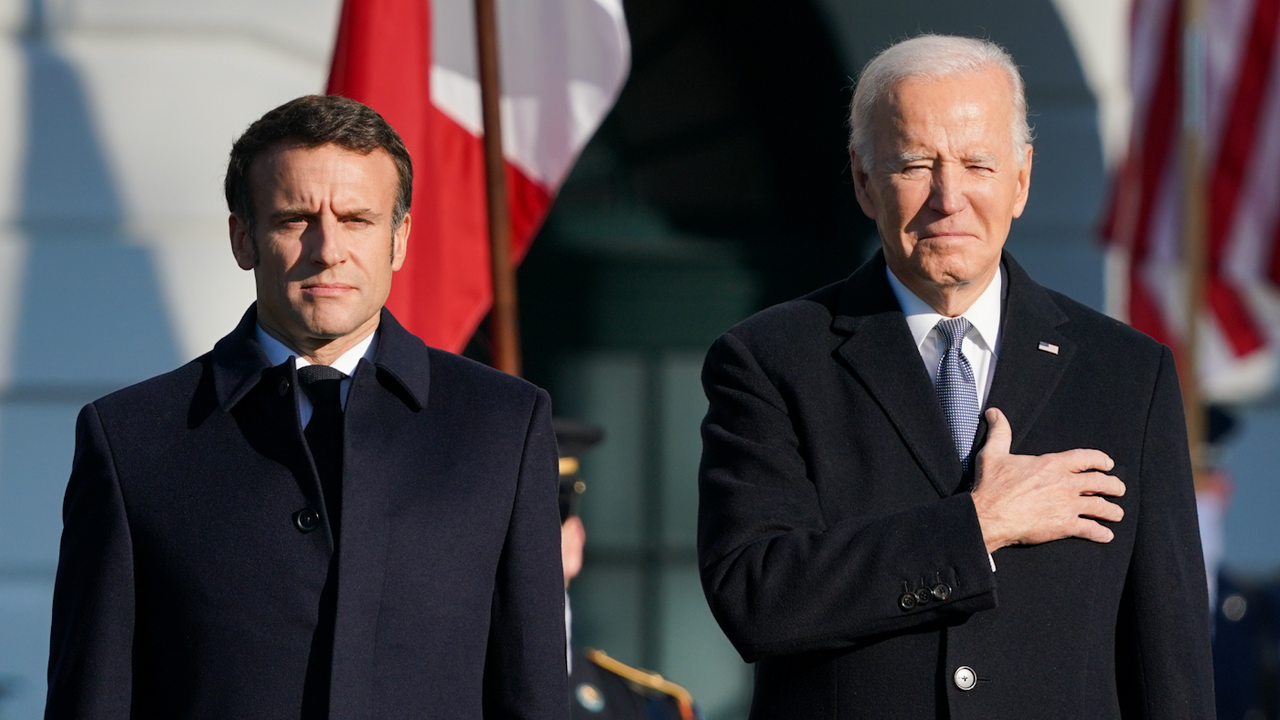
France’s nuclear headache – Macron on the brink of rationing electricity
France’s nuclear headache leaves Macron on brink of rationing
electricity. The threat of power cuts has been looming over France —
curious considering that it is normally a significant exporter of
electricity, thanks to its 56 nuclear reactors, by far the largest number
of Europe.
This same dependence on nuclear has proved to be its Achilles
heel, however, as a result of a crisis prompted by the discovery of cracks
in the pipes of a number of its reactors which, at its height, forced the
closure of almost half of its nuclear power stations.
The resulting cut in
output to a 30-year low has added to the energy supply problems across
Europe caused by Russia’s war on Ukraine. Some of the problem reactors
have since been restarted, but last week 39 per cent of France’s 61,370
megawatts of nuclear generation capacity remained offline, according to
analysis by Reuters of data provided by RTE, which operates the country’s
grid.
Times 1st Jan 2023
Macron ‘panicking’ as France faces ‘catastrophic’ nuclear energy crisis, expert claims

France is in a catastrophic situation in terms of the vast debt that it owes in nuclear and the existential waste and decommissioning problem that it is facing
A record number of France’s 56 nuclear reactors have gone offline, sparking serious concerns over energy security across the Channel.
https://www.express.co.uk/news/science/1713491/macron-france-nuclear-energy-edf-crisis By JACOB PAUL, Dec 23, 2022, French President Emmanuel Macron is said to be in a “panic” as the issues with France’s ageing nuclear reactors have laid bare the flaws in the country’s energy plans, an expert has told Express.co.uk. Sixteen out France’s 56 nuclear reactors are currently offline due to corrosion and maintenance issues, sending its normal power output levels plummeting in recent months. Prior to these problems, France’s nuclear fleet generated 70 percent of the country’s electricity.
According to Dr Paul Dorfman, a nuclear expert from the University of Sussex, France’s “chickens are coming home to roost” as the decision to rely so heavily on nuclear is appearing to backfire, with further delays to repairs also announced this week.
He said: “France was nuclear power excellence, post-war all buffed up with power – it said it was going to be the top dogs. So it had a vast quantity of nuclear reactors dotted all around France. But what is happening now is that its chickens are coming home to roost.
“EDF (owned by the French state) is 43billion euros in debt, it faces a 100billion euro bill for mandatory safety upgrades, and a significant number of its reactors continue to be offline due to ageing corrosion problems. It also faces a huge decommissioning and waste management bill that is uncosted – they are just beginning to say ‘oh my god’.
“Around a quarter of their reactors are still offline at winter when they really need it. They are even importing power from Germany after being a net exporter. France is panicking about what to do about renewables and insulation.”
But all this could be of concern for Britain, which does rely on some French imports that are sent across the Channel via interconnectors. National Grid has previously warned that if the UK fails to shore up enough energy imports from Europe this winter, it may have to roll out organised blackouts in the “deepest, darkest” nights of the coldest months of the year.
However, while France’s nuclear power issues have sparked concern, Dr Dorfman said the UK is luckier than France in that it is one of the leading players in offshore wind, which could provide a vital lifeline this winter.
He said: “The UK has seriously thought about renewables in the last few years, without any question. But there have been problems with onshore wind and legislation issues. There also problems with the legislation for solar, but offshore wind has helped enormously. But the UK hasn’t really considered about the lowest hanging through which is energy efficiency and insulation.”
When asked whether the UK is lucky that it has not copied the French model, Dr Dorfman responded: “We are hugely lucky. France is in a catastrophic situation in terms of the vast debt that it owes in nuclear and the existential waste and decommissioning problem that it is facing…The UK is certainly in a better position in terms of offshore windpower, but it needs to get its act together in terms of allowing much greater onshore wind and much greater solar…and all the things that make up a balanced energy portfolio.
“France is not going to change, the reactors are not going to get any younger. Rumour has it, the corrosion issues have been known about for years. Because it takes so long to build reactors, you can’t expect new builds to happen within a decade or two decades.
“Nobody knows what is going to happen with Russia. All we know amongst all this mess is that renewables cost between a quarter and a fifth less than nuclear and that the vast majority of all new power additions worldwide is renewables.”
This comes as analysis by leading renewable energy trade bodies revealed that low carbon power reportedly met more than half of the UK’s electricity needs over the past two months. Renewable UK, the Nuclear Industry Association found that between the end of October and December 18, clean energy sources like wind and solar provided 40 percent of the country’s electricity, while nuclear power plants accounted for 14 percent of demand.
The power that came from both offshore and onshore wind turbines alone generated more than half of Britain’s low carbon power output over the period, while nuclear supplied 27 percent.
European NATO members should reduce reliance on US – Macron
https://www.rt.com/news/568736-european-nato-reliance-macron/ 23 Dec 22, The countries should bolster their own defense to become less dependent on both the bloc and Washington, the French president says.
French President Emmanuel Macron has said European NATO members should become more autonomous and less dependent on the US-led alliance regarding their own security. He made the remarks late Wednesday, as he spoke to reporters in Paris after returning from a summit in Amman, Jordan.
“An alliance isn’t something I should depend on. It’s something that I should choose, something I work with,” Macron stated. “We must rethink our strategic autonomy.”
Macron identified “technology and defense capabilities” as areas in which European nations should seek to reduce their dependence on the alliance, and the US in particular. He added, however, that member states should not endeavor to break away from the bloc or develop an alternative to it.
“There is no European security architecture without strategic autonomy, inside NATO and with NATO, but not dependent on NATO,” he said.
Macron also touched upon the ongoing hostilities between Russia and Ukraine, in which the latter has received wide-ranging Western support. While reiterating his support for the “absolute defense of Ukraine,” he said once again that Moscow’s security concerns should be also addressed.
“When I speak of guarantees, I’m talking about all of these countries, for us, but also for Russia,” Macron stated. “This means that one of the essential points we must address – as President Putin has always said – is the fear that NATO comes right up to its doors, and the deployment of weapons that could threaten Russia.”
In recent weeks, the French president has repeatedly said that the conflict must eventually end with negotiations, which should yield security guarantees for everyone, including Russia. This stance triggered a barrage of criticism from Ukraine and some EU nations, with Poland, Slovakia, and the Baltic states openly opposing Macron’s suggestion.
Russia has signaled on several occasions that it is ready to talk with Ukraine – and the West as a whole – while insisting that its own interests must be taken into account if negotiations are to occur. Moscow has blamed the lack of diplomatic efforts to end the conflict on Kiev. On Wednesday, the head of Russia’s Federation Council, Valentina Matvienko, said there is “no background for negotiations to take place in the near future: There is nothing [to discuss] and with no one.”
Senior officials in Kiev have repeatedly issued belligerent statements, with Ukrainian President Vladimir Zelensky pledging to re-capture the former Ukrainian regions of Donetsk, Lugansk, Kherson, and Zaporozhye – which joined Russia in early October – as well as Crimea, which broke away from Kiev in 2014. Zelensky has even ‘banned’ himself from negotiating with Russian President Vladimir Putin.
In a blow to France’s electricity supply, EDF extends maintenance at nuclear reactors
Electricite de France SA extended maintenance halts at two nuclear
reactors by more than four months, adding a strain on power supplies in
France and neighbouring countries.
The restart of EDF’s Penly-2 unit has
been delayed from Jan. 29 until June 11 while its Golfech-1 unit has been
pushed back to June 11 from Feb. 18, the utility said Monday in a message
on RTE’s transparency website.
The halt of the Chattenom-3 reactor is
prolonged by one month until March 26, and the restart of Civaux-2 is
postponed by more than a month until Feb. 19.
Longer-than-planned
maintenance halts and repairs of unexpected pipe cracks are curtailing
EDF’s nuclear output and turning France into a power importer when it’s
normally a key exporter.
The nation’s grid operator has warned of a
potential electricity shortfall in colder months as heating demand rises
while the utility grapples with the reactor repairs. EDF announced on
Friday the delayed the startup of a new nuclear reactor in western France
by several months into 2024 due to extended work. That project is already
more than a decade late.
Bloomberg 19th Dec 2022
New Delay, Cost Overrun For France’s Next-gen Nuclear Plant

https://www.barrons.com/news/new-delay-cost-overrun-for-france-s-next-gen-nuclear-plant-01671212709 By AFP – Agence France Presse, December 16, 2022
Welding problems will require a further six-month delay for France’s next-generation nuclear reactor at Flamanville, the latest setback for the flagship technology the country hopes to sell worldwide, state-owned electricity group EDF said Friday.
The delay will also add 500 million euros to a project whose total cost is now estimated at around 13 billion euros ($13.8 billion), blowing past the initial projection of 3.3 billion euros when construction began in 2007.
It comes as EDF is already struggling to restart dozens of nuclear reactors taken down for maintenance or safety work that has proved more challenging than originally thought.
EDF also said Friday that one of the two conventional reactors at Flamanville would not be brought back online until February 19 instead of next week as planned, while one at Penly in northwest Farnce would be restarted on March 20 instead of in January.
The French government has warned of potential power shortages this winter because of the shutdowns at around two-dozen of the 56 reactors across the country that normally generate around 70 percent of its electricity needs.
EDF said the latest problems at Flamanville, on the English Channel in Normandy, emerged last summer when engineers discovered that welds in cooling pipes for the new pressurised water reactor, called EPR, were not tolerating extreme heat as expected.
As a result, the new reactor will be start generating power only in mid-2024.
The French-developed European Pressurised Reactor was designed to relaunch nuclear power in Europe after the 1986 Chernobyl catastrophe in Russia, and is touted as offering more efficient power output and better safety.
But similar projects at Olkiluoto in Finland, Hinkley Point in Britain and the Taishan plant in China have also suffered production setbacks and delays, raising doubts about the viability of the new technology.
French President Emmanuel Macron said in February that he wants a nuclear “renaissance” that would see up to 14 new reactors in France as the country seeks to reduce use of fossil fuels.
Can France rely on its nuclear fleet for a low-carbon 2050?
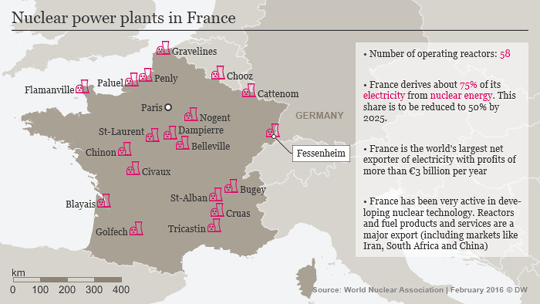
Map above refers to 2016 – many of the nuclear plants above are not currently in operation
Nuclear Engineering International, 14 Dec 22,
EDF has not shown its 900 MW units can be operated that far ahead, says ASN’s annual assessment of nuclear safety in France. Decisions have to be taken soon if nuclear is to play a big part in 2050 – and a ‘Marshall Plan’ is needed to rebuild the industry’s capability
France may have to go back to the drawing board with regard to options for decarbonising its economy, because assumptions it has made on the lifetime of the 900 MW reactors in its nuclear fleet may be unwarranted.
That was the warning in French nuclear safety authority ASN’s annual report on safety in the country’s nuclear industries.
The annual “ASN report on the state of nuclear safety and radiation protection in France in 2021”, published earlier this year, warned of “new energy policy prospects which must address safety concerns at once”. And it reminded operators that “quality and rigour in the design, manufacture and oversight of nuclear facilities, which were not up to the required level in the latest major nuclear projects conducted in France, constitute the first level of Defence in Depth in terms of safety.”
ASN noted that five of the six scenarios presented in a report by French system operator Re´seau de Transport d’Electricite´ (RTE) report on “Energies of the future”, which aims to achieve a decarbonised economy by 2050, are based on continued operation of the existing nuclear fleet. But with regard to the 900 MW fleet, ASN says, it cannot say that those plants can be operated beyond 50 years, based on information it received during the generic examination of the fourth periodic safety review of that reactor series. It added, “Due to the specific features of some reactors, it might not be possible, with the current methods, to demonstrate their ability to operate up to 60 years”.
EDF has 32 operating 900 MWe reactors commissioned between 1978 and 1987 and they are reaching their fourth periodic safety review. This safety review has “particular challenges”, ASN says. In particular:
Some items of equipment are reaching their design-basis lifetime……………………
Too optimistic on new-build?
The safety authority also noted that one RTE scenario had almost 50% nuclear in its electricity mix in 2050. It said, consultation with industry revealed that the rate of construction of new nuclear reactors in order to achieve such a level would be hard to sustain……………………………………
Broad concerns
More broadly, ASN said whatever France’s energy policy, it will “imply a considerable industrial effort, in order to tackle the industrial and safety challenges.
If nuclear power is needed for 2050, the nuclear sector will have to implement a ‘Marshall Plan’ to make it industrially sustainable and have the skills it needs.
It warned that “Quality and rigour in the design, manufacture and oversight of nuclear facilities… were not up to the required level in the latest major nuclear projects conducted in France”.
It also warned that more work was also needed in fuel chain facilities. It said a series of events “is currently weakening the entire fuel cycle chain and is a major strategic concern for ASN requiring particularly close attention”. Most urgent is a build-up of radioactive materials and delays in construction of a centralised spent fuel storage pool planned by EDF to address the risk of saturation of the existing pools by 2030. The need for the pool was identified back in 2010, but work has not begun.
ASN said the combination of shortcomings between fuel cycle and nuclear plants meant the electricity system “faces an unprecedented two-fold vulnerability in availability”. New vulnerabilities like the discovery of stress corrosion cracking mostly “stem from the lack of margins and inadequate anticipation,” ASN said, and “must serve as lessons for the entire nuclear sector and the public authorities.”……………….
An energy policy comprising a long-term nuclear component “must be accompanied by an exemplary policy for the management of waste and legacy nuclear facilities,” ASN said………………………………….. more https://www.neimagazine.com/features/featurecan-france-rely-on-its-nuclear-fleet-for-a-low-carbon-2050-10436984/
France wants to cut its electricity exports to UK as its aging nuclear reactors are limited, with maintenance issues
France requests electricity exports to UK are cut as Europe’s energy
crisis deepens. France and Britain exchange energy across the Channel via
interconnections, but France’s nuclear power output has taken a hit in
recent months. France’s electricity network operator RTE has reportedly
asked the National Grid if it could slash its scheduled exports to Britain
in half between 8am and 9am this morning. It is said it struggled to cope
with surging demand amid its own power issues, and cold temperatures. The
power output issues were reportedly brought on by a lethal combination of
the plunging mercury, strikes across its nuclear sector and delayed
maintenance on its fleet of ageing nuclear reactors.
Express 12th Dec 2022
Why nuclear-powered France faces power outage risks

https://www.reuters.com/business/energy/why-nuclear-powered-france-faces-power-outage-risks-2022-12-09 PARIS, Dec 9 (Reuters) – France is bracing for possible power outages in the coming days as falling temperatures push up demand while state-controlled nuclear group EDF struggles to bring more production on line.
WHY CAN’T FRANCE MEET DEMAND?
France is one of the most nuclear-powered countries in the world, typically producing over 70% of its electricity with its fleet of 56 reactors and providing about 15% of Europe’s total power through exports.
However, EDF (EDF.PA) has had to take a record number of its ageing reactors offline for maintenance this year just as Europe is struggling to cope with cuts in Russian natural gas supplies used for generating electricity.
That has left France’s nuclear output at a 30-year low, forcing France to import electricity and prepare plans for possible blackouts as a cold snap fuels demand for heating.
WHAT ARE EDF’S MAINTENANCE PROBLEMS?
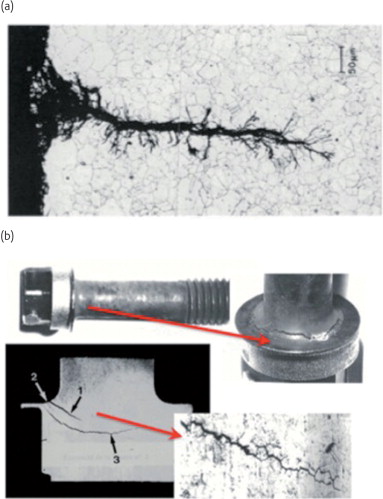
While EDF normally has a number of its reactors offline for maintenance, it has had far more than usual this year due to what is known as stress corrosion on pipes in some reactors.
At the request of France’s nuclear safety watchdog, EDF is in the process of inspecting and making repairs across its fleet since detecting cracks in the welding connecting pipes in one reactor at the end of last year.
Years of under-investment in the nuclear sector mean that there is precious little spare capacity to meet demand while reactors are offline for maintenance.
France also lacks specialised welders and other workers in sufficient numbers to be able to make repairs fast enough to get reactors back online.
WHAT IS BEING DONE?
In the very short term, there is little that can be done to get more reactors online faster, leaving the government to plan for voluntary cuts at peak demand periods and limited forced blackouts.
Meanwhile, EDF and others in the French nuclear industry are on a recruitment drive for the next generation of welders, pipe-fitters and boiler makers, going so far as to set up a new school to train them.
President Emmanuel Macron wants a new push in nuclear energy and has committed to building six new reactors at a cost his government estimates at nearly 52 billion euros ($55 billion).
As a first step, the government is in the process of buying out EDF’s minority shareholders and fully nationalising the debt-laden group, which it says is necessary to make the long-term investments in new reactors.
($1 = 0.9471 euros)
France: EDF extends nuclear outages by up to 42 days
EDF extends nuclear outages by up to 42 days (4.6 GW). EDF has extended
outages at its Chooz 2 (1.5 GW) and three other nuclear reactors in France
with a cumulative 4.64 GW capacity by up to 42 days.
Montel 5th Dec 2022
https://www.montelnews.com/news/1373972/edf-extends-nuclear-outages-by-up-to-42-days-46-gw
Macron: Russia Needs Security Guarantees ‘Essential’ To Ending The War

https://www.zerohedge.com/geopolitical/macron-russia-needs-security-guarantees-which-are-essential-ending-war BY TYLER DURDEN 6 Dec 22
As we detailed earlier, a clear division is arising between Europe and the United States over Washington’s more hawkish and hardline stance on resisting all negotiations with Russia, but instead which is centered on encouraging Kiev to pursuing ‘victory’ on the battlefield.
“The fact is, if you look at it soberly, the country that is most profiting from this war is the U.S. because they are selling more gas and at higher prices, and because they are selling more weapons,” one senior European official bluntly complained to Politico last month.
Underscoring that Europe is more ready to pursue avenues of negotiated settlement in Ukraine, over the weekend French President Emmanuel Macron urged for the West to take seriously Russia’s security concerns regarding NATO expansion near its border. He called for greater willingness to give Moscow the “guarantees” necessary for negotiations to be successful. He called them ‘essential’ if the West wants to get serious about talks and peaceful settlement.
“We need to prepare what we are ready to do, how we protect our allies and member states, and how to give guarantees to Russia the day it returns to the negotiating table,” President Macron said in an interview that aired Saturday.
That’s when he underlined something which a mere months ago would elicit rage and accusations of ‘pro-Kremlin’ stooge among Western mainstream punditry. “One of the essential points we must address — as President Putin has always said — is the fear that NATO comes right up to its doors, and the deployment of weapons that could threaten Russia,” Macron said.
The timing of the remarks was interesting given the interview was recorded while he was on the US on a state visit to the White House, and it aired as he departed.
According to The New York Times, “The interview with TF1, a French television network, appeared sympathetic to the concerns of President Vladimir V. Putin of Russia and was immediately picked up prominently by TASS, the Russian state news agency. It prompted an angry reaction in Ukraine.”
While there was no immediate reaction from the Biden administration, the Ukrainian presidency’s office said such negotiations and security guarantees would only be possible “after tribunal, conviction of war authors and war criminals” and the “imposition of large-scale reparations.”
Separately, David Arakhamia, the chief of the Ukrainian negotiating group involved in short-lived ceasefire talks in the opening months of the war, also echoed that Russian forces must first “leave the territory of our country; pay reparations; punish all war criminals; voluntarily give up nuclear weapons.”
The Times further points out that Russian state media was quick to amplify Macron’s interview statements:
Responding to a tweet from TASS featuring Mr. Macron’s remarks, Nicolas Tenzer, a prominent French political scientist and essayist, commented: “Devastating.”
During the summer months and prior, European leaders seemed to tilt toward Washington’s more hardline approach to the conflict, but with the energy crisis becoming more acute and now headed into the winter months it appears a new consensus is emerging.
As another example, German Chancellor Olaf Scholz spoke with President Vladimir Putin on Friday, with the Kremlin side later saying that Scholz admitted the West’s policy on Ukraine is “destructive” and that Berlin may pursue a rethinking of its policy
Macron pushes a “renaissance” while French nuclear flops

A farce that would make Feydeau blush — Beyond Nuclear International
A farce that would make Feydeau blush — Beyond Nuclear International
Warning of power cuts for France, as nuclear reactors are working at half capacity
France could face the risk of power cuts this winter when electricity
supply may not be enough to meet demand, Xavier Piechaczyk, the head of
grid operator RTE, said on Thursday, citing the price to pay for slow
renewables and a nuclear energy infrastructure working at half capacity.
There is a risk of red-alert days this winter, but it would mostly depend
on the weather, Piechaczyk told Franceinfo radio today, noting that power
cuts are not necessarily “inevitable”. Due to lower nuclear generation
availability, France will import electricity this winter from most of its
neighbors, including Benelux, the manager added.
Oil Price 1st Dec 2022
Emmanuel Macron picks a bad time to promote France’s nuclear nuclear technology in a marketing tour to USA
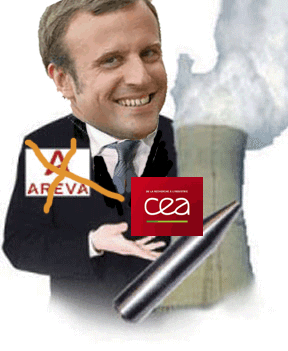
With 40 percent of France’s nuclear power plants offline, there could hardly be a more awkward time to promote the country’s know-how
Macron to promote nuclear energy in U.S., as industry faces crisis in France, By Rick Noack, November 29, 2022, PARIS — As French President Emmanuel Macron makes the rounds in Washington starting Wednesday for the first state visit of the Biden administration, high on his agenda are his plans for a nuclear energy “renaissance.” His entourage includes the major players from France’s nuclear energy industry, who will be looking to the French leader to help boost the development and export of their technology, including smaller and more versatile reactors.
But there could hardly be a more awkward time to promote French nuclear know-how.
While Macron was preparing to head to Washington, France was relying on planes traveling in the opposite direction to prevent its nuclear-reliant power grid from collapsing. U.S. and Canadian contractors have been flown in to help after safety concerns forced the closure of half of the country’s nuclear power plants. Last week, 23 out of 56 were still offline, due to concerns over corrosion cracks and an accumulation of pandemic-related inspection delays.
………….. instead of bolstering its position as an energy exporter, France has had to import electricity from Germany — the country hit hardest by the shift away from Russia. And Britain, which normally depends on France for energy to get through winter, is talking about having to encourage people to keep their ovens and dishwashers off to avoid blackouts.
Other French neighbors, including Belgium, Switzerland and parts of Italy, may be under even more pressure as a result of the French reactor problems, said Clement Bouilloux, country manager for France at energy consultancy EnAppSys.
“Everyone was relying on the French nuclear power plants,” he said.
The situation has tarnished France’s reputation as a nuclear power leader and may have contributed to the country missing out on key contracts. Only weeks ago, France’s state-owned energy company EDF lost the first part of a $40 billion contract for Poland’s first nuclear power plant to U.S. company Westinghouse………………………………………………………..
Macron has acknowledged that the French industry has “fallen behind,” but he has defended its ability to recover, striking deals on nuclear energy cooperation in recent months with countries including India and Britain.
Macron is scheduled to attend a nuclear energy session on Wednesday, alongside four French cabinet members and several executives from the country’s major nuclear energy firms and its public regulator, the Élysée Palace said last week.
A French official added Monday that one area where France anticipates possible mutual interests is the development of small modular reactors (SMRs)…………….. https://www.washingtonpost.com/world/2022/11/29/macron-us-state-visit-nuclear-france/
France’s EDF, Credit Agricole sign 1 bln euro nuclear loan

https://www.reuters.com/business/energy/frances-edf-credit-agricole-sign-1-bln-euro-nuclear-loan-2022-11-18/ LONDON, Nov 18 (Reuters) – EDF (EDF.PA) and Credit Agricole (CAGR.PA) said on Friday they had signed a 1 billion euro ($1.04 billion) loan to finance the maintenance of nuclear power plants in France.
The loan is part of EDF’s major refit programme to improve the security and extend the operating life of nuclear reactors beyond 40 years.
The deal is the first transaction in which the funds will be entirely dedicated to investments in EDF’s nuclear activities, Credit Agricole and EDF said in a statement.
As Europe Quits Russian Gas, Half of France’s Nuclear Plants Are Off-Line
France’s state-backed nuclear operator is scrambling to overcome a monthslong crisis to get as many reactors as possible restarted before winter sets in.
New York Times, By Liz Alderman. Reporting from Paris, Nov. 16, 2022
An army of engineers has fanned out through nuclear power plants across France in recent months, inspecting reactors for signs of wear and tear. Hundreds of expert welders have been recruited to repair problems found in cooling circuits. Stress tests are being conducted to check for safety problems.
As Europe braces for a winter without Russian gas, France is moving fast to repair a series of problems plaguing its atomic fleet. A record 26 of its 56 reactors are off-line for maintenance or repairs after the worrisome discovery of cracks and corrosion in some pipes used to cool reactor cores.
The crisis is upending the role that France has long played as Europe’s biggest producer of nuclear energy, raising questions about how much its nuclear power arsenal will be able to help bridge the continent’s looming crunch……………………………………………
France’s nuclear power crunch has become so acute that Mr. Macron is preparing to have the government take over the remaining 16 percent of EDF that it doesn’t already own, at a cost of nearly 10 billion euros ($10.3 billion).
The company, which is nearly €45 billion in debt, has tumbled further into financial difficulty and announced that its 2022 profit would drop by €29 billion because of the problems with its reactors, as well as a government effort to force EDF to provide artificially cheap electricity for households and businesses.
Even as EDF is rushing to comply with the demand for accelerated repairs, the company last week cut its 2022 nuclear power production forecast. The announcement caused the cost of French and European electricity to spike.
Herculean efforts to repair corrosion in pipes that cool the cores of four reactors were taking longer than expected, the company said. Those reactors now will not restart until January or February.
A strike late last month by French nuclear plant workers demanding higher wages to keep up with inflation was another blow. EDF said it was already behind in performing required maintenance on several aging reactors because of coronavirus lockdowns when the labor action put it further behind.
The company’s recent troubles began late last year, as it started moving through that backlog. The inspections unearthed alarming safety issues — especially corrosion and micro-cracks in systems that cool a reactor’s radioactive core — at an older-generation nuclear reactor in southwest France called Civaux 1. As EDF scoured its nuclear facilities, it found that 16 reactors, most of them newer-generation models, faced similar risks and closed them down.
EDF made to reactors designed by Westinghouse Electric that EDF had used in its older-generation plants. Bernard Doroszczuk, the head of France’s Nuclear Safety Authority, testified to French lawmakers this summer that the modifications, used for later-generation reactors, appeared to have caused abnormal corrosion and stress on critical cooling pipes.
The crisis has sent French nuclear power production to a 30-year low, generating less than half of the 61 gigawatts that the reactors can produce. (EDF also generates electricity with gas, coal and renewable technologies.) Even when more reactors are restarted in the coming months, French nuclear output will be around 45 gigawatts — lower than usual this winter, compounding the impact of Russia’s gas cutoff.
The situation “increases the risk of supply shortages for the coming winter, with availability standing at record-low levels for this time of the year,” Fabian Ronningen, a senior analyst at Rystad Energy, an independent consultancy, said in a note to clients.
The energy shortfall has turned France, once the continent’s biggest exporter of energy, into a net importer this year. A quarter of Europe’s electricity comes from nuclear power plants in about a dozen countries, with France producing more than half the total………………………………..
But even critical repairs must be monitored. EDF said a radioactive leak occurred this month during a hydraulic test on the main cooling circuit of the Civaux 1 nuclear power plant. EDF had spent months laboring to repair the corroded cooling pipes, using new technologies including ultrasound and welding robots that don’t have radiation exposure limits.
EDF said that there was no safety risk from that leak, and that no radioactivity was detected outside of it. But the episode is likely to delay the plant’s reopening beyond a planned Jan. 8 date, adding to the nuclear park’s woes. https://www.nytimes.com/2022/11/15/business/nuclear-power-france.html
Image
Image
1 This Month



Shut down the radiation-damaged Heysham nuclear reactors now
To see nuclear-related stories in greater depth and intensity – go to https://nuclearinformation.wordpress.com

Say No to NASA’s Reckless Nuclear Reactor on the Moon
Say No to NASA’s Reckless Nuclear Reactor on the Moon
-
Archives
- October 2026 (256)
- September 2026 (339)
- August 2026 (330)
- July 2026 (355)
- June 2026 (287)
- May 2026 (306)
- April 2026 (356)
- March 2026 (251)
- February 2026 (267)
- January 2026 (308)
- December 2025 (358)
- November 2025 (359)
-
Categories
- 1
- 1 NUCLEAR ISSUES
- business and costs
- climate change
- culture and arts
- ENERGY
- environment
- health
- history
- indigenous issues
- Legal
- marketing of nuclear
- media
- opposition to nuclear
- PERSONAL STORIES
- politics
- politics international
- Religion and ethics
- safety
- secrets,lies and civil liberties
- spinbuster
- technology
- Uranium
- wastes
- weapons and war
- Women
- 2 WORLD
- ACTION
- AFRICA
- Atrocities
- AUSTRALIA
- Christina's notes
- Christina's themes
- culture and arts
- Events
- Fuk 2022
- Fuk 2023
- Fukushima 2017
- Fukushima 2018
- fukushima 2019
- Fukushima 2020
- Fukushima 2021
- general
- global warming
- Humour (God we need it)
- Nuclear
- RARE EARTHS
- Reference
- resources – print
- Resources -audiovicual
- Weekly Newsletter
- World
- World Nuclear
- YouTube
-
RSS
Entries RSS
Comments RSS