Stress corrosion continues to trouble the French nuclear fleet
This week EDF updated its expectations for its nuclear fleet for this
winter, downgrading its output forecasts to 275-285 TWh, compared to the
previous estimate of 280-300 TWh.
The main driver of the downgraded
forecasts is a refusal by the French nuclear regulator, Autorité de
Sȗreté Nucléaire (“ASN”) to allow EDF to re-start number of reactors
with stress corrosion problems, in line with the planned schedule: Cattenom
1 (1.3 GW) will be offline for a further three and a half months until 26
February 2023; Chooz 1 (1.5 GW) will remain closed for about three months
until 29 January 2023; Penly 2 (1.33 GW) will be delayed by more than two
months until 29 January 2023; Cattenom 3 (1.3 GW) will be closed for a
further two and a half months until 26 February 2023. A couple of other
reactors are likely to have minor delays to their re-start schedules.
Watt Logic 10th Nov 2022
Cracks found in feedwater pumps at Finland’s OL3 nuclear plant

by Kerry Hebden, 9 Nov 22
CRACKS of a few centimetres have been identified in all four of the feedwater pumps of the Olkiluoto 3 EPR nuclear power plant in Finland, less than a year after the facility attained first criticality.
Owned and operated by TVO, the Olkiluoto plant consists of two boiling water reactors, each producing 890 MW of electricity, and a third EPR (Evolutionary Power Reactor), dubbed Unit 3 or OL3. The EPR is a “Generation III+” nuclear reactor, “that benefits from significant technological advances in nuclear and occupational safety”, said Framatome (formerly known as Avera NP), the plant’s main contractor.
Unit 3 started construction in 2005, however it only began generating electricity in March 2022 after construction was repeatedly delayed. It was expected to begin commercial operation in September, but after the unit’s boron pumps started unexpectedly during a routine shutdown in April, and following the discovery of material in the turbine’s steam reheater that had detached from the steam guide plates in May, the firm pushed back the start date to December.
Now though, the further damage that has been observed in the inner parts of the feedwater pumps of the OL3 turbine plant, could delay progress further.
The large feedwater pumps are used to pump water from the feedwater tank into the steam generators. TVO said the cracks detected in the impellers of the pumps have no impact on nuclear safety, but so far the cause of the damage, which is currently being investigated in several different laboratories, has yet to be determined. …………………………….
One of Finland’s two nuclear power plants, the other being the VVER Loviisa plant, the Olkiluoto facility has been plagued by issues for years. Built by Areva NP for a fixed price of €3bn (US$3bn), the firm estimated in 2012 that the full cost of building the OL3 reactor would amount to around €8.5bn due to the frequent setbacks encountered during its construction.
The delays led to a bitter dispute between Areva and TVO, with each seeking compensation from the other through the International Court of Arbitration – a scenario which resulted in Areva paying hundreds of millions of euros in compensation to TVO.
Meanwhile the facility’s other reactors have also experienced problems. In July, OL1 was also temporarily shut down due to damaged fuel elements, and in December 2020, the OL2 reactor automatically shut down when a valve failure caused hot water to reach filters in the reactor’s cleaning system. “The plant’s safety systems functioned as planned, and the disturbance did not pose a danger to people or the environment,” TVO said in a statement at the time.
TVO did have plans to build a fourth unit at the Olkiluoto facility, and in 2008 submitted an environmental impact assessment in preparation of applying for a construction license. However delays to OL3 has led the company to put its plans on hold. https://www.thechemicalengineer.com/news/cracks-found-in-feedwater-pumps-at-finland-s-ol3-nuclear-plant/
France electricity prices surge past €1,000/MWh as more nuclear reactors close for winter
Wholesale electricity prices in France for the middle of winter surged
above €1,000/MWh ($A1,540/MWh) after the operator of the world’s biggest
nuclear fleet revealed more problems, and more outages at its reactors.
The surge in prices for January delivery came after the utility EdF reduced its
forecast output for the fourth time this year, on this occasion due to
extended outages at four reactors and maintenance delays at others caused
by the waves of strikes that have affected the nation this autumn. It also
dramatically reversed weeks of falling spot and futures prices as gas
stocks improved and the weather remained wild.
But as analysts noted in the height of summer, nuclear problems pose just as big a threat to the EU grid
as the gas problems.
Renew Economy 8th Nov 2022
Incident at France’s Civaux nuclear reactor adds to EDFs problems of stress corrosion crackingin nuclear plants
Stress corrosion cracking: Assessing and remedying cracking problem in
nuclear plants. The full extent of stress corrosion cracking at EDF’s
reactors in France has still to be determined. Nonetheless, lower
production as plants are re-examined has come at the worst possible time
for the company.
Electricite de France SA is investigating an incident
during a test at a halted nuclear reactor last week, just as a series of
repairs jeopardize the country’s power-supply security for the coming
winter. The utility had to stop a high-pressure hydraulic test of the
primary circuit of its Civaux 1 reactor on Nov. 2 when steam was released
in a room of the reactor building. The reactor wasn’t loaded with nuclear
fuel, no one was hurt nor contaminated, and no radioactivity has been
detected outside the building, according to EDF.
The impact of the incident, which is unrelated to so-called stress-corrosion cracks that have
undermined the French nuclear giant’s reactor availability, still needs to
be assessed, Regis Clement, EDF’s deputy-head for nuclear production, said
at a news conference in Paris Tuesday.
The corrosion cracks hobbling EDF
reactors this year have put a hole in its finances and made France —
typically an exporter of power to its neighbors — a net importer. That,
combined with Russia’s dwindling gas deliveries, has contributed to a spike
in energy prices across Europe and stoked concerns of shortages in case of
a windless cold snap this winter.
Bloomberg 8th Nov 2022
EDF nuclear problems increase risk of winter energy shortages
EDF nuclear problems increase risk of winter energy shortages. French
energy prices surge as EDF scales back electricity output predictions
again. The risk of energy shortages in Britain and across the Channel this
winter is growing as French state energy giant EDF faces fresh problems
with its nuclear power stations.
French power prices for January have
surged above €1,000 (£870) per megawatt hour after EDF scaled back
predictions for its nuclear electricity output for the fourth time this
year. Markets were also rattled further on Tuesday as the company warned it
was “too early to say” whether the Civaux 1 reactor would return to
service on schedule following a radiation leak.
Experts said the
developments risked further squeezing the amount of power available in
January and February, the coldest months of the year when demand is usually
highest. That could spell trouble for France and Britain, which hope to
rely on each other for electricity supplies this winter.
Telegraph 8th Nov 2022
EDF Nuclear Reactor Has Test Incident, Deepening Supply Concerns
EDF Nuclear Reactor Has Test Incident, Deepening Supply Concerns, https://www.bloomberg.com/news/articles/2022-11-08/edf-nuclear-reactor-has-test-incident-deepening-supply-concerns#xj4y7vzkg By Francois De Beaupuy, November 9, 2022,
Electricite de France SA is investigating an incident during a test at a halted nuclear reactor last week, just as a series of repairs jeopardize the country’s power-supply security for the coming winter.
The utility had to stop a high-pressure hydraulic test of the primary circuit of its Civaux 1 reactor on Nov. 2 when steam was released in a room of the reactor building. The reactor wasn’t loaded with nuclear fuel, no one was hurt nor contaminated, and no radioactivity has been detected outside the building, according to EDF.
The impact of the incident, which is unrelated to so-called stress-corrosion cracks that have undermined the French nuclear giant’s reactor availability, still needs to be assessed, Regis Clement, EDF’s deputy-head for nuclear production, said at a news conference in Paris Tuesday.
The corrosion cracks hobbling EDF reactors this year have put a hole in its finances and made France — typically an exporter of power to its neighbors — a net importer. That, combined with Russia’s dwindling gas deliveries, has contributed to a spike in energy prices across Europe and stoked concerns of shortages in case of a windless cold snap this winter.
The French nuclear giant so far is keeping the Jan. 8 restart date for Civaux 1 unchanged. It aims to have about 42 of its 56 reactors online in December as repairs at a dozen sites affected by cracks progress, up from 30 on Tuesday morning, Clement said. That number is due to rise to 46 in January.
At Civaux, where heavy repairs of corrosion cracks have been completed, an inner insulation tube of a pipe used to introduce sensors in the reactor vessel was ejected in a room beneath the reactor during the pressure test, Clement said. That’s because equipment installed specifically for the test phase broke, he said.
EDF will send a robot in coming days to put the long radioactive tube in a container, he said. Employees will then be able to access the room, close a valve, and assess damage caused by water that’s still flowing into the room and into a special drain, Clement added.
“It’s way too early to say” how that will affect the restart of the reactor, he said.
France’s Nuclear Power Problems Are Mounting
Oil Price, By ZeroHedge – Nov 07, 2022,
France’s nuclear troubles are mounting due primarily to routine maintenance of the country’s 56 aging reactors. A new update from French electric utility company Electricite de France SA, commonly known as EDF, said an outlook for nuclear power generation was slashed ahead of winter, causing chaos in energy markets.
EDF is the world’s largest owner of nuclear plants. It reported Friday that its fleet of nuclear reactors is expected to produce between 275 and 285 terawatt-hours of energy this year, down from the range of 280 and 300 terawatt-hours.
The reduced outlook comes amid a series of strikes at nuclear plants across the country that delayed planned maintenance work. Nuclear power generation has been sliding all year due to technical issues, and about half of the country’s 56 reactors are shuttered.
“The situation changed drastically this year, when France swung from being one of Europe’s largest exporters of electricity to a net importer because of issues with its reactors. The outages worried officials that France and the broader region might run short of electricity in the winter, when power demand in Europe peaks,” Bloomberg said. …………………………………………………………………………………https://oilprice.com/Latest-Energy-News/World-News/Frances-Nuclear-Power-Problems-Are-Mounting.html
France’s Macron and UK’s Sunak agree on nuclear energy cooperation
https://www.reuters.com/business/energy/frances-macron-uks-sunak-agree-nuclear-energy-cooperation-2022-11-07/ PARIS, Nov 7 (Reuters) – French President Emmanuel Macron and Britain’s Prime Minister Rishi Sunak on Monday pledged “ambitious cooperation” in the field of nuclear energy to cope with the impact on energy supplies of Russia’s invasion of Ukraine.
Reporting by Michel Rose; Writing by Benoit Van Overstraeten; Editing by Andrew Heavens
The two leaders met on the sidelines of climate talks in Egypt, their first meeting since Sunak became prime minister.
The French presidential palace also said Macron and Sunak wanted better coordination on migration.
As France’s aging nuclear reactors fail, France may block electricity exports to UK
France may block energy exports to UK as Macron’s ‘ancient’ nuclear
plants rust up. Power giant EDF will slash output following delays in vital
repairs to its fleet of nuclear reactors. The French may block electricity
exports to the UK this winter as a result, causing a fresh energy supply
crunch on these shores. It’s a frightening prospect as winter looms.
Express 5th Nov 2022
France, depending on nuclear power, now imports more electricity than it exports

Nuclear power provides 70pc of French electricity. The failure to replace
ageing infrastructure has left more than half of the 56 reactors out of
service as the worst winter in living memory approaches.
EDF, whichnoperates the plants, has been nationalised and, for the first time in
decades, France is importing more energy than it exports, only narrowly
avoiding blackouts so far. For the foreseeable future, the country has not
only been overtaken by Sweden as Europe’s leading electricity exporter,
but has lost its vaunted reputation for energy security.
Telegraph 6th Nov 2022
https://www.telegraph.co.uk/business/2022/11/06/how-france-became-trapped-spiral-chaos-decline/
Crushing blow to French President Macron as EDF braces for £28billion hit over nuclear shortfall
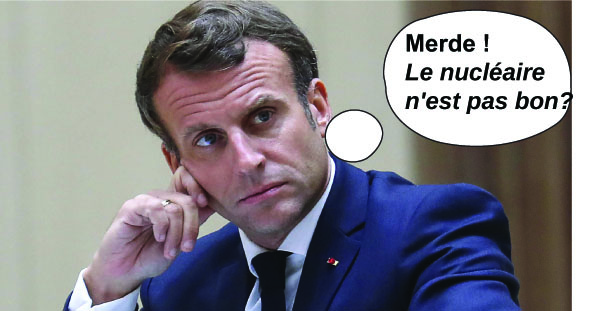
Macron dealt crushing blow as EDF braces for £28billion hit over nuclear
shortfall. Boris Johnson last month announced plans to invest £700million
into EDF’s Sizewell C project, in one of his final acts as Prime Minister.
Express 27th Oct 2022
https://www.express.co.uk/news/world/1688454/emmanuel-macron-news-edf-nuclear-power-fr
French nuclear power group EDF to have a bigger loss than previously expected
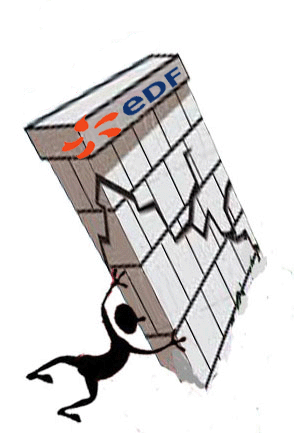
French nuclear power group EDF is expecting a hit of around 32 billion
euro ($32.18 billion) to its full-year core earnings from lower nuclear
production, a bigger loss than previously forecast and its sixth profit
warning this year.
The French government, which already owns 84% of EDF, is
in the process of fully re-nationalising the company, the debt-laden
operator of Europe’s largest fleet of nuclear power plants.
Reuters 27th Oct 2022
https://www.reuters.com/business/energy/french-utility-giant-edfs-history-2022-07-08/
FRANCE DISCOVERS OMINOUS CRACKS IN DOZENS OF NUCLEAR REACTORS
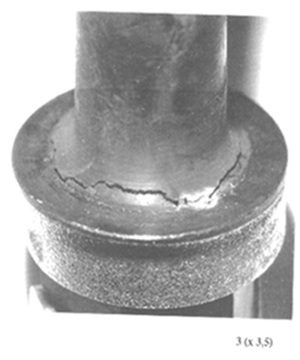
AND THE TIMING COULDN’T BE WORSE.
https://futurism.com/the-byte/france-cracks-dozens-reactors by MAGGIE HARRISON, 27 Oct 22,
Bad Reaction
Europe’s energy crisis may have just gotten worse.
The Wall Street Journal reports that dozens of France’s nuclear reactors — which, amid Russia’s devastating stranglehold on the continent’s natural gas supply, are essential to the nation’s energy security — remain offline following a series of troubling outages believed to be caused by stress-induced pipe corrosion. Fixes are reportedly taking longer than anticipated, but for a struggling continent on the brink of winter, those fixes can’t come quickly enough.
“It’s important that this work restarts as soon as possible,” Emmanuelle Wargon, head of France’s energy regulator, told the WSJ. “If not, the risk of not having electricity rises.”
High Pressure
The nuclear fleet in question, owned by the energy provider EDF, is comprised of 56 reactors, of which 26 are currently out for the count.
According to the WSJ, the pipe problems trace back to late last year, when a crack was discovered in a high-pressure pipe close to the reactor’s core at the nation’s youngest nuclear plant. Other plants, which then launched their own investigations, discovered their own stress corrosion issues shortly thereafter.
“It is only possible to identify [stress corrosion’s] presence once cracking has begun,” read a note from France’s Institute for Radioprotection and Nuclear Safety, the WSJ reports. “Regular inspections of the pipes can only identify the phenomenon once a fault is present.”
Importantly, these aren’t simple fixes. Because the majority of the cracks are so close to the reactor core, radioactivity is a very real threat for technicians, whose exposure has to be limited.
And given how complicated the repairs are, French power experts are reportedly quite pessimistic about the EDF’s ability to get their reactors back online for the winter, especially given that, per the WSJ’s sources, the timelines for several reactor fixes have already been pushed back by at least six weeks.
Beyond the Border
These outages are clearly terrible for France, but they’re just as bad for the rest of Europe, too.
Natural gas prices have skyrocketed as a result of the Russian invasion of Ukraine, which sparred a barrage of Western sanctions and Russia’s subsequent retaliation by way of natural gas restriction. Nations are asking a lot of their citizens, and the continent needs any ounce of energy that it can scavenge to at least somewhat comfortably — let alone safely — get through the winter.
READ MORE: France’s Nuclear Reactors Malfunction as Energy Crisis Bites [The Wall Street Journal]
More on Europe’s energy crisis: Europe’s Energy Crisis Is so Bad It May Have to Idle Cern’s Large Hadron Collider
Nuclear power – a ‘religion’ in France. now turning out to be a curse.
Paris dims the lights as blackouts threaten disaster for Macron. Years of
underinvestment in its aging nuclear fleet risk causing chaos in France
this winter. Xavier Barbaro, chief executive of France’s leading
independent renewables producer Neoen, is concerned about the growing risk
of shortages.
“It’s a possibility and no one would have thought that a
few years or even a few months ago,” he says. “Blackouts were something in
the past. and it can happen again. “We have heard literally for decades
that having nuclear was a chance for the country and in the end, it might
actually be a curse.”
France put all of its eggs in the nuclear basket,
but technical problems are now frequently cutting capacity at its aging
plants. While President Emmanuel Macron has ordered new reactors as part of
a nuclear “renaissance”, decades of inaction are coming back to haunt
the country. Like Liz Truss, Macron’s government has staked its
reputation on his country avoiding blackouts that would undoubtedly have
severe political consequences this winter.
However, industry bosses are
less certain than the President. “We’ve been told for ages that nuclear
power is safe, secure and so constant,” says Adrien Jeantet, director of
energy services at Enercoop, a French utility company using only renewable
energy.
“Now we see that it’s not dependable. We really need it now that
we have gas shortages and all of a sudden it’s not there. Half of the
reactors are shut down.” Barbara Pompili, Macron’s minister in charge
of the energy transition for two years, says nuclear power is almost like a
religion in France.
However, she adds that a widespread belief in its
“magic” has caused underinvestment in renewables that will be needed
for the future. “What I’m worried about is the strategic thinking in the
long run,” she says. “Maybe we were too confident on nuclear power and
we underestimated the importance of renewables. The reason is that too many
people considered that investing in renewables was bad for nuclear power.
“It’s totally crazy. We lost so much time thinking in this way… it’s
very difficult to have a serious rational debate in France on the energy
issue.”
Telegraph 24th Oct 2022
EU ‘dancing on edge of volcano’ with Ukraine – French ex-president
https://www.rt.com/news/565187-eu-ukraine-peace-sarkozy/ 24 Oct 22, Nicolas Sarkozy says the bloc’s policy is driven by “miscalculation, exaltation, anger, superficial reactions”
It’s high time for the EU to abandon its emotionally driven policies on Ukraine and start talking about achieving peace, former French president Nicolas Sarkozy has suggested.
In an interview with Le Journal du Dimanche on Saturday, Sarkozy criticized Brussels for its involvement in the conflict between Russia and Ukraine, which has included sweeping sanctions on Moscow, weapons deliveries to Kiev, and calls for a military solution to the crisis.
“The European Commission is primarily an administrative body. Moreover, I still haven’t understood under which article of the European treaties [the body’s president Ursula] von der Leyen justifies her competence in the field of arms purchases and foreign policy,” he said.
“The only thing the Europeans are hearing now is more and more billions of euros being spent on the purchase of weapons. More weapons, more deaths, more war,” the 67-year-old politician added.
The EU’s policy regarding the conflict in Ukraine is driven by “miscalculation, exaltation, anger, superficial reactions,” and because of this “we’re dancing at the edge of a volcano,” said Sarkozy, who was the president of France between 2007 and 2012.
The bloc was right to condemn Russia and show solidarity with Ukraine, but it also needs to exercise “composure” and work to prevent the escalation of the conflict, he added. “It’s high time for serious initiatives to be taken to start talking about the future and peace.”
Sarkozy also criticized Ukrainian President Vladimir Zelensky for signing a decree earlier this month, which officially made it “impossible” for him to hold talks with his Russian counterpart Vladimir Putin.
Such a stance amounted to “demanding a regime change in Moscow,” the veteran politician pointed out. “I consider this to be a dangerous leap into the unknown, although it’s understandable that it’s difficult for the Ukrainian president to talk to Putin,” he said.
Moscow, which has repeatedly invited Kiev to come to the negotiating table in recent months, has blamed the Ukrainian side for undermining any potential for a peaceful settlement of the crisis. It has also repeatedly condemned the deliveries of weapons to Zelensky’s government by the US, EU, UK and some other countries, arguing that they won’t change the outcome of the conflict, but will prolong the fighting and increase the risk of a direct confrontation between Russia and NATO.
1 This Month



Shut down the radiation-damaged Heysham nuclear reactors now
To see nuclear-related stories in greater depth and intensity – go to https://nuclearinformation.wordpress.com

Say No to NASA’s Reckless Nuclear Reactor on the Moon
Say No to NASA’s Reckless Nuclear Reactor on the Moon
-
Archives
- October 2026 (256)
- September 2026 (339)
- August 2026 (330)
- July 2026 (355)
- June 2026 (287)
- May 2026 (306)
- April 2026 (356)
- March 2026 (251)
- February 2026 (267)
- January 2026 (308)
- December 2025 (358)
- November 2025 (359)
-
Categories
- 1
- 1 NUCLEAR ISSUES
- business and costs
- climate change
- culture and arts
- ENERGY
- environment
- health
- history
- indigenous issues
- Legal
- marketing of nuclear
- media
- opposition to nuclear
- PERSONAL STORIES
- politics
- politics international
- Religion and ethics
- safety
- secrets,lies and civil liberties
- spinbuster
- technology
- Uranium
- wastes
- weapons and war
- Women
- 2 WORLD
- ACTION
- AFRICA
- Atrocities
- AUSTRALIA
- Christina's notes
- Christina's themes
- culture and arts
- Events
- Fuk 2022
- Fuk 2023
- Fukushima 2017
- Fukushima 2018
- fukushima 2019
- Fukushima 2020
- Fukushima 2021
- general
- global warming
- Humour (God we need it)
- Nuclear
- RARE EARTHS
- Reference
- resources – print
- Resources -audiovicual
- Weekly Newsletter
- World
- World Nuclear
- YouTube
-
RSS
Entries RSS
Comments RSS

