 South Korea and China move to normalize relations after THAAD dispute, WP, By Adam Taylor October 31 ,SEOUL — After a year of frosty diplomacy and economic pressure, South Korea and China announced Tuesday that they would put aside their differences out of a joint desire to denuclearize the Korean Peninsula.
South Korea’s Foreign Ministry said the two countries will resume normal relations. “The two sides attach great importance to the Korea-China relationship,” a statement from the ministry said.
In its own coordinated statement, China’s Foreign Ministry said the two nations would work to put their relationship back on a normal track “as soon as possible.”
China and South Korea have historically deep ties and over the past few decades had enjoyed a close relationship. However, that relationship was deeply damaged last July when Seoul agreed to install the U.S.-owned Terminal High Altitude Area Defense (THAAD) missile defense platform on its land.
Though both Seoul and Washington argued the THAAD system had only defensive capabilities, Beijing was concerned about U.S. encirclement as well as the system’s sophisticated radar capabilities…….
South Korea’s Foreign Ministry acknowledged that the THAAD dispute had not been fully resolved. “The two sides agreed to engage in communication on THAAD-related issues about which the Chinese side is concerned through communication between their military authorities,” it said in a statement.
For its part, China confirmed Tuesday that its position on THAAD had not changed.
And on Sunday, South Korea’s military chief met with his American and Japanese counterparts, as part of a growing three-way dialogue……..https://www.washingtonpost.com/world/south-korea-and-china-move-to-normalize-relations-after-thaad-conflict/2017/10/31/60f2bad8-bde0-11e7-af84-d3e2ee4b2af1_story.html?utm_term=.f20c0
November 2, 2017
Posted by Christina Macpherson |
China, politics international, South Korea |
Leave a comment
South Korea to resume building two new nuclear reactors, but scraps plans for 6 others http://www.reuters.com/article/us-northkorea-nuclear-warning/north-korea-diplomat-says-take-atmospheric-nuclear-test-threat-literally-idUSKBN1CU2EI?il=0, Jane Chung SEOUL (Reuters), 26 Oct 17, – South Korea will resume the suspended construction of two new nuclear reactors from midnight, its energy ministry said on Tuesday, but has torn up plans to build six more reactors as Seoul seeks to meet pledges to cut reliance on nuclear power.
The move will restart work on the two reactors that was frozen after President Moon Jae-in came to power in May on a ticket calling for scaling back nuclear power. It comes after results of a survey unveiled last week found a majority of South Koreans actually backed the projects.
The world’s fifth-biggest nuclear energy user currently runs 24 nuclear reactors, generating a third of the country’s total electricity needs.
“Construction work (for the two new nuclear reactors) will begin immediately after midnight,” Paik Un-gyu, Minister of Trade, Industry and Energy, told a news briefing in the capital.
But in a bid to press on with Moon’s commitment to boost use of natural gas and renewable sources in the nation’s energy mix, the ministry said Seoul will also cancel all plans to construct a further six nuclear reactors. The number of nuclear reactors operating in South Korea will be cut to a net 14 by 2038 it said.
The ministry said it will use alternative fuels such as solar and wind power to replace the six nuclear reactors with a projected combined capacity of 8.8 gigawatts (GW).
Additionally, the Asia’s fourth-largest economy will not allow extending the lifespan of 14 aging nuclear power stations, totaling 12.5 GW of capacity, the statement said.
The energy ministry said it will reflect changes in the country’s long-term energy mix plan, which is expected to be finalised in November.
Reporting by Jane Chung; Additional reporting by Christine Kim; Editing by Kenneth Maxwell
October 27, 2017
Posted by Christina Macpherson |
politics, South Korea |
Leave a comment
South Korea’s experiment in deliberative democracy will impact President Moon Jae-in’s nuclear phase-out policy. The Diplomat, By Se Young Jang, October 26, 2017……….The current controversy over the Shin Kori is only the beginning of South Korea’s long journey toward achieving a social consensus on its energy policy. The country is still
divided on how to plan and prepare for its energy future. Some experts warn that Moon’s nuclear phase-out policy could lead to the sharp rise of electricity bills, a potential energy shortage, and the
downturn of South Korea’s nuclear export capacity. They also point out that increasing the share of LNG in South Korea’s energy mix would create another problem, while renewable energy technology is still in a rudimentary stage. In contrast, supporters for Moon’s phase-out policy assert that safety and environmental concerns should be given first priority, rather than economic gains, and argue that less dangerous LNG could be used as a bridge energy source until renewables become more competitive. Even though nuclear safety measures would be sufficiently advanced, critics argue that the impact of any nuclear accident caused by human mistakes or misjudgment would be far more critical than accidents involving other sources of electricity generation.
On the one hand, the key schism here has been created by the lack of transparency in planning and implementing nuclear energy policy, which has been heavily dominated by key stakeholders including the central government, KHNP, nuclear academia, and business for several decades. The cover-up of a station blackout incident at the Kori nuclear power plant and the falsification of safety documents for nuclear power plant components are only a few examples among many. Although the knowledge and opinion of experts on nuclear technology should be respected in any case, it is notable that today’s conflicts on South Korea’s nuclear energy future are deeply rooted in the public’s growing distrust of the expert community, which failed to assure the public of their expertise in successfully preventing and controlling a potential nuclear accident…….
The deliberative polling with regard to the resumption of construction on the Shin Kori 5 and 6 reactors had its own limits, such as insufficient time assigned for deliberation and a lack of consideration for the voices of local residents around the plant. Despite these limits, this experiment in deliberative democracy is expected to serve as an important precedent for the new administration’s work on peacefully resolving or managing conflicts over other highly divisive issues, like the storage of spent nuclear fuel. Both pro- and anti-nuclear energy advocates, in addition to the Moon administration, now face a new task: how to effectively inform and persuade the public in this era of deliberative democracy. Politics is an art of persuasion, after all.
Se Young Jang is a nonresident scholar at the Nuclear Policy Program in the Carnegie Endowment for International Peace. more https://thediplomat.com/2017/10/south-koreas-nuclear-energy-debate/
October 27, 2017
Posted by Christina Macpherson |
politics, South Korea |
Leave a comment
 Proposed resumption of nuclear reactors to delay Moon’s new energy policy http://english.yonhapnews.co.kr/national/2017/10/20/0301000000AEN20171020004651315.html SEOUL, Oct. 20 (Yonhap) — President Moon Jae-in was forced to push back the start of his new nuclear-free energy policy Friday after a public debate commission recommended resuming the construction of two unfinished nuclear reactors he earlier promised to scrap.
The resumption of the construction, however, may have limited effect on the president’s energy policy, which seeks to ultimately build a nuclear energy-free nation.
The commission said 59.5 percent of 471 citizens and experts who took part in the debate voted in favor of completing the Shin Kori-5 and Shin Kori-6 reactors, while 40.5 percent sided with the president to remove the unfinished reactors for good.
The presidential office Cheong Wa Dae said it respects the commission’s recommendation, adding it will soon take necessary measures to resume the construction of the two nuclear reactors.
Such a swift response from Cheong Wa Dae comes after the president earlier said he would respect the outcome of the debate, noting it would mark the start of what he called “deliberative democracy.”
“The process of reaching a social consensus requires a lot of time and money. But I believe it is a valuable process, considering the social cost we must bear when such decisions are made unilaterally,” the president said earlier.
Scrapping the two new nuclear reactors was a key election pledge of Moon.
Despite the inevitable delay in the start of Moon’s new energy policy, the outcome of the monthslong debate on the fate of the two new nuclear reactors will likely have little or no effect on the president’s ongoing plan to build a nation free of nuclear energy.
The president has noted his new energy policy did not seek to immediately shut down nuclear reactors that are currently in operation, but to do so when they run out their natural designed lifespan, a process he said would take at least four decades, considering the 40-year lifespan of the reactors recently built.
The Shin Kori reactors will also operate for at least 40 years following their completion, which is expected to take a few more years.
Before it was disrupted in July, the Korea Hydro & Nuclear Power Co. said the construction of the two reactors was 28.8 percent complete. Work on them began in 2016.
Officials at the presidential office Cheong Wa Dae insisted the president’s new energy policy was launched the day he took office in May, saying the policy also relied on not building any more nuclear reactors.
The public debate commission also hinted that its recommendation on the fate of the Shin Kori reactors may have been influenced by economic reasons, noting 53.2 percent of those who took part in the process voted in favor of reducing nuclear energy while 35.5 percent said the number of nuclear reactors should be maintained at the current level.
Only 9.7 percent said the number of nuclear reactors should increase, the commission said.
The government earlier said scrapping the construction of the Shin Kori reactors may cost more than US$2 billion for the payment of damages to developers and builders.
The president also remains firm on building a nuclear energy-free nation, the Cheong Wa Dae officials said.
“Up until now, the lives and safety of the people have been put in the backseat when establishing and implementing energy policies, while environmental considerations have also been overlooked,” Moon said earlier.
“To build a safe Republic of Korea and keep pace with the global trend, we … have to implement a great shift in our national energy policy that will reduce nuclear and coal-fired power plants, and implement and increase (the use of) clean, safe future energy.”
October 21, 2017
Posted by Christina Macpherson |
politics, South Korea |
Leave a comment
North Korea warns US of ‘unimaginable’ nuclear strike http://thehill.com/policy/defense/356166-north-korea-warns-us-of-unimaginable-nuclear-strike, BY OLIVIA BEAVERS – 10/19/17 North Korea is warning that the United States will face an “unimaginable” nuclear strike for conducting ongoing joint naval drills with the South Korean military on the Korean peninsula.
“The U.S. is running amok by introducing under our nose the targets we have set as primary ones,” the state-controlled news agency KCNA warned Thursday, Newsweek reported. “The U.S. should expect that it would face unimaginable strike at an unimaginable time.”
KCNA also reportedly blamed the U.S. for “creating tension on the eve of war” by participating in civilian evacuation drills in South Korea over the weekend.
The remarks come amid escalating tensions between Washington and Pyongyang.
President Trump has recently stepped up his rhetoric against North Korea and leader Kim Jong Un, whom he’s dubbed “Little Rocket Man.”
During his first address to the United Nations General Assembly last month, Trump threatened to “totally destroy North Korea” if it continued to threaten the U.S. and its allies.
The high-stakes war of words comes after North Korea conducted a series of intercontinental ballistic missile and nuclear tests to display its progress toward developing a nuclear missile capable of striking the U.S.
October 20, 2017
Posted by Christina Macpherson |
North Korea, politics international, South Korea, USA, weapons and war |
Leave a comment
https://www.upi.com/Top_News/World-News/2017/10/19/South-Korea-developing-missiles-to-destroy-North-Korea-nuclear-facilities/3121508418413/, By Elizabeth Shim — South Korea is preparing for full-scale war with North Korea by developing missiles that could destroy North Korea nuclear and missile facilities in the event of a conflict.
Gen. Kim Yong-woo, chief of staff of the South Korean army, said a plan to reduce to ashes North Korea’s weapons facilities, has been created, local newspaper Segye Ilbo reported Thursday. Kim, who submitted his report for an annual parliamentary audit by the National Assembly’s defense committee, said the objective of the plan is to decimate Pyongyang’s weapons of mass destruction while minimizing casualties.
“We will develop the concept of operations that suppresses North Korea’s weapons of mass destruction in the early stages, while minimizing damage,” Kim said Thursday.
The concept of operations includes the development of three types of all-weather, ultra-precise, high-power missiles, the formation of a special maneuvering unit, a combat bot and drone system, and “game changers” or cutting-edge military systems.
The three types of missiles include a tactical surface-to-surface missile, the Hyunmoo-2, and the Hyunmoo-4 missiles, according to local news network YTN. The Hyunmoo-4, capable of carrying a 2-ton nuclear warhead and of targeting North Korea’s underground military facilities, will begin development once U.S.-South Korea missile guidelines are revised.
Included in the plan is an air-ground task force that includes airborne and mechanized troops, that would be deployed to make a push into enemy territory and to neutralize nuclear and missile facilities, Seoul said.
In a separate statement on Thursday, the South Korean navy said the Korea-based three-axis system that includes Kill Chain, Seoul’s pre-emptive strike system, is under review.
October 20, 2017
Posted by Christina Macpherson |
North Korea, South Korea, weapons and war |
Leave a comment
 Korea Joongang Daily 17th Oct 2017, The Biennial General Meeting (BGM) of the World Association of Nuclear
Operators (WANO) kicked off in Gyeongju, North Gyeongsang, on Monday,
bringing together some 500 nuclear industry experts and leaders from around
the world – but the government kept the meeting’s profile very low.
The biennial event, held at the Hico Convention Center in Korea’s cultural
capital some 340 kilometers (211 miles) southeast of Seoul, has the theme
“Leading Nuclear Safety in a Changing World” and will run for six days.
Speakers include Zhang Tao, president of China National Nuclear Power,
Agneta Rising, director general of the World Nuclear Association and
Vincent de Rivaz, CEO of EDF, the French electricity utility.
On the first day of the event, speeches delivered in panel discussions were not provided
to the press. Not a single placard was hung at the Hico building promoting
the event. Entrance to the convention center was closely regulated. No
press was allowed inside, not even a photographer, one security personnel
said.
The secretive nature of the proceeding was surprising given the
biennial event is often called the “Nuclear Power Olympics” for the
scope of expertise and ideas presented. News reports said state-run Korea
Hydro and Nuclear Power (KHNP) was deliberately avoiding publicity because
of the Moon Jae-in government’s attempt to wean Korea off nuclear power.
http://koreajoongangdaily.joins.com/news/article/article.aspx?aid=3039527&cloc=joongangdaily|home|newslist1
October 20, 2017
Posted by Christina Macpherson |
secrets,lies and civil liberties, South Korea |
Leave a comment
 Thyroid cancer patients say no to nuclear power plants http://m.koreatimes.co.kr/phone/news/view.jsp?req_newsidx=237600
  By Kim Se-jeong, 12 Oct 17,
More than 600 thyroid cancer patients living near nuclear power plants in the country came together earlier this week, calling on the government to keep its construction of new nuclear power plants halted.
They also asked the government to help them cope with their ordeals. Their calls came while the public debate on the construction of two Shin-Kori reactors is at its peak.
“Nuclear power plants are government projects,” a group of thyroid cancer patients and activists said in a press conference at the National Assembly, Wednesday. “We have contributed to the national growth by enduring many side effects of nuclear power plants. Now that we’re sick, we’re left to fight for survival alone.”
There are two ongoing lawsuits raised by the thyroid patients against Korea Hydro & Nuclear Power Co., the operator of the nuclear power plants, and Wednesday’s calls also meant to push the courts which are expected to deliver verdicts within this year.
One was filed in 2012 by a family of three ― a father, mother and son suffering colorectal cancer, thyroid cancer and a developmental disability, respectively. The lower court ruled partially in favor of the family, stating thyroid cancer had been caused by exposure to radioactive iodine from the power plant. The case is currently being reviewed by an appeals court.
The other lawsuit was filed in 2015 by 618 thyroid patients against the operator, demanding recognition and compensation. The patients are awaiting a verdict. What they want from the government are the following. For long-term action, they want no nuclear power plants so there will be no more such patients in Korea,” said Choi Soo-young, a Korean Federation for Environmental Movement activist. “For a short-term solution, they want to relocate themselves and want the government to pay for it.”
Exposure to radioactive iodine is one of the main causes of thyroid cancer.
A couple of epidemiological surveys in Korea have also found a high number of thyroid cancer patients in the areas close to nuclear power plants in Korea. Yet, the KHNP disputed this, saying the high number was a result of overtreatment.
Korea’s 24 nuclear power plants generate almost 30 percent of the nation’s electricity. Eighteen of them are concentrated in the southeastern region of Busan, Ulsan and Gyeongju.
“We want our voices to be heard by the group of citizens who are debating the new nuclear power plant construction. No more new nuclear power plants should be allowed,” Choi said. The group of almost 500 citizens is starting the three-day major debate on Friday in the final phase of the three-month-long debate. A decision on whether to resume the construction of the Shin-Kori reactors is expected on Oct. 20.
October 14, 2017
Posted by Christina Macpherson |
health, politics, South Korea |
Leave a comment
Jury on fate of 2 unfinished nuclear reactors to enter crucial debate camp this week 2017/10/08 SEOUL, Oct. 8 (Yonhap) — Hundreds of members of a jury formed to deliberate President Moon Jae-in’s proposal to scrap two unfinished nuclear power reactors are set to enter a three-day debate camp this week in a crucial final step to determine whether to kill or continue the project.
The 478-member jury, formally known as the “citizens’ participation group,” has since last month been familiarizing themselves with the pros and cons of the controversial proposal to abandon the construction of the Shingori-5 and Shingori-6 reactors in the southeastern city of Ulsan.
Starting Friday evening, they are scheduled to spend two nights together for final debates. The camp, set to be held at the Gyeseongwon retreat training center in the central city of Cheonan, is crucial because participants are expected to make up their mind depending on the debates.
Officials plan to conduct two surveys asking the participants whether the reactors’ construction should continue or end, at the beginning and end of the camp. Results are expected to be the main basis of a recommendation that a state commission plans to make on the reactors’ fate next week…….http://english.yonhapnews.co.kr/national/2017/09/29/0302000000AEN20170929002800315.html
October 9, 2017
Posted by Christina Macpherson |
politics, South Korea |
Leave a comment
Nuclear hit on Tokyo, Seoul ‘could kill 2 million’ http://www.straitstimes.com/asia/east-asia/nuclear-hit-on-tokyo-seoul-could-kill-2-million 6 Oct 17
New research shows disastrous outcomes for nearby US allies if North Korea strikes
SEOUL • As United States President Donald Trump threatens to destroy North Korea, even some of his closest aides have warned of the potentially disastrous effects of a war.
New research published on the 38 North website points to just how catastrophic the impact might be on the regime’s neighbours.
If North Korean leader Kim Jong Un were to launch a nuclear attack on Seoul and Tokyo – both within striking distance of his weapons – as many as 2.1 million people could die and another 7.7 million could be injured, according to the 38 North report.
The analysis by Mr Michael Zagurek Jr, a consultant specialising in databases and computer modelling, is based on North Korea’s current estimated weapons technology and bomb strength.
Mr Zagurek assumes that Mr Kim has a baseline arsenal of 20 to 25 warheads and the capacity to put them on ballistic missiles.
Concerns about a nuclear conflict in North Asia have increased as Mr Kim accelerates his programme of acquiring weapons capable of hitting continental US, and as Mr Trump threatens preemptive military action.
While the chance of a direct attack on US allies Japan and South Korea remains slim, Mr Zagurek said history was replete with miscalculation by “rational actors” during crisis situations.
North Korean Foreign Minister Ri Yong Ho last month said the regime’s possible next steps include testing a hydrogen bomb over the Pacific Ocean.
According to Mr Zagurek, it is possible that another nuclear test, an intercontinental ballistic missile test, or a missile test that has the payload impact area too close to US bases in Guam might see Washington react with force.
US options could include attempting to shoot down the test missiles or possibly attacking the North’s missile testing, nuclear-related sites, missile deployment areas or the Kim regime itself. In turn, the North Korean leadership might perceive such an attack as an attempt to remove the Kim family from power and, as a result, could retaliate with nuclear weapons, he added.
North Korea’s older warheads have yields in the 15-25-kilotonne range, around the size of the bombs that devastated Hiroshima and Nagasaki in 1945.
Fatality estimates rise significantly if North Korea were able to strike with bombs similar to the one it tested on Sept 3, which had a likely yield of 108-205 kilotonnes, Mr Zagurek said.
October 7, 2017
Posted by Christina Macpherson |
Japan, North Korea, South Korea, USA, weapons and war |
Leave a comment
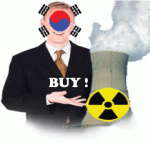 Nuclear phase-out puts burden on S. Korea’s export drive By Kim Eun-jung SEOUL, Sept. 23 (Yonhap) –– South Korea’s nuclear phase-out policy may create a boom for the renewable energy initiative and allay public safety concerns, but it may also send an unwanted signal to the outside world that could hurt the country’s push to expand into the global atomic power generation market.
Since taking office in May, President Moon Jae-in has scrapped plans for new nuclear power plants and vowed not to extend the life cycles of 24 existing reactors, in a bid to end decades of reliance on the controversial energy source.
The latest move was aimed at addressing safety concerns after the 2011 Fukushima disaster and is in line with actions taken by other advanced economies that are turning to renewable energy sources, including the U.S., France and Germany.
This drastic turn from past administrations’ pro-nuclear policies, however, raises questions over South Korea’s status in the global nuclear market, which has seen spike in competition with the rise of state-backed Russian and Chinese companies in recent years.
Seoul policymakers have pledged continued support for overseas projects separate from its domestic energy policy, but industry insiders worry that less enthusiasm for nuclear power could shrink investment in advanced nuclear technologies and give South Korea less bargaining power on the global stage…….http://english.yonhapnews.co.kr/business/2017/09/22/0503000000AEN20170922008800320.html
September 25, 2017
Posted by Christina Macpherson |
marketing, South Korea |
Leave a comment
| Moon and Trump agree on South Korea purchase of state-of-the-art US weaponry during summit |
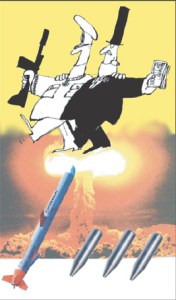
Hankyoreh Sep.22,2017 The deal is reportedly set to include nuclear powered submarines
South Korean President Moon Jae-in and US President Donald Trump agreed on Sept. 21 on a plan for South Korea to introduce state-of-the-art US weaponry or develop its own to counter North Korea’s recent nuclear and missile provocations. Later the same day, Moon had a luncheon and trilateral summit with Trump and Japanese Prime Minister Shinzo Abe, where the three agreed that the entire international community “must apply the maximum intensity sanctions and pressure so that North Korea cannot withstand it anymore and must come to the table for dialogue.” ……http://english.hani.co.kr/arti/english_edition/e_northkorea/812155.html
September 23, 2017
Posted by Christina Macpherson |
business and costs, South Korea, USA, weapons and war |
Leave a comment
 Korean peninsula draws range of military drills in show of force against North Korea http://www.reuters.com/article/us-northkorea-missiles/korean-peninsula-draws-range-of-military-drills-in-show-of-force-against-north-korea-idUSKCN1BT0CK, Ben Blanchard, Hyonhee Shin BEIJING/SEOUL (Reuters) 18 Sept 17, – The U.S. military staged bombing drills with South Korea over the Korean peninsula and Russia and China began naval exercises ahead of a U.N. General Assembly meeting on Tuesday where North Korea’s nuclear threat is likely to loom large.
The flurry of military drills came after Pyongyang fired another mid-range ballistic missile over Japan on Friday and the reclusive North conducted its sixth and most powerful nuclear test on Sept. 3 in defiance of United Nations sanctions and other international pressure.
A pair of U.S. B-1B bombers and four F-35 jets flew from Guam and Japan and joined four South Korean F-15K fighters in the latest drill, South Korea’s defense ministry said.
The joint drills were being conducted “two to three times a month these days”, Defence Minister Song Young-moo told a parliamentary hearing on Monday.
In Beijing, the official Xinhua news agency said China and Russia began naval drills off the Russian far eastern port of Vladivostok, not far from the Russia-North Korea border. Those drills were being conducted between Peter the Great Bay, near Vladivostok, and the southern part of the Sea of Okhotsk, to the north of Japan, it said.
The drills are the second part of China-Russian naval exercises this year, the first part of which was staged in the Baltic in July. Xinhua did not directly link the drills to current tension over North Korea.
China and Russia have repeatedly called for a peaceful solution and talks to resolve the issue.
On Sunday, however, U.S. Ambassador to the United Nations Nikki Haley said the U.N. Security Council had run out of options on containing North Korea’s nuclear program and the United States might have to turn the matter over to the Pentagon.
September 22, 2017
Posted by Christina Macpherson |
South Korea, USA, weapons and war |
Leave a comment
No nuclear weapons in South Korea, says President Moon, By Paula Hancocks and James Griffiths, CNN September 14, 2017
Story highlights
September 15, 2017
Posted by Christina Macpherson |
politics, South Korea, weapons and war |
Leave a comment
A South Korean delegation asks Washington for nuclear weapons, WP, By Josh Rogin September 14, 17, The heated debate in South Korea over redeploying U.S. nuclear weapons on its territory has now reached Washington. A senior delegation of South Korean lawmakers is in town making the case to the Trump administration and Congress that such a move is needed to confront North Korea’s growing nuclear capability and place more pressure on China.
“We are here to ask for redeployment of tactical nuclear warheads in South Korea,” Lee Cheol Woo, the head of the intelligence committee of South Korea’s National Assembly, told me Thursday morning.
Lee is heading a delegation of members of the Liberty Korea Party, the opposition to President Moon Jae-in’s Democratic Party. He is also the chairman of the assembly’s special committee for nuclear crisis response.
Moon told CNN yesterday that he does not agree that tactical nuclear weapons should be reintroduced to South Korea or that Seoul should develop its own nuclear weapons. He warned it could “lead to a nuclear arms race in northeast Asia.” But Lee’s delegation believes that as the North Korea nuclear crisis worsens, a push by the Trump administration or Congress could help persuade Moon’s government to change its position, as it has already done regarding the deployment of the THAAD missile defense system……https://www.washingtonpost.com/news/josh-rogin/wp/2017/09/14/a-south-korean-delegation-asks-washington-for-nuclear-weapons/?utm_term=.fa0b8e508c36
September 15, 2017
Posted by Christina Macpherson |
politics, South Korea, weapons and war |
Leave a comment







 nuclear-news