China’s changing aims for nuclear weapons
MYTHS OR MOVING TARGETS? CONTINUITY AND CHANGE IN CHINA’S NUCLEAR FORCES,War on the Rocks, AUSTIN LONG 6 Dec 20, The nuclear arsenal of the People’s Republic of China and its plans to use it are in the middle of an unprecedented shift. Just over a decade ago, China’s long-range nuclear force structure consisted of a handful of inaccurate, silo-based intercontinental ballistic missiles (ICBMs) that were kept at low readiness with nuclear warheads stored separately. Chinese posture was demonstrably one of retaliation, with a clearly articulated policy of “no-first-use” of nuclear weapons, while force readiness and command and control of those forces were both poorly suited for anything else.
In 2020, China’s nuclear posture and force structure has changed dramatically. Its arsenal has grown and diversified even as readiness and command and control have improved. By 2030, the country’s force structure and posture will be similar to America’s and Russia’s in many ways (albeit probably not at parity). Yet, in a recent article in these virtual pages, David Logan dismisses claims that China is reconsidering the fundamental role of nuclear weapons in its strategy as “dangerous myths.” He argues that China’s policy of no-first-use “is still intact” and dismisses as fiction the claim “that China has developed and deployed an array of nuclear war-fighting capabilities, including tactical nuclear weapons.” While the ultimate destination of China’s nuclear posture remains uncertain, the trajectory is clear. Changes to China’s nuclear war-fighting capabilities and policies are not myths. Instead, they are moving targets, evolving as Chinese leaders reflect on China’s role in the world and the requirements that role places on the country’s nuclear arsenal. In this article, I review what is publicly known about these moving targets. First, it briefly traces the post-Cold War trajectory of China’s nuclear posture. Second, it addresses the role of the DF-26 intermediate range missile in Chinese posture for “tactical” nuclear weapons. Third, it reviews China’s no-first-use policy. Fourth, it presents evidence on the last time an authoritarian state declared a policy of no-first use — the Soviet Union in the 1980s. It concludes with observations on the possible consequences of change in Chinese nuclear posture for U.S. strategy and nuclear posture…………………. https://warontherocks.com/2020/12/myths-or-moving-targets-continuity-and-change-in-chinas-nuclear-forces/ |
|
||||||||||

Good Biden-Kim Relationship Necessary to Avoid a Nuclear Crisis
Because North Korea has nuclear weapons, the Biden administration cannot unilaterally impose terms on Pyongyang. Refusal to even talk with Pyongyang until it takes steps to denuclearize is a foolish and dangerous approach. Such an approach will likely inflame tensions and return Washington to a tense nuclear standoff with Pyongyang that poses a risk of miscalculation and accidental escalation into a nuclear war. Biden may be under pressure to be “tough” on North Korea to differentiate himself from Trump’s alleged cozy relationship with the North Korean dictator. However, a hostile stance toward Pyongyang will only make North Korea feel more insecure and drive Kim to pursue further nuclear development to ensure his regime’s survival.
Court ruling doubts the credibility of nuclear safetysassessments by Japan’s Nuclear Regulation Authority
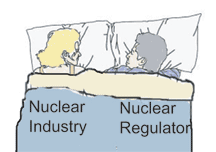 Ruling calls for review of NRA’s nuclear reactor safety screening, http://www.asahi.com/ajw/articles/13991979, A court ruling cast serious doubt over the credibility of safety assessments by the Nuclear Regulation Authority with regard to the operations of nuclear reactors.
The ruling called into question the safety of reactors restarted with NRA approval after being shut down in the aftermath of the 2011 Fukushima nuclear disaster.
It also underscored an urgent need for a sweeping review of the nuclear regulation system as a whole.
The Osaka District Court on Dec. 3 struck down the NRA’s endorsement of safety measures for the No. 3 and No. 4 reactors at the Oi nuclear power plant in Fukui Prefecture.
It invalidated the green light the nuclear safety watchdog gave in 2017 to Kansai Electric Power Co.’s plan to restart the two reactors.
The court said the NRA’s safety assessment was not fully in accordance with new tougher nuclear safety standards introduced after the catastrophic accident at the Fukushima No. 1 nuclear plant and screening guidelines based on those standards.
The ruling labeled the NRA’s decision as “unreasonable,” asserting there were “errors and deficiencies that cannot be overlooked” in the process of examining and approving anti-earthquake measures the electric utility adopted for the reactors.
In designing measures to protect a reactor against major earthquakes, the operator estimates the maximum possible ground motion generated by an earthquake around the reactor, called “reference ground motion.” It develops steps to ensure the safety of the reactor based on this estimate and requests for NRA approval for restarting the reactor.
The NRA examines the plan and determines whether the estimate is appropriate and the proposed safety measures are sufficient. It grants approval and authorization if it decides the plan meets the new safety standards.
Kansai Electric Power determined the reference ground motion by calculating the magnitude of the maximum credible earthquake based on its own assumptions concerning the length and width of faults around the reactors.
But residents of Fukui and six other prefectures filed a lawsuit to question the utility’s estimate of the reference ground motion. They argued that the utility’s estimate only represents an “average” for the spectrum of possible quakes, meaning that the safety measures are not based on the maximum strength of a possible earthquake in the area.
They cited a newly included provision in the NRA’s screening guidelines that says consideration should be given for the “variability” that arises due to the calculation methods used.
The plaintiffs claimed the NRA’s approval of the anti-quake measures was illegal because it was based on the utility’s questionable reference ground motion figure.
The government countered this argument by saying the utility’s calculation has a sufficient margin of error that makes it unnecessary to consider variability. But the court sided with the plaintiffs.
The ruling puts weight on the reasons for the NRA’s own decision to introduce the “variability” provision into the guidelines and demands that the screening process strictly follow strictly the established procedures.
The NRA should respond to the ruling by first reviewing the process of the safety screening of the two reactors at the Oi plant. It is possible that the screening of other reactors was similarly flawed. The ruling is likely to arouse anxiety among residents living in the vicinity of reactors that have been brought back online. The NRA should make a sincere and convincing response to the court decision.
The No. 3 and No. 4 reactors at the Oi plant are currently offline for regular maintenance. Debate is unnecessary in stating that the utility must not rush to restart the reactors.
Even without the triple meltdown at the Fukushima plant, it is amply obvious that this nation could be hit by unexpectedly severe natural disasters, such as earthquakes, tsunami and volcanic eruptions, at any time.
That makes it all the more important to establish nuclear power standards based on the principle of erring on the side of safety and ensure that safety screening and regulation are strictly based on the standards.
The government, which seems to be bent on restarting reactors, should take this imperative to heart.
Hokkaido’s ski areas could lose popularity, due to plans to house nuclear wastes
|
The towns of Suttsu and Kamoenai have both applied for preliminary feasibility surveys to be considered for a site that will store waste from the nation’s nuclear power plants. The cash-starved towns struggling with declining populations are poised to each pocket 2 billion yen ($19 million) promised by the government for taking part in the studies alone. Although whole selection process takes 20 years, the applications have touched off an outpouring of opposition from locals as well as from across the country, including from Hokkaido Gov. Naomichi Suzuki, who assailed the central government for “slapping the face with money.” The concern is especially palpable in the resort towns of Niseko and Kutchan, which are part of the Niseko resort area. “To outsiders, it might as well be Niseko that is undergoing a survey,” said Shinichi Maeda, an owner of a restaurant in Kutchan. “It’s possible that foreign investors who had previously valued Niseko will pull out one by one.” Suttsu is located about 40 km west of the town of Niseko, which will see no economic benefit from the study but will surely be hit by the anxiety the plan will generate………… the possibility of hosting a nuclear waste site, however remote, is enough to rail up opposition. The owner of a tourism business in Kutchan believes in local production and consumption, and uses seafood from Shiribeshi. But that may have to change. “Foreign customers are sensitive,” said the owner. “If the nuclear waste issue gains prominence, it’ll become hard to use” locally made seafood. In Japan, there is still no final repository for nuclear waste — it is stored in interim locations. After the 2011 Fukushima nuclear disaster raised public awareness, countries across the globe have struggled to find permanent places to store the waste. When Kamoenai announced it would apply for an initial survey in October, The Associated Press reported the story with the headline “2 remote Japan towns seek to host nuclear waste storage site.” The article was carried by news outlets all over the world. Last month, five citizens groups presented the Hokkaido governor with a petition signed by 450,000 people opposing the feasibility survey for the two towns. The signatures were collected nationwide. The preliminary studies underway in the two towns are becoming an issue that could undermine tourism throughout Hokkaido……….. |
|

Court retracts NRA approval of safety measures at nuclear plan
Court retracts NRA approval of safety measures at nuclear plant, Asahi Shimbun, By TAKASHI ENDO/ Staff Writer, December 4, 2020 OSAKA--A district court struck down central government approval of safety measures at the Oi nuclear power plant in Fukui Prefecture, effectively rejecting tougher safety screening guidelines used by the Nuclear Regulation Authority.
The Osaka District Court on Dec. 4 sided with plaintiffs who argued that the safety guidelines underestimated the maximum possible movement generated by an earthquake around the No. 3 and No. 4 reactors at the plant, operated by Kansai Electric Power Co.
However, the lawsuit filed by about 130 residents who live in Fukui and six neighboring prefectures did not seek a temporary injunction, so the two reactors can continue operating until the ruling is finalized.
The tougher safety standards were adopted after the Great East Japan Earthquake and tsunami caused the triple meltdown at the Fukushima No. 1 nuclear power plant in 2011.
The lawsuit revolved around whether the basic earthquake ground motion figure used by Kansai Electric in its safety measures was appropriate.
Electric power companies that operate nuclear plants set their own basic earthquake ground motion figures. The NRA uses its screening guidelines to determine if the calculated figures are appropriate……..
The plaintiffs argued that this calculation method only produces an “average” for the quake scale, meaning that the safety measures are not based on the maximum strength of a possible earthquake in the area. …….
The court, however, accepted the plaintiffs’ case and ordered a retraction of the approval of the Oi plant’s safety measures.
The ruling was the fourth victory for resident plaintiffs seeking a temporary injunction or retraction of government approval. http://www.asahi.com/ajw/articles/13989665
Nuclear corruption – this time it’s Taiwan
 Three detained in probe into nuclear power plant case, https://www.taipeitimes.com/News/taiwan/archives/2020/12/03/2003748020 By Jason Pan / Staff reporter Three detained in probe into nuclear power plant case, https://www.taipeitimes.com/News/taiwan/archives/2020/12/03/2003748020 By Jason Pan / Staff reporter
Police on Friday last week arrested Kuo, 52, who allegedly led the operation, and questioned more than 10 people in connection with the case, including Kuo’s two deputies, both surnamed Lee (李), who were released after posting bail on Tuesday, the office said. The investigation found that Kuo’s operation, based in New Taipei City’s Jinshan District (金山), rigged bids, as well as extorted, coerced and assaulted other contractors, to win about NT$150 million (US$5.21 million at the current exchange rate) in bids related to two nuclear power plants, prosecutors said. Kuo, his two deputies and two colluding contractors were listed as suspects in the case, and could be charged with assault, attempted murder, intimidation and extortion, as well as breaches of the Government Procurement Act (政府採購法). Prosecutors said evidence showed that Kuo from 2016 to last year won seven projects related to the decommissioning of the Jinshan Nuclear Power Plant in New Taipei City’s Shihmen District (石門) and one project in 2017 at the Guosheng Nuclear Power Plant in New Taipei City’s Wanli District (萬里). Taipower Power Co (Taipower), which was responsible for the bidding process, is reported to have planned NT$150 billion in expenditures over 25 years to decommission the Jinshan plant. While most of the work requires advanced engineering skills, NT$30 billion has been budgeted for maintenance, material procurement, warehouse construction and other parts of the project, attracting many businesses and contractors. The investigation found that while Kuo and his friends pooled money to register a construction company, he did not have a business license or permits for the projects, but illegally borrowed a license and other documents from colluding contractors. Kuo initially persuaded legitimate contractors to join his bids by offering them a percentage of the project money, but when they refused to cooperate, he instructed his deputies and subordinates to beat them up and scare them off. In March last year, a contractor surnamed Hsu (許), who had won the bid on a landscaping project that Kuo had wanted, was invited to a dinner meeting, at which Kuo’s deputies allegedly stabbed him, leaving him with serious injuries, prosecutors said. An investigation led to Kuo and his deputies being charged with assault and attempted murder, they said. “Taipower should also be held liable for the gangsters’ bid-rigging and other illegal profiteering in this and related cases worth billions of dollars, as company officials failed in their due diligence and permitted gangsters to intimidate and use violence to secure the bids on these projects,” one Shilin prosecutor said. |
|
Japanese local governments depend on “nuclear money”

|
Japanese town’s approval of nuclear reactor restart reflects subsidy dependence , https://mainichi.jp/english/articles/20201129/p2a/00m/0na/001000c 29 Nov 20, TOKYO — Japanese local governments’ dependence on “nuclear plant money” distributed by the national government was starkly highlighted recently when one town granted their approval for a reactor restart at one power plant badly damaged in the March 2011 Great East Japan Earthquake and tsunami.
TOKYO — Japanese local governments’ dependence on “nuclear plant money” distributed by the national government was starkly highlighted recently when one town granted their approval for a reactor restart at one power plant badly damaged in the March 2011 Great East Japan Earthquake and tsunami.
However, the Japanese government has taken measures such as changing both the subsidies’ name and their governing mechanisms after the 2011 disaster, so that local governments can still get the money even when the power plant in their jurisdiction has been off-line for long periods. At least some 115 billion yen (around $1.11 billion) has been distributed as subsides and aid from the national government to local hosts of nuclear power plants this fiscal year alone. According to the town of Onagawa, it received about 530 million yen (approximately $5.1 million) in subsidies based on the Three Power Source Development Laws in fiscal 2010, the year before the Great East Japan Earthquake. That has increased following the disaster, with subsidies reaching over 1.4 billion yen (roughly $13.5 million) in fiscal 2017 and 2018. This included payments totaling 1.08 billion yen (roughly $10.4 million) connected to two reactors at the plant in service for more than 30 years.
Onagawa’s total fiscal 2019 spending stood at 34 billion yen (roughly $327.4 million). If the fixed property taxes paid for the nuclear power plant (about 2.7 billion yen, or roughly $26 million) are added to the subsidies stemming from the Three Power Source Development Laws, money derived from the nuclear plant accounts for over 10% of the town’s annual revenue. “We are being greatly helped in terms of finance,” a municipal government official commented. Of the monies based on the Three Power Source Development Laws, Onagawa reaped about 350 million yen (about $3.37 million) more than previously in one subsidy for enhancing the area around the plants — a category designed to gain cooperation from communities hosting the plants. In fiscal 2019, the subsidies were put toward the salaries of seven local social welfare council employees (about 28 million yen, or roughly $270,000), updating a hospital’s electronic medical record system (about 77 million yen, or some $742,000), and renovating a gymnasium, tennis court and baseball field (about 240 million yen, or roughly $2.31 million), among other purposes. Such subsidies can be used for various purposes under the name of enhancing public services. According to municipal project guidelines, although there were many cases where local tax revenue accounted for around 10-20% of expenses, renovation costs for the athletic facilities were covered entirely by the subsidies. Onagawa’s situation is hardly unique. Local governments hosting nuclear power plants generally rely heavily on the large subsidies. National government policies contribute greatly to the increasing subsidies handed out even as nuclear power stations remain shuttered. The Ministry of Economy, Trade and Industry reviewed regulations following the nuclear disaster such that the plants would be deemed as “in operation” to a certain extent even while their reactors were off-line. Takeo Kikkawa, professor at International University of Japan, suggested that the national government “may have been distributing generous subsidies even when the plants were suspended to make it easier for local governments to approve reactor restarts.” According to the Onagawa government, reforms that allowed local bodies to receive more funding based on the years a power station has been in service was also one of the factors behind the town’s increased subsidy take. Central government figures have raised concerns over this particular change to the subsidy system, including that the economy minsitry is doing it “for its own convenience.” Furthermore, public relations and research-related subsidies received by Onagawa to cover nuclear power plant tours, information circulars and other costs, among other purposes, recovered to the same level as before the 2011 disaster (around 10 million yen annually, or roughly $96,300) since fiscal 2015. A senior official at a major electric power company commented, “Thorough PR activities are indispensable for getting reactors restarted.” It was revealed in the town’s project assessment report that a large majority of the contracts to enhance public services and conduct PR-related activities were negotiated without any competition. Once the No. 2 unit at the Onagawa nuclear station is back on-line, the town is also set to receive subsidies from the nuclear fuel tax, collected from the power company based on the nuclear plant’s performance. The community also reaps further benefits when employees of power companies, including subcontractors, frequent local eateries and other businesses during regular inspections. Hideaki Tanaka, a tax law professor at Meiji University, commented, “This nuclear plant money is an extreme example of the government’s subsidy and aid regime.” And so the town of Onagawa’s approval of the restart at their local nuclear plant could be considered inevitable, so dependent on nuclear money have host municipalities become. (Japanese original by Yuki Takahashi, Business News Department)
|
|
Fukushima nuclear reactor no.1 – debris prevented from falling into fuel storage pool

Tokyo Electric Power Company on Thursday released footage showing precautions it had taken to keep a broken crane from falling into the pool.
The crane, weighing 161 tons, has been hanging over the pool since a hydrogen explosion hit the building in March 2011. The pool is still holding nuclear fuel.
The video shows a platform being moved on rails to a spot directly under the broken part of the crane. A bag on the platform is then filled with mortar and fixed to the crane to hold it in place.
The entire process was done remotely due to high levels of radiation in the reactor building.
TEPCO plans to install a cover over the whole building before starting the removal of fuel from the pool as early as fiscal 2027.
Survey finds that most Fukushima evacuees do not intend to return
65% of Fukushima evacuees have no intention of returning home: survey https://english.kyodonews.net/news/2020/11/675982b84707-65-of-fukushima-evacuees-have-no-intention-of-returning-home-survey.html
KYODO NEWS Osaka, Sixty-five percent of the people who evacuated from Fukushima Prefecture after the March 2011 nuclear disaster have no intention of returning, according to a recent survey conducted by a Japanese university.
While the survey, conducted by a research facility at Kwansei Gakuin University, only received responses from 522 of 4,876 people to whom questionnaires were sent, it provided a rare insight into how former residents see the reconstruction of their former home.
The government of the northeastern prefecture has not carried out such surveys in recent years. There were over 36,900 evacuees within and outside the prefecture as of October, according to the prefectural government.
Among the 522 respondents who resided in the prefecture at the time of the nuclear meltdowns at the Fukushima Daiichi power plant triggered by the massive quake and ensuing tsunamis, 341 people said they do not intend to return.
According to the survey conducted between July and September, 138 people said they plan to go back and 43 people did not answer or offer a valid response.
In response to a multiple-choice question asking why they have not returned to their homes, 46.1 percent said they still fear contamination of the environment, followed by 44.8 percent who said they have settled down in places they currently live.
Destructive potential of over a million tons of radioactive water into the Pacific
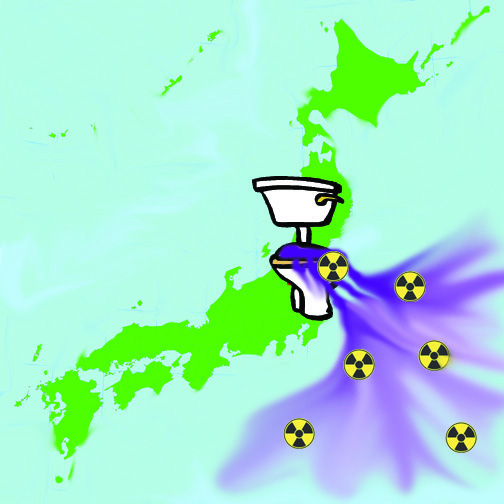 Almost Unnoticed Nuclear Pandemic Is Spreading in Japan, https://indepthnews.net/index.php/the-world/asia-pacific/3967-almost-unnoticed-nuclear-pandemic-is-spreading-in-japanBy Manlio Dinucci, MONTREAL (IDN) 4 Nov 20, – It was not Covid-19, therefore the news went almost unnoticed: Japan will release over a million tons of radioactive water from the Fukushima nuclear power plant into the sea. The catastrophic incident in Fukushima was triggered by the Tsunami that struck the north-eastern coast of Japan on March 11, 2011, submerging the power plant and causing the core of three nuclear reactors to melt.
The power plant was built on the coast just 4 meters above sea level with five-meter-high breakwater dams, in a tsunami-prone area with waves 10-15 meters high. Furthermore, there had been serious failures by the private company TEPCO (the Tokyo Electric Power Company) managing the plant, in the control of the nuclear plant: the safety devices did not come into operation at the time of the Tsunami.
Water has been pumped through the reactors for years to cool the molten fuel. The water became radioactive and was stored inside the plant in over a thousand large tanks, accumulating 1.23 million tons of radioactive water. TEPCO is building other tanks, but they will also be full by mid-2022.
TEPCO must continue pumping water into the melted reactors and has decided to discharge, in agreement with the government, the water accumulated so far into the sea after filtering it to make it less radioactive (however, to what extent it is not known) with a process which will last 30 years. There is also radioactive sludge accumulated in the decontamination filters of the plant, stored in thousands of containers, and huge quantities of soil and other radioactive materials.
As TEPCO admitted, the melting in reactor 3 is particularly serious because the reactor was loaded with Mox, a much more unstable and radioactive mix of uranium oxides and plutonium.
The Mox for this reactor and other Japanese ones was produced in France, using nuclear waste sent from Japan. Greenpeace has denounced the danger deriving from the transport of this plutonium fuel for ten thousand kilometres.
Greenpeace also denounced that Mox favours the proliferation of nuclear weapons, since plutonium can be extracted more easily and, in the cycle of uranium exploitation, there is no clear dividing line between civilian and military use of fissile material.
Up to now, around 240 tons of plutonium for direct military use and 2,400 tons for civil use (nuclear weapons can however be produced with them), were accumulated in the world (according to 2015 estimates), plus about 1,400 tons of highly enriched uranium for military use. A few hundred kilograms of plutonium would be enough to cause lung cancer to 7.7 billion inhabitants of the planet, and plutonium remains lethal for a period corresponding to almost ten-thousand human generations.
A destructive potential has thus accumulated, for the first time in history, capable of making the human species disappear from the face of Earth. The nuclear bombings of Hiroshima and Nagasaki; the more than 2,000 experimental nuclear explosions in the atmosphere, at sea and underground; the manufacture of nuclear warheads with a power equivalent to over one million Hiroshima bombs; the numerous accidents involving nuclear weapons and those involving civilian and military nuclear plants, all this has caused radioactive contamination that has affected hundreds of millions of people.
A portion of approximately 10 million annual cancer deaths worldwide – documented by WHO – is attributable to the long-term effects of radiation. In ten months, again according to the World Health Organization data, Covid-19 caused about 1.2 million deaths worldwide.
This danger should not be underestimated, but it does not justify the fact that mass media, especially television, did not inform that over one million tons of radioactive water will be discharged into the sea from the Fukushima nuclear power plant, with the result that it will further increase cancer deaths upon entering in the food chain.
Cybersecurity breach at Kudankulam Nuclear Power Plant (KKNPP) undetected for over 6 months

 Breach at Kudankulam nuclear plant may have gone undetected for over six months: By Nirmal John, , ET Nov 25, 2020
The cybersecurity breach at the Kudankulam Nuclear Power Plant (KKNPP) may have remained undetected for more than six months, reveals a report from Singapore-based cybersecurity firm Group-IB.
Experts from Group-IB, who discovered and analysed an archive containing dtrack, a remote-administration tool attributed to North Korean group Lazarus, says that analysis “revealed that the logs contained data from a compromised machine running Windows that belonged to an employee of the Nuclear P ..
Resident against Japanese nuclear reactor OK’d for restart says safe evacuation impossible
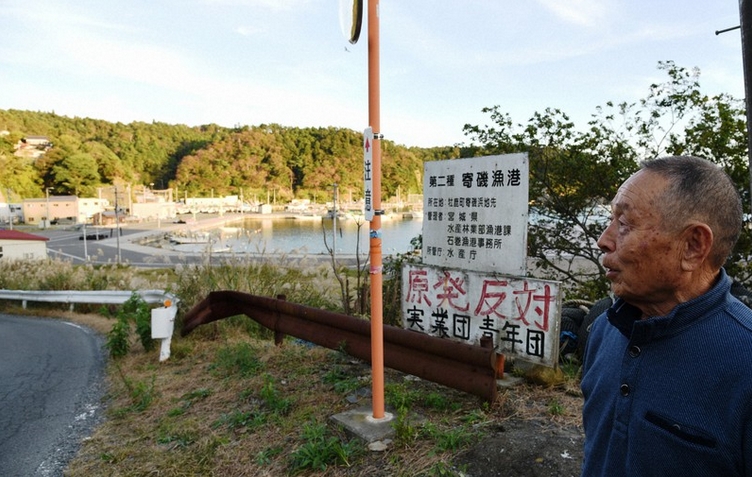
Former fisherman Yukitoshi Watanabe maintains that resuming operation of Tohoku Electric Power Co.’s Onagawa Nuclear Power Plant would be dangerous. In the Yoriisohama district of Ishinomaki, Miyagi Prefecture, as seen in this photo taken on Oct. 21, 2020, many signs protesting nuclear power have been set up by groups comprising youth in the community.
November 12, 2020
ISHINOMAKI, Miyagi — While the governor of Miyagi Prefecture, where the Onagawa Nuclear Power Plant is located, gave “local consent” on Nov. 11 to the restart of a reactor at the plant, those who live in the area remain anxious as local municipalities’ evacuation plans in the case of a major incident are said to be insufficient by residents and local assemblies alike.
The go-ahead to resume the operation of a reactor at Tohoku Electric Power Co.’s Onagawa nuclear power station came after Miyagi Gov. Yoshihiro Murai attended a meeting with the mayors of the Miyagi prefectural town of Onagawa and city of Ishinomaki, which the plant straddles.
About 1 kilometer away from the Onagawa Nuclear Power Plant is Ishinomaki’s Yoriisohama district, where residences surround a fishing harbor. Three aging signs that are set up alongside the one road that links the district to the outside world declare objections to nuclear power. They were put up by an organization of youth and others in the district.
Yukitoshi Watanabe, 80, is a former local fisherman who participated in an anti-nuclear demonstration by boat more than 40 years ago when the community wavered between hosting a nuclear power plant or not.
“Despite the incident at Daiichi Fukushima Nuclear Power Plant, in 10 years we’re back to where we were. The evacuation plan is absolutely unrealistic, and escaping safely is impossible,” Watanabe said angrily.
In August of this year, the Miyagi Prefectural Government invited officials from the Nuclear Regulation Authority (NRA), the Cabinet Office, and Tohoku Electric Power Co., and held sessions for residents to inform them of safety measures and evacuation plans that would be put into place. During the question-and-answer session, Watanabe raised his hand and asked, “Are you able to keep your head held high and tell your children and grandchildren (about restarting a nuclear reactor)?”
Including his great-grandchild, who is about to turn a year old, Watanabe lives in a family of 10 people spanning four generations. Living in the Yoriisohama district, which sticks out further east into the Pacific Ocean than the nuclear power plant, there’s no way to evacuate on land except by heading in the direction of the plant. It is unclear whether the national or prefectural government will build and maintain a highly safe evacuation route, and Watanabe says, “(An evacuation) route should be a prerequisite for deciding whether to restart the nuclear plant, and it shouldn’t have to be the local community’s responsibility to build one.”
Watanabe is considering a possible evacuation by boat, if such a measure is needed. He knows the dangers of the ocean, but he is more scared of his children and grandchildren being exposed to radiation.
“If something happens, we will have to leave this land, where our family has lived for generations, and fishing, and our home, throwing our hands up in despair. We must not leave any fears or anxieties to the future.”
(Japanese original by Nobuyuki Hyakutake, Ishinomaki Local Bureau)
Taiwanese protest plan to dump water from Japan nuclear plant into sea
|
Taiwanese protest plan to dump water from Japan nuclear plant into sea,Focus Taiwan 11/19/2020 Taipei, Nov. 19 (CNA) A group of Taiwanese staged a protest in Taipei on Thursday against a plan by the Japanese government to release more than a million tonnes of water into the ocean from the disabled Fukushima nuclear power plant, starting in 2022.
At the rally in front of the Ministry of Foreign Affairs (MOFA), some 20 supporters of the “Nuclear Go Zero” movement called on the ministry to push back, via diplomatic channels, against the Japanese government’s controversial plan. Tsai Ya-ying (蔡雅瀅), a lawyer affiliated with the Wild at Heart Legal Defense Association in Taiwan, said at the rally that releasing “contaminated” water from the disabled Fukushima Daiichi nuclear power would pose a risk to humans who might eat the many marine species that migrate in the warm current between Taiwan and Japan. Another protester, Tsai Chung-yueh (蔡中岳), deputy CEO of the environmental organization Citizen of the Earth, said contamination of the marine ecology could last for 30-40 years, if the water is dumped into the ocean……. At a regular press briefing Thursday, MOFA spokesperson Joanne Ou (歐江安) said the Japanese government has not yet made a final decision on the issue, and MOFA will seek clarification. She said the protesters have submitted a letter that has been passed on to the Taiwan-Japan Relations Association, which will relay their concerns to the Japanese government via Taiwan’s representative office in Tokyo. “MOFA is also concerned about the issue, as the maritime environment, ecological conservation, and health of our citizens may be at risk,” Ou said. (By Chang Hsiung-feng and Emerson Lim) Enditem/pc https://focustaiwan.tw/society/202011190015 |
|
North Korea sparks new nuclear weapons fears
North Korea sparks new nuclear weapons fears, By Sarah Keane, 20 November 2020 NORTH Korea sparks new nuclear weapons fears as experts confirm uranium factory is now active
The International Atomic Energy Agency watchdog has spotted fresh activity at Kim Jong-un’s ‘secret’ uranium factories, sparking new nuke bomb fears….. https://www.euroweeklynews.com/2020/11/20/north-korea-sparks-new-nuclear-weapons-fears/
Surveys to identify nuclear waste disposal site begin in Hokkaido
The town of Toyo in Kochi Prefecture had previously applied for a literature survey in 2007, but later canceled the application before the survey began.
The literature survey, which checks geological literature and data, is the first of three stages of examination in the selection process. Suttsu and Kamoenai will each receive up to ¥2 billion in state subsidies in exchange for underdoing the first-stage survey……..
First-stage surveys began Tuesday in two municipalities in Hokkaido to see whether their locations are suited to hosting a final disposal facility for high-level radioactive waste from nuclear power plants in the nation.
The Nuclear Waste Management Organization of Japan, or NUMO, started the so-called literature surveys in the town of Suttsu and the village of Kamoenai in the northernmost main island, marking the first time such surveys have ever been conducted in the country. On the day, the industry ministry gave the necessary approval for the surveys to be conducted.
The town of Toyo in Kochi Prefecture had previously applied for a literature survey in 2007, but later canceled the application before the survey began.
The literature survey, which checks geological literature and data, is the first of three stages of examination in the selection process. Suttsu and Kamoenai will each receive up to ¥2 billion in state subsidies in exchange for underdoing the first-stage survey……
In response to the start of the first-stage survey, Hokkaido Gov. Naomichi Suzuki released a statement saying that he was “opposed at the moment” to the second-stage survey, reiterating his intention not to give his approval. …….https://www.japantimes.co.jp/news/2020/11/18/national/hokkaido-nuclear-waste-surveys/
1 This Month
Chernobyl: The Lost Tapes – A good documentary on Chernobyl on SBS available On Demand for the next 3 weeks– https://www.sbs.com.au/ondemand/tv-program/chernobyl-the-lost-tapes/2352741955560

of the week–London Campaign for Nuclear Disarmament

Tell the Ukrainian Government to Drop Prosecution of Peace Activist Yurii Sheliazhenko
To see nuclear-related stories in greater depth and intensity – go to https://nuclearinformation.wordpress.com
-
Archives
- April 2026 (139)
- March 2026 (251)
- February 2026 (268)
- January 2026 (308)
- December 2025 (358)
- November 2025 (359)
- October 2025 (376)
- September 2025 (257)
- August 2025 (319)
- July 2025 (230)
- June 2025 (348)
- May 2025 (261)
-
Categories
- 1
- 1 NUCLEAR ISSUES
- business and costs
- climate change
- culture and arts
- ENERGY
- environment
- health
- history
- indigenous issues
- Legal
- marketing of nuclear
- media
- opposition to nuclear
- PERSONAL STORIES
- politics
- politics international
- Religion and ethics
- safety
- secrets,lies and civil liberties
- spinbuster
- technology
- Uranium
- wastes
- weapons and war
- Women
- 2 WORLD
- ACTION
- AFRICA
- Atrocities
- AUSTRALIA
- Christina's notes
- Christina's themes
- culture and arts
- Events
- Fuk 2022
- Fuk 2023
- Fukushima 2017
- Fukushima 2018
- fukushima 2019
- Fukushima 2020
- Fukushima 2021
- general
- global warming
- Humour (God we need it)
- Nuclear
- RARE EARTHS
- Reference
- resources – print
- Resources -audiovicual
- Weekly Newsletter
- World
- World Nuclear
- YouTube
-
RSS
Entries RSS
Comments RSS
 nuclear-news