North Korea has ‘undeclared’ ICBM base near China border, according to new report.
ABC News, 23 Aug 25
In short:
A missile base near North Korea’s border with China poses a nuclear threat to Australia, East Asia and the US, a new report and an expert say.
There are likely up to nine nuclear-capable intercontinental ballistic missiles and launchers at the secret site.
A retired South Korean Army Lieutenant General says it is a “world problem”.
North Korea has built a secret military base near its border with China which may house Pyongyang’s newest long-range ballistic missiles, according to new research.
The Sinpung-dong Missile Operating Base lies about 27 kilometres from the Chinese frontier, the Washington-based Center for Strategic and International Studies (CSIS) said in a report published on Wednesday.
The facility in North Pyongan Province likely houses six to nine nuclear-capable intercontinental ballistic missiles (ICBMs) and their launchers, the study said.
It said the weapons “pose a potential nuclear threat to East Asia and the continental United States”.
North Korea has ramped up its nuclear weapons programme since a failed summit with the US in 2019, and leader Kim Jong Un recently called for the “rapid expansion” of the diplomatically isolated nation’s nuclear capability.
The report — which CSIS called the first in-depth, open-source confirmation of Sinpung-dong — says the base is one of about “15-20 ballistic missile bases, maintenance, support, missile storage, and warhead storage facilities which North Korea has never declared”.
The facility is “not known to have been the subject of any denuclearisation negotiations previously conducted between the United States and North Korea”, the study said.
Citing their analysts’ current assessments, CSIS said the launchers and missiles could leave the base in times of crisis or war, link up with special units and conduct harder-to-detect launches from other parts of the country.
The base, along with others, “represent the primary components of what is presumed to be North Korea’s evolving ballistic missile strategy, and its expanding strategic-level nuclear deterrence and strike capabilities”, the report said.
Site built near China to deter attacks
In-Bum Chun, a retired South Korean Army Lieutenant General, told ABC’s Radio National that North Korea believed it could scare the US out of its alliance with South Korea by building these kind of missile bases…………………………………………….https://www.abc.net.au/news/2025-08-22/north-korea-secret-missile-base/105684760
South Korea’s state-run nuclear power firm barred from North America, Europe over intellectual property dispute: Report
Korea Hydro & Nuclear Power president confirms South Korean company closed its operations in Poland
Berk Kutay Gokmen |19.08.2025 https://www.aa.com.tr/en/asia-pacific/south-koreas-state-run-nuclear-power-firm-barred-from-north-america-europe-over-intellectual-property-dispute-report/3663824
South Korea’s state-run nuclear power firm has been banned from bidding for new power plant projects in North America and Europe over an intellectual property (IP) dispute, the Seoul-based Yonhap News reported on Tuesday.
Korea Hydro & Nuclear Power (KHNP) faces the IP dispute under its agreement with the US energy firm Westinghouse, signed in January, according to industry sources.
The sources mentioned that the KHNP cannot sign for new nuclear power plant deals in North America and the UK, Japan, Ukraine, and EU nations, excluding the Czech Republic.
The agreement was signed after Westinghouse accused the KHNP of infringing on its IP, claiming that the plant designs of the South Korean company utilize its licensed technology.
The deal had cleared a major obstacle for the KHNP-led Korean consortium to finalize a 26 trillion won ($18.7 billion) contract in June to build two nuclear power units in the Czech Republic.
The report came as the KHNP President Whang Joo-ho confirmed on Tuesday that the company had closed operations in Poland.
“After the new Polish administration took office … the country decided to drop the state-owned enterprise projects (in the nuclear power sector),” Whang said.
Poland became the fourth European country where the KHNP confirmed its business closure, following Sweden, Slovenia, and the Netherlands.
Hundreds rally in Taipei against restart of No. 3 nuclear power plant.
Taiwan is an earthquake- and typhoon-prone island, which makes it unsuitable for the development of nuclear energy.
on May 17, Taiwan officially became a “nuclear-free homeland,” a status that was accomplished after 40 years of hard work, Shih said, calling for that to be retained.
Since the plant was closed, Taiwan has not experienced a power shortage, he said.
08/16/2025 , By Wu Hsin-yun and James Lo),
https://focustaiwan.tw/society/202508160014
Taipei, Aug. 16 (CNA) About 300 people took to the streets of Taipei on Saturday to campaign against an upcoming referendum on the restart of the Maanshan Nuclear Power Plant in southern Taiwan.
Led by the Taiwan Environmental Protection Union (TEPU), the rally included members of the Taiwan Society North, World United Formosans for Independence, and political parties such as the Green Party Taiwan and New Power Party.
The approximately 300 participants walked from Taipei’s National Taiwan University to the Liberty Square, then to a Legislative Yuan building on Jinan Road, calling for the nuclear plant to remain closed.
The campaign was held ahead of the Aug. 23 referendum, which will ask voters to decide on the restart of the Maanshan Nuclear Power Plant that has been inoperative since May 17 when its No. 2 reactor unit was decommissioned after 40 years of service.
The advocates for and against the reopening of the plant, commonly known as Taiwan’s No. 3 nuclear plant, have been holding televised debates and various other activities to push their respective views.
At Saturday’s rally, TEPU founding chairman Shih Hsin-min (施信民) said that Taiwan is an earthquake- and typhoon-prone island, which makes it unsuitable for the development of nuclear energy.
With the retirement of the No. 3 nuclear plant on May 17, Taiwan officially became a “nuclear-free homeland,” a status that was accomplished after 40 years of hard work, Shih said, calling for that to be retained.
Since the plant was closed, Taiwan has not experienced a power shortage, he said.
The No. 3 nuclear power plant is an old facility, and restarting it would mean disregarding the future of Taiwan’s new generations, Shih said.
Taiwan set to hold referendum on restarting last nuclear reactor.

Aug. 23 vote could reverse island’s nuclear phase-out amid fierce debate over energy security, safety, and politics
Girard Lopez |17.08.2025, https://www.aa.com.tr/en/asia-pacific/taiwan-set-to-hold-referendum-on-restarting-last-nuclear-reactor/3661615
TAIPEI, Taiwan
Taiwan will vote next week on whether to restart its last nuclear reactor, a move that could reverse the island’s “nuclear-free homeland” policy adopted in 2016.
The Aug. 23 referendum will ask voters if they agree to restart the Maanshan nuclear power plant’s second reactor in southern Taiwan if authorities find no safety concerns.
The unit was shut down in May under Taiwan’s nuclear phase-out plan.
The Taiwan People’s Party (TPP) proposed the measure on April 18 with support from the main opposition Kuomintang (KMT).
Opposition-dominated local legislature approved it on May 20, and the Central Election Commission scheduled the vote for Aug. 23.
Both pro- and anti-nuclear energy advocates have held rallies and campaigns ahead of the vote.
To pass, the referendum needs support from over 25% of Taiwan’s 5 million eligible voters and more “yes” than “no” ballots.
Nuclear power supplied over half of Taiwan’s electricity in the 1980s but fell to about 6% in 2023 as reactors were decommissioned.
Taiwan had three nuclear reactor plants, all of which have been decommissioned gradually since 2018. The island’s fourth plant was never completed, and a 2021 referendum rejected restarting construction.
Supporters say nuclear energy is crucial for an island reliant on imported fossil fuels, especially amid geopolitical risks.
They cite its low carbon footprint and note that countries like Japan and some EU members have extended reactor lifespans.
TPP chairperson Huang Kuo-Chang criticized the ruling Democratic Progressive Party (DPP) for missing its renewable energy target in a televised debate, saying: “Instead, coal plants are running at full capacity, worsening southern Taiwan’s air quality and harming public health, causing allergies from birth for many children as well as rising cardiovascular disease cases.”
Opponents warn of seismic risks, unresolved nuclear waste issues, and delays to renewable energy adoption.
They also contend that shifting to renewables should be gradual, much like phasing out coal, and argue the TPP and KMT’s preference for nuclear power is politically driven.
“Energy transition doesn’t mean shutting something down overnight. For example, if we shut all coal plants today, we’d instantly lose 40% of our power—unrealistic. Instead, we gradually reduce reliance on polluting or risky sources while scaling up cleaner ones,” said Lin Zheng Yuan of the Green Citizens Action Alliance.
Vonnegut on Nagasaki: “The most racist, nastiest act by this country, after human slavery”
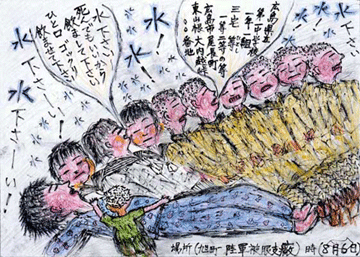
““The rights and wrongs of Hiroshima are debatable,” Telford Taylor, the chief prosecutor at Nuremberg, once said, “but I have never heard a plausible justification of Nagasaki” — which he labeled a war crime.”
Author: John LaForge, August 7, 2014, https://www.peacevoice.info/2014/08/06/vonnegut-on-nagasaki-the-most-racist-nastiest-act-by-this-country-after-human-slavery/
For the full article:
Vonnegut on Nagasaki: “The most racist, nastiest act by this country, after human slavery”
877 Words
“The rights and wrongs of Hiroshima are debatable,” Telford Taylor, the chief prosecutor at Nuremberg, once said, “but I have never heard a plausible justification of Nagasaki” — which he labeled a war crime.
In his 2011 book Atomic Cover-Up, Greg Mitchell says, “If Hiroshima suggests how cheap life had become in the atomic age, Nagasaki shows that it could be judged to have no value whatsoever.” Mitchell notes that the US writer Dwight MacDonald cited in 1945 America’s “decline to barbarism” for dropping “half-understood poisons” on a civilian population. The New York Herald Tribune editorialized there was “no satisfaction in the thought that an American air crew had produced what must without doubt be the greatest simultaneous slaughter in the whole history of mankind.”
Mitchell reports that the novelist Kurt Vonnegut, Jr. — who experienced the firebombing of Dresden first hand and described it in Slaughterhouse Five — said, “The most racist, nastiest act by this country, after human slavery, was the bombing of Nagasaki.”
On Aug. 17, 1945, David Lawrence, the conservative columnist and editor of US News, put it this way: “Last week we destroyed hundreds of thousands of civilians in Japanese cities with the new atomic bomb. …we shall not soon purge ourselves of the feeling of guilt. …we…did not hesitate to employ the most destructive weapon of all times indiscriminately against men, women and children. … Surely we cannot be proud of what we have done. If we state our inner thoughts honestly, we are ashamed of it.”
If shame is the natural response to Hiroshima, how is one to respond to Nagasaki, especially in view of all the declassified government papers on the subject? According to Dr. Joseph Gerson’s With Hiroshima Eye, some 74,000 were killed instantly at Nagasaki, another 75,000 were injured and 120,000 were poisoned.
If Hiroshima was unnecessary, how to justify Nagasaki?
The saving of thousands of US lives is held up as the official justification for the two atomic bombings. Leaving aside the ethical and legal question of slaughtering civilians to protect soldiers, what can be made of the Nagasaki bomb if Hiroshima’s incineration was not necessary?
The most amazingly under-reported statement in this context is that of Truman’s Secretary of State James Byrnes, quoted on the front page of the August 29, 1945 New York Times with the headline, “Japan Beaten Before Atom Bomb, Byrnes Says, Citing Peace Bids.” Byrnes cited what he called “proof that the Japanese knew that they were beaten before the first atomic bomb was dropped on Hiroshima.”
On Sept. 20, 1945, Gen. Curtis LeMay, the famous bombing commander, told a press conference, “The war would have been over in two weeks without the Russians entering and without the atomic bomb. The atomic bomb had nothing to do with the end of the war at all.”
According to Robert Lifton’s and Greg Mitchel’s Hiroshima in America: 50 Years of Denial (1995), only weeks after August 6 and 9, President Truman himself publicly declared that the bomb “did not win the war.”
The US Strategic Bombing Survey, conducted by Paul Nitze less than a year after the atom bombings, concluded that “certainly prior to 31 December 1945, and in all probability prior to 1 November 1945, Japan would have surrendered even if the atomic bombs had not been dropped, even if Russia had not entered the war, and ever if no invasion had been planned or contemplated.”
Likewise, the Intelligence Group of the US War Department’s Military Intelligence Division conducted a study from January to April 1946 and declared that the bombs had not been needed to end the war, according to reports Gar Alperovitz in his massive The Decision to Drop the Atomic Bomb. The IG said it is “almost a certainty that the Japanese would have capitulated upon the entry of Russia into the war.”
Russia did so, Aug. 8, 1945, and as Ward Wilson reports in his Five Myths about Nuclear Weapons, six hours after news of Russia’s invasion of Sakhalin Island reached Tokyo — and before Nagasaki was bombed — the Supreme Council met to discuss unconditional surrender.
Experiments with hell fire?
Nagasaki was attacked with a bomb made of plutonium, named after Pluto, god of the underworld earlier known as Hades, in what some believe to have been a ghastly trial. The most toxic substance known to science, developed for mass destruction, plutonium is so lethal it contaminates everything nearby forever, every isotope a little bit of hell fire.
According to Atomic Cover-Up, Hitoshi Motoshima, mayor of Nagasaki from 1979 to 1995, said, “The reason for Nagasaki was to experiment with the plutonium bomb.” Mitchell notes that “hard evidence to support this ‘experiment’ as the major reason for the bombing remains sketchy.” But according to a wire service report in Newsweek, Aug. 20, 1945, by a journalist traveling with the president aboard the USS Augusta, Truman reportedly announced to his shipmates, “The experiment has been an overwhelming success.”
US investigators visiting Hiroshima Sept. 8, 1945 met with Japan’s leading radiation expert, Professor Masao Tsuzuki. One was given a 1926 paper on Tsuzuki’s famous radiation experiments on rabbits. “Ah, but the Americans, they are wonderful,” Tsuzuki told the group. “It has remained for them to conduct the human experiment!”
~~~~~~~~~~~~~~~
John LaForge is a Co-director of Nukewatch, a nuclear watchdog and environmental justice group in Wisconsin, edits its quarterly newsletter, and writes for PeaceVoice.
The Bombs Still Ticking

Eighty years after Hiroshima and Nagasaki, the trauma of nuclear warfare lingers for thousands of survivors in Japan.
Progressive Magazine, by Jim Carrier ,August 6, 2025
n the cryogenic silence of frozen biological material stored in her radiation lab, Dr. Ayumi Hida hears a lesson for the nuclear age: “The atom bomb must not be used ever again.”
Hida is the Nagasaki chief of clinical studies for the longest continuous health survey in history, a remarkable effort begun days after the destruction of the cities of Hiroshima and Nagasaki. Her work has helped to establish that Japanese people still suffer—physically, mentally, and socially—from two atomic bombs dropped, as of August 2025, eighty years ago.
As Japan marks these anniversaries on August 6 and 9, decades of medical exams by Hida and her colleagues at the Radiation Effects Research Foundation (RERF), along with evidence from its massive collection of preserved blood and tissue, have revealed that the nuclear genie unleashed in 1945 is still at work.
RERF has found in Japan’s bomb survivors new cancers, heart and immune problems, strokes, inflammation, leukemia, and even a form of cataracts—atop the usual maladies of old age. With a mean age of eighty-five, their ranks dropping by some 6,000 a year, 106,825 Japanese atomic bomb survivors—known as hibakusha, a term meaning “bomb-affected people”—also suffer from post-traumatic stress.
“They say, ‘I have an atomic bomb nest in my body,’ ” Dr. Masao Tomonaga tells The Progressive. Tomonaga, eighty-two, a hibakusha himself, cares for 400 survivors in a nursing home.
“The human consequences of the atomic bombs have not ceased,” he has written. “Many people are still dying of radiation-induced malignant disease. Therefore, it is too early to finalize the total death toll. Hibakusha have faced a never-ending struggle to regenerate their lives and families under the fear of disease.”
Honored for their anti-nuclear activism—the national Japanese hibakusha group known as Nihon Hidankyo won the Nobel Peace Prize in 2024—their unique stories describe what it was like to live through the only nuclear attacks in history. In Hiroshima and Nagasaki, where peace is a subject taught in schools, hibakusha speak regularly, so much so that students sometimes complain that they’ve heard it before.
Every living hibakusha is a walking laboratory, an experiment in the human effects of nuclear war. It is this story that is now emerging from long-term studies. “Fat Man,” the plutonium bomb dropped on Nagasaki on August 9, 1945, killed 73,000 of the city’s 240,000 citizens, either instantaneously or by the end of 1945, with a combination of blast wind, thermal burns, and radiation—or, in some cases, all three. Fat Man’s twenty-one-kiloton yield surpassed the Hiroshima uranium bomb’s fifteen kilotons, but its effect was partially shielded by Nagasaki’s hilly Urakami River canyon over which it exploded.
Six hundred yards from ground zero on the day of the blast, Nagasaki’s medical college and hospital lost half of its staff and students, but the survivors set up first-aid stations within days. The injuries they saw ranged from embedded glass to ruptured intestines to carbonized skin flash-burned by the radiation. Tomonaga wrote that “according to the saddest memory of some survivors, the blast wind tore off the heads of babies who were being carried on their mothers’ backs in the traditional Japanese way. Most of the mothers also died.”
By that September, U.S. Army, Navy, and Manhattan District teams, with doctors, pathologists, and physicists, arrived together with occupying forces. Their mission was driven, largely, by a desire to understand the bomb’s effects and how the United States could protect itself from a nuclear bomb in the future. At the time, radiation was a new and mysterious force, and discoveries were mostly classified. Information about radiation and anything related to the bombings would be censored in the Japanese media until 1952.
Within weeks, however, the effects of the radiation began to show up in individuals—loss of hair, bloody diarrhea, peeling skin. Autopsies were performed and organs—such as hearts, lungs, eyes, brains—from hundreds of victims were taken to the U.S. military’s Institute of Pathology in Washington, D.C., where, in a secret, bomb-proof laboratory, the effects of high radiation were studied, analysis that helped create the guidelines and warnings for radiation exposure used worldwide today. The last organs, slides, and tissues were returned to Japan in 1973.
n October 12, 1945, General Douglas MacArthur ordered the merger of Japanese and American medical studies on the bombings under the leadership of sixty American and more than ninety Japanese physicians and scientists. The Joint Commission for the Investigation of the Effects of the Atomic Bombs evolved, in 1975, into RERF, with labs in Nagasaki and Hiroshima. It is supported by the Japanese government and with $14 million annually from the U.S. Energy Department’s Office of Environment, Health, Safety and Security.
In 1950, Japan identified 94,000 bomb survivors and a control group of 27,000 people who were not exposed to the bomb, and began a lifetime epidemiological study of cancer and causes of death. Of that initial group of survivors, 25,000 adults are still being followed closely as they age for signs of any effects of radiation.
Every day at the RERF lab in Nagasaki, five of these patients arrive for their two-year screening. Blood is drawn, urine is collected, they are given a physical, and quizzed about their medical history and lifestyle. Living cells are stored in liquid nitrogen tanks—to date 2.3 million tubes of blood are stored there, Hida reports. Serum, plasma, and urine are put in freezers. The lab also holds half a million paraffin blocks of tissue and nearly one million autopsy and surgical slides, some dating back to 1945, she tells The Progressive. RERF is also following 77,000 children of bomb survivors and 3,600 people who were in their mothers’ wombs at the time when the bombs exploded. These efforts have helped RERF to identify three chronological phases of atomic bomb casualties.
By 1949, 210,000 survivors thought to be in relatively good health began to encounter the first signs of malignancy—leukemia, caused by radiation’s damage to blood cells. Cases in children and adults four-to-five times greater than those not exposed rose until 1955, and leveled out for a decade after that.
Around 1960, solid cancers began to appear, their numbers peaking in 2000 and remaining at that level since, Tomonaga reports. They included lung, breast, thyroid, stomach, colon, liver, skin, and bladder cancers. Some patients had three to five different cancers—all originating independently, rather than metastasizing from a source organ.
The third phase, evident now, includes a second wave of leukemia called myelodysplastic syndrome. This development, which occurs in the elderly at a rate of four times that of the general population, indicates that damaged cells in the bone marrow of children in 1945 have survived for more than seventy years in their bodies. Tomonaga’s hypothesis is that stem cells, which are designed to generate replacement cells in their host organ, “eventually transform to malignant cells” when gene abnormalities accumulate. In essence, they become tiny cancer factories, Tomonaga tells The Progressive. “It can be said that the atomic bomb is still killing some hibakusha.”
Statistically, 46 percent of leukemia deaths and 10 percent of solid cancer cases in Japan between 1950 and 2000 are attributable to the bomb’s radiation.
It is also known that Nagasaki’s plutonium bomb was inefficient—only one of the six kilograms of plutonium exploded—leaving most of its atoms intact. Plutonium particles, with a half-life of 24,000 years, have been discovered in lake bottoms, in spots where black rain fell ten to fifty miles from the hypocenter, and in the lungs and bones of people who died soon after the bombing. It’s possible, Tomonaga has written that the plutonium particles “continue to emit alpha rays intermittently and injure lung cells nearby, causing lung cancer.” This potential has yet to be studied.
As Japan recovered from World War II, hibakusha were shunned and discriminated against by non-bomb-affected families who feared that the hibakusha’s exposure to radiation would be harmful to them and their offspring. This belief arose from the many cases of miscarriage, deformities, and stillbirths of babies who were in utero when the bomb exploded, amid a long-held cultural embrace of purity and distaste for pollution.
This stigma remains today. ……………………………………………………………………………………………………………………….. https://progressive.org/magazine/the-bombs-still-ticking-carrier-20250806/
Tepco wraps up latest round of treated water release in Fukushima
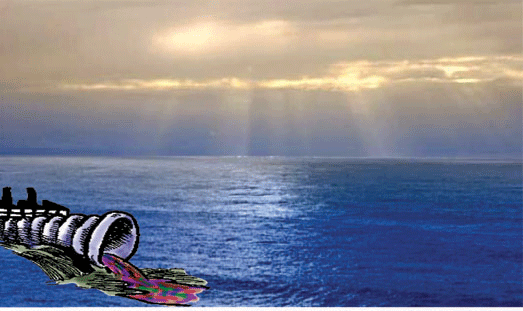
Tokyo Electric Power Company Holdings said Sunday that it has completed
the second round of its fiscal 2025 release of treated water into the ocean
from the Fukushima No. 1 nuclear power plant.
The discharge of the water, containing radioactive tritium, was suspended due to a tsunami caused by a major earthquake near Russia’s Kamchatka Peninsula last week, but there
were no problems with the facilities involved in the operation. In the
second round, which began on July 14, Tepco diluted 7,800 tons of treated
water with large amounts of seawater before releasing it about 1 kilometer
off the coast of Fukushima Prefecture through an undersea tunnel. In the
current fiscal year through next March, a total of 54,600 tons will be
released into the sea in seven rounds, at the same pace as the previous
year.
Japan Times 3rd Aug 2025, https://www.japantimes.co.jp/news/2025/08/03/japan/tepco-2nd-round-treated-water-release/
Hiroshima’s fading legacy: the race to secure survivors’ memories amid a new era of nuclear brinkmanship.

Eighty years on from the destruction of the city, registered survivors of the blast – known as hibakusha – have fallen below 100,000
Justin McCurry in Hiroshima, Tue 5 Aug 2025 , https://www.theguardian.com/world/2025/aug/05/hiroshima-atomic-bomb-80-year-anniversary-survivors
The fires were still burning, and the dead lay where they had fallen, when a 10-year-old Yoshiko Niiyama entered Hiroshima, two days after it was destroyed by an American atomic bomb.
“I remember that the air was filled with smoke and there were bodies everywhere … and it was so hot,” Niiyama says in an interview at her home in the Hiroshima suburbs. “The faces of the survivors were so badly disfigured that I didn’t want to look at them. But I had to.”
Niiyama and her eldest sister had rushed to the city to search for their father, Mitsugi, who worked in a bank located just 1km from the hypocentre. They had been evacuated to a neighbourhood just outside the city, but knew something dreadful had happened in Hiroshima when they saw trucks passing their temporary home carrying badly burned victims.
As Hiroshima prepares to mark 80 years since the city was destroyed in the world’s first nuclear attack, the 90-year-old is one of a small number of hibakusha – survivors of the atomic bombings – still able to recall the horrors they witnessed after their home was reduced to rubble in an instant.
At 8:15am on 6 August, the Enola Gay, a US B-29 bomber, dropped a nuclear bomb on the city. “Little Boy” detonated about 600 metres from the ground, with a force equivalent to 15,000 tonnes of TNT. Between 60,000 and 80,000 people were killed instantly, with the death toll rising to 140,000 by the end of the year as victims succumbed to burns and illnesses caused by acute exposure to radiation.
Three days later, the Americans dropped a plutonium bomb on Nagasaki, killing 74,000. And on 15 August, a demoralised Japan surrendered, bringing an end to the second world war.
Niiyama, one of four sisters, never found her father or his remains, which were likely incinerated along with those of his colleagues. “My father was tall, so for a long time whenever I saw a tall man from behind, I would run up to him thinking it might be him,” she says. “But it never was.”
With the number of people who survived the bombing and witnessed its immediate aftermath dwindling by the year, it is being left to younger people to continue to communicate the horrors inflicted on Hiroshima and Nagasaki.
For decades Niiyama, who is a registered hibakusha, said nothing of the trauma she had suffered as a schoolgirl, not even to members of her own family. “I didn’t want to remember what had happened,” she says. “And many hibakusha stayed quiet as they knew they might face discrimination, like not being able to marry or find a job. There were rumours that children born to hibakusha would be deformed.”
It was only when her granddaughter, Kyoko Niiyama, then a high school student, asked her about her wartime experiences that Niiyama broke her silence.
“When my children are older, they’ll naturally ask about what happened to their grandmother,” says the younger Niiyama, 35, a reporter for a local newspaper and the mother of two young children. “It would be such a shame if I wasn’t able to tell them … that’s why I decided to ask my grandmother about the bomb.”
She is one of a growing number of people in Hiroshima and Nagasaki studying to become “family successors” – a local government initiative that certifies the descendants of first-generation hibakusha to record and pass on the experiences of the only people on earth to have lived through nuclear warfare.
“Now that the anniversary is approaching, I can talk to her again,” Kyoko says. “This is a really precious time for our family.”
‘I don’t want to think about that day’
Last year, survivors of the Hiroshima and Nagasaki attacks won recognition for their campaign to rid the world of nuclear weapons when Nihon Hidankyo – a nationwide network of hibakusha – was awarded the Nobel peace prize.
But survivors face a race against time to ensure that their message lives on in a world that is edging closer to a new age of nuclear brinkmanship.
The world’s nine nuclear states are spending billions of dollars on modernising, and in some cases expanding, their arsenals. The Russian president, Vladimir Putin, has refused to rule out the use of tactical nuclear weapons in his war against Ukraine, and last week a veiled nuclear threat by the country’s former leader, Dmitry Medvedev, prompted Donald Trump – who had earlier compared US strikes on Iran’s nuclear facilities to the Hiroshima and Nagasaki attacks – to claim that he had moved two nuclear submarines closer to the region. North Korea’s development of nuclear weapons continues unchecked.
“The hibakusha have spent their lifetimes courageously telling their stories again and again, essentially reliving their childhood traumas – to make sure the world learns the reality of what nuclear weapons actually do to people and why they must be abolished, so that no one else goes through what they have suffered,” says Melissa Parke, executive director of the International Campaign to Abolish Nuclear Weapons.
“These brave hibakusha deserve to have their decades of campaigning vindicated and to witness the elimination of nuclear weapons in their lifetimes. This would provide some nuclear justice.”
The number of registered survivors of both attacks fell to just below 100,000 this year, according to the health ministry, compared with more than 372,000 in 1981. Their average age is 86. Just one of the 78 people confirmed to have been within 500 metres of the hypocentre of the blast in Hiroshima is still alive – an 89-year-old man.
On the eve of the anniversary, the ministry said it would no longer conduct a survey every 10 years to assess the living conditions and health of hibakusha, saying it wanted to “lessen the burden” on ageing survivors.
Niiyama, who struggles to walk, will watch Wednesday’s ceremony at home and pause to remember her father, whose memory is represented by a teacup he used that was retrieved from the devastation.
“I don’t like the month of August,” she says. “I have nightmares around the anniversary. I don’t want to think about that day, but I can’t forget it. But I’m glad I still remember that I’m a hibakusha.”
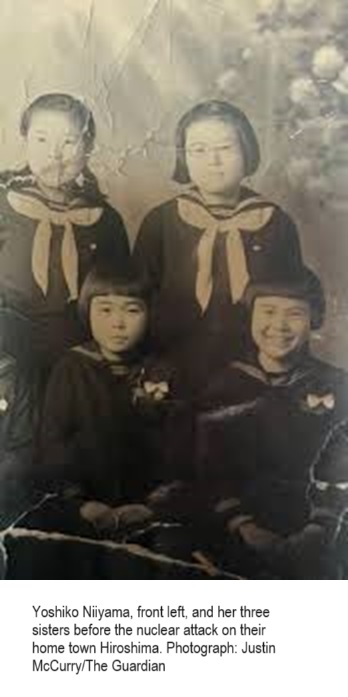
Niiyama, who struggles to walk, will watch Wednesday’s ceremony at home and pause to remember her father, whose memory is represented by a teacup he used that was retrieved from the devastation.
“I don’t like the month of August,” she says. “I have nightmares around the anniversary. I don’t want to think about that day, but I can’t forget it. But I’m glad I still remember that I’m a hibakusha.”
Tepco ordered to pay ¥100 million in damages over 2011 disaster
Japan Times 30th July 2025
The Tokyo District Court ordered Tokyo Electric Power Company Holdings on Wednesday to pay about ¥100 million ($675,000) in damages over the 2011 accident at its Fukushima No. 1 nuclear power plant.
Presiding Judge Masahiko Abe ordered the payment mainly as compensation for damage to property and consolation money for life during evacuation while dismissing the claim against the state.
In the lawsuit, Katsutaka Idogawa, 79, former mayor of Futaba, a town in Fukushima Prefecture, blamed the central government and Tepco for their inadequate handling of the accident, arguing that it led to his exposure to radiation…………………………. (Subscribers only) https://www.japantimes.co.jp/news/2025/07/30/japan/crime-legal/tepco-ordered-to-pay-damages-nuclear-disaster/
TEPCO logs net loss in April-June on Fukushima plant cleanup.
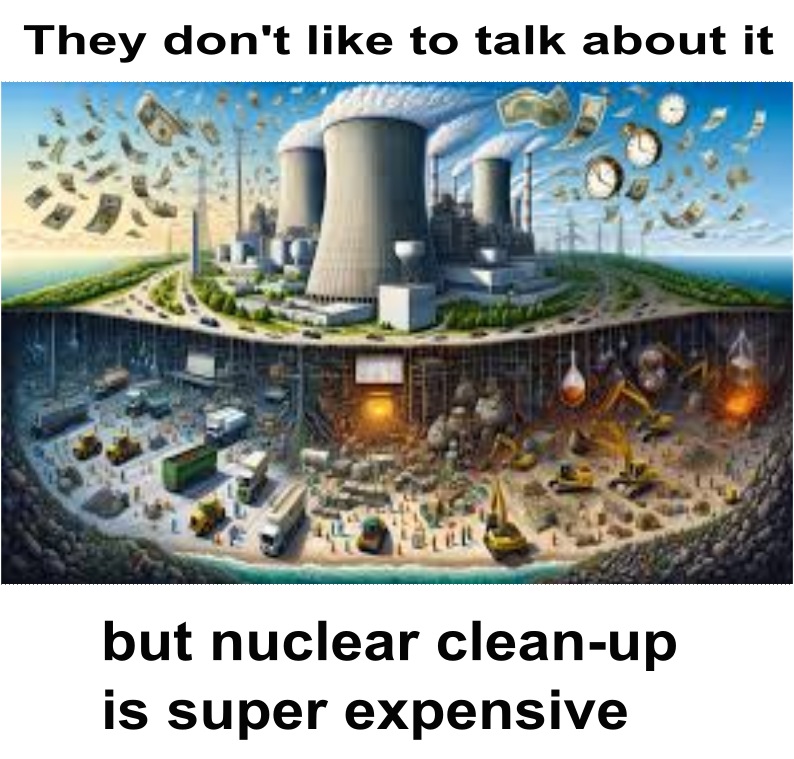
The company booked an extraordinary loss of 903 billion yen, as it prepares for the removal of nuclear fuel debris
August 1, 2025 (Mainichi Japan), https://mainichi.jp/english/articles/20250801/p2g/00m/0bu/008000c
TOKYO (Kyodo) — Tokyo Electric Power Company Holdings Inc. said Thursday it posted a net loss of 857.69 billion yen ($5.8 billion) for the April-June period, pressured by a special loss related to decommissioning work at its Fukushima Daiichi nuclear power plant.
The second largest quarterly loss since the 2011 nuclear crisis is a sharp deterioration from a profit of 79.24 billion yen in the same period a year earlier.
Operating profit rose 2.9 percent to 64.70 billion yen in the quarter on sales of 1.43 trillion yen, down 4.5 percent.
The company booked an extraordinary loss of 903 billion yen, as it prepares for the removal of nuclear fuel debris, considered the most challenging phase of the decommissioning work.
“We are not expecting any big spending over the next three years and (the special loss) won’t be a problem for our decommissioning work,” TEPCO vice president Hiroyuki Yamaguchi said at a press conference.
TEPCO said Tuesday the full-scale removal of melted fuel debris, initially set for the early 2030s, will be delayed to fiscal 2037 or later, raising concerns that its target of completing the work to scrap the power plant by 2051 will become increasingly difficult to meet.
The company said it has about 700 billion yen earmarked for future demolition work.
Debris removal at Fukushima nuclear plant pushed back to 2037 or later

30 July 25, https://www.japantimes.co.jp/news/2025/07/30/japan/fukushima-nuclear-plant-debris-removal/
Full-scale removal of nuclear fuel debris from the No. 3 reactor of Tokyo Electric Power Company Holdings’ crippled Fukushima No. 1 nuclear power plant will not start before fiscal 2037, officials said Tuesday.
The removal was previously planned to begin in the early 2030s. This delay may push the completion of the plant’s decommissioning process beyond the target year of 2051 set by the government and Tepco.
The new timeline for the work was announced by Tepco and Nuclear Damage Compensation and Decommissioning Facilitation, or NDF, at separate news conferences. They determined that preparations for the work, such as the demolition of an adjacent building, will take about 12 years to 15 years.
“We aren’t in a situation where we should deny (the feasibility of) the decommissioning target,” said Akira Ono, head of Tepco’s in-house company in charge of the decommissioning work. “We remain committed to the goal of completing (the decommissioning process by 2051.)”
A total of 880 metric tons of debris, or a mixture of melted nuclear fuel and reactor structures, is believed to be in the No. 1 to No. 3 reactors at the nuclear plant, which suffered a triple meltdown following the March 2011 massive earthquake and tsunami.
Tepco began to extract debris from the No. 2 reactor on a trial basis last year, and has collected a total of about 0.9 gram so far.
According to Tepco and the facilitation organization, debris removal will be carried out using a combination of what is known as the nonsubmerged method, in which the debris is collected from the air, and what is called the filling and solidification method, which involves pouring a filling agent into the reactor and solidifying it.
A small hole will be opened in the upper part of the reactor building to insert a device that will crush the debris into fine pieces, while a filling agent will be injected as needed. The debris will be collected using a device inserted from the side of the building.
Tepco and the organization said demolishing a waste treatment building on the north side of the No. 3 reactor is necessary to ensure work safety and create space for new equipment. They also said that necessary facilities need to be built in the upper part of the reactor building, and such preparations are expected to take about 12 years to 15 years.
Chinese hackers gain access to US oversight of nuclear weapons in widespread Microsoft hack: report
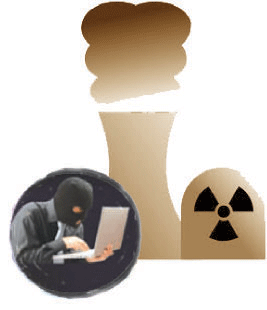
The tech giant blamed a vulnerability in its SharePoint document software
Anthony Cuthbertson,Rhian Lubin, Wednesday 23 July 2025, https://www.the-independent.com/tech/security/china-hack-nuclear-microsoft-sharepoint-b2795333.html
Chinese hackers gained access to the U.S. government agency that oversees nuclear weapons in a widespread Microsoft hack.
Microsoft issued an alert Tuesday warning that hackers affiliated with the Chinese government have been exploiting cybersecurity vulnerabilities in the company’s SharePoint software.
Tens of thousands of servers hosting the software, which is used for sharing and managing documents, were said to be at risk as a result.
The National Nuclear Security Administration, a semi-autonomous agency within the U.S. Department of Energy responsible for maintaining the nation’s stockpile of nuclear weapons, was breached in the attacks on July 18, Bloomberg first reported.
The agency is responsible for providing the Navy with nuclear reactors for submarines and responds to nuclear and radiological emergencies in the U.S. and overseas. No sensitive or classified information has leaked in the cyber attack, according to Bloomberg.
“On Friday, July 18th, the exploitation of a Microsoft SharePoint zero-day vulnerability began affecting the Department of Energy,” an agency spokesman said in a statement to the outlet. “The department was minimally impacted due to its widespread use of the Microsoft M365 cloud and very capable cybersecurity systems. A very small number of systems were impacted. All impacted systems are being restored.”
Security firm Eye Security said that 400 organizations and agencies globally were impacted, including national governments in Europe and the Middle East.
Microsoft linked the attack to two main groups, Linen Typhoon and Violet Typhoon, and flagged that another China-based group, Storm-2603, had also targeted its systems.
The Education Department, Florida’s Department of Revenue and the Rhode Island General Assembly were also breached in the attack, according to Bloomberg.
Eye Security warned that the breaches could allow hackers to impersonate users or services by stealing cryptographic keys — alphabetical codes or sequences of characters — even after software updates. Users should take further steps to protect their information, the firm said.
Microsoft said in a message to customers that it has since released “new comprehensive security updates” to deal with the incident.
But security researchers warned that the full extent of the breach and its consequences are yet to be fully revealed.
“This is a critical vulnerability with wide reaching implications,” Carlos Perez, director of security intelligence at TrustedSec, who previously trained U.S. military cyber protection teams, told The Independent.
“It enables unauthenticated remote code execution on SharePoint servers, which are a core part of enterprise infrastructure. It is already being actively exploited at scale, and it only took 72 hours from the time a proof of concept was demonstrated for attackers to begin mass exploitation campaigns.
“What makes it even more severe is the way it exposes cryptographic secrets, effectively allowing attackers to convert any authenticated SharePoint request into remote code execution. That is a dangerous capability to put into the hands of threat actors.”
Microsoft said it had “high confidence” that firms who do not install the new security updates could be targeted by the groups.
The tech firm said the attackers had been uploading malicious scripts which are then “enabling the theft of the key material” by hackers.
In a statement, the company added: “Investigations into other actors also using these exploits are still ongoing.”
Additional reporting from agencies.
Poisoned water and scarred hills
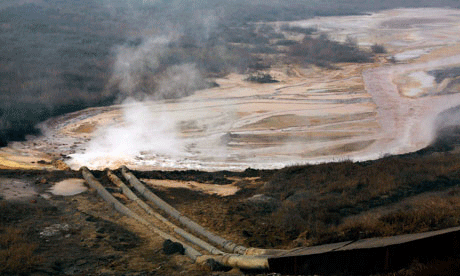
The price of the rare earth metals the world buys from China
By Laura Bicker and the Visual Journalism team: 08/07/2025, https://www.bbc.co.uk/news/resources/idt-66cdf862-5e96-4e6e-90b8-a407b597c8d9
When you stand on the edge of Bayan Obo, all you see is an expanse of scarred grey earth carved into the grasslands of Inner Mongolia in northern China.
Dark dust clouds rise from deep craters where the earth’s crust has been sliced away over decades in search of a modern treasure.
You may not have heard of this town – but life as we know it could grind to a halt without Bayan Obo.
The town gets its name from the district it sits in, which is home to half of the world’s supply of a group of metals known as rare earths. They are key components in nearly everything that we switch on: smartphones, bluetooth speakers, computers, TV screens, even electric vehicles.
And one country, above all others, has leapt ahead in mining them and refining them: China.
This dominance gives Beijing huge leverage – both economically, and politically, such as when it negotiates with US President Donald Trump over tariffs. But China has paid a steep price for it.
To find out more, we travelled to the country’s two main rare earth mining hubs – Bayan Obo in the north and Ganzhou in the province of Jiangxi in the south.
We found man-made lakes full of radioactive sludge and heard claims of polluted water and contaminated soil, which, in the past, have been linked to clusters of cancer and birth defects. These journeys were challenging.
Beijing appears sensitive to criticism of its environmental record. We were pulled over by police, questioned by them and stuck in a three-hour standoff with an unidentified mining boss who refused to let us leave unless we deleted our footage.
Our calls for an interview or a statement have gone unanswered, but the government has published new regulations to try to strengthen its supervision of the industry.
Authorities have been making an effort to clean up these mining sites, scientists told the BBC. Still, China’s mining operations in the north just keep growing.
Machines are constantly on the hunt for rare earths called neodymium and dysprosium that go into making powerful magnets for a variety of modern technology, from electric vehicles to computer hard drives.
To find these rare earths, the machines strip away the topsoil layer-by-layer, kicking up harmful dust, some of which contains high levels of heavy metals and radioactive material.
Satellite images from the last few decades show how the Bayan Obo mine has spread.
The mine sits in the vast, aridness of Inner Mongolia, a nine-hour drive from the capital, Beijing.
There were once more than a thousand mining sites, some of them illegal, dotted throughout this one county. Companies got what they needed from one mine, and then moved to another.
Then in 2012, the Chinese government stepped in to regulate, dramatically reducing the number of mining licences they issued.
But significant damage had been done to the area already. Research going back decades has linked the rare earth mines to deforestation, soil erosion and chemical leaks into rivers and farmland.
Local farmer Huang Xiaocong, whose land is surrounded by four rare earth sites, believes landslides are still being triggered by improper mining practices.
He has also accused the state-owned company of grabbing land illegally. The firm refused to answer the BBC’s questions.
“This problem is way too big for me to solve. It’s something that has to be dealt with at the higher levels of government,” Mr Huang said.
“We ordinary people don’t have the answers… Farmers like us, we’re the vulnerable ones. To put it simply, we were born at a disadvantage. It’s pretty tragic.”
It is rare and often risky in China for villagers to take on huge companies – and even rarer for them to speak to international media. But Mr Huang is determined to be heard and has taken his case to the local Natural Resources Bureau.
Satellite images show the mining ponds surrounding Mr Huang’s village and land. Within a six kilometres wide square, at least four sites are visible.
During our interview with Mr Huang, we were surrounded by men wearing uniforms branded with what appeared to be the logo of the same rare earth company. At least 12 other men used their vehicles to block our car from leaving.
Eventually, someone who identified himself as a local manager of China Rare Earth Jiangxi Company arrived. He confronted Mr Huang and us, and wouldn’t let us leave for nearly three hours, despite our attempts to negotiate and our offers to hear his argument.
Those living around the mines in Bayan Obo and Ganzhou appear to be victims of what used to be China’s “develop first and clean up later” approach to mining, says Professor Julie Klinger, author of Rare Earth Frontiers. That has changed now as they try harder to mitigate the damage, she adds, but the consequences are here to stay.
“I think it’s very difficult to know the true human and environmental cost of that sort of development model,” she told the BBC.
The worst health effects were found in and around the largest tailing pond south of Bayan Obo in the city of Baotou. In the decades leading up to 2010, villagers were diagnosed with bone and joint deformities caused by too much fluoride in the water and acute arsenic toxicity, according to Professor Klinger.
Most of them lived close to the Weikuang Dam, a man-made lake built to dump mining waste in the 1950s. Authorities have since moved villagers away from the site, but the 11km-long tailings pond is still full of grey clay sludge, including radioactive thorium.
Studies suggest this toxic mix could be slowly seeping into the groundwater and moving towards the Yellow River, China’s second-largest, and a key source of drinking water for the north of the country.
As the demand for pocket gadgets, electric vehicles, solar panels, MRI machines and jet engines surges, there is one worrying statistic to contend with – mining just one tonne of rare earth minerals creates some 2,000 tonnes of toxic waste.
China is now trying to rein in the environmental harm its rush for rare earths has caused, while expanding its mining operations abroad. Others, including the United States, are in a hurry to catch up with their own rare earth enterprises.
But scientists warn that no matter where these metals are mined, without the right solutions, landscapes and lives will be put at risk.
And yet, some farmers in Bayan Obo have adjusted to life in the the world’s rare earth capital.
The metals that have scarred their land and poisoned their water have also brought them jobs.
“With the rare earths, there’s money now,” one farmer told us. “The mines pay 5,000 or 6,000 yuan ($837; £615) a month.”
He says he lost money herding horses, among the traditional livelihoods in a region that has long been home to nomadic people. Horses still roam the pastures next to the mines, as diggers continue their search for more rare earths.
“Farming’s fine,” he told us as he planted green onions. “You just grow your crop and sell it – simple as that.”
China backs Southeast Asia nuclear ban; Rubio, Lavrov at ASEAN meeting
US President Trump’s tariffs loom over gathering in Malaysia’s Kuala Lumpur which will also feature US-Russia talks.
Aljazeera, 10 Jul 2025
China has agreed to sign a Southeast Asian treaty banning nuclear weapons, Malaysia’s and China’s foreign ministers confirmed, in a move that seeks to shield the area from rising global security tensions amid the threat of imminent United States tariffs.
The pledge from Beijing was welcomed as diplomats on Thursday gathered for the Association of Southeast Asian Nations (ASEAN) foreign ministers’ meeting, where US Secretary of State Marco Rubio is also due to meet regional counterparts and Russian counterpart Sergey Lavrov.
Malaysia’s Minister of Foreign Affairs Mohamad Hasan told reporters China had confirmed its willingness to sign the Southeast Asian Nuclear Weapon-Free Zone (SEANWFZ) treaty – an agreement in force since 1997 that restricts nuclear activity in the region to peaceful purposes such as energy generation.
“China made a commitment to ensure that they will sign the treaty without reservation,” Hasan said, adding that the formal signing will take place once all relevant documentation is completed.
ASEAN has long pushed for the world’s five recognised nuclear powers – China, the United States, Russia, France and the United Kingdom – to sign the pact and respect the region’s non-nuclear status, including within its exclusive economic zones and continental shelves.
Last week, Beijing signalled its readiness to support the treaty and lead by example among nuclear-armed states.
Rubio, who is on his first visit to Asia as secretary of state, arrived in Kuala Lumpur on Thursday amid a cloud of uncertainty caused by President Donald Trump’s aggressive tariff strategy, which includes new levies on six ASEAN nations as well as key traditional allies Japan and South Korea……………………………………………………………….
………………………..Reporting from Kuala Lumpur, Al Jazeera’s Rob McBride says Southeast Asian nations are finding themselves at the centre of intensifying diplomatic competition, as global powers look to strengthen their influence in the region.
“The ASEAN countries are facing some of the highest tariffs from the Trump administration,” McBride said. “They were also among the first to receive new letters announcing yet another delay in the imposition of these tariffs, now pushed to 1 August.”
The uncertainty has pushed ASEAN states to seek alternative trade partners, most notably China. “These tariffs have provided an impetus for all of these ASEAN nations to seek out closer trade links with other parts of the world,” McBride added.
China’s Foreign Minister Wang Yi has been in Kuala Lumpur for meetings with ASEAN counterparts, underscoring Beijing’s growing engagement.
Meanwhile, Russia’s top diplomat, Sergey Lavrov, has also been holding talks in Malaysia, advancing Moscow’s vision of a “multipolar world order” – a concept backed by China that challenges what they see as a Western-led global system dominated by the US………………………………………………………………………………………………………………………. https://www.aljazeera.com/news/2025/7/10/china-backs-southeast-asia-nuclear-ban-rubio-lavrov-at-asean-meeting
Atomic bomb survivors in Japan fear nuclear weapons could be used again: poll
Newly released survey shows close to 70 percent of survivors fear a resurgence in nuclear risks as Japan readies for the 80th anniversary of Hiroshima and Nagasaki.
14 July 25 https://trt.global/world/article/0c8b4e3aec45
Nearly 70 percent of atomic bomb survivors in Japan believe nuclear weapons could be used again, citing growing global tensions, including Russia’s war in Ukraine and North Korea’s weapons development, a survey by Kyodo News Agency revealed on Sunday, ahead of the 80th anniversary of the US atomic bombings.
Around 1,500 survivors took part in the survey, with 68.6 percent saying the risk of nuclear weapons being used again is increasing.
Some 45.7 percent of respondents said they “cannot forgive” the US for the bombings, while 24.3 percent said they have “no special feelings” and 16.9 percent said they “did not know.”
This year marks 80 years since the US dropped atomic bombs on Hiroshima and Nagasaki in western Japan near the end of World War II.
On August 6, 1945, the US dropped an atomic bomb on Hiroshima, killing an estimated 140,000 people.
A second bomb was dropped on Nagasaki three days later, resulting in about 70,000 additional deaths.
Japan surrendered on August 15, 1945, officially marking the end of World War II.
1 This Month

of the week – Shut Down Drone Warfare!


Tell the Ukrainian Government to Drop Prosecution of Peace Activist Yurii Sheliazhenko

Petition to revoke the licensing of the Near Surface Nuclear Disposal Facility (NSDF) at Chalk River. https://www.ourcommons.ca/petitions/en/Petition/Details?Petition=e-7247
To see nuclear-related stories in greater depth and intensity – go to https://nuclearinformation.wordpress.com
-
Archives
- March 2026 (244)
- February 2026 (268)
- January 2026 (308)
- December 2025 (358)
- November 2025 (359)
- October 2025 (376)
- September 2025 (257)
- August 2025 (319)
- July 2025 (230)
- June 2025 (348)
- May 2025 (261)
- April 2025 (305)
-
Categories
- 1
- 1 NUCLEAR ISSUES
- business and costs
- climate change
- culture and arts
- ENERGY
- environment
- health
- history
- indigenous issues
- Legal
- marketing of nuclear
- media
- opposition to nuclear
- PERSONAL STORIES
- politics
- politics international
- Religion and ethics
- safety
- secrets,lies and civil liberties
- spinbuster
- technology
- Uranium
- wastes
- weapons and war
- Women
- 2 WORLD
- ACTION
- AFRICA
- Atrocities
- AUSTRALIA
- Christina's notes
- Christina's themes
- culture and arts
- Events
- Fuk 2022
- Fuk 2023
- Fukushima 2017
- Fukushima 2018
- fukushima 2019
- Fukushima 2020
- Fukushima 2021
- general
- global warming
- Humour (God we need it)
- Nuclear
- RARE EARTHS
- Reference
- resources – print
- Resources -audiovicual
- Weekly Newsletter
- World
- World Nuclear
- YouTube
-
RSS
Entries RSS
Comments RSS
 nuclear-news