China and Saudi Arabia blocking progress towards a deal at COP26
China and Saudi Arabia are blocking progress towards a deal at Cop26 by
refusing to accept that they must be fully transparent about their
greenhouse gas emissions. Senior negotiators at the climate change
conference in Glasgow said that both countries had objected to proposed
reporting requirements aimed at resolving concerns that some nations
conceal the extent of their emissions.
The dispute is delaying progress on
other ingredients of a deal, including rules on establishing a global
market for carbon offsetting. China is understood to object because its
climate target is based on a reduction in emissions per unit of GDP,
meaning that full transparency would reveal data it wants to keep secret
about its economic growth.
Saudi Arabia’s emissions are strongly
influenced by its biggest company, the oil giant Saudi Aramco, and it is
thought to be concerned about revealing information about its performance.
China and Saudi Arabia are also objecting to proposed wording in the final
text that emphasises the need to limit warming to 1.5C, meaning the coal
and oil on which they depend would have to be phased out more quickly.
Times 9th Nov 2021
https://www.thetimes.co.uk/article/chinese-and-saudis-thwart-moves-towards-climate-deal-5pr86frjv
Taiwan’s referendum about unsealing nuclear power plant: but safety risks persist
Yes’ vote will unseal nuclear plant: premier, Taipei Times, 10 Nov 21, By Chien Hui-ju and Kayleigh Madjar / Staff reporter, with staff writer and CNA
- The Fourth Nuclear Power Plant would be unsealed if people vote in favor of its activation in a referendum next month, Premier Su Tseng-chang (蘇貞昌) said yesterday, although one of his ministers earlier said that nuclear power is not an answer to Taiwan’s energy challenges.
- Provisions of the Referendum Act (公民投票法) stipulate that the plant in New Taipei City’s Gongliao District (貢寮) — which has lain dormant since 2015, when it was mothballed by then-president Ma Ying-jeou (馬英九) — must be unsealed if enough people vote that way on Dec. 18.Launched by nuclear power advocate Huang Shih-hsiu (黃士修), referendum No. 17 — one of four referendums to be voted on — asks: “Do you agree that the Fourth Nuclear Power Plant should be unsealed and operated commercially to generate electricity?”
A possible start of the plant has worried people in the area, Su said at the legislature in Taipei, citing feedback from Yilan County.
The plant was sealed by Ma after public opposition rose due to perceived safety risks at the nearly completed facility.
However, Minister of Economic Affairs Wang Mei-hua (王美花) told reporters before the legislative session that anyone who understands the safety concerns and related problems at the plant would know that activation “is not an option.”
Responding to a comment by Huang that Japan’s Kyushu Electric Power restarted a reactor late last year, despite earthquake and volcano concerns, Wang said that every plant is different.
- Taiwan has its own set of circumstances that it must consider, for instance a geological survey after it was built found that the Fourth Nuclear Power Plant is in a fault zone, she said, adding that it has operational problems with its No. 1 generator, which has not passed inspections.
- Activation of the plant would take more than 10 years, she said, citing evaluations from the Atomic Energy Council.All professional decisions on the matter are in the hands of the council, she said.There would be many issues to work through before the facility could generate power were the vote to succeed, including new construction contracts, as well as fixing outdated equipment and interface integration issues, she said.The Democratic Progressive Party is intent on phasing out nuclear power by 2025, and Taiwan’s dependence on such energy has fallen significantly from more than 50 percent in 1985 to only 12.7 percent last year, Taiwan Power Co data showed……… https://www.taipeitimes.com/News/taiwan/archives/2021/11/10/2003767647
China’s Taishan nuclear power plant remains closed, following fuel leak.
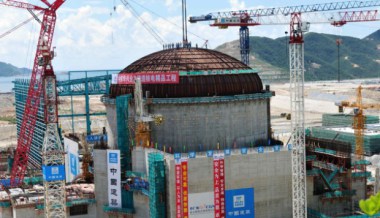
A nuclear reactor in China run by the developers behind Britain’s £20bn
Sizewell C power station remains shut for repair after fuel rods started
leaking.
Inspections are ongoing at the Taishan power plant, where the
reactor was shut in August after radioactivity was found in the cooling
waters. The plant is owned by China General Nuclear (CGN) and France’s
EDF, which are also building the Hinkley Point C plant in Somerset and
Sizewell C in Suffolk, using the same reactor design as at Taishan.
CGN,
which is a minority partner to EDF in Hinkley, has a 20pc development phase
stake in the Sizewell with an option to participate in the construction
phase. The Government is understood to be keen to push CGN out of the
project, however, amid rising concern about Chinese influence in critical
national infrastructure.
There are also hopes that more American investors
would be encouraged to invest if CGN were not involved. Experts have said
cracked fuel rods are “not uncommon” in the industry. An EDF spokesman
said: “The fuel and reactor vessel inspection is still ongoing. The
origin of the fuel rod leakage will only be determined once the analysis is
completed.” The inspection is being carried out under the joint venture
company which runs the plant, TNPJVC, owned 70pc by CGN and 30pc by EDF.
Telegraph 7th Nov 2021
‘No One Died From Radiation At Fukushima’: IAEA Boss Statement Met With Laughter At COP26

‘No One Died From Radiation At Fukushima’: IAEA Boss Statement Met With Laughter At COP26, Forbes, Sofia Lotto Persio Forbes Staff Sustainability I oversee sustainability coverage and curate the Daily Dozen. Nov 21, The tsunami-triggered destruction of the Fukushima nuclear power plant in 2011 provoked a rethink of nuclear power across the world—and remains a sore spot for the industry even as it tries to champion its low-carbon energy source status to gain prominence in the fight against climate change.
On Thursday, the day dedicated to discussing energy at the COP26 UN Climate Conference in Glasgow, Scotland, the International Atomic Energy Agency (IAEA) was given a prominent spot, with director general Rafael Mariano Grossi being interviewed on stage by Financial Times journalist Gillian Tett.
It was an opportunity for Grossi to highlight the benefits of nuclear power, its appeal as part of a country’s energy mix, and dispel concerns about nuclear waste and safety, but his assertion that the multiple nuclear meltdowns at the Fukushima Daiichi Nuclear Power Plant in the town of Okuma—which forced the evacuation of more than 160,000 residents—resulted in no deaths from exposure to radiation was met with skepticism from the audience………
For years since the disaster, Grossi’s statement held true. But in 2018, the Japanese government recognized the death of one Fukushima plant worker to be attributable to radiation exposure, disbursing compensation to his family. The worker, a man in his 50s who had spent nearly 29 years working at nuclear stations in Japan until September 2015, was in charge of measuring radiation at the Fukushima plant. In the period of December 2011 and September 2015, the amount of radiation he was exposed to more than doubled from roughly 34 millisieverts to around 74 millisieverts, as the Japanese newspaper Mainichi reported. The maximum level of radiation exposure workers should be exposed to is 100 millisieverts every five years—an annual exposure to that level of radiation is linked to an increase in cancer risk. The worker was diagnosed with lung cancer in 2016 and died of the disease.
| Fukushima nuclear plant operator Tokyo Electric Power Company Holdings Inc. (Tepco) is still facing lawsuits for its failure to safeguard the nuclear complex. In February, the company and the Japanese government were ordered to pay $2.6 million in compensation to 43 evacuees for failing to enact preemptive measures against the disaster. Establishing a clear link between exposure radiation and cancer in a court of law can be more difficult. Tepco won one case in May because the plaintiff, who had worked on removing debris from the Fukushima complex between July and October 2011, developed three cancers between 2012 and 2013, whereas government guidelines stipulate the minimum latency period for a disease to develop following radiation exposure is five years…. https://www.forbes.com/sites/sofialottopersio/2021/11/04/no-one-died-from-radiation-at-fukushima-iaea-boss-statement-met-with-laughter-at-cop26/?sh=241acac17a47 |
Fukushima farmers fear nuclear-tainted water’s impact on business
A decade on, Fukushima farmers fear nuclear-tainted water’s impact on business, Channel Newa Asia, 5 Nov 21, WAKI, Japan: Fukushima farmers fear the Japanese government’s planned release of water from the crippled power plant could revive concerns about contamination and again hit the price of their produce, undoing a decade of slow recovery from nuclear disaster.
Japan plans to release more than one million tonnes of contaminated water from the plant in the country’s northeast into the sea after treating it, as the site reaches storage limits for the water. Although international authorities support the plan, it has sparked concern from neighbours China and South Korea and worried local fisherman and farmers.
“We’re just about seeing our prices go back to normal after a big drop following the disaster, but now we will have to deal with the potential reputational damage all over again because of the release of the water,” said Hiroaki Kusano, a pear farmer and vice-leader of the local agricultural co-operative.
The water is to be processed to remove radioactive contamination other than from tritium, which cannot be removed. Water with the radioactive isotope diluted to one-seventh of the World Health Organization’s guidelines for drinking water will be released into the Pacific a kilometre out from the plant around spring 2023, under a government plan.
Nuclear plants worldwide routinely release water containing tritium, considered the least-toxic byproduct of atomic power…………….
DECOMMISSIONING
The Daiichi plant is being decomissioned as part of a clean-up by operator Tokyo Electric Power Company Holdings (Tepco) expected to take decades,
Some 1,000 tanks, each 12m tall, crowd the site and hold enough radioactive water to fill around 500 Olympic-sized swimming polls. The release of water that once passed through contaminated areas of the plant marks a milestone in decommissioning and will free up space for the clean-up.
……………… Tepco will compensate for damages related to the water release, said Junichi Matsumoto, a company official overseeing decommissioning work. Tepco says it has so far paid out some ¥10.1 trillion (US$89 billion) in damages from the crisis…
There are additional concerns because the Fukushima water has been sitting around for years, said Toru Watanabe, a radioactivity researcher at the Fukushima Fisheries and Marine Science Research Center.
“The water has been in those tanks for a long time. The quality of that water needs to be thoroughly understood before it’s released,” he said.
Farmers say there is not much they can do once the water is released. They worry about their tough customers – Japanese shoppers are famously picky about produce and pay close attention to freshness and place of origin… https://www.channelnewsasia.com/asia/decade-fukushima-farmers-fear-nuclear-tainted-waters-impact-business-2293361
China’s strategy in its nuclear weapons buildup
China’s Nuclear Gambit
Don’t be distracted by the aerial incursions and naval build-ups – the real action is China’s nuclear build-up, in the hopes of deterring any U.S. intervention in a regional conflict. The Diplomat, By Valerie Niquet, November 06, 2021
”……………………………….. Anxious not to suffer the fate of the Soviet Union, China has always refused to be dragged into an unwinnable arms race with the United States. A guaranteed second-strike nuclear capability is enough to achieve China’s objectives. But that objective is threatened by U.S. conventional precision strike capabilities, superiority in next-generation ISR, and ballistic missile defense developments at the regional level. This last aspect threatens the deterrent effect of China’s nuclear-capable middle-range ballistic missiles, which can target U.S. bases in Asia as well as the United States’ closest allies in the region.
China’s nuclear doctrine and objectives have not changed fundamentally. Credible nuclear capabilities have always been part of China’s strategy of deterrence and anti-access/area denial (A2/AD) against the United States. By reinforcing the credibility and certainty of its second-strike capability, China expects to deter the United States from intervening in a regional conflict, for example, Taiwan’s “reunification” by force or grey zone tactics. China wants to assert its capacity in order to make use of a set of pressure tactics, using public opinion in the United States as well as among U.S. allies such as Japan. In the event of a conflict in the Taiwan Strait, Japan would be very nearly on the frontline. However, Japan is also extremely risk-averse and vulnerable to threats of missile strikes from China.
To win in a regional conflict, China must maintain pressure to dissuade the United States from intervention by using the threat of escalation, to make the idea of intervention impossible to fathom. China is playing on reticence among the U.S. public to engage in asymmetric wars, where one side projects a high level of will when the other seems to be less involved. China is betting on a “Munich moment,” relying on its nuclear capabilities to keep any future conflict local or even under the threshold of war, thereby winning without fighting.
The acceleration of silo construction and the testing of new “game-changing” arms are all part of a nuclear signaling game in times of peace that serve to demonstrate China’s determination and impress the adversary. By increasing these capacities, China is testing the sole guarantor of strategic stability in Asia, the United States, and the will of the U.S. to intervene….. https://thediplomat.com/2021/11/chinas-nuclear-gambit/
China’s grandiose plans for nuclear build and export of reactors.

Along with the potential for geopolitical fallout, potential partners have other concerns. China hasn’t signed on to any of several international treaties that set standards for sharing liability in the event of accidents. It also hasn’t offered to take back spent fuel, an added disadvantage when competing with Russia, which does……………
China’s Climate Goals Hinge on a $440 Billion Nuclear Buildout. China is planning at least 150 new reactors in the next 15 years, more than the rest of the world has built in the past 35. Bloomberg, By Dan Murtaugh and Krystal Chia, 3 November 2021, Nuclear power once seemed like the world’s best hope for a carbon-neutral future. After decades of cost-overruns, public protests and disasters elsewhere, China has emerged as the world’s last great believer, with plans to generate an eye-popping amount of nuclear energy, quickly and at relatively low cost. ……………..
China also expects its domestic projects to persuade potential overseas buyers. In 2019, the former chairman of China National Nuclear Corp. said China could build 30 overseas reactors that could earn Chinese firms $145 billion by 2030 through its Belt and Road Initiative.
Its most eager customer has been Pakistan which, like China, shares a sometimes violently contested border with India. China’s built five nuclear reactors there since 1993, including one that came online this year and another expected to be completed next year.
Other countries have been more hesitant. Romania last year canceled a deal for two reactors with CGN and opted to work with the U.S. instead. A 2015 agreement with Argentina has been stalled by economic upheaval and changes in the country’s leadership. Memorandums of understanding to build reactors with countries including Kenya and Egypt have yet to develop into anything concrete.
Along with the potential for geopolitical fallout, potential partners have other concerns. China hasn’t signed on to any of several international treaties that set standards for sharing liability in the event of accidents. It also hasn’t offered to take back spent fuel, an added disadvantage when competing with Russia, which does……………
Prior to the meltdown at Fukushima, China’s nuclear goals were even bigger. Within a week of the tsunami that triggered a meltdown at the Japanese atomic plant, the Chinese government put a moratorium on new projects and began a deep safety review of its entire program. By 2014, it decided against building any more reactors that required active safety measures, like the one at Fukushima did. It paused approvals again for several years until it was satisfied with its new technology.
Fukushima, Chernobyl, Three-Mile Island: Each new disaster underscores the most obvious risk in nuclear energy. Plants house incredibly dangerous radioactive material — even after 10 years of cooling, spent fuel can release twenty times the fatal dose of radiation in one hour. And in the event of a leak or an explosion, the potential for immediate and long-term damage is enormous. In Chernobyl, 350,000 people had to be evacuated after an explosion shot radioactive material into the atmosphere, and dozens of workers died of radiation poisoning within weeks. More than 30 years later, there are still reports of dangerously high levels of radiation in locally produced milk and grain. ……….
public support for nuclear power has waned to the point that new investment is politically untenable in most democracies. At COP26, applications by the International Atomic Energy Agency and industry advocates to set up shop at a more public and visible area were rejected. Japan’s efforts to restart its fleet are mired in court actions and public opposition, Germany will take the last of its reactors offline next year, and France has pledged to cut its reliance on nuclear energy from 70% to 50% by 2035.
Beijing’s own record was largely spotless until June, when reports emerged of an issue at the French-designed plant in Taishan. Any report of a problem at a nuclear plant is alarming, let alone one at a facility within 100 miles of both Hong Kong and Shenzhen.
The incident underscored the potential problem with big nuclear projects, and how they can be made worse by Chinese firms’ typical lack of transparency or public accountability. While media reports and rumors swirled about a possible problem at the plant, CGN insisted everything was fine. Its partner, the French utility EDF, wasn’t so sure, and eventually took its case to the public as a way to push for more information, at one point alerting the U.S. government.
It took weeks before Chinese officials clarified that the problem involved a few damaged fuel rods, which is common and in this case, experts agreed, unthreatening. The plant was eventually shut for maintenance, which EDF said would have happened as a matter of course in France.
While the incident ended up being largely uneventful, it widened the already gaping trust gap between China and the global marketplace for nuclear technology. China’s business practices are often opaque and sometimes downright hostile to the world’s other big emitters. The U.S., India and others are unlikely to build critical infrastructure around Chinese technology, even if it does prove safe and cost-effective.
………. In 2016, China’s CGN invested in three U.K. reactor developments, part of an effort to upgrade an aging nuclear fleet. Now, even as the country confronts a potentially crippling energy crisis this winter, government officials are trying to minimize CGN’s involvement in one of the projects and buy out its stake in the other two.
Crisis or no, it’s hard to see the country move actively toward more nuclear now, given the country’s fraught relationship with China, said Michal Meidan, director of the China Energy Research Programme at the Oxford Institute for Energy Studies. “The lack of transparency and concerns about working relationships have become deeper,” she said. https://www.bloomberg.com/news/features/2021-11-02/china-climate-goals-hinge-on-440-billion-nuclear-power-plan-to-rival-u-s
Japan’s election – winning candidates at odds on the future of nuclear power

Survey: LDP and Komeito take differing stances on nuclear power https://www.asahi.com/ajw/articles/14474326
By RYUTARO ABE/ Staff Writer, November 3, 2021 According to a new survey, winning candidates in the ruling coalition in the Oct. 31 Lower House election differ greatly on the future of nuclear power in Japan.
Broken down by political parties, 72 percent of ruling Liberal Democratic Party winners supported nuclear power, the highest rate among parties, while just 9 percent of junior coalition partner Komeito victors did so.
The survey, jointly conducted by The Asahi Shimbun and a team led by Masaki Taniguchi, a professor of political science at the University of Tokyo, analyzed the political views of winners in the Lower House election.
For the survey, questionnaires were sent out from Sept. 2, and 448 of 465 election winners responded to them by Oct. 31. The response rate was 96.34 percent.
The survey asked the candidates which view they were leaning toward: “Abolish nuclear power immediately” or “Keep it as a power source for the future.”
Among the winners, those wanting to abolish nuclear power accounted for 19 percent, compared to 24 percent in the previous survey for the 2017 Lower House election.
Winners who favor maintaining nuclear power accounted for 45 percent, compared to 47 percent in the previous survey. Nearly half of the winners believe that nuclear power should remain as a source of power in the future.
Excluding the choice of “neither,” 13 percent of Komeito winners supported the abolition, 4 percentage points higher than those who support nuclear power.
t the time of the 2017 Lower House election, 33 percent of Komeito winners favored retaining nuclear power while no one supported abolishing it. In the new survey, many Komeito candidates drastically changed their stances.
Komeito, in its manifesto for the Lower House election, said, “We aim to achieve a nuclear-free society, not relying on nuclear power for the future.”
The survey also revealed differing stances on nuclear power among all the competing parties.
All the election winners of the Japanese Communist Party, Reiwa Shinsengumi and the Social Democratic Party supported pulling the plug on nuclear power, followed by victorious Constitutional Democratic Party of Japan members at 62 percent.
No winners of the Democratic Party for the People supported its abolition, while 27 percent supported nuclear power.
Thirty-nine percent of winners of Nippon Ishin (Japan Innovation Party) want to retain nuclear power, the second highest rate after that of the LDP victors. The previous survey in 2017 showed just 9 percent favored nuclear power.
The survey also asked candidates about releasing processed radioactive water collected at Tokyo Electric Power Co.’s crippled Fukushima No. 1 nuclear power plant into the sea.
Sixty-two percent of all the winners viewed the water release into the sea as “inevitable.” The LDP and Komeito winners, who shared the view, accounted for 80 percent and 59 percent, respectively.
At the same time, 95 percent of Nippon Ishin winners support the release, the highest rate among parties, followed by DPP victors at 73 percent.
Sixty-five percent of CDP winners leaned toward opposing the release, but 10 percent said, “It is inevitable.”
China increasing its nuclear arsenal, but still far smaller than USA’s
China increasing nuclear arsenal much faster than was thought, Pentagon says . Guardian, China is expanding its nuclear force much faster than US officials predicted just a year ago, highlighting a broad and accelerating buildup of military muscle designed to enable Beijing to match or surpass US global power by mid-century, according to a new Pentagon report. The number of Chinese nuclear warheads could increase to 700 within six years, the report said, and may top 1,000 by 2030. The report released on Wednesday did not say how many weapons China has today, but a year ago the Pentagon said the number was in the “low 200s” and was likely to double by the end of this decade. The numbers would still be significantly smaller than the current US nuclear stockpile of about 3,750 nuclear weapons. The Biden administration is undertaking a comprehensive review of its nuclear policy and has not said how that might be influenced by its China concerns………… https://www.theguardian.com/world/2021/nov/03/china-increasing-nuclear-arsenal-much-faster-than-was-thought-pentagon-says |
Nuclear power for Bangladesh – a long, very costly, very dangerous process.
MV Ramana and Zia Mian: Bangladesh is on the way to having its first
nuclear power plant. Designed and being built by Russia at a cost of over
12 billion dollars, the Rooppur nuclear plant has been part of an
on-and-off planning process for six decades.
This sixty-year quest for constructing a reactor is blind to what has been learned over the same
period about nuclear energy.
It could take many more years before the plant
starts to produce any electricity. Intended to operate for sixty years,
electricity from this power plant will contribute to higher electricity
bills for Bangladeshi consumers for decades given the high cost of
construction.
The same amount of electricity could be had much cheaper and
much more quickly. Worse, for its sixty-year working life, and possibly for
longer, it will cast a shadow of a nuclear accident over the people of
Bangladesh, who will be forced to live with constant worry or try to just
forget. Even if an accident does not occur, the nuclear waste produced by
Rooppur will threaten people and nature for millennia with risk of
radioactive contamination. This is what it is now to be a nuclear-powered
nation.
Sarbojonkotha 3rd Nov 2021
Japan’s election gives reprieve for nuclear sector.
Japan’s election gives reprieve for nuclear sector, Argus, By Motoko Hasegawa 1 November 2021
Japan’s ruling Liberal Democratic Party (LDP) secured a victory in the 31 October general elections to the lower house of parliament. This allows the government to maintain its updated energy policy, which lays out plans to restart safe nuclear reactors to help reduce the country’s greenhouse gas emissions.
The LDP secured a majority in Japan’s lower house after voting closed, without accounting for parliamentary seats secured by its junior coalition partner Komeito. This could make it easier for the LDP to push forward with its nuclear policy before the next general upper house election next year. Komeito had pledged to strictly adhere to the 40-year lifespan limit for reactors and a future no-nuclear society, as other opposition parties had insisted on.
LDP leader and prime minister Fumio Kishida and cabinet ministers last month endorsed a basic energy policy that did not include plans for construction or replacement of nuclear reactors and only focused on the restart of safe reactors. But the government did not directly prohibit building reactors, in a reprieve for the nuclear industry………….
Japan has restarted 10 nuclear reactors since the 2011 Fukushima nuclear disaster closed all the country’s reactors to enhance their safety measures. But it will have to phase out existing reactors without any capacity additions. All Japanese reactors are allowed to operate for 40 years with a one-time option to extend their lifespan to 60 years under current nuclear safety rules. This has 15 of the existing 33 reactors with a combined capacity of 14,057MW closing by December 2030 and no operational reactors in 2050, assuming a 40-year lifespan. https://www.argusmedia.com/en/news/2269158-japans-election-gives-reprieve-for-nuclear-sector
U.S Suspends Nuclear Trade With Chinese Group
U.S 1. Suspends Nuclear Trade With Chinese Group, November 2021
The U.S. Nuclear Regulatory Commission (NRC) has suspended shipments of radioactive materials to China’s state-owned and -operated nuclear company, the China General Nuclear Power Group (CGN). The action includes restrictions on deuterium, a hydrogen isotope used in nuclear reactors and boosted nuclear weapons.
Concerned about China’s growing nuclear weapons program, the NRC decided Sept. 27 that a suspension was “necessary to further the national security interests of the United States and to enhance the United States common defense and security consistent with the Atomic Energy Act of 1954.” ……………..
The United Kingdom is also planning to remove CGN from the nuclear power plant under construction in Suffolk by selling China’s 20 percent stake in the project. https://www.armscontrol.org/act/2021-11/news-briefs/us-suspends-nuclear-trade-chinese-group
Fire at Akkuyu Nuclear Power Plant
Last minute… Fire panic at Mersin Akkuyu Nuclear Power Plant. It has
been reported that a fire broke out in the Akkuyu Nuclear Power Plant,
which is under construction in Mersin. Speaking about the fire, CHP’s Ali
Mahir Basarir said, “This nuclear power plant has been the scourge of
Mersin and Turkey.”
Cumhuriyet 31st Oct 2021
N. Korea accuses U.S. of acquiescing in nuclear proliferation with double standards
 | |||
N. Korea accuses U.S. of acquiescing in nuclear proliferation with ‘double standards‘All News October 31, 2021 SEOUL, (Yonhap) –– North Korea’s foreign ministry on Sunday accused the United States of “acquiescing” in nuclear proliferation around the world based on “double standards,” taking issue with the U.S.’ recent submarine deal with Australia and other policy moves.
The ministry made the accusations in an article, entitled “Is the U.S. really a guardian of the nuclear non-proliferation regime?,” claiming that the international community is paying attention to the U.S.’ “systematic” violation of the regime.
“The U.S. itself has ignored the principle of nuclear non-proliferation and allowed for double standards in line with their strategy for the domination of the world,” the ministry said in the writing.
The ministry stressed that the U.S. built and used nuclear arms for the first time in the world and took the first proliferation step by transferring technology for nuclear-powered submarines to Britain on the pretext of responding to threats from the then Soviet Union in the past.
The ministry also took note of the recent trilateral agreement among the U.S., Britain and Australia to equip Australia with “conventionally-armed” but nuclear-powered submarines. https://en.yna.co.kr/view/AEN20211031004300325
Why India’s nuclear ICBM test is counterproductive for tactical and strategic stability
Why India’s nuclear ICBM test is counterproductive for tactical and strategic stability, CGTN,
Hamzah Rifaat Hussain 31 Oct 21, On the threat of nuclear weapons during conflict, the rule is that skirmishes, tensions and conventional conflicts between countries need to be resolved through confidence-building measures and dialogue to prevent it from descending into the nuclear domain, when conversely, adding nuclear dimensions to tensions would only exacerbate trust deficits and threaten nuclear nonproliferation.
Despite this, better sense has not prevailed in New Delhi either on the results of Corps Commander-level talks or the decision to establish credible deterrence, given its decision to test a nuclear capable intercontinental missile (ICBM) called “Agni-5” amid tensions with China with a range of 5,000 kilometers on October 27.
The missile, which descended into the Bay of Bengal, is touted to have a high degree of accuracy, yet it belittles the significance of border talks with China, which was previously considered pivotal by Defense Minister Rajnath Singh.
Furthermore, India tackling China by strengthening its weapons systems will not resolve its numerous internal quagmires, which include a pandemic stricken economy and challenges to inclusivity. …………. https://news.cgtn.com/news/2021-10-31/Why-India-s-nuclear-ICBM-test-is-counterproductive-for-stability-14Oa6m7T9Xq/index.html
1 This Month
Chernobyl: The Lost Tapes – A good documentary on Chernobyl on SBS available On Demand for the next 3 weeks– https://www.sbs.com.au/ondemand/tv-program/chernobyl-the-lost-tapes/2352741955560

of the week–London Campaign for Nuclear Disarmament

Tell the Ukrainian Government to Drop Prosecution of Peace Activist Yurii Sheliazhenko
To see nuclear-related stories in greater depth and intensity – go to https://nuclearinformation.wordpress.com
-
Archives
- April 2026 (114)
- March 2026 (251)
- February 2026 (268)
- January 2026 (308)
- December 2025 (358)
- November 2025 (359)
- October 2025 (376)
- September 2025 (257)
- August 2025 (319)
- July 2025 (230)
- June 2025 (348)
- May 2025 (261)
-
Categories
- 1
- 1 NUCLEAR ISSUES
- business and costs
- climate change
- culture and arts
- ENERGY
- environment
- health
- history
- indigenous issues
- Legal
- marketing of nuclear
- media
- opposition to nuclear
- PERSONAL STORIES
- politics
- politics international
- Religion and ethics
- safety
- secrets,lies and civil liberties
- spinbuster
- technology
- Uranium
- wastes
- weapons and war
- Women
- 2 WORLD
- ACTION
- AFRICA
- Atrocities
- AUSTRALIA
- Christina's notes
- Christina's themes
- culture and arts
- Events
- Fuk 2022
- Fuk 2023
- Fukushima 2017
- Fukushima 2018
- fukushima 2019
- Fukushima 2020
- Fukushima 2021
- general
- global warming
- Humour (God we need it)
- Nuclear
- RARE EARTHS
- Reference
- resources – print
- Resources -audiovicual
- Weekly Newsletter
- World
- World Nuclear
- YouTube
-
RSS
Entries RSS
Comments RSS
 nuclear-news