India and nuclear tests
No Need Of More Nuclear Tests
Kashmir Watch, Sep 8
By ALI SUKHANVER “.…………..The fact is that India needs no new nuclear tests .From the very beginning; the Indian nuclear program was ambitious and envisaged having a remarkable capability for covering the entire nuclear fuel cycle. Continue reading
Former nuclear pariah India seeks uranium stocks
Google News By Elizabeth Roche (AFP) –7 Sept 09
NEW DELHI — Energy-starved India, armed with permission to buy atomic fuel from around the world after the end of a three-decade ban, is courting new partners alongside old friends in its global hunt for uranium.. Continue reading
North Korea moving ahead with uranium enrichment
Pyongyang is in ‘final phase’ of uranium program
North’s envoy tells Security Council about its ‘weaponized’ plutonium
Joongangla Daily By Yoo Jee-ho 5 Sept
North Korea said yesterday its uranium enrichment program for nuclear weapons production has entered its final phase and that it is making more weapons from extracted plutonium. The North also claimed it is prepared for both dialogue and punitive measures. Continue reading
India: nuclear deal will cause problems
A Different Perspective on the U.S.-India Nuclear Deal
MONTHLY REVIEW Peter Custers Sept 09
The U.S.-India nuclear deal was initiated through a framework agreement signed by India’s Prime Minister Manmohan Singh and U.S. President Bush in July 2005.India, at the instigation of Washington, agreed to separate its civilian and military nuclear production facilities, and place all civilian production facilities under the inspection regime of the International Atomic Energy Agency (IAEA), in return for U.S. economic, technological, and military cooperation. The nuclear deal, which took three years to complete, is officially aimed at promoting India’s access to uranium and to civilian nuclear technology, through enlarged importation of both………….
……From its very start, the U.S.-India nuclear deal has generated huge controversies, both in India and internationally. The intent here is to lay bare the implications of the deal for the creation of waste,……………
fears that the controversial deal will enhance the danger of a nuclear conflagration in South Asia appear to be well grounded, even if we leave aside all other interrelated objections that have been raised……………..
the side effects in terms of generation of nuclear waste are so ponderous that, from this perspective too, implementation of the deal needs to be preempted…………….
the U.S.-India nuclear deal is bound to result in huge quantities of extremely dangerous waste that cannot be sold on the market, but needs to be put aside, at great risk to humans and to our natural environment……………….
A Different Perspective on the U.S.-India Nuclear Deal – Monthly Review
Indian government secretive about uranium pollution of Punjabi children
India’s generation of children crippled by uranium waste
Observer investigation uncovers link between dramatic rise in birth defects in Punjab and pollution from coal-fired power stations
Guardian.co.uk The Observer by Gethin Chamberlain 30 August 2009
Their heads are too large or too small, their limbs too short or too bent. For some, their brains never grew, speech never came and their lives are likely to be cut short: these are the children it appears that India would rather the world did not see, the victims of a scandal with potential implications far beyond the country’s borders………………………Health workers in the Punjabi cities of Bathinda and Faridkot knew something was terribly wrong when they saw a sharp increase in the number of birth defects, physical and mental abnormalities, and cancers. They suspected that children were being slowly poisoned.
But it was only when a visiting scientist arranged for tests to be carried out at a German laboratory that the true nature of their plight became clear. The results were unequivocal. The children had massive levels of uranium in their bodies, in one case more than 60 times the maximum safe limit.
The results were both momentous and mysterious………………..if a few hundred children – spread over a large area – were contaminated, how many thousands more might also be affected? Those are questions the Indian authorities appear determined not to answer. Staff at the clinics say they were visited and threatened with closure if they spoke out. The South African scientist whose curiosity exposed the scandal says she has been warned by the authorities that she may not be allowed back into the country.But an Observer investigation has now uncovered disturbing evidence to suggest a link between the contamination and the region’s coal-fired power stations………………………
India’s reluctance to acknowledge the problem is hardly unexpected: the country is heavily committed to an expansion of thermal plants in Punjab and other states. Neither was it any surprise when a team of scientists from the Department of Atomic Energy visited the area and concluded that while the concentration of uranium in drinking water was “slightly high”, there was “nothing to worry” about. Yet some tests recorded levels of uranium in the ground water as high as 224mcg/l (micrograms per litre) – 15 times higher than the safe level of 15mcg/l recommended by the WHO. (The US Environmental Protection Agency sets a maximum safe level of 20mcg/l.)…………………………
There have also been claims that the contamination may have been exacerbated by depleted uranium carried on the wind from the wars in Iraq and Afghanistan. At a seminar in Amritsar in April, Admiral Vishnu Bhagwat, a former chief of the naval staff, suggested that areas within a 1,000-mile radius of Kabul – including Punjab – may be affected by depleted uranium. Although the prevailing monsoon winds blow either from the north-east or the south-west, there are times when a depression originating in the Mediterranean can result in rainfall in Punjab.
India’s generation of children crippled by uranium waste | World news | The Observer
Malaysia: where would we put nuclear waste?
Where do we store nuclear waste?
The Sun2 Surf , Malaysia 27 August 09
THE sun has been the main energy source for all life on the planet for billions of years. In Malaysia, we are blessed with sunlight. Yet, our government is pushing for nuclear energy as if it is a safe energy alternative to save our planet from the perils of climate change.
The government seems to be brushing aside the hazards related to nuclear power plants, as if they were issues that didn’t exist or could easily be remedied in the near future………………….
From what I have seen, there is no detailed information available to the public on Malaysia’s nuclear plans. Where will the reactors be located? What type of reactors will be used? Who will be selling us the uranium to run the reactors? How much will it all cost and who will pay for it?
What about the waste generated from the proposed nuclear power plants? Where and how will Malaysia dispose its nuclear waste which remains radioactive for thousands of years…………….
….we do know that nuclear energy will produce highly radioactive waste, even if it is in small amounts, every day a nuclear plant is running. We do know that this highly radioactive waste must be disposed of somewhere on our finite planet. We do know that we have no technology to make this waste safe.
And as more countries build nuclear power plants, more of this waste is dumped into our Earth, the planet that sustains our lives.
It is unforgivable that we, as governments and responsible adults, knowingly create such dangerous waste, so that we can have “modern conveniences” today, without a concern for tomorrow.
We are already leaving our children with our legacy of global warming, and choking pollution. And now we wish to leave this massive mess of nuclear waste and closed reactor sites to our grandchildren, leaving them with the burden of trying to figure out how to solve the problem that we ourselves had no idea how to solve.
Nuclear Safety in India
Nuclear Safety in India
The Pakistani Spectator 25 August 09
India has not ratified the Nuclear Non-Proliferation Treaty. Yet, it has been exempted from nuclear restrictions imposed on non-signatories. The West has accorded preferential treatment to India ostensibly in consideration of her `immaculate’ nuclear safety record.India’s Nuclear Power Corporation boisterously claims: “NPC engineers have shared their expertise internationally by participating in safety reviews and inspection of reactors in other countries conducted by the World Association of Nuclear Operators and the International Atomic Energy Agency. We are continuously updating our safety systems and procedures even at the cost of short-term economic benefit. Besides, all our plants are designed, constructed, commissioned, operated and maintained under strict supervision.
”What’s the real situation? It is true that there has not been an accident, leading to core meltdown and radiation exposures. But, the fact remains that several minor accidents have happened in the past. These accidents range from leaks of oil to complete loss of power in the reactors causing all safety systems to be disabled.
Let us look at some of the accidents. The accidents at Tarapur, Madras and Rajasthan plants were due to non-compliance with safety standards. According to the mandatory standards of operation, each reactor is supposed to have an independent emergency core-cooling system. But, in practice, one cooling system was being shared between two reactors.
The investigators were astonished to find that the reactors at Madras and Rajasthan had been operating without backup pumps to continue smooth operation. The plants had to be shut down as whenever the operating pumps were disabled by external factors such as fluctuations in the grid.A study by India’s Atomic Energy Regulatory Board documented over 130 extremely serious safety issues warranting urgent corrective measures in the Bhabha Atomic Research Centre, Indira Gandhi Centre for Atomic Research, Uranium Corporation of India, Heavy Water Board, Indian Rare Earths Limited and several other facilities.
The CIRUS reactor had an inherent problem of radiation leakage. Candu reactors suffered from heavy leakage of water. Dhruva reactor experienced fuel leakage, attributed to imperfect design architecture. Radioactive waste from the Tarapur Plant endangered lives of about 3,000 villagers living nearby……………….
Poor safety practices in India’s nuclear-power plants remain camouflaged under a cloak of secrecy. Authorities get alerted only when an accident occurs, necessitating a shut down. The NSG should have a second look at safety measures `observed’ in India’s power plants.. A cavalier approach to poor safety standards could result in a major accident, like Chernobyl or Three Mile Island.
Malaysia: Nuclear Energy Costly and Unsafe
Costly and unsafe – opinion from Malaysia
August 16, 2009
The threat of another Chernobyl and the question of where to dump the waste are key arguments against nuclear power.AS mankind begins to come to terms with the fact that oil will run out in the not-too-distant future, nuclear power advocates trumpet a solution that is “clean, efficient, safe and, in some cases, environmentally friendly.………………..Elizabeth Wong, the Selangor Exco for Tourism, Consumer Affairs and the Environment, says nuclear energy is not a safe option for the future.
“Contrary to the claims of the nuclear industry and the federal government, nuclear energy is neither safe nor inexpensive. It is also not a solution to climate change. Nuclear power usage has environmental, health, and security risks that make it an undesirable substitute for fossil fuels.
Nuclear power in India: a long string of mishaps and deception
Indian N. proliferation remains unchecked
Sultan M Hali
Pakistan Observer 15 August 09
A decade ago, a nine-month long AERB (Atomic Energy Regulatory Board) safety study of Indian reactors documented more than 130 extremely serious safety issues warranting urgent corrective measures in the Bhabha Atomic Research Centre; Indira Gandhi Centre for Atomic Research (IGCAR); Nuclear Power Corporation of India Limited; Uranium Corporation of India Limited: Indian Rare Earths Limited; Nuclear Fuel Complex (NFC), and the Heavy Water Board. Cirus, 40 MW has history of developing radiation leaks. Candu reactors suffering from massive leakage of heavy water.
Waste tanks at BARC habitually develop major leaks. Dhruva suffers from design problems, fuel leakages. The Fast Breeder Test Reactor of 40 MW at Indira Gandhi Centre for Atomic Research, Kalpakkam, built with French assistance, was rated ‘not safe’, and discarded. Similar reactors, like Super Phoenix of France and Monju of Japan, were also discarded because of safety hazards. A brief look at its power plants reveals the following discrepancies: Madras Atomic Power Station (MAPS) 1986—The inlets of its reactors cracked. 1988—MAPS was shut down after heavy water leaked. 1991—Tons of heavy water burst out, had frequent break downs. Rajasthan Atomic Power Plants (RAPP), Rawatbhat. Suffers from severe design faults. Reactors de-rated from 220 MW to 100 MW. Shut down number of times from 1980 to 1994 due to cracks.
Narora Atomic Power Station (NAPS). On March 1993, a fire in NAPS, 180 km east of New Delhi, nearly caused a melt-down. Kakrapar Atomic Power Plants (KAPP), Gujarat – Unsafeguarded. The radiation leakages from the plants are a usual practice. Concrete containment dome of KAPS collapsed in 1994. Tarapur Atomic Power Plants (TAPP), Maharashtra. A high dosage of iodine was found in seawater around.
In 1995, the radioactive waste contaminated the water supply of nearly 3000 villagers living nearby. Russian VVER Light Water Reactors. The potential radiation leakage remains a high probability. IAEA has expressed doubts about the safety of these plants. Nuclear Fuel Complex, Hyderabad (NFC). None of facilities at NFC are under IAEA safeguards…………….
The list of Indian nuclear scientists involved in cases of proliferation is endless. Some prominent cases are enumerated: Oct 2003. An Indian Sitaram Rai Mahadevan arrested for sending blueprints of specialized valves, a critical part for nuclear plants to North Korea. 2004. Rabinder Singh, director RAW fled to US with sensitive documents. Dr Y S R Parsad helped Iran in building nuclear power plants. Dr C Surrender helped in transferring missile technology to Iran. Dr Mahesh and Mr. Panth helped Iran in enrichment technology of Uranium………….
http://pakobserver.net/200908/15/Articles03.asp
Cancer, child deformities and deaths in uranium mining communities
(India) Uranium and the secret society
Arch1 5 August 09
“………….In a shocking report, the Indian Doctors for Peace and Development (IDPD) has revealed facts regarding health hazards faced by miners working in the Uranium Corporation of India Limited (UCIL) in the form of a detailed survey report.
The survey was undertaken by the organisation affiliated to Germany-based International Physicians for Prevention of Nuclear War (IPPNW) in association with Jharkhandi Organisation Against Radiation (JOAR).
The study was took place between May and August 2007. It was conducted in two different phases. While one survey concentrates on villages within the radius of 2.5 km from the mines, a similar one was undertaken in villages about 30 km from the mining areas.
A total of 2,118 households were studied in the first category, while another 1,956 households in the second category.
According to the survey, DPD found significant increases in congenital deformities and childhood deaths due to congenital deformities; increased sterility; and elevated numbers of deaths due to cancer.
http://arch1design.com/blog/?p=1859
China probes top nuclear chief for wrongdoing
China probes top nuclear chief for wrongdoing: report
(AFP) –6 August 09 BEIJING
— A top official in charge of China’s civilian and military nuclear programmes has been placed under investigation, state media said Wednesday, in what appeared to be another case of high-level graft.Kang Rixin, party secretary and general manager of state-owned China National Nuclear Corporation, is being probed for possible involvement in “grave violations of discipline”, the Xinhua news agency said.The term “discipline violations” often means acts of corruption in the language of Chinese officialdom………………………
The China National Nuclear Corporation is responsible for both civilian and military nuclear activities, such as nuclear weapons production, power generation and waste disposal.
Radiation exposure to workers in China
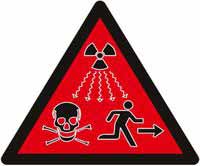 Aging facilities, human error add radiation risk
By Chen Jia (China Daily)Updated: 2009-08-04
China is facing a growing problem with more and more accidents in the workplace involving radiation exposure, experts have said.
……………………….. most of them are due to human error,” said Wang Zuoyuan, former chief of the radiation protection and safety department under the Chinese Center for Disease Control and Prevention. He was speaking to China Economic Weekly in an article published yesterday.
Transportation errors, equipment failure and radiation sources that were stolen or abandoned were among the main causes of the accidents, Wang said.
The number of radiation sources in the country reached 106,000 at the end of 2008, according to the Ministry of Environmental Protection………………
People can get cancer when exposed to certain types of radiation, said Liu Ying, who works for the Chinese Center for Medical Response to Radiation Emergency under the National Institute for Radiological Protection.
Revealed: Burma’s nuclear bombshell
Revealed: Burma’s nuclear bombshell
Sydney Morning Herald Hamish McDonald Asia-Pacific Editor August 1, 2009BURMA’s isolated military junta is building a secret nuclear reactor and plutonium extraction facilities with North Korean help, with the aim of acquiring its first nuclear bomb in five years, according to evidence from key defectors revealed in an exclusive Herald report today.
The secret complex, much of it in caves tunnelled into a mountain at Naung Laing in northern Burma, runs parallel to a civilian reactor being built at another site by Russia that both the Russians and Burmese say will be put under international safeguards……………………………..
Washington is increasingly concerned that Burma is the main nuclear proliferation threat from North Korea, after Israel destroyed in September 2007 a reactor the North Koreans were apparently building in Syria.
Environmentalists show no confidence in nuclear waste site’s safety
Environmentalists show no confidence in nuclear waste site’s safety THE HANKYOREH, 30 July 09
Lawmaker Cho and environmental researchers disclose prior site assessment reports on Gyeongju waste facility site that reveal base rock instability
Environmental organizations asked for further investigation into the safety of the nuclear waste disposal site currently under construction in the Gyeongju area on Tuesday. The organizations are basing its demands for a complete stop to construction on a review of previously released reports. The completion of the facility’s construction originally set for the end of 2009, has already been delayed by some two and a half years due to problems in the site’s base rock.
Cho Seung-soo, a lawmaker with the New Progressive Party, and members the Korean Federation for Environmental Movement (KFEM) and other environmental organizations, held a press conference at the National Assembly and said, “We cannot confirm the safety of the site because a site assessment (in 2005) confirms the condition of the base rock is unstable and weak.”
Hiroshima: A Visual Record
The Asia Pacific Journal: Japan Focus 27 July 09 by elin o’Hara slavick
On August 6, 1945, the United States of America dropped an atomic bomb fueled by enriched uranium on the city of Hiroshima. 70,000 people died instantly. Another 70,000 died by the end of 1945 as a result of exposure to radiation and other related injuries. Scores of thousands would continue to die from the effects of the bomb over subsequent decades………………
……………There are 258,000 names of A-bomb victims registered under the cenotaph. Each year on August 6, new names are added. The Flame of Peace is not an eternal flame because it will only burn until nuclear weapons are abolished. Hiroshima has 20/20 vision—a vision of a nuclear weapons-free world 75 years after the A-bomb was dropped on Hiroshima. 2,000 cities outside of Japan participate in the annual conference of Mayors for Peace, an organization started in Hiroshima………………..
……… Parents who lost children, old parents, rush to see with slight hope if they can find a clue of their children. These parents are in their 80s and 90s now. Today there are over 30,000 nuclear weapons in this world. Hiroshima and Nagasaki are not past events. They are about today’s situation.”
1 This Month




Shut down the radiation-damaged Heysham nuclear reactors now
To see nuclear-related stories in greater depth and intensity – go to https://nuclearinformation.wordpress.com

Say No to NASA’s Reckless Nuclear Reactor on the Moon
Say No to NASA’s Reckless Nuclear Reactor on the Moon
-
Archives
- November 2026 (12)
- October 2026 (302)
- September 2026 (339)
- August 2026 (330)
- July 2026 (355)
- June 2026 (287)
- May 2026 (306)
- April 2026 (356)
- March 2026 (251)
- February 2026 (267)
- January 2026 (308)
- December 2025 (358)
-
Categories
- 1
- 1 NUCLEAR ISSUES
- business and costs
- climate change
- culture and arts
- ENERGY
- environment
- health
- history
- indigenous issues
- Legal
- marketing of nuclear
- media
- opposition to nuclear
- PERSONAL STORIES
- politics
- politics international
- Religion and ethics
- safety
- secrets,lies and civil liberties
- spinbuster
- technology
- Uranium
- wastes
- weapons and war
- Women
- 2 WORLD
- ACTION
- AFRICA
- Atrocities
- AUSTRALIA
- Christina's notes
- Christina's themes
- culture and arts
- Events
- Fuk 2022
- Fuk 2023
- Fukushima 2017
- Fukushima 2018
- fukushima 2019
- Fukushima 2020
- Fukushima 2021
- general
- global warming
- Humour (God we need it)
- Nuclear
- RARE EARTHS
- Reference
- resources – print
- Resources -audiovicual
- Weekly Newsletter
- World
- World Nuclear
- YouTube
-
RSS
Entries RSS
Comments RSS

