South Korea keen to market nuclear technology to United Arab Emirates, and missile technology, too.

South Korea president, in UAE, backs return to nuclear power
MRO, ABU DHABI, United Arab Emirates (AP) 16 Jan 23, – South Korean President Yoon Suk Yeol said on Monday that his nation’s efforts to be carbon neutral by 2050 would rely in part on returning to nuclear power, even though his predecessor had tried to move away from atomic power.
Yoon’s comments at a summit in the United Arab Emirates, made in front of the country’s leader, Sheikh Mohammed bin Zayed Al Nahyan, served to underline Seoul’s commitment to nuclear power as it works to finish the Arabian Peninsula’s first atomic power plant. That could see South Korea in line for lucrative maintenance contracts and future projects in the UAE, which Seoul has grown closer to over recent years.
Yoon’s predecessor, President Moon Jae-in, sought to move South Korea away from nuclear power amid safety and graft scandals and Japan’s 2011 Fukushima nuclear disaster………..
Yoon traveled later Monday to the Barakah nuclear power plant in Abu Dhabi’s far western desert near Saudi Arabia with Sheikh Mohammed before a planned business summit back in the capital.
On his arrival back, Yoon told the summit that, using the Barakah plant as an example, he hoped the Emirates and South Korea could expand this “new model of cooperation” to include nuclear fuel, small reactors and other joint advances to third countries…….
Yoon’s embrace of nuclear power also provides a guarantee of sorts that South Korea remains invested in servicing the Barakah plant. France, also home to nuclear power plants and another Emirati business and military ally, has sought contracts here as well.
Already, Yoon’s four-day trip the UAE has seen a promise from Sheikh Mohammed to invest some $30 billion in the country. Heavyweight business leaders from Hyundai, Samsung and other companies also are taking part in the state visit.
On Sunday, Yoon also visited South Korean special forces stationed in the United Arab Emirates, a murky deployment that grew out of Seoul’s deal over the nuclear power plant. The Akh unit is comprised of some 150 troops………..
Already, the Emiratis have paid $3.5 billion for the Cheongung II, or “Heaven’s Bow,” surface-to-air missile system from South Korea …. https://www.mromagazine.com/2023/01/16/south-korea-president-in-uae-backs-return-to-nuclear-power/
China urges Japan to safely dispose of nuclear-contaminated water
China Daily, Xinhua 2023-01-16
BEIJING — China once again urges Japan to take the reasonable concerns of relevant parties seriously and dispose of its nuclear-contaminated water in a science-based, open, transparent and safe manner, Chinese Foreign Ministry spokesperson Wang Wenbin said on Monday.
Wang made the remarks at a daily news briefing here in response to reports that Japan would pipe nuclear-contaminated water from the Fukushima nuclear power station into the ocean during the spring and summer this year.
Wang said that over the past two years, the international community has strongly questioned and opposed the unilateral and erroneous decision of the Japanese government to discharge nuclear-contaminated water into the ocean, and expressed grave concerns over the impact such an action would have on the marine environment and public health.
Wang said the majority of the Japanese public is also opposed to this irresponsible approach. When polled, 55 percent of respondents opposed the disposal of contaminated water into the ocean.
“It is regrettable that the concerns of all parties have yet to be given due attention or be addressed by Japan,” Wang said, adding that Japan has failed to provide scientific and credible explanations concerning the legitimacy of its plan, the accuracy of data on the nuclear-contaminated water, the effectiveness of the treatment system, and the uncertainties about the environmental impact.
The International Atomic Energy Agency (IAEA) has sent three technical task forces to Japan and so far, there has been no conclusive resolution on Japan’s proposal, Wang said, noting that the agency has also issued many requests to Japan, seeking clarifications or making recommendations for improved disposal plans………. more https://www.chinadaily.com.cn/a/202301/16/WS63c551cea31057c47eba9e94.html—
Huge cost for Japanese tax-payers to clean up the botched nuclear waste storage at Tokai reprocessing plant
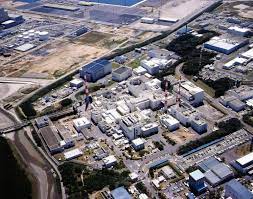
Righting shoddy nuclear waste storage site to cost Japan 36 bil. yen
https://english.kyodonews.net/news/2023/01/a53b75be634e-righting-shoddy-nuclear-waste-storage-site-to-cost-japan-36-bil-yen.html – 16 Jan 23, The Japan Atomic Energy Agency estimates that it will cost taxpayers 36.1 billion yen ($280 million) to rectify the shoddy storage of radioactive waste in a storage pool at the Tokai Reprocessing Plant, the nation’s first facility for reprocessing spent nuclear fuel, an official said Sunday.
Around 800 containers of transuranic radioactive waste, or “TRU waste,” were dropped into the pool from 1977 to 1991 using a wire in the now-disused plant in Tokai, a village in Ibaraki Prefecture northeast of Tokyo. They emit high levels of radiation.
The waste includes pieces of metal cladding tubes that contained spent nuclear fuel, generated during the reprocessing process. The containers are ultimately supposed to be buried more than 300 meters below surface.
The agency has estimated that 19.1 billion yen will be needed to build a new storage facility for the containers, and 17 billion yen for a building that will cover the storage pool and the crane equipment to grab containers.
The 794 containers each are about 80 centimeters in diameter, 90 cm tall and weigh about 1 ton, with many lying on their sides or overturned in the pool. Some have had their shape altered by the impact of being dropped.
The containers were found stored in the improper manner in the 1990s. While the agency said the storage is secure from earthquakes and tsunamis, it has nonetheless decided to improve the situation.
The extractions have been delayed by about 10 years from the original plan and are expected to begin in the mid-2030s.
The Tokai Reprocessing Plant was the nation’s first plant that reprocessed spent fuel from nuclear reactors to recover uranium and plutonium. Between 1977 and 2007, about 1,140 tons of fuel were reprocessed. The plant’s dismantlement was decided in 2014 and is expected to take about 70 years at a cost of 1 trillion yen.
Fukushima nuclear disaster: Japan to release radioactive water into sea this year

By Grace Tsoi BBC News 13 Jan 23,
Japan says it will release more than a million tonnes of water into the sea from the destroyed Fukushima nuclear power plant this year.
After treatment the levels of most radioactive particles meet the national standard, the operator said.
The International Atomic Energy Agency (IAEA) says the proposal is safe, but neighbouring countries have voiced concern.
The 2011 Fukushima disaster was the worst nuclear accident since Chernobyl.
Decommissioning has already started but could take four decades.
“We expect the timing of the release would be sometime during this spring or summer,” said chief cabinet secretary Hirokazu Matsuno on Friday, adding that the government will wait for a “comprehensive report” from IAEA before the release.
Every day, the plant produces 100 cubic metres of contaminated water, which is a mixture of groundwater, seawater and water used to keep the reactors cool. It is then filtered and stored in tanks.
With more than 1.3 million cubic metres on site, space is running out.
The water is filtered for most radioactive isotopes, but the level of tritium is above the national standard, operator Tepco said. Experts say tritium is very difficult to remove from water and is only harmful to humans in large doses.
However, neighbouring countries and local fishermen oppose the proposal, which was approved by the Japanese government in 2021.
The Pacific Islands Forum has criticised Japan for the lack of transparency.
“Pacific peoples are coastal peoples, and the ocean continues to be an integral part of their subsistence living,” Forum Secretary General Henry Puna told news website Stuff.
“Japan is breaking the commitment that their leaders have arrived at when we held our high level summit in 2021.
“It was agreed that we would have access to all independent scientific and verifiable scientific evidence before this discharge takes place. Unfortunately, Japan has not been co-operating.”……. more https://www.bbc.com/news/world-asia-64259043
Team Korea to bolster exports of nuclear energy systems
Korea Times, By Lee Kyung-min, 13 Jan 23,
State-run energy companies and private firms in the nuclear energy industry will join hands to advance exports of the stable and affordable power generation systems, the energy ministry said following a meeting attended by officials from the sector, Friday.
The Korea-developed APR1400, a nuclear reactor with a capacity of 1,400 megawatts, is increasingly recognized by its industry peers for its cost, quality and technological advantages.
Communication channels will be strengthened with the Czech Republic, the Philippines, the United Kingdom, and Turkey, to win orders to build nuclear reactors there. Also fortified will be government assistance to foster industries related to nuclear power generation equipment manufacturing, as well as facility safety and maintenance.
Second Vice Minister of Trade, Industry and Energy Park Il-jun presided over the meeting attended by members of Team Korea, a task force established to facilitate the export of the country’s nuclear reactors, at InterContinental Seoul COEX, southern Seoul.
In attendance were Korea Power Corp. (KEPCO) and its power subsidiary Korea Hydro & Nuclear Power (KHNP) as well as KEPCO affiliates…………….. https://www.koreatimes.co.kr/www/tech/2023/01/419_343553.html
Fukushima water to be released into ocean in next few months, says Japan
Guardian, Justin McCurry in Tokyo, 13 Jan 23,Authorities to begin release of a million tonnes of water from stricken nuclear plant after treatment to remove most radioactive material
The controversial release of more than a million tonnes of water from the wrecked Fukushima Daiichi nuclear plant will begin in the northern spring or summer, Japan’s government has said – a move that has sparked anger among local fishing communities and countries in the region.
The decision comes more than two years after the government approved the release of the water, which will be treated to remove most radioactive materials but will still contain tritium, a naturally occurring radioactive form of hydrogen that is technically difficult to separate from water.
Japanese officials insist the “treated” water will not pose a threat to human health or the marine environment, but the plans face opposition from fishermen who say it risks destroying their livelihoods, almost 12 years after a magnitude-9.0 earthquake triggered a huge tsunami that killed more than 18,000 people along Japan’s north-east coast…………………………………….
South Korea and China have voiced concern about the discharge, while the Pacific Islands Forum said recently it had “grave concerns” about the proposed release.
Writing in the Guardian, the forum’s secretary general, Henry Puna, said Japan “should hold off on any such release until we are certain about the implications of this proposal on the environment and on human health, especially recognising that the majority of our Pacific peoples are coastal peoples, and that the ocean continues to be an integral part of their subsistence living”.
The South Korean government, which has yet to lift its ban on Fukushima seafood, has said that releasing the water would pose a “grave threat” to marine life. Fishing unions in the area oppose the release, warning it would cause alarm among consumers and derail more than a decade of efforts to reassure the public that Fukushima seafood is safe to eat…………… more https://www.theguardian.com/environment/2023/jan/13/fukushima-water-to-be-released-into-ocean-in-next-few-months-says-japan
In a first, South Korea declares nuclear weapons a policy option
Japan Times, BY CHOE SANG-HUN, THE NEW YORK TIMES 13 Jan 23,
SEOUL – South Korean President Yoon Suk-yeol said for the first time Wednesday that if North Korea’s nuclear threat grows, South Korea would consider building nuclear weapons of its own or ask the United States to redeploy them on the Korean Peninsula.
Speaking during a joint policy briefing by his defense and foreign ministries Wednesday, Yoon was quick to add that building nuclear weapons was not yet an official policy. He stressed that South Korea would for now deal with North Korea’s nuclear threat by strengthening its alliance with the United States………………….
“It’s possible that the problem gets worse and our country will introduce tactical nuclear weapons or build them on our own,” said Yoon, according to a transcript of his comments released by his office. “If that’s the case, we can have our own nuclear weapons pretty quickly, given our scientific and technological capabilities.”
South Korea is a signatory of the Nuclear Nonproliferation Treaty, or NPT, which bans the country from seeking nuclear weapons. It also signed a joint declaration with North Korea in 1991 in which both Koreas agreed not to “test, manufacture, produce, receive, possess, store, deploy or use nuclear weapons.”
But North Korea has reneged on the agreement by conducting six nuclear tests since 2006. …………………………………..
“If South Korea possesses nuclear weapons, the United States will not need to ask whether it should use its own nuclear weapons to defend its ally, and the alliance will never be put to a test,” said Cheong Seong-chang, a senior analyst at the Sejong Institute in South Korea. “If South Korea owns nuclear weapons, the U.S. will actually become safer.”……………………….
South Korea would need to quit the NPT to build its own arsenal. Analysts said that quitting the NPT would be too risky for the South because it could trigger international sanctions.
Some lawmakers affiliated with Yoon’s party and analysts like Cheon want the United States to reintroduce U.S. nuclear weapons to the South and forge a nuclear-sharing agreement with Seoul, similar to the one in which NATO aircraft would be allowed to carry U.S. nuclear weapons in wartime……………………………….
more https://www.japantimes.co.jp/news/2023/01/13/asia-pacific/south-korea-nuclear-weapons-policy/—
Biden Administration Tramples on Japan’s Post-World War II Pacifist Constitution By Pushing Country’s Rearmament
Covert Action magazine, By Sara Flounders, January 9, 2023
Main target is China in dangerously provocative policy that faces no visible domestic opposition in the U.S.
On December 16, Japan’s Prime Minister Fumio Kishida announced a new defense strategy that doubled Japan’s military spending by 2027. Japan further agreed to acquire offensive weapons and reshape its military command structure for its expanded armed forces.
On December 23, the draft budget was approved by Kishida’s cabinet.
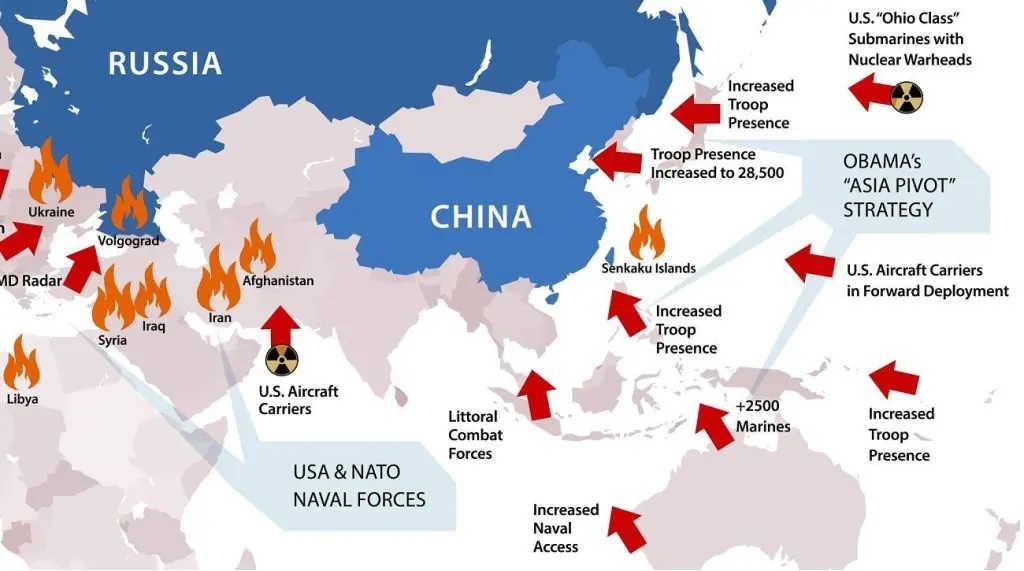
Japan’s dangerous military expansion should set off international alarm bells. This major escalation is taking place based on intense U.S. imperialist pressure. It is the next step in the “Pivot to Asia,” aimed at threatening and surrounding China and attempting to reassert U.S. dominance in the Asia Pacific.
The movements opposing endless U.S. wars must begin to prepare material and draw mass attention to this ominous threat.
The plan to double military spending will add $315 billion to Japan’s defense budget over the next five years and make Japan’s military the world’s third largest, after the U.S. and China. Defense spending will escalate to 2% of gross domestic product, equal to the goal the U.S. sets for its NATO allies. Japan’s economy is the world’s third largest.
The Japanese government plans to buy up to 500 Lockheed Martin Tomahawk missiles and Joint Air-to-Surface Standoff Missiles (JASSM), procure more naval vessels and fighter aircraft, increase cyber-warfare capabilities, manufacture its own hypersonic guided missiles and produce its own advanced fighter jets, along with other weapons. The plan shifts from relying solely on missile defense to also embracing “counter strike” capabilities.
………………………………………………… Although the U.S. occupation force, after defeating Japan’s military in World War II, imposed a “pacifist” constitution on Japan, for decades U.S. strategists have pressured Japan’s government to aggressively rearm, to buy U.S.-made weapons, and to act as a junior partner to U.S. efforts to dominate the Asia-Pacific region.
Article 9 of the imposed Japanese constitution prohibits Japan from maintaining an army, navy and air force. To get around this, the “Japanese Self-Defense Forces” (JSDF) have since 1952 been treated as a legal extension of the police and prison system. The U.S. occupiers considered the JSDF an essential repressive tool defending capitalist property relations against the workers’ movement.
The decision for aggressive military expansion is in open violation of Japan’s supposedly pacifist constitution………………………………………….
The present doubling of the defense budget will be funded by raising taxes. A huge military budget will inevitably mean severe cuts to the country’s limited social spending. ………………….
Targeting China
Japan’s military expansion fits in with Washington’s aggression aimed at China, the DPRK and Russia. U.S. strategists’ goal is to use the U.S. alliance with Japan, South Korea and Australia, just as it uses the U.S.-led NATO alliance in Europe……………………………..
China is Japan’s largest trading partner in both imports and exports. Previous National Strategy Documents said Japan was seeking a “mutually beneficial strategic partnership” with China. Suddenly Japanese strategists started labeling China “the greatest strategic challenge in ensuring the peace and security of Japan.” (U.S. Institute of Peace, December 19)………….,………
A U.S.-Japan alliance is now defined as a “cornerstone” of Japan’s security policy. (Japan Times, December 17)
U.S. Praise of Japan’s Rising Militarism
The U.S. media praised Japan’s new security strategy document as a “bold and historic step.” U.S. National Security Adviser Jake Sullivan praised the defense spending hike, which “will strengthen and modernize the U.S.-Japan alliance.” U.S. Secretary of State Antony Blinken called Japan an “indispensable partner” and cheered that the changed security documents reshape the ability to “protect the rules-based order in the Indo-Pacific region and around the world.” (quotes, whitehouse.gov, December 16)
U.S. corporate power is the immediate beneficiary of this sharp turn in policy, built on military threats and economic sanctions. …………………………………………………… more https://covertactionmagazine.com/2023/01/09/biden-administration-tramples-on-japans-post-world-war-ii-pacifist-constitution-by-pushing-countrys-rearmament/?mc_cid=8da2f4a668&mc_eid=65917fb94b
Japan and USA to develop small nuclear reactors”within each country and third countries.”
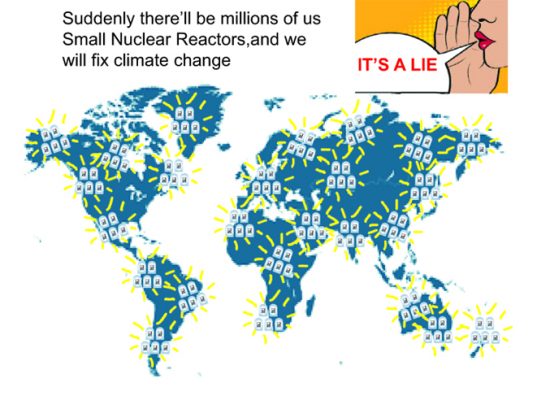
Japan and the United States agreed Monday to strengthen bilateral
cooperation on developing next-generation nuclear reactors during
ministerial talks on energy.
Japanese industry minister Yasutoshi Nishimura
and U.S. Energy Secretary Jennifer Granholm also agreed during their
meeting that Tokyo and Washington will work more closely on securing
liquefied natural gas and other energy security matters.
According to a
joint statement, Japan and the United States will step up cooperation in
developing and constructing next-generation advanced reactors, including
small modular reactors, “within each country and third countries.” The two
governments already revealed a plan in October to work together on helping
Ghana introduce small nuclear reactor technology.
Kyodo News 10th Jan 2023
The US and Japan have agreed to strengthen cooperation on developing and
constructing next-generation advanced reactors, including small modular
reactors, “within each country and third countries”. Japan’s industry
minister Yasutoshi Nishimura and US energy secretary Jennifer Granholm met
in Washington to discuss the situation surrounding global energy security,
strengthening clean energy cooperation, and the importance of clean energy
transitions, including renewable energies and nuclear energy.
Nucnet 11th Jan 2023
Bangladesh puts energy hopes in first nuclear power plant, despite delay, and climate concerns
Global disruption to gas supplies has led to electricity outages in Bangladesh this year, while progress on the Rooppur nuclear power plant has been plagued by construction delays.
Ecobusiness 11 Jan 23 ………………………………………. construction delays, cost concerns and public fears about nuclear safety are clouding the outlook for the new plant.
Bangladesh’s power generation capacity currently exceeds demand – but the fuel needed to run existing plants partly relies on imports, including a quarter of natural gas used, with prices rocketing this year after Russia’s invasion of Ukraine.
………………………. treating nuclear as a renewable or green energy source remains controversial worldwide, as the spent fuel left after power production is not fully recyclable and nuclear waste is hazardous.
Nuclear dropped to below 10 per cent of global power generation in 2021, although the recent energy crisis driven by Russia’s invasion of Ukraine has seen some reawakening of interest.
The goal of developing a nuclear power plant in Bangladesh dates back to the 1960s, but plans adopted by successive governments over the decades were not implemented due to a lack of funding and skilled engineers……………………………………………
Bangladesh’s vulnerability to climate change impacts is another consideration, as the plant is located in a zone that is prone to extreme weather effects like flooding.
Islam – also a professor at the University of Dhaka – said no public information was available on if and how the design of the nuclear plant takes climate-related risks into account…………………………. https://www.eco-business.com/news/bangladesh-puts-energy-hopes-in-first-nuclear-power-plant-despite-delay/
NATO member sending banned cluster bombs to Ukraine – media
https://www.rt.com/news/569679-ukraine-t%C3%BCrkiye-cluster-munitions/ 11 Jan 23, Türkiye has been supplying Kiev with weapons that are banned in many countries, sources told Foreign Policy magazine
Ukraine has been receiving consignments of controversial cluster munitions from Türkiye, Foreign Policy magazine has reported. Kiev had been asking Washington for the Cold-War-era weapons for months.
The shipments have been taking place since November, current and former US and European officials told the outlet. It was unclear how many of the munitions had been received, or whether they had yet been used on the battlefield.
The weapons in question are called dual-purpose improved conventional munitions, or DPICMs. They were designed during the Cold War era, when NATO was planning to deploy them against a large-scale Soviet invasion of Europe. The rounds are filled with dozens of submunitions, intended to strike personnel and light-armored targets, scattering over a large area for increased lethality.
Like many other cluster munitions, DPICMs tend to produce long-lasting hazards, as some submunitions can fail to detonate and have the potential to maim or kill somebody years after being deployed.
US law prohibits the exportation of any cluster weapons with a failure rate over a certain threshold. The same regulations require guarantees that cluster munitions will not be used in areas where civilians may be present. Washington has repeatedly rejected requests from Kiev for the supply of DPICMs.
Most European NATO members are signatories of the 2008 Convention on Cluster Munitions (CCM), which bans this type of weapons. Türkiye is not one of them, but has observer status in the Geneva-based organization that oversees the implementation of the treaty. It has indicated that it abides by the rules, though it’s not obliged to.
According to Foreign Policy, the weapons supplied to Ukraine were manufactured during the Cold War under a co-production agreement with the US. Turkish companies made 155mm and 122mm cluster artillery rounds, the magazine claimed.
Neither Russia nor Ukraine are parties to the CCM, and both have reportedly used their Soviet-made cluster munitions in their armed conflict. In March, a Tochka-U missile with a cluster payload killed more than 20 people and injured dozens more in the city of Donetsk. Moscow blamed Kiev for the attack, but this was denied. International watchdog Human Rights Watch (HRW) later stated that it could not investigate the incident.
“Ukraine already has a massive problem on its hands, and it’s only magnifying it by introducing this weapon,” Mark Hiznay, a senior researcher in the Arms Division for HRW, told Foreign Policy, commenting on Kiev’s effort to get more cluster weapons.
Indigenous Taiwanese kept in the dark as a massive nuclear waste dump was imposed on their island
No one bothered to inform the residents why the southern tip of their island home was suddenly no longer accessible. All they knew was that the place where women for generations had scoured the craggy tide pools for crabs and where farmers had long tended fields of taro and millet had suddenly been turned into a large construction site.
Rumors began to fly. It was a pineapple cannery. No, it was a cannery for fish. Whatever it was, the locals decided, it would mean more jobs for the islanders.
It was not until years later, in 1980, when a local pastor saw an article buried in the back of a newspaper, that the islanders found out what the site actually was: a massive nuclear waste dump.
New York Times 5th Jan 2023
US and South Korea hold talks on “nuclear sharing”.

the US Council for Foreign Relations highlighted a proposal to establish an Asian Nuclear Planning Group, “mirroring the format of the NATO Nuclear Planning Group, that would provide a platform for South Korea, Japan, and Australia to discuss policies regarding US nuclear forces and the US nuclear planning process.”
What is underway not just in South Korea are high level discussions to integrate US allies throughout the region with the US military as preparations accelerate for a potentially catastrophic war with China that would inevitably involve the use of nuclear weapons.
Peter Symond WSWS 5 Jan 23
The US and South Korea are actively discussing closer collaboration in the deployment and potential use of nuclear weapons, which is part of the far broader US-led military build-up throughout the region. While nominally directed against North Korea, US war preparations including with South Korea are above all aimed at China.
In an interview in the Chosun Ilbo newspaper on Monday, South Korea’s right-wing president, Yoon Suk Yeol, said the discussions had focussed on joint planning and exercises with American nuclear forces. He described the arrangements being discussed as being “as good as nuclear-sharing”—a phrase, he said, that Washington was uncomfortable with……….
When asked at the White House whether joint nuclear military exercises with South Korea were being planned, President Biden flatly declared “no” and made no further comment. However, subsequent comments by American officials make clear that the closer integration of South Korea into US preparations for nuclear war is indeed under way……………………….
The discussions mark a significant escalation in the preparations for nuclear war. While South Korea, a US military ally, was protected by the so-called nuclear umbrella or what is known as “extended deterrence,” Yoon is pushing for a greater South Korean say in the use of nuclear weapons.
In his interview, Yoon declared: “What we call ‘extended deterrence’ means that the United States will take care of everything, so South Korea should not worry about it… But now, it is difficult to convince our people with just this idea.”…………….
Throughout much of the Cold War, the US had hundreds of tactical nuclear weapons in South Korea supposedly to counter a North Korean invasion. The number peaked at 950 during the mid-1960s before declining. In 1991, amid the moves to dissolve the Soviet Union, US President George H.W. Bush announced the return of all tactical nuclear weapons to the US, including those that remained in South Korea.
While Yoon has not publicly repeated his proposals as president, there have already been significant steps to a greater US nuclear presence in South Korea. In a joint press conference last November, US Defense Secretary Lloyd Austin and South Korean Defense Minister Lee Jong-seop announced plans for the de facto permanent stationing of US nuclear-capable assets in South Korea for the first time since 1991………….
As far as Washington is concerned, the North Korean “threat” is a convenient pretext as its nuclear planning is primarily focussed on war with China. Strategically located close to the Chinese mainland, South Korea is deeply integrated into the US strategy for such a conflict. Not only does it house key US military bases and some 28,500 military personnel but it also has a key anti-ballistic missile system—a recently upgraded Terminal High Altitude Area Defense (THAAD) system—critical in any nuclear conflict.
The US is boosting its nuclear weapons capacity throughout the region with the announcement last year that it will effectively station nuclear-capable B-52 bombers at the Tindal air force base in Northern Australia. At the same time, prior to his assassination last July, former Japanese prime minister, Shinzo Abe, initiated a discussion in ruling circles about stationing US nuclear weapons in Japan, despite enormous popular opposition to such a move.
The Biden administration has already taken steps to strengthen its military alliances in the Indo-Pacific by kickstarting the Quadrilateral Security Dialogue or “Quad” with Japan, Australia and India as well as initiating the AUKUS pact with Australia and the United Kingdom, which, in particular, will arm Australia with nuclear-powered attack submarines. At the same time, it has sought to strengthen intelligence sharing between South Korea and Japan, essential in any nuclear conflict.
Broader “nuclear sharing” is also being discussed in US strategic think tanks. A comment published last August by the US Council for Foreign Relations highlighted a proposal to establish an Asian Nuclear Planning Group, “mirroring the format of the NATO Nuclear Planning Group, that would provide a platform for South Korea, Japan, and Australia to discuss policies regarding US nuclear forces and the US nuclear planning process.”
What is underway not just in South Korea are high level discussions to integrate US allies throughout the region with the US military as preparations accelerate for a potentially catastrophic war with China that would inevitably involve the use of nuclear weapons. https://www.wsws.org/en/articles/2023/01/05/tzjb-j05.html
—
Japan to use Self-Defense Forces to guard nuclear power plants
Government thinks critical infrastructure could be targeted, as seen in Ukraine.
Nikkei Asia 4 Jan 23, TOKYO –– The Japanese government will task the country’s Self-Defense Forces with protecting critical infrastructure, such as nuclear power plants, as it plans to respond immediately if civilian facilities become the target of an attack………….
Attacks on critical civilian infrastructure are banned under the Geneva Conventions, which sets the ground rules for the conduct of war. Russia’s strikes have highlighted the need to develop a response.
In Japan’s National Security Strategy, which was approved by the cabinet in December, the government states that measures to ensure the safety of critical facilities will be taken, not only in the event of an armed attack but in the run-up to a crisis that does not lead to such an attack………… https://asia.nikkei.com/Politics/Japan-to-use-Self-Defense-Forces-to-guard-nuclear-power-plants
Reviving Japan’s nuclear power industry will not be easy
Jan 3, 2023
Japan is facing its most severe energy crisis in decades and wants to speed up the revival of its nuclear energy industry to reduce its dependence on imported fossil fuels.
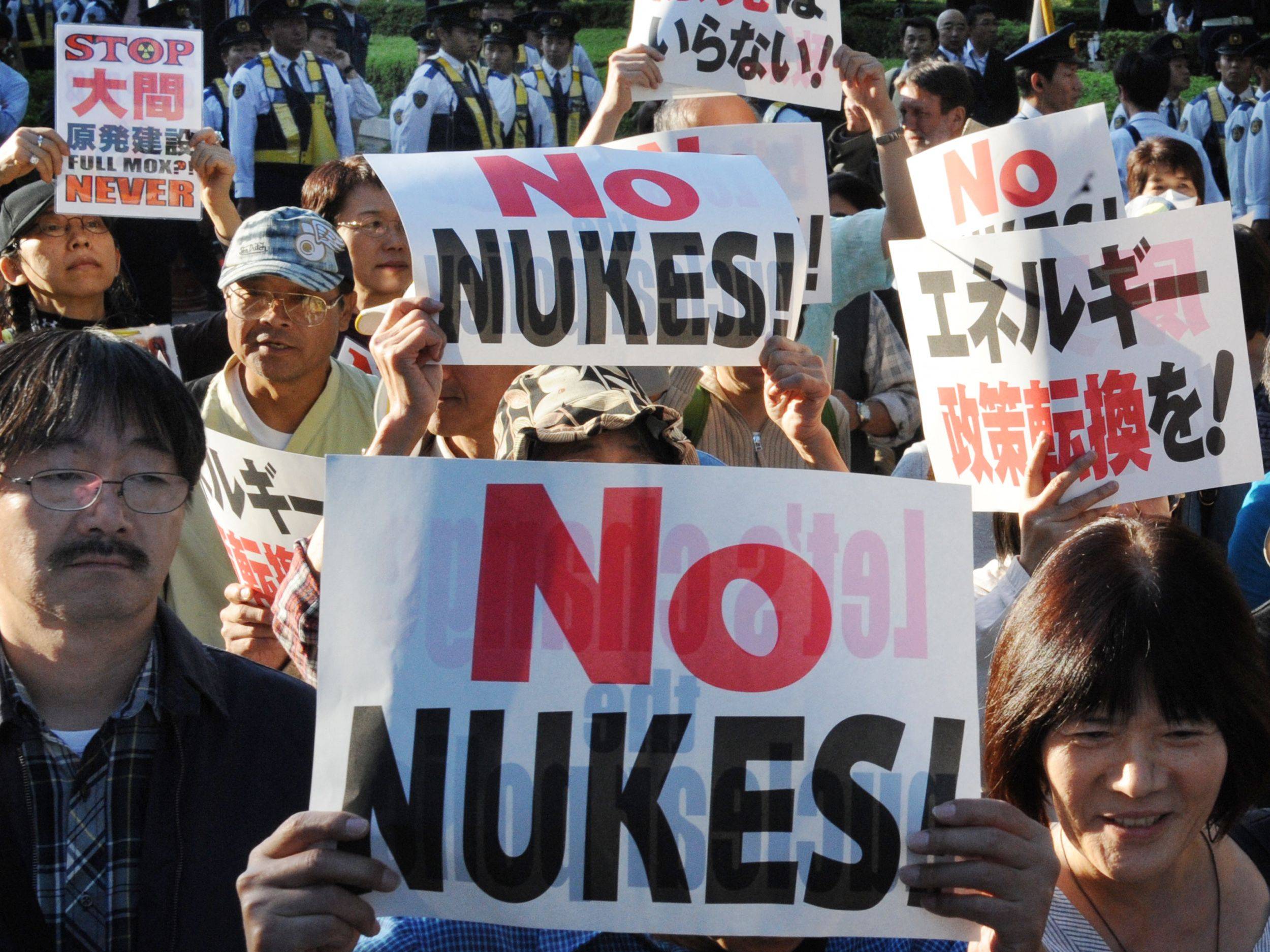
But restarting more nuclear reactors remains controversial, more than a decade after the 2011 Fukushima disaster.
What does the government want?
All the country’s reactors were shut down for safety checks after the Fukushima meltdown, and there are currently 33 considered operable.
By mid-December, nine were generating electricity, meeting a target set by Prime Minister Fumio Kishida this summer to help counter energy shortages and cover around 10% of Japan’s winter power consumption.
The national nuclear safety watchdog has approved the restart of seven other reactors in principle, but such moves often face fierce opposition from local communities.
In August, Kishida called for these seven reactors to come online by summer 2023 and said Japan should also consider building next-generation nuclear reactors.
He also said authorities would discuss extending the service life of existing reactors beyond the current 60-year limit if safety can be guaranteed.
Before the Fukushima disaster, nearly a third of Japan’s power generation came from nuclear energy, but in the fiscal year to March 2022, the figure stood at around 7%.
The government is aiming for nuclear power to account for between 20% and 22% of electricity production by 2030, part of efforts to reach carbon neutrality by 2050.
What are the obstacles?
The success of these nuclear power ambitions lies with Japan’s independent Nuclear Regulation Authority (NRA), which must give a green light to the plans before they go ahead.
“It will be a challenge” to get existing reactors going again, because some have been “stalled for quite a long time,” said Tom O’Sullivan, a Tokyo-based energy consultant at Mathyos Advisory.
Bringing nuclear plants online could also be complicated by “nervousness about anti-terrorism issues,” he added, pointing to concerns around plants caught in Russia’s war in Ukraine.
“Given what’s happening with the Zaporizhzhia nuclear power plant in Ukraine, I think the NRA is probably more sensitive nowadays to potential terrorist attacks.”
Surveys show that reticence among the Japanese public toward a nuclear power revival has eased since the war in Ukraine triggered a steep rise in energy prices last year.
But opposition from people living near the plants will remain a sticking point, while reports of security breaches at one large plant in recent years have added to public unease, said analyst Hiroe Yamamoto of Moody’s Japan.
How quickly the government’s nuclear power revival hopes can become reality depends on local authorities but also Kishida’s popularity this year, said Nobuo Tanaka, chair of the Innovation for Cool Earth Forum steering committee.
The prime minister is currently “in trouble,” with his approval ratings dragged down last year by scandals, Tanaka said at a recent news conference.
So “just saying we need (more reactors online) because of high energy prices — this kind of argument may not be sustainable,” and the government must also address issues such as waste disposal, he said.
https://www.japantimes.co.jp/news/2023/01/03/national/reviving-nuclear-industry/
1 This Month



26 September – International Day for the Total Elimination of Nuclear Weapons


PLEASE OPPOSE HR 8255 AND S.3639 – bills would accelerate satellite deployment, with no environmental review or safeguards – https://ncstd5li.quorum.us/campaign/169331/
To see nuclear-related stories in greater depth and intensity – go to https://nuclearinformation.wordpress.com
-
Archives
- September 2026 (233)
- August 2026 (330)
- July 2026 (355)
- June 2026 (287)
- May 2026 (306)
- April 2026 (356)
- March 2026 (251)
- February 2026 (267)
- January 2026 (308)
- December 2025 (358)
- November 2025 (359)
- October 2025 (375)
-
Categories
- 1
- 1 NUCLEAR ISSUES
- business and costs
- climate change
- culture and arts
- ENERGY
- environment
- health
- history
- indigenous issues
- Legal
- marketing of nuclear
- media
- opposition to nuclear
- PERSONAL STORIES
- politics
- politics international
- Religion and ethics
- safety
- secrets,lies and civil liberties
- spinbuster
- technology
- Uranium
- wastes
- weapons and war
- Women
- 2 WORLD
- ACTION
- AFRICA
- Atrocities
- AUSTRALIA
- Christina's notes
- Christina's themes
- culture and arts
- Events
- Fuk 2022
- Fuk 2023
- Fukushima 2017
- Fukushima 2018
- fukushima 2019
- Fukushima 2020
- Fukushima 2021
- general
- global warming
- Humour (God we need it)
- Nuclear
- RARE EARTHS
- Reference
- resources – print
- Resources -audiovicual
- Weekly Newsletter
- World
- World Nuclear
- YouTube
-
RSS
Entries RSS
Comments RSS
 nuclear-news