Earthquake fault underneath spells the end for Tsuruga nuclear plant
 Restart of Tsuruga nuclear reactors ‘almost impossible’: safety commission chief http://www.japantimes.co.jp/text/nn20120427b3.html Kyodo The chances of Japan Atomic Power Co. resuming operations at its Tsuruga nuclear plant in Fukui Prefecture are virtually nil now that an active fault is suspected to run directly beneath one of its reactors, the head of the Nuclear Safety Commission said Thursday. Continue reading
35 Indian villages get solar street lighting
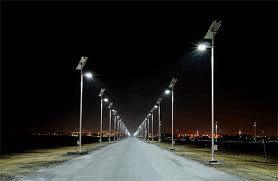 Solar street lights to illuminate 35 villages, Times of India, Kapil Dixit, TNN | Apr 27, 2012, ALLAHABAD: Finally, the wait is over. Solar streetlights are being installed in 54colonies of 35 villages spread over 13 blocks of the district.
With Center and state government authorities’ sanctioned adequate funds to install as many as 256 solar street lights, the UP New & Renewable Energy Development Authorities has done a remarkable job to illuminate villages with solar run streetlights in identified colonies.
The installation of solar streetlights have been taken up at Chaka, Dhanupur, Handia, Kaurihar, Koroan, Kotwa, Manda, Meja, Phulpur, Pratappur, Ram Nagar, Saidabad and Shankargarh blocks. The UPNEDA officials have taken up the project to install solar run street lights after identifying a total of 54 colonies/localities which lack proper lighting arrangements for years, and this was the first time, when such measures were being taken up to illuminate these colonies….. http://timesofindia.indiatimes.com/city/allahabad/Solar-street-lights-to-illuminate-35-villages/articleshow/12888592.cms
Fukushima nuclear disaster remains critical
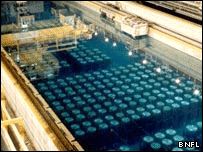 The Fukushima Nuclear Disaster Is Far From Over HUFFINGTON POST, Robert Alvarez, Senior Scholar, Institute for Policy Studies, 22 April 12, Spent reactor fuel, containing roughly 85 times more long-lived radioactivity than released at Chernobyl, still sits in pools vulnerable to earthquakes.
More than a year after the Fukushima nuclear power disaster began, the news media is just beginning to grasp that the dangers to Japan and the rest of the world are far from over. After repeated warnings by former senior Japanese officials, nuclear experts, and now a U.S. Senator, it’s sinking in that the irradiated nuclear fuel stored in spent fuel pools amidst the reactor ruins pose far greater dangers than the molten cores. This is why:
• Nearly all of the 10,893 spent fuel assemblies sit in pools vulnerable to future earthquakes, with roughly 85 times more long-lived radioactivity than released at Chernobyl
• Several pools are 100 feet above the ground and are completely open to the atmosphere because the reactor buildings were demolished by explosions. The pools could possibly topple or collapse from structural damage coupled with another powerful earthquake.
• The loss of water exposing the spent fuel will result in overheating and can cause melting and ignite its zirconium metal cladding resulting in a fire that could deposit large amounts of radioactive materials over hundreds, if not thousands of miles……
The urgency of the situation is underscored by the ongoing seismic activity where 13 earthquakesof magnitude 4.0-5.7 have occurred off the northeast coast of Japan between April 14 and 17. This has been the norm since the first quake and tsunami hit the Dai-Ichi site on March 11 of last year. Larger quakes are expected closer to the power plant.
Spent nuclear fuel is extraordinarily radioactive and must be handled with great care. In a matter of seconds, an unprotected person one foot away from a single freshly removed spent fuel assembly would receive a lethal dose of radiation within seconds. As one of the most dangerous materials on the planet, spent reactor fuel requires permanent geological isolation to protect humans for thousands of years…… http://www.huffingtonpost.com/robert-alvarez/the-fukushima-nuclear-dis_b_1444146.html
Decision to restart nuclear reactors send Japan’s Prime Minister’s approval rating tumbling
Japan PM Approval Rating Tumbles On Nuclear Power Decision, Market
News International, APRIL 22, 2012 – TOKYO (MNI) – The public approval rating for the cabinet of Prime Minister Yoshihiko Noda dropped five percentage points to 29% in asurvey conducted between Friday and Sunday by Nikkei Inc and TV Tokyo
Corp from the previous month.
The reading was the lowest since Noda took office in September and it came after the government decided earlier this month to restart two idled nuclear reactors at Kansai Electric Power Co’s Oi plant in western Japan.
The poll showed that 54% of the respondents criticized such move and only 30% favored it.
The survey also found that 46% said the minimum of Japan’s 50 nuclear power plants should be brought back online, with 29% arguing that all should be suspended.
Meantime, the disapproval rating rose eight points to a record
62%…… https://mninews.deutsche-boerse.com/index.php/japan-pm-approval-rating-tumbles-nuclear-power-decision?q=content/japan-pm-approval-rating-tumbles-nuclear-power-decisio
Japan still does not have a new, independent, nuclear regulator
Neglect of nuclear regulation http://www.japantimes.co.jp/text/ed20120423a1.html 23 April 12, The Nuclear Regulatory Agency was originally scheduled to be set up on April 1. Although the Noda Cabinet endorsed a bill to establish the agency on Jan. 31 and send it to the Diet that day, the Diet has yet to start deliberating on it. Continue reading
Don’t restart nuclear reactors say 6 Japanese ruling party lawmakers
6 ruling party lawmakers propose to delay reactor restarts http://ajw.asahi.com/article/0311disaster/fukushima/AJ201204210011 April 21, 2012 The Asahi Shimbun By SHINICHI SEKINE/ Staff Writer Six lawmakers of the ruling Democratic Party of Japan, elected from Fukushima Prefecture, home to the crippled Fukushima No. 1 nuclear plant, have crafted a proposal to postpone reactivating two nuclear reactors in Fukui Prefecture. Continue reading
India’s glowing renewable energy future


 Sun shines over renewable energy Business Line, N. RAMAKRISHNAN 22 April 12, Wind energy continues to be the single largest component of the RE portfolio, accounting for nearly 70 per cent of all Green power. The Indian renewable energy industry has never had it so good. Wind power installations in 2011-12 were the highest in a single financial year, at 3,163 MW, taking the total installed capacity to 17,320 MW.
The Centre has announced an ambitious national solar mission under which 20,000 MW of solar power capacity will be added in the next decade. The first phase of the solar mission envisages 1,000 MW of capacity, both solar thermal and solar photovoltaic. The installed renewable energy capacity in the country at the end of March 2012 stood at 24,500 MW, about 12 per cent of the total installed power capacity of 2,00,287 MW…..
http://www.thehindubusinessline.com/features/article3342620.ece
Fukishima’s radioactive wastes and the failure of nuclear reprocessing
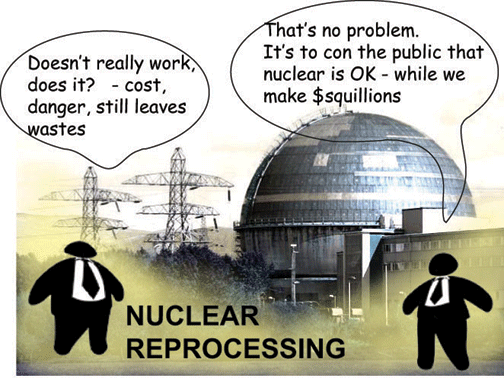 The main reason why there is so much spent fuel at the Da-Ichi site is that the plan to send it off for nuclear recycling has collapsed.
This scheme is based on long discredited assumptions of …. a new generation of “fast” reactors
nearly all of the spent fuel at the Da-Ichi containing some of the largest concentrations of radioactivity on the planet will remain indefinitely in vulnerable pools.
The Fukushima Nuclear Disaster Is Far From Over HUFFINGTON POST, Robert Alvarez, Senior Scholar, Institute for Policy Studies, 22 April 12,“……Last week, Tokyo Electric Power Company (TEPCO) revealed plans to remove 2,274 spent fuel assemblies from the damaged reactors that will probably take at least a decade to accomplish. The first priority will be removal of the contents in Pool No. 4. This pool is structurally damaged and contains about 10 times more cesium-137 than released at Chernobyl. Continue reading
Radiation danger to Japan’s reconstruction workers
 Recovery workers to get radiation limits http://www.yomiuri.co.jp/dy/national/T120422002572.htm Jiji Press 23 April 12, The health ministry will introduce radiation exposure control standards for reconstruction workers in areas damaged by last year’s earthquake and tsunami, officials said.
The ministry found it necessary to implement the new standards, as reconstruction work is beginning in earnest in Fukushima Prefecture, home to a nuclear power station crippled by the disasters.
Currently, there are radiation exposure control standards for workers at the Fukushima No. 1 nuclear plant and those engaged in decontamination around the plant but not for construction and other workers. In areas where annual radiation exposure is estimated at greater than 5 millisieverts, employers will be obliged to have each worker carry a dosimeter and receive health checks at least once a year, officials said Friday. In other areas, such individual radiation exposure control will not be required.
Cesium 137 and the follies of Chernobyl and Fukushima
 The Fukushima Nuclear Disaster Is Far From Over HUFFINGTON POST, Robert Alvarez, Senior Scholar, Institute for Policy Studies, 22 April 12, “….It’s been 26 years, since the Chernobyl reactor exploded and caught fire releasing enormous amounts of radioactive debris — seriously contaminating areas over a thousand miles away. Chernobyl revealed the folly of not having an extra barrier of thick concrete and steel surrounding the reactor core that is required for modern plants, in the U.S., Japan and elsewhere. The Fukushima Dai-Ichi accident revealed the folly of operating several nuclear power plants in a high consequence earthquake zone while storing huge amounts of highly radioactive spent fuel in vulnerable pools, high above the ground.
What both accidents have in common is widespread environmental contamination from cesium-137. With a half-life of 30, years, Cs-137 gives off penetrating radiation, as it decays and can remain dangerous for hundreds of years. Once in the environment, it mimics potassium as it accumulates in the food chain. When it enters the human body, about 75 percent lodges in muscle tissue, with, perhaps, the most important muscle being the heart.http://www.huffingtonpost.com/robert-alvarez/the-fukushima-nuclear-dis_b_1444146.html
Overwhelming majority of Japanese businesses want safety, not restart of nuclear reactors

 Japan businesses choose nuclear safety over profits, First Post, Apr 20, 2012 Tokyo: Nearly three-quarters of Japanese firms want safety guaranteed before idled nuclear reactors in the country are restarted, seeing no need to rush the process despite the impact the loss of the power source could have on their businesses.
Japan is set to have no nuclear power within weeks for the first time in over 40 years following last year’s crisis at the Fukushima Daiichi nuclear plant, which crushed public trust in nuclear power and prevented the restart of reactors shut for regular maintenance checks.
The poll, taken alongside the monthly Reuters Tankan company sentiment survey, showed only 15 percent of firms want an early restart for idled reactors, while 72 percent said safety should be the key priority…… Trade Minister Yukio Edano this week signalled two reactors idled after the Fukushima disaster would not be back online before the last one currently operating is shut down….. http://www.firstpost.com/world/japan-businesses-choose-nuclear-safety-over-profits-282207.html
India’s Gujarit solar park- even bigger than China’s Golmud Solar Park.
Asia’s largest solar field switched on in India, THE ASSOCIATED PRESS April 19, 2012, By KATY DAIGLE Bloomberg, BUSINESSWEEK NEW DELHI The west Indian state of Gujarat is flipping the switch on Asia’s largest solar power field as part of its 600 megawatt solar energy addition to India’s power grid.
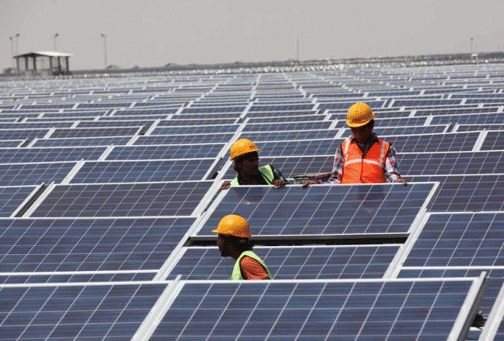
The Gujarat Solar Park, spread across a desolate 3,000-acre (1,200-hectare) swath of desert, can supply 214 megawatts of electricity, making it larger than China’s 200-megawatt Golmud Solar Park. Continue reading
Call to close North Taiwan’s aging, degenerating, nuclear power plant

 Activists call for shutdown of aging nuclear power plant following a massive earthquake and tsunami. Focus Taiwan, By Chen Ting-wei, Lin Meng-ju and Elizabeth Hsu Taipei, April 20 Concerned about the safety of an aging nuclear power plant in northern Taiwan, environmentalists on Friday called for the suspension of operations at the facility.
Members of several environmental protection groups warned at a press conference that the No. 2 Nuclear Power Plant in Wanli, New Taipei, which began commercial operations three decades ago, “has entered the final stage of its life cycle.”
“The discovery of cracked anchor bolts at one of the power plant’s reactors is the final warning,” said Green Consumers’ Foundation Chairman Jay Fang.
Cracks indicate the degeneration of the nuclear power plant’s structure, operating systems, and parts and components. Allowing the aging plant to continue running would jeopardize the public’s safety, Fang said, urging that the plant be shut down.The reactor where damaged bolts were found has been turned off for repairs and safety checks, but the plant’s other reactor is still running.
To draw the government’s attention to the issue, the environmentalists said they will set up a warning device, called the “Taiwan Doomsday Clock,” in front of the Legislative Yuan …
Half of Japan’s ruling Party against restarting nuclear reactors
Mayday for Japan’s nuclear industry BY: RICK WALLACE, TOKYO CORRESPONDENT The Australian April 21, 2012 “…….Teruyuki Mtasushita, head of a local group in the Oi area that is organising rallies to prevent the restart, said he was stunned the government was pushing ahead with new safety measures. “Anyone who stops and thinks about it finds it an absurd and impossible idea,” he said at a press conference in Tokyo.
“What locals are worried about is an earthquake. There are three faults on the east side of the Oi plant and those have not been evaluated, even though the Nuclear and Industrial Safety Agency was told to investigate.”
While the government is pushing all out for the Oi restart, Democratic Party of Japan insiders say it has deeply divided the ruling party. Mr Matsushita’s press conference was attended by five DPJ MPs opposed to the restart.
DPJ MP Kuniko Tanioka said the restart was “unforgivable” and showed that the government was unduly influenced by the nuclear industry. “Before we can talk about breaking with nuclear power generation, we need to break up the nuclear village in the parliament,” she said.
Another DPJ MP, Ben Hashimoto, said opposition within the party was growing. “I would say as many as half of us are against the idea of restart,” he said.
http://www.theaustralian.com.au/news/world/mayday-for-japans-nuclear-industry/story-e6frg6so-1226334685674
India wants to be seen as ‘non proliferation’ state, but won’t sign the Nuclear non Proliferation Treaty
 India pitches for membership of global non-proliferation regimes Indrani Bagchi, Times of India | Apr 19, 2012, NEW DELHI: India on Wednesday made the most persuasive case for India’s “full membership” of the global non-proliferation regimes. In a major policy statement, foreign secretary Ranjan Mathai told a gathering of nuclear experts that “the logical conclusion of partnership with India is its full
membership of the four multilateral regimes.”..
.. India’s membership is not an easy decision. First, there is an NPT adherence that is seen
as crucial criteria. India has not signed the NPT and is not likely to do so, as a non-nuclear weapons state. So India’s membership into these groups would have to take this refusal into account….
1 This Month

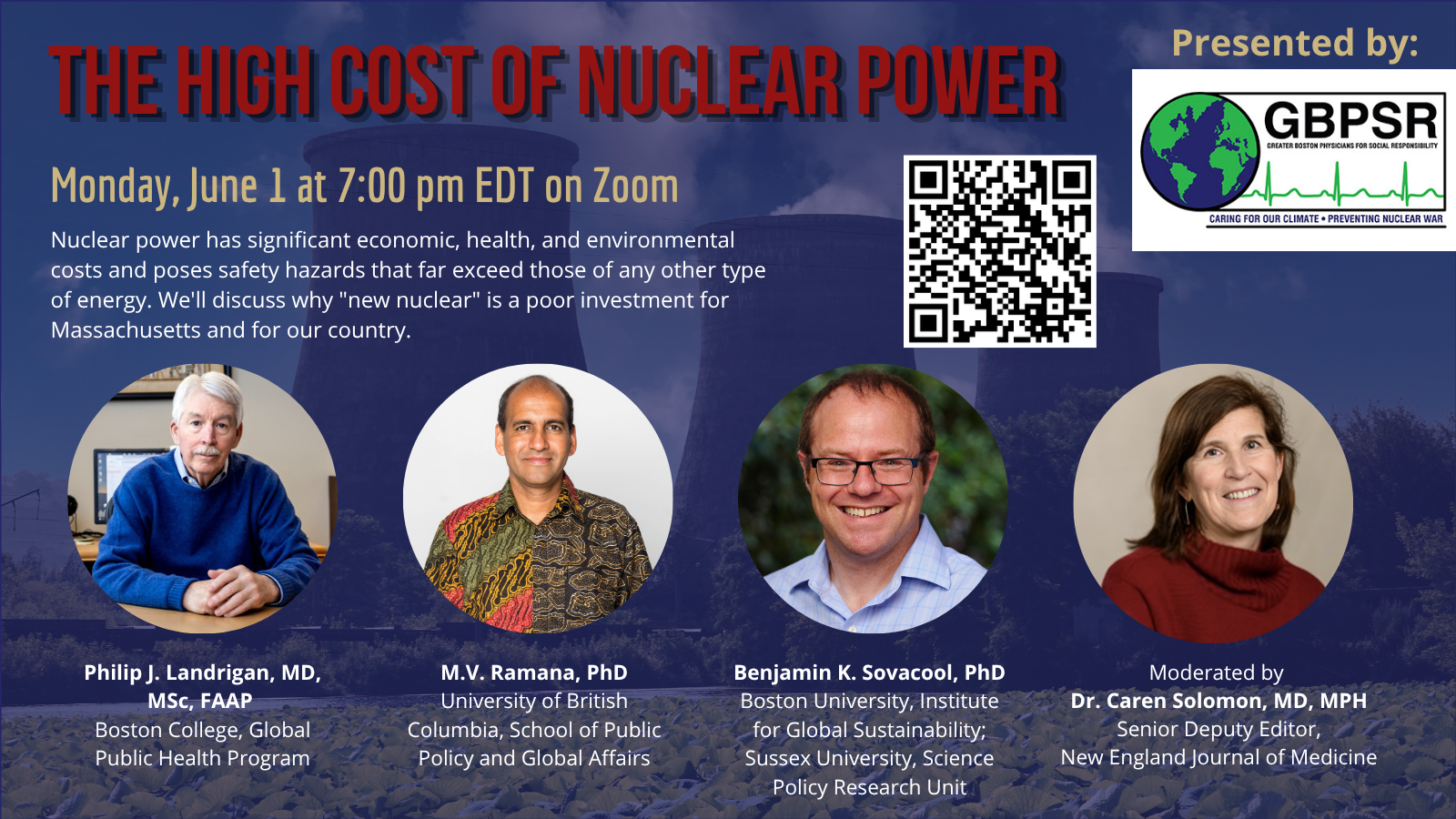
1 June Webinar – The High Cost of Nuclear Power – Register


of the week– Nuclear Reactor Information Task Force
To see nuclear-related stories in greater depth and intensity – go to https://nuclearinformation.wordpress.com
-
Archives
- May 2026 (243)
- April 2026 (356)
- March 2026 (251)
- February 2026 (268)
- January 2026 (308)
- December 2025 (358)
- November 2025 (359)
- October 2025 (376)
- September 2025 (257)
- August 2025 (319)
- July 2025 (230)
- June 2025 (348)
-
Categories
- 1
- 1 NUCLEAR ISSUES
- business and costs
- climate change
- culture and arts
- ENERGY
- environment
- health
- history
- indigenous issues
- Legal
- marketing of nuclear
- media
- opposition to nuclear
- PERSONAL STORIES
- politics
- politics international
- Religion and ethics
- safety
- secrets,lies and civil liberties
- spinbuster
- technology
- Uranium
- wastes
- weapons and war
- Women
- 2 WORLD
- ACTION
- AFRICA
- Atrocities
- AUSTRALIA
- Christina's notes
- Christina's themes
- culture and arts
- Events
- Fuk 2022
- Fuk 2023
- Fukushima 2017
- Fukushima 2018
- fukushima 2019
- Fukushima 2020
- Fukushima 2021
- general
- global warming
- Humour (God we need it)
- Nuclear
- RARE EARTHS
- Reference
- resources – print
- Resources -audiovicual
- Weekly Newsletter
- World
- World Nuclear
- YouTube
-
RSS
Entries RSS
Comments RSS
 nuclear-news