Yamaguchi Prefecture kills project for new nuclear plant

 Yamaguchi rejects Chugoku Electric’s license for new nuclear plant http://ajw.asahi.com/article/behind_news/social_affairs/AJ201210050069 5 Oct 12, THE ASAHI SHIMBUN YAMAGUCHI–Yamaguchi Governor Shigetaro
 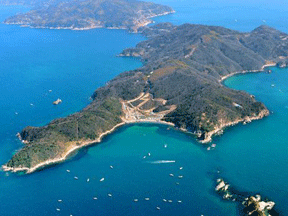 Yamamoto has rejected a license extension to Chugoku Electric Co. to reclaim land for a new nuclear power plant in Kaminoseki, Yamaguchi Prefecture effectively killing the project.
“We cannot grant permission at this moment. The decision has been made
not to grant the license,” Yamamoto told the news media on Oct. 5. The
license is set to expire Oct. 6. Continue reading
Other Nuclear Politics in Japan
Fukushima Nuclear Crisis Update for October 2nd to October 4th, 2012 Greenpeace International, by Christine McCann – October 5, 2012 “….Other Nuclear Politics in Japan Municipal leaders and residents in towns surrounding Electric Power Development Company’s (known in Japan as J-Power) proposed Ohma nuclear power plant are protesting resumption of construction there, citing concerns about their safety in the event of a nuclear disaster. Continue reading
Fukushima residents treated with discrimination, like the hibakusha
the same sort of discrimination is happening to people who were exposed to radiation in Fukushima.
Voices of the “Explosion Covered People” http://www.npr.org/blogs/pictureshow/2012/09/25/161755636/voices-of-the-explosion-covered-people More than 65 years after atom bombs were dropped on Hiroshima and Nagasaki, there are still thousands of people suffering. In addition to experiencing lingering effects from the radiation, many are also considered social outcasts.
The term hibakusha in Japanese means “explosion-covered people” and applies to anyone who came within 2 kilometers (approximately 1.25 miles) of the hypocenter of the bomb — within two weeks of the explosion. Thought to be diseased and contagious, many people hid their experience from friends, family and society at large to avoid being shunned. Continue reading
State of the Fukushima Reactors
Fukushima Nuclear Crisis Update for October 2nd to October 4th, 2012 Greenpeace International, by Christine McCann – October 5, 2012 “…State of the Fukushima Reactors TEPCO has finally installed a new thermometer in the crippled #2 reactor at the Fukushima Daiichi plant. The reactor experienced a meltdown in the days following the Fukushima nuclear disaster; since then, five out of six thermometers in the reactor have broken. If the final thermometer broke, the utility would have no way of knowing if the reactor was overheating and in danger of further meltdown. Although they cannot see inside the reactors, workers believe that the new thermometer is near the bottom of the pressure vessel.
The NRA will declare the Fukushima Daiichi plant a “special nuclear facility” in order to oversee stabilization of the plant, as well as its decommissioning. Currently, the agency has no authority over TEPCO’s plans there. NRA Chair Shunichi Tanaka said this week that the Fukushima plant is still unstable, contradicting earlier government reports that operations there had been stabilized.
This week, TEPCO began removing 764 spent fuel rods from reactor #4 at its Fukushima Daini power plant. The Daini plant is located approximately 11 km from the crippled Fukushima Daiichi plant, where a triple meltdown occurred after power was lost there after last year’s massive earthquake and tsunami. Although a nuclear emergency was also declared at the Daini plant, workers were able to recover cooling systems and avoid meltdowns at the reactors. The utility is moving the rods to a storage pool on upper floors of the building, and eventually plans to follow suit with reactors #1, #2, and #3, a process that will continue through the end of 2014. (Source: NHK) http://www.greenpeace.org/international/en/news/Blogs/nuclear-reaction/fukushima-nuclear-crisis-update-for-october-2/blog/42456/
Human Rights request to Fukushima Prefecture
 Human Rights Now (3 September 2012)【Statement】Request for the Radical Reform of the Health Check System including Thyroid Examination for the Affected People by the Nuclear Power Plant Accident “…..HRN requests to Fukushima prefecture to:
1. Conduct the thyroid examination for children at least once a year for the “early identification” and “early treatment.” Especially when the thyroid nodules or cysts are recognized, establish and implement the system quickly;
2. Expand the thyroid examination to adults, and also conduct the blood and urine examinations;
3. Provide information of the thyroid examination and others (such as blood examination and thyroid sonogram) conducted by the prefecture to first-person or their parents, and provide explanation if requested;
4. Store the result of the thyroid examination over a long period of time for the future follow-up and comparison, and disclose the information of the examination result when requested by the examinees or their parents, without asking the information disclose procedure. Also, take necessary measures so that other municipalities and medical institutes that will provide the health examinations can share the data.
HRN requests to the state to:
1. From the position of protecting the residents’ rights to health around the nuclear power plant accident, as a responsibility of the state, construct the guidelines regarding health checks, examination, and medical treatment promptly. In the course of that, take into account the international perception and the good practice of medical policies, taken by the related countries of the Chernobyl accident;
2. Publish guidelines about the information disclosure of the result of health examinations including the thyroid examination, and instruct the prefecture;
3. As a state, commit to the health checks of the prefecture, and request the drastic reform and improvement of the examination system, based on the above mentioned recommendations towards Fukushima prefecture;
4. Provide a financial support to the municipalities in Fukushima prefecture to enable them to establish the examination systems including the thyroid examination and the internal exposure examination; secure the base hospitals of the health examinations including the thyroid examination in all areas in Japan, and provide a financial support so that the affected people are able to take necessary examinations, such as thyroid and internal exposure examinations, for free at least once a year, regardless of their living place.
HRN requests to Mr. Shunichi Yamashita (the head of the Exploratory Committee on the “Fukushima Health Management Survey,” the vice-president of the Fukushima Medical University, and the president of theRadiation Medical Science Center for the Fukushima health management survey) to:
1. Officially withdraw the announcement (dated 16 January 2012) sent to the members of the Japan Thyroid Association.
These recommendations are all important to protect the right to people’s health (Article 25 of the Constitution, and the International Covenant on Economic, Social, and Cultural Rights), therefore, prompt improvement and implementation are required. http://hrn.or.jp/eng/activity/area/japan/statementrequest-for-the-radical-reform-of-the-health-check-system-including-thyroid-examination-for/
Contamination, Including Human Exposure – Fukushima
Fukushima Nuclear Crisis Update for October 2nd to October 4th, 2012 Greenpeace International, by Christine McCann – October 5, 2012 “…Contamination, Including Human Exposure The JAEC has begun monitoring radiation levels in restricted zones of Fukushima Prefecture via unmanned helicopters. The project, which was requested by the Ministry of Education, Culture, Sports, Science, and Technology (MEXT), marks the first time that radiation has been measured from the air in the no-go zone. The agency will compile a report by the end of the month, including radiation maps of hotspots. Meanwhile, another research team is studying radiation levels in forests and rivers there, in order to determine their effect on human habitats and the ocean. The research will continue for the next 20 years. (Source: NHK)
Researchers from the Nippon Veterinary and Life Science University (NVLU) have begun to study the effects of radiation on Japanese macaques, noting that the similarities between primates and humans may help them determine how radiation could eventually affect people. Shin-ichi Hayama, one of the scientists working on the project, said, “This presents an opportunity to study the impact of low-dose radiation on primates, which are so close to humans, over a more than 20-year period. That could help forecast the impact on humans, as well.”http://www.greenpeace.org/international/en/news/Blogs/nuclear-reaction/fukushima-nuclear-crisis-update-for-october-2/blog/42456/
Evacuation and Repopulation – Fukushima
Fukushima Nuclear Crisis Update for October 2nd to October 4th, 2012 Greenpeace International, by Christine McCann – October 5, 2012 “…Evacuation and Repopulation In spite of efforts by the central government to lift evacuation orders and begin repopulating some areas of Fukushima Prefecture located between 20 and 30 km from the site of the Fukushima nuclear disaster, a new survey conducted by the Asahi Shimbun shows that only 11% of those who evacuated the prefecture have returned. Approximately 58,000 people lived there before the crisis erupted, and 48% evacuated in the months following the nuclear meltdowns. The area includes Minami-Soma, Tamura, Kawauchi, Nahara, and Hirono… http://www.greenpeace.org/international/en/news/Blogs/nuclear-reaction/fukushima-nuclear-crisis-update-for-october-2/blog/42456/
Nuclear-capable Prithvi II ballistic missile test-fired http://articles.economictimes.indiatimes.com/2012-10-04/news/34260438_1_sleek-missile-strike-range-ballistic-missile Oct 4, 2012, BALASORE (Odisha): Sharpening its missile prowess, India today successfully test-fired its nuclear- capable Prithvi-II ballistic missile with a strike range of 350 km from a test range near here as part of a user trial by the army.
“The surface-to-surface missile was flight tested at around 0907 hrs from a mobile launcher from Integrated Test Range’s launch complex-3 at Chandipur,” defence sources said.
Death of democracy in India: anti nuclear heroes – “Enemies of the State”
 A non-governmental fact finding team that visited area found that police
  personnel had seriously injured many protestors, inflicted physical and verbal sexual abuse on several women, and at least two children had been stripped and tortured
serious criminal charges have been slapped against more than 150,000, mostly unnamed villagers…. at least 10,000 people are charged with sedition and waging war against the state..
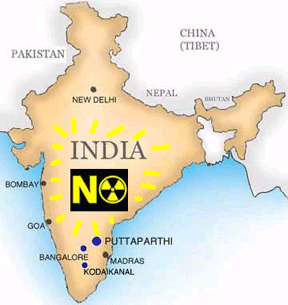 India Clamps Down on Villagers’ Anti-Nuclear Protests, Earth Island Journal, BY NITYANANDJAYARAMAN – OCTOBER 4, 2012 In their eagerness to power the country’s growing economy, ndian authorities are treating opponents of nuclear energy as enemies of the state
If the chief minister of Tamil Nadu has her way, democracy would be dispensed with in the southern Indian state. On two separate occasions this year, chief minister J. Jayalalithaa let loose battalions of armed police on thousands of fisherfolk and farmers to crush their months-long non-violent protest against the unfinished nuclear power plants in Koodankulam and Idinthakrai, two coastal villages in the state.
In March, when she sent out security personnel to quell the protests, police squads blocked roads leading to villages and stopped essential supplies like milk and drinking water from reaching the area. (Read our earlier report on the conflict here.) Continue reading
Serious safety issues at Kudankulam nuclear plant – Supreme Court hears

 Kudankulam Nuclear Power Plant suffers from ‘serious issues’: Anti-nuclear activists tell Supreme Court
http://economictimes.indiatimes.com/news/politics/nation/kudankulam-nuclear-power-plant-suffers-from-serious-issues-anti-nuclear-activists-tell-supreme-court/articleshow/16670289.cms 4 OCT, 2012 NEW DELHI: Kudankulam nuclear power plant suffers from lack of safety measures and is plagued by several other “serious issues” and must not be commissioned till they are resolved, anti-nuclear activists told the Supreme Court today.
Appearing before a bench of justices K S Radhakrishanan and Deepak Misra, they submitted that the safety measures recommended by Atomic Energy Regulation Board (AERB) have not been put in place and government agencies have not determined till date the site for storing spent nuclear fuel.
“It is clear that KKNPP suffers from several serious issues that need to be resolved before the plant can be commissioned. Lakhs of people living in vicinity of the plant are bound to be apprehensive in such a situation.
“Instead of dealing with these issues and addressing the concerns in a meaningful way, the government has launched a wave of repression and has slapped 8000 sedition cases against peaceful protesters,” said advocate Prashant Bhushan, appearing for the petitioners. He said the government has not complied with the statutory guidelines framed by the National Disaster Management Authority (NDMA) regarding nuclear safety and pleaded with the apex court to restrain the Centre
from commissioning the plant. The bench, however, refused to pass any order and asked the petitioners to implead NDMA.
The petitioners’ counsel also questioned the Centre’s decision of exempting Russian reactor manufacturer firm from liability in case of accident due to defect in the reactor.
Massive solar power farm for Japan
SMA Solar Inverters To Be Used In Japan’s Biggest Solar Farm http://www.energymatters.com.au/index.php?main_page=news_article&article_id=3409 5 Oct 12 SMA has been selected as the sole supplier of inverters for Japan’s largest solar power plant.
The 70 megawatt solar panel based project operated by Kagoshima Mega Solar Power Corporation will utilise 140 Sunny Central 500CP–JP inverters. SMA will also supply 1,260 Sunny String Monitors for monitoring the massive solar farm. Continue reading
India: opponents of nuclear power treated as ‘pathological’
The way the Indian government has dealt with the opponents of the Koodankulam nuclear reactors being built in Tamil Nadu violates all three red lines.
The Department of Atomic Energy and its subsidiary Nuclear Power Corporation of India Ltd. see the opposition as a pathology to be cured by psychiatrists from the National Institute of Mental Health and Neurosciences.
Don’t impose K’kulam reactorshttp://www.thedailystar.net/newDesign/news-details.php?nid=252289, 3 Oct 12, Praful Bidwai Even zealous supporters of nuclear power should logically concede three things to their opponents. First, after Fukushima, it’s natural for people everywhere to be deeply sceptical of the claimed safety of nuclear power, and for governments to phase out atomic programmes, as is happening in Germany, Switzerland, Italy, and now Japan.
Second, nuclear power, like all projects, should only be promoted with the consent of local people, and with scrupulous regard for civil liberties. And third, safety must be paramount in reactor construction and operation, with strict compliance with rules laid down by an
independent safety authority. Continue reading
Indian government’s nuclear attack on democracy
Nuking democracy at Kudankulam Financial Chronicle, By Praful Bidwai Oct 03 2012 Is nuclear power going to be promoted in India only at gunpoint, and in brazen violation not just of people’s fundamental rights, but also of the norms and rules to be set by an independent safety regulator?
Going by what the government, department of atomic energy, Nuclear Power Corporation (NPCIL), and Atomic Energy Regulatory Board (AERB) are doing at Kudankulam in Tamil Nadu, the answer is an emphatic yes.
To start with, the AERB is not an independent agency. As shown by the Comptroller and Auditor-General’s recent report, it’s slavishly subservient to the government and DAE-NPCIL. Nor has it evolved transparent safety norms. Its integrity is in grave doubt. It does not disclose information that’s vitally important to public safety. Critical documents on safety codes/ guidelines have disappeared from
its website, for example,…
… the state and central police have unleashed repression against Kudankulam’s grassroots protesters. Although there hasn’t been a single violent incident, the police have lodged first information reports against several thousand people, charging many with sedition and waging war against the State, on this scale, probably for the first time since independence. On September 10, they attacked peaceful unobtrusive protesters with batons and
tear-gas. They literally drove many agitators into the sea, molested women, looted homes and killed a fisherman.
A fact-finding team led by Justice BG Kolse-Patil describes this as a “reign of terror”, with
“totally unjustified” physical abuse, vindictive detention of 56 people including juveniles, and sexual harassment. Such police behaviour “has no place in a country that calls itself democratic”.
This comes on top of systematic demonisation of the protesters as “foreign-inspired”, repeated harassment of their sympathisers, and deportation of three Japanese activists, who wanted to express solidarity with them. Such repression is becoming routine in India and undermining democracy. That’s the additional price nuclear power will extract from us.
http://wrd.mydigitalfc.com/op-ed/nuking-democracy-kudankulam-443
Japan’s intelligence agency pressed for stopping research on radiation spread
Intelligence agency pressured researchers to withhold info on spread of Fukushima radiation http://enenews.com/intelligence-agency-pressured-researchers-to-stop-investigating-spread-of-fukushima-radiation October 3rd, 2012
Title: Government body pressured to withhold info on Fukushima radiation
Source: The Hankyoreh (S. Korea)
Author: Lee Keun-young
Date: Oct. 3, 2012
Government body pressured to withhold info on Fukushima radiation
The National Institute of Environmental Research (NIER) abruptly halted its inquiry last year into the dispersion of radiation from Japan’s Fukushima nuclear power plant disaster after contacting the National Intelligence Service, it was belatedly revealed on Oct. 2.
[…]
lawmaker Chang Ha-na […] said on Oct. 2 that an examination by the Ministry of Environment inspector’s office at the [sic] showed NIER research to predict the spread of radiation from Fukushima, and its effects on South Korea, was halted immediately after a report to the NIS.
[…]
The inspector’s office examination took place in the immediate wake of March reports from the Hankyoreh and other news outlets alleging NIS involvement in the decision to suspend NIER research indicating that trace amounts of radiation were reaching the Korean Peninsula.
[…]
The inspector’s office requested a “stern warning” to [the NIER director] to ensure no similar incidents occurred in the future.
[…]
“This is as good as an admission that there was pressure from the NIS,” [lawmaker Chang] added.
New nuclear reactor now being built North of Tokyo
 Work resumes on Japanese nuclear reactor http://www.abc.net.au/news/2012-10-02/japan-resumes-reactor-work/4290390 By North Asia correspondent Mark Willacy,2 Oct 12, A Japanese power firm has resumed construction of an atomic reactor, despite government plans to phase out nuclear power in the wake of the Fukushima disaster.
The reactor – 650 kilometres north of Tokyo – is being built by the J-Power company which had planned to have it operational in two years’ time. The company says it has now resumed construction of the reactor which was halted work after the Fukushima meltdowns. Continue reading
1 This Month

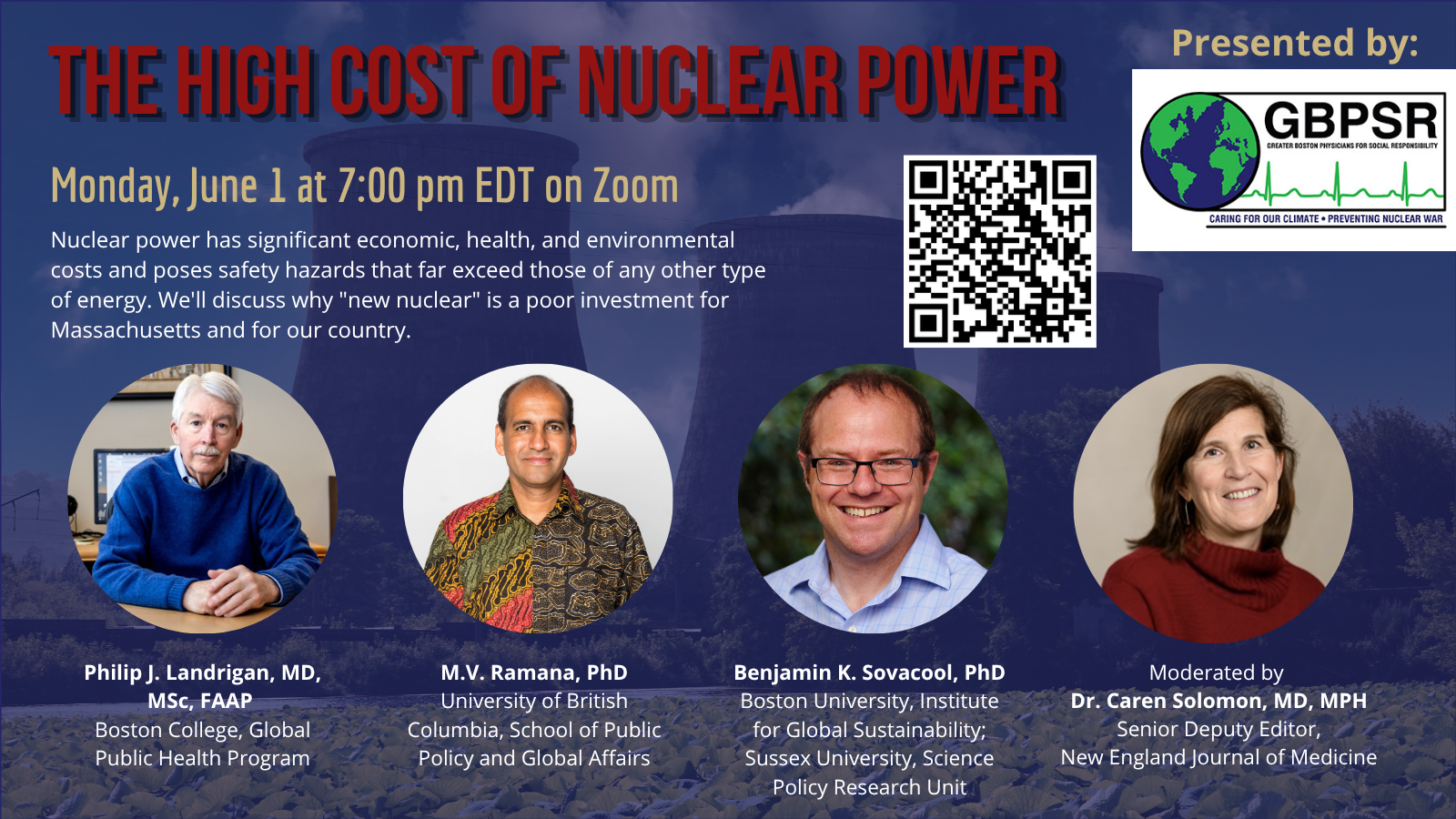
1 June Webinar – The High Cost of Nuclear Power – Register


of the week– Nuclear Reactor Information Task Force
To see nuclear-related stories in greater depth and intensity – go to https://nuclearinformation.wordpress.com
-
Archives
- May 2026 (235)
- April 2026 (356)
- March 2026 (251)
- February 2026 (268)
- January 2026 (308)
- December 2025 (358)
- November 2025 (359)
- October 2025 (376)
- September 2025 (257)
- August 2025 (319)
- July 2025 (230)
- June 2025 (348)
-
Categories
- 1
- 1 NUCLEAR ISSUES
- business and costs
- climate change
- culture and arts
- ENERGY
- environment
- health
- history
- indigenous issues
- Legal
- marketing of nuclear
- media
- opposition to nuclear
- PERSONAL STORIES
- politics
- politics international
- Religion and ethics
- safety
- secrets,lies and civil liberties
- spinbuster
- technology
- Uranium
- wastes
- weapons and war
- Women
- 2 WORLD
- ACTION
- AFRICA
- Atrocities
- AUSTRALIA
- Christina's notes
- Christina's themes
- culture and arts
- Events
- Fuk 2022
- Fuk 2023
- Fukushima 2017
- Fukushima 2018
- fukushima 2019
- Fukushima 2020
- Fukushima 2021
- general
- global warming
- Humour (God we need it)
- Nuclear
- RARE EARTHS
- Reference
- resources – print
- Resources -audiovicual
- Weekly Newsletter
- World
- World Nuclear
- YouTube
-
RSS
Entries RSS
Comments RSS
 nuclear-news