Youtube: ground under Fukushima Unit 4 is sinking
 http://www.youtube.com/watch?feature=player_detailpage&v=-LCTv65aqgA#t=101s Japan Diplomat: Ground underneath Fukushima Unit 4 is sinking — More than 30 inches in some areas — Now in danger of collapse (VIDEO)
Tweet from former Fukushima worker @Happy11311 translated by Fukushima Diary:
[…] the plant area may have a land subsidence depending on the volume of water to pump up. I think Tepco knows that…
More from @Happy11311: Fukushima worker concerned about ground settlement at plant — What will happen when Tepco starts pumping up 100s of tons of groundwater?
See also: Japan Diplomat: Ground underneath Fukushima Unit 4 is sinking — More than 30 inches in some areas — Now in danger of collapse (VIDEO)
See also: Japan Diplomat: Ground underneath Fukushima Unit 4 is sinking — More than 30 inches in some areas — Now in danger of collapse (VIDEO)
Japan’s “transition towns” go for renewable energy, not nuclear
 Energy transition: no longer why but how
Since the Fukushima nuclear disaster in 2011, Fujino’s popularity as a transition town has grown. Hide Enomoto, co-founder of the Fujino transition town initiative says people around Japan are realizing just how important it is to switch towards cleaner sources of energy. “The people are no longer asking ‘why do we need an energy transition?,” Enomoto said. “Rather ‘how are we going to do it?”……
Huge alternative energy potential
If some studies are to be believed, Japan could in future completely turn its back on fossil fuels and meets its entire energy needs through renewable energy by 2050
‘Transition Towns’ lead the way in low-carbon living, DW, 7 May 13 Following the Fukushima nuclear disaster in 2011, many in Japan are talking about switching to renewable energy for a cleaner future. The “Transition town” of Fujino has already made that a reality……. Following the catastrophe, the Japanese government led by Naoto Kan initially decided to phase out nuclear energy in Japan by 2040. Since summer 2012, all Japanese reactors – with the exception of two – have been taken off the grid. Instead, Tokyo plans to set up the world’s biggest offshore wind park along the Fukushima coast by 2020. The plan foresees installing 143 wind turbines with a total capacity of 1 gigawatts. Construction is expected to begin in July 2013……. Continue reading
Still the danger of radioactive scrap metal in Delhi
 Delhi still not radiation ready Darpan Singh, Hindustan Times New Delhi, May 08, 2013 Three years after a man was killed in India’s first case of radiation exposure at the Mayapuri scrap market in West Delhi, there is still a big question mark on the preparedness to prevent such disasters.
The National Green Tribunal (NGT) will on Wednesday hear a petition, which has claimed the mechanism to detect radiation is withering away. There is no screening of scrap before it finds its way to the market. The National Disaster Management Authority is still in the process of procuring devices, to be given to the police, to detect radiation.
Safety hazards of India’s Kudankulam nuclear plant
Behind the scenes at Kudankulam… THE HINDU, VASUDEVAN MUKUNTH, 7 May 13 “…. the people of Kudankulam and its surrounding fishing villages protest against the plant and call for its shutdown. Why? Despite accidents being unpredictable by definition, they do occur because the enterprise is immensely complex for anyone to keep track of all its components at the same time.
While the Department of Atomic Energy (DAE) could be addressing this issue well, etc., the complexity increases the opportunities for accidents to occur rather than directly precipitating them. Despite a decent track record for maintenance, the one for compensation in India is dismal, and so the people’s fears are bound to persist.
In order to explain how a nuclear power plant works, I’ve divided it up into short chapters, each explaining the role of an important component. … Continue reading
Continued flooding will damage Fukushima reactors’ structures
NBC News: Fears that Fukushima plant could “break apart” during cleanup process http://enenews.com/nbc-news-fears-that-fukushima-plant-could-break-apart-during-cleanup-process

Title: ‘A very fragile situation’: Leaks from Japan’s wrecked nuke plant raise fears
Source: NBC News
Author: Arata Yamamoto and Ian Johnston
Date: May 1, 2013
Like the persistent tapping of a desperate SOS message, the updates keep coming. Day after day, the operators of the wrecked Fukushima Dai-ichi nuclear power plant have been detailing their struggles to contain leaks of radioactive water.
The leaks, power outages and other glitches have raised fears that the plant — devastated by a tsunami in March 2011 — could even start to break apart during a cleanup process expected to take years. […]
“Until you can stop that transfer, you will not contain the radioactivity. That will go on for years and years until they contain it,” [Independent nuclear expert John Large] said. “The structures of containment start breaking down. Engineered structures don’t last long when they are put in adverse conditions.” […]
See also: Fears have also emerged that the Dai-ichi plant could break apart during cleaning, NBC News reports –
NY Daily News
Tomatoes, deformed by Fukushima radiation, on sale in Japan
 Fukushima: Japan sells radiation-mutated tomatoes http://www.agoracosmopolitan.com/news/headline_news/2013/05/04/5858.html# 04 MAY 2013 BY RAYMOND Lori Mochizuki, who edits Fukushima-Diary.com, reports that capitalists in Japan are now selling clearly discernible radiation contaminated and genetically mutated tomatoes. Mr. Mochizuki reports that such mutated plants are being increasingly found all over Japan, as the capitalist try to draw our attention elsewhere.
“I didn’t buy them.” They look like the mutated tomato on this article. The labels of origin read “Kumamoto”, in Kyushu.
Capitalists in Japan have apparently become so bold that they now seek to make money from tomatoes not fit to be eaten by human or animal alike, as their achon confederates in America and elsewhere seek to cover-up their negligent response to the on-going and worsening Fukushima crisis.
Prme Minister Abe signing Turkey up to buy Japanese nuclear technology

it’s a bit dodgy to buy from Mitsubishi Heavy Industries, who built the Fukushima nuclear reactors
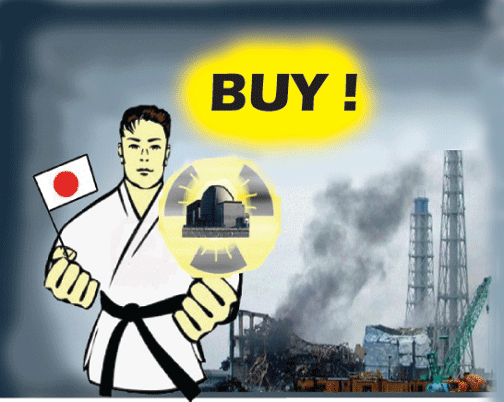 Japan signs Turkey nuclear deal, BBC News 4 May 13, Shinzo Abe signed the deal in Turkey with Prime Minister Recep Tayyip Erdogan The Turkish government has signed a deal with a Japanese-French consortium to build a new nuclear power station.
The $22bn (£14bn) contract is Japan’s first successful bid for an overseas nuclear project since a tsunami wrecked the Fukushima power station.
The deal was signed by visiting Japanese Prime Minister Shinzo Abe.
Turkish Prime Minister Recep Tayyip Erdogan said it would transform relations with Japan into a “strategic partnership”.
“What happened at Fukushima upset all of us. But these things can happen. Life goes on. Successful steps are being taken now with the use of improved technology,” the Turkish prime minister added.
The deal comes as part of renewed efforts to promote Japanese nuclear technologies abroad, despite concerns over safety. One of the Japanese firms included in the consortium is Mitsubishi Heavy Industries, one of the companies behind the Fukushima plant damaged in the 2011 earthquake and tsunami.
Turkey is also prone to earthquakes, and the government cited Japan’s expertise in earthquake protection as one of the factors in signing the deal……http://www.bbc.co.uk/news/business-22398356
Getting ready for nuclear disasters – radiation-proof vehicles
Japan Launches Radiation-proof Vehicles To Deal With Nuclear Disasters http://www.rttnews.com/2109025/japan-launches-radiation-proof-vehicles-to-deal-with-nuclear-disasters.aspx?type=gn&utm_source=google&utm_campaign=sitemap 5/3/2013 Japan’s National Police Agency has launched radiation-proof vehicles at its headquarters in Tokyo and the nuke accident-hit Fukushima prefecture to better prepare for nuclear-related trouble.
The vehicles have lead on their bodies and windows, air-pressurized, and can monitor atmospheric radiation levels. The 10.5-meter-long vehicle weighing 21 tons costs more than $1.5 million, Japanese media reported on Friday citing the Agency.
It said the vehicles would be mobilized in the event of terror attacks on nuclear facilities or nuclear accidents.
Since the September, 2001 terror strikes on the United States, Japan has been deploying police units at 22 of its nuclear facilities. Police stepped up their alert for possible attacks on nuke facilities after the Fukushima nuclear disaster that contaminated food and water after radiation leak from the tsunami-crippled nuclear power plant of the Tokyo Electrical Power Company.
The Agency said one of the vehicles would be used at the Fukushima plant, while one in Tokyo would be put on standby for use in emergencies across Japan.
The Fukushima radiation clean up is failing
Time: Fukushima nuclear struggles “would be the stuff of comedy” — “It’s not funny, not really” — “Not sure things could be much worse if Wile E. Coyote were Tepco’s CEO” http://enenews.com/time-fukushima-nuclear-struggles-would-be-the-stuff-of-comedy-its-not-funny-not-really-not-sure-things-could-be-much-worse-if-wile-e-coyote-were-tepcos-ceo
Title: Japan: Why the Fukushima Daiichi Nuclear Plant’s Cleanup Is Faltering
Source: Time.com
Author: Bryan Walsh
Date: May 01, 2013

Honestly, if the consequences weren’t potentially so dire, the ongoing struggles to clean up the Fukushima Daiichi nuclear plant in northern Japan would be the stuff of comedy. […] I’m not sure things could be much worse if Wile E. Coyote were TEPCO’s CEO.
But it’s not funny, not really, because the consequences of the meltdown and TEPCO’s mismanagement are very real. […] More than two years after the tsunami, TEPCO is still racing against time — and just barely staying ahead.
[…] the fact that the company is still running the Fukushima cleanup seems like a worse idea with each passing day.
[…] As the groundwater debacle demonstrates, TEPCO has been making things up as it goes along since the beginning — and the Japanese government has let them.
[…] And while Japan is unique, collusion between the tightly closed nuclear industry and the government elsewhere isn’t.
More from Time’s Bryan Walsh: Time.com: Fukushima dangers “may not be as grave as we first feared” — Only 10 people surveyed had high levels of radiation, says study — Only 10% of Chernobyl release
Fukushima nuclear power plant is very unstable
Nuclear Safety Expert: “Many experts are extremely concerned we could have additional releases” at Fukushima plant — “Very, very unstable facility” (AUDIO) http://enenews.com/nuclear-safety-expert-many-experts-are-extremely-concerned-we-could-have-additional-releases-at-fukushima-plant-very-very-unstable-facility-audio
Title: Workers at Fukushima nuclear plant struggle to contain rush of contaminated water
Source: FSRN
Date: May 1, 2013
Dan Hirsch, a nuclear safety expert, president of the Committee to Bridge the Gap, and lecturer at the University of California, Santa Cruz: Many experts are extremely concerned that we could have additional releases.
This is a very, very unstable facility.
Very, very damaged with people working in extraordinary high radiation fields trying to repair it.
Full broadcast here
 AUDIO Workers at Fukushima nuclear plant struggle to contain rush of contaminated water, 30 April 13 http://fsrn.org/audio/workers-fukushima-nuclear-plant-struggle-contain-rush-contaminated-water/11929
At the damaged Fukushima Daiichi nuclear plant in Japan, workers are struggling to contain a rush of highly radioactive wastewater. It’s flowing at the rate of 75 gallons per minute, according to the New York Times. Officials with the Tokyo Electric Power Company say they are considering clearing a nearby forest site in order to make more room for storage tanks. It’s the latest in a series of ongoing issues at the site. Earlier this month operators had to shut down the cooling of a spent fuel pool after rodents damaged an electrical line.
The International Atomic Energy Agency now estimates it will take more than 40 years to clean up the site. For more, we’re joined by Dan Hirsch, a nuclear safety expert and president of the Committee to Bridge the Gap, a nuclear policy group. He’s also a lecturer at the University of California, Santa Cruz.
Japan’s Prime Minister on nuclear selling spree in Dubai
Japan, UAE set to sign nuclear agreement as Abe visits, Global Post, 2 May 13, Japan and the United Arab Emirates are set to sign a nuclear agreement on Thursday as Japanese Prime Minister Shinzo Abe, who is visiting the country, pushes his bid to sell Japanese nuclear technology overseas.
The two countries’ representatives will ink the deal following a meeting between Abe and UAE Vice President and Prime Minister Sheikh Mohammed bin Rashid Al Maktoum in Dubai.
Abe, since assuming his post last December, has promoted the exports of Japanese infrastructure, such as nuclear power plants, as a key pillar of the government’s growth strategies aimed at revitalizing the Japanese economy……. http://www.globalpost.com/dispatch/news/kyodo-news-international/130502/japan-uae-set-sign-nuclear-agreement-abe-visits
In last few days, high spike of radiation in air in Japan and West USA
 Fukushima pushes Japan over 26 times normal radiation http://www.agoracosmopolitan.com/news/headline_news/2013/05/02/5835.html 02 MAY 2013 BY : BY SADIA ARSHAD
- As of the sampling done four days ago, the radiation fallout level has spiked up to twenty six times its average level since the past year in Japan. The reading indicates 100.4 MBq/Km2. The average reading was at 3.85 MBq/Km2 until 26th April. The reason behind this sudden climb is not known as of yet.
The leak is suspected from the radioactive waste water from the water storage ponds at Fukushima I Nuclear Power Plant. The amount of radioactive material in the water sample taken from Pond No. 1 on 27th April has led to this discovery.
As per air samples taken by the United States Environmental Protection Agency at eighteen different collection points in the Pacific States, the average level of radioactivity in the air has also spiked to more than seven times the normal levels.
Monju nuclear reprocessing plant – black smoke and fire alarm
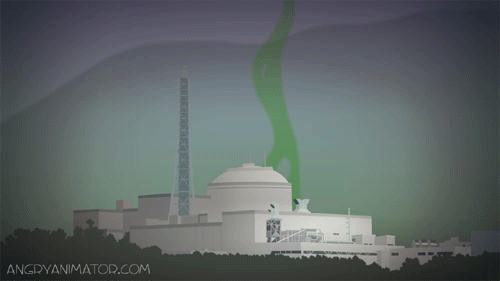 Fire at Japan’s Monju nuclear reprocessing plant? May 3, 2013 NHK: Black smoke at Japan nuclear plant — Fire alarm sounds after test http://enenews.com/nhk-black-smoke-at-japan-nuclear-plant-fire-alarm-sounds-after-testTitle: Black Smoke Detected From Nuclear Reactor ‘Monju’ During Test Operations |
Source: RocketNews24 via NHK
Author: Andrew Miller
Date: May 1, 2013
Black Smoke Detected From Nuclear Reactor ‘Monju’ During Test Operations
It as been reported that engineers at Japan’s fast breeder reactor plant Monju made a mistake during testing of the plant’s emergency power generator, which subsequently resulted in the release of black smoke and the ringing of the plant’s fire alarm. […]
JAERI [Japan Atomic Energy Research Institute] reported this latest incident to the country’s Nuclear Regulation Authority, claiming that the conduct of the staff at the plant is clearly in breach of security regulations. It also made the following statement:
“In order to prevent a recurrence of the same problems, it is necessary to pay meticulous attention to the way in which personnel at the plant carry out their work.”
Full report here
Japanese media hides the truth about Fukushima
Bad news Has the media hidden the truth about Fukushima? Number 1 Shimbun 2 May 13, David McNeill, Two years after the Fukushima nuclear crisis began, two media experts dissect how it has been covered by the media. Takashi Uesugi is a freelance journalist and author of several books on the Fukushima crisis, including Terebi Wa Naze Heiki De Uso Wo Tsukunoka? (“Why does television tell so many lies?”). He is also one of the founders of The Free Press Association of Japan (www.fpaj.jp), an attempt to offer an alternative to Japan’s press club system. Mamoru Ito is professor of media and cultural studies at Waseda University and author of Terebi Wa Genpatsu Jiko Dou Tsutaetenoka? (“How did television cover the nuclear accident?). Both are highly critical of the media’s performance.
Uesugi-san, is it true that you have been banned from the media because of your comments on Fukushima?
Until two years ago, I had regular programs on television and radio. Now the only regular radio that I do is Tokyo FM. I don’t do TBS radio [where he had a regular slot]. I have no hope of appearing on NHK or on the commercial networks. I used to be a regular or semi-regular on several shows but now not even once. I was also a regular guest on radio shows, but not anymore.
I found out two years ago that the electric utilities in Japan are major TV sponsors. That year, they spent ¥70~88.8 billion on advertising, more than Panasonic’s ¥70 billion and Toyota’s ¥50 billion. When I started claiming that this amounted to bribery of the media by Tepco, I no longer was asked to appear on radio shows……… http://no1.fccj.ne.jp/index.php?option=com_content&view=article&id=870
Fukushima nuclear buildings getting flooded with radioactive water
 Radioactive water floods Fukushima buildings http://www.globalpost.com/dispatch/news/regions/asia-pacific/japan/130430/radioactive-water-floods-fukushima-buildings 1 May 13,
Workers have been struggling to contain radioactive wastewater left over from the Fukushima disaster. Radioactive groundwater is pouring into the buildings of the Fukushima Daiichi nuclear power plant at the rate of 75 gallons a minute, the New York Times reported. Worse, the flooding is not new. It’s been a constant headache since the nuclear disaster two years ago, forcing a small army of workers to continuously struggle to contain the endless flow of water.
“The water keeps increasing every minute, no matter whether we eat, sleep or work,” Masayuki Ono, a general manager with the Tokyo Electric Power Company, told the Times. “It feels like we are constantly being chased, but we are doing our best to stay a step in front.”
More from GlobalPost: On Location Video: The dirty work of cleaning up Fukushima
According to the Times, the workers use massive tanks sprawling over 42 acres to hold the water, and even that isn’t enough.
In an interview with the Associated Press, Ono’s description of the tanks was not exactly reassuring: “We admit that the underground tanks are not reliable. But we must keep using some of them that are relatively in good shape while monitoring them closely.”Earlier this month, TEPCO admitted that one of those holding tanks may have leaked up to 120 tons of contaminated water.
1 This Month
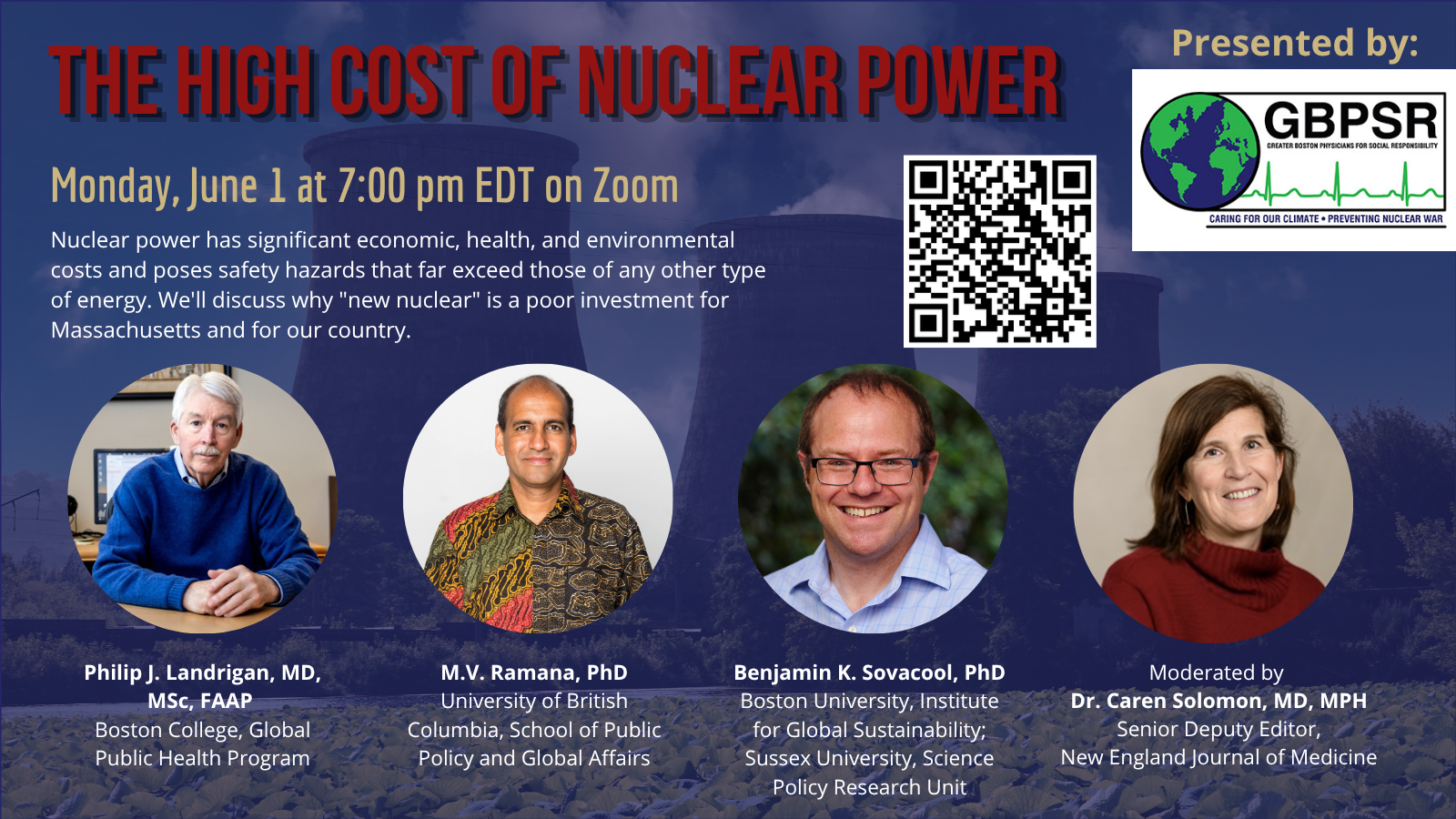
1 June Webinar – The High Cost of Nuclear Power – Register


of the week– Nuclear Reactor Information Task Force
To see nuclear-related stories in greater depth and intensity – go to https://nuclearinformation.wordpress.com
-
Archives
- May 2026 (225)
- April 2026 (356)
- March 2026 (251)
- February 2026 (268)
- January 2026 (308)
- December 2025 (358)
- November 2025 (359)
- October 2025 (376)
- September 2025 (257)
- August 2025 (319)
- July 2025 (230)
- June 2025 (348)
-
Categories
- 1
- 1 NUCLEAR ISSUES
- business and costs
- climate change
- culture and arts
- ENERGY
- environment
- health
- history
- indigenous issues
- Legal
- marketing of nuclear
- media
- opposition to nuclear
- PERSONAL STORIES
- politics
- politics international
- Religion and ethics
- safety
- secrets,lies and civil liberties
- spinbuster
- technology
- Uranium
- wastes
- weapons and war
- Women
- 2 WORLD
- ACTION
- AFRICA
- Atrocities
- AUSTRALIA
- Christina's notes
- Christina's themes
- culture and arts
- Events
- Fuk 2022
- Fuk 2023
- Fukushima 2017
- Fukushima 2018
- fukushima 2019
- Fukushima 2020
- Fukushima 2021
- general
- global warming
- Humour (God we need it)
- Nuclear
- RARE EARTHS
- Reference
- resources – print
- Resources -audiovicual
- Weekly Newsletter
- World
- World Nuclear
- YouTube
-
RSS
Entries RSS
Comments RSS
 nuclear-news