Discharge of tritium from Fukushima to harm human body: scientist
Tritium, which the Japanese government planned to dump from its crippled Fukushima Daiichi nuclear power plant into the Pacific Ocean, will harm human beings’ inside bodies as internal exposure can be more dangerous than external one, a renowned scientist said Thursday.
“When tritium gets inside the body, it’s at least as dangerous as any of the other radionuclides. And in some cases, it’s more than double as dangerous in terms of the effects of the radiation on the genetic material, on the proteins,” Timothy Mousseau, professor of biological sciences at the University of South Carolina, told a press conference in Seoul.
The Japanese government and institutions, including the Tokyo Electric Power Company (TEPCO), have claimed that tritium is not dangerous because it emits a very “weak” beta particle, but the professor called it “fiction.”
“Ingestion is really the most dangerous. People have said that tritium is not dangerous based on the concerns for external exposure, but using the same argument, you would say that uranium 235 is not dangerous,” he noted.
Tritium is known as an emitter of low-energy beta particles incapable of penetrating a human body as they are stopped by a layer of clothing, in contrast to gamma rays that can pass through a human body and only be stopped by several feet of concrete.
If the tritiated water or the organically bound tritium discharged from the collapsed Fukushima power plant is consistently ingested, the ionizing radiation would directly damage DNA or indirectly affect other metabolic activities through oxidative stress or an imbalance inside the body that can lead to cell and tissue damage.
“The way it works is that the tritium molecule comes inside the cell and ejects an electron…It’s a little bullet. It’s like a bullet coming from a gun. It comes out from the nucleus of the tritium atom. That bullet hits something like the DNA,” Mousseau said.
“What makes tritium more dangerous than high-energy emission is that the bullet is moving kind of slow, so it hits something and bounces. And it hits something else and then it hits something else. It doesn’t go anywhere, so you end up with a clustered damage from that beta particle,” the professor noted.
“High-energy beta particles are higher energy. They will hit something, yes, but then they continue and go through the cell, maybe out of the body, and do much less damage as a result. So, this is why we need to pay attention to tritium in particular,” he added.
Mousseau, who published over 130 scientific papers related to radiation effects, presented a new paper on the biological consequences of exposure to tritium earlier this month based on 250 studies after scanning over 700,000 references to tritium.
According to the paper, the scientific literature indicated that tritium could be genotoxic and carcinogenic and can affect reproductive systems such as sperm and eggs.
Japan planned to release over 1.2 million tonnes of the tritium-laced water into the ocean for 30 years from 2023, but the discharge would last much longer than planned, Shaun Burnie, a senior nuclear specialist at Greenpeace East Asia, told the press conference.
“Those discharges could begin as early as July, possibly later, and continue for many decades, not just the 30 years but maybe 50, 60, 70, 80 years. Next century is really possible,” said Burnie.
“This is water that’s radioactive in tanks, so it’s the deliberate decision to pollute and contaminate the environment, which doesn’t need to take place because actually there is sufficient storage space in the two districts next to the Fukushima nuclear power plant,” he noted.
Burnie was also skeptical of Japan’s claim that the contaminated water could be diluted through an advanced liquid processing system (ALPS).
“This is water that has come in direct contact with a reactor, a nuclear fuel that suffered a severe melt, which means fission products within the nuclear fuel became in direct contact with water,” the specialist said.
“It’s unclear how successfully the ALPS system processes the water. Around 70 percent of the water in the tanks still needs to undergo further processing. So, we still don’t know how effective it’s going to be. It can’t be discharged as it is at the moment,” he added.
US to send nuclear-armed submarines to South Korea
27 Apr 23, https://www.rt.com/news/575372-nuclear-submarine-south-korea/
The deployment, the first of its kind in decades, comes amid persistent missile tests by the North.
The US will deploy submarines to South Korea armed with nuclear ballistic missiles, officials told reporters on Tuesday. Intended to deter North Korea from further missile tests, the deployment is also likely aimed at reassuring the South Korean public, who recently learned that the US systematically spied on their government.
The plan will be officially announced by US President Joe Biden and his South Korean counterpart, Yoon Suk-yeol, at the White House on Wednesday, the officials said in comments to multiple US media outlets.
Both men are expected to sign an agreement known as the ‘Washington Declaration,’ under which they will step up intelligence sharing and joint military exercises, while the US will send nuclear-armed submarines and bombers to South Korea on a rotating basis.
We intend to take steps to make our deterrence more visible through the regular deployment of strategic assets, including a US nuclear ballistic submarine visit to South Korea, which has not happened since the early 1980s,” one of the anonymous officials said. They compared the move to “what we did with European allies during the height of the Cold War in similar periods of potential external threat,” referring to the north’s missile program.
Pyongyang has test-fired more than 100 missiles since the beginning of 2022, and this month alone tested its first solid-fuel intercontinental ballistic missile and a nuclear-capable underwater attack drone. Officials in Washington and Seoul have claimed since last year that the north is gearing up for its seventh underground test of a nuclear weapon.
North Korea considers US deployments near its territory to be “provocations,” and usually responds with verbal threats, drills of its own, or new weapons tests.
Aside from deterring North Korea, the deployment of nuclear-armed submarines to the south is likely intended to patch up relations between Washington and Seoul, which were rocked when recently-leaked Pentagon documents revealed that the US spied on top South Korean officials to determine their stance toward sending arms to Ukraine.
The official told reporters that “by undertaking these new procedures,” the US hopes to remind Seoul that America’s “commitment” to the country is “unquestioned.”
Biden and South Korea’s Yoon sign new agreement on nuclear weapons
By Jean Mackenzie in Seoul & Madeline Halpert in New York, BBC News 26 Apr 23
US President Joe Biden and South Korean President Yoon Suk-yeol have secured a landmark deal which includes plans to periodically deploy US nuclear-armed submarines in South Korea.
Washington has also agreed to involve Seoul in its planning for any use of nuclear weapons against North Korea.
In return, South Korea has agreed to not develop its own nuclear weapons.
………………………………… It does not ink a total commitment from the US that it would use nuclear weapons to defend South Korea if North Korea were to attack.
……… Plans for a nuclear-armed submarine to visit South Korea for the first time in four decades adds further weight to the US commitment.
In return, the US has demanded that South Korea remain a non-nuclear state and a faithful advocate of the non-proliferation of nuclear weapons. The US sees dissuading South Korea from going nuclear as essential, fearful that if it fails, other countries may follow in its footsteps.
But it is unclear how this commitment will be received by the influential, and increasingly vocal, group of academics, scientists and members of South Korea’s ruling party who have been pushing for Seoul to arm itself. https://www.bbc.com/news/world-us-canada-65404805
Fukushima nuclear disaster – new Netflix series
Over the course of eight episodes, this multi-layered drama faithfully captures a disastrous incident from three different perspectives based on careful research. “What happened there on that day?” This story seeks to answer this question based on the true events of seven intense days from the perspectives of government, corporate organizations, and the people on site risking their lives.
This series is developed and produced by Jun Masumoto, who crafted massive hits such as the “Code Blue” series while also delivering powerful social drama series such as “Shiroi Kyoto” series and “Hadashi no Gen.” The two directors of this series are Masaki Nishiura, who has worked alongside Masumoto for many years as the director of the “Code Blue” series, and Hideo Nakata of the “Ring” series.
At 2:46 p.m. on 11 March, 2011, a magnitude 9.0 earthquake with a maximum seismic intensity of 7 (recorded at Kurihara-cho, Miyagi prefecture) struck approximately 130 kilometers off the Sanriku coast. One hour after this earthquake shook the islands of Japan, a 15-meter-tall tsunami swallowed up the Fukushima nuclear power plant in an instant. But that was only the start of the nightmare. With its cooling function lost, the power plant fell into a dangerous and uncontrollable state. The Netflix Series “The Days” starts streaming in 2023, only on Netflix https://www.netflix.com/title/81233755
Questions about S.Korea-USA ‘ironclad’ commitment lead to impossible nuke solution
Korea Joong Ang Daily, BY MICHAEL LEE [lee.junhyuk@joongang.co.kr] 23Apr 23
“………… The Korea-U.S. alliance now stands at a crossroads as it marks its 70th anniversary………
South Korean politicians have made headlines in recent months by calling for an independent nuclear deterrent in a shift that experts say is driven by questions about the reliability of Washington’s “ironclad” commitment to defend Seoul.
These politicians include President Yoon Suk Yeol and Seoul Mayor Oh Se-hoon, who have publicly mused in recent months about the need for South Korea to bolster its security by means of developing an independent nuclear deterrent or persuading the United States to re-deploy tactical nuclear weapons on the peninsula that were withdrawn in 1991…………………….
To signal its commitment to defending Seoul, Washington has upped the frequency of U.S. strategic assets on rotation around the peninsula, especially as the North conducted a record 95 missile launches last year and announced the frontline deployment of tactical nuclear weapons and a new preemptive nuclear strike doctrine in April and September.
Seoul’s lack of say in how nuclear weapons would be used
But the United States has thus far ruled out re-deploying tactical nuclear weapons to the peninsula or setting up a nuclear sharing framework with South Korea similar to the one in place in some NATO states, such as Germany and Turkey, which participate in storing and planning the use of U.S. nuclear weapons in the absence of their own deterrent.
U.S. President Joe Biden in January shot down suggestions by Yoon that the two countries are planning joint nuclear weapons exercises, leaving South Korea without a codified say in the key question of how U.S. nuclear weapons could be employed in its defense.
It remains to be seen if decision-making on the use of nuclear weapons in a potential inter-Korean conflict will stay entirely in the hands of Washington.
According to a South Korean government official who spoke on condition of anonymity to the JoongAng Ilbo on March 27, “joint planning on how the U.S. extended deterrence and the nuclear umbrella will be maintained in potential scenarios involving an armed conflict” is on the agenda of Yoon’s summit with Biden later this month.
South Koreans worry about future U.S. administrations……………………………….
Failure of diplomacy with Pyongyang…………………………………………
International deadlock…………………………………….
Differing views of the role of the alliance regarding China
But all the experts agreed that the real test of Seoul’s alliance with Washington would come in the event of an armed conflict between the United States and China.
…………..Kim agreed that the prospect of a U.S.-China conflict over Taiwan was looming, if less publicly discussed, source of insecurity in Seoul’s alliance with Washington……… more https://koreajoongangdaily.joins.com/2023/04/24/national/defense/Korea-KoreaUS-alliance-nuclear-deterrence/20230424173040597.html
Nuclear liability issues not yet resolved for Jaitapur project: French company EDF
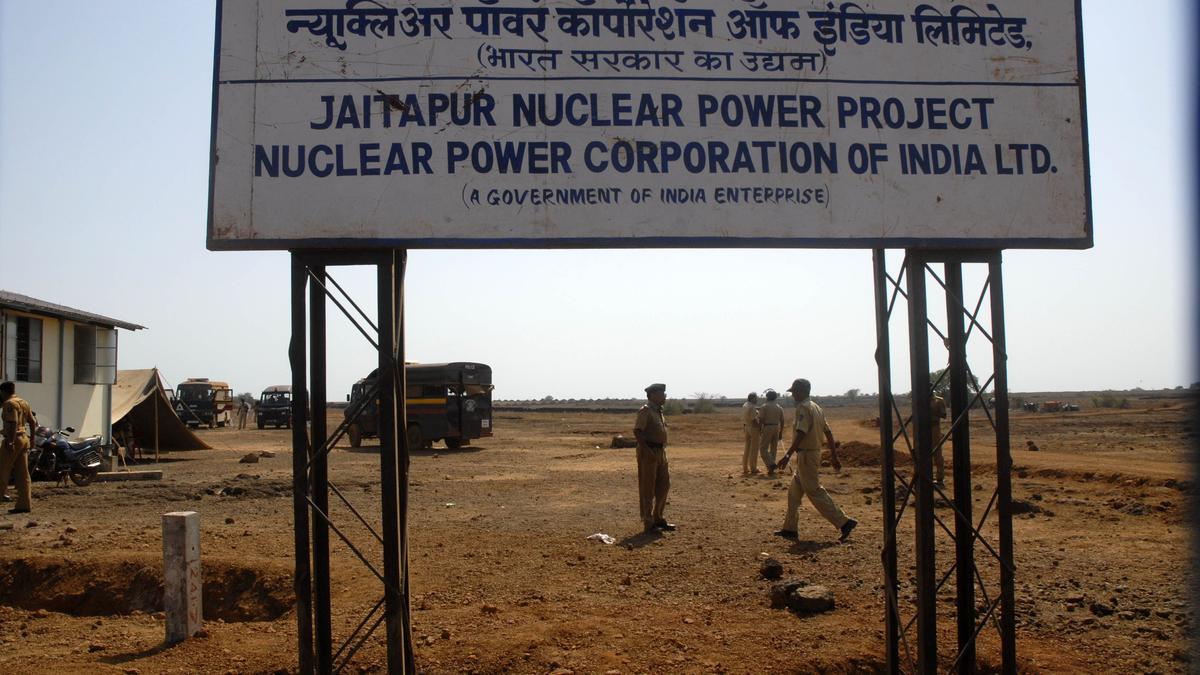
Delays despite assurances by Minister Jitendra Singh that all technical, commercial, legal issues would be sorted by “early 2023”
The Hindu, SUHASINI HAIDAR April 24, 2023
Two years after the French energy company Electricite de France (EDF) submitted its techno-commercial offer for the construction of six nuclear power reactors in Maharashtra’s Jaitapur, talks between Indian and French officials over several issues, including liability, have not resulted in any breakthrough yet.
According to sources in Delhi and Paris, the talks over the high cost of power per unit has also become a major issue in the conclusion of the agreement for the 9,900 MW project, which is the world’s biggest nuclear power generation site under consideration at present.
“The topic [of liability] has been discussed between the French and Indian governments and my understanding is that it is progressing towards convergence. It is a key topic for France and the EDF, and so this topic would have to be solved before any contract can be signed,” an EDF official said in response to a question from The Hindu, as part of a presentation to a larger group of international journalists invited to Paris.
The statement is significant, as in October 2022, the Minister of Space and Atomic Energy, and Minister of State in the Prime Minister’s Office (MoS PMO), Jitendra Singh, promised an early resolution to all the issues, within months………………..
PM to visit Paris in July……………………
The EDF official, who requested not to be identified, but spoke on behalf of the company, said that the issue, arising from India’s Civil Liability for Nuclear Damage Act that India passed in 2010, remains an item on the “agenda for both countries”. India’s CLND Act, which was brought in addition to the International Convention on Supplementary Compensation (CSC), is considered excessive by foreign companies, which could be liable to pay hundreds of millions of dollars in the event of a nuclear accident. As a result, despite signing civil nuclear deals with a number of countries, including the U.S, France and Japan, the only foreign presence in India is that of Russia in Kudankulam, projects that predate the Law.
A recent report in Al Jazeera also points to the fact that despite planning an insurance pool of ₹1,500 crores ($200 million) in 2015, the government’s ‘India Nuclear Insurance Pool” (INIP) has only been able to collect about half, ₹700 crore-₹800 crore, thus far. Concerns over safety after the 2011 Fukushima nuclear disaster, prompted Germany to switch off its last nuclear power reactor this month.
Another factor will be the time taken by the Jaitapur project, for which the original MoU was signed in 2009 with EDF’s predecessor Areva. In 2016, EDF and NPCIL signed a revised MoU, and in 2018, the heads of both signed an agreement on the “industrial way forward” in the presence of Mr. Modi and Mr. Macron. However, officials said nuclear projects do take time, pointing to EDF’s latest construction of an EPR in Finland, Olkiluoto 3. Its work began in 2005 and was completed after a delay of about 14 years, finally starting regular production on April 16 this year. https://www.thehindu.com/news/national/nuclear-liability-issues-not-yet-resolved-for-jaitapur-project-french-company-edf/article66774668.ece
Japan hopes to start discharging Fukushima nuclear wastewater in July
Gong Zhe https://news.cgtn.com/news/2023-04-23/Japan-hopes-to-start-discharging-Fukushima-nuclear-wastewater-in-July-1jfbTfpbNvy/index.html
Japan is hoping to start discharging radioactive waste water from its destroyed Fukushima nuclear plant into the ocean in July.
Tokyo Electric Power Company (TEPCO) told Kyoto News on Saturday that the excavator is near the exit of the tunnel located one-kilometer offshore. The 1,030-meter tunnel is used to discharge the treated water stored in the Fukushima Daiichi Nuclear Power Plant into the sea. As long as 1,017 meters of the tunnel have been excavated.
TEPCO is trying to complete the tunnel and other facilities related to water discharging before the end of June, and the possibility of starting discharge operations as early as July has increased.
The Japanese government and TEPCO are trying to start discharging around this summer, but fishermen and others continue to oppose it. The plan faces opposition at home and has raised “grave concern” in neighboring countries, including but not limited to China and South Korea.
TEPCO plans to use a large amount of seawater for dilution to make the activity of tritium in treated water less than one-fortieth of national standards, and then discharge it through a seabed tunnel. It is expected to be discharged for several decades.
S.Korea’s Yoon to meet Biden as doubts grow over nuclear umbrella
By Hyonhee Shin, SEOUL, April 24 (Reuters) – South Korean President Yoon Suk Yeol set off on Monday for the for the United States and a summit with President Joe Biden at a time of rare questioning in South Korea of an alliance that has guaranteed its security for decades.
………….. as North Korea races ahead with the development of nuclear weapons and missiles to carry them, there are growing questions in South Korea about the relying on “extended deterrence”, in essence the American nuclear umbrella, and calls, even from some senior members of Yoon’s party, for South Korea to develop its own nuclear weapons.
A recent poll by the Asan Institute for Policy Studies showed that more than 54% of respondents believed the U.S. would not risk its safety to protect its Asian ally.
More than 64% supported South Korea developing its own nuclear weapons, with about 33% opposed.
Yoon has been pushing to boost South Korea’s say in operating the U.S. extended deterrence but exactly what that might entail has not been spelt out…………… https://www.reuters.com/world/skoreas-yoon-meet-biden-doubts-grow-over-nuclear-umbrella-2023-04-24/
Searing heatwave hitting Southern and South Eastern Asia.

Much of southern and southeastern Asia is enduring a deadly,
record-smashing heat wave, one that’s being called the continent’s worst
ever recorded in April. Several all-time record high temperatures have been
broken, including a torrid 113.7 degrees in Tak, Thailand, the nation’s
hottest reading on record. Laos also recorded its highest reliable
temperature in its history earlier this week, with 108.9 degrees at Luang
Prabang, reported climatologist and weather historian Maximiliano Herrera.
As the searing heat spread from India to China to Thailand to Japan,
Herrera called it a “monster Asian heat wave like none before.”
USA Today 19th April 2023
One in three people on the planet hit by ‘monster Asian heatwave’. The
searing heat has spread across large parts of south and southeast Asia in
recent weeks, and impacted more than a dozen countries including India,
China, Thailand, Laos, Bangladesh, Turkmenistan, Japan and Korea. The
temperature hit a scorching 44.6 degrees Celsius in the western province of
Tak, Thailand this week, the hottest temperature ever recorded in the
country. Thailand’s Meteorological Department warned that the baking
weather would continue into next week.
Independent 20th April 2023
https://www.independent.co.uk/climate-change/news/asia-heatwave-india-china-thailand-b2323666.html
Does India have enough insurance coverage for a nuclear disaster?
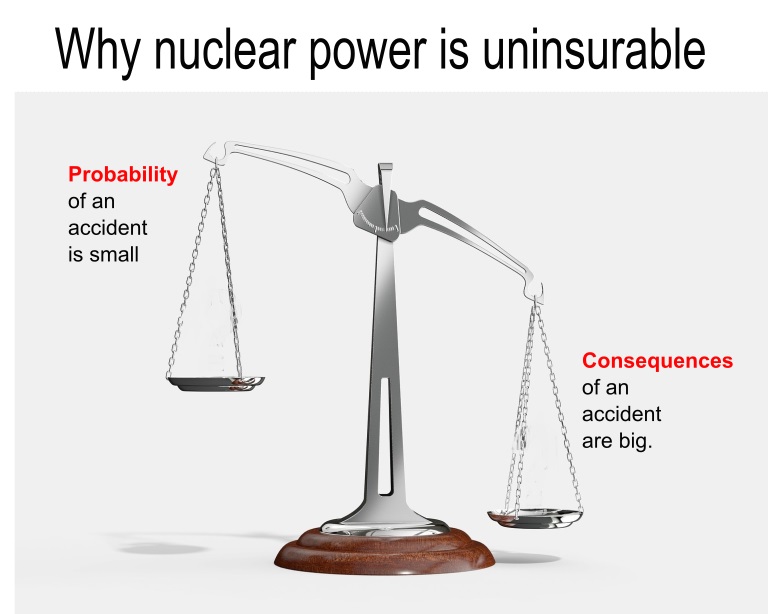
India has barely half the insurance amount required by law for its current nuclear plants, and has many more plants in the works.
Aljazeera, By Urvashi Sarkar 21 Apr 2023
India has barely half the insurance amount it needs in the event of a nuclear disaster, raising concerns among experts about the lack of oversight on the nuclear sector.
The India Nuclear Insurance Pool (INIP) has collected around 7 billion to 8 billion rupees ($84.5m to $96.6m) of the 15 billion rupees ($182.9m) required under the Civil Liability for Nuclear Damage Act, 2010 (CLND), indicating a critical shortfall in funds that will be needed to compensate victims and pay for cleanup in case of a nuclear disaster………………………………………………………..
“The fact that the nuclear insurance pool has not even met what is required by law is concerning — it shows that the Parliament is not overseeing how the nuclear sector is operating,” said MV Ramana, professor at the School of Public Policy and Global Affairs, University of British Columbia and author of The Power of Promise: Examining Nuclear Energy in India. “My greater concern is the approach of NPCIL and other parties involved, which seem to think of liability requirements as a box to check off, rather than something they need to prudently plan for.”
“They seem to be victims of the same ‘safety myth’ that was at the root of the inadequate preparations for nuclear accidents revealed in the aftermath of the multiple reactor accidents at the Fukushima Daiichi nuclear plant in Japan [in March 2011],” Ramana said…………………………………….
India currently has 22 reactors, all of which are operated by the NPCIL. The INIP provides insurance to all of them. Apart from this, it has 10 reactors that are at various stages of construction (one of which has been connected to the grid) and New Delhi has sanctioned another 10 — all of which are expected to start functioning by 2031. But how these plants will be insured is unknown………………………………………………………… more https://www.aljazeera.com/economy/2023/4/21/does-india-have-enough-insurance-coverage-for-a-nuclear-disaster
Fukushima’s fishing industry survived a nuclear disaster. 12 years on, it fears Tokyo’s next move may finish it off.
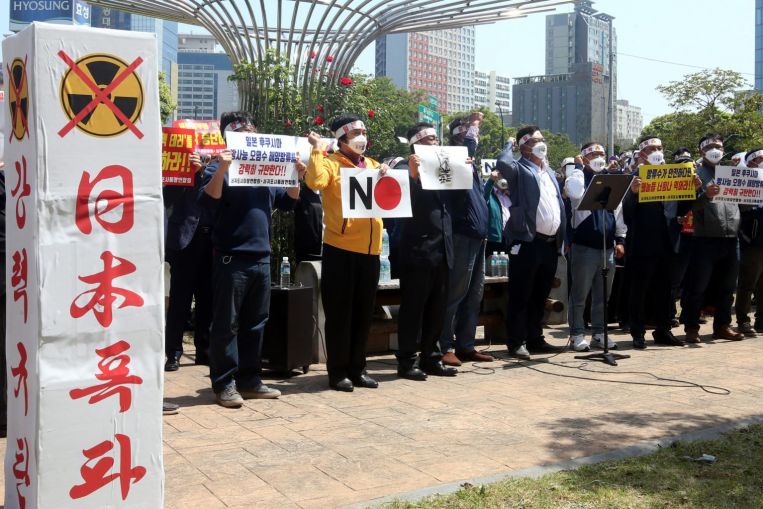
By Emiko Jozuka, Krystina Shveda, Junko Ogura, Marc Stewart and Daniel Campisi, CNN, April 19, 2023
It is still morning when Kinzaburo Shiga, 77, returns to Onahama port after catching a trawler full of fish off Japan’s eastern coast.
But the third-generation fisherman won’t head straight to market. First, he’ll test his catch for radiation.
It’s a ritual he’s repeated for more than a decade since a devastating earthquake and tsunami triggered a nuclear meltdown at the Fukushima Daiichi power plant in 2011, spewing deadly radioactive particles into the surrounding area.
Radiation from the damaged nuclear plant leaked into the sea, prompting authorities to suspend fishing operations off the coast of three prefectures that had previously provided Japan with half of its catch.
That ban lasted over a year and even after it was lifted, Fukushima-based fishermen like Shiga were for years mostly limited to collecting samples for radioactivity tests on behalf of the state-owned electricity firm Tokyo Electric Power Company, or TEPCO, rather than taking their catches to market.
Ocean currents have since dispersed the contaminated water enough that radioactive Cesium is nearly undetectable in fish from Fukushima prefecture. Japan lifted its last remaining restrictions on fish from the area in 2021, and most countries have eased import restrictions.
Shiga and others in the industry thought they’d put the nightmare of the past years behind them.
So when Japan followed through on plans to gradually release more than 1 million metric tons of filtered wastewater into the Pacific Ocean from the summer of 2023 – an action the government says is necessary to decommission the plant safely – the industry reeled.
The Japanese government and the International Atomic Energy Agency (IAEA), a United Nations body promoting the peaceful use of nuclear energy, say the controlled release, which is expected to take decades, will meet international safety regulations and not harm the environment, as the water will be treated to remove radioactive elements – with the exception of tritium – and diluted more than 100 times.
But with the deadline for the planned water release looming this summer, Fukushima’s fishermen fear that – whether the release is safe or not – the move will undermine consumer confidence in their catches and once again threaten the way of life they have fought so hard to recover…………………………………………………………………..
While radioactive wastewater contains dangerous elements including Cesium and Strontium, TEPCO says the majority of those particles can be separated from the water and removed. TEPCO claims its filtering system, called advanced liquid processing (ALPS), can bring down the amount of those elements far below regulatory standards.
But one hydrogen isotope cannot be taken away, as there is currently no technology available to do so. This isotope is radioactive tritium, and the scientific community is divided on the risk its dissemination carries………………………………………………………
“For decades, nuclear power plants worldwide – including in the United States, Canada, Britain, France, China and South Korea – have been releasing waste contaminated with tritium, each under its own national quota,” said Tim Mousseau, an environmental scientist at the University of South Carolina.
But Mousseau argues tritium is overlooked because many countries are invested in nuclear energy, and “there’s no way to produce it without also generating vast amounts of tritium.”
“If people started picking on TEPCO in Fukushima, then the practice of releasing tritium to the environment in all of these other nuclear power plants would need to be examined as well. So, it opens up a can of worms,” he said, adding the biological consequences of exposure to tritium have not been studied sufficiently.
In 2012, a French literature review study said tritium can be toxic to the DNA and reproductive processes of aquatic animals, particularly invertebrates, and the sensitivity of different species to various levels of tritium needs to be further investigated.
Currently, countries set different standards for the concentration of tritium allowed in drinking water. For example. Australia, which has no nuclear power plants, allows more than 76,000 becquerel per liter, a measure used to gauge radioactivity, while the WHO’s limit is 10,000. Meanwhile, the US and the European Union have much more conservative limits – 740 and 100 becquerel per liter respectively.
Ian Fairlie, an independent consultant on radioactivity in the environment, told CNN that “two wrongs don’t make a right” when it comes to Japan’s decision to release tritiated water. He argues TEPCO should build more storage tanks to allow for the decay of the radioactive tritium, which has a half-life of 12.3 years.
Lack of trust for the ‘nuclear village’
In Japan, the Fukushima wastewater issue has become highly contentious due to a lack of trust among influential advocates of nuclear energy, or what’s locally known as the “nuclear village.”
The informal group includes members of Japan’s ruling party (the Liberal Democratic Party), the Ministry of Economy Trade and Industry and the nuclear industry.
“(The nuclear village) used to tell us that nuclear energy is 100% safe – but it wasn’t, as the Fukushima Daiichi plant accident revealed,” said Koichi Nakano, a political scientist at Sophia University, in Tokyo.
A series of missteps after the disaster further eroded public trust, according to a 2016 report written by Kohta Juraku, a researcher at Tokyo Denki University.
For instance, in 2012, the government and TEPCO presented a proposed action plan to local fishing representatives that involved pumping up groundwater before it flooded into the nuclear reactor buildings and releasing it into the sea. Fishing bodies were on board but the plan was it postponed until 2014 after 300 tons of radioactive water leaked from the plant into the sea, infuriating fishers……………………………………… https://edition.cnn.com/2023/04/19/asia/japan-fukushima-disaster-wastewater-fishing-concerns-hnk-dst-dg-intl/index.html
How Fukushima wastewater into Pacific will disrupt seafood trade
By Ming Wang, Dalian Maritime University, China
Public opinion will dictate how Japanese seafood is received after the wastewater is disposed of into the Pacific Ocean.
The global seafood market faces turmoil with the release of the Fukushima nuclear wastewater from Japan into the Pacific Ocean, computer modelling predicts.
Japan announced in 2021 it would release over 1.25 million tonnes of treated Fukushima radioactive wastewater into the sea as part of its plan to decommission the power station when its storage capacity reaches its limit this year.
Seafood is one of the most important food commodities in international trade, far exceeding meat and milk products. According to the United Nations Comtrade database, global seafood trade has grown from $US7.6 billion in 2009 to $US12.4 billion in 2019, an increase of 63 percent.
The Japanese nuclear wastewater discharge raises global worries about the safety of Japanese seafood as public opinion influences consumers’ preference for seafood.
In this empirical study involving American consumers, 30 percent of respondents said they reduced their seafood consumption following the Fukushima nuclear plant accident and more than half believe Asian seafood poses a risk to consumer health due to the disaster.
Most of Japan’s seafood trading partners, such as China, Russia, India and South Korea, imposed temporary bans on food from several districts around Fukushima in the wake of the accident in 2011.
This paper models the potential impact of the Fukushima nuclear wastewater disposal on the global seafood trade using the import and export data for 26 countries which make up more than 92 percent of the world’s trade in marine products………………..
China, South Korea and the US are expected to increase their seafood imports from Denmark, France, Norway and other community group two countries while reducing seafood exports to them. This is because these three countries have already reduced their seafood trade with Japan.
The increase in exports from community group three to community group two nations leads to a decrease in imports and exports between countries within community group two. For example, the study notes that Denmark, Norway and France are all experiencing a decrease in seafood exports and imports between each other……………………………………..
The model also divided the global seafood market into two segments – the first being the Japanese market and the second comprising 25 other countries. It calculated that Japan’s seafood exports fell by 19 percent in 2021, or $US259 million.
Public opinion after the Fukushima wastewater is discharged will have different impacts on the import and export trade of seafood for each country, especially for countries which trade with Japan.
What people think about the discharge is closely related to the amount of Japanese seafood imported by each country. The higher the amount of Japanese seafood imported by a particular country, the more negative public opinion is likely to be, according to computer modelling…………………………………………………………… more https://www.rnz.co.nz/international/pacific-news/487942/how-fukushima-wastewater-into-pacific-will-disrupt-seafood-trade
Ignoring science, environmental protection and international law – G7 endorses Japan’s Fukushima water discharge plans

Greenpeace International, 16 April 2023 https://www.greenpeace.org/international/press-release/59193/science-environmental-protection-international-law-g7-japans-fukushima-water-discharge/
Legacy of Fukushima disaster shows nuclear energy is no solution to energy and climate crisis.
Sapporo, Japan – The nations of the G7 have chosen politics over science and the protection of the marine environment with their decision today to support the Japanese government’s plans to discharge Fukushima radioactive waste water into the Pacific Ocean.
The 1.3 million cubic meters/tons of radioactive waste water at the Fukushima Daiichi plant, currently in tanks, is scheduled to be discharged into the Pacific Ocean this year. Nations in the Asia Pacific region, led by the Pacific Island Forum, have strongly voiced their opposition to the plans.[1] Some of the world’s leading oceanographic institutes and marine scientists have criticised the weakness of the scientific justification applied by TEPCO, the owner of the nuclear plant, warned against using the Pacific Ocean as a dumping ground for radioactive contaminated water, and called for alternatives to discharge to be applied.[2]
“The Japanese government is desperate for international endorsement for its Pacific Ocean radioactive water dump plans. It has failed to protect its own citizens, including the vulnerable fishing communities of Fukushima, as well as nations across the wider Asia Pacific region. The aftermath of the nuclear disaster at Fukushima is still strongly felt, and the Japanese government has failed to fully investigate the effects of discharging multiple radionuclides on marine life. The government is obligated under international law to conduct a comprehensive environmental impact assessment, including the impact of transboundary marine pollution, but has failed to do so. Its plans are a violation of the UN Convention Law of the Sea.
The marine environment is under extreme pressure from climate change, overfishing and resource extraction. Yet, the G7 thinks it’s acceptable to endorse plans to deliberately dump nuclear waste into the ocean. Politics inside the G7 at Sapporo just trumped science, environmental protection, and international law,” said Shaun Burnie, Senior Nuclear Specialist at Greenpeace East Asia.
Greenpeace East Asia analysis has detailed the failures of liquid waste processing technology at the Fukushima Daiichi plant and the environmental threats posed by the releases.[3] There is no prospect of an end to the nuclear crisis at the plant as current decommissioning plans are not feasible. Furthermore, the report finds the nuclear fuel debris in the reactors cannot be completely removed and will continue to contaminate the ground water over many decades.[4] Claims that the discharges will take 30 years is inaccurate as in reality, it will continue into the next century. Viable alternatives to discharge, specifically long term storage and processing, have been ignored by the Japanese government.[3]
The Japanese government’s attempt to normalise the Fukushima nuclear disaster is directly linked to its overall energy policy objective of increasing the operation of nuclear reactors again after the 2011 disaster. 54 reactors were available in 2011 compared to only ten reactors in 2022, generating 7.9% of the nation’s electricity in FY21 compared to 29% in 2010.[5] Meanwhile, five of the other six G7 governments led by France, the US and the UK are also aggressively promoting nuclear power development.
The idea that the nuclear industry is capable of delivering a safe and sustainable energy future is delusional and a dangerous distraction from the only viable energy solution to the climate emergency which is 100% renewable energy. The global growth of low cost renewable energy has been phenomenal – but it has to be much faster and at an even greater scale if carbon emissions are to be reduced by 2030. Approval for nuclear waste dumping and nuclear energy expansion sound like the 1970’s but we have no time for such distractions. We are in a race to save the climate in the 21st century, and only renewables can deliver this,” said Shaun Burnie.
34,200 tons of radioactive sewage sludge kept in Kanto area 12 yrs after Fukushima disaster.
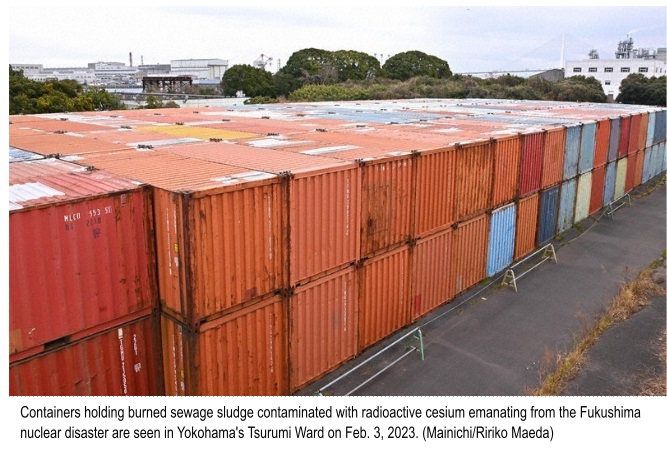
April 10, 2023 (Mainichi Japan)
TOKYO — A total of some 34,200 metric tons of sewage sludge contaminated with radioactive substances emanating from the Fukushima nuclear disaster is still kept in temporary storage by major local bodies in the Kanto region, the Mainichi Shimbun has learned.
The massive tainted waste — a year’s worth of ordinary burned sludge ash generated in Tokyo’s 23 wards — has partially been kept as incinerated ash. Due to difficulties in obtaining local understanding for landfill disposal of radioactive waste in harbors, forests and mountains, some of the waste has nowhere to go even 12 years on since the onset of the disaster.
The finding came after the Mainichi queried major local governments in five prefectures in the Kanto region and other sources about radioactively contaminated sewage sludge accumulated in the wake of the March 2011 Fukushima Daiichi Nuclear Power Station meltdown.
In May 2011, two months after the disaster, radioactive cesium was detected in the sewage sludge in Fukushima Prefecture. This prompted inspections of sewage in other local bodies in the Kanto region, and authorities took measures, such as keeping highly contaminated sludge within their local sewage facilities.
Of these, the Mainichi Shimbun interviewed 15 local bodies — Tokyo and six other Kanto region prefectures, their capital cities, and government-designated major cities in the region — between December 2022 and March 2023, regarding the status of their treatment of sewage sludge in which radioactive substances were detected.
It emerged that the Yokohama Municipal Government, south of Tokyo, had kept approximately 26,600 tons of radioactively contaminated waste within its sewage facilities as incinerated sludge ash as of the end of February 2023, while the Kawasaki Municipal Government, also in Kanagawa Prefecture, had kept 3,435 tons of such waste inside its port areas in the same form…………………………………………..
In the Kanto region alone, a total of some 4,180 tons of radioactive sewage requiring the central government’s treatment remains in Ibaraki, Tochigi, Gunma and Chiba prefectures, according to the Ministry of the Environment and other sources. The national government plans to place this waste under long-term management by setting up treatment facilities in state-owned forests and other sites in accordance with the special measures law on radioactive contamination response. However, the plan remains up in the air as the candidate sites have not been finalized due to protests from local residents and other factors.
Meanwhile, Tokyo, Saitama and Kanagawa prefectures responded to the survey that they have finished disposing of all radioactive sewage sludge under their control. The cities of Mito, Saitama and Chiba also answered the same. Based on the peak amount of radioactive sludge kept by these local bodies, it is estimated that they had disposed of at least some 120,000 tons of such waste.
(Japanese original by Kazuhiro Igarashi and Kaoru Watanabe, Tokyo Regional News Department)https://mainichi.jp/english/articles/20230408/p2a/00m/0na/013000c
The (South) Korean Nuclear Threat
13 APR 2023, By Dr Jeffrey Robertson, Australian Institute of International Affairs
South Korea is in the midst of a debate to secure nuclear weapons and few outside realise the seriousness and level of the debate. Few inside realise the question is much bigger than just South Korea, with great implications for the region, including Australia.
Debate on securing an independent nuclear weapons capacity once sat on the fringe of mainstream politics in Seoul. The extreme left and right, ex-military, religionists, and mavericks seeking attention were its champions. This is no longer the case. Today it is widely accepted, even common. Polls taken over the last year put public support in the 70-80 percent range. Securing nuclear weapons is now mainstream, viable, and if trends continue, even likely.
What makes South Korea want nuclear weapons? There’s a ready response from those pushing the agenda. North Korea’s missile and nuclear tests, Russia’s invasion of Ukraine, and concerns regarding a rising China. Each can readily be used to justify the pursuit of nuclear weapons. Yet, each are just squalls on the surface of the sea. Underneath, more powerful currents are pushing the pursuit of nuclear weapons: national pride, the desire to be more independent, and a healthy dose of domestic political opportunism.
National pride is a core contributor to the decision to pursue nuclear weapons. For both Koreas, there’s a keen sense of historical injustice marked by invasions from all sides, including occupation, and division. For South Koreans, there’s also a competitive streak that stretches from the individual to the national desire to be number one. There’s even speculation that the U.S. would be willing to allow Seoul to secure nuclear weapons in order for it to play a larger role in balancing China, placing South Korea at a new level of partnership with Washington. Among many, securing a nuclear weapons capacity provokes a certain element of national pride: more than just a middle power – a member of the nuclear weapons club.
The desire to be more independent is also an important contributing factor……………………………..
Domestic political opportunism is the icing on the cake…………………………… The current president, Yoon Suk-yeol, has made remarks supporting the acquisition of nuclear weapons, and the Mayor of Seoul – a position that is a stepping stone to the presidency – has also stated his support. Nuclear weapons will see multiple candidates jump on the bandwagon in the lead-up to the April 2024 legislative elections, and likely more than one candidate in the 2027 presidential elections.
Proliferation, from France to North Korea, is a story of national pride, independence, and political opportunism. South Korea is no different.
t is likely the consequences of this momentous decision to pursue an independent nuclear weapons capacity have not been fully thought through. ………………………………..
n the 1960s, Australia made the decision to forego nuclear weapons in the context of a global diplomatic and strategic understanding that proliferation could be controlled. Since that time, debates about Australia securing nuclear weapons have arisen, but they’ve never been mainstream. Debates in recent years have been more brain-storming and speculation than serious policy-specific programming. A South Korean decision to pursue nuclear weapons would substantially transform strategic outlooks across the region and lead to a more serious debate in Australia. The current nuclear submarine debate would look like a Sunday School picnic.
Jeffrey Robertson is an Associate Professor of Diplomatic Studies at Yonsei University and a Visiting Fellow at the Asia Institute, University of Melbourne. He researches the diplomatic practice and foreign policy of middle powers with a focus on the Korean Peninsula. He writes and updates research at https://junotane.com and on Twitter @junotane. https://www.internationalaffairs.org.au/australianoutlook/the-south-korean-nuclear-threat/
1 This Month



26 September – International Day for the Total Elimination of Nuclear Weapons


PLEASE OPPOSE HR 8255 AND S.3639 – bills would accelerate satellite deployment, with no environmental review or safeguards – https://ncstd5li.quorum.us/campaign/169331/
To see nuclear-related stories in greater depth and intensity – go to https://nuclearinformation.wordpress.com
-
Archives
- September 2026 (219)
- August 2026 (330)
- July 2026 (355)
- June 2026 (287)
- May 2026 (306)
- April 2026 (356)
- March 2026 (251)
- February 2026 (267)
- January 2026 (308)
- December 2025 (358)
- November 2025 (359)
- October 2025 (375)
-
Categories
- 1
- 1 NUCLEAR ISSUES
- business and costs
- climate change
- culture and arts
- ENERGY
- environment
- health
- history
- indigenous issues
- Legal
- marketing of nuclear
- media
- opposition to nuclear
- PERSONAL STORIES
- politics
- politics international
- Religion and ethics
- safety
- secrets,lies and civil liberties
- spinbuster
- technology
- Uranium
- wastes
- weapons and war
- Women
- 2 WORLD
- ACTION
- AFRICA
- Atrocities
- AUSTRALIA
- Christina's notes
- Christina's themes
- culture and arts
- Events
- Fuk 2022
- Fuk 2023
- Fukushima 2017
- Fukushima 2018
- fukushima 2019
- Fukushima 2020
- Fukushima 2021
- general
- global warming
- Humour (God we need it)
- Nuclear
- RARE EARTHS
- Reference
- resources – print
- Resources -audiovicual
- Weekly Newsletter
- World
- World Nuclear
- YouTube
-
RSS
Entries RSS
Comments RSS
 nuclear-news