Censorship of scientific findings on Fukushima radiation
 NYTimes: Gov’t scientist not allowed to publish findings that Fukushima cesium-137 levels could be 10,000 times higher than after Chernobyl in Pacific surface waters — Japan researchers pressured to downplay disaster’s impact — Professors obstructed when data might cause public concern http://enenews.com/nytimes-govt-scientist-allowed-publish-findings-fukushima-cesium-137-could-be-10000-times-higher-pacific-surface-waters-after-chernobyl-japan-researchers-pressure-downplay-disasters-impact-profe?utm_source=feedburner&utm_medium=email&utm_campaign=Feed%3A+ENENews+%28Energy+News%29
New York Times,, Mar. 16, 2014: […] As a senior scientist at the Japanese government’s Meteorological Research Institute, [Michio Aoyama] said levels of radioactive cesium 137 in the surface water of the Pacific Ocean could be 10,000 times as high as contamination after Chernobyl […] as Mr. Aoyama prepared to publish his findings […] the director general of the institute called with an unusual demand — that Mr. Aoyama remove his own name from the paper. Continue reading
The censorship of research on Fukushima’s radiation releases
Squelching Efforts to Measure Fukushima Meltdown By DAVID MCNEILL | THE CHRONICLE OF HIGHER EDUCATIONMARCH 16, 2014 TOKYO — In the chaotic, fearful weeks after the Fukushima nuclear crisis began, in March 2011, researchers  struggled to measure the radioactive fallout unleashed on the public. Michio Aoyama’s initial findings were more startling than most. As a senior scientist at the Japanese government’s Meteorological Research Institute, he said levels of radioactive cesium 137 in the surface water of the Pacific Ocean could be 10,000 times as high as contamination after Chernobyl, the world’s worst nuclear accident.
Toxicologist finds high levels of cancer caused by uranium in water
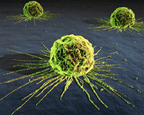
 SA toxicologist’s study says higher uranium causes cancers in Malwa http://timesofindia.indiatimes.com/city/chandigarh/SA-toxicologists-study-says-higher-uranium-causes-cancers-in-Malwa/articleshow/32114888.cms Neel Kamal,TNN | Mar 16, 2014 FARIDKOT: Excessive presence of uranium in water in the Malwa region of Punjab is turning out disastrous for the residents of rural areas and is giving birth to cancer, neurological and birth abnormality. Taking leads from her study on the subject, South African clinical metal toxicologist Dr Carin Smit has confirmed that excess prevalence of uranium in human bodies is the biggest reason of cancer in Malwa region of Punjab. The Union and state government in the past had negated the affect of uranium in cancer incidence. Dr Smit had obtained hair samples of 149 children with deformities in 2009 and urine samples in 2010 and had sent these to Micro Trace mineral laboratory in German where it was established that excess prevalence of uranium has caused deformities. These children are being treated at Faridkot. As per Bhabha Atomic Research Center (BARC), the uranium level here have reached up to 1000 parts per billion(ppb) against permissible limit of 15ppb, she said.
 While visiting Baba Farid Centre for Special Children on Saturday, Dr Smit based her submission on a study carried out in Finland in the past and said, “Uranium toxicity is much more there as compared to Malwa region of Punjab but spray of fertilizers is filtered and eating habits are much more safe there, but in Punjab the use of fertilizers, pesticides is at much higher levels, which is leading to cancer and deformities among persons.”
Dr Carin finds faults in the state approach in tackling such an important issue with grave seriousness. She said, “Desiring to conduct a full study to establish excess uranium presence leading to cancer incidence, I had written to Punjab government in 2013 to provide infrastructure to conduct the study with Japanese scientists but an still waiting the government response.” Claiming that presently Punjab is passing through a bad phase on health and environment front, she accused the state government of not being serious to tackle the issue. She said despite knowing the seriousness of the issue, the state government is doing nothing to provide respite to people. “Though courts are serious but the governments are not and Punjab government is not providing proper findings to the court in one petition related to uranium giving birth to cancer in the state,” said Dr Pritpal singh and Amar Singh Azad of Baba Farid centre.
She said a study published recently in a research journal titled ‘Comparing metal concentration in the hair of cancer patients and healthy people living in Malwa region of Punjab’ by scientists from USA and Germany too had mentioned higher toxicity as reason for cancer.
Are the people of Japan, especially the children, OK?
 Gundersen: Fukushima will be bleeding into Pacific for next 100 years — Such a worldwide catastrophe — Molten cores being released into groundwater and moving off site — ‘Radioactive lake’ developing beneath reactors — New Yorker: “Human disaster that may never end” (VIDEO) http://enenews.com/gundersen-fukushima-wil-lbe-bleeding-into-pacific-for-next-100-years-such-a-worldwide-catastrophe-molten-cores-being-released-into-groundwater-and-moving-off-site-radioactive-lake-develo?utm_source=feedburner&utm_medium=email&utm_campaign=Feed%3A+ENENews+%28Energy+News%29
Fairewinds Energy Education, Mar. 12, 2014:
Arnie Gumdersen, Fairewinds chief engineer (at 0:45 in): Is most of the cleanup complete? Are the people of Japan, especially the children, OK? Are the Japanese evacuees returning home? And, are the oceans OK? Sadly the answers are no.
Gundersen (at 5:15 in): The aftermath of this catastrophe remains as hazardous as ever. The power plant site itself, entire sections of the surrounding Fukushima Prefecture and the Pacific Ocean are contaminated in ways that humans never imagined, so no method of mitigation exists. The Fukushima catastrophe will continue to be life-threatening and continue to cause extreme hardship for Tepco employees and cleanup workers,the former Fukushima residents, who and the Pacific ocean — its habitats and its on the ecosystem […] The reactors continue to release the radioactive remnants from the molten cores into the surrounding groundwater that’s migrating off site. […] Tokyo Electric appears to have little control over the deteriorating environment, and it behaves like the victim, rather than the perpetrator of the greatest industrial mishap of all time. What will the future bring? The Fukushima Daiichi site will continue to bleed radiation into the Pacific Ocean for 100 years. As contaminated water beneath the site slowly evolves into a radioactive lake. […] Most likely the cleanup of the entire site is at least a century away, if ever. How has this calamity evolved into such a worldwide catastrophe? It happened because the Japanese government chose to protect Tepco, its financial interest and the goals of the nuclear power industry.
The New Yorker, Mar. 11, 2014: “A story of human disaster that may never end.” Seattle Weekly, Mar. 11, 2014: “The 3/11 snowfall was the beginning of Japan’s nuclear winter.”
In Fukushima region, people are radiation guinea pigs
 Official: Japan will be ruined if public doesn’t realize they’re being exposed to Fukushima radiation — “99.99% of the people are being sacrificed” — Rest of world will be taken down too (AUDIO) http://enenews.com/lawmaker-if-japanese-cant-face-truth-thattheir-exposure-could-be-ruined-by-fukushima-radiation-will-take-rest-of-world-down-with-it-99-99-of-the-people-are-being-sacrificed-audio?utm_source=feedburner&utm_medium=em
Forum with Michael Krasny on KQED, Mar. 10, 2014 — Kenji Kushida, Stanford University (at 43:00 in): This crisis doesn’t stop, it keeps on going, there’s no easy solution in sight. […] This current situation is basically unprecedented.
Message from Arao Shunsuke, Fukushima resident, , Mar. 10, 2014: […] Fukushima Daiichi is nowhere near under control, there are still massive problems […] we must be prepared for a long term battle which will go beyond the present generation. […] in Nakadori and other places in Fukushima, a million people are being forced to live exposed […] Many citizens of Fukushima mutter “we are guinea pigs.” […] Meanwhile TEPCO has not taken any responsibility for spreading radiation not just throughout Fukushima, but throughout the world. […] From the point of view of disposal of the radioactive waste also, people are realizing that we are nearing the point of collapse. […] We are continuing our journey on this small but beautiful planet, through the limitless universe. All of us must join our strength so that this delicate vehicle, which we are riding, which we have borrowed from our children and grandchildren, can be protected and handed over to them intact.
‘Nuclear Hotseat’ hosted by Libbe HaLevy,, Mar. 10, 2014 (at 49:30 in) — Taro Yamamoto, celebrity and lawmaker elected in 2013 to represent the Tokyo district in Japan’s Upper House: “Idiotic ideas — like restarting the nuclear plants — are being considered here in Japan. It really boils down to exposure to radiation. Why is nuclear dangerous? Because it exposes people to radiation […] in Japan you can talk about nuclear energy, but the subject off radiation is taboo. You almost never here the subject discussed on TV or the mass media. In various places the true situation about radiation exposure is being hidden. If Japanese people can’t face up to this problem then this country will be ruined. It will take the rest of the world down with it. […] I think it is wrong that people’s lives are being sacrificed because of money and the company profits. […] 99.99% of the people are being sacrificed.”
Wind power racing ahead of nuclear in China
Why is Wind Power Generation Surpassing Nuclear? One of the reasons why nuclear power has not kept up with wind in China is the relative time it takes to get a project up and running. Whereas the typical Chinese nuclear reactor takes roughly six years to build, a wind farm can be completed in a matter of months.
 Wind Leaves Nuclear Behind In China http://cleantechnica.com/2014/03/13/wind-leaves-nuclear-behind-china/By J. Matthew Roney In China, wind power is leaving nuclear behind. Electricity output from China’s wind farms exceeded that from its nuclear plants for the first time in 2012, by a narrow margin. Then in 2013, wind pulled away—outdoing nuclear by 22 percent. The 135 terawatt-hours of Chinese wind-generated electricity in 2013 would be nearly enough to power New York State. Once China’s Renewable Energy Law established the development framework for renewables in 2005, the stage was set for wind’s exponential growth. Wind generating capacity more than doubled each year from 2006 to 2009 and has since increased by nearly 40 percent annually, to reach 91 gigawatts by the end of 2013 (1 gigawatt = 1,000 megawatts). Over 80 percent of this world-leading wind capacity is now feeding electricity to the grid.
Wind generation in 2013 could have been even higher, by an estimated 10 percent, but for the problem known as curtailment—when wind turbines are stopped because the grid cannot handle any more electricity. To help reduce curtailment and reach the official 2020 goal of 200 grid-connected gigawatts, China is building the world’s largest ultra-high-voltage transmission system. The raft of projects now under construction will connect the windier north and west to population centers in the central and eastern provinces. Continue reading
Plutonium rush in Japan, as ‘Nuclear Village’ still in control
 Plutonium fever blossoms in Japan Cronyism, influence-buying and a stifling of dissenting voices have kept the Japanese nuclear industry going strong after the Fukushima disaster,
  critics say Center for Public Integrity By Douglas Birch
 R. Jeffrey SmithJake Adelstein 12 Mar TOKYO — When Taro Kono was growing up as the son of a major Japanese political party leader, he had what he calls a “fever for the atom.”
 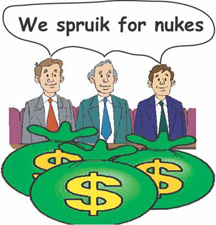 Like many of his countrymen, he regarded nuclear power plants as his country’s ticket to postwar prosperity, a modern, economical way to meet huge energy needs on an island with few natural resources. pro-nuclear sentiment led Japan to build the world’s third largest fleet of nuclear reactors. Its officials spent more than two decades and $22 billion building a factory to create plutonium-based nuclear reactor fuel, the largest ever to be subject to international monitoring. The facility is slated for completion in October at Rokkasho on Japan’s northeast coast,
  kicking off a new phase in the country’s long-term plan to increase energy independence.
The government of Prime Minister Shinzo Abe, who leads Kono’s party, announced in February its support for restarting some reactors and possibly building new ones, designed specifically to burn plutonium-based fuel.
Abe did so with apparent confidence that he has the enduring support — if not of the public — of the so-called “nuclear power village,” a tightly-woven network of regulators, utility industry executives, engineers, labor leaders and local politicians who have become dependent on nuclear power for jobs, income, and prestige.
Kono, a fluent English-speaker who received his undergraduate degree from Georgetown University, said in an interview that he has been talking about nuclear power “for the last 16 to 17 years,” but “no one really paid attention, right?”
Kono was unable to defeat the plutonium fuel program, he said, because its powerful constituency includes not only members of the ruling party, but bureaucrats, media leaders, bankers and academics. They were, he wrote in a 2011 book, “all scrambling for a place at the table” where nuclear-related funds are distributed. The louder he complained, the more these elites turned their backs on him. Just 60 legislators out of 722 in the parliament’s lower and upper chambers have joined the anti-nuclear caucus he helped organize………http://www.publicintegrity.org/2014/03/12/14394/plutonium-fever-blossoms-japan
No future for most of Japan’s nuclear reactors
THREE YEARS AFTER: Majority of Japan’s nuclear reactors face bleak future THE ASAHI SHIMBUN 12 Mar 13 Due to stricter government safety regulations, 30 of Japan’s idled 48 nuclear reactors have no immediate prospects of restarting operations, at least in the near future, according to an Asahi Shimbun survey of utilities.Thirteen of those, mainly due to their age, are having particular difficulty in complying with the new standards, according to the survey, and are likely to be decommissioned……..
The new restrictions ban electric power companies from locating reactor facilities directly on top of active fault lines. The state also revised the Law on the Regulation of Nuclear Source Material, Nuclear Fuel Material and Reactors to limit, in principle, the operational life of reactors to 40 years.
“No matter how much money and time we spend, it would be impossible (for some reactors to clear certain hurdles),” said an official with an electric power company, referring to the two requirements.
The two restrictions are the main obstacles the utilities face in their efforts to restart idle reactors. The 13 likely to be decommissioned are the Tokai No. 2 plant in Ibaraki Prefecture; the three reactors at the Mihama plant in Fukui Prefecture; the two reactors each at the Oi, Takahama and Tsuruga plants, all in Fukui Prefecture; the No. 1 reactor at the Shimane plant; the No. 1 reactor at the Ikata plant in Ehime Prefecture; and the No. 1 reactor of the Genkai plant in Saga Prefecture.
Of these reactors, the Tsuruga plant’s No. 1 reactor and the Mihama plant’s No. 1 and No. 2 reactors have exceeded the 40-year limit.
The Shimane plant’s No. 1 reactor will mark its 40th anniversary of operation at the end of this month, while the Takahama plant’s No. 1 reactor will pass the four decade mark in November. Furthermore, an investigation by the Nuclear Regulation Authority has concluded that there is an active fault line beneath the Tsuruga plant’s No. 2 reactor building. A slip of an active fault directly under a reactor is highly likely to lead to its destruction.
The NRA is also studying the geological structure of the ground beneath the Shika nuclear plant in Ishikawa Prefecture, the Higashidori plant in Aomori Prefecture and the Mihama plant.
The new government standards also require nuclear plant operators to bolster fire prevention measures…….http://ajw.asahi.com/article/0311disaster/fukushima/AJ201403120057
Tokyo anti nuclear groups organise to promote renewable energy
Nuclear foes rally in U.S. cities on 3/11 anniversary Japan Times KYODO NEW YORK 12 Mar 14,“…..Green association forged KYODO A group of 38 local green power advocacy groups plan to set up a national association by June in an effort to break away from nuclear power generation.
The association will provide a forum for sharing information about members’ experiences in setting up community-based renewable power plants, the founders said Tuesday in Tokyo.
Members also plan to create a system for issuing certificates indicating the origin of electricity ahead of the 2016 liberalization of the retail electricity market, which will allow households to choose suppliers. Noting their wish not to have another nuclear disaster, the founders said they hope to assist companies and individuals to overcome challenges in developing locally driven power plants. http://www.japantimes.co.jp/news/2014/03/12/national/nuclear-foes-rally-in-u-s-cities-on-311-anniversary/#.UyII_j9dV9U
USA not happy about Japan’s plutonium plan
- Key findings: http://www.publicintegrity.org/2014/03/12/14406/key-findings
Japan’s nuclear industry has taken a beating in public opinion due to cost overruns, technical glitches and accidents like the Fukushima disaster two years ago next week. - Despite this, support for the Rokkasho plant among the country’s leaders remains high because of a tightly-woven network of regulators, utilities, labor leaders and local politicians who are dependent on a continuing stream of funding for nuclear power.

- Japan’s enthusiasm for nuclear power has been nurtured by the utilities, which spent $27 billion on advertising over the past four decades and lavished contributions on members of the leading Japanese political party.
- Although the government’s policy has long ruled out the production or possession of nuclear arms, some Japanese politicians have supported the production of additional plutonium on grounds that it sends a useful signal to potential aggressors about Japan’s capability to make such weapons.
- Eager to block that development, the U.S. has brought a stream of Japanese diplomats and military officers into highly restricted nuclear weapons centers to remind them of the robustness of the U.S. nuclear deterrent. They also have gently urged Japan not to take steps that would add to its existing plutonium stocks. But neither of these steps amounts to firm advice that Rokkasho should not be opened.

‘Atomic Abe’ taking Japan into a dangerous nuclear situation
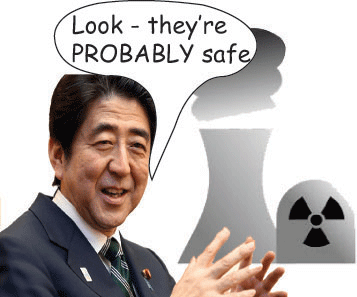 Nuclear energy costs still rising, three years on from Fukushima, SMH, 11 Mar 14 #……Atomic Abe The arrival of Abe as prime minister in December 2012, gave a boost to the pro-nuclear camp. Cutting energy costs is part of his plan to revitalize the economy.
Abe’s push on nuclear shows how polarizing the issue is in Japan.
At least three former prime ministers have publicly opposed the current premier on reactor restarts, including Junichiro Koizumi, Abe’s mentor and one of Japan’s most-popular postwar leaders. Naoto Kan, prime minister at the time of the 2011 quake, is another.
“The reason I’m against nuclear is that people cannot fully control it,” Kan told reporters in a briefing in December.
Industrial accidents can happen, but nothing on the scale of nuclear, he said. A worst-case scenario for Fukushima would have made a third of Japan’s land uninhabitable, Kan said. Opponents also point to the cost of nuclear accidents. The government has estimated it’ll take 11 trillion yen and 40 years to clean up the Fukushima site.
Japan Inc
The former prime ministers find themselves in an unusual place on the opposite side of the argument from Japan Inc.,……..http://www.smh.com.au/environment/nuclear-energy-costs-still-rising-three-years-on-from-fukushima-20140311-34ii6.html
Japanese Senior Scientist Censored over Radiation Report
 Senior Scientist at MIT Event: Japanese scientists censored — Not allowed to publish research that compared Fukushima to Chernobyl — Fukushima ‘arguably’ bigger http://enenews.com/senior-scientist-at-mit-event-japanese-scientists-censored-not-allowed-to-publish-research-that-compared-fukushima-to-chernobyl-fukushima-arguably-bigger
 MIT Center for International Studies — Japan’s Continuing Nuclear Nightmare, Oct 24, 2013:
Ken Buesseler, Woods Hole Oceanographic Institution (at 31:00 in):
I kind of look at these [Chernobyl and Fukushima] and say these are similar in scale, we can argue about which one’s bigger.
It was politically impossible, the first paper I wrote, for Japanese scientists to be co-author because I compared Fukushima to Chernobyl and that was considered not appropriate by his bosses at his institution.
Buesseler during a recent radio interview: Fukushima released “100, or 50 to 80 petabecquerels” of cesium-137 in 2011 — Chernobyl total was 70 petabecquerels Watch the presentations here
Record high radiation in 8 locations at at Fukushima Daiichi
 Jiji: Highly radioactive groundwater now flowing under Unit 1 — Levels skyrocket since last test, now 1,000s of times higher — 8 locations hit record in recent days at Fukushima Daiichi http://enenews.com/jiji-highly-radioactive-groundwater-now-flowing-under-fukushima-unit-1-levels-skyrocket-since-last-test-now-1000s-of-times-higher-8-locations-hit-record-in-recent-days
Jiji Press, Jan. 24, 2014: Tainted Water May Also Have Leaked from No. 1 Reactor at Fukushima N-Plant — Highly radioactive water accumulated in the basement of the turbine building of the No. 1 reactor […] may have contaminated groundwater, experts said Friday. […] TEPCO has explained that the groundwater may have been contaminated by highly radioactive water in underground cable tunnels of the No. 2 and 3 reactors […] however, 5,600 becquerels of radioactive tritium per liter was detected in groundwater taken on Sunday from an observation well near the turbine building of the No. 1 reactor. No radioactive tritium was detected in water collected in mid-November. […]
8 groundwater locations hit new highs for tritium since January 6 (Bq/liter):
0-2: 4,700 <1/12>
0-3-2: 73,000 <1/16>
0-4: 46,000 <1/12>
1-8: 12,000 <1/6>
1-17: 31,000 <1/16>
2-2: 660 <1/8>
2-7: 1,100 <1/17>
3-5: 170 <1/8>
Japan could restart nuclear reactors with no proper emergency plan
 Japanese nuclear power regulation does not require evacuation plan approval as a prerequisite for restarting nuclear power plants
No plan best plan in Kansai nuclear disaster Area leaders paralyzed by lack of answers, state guidance Japan Times, BY ERIC JOHNSTON 26 Jan 14 Ten months after regional governments were required to submit nuclear disaster evacuation plans, a lack of central government guidance and local-level cooperation is generating concern that Kansai will be ill-prepared to respond if any of Fukui Prefecture’s 13 commercial reactors suffers a meltdown.
Questions remain about how fleeing Fukui residents who pass through neighboring Kyoto would be stopped and screened for radiation, and how residents in the rural northern areas closest to the reactors would be gathered and evacuated in a timely manner. Evacuating the elderly, young mothers and the pregnant is also a serious concern.
There is also the question of what to do if Shiga’s Lake Biwa, which supplies drinking water to about 14.5 million people, gets contaminated with radiation.
Citizens’ groups have posed these and other detailed questions to prefectural officials in Kyoto and the Union of Kansai Governments, a loose federation of seven prefectures and four major cities in the region. But Kansai officials reply that, on many issues, there is little they can do because the central government hasn’t drafted specific guidelines…..
Kansai leaders recognize that more monitoring stations, particularly in northern Kyoto and Hyogo, are needed, but without guidance from the central government, as well as funding, there is little they can do.
Prime Minister Shinzo Abe’s government has made restarting the nation’s nuclear reactors a primary goal. The discussions have focused mostly on the technical issues related to the plants and whether the fault lines surrounding them, or in some cases under them, are active.
Given the widespread concerns, Smith says such thinking puts the cart before the horse. “It’s a very serious problem that Japanese nuclear power regulation does not require evacuation plan approval as a prerequisite for restarting nuclear power plants,” she said. http://www.japantimes.co.jp/news/2014/01/26/national/no-plan-best-plan-in-kansai-nuclear-disaster/
China’s repressive policies in Tibet
Human Rights Watch chides China for enforcing highly repressive policies in Tibet http://tibet.net/2014/01/23/human-rights-watch-chides-china-for-enforcing-highly-repressive-policies-in-tibet-2/ DHARAMSHALA: China’s policies in Tibet once again came under criticism from Human Rights Watch, which says in annual report released on Tuesday that the Chinese government systematically suppresses Tibetan political, cultural, religious and socio-economic rights.
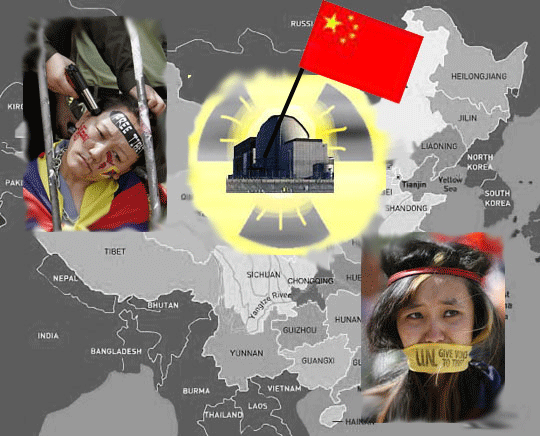 The Chinese government systematically suppresses Tibetan political, cultural, religious and socio-economic rights in the name of combating what it sees as separatist sentiment including non-violent advocacy for Tibetan independence, the Dalai Lama’s return, or opposition to government policy, the report said.
“Arbitrary arrest and imprisonment remains common, and torture and ill-treatment in detention is endemic. Fair trials are precluded by politicised judiciary overtly tasked with suppressing separatism,” it said.
“The Chinese government carries out involuntary population relocation and rehousing on a massive scale, and enforces highly repressive policies in ethnic minority areas in Tibet, Xinjiang, and Inner Mongolia,” Human Rights Watch said in its report.
“The government is also subjecting millions of Tibetans to a mass rehousing and relocation policy that radically changes their way of life and livelihoods, Continue reading
1 This Month
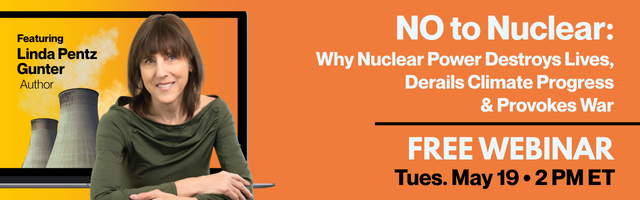
19 May – Webinar No To Nuclear: Why Nuclear Power Destroys Lives, Derails Climate Progress and Provokes War
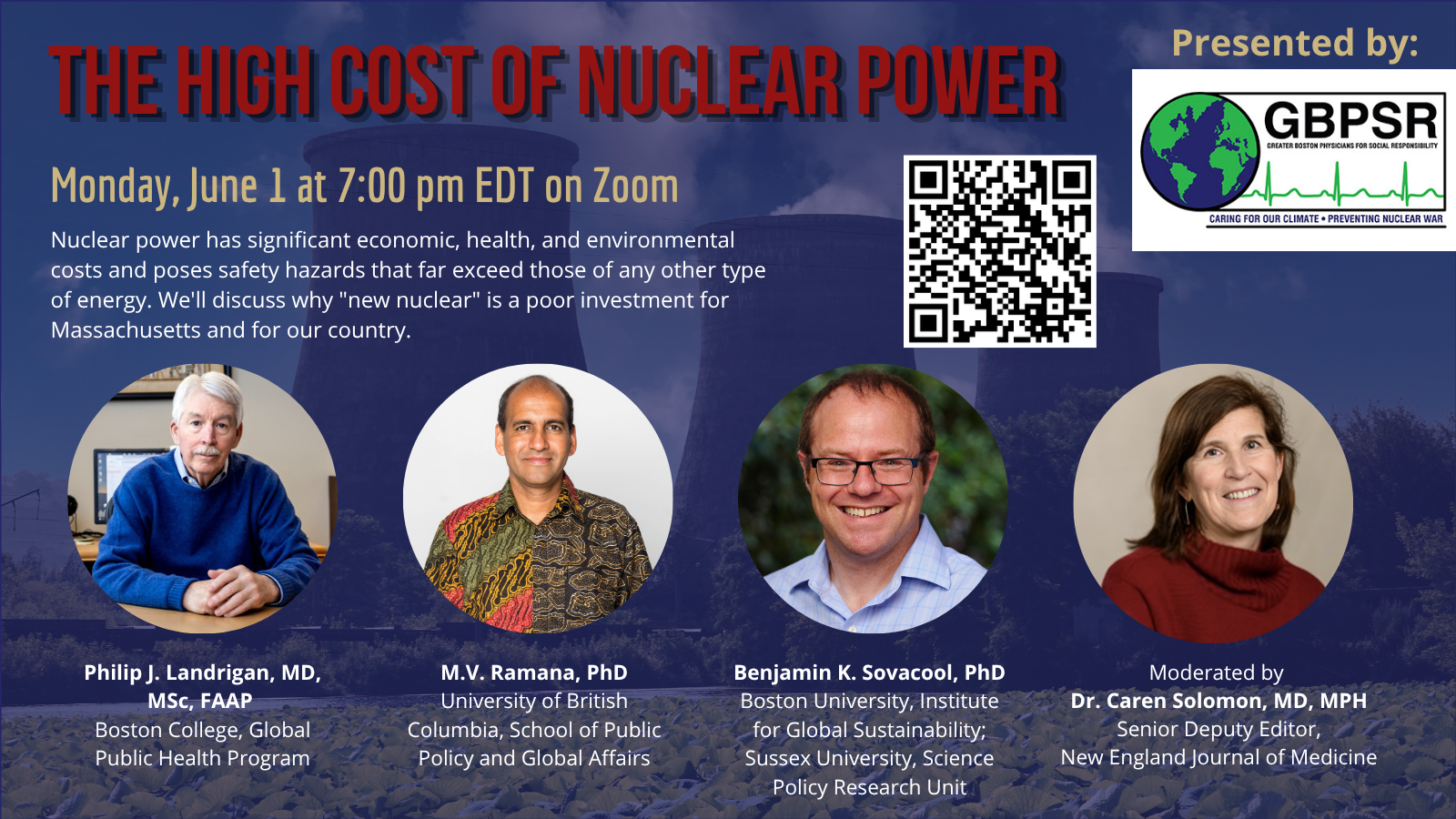
1 June Webinar – The High Cost of Nuclear Power – Register


of the week– Nuclear Reactor Information Task Force
To see nuclear-related stories in greater depth and intensity – go to https://nuclearinformation.wordpress.com
-
Archives
- May 2026 (187)
- April 2026 (356)
- March 2026 (251)
- February 2026 (268)
- January 2026 (308)
- December 2025 (358)
- November 2025 (359)
- October 2025 (376)
- September 2025 (257)
- August 2025 (319)
- July 2025 (230)
- June 2025 (348)
-
Categories
- 1
- 1 NUCLEAR ISSUES
- business and costs
- climate change
- culture and arts
- ENERGY
- environment
- health
- history
- indigenous issues
- Legal
- marketing of nuclear
- media
- opposition to nuclear
- PERSONAL STORIES
- politics
- politics international
- Religion and ethics
- safety
- secrets,lies and civil liberties
- spinbuster
- technology
- Uranium
- wastes
- weapons and war
- Women
- 2 WORLD
- ACTION
- AFRICA
- Atrocities
- AUSTRALIA
- Christina's notes
- Christina's themes
- culture and arts
- Events
- Fuk 2022
- Fuk 2023
- Fukushima 2017
- Fukushima 2018
- fukushima 2019
- Fukushima 2020
- Fukushima 2021
- general
- global warming
- Humour (God we need it)
- Nuclear
- RARE EARTHS
- Reference
- resources – print
- Resources -audiovicual
- Weekly Newsletter
- World
- World Nuclear
- YouTube
-
RSS
Entries RSS
Comments RSS
 nuclear-news