NATO official calls for transparency over nuclear weapons
By Greg Torode https://www.reuters.com/world/nato-official-calls-transparency-over-nuclear-weapons-2023-06-02/
Singapore, June 2 (Reuters) – A senior NATO official on Friday urged Beijing to be more open about its accelerating nuclear weapons build-up, saying that as a global power, China had a responsibility to improve transparency.
Angus Lapsley, the North Atlantic Treaty Organisation’s (NATO) Assistant Secretary General for Defence Policy and Planning, told the Shangri-La regional security conference in Singapore that NATO was willing to talk to China on the issue.
“As a global power it has a global responsibility to be more transparent,” Lapsley said, adding that the scale and pace of the Chinese build-up was “really striking”.
Lapsley said that NATO, with nuclear-armed members the United States, France and Britain, did not want to interfere in the region but wanted to engage, noting that China had a right to modernise and expand its arsenals.
“NATO is open to dialogue, but it can’t substitute dialogue between the U.S. and China,” he said.
Lapsley noted Pentagon reports that China’s arsenal is growing in size and sophistication, and U.S. officials have called for greater dialogue with China.
The Pentagon’s annual China report, released in November 2022, noted that Beijing’s nuclear programme had gathered pace and now has more than 400 operational nuclear warheads – a figure still far below U.S. and Russian stockpiles.
By 2035 – when China is aiming for its military to be fully modernised – China will likely possess a 1,500 nuclear warhead stockpile and an advanced array of missiles, the Pentagon says.
Although China was not represented on the panel, officers from the People’s Liberation Army in the audience questioned recent moves by the U.S. and its allies to provide nuclear-powered submarines to Australia and enhance South Korea’s protection.
One said estimates of its longer-term build-up were “imagination”.
A nuclear power since the early 1960s, China for decades maintained a small number of nuclear warheads and missiles as a deterrent under a “no first use” pledge that remains its official policy despite Beijing’s broader military modernisation under President Xi Jinping.
In a keynote speech of the three-day forum’s opening night, Australian Prime Minister Anthony Albanese said the ultimate goal of nuclear disarmament remained an important cause.
“The citizens of this region have shown an unflinching commitment to preventing the spread of these destructive, inhumane and indiscriminate weapons,” he said.
Tritium found beyond safe limits in treated Fukushima wastewater

A type of radioactive isotope in the over 1.3 million tons of wastewater
being collected at the destroyed Fukushima nuclear power plant and planned
for discharge by as early as this summer has been found at levels beyond
those earlier suggested to be safe by the Japanese government, a wastewater
safety review report by the International Atomic Energy Agency showed
Thursday.
According to the report, which corroborated analyses of the treated wastewater by six laboratories including the Korea Institute of Nuclear Safety, the activity concentrations of tritium in the treated water were estimated to be at least 148,900 becquerels per liter.
The wastewater filtered through Japan’s Advanced Liquid Processing System at the Fukushima Daiichi Nuclear Power Station contained more tritium than what was stipulated in Japan’s national regulatory standards for discharge, 60,000 becquerels per liter……………………………………………
Korea Herald 1st June 2023
http://www.koreaherald.com/view.php?mp=1&np=1&ud=20230601000750
Dismay in the region over Japan’s plan for nuclear waste water
Nuclear Waste in Pacific Ocean: Japan’s Plan Triggers Controversy
Japan plans to discharge millions of metric tonnes of nuclear wastewater into the Pacific Ocean. This wastewater has been accumulating since disaster struck the Fukushima nuclear power plant in 2011. Japan is running out of storage space for this wastewater, which is why it is desperately trying to dump the waste in the ocean. But Tokyo’s plan is marred with controversy, with physical protests being arranged against it as well. Watch this Vantage report to know more.
China swelters through record temperatures. And vulnerability of old people to heat waves

Temperatures across China reached or exceeded their records for the month
of May, the country’s National Climate Centre has said. Weather stations
at 446 sites registered temperatures that were the same as, or greater
than, the highest ever recorded for the month of May, deputy director of
the National Climate Centre Gao Rong said at a press briefing on Friday. On
Monday, the Shanghai Meteorology Bureau reported that the city had recorded
a temperature of 36.1 degrees Celsius. The previous record for May was
35.7C, which occurred in 2018. Over the next three days, most of southern
China is expected to be hit by temperatures of more than 35C, with
temperatures in some areas exceeding 40C, according to national forecasters
on Friday.
Guardian 2nd June 2023
New heatwave warnings could miss vulnerable older people who aren’t
online. Email alerts to warn public about dangers of hot weather will be
voluntary and will give advice on how to stay cool.
Telegraph 1st June 2023
https://www.telegraph.co.uk/news/2023/06/01/new-heatwave-warnings-not-nanny-state-health-officials/
South Korea experts say more study needed on Japan’s nuclear water plan
Yahoo! News, Hyonhee Shin, Wed, 31 May 2023
SEOUL (Reuters) – South Korean nuclear safety experts who visited Japan’s wrecked Fukushima nuclear power plant said on Wednesday that detailed analysis was needed to verify Japan’s plan to release tonnes of contaminated water from it into the sea…………
Japan plans to dump more than one million tonnes of contaminated water that was mainly used to cool the reactors into the sea by around this summer, triggering alarm at home and abroad, especially in fishing communities.
“Given our closest location, we are reviewing whether Japan has an appropriate discharge plan from a scientific and technological standpoint,” Yoo Guk-hee, chairman of the Nuclear Safety and Security Commission, who led a delegation on a site visit last week, told a briefing.
……….. The 21-member South Korean team had focused during its six-day trip on water purification, transport and release equipment, as well as sampling and analysis facilities.
The visit came days after President Yoon Suk Yeol and Japanese Prime Minister Fumio Kishida held a summit in Seoul this month amid a thaw in relations following years of tension between the neighbours, both important U.S. allies………… https://au.news.yahoo.com/south-korea-experts-more-study-073331552.html
Plan to release Fukushima nuclear plant water into sea faces local opposition: “The sea is not a garbage dump”
CBS BY ELIZABETH PALMER, MAY 31, 2023
Japan’s government is asking for international backup as it prepares to release thousands of gallons of water from the Fukushima nuclear power plant into the sea. The plan has alarmed the public and outraged fishermen — even as the international energy agency looks inclined to back it.
………….The plant sits in what was a lush coastal part of Japan, famous for its seafood and delicious fruit. Today, there’s still no-go area around the power station where fields lie fallow and homes sit abandoned.
Inside a high security fence studded with warning signs, engineers are still working to remove radioactive fuel rods that melted inside the reactors. They’ll be at it for decades.
Another problem is piling up in hundreds of metal tanks on the site: they contain more than a million tons of contaminated water.
…………………………………….. “Piping water into the sea is an outrage,” said Haruo Ono, who has been fishing the ocean off the coast of Fukushima all his life.
“The sea is not a garbage dump,” he said. “The company says it’s safe, but the consequences could catch up with us 50 years down the road.”
………………………………..Haruo Ono, the fisherman, said the science is not the issue.
“People don’t understand it,” he said. “Mothers won’t choose Fukushima fish knowing it’s been swimming in radioactive water. Even if the experts say it’s safe.”
Under current rules, he can only take his fishing vessels out to sea a day or two a week, when he gets the OK from the government.
“This is the end of my livelihood,” he said.
……………. The Fukushima nuclear plant won’t be safely decommissioned for years to come. So far taxpayers have paid $90 billion to clean it up. https://www.cbsnews.com/news/fukushima-nuclear-plant-water-plan-release-into-sea-fear-controversy/
China halts floating nuclear power plan over security fears
Global Construction Review, David Rogers, 31.05.23
China’s plan to build a fleet of nuclear power reactors that would provide electrical power to islands on the South China Sea have been suspended over security concerns, the South China Morning Post reports.
As construction of the first units was about to begin, regulators announced that they were withholding approval.
The decision came as a surprise for the project’s scientists, who believed the technology was mature and that floating reactors were generally safer than those on land, since the ocean acts as a natural heat sink and is immune to seismic activity.
Writing in the journal Nuclear Power Engineering, Wang Donghui, a scientist at the National Energy Offshore Nuclear Power Platform Technology Research Centre, said safety and feasibility were the main concerns of authorities.
He said the decision was made in spite of a 10-year research project into floating plants, and the fact that China has advanced ship design capabilities, as well as domestic design and manufacturing units capable of building floating platforms.
It had been hoped that a floating nuclear power plant would provide power to support military and civilian activities on remote islands in the South China Sea, and China was envisaging the construction of a fleet of such vessels (see further reading)………………
n
One of the major safety concerns is that floating power plants could face attacks from sea and air, but also from underwater attacks, according to Wang.
An enemy submarine, for example, could attempt to sabotage the facility by planting explosives on its hull or damaging its cooling systems. Unmanned aerial vehicles could also fly over the plant and drop bombs or other projectiles on it.
According to Wang, protecting a floating nuclear power plant from “underwater divers, vessels, floating objects or airborne objects”, would require a comprehensive ship security system. https://www.globalconstructionreview.com/china-halts-floating-nuclear-power-plan-over-security-fears/
Bill to extend operating period of nuclear plants passes Japan’s Upper House
BY GABRIELE NINIVAGGI, Japan Times, May 31, 2023
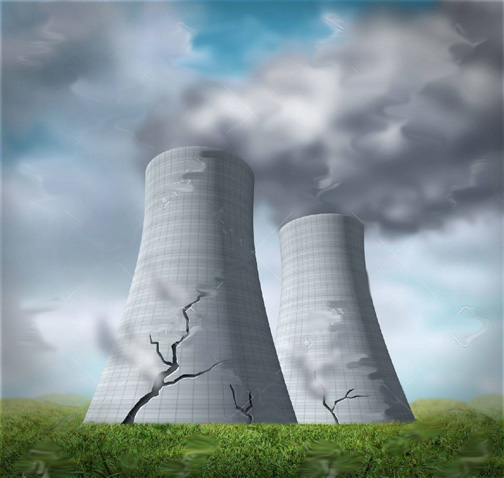
A bill to extend the operating period of nuclear power plants to over 60 years — providing safety conditions are met — passed the Upper House on Wednesday, paving the way for a comprehensive overhaul of Japan’s nuclear policy.
The ruling coalition led by the Liberal Democratic Party, with the external support of two opposition parties — the Democratic Party for the People and Nippon Ishin no Kai — voted in favor of the bill, while other opposition forces on the left and center-left vocally opposed the legislation, saying that proposals to guarantee the safety of nuclear power plants were insufficient………..(Subscribers only) https://www.japantimes.co.jp/news/2023/05/31/national/nuclear-plant-operating-period-bill-pass/
1
TEPCO faces new crisis over pedestal blow at Fukushima plant

May 30, 2023 https://www.asahi.com/ajw/articles/14920197
Damage to a pedestal inside the No. 1 reactor at the crippled Fukushima No. 1 nuclear power plant is more critical than previously believed, triggering a more intricate assessment of its resistance to a major earthquake.
Plant operator Tokyo Electric Power Co. (TEPCO) has no time to waste in confronting the issue. It must swiftly assess the damage and take effective action to prevent an accident or leak of radioactive materials.
An underwater robotic probe detected the damage in late March. It found that the metal framework lies exposed along the inner side of the pedestal’s wall for about 1 meter from its bottom and for the entire inner circumference as concrete in these areas has been lost.
There are fears the containment vessel that houses the pressure vessel could crack if the pedestal collapses in a severe earthquake. That could cause radioactive materials to leak.
Referring to the structure’s current earthquake resistance, TEPCO stressed that the pedestal has managed to support the reactor vessel even though the plant “has experienced strong earthquakes.” The utility cited one last year that registered lower 6 on the Japanese seismic intensity scale of 7.
Although the possibility of the pressure vessel tilting or sinking cannot be ruled out, the company asserts the impact will be limited with no risk of radioactive material leaking to the outside.
the Nuclear Regulation Authority (NRA) said last week it could not decide whether the assumptions underlying TEPCO’s risk assessment are accurate as the extent of damage and condition of the structural materials are not yet fully understood. The nuclear safety watchdog also said it would be difficult to reinforce the pedestal because of high radiation levels inside the containment vessel.
For this reason, the NRA called on the utility to evaluate the impact of a possible release of radioactive material into the environment and consider steps to deal with such an emergency.
As one NRA official put it, “I should say (TEPCO’s evaluation) is too optimistic, and it is difficult to say that is very reassuring.”
NRA Chairman Shinsuke Yamanaka said at a news conference, “It is TEPCO’s responsibility to swiftly assess what risks could impact the surrounding environment and its residents.”
Conditions surrounding the reactors that suffered core meltdowns in the nuclear disaster 12 years ago are only now finally being clarified. This has led to the discovery of additional problems that are already difficult to deal with, making the outlook of progress toward decommissioning the reactors even more uncertain.
The degradation of plant parts and materials will continue in the coming years. There is always the risk of a major earthquake striking the plant. Each time it is hit by a strong quake, the damage accumulates and the danger increases. If a radioactive leak occurs, it will seriously compromise the safety of residents, the reconstruction of the local communities and the local fishing industry.
The NRA this month decided not to lift a ban on the movement of nuclear fuel within TEPCO’s Kashiwazaki-Kariwa nuclear power plant in Niigata Prefecture, citing flawed measures to protect the facility against terrorist attacks. There are growing concerns about whether TEPCO is equipped to operate nuclear power plants.
There is absolutely no room for complacency when it comes to the consequences of the Fukushima nuclear disaster. TEPCO must always remain vigilant to a worst-case scenario in tackling related challenges.
China firmly opposes Japan’s discharge of Fukushima nuclear-contaminated water into sea
Source: Xinhua, Editor: huaxia, 2023-05-30 https://english.news.cn/20230530/5bdd921cc81744ffbcfd0eb7b76dd09b/c.html
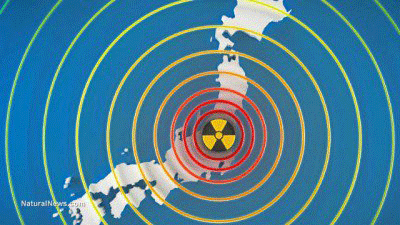
GENEVA, May 28 (Xinhua) — A Chinese delegate on Saturday expressed firm opposition to Japan’s unilateral decision to discharge the nuclear-contaminated water from Fukushima into the sea, when attending related discussions at the 76th World Health Assembly (WHA) held here.
Given the strong currents along Fukushima’s coast, the radionuclides will spread to waters worldwide in 10 years after a discharge, the delegate said, adding that this move is to shift the risks to all mankind, and is not Japan’s private matter, but a crucial issue affecting global public health.
Noting many countries and stakeholders have expressed serious concerns, the delegate urged Japan not to unilaterally discharge the nuclear-contaminated water before reaching an agreement with all parties.
In response to a Japanese delegate’s defense, the Chinese side said that the defense can be summed up as “the water quality is non-toxic and the discharge is reasonable,” but what the Japanese side said is completely untenable and they must give convincing answers to a series of questions.
The Chinese delegate raised three questions: First, if the nuclear-contaminated water is safe, why doesn’t Japan itself use the water? Why not use the water for domestic agriculture and manufacturing, or discharge it into domestic lakes? Second, is discharging the nuclear-contaminated water into the sea the only feasible solution? Third, what kind of long-term impact will such a discharge have on the world?
When it comes to the disposal of the nuclear-contaminated water, the Chinese delegate pointed out that Japan’s Ministry of Economy, Trade and Industry has proposed five plans. The Japanese government’s expert committee has admitted that compared to such options as emitting the water into the atmosphere through vaporization, building new storage tanks and solidifying the water with cement, a discharge into the sea is the cheapest option with minimum risk of pollution to Japan itself.
Japan’s current choice is to save itself trouble and money by pushing the world to suffer consequences, the delegate said, emphasizing that such actions, which only serve the short-term interests of Japan but harm the common interests of all mankind, must be severely condemned and resolutely resisted, and that the Pacific Ocean is not a sewer into which Japan can dump nuclear-contaminated water.
In April 2021, Japan announced that it would discharge the polluted water from the Fukushima nuclear accident into the ocean. Many countries, including China, have expressed firm opposition, and Russia also expressed serious concerns at this WHA. However, Japan has disregarded the reasonable appeals and demands of the international community.
Government’s nuclear-free policy remains unchanged: Cabinet
05/29/2023, Focus Taiwan, By Chen Chun-hua, Kuo Chien-shen, Wang Yang-yu, Wang Cheng-chung, Liu Chien-ling and Evelyn Kao
Taipei, May 29 (CNA) The government’s policy of creating a “nuclear-free homeland” has not changed, and there is no consideration of extending the service of Taiwan’s nuclear power plants, Cabinet spokesman Lin Tze-luen (林子倫) said Monday.
Lin was responding to comments by Vice President and Democratic Progressive Party (DPP) presidential candidate Lai Ching-te (賴清德) that Taiwan’s nuclear reactors might be reactivated in an emergency situation, seemingly contradicting the DPP’s policy.
Lin said in a post to reporters that the Ministry of Economic Affairs and Taiwan Power Co. (Taipower) are carrying out the phasing out of Taiwan’s nuclear plants in line with the original plans and are not considering extending their lifespan……
Taiwan currently has only one nuclear power plant still producing power, the third nuclear power plant near the southern tip of the island. It is scheduled to be shut down by 2025 and be decommissioned.
The first and second nuclear plants along Taiwan’s northern coast have started their decommissioning processes. The fourth nuclear plant in Gongliao in northeastern Taiwan was nearly completed but never operated, and the DPP government shipped away its unused fuel rods……………………………………….more https://focustaiwan.tw/politics/202305290012
IAEA team in Japan for final review before planned discharge of Fukushima nuclear plant water.

abc news, 29 May 23
An International Atomic Energy Agency team has arrived in Tokyo for a final review before Japan begins releasing massive amounts of treated radioactive water into the sea from the wrecked Fukushima nuclear plant, a plan that has been strongly opposed b…
By MARI YAMAGUCHI Associated Press, May 29, 2023
TOKYO — An International Atomic Energy Agency team arrived in Tokyo on Monday for a final review before Japan begins releasing massive amounts of treated radioactive water into the sea from the wrecked Fukushima nuclear plant, a plan that has been strongly opposed by local fishing communities and neighboring countries.
The team, which includes experts from 11 countries, will meet with officials from the government and the plant operator, Tokyo Electric Power Company Holdings, and visit the Fukushima Daiichi nuclear power plant during their five-day visit, the economy and industry ministry said………………………………
Some scientists say the impact of long-term, low-dose exposure to radionuclides is unknown and the release should be delayed.
Japan’s government has stepped up campaigns in Japanese media and at food fairs to promote the safety of seafood from Fukushima, while providing regular briefings to foreign governments including South Korea and members of the Pacific Islands Forum.
…………………. Japanese officials say the water stored in the tanks needs to be removed to prevent accidental leaks in case of another disaster and to make room for the plant’s decommissioning. https://abcnews.go.com/Technology/wireStory/iaea-team-japan-final-review-planned-discharge-fukushima-99669696
Thawing glaciers around Everest show critical need to stop greenhouse emissions
Helen Clark – former prime minister of New Zealand: Global temperature
rises mean that Everest, in common with mountains across the Himalayas, is
undergoing unprecedented and irreversible change. The 79 glaciers that
surround Everest have thinned by more than 100 metres (328ft) in just six
decades, and the rate of thinning has nearly doubled since 2009.
Communities at the top of the world are crying out to world leaders for
help. Humanity has a mountain to climb in reaching the aspirations of the
Paris Agreement. The only hope is for concerted global action to reduce
greenhouse gas emissions dramatically to save the world’s snow and ice
before it is too late.
Times 29th May 2023
https://www.thetimes.co.uk/article/as-everest-shows-action-on-climate-change-is-critical-lswbmvlps
Taiwan Considers Keeping Nuclear Reactors on Emergency Standby
Cindy Wang and Stephen Stapczynski, Mon, May 29, 2023 https://finance.yahoo.com/news/taiwan-considers-keeping-nuclear-reactors-022439242.html
(Bloomberg) — Taiwan is considering keeping nuclear power plants on standby in case of emergencies, signaling a loosening of policy to phase out the energy source.The government plans to maintain shut reactors so that they could be restarted in an emergency, Taipei-based United Daily News reported, citing Vice President Lai Ching-te, the ruling Democratic Progressive Party’s presidential candidate. It’s the first time the government has signaled it’s possible to restart plants, United Daily News said.
The use of nuclear as backup generation would be unusual because of the high costs and safety measures required. Taiwan’s plans to phase out its last remaining atomic plant by 2025 go against a global resurgence of the technology to reduce dependence on fossil fuels. The island is also seeking to reduce coal consumption, leaving the government under pressure to build out gas-powered generation and offshore wind to avoid power shortages.
A restart strategy would only be needed in extreme emergencies, such as external blockades or serious natural disaster, and would need to be safe and have consensus among lawmakers and the public, Economics Minister Wang Mei-hua told reporters on Monday.
Taiwan got about 11% of its power from nuclear in 2021, according to state-owned Taiwan Power Co. It has two operating reactors that started in the 1980s and which are slated to close next year and in 2025.
CAN PAK-INDIA NUCLEAR DETERRENCE HOLD?

The nuclearisation of South Asia can be analysed from different angles.
Dawn Ejaz Haider May 28, 2023
Exactly 25 years ago, on May 28, Pakistan conducted five nuclear tests (a sixth was done on May 30). The tests were a response to India’s five nuclear tests, conducted on May 11 and 13. Both governments, after the tests, declared a moratorium on further testing. A quarter century since May 1998, they have stuck to the moratorium, though neither has signed the Comprehensive Test Ban Treaty (CTBT).
………………………………..We should be less sanguine about deterrence holding in all situations. Indeed, there’s now growing literature about the world being “on the cusp of a Third Nuclear Age” where a number of factors are likely to make the old belief in deterrence increasingly problematic if not entirely untenable.
This article primarily deals with India and Pakistan, a nuclear dyad in conflict. But some of the observations here are also applicable to other NWSs, including those whose possession of nuclear weapons have been “legitimised” by the Nuclear Non-Proliferation Treaty (NPT).
WHAT IS THE THIRD NUCLEAR AGE?
In a 2021 article for European Journal of International Security, titled Strategic non-nuclear weapons and the onset of a Third Nuclear Age, Andrew Future and Benjamin Zala describe the Third Nuclear Age as the combination of Second Nuclear Age thinking — i.e., deployment of Strategic Non-Nuclear Weapons (SNNWs) — “with the return of the kind of major power competition associated with the First Nuclear Age.” This combo, as experts have begun to note, is highly dangerous.
…………………………………………………………………………………….. we are witnessing the use of info war by both Ukraine/NATO and Russia. Misinformation and disinformation campaigns, as is now widely known, serve to undermine trust in public institutions and governments. They are also essential tools in influencing perceptions.
INTEGRATION, AI AND THE KILL CHAIN
While the SNNW technologies [ Strategic Non-Nuclear Weapons ] are disrupting the battlefield by getting increasingly more accurate and sophisticated, there’s the additional problem of cross-tech/cross-platform integration that is concentrating and increasing firepower devastatingly.
Developments in artificial intelligence (AI) are also likely, by most accounts, to take the human out of the decision-making loop. This is not hypothetical, since multiple such systems are being tested and prototypes developed. Another problem is the presence of SNNWs in a nuclear environment, such as between a nuclear dyad.
Since they “constitute an employable and credible weapon system that can engage the sources of enemy power directly, skipping the tactical and operational levels of warfare”, nuclear adversaries can use them thinking that they could keep the conflict below the nuclear threshold. Also, in the case of NWSs there’s no way of knowing whether these weapons carry conventional warheads.
Cross-platform integration and the introduction of AI — what we can call the Internet of Military Things — is changing the concept of the decision-making speed and what the militaries call the kill chain (it also throws up many ethical issues). Up until now, the kill chain was a series of processes, executed sequentially. With AI, we are now looking at overlapping some of those phases and completing them in parallel, to reduce the execution time of the chain.
In other words, the weapon is fired first, the find and fix processes overlap the flight time, and the final target designation is sent to the weapon in flight, through a SATCOM channel. Now bring AI into this and combine it with hypersonic missiles and you get an idea of how much time will be reduced on the kill chain.
In August 2020, the Defense Advanced Research Projects Agency of the United States conducted a simulated experiment. It pitted a Heron-developed AI pilot against a top F-16 human pilot. The AI pilot beat the human pilot in a 5-0 sweep in dogfight and manoeuvres.
While some of these technologies are expensive, others are not. The cost of many will steadily come down further as they proliferate (drones are a case in point, as is cyber and digital expertise). At this point, there are almost no regulatory frameworks for a number of emerging technologies.
Integration and the digital environment has also brought other risks. In a January 2018 report, the Royal Institute of International Affairs warned that US, British and other nuclear weapons systems are increasingly vulnerable to cyber-attacks. This is far from an abstract threat.
……………………………………………………………………………………………….. This is not all. In a January 2023 edited volume, The Fragile Balance of Terror: Deterrence in the New Nuclear Age, professors Vipin Narang and Scott D Sagan point to what they call the “declining confidence in deterrence.”
Gathered in the book are some of the top world experts trying to analyse the presence of nuclear weapons in a new age: growing prevalence of personalist dictatorships; incomplete or incorrect information; states facing multiple nuclear adversaries (regional subsystems) and operating in a novel information environment where misinformation can be maliciously planted or otherwise spread rampantly; states possessing small nuclear arsenals which they fear may not be reliable or survivable or over which they may not retain firm command and control.
As they put it: “Each of these factors alone, and especially in combination, generate risks that our standard strategies of nuclear deterrence are simply unequipped to manage or address.”
This is just a bird’s-eye view of a much larger and complex body of literature, a corpus that is increasing in volume, not as an exercise in alarmism but in analysing the emerging, uncertain trends.
INDIA-PAKISTAN, A CONFLICT DYAD
Some might say that it will be a while before some of these advanced technologies will get to these shores. They are wrong.
UAVs are already here, as are missile defences and precision, long-range artillery.
India is already seeking to bolster its anti-ballistic and cruise missile defences, developing MIRVs (multiple independently-targetable re-entry vehicles), hypersonic glide vehicles (reducing the already very short missile flight times) and fielding SSBNs (ship submersible ballistic nuclear), essentially, nuclear-powered submarines which can carry ballistic and cruise missiles with nuclear warheads.
These systems can both be non-nuclear and nuclear — i.e., they can carry tactical and strategic warheads………………………………………..
There are a number of additional risk factors as far as India and Pakistan are concerned: they are locked in a conflictual model; they have had multiple armed confrontations; both are nuclear-armed with growing arsenals and capabilities; since 2014, but more so since 2016, there is no dialogue framework between the two (covert channels notwithstanding);………………………………………
This environment is known. But it also feeds into another set of problems that increases the likelihood of a conflict:
a: India’s stated doctrine of limited conflict;
b: India’s movement away from the declaratory no-first use policy, as contained in its 2003 doctrine, to what can now only be described as a non-stated first-use policy; and
c: India’s poor record of handling weapon systems and platforms, which increases the risk of accidental conflict.
COLD START AND LIMITED WAR
India’s doctrine of limited war has a high probability of a spiral. ………………………………….
At the politico-strategic levels, relations remain tense, with little to no dialogue between the two sides since August 5, 2019, when India unilaterally and illegally revoked the autonomous status of Jammu and Kashmir, in violation of UN Resolutions. Past experience suggests that deteriorating relations result in a higher probability of conflict between the two sides
INDIA’S NO-FIRST USE IS A SHAM
India’s 2003 Nuclear Doctrine declares that India is wedded to no-first use (NFU) — i.e., India will not be the first to use nuclear weapons, unless it is attacked with nuclear weapons. The NFU declarations, as experts have widely argued, are political, not operational statements.
ACCIDENTS, MORE ACCIDENTS…………………………………………………………………..
As noted by one Indian analyst, “the Indian military services over the last several years have witnessed many high profile tragedies and mishaps.” During PAF’s Operation Swift Retort on February 27, 2019, while there was a dogfight going on over the skies along the Line of Control, Indian ground air defence shot down one of its own Russian Mi-17V5 ‘Hip’ medium-lift helicopters, killing six service officials and one civilian.
In two other incidents, “India’s indigenous Arihant [nuclear] submarine [was left] out of commission for many months in 2018; and a fire and explosion on board an Indian Kilo-class submarine in 2013…killed 18 crew members.”
ELUSIVE COMMON GROUND
As nuclear weapons states outside the framework of the NPT, Pakistan and India have certain legal and normative responsibilities. Their civilian nuclear programmes are under the International Atomic Energy Agency (IAEA) safeguards.
India, which has a 123 Agreement with the United States, has been trying to become a member of the Nuclear Suppliers Group and is already a member of the Missile Technology Control Regime. Pakistan, for its part, has constantly argued against discriminatory approaches to non-proliferation and disarmament……………………………………………
The writer is a journalist interested in security and foreign policies. He tweets @ejazhaider
Published in Dawn, EOS, May 28th, 2023 more https://www.dawn.com/news/1756369/can-pak-india-nuclear-deterrence-hold?preview
1 This Month


10 March A LIVE WEBINAR THE REAL EFFECTS OF NUCLEAR POWER
What the Industry Isn’t Telling Us
1:00 PM Mountain, 2 pm Central, 3 pm Eastern. Live on the Keepers of the Water Facebook page


18 March Webinar @ 1 PM EST: An Assessment of SMR Projects: The Case of Canada
register for the zoom:
https://us02web.zoom.us/webinar/register/WN_o8BIIOUvQ2ONJR1nta65DQ#/registration


of the week – STOP SMALL MODULAR REACTORS IN CANADA
To see nuclear-related stories in greater depth and intensity – go to https://nuclearinformation.wordpress.com
-
Archives
- March 2026 (76)
- February 2026 (268)
- January 2026 (308)
- December 2025 (358)
- November 2025 (359)
- October 2025 (376)
- September 2025 (258)
- August 2025 (319)
- July 2025 (230)
- June 2025 (348)
- May 2025 (261)
- April 2025 (305)
-
Categories
- 1
- 1 NUCLEAR ISSUES
- business and costs
- climate change
- culture and arts
- ENERGY
- environment
- health
- history
- indigenous issues
- Legal
- marketing of nuclear
- media
- opposition to nuclear
- PERSONAL STORIES
- politics
- politics international
- Religion and ethics
- safety
- secrets,lies and civil liberties
- spinbuster
- technology
- Uranium
- wastes
- weapons and war
- Women
- 2 WORLD
- ACTION
- AFRICA
- Atrocities
- AUSTRALIA
- Christina's notes
- Christina's themes
- culture and arts
- Events
- Fuk 2022
- Fuk 2023
- Fukushima 2017
- Fukushima 2018
- fukushima 2019
- Fukushima 2020
- Fukushima 2021
- general
- global warming
- Humour (God we need it)
- Nuclear
- RARE EARTHS
- Reference
- resources – print
- Resources -audiovicual
- Weekly Newsletter
- World
- World Nuclear
- YouTube
-
RSS
Entries RSS
Comments RSS
 nuclear-news