Following the pattern of weapons to Ukraine, Pentagon to send $1billion of weapons to Taiwan
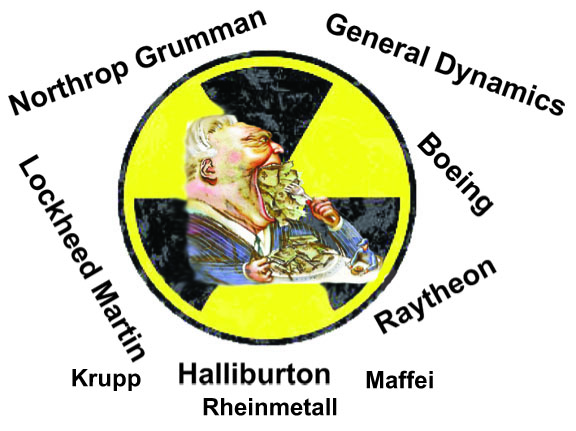
U.S. announces first tranche of $345M weapons package for Taiwan
The package will include MQ-9 Reaper drones, according to one person familiar with discussions.
Politico, By LARA SELIGMAN, 07/28/2023
The Biden administration announced a $345 million weapons package for Taiwan on Friday, the first tranche in a total of $1 billion the U.S. has allotted to be transferred directly from Pentagon stockpiles to the island this year.
The move is sure to anger China as Washington has been trying to rebuild relations with Beijing. Senior administration officials, including Secretary of State Antony Blinken and Treasury Secretary Janet Yellen, recently visited China, but the outreach has done little to quell tensions over a range of issues, from U.S. support to Taiwan to Beijing’s spy balloon program…………………..
The package marks the first time the U.S. has used new authority from Congress to transfer military equipment directly from Pentagon inventory to Taiwan. The transfer is done under the Presidential Drawdown Authority, the same mechanism Washington uses to send weapons to Ukraine………………………………………..
Defense Secretary Lloyd Austin told lawmakers in May that a presidential drawdown package was in the works for Taiwan, but it’s taken weeks of additional work before the aid could be officially announced. Among other challenges, DOD had to work through an “accounting error” that forced officials finalizing packages for Ukraine and Taiwan to recalculate the value of equipment that was being sent………….. more https://www.politico.com/news/2023/07/28/u-s-300million-weapons-taiwan-00108811
Failed Fukushima System Should Cancel Wastewater Ocean Dumping

The global ban on ocean dumping of radioactive waste adopted in 1993 applies only to barrels. It has allowed Britain and France to pump billions of gallons of radioactive wastewater into the Irish Sea and the North Sea respectively, for decades.
BY JOHN LAFORGE, 25 July 23 https://www.counterpunch.org/2023/07/25/failed-fukushima-system-should-cancel-wastewater-ocean-dumping/
From the Fukushima-Daiichi triple-reactor meltdown wreckage, Japan’s government and “Tepco,” the owner, are rushing plans to pump 1.37 million tons (about 3 billion pounds) of radioactive wastewater into the Pacific.
Their record is poor. Their lies are documented. This is not safe, at all.
To keep the three meltdowns’ wasted fuel from melting again, Tepco continuously pours cold water over 880 tons of “corium,” the red-hot rubblized fuel amassed somewhere under three devastated reactors. “That water leaks into a maze of basements and trenches beneath the reactors and mixes with groundwater flowing into the complex,” Reuters reported Sep. 3, 2013.
Most of this water is collected and put through Tepco’s jerry-rigged mechanism dubbed ALPS, for Advanced Liquid Processing System, which it turns out hasn’t processed much of anything.
Tepco, Japan’s Nuclear Regulatory Authority, the International Atomic Energy Agency (IAEA), and much of the media endlessly repeat that ALPS removes over 62 radioactive materials from the ever-expanding volume of wastewater. Reports regularly claim the planned dumping is routine, safe, and manageable.
This unverified PR loop has fooled a lot of people, but the ALPS is a fraud. As early as 2013, the filter system stalled and the IAEA reported that April that ALPS had not “accomplished the expected result of removing some radionuclides,” Reuters reported.
In September 2018, the ALPS was revealed to have drastically failed, forcing Tepco to issue a public apology and a promise to re-filter huge volumes of the waste.
According to Reuters, Oct. 11, 2018, documents on a government committee’s website show that 84 percent of water held at Fukushima contains concentrations of radioactive materials higher than legal limits allow to be dumped.
Among the deadly isotopes still in the waste are cesium-137, strontium-90, cobalt-60, ruthenium, carbon-14, tritium, iodine-129, plutonium isotopes, and more than 54 more.
In a June 14, 2023 op/ed for the China Daily, Shaun Burnie, the Senior Nuclear Specialist at Greenpeace East Asia, reported that the ALPS “has been a spectacular failure,” and noted:
“About 70 percent or 931,600 cubic meters of the wastewater needs to be processed again (and probably many more times) by the ALPS to bring the radioactive concentration levels below the regulatory limit for discharge. Tepco has succeeded in reducing the concentration levels of strontium, iodine, and plutonium in only 0.2 percent of the total volume of the wastewater, and it still requires further processing. But no secondary processing has taken place in the past nearly three years. Neither Tepco nor the Japanese government has said how many times the wastewater needs to be processed, how long it will take to do so, or whether the efforts will ever be successful. … none of these issues has been resolved.”
Tepco says it will re-filter more than 70 percent of the wastewater through ALPS again, a process that itself leaves massive amounts of highly radioactive sludge that must be kept out of the environment for centuries.
Hoping to slow the rush to dump, Professor Ryota Koyama from Fukushima University, said in an interview with China Media Group last May, “If the Japanese government or the Tokyo Electric Power Co. really wants to discharge contaminated water into the sea, they need to explain in more detail whether the nuclides have really been removed.”
International law governing state-sponsored or corporate pollution of the seven seas is relatively useless in challenging Tepco’s outrageous transfer of private industrial poison into the public commons. The global ban on ocean dumping of radioactive waste adopted in 1993 applies only to barrels. It has allowed Britain and France to pump billions of gallons of radioactive wastewater into the Irish Sea and the North Sea respectively, for decades.
Japan Doesn’t Want to Fight for Taiwan and Neither Do Other US Allies

if Japan fought alongside the US in a hypothetical conflict with China over Taiwan, the Japanese civilians and economy would suffer greatly. What’s more, in a conflict between two nuclear powers, China and the US, Japan may itself become a nuclear target,
22.07.2023 Ekaterina Blinova https://sputnikglobe.com/20230722/japan-doesnt-want-to-fight-for-taiwan-and-neither-do-other-us-allies-1112066099.html
Despite Japan bolstering its military capabilities under the nation’s new Defense Buildup Program, it appears to have zero appetite to engage in direct confrontation with China over Taiwan, Western media and think tanks say.
US military facilities in Okinawa, Japan, might play a central role in any Taiwan crisis, according to the Western press. Moreover, American military analysts have almost unanimously agreed that Japan is “the most likely US ally to contribute troops” in a potential US conflict with China over the island.
Back in October 2021, War on the Rocks, a US online media outlet, quoted a Japanese poll which appeared to indicate that 74% of respondents would support their government’s military engagement in the Taiwan Strait against China. The report further speculated about the possibilities of circumventing the country’s Constitution, which limits Japan’s ability to participate in conflicts.
Bold statements made by some Japanese officials also seemed to confirm Tokyo’s resolve. One of them, former Minister of Defense Yasuhide Nakayama, insisted in June 2021 that Taiwan is a “red line” and that “we have to protect Taiwan as a democratic country.” Japan and Taiwan are geographically close and any possible military actions over the island could potentially affect Japan’s Okinawa prefecture, Nakayama argued at the time.
Is China Going to Take Taiwan by Force?
The People’s Republic of China, which considers Taiwan its inalienable part, has repeatedly stated that it is going to reunite with the island peacefully, referring to years of fruitful collaboration with the former Taiwanese government formed by members of Kuomintang Party.
The Kuomintang can make a spectacular comeback during the Taiwanese general elections, scheduled for January 2024. The party’s victory could nip the fuss around Taiwan’s secessionism and potential conflict in the bud. Even US lawmakers admit it, considering the Kuomintang’s win a potential “threat” to Washington’s plans in the Asia-Pacific.
Biden Fast-Tracks Arming of Taiwan
For their part, the Biden administration and American legislators have repeatedly issued provocative statements with regard to the island, with the US president claiming time and time again that Washington is ready to “protect” Taiwan “militarily.” The US has also bolstered arms sales to the island.
In late June, Biden approved two potential arms sales totaling $440 million to Taiwan, including ammo and other military equipment. Earlier, in March, the US State Department approved a $619 million sale of hundreds of missiles to Taiwan to arm its new US-made F-16 jet fighters. Moreover, the Biden administration has started to use fast-track authority for accelerating the pace of the arming of Taiwan. The same mechanism has been used by Biden to speed-up Ukraine’s militarization.
Japanese Leadership Seems Unhappy With US Bellicosity
The unfolding situation has apparently given shivers to the Japanese leadership. The Wall Street Journal broke on Monday that the Japanese government is ready to give permission to the US to use bases in Japan in the case of conflict over Taiwan, but Tokyo’s own participation is unlikely.
Per the report, Washington invited Tokyo to consider using its Self-Defense Forces, especially the Maritime Self-Defense Force for hunting for Chinese submarines around the island of Taiwan and for other military missions.
Presently, Japan is home to about 54,000 US troops, according to the Council on Foreign Relations. It also hosts the headquarters of the US Navy’s 7th Fleet and the 31st Marine Expeditionary Unit.
Tokyo’s concerns have certain grounds. In May, Japanese scholar Kiyoshi Sugawa wrote for Responsible Statecraft, the online magazine of the Quincy Institute (a DC-based think tank), that if Japan fought alongside the US in a hypothetical conflict with China over Taiwan, the Japanese civilians and economy would suffer greatly. What’s more, in a conflict between two nuclear powers, China and the US, Japan may itself become a nuclear target, Sugawa warned.
The DC-based think also refers to the recent Japanese polls which indicate that just 11% of Japanese respondents consider it possible to fight alongside the US against China, while 27% said that their forces should not cooperate with the US military at all. The majority (56%) said that providing logistical support to the US would be more than enough in the event of the conflict.
Nobody Wants to Die for Uncle Sam
What’s more, Japan is not the only US ally unwilling to fight with China over Taiwan. The Australian government has recently signaled that it gave no promises to Washington about military participation in a potential conflict. The Philippines does not want to get dragged into the conflict, either.
When it comes to South Korea, it also lacks any enthusiasm of joining the US in a combat operation in the Taiwan Strait. Western observers draw attention to the fact that South Korean President Yoon Suk-yeol avoided meeting with then-US House Speaker Nancy Pelosi in Seoul after her controversial tour to Taiwan. The Diplomat suggested that Seoul has at least three reasons to avoid a possible war over the island. First, the China market accounts for 30% of South Korea’s total trade; second, Seoul fears that a Taiwan conflict would increase “the North Korean threat”; third, for Seoul friendly relations with Beijing is a guarantee against a conflict with Pyongyang.
Still, there is yet another US regional treaty ally, Thailand. However, according to the DC-based think tank, it’s completely impossible to force Bangkok to fight against China for the sake of Taiwan.
While muddying the waters of the Taiwan Strait, the US risks staying face-to-face with China which would mean a defeat in a possible military standoff, judging from the US’ earlier war game simulations.
Rain fury: Floods batter North Indian states – nearly a foot of rain in 14 hours recorded
ABP News Bureau, 2023-07-23
North Indian states are reeling under severe monsoon mayhem as roads are flooded, rivers are flowing over the danger mark, and waterlogging is hindering all kinds of commute leaving residents helpless. After wreaking havoc in the hill states of Uttarakhand and Himachal Pradesh, heavy showers in Maharashtra, and Gujarat have created a flood-like situation in the two states. Meanwhile, a cloudburst in Ladakh and a fresh spell of rain in Uttarakhand have raised the threat of a rise in the water level again in Delhi which has witnessed the worst flooding since 1978. Here are the latest updates on monsoon fury from across the country:
ABP News Bureau 2023-07-23
Hong Kong tightens radiation inspection of Japanese seafood imports
Hong Kong has started strengthening radiation inspections of seafood
imports from Japan, sources said Saturday, amid concerns in China over a
plan to discharge treated radioactive water from the crippled Fukushima
nuclear plant into the ocean. The tighter inspections started in mid-June
and customs clearance of Japanese seafood was delayed by about three hours
compared with earlier clearance times.
Hong Kong on Friday reiterated its
concerns over the water plan. The Japanese government has confirmed that
some shipments of Japanese seafood have been held up at China’s customs.
Hong Kong is Japan’s second-largest market for agricultural and fisheries
exports, while mainland China is its biggest.
Japan Times 22nd July 2023
https://www.japantimes.co.jp/news/2023/07/22/national/hong-kong-food-fukushima-treated-water/
Cesium 180 times limit found in fish at Fukushima nuke plant 12 years after disaster.

July 19, 2023 (Mainichi Japan)
FUKUSHIMA — Radioactive cesium 180 times Japan’s legal maximum has been found in fish caught in the port at the crippled Fukushima Daiichi nuclear plant, revealing that the March 2011 triple meltdown there continues to impact the local ecosystem.
The cesium in the black rockfish caught in May measured 18,000 becquerels per kilogram. The legal limit under the Food Sanitation Act is 100 becquerels per kg. According to plant operator Tokyo Electric Power Company (TEPCO) Holdings Inc., the fish was captured inside the inner breakwater, close to the No. 1 to No. 4 reactors at the seaside plant, where decommissioning work continues.
When it rains, the rainwater streams into the “K drainage” — one of several drainpipes at the plant — after running through debris and over the ground, both contaminated with radioactive substances. It is then discharged into the station’s small port.
TEPCO claims that it has confirmed the cesium levels in the discharged rainwater are below the government criteria of 60 becquerels per liter for cesium-134 and 90 becquerels for cesium-137. But compared with other drainages at the plant, runoff with higher concentrations of radioactive materials has been discharged within the inner breakwater. The seabed sediment in the area was also found to contain cesium-137 up to 130,000 becquerels-plus per kilogram and cesium-134 up to 3,400 becquerels-plus as of the end of January this year………………………………………………………………..
……………………………………………………….”We urge that TEPCO take thorough measures to prevent radioactive materials from getting into the ocean, even within the port,” a fisheries federation official urged, refering to the black rockfish with more than 100 becquerels per kg caught in May at the nuclear complex’s port.
Toshihiro Wada, an associate professor of fish ecology at Fukushima University, said of the heavily contaminated fish, “It’s likely that cesium was concentrated within the fish from the food chain, confined as it is by the inner breakwater where radioactive substances have accumulated from the drainages flowing into the port.”
He continued, “Unless fundamental measures are taken to lower the concentrations of radioactive materials discharged from the ‘K drainage,’ fish surpassing the maximum will likely keep being found,” even as TEPCO has stepped up measures to prevent fish from getting away…………………………………
Radioactively contaminated water has been swelling daily at the plant as water injected to cool nuclear fuel debris that melted down in the 2011 disaster has been accumulating with groundwater and rainwater mixing into it. TEPCO processes the contaminated water using ALPS, or multi-nuclide removal equipment, and stores the treated water in tanks after reducing the radioactive levels apart from tritium, which is difficult to remove from water.
‘Set treated water aside’
The Japanese government plans to release treated water from the Fukushima plant into the ocean around the summer, after diluting it to get tritium concentrations below 1,500 becquerels per liter, or one-fortieth of the national standard. It plans to release the water about 1 kilometer offshore via an undersea tunnel.
“Unlike cesium, tritium does not concentrate in fish even if they ingest it, according to data,” associate professor Wada said. “Experimental results have shown that if treated water is put into regular seawater, the concentration (of tritium) is reduced. We need to consider (tritium) separately from cesium.”
(Japanese original by Riki Iwama, Fukushima Bureau, and Hideyuki Kakinuma, Iwaki Local Bureau) https://mainichi.jp/english/articles/20230718/p2a/00m/0na/019000c?fbclid=IwAR2R-0GtuaSlHvGQZ13yqRzQdZ1HUr3RNu4yHWzLBLytboJldZs2eMLHmxM
China’s blanket radiation testing could spell trouble for Japanese seafood imports
Japan Times, BY ERIC JOHNSTON, STAFF WRITER, 19 jul 23
China has begun testing all seafood imports from Japan for radiation, Japanese media reported Wednesday, in a move that could create further diplomatic headaches for Prime Minister Fumio Kishida.
The news comes ahead of Japan’s plan to begin releasing treated radioactive water from the crippled Fukushima No. 1 plant into the sea. It follows a July 7th announcement by China’s customs agency that seafood products from 10 prefectures, including Fukushima, would continue to be banned due to radiation concerns.
Chief Cabinet Secretary Hirokazu Matsuno told reporters in Tokyo on Wednesday that there have been cases where some Japanese seafood exports are being held up by Chinese customs. The reason for this is seen as a result of China’s tightened radiation inspections in response to the planned release of treated water from the nuclear power plant…………. (subscribers only) more https://www.japantimes.co.jp/news/2023/07/19/national/china-radiation-test-japan-seafood-trouble/
Japan to Release 1.3 Million Tonnes of Water Used During Fukushima Nuclear Accident
The water used to cool damaged reactor cores from the Fukushima Daiichi Nuclear Power Plant accident in March 2011.
David Krofcheck, The Wire 16 Jul 23
“…………………………………………This year the Japanese government plans to release 1.3 million tonnes of water – used to cool the damaged reactor cores from the Fukushima Daiichi Nuclear Power Plant accident in March 2011 – into the Pacific Ocean
Between 2011-2013, approximately 300,000 tonnes of untreated wastewater had already flowed into the ocean off Fukushima. These first two years were the most dangerous time because long-lived heavy nuclei, like cesium-137, strontium-90 and shorter-lived iodine-131, from nuclear fission in the reactors ended up in the ocean.
Since 2013, the stored water has also accumulated flushed seawater goundwater which leaked into the three damaged reactor cores.
The big challenge is how to manage 1.3 million tonnes of unsafe radioactively-tainted water………………………………………………………………………….
“As Low As Reasonably Achievable” or ALARA – filtering out the nuclear fission nuclei from the stored wastewater may be the best that can be done. The ALARA approach to reduce nuclear fission nuclei released resulted in a 2013 effort to develop and employ an advanced liquid processing system, or ALPS. A series of filters was designed to remove 62 fission nuclei leaving both tritium and carbon-14 in the water. It only partially worked.
Potentially, this water could be run through more cycles of the ALPS before extra dilution and later release into the ocean.
The other 30% of treated water could also be diluted with seawater by factors of several hundred to one thousand and then released into the ocean. Any remaining tritium from the Fukushima reactor may find its way into the food chain as organically bound tritium via build-up in underwater plants and organisms.
The second option for managing the Fukushima water was to hold it on site in an ever-increasing number of tanks.
If the water is properly filtered to leave only tritium and carbon-14, then the natural decay of tritium can be used to reduce overall radioactivity. Since the radioactive half-life of tritium is 12.4 years, holding the water in tanks for seven half-lives, about 85 years, would reduce the tritium content to less than 1% of its current value. This option leaves the carbon-14 which would still roughly have the same radioactivity due to its 5,730-year half-life.
However, storing a tremendous volume of water for an entire human lifespan has never been tried. Even more water and storage tanks would need to be added as decommissioning the Fukushima Daiichi nuclear reactor cores proceeds. This is problematic.
A third option was to evaporate the water on land near Fukushima.
A 1979 nuclear accident at Three Mile Island Nuclear Station in the United States resulted in a similar radioactive water storage problem. About 9,300 tonnes of tritiated water, about 140 times less than that currently held in the Fukushima storage tanks, was electrically evaporated over two years. The tritium was released into the atmosphere, resulting in a radiation dose to people in the surrounding area of about one-hundredth of the natural background radiation.
Japan and TEPCO would need to deal with even larger amounts of water and tritium emitted into the atmosphere if the 30-year timeline for the reactor core clean-up is followed……………….. https://thewire.in/environment/japan-to-release-1-3-million-tonnes-of-water-used-during-fukushima-nuclear-accident
China says Japanese govt’s fund subsidizing local fishing industry ‘hush money’
The Chinese Embassy in Japan said the fund the Japanese government has set aside to subsidize the fishing industry in Fukushima area is “hush money,” which shows the Fukushima discharge plan is really “problematic.”
It’s reported that Japan has set up a special fund of 80 billion yen (around $581 million) to subsidize the fishing industry in Fukushima, which will be damaged by the discharge of nuclear-contaminated water.
It must be pointed out that the Japanese side’s move only compensates the affected domestic industries and ignores the safety and interests of its neighbors and the people of Pacific island countries, said a spokesperson for the Chinese Embassy in Japan, according to an announcement on the embassy’s website on Thursday.
“This will surely arouse stronger doubts and condemnation from the international community,” said the embassy spokesperson.
The Japanese side should immediately halt the Fukushima discharge plan, consult with all stakeholders and the international community, dispose of nuclear-contaminated water in a scientific, transparent and safe manner, and stop transferring the risk of nuclear pollution to all mankind, the embassy spokesperson said.
How the world’s most radioactive man cried blood while his skin melted as he was kept alive in 83-day nightmare after horror accident at Japanese nuclear power plant
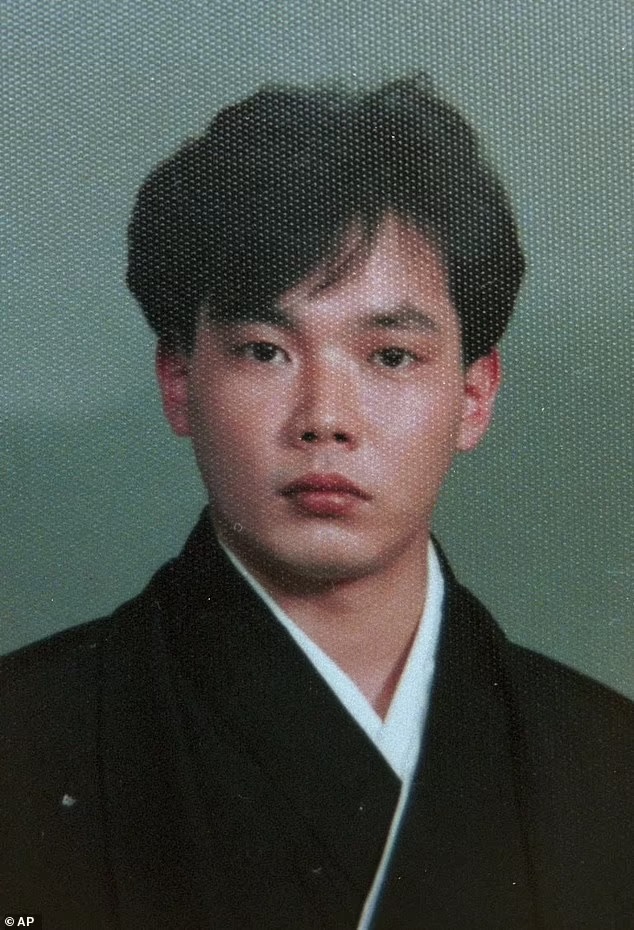
- Hisashi Ouchi, 35, became the world’s ‘most radioactive man’ in 1999
- He was the worst affected by Japan’s 1999 Tokaimura nuclear accident
- Ouchi – reportedly left with ‘melted skin’ and ‘crying blood’ – died after 83 days
Daily Mail , By MATTHEW COX, 14 July 2023
A Japanese nuclear disaster on September 30, 1999, was the world’s worst since Chernobyl, and left the world’s ‘most radioactive’ man with ‘melted skin.’
That victim was Hisashi Ouchi, a worker at the uranium processing plant in Tokaimura – 70 miles northeast of Tokyo – who was exposed to a massive dose of radiation resulting in severe burns.
This was to be the first of 83 days of unimaginable suffering in critical condition for the 35-year-old who died on December 21, after begging doctors to stop treating him months earlier.

The accident was a result of a series of fatal mistakes while he and his colleagues were preparing uranium for use as reactor fuel in the privately-run plant, including carrying the uranium in buckets, and not wearing appropriate protective equipment.
Technicians Ouchi and Masato Shinohara, with supervisor Yutaka Yokokawa, were speeding up the conversion process by putting 16kg of uranium in a vat which had a maximum limit of 2.4kg, when a chain-reaction was caused as Ouchi was ‘draped over’ the tank.
He was exposed to 17 Sieverts of radiation – for comparison, emergency responders at Chernobyl were exposed to 0.25 – over double what is seen as a lethal dose.
That is also the record amount of radiation in any living person, making him the most irradiated man ever, sometimes referred to as the world’s ‘most radioactive.’
He and his co-workers reported seeing a blue flash above the vat, the indication that a reaction similar to that inside an atomic bomb has happened, releasing deadly neutron radiation.
The colleagues rapidly lost consciousness as alarms blared inside the plant and radiation levels shot to 4,000 times typical levels.
The surrounding area was evacuated, with many not having even been aware that the unassuming building was a nuclear facility.
Ouchi was rushed to the University of Tokyo Hospital, where doctors found that he had almost no white blood cells and was in need of extensive skin grafts and multiple blood transfusions.
Local reports at the time claimed that he was also left ‘crying blood,’ and begged doctors to stop treating him.
However, he was resuscitated after multiple heart attacks on his 59th day in hospital.
Ouchi eventually died on December 21, 1999, and a few months later in April 2000 Shinohara, his fellow technician, died of multiple organ failure aged 40………………………. https://www.dailymail.co.uk/news/article-12299235/How-worlds-radioactive-man-cried-blood-kept-alive-83-day-nightmare.html
12 years on, Fukushima’s citizen-scientists continue to test local fish for radioactive substances.
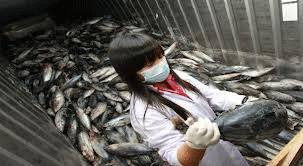
2 In a white coat and gloves, Ai Kimura is cutting up a fish sample at the
Tarachine lab, about an hour’s drive from the now-crippled Fukushima
Daiichi nuclear power plant on Japan’s eastern coast.
Four times a year, Ms Kimura and her team of volunteers collect samples of fish from the waters around the plant. They have been doing this since the lab was founded in
2011, just months after a devastating tsunami flooded the reactors, causing
a radiation leak. Except Ms Kimura is not a scientist – and neither are any
of the women who run the non-profit lab, whose name Tarachine is derived
from the term for “mother” in old Japanese.
Shaken after the tsunami, Ms Kimura says locals started the lab to find out what was safe to feed their children because it was hard to come by information on the risks of
radiation. So they asked technical experts to train them on how to test for
radioactive substances and log the readings, raised funds and began
educating themselves. It was the decision of a shattered community that
never thought an accident at the nuclear power plant was possible.
Now, 12 years on, they again find themselves struggling to trust the Japanese
government as it insists it’s safe to release treated radioactive water
from the plant into the Pacific Ocean.
BBC 13th July 2023
Asia is rowing about Fukushima nuclear wastewater
1A dozen years after the disaster at the Fukushima nuclear plant, it still
casts a pall over life in Japan. Many of over 100,000 residents evacuated
from around the nuclear plant at the time of the accident remain displaced.
Abroad, Fukushima’s legacy is now exacerbating the region’s bilious,
disputatious and grievance-laden geopolitics.
Economist 13th July 2023
https://www.economist.com/asia/2023/07/13/asia-is-rowing-about-fukushima-nuclear-wastewater
Indonesia Warns Nuclear Weapons Put Southeast Asia a ‘Miscalculation Away’ From Disaster

Indonesia’s Foreign Minister Retno Marsudi urged nuclear weapons states to join ASEAN’s regional nuclear-free zone.
The Diplomat, By Edna Tarigan and Niniek Karmini, July 12, 2023
Indonesia’s top diplomat warned Tuesday of the threat posed by nuclear weapons, saying that Southeast Asia is “one miscalculation away from apocalypse” and pressing for world powers to sign a treaty to keep the region free from such arms.
Indonesian Foreign Minister Retno Marsudi raised the alarm ahead of a two-day summit of the Association of Southeast Asian Nations (ASEAN), which started later Tuesday in Jakarta. The agenda would spotlight Myanmar’s deadly civil strife, continuing tensions in the South China Sea, and efforts to fortify regional economies amid the global headwinds set off by Russia’s invasion of Ukraine.
Later in the week, the 10-nation bloc will meet Asian and Western counterparts, including U.S. Secretary of State Antony Blinken, Russian Foreign Minister Sergey Lavrov, and Chinese foreign policy overseer Wang Yi.
The U.S.-China rivalry is not formally on ASEAN’s agenda but looms large over the meetings of the bloc, an often-unwieldy collective of democracies, autocracies, and monarchies, with some members split over allegiances either to Washington or Beijing.
“We cannot be truly safe with nuclear weapons in our region,” Marsudi told fellow ASEAN ministers. “With nuclear weapons, we are only one miscalculation away from apocalypse and global catastrophe.
In 1995, ASEAN states signed a treaty that declared Southeast Asia’s commitment to be a nuclear weapon-free zone, one of five in the world. However, Marsudi lamented that none of the world’s leading nuclear powers have signed on to the pact and called for renewed efforts to convince those states to sign up. “The threat is imminent, so we can no longer play a waiting game,” she said………………………………………………………………….more https://thediplomat.com/2023/07/indonesia-warns-nuclear-weapons-put-southeast-asia-a-miscalculation-away-from-disaster/
Dumping Doubts: Releasing Fukushima’s Waste Water
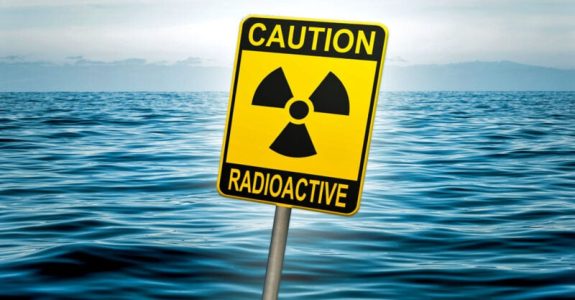
Australian Independent Media, July 13, 2023, Dr Binoy Kampmark
Nothing said from the nuclear industry can or should be taken for face value. Be it in terms of safety, or correcting defects or righting mistakes; be it in terms of construction integrity, there is something chilling about reassurances that have been shown, time and again, to be hollow.
The 2011 Fukushima Daiichi Nuclear Power Plant (FDNPP) disaster has forever stained the Japanese nuclear industry. Since then, the site has been marked by over 1,000 tanks filled with contaminated water that arises from reactor cooling. The attempts by the Tokyo Electric Power Company Holdings Inc (TEPCO) to decommission and clean the plant has also seen a daily complement of 150 tons arising from groundwater leakage into the buildings and systems involved in the cooling process.
According to Japan’s Nuclear Regulatory Authority, the gradual 1.3 million or so tons kept in those tanks into the Pacific over three decades is something that can be executed without serious environmental consequences. This was a view that was already entertained in 2021, expressing confidence that the Advanced Liquid Processing System (ALPS) being used in cleaning the contaminated water would be effective. Of primary concern here is the presence of a radioactive form of hydrogen called tritium, the presence of which is a challenge to remove.
There are various questions arising from this, not least the assumption that the levels of radioactivity arising from tritium will be significantly reduced by 1/40th of regulatory standards through the use of seawater. But as has been pointed out by such scientists as Ken Buesseler, Ferenc Dalnoki-Veress and Antony M. Hooker, there are also nontritium radionuclides that “are generally of greater health concern as evidenced by their much higher dose coefficient – a measure of the dose, or potential human health impacts associated with a given radioactive element, relative to its measured concentration, or radioactivity level.”
The International Atomic Energy Agency neither recommends nor endorses the plans – a curious formulation that does little for confidence……………………………………….
the inherent clandestine air that has surrounded TEPCO, scepticism should not only be mandatory but instinctive. Why not, ask such voices as Hooker and Buesseler, consider other disposal methodologies, such as solidifying the ALPS treated wastewater within concrete? No, counter the Japanese authorities, citing insuperable technical and legal problems. https://theaimn.com/dumping-doubts-releasing-fukushimas-waste-water/
1 This Month



26 September – International Day for the Total Elimination of Nuclear Weapons


PLEASE OPPOSE HR 8255 AND S.3639 – bills would accelerate satellite deployment, with no environmental review or safeguards – https://ncstd5li.quorum.us/campaign/169331/
To see nuclear-related stories in greater depth and intensity – go to https://nuclearinformation.wordpress.com
-
Archives
- September 2026 (219)
- August 2026 (330)
- July 2026 (355)
- June 2026 (287)
- May 2026 (306)
- April 2026 (356)
- March 2026 (251)
- February 2026 (267)
- January 2026 (308)
- December 2025 (358)
- November 2025 (359)
- October 2025 (375)
-
Categories
- 1
- 1 NUCLEAR ISSUES
- business and costs
- climate change
- culture and arts
- ENERGY
- environment
- health
- history
- indigenous issues
- Legal
- marketing of nuclear
- media
- opposition to nuclear
- PERSONAL STORIES
- politics
- politics international
- Religion and ethics
- safety
- secrets,lies and civil liberties
- spinbuster
- technology
- Uranium
- wastes
- weapons and war
- Women
- 2 WORLD
- ACTION
- AFRICA
- Atrocities
- AUSTRALIA
- Christina's notes
- Christina's themes
- culture and arts
- Events
- Fuk 2022
- Fuk 2023
- Fukushima 2017
- Fukushima 2018
- fukushima 2019
- Fukushima 2020
- Fukushima 2021
- general
- global warming
- Humour (God we need it)
- Nuclear
- RARE EARTHS
- Reference
- resources – print
- Resources -audiovicual
- Weekly Newsletter
- World
- World Nuclear
- YouTube
-
RSS
Entries RSS
Comments RSS
 nuclear-news