Welsh anti-nuclear group partnering with Friends of the Earth Japan to oppose nuclear build at WYFLA
 PAWB is proud to announce a new partnership with Friends of the Earth Japan
in the campaign to oppose Hitachi’s plans to build two huge nuclear
reactors at Wylfa. To confirm the partnership, Ayumi Fukakusa from Friends
of the Earth Japan will be visiting Ynys Môn and Gwynedd between November
18 and20. During her visit, Ayumi will discuss their campaigning in Japan
against exporting Hitachi and Toshiba nuclear technology to Wales and
England. She will also explain how their campaign focusses on halting JBIC,
Japan Bank for International Cooperation and NEXI, Nippon Export and
Investment Insurance finance and insurance for nuclear power projects
outside Japan.
http://stop-wylfa.org/wp/
South Korea’ President Moon says North Korea nuclear arsenal too developed to be quickly dismantled
North Korea nuclear arsenal too developed to destroy quickly, says Moon, Christine Kim, 14 Nov 17, SEOUL (Reuters) – South Korean President Moon Jae-in said on Tuesday it would not be easy for reclusive North Korea to destroy its nuclear arsenal quickly, even if wanted to, given its weapons programs were so developed. North Korea is under heavy international pressure to end its weapons programs, pursued in defiance of U.N. Security Council resolutions. But it has vowed never to give up its nuclear arsenal.
Speaking to reporters in the Philippines, Moon said that if North Korea agreed to hold talks, negotiations could be held with all options open.
“If so, North Korea’s nuclear program should be suspended, and negotiations could go on to pursue complete denuclearization.”…….
The North defends the programs as a necessary defense against U.S. plans to invade. The United States, which has 28,500 troops in South Korea, a legacy of the 1950-53 Korean war, denies any such intention.
U.S. President Donald Trump has traded insults and threats with North Korean leader Kim Jong Un as North Korea races toward its goal of developing a nuclear-tipped missile capable of reaching the United States.
Trump threatened in his maiden U.N. address to “totally destroy” North Korea if the United States was threatened and has said the time for talking, the policy of previous U.S. administrations, is over.
Moon reiterated his stance that now was the time to increase pressure on North Korea so that it would come to talks……..
He said differences in understanding between South Korea and China, North Korea’s lone major ally, regarding the deployment of the U.S. Terminal High Altitude Area Defense (THAAD) system on South Koran soil had not been resolved.
“China has not said it has changed its stance to agree to THAAD and still says THAAD infringes on its security…… http://www.reuters.com/article/us-northkorea-missiles-southkorea/north-korea-nuclear-arsenal-too-developed-to-destroy-quickly-says-moon-idUSKBN1DE1BY
Tepco starts removing nuclear fuel assemblies from wrecked Fukushima Reactor No. 3

Tepco starts installing device to remove fuel assemblies at wrecked Fukushima nuclear plant https://www.japantimes.co.jp/news/2017/11/12/national/tepco-starts-installing-device-remove-fuel-assemblies-wrecked-fukushima-nuclear-plant/#.WgiwZtKWbGg FUKUSHIMA – Tokyo Electric Power Company Holdings Inc. on Sunday began installing equipment to be used for removing fuel from the storage pool at a reactor at its disaster-crippled Fukushima No. 1 nuclear plant.
The equipment, weighing 72 tons, was lifted up to the upper part of the plant’s No. 3 reactor using two large cranes.
The installation work was originally slated to start Saturday, but was postponed due to strong winds.
With the device, the fuel assemblies will be moved from the pool to sturdy containers, which will be tightly sealed to block any emissions of strong radiation.
The work will be conducted in the water-filled pool, and then the containers will be then lowered to the ground using a different crane and transferred to another pool some distance from the reactor, where they will be stored.
The building housing the No. 3 reactor was heavily damaged by a hydrogen explosion that occurred shortly after the power station was knocked out by the tsunami following the magnitude 9 earthquake in March 2011.
After debris from the blast was removed from the upper part of the No. 3 reactor, Tepco started work in late July this year to install a cover on top of the reactor to shield the fuel-removing equipment from weather damage and prevent radioactive materials from spreading.
The crane to be used for lowering the fuel containers to the ground is slated to be installed in the upper part of the reactor on Nov. 20.
NORTH Korea has threatened to destroy the Unites States with a “barrage of concentrated strikes”
 North Korea threatens ‘barrage of concentrated nuclear strikes’ on US mainland
NORTH Korea has threatened to destroy the Unites States with a “barrage of concentrated strikes” in an astonishing rant in which they accuse Donald Trump of seeking to trigger World War 3. Express UK, By LAURA MOWAT North Korean newspaper, Rodung Sinmum, said Washington was trying to spark nuclear warfare by conducting military exercises on the doorstep of the rogue nation.
Tensions between the US and North Korea have reached boiling point in recent months and Pope Francis has stepped in to try and save the planet from nuclear war.
There are fears of another world war after the hermit nation continued its internationally condemned nuclear missile testing programme. ……http://www.express.co.uk/news/world/877996/World-War-3-North-Korea-latest-news-Trump-nuclear-strikes-United-States
What It’s Like for Informal Labour Employed in Nuclear Power Stations in Japan
Informal Labour, Local Citizens and the Tokyo Electric Fukushima Daiichi Nuclear Crisis: Responses to Neoliberal Disaster Management, ANU, Adam Broinowski, 7 Nov 17,
Sworn to secrecy,12 after a superficial safety education drill, they are sent into highly contaminated, hot and wet labyrinthine areas.
Irregular workers’ oral contracts with tehaishi are often illegal or dangerous, and are sometimes imposed on workers through threats or use of force.
Over the past 40 years, poor monitoring and record-keeping has meant that many former nuclear workers who develop leukaemia and other illnesses have been denied government compensation due to their lawyers’ inability to prove the etiological link between their disease and employment.
Informal Labour, Local Citizens and the Tokyo Electric Fukushima Daiichi Nuclear Crisis: Responses to Neoliberal Disaster Management, ANU, Adam Broinowski, 7 Nov 17, “…
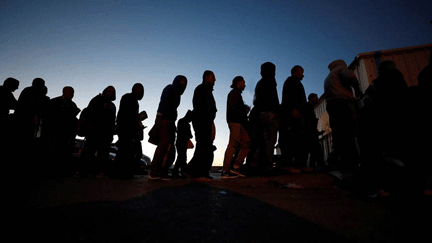 Conditions for Informal Labour Employed in Nuclear Power Stations The phenomenon of assembling and recruiting a relatively unskilled labour pool at the cheapest rate possible is typical in nearly all of Japan’s large-scale modern industrial projects in the 20th century. As early as the late 19th century, however, non-criminal homeless men were recruited for such projects, whether forced, coerced or voluntarily from the major day-labourer (hiyatoi rōdōsha 日雇い労働者) sites (yoseba) established in Sanya (Tokyo), Kotobuki (Yokohama), Kamagasaki (Osaka) and Sasashima (Nagoya). In pre–World War II and wartime Japan, yakuza tehaishi (手配師 labour recruiters) operated forced labour camps known as takobeya (たこ部屋 octopus rooms) for Korean and Chinese labourers who had been transported to work mainly in coal mines and on construction sites.6………
The rapid build of nuclear power stations was planned in the 1960s by a consortium of major investment banks, electric utilities and construction companies and/or industry manufacturers (Mitsubishi, Tōshiba, Hitachi, Sumitomo, etc.), and was carried out in the 1970s, with increased momentum in response to the oil crisis of 1974–76. Through an intensive ‘regional development’ program of rural industrialisation from the early 1970s, politically disempowered communities were targeted as potential cheap labour as their environs were designated as sites for nuclear projects by investment capital. In a combination of regulatory capture and economic dependency, utilities moved in to provide employment opportunities to communities while the same communities steadily lost control over their resources and subsistence economies. In the process, they lost political agency as their political representatives often received corporate and state inducements for these projects. As TEPCO owns the electricity distribution system in Fukushima Prefecture, which includes hydroelectric and thermal power stations as well as nuclear, and is a major employer and investor in Fukushima Prefecture,10 it has considerable sway in the political process as well as over electricity bills.
By the early 1980s, irregular workers came to comprise nearly 90 per cent of all nuclear workers.11 As nuclear reactors grow increasingly contaminated and corroded by radiation over time, informal labour became fodder for regular maintenance, cleaning, repairing and/or venting and refuelling of these nuclear reactors to reduce exposures to permanent company employees such as scientists and engineers. As the power station must be halted during the maintenance period, this period equates to a lack of production and profitability and is kept to a bare minimum by the operators, an approach that led to a litany of safety oversights and accidents.
Although provided less training, informal nuclear workers are paid higher over a shorter employment period than regular workers, whose insurance is taken out of their wage. Sworn to secrecy,12 after a superficial safety education drill, they are sent into highly contaminated, hot and wet labyrinthine areas. Their work includes scrubbing contaminated areas, installing shields to reduce exposure for skilled workers, decontaminating and repairing pipes and tanks, welding, transporting contaminated materials and waste, washing contaminated uniforms and tools, removing filters and clearing garbage, inspecting gauges in high-level areas, dispersing chemicals over nuclear waste piles, pouring high-level liquid waste into drums and mopping up waste water. Although radioprotection regulations have been tightened in the last decade, working conditions for irregular workers have not necessarily improved and, without sufficient information about radiation danger, they can still be exposed to over 1 millisievert (mSv) of external radiation within minutes in high concentration areas and accumulate large amounts of internal radiation.13
Since 3.11, invoking the International Commission on Radiological Protection’s (ICRPs) often-used ALARA (as low as reasonably allowable) principle to justify this regulatory contingency, the state also raised nuclear workers’ limits from no more than 50 mSv per year (mSv/y) and 100 mSv/5 years to 250 mSv/y to deal with emergency conditions, and determined that there would be no follow-up health treatment for those exposed to doses below 50 mSv/y, while TEPCO decided to not record radiation levels below 2 mSv/y in the misplaced justification that the effects would be negligible. In December 2011, ‘cold shutdown’ was (erroneously) declared and the workers’ limit was returned to 100 mSv/5 years. It will likely be raised again as the government expedites decommissioning to meet its estimated completion by 2030–2050.14 Although very few regular workers’ cumulative doses exceeded 20 mSv/y in any year prior to 3.11, by June 2015 the official number rose to 6,64215 with doses of irregular nuclear workers often un(der)counted.
In a fast-track 40-year plan to decommission Fukushima Daiichi (i.e. removing the cores and dismantling the plant), as of August 2015 roughly 45,000 irregular workers (‘front-line’ workers, or ‘nuclear gypsies’) had been assembled at the J-Village Iwaki-Naraha soccer stadium before entering the sites. As well as jobs at the power stations, they work on decontamination and construction sites throughout the prefecture, which include those designated for the 2020 Olympics, a new school in Futaba (the town nearest to FDNPS), a large centre for radiation monitoring, a large research and training institute for reactor decommissioning, and a giant sea wall for tsunami prevention (see also Chapter Five). Yakuza-linked labour brokers (tehaishi/ninpu-dashi), eager to profit from the post-3.11 decommissioning budget (conservatively estimated at $150 billion), use social media and oral contracts to recruit these workers from the most vulnerable populations for ‘clean up’ work.16 In this customary cascade of diluted responsibility, their original wage and conditions are skimmed or cut away (pinhane sareta ピンハネされた) by contractors (roughly 733 companies) so that some irregular workers receive as little as 6,000 yen per day and only a very small fraction of the 10,000 yen per day in danger money promised by the Ministry of the Environment (MoE) and TEPCO.17
Irregular workers’ oral contracts with tehaishi are often illegal or dangerous, and are sometimes imposed on workers through threats or use of force.18 In addition, the day labourer may become indebted to tehaishi for housing and/or loans for lifestyle dependencies (i.e. gambling, drugs, prostitution). As products of structural discrimination, itinerant and/or irregular workers who are already socially isolated may find it difficult to build support networks, whether through marriage, family or solid friendships. Obligated within a semi-legal economy and stripped of rights and protections, each worker is pitted against the other, young and old, stronger and weaker, individual and family man, for basic survival.
Over the past 40 years, poor monitoring and record-keeping has meant that many former nuclear workers who develop leukaemia and other illnesses have been denied government compensation due to their lawyers’ inability to prove the etiological link between their disease and employment. For example, the death of Yoshida Masao (58), the Fukushima Daiichi manager who was among the ‘Fukushima 50’ who remained at the plant to manage the nuclear meltdowns in their critical phase and who developed oesophagal cancer in 2013, was not recognised by TEPCO as related to radiation exposure from Fukushima Daiichi as the cancer was deemed to have developed too quickly after the initial accident.
Irregular nuclear workers have commonly relied on permanent employees to monitor, record and calibrate their doses. Denied sufficient information about radiation exposure risks, and preferring not to jeopardise their contracts and provoke physical intimidation if they complain about their conditions, many collude with company officers (who record their accumulated doses) to camouflage and underestimate their dose rates (particularly for internal doses). This allows them to extend their time and contracts at nuclear plants before they are deemed to have reached (or exceeded) the maximum annual dose limit (50 mSv/y).19 When a nuclear worker is diagnosed with abnormalities in a routine check-up, some subcontractors may falsify nuclear workers’ passbooks.20 Despite the long lives of internalised radionuclides, it has been customary either not to measure this properly and/or to simply reset the dose record at the end of each financial year.
While protective clothing and procedures have grown more stringent for nuclear workers, especially after some workers died and fell ill from heat-related causes, irregular workers remain far less protected.22 At Fukushima Daiichi, where crews are overworked and understaffed, irregular workers often commit errors leading to cases of serious injury and large leaks of radioactive materials into the environment. This is further compounded by the lack of understanding or recognition of chronic illnesses in either permanent or irregular nuclear workers. This has sometimes led to poorly explained deaths of nuclear workers.23
In October 2015, a welder in his late 30s and father of three from Kita-Kyushu became the first worker in four years to be awarded workers’ insurance payments (medical costs and loss of income for temporary disability) while three more cases remained undecided. He was diagnosed with acute myelogenous leukaemia after having accumulated 19.8 mSv/y from exposure to a radiation leak and one year’s work at Fukushima Daiichi (Reactors 3 and 4) and the Genkai nuclear plant (Kyushu) (both of which use MOX fuel).24 While compensation was recognised under nuclear workers’ compensation insurance legislation (1976), the Health Ministry maintained that a causal link between illness and employment remains to be scientifically proven. After the delayed report by TEPCO of 1,973 workers exposed to over 100 mSv/y by mid-2013, by August 2015 21,000 of the 45,000 irregular workers had been exposed to over 5 mSv/y and 9,000 workers to over 20 mSv/y.25 TEPCO and the central government would certainly be worried about a spike in compensation claims.
Without a proper health regime, the permanent damage incurred by irregular nuclear workers far outweighs the value of their cheap labour power. With their use as filters as they move to each plant, as nuclear workers grow older and sicker they become less able to commodify their labour and are unlikely to receive proper treatment and/or compensation (due to insufficient data and high radiation safety limits among other things). Although the endless production of labour willing to take on this dangerous work and the devolution of responsibility and ambiguity around radiation health effects are used to justify the continuation of these practices, if workers are knowingly placed in harmful conditions the employer is in breach of a duty of care under the Labour Standards Law. As byproducts of a discriminatory industrial labour system, these irregular nuclear workers and their families, like many elsewhere, are deprived of basic rights to health and well-being. As one labourer stated in relation to Fukushima Daiichi: ‘TEPCO is God. The main contractors are kings, and we are slaves’.26 In short, Fukushima Daiichi clearly illustrates the social reproduction, exploitation and disposability of informal labour, in the state protection of capital, corporations and their assets….http://press-files.anu.edu.au/downloads/press/n2335/html/ch06.xhtml?referer=2335&page=11
Why North Korea wants nuclear weapons – the lesson from Libya
Libya: The Forgotten Reason North Korea Desperately Wants Nuclear Weapons, http://nationalinterest.org/blog/the-skeptics/libya-the-forgotten-reason-north-korea-desperately-wants-23129
Unfortunately, there are ample reasons for such distrust. North Korean leaders have witnessed how the United States treats nonnuclear adversaries such asSerbia and Iraq. But it was the U.S.-led intervention in Libya in 2011 that underscored to Pyongyang why achieving and retaining a nuclear-weapons capability might be the only reliable way to prevent a regime-change war directed against the DPRK.
Partially in response to Washington’s war that ousted Iraqi dictator Saddam Hussein in the spring of 2003, ostensibly because of a threat posed by Baghdad’s “weapons of mass destruction,” Libyan leader Muammar el-Qaddafi seemed to capitulate regarding such matters. He signed the Nuclear Nonproliferation Treaty in December of that year and agreed to abandon his country’s embryonic nuclear program. In exchange, the United States and its allies lifted economic sanctions and pledged that they no longer sought to isolate Libya. Qaddafi was welcomed back into the international community once he relinquished his nuclear ambitions.
That reconciliation lasted less than a decade. When one of the periodic domestic revolts against Qaddafi’s rule erupted again in 2011, Washington and its NATO partners argued that a humanitarian catastrophe was imminent (despite meager evidence of that scenario), and initiated a military intervention. It soon became apparent that the official justification to protect innocent civilians was a cynical pretext, and that another regime-change war was underway. The Western powers launched devastating air strikes and cruise-missile attacks against Libyan government forces. NATO also armed rebel units and assisted the insurgency in other ways.
Although all previous revolts had fizzled, extensive Western military involvement produced a very different result this time. The insurgents not only overthrew Qaddafi, they captured, tortured and executed him in an especially grisly fashion. Washington’s response was astonishingly flippant. Secretary of State Hillary Clinton quipped: “We came, we saw, he died.”
The behavior of Washington and its allies in Libya certainly did not give any incentive to North Korea or other would-be nuclear powers to abandon such ambitions in exchange for U.S. paper promises for normal relations. Indeed, North Korea promptly cited the Libya episode as a reason why it needed a deterrent capability—a point that Pyongyang has reiterated several times in the years since Muammar el-Qaddafi ouster. There is little doubt that the West’s betrayal of Qaddafi has made an agreement with the DPRK to denuclearize even less attainable than it might have been otherwise. Even some U.S. officials concede that the Libya episode convinced North Korean leaders that nuclear weapons were necessary for regime survival.
The foundation for successful diplomacy is a country’s reputation for credibility and reliability. U.S. leaders fret that autocratic regimes—such as those in Iran and North Korea—might well violate agreements they sign. There are legitimate reasons for wariness, although in Iran’s case, the government appears to becomplying with its obligations under the Joint Comprehensive Plan of Action that Tehran signed with the United States and other major powers in 2015—despite allegations from U.S. hawks about violations.
When it comes to problems with credibility, though, U.S. leaders also need to look in the mirror. Washington’s conduct in Libya was a case of brazen duplicity. It is hardly a surprise if North Korea (or other countries) now regard the United States as an untrustworthy negotiating partner. Because of Pyongyang’s other reasons for wanting a nuclear capability, a denuclearization accord was always a long shot. But U.S. actions in Libya reduced prospects to the vanishing point. American leaders have only themselves to blame for that situation.
Ted Galen Carpenter, a senior fellow in defense and foreign-policy studies at the Cato Institute and a contributing editor at the National Interest, is the author or coauthor of ten books, including The Korean Conundrum: America’s Troubled Relations with North and South Korea. He also is the author of more than seven hundred articles and policy studies on international affairs.
Official Medicine: The (Il)logic of Radiation Dosimetry – disguising the true health effects of Fukushima radiation

it is not surprising that the overwhelming emphasis in scientific studies and public reports has been placed on psychological impacts rather than disease and deaths
Informal Labour, Local Citizens and the Tokyo Electric Fukushima Daiichi Nuclear Crisis: Responses to Neoliberal Disaster Management, Adam Broinowski , ANU 7 Nov 17
“….Official Medicine: The (Il)logic of Radiation Dosimetry
On what basis have these policies on radiation from Fukushima Daiichi been made? Instead of containing contamination, the authorities have mounted a concerted campaign to convince the public that it is safe to live with radiation in areas that should be considered uninhabitable and unusable according to internationally accepted standards. To do so, they have concealed from public knowledge the material conditions of radiation contamination so as to facilitate the return of the evacuee population to ‘normalcy’, or life as it was before 3.11. This position has been further supported by the International Atomic Energy Agency (IAEA), which stated annual doses of up to 20 mSv/y are safe for the total population including women and children.43 The World Health Organisation (WHO) and United Nations Scientific Commission on the Effects of Atomic Radiation (UNSCEAR) also asserted that there were no ‘immediate’ radiation related illnesses or deaths (genpatsu kanren shi 原発関連死) and declared the major health impact to be psychological.
While the central and prefectural governments have repeatedly reassured the public since the beginning of the disaster that there is no immediate health risk, in May 2011 access to official statistics for cancer-related illnesses (including leukaemia) in Fukushima and southern Miyagi prefectures was shut down. On 6 December 2013, the Special Secrets Protection Law (Tokutei Himitsu Hogo Hō 特定秘密保護法) aimed at restricting government employees and experts from giving journalists access to information deemed sensitive to national security was passed (effective December 2014). Passed at the same time was the Cancer Registration Law (Gan Tōroku Hō 癌登録法), which made it illegal to share medical data or information on radiation-related issues including evaluation of medical data obtained through screenings, and denied public access to certain medical records, with violations punishable with a 2 million yen fine or 5–10 years’ imprisonment. In January 2014, the IAEA, UNSCEAR and Fukushima Prefecture and Fukushima Medical University (FMU) signed a confidentiality agreement to control medical data on radiation. All medical personnel (hospitals) must submit data (mortality, morbidity, general illnesses from radiation exposures) to a central repository run by the FMU and IAEA.44 It is likely this data has been collected in the large Fukushima Centre for Environmental Creation, which opened in Minami-Sōma in late 2015 to communicate ‘accurate information on radiation to the public and dispel anxiety’.
This official position contrasts with the results of the first round of the Fukushima Health Management Survey (October 2011 – April 2015) of 370,000 young people (under 18 at the time of the disaster) in Fukushima prefecture since 3.11, as mandated in the Children and Disaster Victims Support Act (June 2012).45 The survey report admitted that paediatric thyroid cancers were ‘several tens of times larger’ (suitei sareru yūbyōsū ni kurabete sūjūbai no ōdā de ōi 推定される有病数に比べて数十倍のオーダーで多い) than the amount estimated.46 By 30 September 2015, as part of the second-round screening (April 2014–March 2016) to be conducted once every two years until the age of 20 and once every five years after 20, there were 15 additional confirmed thyroid cancers coming to a total of 152 malignant or suspected paediatric thyroid cancer cases with 115 surgically confirmed and 37 awaiting surgical confirmation. Almost all have been papillary thyroid cancer with only three as poorly differentiated thyroid cancer (these are no less dangerous). By June 2016, this had increased to 173 confirmed (131) or suspected (42) paediatric thyroid cancer cases.47
The National Cancer Research Center also estimated an increase of childhood thyroid cancer by 61 times, from the 2010 national average of 1–3 per million to 1 in 3,000 children. Other estimates of exposure to radiation, obtained from direct thyroid measurements in Namie town in April 2011, although discontinued under government pressure, also returned much higher results than official estimates (i.e. 80 per cent positive, 1 at 89 mSv, 5 over 50 mSv, 10 at 10mSv or under).48 In April 2014, Dr Tsuda Toshihide, an epidemiologist at Okayama University, declared this a ‘thyroid cancer epidemic’ (kōjōsen densenbyō 甲状腺伝染病), and predicted multiple illnesses from long-term internal radiation below 100 mSv/y and advocated for a program of outbreak (emergency or rapid) epidemiology in and outside Fukushima.49Similarly, a Tokyo-based physician, Dr Mita Shigeru, circulated a public statement notifying his colleagues of his intention to relocate his practice to Okayama due to overwhelming evidence of unusual symptoms in his patients (roughly 2,000). Given that soil in Tokyo post-Fukushima returned between 1,000 and 4,000 Bq/kg, as compared to an average of 500 Bq/kg (Cs 137 only) in Kiev soil, Mita pointed to a correlation between these symptoms and the significant radiation contamination in Tōhoku and metropolitan Tokyo.50
While results from the Fukushima Health Survey demonstrate flaws in the official dosimetry model and public safety campaign, the survey itself also has clear limitations. It is limited to subjects in a specific age bracket in one prefecture and one non-fatal illness (thyroid cancer, which can be treated with surgery but has lifelong side effects) from the ingestion of one radionuclide (Iodine 131) with a relatively short half-life (eight days) that comprised only 9.1 per cent of the total releases. Its dosimetry is based on the National Institute of Radiological Sciences (NIRS) model,51 which is for external exposure only, does not account for exposures in the initial days of the disaster and uses Japanese Government data that has been criticised for underestimating releases and exposures.52 Further, the survey ignores the damage from the bulk of the total inventory including longer-lived radionuclides (such as Plutonium 239, Caesium 137, Strontium 90, Americium 241, among others), some of which are more difficult to measure on ordinary and less sensitive Geiger counters and which have been distributed and continue to circulate across a wide area. It also ignores other organ diseases, unusual chronic illnesses and premature births and stillbirths, voluntary terminations and birth deformities occurring in and beyond Fukushima prefecture.
In addition to the control of relevant data, the government has used other methods to encourage residents to stay in radiation-contaminated areas. In May 2011, Dr Yamashita Shunichi, then co-director of Fukushima Medical University and the Fukushima Health Management Survey and a specialist from Nagasaki on radiation illness in Chernobyl, declared there was a 1 in 1 million chance of children getting any kind of cancer from radiation and there would be negligible health damage from radiation below 100 microSv/h, and prescribed smiling as an aid to living with radiation to a public audience in Fukushima.53
Dr Yamashita is only one among a host of politicians, bureaucrats, experts and advertising and media consultants who support the post-3.11 safety mantra of anshin (secure 安心), anzen (safe 安全), fukkō (recovery 復興). Through public meetings, media channels, education manuals and workshops,54 local citizens in Fukushima Prefecture were inundated with optimistic and reassuring messages, also known as ‘risk communication discourse’, and central and prefectural government-sponsored ‘health seminars’ encouraging a ‘practical radiation protection culture’ in which they have been urged to take responsibility (jiko sekinin 自己責任) for their own health (e.g. wearing glass badges, self-monitoring, avoiding hotspots), form bonds of solidarity (kizuna 絆) with their community and participate in the great reconstruction (fukkatsu 復活) for the revitalisation of a resilient nation (kyōjinka kokka 強靭化国家) as a whole. To counteract baseless rumours (ryūgen higo 流言蜚語) and the negative impact of gossip (fūhyō higai 風評被害) of radiation in contaminated Fukushima produce, citizens in and beyond Fukushima Prefecture, and even non-citizens, have been encouraged to buy and consume Fukushima produce as an expression of moral and economic support (through slogans such as ‘Ganbare Fukushima!’ がんばれ福島!). At the same time, to reduce ‘radiophobia’ and anxiety, while focusing on the psychological impact from stress, health risks from radiation exposures have been trivialised and/or normalised for the general public.55
This approach is backed up by international nuclear-related agencies. As stipulated on 28 May 1959 in the ‘WHA12-40’ agreement, the WHO is mandated to report all data on health effects from radiation exposures to the IAEA, which controls publication. On no other medical health issue is the WHO required to defer publication responsibilities to another institution. Scientific expertise at the IAEA primarily lies in nuclear physics (radiology and dosimetry) as opposed to epidemiology and medical expertise on radiation effects to living tissue. The IAEA and its related UN bodies are informed by the International Commission of Radiation Protection (ICRP) recommendations on radiation dose assessments derived from the Atomic Bomb Casualty Commission/Radiation Exposure Research Foundation (ABCC/RERF) lifetime studies of hibakusha (被爆者) in Hiroshima and Nagasaki. This dosimetry is primarily based on an average exposure of a 20–30-year-old ‘reference man’ (originally modelled on a US Army soldier) mainly to short-term one-off acute gamma radiation exposure. While it recommends caution, the ICRP continues to maintain that anything below 100 mSv/y is a ‘low dose’ and that the risk of ‘stochastic effects’ are yet to be scientifically proven beyond doubt. Within this framework, it would seem reasonable to raise the level from 1 to 20 mSv/y.
The ABCC/RERF studies ignored, however, biological contingencies of sex, age, constitution, other health conditions and the variegated effects (including complicating chemical and metabolic dynamics) from both internal and external exposures to different radionuclides of all types (‘low level’ internal radiation is at least 20 times greater). After Chernobyl, the WHO and IAEA used the ICRP dose model to conclude that there were up to 56 deaths of ‘liquidators’ (clean-up workers) from acute radiation sickness and 4,000 additional cancers;56 and that environmental effects such as lifestyle (i.e. parental alcoholism, smoking) and ‘radiophobia’ (stress and depression) contributed to excess illnesses in 80 per cent of adult cases. It also concluded that no harm would be received by the 2 million farmers and more than 500,000 children who continued living in radioactive areas in Belarus.
Nevertheless, it is no longer possible to ignore a significant body of research, including 20 years of scientific studies compiled in Belarus and Ukraine that show serious depopulation, ongoing illnesses and state decline.57 These studies have found genetic effects within a radius of 250–300 km from Chernobyl, while children’s health in Belarus has declined from a situation where 80 per cent of the child population was healthy prior to the Chernobyl disaster to a situation post-Chernobyl where only 20 per cent are healthy.58 In 1995, Professor Nechaev from the Ministry of Health and Medical Industry (Moscow) stated that 2.5 million people were irradiated from Chernobyl in the Russian Federation, the Ukrainian Prime Minister Marchuk stated that 3.1 million had been exposed to Chernobyl radiation and Professor Okeanov from Belarus observed a spike in leukaemia and cancers among liquidators in Gomel relative to duration of exposure.59 By 2001, of 800,000 healthy Russian and Ukrainian liquidators (with an average age of 33 years) sent to decontaminate, isolate and stabilise the reactor, 10 per cent had died and 30 per cent were disabled. By 2009, 120,000 liquidators had died, and an epidemic of chronic illness and genetic and perigenetic damage in nuclear workers’ descendants appeared (this is predicted to increase over subsequent generations).60 The full extent of the damage will not be understood until the fifth generation of descendants. By the mid-2000s, 985,000 additional deaths between 1986 and 2004 across Europe were estimated as a direct result from radiation exposure from Chernobyl.61
Given this background of regulatory capture and radical discrepancies in methods and estimates prior to the Fukushima disaster, it is less surprising that there may be a process of regulatory capture and cover up underway in response to Fukushima Daiichi. In December 2011, a Cabinet Office Working Group chaired by RERF chairman Nagataki Shigenobu consisted of 18 Japanese ICRP members (including Niwa Otsura and Yamashita Shunichi). The experts invited Mr Jacques Lochard to provide external expertise. Lochard is an economist, ICRP member, Director of the Center of Studies on the Evaluation of Protection in the Nuclear Field (CEPN) (funded by Electricité de France EDF), and co-director of the CORE-ETHOS Programme in Chernobyl (1996–1998).
The CORE (Cooperation and Rehabilitation in the Belarusian territories contaminated by Chernobyl) Programme organised a takeover of radioprotection health centres in Ukraine and Belarus, and delayed a health audit beyond five years while it produced the ETHOS report outlining a ‘sustainable system of post-radiological accident management for France and the European Union’.62 While local scientists (led by Yuri Bandazhevsky and Vassili Nesterenko) recommended whole body counts (WBC) for each child (in which 50,000 children would be tested with spectrometers), food measurement, dietary radioprotection (prophylaxis through adsorbents) and resettlement of those exposed to radiation over 1 mSv/y,63 the ETHOS manual concluded that in a similar radiological event in western Europe, resettlement would be restricted to those exposed to more than 100 mSv/y. By factoring in ‘social, economic and political’ costs, ETHOS proposed ways for populations to live with radiation, and identified psychosomatic illnesses derived from ‘stress’ based on unfounded fears (i.e. ‘radiophobia’) of radiation as the greatest health risk. After a prolonged delay, in 1996 the IAEA and WHO finally settled on 5 mSv/y as the mandatory evacuation limit in a compromise between the Soviet (1 mSv/y) and western European (100 mSv/y) recommendations after Chernobyl.64These agencies targeted ‘alarmist’ reports (including social protests) as encouraging ‘radiophobia’, stressing the psychological impacts of radiological events.
In post-3.11 Japan, the Japanese Cabinet Office Working Group65 reinforced the IAEA dosimetry regime by reiterating that cancers only emerge four to five years after exposure, that increases in cancers within this period could not be attributable to the accident,66 and that illnesses in people exposed to radiation below 100 mSv/y could be concealed by other carcinogenic effects and other factors (rendering them statistically negligible), and thus could not be proven to be radiation related. In fact, in July 2014, Nagataki Shigenobu declared that it would be ‘disastrous to conclude [from the survey findings] an increase in thyroid cancer’ was due to radiation exposure.67 Consequently, privileging a government study of the thyroid glands of 1,080 children in late March 2011 (a very small sample), Nagataki claimed that almost none had exceeded 50 mSv for internal exposure and that 99.8 per cent of the population in Fukushima Prefecture could be estimated to have received an external dose below 5 mSv. Nagataki dismissed the need for further medical screenings, regular check-ups or internal radiation tests (whole body counter, urine and blood tests) at hospitals and clinics in Fukushima Prefecture or elsewhere.
Instead, the government appears to have adopted the ETHOS model: ‘improving’ community life in radiation-contaminated areas through local education and support groups; encouraging proactive self-responsibility (i.e. self-monitoring with government monitors) for children and parents (including pregnant women); stamping out ‘stigma’ attached to ‘Fukushima’ residents, the area and its produce while stigmatising ‘radiophobia’; and encouraging evacuees’ return after and even prior to ‘decontamination’.68
By September 2015, an officially estimated 3,407 people (up from 3,194 the previous year) had died from ‘effects related to the great east Japan earthquake’ (Daishinsai kanren shi 大震災関連死).69 In March 2015, about 1,870 deaths of those who had evacuated due to the overall disaster were deemed to have been from ill-health and suicide. By March 2016, this had increased to 2,208 deaths, while 1,386 deaths were estimated to have been caused by effects related specifically to the nuclear disaster (genpatsu kanren shi).70 Further, a statistically significant 15 per cent drop in live births in Fukushima Prefecture in December 2011, and a 20 per cent spike in infant mortality were found to have been caused mainly by internal radiation from the consumption of contaminated food.71 Nor do statistics on abortions seem to have been factored into official accounts. As the statistics are so temporally specific, anxiety (disruption, evacuation) is unlikely to have been the major factor as the spikes would be more prolonged. It has also been extrapolated from the conservative UNSCEAR 2013 estimate of a 48,000 person Sv collective dose, that another 5,000 are expected to die from future cancers in Japan (and larger numbers to become ill).72 Using the Tondel model, however, the European Commission on Radiation Risk (ECRR), in contrast to the ICRP dose model, which estimates 2,838 excess cancers within 100 km radius over 50 years excluding internal radiation, estimated that 103,000 excess cancers within 100 km would be diagnosed within 10 years and 200,000 in the next 50 years.73
As with informal and formal nuclear workers, if these deaths were officially recognised as being tied to radiation from Fukushima Daiichi, then the family of the deceased as main income earner would be eligible for a 5 million yen ‘consolation’ payment (half for others). Further, it would also imply the need for stricter radiological protection standards and a greater number of permanent evacuations and official health treatment program that would effectively limit the so-called ‘benefits’ associated with nuclear power generation.74 In short, it is not surprising that the overwhelming emphasis in scientific studies and public reports has been placed on psychological impacts rather than disease and deaths (particularly but not limited to nuclear workers and children) and the argumentation over the significance of thyroid cancers. The same pattern occurred after Chernobyl and Three Mile Island……http://press-files.anu.edu.au/downloads/press/n2335/html/ch06.xhtml?referer=2335&page=11
Lobbyists scramble to market nuclear submarines to India
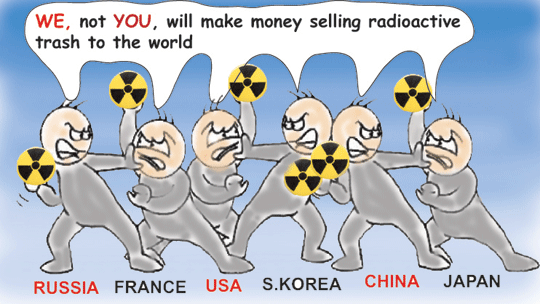
India Wants Second Nuclear Submarine From Russia. Lies By Lobbyists Erupt
Russian news portal Kommersant reported that the Indian Navy allowed a US technical crew into top secret compartments of India’s existing Russian-built nuclear submarine, the INS Chakra NDTV All India by Vishnu Som : November 10, 2017 NEW DELHI:
According to Kommersant, which referred to this as “an unprecedented scandal,” the incident “threatens to seriously complicate the negotiations both on the lease of the second nuclear submarine, and on other projects in the field of military-technical cooperation.”
The Chakra, an Akula-2 class submarine, widely considered among the world’s most sophisticated, has been leased by India for 10 years but all ownership rights reside with Russia.
Today, another Russian news portal, NEWS.ru, has debunked the account of the Kommersant and states that French lobbyists have an ulterior role in spreading misinformation to further their own chances of selling a nuclear-powered attack submarine to India. NEWS.ru quotes a source stating “there is complete confidence that the throw-in is organised by the lobbyists of France, and it’s pretty high quality.” According to this source, “In addition to the contract for the construction of non-nuclear boats such the Scorpene [now being inducted by the Indian Navy,] the French have a great desire to enter the Indian nuclear fleet.”
France, the article states, is also aggressively trying to participate in India’s programme to construct a second home-grown aircraft carrier. The first indigenous carrier, INS Vikrant is being built in Kochi using technology from a host of countries including Russia……..
At the time, the French newspaper Le Monde, quoting multiple sources had said that the leak of this data was driven by competition between the French designer of the Scorpene Class submarine and a German firm as they compete to win international orders. https://www.ndtv.com/india-news/not-true-that-us-officers-allowed-on-russian-submarine-in-vizag-sources-1773761
Information control, and denial of health and environmental effects of Fukushima nuclear catastrophe
the majority of people seem to have adopted denial as a way to excise the present danger from their consciousness.
In March 2015, Asami reported that doctors undertook paediatric thyroid operations while denying any correlation (inga kankei 因果関係) with radiation exposures. They also urged their patients to keep their thyroid cancer a secret to enhance their employment or marriage prospects, although it would be difficult to conceal the post-operation scar
While radiation contamination is clearly a health and environmental issue, state-corporate methods deployed by executives to protect (transnational) financial, industry and security interests and assets also make it a political issue.
information and communication control appears to be widespread. After 3.11, the central government hired advertising companies Dentsū and Hakuhōdō (formerly McCann Ericson Hakuhodo) to run a ‘public acceptance’ campaign.
 Informal Labour, Local Citizens and the Tokyo Electric Fukushima Daiichi Nuclear Crisis: Responses to Neoliberal Disaster Management, ANU, Adam Broinowski, 7 Nov 17
“…..Local Responses to State–Corporate Suppression and Lack of Public Health Protection
Faced with the post-3.11 reality of government (and corporate) policy that protects economic and security interests over public health and well-being, the majority of the 2 million inhabitants of Fukushima Prefecture are either unconscious of or have been encouraged to accept living with radioactive contamination. People dry their clothes outside, drink local tap water and consume local food, swim in outdoor pools and the ocean, consume and sell their own produce or catches. Financial pressure after 3.11 as well as the persistent danger of social marginalisation has made it more difficult to take precautionary measures (i.e. permanent relocation, dual accommodation, importing food and water) and develop and share counter-narratives to the official message. Nevertheless, some continue to conceal their anxiety beneath a mask of superficial calm.
As Fukushima city resident Shiina Chieko observed, the majority of people seem to have adopted denial as a way to excise the present danger from their consciousness. Her sister-in-law, for example, ignored her son’s ‘continuous nosebleeds’, while her mother had decided that the community must endure by pretending that things were no different from pre-3.11 conditions.75 Unlike the claim that risk is evenly distributed, it is likely that greater risk is borne by those who eat processed foods from family restaurants and convenience stores, as well as infants, children and young women who are disproportionately vulnerable to internal radiation exposures. Most mothers, then, have an added burden to shield their children while maintaining a positive front in their family and community.
Some, such as Yokota Asami (40 years old), a small business owner and mother from Kōriyama (60 km from FDNPS), demonstrated initiative in voluntarily evacuating her family. She decided to return (wearing goggles and a mask, she joked) in September 2011 when her son’s regular and continuous nosebleeds (in 30-minute spells) subsided. The Yokotas found themselves the victims of bullying when they called attention to radiation dangers, and were labelled non-nationals (hikokumin 非国民) who had betrayed reconstruction efforts. Her son was the only one to put up his hand when he was asked along with 300 fellow junior high school students if he objected to eating locally produced school lunches. He also chose not to participate in outdoor exercise classes and to go on respite trips instead. When it came time to take the high school entrance exam, he was told by the school principal that those who took breaks could not pass. He took the exam and failed. When he asked to see his results he found that he had, in fact, enough points to pass (the cut-off was 156 while he received 198 out of 250 points). The Yokotas decided that it was better to be a ‘non-national’ and protect one’s health. Their son moved to live in Sapporo.76
In March 2015, Asami reported that doctors undertook paediatric thyroid operations while denying any correlation (inga kankei 因果関係) with radiation exposures. They also urged their patients to keep their thyroid cancer a secret to enhance their employment or marriage prospects, although it would be difficult to conceal the post-operation scar.77Yokota also indicated she knew of students having sudden heart attacks and developing leukaemia and other illnesses.78
This seems to be supported by Mr Ōkoshi, a Fukushima city resident, whose two daughters experienced stillbirths after 3.11. While Ōkoshi found that doctors have regularly advised women in the area to abort after 3.11, presumably to avoid miscarriages and defects, they do not discuss direct causes. He also observed regular illnesses experienced by many of his friends, and some sudden deaths. After a friend (62 years old) started saying strange things, he was diagnosed with brain dysfunction. He died quickly. Another friend (53 years old) was advised by a doctor to monitor a polyp in her breast. When she sought second opinions, she discovered she had accumulated an internal dose of 22 mSv and had a rapidly developing liver cancer. She also died quickly.79 There are many more such stories that are being actively ignored by the authorities. As Shiina put it, ‘we’re getting leukaemia and cataracts and we die suddenly. The TEPCO registrar has been inundated with complaints’.80
While radiation contamination is clearly a health and environmental issue, state-corporate methods deployed by executives to protect (transnational) financial, industry and security interests and assets also make it a political issue.81As things do not change by themselves, rather than turning one’s frustration inward in self-blame, turning to prayer or deceiving oneself into returning to pre-3.11 lifeways in contaminated areas, Shiina states that people, particularly those most affected, must develop political consciousness.
To achieve this ambitious objective is not as complicated as it might sound. Nishiyama Chikako (60 years old), for example, returned to Kawauchi village to run for the local assembly after the mandatory order was lifted in December 2011. She found, as she commented in her blog, a link between TEPCO and the tripling of the Kawauchi budget post-3.11. Subsequently, she reported that her blog was shut down by unknown hackers on several occasions.82
This sort of information and communication control appears to be widespread. After 3.11, the central government hired advertising companies Dentsū and Hakuhōdō (formerly McCann Ericson Hakuhodo) to run a ‘public acceptance’ campaign. Young teams were dispatched nationwide to conduct ‘public opinion guidance’ (yoron yūdō 世論誘導). The teams consisted of casual labour (earning 2,000–4,000 yen per hour) hired under a confidentiality clause (shuhi gimu 守秘義務) to manipulate information (jōhō kōsaku 情報工作) and harass internet users.83
Media professionals have been subjected to similar tactics. The Asahi TV journalist Iwaji Masaki (Hōdō Station), one of the few mainstream journalists covering the Fukushima Daiichi nuclear accident in depth, for example, was intimidated by police for interviewing (December 2012) informal nuclear workers who showed shoddy decontamination practices that entailed contaminated waste disposal rather than removal and the mother of a child with thyroid cancer. Airing the program was delayed until August 2013. Before he could complete his planned segments on the US$1 billion class action for compensation for unusual and serious illnesses filed against TEPCO, General Electric, Hitachi and Tōshiba in 2015 by sailors from the USS Ronald Reagan (which provided assistance quickly after the disaster, and among whose crew 250 were ill and three had died),84 on 29 September 2013, Iwaji was reportedly found dead in his apartment (having suffered carbon monoxide poisoning in a sealed room as he slept). Much speculation followed on social media, including both plausible reasons for suicide and testimonies from friends that knew him well that Iwaji himself stated he would never commit suicide, but the story was conspicuously ignored by major news channels.85
The former mayor of Futaba village Idogawa Katsuichi was harassed on social media for calling attention to illnesses and for the resettlement of pregnant women and children. When Kariya Tetsu characterised Idogawa in his popular manga series (Oishinbo 美味しんぼ), and depicted the manga’s main character as suffering from nosebleeds after visiting Fukushima, Kariya’s editors shut the series down following accusations of ‘spreading rumours’ from some readers, media commentators and high-level politicians. Similarly, Takenouchi Mari, a freelance journalist and mother who evacuated from Fukushima in 2011, received thousands of slanderous messages and threats to her two-year-old son and her property after criticising the co-founder of Fukushima ETHOS on her blog in mid-2012. She too reported that her internet account was suspended and her request for a police investigation ignored. She was counter-sued for harassment and subjected to a criminal investigation and civil law suit.86
Among the activists who have been arrested for anti-nuclear protests, the academic Shimoji Masaki of Hannan University (9 December 2012) was arrested by Osaka Prefectural Police and charged with ‘violating the Railway Operation Act’ for walking through an Osaka station concourse while participating in a demonstration against radioactive waste incineration (17 October 2012). Shimoji had reiterated that residents, due to radioactive incineration (which was due to commence in Osaka in February 2013), would be forced to bear the burden of air, food and water contamination.87
Despite such obstacles to developing a political consciousness as well as the obvious difficulties in permanently resettling large populations, it has been not only evacuees who have had to think about their fundamental life priorities after the Fukushima Daiichi nuclear distaster. Some have adopted real (not only psychological) self-protection mechanisms. The voluntary Fukushima Collective Health Clinic (Fukushima Kyōdō Shinryōjo 福島共同診療所), for example, is founded on three principles: respite (hoyō 保養), treatment (shinryō 診療) and healing (iryō 医療). Co-founder Dr Sugii, advocates a return to the 1 mSv/y limit, and seeks to inform those who for whatever reason cannot move from contaminated areas in Fukushima Prefecture.88 This is modelled on Belrad, the independent health clinic in Belarus run by Alexey Nesterenko, which prioritises knowledge, safety and open information on radiation and its health impacts.
To counteract the misinformation residents were exposed to post-Chernobyl, over time and with limited resources, Belrad and other organisations have disseminated information and organised respite trips for children in affected areas. In 2015, for example, subsidised respite trips were organised for 50,000 children, and results have shown that over two continuous years of respite those who accumulated 25–35 Bq/kg had reduced the amount to 0 Bq/kg. Unlike the flat limit of 100 Bq/kg of Caesium in food in Japan (50 Bq/kg for milk and infant foods, 10 Bq/kg for drinking water), Belrad recommends an internal radiation limit of 10–30 Bq/kg in the body (although it advises below 10 Bq for infants to avoid lesions and heart irregularities).89 It should be noted that these limits do not guarantee safety against the effects of repeating internal radiation exposure from consuming contaminated foods, which is relative to the length of time the radiation remains and its location in the body.
While some communities, such as the town of Aketo in Tanohama, Iwate Prefecture, have struggled to block the siting of nuclear waste storage facilities,90 others are also organising to reduce radio-accumulation in their children through respite trips,91 as well as concentrating on indoor activities, measuring hotspots and decontaminating public areas and pathways, pooling funds for expensive spectrometers to monitor internal exposure and food and water, incorporating dietary radioprotection, as well as finding ways to reduce anxiety.
Many local farmers cannot admit the already near-permanent damage to their land (which may continue for hundreds of years) because it would imply the devaluation of their property and produce as well as threatening their ancestral ties to the land, commitments and future plans. While many are keenly aware of their responsibilities, the push by the Fukushima and central governments to identify and gain access to markets for produce from irradiated areas would make it easier to overlook uncomfortable factors. Some have argued that given the reassurances of safety from the highest authorities, these offical figures should therefore relocate to contaminated areas and consume these products regularly. Despite the fairness of this statement, a more utilitarian logic has prevailed. In the name of reconstruction and revitalisation of Fukushima and the nation, the dilution of Fukushima produce with unirradiated produce to return measurements just under the required limits, radiation spikes in soil and food or the mutation of plants as Caesium replaces potassium (K40), for example, tend to be minimised. In this climate, the distribution and relabelling of Fukushima produce for urban and international markets (i.e. in a black market of cut-price bulk produce picked up by yakuza and other brokers) is likely to continue.
To date, the majority of evacuees have refused to return to (de)contaminated areas. Some claim they are yet to receive accurate information to justify it. Independent specialists such as Hosokawa Kōmei (Citizens’ Commission on Nuclear Energy), who develops models for transition to renewable alternatives, anticipate an increase in evacuee populations as they predict increased resettlement of Fukushima residents over 20–30 years.92 As some evacuees recognise the potential for second or third Fukushimas, they have sought to strengthen their collective identities and rights. Through local organisation and alternative life practices, whether in micro-scale ecovillages and transition towns93 with communal occupancies and squats, parallel currencies and local exchange systems (roughly 70 substantive projects), organic food co-ops, self-sufficient energy systems, local production and recycling, carpools and free kindergartens, such groups are seeking to reconstruct and model core social priorities, focusing on clean food, health and community cooperation rather than the internalised and dreary competition for material accumulation.
Although the accountability of authorities with prior knowledge has yet to be properly investigated, one of the largest groups of collective legal actions to be mounted in Japanese history includes some 20 lawsuits by 10,000 plaintiffs. The Fukushima genpatsu kokuso-dan (Group of Plaintiffs for Criminal Prosecution 福島原発告訴団), formed on 20 April 2012, filed a criminal case (lodged 3 September 2013, Fukushima District Court) against 33 previous and present officers of TEPCO, government officials and medical experts for ‘group irresponsibility’ and the neglect of duty of care, environmental damage and harm to human health. Mutō Ruiko, one of the key plaintiffs, declared the main aim to be symbolic: to publicly record injury, reclaim the victims’ sense of agency and protect the next generation. In short, they were seeking recognition of wrong and harm done rather than primarily financial redress. This moderate aim was undoubtedly tempered by recognition of regulatory capture: those who were cavalier with safety procedures ‘were now in charge of restarts; those responsible for the “safety” campaign were now in charge of the Health Survey; [there has been] no responsibility for the SPEEDI cover-up; and TEPCO is not being held responsible for [faulty] decontamination’.94
The judgement of this case was handed down at the Tokyo District Court on the same day as the announcement of Tokyo’s successful Olympics bid (9 September 2013). The case was dismissed on the grounds that the disaster was beyond predictability (sōteigai 想定外), which made negligence hypothetical.95 A citizens’ panel (Committee for inquest of Prosecution) overturned the dismissal and renewed the claim against three TEPCO executives on 18 December 2013. They demanded, alongside a ruling of negligence against three former TEPCO executives, the inclusion of physical, economic, social and psychological harms: illness, paediatric underdevelopment (radiation exposures, excessive isolation indoors), financial losses (unemployment, loss in property value, rental costs of two homes, relocation, travel, etc.), family and community division, ijime (bullying いじめ) and stress. Many plaintiffs also claimed that their disrupted reliance upon nature,96 as inviolable and precious,97 should be recognised as harm. This too was dismissed and again a citizen’s panel found against the three TEPCO executives.98 In May 2015, 10 groups of plaintiffs formed a network named Hidanren (被弾連, Genpatsu Jiko Higaisha Dantai Renrakukai) comprising 20,000 people. The Fukushima kokuso-dan again made a claim to another citizens’ panel, which found in July 2015 in favour of indicting the three TEPCO executives for trial.99 In addition, a civil case filed in June 2015 by 4,000 plaintiffs from Iwaki seeking to prove negligence and not just harm sought to use previously withheld evidence to show fair warning of a 3.11-type scenario was given. This case focused the court on the operator’s calculation of risk probability of a tsunami of that size and, rather than aiming at financial compensation, it sought to deter nuclear operators from future negligent practices if ruled in favour. In anticipation of out-of-court settlements, the Japanese Government increased the budget for compensation payments to 7 trillion yen (US$56 billion)….http://press-files.anu.edu.au/downloads/press/n2335/html/ch06.xhtml?referer=2335&page=11
Conditions for Residents of Post-3.11 Radiation-Affected Areas Japan
Informal Labour, Local Citizens and the Tokyo Electric Fukushima Daiichi Nuclear Crisis: Responses to Neoliberal Disaster Management. ANU, Adam Broinowski, 7 Nov 17, “…..Conditions for Residents of Post-3.11 Radiation-Affected Areas
For roughly 30 years, the exclusion zone around Chernobyl has been set at 30 kilometres. Between 1 and 5 mSv/y is the assisted evacuation level and mandatory evacuation is 5 mSv/y and above. Unlike the approach adopted for Chernobyl, which was to achieve containment (a sarcophagus was built in eight months) and permanent resettlement of 350,000 people, the government and TEPCO have adopted a ‘dilution’ approach—to widely disperse and redistribute (‘share’) radioactive materials and waste and decontaminate residential areas. To date, this has permitted the permanent release through venting, dumping and incinerating of radioactive materials into the air, land, water and sea, and circulation in the food chain and recycled materials on a daily basis since March 2011.
Over the first few days at Fukushima Daiichi nuclear power station, severity (International Nuclear Event Scale) levels were steadily raised from level 3 to level 5 to level 7, and the mandatory evacuation zone was gradually expanded from 10 to 30 kilometres. On 16 March 2011, readings in Aizu-Wakamatsu Middle School (100 kilometres from FDNPS) in Fukushima Prefecture returned 2.57 microSv/h (microsieverts per hour),27 and Kōriyama (60 kilometres) recordings returned 3.6–3.9 microSv/h. Inside people’s homes in Kōriyama, levels were between 1.5 and 2.0 microSv/h and 8.2 microSv/h in the downpipes.28 This data was made public only three months later. On 6 April, schools in Fukushima Prefecture were reopened. As the boundaries, legal limits and information were gradually altered, populations were urged to return to work. At the same time the legal safety level for mandatory evacuation for the public (radiation safety level 1972) was raised from 1 to 20 mSv/y,29 based on a cumulative 100 mSv dose averaged over five years, suddenly shifting the parameters for ‘low-level’ radiation and designating the general public with the level previously designated to nuclear workers.
The US Government advised a mandatory evacuation zone of 50 miles (80 kilometres). Several nations’ embassies in Tokyo evacuated their staff. Of roughly 2 million in Fukushima Prefecture, about 80,000 people from 11 municipalities were ordered to evacuate while another 80,000 evacuated voluntarily. By late 2015, about 118,862 remained evacuated.30 Sixty thousand of these people live in temporary housing and many lacked basic needs. There were many evacuees who sought public housing who have been turned away.31 There are additional evacuees affected by the earthquakes and tsunami who come from other prefectures (including parts of Miyagi and Ibaraki), some of whom were also affected by radiation exposure.
The situation in many villages within contaminated areas signifies how government policies have further exposed a wide range of people—farmers, shopkeepers, taxi drivers, factory workers, mothers (as reproductive workers), school students, local public servants—to conditions informal workers have long had to endure. In several cases (i.e. Iitate, Minami Soma, Namie), the notification of residents of radiation danger was delayed and potassium iodide pills were not distributed. Similarly, data on weather patterns and distribution gathered by the SPEEDI monitoring system32 was suppressed. These populations were not adequately informed of what the dose readings meant in terms of health risk. When people did seek measurement and treatment for their likely exposures, hospitals and other institutions with the requisite measuring technologies refused to measure them, as it was deemed ‘there was no reason for internal contamination and so there was no reason to measure’.33 These people unwittingly became hibakusha (被曝者), broadly defined as victims of radiation exposure.
Even though the Fukushima Daiichi nuclear disaster has caused near-permanent pollution, the conflation of the radiation problem with tsunami and earthquake destruction to be managed as a single large-scale ‘clean-up’, reconstruction and revitalisation operation as instituted by the National Resilience Council 2013 has occluded the materiality of radiation.
Informal workers on ‘decontamination projects’ washed down public buildings and homes and scraped up and replaced soil and sludge contaminated at levels found for example at between 84,000–446,000 Becquerels per kilogram (Bq/kg) in Kōriyama (60 km from Fukushima Daiichi).34 They also collected waste that included radioactive debris, uniforms and tools. The organic waste is stored on government-purchased land in black industrial bags piled in large walls and mounds to create a sort of buffer zone on town margins and in areas determined as long-term irradiated zones.35 Other contaminated waste is burned in newly constructed incinerators in towns nearest the plant (such as Futaba, Okuma, Naraha, Tamura, Tomioka, with more planned) in addition to the incineration already underway in major cities since 3.11, even while evacuees are being compelled to return to some of them (Tamura, Kawauchi, Naraha) where evacuation orders have been lifted. In addition, in June 2016 the Ministry of the Environment approved radioactive soil of up to 8,000 Bq/kg to be reused in national public works. Although stipulated to be used for roads and barriers (such as sea walls) under a layer of non-contaminated materials, there is concern that these will corrode over time leading to recirculation in the environment.
As compensation schemes are contingent upon where evacuees come from (whether these are areas where there are plans to lift evacuation orders, areas pending decontamination in the shorter term, or those deemed difficult to return to), those mandatory evacuees without property have received on average 100,000 yen per month while voluntary evacuees have received 60,000 yen per month, even if radiation levels in their residential areas were high.
The return to towns that received over 50 mSv/y (Futaba, Namie, Okuma) remains unlikely for decades, but if evacuees do return to other villages, they risk lifetime re-exposures of up to 20 mSv/y. In late 2015, Iitate village, for example, was divided into Areas 1 and 2, which are being prepared for repopulation (54,000 people), and Area 3, which so far remains out of bounds. Although the topsoil contaminated with Caesium was stripped and replaced (i.e. returning 0.6 microSv/h) and its houses and roads were washed down, 96 per cent of Iitate remained at 1 microSv/h. As Iitate is 75 per cent forest, which trapped a large stock of contamination, the land re-concentrates through radiation circulation (hence, quickly returned to 2.6 microSv/h).36 If the majority in Iitate, who are primarily agricultural workers, can no longer harvest vegetables, rice, wild mushrooms and vegetables (sansai 山菜) or burn wood for heat, and their houses are re-irradiated, then only the semi-autonomous elderly are likely to return. By August 2015, less than 10 per cent of roughly 14,000 eligible had applied for temporary return.37
So-called ‘decontamination’ and ‘remediation’ has been deployed to justify redefining evacuation boundaries and lifting evacuation orders so as to cut compensation payments. Following the 37th National Emergency Response Headquarters meeting held at the Prime Minister’s Office in June 2015 in which the Prime Minister decreed that ‘evacuees must return to their hometowns as quickly as possible and start new lives’,38 in late August 2015 evacuees were told if they chose to return home they would receive a one-off payment of 100,000 yen per household. If they did not, once evacuation orders had been lifted, ‘free rent’ (yachin hojo 家賃補助) for voluntary evacuees would be cut by March 2017 at the very latest.39 Further, the government announced its intention to partially lift the restriction on the ‘difficult-to-return zone’ by 2022 so as to counteract the negative image of the area and its produce.40 Without alternative income, and with a significant housing shortage due to the restriction of new public housing, many have been and will be forced to return to contaminated areas, to endure radiation exposure without compensation. If only the elderly return, there will be few prospects for young families in such towns where there is little local business and infrastructure, and public facilities and housing are in disrepair.
In Naraha, between May and August 2015, ambient readings in populated areas officially determined as ‘low or moderate’ returned 0.3–0.7 microSv/h and soil samples returned 26,480–52,500 Bq/kg of Caesium 137 and 134 combined (and 18,700 Bq/kg in the town’s water reservoir).41 While the majority of former residents are more likely to either pull down their houses and sell the land or maintain their homes as vacationers, there is additional private and state pressure to industrialise these former idylls as ‘reconstruction hubs’. As part of the ‘Innovation Coast’ plan, for example, 1,000 irregular workers have resided on the town’s outskirts as they built a giant research facility (estimated cost: 85 billion yen) to train hundreds of workers in reactor simulations and use of specialised robots. As industry colonises and transforms such towns, the pressing concern of unmitigated radiation levels in soil, forests and water, whether from distribution or recirculation, remains due to the long-lived decay and harmful effects of these radionuclides.
Similarly, in the effort to stimulate business, highways (Route 6) and train lines (Jōban line) passing directly through the (former) evacuation zone were reopened in 2015, although traffic must still travel with closed windows at the time of writing. Regular users of these corridors such as railway and transport workers and irregular nuclear workers accumulate higher doses from regular exposure while radioactive particles attached to vehicles are dispersed beyond contaminated areas. Clearly, a containment and permanent resettlement approach has been deemed untenable in the belief it would disrupt economic productivity levels. As one high school student insightfully observed, ‘Sensei … If they [really wanted to turn] Fukushima into an evacuation zone they’d have to block the Route 4 highway, Tōhoku expressway and Shinkansen’.42 Nevertheless, in lieu of overall reconstruction costs less conservatively estimated at half a trillion dollars, it may have been cheaper in the longer term to adopt permanent resettlement, education, health treatment and work creation strategies……http://press-files.anu.edu.au/downloads/press/n2335/html/ch06.xhtml?referer=2335&page=11
Fukushima Daiichi Nuclear Crisis: Informal Labour, Local Citizens, Responses to Neoliberal Disaster Management
On the mediated surface, Fukushima Daiichi has been used to prove to the world that a nuclear disaster of significant scale can be overcome and that people can survive and return to their normal lives. The government has concentrated on proving that it is safe for the Olympics, safe for tourism, safe to consume local produce, and safe to restart nuclear reactors.
The authorities have furnished people with the means by which to normalise sickness and pathologise anxiety to justify the return to nuclear power reliance, while suppressing those who seek to resist it.
And so we return to the basic problem that no nuclear reactor can operate without radiation-exposed labour,

Informal Labour, Local Citizens and the Tokyo Electric Fukushima Daiichi Nuclear Crisis: Responses to Neoliberal Disaster Management ANU, Adam Broinowski, 8 Nov 17
Nuclear workers are important as sentinels for a broader epidemic of radiation related diseases that may affect the general population.1
We live with contradictions everyday.2
Introduction
The ongoing disaster at the Fukushima Daiichi nuclear power station (FDNPS), operated by Tokyo Electric Power Company (TEPCO), since 11 March 2011 can be recognised as part of a global phenomenon that has been in development over some time. This disaster occurred within a social and political shift that began in the mid-1970s and that became more acute in the early 1990s in Japan with the downturn of economic growth and greater deregulation and financialisation in the global economy. After 40 years of corporate fealty in return for lifetime contracts guaranteed by corporate unions, as tariff protections were lifted further and the workforce was increasingly casualised, those most acutely affected by a weakening welfare regime were irregular day labourers, or what we might call ‘informal labour’.
During this period, many day labourers evacuated rented rooms (doya どや) and left the various yoseba (urban day labour market よせば, or lit. ‘meeting place’) to take up communal tent living in parks and on riverbanks, where they were increasingly victimised. With independent unions having long been rendered powerless, growing numbers of unemployed, unskilled and precarious youths (freeters フリーター) alongside older, vulnerable and homeless day labourers (these groups together comprising roughly 38 per cent of the workforce in 2015)3 found themselves not only lacking insurance or industrial protection but also in many cases basic living needs. With increasing deindustrialisation and capital flight, regular public outbursts of frustration and anger from these groups have manifested since the Osaka riots of 1992.4
As Mike Davis observed, an un(der)protected informal sector in cities and industrial zones around the world occurs where there is a dilution or absence of labour rights and is characterised by ‘semi-feudal kickbacks, bribes, tribal or gang loyalties and ethnic exclusion’.5 Whether on a construction site, on the pavement, or in a domestic employment situation, informal labour comprises a surplus or reserve army of mercenary, irregular or precarious workers who pay off their debt for the opportunity to work through the availability of their cheap labour power.
In this chapter, first I outline the conditions of irregular workers at nuclear power plants and the excess burden they have borne with the rise of nuclear labour in Japan since the 1970s. I then turn to post-3.11 conditions experienced by residents in radiation-contaminated areas. Contextualising these conditions within the genealogy of radiodosimetry standards, I seek to show, through personal interviews and localised responses, how those who are regularly exposed to radiation from Fukushima Daiichi are now confronting problems similar to those faced by informal nuclear labour for decades in Japan. This analysis shows how, after 40 years or more of environmental movements as discussed in Chapter Four, the struggle continues to find viable solutions to the systemic production of the intertwined problems of environmental crises and labour exploitation, and suggests how potential alternative directions for affected populations may lie in their mutual combination………
Conclusions
From this discussion, it is evident how an advanced capitalist nation-state deploys a disposable population of informal labour to absorb the dangers inherent to the use of large-scale nuclear technologies and its private extractive and accumulation practices. Since its inception, nuclear power has been regarded by some as a symbol of Japan’s postwar civilisational progress.100 At the same time, the health of many thousands of people has been endangered in exposures to radiation while harms have been perpetrated upon local communities and nuclear workers and the environment more broadly as millions of people have been integrated within the centralising and concentrating dynamic of the transnational nuclear power industry.
On the mediated surface, Fukushima Daiichi has been used to prove to the world that a nuclear disaster of significant scale can be overcome and that people can survive and return to their normal lives. The government has concentrated on proving that it is safe for the Olympics, safe for tourism, safe to consume local produce, and safe to restart nuclear reactors (with 25 reactors expected to be supplying 20 per cent total energy by 2030). The neoliberal disaster model adopted, in which the state prioritises the profit of private corporations and their wealth-creating strategies while minimising public services and pursuing deregulation (e.g. of labour conditions), is indicated not only in the official intention to rebuild the local economy of Fukushima Prefecture, but also to expand, including through its transnational nuclear industry, Japan’s financial, military and industrial sector after Fukushima. This reflects the priority given to both the interests of the utilities, banks and construction companies involved in the reconstruction program, and those of multinational corporations, foreign governments and international regulatory and financial institutions involved in this sector.
At the same time, the sovereign duty to protect the fundamental needs of the population and reflect majority will is secondary to these priorities. Unlike a natural disaster, owing to the materiality of radiation that continues to be dumped and vented into the environment, facilitating the return to pre-disaster conditions by forgetting and rebuilding communities in contaminated areas is a practice of illusion. Despite the claims of the Abe administration and other nuclear promoters, Japan’s safety standards cannot adequately insure against the seismic activities or extreme weather events and their impacts on that archipelago. The authorities have furnished people with the means by which to normalise sickness and pathologise anxiety to justify the return to nuclear power reliance, while suppressing those who seek to resist it. The wealth of a healthy society and environment cannot be traded for the putative convenience and economic benefits of nuclear power generation as they are not comparable values. Official denial of the steady accumulation and exposure to ‘low-level’ internal radiation in a growing segment of the population only aggravates rather than protects the affected communities from the stresses related to Fukushima Daiichi. This inescapably leads to the need to address greater systemic problems that underlie such disasters.
As the previous organic life of village communities in contaminated zones is transformed into retirement villages and ad-hoc industrial hubs for temporary workers, this alienation from food, land, community, history, the human body and nature itself is a warning of the growing negative costs of the rapid expropriation and consumption of the planetary commons under a globalised system. Just as nuclear energy is not the solution to climate disruption caused by reliance on fossil fuels in a global capitalist economy, nor are radiation exposures comparable to everyday risks in modern society (i.e. transport accidents). If introducing ‘mistakes’ into the human genome is to be wagered against the daily conveniences of ‘modern’ life then this aspect of modernity is unsustainable. Although somewhat anthropocentric, it is a timely reminder that the Nobel Prize laureate (1946) Herman Müller stated in 1956, ‘the genome is the most valuable treasure of humankind. It determines the life of our descendants and the harmonious development of the future generations’.101
And so we return to the basic problem that no nuclear reactor can operate without radiation-exposed labour, particularly of informal or irregular workers. If these populations refused to work and joined in support with a network of translocal groups on informal and alternative life projects for greater self-sufficiency such as micro-financing, small-scale and permaculture farming on non-contaminated land, renewable and decentralised energy production and distribution, or campaigns for greater distribution of wealth, better public education and health improvement, these communities and workers could be active agents in devising models that could eventually become viable for adaptation to larger human populations. This application at scale cannot come too soon in the present context of imminent exhaustion of the planetary commons from the systemic demands for relentless economic growth and accumulation of wealth and power for the few.
Acknowledgements……http://press-files.anu.edu.au/downloads/press/n2335/html/ch06.xhtml?referer=2335&page=11
Toshiba logs $436 mil. loss in 1st half
 Struggling Toshiba logs $436 mil. loss in 1st half, Japan News, 8 Nov 17 After the announcement, Toshiba shares dropped 2.49 percent to ¥313 after spending most of the day hovering near the previous day’s close.
In its earnings statement, Toshiba also continued to warn the market about its “ability to continue as a going concern,” following the disastrous acquisition of U.S. nuclear energy firm Westinghouse, which racked up billions of dollars in losses before being placed in bankruptcy protection.
Those losses came to light as the group was still reeling from revelations that top executives had pressured underlings to cover up weak results for years after the 2008 global financial meltdown…..
After the announcement, Toshiba shares dropped 2.49 percent to ¥313 after spending most of the day hovering near the previous day’s close.
In its earnings statement, Toshiba also continued to warn the market about its “ability to continue as a going concern,” following the disastrous acquisition of U.S. nuclear energy firm Westinghouse, which racked up billions of dollars in losses before being placed in bankruptcy protection.
Those losses came to light as the group was still reeling from revelations that top executives had pressured underlings to cover up weak results for years after the 2008 global financial meltdown…..http://the-japan-news.com/news/article/0004057312
Health, environmental, disaster at North Korea’s nuclear test site
 Kim Jong Un’s Nuke Test Site Appears Dangerously Contaminated http://dailycaller.com/2017/11/06/kim-jong-uns-nuke-test-site-appears-dangerously-contaminated/ RYAN PICKRELL, China/Asia Pacific Reporter North Korea’s nuclear testing appears to have spread devastation for miles, according to testimony from former residents.
The Punggye-ri nuclear test site in Kilju County, North Hamgyong Province, where North Korea has conducted a total of six nuclear tests, and the surrounding area have become a wasteland. The most recent test, during which the North detonated a suspected staged thermonuclear bomb with an explosive yield several orders of magnitude larger than anything the regime has previously tested, has reportedly exacerbated the environmental degradation.
The Research Association of Vision of North Korea interviewed 21 North Korean defectors who recently lived in Kilju. The defectors revealed that trees have stopped growing in certain areas, wells have dried up, and babies are born with abnormal birth defects, according to the Chosun Iblo, a South Korean media outlet.
“I heard from a relative in Kilju that deformed babies were born in hospitals there,” one defector revealed. “I spoke on the phone with family members I left behind there, and they told me that all of the underground wells dried up after the sixth nuclear test,” another said. “If you plant trees in the mountains there, 80 percent of them die,” a former forestry worker explained.
North Korean people drink the water that runs down from Mt. Mantap, under which North Korea conducts its nuclear tests. There are reportedly complaints in the area of a “phantom disease” that appeared after North Korea began conducting regular nuclear tests. Defectors have revealed that residents suffer from unexplained fatigue, headaches, weight loss. Some others have reported an unusually high mortality rate and and nervous system disorders, such as the loss of certain senses, including smell and taste.
Defectors revealed that North Korean citizens living nearby are not notified prior to the detonation of a nuclear device, making it impossible for them to prepare for the tests, the most recent of which caused earthquakes and landslides.
Since North Korea conducted its first nuclear test in 2006, defectors have testified about the dangers to the local civilian population. Now that North Korea is testing more powerful weaponry, the risks of irradiation and contamination may be much higher. South Korea is now carrying out radiation screening for former residents of Kilju County. Around 30 North Korean defectors will be checked for radiation exposure this year.
North Korea appears to be worried about contamination as well. After the most recent nuclear test, local residents were barred from visiting Pyongyang. Additionally, North Korea has reportedly established a hospital to treat irradiated soldiers working at the nuclear test site. It is unclear if the North provides such treatment for prisoners brought in to clean up after a nuclear test without proper equipment and protection, but North Korea’s human rights record suggests that such services are not available for these individuals.
If reports from in country are accurate, it appears that the North Korean people in the area are paying a high price for the regime’s nuclear ambitions.
Japan’s nuclear regulator is unsure about Tepco’s nearly completed ice wall around Fukushima No. 1 nuclear power plant
 Frozen soil wall nearly complete; NRA still doubts effect , http://the-japan-news.com/news/article/0004052403, November 07, 2017 The Yomiuri Shimbun, A construction project to create frozen soil walls that encircle the ground beneath Tokyo Electric Power Company Holdings Inc.’s disaster-hit Fukushima No. 1 nuclear power plant is nearly finished.
Although TEPCO insists that the inflow of groundwater beneath the reactor buildings has been reduced, some members of the Nuclear Regulation Authority are skeptical about the project’s effectiveness. With ¥34.5 billion of public funds being spent on this project, the centerpeice of countermeasures for contaminated water, its cost-effectiveness is being carefully watched.
The project entails building a 1.5-kilometer-long frozen soil wall encircling the Nos. 1 to 4 reactors, with 1,568 pipes buried to a depth of about 30 meters below ground and coolant running through the pipes at minus 30 C to chill the soil.
The process is expected to prevent groundwater from flowing into the contaminated, highly radioactive underground water at such sites as the reactor buildings, and to avoid an increase of contaminated water.
The project began in March last year, and operations to freeze the final section, about seven meters wide, on the mountain side began in August this year.
The temperature of the underground soil has remained below zero, except for a part close the surface that is affected by outdoor air, meaning the project to create the 30-meter-deep walls is almost complete.
According to TEPCO’s assessment, before the project started, about 400 tons of groundwater was flowing into the ground underneath the reactor buildings and other sites daily. TEPCO had initially calculated that the daily inflow of groundwater could decrease to dozens of tons once the walls were installed. However, between April and September the inflow per day was between 120 tons and 140 tons, and in October it was around 100 tons. That the amount of inflow has decreased in stages as the soil freezing progressed seems to prove that the project has been effective to a certain extent. However, it is unclear if the inflow will decrease further in the future.
In parallel with the frozen soil wall project, TEPCO dug about 40 subdrain wells to pump up groundwater before it flows into the reactor buildings. It also reinforced measures to prevent rainwater from soaking into the ground by paving 1.33 million square meters of surface.
In the NRA view, those measures must also contribute greatly to reducing the inflow, casting doubt on the frozen soil walls project by saying the effect of them alone may be limited. The agency has become distrustful of TEPCO and urged the company to verify the effects.
Hiroshi Miyano, visiting professor at Hosei University specializing in system safety, said: “There is sure to be a part that doesn’t freeze completely, and it’s impossible to reduce the inflow to zero. TEPCO must continue applying this measure in tandem with draining the nearby wells for a while.”Speech
Japan’s restart of nuclear power will not happen quickly – regulators
Japan nuclear watchdog says restart approval pace unlikely to speed up https://www.japantimes.co.jp/news/2017/11/07/national/japan-nuclear-watchdog-says-restart-approval-pace-unlikely-speed/, BY OSAMU TSUKIMORI AND AARON SHELDRICK, REUTERS The pace of approvals for nuclear reactor restarts in Japan, where most plants remain shut following the 2011 Fukushima disaster, is unlikely to pick up in the coming years, the new head of Japan’s nuclear regulator said in an interview on Tuesday.
The comments from Nuclear Regulation Authority Chairman Toyoshi Fuketa suggest Japan may not make headway in meeting its electricity generation targets. By 2030, the country was expecting nuclear to power about one-fifth of its generation. However, utilities are having difficulty grappling with tougher rules on protecting reactors from natural disasters in the earthquake-prone country.
Following the Fukushima nuclear disaster in 2011, the world’s worst since Chernobyl in 1986, the NRA was set up in 2012 to draft new safety standards that have been described as among the world’s toughest.
Since then, 12 reactors at six nuclear plants have passed the safety requirements needed to restart, but only four reactors are currently operating. One more reactor that resumed operations after meeting the requirements has been shut down for scheduled maintenance.
Most of the approvals have been for reactors in western Japan and not on the east coast where Tokyo Electric Power Company Holdings Inc.’s Fukushima No. 1 station is located. The plant suffered multiple reactor meltdowns after an earthquake on the northeast coast caused a tsunami that swamped the site.
“We have accumulated experience in safety reviews, but comparatively speaking, many of the plants in eastern Japan that we are reviewing now have difficult natural conditions,” Fuketa, 60, said in the interview. “It’s doubtful the pace of approvals would quicken.”
A majority of Japanese oppose nuclear power after Fukushima, and restarts are a delicate political issue rather than just a matter of meeting technical safety requirements.
When asked if he could place a number of how many reactors may be approved for a resumption of operations in the next five years, Fuketa said: “I honestly do not know.”
About a dozen other reactors are going through safety checks as part of a relicensing process under the new rules.
Fuketa is known for taking tough positions during safety reviews of reactors and has been instrumental in directing the clean-up of the wrecked Fukushima plant.
The government set an energy mix plan in 2015 that forecasts relying on nuclear power to generate between 20 to 22 percent of the country’s electricity in 2030. That requires having about 30 reactors operating by then.
The nation’s nine regional power utilities and a wholesaler, Japan Atomic Power Co., have 42 nuclear reactors for commercial use, with a total generating capacity of 41,482 megawatts.
1 This Month
26 September – International Day for the Total Elimination of Nuclear Weapons





PLEASE OPPOSE HR 8255 AND S.3639 – bills would accelerate satellite deployment, with no environmental review or safeguards – https://ncstd5li.quorum.us/campaign/169331/
To see nuclear-related stories in greater depth and intensity – go to https://nuclearinformation.wordpress.com
-
Archives
- September 2026 (323)
- August 2026 (330)
- July 2026 (355)
- June 2026 (287)
- May 2026 (306)
- April 2026 (356)
- March 2026 (251)
- February 2026 (267)
- January 2026 (308)
- December 2025 (358)
- November 2025 (359)
- October 2025 (375)
-
Categories
- 1
- 1 NUCLEAR ISSUES
- business and costs
- climate change
- culture and arts
- ENERGY
- environment
- health
- history
- indigenous issues
- Legal
- marketing of nuclear
- media
- opposition to nuclear
- PERSONAL STORIES
- politics
- politics international
- Religion and ethics
- safety
- secrets,lies and civil liberties
- spinbuster
- technology
- Uranium
- wastes
- weapons and war
- Women
- 2 WORLD
- ACTION
- AFRICA
- Atrocities
- AUSTRALIA
- Christina's notes
- Christina's themes
- culture and arts
- Events
- Fuk 2022
- Fuk 2023
- Fukushima 2017
- Fukushima 2018
- fukushima 2019
- Fukushima 2020
- Fukushima 2021
- general
- global warming
- Humour (God we need it)
- Nuclear
- RARE EARTHS
- Reference
- resources – print
- Resources -audiovicual
- Weekly Newsletter
- World
- World Nuclear
- YouTube
-
RSS
Entries RSS
Comments RSS

