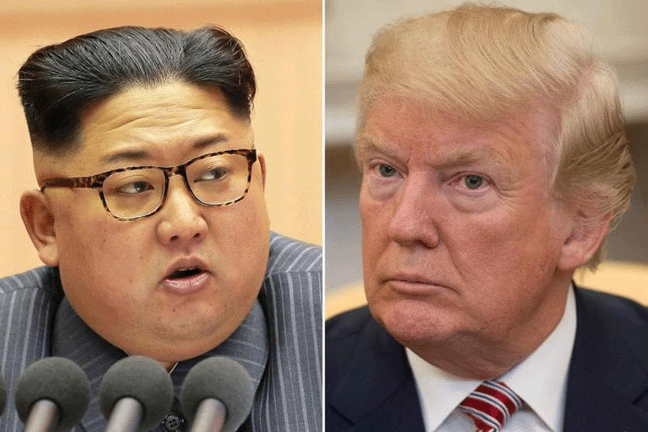
Kim Jong Un’s New Year’s Speech: On the Domestic Front, 38 North, BY: GLYN FORD, JANUARY 9, 2019 “……
-
The speech was framed within the successes of last year. The 2013 Line of promoting two fronts—economy and a nuclear deterrent—simultaneously had finally been delivered. The country lives under the protective umbrella of its nuclear deterrent and can turn its focus to the “higher goal” of economic construction.
Kim acknowledged that challenges to this domestic agenda certainly exist, noting especially the misallocation of labor, lack of expertise and poor productivity. In his speech, he instructed a reallocation of labor and resources, both for the military and the Party, to start to address these barriers to success. He also indicated that contingency plans were being explored in case a second summit with Trump fails to set US-DPRK relations back on track.
………Focus on Energy Generation
The country’s principal economic bottleneck is the desperate need for a massive increase in electricity production. A first step is the renovation and modernization of the supply industry. By singling out the Pukchang Thermal Power Complex for praise all the others inevitably lie in its shadow. Yet the most aggravating problem is fuel shortages. Under the current sanctions regime, the short-term solution—and by no means good news for the climate-change lobby—to the electricity shortage is massive increases in productivity in the coal sector. ………..
While hydroelectric plants merit a passing mention, in reality, the North is close to maximizing the use of the water resources available with both floods and droughts sharply reducing output. In the longer term, Kim argued that the country needs to “create a capacity for generating tidal, wind and atomic power under a far-reaching plan.” The last underlines Pyongyang’s perception that denuclearization of the Korean Peninsula does not preclude ambitions to be a civil nuclear power. The ongoing construction of their indigenous Experimental Light Water Reactor (ELWR) at North Korea’s Yongbyon Nuclear Scientific Research Center suggests that light water reactors will form the backbone of the industry, harking back perhaps to the Korean Peninsula Energy Development Organization (KEDO) from the 1990s. ………..
There is no question the Party is now on top as well as on tap with constant references to its primacy. Kim emphasized in his speech that the KPA is to “defend the Party and revolution and the security of the country and the people and continuously perform miraculous feats at all sites of socialist construction.” Echoing that sentiment, the People’s Internal Security Forces are there to protect Party, system and people, in that order.
Delivering peace and prosperity to the Korean Peninsula is the stated goal for both Pyongyang and Seoul. Kim underscored this mandate with:
“When north and south join hands firmly and rely on the united strength of the fellow countrymen, no external sanctions and pressure, challenges and trials will be able to hinder us….We will never tolerate the interference and intervention of outside forces who stand in the way of national reconciliation, unity and reunification with the design to subordinate inter-Korean relations to their tastes and interests.”
The “dog that didn’t bark” is the “end-of-war” declaration. Last summer, Pyongyang complained long and hard that Washington had not delivered on its promise to sign a political declaration ending the Korean War. In Kim’s New Year’s speech, this declaration failed to get even a mention. Pyongyang seems to have moved on, from Washington at least. Kim stated, “it is also needed to actively promote multi-party negotiations for replacing the current ceasefire on the Korean peninsula with a peace mechanism in close contact with the signatories to the armistice agreement so as to lay a lasting and substantial peace-keeping foundation.” The concept of a bilateral US-DPRK declaration signed by Seoul and Beijing has now become a multilateral proposition and negotiation. Which parties would be involved is unclear, but this may have been one of many topics discussed between Kim and Chinese President Xi Jinping during Kim’s birthday visit to Beijing
……….Until now Pyongyang has rigidly adhered publicly to parallel bilateral negotiations, one with Washington looking for a peace settlement accompanied by sanctions relief and a second with Seoul on economic cooperation. Now with the potential for the first set of negotiations to go multilateral, the second set may follow suit, increasing pressure on Moon to put clear blue water between Seoul and Washington with respect to “maximum pressure.”https://www.38north.org/2019/01/gford010919/
January 12, 2019
Posted by Christina Macpherson |
North Korea, politics, politics international |
Leave a comment
 North Korea may be willing to begin denuclearization, and Donald Trump should make a deal. https://www.usatoday.com/story/opinion/2019/01/04/kim-jong-un-north-korea-donald-trump-denuclearization-offer-column/2473360002/ Michael O’Hanlon, Jan. 4, 2019
Kim Jon-Un indicated he would put nuclear production capability on the table as a bargaining chip, and Donald Trump should make that deal.
In his traditional New Year’s Day speech earlier this week, North Korean strongman leader Kim Jong-Un has just made an offer that, if serious, could present an opportunity for President Donald Trump to reach a historic breakthrough in the nuclear crisis on the Korean peninsula and record his greatest foreign-policy accomplishment as president.
Kim’s speech was not all sweetness and light. He warned that his patience is not infinite, and that in the absence of diplomatic progress, his country may resort to more confrontational tactics. Little has happened since the famous Singapore summit back in June between Kim and Trump; we seem no closer to a deal on North Korea’s threatening military capabilities now than we did six months ago. Meanwhile, Kim clearly resents and suffers from the tough international sanctions that the Trump administration has convinced the United Nations to impose these last two years, after North Korea’s big missile and nuclear tests of 2017. The latest statistics show that, despite sanctions evasion in multiple quarters, North Korean trade was down as much as half in 2018 compared to the year before.
But Kim held out an olive branch nonetheless. He seems to want a deal, and seems interested in another summit. He was much more specific than ever before about what he might offer in the course of such a tete-a-tete with Trump. So far, North Korea has only offered to place a moratorium on future nuclear and long-range missile tests, which has been a welcome development, but has only talked vaguely about “denuclearization” and has not stopped making more bombs. Now, apparently, Kim would put nuclear production capability on the table as a bargaining chip.
North Korea experts like Jonathan Pollack and Jung Pak have documented how unlikely Kim would be to give up all his nuclear bombs (U.S. intelligence estimates he has as many as 60 by now). They represent the collective accomplishments of a program that Kim’s grandfather and father prioritized when they led North Korea, so giving up all those bombs quickly would almost seem to dishonor the memory and legacy of his forefathers. And perhaps even more importantly, Kim as well as his generals remember the one cardinal mistake Saddam Hussein, Mohammar Quadhafi, and the Taliban all committed — leaving themselves vulnerable in war against the United States because of the lack of a nuclear deterrent. For Kim to give up the bomb, he would need a great deal of confidence that relations will remain peaceful.
There is an opportunity to compromise, relax
Yet there is still a big opportunity for compromise, if Kim is serious about ending production of more bombs. North Korea could stop expanding its nuclear arsenal, and we could relax, then lift some of the sanctions imposed on North Korea over the years, especially the U.N. sanctions that have really cut into North Korean trade with China and South Korea in the last couple years. The goal of complete denuclearization could await another day.
With this approach, the United States would keep enough sanctions in place to stay true to its principle that North Korea cannot be accepted as a nuclear-weapons state; before being fully welcomed into the community of nations, it will in fact have to honor its obligations under the Nuclear Non-Proliferation Treaty and give up all its bombs. Yet as a practical matter, that second stage of nuclear talks can wait for a number of months or years. That is ok. The world will be much safer if North Korea stops enlarging and improving its nuclear and long-range missile arsenals that could threaten not only South Korea and Japan (and the almost 300,000 Americans living in those two countries combined), but also eventually North America.
Trump should take what he can get for now
The real challenge is likely to be verification. We know where some, but not all, of North Korea’s nuclear infrastructure is located. As such, international inspectors would have to be allowed to return not only to the Yongbyon location where they have been before, and where North Korea has operated a nuclear reactor to make plutonium as well as centrifuges to enrich uranium. They would also need some degree of free reign to explore other suspicious sites around the country. On the one hand, this would not be an arrangement unique to North Korea; similar provisions are part of the Iran nuclear deal, for example. On the other hand, North Korea has shown extreme nervousness about such inspections in the past.
Another possible problem: John Bolton, Trump’s national security advisor, and Secretary of State Mike Pompeo may consider a deal that only freezes, rather than eliminates, North Korea’s nuclear arsenal inadequate for purposes of American and allied security. But they should reassess, or Trump should overrule them.
This compromise deal would go further than the Iran deal, in fact, if North Korea were willing to see its nuclear production facilities dismantled permanently. Yes, Kim would keep his nukes for a while. But he would have powerful economic and military reasons to behave himself. In this case, taking half a loaf is far more realistic than hoping for a complete denuclearization accord that just isn’t in the cards anytime soon. We should immediately engage in serious talks to see just how serious Kim really is about this intriguing and promising offer.
Michael O’Hanlon is director of research for the foreign policy program at the Brookings Institution. Follow him on Twitter: @MichaelEOHanlon
January 6, 2019
Posted by Christina Macpherson |
North Korea, politics international |
Leave a comment
Kim and Trump Back at Square 1: If U.S. Keeps Sanctions, North Will Keep Nuclear Program, NYT, By David E. Sanger, Jan. 1, 2019
Nearly two years into his presidency and more than six months after his historic summit meeting with Kim Jong-un of North Korea, President Trump finds himself essentially back where he was at the beginning in achieving the ambitious goal of getting Mr. Kim to relinquish his nuclear arsenal.
That was the essential message of Mr. Kim’s annual New Year’s televised speech, where he reiterated that international sanctions must be lifted before North Korea will give up a single weapon, dismantle a single missile site or stop producing nuclear material.
The list of recent North Korean demands was a clear indicator of how the summit meeting in Singapore last June altered the optics of the relationship more than the reality. Those demands were very familiar from past confrontations: that all joint military training between the United States and South Korea be stopped, that American nuclear and military capability within easy reach of the North be withdrawn, and that a peace treaty ending the Korean War be completed.
“It’s fair to say that not much has changed, although we now have more clarity regarding North Korea’s bottom line,’’ Evans J.R. Revere, a veteran American diplomat and former president of the Korea Society, wrote in an email.
“Pyongyang refused to accept the United States’ definition of ‘denuclearization’ in Singapore,’’ he wrote. To the United States, that means the North gives up its entire nuclear arsenal; in the North’s view, it includes a reciprocal pullback of any American ability to threaten it with nuclear weapons. “The two competing visions of denuclearization have not changed since then.”
o Mr. Trump and Mike Pompeo, the secretary of state, who is supposed to turn Mr. Trump’s enthusiasms into diplomatic achievements, dispute such conclusions. They note that the tone of one of the world’s fiercest armed standoffs has improved. It has, and both leaders say they want to meet again.
……….By some measures there has been modest progress. It has been 13 months since the North tested a nuclear weapon or a long-range missile, a change that Mr. Trump and Mr. Pompeo cite as the first fruits of what some officials now concede will be a long diplomatic push.
Relations between the two Koreas are warming, though there is considerable evidence that Mr. Kim sees his outreach to President Moon Jae-in of South Korea as a way to split the United States from its longtime ally.
But Mr. Trump’s strategic goal, from the moment he vowed to “solve” the North Korea problem rather than repeat the mistakes of past presidents, has been to end the North Korean nuclear and missile threat, not suspend it in place.
Mr. Trump dispatched his first secretary of state, Rex W. Tillerson, to Seoul in March 2017 to declare that a mere nuclear freeze would not be enough. Back then, Mr. Tillerson declared there would be no negotiations, and certainly no lifting of sanctions, until the North’s dismantling had begun. A nuclear freeze would essentially enshrine “a comprehensive set of capabilities,” he argued.
The decision Mr. Trump must make now is whether to backtrack on the objective of zero North Korean nuclear weapons even if that means accepting the North as a nuclear-armed state, as the United States has done with Pakistan, India and Israel. https://www.nytimes.com/2019/01/01/world/asia/kim-trump-nuclear.html
January 5, 2019
Posted by Christina Macpherson |
North Korea, politics international, USA |
Leave a comment
 September 2017 nuclear test triggers 2019 earthquake in North Korea https://edition.cnn.com/2019/01/01/asia/north-korea-earthquake-intl/index.html, By Jake Kwon and Joshua Berlinger, CNN January 2, 2019 North Korea’s sixth nuclear test was so powerful that it’s still triggering earthquakes more than a year later.
January 5, 2019
Posted by Christina Macpherson |
incidents, North Korea, weapons and war |
Leave a comment
North Korea’s Kim sends ‘conciliatory message’ to Trump as nuclear weapon negotiations continue to stall Kim Jong-un had promised Donald Trump that they would work towards denuclearising North Korea, but negotiations haven’t advanced in months, Independent UK, Kristin Hugo New York 1 Jan 19
North Korean leader Kim Jong-un has sent a “conciliatory message” to Donald Trump as nuclear weapon talks between the two nations having stalled in recent months.
January 1, 2019
Posted by Christina Macpherson |
North Korea, politics international |
Leave a comment
 Kim Wants More Summits With Moon to Tackle Nuclear Issue ,Bloomberg, By Sam Kim and Youkyung Lee. December 30, 2018,
Kim intent on resolving nuclear impasse, Blue House says North Korean leader sent personal letter to South Korea’s Moon
Kim Jong Un is intent on resolving the nuclear impasse that has stalled negotiations with the U.S. and wants to hold more meetings with South Korean President Moon Jae-in, Moon’s office said.
The North Korean leader sent Moon a personal letter of well wishes on Sunday, expressing a willingness to meet often in 2019 to advance peace talks and achieve “denuclearization on the Korean peninsula,” Moon spokesman Kim Eui-keum said. Moon thanked him for the letter, tweeting that the North Korean leader “again made clear” that he would act on his agreement with the U.S. and South Korea.
The missive came amid increased skepticism over Kim’s willingness to dismantle his arsenal of nuclear weapons, months after a historic summit with President Donald Trump in which the two leaders agreed to work toward denuclearization. Kim’s letter made no mention of Trump or the U.S.
…….Earlier this month, North Korea told the U.S. that sanctions and pressure won’t work to force Pyongyang into action on its nuclear program. North Korean state media said the removal of the U.S.’s nuclear weapons from the region was a condition of its own disarmament, raising the stakes for Trump’s efforts to hold a second summit with Kim………https://www.bloomberg.com/news/articles/2018-12-30/kim-wants-more-summits-with-moon-to-tackle-nuclear-issue
December 31, 2018
Posted by Christina Macpherson |
North Korea, politics international, South Korea |
Leave a comment
 [Photo] North Korea marks one-year anniversary of alleged nuclear weapons program completion, Daily NK, By Mun Dong Hui, 28 Dec 18,
December 29, 2018
Posted by Christina Macpherson |
North Korea, weapons and war |
Leave a comment
North Korea Says It Won’t Give Up Nuclear Weapons Unless the U.S. Removes Nuclear Threat, TIME, By KIM TONG-HYUNG / AP December 20, 2018 (SEOUL, South Korea) — North Korea said Thursday it will never unilaterally give up its nuclear weapons unless the United States first removes what Pyongyang called a nuclear threat. The surprisingly blunt statement jars with Seoul’s rosier presentation of the North Korean position and could rattle the fragile trilateral diplomacy to defuse a nuclear crisis that last year had many fearing war.
The latest from North Korea comes as the United States and North Korea struggle over the sequencing of the denuclearization that Washington wants and the removal of international sanctions desired by Pyongyang. The statement carried by the North’s official Korean Central News Agency also raises credibility problems for the liberal South Korean government, which has continuously claimed that North Korean leader Kim Jong Un is genuinely interested in negotiating away his nuclear weapons as Seoul tries to sustain a positive atmosphere for dialogue.
The North’s comments may also be seen as proof of what outside skeptics have long said: that Kim will never voluntarily relinquish an arsenal he sees as a stronger guarantee of survival than whatever security assurances the United States might provide. The statement suggests North Korea will eventually demand the United States withdraw or significantly reduce the 28,500 American troops stationed in South Korea, a major sticking point in any disarmament deal.
Kim and President Donald Trump met June 12 in Singapore where they agreed on a vague goal for the “complete denuclearization” of the Korean Peninsula without describing when and how it would occur. The leaders are trying to arrange another meeting for early next year.
But North Korea for decades has been pushing a concept of denuclearization that bears no resemblance to the American definition, with Pyongyang vowing to pursue nuclear development until the United States removes its troops and the nuclear umbrella defending South Korea and Japan. In Thursday’s statement, the North made clear it’s sticking to its traditional stance on denuclearization. It accused Washington of twisting what had been agreed on in Singapore and driving post-summit talks into an impasse.
“The United States must now recognize the accurate meaning of the denuclearization of the Korean Peninsula, and especially, must study geography,” the statement said.
“When we talk about the Korean Peninsula, it includes the territory of our republic and also the entire region of (South Korea) where the United States has placed its invasive force, including nuclear weapons. When we talk about the denuclearization of the Korean Peninsula, it means the removal of all sources of nuclear threat, not only from the South and North but also from areas neighboring the Korean Peninsula,” the statement said.
The United States removed its tactical nuclear weapons from South Korea in the 1990s. Washington and Seoul have not responded to the North Korean statement……..
“If we unilaterally give up our nuclear weapons without any security assurance despite being first on the U.S. list of targets for pre-emptive nuclear strikes, that wouldn’t be denuclearization — it would rather be a creation of a defenseless state where the balance in nuclear strategic strength is destroyed and the crisis of a nuclear war is brought forth,” the KCNA said.
“The corresponding measures we have asked the United States to take aren’t difficult for the United States to commit to and carry out. We are just asking the United States to put an end to its hostile policies (on North Korea) and remove the unjust sanctions, things it can do even without a snap of a finger.”…….http://time.com/5485553/north-korea-nuclear-weapons-us-threat/
December 22, 2018
Posted by Christina Macpherson |
North Korea, politics international |
Leave a comment
WW3: North Korea warns US tensions sparked ‘nightmare of nuclear disaster EVERY NIGHT’
NORTH Korea has stoked tensions with the United States after US Secretary of State Mike Pompeo came under fire in a report carried on an officially sanctioned North Korean news agency. Express UK, By CIARAN MCGRATH, Dec 18, 2018 And it has also taken to opportunity to pointedly remind America it is now a year since “tens of millions of Americans suffered from the horrible nightmare of a nuclear disaster every night” in provocative language which may alarm Washington.
 The Korean Central News Agency took an apparent swipe at Mr Pompeo – one of US President Donald Trump’s closest advisors – in an article attributed to Jong Hyon and published just three days after the treasury department announced sanctions against North Korean official Choe Ryong Hae, who holds several positions including being vice-chairman of the Korean Workers’ Party. Writing on the 38 North website, US-based academic and North Korea expert Robert Carlin said: “Though the Jong Hyon article did not mention this latest development, it surely rankled Pyongyang, a fact made clear in a statement by the policy research director of the Institute for American Studies (IFAS) of the Ministry of Foreign Affairs of the Democratic People’s Republic of Korea a few days late
The broadside at ‘a brazen faced guy’ who ‘had amicable negotiations’ with the DPRK side, but back home talked about a ‘rogue state’ and ‘maximum pressure’ was unmistakably aimed at Secretary of State Pompeo, who has visited Pyongyang several times.
“Personal invective against the other side’s officials, especially leading figures on its negotiating team, marks an unpleasant moment but is not an insurmountable barrier. …..https://www.express.co.uk/news/world/1060671/world-war-3-north-korea-nuclear-disaster-us-mike-pompeo
December 20, 2018
Posted by Christina Macpherson |
North Korea, politics international |
Leave a comment
North Korea warns it could revive nuclear development if U.S. does not lift sanctions, Global News, By Kim Tong-Hyung The Associated Press, 3 Nov 18
North Korea has warned it could revive a state policy aimed at strengthening its nuclear arsenal if the United States does not lift economic sanctions against the country.
The statement released by the Foreign Ministry on Friday evening said North Korea could bring back its “pyongjin” policy of simultaneously advancing its nuclear force and economic development if the United States doesn’t change its stance. The North stopped short of threatening to abandon ongoing nuclear negotiations with Washington.
Still, it accused Washington of derailing commitments made by North Korean leader Kim Jong Un and President Donald Trump at their June summit in Singapore to work toward a nuclear-free Korean Peninsula. It was the first time the North said it could potentially resume weapons tests and other development activities since Kim signalled a new state policy in April.
In an interview with Fox News’ Sean Hannity on Friday, U.S. Secretary of State Mike Pompeo said he plans to talk next week with his North Korean counterpart, apparently referring to senior North Korean official Kim Yong Chol. Pompeo did not provide the location and date for the meeting, which will likely be focused on persuading North Korea to take firmer steps toward denuclearization and setting up a second summit between their leaders……https://globalnews.ca/news/4626862/north-korea-revive-nuclear-sanctions/
December 8, 2018
Posted by Christina Macpherson |
North Korea, politics international |
Leave a comment
Why Insisting on a North Korean Nuclear Declaration Up Front is a Big Mistake, 38 NORTH BY: SIEGFRIED S. HECKER, NOVEMBER 28, 2018, My reply to the frequently asked question if Kim Jong Un will ever give up North Korea’s nuclear weapons is, “I don’t know, and most likely he doesn’t know either. But it is time to find out.” However, insisting that Kim Jong Un give a full declaration of his nuclear program up front will not work. It will breed more suspicion instead of building the trust necessary for the North to denuclearize, a process that will extend beyond the 2020 US presidential election.
However, the time it will take to get to the endpoint should not obscure the progress that has already been made. Since this spring, Kim Jong Un has taken significant steps to reduce the nuclear threat North Korea poses. He has declared an end to nuclear testing and closed the nuclear test tunnels by setting off explosive charges inside the test tunnel complex. He also declared an end to testing intermediate- and long-range missiles including intercontinental ballistic missiles (ICBMs). I consider these as two of the most important steps toward reducing the threat North Korea poses and as significant steps on the path to denuclearization.
Whereas the North still poses a nuclear threat to Japan and South Korea as well as US military forces and citizens in the region, the threat to the United States has been markedly reduced. In my opinion, North Korea needs more nuclear and ICBM tests to be able to reach the United States with a nuclear-tipped missile. Freezing the sophistication of the program is a necessary precursor to rolling it back in a step-by-step process.
At the September 2018 inter-Korean summit in Pyongyang, Kim also told President Moon that he would commit to dismantling the Yongbyon nuclear complex if the US takes commensurate measures—unspecified, at least in public. The Yongbyon complex is the heart of North Korea’s nuclear program. Shutting it down and dismantling it would be a very big deal because it would stop plutonium and tritium production (for hydrogen bombs) and significantly disrupt highly enriched uranium production.
Yet, Kim’s actions have been widely dismissed as insignificant or insincere by both the left and the right of the American political spectrum. In many of these quarters, the sincerity of Kim’s denuclearization promise is judged by whether or not he is willing to provide a full and complete declaration and to agree on adequate verification measures. But Kim’s willingness to provide a full declaration at this early stage tells us little about his willingness to denuclearize. Moreover, I maintain that insisting on this approach is a dead end, certainly as long as Washington continues to apply “maximum pressure” instead of moving to implement the steps on normalizing relations that President Trump agreed to in the June Singapore statement.
A full declaration is a dead end because it is tantamount to surrender, and Kim has not surrendered, nor will he. A complete account of North Korea’s nuclear weapons, materials, and facilities would, in Kim’s view, likely be far too risky in that it would essentially provide a targeting list for US military planners and seal the inevitable end of the nuclear program and possibly his regime.
Furthermore, a declaration must be accompanied by a robust verification protocol. That, in turn, must allow inspections and a full accounting of all past activities such as production and procurement records as well as export activities. And, once all these activities are complete, an inspection protocol must provide assurances that activities that could support a weapons program are not being reconstituted. This would be a contentious and drawn-out affair.
It is inconceivable that the North would declare all of its nuclear weapons, their location, and allow inspections of the weapons or of their disassembly up front. But in addition to the weapons themselves, a nuclear weapon program consists of three interlocking elements: 1) the nuclear bomb fuel, which depending on the type of bomb includes plutonium, highly enriched uranium (HEU), and forms of heavy hydrogen—deuterium and tritium; 2) weaponization—that is, designing, building and testing weapons, and; 3) delivery systems, which in the case of North Korea appear to be missiles, although airplane or ship delivery cannot be ruled out. Each of these elements involves dozens of sites, hundreds of buildings, and several thousand people.
Let me give an example of what is involved just for verification of plutonium inventories and means of production. ………..
It should be apparent that the declaration plus commensurate verification of the amount of plutonium North Korea possesses, which I believe is only between 20 and 40 kilograms, will be an enormous job. I cannot see it being accomplished in the current adversarial environment and certainly not within the timeframe that has been specified by the US government.
A similar sequence of declarations, inspections, and verification measures would have to be developed for the other bomb fuels, namely HEU and the hydrogen isotopes, deuterium and tritium. Verification of HEU inventories and means of production will be particularly contentious because very little is known about the centrifuge facility at the Yongbyon site. As far as we know, my Stanford colleagues and I are the only foreigners to have seen that facility, and then only in a hurried walk-through in 2010. In addition, there exists at least one other covert centrifuge site.
The situation is even more problematic for the second element of the North’s nuclear program, that of weaponization, which includes bomb design, production, and testing because we know nothing about these activities or where they are performed. Although we have some information regarding the nuclear test site at which six nuclear tests were conducted, we do not know if there are other tunnel complexes that have been prepared for testing.
The third element includes all of the North’s missiles and its production, storage and launch sites and complexes. These will also represent a major challenge for complete and correct declarations, inspections and verification.
Once all of the elements have been declared and the dismantling begins, then the focus will have to change to verifying the dismantlement and assessing the potential reversibility of these actions—a challenge that is not only difficult, but one that must be ongoing. ………
At this time, the level of trust between Pyongyang and Washington required for North Korea to agree to a full, verifiable declaration up front does not exist. Hence, my colleagues Robert Carlin and Elliot Serbin and I have suggested a different approach. Negotiations should begin with an agreed end state: North Korea without nuclear weapons or a nuclear weapon program. Civilian nuclear and space programs would remain open for negotiation and possible cooperation. But all facilities and activities that have direct nuclear weapons applicability must eventually be eliminated.
Rather than insisting on a full declaration up front, the two sides should first agree to have the North take significant steps that reduce the nuclear threat it poses in return for commensurate movements toward normalization—the details of which would have to be worked out during negotiations. …………
The Trump team claims progress is being made but insists on maintaining maximum pressure. The North’s Foreign Ministry has pointed outthat the “improvement of relations and sanctions are incompatible.” Also, most US North Korea watchers are either wedded to old think that you can’t negotiate with Pyongyang or they are determined to prove President Trump’s claims on North Korea wrong.
With nuclear tensions on the Korean Peninsula dramatically reduced, it is time to find out if Kim’s drive to improve the economy will eventually lead to denuclearization. He may determine that his nuclear arsenal poses a significant hindrance to economic development that outweighs the putative benefits it confers. Washington and Seoul should work together to encourage rather than inhibit this potential shift. https://www.38north.org/2018/11/shecker112818/
December 1, 2018
Posted by Christina Macpherson |
North Korea, politics international |
Leave a comment
Pompeo to Seoul: Nuclear progress must not lag better Korea ties, REUTERS, November 21, 2018 WASHINGTON--The United States has told its ally South Korea it should not improve ties with North Korea faster than Pyongyang takes steps to give up its nuclear weapons, U.S. Secretary of State Mike Pompeo said on Tuesday.
Speaking as a working group with South Korea to coordinate North Korean policy held an inaugural meeting in Washington, Pompeo indicated that Washington had been concerned that Seoul had moved too quickly with Pyongyang.
“We have made clear to the Republic of Korea that we do want to make sure that peace on the peninsula and the denuclearization of North Korea aren’t lagging behind the increase in the amount of inter-relationship between the two Koreas,” he told a news briefing………
Last month, in a rare sign of discord between Seoul and Washington, South Korean Foreign Minister Kang Kyung-wha said Pompeo had expressed “discontent” at an inter-Korean military pact reached during a summit in September.
The Koreas also agreed in October to begin reconnecting rail and road links despite U.S. concerns that the rapid North-South thaw could undermine efforts to press Pyongyang to give up its nuclear weapons.
At an unprecedented summit in June, U.S. President Donald Trump and North Korean leader Kim Jong Un agreed to work toward denuclearization and peace on the Korean Peninsula and establish new relations.
But negotiations have since made little headway, with Pyongyang upset by Washington’s insistence that international sanctions must remain until it gives up its nuclear weapons.
Last week, South Korean Unification Minister Cho Myoung-gyon said in Washington it was important to provide North Korea with motivation to denuclearize but that sanctions would stay in place “until we see actual progress on denuclearization.” http://www.asahi.com/ajw/articles/AJ201811210041.html
November 22, 2018
Posted by Christina Macpherson |
North Korea, politics international, South Korea, USA |
1 Comment
Nov. 13 (UPI) — U.S. Vice President Mike Pence vowed to work toward the complete denuclearization of North Korea and fully enforce sanctions during a joint press conference with Japan’s prime minister on Tuesday.
Pence, who is expected to attend the APEC meeting in Papua New Guinea on Saturday instead of President Donald Trump, said the United States stands firmly against countries that threatened freedom and openness in the region, including North Korea, NHK reported……
Pence told reporters economic sanctions against North Korea will be fully enforced until complete denuclearization, and that there is still a lot of work that needs to be done before embargoes are lifted. ….https://www.upi.com/Top_News/World-News/2018/11/13/Mike-Pence-North-Korea-sanctions-to-remain-until-denuclearization/8321542114175/
November 17, 2018
Posted by Christina Macpherson |
North Korea, politics international, USA |
Leave a comment
It didn’t appear to be a test of a nuclear device or a long-range missile with the potential to target the U.S. NBC News, Nov. 16, 2018, By Associated Press
SEOUL, South Korea — North Korean leader Kim Jong Un observed the successful test of an unspecified “newly developed ultramodern tactical weapon,” state media reported Friday.
It didn’t appear to be a test of a nuclear device or a long-range missile with the potential to target the U.S. A string of such tests last year had many fearing war before the North turned to engagement and diplomacy.
Still, any mention of weapons testing could influence the direction of stalled diplomatic efforts spearheaded by Washington and aimed at ridding the North of its nuclear weapons.
The North hasn’t publicly tested any weapons since November 2017, but in recent days Pyongyang reportedly expressed anger at U.S.-led international sanctions and ongoing small-scale military drills between South Korea and the United States.
Earlier this month, North Korea’s Foreign Ministry warned it could bring back its policy of bolstering its nuclear arsenal if it doesn’t receive sanctions relief.
Diplomacy has stalled since a summit between Kim and President Donald Trump in June, with Washington pushing for more action on nuclear disarmament and the North insisting that the U.S. first approve a peace declaration formally ending the Korean War and lift sanctions.
https://www.nbcnews.com/news/world/north-korea-tests-new-weapon-amid-stalled-nuclear-diplomacy-n937066
November 17, 2018
Posted by Christina Macpherson |
North Korea, weapons and war |
Leave a comment
North Korea not giving up its nuclear weapons any time soon, Chronicle, 12 NOV, 2018 “……..North Korea declared its nuclear force “complete” and halted missile and nuclear bomb testing earlier this year, but U.S. and South Korean negotiators have yet to elicit from Pyongyang a concrete declaration of the size or scope of the weapons programs, or a promise to stop deploying its existing arsenal.
North Korea has said it has closed its Punggye-ri nuclear testing site and the Sohae missile engine test facility. It also raised the possibility of shuttering more sites and allowing international inspections if Washington took “corresponding measures,” of which there has so far been no sign.
Last week, North Korea called off a meeting with U.S. Secretary of State Mike Pompeo in New York, and state media said on Monday the resumption of some small-scale military drills by South Korea and the United States violated a recent agreement aimed at lowering tensions on the Korean peninsula.
The sites identified in the CSIS report are scattered in remote, mountainous areas across North Korea, and could be used to house ballistic missiles of various ranges, with the largest believed to be capable of striking anywhere in the United States……” https://www.chronicle.co.zw/north-korea-not-giving-up-its-nuclear-weapons-any-time-soon/
November 13, 2018
Posted by Christina Macpherson |
North Korea, weapons and war |
Leave a comment