Hibakusha: Nagasaki activist, 79, looks to entrust nuclear movement to next generation
|
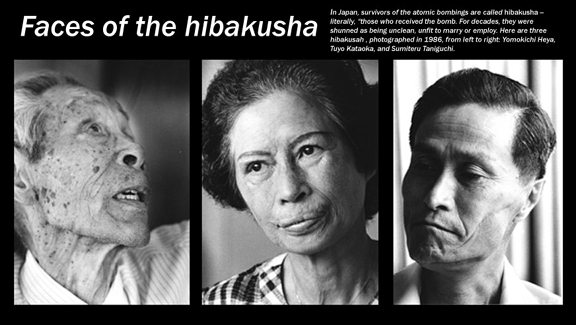
https://mainichi.jp/english/articles/20190522/p2a/00m/0na/013000c May 22, 2019 (Mainichi Japan) NAGASAKI — On May 9, there was a sit-in hibakusha gathering in front of the Peace Statue at Nagasaki Peace Park. The meeting takes place on the ninth of every month, marking the Aug. 9, 1945, U.S. atomic bombing of Nagasaki. This month’s congregation marked the 444th time for such an event. Koichi Kawano, 79, took to the microphone to speak about the stand-off between the United States and Iran. “This is a crisis,” he said to the around 100 people in attendance, continuing, “Our hearts are one when wishing for the abolition of nuclear weapons.” Born in North Pyongan Province on the Korean Peninsula, now part of North Korea, Kawano was brought back to his parents’ hometown Nagasaki as a child. Aged 5 in August 1945, he was around 3.1 kilometers away from the atomic bomb’s hypocenter. Now a resident of the nearby town of Nagayo, he has been an activist for the end of nuclear weaponry in roles including his long tenure as chairman of the Hibakusha Liaison Council of the Nagasaki Prefectural Peace Movement Center. “While enduring untold misery, we have won our rights with our own strength,” he says, looking back on the messages their hibakusha meetings have sent against the government’s constitutional amendment policies and security legislation designed to allow Japan to exercise the right to collective self-defense in a limited manner. “Perseverance is power” has been Kawano’s guiding motto in engaging in the movement’s activities, but this spring he faced a difficult reality. Masanori Nakashima, president of the Nagasaki Prefecture A-bomb Health Handbook Friendship Society, died aged 89 on March 15. The two men were allies in peace activism. Representatives of five local hibakusha groups, including Nakashima and Kawano, announced a joint statement on peace issues and handed a written request to the prime minister on Aug. 9. Of the five hibakusha group representatives who were alive in 2015 on the 70th anniversary of the bombing, three including Nagasaki Atomic Bomb Survivors Council chair Sumiteru Taniguchi have passed away. Taniguchi died in 2017 at 88 years of age. “Even with his limp, he dragged himself to that office to hear other hibakusha speak,” Kawano reminisced, while looking ahead to an uncertain future, saying, “What will happen to these groups after we die?” Kawano himself underwent surgery for esophageal cancer in 2017. Due to ill health he was forced to pull out of a survey of hibakusha in North Korea as a member of the Japan Congress Against A- and H-Bombs in fall 2018. Despite setbacks, his drive for peace remains unchanged. Kawano confronted Prime Minister Shinzo Abe over the Japanese government’s disinclination to sign and ratify the United Nations Treaty on the Prohibition of Nuclear Weapons in a face-to-face meeting in 2017, asking, “What country’s prime minister are you?” As time marches on from the events of August 1945, Kawano is putting his faith in the next generation. “The increasingly quiet voices of the hibakusha must not be drowned out,” he says. At the monthly sit-ins in Nagasaki Peace Park, the number of high school age attendees has increased. As he welcomes the last summer of his 70s, Kawano’s resolve remains strong. “Peace activism is powered by people. I want the movement to continue, to carry on the wish never to see another generation of hibakusha in this world.” (Japanese original by Yuki Imano, Nagasaki Bureau) |
Highly radioactive chimney at Fukushima No 1 plant to be taken apart
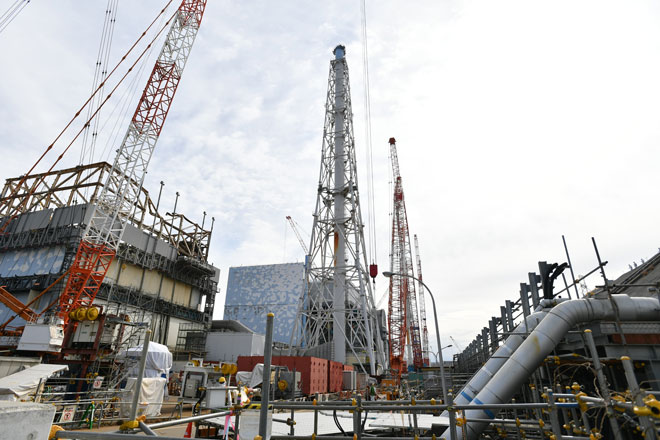
TEPCO to slice dangerous chimney at Fukushima plant http://www.asahi.com/ajw/articles/AJ201905100045.html, By CHIKAKO KAWAHARA/ Staff Writer, May 10, 2019 Tokyo Electric Power Co. plans to start work on May 20 to dismantle a 120-meter-tall, highly contaminated chimney that could collapse at the crippled Fukushima No. 1 nuclear power plant.
It will be the first highly radiated facility at the plant to be taken apart, the company said May 9.
The stack, with a diameter of 3.2 meters, was used for both the No. 1 and No. 2 reactors. TEPCO plans to remove the upper half of the chimney within this year to prevent the structure from collapsing.
The dismantling work will be conducted by remote control because the radiation level around the base of the chimney is the highest among all outdoor areas of the plant. Exposure to radiation at the base can cause death in several hours.
After the Great East Japan Earthquake and tsunami struck in March 2011, pressure increased in the containment vessel of the No. 1 reactor. Vapors with radioactive substances were sent through the chimney to the outside.
TEPCO also found fractures in steel poles supporting the chimney. The damage was likely caused by a hydrogen explosion at the No. 1 reactor building when the nuclear disaster was unfolding.
Since then, the chimney has been left unrepaired because of the high radiation levels.
Immediately after the nuclear accident, a radiation level exceeding 10 sieverts per hour was observed around the base of the chimney. In a survey conducted in 2015, a radiation level of 2 sieverts per hour was detected there.
TEPCO will use a large crane that will hold special equipment to cut the chimney in round slices from the top.
The company set up a remote control room in a large remodeled bus about 200 meters from the chimney. Workers will operate the special cutting equipment while watching footage from 160 video cameras.
Fukushima’s ghost towns
Nuclear wasteland Inside the ghost towns of Fukushima, Eight years on from the tsunami and nuclear meltdown, much of Japan’s Fukushima province remains derelict and deserted. Telegraph, 13 May 19
There was a chilling silence in the town of Tomioka in the days after the March 2011 Fukushima nuclear disaster.
Shoes were left in porches, half-read newspapers lay abandoned next to cups of tea, long gone cold. As night closed in on the seaside town, lights glared out from a few bare windows, while news of the ongoing crisis at the Fukushima No. 1 Nuclear Power Plant just six miles away drifted from a solitary radio.
Nobody was home.
Eight years on, little has changed. Before March 11, 2011 – the day the tsunami engulfed the nuclear facility, forcing the evacuation of more than 150,000 residents across the region – the town had a population of 15,960. Now, just a few hundred people have returned despite the lifting of the evacuation order in April 2017.
“Officially 835 have returned, but many are plant and other clean-up workers who are renting out abandoned houses,” says Takumi Takano, a local councillor who splits her time between Tomioka and temporary digs in Koriyama an hour’s drive away that she and her husband Kenichi have lived in since evacuating.
Of the remaining locals most are either elderly, or only return during the day, she says. Most worryingly, just 14 are children. When night falls, they return to “temporary” homes elsewhere, she says. “It’s like a ghost town.”
A similar situation is found throughout the entire evacuated region, where only 12,859 of the 100,510 residents who were living in the zone before the disasters have returned, a Cabinet Office official says. Like Tomioka, many of them are clean-up workers, local residents say.
…… After almost eight years, residents, especially those with young families, have settled elsewhere, securing new jobs and starting new schools or moving out of Fukushima entirely, says says Kenichi, a former worker at the devastated nuclear plant.. Many are put off returning by the severe shortage of medical facilities in the region.
Then there’s the radioactivity,” he says, as the couple sit outside their caravan, set up on the land of their recently demolished home, which backs on to a 130-square-mile “difficult-to-return-zone” that is still considered too highly contaminated to inhabit.
Eight years on, radioactivity levels have fallen in the reopened parts of Tomioka, though remain 20 times higher than before the disaster. “It’s much higher over there,” he says, pointing to the blockaded zone, where radiation levels exceed 3.8 microsieverts per hour – the designated threshold for issuing evacuation orders.
That zone is a legacy of the nuclear disaster, when multiple reactor meltdowns and explosions, triggered by a magnitude nine earthquake and towering tsunami, spread radioactive materials for hundreds of miles around……..
despite clean-up operations there to reduce radiation levels below the government-set target of 0.23 microsieverts (µSv) per hour, other legacies of the disaster – the crumbling houses and shops, corroding vehicles and overgrown fields, not to mention 16.5 million containers of contaminated earth collected at some 140,000 sites around the region – are impossible to avoid.
The 0.23 µSv figure is significant in that it adds up to an annual dosage level of one millisievert (mSv) (calculated on the premise that a resident spends eight hours a day outdoors), stipulated by the International Atomic Energy Agency as being safe for members of the public.
But while maintaining that level is complicated by recontamination from surrounding woodland, some experts argue the figure says little about the true dangers, or safety, of radiation exposure. That the Japanese government raised this to 20 mSv in the aftermath of the disasters adds weight to their argument…….
Misao Fujita, a doctor who performs thyroid scans at a clinic in Iwaki, about 30 miles south of the nuclear plant, says a connection between the cancers and radiation exposure cannot be ruled out and the screening effect is no reason to disregard the examinations.
“What we do know is that after Chernobyl, many children developed thyroid cancer, and if you take that into account and consider the high risk that Fukushima children were exposed to radiation then I think we should carry out such tests,” Dr Fujita says, adding that thyroid cancer normally occurs in one in one million children.
Noriko Tanaka, whose son is one of Dr Fujita’s patients, says exams revealing cysts in her son’s thyroid are a concern, not least because iodine-131 – a substance that causes thyroid cancer – was contained in the plume released by the Fukushima plant that landed on Iwaki after the disasters. At the time, she was pregnant with her son. “I worry because nobody knows for sure what the future holds,” she says……….
The issue of the one million tons of contaminated water being stored at the stricken nuclear plant is another worry for residents. After receiving assurances from Fukushima plant operator Tokyo Electric Power Company (TEPCO ) that the water had been successfully treated and stripped of all but one radioactive material, tritium, the government announced in 2017 it would start releasing the water into the ocean, despite protests, especially from local fisheries.
TEPCO released convoluted data to demonstrate the water’s safety, but was forced to backtrack last September when further tests showed the sums didn’t add up and 80 per cent of the water was in fact up to 20,000 times higher than the official safe threshold. Furthermore, it contained harmful radionuclides such as iodine, caesium and strontium.
Moreover, while the initial suggestion was that tritium was relatively harmless some studies have shown it to be a cause of infant leukaemia, says Ayumi Iida of NPO Tarachine, which independently analyses seawater samples taken from the ocean near Fukushima’s two nuclear plants.
“Tritiated water is easily absorbed and hazardous when inhaled or ingested via food or water,” she says. “There’s already data indicating infant leukaemia rates are higher near to nuclear plants, and tritium is known to cause DNA damage, so while there are claims that tritium is harmless, there are counterclaims it can adversely affect health, especially among young children.”…….
Shaun Burnie, a nuclear expert with Greenpeace says that discharging the water into the ocean is “the worst option” available, and one whose main consideration is economic.
“The only viable option, and it’s not without risks, is the long-term storage of the water in robust steel tanks over at least the next century, and the parallel development of water processing technology,” he says. ……….
“The reality is there is no end to the water crisis at Fukushima, a crisis compounded by poor decision-making by both TEPCO and the government,” says Mr Burnie.
Among more pressing issues, Mr Burnie says, is 400,000 cubic meters of sludge being stored within the Fukushima plant grounds that contains high concentrations of strontium – known as a “bone-seeker” because, if introduced into the body, it can accumulate in the bones in the same way as calcium does.
With the plant still generating waste, this sludge is expected to nearly double over the next 10 years, he adds.
Strontium releases into the environment from the plant were relatively small following the 2011 disaster, but significantly greater 30 months later, when in 2013 a large strontium-laced plume contaminated land as far away as Minamisoma – a city about 20 km from the plant, Mr Burnie says. Such an event could re-occur, he says.
“Is it a good idea to lift the evacuation orders? Absolutely not. The public are right to be concerned about the possibility of further offsite releases.”
They can also be forgiven for being sceptical over official reassurances that foodstuffs are safe, says Ms Iida of Tarachine, which also runs a produce-testing laboratory and has found “plenty” of items with levels of contamination exceeding the safe limits.
Meanwhile tests on samples of soil – which has no official safe threshold in Japan – have also revealed high levels of radiation in the area, she adds.
Namie’s Obori district, about six miles northwest of the nuclear plant and within the difficult-to-return-zone, is one place where soil radiation levels remain high. In woodland backing the pretty hamlet, which is famed for its pottery but has slowly surrendered to nature, the Telegraph recorded up to 127 µSv per hour – over 350 times the IAEA’s safe threshold……
Professor Kazuhiko Kobayashi at Sellafield, warns on nuclear radiation and danger to children
Radiation Free Lakeland 12th May 2019 Professor Kazuhiko Kobayashi has done ground breaking work with theUniversity of Tokyo on the impact of climate change on rice nutrition. This is important work and it has been widely featured in national and
international media.
Kazuhiko’s real passion however is to warn people
about the worst criminality against humankind: nuclear power and nuclear
weapons.
Kazuhiko organises respite for children and families who have been
impacted by the ongoing Fukushima disaster.
Members of Radiation Free Lakeland met up with Kazuhiko last autumn to show him the Sellafield area and he told us that there is money for climate research but not so much for
research into the impacts of radiation on our food and health. He is a kind
gentle man and he was visibly shocked to see the scale of Sellafield.
Kazuhiko broke down in tears within the shadow of Sellafield, at the
impacts the nuclear industry is having on our children’s health. His
passionate opposition to nuclear power and weapons, his work for change and
to help those impacted, is an inspiration.
Fukushima’s mothers became radiation experts to protect their children after nuclear meltdown
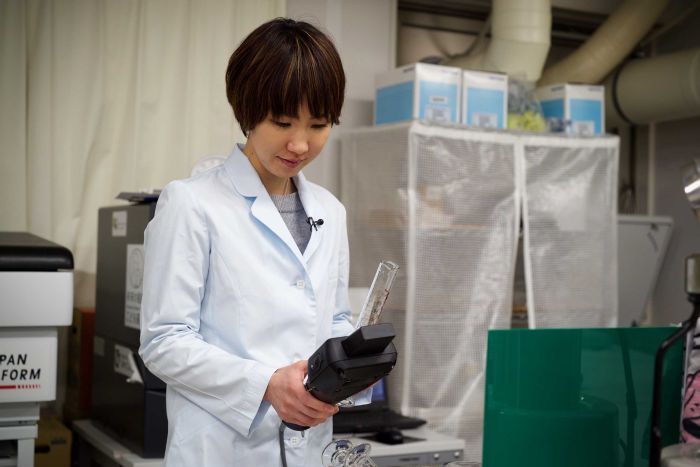
Key points:
- Mothers in Fukushima set up a radiation testing lab because they didn’t trust government results
- The women test food, water and soil and keep the public informed about radiation levels
- A major earthquake and tsunami caused a nuclear accident at the Fukushima power plant in 2011
They are testing everything — rice, vacuum cleaner dust, seafood, moss and soil — for toxic levels of radiation.
But these lab workers are not typical scientists.
They are ordinary mums who have built an extraordinary clinic.
“Our purpose is to protect children’s health and future,” says lab director Kaori Suzuki.
In March 2011, nuclear reactors catastrophically melted down at the Fukushima Daiichi plant, following an earthquake and tsunami.
Driven by a desperate need to keep their children safe, a group of mothers began testing food and water in the prefecture.
The women, who had no scientific background, built the lab from the ground up, learning everything on the job.
The lab is named Tarachine, a Japanese word which means “beautiful mother”.
“As mothers, we had to find out what we can feed our children and if the water was safe,” Ms Suzuki says.
“We had no choice but to measure the radiation and that’s why we started Tarachine.”
After the nuclear accident, Fukushima residents waited for radiation experts to arrive to help.
“No experts who knew about measuring radiation came to us. It was chaos,” she says.
In the days following the meltdown, a single decision by the Japanese Government triggered major distrust in official information which persists to this day.
The Government failed to quickly disclose the direction in which radioactive materials was drifting from the power plant.
Poor internal communications caused the delay, but the result was that thousands fled in the direction that radioactive materials were flying.
Former trade minister Banri Kaieda, who oversaw energy policy at the time, has said that he felt a “sense of shame” about the lack of disclosure.
But Kaori Suzuki said she still finds it difficult to trust the government.
“They lied and looked down on us, and a result, deceived the people,” Ms Suzuki says.
“So it’s hard for the people who experienced that to trust them.”
She and the other mothers who work part-time at the clinic feel great responsibility to protect the children of Fukushima.
But it hasn’t always been easy.
When they set up the lab, they relied on donated equipment, , and none of them had experience in radiation testing. There was nobody who could teach us and just the machines arrived,” Ms Suzuki says.
“At the time, the analysing software and the software with the machine was in English, so that made it even harder to understand.
“In the initial stage we struggled with English and started by listening to the explanation from the manufacturer. We finally got some Japanese software once we got started with using the machines.”
Radiation experts from top universities gave the mothers’ training, and their equipment is now among the most sophisticated in the country.
Food safety is still an issue
The Fukushima plant has now been stabilised and radiation has come down to levels considered safe in most areas.
But contamination of food from Japan remains a hotly contested issue.
Australia was one of the first countries to lift import restrictions on Japanese food imports after the disaster.
But more than 20 countries and trading blocs have kept their import ban or restrictions on Japanese fisheries and agricultural products.
At the clinic in Fukushima, Kaori Suzuki said she accepted that decision.
“It doesn’t mean it’s right or wrong. I feel that’s just the decision they have made for now,” she says.
Most results in their lab are comparatively low, but the mothers say it is important there is transparency so that people know what their children are consuming.
Fukushima’s children closely monitored after meltdown
Noriko Tanaka is one of many mothers in the region who felt that government officials were completely unprepared for the unfolding disaster.
She was three months pregnant with her son Haru when the disaster struck.
Ms Tanaka lived in Iwaki City, about 50 kilometres south of the power plant.
Amid an unfolding nuclear crisis, she panicked that the radioactive iodine released from the meltdown would harm her unborn child.
She fled on the night of the disaster.
When she returned home 10 days later, the fear of contamination from the invisible, odourless radioactive material weighed deeply on her mind.
“I wish I was able to breastfeed the baby,” she says.
“[Radioactive] caesium was detected in domestic powdered milk, so I had to buy powdered milk made overseas to feed him.”
Ms Tanaka now has two children —seven-year-old Haru and three-year-old Megu. She regularly takes them in for thyroid checks which are arranged free-of-charge by the mothers’ clinic.
Radiation exposure is a proven risk factor for thyroid cancer, but experts say it’s too early to tell what impact the nuclear meltdown will have on the children of Fukushima.
Noriko Tanaka is nervous as Haru’s thyroid is checked.
“In the last examination, the doctor said Haru had a lot of cysts, so I was very worried,” she says.
However this time, Haru’s results are better and he earns a high-five from Dr Yoshihiro Noso.
He said there was nothing to worry about, so I feel relieved after taking the test,” Ms Tanaka says.
“The doctor told me that the number of cysts will increase and decrease as he grows up.”
Doctor Noso has operated on only one child from Fukushima, but it is too early to tell if the number of thyroid cancers is increasing because of the meltdown.
“There isn’t a way to distinguish between cancers that were caused naturally and those by the accident,” he says.Dr Noso says his biggest concern is for children who were under five years old when the accident happened.The risk is particularly high for girls.
Even if I say there is nothing to worry medically, each mother is still worried,” he says.
“They feel this sense of responsibility because they let them play outside and drink the water. If they had proper knowledge of radiation, they would not have done that,” he said.
Mums and doctors fear for future of Fukushima’s children
After the Chernobyl nuclear disaster of 1986, the incidence of thyroid cancers increased suddenly after five years….
“In the case of Chernobyl, the thyroid cancer rate increased for about 10 years. It’s been eight years since the disaster and I would like to continue examinations for another two years.” …….
Some children, whose families fled Fukushima to other parts of Japan have faced relentless bullying.
“Some children who evacuated from Fukushima living in other prefectures are being bullied [so badly that they] can’t go to school,” Noriko Tanaka said.
“The radiation level is low in the area we live in and it’s about the same as Tokyo, but we will be treated the same as the people who live in high-level radiation areas.”
Noriko is particularly worried for little Megu because of prejudice against the children of Fukushima.
“For girls, there are concerns about marriage and having children because of the possibility of genetic issues.”
How Does the Olympics Clean Up? (Or, Is There an Olympics Without Cleaning Up?)
Under these circumstances, whether the unresolved issues of radiation, without appropriate treatment of nuclear power facilities, disaster victims lacking a place to reside, the forcible relocation of American army bases or the dispersal of the homeless, the Japanese media has relentlessly broadcast the Olympics.
“The Tokyo Olympics will take place in a state of nuclear emergency. Those countries and the people who participate will, on the one hand, themselves risk exposure, and, on the other, become accomplices to the crimes of this nation.”
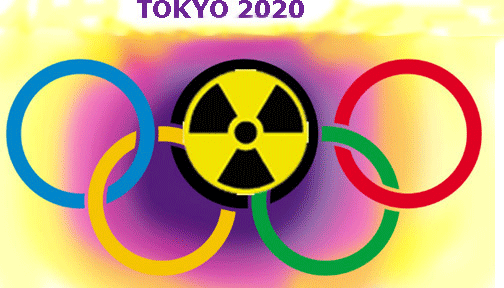
THE OLYMPICS CLEAN-UP: FUKUSHIMA, OKINAWA, HOMELESSNESS 陳黃金菊05/05/2019 ENGLISH INTERNATIONAL MAY 2019 How Does the Olympics Clean Up? (Or, Is There an Olympics Without Cleaning Up?)
Fukushima nuclear waste mess is by no means solved
THE OLYMPICS CLEAN-UP: FUKUSHIMA, OKINAWA, HOMELESSNESS 陳黃金菊05/05/2019 ENGLISH INTERNATIONAL MAY 2019 NUCLEAR PHYSICIST Hiroaki Koide has pointed out that although eight years have passed, there is still more than one million tons of irradiated water which still hasn’t been treated. The Tokyo Electric Power Company (TEPCO)’s “handling” method for this situation was to build a thousand sewage tanks to store the sewage. But as space was limited and the number of sewage tanks was also limited. As such, Koide asserts, “TEPCO will be compelled to release these waters into the sea in the near future.” [1] Moreover, with regards to the core meltdown of the reactor, the melted fuel rods remain unaccounted for.
As such, Koide has been staunch in advocating that the only solution to the Fukushima incident is a Chernobyl-style sarcophagus, covering the nuclear power plant. But he also admits, even in this case, “the containment of this disaster will not have been achieved even after all who are alive today have died.” [2]
Abe Shinzo issued an order for an end to an evacuation on April 1st, 2017, at the same time as he issued a compulsory repatriation policy. At this time, the town of Namie, 11.2 kilometers from the Fukushima nuclear power plant, has been described as a “ghost town.” As raised by now deceased mayor Baba Yushi before he died, after the end of the evacuation, 234 people—one percent of the population—returned to Namie to live. The majority of these were elderly, which is to say, the town lacked a working population. Without any means of transportation and open supermarkets. There was just one clinic. [3]
As a compensatory measure in line with the repatriation measure, TEPCO set a deadline, requesting that disaster victims assess their losses, and inform TEPCO of what kind of compensation they requested. Regarding this, the mayor of Namie stated that TEPCO never should have set this kind of deadline, but should account for the losses of disaster victims themselves.
What is even more incredible is that TEPCO could use “individual circumstances” as a way of avoiding the requests of disaster victims. For example, residents in twenty kilometers of the nuclear power plant were forcibly evacuated but TEPCO interpreted this instead as “voluntary evacuation”, and refused to pay compensation. [4] Even those who lost their real estate might not receive compensation, not to mention harms that could not be compensated for, such as those below the age of eighteen whose thyroids were inspected five years later, among them 172 were positive for or suspected of having thyroid cancer, and 131 had their thyroid glands removed by operation. [5]
At the same time, damages to the environment cannot be compensated. Who is it that would receive compensation? What kind of compensation would that be? Before the disaster, Fukushima’s agricultural industry and natural environment were comparatively famous. But after the disaster, farmers have been forced to the end of a rope, some of which have chosen death. [6] Completely clearing radiation from the land is also impossible, because in clearing remaining radiation in the forest, this would require cutting down all of the trees, and removing all of the topsoils. [7]
Protests by those who have developed thyroid cancer were criticized by the government, stating that their protests were causing “reputational damage”.[8] The government and TEPCO toss the ball to each other, and what is even stranger is that nobody seems to need to take responsibility. [9]…………..https://newbloommag.net/2019/05/05/olympics-fukushima-okinawa-eng/
1] See “The Fukushima Nuclear Disaster and the Tokyo Olympics”.
[2] Ibid.
[3] See “‘Save the Town’: Insolvable Dilemmas of Fukushima’s ‘Return Policy’”.
[4] Ibid.
[6] See the Green Citizen Action Alliance’s report “Environmental Front: Subscribing to 311 compensation” (〈環境前線:前仆後繼的311核災求償行動〉).
[7] See “Reconstruction Disaster: The human implications of Japan’s forced return policy in Fukushima”
[8] Ibid.
[9] See Tetsuya Takahashi’s book, Xisheng te tixi: Fudao ‧ Okinawa (2014, lit. The System of Sacrifice: Fukushima‧Okinawa), trans. Lee Yi-zhen.
[10] One can see the report “Decoding the US Military Bases in Japan with 9 Graphs” (九張圖解密日本美軍基地) in the News Lens and “Okinawa Government Sued by Japanese Government for ‘the Most Dangerous Military Bases’” (為了「全世界最危險的軍事基地」,沖繩縣政府被日本政府一狀告上法庭──觀光客看不到的美軍基地問題) in Crossing.
[11] One can see the report in UDN Global, “Okinawan Referendum: Say No to the US Military Again? The People Neglected by the Japanese Government” (沖繩基地公投:再次向美軍說NO?日美政府無視的43萬民意).
[12] See the editorial, “Henoko project clearly doomed; time to open talks with U.S” in Asahi and “US Military Base Threatens Biodiversity in Okinawa” in Truthout
Counterterrorism requirement puts financial strain on nuclear power plant operators
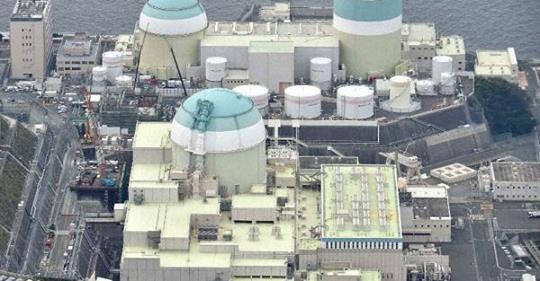
Japan to shut down nuclear plants if counterterror steps not taken in time
Exploitation of foreign workers in Japan’s Fukushima nuclear clean-up
Japan needs thousands of foreign workers to decommission Fukushima plant, prompting backlash from anti-nuke campaigners and rights activists, SCMP Julian Ryall , 26 Apr, 2019
Activists are not convinced working at the site is safe for anyone and they fear foreign workers will feel ‘pressured’ to ignore risks if jobs are at risk
Towns and villages around the plant are still out of bounds because radiation levels are dangerously high

Tokyo Electric Power Co (TEPCO) has announced it will take advantage of the government’s new working visa scheme, which was introduced on April 1 and permits thousands of foreign workers to come to Japan to meet soaring demand for labourers. The company has informed subcontractors overseas nationals will be eligible to work cleaning up the site and providing food services.
About 4,000 people work at the plant each day as experts attempt to decommission three reactors that melted down in the aftermath of the March 2011 Great East Japan Earthquake and the huge tsunami it triggered. Towns and villages around the plant are still out of bounds because radiation levels are dangerously high.
Activists are far from convinced working at the site is safe for anyone and they fear foreign workers will feel “pressured” to ignore the risks if their jobs are at risk.
“We are strongly opposed to the plan because we have already seen that workers at the plant are being exposed to high levels of radiation and there have been numerous breaches of labour standards regulations,” said Hajime Matsukubo, secretary general of the Tokyo-based Citizens’ Nuclear Information Centre. “Conditions for foreign workers at many companies across Japan are already bad but it will almost certainly be worse if they are required to work decontaminating a nuclear accident site.”
Companies are desperately short of labourers, in part because of the construction work connected to Tokyo hosting the 2020 Olympic Games, while TEPCO is further hampered because any worker who has been exposed to 50 millisieverts of radiation in a single year or 100 millisieverts over five years is not permitted to remain at the plant. Those limits mean the company must find labourers from a shrinking pool.
“It has been reported that vulnerable people have been illegally deceived by decontamination contractors into conducting decontamination work without their informed consent, threatening their lives, including asylum seekers under false promises and homeless people working below minimum wage,” the statement said. “Much clean-up depends on inexperienced subcontractors with little scrutiny as the government rushes decontamination for the Olympic Games.”
Cade Moseley, an official of the organisation, said there are “very clear, very definite concerns”.
“There is evidence that foreign workers in Japan have already felt under pressure to do work that is unsafe and where they do not fully understand the risks involved simply because they are worried they will lose their working visas if they refuse,” he said……
As Tokyo Olympics approach, Japan’s futile push to repopulate cleaned-up parts of radioactive areas of Fukushima
|
Japan’s nuclear horror relived as people return to Fukushima’s ghost towns, It is eight years since a devastating tsunami caused three reactors to meltdown at the Fukushima Daiichi nuclear power station on the north-east coast of Japan Mirror UK, Emily RetterSenior Feature Writer, Mirror UK, 29 Apr19
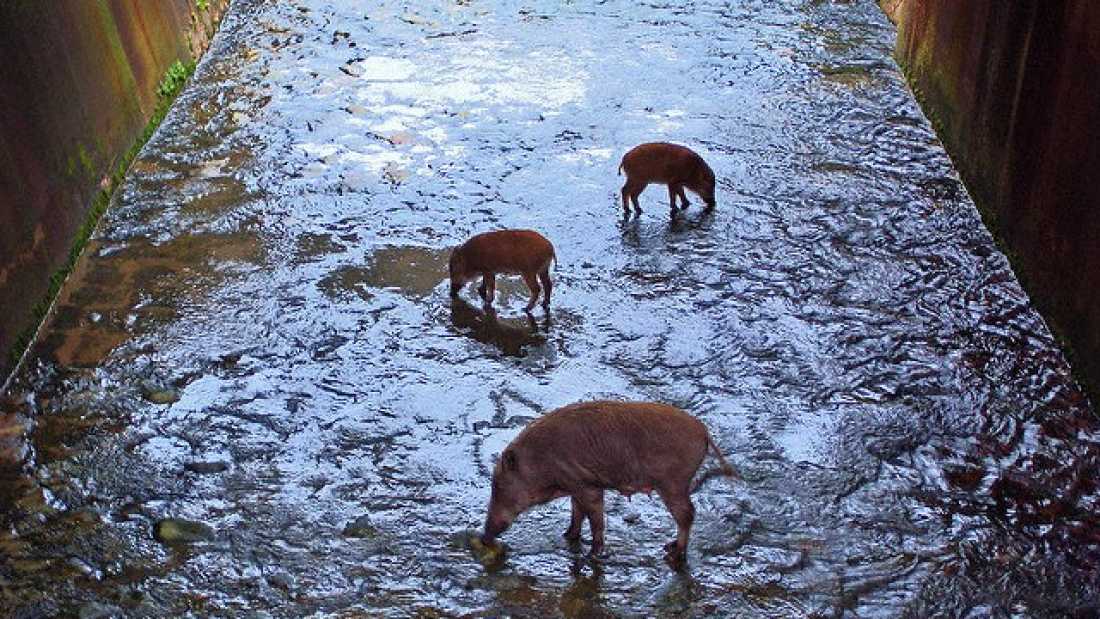
Only wild animals, and the 6ft weeds, which have rampaged through deserted homes and businesses, suffocating once-chatty barbers shops and bustling grocery stores; strangling playgrounds and their rusting rides which lie empty and eerily still. Once unextraordinary, mundane symbols of everyday lives have taken on the appearance of a horror film set in these areas closest to the Fukushima Daiichi nuclear power station on the coast of north-east Japan, eight years after the devastating tsunami which caused a meltdown at three of the plant’s reactors, forcing tens of thousands to flee. The earthquake on March 11, 2011, claimed 19,000 lives, and triggered the world’s largest nuclear disaster since Chernobyl. Radiation leaking in fatal quantities forced 160,000 people to evacuate immediately, and most to this day have not returned to their toxic towns and villages……. The official mandatory evacuation order was lifted, and while reports reveal just 367 residents of Okuma’s original population of 10,341 have so far made the decision to return, and most of the town remains off-limits, the Japanese government is keen this be seen as a positive start to re-building this devastated area……. The Japanese Prime Minister, Shinzo Abe, visited to mark the milestone.
Six Olympic softball games and a baseball game will be staged in Fukushima, the capital of this prefecture, which is free of radiation. The torch relay will even begin at J Village, which was once the base for the crisis response team. Hearteningly, it is now back to its original function, a football training centre. But the truth is, it is mainly older residents who have decided to return to their homes. Seimei Sasaki, 93, explained his family have roots here stretching back 500 years. His neighbourhood in Odaka district now only contains 23 of its original 230. “I can’t imagine what this village’s future looks like,” he admitted. Young families are few and far between – these areas are still a terrifying prospect for parents. But the re-built schools are slowly filling a handful of classroom seats. Namie Sosei primary and middle school, less then three miles from the plant, has seven pupils. One teacher said: “The most frustrating thing for them is that they can’t play team sports.” A sad irony as the Olympics approach. And with so many residents still fearful, so the deadly clean-up operation continues. Work to make the rest of Okuma safe is predicted to take until 2022. The area which was its centre is still a no-go zone. In the years following the disaster, 70,000 workers removed topsoil, tree branches, grass and other contaminated material from areas near homes, schools and public buildings.  Bags of nuclear waste generated after the meltdown of one of Fukushima’s nuclear power plants in 2011 are now stored in the nearby town of Naraha. MUST CREDIT: photo for The Washington Post by Shiho Fukada. A staggering £21billion has been spent in order to make homes safe. Millions of cubic metres of radioactive soil has been packed into bags. By 2021 it is predicted 14million cubic metres will have been generated. The mass scale operation uses thousands of workers. Drivers are making 1,600 return trips a day. But residents understandably want it moved out of Fukushima for good. As yet, no permanent location has agreed to take it, but the government has pledged it will be gone by 2045. At Daiichi itself, the decontamination teams are battling with the build up of 1m tonnes of radioactive water. …..https://www.mirror.co.uk/news/world-news/japans-nuclear-horror-relived-people-14420671 |
|
|

All Japan’s nuclear reactors may shutdown, as regulator is firm on safety measures
 Japan’s nuclear reactors face new near-total shutdown, Regulator refuses to extend deadlines for installing antiterrorism measures Ft.com, Robin Harding in Tokyo APRIL 25, 2019 Japan is heading towards another near-total shutdown of its nuclear reactors after regulators refused to extend deadlines for completing antiterrorism measures. The Nuclear Regulation Authority said it would enforce deadlines that expired next summer for many operating reactors. Electricity companies have said there was almost no chance they would be ready on time. The regulator’s stance is a fresh blow to a nuclear power sector that has never recovered from the Fukushima Daiichi disaster in 2011, when three reactors melted down after a tsunami knocked out their cooling systems. …….Each restarting reactor has its own deadline and a number of them expire next year — but none of the operators are likely to be ready in time. They will therefore have to shut the reactors down. For example, anti-terror work at the Sendai No 1 and No 2 reactors, run by Kyushu Electric, and the Takahama No 3 and No 4 reactors, run by Kansai Electric, must be completed next year.
……. Japan has struggled to restart its reactors in the face of strong public opposition and many are still offline. As of March 15, nine out of Japan’s 57 reactors had restarted. Several others have restarted only to shut down again because of injunctions issued by local courts.
……. the national government has not pushed for restarts, leaving it in the hands of regulators, utilities, courts and local politicians. The long-term future of the sector is therefore in doubt. https://www.ft.com/content/1b2c395e-6724-11e9-9adc-98bf1d35a056
Japan now has 9 operating nuclear reactors, all may close, due to inadequate safety measures
Japan nuclear plants threatened with closure over antiterrorism measures, Jakarta Post, The Japan News/Asia News Network, Tokyo, Japan / Fri, April 26, 2019 The Nuclear Regulation Authority has decided to order power companies to shut down nuclear reactors if they have not had certain facilities, legally required as antiterrorism measures, completed by specified deadlines.Nine reactors are currently online at five nuclear plants across the nation, and these are unlikely to have the necessary facilities completed before their deadlines. Consequently, it is possible that, one by one, these reactors will have to suspend operations.
NRA Chairman Toyoshi Fuketa emphasized the nuclear watchdog’s tough stance at a press conference Wednesday.
Reactors will be considered “nonconforming with required standards at the point the deadline passes,” Fuketa said.
“Overlooking any state of incompatibility would, in light of the authority’s position, be totally unacceptable,” he said.
The operators are required to build facilities from which nuclear reactors can be remotely controlled in the event of an emergency, such as an aircraft being deliberately flown into the plants. Installing such a facility became mandatory under new regulations introduced after the March 2011 accident at Tokyo Electric Power Company Holdings, Inc.’s Fukushima No. 1 nuclear power plant.
The Nuclear Reactor Regulation Law stipulates nuclear plants that do not meet certain conditions can be suspended from operating, but no decision had been made on how authorities would handle reactors currently online if the deadline for completing the emergency facility passes…….
Fuketa lobbed some stinging criticism at the utilities for the current situation.
“Not only were they overly optimistic about the construction work schedules, but they also were too optimistic about the reaction from the regulatory authorities,” Fuketa said. “They were grossly mistaken if they thought they might find a way through by asking for an extension when the deadline is drawing close.”
n a comment issued the same day, Kyushu Electric, Kansai Electric and Shikoku Electric said they would “continue making maximum efforts” to complete the facilities as soon as possible.
Profits could be hit
Halting the operation of nuclear reactors, which generate electricity at relatively low cost, could harm the earnings of power utilities and strike a major blow to their business performance.
Kyushu Electric is the utility facing the shortest deadline until it might have to switch off a reactor. Kyushu Electric’s No. 1 unit at the Sendai nuclear power plant was restarted in October 2015, which returned the company to profitability. Unplugging this reactor again would significantly affect the utility’s business performance……..https://www.thejakartapost.com/news/2019/04/26/japan-nuclear-plants-threatened-with-closure-over-antiterrorism-measures-.html
 |
ReplyForward
|
Japan’s nuclear regulators not impressed by nuclear facilities’ flimsy excuses about safety
VOX POPULI: Flimsy excuses by nuclear plant operators are unacceptable, Vox Populi, Vox Dei is a daily column that runs on Page 1 of The Asahi Shimbun., April 26, 2019 …………. three operators of nuclear power plants, seeking an extension of a very different kind of deadline, found the Nuclear Regulation Authority to be quite unforgiving.Kansai Electric Power Co., Shikoku Electric Power Co. and Kyushu Electric Power Co. were initially required to install anti-terror facilities against airborne attacks at their nuclear power plants by July 2018.
Having already failed to meet that deadline, the utilities on April 17 asked the government’s nuclear watchdog to extend it by another 12 to 30 months, but the plea was rejected on April 24.
The utilities have insisted in unison that installing facilities to remotely cool nuclear reactors would require the time-consuming work of drilling through mountains.
They probably thought this “excuse” was good enough to sway the government into extending the deadline.
No such luck.
The Sendai nuclear power plant in Kagoshima Prefecture will likely be shut down as a result, according to the NRA.
The utilities must be underestimating the odds of any of their nuclear power plants being targeted for a terrorist attack.
Have they already forgotten that North Korea was repeatedly test-launching its missiles until recently? And what about the Fukushima disaster of 2011, which occurred because virtually nobody wanted to consider the possibility of a mega-quake triggering a tsunami?
The “deadline” book mentioned above also contains an anecdote about author Akira Yoshimura (1927-2006), a stickler for punctuality who always handed in his manuscripts early, claiming he had a tendency to start panicking as the deadline approached. And he always attached a note to his editor, apologizing, in effect, for jumping the gun.
I guess it’s useless to expect the three utilities to emulate Yoshimura. http://www.asahi.com/ajw/articles/AJ201904260032.html
Safety and language problems, as Tepco plans to bring in foreign workers for Fukushima clean-up

|
Editorial: Safety, language measures needed for foreigners to work at Fukushima plant https://mainichi.jp/english/articles/20190424/p2a/00m/0na/004000c 24 Apr 19, Tokyo Electric Power Co. (TEPCO) is preparing to bring in foreign workers with special technical skills to join decommissioning work on the disaster-stricken Fukushima Daiichi nuclear plant.
At present, an average of 4,000 employees of TEPCO and cooperating firms work at the facility every day. Laws and regulations stipulate that workers’ radiation exposure must be limited to 50 millisieverts in a single year, and 100 millisieverts over five years. No one is allowed to stay at the plant once they hit one of these caps, so waves of new employees must be brought in to maintain worker numbers. Decommissioning the Daiichi plant, which suffered a triple core meltdown in the wake of the March 2011 Great East Japan Earthquake and tsunami, is expected to take 30 to 40 years. Whether the companies involved can sustain sufficient staffing levels will be one factor that determines the success or failure of the project. When it comes to tapping foreign labor to make up the required numbers, the Justice Ministry — which has jurisdiction over Japan’s immigration system — has already declined to approve sending foreign technical intern trainees to work at the plant. One of the core tenets of the foreign technical trainee program is that the job placements must provide the trainees with skills they can use in their home countries, and working to decommission a devastated nuclear plant did not fit the bill. TEPCO is now turning its eyes to foreign workers with Category 1 work visas, one of the new residency statuses launched on April 1 and aimed at those with certain skills and experience. Technical trainees with three years’ experience in Japan can obtain this visa without a skills exam. However, there is a real risk of radiation exposure at the Daiichi plant, and the terminology used on-site is highly technical, making for a difficult environment. TEPCO and its partners must not treat the new foreign worker system as an employee pool they can simply dip into. The workers’ Japanese level is particularly a cause for worry. To obtain a Category 1 visa, applicants must speak Japanese at only a “daily conversational” level. However, anyone working at the Daiichi site must understand a slew of technical terms related to radiation and other facets of the decommissioning process, meaning a very high level of Japanese is absolutely indispensable. If foreign employees begin working there without having learned the necessary terminology, we believe there is a real risk they could be ordered to do jobs that exposed them to radiation. TEPCO has said it is up to its project partners whether they employ Category 1 foreign workers. In fact, the majority of people at Fukushima Daiichi are employed by one of the firms that make up the layers upon layers of subcontractors working on the decommissioning. Nevertheless, as the company heading the project, TECPO has a responsibility to oversee the conditions of every worker, right down to the bottom of the pyramid. Furthermore, if a foreign worker has been exposed to radiation overseas, that dose must be added to their sievert count at the plant. However, it is up to the worker to report any previous radiation exposure, which can make it difficult to properly track and manage their doses. If a worker develops a radiation-related illness after returning to their home country, will they be able to smoothly apply for workers’ accident compensation? This is also a serious worry. If Japan is to accept foreign workers to help decommission the Fukushima Daiichi plant, it is absolutely essential to create the appropriate environment, including measures to boost their Japanese skills and strengthen radiation exposure management. |
|
1 This Month
Chernobyl: The Lost Tapes – A good documentary on Chernobyl on SBS available On Demand for the next 3 weeks– https://www.sbs.com.au/ondemand/tv-program/chernobyl-the-lost-tapes/2352741955560

of the week–London Campaign for Nuclear Disarmament

Tell the Ukrainian Government to Drop Prosecution of Peace Activist Yurii Sheliazhenko
To see nuclear-related stories in greater depth and intensity – go to https://nuclearinformation.wordpress.com
-
Archives
- April 2026 (139)
- March 2026 (251)
- February 2026 (268)
- January 2026 (308)
- December 2025 (358)
- November 2025 (359)
- October 2025 (376)
- September 2025 (257)
- August 2025 (319)
- July 2025 (230)
- June 2025 (348)
- May 2025 (261)
-
Categories
- 1
- 1 NUCLEAR ISSUES
- business and costs
- climate change
- culture and arts
- ENERGY
- environment
- health
- history
- indigenous issues
- Legal
- marketing of nuclear
- media
- opposition to nuclear
- PERSONAL STORIES
- politics
- politics international
- Religion and ethics
- safety
- secrets,lies and civil liberties
- spinbuster
- technology
- Uranium
- wastes
- weapons and war
- Women
- 2 WORLD
- ACTION
- AFRICA
- Atrocities
- AUSTRALIA
- Christina's notes
- Christina's themes
- culture and arts
- Events
- Fuk 2022
- Fuk 2023
- Fukushima 2017
- Fukushima 2018
- fukushima 2019
- Fukushima 2020
- Fukushima 2021
- general
- global warming
- Humour (God we need it)
- Nuclear
- RARE EARTHS
- Reference
- resources – print
- Resources -audiovicual
- Weekly Newsletter
- World
- World Nuclear
- YouTube
-
RSS
Entries RSS
Comments RSS
 nuclear-news