Hundreds of evacuees and their children continue to suffer from effects of Fukushima nuclear meltdown
‘Fukushima suffering continues’ https://www.churchtimes.co.uk/articles/2019/21-june/news/world/fukushima-suffering-continues 
by HATTIE WILLIAMS, 21 JUNE 2019 Eight years since the disaster, NSKK calls for nuclear-free world EIGHT years after the Fukushima nuclear disaster, hundreds of evacuees and their children continue to suffer from debilitating conditions, Anglican priests told an International Forum for a Nuclear-Free World held in Sendai, Japan, last week.
The Tohoku earthquake, in 2011, triggered a tsunami which caused explosions at the Fukushima Daiichi Nuclear Power Plant, in Okuma, leading to widespread radioactive contamination and serious health and environmental effects (News, 25 March 2011).
The disaster is estimated to have caused the deaths of about 1600 people out of the 300,000 who were evacuated from the area
The forum was organised by the Nippon Sei Ko Kai (NSKK) — the Anglican Communion in Japan — whose General Synod passed a resolution in 2012 calling for an end to nuclear-power plants. A joint statement from the forum, due next month, is expected to encourage churches to join the call for a worldwide ban on nuclear energy, the Anglican News Service reports.
The chair of the forum’s organising committee, Kiyosumi Hasegawa, said: “We have yet to see an end to the damage done to the people and natural environment by the meltdown of TEPCO’s Fukushima Daiichi Nuclear Power Plant.
“This man-made disaster will haunt countless people for years to come. We still see numerous people who wish to go back to their home towns, but are unable to. We also have people who have given up on ever going home.”
The week-long conference at Christ Church Cathedral, Sendai, was attended by bishops, clergy, and lay representatives from each NSKK diocese, as well as representatives from the US Episcopal Church, USPG, the Episcopal Church of the Philippines, the diocese of Taiwan, and the Anglican Church of Korea.
The general secretary of the Sendai Christian relief network Touhoku HELP, Dr Naoya Kawakami, whose church was affected by the tsunami, said: “I have been more than 700 times to meet with more than 180 mothers and about 20 fathers, all of whom have seen abnormalities in their children since 2011. . . Thyroid cancer has been found in more than 273 children, and many mothers are in deep anxiety.”
An NSKK priest, the Revd John Makito Aizawa, said: “Both religiously and ethically, we cannot allow nuclear-power plants to continue running. They produce deadly waste, which we have no way of processing into something safe. More than 100,000 years are necessary for the radiation of such deadly waste to diminish to the level that it was in the original uranium. This alone is a strong enough reason to prohibit nuclear-power plants.”
The partners-in-mission secretary for NSKK, Paul Tolhurst, said: “Driving past the power station and seeing the ghost town around us as the Geiger-counter reading kept going up is something I won’t forget. It was like the town time forgot: they still seem to be living the incident, while the rest of Japan has moved on.”
The forum’s statement is expected to call for a goal of conversion to renewable sources of energy, and set out ways in which a network can be built to take forward denuclearisation.
No Damages to Nuclear Plants after 6.8 Magnitude Earthquake ‘according’ to TEPCO and Trade Ministry

Japan: 6.8 magnitude earthquake – bungled report causes unnecessary nuclear scare
|
QUAKE SHOCK Japan earthquake – Tsunami warning lifted after 6.8-magnitude tremor strikes near nuclear power plant and sparks power cuts, The Sun By Jon Lockett18 Jun 2019 JAPAN has lifted an emergency tsunami warning after a 6.8-magnitude undersea earthquake struck near a huge nuclear power plant.Thousands of families lost electrical power and bullet train services were suspended on Tuesday, but there were no reports of serious injuries or damage.
Initial reports of waves crashing against the shore held chilling echoes of the Fukushima nuclear plant disaster – sparked just 80 miles away after it was hit by monster waves. Tsunami warnings were issued for the Yamagata, Niigata and Ishikawa regions. But only a minor swelling of the sea was observed in several cities about half an hour after the earthquake struck, 53 miles northeast of the island of Honshu……. Bullet train service was suspended in parts of the region because of power outages and for safety checks. About 9,000 households in Yamagata and Niigata lost power, according to Tohoku Electric Power Co. All seven reactors at the Kashiwazaki-Kariwa nuclear plant in Niigata were off line and no abnormalities were reported. Two other nuclear power plants in the affected region were also intact, according to the Nuclear Regulation Authority…….https://www.thesun.co.uk/news/9318581/japan-earthquake-tsunami-warning/ |
|
Get your fax right: Bungling officials spark Japan nuclear scare, https://phys.org/news/2019-06-bungling-japan-nuclear.html Bungling Japanese officials sparked a nuclear scare after a violent, late-night earthquake by ticking the wrong box on a fax form—inadvertently alerting authorities to a potential accident.
Employees of the Tokyo Electric Power Company (TEPCO), operator of the Kashiwazaki-Kariwa nuclear plant in Niigata—where the 6.4-magnitude quake struck—faxed a message to local authoritiesseeking to allay any fears of damage.
But TEPCO workers accidentally ticked the wrong box on the form, mistakenly indicating there was an abnormality at the plant rather than there was no problem.
One official filled out the form, and it was checked by a colleague before being sent.
Many Japanese government departments and companies still rely on fax machines for communication.
TEPCO’s Tokyo headquarters noticed the mistake, and a correction was published 17 minutes after the original release, the firm’s Tokyo-based spokesman told AFP.
Kashiwazaki city mayor Masahiro Sakurai saw the incorrectly filled-out form and immediately directed staff to check what was happening.
The mayor hit out at TEPCO, which also operated the crippled Fukushima nuclear plant—site of the worst nuclear accident since Chernobyl—when an earthquake and tsunami struck in 2011.
“When a real earthquake is happening, not a drill, this is a massive error,” Sakurai told local reporters, according to the Mainichi Shimbun daily.
“It is extremely poor on their part to make errors in the most important and basic information at a time of crisis,” he said, according to the Asahi Shimbun newspaper.
TEPCO apologised and vowed not to make the same mistake.
The late-night quake prompted a tsunami advisory, but only small ripples of 10 centimetres (three inches) were recorded.
The government said up to 26 people were injured—two seriously, although not life-threatening.
AECOM signs agreement with Toshiba to perform nuclear decommissioning services in Japan

NRA safety license for Sendai reactors legal, Fukuoka court finds, dismissing volcano risk lawsuit

G20: Japan proposes framework for nuclear waste,
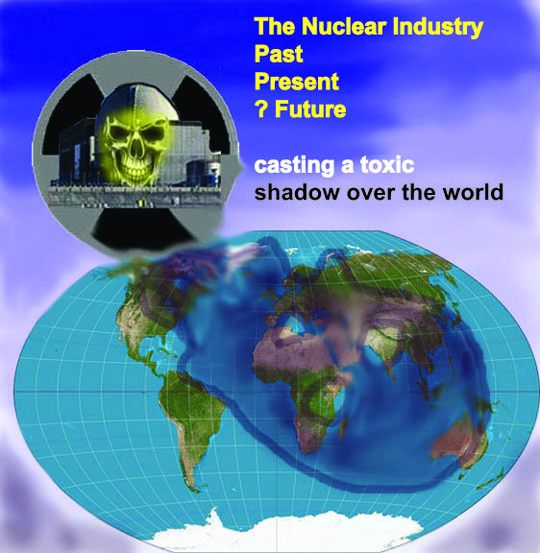 G20: Japan proposes framework for nuclear waste, https://www3.nhk.or.jp/nhkworld/en/news/20190616_14/ Japan has used the G20 meeting to propose setting up an international framework for cooperative research into how to dispose of high-level radioactive waste from nuclear power plants.
The Group of 20 energy and environment ministers are in the town of Karuizawa, Nagano Prefecture, for the second and final day of their meeting.
Japan’s industry minister, Hiroshige Seko, chaired a session on energy in the morning. He brought up the idea of the international framework.
He said it is important to share experience and knowhow to accelerate efforts to solve a common issue for countries that use nuclear energy.
Many countries have found it difficult to draw up concrete plans for final waste disposal. Only Sweden and Finland have decided on disposal sites.
Many nations, including Japan, have not even begun studying potential sites.
The proposal calls for countries to share what they are doing regarding the selection of disposal sites and to promote cooperation and the exchange of human resources.
The first meeting on the framework is planned for October in France.
Ministers are expected to issue a joint statement on Sunday after the conclusion of the G20 meeting.
Japan’s restarted nuclear reactors could be forced to shut down for safety measures to be implemented
World Nuclear News 13th June 2019 Nuclear power reactors in Japan that have resumed operation could be forced
to temporarily shut down again if back-up safety measures are not in place
by specified deadlines under new rules approved by the country’s Nuclear
Regulation Authority (NRA). Operators of restarted units have already said
they expect delays in the completion of such facilities.
http://www.world-nuclear-news.org/Articles/Safety-upgrade-delays-could-take-Japanese-units-of
Prime Minister Shinzo Abe pretending that all is well at Fukushima, using this lie to promote Olympics.
Abe pushing idea that Fukushima nuclear disaster is ‘under control’, http://www.asahi.com/ajw/articles/AJ201906110001.html THE ASAHI SHIMBUN, 10 June 19 Without special protection against radiation, Prime Minister Shinzo Abe stood on elevated ground about 100 meters from the three melted-down reactors at the Fukushima No. 1 nuclear power plant.
“I was finally able to see the view just wearing a normal suit without having to wear protective clothing and a mask (for radiation),” he said on April 14 after hearing explanations from Tokyo Electric Power Co. officials. “The decommissioning work has been making progress in earnest.”
An act of bravado, perhaps. But it was more likely one of the ways Abe and his government want to show that the Fukushima disaster is, as he famously said, “under control.”
Progress has been made, albeit slowly, for the monumental task of decommissioning TEPCO’s crippled nuclear plant.
But radiation levels in certain areas of the plant are still lethal with extended exposure. The problem of storing water contaminated in the reactors continues.
And only recently was TEPCO able to make contact with melted nuclear fuel in the reactors through a robot. The means to extract the fuel has yet to be decided.
However, the government keeps touting progress in the reconstruction effort, using evacuee statistics, which critics say are misleading, to underscore its message.
Abe’s previous visit to the nuclear plant was in September 2013.
“When I conducted an inspection five years ago, I was completely covered in protective gear,” he said at a meeting with decommissioning workers in April. “This time I was able to inspect wearing a normal suit.”
Officials in Abe’s circle acknowledged that they wanted to “appeal the progress of reconstruction” by letting the media cover the prime minister’s “unprotected” visit to the site.
His visit in a business suit was possible largely because the ground was covered in mortar and other materials that prevent the spread of radioactive substances, not because decommissioning work has lowered radiation levels as a whole.
The radiation level at the elevated inspection ground still exceeds 100 microsieverts per hour, making it dangerous for people who remain there for extended periods.
Abe’s inspection ended in six minutes.
The prime minister raised eyebrows, particularly in Fukushima Prefecture, in 2013 when he gave a speech to promote Tokyo’s bid to host the 2020 Summer Olympics.
Concerning the Fukushima nuclear plant, he told International Olympic Committee members, “Let me assure you, the situation is under control.”
An hour before he inspected the plant in April, Abe attended the opening ceremony of the new government building of Okuma, one of the two towns that host the nuclear plant.
The ceremony followed the lifting of an evacuation order for part of the town on April 10.
“We were able to take a step forward in reconstruction,” Abe said.
The central government uses the number of evacuees to show the degree of progress in reconstruction work.
In April 2018, Abe said in the Diet that the lifting of evacuation orders has reduced the number of evacuees to one-third of the peak.
According to the Reconstruction Agency, the number of people who evacuated in and outside of Fukushima Prefecture, including those who were under no orders to leave, peaked at about 160,000. But the initial evacuation orders for 11 municipalities in Fukushima Prefecture have been gradually lifted, and the agency now puts the total number at about 40,000.
About 71,000 people were officially registered as residents of areas that were ordered to evacuate. Now, only about 11,000 people live in those zones.
This means that about 60,000 people have not returned to the homes where they were living before the nuclear accident unfolded in March 2011.
The gap of 20,000 can be attributed to how the agency classifies or declassifies evacuees.
NOT COUNTED AS EVACUEES
The Reconstruction Agency sent a notice in August 2014 to all prefectures that have counted the number of evacuees.
It defined “evacuees” as people who moved to different places because of the nuclear disaster and have the “will” to return to their original homes.
The notice also said that if it is difficult to perceive their “will,” they can be regarded as people who have ended their evacuation if they bought new homes or made arrangements for new accommodations.
Based on the notice, people in Fukushima Prefecture who have bought new homes during their evacuation or settled down in public restoration housing or disaster public housing are regarded as living “stable” lives and are not counted as evacuees.
“It is not a problem because we continue supporting them even if they are removed from the evacuee statistics,” a prefectural government official said.
An official of the Reconstruction Agency said, “The judgment is made by each prefecture, so we are not in a position to say much.”
However, the prefecture has not confirmed all evacuees’ will to return to their homes. In addition, those who are removed from the list of evacuees are not informed of their new status.
Many people bought homes in new locations during their prolonged evacuations although they still hope to return to their hometowns in the disaster area.
Yumiko Yamazaki, 52, has a house in Okuma in a “difficult-to-return” zone.
But because she moved to public restoration housing outside of the town, she is not considered an evacuee by the agency and the prefecture.
“I had to leave my town although I didn’t want to,” Yamazaki said. “It is so obvious that the government wants to make the surface appearance look good by reducing the number of evacuees.”
“I can’t allow them to try to pretend the evacuation never happened,” Yamazaki said.
Critics say the central government’s emphasis of positive aspects and the downplaying of inconvenient truths in the evacuee statistics have much in common with its response to the suspected nepotism scandals involving school operator Moritomo Gakuen and the Kake Educational Institution.
Japan’s government plans more nuclear energy, and of course increased pile of plutonium wastes
|
Japan plans carbon emission cuts, more nuclear energy http://www.asahi.com/ajw/articles/AJ201906100044.html
THE ASSOCIATED PRESS, June 10, 2019 Japan is calling for further efforts to cut its carbon emissions by promoting renewable energy while also pushing nuclear power despite its 2011 Fukushima nuclear plant disaster. An energy policy paper, adopted by the Cabinet on Friday, said Japan faces the urgent task of reducing carbon emissions by utilities that rely heavily on fossil fuel plants to make up for shortages of cleaner nuclear energy. The call comes as nuclear reactors around Japan are slowly being restarted–despite lingering anti-nuclear sentiment since the Fukushima crisis–after being shut down to meet tougher safety standards. Japan wants renewable energy’s share in 2030 to grow to 22-24 percent of the country’s power supply from 16 percent, while pushing nuclear energy to 20-22 percent from just 3 percent in 2017. The report said the cost of renewables also needs to be reduced. Japanese utilities rely more heavily on fossil fuel plants than those in the United States and Europe, the paper said. Coal and natural gas accounted for 74 percent of Japan’s energy supply. Nuclear energy made up about one-third of Japan’s energy supply before 2011, when a massive earthquake and tsunami destroyed the Fukushima No. 1 nuclear power plant’s cooling systems, sending three of its reactors into meltdowns. Despite the government’s renewed ambitions for nuclear power, reactor restarts are proceeding slowly as nuclear regulators spend more time on inspections under the stricter post-Fukushima standards, while utility companies have opted to scrap aged reactors instead of investing in additional safety measures. Nearly half of the 54 reactors in Japan have been designated for decommissioning, and only nine have resumed operation since the accident. The slow reactor restarts have added to Japan’s large plutonium stockpile from spent fuel. Japan has resorted to reducing the 47-ton stockpile by burning plutonium in conventional reactors after the country’s fuel recycling program stalled. The plutonium is currently enough to produce about 6,000 atomic bombs. But the amount is not decreasing, and experts are now calling for more drastic steps to reduce the stockpile amid criticism that it makes Tokyo’s calls for nuclear non-proliferation less credible. About 37 tons of spent Japanese fuel is being stored in France and Britain where it has been reprocessed since Japan lacks the capability to do it at home. Japan’s main reprocessing plant at Rokkasho, where plutonium and spent fuel are stored but reprocessing has not started, says the 10 tons stored in Japan is under close monitoring by the International Atomic Energy Agency and there is no risk of proliferation. In a recommendation to the government this week, the Sasakawa Peace Foundation, a Japanese policy research group, said Japan should drastically reduce the stockpile to the amount just enough for 2-3 years and keep it under IAEA oversight to ensure the international community of Tokyo’s commitment to peaceful atomic use. The recommendation by a foundation panel goes far beyond government guidelines last year that put the cap at 47 tons, with a pledge to eventually reduce it at an unspecified rate. |
Pro-nuclear incumbent Shingo Mimura wins fifth term in Aomori gubernatorial election

Japan to toughen screenings of seafood imports from S. Korea

Not a single watt of electricity, but still 1 trillion yen in basic revenue
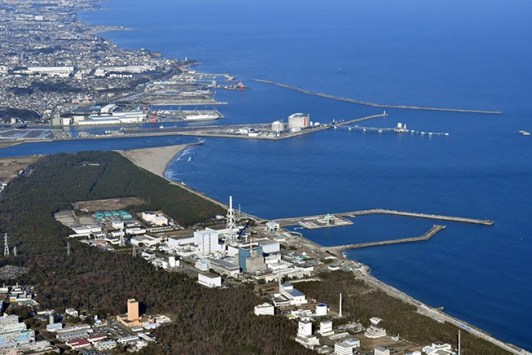
Japanese parish priests shared stories of suffering from victims of the Fukushima nuclear disaster
The forum, organised by the Nippon Sei Ko Kai (NSKK) – the Anglican Communion in Japan – follows the NSKKs General Synod resolution in 2012 calling for an end to nuclear power plants and activities to help the world go nuclear free.
The disaster in 2011 followed a massive earthquake and tsunami which caused a number of explosions in the town’s coastal nuclear power station and led to widespread radioactive contamination and serious health and environmental effects. The Chair of the forum’s organising committee, Kiyosumi Hasegawa, said: “We have yet to see an end to the damage done to the people and natural environment by the meltdown of TEPCO’s Fukushima Daiichi Nuclear Power Plant. I do think this man-made disaster will haunt countless people for years to come. We still see numerous people who wish to go back to their hometowns but are unable to. We also have people who have given up on ever going home.”
One pastor, Dr Naoya Kawakami, whose church was affected by the tsunami and is the General Secretary of the Sendai Christian Alliance Disaster Relief Network, Touhoku HELP, explained how he had supported sufferers in the aftermath and heard from priests supporting the survivors. He said: “I have been more than 700 times to meet with more than 180 mothers and about 20 fathers, all of whom have seen abnormalities in their children since 2011. . . Thyroid cancer has been found in more than 273 children and many mothers are in deep anxiety.
“The more the situation worsens, the more pastors become aware of their important role. The role is to witness . . . pastors who have stayed in Fukushima with the ‘voiceless survivors’ are showing us the church as the body of Jesus’s resurrection, with wounds and weakness . . . sufferers are usually in voiceless agony and most people never hear them.”
The forum was attended by bishops, clergy and lay representatives from each diocese, together with representatives from the US-based Episcopal Church, USPG, the Episcopal Church of the Philippines, the Diocese of Taiwan, the Anglican Church of Korea, and also ecumenical guests. International experts took part, along with local clergy who shared individual stories from those directly affected by the disaster……….https://www.anglicannews.org/news/2019/06/voices-of-fukushima-power-plant-explosion-victims-strengthens-call-to-ban-nuclear-energy.aspx
Japan’s Olympic torch relay to start in Fukushima – even children are invited to carry it
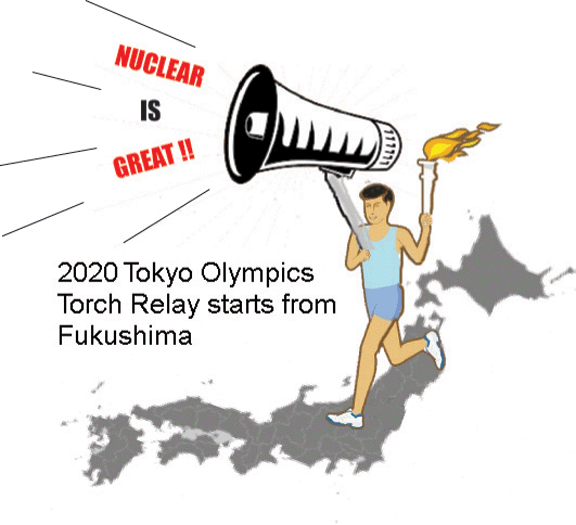
Tokyo 2020 reveals Olympic Torch route will begin in Fukushima, Inside the Games, By Matthew Smith, 1 June 2019
The Tokyo 2020 Organising Committee has revealed the Olympic Torch Relay route, which will take in many of Japan’s most historic and famous sites – and also areas touched by tragedy.
The Flame will be taken all over Japan inside 121 days, culminating in the Olympic Games next summer.
It will begin the final leg of its journey on March 26, 2020 from the J-Village National Training Centre in Fukushima, the training facility of the Japan football team.
The Flame will travel to all 47 prefectures of Japan, with the Organising Committee claiming around 98 per cent of Japan’s population live within one hour’s travel of the proposed route.
The route will take in World Heritage Sites such as Mount Fuji and Itsukushima Shrine, but will also visit areas affected by recent disasters.
Fukushima has been chosen as a start point after the Tohoku region was struck by an earthquake and tsunami in 2011, which also caused a nuclear incident at the Fukushima Daiichi Nuclear Power Plant.
As well as revealing the route, Tokyo 2020 also unveiled the Torchbearer uniforms and how members of the public could apply to take part in the Relay.
The uniform features the Relay emblem on the front and the Olympic symbol on the back.
The most notable design feature is a diagonal red stripe, echoing the sash used in place of batons in Ekiden, Japan’s historic long-distance relays…….
“In Japan, these Games are being referred to as ‘the Recovery Games’ and so the Olympic Flame will start its journey from an area affected by recent natural disasters……
Games organisers say the Olympic Torch Relay will feature around 10,000 Torchbearers including men, women and children of a wide range of nationalities and ages. People from all over the world are encouraged to apply and can do so here……..https://www.insidethegames.biz/articles/1079973/tokyo-2020-reveals-olympic-torch-route-will-begin-in-fukushima
Hiroshima and Nagasaki protest U.S. subcritical nuclear test
The United States conducted a subcritical nuclear test in Nevada on Feb. 13, according to a May 24 announcement by the U.S. Lawrence Livermore National Laboratory.
Yuzaki called the test “extremely regrettable.”
He said, “It destroys the hopes of Hiroshima residents who strongly wish the abolition of nuclear weapons.”
Trump arrived in Japan as state guest on May 25. He will wind up his visit on May 28.
Nagasaki Governor Hodo Nakamura, along with prefectural assembly chairman Mitsuyuki Segawa, also denounced the subcritical nuclear test.
They sent protest letters to U.S. Ambassador William Hagerty on May 26.
1 This Month



26 September – International Day for the Total Elimination of Nuclear Weapons


PLEASE OPPOSE HR 8255 AND S.3639 – bills would accelerate satellite deployment, with no environmental review or safeguards – https://ncstd5li.quorum.us/campaign/169331/
To see nuclear-related stories in greater depth and intensity – go to https://nuclearinformation.wordpress.com
-
Archives
- September 2026 (269)
- August 2026 (330)
- July 2026 (355)
- June 2026 (287)
- May 2026 (306)
- April 2026 (356)
- March 2026 (251)
- February 2026 (267)
- January 2026 (308)
- December 2025 (358)
- November 2025 (359)
- October 2025 (375)
-
Categories
- 1
- 1 NUCLEAR ISSUES
- business and costs
- climate change
- culture and arts
- ENERGY
- environment
- health
- history
- indigenous issues
- Legal
- marketing of nuclear
- media
- opposition to nuclear
- PERSONAL STORIES
- politics
- politics international
- Religion and ethics
- safety
- secrets,lies and civil liberties
- spinbuster
- technology
- Uranium
- wastes
- weapons and war
- Women
- 2 WORLD
- ACTION
- AFRICA
- Atrocities
- AUSTRALIA
- Christina's notes
- Christina's themes
- culture and arts
- Events
- Fuk 2022
- Fuk 2023
- Fukushima 2017
- Fukushima 2018
- fukushima 2019
- Fukushima 2020
- Fukushima 2021
- general
- global warming
- Humour (God we need it)
- Nuclear
- RARE EARTHS
- Reference
- resources – print
- Resources -audiovicual
- Weekly Newsletter
- World
- World Nuclear
- YouTube
-
RSS
Entries RSS
Comments RSS

