New environment minister says Japan should stop using nuclear power
September 12, 2019
TOKYO (Reuters) – Japan’s newly installed environment minister, Shinjiro Koizumi, wants the country to close down nuclear reactors to avoid a repeat of the Fukushima catastrophe in 2011.
The comments by the son of former prime minister Junichiro Koizumi, himself an anti-nuclear advocate, are likely to prove controversial in the ruling Liberal Democratic Party, which supports a return to nuclear power under new safety rules imposed after Fukushima.
“I would like to study how we will scrap them, not how to retain them,” Shinjiro Koizumi said at his first news conference late on Wednesday after he was appointed by Prime Minister Shinzo Abe.
Japan’s nuclear regulator is overseen by Koizumi’s ministry.
Three reactors at the Fukushima Daiichi station run by Tokyo Electric Power melted down after being hit by a massive earthquake and tsunami in March 2011, spewing radiation that forced 160,000 people to flee, many never to return..
Most of Japan’s nuclear reactors, which before Fukushima supplied about 30 percent of the country’s electricity, are going through a re-licensing process under new safety standards imposed after the disaster highlighted regulatory and operational failings.
Japan has six reactors operating at present, a fraction of the 54 units before Fukushima. About 40 percent of the pre-Fukushima fleet is being decommissioned.
Shinjiro Koizumi’s father, a popular prime minister now retired from parliament, became a harsh critic of atomic energy after the Fukushima nuclear crisis.
Japan should scrap nuclear reactors after Fukushima, says new environment minister
Shinjiro Koizumi says: ‘We will be doomed if we allow another accident to occur’
September 12, 2019
Japan’s new environment minister has called for the country’s nuclear reactors to be scrapped to prevent a repeat of the Fukushima nuclear disaster.
Shinjiro Koizumi’s comments, made hours after he became Japan’s third-youngest cabinet minister since the war, could set him on a collision course with Japan’s pro-nuclear prime minister, Shinzo Abe.
“I would like to study how we will scrap them, not how to retain them,” Koizumi, 38, said. “We will be doomed if we allow another nuclear accident to occur. We never know when we’ll have an earthquake.”
Koizumi faced an immediate challenge from the new trade and industry minister, who said that ridding Japan of nuclear power was “unrealistic”.
“There are risks and fears about nuclear power,” Isshu Sugawara told reporters. “But ‘zero-nukes’ is, at the moment and in the future, not realistic.”
Japan’s government wants nuclear power to comprise 20% to 22% of the overall energy mix by 2030, drawing criticism from campaigners who say nuclear plants will always pose a danger given the country’s vulnerability to large earthquakes and tsunamis.
Abe, however, has called for reactors to be restarted, arguing that nuclear energy will help Japan achieve its carbon dioxide emissions targets and reduce its dependence on imported gas and oil.
All of Japan’s 54 reactors were shut down after a giant tsunami caused a triple meltdown at the Fukushima Daiichi nuclear power plant in March 2011.
Nuclear power accounted for about 30% of Japan’s energy production before the disaster. Today, just nine reactors are back in operation, having passed stringent safety checks introduced after the Fukushima meltdown.
But the government is unlikely to meet its target of 30 reactor restarts by 2030 amid strong local opposition and legal challenges.
Although he faces potential opposition from inside the cabinet, Koizumi should at least receive the backing of his father, Junichiro Koizumi, a former prime minister who has emerged as a vocal opponent of nuclear power.
While Japan debates the future of nuclear energy, the younger Koizumi, who has been tipped as a future prime minister, is now at the centre of a controversy over the future of more than a million tonnes of contaminated water stored at Fukushima Daiichi.
On Tuesday, his predecessor as environment minister said the plant’s operator, Tokyo Electric Power, had no choice but to dilute the water and release it into the Pacific ocean rather than store it indefinitely.
The prospect of dumping the water into the sea has angered local fishermen and drawn protests from neighbouring South Korea.
10 Sept 2019 | Japan’s environment minister announced Tuesday that the country will have to dump radioactive water from the Fukushima power plant into the ocean because it is running out of space, Reuters reported. According to Reuters, Tokyo Electric, or Tepco, has collected more than 1 million tonnes of contaminated water from the cooling pipes used to keep fuel cores from melting since the plant was crippled by an earthquake and tsunami in 2011. “The only option will be to drain it into the sea and dilute it,” the minister, Yoshiaki Harada, told a news briefing in Tokyo…The government is awaiting a report from an expert panel before making a final decision on how to dispose of the radioactive water. (The Hill, Reuters)
After Fukushima, Japan’s nuclear power fleet went offline with plans to restart only when safety concerns could be addressed. On his first day at the office, the new environment minister has said he has no intention of ever restarting the reactors. The move could put Shinjiro Koizumi at loggerheads with PM Shinzo Abe, a vocal proponent of nuclear.
SEPTEMBER 12, 2019 MARIAN WILLUHNOn his final day in office, Japanese environment minister Yoshiaki Harada stunned environmentalists by announcing more than a million tons of contaminated water from the Fukushima-Daiichi nuclear power station will have to be dumped in the Pacific.
A day later Japan inaugurated a new environment minister who, at his very first press conference, flew in the face of prime minister Shinzo Abe’s plans to restart the nation’s nuclear power plants.
Shinjiro Koizumi took office yesterday and within hours revealed his intentions regarding the nuclear fleet, which comes under his ministerial purview.
“I would like to study how we will scrap them, not how to retain them,” said Koizumi of the reactors. “We will be doomed if we allow another nuclear accident to occur.”
Disaster
After an earthquake and subsequent tsunami battered the Fukushima-Daiichi nuclear power station in early 2011 – causing a triple meltdown at the plant – Japan shuttered its 54 reactors. Plans have been in place to restart most of them, encouraged by Prime Minister Abe. The PM says the country’s reliance on 30% of its energy from nuclear ensures it can hit its carbon emission reduction targets. Any permanent closure of nuclear assets could mean a big push on solar and other renewables.
Many Japanese heavily oppose nuclear. Tuesday’s announcement wastewater may be dumped into the ocean immediately had fisheries voicing protest, for example. The decision to dump the waste is not final and will be reviewed by a panel of experts appointed by the government.
At 38, Koizumi is Japan’s youngest post-war minister and has been dubbed “a rising star” by Japanese media. He is the son of former PM Junichiro Koizumi and does not appear content to remain in the old man’s shadow, with political analysts predicting the new environment minister is on the path to becoming PM himself.
Shinjiro Koizumi says: ‘We will be doomed if we allow another accident to occur’, Justin McCurry in Tokyo
Thu 12 Sep 2019 Japan’s new environment minister has called for the country’s nuclear reactors to be scrapped to prevent a repeat of the Fukushima nuclear disaster.
“I would like to study how we will scrap them, not how to retain them,” Koizumi, 38, said. “We will be doomed if we allow another nuclear accident to occur.”
Japan’s government wants nuclear power to comprise 20% to 22% of the overall energy mix by 2030, drawing criticism from campaigners who say nuclear plants will always pose a danger given the country’s vulnerability to large earthquakes and tsunamis.
Abe, however, has called for reactors to be restarted, arguing that nuclear energy will help Japan achieve its carbon dioxide emissions targets and reduce its dependence on imported gas and oil.
All of Japans 54 reactors were shut down after a giant tsunami caused a triple meltdown at the Fukushima Daiichi nuclear power plant in March 2011.
Nuclear power accounted for about 30% of Japan’s energy production before the disaster. Today, just nine reactors are back in operation, having passed stringent safety checks introduced after the Fukushima meltdown.
But the government is unlikely to meet its target of 30 reactor restarts by 2030 amid strong local opposition and legal challenges.
Although he faces potential opposition from inside the cabinet, Koizumi should at least receive the backing of his father, Junichiro Koizumi, a former prime minister who has emerged as a vocal opponent of nuclear power.
While Japan debates the future of nuclear energy, the younger Koizumi, who has been tipped as a future prime minister, is now at the centre of a controversy over the future of more than a million tonnes of contaminated water stored at Fukushima Daiichi.
On Tuesday, his predecessor as environment minister said the plant’s operator, Tokyo Electric Power, had no choice but to dilute the water and release it into the Pacific ocean rather than store it indefinitely.
The prospect of dumping the water into the sea has angered local fishermen and drawn protests from neighbouring South Korea.15.23 AESTLast modified on Thu 12 Sep 2019 15.59
Tokyo Electric Power Co.’s Fukushima No. 2 nuclear power plant
September 2, 2019
Japan’s nuclear policy-setting body adopted a report Monday saying the country is entering an era of massive nuclear plant decommissioning, urging plant operators to plan ahead to lower safety risks and costs requiring decades and billions of dollars.
Twenty-four commercial reactors–or 40 percent of Japan’s total–are designated for or are being decommissioned. Among them are four reactors at the Fukushima No. 1 nuclear power plant that were severely damaged by the massive 2011 earthquake and tsunami that struck northeastern Japan.
The annual nuclear white paper, adopted by the Japan Atomic Energy Commission, urges utilities to learn from U.S. and European examples, especially those of Germany, France and Britain. Japan hasn’t yet completed the decommissioning of any reactors and doesn’t have concrete plans for the final disposal of radioactive waste.
“Taking into consideration further increase of nuclear facilities that will be decommissioned, new technology and systems need to be developed in order to carry out the tasks efficiently and smoothly,” the report said. “It’s a whole new stage that we have to proceed to and tackle.”
Japanese utilities have opted to scrap aged reactors instead of investing in safety requirements under post-Fukushima standards. The decommissioning of a typical reactor costs nearly 60 billion yen ($560 million) and takes several decades.
Before the Fukushima disaster, Japan had 60 commercial reactors that provided about 25 percent of the country’s energy needs.
Despite the government’s renewed ambitions for nuclear power, reactor restarts are proceeding slowly as nuclear regulators spend more time on inspections. Meanwhile, anti-nuclear sentiment persists among the public and makes it more difficult for plant operators to obtain local consent in making revisions to their facilities. Any plan related to nuclear waste storage tends to get strong resistance.
Since the Fukushima accident, only nine reactors in Japan have restarted, accounting for about 3 percent of the country’s energy supply, compared to the government’s ambitious 20-22 percent target.
In July, Tokyo Electric Power Holdings Co., or TEPCO, announced plans to decommission all four reactors at its second Fukushima plant, Fukushima No. 2, which narrowly avoided meltdowns in 2011. The move followed eight years of demands by the local government and residents for the reactors’ closure.
TEPCO said the decommissioning of Fukushima No. 2 alone would cost 410 billion yen and would take four decades, but experts have raised concerns about whether those estimates are realistic for a company already struggling with the ongoing cleanup of the wrecked Fukushima plant, estimated to cost about 8 trillion yen.
Japan Atomic Power Co., which has been decommissioning its Tokai nuclear plant since 2001, announced in March that it was pushing back the planned completion of the project by five years, to 2030, because the company still has been unable to remove and store highly radioactive materials from the core. The decommissioning of the government’s Tokai fuel reprocessing facility is expected to take 70 years and cost 770 billion yen.
The white paper stated that Japan is pursuing its divisive spent-fuel reprocessing ambitions and a plan to develop a fast-breeder reactor despite international concerns over the country’s plutonium stockpile of 47 tons, though the commission calls for more efforts in reducing the stockpile and increasing transparency.
France’s recently reported move to abandon ASTRID, its next-generation fast reactor that would theoretically produce more plutonium while burning it as fuel, could be a setback for Japan, which was hoping to jointly develop the technology.
Vietnamese trainees sue Fukushima firm over decontamination work, September 5, 2019 (Mainichi Japan, TOKYO (Kyodo) — Three Vietnamese men on a foreign trainee program in Japan have sued a construction company for making them conduct radioactive decontamination work related to the March 2011 nuclear disaster in Fukushima Prefecture without prior explanation, supporters of the plaintiffs said Wednesday.
The lawsuit, dated Tuesday and filed with a branch of the Fukushima District Court, demanded that Hiwada Co., based in Koriyama in the northeastern Japan prefecture, pay a total of about 12.3 million yen in damages, according to the supporters.
The case is the latest in a string of inappropriate practices under the Japanese government’s Technical Intern Training Program which has been often criticized as a cover for cheap labor.
According to Zentouitsu Workers Union, a Tokyo-based labor union that supports foreign trainees, Hiwada made the plaintiffs conduct decontamination work in the cities of Koriyama and Motomiya in Fukushima Prefecture between 2016 and 2018……. https://mainichi.jp/english/articles/20190905/p2g/00m/0na/014000c
Diplomats from 22 countries and regions attended a briefing at the Foreign Ministry, where Japanese officials stressed the importance of combating rumors about safety at the plant, which was decimated by a 2011 earthquake and tsunami, while pledging transparency.
The plant’s operator, Tokyo Electric Power Co., or TEPCO, said last month that it would run out of storage space for the water in 2022, prompting South Korea to raise safety questions amid tensions with Japan that have intensified over trade and history. South Korea was among those represented at Wednesday’s briefing.
Water must be continuously pumped into the four melted reactors at the plant so the fuel inside can be kept cool, and radioactive water has leaked from the reactors and mixed with groundwater and rainwater since the disaster.
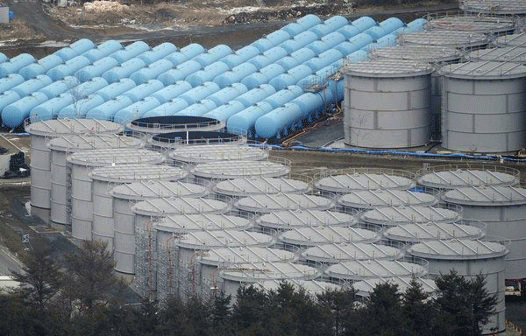
The plant has accumulated more than 1 million tons of water in nearly 1,000 tanks. The water has been treated but still contains some radioactive elements. One, tritium — a relative of radiation-emitting hydrogen — cannot be separated.
Tritium is not unique to Fukushima’s melted reactors and is not harmful in low doses, and water containing it is routinely released from nuclear power plants around the world, including in South Korea, officials say.
The water has been a source of concern, sparking rumors about safety, especially as Japan tries to get countries to lift restrictions on food imports from the Fukushima area ahead of the 2020 Tokyo Olympics. Import restrictions are still in place in 22 countries and regions, including South Korea and China.
“In order to prevent harmful rumors about the Fukushima Dai-ichi plant from being circulated, we believe it is extremely important to provide scientific and accurate information,” Yumiko Hata, a Ministry of Economy, Trade and Industry official in charge of the Fukushima accident response, said at the briefing. “We appreciate your understanding of the situation and continuing support for the decommissioning work at the Fukushima Dai-ichi plant.”
Officials said there were no complaints from the diplomats Wednesday about Japan’s handling of the water.
More than eight years after the accident, Japan has yet to decide what to do with the radioactive water. A government-commissioned panel has picked five options, including the controlled release of the water into the Pacific Ocean.
As disputes between Japan and neighboring South Korea escalated over export controls and colonial-era labor used by Japanese companies, Seoul last month announced plans to step up radiation tests of Japanese food products, and asked about the contaminated water and the possibility of its release into the sea.
Experts say the tanks pose flooding and radiation risks and hamper decontamination efforts at the plant. Nuclear scientists, including members the International Atomic Energy Agency and Japanese Nuclear Regulation Authority, have recommended the water’s controlled release into the sea as the only realistic option scientifically and financially. Local residents oppose this, saying the release would trigger rumors of contamination, which would spell doom for Fukushima’s fishing and agriculture industries.
The panel recently added a sixth option of long-term storage.
Japan’s Tepco weighs retiring some reactors at massive plant
Dismantling one or more units geared to easing local opposition to resuming operations
When fully operational, Tepco’s Kashiwazaki-Kariwa facility is the largest nuclear power plant in the world.
August 24, 2019
TOKYO — Tokyo Electric Power Co. Holdings is considering decommissioning one or more of the seven reactors at a key nuclear power plant in northern Japan, Nikkei has learned, as it attempts to ease community pushback against restarting it.
Tepco will not aim to reactivate all of the No. 1 through No. 5 reactors at Kashiwazaki-Kariwa in Niigata Prefecture — meltdown-hit Fukushima Prefecture’s western neighbor. It will instead pick at least one of them to dismantle after restarting the No. 6 and No. 7 reactors, as approved by the central government. Tepco President Tomoaki Kobayakawa is expected to convey that intent to Masahiro Sakurai, mayor of the city of Kashiwazaki, in meetings on Monday.
The plant — the world’s largest when fully operational — is undergoing separate checks led by the prefectural government, leaving the time frame for a restart unclear.
The utility hopes that offering a plan for decommissioning down the road, as Sakurai has demanded, will help win over locals for its efforts to restart the two greenlit reactors, an important step in improving its financial health.
Tepco decided in late July to retire all its remaining reactors in Fukushima Prefecture on top of the ongoing decommissioning of disaster-stricken Fukushima Daiichi, the site of the 2011 meltdown resulting from a massive earthquake and tsunami. Coming on the heels of July’s move, the utility judged that issues of manpower and finance would preclude immediately moving to dismantle parts of Kashiwazaki-Kariwa.
In June 2017, Sakurai asked that Tepco present a plan for dismantling at least one of reactors No. 1 through No. 5 within two years as a condition for restarting No. 6 and No. 7. Tepco has missed that deadline. Restarting the two reactors, which passed central-government safety inspections in December 2017, would likely create an easier environment for tackling the problem.
Tepco aims to shoulder the costs of decommissioning Fukushima Daiichi and paying out compensation. An outflow of customers on its capital-area home turf has left it in worsening financial straits. It hopes for relief from Kashiwazaki-Kariwa, where each reactor it restarts is expected to provide a roughly 100 billion yen ($939 million) shot in the arm per year.
Fukushima tragedy: The day of black snow https://www.greenpeace.org/international/story/23925/fukushima-tragedy-the-day-of-black-snow/ by Sean Lee 30 August 2019 Toru Anzai is a former resident of Iitate, a small village in Fukushima, Japan, and dearly missed the bamboo shoots that grew in his hometown. During autumn, the bamboo shoots would blanket the mountains that overlooked the residents’ homes in the village. The residents would climb the mountains, gather the plants, and prepare them for dinner. But ever since that tragic day, no one climbed the mountains, and the wild plants vanished from their dinner tables. For Anzai, the bamboo shoots became sad reminders of what used to be.
Anzai remembers the day as the “black snow” day. He heard the explosions on 12 March, 2011. Black smoke rose from the Fukushima nuclear power plant, and the smell of burning iron pervaded the village. It started to rain. The rain turned into snow. The snow was black.
The black snow filled Anzai with an ominous dread, and soon, his fears became reality.
After the black snow shrouded the village, Anzai described in an interview how he started to feel throbbing pain on his skin. It was almost like being sunburned after sunbathing for too long. Both of his legs darkened then peeled in white patches. The only remedy to the peeling was applying medicinal ointment.
Soon after, his entire body began to suffer. The headaches came, followed by shoulder pains. Then the hair loss occurred. Three months after the disaster, he left behind his home and evacuated to survive. Unfortunately, the tragedy did not end there.
Three years later, Anzai started having strokes and heart attacks. A stent was placed in his blood vessel; the tube held open his narrowed blood vessel and kept the blood flowing to his heart. With treatment, his pain somewhat subsided, but whenever Anzai visited Iitate, the pain throughout his entire body relapsed. While these symptoms have not been conclusively connected to the radiation exposure, Anzai believed that they were the realities of the black snow day.
Anzai’s temporary housing was very narrow and consisted of a living room and a bedroom. He had moved into this subsidised housing complex eight years ago. He was one of the first of the 126 families. Often, evacuees gathered around the common area and shared fond memories of their hometowns with each other. Whatever solace could be found, the evacuees found it in each other.
Since allegedly completing the decontamination operation in Iitate, the Japanese government have been urging people to return to their village. In fact, Fukushima prefectural government had ended housing subsidies this past March, and by the end of the month, most people had left the complex. Only around ten families were still looking for a new place to live.
Absently gazing into the dark, clouded sky, Anzai spoke bitterly. “I was kicked out of my hometown for doing nothing wrong. It was heartbreaking. Now, Iitate is polluted, and some of my neighbours have died. When the government asked me to evacuate last minute, I left. Now, they want me to go back. Back to all of the radioactive contamination. I’m so angry, but I don’t know what to do. We have repeatedly petitioned the government, but they’re not willing to listen. Our government has abandoned us.”
Prior to the nuclear incident, there were about 6,300 residents in Iitate. Eight years later, only a little over 300 evacuees have returned at the government’s persistent urging. Most of the returning residents were elderly, aged 60 or older. Even counting the non-natives who had recently relocated to the village, the total figure hovered around only 900 residents.
Iitate’s old and new residents are exposed to radioactive substances on a daily basis. The Japanese government claimed to have completed the decontamination work, but a full decontamination is impossible due to the village’s terrain. More than 70% of Iitate is forest, and unlike in the farmlands, the removal of contaminants that have fallen among the mountainous forest is nearly impossible.
Each year, Greenpeace Germany conducts extensive research on Fukushima villages including Iitate. The findings confirm that the radiation exposure in these villages exceeds the established international safety standards. Anzai believes that the Japanese government is behind the forced homecoming of the Iitate residents.
“The government hopes to publicise good news: the nuclear accident has been dealt with, and the residents have returned home. People who had no choice but to leave are now being pressured to return and put their lives on the line,” lamented Anzai.
The Japanese government hopes to release more than one million tonnes of highly radioactive water into the Fukushima coast. If the contaminated water becomes flushed into the ocean, the contamination will only add to the harm already inflicted by the Fukushima accident. Furthermore, the ocean currents will shift the radioactive materials through the surrounding waters including the Pacific Ocean.
The industrial pollution and toxins have already caused much distress to our oceans. Discharging the Fukushima’s radioactive water will only worsen the situation, and we cannot, and should never, let this happen.
Plant operator Tepco says it may start decommissioning at least one reactor five years after restarting two others. Japan‘s Tokyo Electric Power Company (Tepco) said on Monday it may start to decommission at least one nuclear reactor at its Kashiwazaki-Kariwa power plant, the world’s biggest nuclear plant by capacity, within five years of restarting two of the reactors at the site.Tepco President Tomoaki Kobayakawa made the comments in a statement outlining its response to a request for plans on the station’s future by the government of the city of Kashiwazaki in Niigata prefecture, where the plant is located.
In 2017, Tepco received initial regulatory approval from the Japanese government to restart reactors 6 and 7 at Kashiwazaki-Kariwa, each with a capacity of 1,356 megawatts (MW). The plant site has seven reactors with a total capacity of 8,212MW, equal to 20 percent of Japan’s nuclear capacity.
The facility is Tepco’s last remaining nuclear plant after it announced plans to shut its Fukushima Daini station, near the Fukushima Daichi plant where a massive earthquake and tsunami caused the meltdown of three of the site’s reactors in 2011.
Kashiwazaki’s Mayor Masahiro Sakurai demanded in 2017 that Tepco submit plans to shut at least one of reactors 1 to 5 in return for approval of the restart of reactors 6 and 7, a city official told the Reuters news agency by phone on Monday. The Kashiwazaki mayor will take about a month to evaluate Tepco’s plan, the official said.
Tepco said on Friday that Kobayakawa would brief local officials on Monday about its answers to the city’s request.
Tepco may take steps to decommission more than one of reactors 1 to 5 within five years after the restart of reactors 6 and 7 if it is confident it can secure enough non-fossil fuel energy sources, according to the statement.
A Tepco official said on Monday the company is aiming to have renewable and nuclear power produce 44 percent of total output by 2030.
Tepco has been trying to convince local authorities near Kashiwazaki-Kariwa, who have sign-off rights on nuclear restarts, that it has overcome operational failings revealed at Fukushima.
Eight years ago, nearly 20,000 people died in an earthquake and tsunami that precipitated what became Japan’s worst nuclear disaster. At least 160,000 people were forced to leave their contaminated homes.
In April, Japan partially lifted an evacuation order in one of the two towns, Okuma, for the first time since the disaster, but many former residents are still reluctant to return.
The other town, Futaba, remains off-limits, as are several other towns nearby.
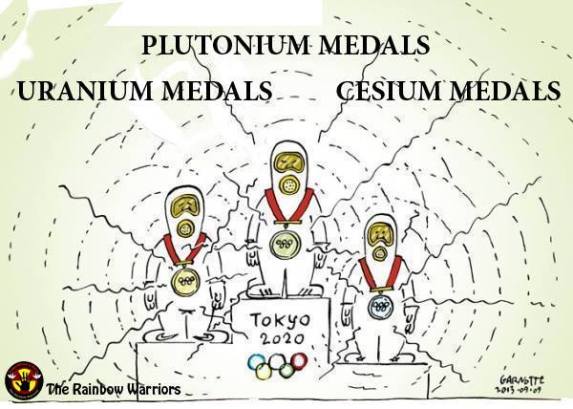
The danger of sourcing food and material from the Fukushima region Ground-level nuclear disasters leave much more radioactive fallout than Tokyo is willing to admit Hankyoreh By Seok Kwang-hoon, energy policy consultant of Green Korea Aug.25,2019 International concerns are growing over the Japanese government’s plans to provide meals from the Fukushima area to squads participating in the 2020 Tokyo Olympics. The starting point for the Olympic torch relay, and even the baseball stadium, were placed near the site of the Fukushima Nuclear Power Plant. It seems to be following the model of the Tokyo Olympics in 1964, where Japan’s rise from the ashes of the atomic bombs was underscored by having a young man born the day of the Hiroshima bombing act serve as the relay’s last runner. Here we can see the Shinzo Abe administration’s fixation on staging a strained Olympic reenactment of the stirring Hiroshima comeback – only this time from Fukushima.
But in terms of radiation damages, there is a world of difference between Hiroshima and Fukushima. Beyond the initial mass casualties and the aftereffects suffered by the survivors, the atomic bombing of Hiroshima resulted in little additional radiation exposure. Nuclear technology being as crude as it was back then, only around one kilogram of the Hiroshima bomb’s 64kg of highly enriched uranium actually underwent any reaction, resulting in a relatively small generation of nuclear fission material.
Whereas ground-based nuclear testing results in large quantities of radioactive fallout through combining with surface-level soil, the Hiroshima bomb exploded at an altitude of 580m, and the superheated nuclear fission material rose up toward the stratosphere to spread out around the planet, so that the amount of fallout over Japan was minimal. Even there, most of the nuclides had a short half-life (the amount of time it takes for half the total atoms in radioactive material to decay); manganese-56, which has a half-life of three hours, was the main cause of the additional radiation damages, which were concentrated during the day or so just after the bomb was dropped. The experience of Nagasaki was similar. As a result, both Hiroshima and Nagasaki were able to fully resume as functioning cities by the mid-1950s without additional decontamination efforts.
Ground-level nuclear disasters leave much more radioactive fallout than Tokyo is willing to admit
nternational concerns are growing over the Japanese government’s plans to provide meals from the Fukushima area to squads participating in the 2020 Tokyo Olympics. The starting point for the Olympic torch relay, and even the baseball stadium, were placed near the site of the Fukushima Nuclear Power Plant. It seems to be following the model of the Tokyo Olympics in 1964, where Japan’s rise from the ashes of the atomic bombs was underscored by having a young man born the day of the Hiroshima bombing act serve as the relay’s last runner. Here we can see the Shinzo Abe administration’s fixation on staging a strained Olympic reenactment of the stirring Hiroshima comeback – only this time from Fukushima.But in terms of radiation damages, there is a world of difference between Hiroshima and Fukushima.
Beyond the initial mass casualties and the aftereffects suffered by the survivors, the atomic bombing of Hiroshima resulted in little additional radiation exposure. Nuclear technology being as crude as it was back then, only around one kilogram of the Hiroshima bomb’s 64kg of highly enriched uranium actually underwent any reaction, resulting in a relatively small generation of nuclear fission material. Whereas ground-based nuclear testing results in large quantities of radioactive fallout through combining with surface-level soil, the Hiroshima bomb exploded at an altitude of 580m, and the superheated nuclear fission material rose up toward the stratosphere to spread out around the planet, so that the amount of fallout over Japan was minimal. Even there, most of the nuclides had a short half-life (the amount of time it takes for half the total atoms in radioactive material to decay); manganese-56, which has a half-life of three hours, was the main cause of the additional radiation damages, which were concentrated during the day or so just after the bomb was dropped. The experience of Nagasaki was similar. As a result, both Hiroshima and Nagasaki were able to fully resume as functioning cities by the mid-1950s without additional decontamination efforts…… http://www.hani.co.kr/arti/english_edition/e_editorial/907055.html
The danger of sourcing food and material from the Fukushima region Ground-level nuclear disasters leave much more radioactive fallout than Tokyo is willing to admit Hankyoreh By Seok Kwang-hoon, energy policy consultant of Green Korea Aug.25,2019 “…………..Fukushima’s radiation increases over time. The Fukushima disaster did not result in mass casualties, but the damages from radiation have only increased over time. The nuclear power plants experiencing core meltdowns had the equivalent of around 12 tons of highly enriched uranium in nuclear fuel – roughly 12,000 times more than the amount of uranium that underwent nuclear fission in the Hiroshima bomb. At one point, the Japanese government announced that Fukushima released 168 times more cesium than the Hiroshima bomb. But even that was merely a difference in emissions; there’s an immeasurable difference between the amount of fallout from Hiroshima, which was left over from a total spread out over the planet at a high altitude, and the amount from Fukushima, which was emitted at ground level.
Hiroshima also experienced little to no exposure to cesium-137 and strontium-90 – nuclides with half-lives of around 30 years that will continue to afflict Japan for decades to come. Due to accessibility issues, most of the forests that make up around 70% of Fukushima’s area have been left unaddressed. According to Japanese scholars, around 430 square kilometers of forest was contaminated with high concentrations of cesium-137. The danger of this forest cesium is that it will be carried toward residential or farm land by wind and rain, or that contaminated flora and fauna will be used in processing and distribution. Indeed, cedar wood from Fukushima remains in distribution in the region, and was even shipped off recently to serve as construction material for the Tokyo Olympics. Meanwhile, the incidence of thyroid cancer in children – a rare condition – has risen all the way from one to two cases before the incident to 217 in its wake. Yet the Abe administration has only impeded a study by physicians, using various government-controlled Fukushima-related investigation committees as vehicles for sophistry and controlling media reporting on the issue. http://www.hani.co.kr/arti/english_edition/e_editorial/907055.html
Abe administration hoping to cut costs in nuclear waste disposal The economic consequences have been astronomical as well. From an expert group’s analysis, the Japan Center for Economic Research estimated that the 14 million tons of radioactive waste from collecting Fukushima’s cesium-contaminated soil would result in a financial burden of 20 trillion yen (US$187.98 billion) based on the acceptance costs at the Rokkasho-mura radioactive waste disposal center. Contaminated water from the Fukushima Nuclear Power Plant – which already amounts to 1.2 million tons and is expected to increase to 2 million – was predicted to cost fully 51 trillion yen (US$479.35 billion) in tritium and strontium removal costs alone. Factor in the 10 trillion yen (around US$94 billion) in resident compensation, and the amount is close to the Japanese government’s total annual budget. Hoping to cut costs, the Abe administration announced plans to reuse soil waste in civil engineering, while the contaminated water is expected to be dumped into the Pacific after the formalities of a discussion. But few if any Japanese news outlets have been doing any investigative reporting on the issue.
When Abe declared the situation “under control” during the Olympic bidding campaign in 2013, this truthfully amounted to a gag order on the press and civil society. Having the world’s sole experience of filing and winning a World Trade Organization (WTO) case on Fukushima seafood, South Korea may be in the best position to alert the world to the issue of radioactivity and the Tokyo Olympics. I look forward to seeing efforts from the administration.By Seok Kwang-hoon, energy policy consultant of Green Korea
South Korea concerned over food safety at Olympics with events slated for Fukushima
Talks to take place over food provision at Tokyo Games
Fukushima to host baseball and softball games next year, Guardian Justin McCurry in Tokyo, Thu 22 Aug 2019South Korea is considering making its own arrangements to feed its athletes at next year’s Tokyo Olympics, citing concerns over the safety of food from Fukushima, media reports said.
In addition, South Korean sports authorities have requested that international groups be permitted to monitor radiation levels during the 2020 Games.
Food safety concerns in South Korea have grown since Fukushima city was chosen to host six softball games and one baseball game next summer. Fukushima prefecture will also be the location for the start of the domestic leg of the Olympic torch relay, beginning next March.
Tokyo Olympics organisers said South Korea’s National Olympic Committee had sent a letter expressing concern at the possibility of produce grown in Fukushima prefecture being served to athletes in the Olympic village. ……
[Herald Interview] Sports bodies need to make own assessments of Fukushima: Greenpeace nuclear specialist, http://www.koreaherald.com/view.php?ud=20190821000749By Kim Bo-gyung (lisakim425@heraldcorp.com) Nuclear specialist warns of unknown long-term health, environmental risks from Japan’s radioactive water disposal plan Aug 21, 2019 With less than a year to go until the Tokyo 2020 Summer Olympics, concerns are growing over the safety of the baseball and softball venues in disaster-hit Fukushima.
Seeking to break away from Japan’s association with high levels of radioactivity, the Abe government has branded the 2020 Olympics the “Recovery Games.”
But health and environmental risks from high levels of radiation persist in parts of Fukushima after the 2011 nuclear meltdown.
According to Shaun Burnie, a senior nuclear specialist with Greenpeace Germany, those visiting Fukushima for the Summer Games next year should take a proactive approach to educating themselves on which areas of Fukushima are affected by radiation and on the impact of exposure to radiation.
“In terms of safety, there are certain areas of Fukushima where we would certainly not advise athletes or spectators to spend any time. Those are areas particularly close to the Fukushima Dai-ichi plant, including where the torch processions will be taking place,” Burnie said in an interview with The Korea Herald at Greenpeace Korea’s office in central Seoul last week.
“They are areas that are not safe for people to live. If you visit, you need to follow a radiation protocol. It is a bizarre situation that you are having Olympic events where people are concerned about radiation,” he added.
While noting that not all parts of Fukushima should be off limits, Burnie said athletes and sports bodies need to seek independent assessments on Fukushima, rather than relying on information provided by the Japanese government.
“It’s dangerous to just dismiss the whole of Fukushima as a radioactive disaster zone. It’s much more complex than that. The first thing is … don’t trust the Japanese government, educate yourself. If you’re an organizing body, get independent verification and independent information about what the relative radiation levels are, what the risks are,” Burnie said.
As the senior nuclear specialist with Greenpeace Germany, Burnie has followed the Japanese government’s handling of the tsunami and earthquake in March 2011 that resulted in the meltdown of three nuclear reactors at the Fukushima Dai-ichi power plant.
In a report published in January, Burnie alleged that Tokyo plans to dispose of some 1 million metric tons of contaminated water by discharging it into the Pacific Ocean after the Summer Olympics.
If Japan follows through with the move, radioactive water is expected to be present in Korea’s East Sea a year later.
“For the past five years we’ve been accessing the process, the discussions, the documents submitted by Tepco (Tokyo Electric Power Company) … we were reviewing some of Tepco’s data (last year) and we looked at it and went ‘there is something wrong here with Tepco’s processing,’” Burnie said.
“It became very clear there has been bad decisions made, not really surprising, by Tepco, by the (Japanese) government over the last five or six years and how to manage the water crisis.”
Last year Tepco acknowledged its Advanced Liquid Processing System, or ALPS, had failed to purify contaminated water stored in tanks at the Dai-ichi power plant.
A committee under Japan’s Ministry of Economy in 2016 put together five scenarios for the Japanese government to deal with the massive volume of pollutants stored at the Fukushima No. 1 plant.
The amount of water stored at the plant is to reach its full capacity of 1.3 million tons by the end of 2020, with about 170 tons accumulating daily.
According to Burnie, Tokyo has chosen to discharge the radioactive water instead of acting on any of the other four suggestions because “it is the most cheap and fast.”
Besides increased levels of radioactive cesium found in Fukushima and in the East Sea, Burnie warned of “cesium-rich micro particles” extremely small in size and inhaled through breathing.
Cesium is one of the largest sources of radioactivity from the 2011 disaster and has a half-life of 30 years.
“There is evidence from samples … some scientific literature has published the results and they found concentrations of these particles in areas 20-30 kilometers from the plant. … The problem is these particles can be inhaled. Then some of them lodge inside your lung at which point you are getting an internal dose, a very focused, very localized, relatively high-exposure dose to individual cells,” Burnie said.
“That’s a real problem because there is very little known about how cesium in that form will affect your long-term health. … Again, the people most at risk are those returning to live in areas of Fukushima affected by these particles. But the Japanese government has not taken into account in any of its assessments what those risks are,” he added.
Stressing that the risks of exposure to radiation should not be exaggerated, Burnie noted there is no safe level of radiation exposure and the long-term effects are unknown.
“The effects you will only see over decades. It won’t be instant, it’s not an acute radiation exposure, it’s low-level radiation,” Burnie said.
“The country that will be next impacted will be Korea, because it’s the geographically closest. … There is no safe threshold for radiation exposure. … Why should you be exposed when there is a clear alternative, which is you store?”
North Korea now able to miniaturise nuclear warheads – Japan defence report
Upcoming review out of Tokyo will reportedly say missile programme poses ‘serious and imminent threat’ Guardian Justin McCurry in Tokyo 21 Aug 19, Japan’s government will reportedly state that North Korea is capable of miniaturising nuclear warheads in a forthcoming defence report, it has emerged.
Tokyo will upgrade its estimate of the regime’s nuclear capability, having said last year only that the technical feat was a possibility, the conservative Yomiuri Shimbun newspaper said on Wednesday, without citing sources.
The defence report will maintain Japan’s contention that North Korea’s nuclear and ballistic missile programmes pose a “serious and imminent threat” to its security after recent meetings between Donald Trump and the North’s leader, Kim Jong-un, failed to make progress on denuclearisation. The report is expected to receive cabinet approval in mid-September, the Yomiuri said…….
In 2017, a leaked US intelligence assessment concluded that North Korea had developed the technology to produce nuclear warheads small enough to fit inside missiles, theoretically giving it the ability to send nuclear-armed intercontinental ballistic missiles [ICBMs] to distant targets, including the US mainland.





 nuclear-news