Ex-trade minister Hiroshige Seko involved in nuclear gifts scandal
 Gifts and donations link official in Kepco scandal to second nuclear plant and ex-trade minister Hiroshige Seko, Japan Times, 10 Oct 19, KYODO, JIJI OSAKA – A former senior Kansai Electric Power Co. official said Thursday he received gift coupons in the 1990s from a former deputy mayor of a town hosting one of the company’s nuclear power plants, though he was in charge of a plant outside the town.Eiji Moriyama, the late deputy mayor of Takahama in Fukui Prefecture, later hinted that a particular firm undertake regular inspection work at the utility’s Oi plant in the same prefecture, the former official said. Gifts and donations link official in Kepco scandal to second nuclear plant and ex-trade minister Hiroshige Seko, Japan Times, 10 Oct 19, KYODO, JIJI OSAKA – A former senior Kansai Electric Power Co. official said Thursday he received gift coupons in the 1990s from a former deputy mayor of a town hosting one of the company’s nuclear power plants, though he was in charge of a plant outside the town.Eiji Moriyama, the late deputy mayor of Takahama in Fukui Prefecture, later hinted that a particular firm undertake regular inspection work at the utility’s Oi plant in the same prefecture, the former official said.
The latest revelation suggests Moriyama was trying to involve himself in the operations of a nuclear plant in addition to the one at Takahama. Kepco has already admitted that 20 of its executives and officials received a total of ¥318.45 million worth of gifts from Moriyama……. Kepco Chairman Makoto Yagi and four other executives stepped down Wednesday amid growing criticism over the shady ties between the nuclear industry and local government officials. Also on Wednesday, former trade minister Hiroshige Seko’s office said his fund management body had received political donations from a company head linked to Moriyama. Seko’s political fund management body received ¥6 million from the head of Yanagida Sangyo, a maintenance service company based in Takasago, Hyogo Prefecture, according to the office. Moriyama served as an adviser to Yanagida Sangyo. The body accepted ¥1.5 million, the maximum amount for a personal donation, every year between 2012 and 2015 from the company head, the office said. Seko’s office said that the donations from the company head were handled appropriately as the money was reported in his political funding reports. Seko now serves as secretary-general for the ruling Liberal Democratic Party in the House of Councilors. Speaking to reporters, Seko said the contributions were “strictly” personal donations. “I’ve never received business requests (from the company head),” he said, adding that he will not return the money. He said he did not know Moriyama.https://www.japantimes.co.jp/news/2019/10/10/national/ex-takahama-deputy-mayor-also-gave-gift-coupons-kepco-official-nearby-oi-nuclear-plant/#.XaORu0YzbIU |
|
|
A million tonnes of radioactive water and nowhere to go – Fukushima
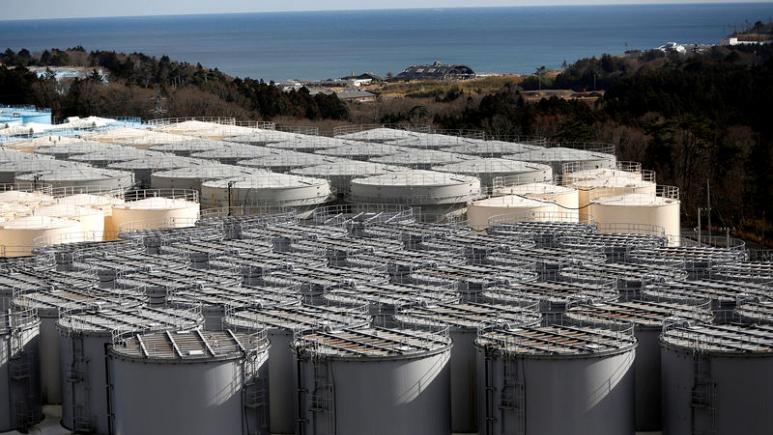
What to do with the enormous amount of water, which grows by around 150 tonnes a day, is a thorny question, with controversy surrounding a long-standing proposal to discharge it into the sea, after extensive decontamination.
The water comes from several different sources: Some is used for cooling at the plant, which suffered a meltdown after it was hit by a tsunami triggered by a massive earthquake in March 2011.
Groundwater that seeps into the plant daily, along with rainwater, add to the problem.
A thousand, towering tanks have now replaced many of the cherry trees that once dotted the plant’s ground.
Each can hold 1,200 tonnes, and most of them are already full.
“We will build more on the site until the end of 2020, and we think all the tanks will be full by around the summer of 2022,” said Junichi Matsumoto, an official with the unit of plant operator TEPCO in charge of dismantling the site.
TEPCO has been struggling with the problem for years, taking various measures to limit the amount of groundwater entering the site.
There is also an extensive pumping and filtration system, that each day brings up tonnes of newly contaminated water and filters out as many of the radioactive elements as possible.
HIGHLY RADIOACTIVE
The hangar where the decontamination system runs is designated “Zone Y” – a danger zone requiring special protections.
All those entering must wear elaborate protection: a full body suit, three layers of socks, three layers of gloves, a double cap topped by a helmet, a vest with a pocket carrying a dosimeter, a full-face respirator mask and special shoes.
Most of the outfit has to burned after use.
“The machinery filters contain radionuclides, so you have to be very protected here, just like with the buildings where the reactors are,” explained TEPCO risk communicator Katsutoshi Oyama.
TEPCO has been filtering newly contaminated water for years, but much of it needs to go through the process again because early versions of the filtration process did not fully remove some dangerous radioactive elements, including strontium 90.
The current process is more effective, removing or reducing around 60 radionuclides to levels accepted by the International Atomic Energy Agency (IAEA) for water being discharged.
But there is one that remains, which cannot be removed with the current technology: Tritium.
Tritium is naturally present in the environment, and has also been discharged in its artificial form into the environment by the nuclear industry around the world.
There is little evidence that it causes harm to humans except in very high concentrations and the IAEA argues that properly filtered Fukushima water could be diluted with seawater and then safely released into the ocean without causing environmental problems.
“ABSOLUTELY AGAINST IT”
But those assurances are of little comfort to many in the region, particularly Fukushima’s fishing industry which, like local farmers, has suffered from the outside perception that food from the region is unsafe.
Kyoichi Kamiyama, director of the radioactivity research department at the regional government’s Fisheries and Marine Science Research Centre, points out that local fishermen are still struggling eight years after the disaster.
“Discharging into the ocean? I’m absolutely against it,” he told AFP.
At the national government level, the view is more sanguine.
“We want to study how to minimise the damage (from a potential discharge) to the region’s reputation and Fukushima products,” an Industry Ministry official said.
The government is sensitive to fears that people inside Japan and further afield will view any discharge as sending radioactive waste into the sea.
No decisions are likely in the near-term, with the country sensitive to the international spotlight that will fall on Japan as it hosts the Olympic Games next year.
Environmentalists are also resolutely opposed to any discharge into the sea, and Greenpeace argues that TEPCO cannot trusted to properly decontaminate the water.
The solution, said Greenpeace senior nuclear specialist Shaun Burnie, “ultimately can only be long-term storage and processing.”
Appeal against acquittal of Tepco executives over Fukushima nuclear disaster
Plaintiffs have appealed a ruling handed down by the Tokyo District Court in mid-September that found three former Tokyo Electric Power Co. executives not guilty of professional negligence. A class action lawsuit against the executives claimed they had failed to apply the proper safety measures to prevent the 2011 disaster at the Fukushima No. 1 nuclear power plant, despite being aware of the devastating effect tsunami would have.
Ruiko Muto, the 66-year-old leader of the class action lawsuit against former Tepco executives, has tirelessly conducted talks around the country since the nuclear disaster in 2011, which saw three of the six core reactors of the Fukushima No. 1 power plant go into meltdown after massive tsunami struck the facility.
“Grassroots efforts are what pushes forward the social change we need to see,” she said, adding, “awareness spreads only when each individual starts to think about the issue at hand.”
Muto has campaigned for the end of nuclear power for over 30 years. Seeing the devastating effects of the 1986 Chernobyl nuclear accident in the former Soviet Union catapulted her into the anti-nuclear movement…..
The disaster upended daily life as local residents knew it and tore apart the social fabric of societies and communities around the area. Eight and a half years on, the victims are still grappling with the loss of their homes, and are turning to the courts for answers and closure….https://www.japantimes.co.jp/news/2019/10/11/national/tepco-acquittal-fukushima-nuclear-disaster-closure/#.XaDi30YzbIU
A-bomb survivor Toshiki Fujimori urges nuclear haves and have-nots to join hands on abolition
Fujimori, 75, assistant secretary-general at the Japan Confederation of A- and H-Bomb Sufferers Organizations (Nihon Hidankyo), urged both sides to join forces to bring about a peaceful world.
Fujimori was exposed to radiation from the atomic bomb dropped on Hiroshima on Aug. 6, 1945, while his mother was carrying him on her back to a hospital. After the bombing, six of his 12 family members died, Fujimori said.
Three days after, the second U.S. atomic bomb devastated Nagasaki.
NEW YORK – Hibakusha Toshiki Fujimori called for nuclear states and non-nuclear states to cooperate on abolishing atomic weapons as a meeting on the subject was held at U.N. headquarters in New York on Thursday.
Fujimori, 75, assistant secretary-general at the Japan Confederation of A- and H-Bomb Sufferers Organizations (Nihon Hidankyo), urged both sides to join forces to bring about a peaceful world.
Fujimori was exposed to radiation from the atomic bomb dropped on Hiroshima on Aug. 6, 1945, while his mother was carrying him on her back to a hospital. After the bombing, six of his 12 family members died, Fujimori said.
Three days after, the second U.S. atomic bomb devastated Nagasaki.
Nuclear industry in Japan – as corrupt as ever?
Hidden gold, ‘murky’ payoffs threaten Japan nuclear revival, Straits Times, TOKYO (BLOOMBERG) 9 Oct 19, – A payoff scandal has struck Japan’s nuclear world, threatening to delay the restart of idled reactors in what’s becoming the industry’s biggest crisis since the Fukushima meltdown of 2011.The issue, which emerged at the end of last month, centres around how an influential municipal official in a town that hosts a nuclear plant spent years doling out large gifts to executives of its operator, one of the country’s biggest power producers.
It’s an example of how big business and small towns work together, sometimes at the expense of corporate governance.
The payments to senior management at Kansai Electric Power Co included hundreds of millions of yen, US currency, vouchers for tailored suits and even gold coins hidden in a box of candy.
To make matters worse, the official in question was close to – and received money from – a company that won construction work from the utility.
The news is a blow to an already deeply unpopular industry as it seeks to resume operations at plants that were shuttered after Fukushima. It’s likely to have an impact beyond Kansai Electric, with the government’s top spokesman, who called the payoffs “murky,” vowing to investigate whether there are similar cases at other companies.
It’s also a headache for Prime Minister Shinzo Abe, who has set his stall as a proponent of nuclear power, a cheaper source of energy than imported fuels such as oil, coal and natural gas. And questions in Parliament about the scandal may delay Mr Abe’s efforts to pass a US trade deal and proceed towards changing the country’s pacifist Constitution.
…….The scandal is the latest exposure of governance issues at Japanese companies, which include the arrest last year of Nissan Motor Co’s chairman for concealing more than US$140 million (S$193 million) in compensation and Kobe Steel’s indictment in 2018 for falsifying quality data.
Kansai Electric chairman Makoto Yagi and president Shigeki Iwane bowed in apology at a three-hour public briefing last week as they detailed how they and 18 other executives received almost 320 million yen (S$4.12 million) in cash and presents from 2006 to 2018 from Mr Eiji Moriyama, the former deputy mayor of Takahama town, where a nuclear power plant is located. Mr Moriyama died at the age of 90 in March……..
The immediate risk for Kansai Electric is that the issue may delay the restart of three of its reactors, including two in the town in question, Takahama. Every month a reactor stays offline saddles the utility with extra fuel costs of 3.6 billion yen ……….
Kansai Electric’s investigation will leave no stone unturned to determine the cause and events surrounding the payments, the company said in an e-mailed response. The utility will also make efforts to ensure that this type of incident doesn’t happen again, it said.
In a sense, the goings-on at Kansai Electric suggest things haven’t changed in the nuclear industry. They mirror what independent investigators said in a 2012 report led to the scale of the Fukushima meltdown: collusion between government officials and a power company.
“This is the nuclear village at its worst,” Temple University’s Mr Kingston said, referring to the nexus of companies, politicians, bureaucrats and others that promote atomic power. “The cosy and collusive ties are a hotbed of corruption and raise questions about other plants.” https://www.straitstimes.com/asia/east-asia/hidden-gold-murky-payoffs-threaten-japan-nuclear-revival
KEPCO execs’ acceptance of huge gifts angers local consumers, Fukushima evacuees

Scandal-hit head of Japan’s Kansai Electric has no plans to resign

Japan utility execs received payments from town official

Nuclear Scandal Hangs Over Japan’s Abe as Parliament Opens
 Nuclear Scandal Hangs Over Japan’s Abe as Parliament Opens, By
- Abe seeks to pass U.S. trade pact, work to revise constitution
- Opposition want to use Kansai Electric scandal to derail plans
Questions in parliament about a nuclear payoff scandal threaten to delay Japanese Prime Minister Shinzo Abe’s bid to pass a U.S. trade pact and make progress toward changing the country’s pacifist constitution.
Opposition lawmakers have pledged to hammer Abe’s ruling Liberal Democratic Party as the new session opened Friday over revelations that executives at Kansai Electric Power Co. took millions of dollars in payments, including gold coins hidden in a box of sweets, from a former local official in a town that hosts a major nuclear plant. Minority parties want to summon the executives for questioning in parliament….. (subscribers only) https://www.bloomberg.com/news/articles/2019-10-04/nuclear-scandal-hangs-over-japan-s-abe-as-parliament-opens
Bribery scandals in Japan’s nuclear power sector
Executives in Japan Nuclear Scandal Blame Dead Local Official. By Aaron Clark. Stephen Stapczynski, and Shiho Takezawa news,com,au October 3, 2019
-
Kansai Electric officials took $3 million in cash and gifts
- Payments came from deputy mayor of town hosting nuclear plant
Top Japanese utility executives who admitted to taking illicit payments related to their nuclear business sought to deflect blame onto a deceased local official and vowed to stay in their roles, potentially deepening the nation’s latest corporate governance scandal.
Kansai Electric Power Co.’s Chairman Makoto Yagi and President Shigeki Iwane spent more than three hours Wednesday detailing in a public briefing how they and 18 other executives received nearly 320 million yen ($3 million) in cash and gifts, including suits and gold, from a former deputy mayor in the western town Takahama, which hosts the company’s biggest nuclear plant. They didn’t return the payments because the official, who died in March at the age of 90, wielded influence and intimidated employees, they said.
The Kansai Electric payments are the latest-high profile exposure of corporate malfeasance in Japan, which include the arrest last year of Nissan Motor Co.’s chairman for concealing more than $140 million in compensation and Kobe Steel Ltd.’s indictment in 2018 for falsifying quality data. It also follows the acquittal last month of executives charged with negligence related to the Fukushima meltdown, which has loomed in the background of the nation’s worst nuclear scandal since the 2011 disaster…….
Nuclear Nerve
That the drama is playing out in the nuclear power industry touches a raw nerve in Japan, where the technology has been shunned since the trauma of Fukushima. Public opinion has consistently been opposed to restarting the nation’s reactor fleet, once the biggest source of atomic power in Asia, as trust in the both the industry and regulators hasn’t recovered………
Gold, Suits, Cash
The company also revealed new details Wednesday of the gifts and cash Moriyama gave to executives from 2006 to 2018. Satoshi Suzuki, director of the utility’s nuclear power division, received the most at 123.7 million yen, which included 500 grams of gold and 14 suits, as well as $35,000 in U.S. currency.
Kyodo News also reported that Yoshida Kaihatsu, a local company that paid Moriyama money that was funneled to officials, won contracts worth at least 2.5 billion yen for work at Kansai’s nuclear power plant. Moriyama was also a part-time adviser for a Kansai Electric unit from 1987 through December last year. https://www.news.com.au/technology/environment/climate-change/climate-action-summit-greta-thunberg-rips-into-leaders-over-mass-extinction/news-story/2c8d4aac13cb60507a41b48c2ef3d8f2
Dispute between Japan and South Korea, over radiation levels in Fukushima food exports
|
Japan embassy in Seoul posts radiation data amid escalating row, Straits Times TOKYO (REUTERS) 29 Sept 19, – Japan’s embassy in South Korea has begun posting data on its website to show there is little difference in radiation levels between the two countries, in its latest retort in a diplomatic and trade row rooted in wartime history.South Korea said last month that it will double the radiation testing of some Japanese food exports due to potential contamination from the tsunami-damaged Fukushima nuclear plant.
The embassy said the radiation reading in Seoul as of last Friday (Sept 27) was 0.12 microsieverts per hour, around the same as 0.135 in Fukushima City, and higher than Tokyo’s 0.036. It will update the data every day the embassy is open, it said……. https://www.straitstimes.com/asia/east-asia/japan-embassy-in-seoul-posts-radiation-data-amid-escalating-row |
|
Koizumi hopes son will push for abandonment of nuclear power

New minister prioritizes Fukushima decommission

Disputing colleague, new Japan minister calls no-nukes policy ‘unrealistic’

Despite previous warnings, and findings, court finds Tepco executive not guilty after Fukushima nuclear disaster
Fukushima trial ends in not guilty verdict, but nuclear disaster will haunt Japan for decades to come, By James Griffiths, CNN, September 19, 2019 The only criminal prosecution stemming from the 2011 Fukushima nuclear disaster has ended in not guilty verdicts, in a blow to families displaced by the meltdown, as the fallout promises to haunt northern Japan for decades to come.
CNN’s Yoko Wakatsuki contributed reporting from Tokyo. https://edition.cnn.com/2019/09/19/asia/japan-fukushima-trial-intl-hnk/index.html
1 This Month



26 September – International Day for the Total Elimination of Nuclear Weapons


PLEASE OPPOSE HR 8255 AND S.3639 – bills would accelerate satellite deployment, with no environmental review or safeguards – https://ncstd5li.quorum.us/campaign/169331/
To see nuclear-related stories in greater depth and intensity – go to https://nuclearinformation.wordpress.com
-
Archives
- September 2026 (269)
- August 2026 (330)
- July 2026 (355)
- June 2026 (287)
- May 2026 (306)
- April 2026 (356)
- March 2026 (251)
- February 2026 (267)
- January 2026 (308)
- December 2025 (358)
- November 2025 (359)
- October 2025 (375)
-
Categories
- 1
- 1 NUCLEAR ISSUES
- business and costs
- climate change
- culture and arts
- ENERGY
- environment
- health
- history
- indigenous issues
- Legal
- marketing of nuclear
- media
- opposition to nuclear
- PERSONAL STORIES
- politics
- politics international
- Religion and ethics
- safety
- secrets,lies and civil liberties
- spinbuster
- technology
- Uranium
- wastes
- weapons and war
- Women
- 2 WORLD
- ACTION
- AFRICA
- Atrocities
- AUSTRALIA
- Christina's notes
- Christina's themes
- culture and arts
- Events
- Fuk 2022
- Fuk 2023
- Fukushima 2017
- Fukushima 2018
- fukushima 2019
- Fukushima 2020
- Fukushima 2021
- general
- global warming
- Humour (God we need it)
- Nuclear
- RARE EARTHS
- Reference
- resources – print
- Resources -audiovicual
- Weekly Newsletter
- World
- World Nuclear
- YouTube
-
RSS
Entries RSS
Comments RSS

