Japan to close temporary all schools nationwide to control spread of virus
 Prime Minister Shinzo Abe announces the government’s plan to ask all schools in Japan to cancel classes from March 2 until spring break amid the spread of the new coronavirus in the country, during a meeting of the coronavirus task force headquarters at the prime minister’s office in Tokyo, on Feb. 27, 2020.
Abe asks all schools in Japan to temporarily close over coronavirus
February 27, 2020
TOKYO (Kyodo) — Prime Minister Shinzo Abe said Thursday the government will request all elementary, junior high and high schools in Japan to close from Monday until the end of a spring break through early April amid concern over the spread of the new coronavirus.
In a meeting of a government task force to fight the virus, Abe cited “children’s health and safety” as the top priority and said the measure, which also includes schools for special needs education across Japan, is intended to better cope with a risk of infection to be generated by students and teachers spending long hours together.
Abe also asked schools to take the best possible steps to prevent infection, such as minimizing the number of participants, if they are to hold entrance exams and graduation ceremonies in the coming weeks.
Japan’s school year ends in March and a new academic year typically starts in early April.
Abe announced the measure as opposition parties have stepped up criticism of his administration for not responding quickly enough, with the number of confirmed COVID-19 patients continuing to rise in Japan and the end of the outbreak of the China-originated, pneumonia-causing virus not yet in sight.
The number of confirmed infections in Japan topped 900 on Thursday, including over 700 from the Diamond Princess, a virus-hit cruise ship docked in Yokohama near Tokyo.
Given that schoolchildren are expected to stay home in the coming weeks, Abe requested that government agencies and companies allow workers to take days off so they can spend more time with their families.
Nursery schools will be excluded from the nationwide closure request, according to the Ministry of Health, Labor and Welfare.
Abe also instructed the government to “prepare necessary legislation to curb the spread of infections and minimize the impact on the lives of people as well as the economy.”
Meanwhile, some schoolteachers expressed concern about the prime minister’s request as they have to adjust class and event schedules.
“A one-month closure is unheard of and its impact will be significant,” said a teacher at a public elementary school in Tokyo.
“I’m in the middle of discussions with my colleagues on how to determine grades for students and distribute them,” he said.
Abe’s announcement came as a number of schools have already decided to close or scale down their activities.
Earlier Thursday, the Osaka city government said it will temporarily close all city-run elementary and junior high schools, and kindergartens from the following day through March 13 amid the coronavirus outbreak.
It will diminish the scale of graduation ceremonies scheduled during the closure period by limiting the number of participants and shortening program hours as well, according to the most populated city in Japan outside the Tokyo metropolitan area.
“We will conduct a simultaneous shutdown to ensure safety and prevent expansion of infections,” Osaka Mayor Ichiro Matsui said at a meeting with senior city officials.
During the closure, schools will gather information on health conditions of students from parents and report to the education board if they find any concerns.
In Tokyo, Ochanomizu University said the state-run institution will close affiliated kindergarten, elementary school, and junior and senior high schools from Friday for about a month until early April, following a spring break.
Prince Hisahito, the 13-year-old nephew of Emperor Naruhito, attends the junior high school affiliated with the university.
“I believe it’s an unprecedented closure for such an extended period of time,” a university official said.
Similarly, most of the 1,600 elementary and junior high schools on Japan’s northernmost main island of Hokkaido were already closed Thursday for a week.
The action came a day after the Hokkaido board of education urged local authorities to temporarily close all public and private elementary and junior high schools in an effort to contain the spread of the virus.
Machiko Inari, a 40-year-old resident of Hakodate, said she will take a week off to look after her daughter, a fifth-grader, and son, a kindergarten student.
“Although it will affect my work and co-workers, it’s better if it reduces the risk of infection for children as the disease is still relatively unknown,” she said.
 Japan’s Prime Minister Shinzo Abe, center, speaks during a meeting of a task force on the new coronavirus at his official residence in Tokyo Thursday, Feb. 27, 2020. Abe was asking all elementary, middle and high schools to remain shut until spring holidays begin in late March.
Japan to close schools nationwide to control spread of virus
February 27, 2020
TOKYO — Japan will close schools nationwide to help control the spread of the new virus, the government announced Thursday.
Prime Minister Shinzo Abe asked all elementary, middle and high schools to remain shut until spring holidays begin in late March.
The measure affects 12.8 million students at 34,847 schools nationwide, the education ministry said.
It does not affect DODEA schools for now, said Todd Schlitz, the DODEA-Pacific chief of staff.
Abe’s announcement came hours after several local governments announced their own decisions to suspend classes.
“The coming week or two is an extremely important time,” Abe said. “This is to prioritize the health and safety of the children and take precautions to avoid the risk of possible large-scale infections for many children and teachers who gather and spend hours together every day.”
The decision comes amid growing concern about the rise in the number of untraceable cases of the virus in northern Japan and elsewhere. Japan now has more than 890 cases, including 705 from a quarantined cruise ship. An eighth death from the virus was confirmed Thursday in Japan’s northernmost island of Hokkaido, now considered a site of growing cluster.
Officials in the northernmost main island of Hokkaido said they were closing all 1,600 elementary and middle schools. Hokkaido now has 54 confirmed cases, the largest in in the country outside the cruise ship.
The emergency school closures come as schools were busy preparing for graduation ceremonies at the end of the school year. Koizumi primary school Vice Principal Norinobu Sawada said the decision to suspend classes was unavoidable.
“The most important thing is to prevent infections, so there aren’t many other options,” he said.
Rise in COVID-19 cases in Japan prompts 9 countries to restrict travel to and from Japan
A significant uptick in COVID-19 cases across Japan has triggered a flurry of advisories worldwide about travel to the country, with at least nine governments calling on their citizens to refrain from nonessential visits or to exercise increased caution during trips.
Foreign Minister Toshimitsu Motegi confirmed Friday that the nine countries — Israel, the Solomon Islands, Thailand, Samoa, Tonga, Micronesia, Kiribati, Bhutan and South Korea — had issued warnings against travel to Japan, one of the nations hit hardest by the new coronavirus epidemic.
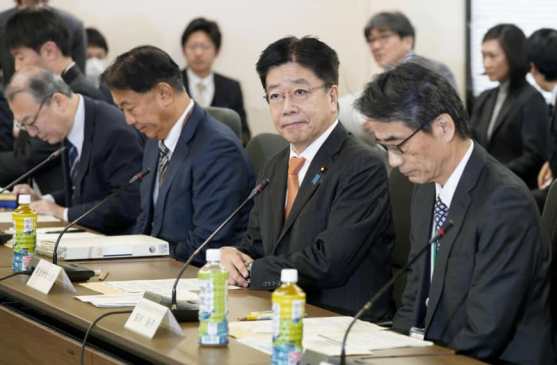 Health minister Katsunobu Kato (second from right) attends a meeting of infectious disease experts held Monday at the ministry to discuss measures to tackle the new coronavirus outbreak in Japan
Rise in COVID-19 cases in Japan prompts travel advisory revisions
Feb 24, 2020
A significant uptick in COVID-19 cases across Japan has triggered a flurry of advisories worldwide about travel to the country, with at least nine governments calling on their citizens to refrain from nonessential visits or to exercise increased caution during trips.
Foreign Minister Toshimitsu Motegi confirmed Friday that the nine countries — Israel, the Solomon Islands, Thailand, Samoa, Tonga, Micronesia, Kiribati, Bhutan and South Korea — had issued warnings against travel to Japan, one of the nations hit hardest by the new coronavirus epidemic.
On its official website, the Samoan government strongly recommends that all persons intending to travel to China and any country affected by the coronavirus “postpone their travel arrangements unless necessary.” Samoa also warned that Japanese passport-holders must self-quarantine for at least 14 days at their point of departure, and must undergo medical clearance within three days prior to their trip to Samoa.
Thai media outlets have widely reported that the country’s Public Health Ministry is advising Thais planning to visit Japan to postpone their trips. The Thai government said the coronavirus outbreaks in Japan and Singapore had reached “the third stage” in which a growing number of infected residents have no record of contact with Chinese people or any history of traveling to China, where the virus is thought to have originated.
Israel’s safety measures follow reports that two Israelis were found to have contracted the virus after they were evacuated from the virus-hit Diamond Princess cruise ship docked in Yokohama Port, where they had spent around two weeks under quarantine.
About 10 Israelis were aboard the ship. Israel was one of about a dozen countries that arranged chartered flights to bring their citizens home last week, in an emergency measure aimed at protecting the evacuees from the virus.
All the evacuees had boarded the charter planes on condition that they tested negative for COVID-19. But at least 14 Americans, six Australians, four U.K. nationals and two Israelis have tested positive so far after returning home from Japan.
On Sunday, after the viral infections were confirmed in the evacuees from the Diamond Princess, Israel announced its entry ban for Japanese travelers and residents of Japan who had visited Japan or South Korea 14 days prior to their arrival, effective from Monday.
Micronesia has also barred direct entry for people from Japan.
Until last weekend, the Diamond Princess remained the biggest COVID-19 cluster outside of China with nearly 700 people found to have developed symptoms of COVID-19 or been infected with SARS-CoV-2, the new coronavirus that causes the disease.
On Monday, the total number of 763 cases reported in South Korea, which is struggling to contain a snowballing coronavirus outbreak of its own, surpassed that of the Diamond Princess.
But with 149 cases reported within Japan as of Monday evening the nationwide total including those from the ship was brought to 840, prompting other governments to upgrade their health advisories concerning travel to the nation.
The U.S. Centers for Disease Control has also issued a low-level travel advisory for Japan, warning of “sustained community spread” of the virus across the country through unknown routes of transmission.
In its notice, the CDC suggested older adults and those with chronic medical conditions — who may be at higher risk from severe disease — should discuss their plans with a health care provider and consider postponing nonessential travel. They also warned Americans considering trips to Japan of possible travel delays, quarantine and extremely expensive medical costs if they are suspected to have become infected with the virus.
Australia has also adjusted its advice for Japan. The Australian Government announced Sunday on Twitter that it recommends Australians exercise a high degree of caution in Japan due to an increased risk of sustained local transmission of the new coronavirus.
https://www.japantimes.co.jp/news/2020/02/24/national/japan-covid-19-travel-advisories/#.Xlf7OEpCeUl
 A tea ceremony is held during an ume-viewing festival at Kitano Tenmangu shrine in Kyoto, western Japan, on Feb. 25, 2020.
7 countries restrict entry from Japan to thwart new virus spread
February 25, 2020
TOKYO (Kyodo) — Seven countries have restricted entry to Japanese nationals and those traveling from Japan in an effort to prevent the spread of the novel coronavirus, Foreign Minister Toshimitsu Motegi said Tuesday.
The countries are Israel, Samoa, Micronesia, Kiribati, Comoros, Tuvalu, and the Solomon Islands, Motegi said at a news conference.
The virus, which originated in China and causes a disease known as COVID-19, has spread across the globe infecting more than 78,000 people. There are over 800 confirmed cases of infection in Japan, with many from a cruise ship docked in Yokohama.
Japan has asked Israel to remove the travel restrictions, and briefed each country about Tokyo’s fight against the virus outbreak.
Motegi asked people to check the Japanese Foreign Ministry’s website before making travel plans.
International Atomic Energy Agency, run by 5 nuclear weapons nations, backs Fukushima water emptying to the Pacific
China , France , Russia , UK , and the USA, oversee the IAEA – International Atomic Energy Agency, this was expected.
UN SC P5 nuclear nations is a fully integrated system inclusive of the Military-Industrial Complex.
An ecosystem that includes weapons of mass destruction, for peace, a leadership group in a state of cultural cognitive dissonance.
Who as a group know gene sheering radionuclides, have an effect on DNA X10 times half-life of any alpha particles out of nuclear reactors.
IAEA backs release of Fukushima water into sea, AsiaTimes, 27 Feb 20,
Most of the radioactive isotopes have been filtered out, but one – tritium, which has long half-life – remains, The world’s nuclear watchdog gave its backing Thursday to Japanese plans to release contaminated water from the damaged Fukushima nuclear plant into the ocean.
Japan has around a million tonnes of contaminated water stored in tanks at the site of the Fukushima Daiichi plant, whose reactors went into meltdown after a huge tsunami in 2011.
A government panel last month recommended the water be released into the ocean or vaporized, but no final decision has been taken, with all solutions deeply unpopular with sections of the Japanese public.
International Atomic Energy Agency (IAEA) director Rafael Grossi told journalists in Tokyo the panel’s recommendations both appeared suitable…….
“Releasing into the ocean is done elsewhere, it’s not something new, there is no scandal here,” Grossi added.
“But what is important is to do it in a way that is not harmful and you need somebody to monitor before, during and after release, to check that everything is okay.”
The radioactive water comes from several different sources – including water used for cooling at the plant, and groundwater and rain that seeps into the plant daily – and is put through an extensive filtration process.
Most of the radioactive isotopes have been removed by the filtration system, but one – tritium, which has a long half-life – remains…….. https://asiatimes.com/2020/02/iaea-backs-release-of-fukushima-water-into-sea/
No. 2 reactor at Onagawa nuclear plant in Miyagi, halted by 2011 tsunami, passes safety screening
 People protest Wednesday in Tokyo over the Nuclear Regulation Authority giving its approval for the safety measures implemented at the No. 2 unit of the Onagawa nuclear power plant in Miyagi Prefecture.
February 26, 2020
A nuclear reactor in Miyagi Prefecture damaged by the 2011 earthquake and tsunami disaster formally cleared screening by a national nuclear watchdog on Wednesday, paving the way for it to restart after anti-disaster measures are completed by the end of March next year.
The No. 2 unit of Tohoku Electric Power Co.’s Onagawa plant won the approval of the Nuclear Regulation Authority, becoming the second disaster-damaged reactor, after the Tokai No. 2 power plant in Ibaraki Prefecture, to pass stricter safety standards introduced after the Fukushima nuclear crisis.
Construction of an 800-meter seawall is among anti-disaster measures that still need to be completed at the plant, which straddles the town of Onagawa and the city of Ishinomaki. The operator also needs to obtain consent from local residents before it can restart the plant.
On March 11, 2011, all three reactors at the Onagawa complex shut down when a massive earthquake rocked northeastern Japan and a 13-meter tsunami hit the area, flooding the underground floors of the No. 2 unit.
However, the facility’s emergency cooling system operated correctly and there was no meltdown of the type that occurred at Tokyo Electric Power Company Holdings Inc.’s Fukushima No. 1 plant.
Tohoku Electric applied for safety screening for the No. 2 unit in December 2013 and has been constructing the seawall that will top out at 29 meters above sea level. It expects to spend about ¥340 billion ($3.08 billion) in total on the anti-disaster measures.
The company has already decided to scrap the No. 1 reactor, which began operations in 1984, and is considering applying for the restart of the No. 3 unit, which started power generation in 2002.
When it restarts, the Onagawa No. 2 reactor, which began commercial operations in 1995, will be the first boiling water reactor — the same type used at the Fukushima No. 1 plant — to resume operations since the 2011 earthquake and tsunami hit. The disaster claimed nearly 16,000 lives and left more than 2,500 missing.
Other boiling water reactors at Tepco’s Kashiwazaki-Kariwa plant in Niigata Prefecture and the Tokai No. 2 plant of Japan Atomic Power Co. have already secured approval to resume operations from the regulator, but have yet to obtain local consent.
https://www.japantimes.co.jp/news/2020/02/26/national/miyagi-nuclear-reactor-safety/#.Xlare0pCeUk
Could the 2020 Tokyo Olympics Be a Victim of COVID-19?

February 20, 2020
In a promotional video featuring Japanese tennis superstar Naomi Osaka, as well as fans of different nationalities, the organizing committee for the Tokyo 2020 Olympic and Paralympic Games revealed on Feb. 17 the event’s official motto: United by Emotion.
Yet if there’s one emotion linking the world today, it might be fear. The COVID-19 outbreak shows little sign of weakening. As of Feb. 19, the disease has infected more than 75,000, killed 2,014 and prompted over 50 countries and territories to close their borders to arrivals from China. The “devil” virus, as Chinese President Xi Jinping has called it, has already surpassed the combined death toll of SARS and MERS and lies on the cusp of becoming a pandemic that spreads around the globe. The next few weeks will determine whether containment efforts can prevent COVID-19 becoming the “black swan event” that Alibaba CEO Daniel Zhang has warned may derail the global economy.
The economic repercussions already look severe. According to analysis by research firm Capital Economics, COVID-19 will cost the world economy over $280 billion in the first quarter of this year, meaning that global GDP will not grow from one quarter to the next for the first time since 2009. China’s growth is expected to slow to 4.5% over the same period. Some 5 million companies have Chinese suppliers, according to data company Dun & Bradstreet, and all are under threat from slashed manufacturing capacity.
Korean automaker Hyundai has shut its huge factory in Ulsan due to a shortage of parts. Apple has told investors it will fail to meet quarterly revenue targets and warned of global “iPhone supply shortages” from the shutting of Chinese factories. The slowdown may also undermine U.S. plans to massively boost exports of agricultural goods, energy and services to China, hampering any potential recovery in farming communities and the Rust Belt.
Travel in and around the region has ebbed significantly. Some 21 airlines have cancelled all flights to mainland China. Hong Kong-based Cathay Pacific has cut 40% of network capacity and asked 27,000 employees to take unpaid leave to help it stay afloat. Events from the Hong Kong Rugby Sevens to K-Pop concerts have been cancelled or postponed.
Now, speculation is mounting about one of the year’s biggest events due to take place directly in the orbit of the outbreak—the 2020 Olympic Games, which are to be held in Tokyo beginning July 24. Japan has the second highest rate of COVID-19 infections after China, with 695 people testing positive for the virus, most of them on a cruise ship docked at the city of Yokohama. Yet the Olympics torch relay is due to begin next month and traverse to all of Japan’s 47 prefectures over 121 days, coinciding with its popular cherry blossom bloom.
The chill on visitor numbers across Asia already risk making the Games a subdued affair. Japan received 9.6 million visitors from China in 2019, accounting for a third of foreign tourist expenditure, but Chinese arrivals have virtually ceased since the outbreak. According to Japanese public broadcaster NHK, Tokyo 2020 organizing committee chief executive Toshiro Muto said on Feb.5 he was “extremely worried that the spread of the infectious disease could throw cold water on the momentum toward the Games.”
Officials have since closed ranks as speculation about the Games has increased. Organizing committee president Yoshiro Mori insisted Feb. 13, “we are not considering a cancelation or postponement of the Games—let me make that clear.” As he spoke, some 3,700 people remained quarantined on the Diamond Princess cruise liner, anchored less than two miles from Yokohama Baseball stadium, a key Tokyo 2020 venue. (Those uninfected were scheduled for release beginning Feb. 19.)
Four days later, the city canceled the Tokyo Marathon due to take place on March 1 for all except elite runners. Dick Pound, a former Olympian swimmer and member of the International Olympic Committee, told TIME the organisation was monitoring the situation closely but said no one was talking about relocation or cancelation with five months still to go. “If there’s a legitimate pandemic that is potentially a lot more lethal than normal illnesses of flu, that’s when you need to start thinking about it. But not at this stage.”
Mori’s confidence is in line with projections that COVID-19 will fade during warmer and more humid summer months, as SARS did in 2003. But it’s still not clear why SARS declined as temperatures rose. Some coronavirus strains—like MERS—thrive in the heat, says Prof. Michael Osterholm, an epidemiologist at the University of Minnesota. The theory of COVID-19’s summer regress is simply “based on wishful thinking,” he says. “There is no data to support it.”
It’s hard to overstate the economic impact on Japan were the Olympics forced to be canceled or relocated. The investment surrounding the event is staggering; the Games are set to cost $25 billion, according to latest predictions, nearly four times the original estimate. According to hospitality research firm CBRE Hotels, 80,000 hotel rooms were forecast to open across Japan’s nine major cities between 2019 and 2021. Tokyo’s Okura hotel reopened in September after a $1 billion renovation. In May, national carrier Japan Airlines is due to launch a low cost subsidiary, Zipair Tokyo, at a cost of around $200 million, to meet increased demand surrounding the Olympics. It will be based at Tokyo Narita International Airport, which is currently undergoing an expansion to nearly double capacity. (Tokyo’s other main airport, Haneda, is also due to boost capacity by 70%.)
The coronavirus is already keeping international visitors away beyond China. Capital Economics research suggests tourism arrivals in Japan will fall by 40% this quarter due to COVID-19, knocking off 0.4 percentage points from growth. The U.N.’s International Civil Aviation Organization forecasts that Japan could lose $1.29 billion in tourism revenue over the same period. Koichiro Takahara, CEO of Tokyo-based ride-sharing app nearMe, says he fears the Olympics could get cancelled if the outbreak worsens. That, he says, “would have a big impact on my business, so I am keeping my fingers crossed.”
It would also impose a political cost on Japan’s Prime Minister Shinzo Abe. Already, his insistence during the bidding process that radiation from the 2011 Fukushima Daiichi Nuclear Power Plant meltdown would be tackled has been called out after Greenpeace found radiation hotspots in December near where the Olympic torch relay will pass. Similar assurances that COVID-19 will not disrupt the Games will be treated with skepticism, says Jules Boykoff, a politics professor at Pacific University, Oregon who studies the Olympics and played soccer for Team USA. “For many, when they hear Abe and other officials saying that COVID-19 will not affect the Olympics, they hear the unmistakable ring of previous empty promises.”
But it’s unclear what a Plan B might look like. Simon Chadwick, professor of the Eurasian Sport Industry at France’s Emlyon business School, suggests a networked event held across different countries is a more likely alternative. (The 2020 UEFA European Soccer Championships and 2022 Commonwealth Games are slated for such a format.) Yet there will be considerable resistance from sponsors and broadcasters who have already ploughed vast resources into securing rights deals and promotional activities. NBC alone spent $1.4 billion on broadcasting rights for Tokyo 2020. In this regard, both host and business interests will be furiously resisting any deviation. “The Japanese government is surely lobbying the IOC hard as it seeks to protect its multitude of investments,” says Chadwick.
That might explain an apparent unwillingness to address the uncertainty. Asked what contingency plans were in place for moving or postponing the Games, the Tokyo Metropolitan Government told TIME, “We cannot provide a definitive answer to a hypothetical situation.” Yet as the virus spreads its tendrils further into the Asia region, the risks are only becoming more tangible
Survey finds most Japanese do not want to attend live Olympic or Paralympic events
 People pass a countdown clock for the 2020 Olympics in Tokyo last Tuesday. Most Japanese have no desire to attend Olympic or Paralympic events, according to a recent Jiji Press poll.
Feb 23, 2020
Fewer than 40 percent of Japanese want to watch live Tokyo Olympic or Paralympic events at venues, a recent Jiji Press opinion poll found.
According to the survey, 9.2 percent of those questioned said they definitely want to watch the Olympic or Paralympic opening or closing ceremonies or competitions at event venues, while 27.4 percent want to attend such events only if possible.
The total figure of 36.7 percent is down from 37.1 percent in July last year, the last time the survey covered the subject, and 45.6 percent in 2018.
As many as 62.8 percent said they do not want to attend such events. The figure includes 23.2 percent who said they do not want to watch any live events and 39.5 percent who do not want to attend them so much.
Asked about reasons, with multiple answers allowed, 70.0 percent said they will be satisfied with watching different events via television broadcasts and other types of coverage, 38.5 percent said event venues are too far away to travel to and 22.0 percent said they are worried about heatstroke and other problems due to expected high temperatures during the games.
The low level of interest in attending live events is also believed to reflect concerns over the growing coronavirus outbreak.
Regarding Olympic and Paralympic tickets, only 1.3 percent said they had won tickets in the lottery.
The largest group, or 69.6 percent, said they do not plan to buy tickets, followed by 15.8 percent who did not join the lottery and have not decided whether they will buy them in the future and 5.6 percent who did not enter the lottery and have not yet decided what they are planning to do.
Also, 4.7 percent said they did not apply for the lottery but want to buy tickets, while 2.4 percent said they entered the lottery but failed to win so they want to purchase tickets.
On issues of concern about the Tokyo Olympics and Paralympics, the largest proportion or respondents, at 39.9 percent, cited concern over transportation inconveniences that may result from traffic jams and congestion.
Some 38.0 percent said costs for the Tokyo Games may increase, causing more taxpayers’ money to be used to finance the event, while 37.2 percent are worried that Japan may be targeted by criminals or terrorists.
The interview-based survey was conducted on 2,000 people aged 18 or older across Japan for four days through Feb. 9. Valid responses were collected from 61.1 percent of those questioned.
Replace Tokyo by London as Host of 2020 Olympics
London Seems Ready to Replace Tokyo as Host of 2020 Olympics
Feb 20, 2020
London, Feb. 19 (Jiji Press)–Two major candidates in the London mayoral election in May suggested Wednesday that the city is ready to host the 2020 Summer Olympics if Tokyo is forced to give up hosting the Games due to a possible epidemic of the new coronavirus in Japan.
London, which hosted the 2012 Games, “can host the Olympics in 2020,” Conservative challenger Shaun Bailey said on Twitter.
“We have the infrastructure and the experience. And due to the coronavirus outbreak, the world might need us to step up,” Bailey said.
“As Mayor, I will make sure London is ready to answer the call and host the Olympics again,” he said.
Local newspaper City A.M. reported a comment by a spokesman for Labour incumbent Sadiq Khan that London will do its best in the unlikely event that it be required, although everyone is working toward the success of the Tokyo Games.
 John Coates, chairman of the Tokyo 2020 Olympic Games coordination committee (left), and Tokyo 2020 President Yoshiro Mori
Tokyo Olympics have no ‘Plan B’ for coronavirus, organizers say
February 14, 2020
There is no “Plan B” for the 2020 Tokyo Olympics if the event is affected by the coronavirus outbreak in nearby China, organizers said.
“There’s no case for any contingency plans or canceling the Games or moving the Games,” John Coates, head of an International Olympics Committee inspection team, said at a press conference in Tokyo Thursday.
Coates, who had just wrapped up a two-day trip to investigate possible risks, said the World Health Organization has advised him that a back-up plan isn’t necessary.
He added that the starting date of July 24 “remains on track.”
The rapidly spreading virus has infected nearly 64,000 people worldwide and claimed the lives of 1,400 people, with only one fatality reported in Japan.
At the press event, elected officials were also asked if there are any “organizational changes” planned for rolling out the games in light of the virus.
“This stage, no. We are not thinking of any such possibility,” said Yoshiro Mori, a former Japanese prime minister who is heading the Olympic planning committee.
But outside experts warned that coronavirus-related health risks to Japan are hard to predict.
“There is no guarantee that the outbreak will come to an end before the Olympics because we have no scientific basis to be able to say that,” Shigeru Omi, a former regional director of the WHO.
“We should assume that the virus has already been spreading in Japan.”
https://nypost.com/2020/02/14/tokyo-olympics-have-no-plan-b-for-coronavirus-organizers-say/
Time running out on Tokyo Olympics

February 19, 2020
Japan needs to rethink the Olympics. The most pressing reason to postpone or cancel the 2020 Tokyo summer games, which are due to start in late July, is a raging public health crisis of unknown dimensions.
The second most important reason to put the Olympics on hold is the Japanese government response to the public health crisis to date: it has shown itself to have feet of clay.
If the Diamond Princess cruise ship, docked in Yokohama Port under quarantine, is a litmus test of Japan’s ability to exercise compassion and competence in an emergency involving thousands of people from around the world, the Abe government has failed miserably.
Prime Minister Abe Shinzo continues to dither while a ship docked in a Japanese port is ravaged by a dangerous virus; nearly 500 infected at latest count. Mr Abe and his political associates continue to proclaim the Olympics will not be delayed, but that is just wishful thinking.
How can a country move forward with plans to “welcome” the world to the Tokyo games when it can’t even deal with a single cruise ship stranded in Tokyo Bay?
- Japan hits back at ‘chaotic’ cruise ship quarantine claims
- Two passengers from quarantined cruise ship in Japan die
- Two die on virus ship
Ever since right-wing firebrand Ishihara Shintaro was mayor of Tokyo, the 2020 Olympics have been a pet project of Japan nationalists seeking to burnish a flawed legacy. They hold the vain hope the 2020 games will be as transformative as the 1964 Tokyo Olympics famously were, again heralding an era of national pride.
Perhaps the turning point of the Beijing Olympics of 2008 is a more apt comparison, given the upsurge of social control, information control and the discordant noise of nationalism.
Among other things, Mr Abe also sees the Olympics as a way of proving to the world that the Fukushima nuclear mess — Japan’s answer to Chernobyl — is not a cause for concern. This is ironic because the messy aftermath of the triple disaster (earthquake, tsunami and meltdown) of March 2011 has been seized upon by Mr Abe and his allies to tighten their grip on power.
Fukushima is an environmental tragedy, but the fact is, it cannot be fully contained, so the struggle has shifted to containing information.
Former prime minister Koizumi Junichiro has called Mr Abe “a liar” for sugar-coating the disaster. Mr Abe had statistics about evacuees were reclassified and altered to make things look more positive. He reassured the Olympic Committee that things at Fukushima were “under control”, which is to say he had the flow of information under control, not the toxic, radioactive leaks. In 2019, Mr Abe’s cabinet shamelessly made a move to dump a million tonnes of “harmless” contaminated water into the open sea.
Mr Abe’s ability to control information is bolstered by an “official secrets act” that criminalises journalists and whistleblowers for reporting leaked information, including radiation leaks. He has exonerated those most responsible for the nuclear mishap — big players in the electric power industry — and put the burden on the taxpayer, reminiscent of the US bailout of Wall Street bailout in 2008.
Only instead of toxic default swaps, it’s a swapping of feel-good stories for news of toxic doom.
Japanese consumers are justifiably nervous about food sourced near the Daiichi Nuclear plant, but Mr Abe is willfully pushing to include food from Fukushima at the Tokyo Olympic Village to “prove” it isn’t tainted.
Nor is it mere coincidence that Mr Abe’s government wants the Olympic Torch Run to commence just 20 kilometres from the damaged Dai-Ichi reactor.
Fearing negative news, hundreds of Japan evacuees from Wuhan were quietly dumped at Haneda Airport without mandatory quarantine. Some took the train home. The Abe government also made a point of asking the World Health Organisation (WHO) not to include the feverish passengers on Diamond Princess in Japan’s national case toll, presumably in order not to dampen “Olympic fever”.
Mr Abe’s icy silence regarding the stricken ship was broken with a silly string of excuses for not being able to test everyone. Hong Kong tested and cleared an entire cruise ship in less time than it took Japan to test a tenth of the passengers.
Even as the coronavirus started to spread among Japanese who had not travelled to China in mid-February, a gala Olympic torch event was held in the streets of Tokyo. Even as public health experts warned of a crisis brewing, it was business as usual for tourist festivals, including the uniquely vulnerable “10,000 naked man festival” in Okayama, which brings to mind the ill-fated “feast for 10,000” held by officials in Wuhan.
The Japanese government’s failure to test all cruise passengers meant even those American passengers “lucky” enough for US evacuation on Monday travelled on planes chartered by the US government in tight spaces with infected passengers.
There are many well-equipped military bases in Japan, dozens under the flag of the Rising Sun, dozens more under the Stars and Stripes.
With so many bases nearby, why is land quarantine not an option?
To portray Mr Abe’s cavalier treatment of the imperilled humans trapped aboard the Diamond Princess as racial or national prejudice is not fair; half of the passengers are Japanese.
But it is not wrong to suggest that the stigmatised human beings aboard that ship are being subject to intense prejudice, despite the fact that many of them happen to hold Japanese passports.
When it comes to stigma and exclusion, Japan can be ruthless to natives and non-natives alike. The tradition of “village outcast” (mura hachibu) in rural Japan has been updated to “shunned to the window” (madogawazoku) in modern offices.
This seems to be the fate of those left on the Diamond Princess, though not all of them have windows to sit by.
Meanwhile, the coronavirus continues to infect human beings regardless of race, creed and myths of national origin. Timely intervention makes a difference, as does common sense and common decency.
Unfortunately, we live in a time of toxic nationalism, intolerance and failed leadership. Not just Japan, but China and the US too. Similar dynamics can be seen at play in smaller countries as well, whether it be Thailand and Cambodia, or England and France.
Any leader who insists that “the show must go on” while doing nothing to help people in real distress proves a fundamental unworthiness to run the show.
Will the 2020 Tokyo Radioactive Olympics be cancelled as well?
List of sports events affected by the coronavirus outbreak
 Meme made by Christian Roy and Hervé Courtois in 2013
List of sports events affected by the coronavirus outbreak
February 18, 2020
ATHLETICS
World indoor championships in Nanjing from March 13-15 postponed to March 2021.
Hong Kong Marathon on Feb. 9 cancelled.
Asian indoor championships in Hangzhou from Feb. 12-13 cancelled.
Tokyo Marathon on March 1: Restricted to elite runners.
AUTO RACING
Formula One’s Chinese Grand Prix in Shanghai on April 19 postponed. New date not set.
Formula E’s Sanya E-Prix in Sanya on March 21 cancelled.
BADMINTON
China Masters in Hainan from Feb. 25-March 1 postponed. New dates not set.
Asian team championships in Manila from Feb. 11-16: China and Hong Kong withdrew.
BASKETBALL
Women’s Olympic qualifying tournament moved from Foshan to Belgrade, Serbia from Feb. 6-9.
Asia Cup qualifiers postponed: Philippines vs. Thailand on Feb. 20; Japan vs. China on Feb. 21, China vs. Malaysia on Feb. 24. Matches scheduled for Hong Kong moved to opponents’ homes.
BIATHLON
Olympic test event in Zhangjiakou from Feb. 27-March 2 cancelled.
BOXING
Asia-Oceania Olympic qualifier moved from Wuhan to Amman, Jordan from March 3-11.
SPORT CLIMBING
Asian Championships in Chongqing from April 25-May 3 to be relocated.
World Cup in Wujiang from April 18-19 cancelled.
World Cup in Chongqing on April 22 cancelled.
EQUESTRIAN
Hong Kong showjumping leg of Longines Masters Series from Feb. 14-16 cancelled.
FIELD HOCKEY
Hockey Pro League matches between China and Belgium on Feb. 8-9 and Australia on March 14-15 postponed.
India women’s tour of China from March 14-25 cancelled.
Ireland women’s tour of Malaysia in March-April cancelled.
GOLF
US LPGA Tour
Honda LPGA Thailand in Pattaya from Feb. 20-23 cancelled.
HSBC Women’s World Championship in Singapore from Feb. 27-March 1 cancelled.
Blue Bay LPGA on Hainan Island from March 5-8 cancelled.
European Tour
Maybank Championship in Kuala Lumpur, Malaysia, from April 16-19 postponed.
China Open in Shenzhen from April 23-26 postponed.
GYMNASTICS
Artistic World Cup in Melbourne, Australia from Feb. 20-23: China team withdrew.
HANDBALL
Olympic women’s qualifying tournament in Montenegro from March 20-22: China withdrew. Hong Kong declined invitation to attend.
ICE HOCKEY
Chinese clubs in Supreme Hockey League playing home games in Russia.
Women’s Challenge Cup of Asia in Manila, Philippines, from Feb. 23-28 cancelled.
JUDO
Paris Grand Slam on Feb. 8-9: China team withdrew.
Dusseldorf Grand Slam on Feb. 21-23: China team withdrew.
RUGBY
Hong Kong Sevens moved from April 3-5 to Oct. 16-18.
Singapore Sevens moved from April 11-12 to Oct. 10-11.
SAILING
Asian Nacra 17 Championship in Shanghai from March 1-6 moved to Genoa, Italy from April 12-19.
Asian 49erFX Championship in Hainan from March 20-29 moved to Genoa, Italy from April 12-19.
SKIING
Alpine World Cup in Yanqing from Feb. 15-16 cancelled.
SOCCER
Asian Champions League: Matches involving Chinese clubs Guangzhou Evergrande, Shanghai Shenhua, and Shanghai SIPG postponed to April-May. Beijing FC allowed to play from Feb. 18.
Asian women’s Olympic qualifying Group B tournament relocated from Wuhan to Sydney from Feb. 3-13. China vs. South Korea playoff on March 11 moved from China to Malaysia.
AFC Cup: All group stage and playoff matches in east zone delayed to April 7.
Chinese Super League, due to start Feb. 22, delayed.
Asian men’s futsal championship in Ashgabat, Turkmenistan from Feb. 26-March 8 postponed.
SWIMMING
Asian water polo championships in Nur-Sultan, Kazakhstan from Feb. 12-16 cancelled.
Diving Grand Prix in Madrid from Feb. 14-16: China team withdrew.
Diving world series event in Beijing from March 7-9 cancelled.
TENNIS
Fed Cup Asia-Oceania Group I tournament moved from Dongguan to Dubai, United Arab Emirates, from March 3-7.
VOLLEYBALL
Beach volleyball World Cup in Yangzhou from April 22-26 postponed.
WEIGHTLIFTING
Asian Championships from April 18-25 moved from Nur-Sultan, Kazakhstan to Tashkent, Uzbekistan.
WRESTLING
Asian Championships in New Delhi from Feb. 20-23: China, North Korea, Turkmenistan teams withdrew.
OTHERS
Chinese Anti-Doping Agency suspended testing from Feb. 3.
Winter X Games events in Chongli from Feb. 21-23 postponed.
Singapore athlete of the year awards on Feb. 26 postponed.
World Chess Federation’s presidential council meeting moved from China to United Arab Emirates on Feb. 28-29.
Association of Southeast Asian Nations (ASEAN) Para Games in the Philippines from March 20-28 postponed. New dates not set.
XTERRA Asia-Pacific Championships (offroad triathlon, duathlon) in Taiwan from March 28-29 cancelled.
Snooker’s China Open from March 30-April 5 cancelled.
SportAccord summit in Beijing from April 19-24 cancelled. New site to be determined.
Singapore bans spectators at National School Games from January-August.
University Athletic Association of the Philippines postponed all sports events.
Japan prepares for widespread coronavirus outbreak

February 18, 2020
As cases of the coronavirus emerge around the country, Japanese health officials are finding it increasingly difficult to identify the routes of infection. The government has announced it is stepping up screening efforts and will have the capacity to test 3,800 people a day starting on Tuesday.
Health ministry official infected despite no close contact
The number of cases in Japan stands at more than 500 as of writing, including 454 from a quarantined cruise ship docked near Tokyo.
Anxiety surrounding the virus has been palpable for weeks, with citizens throughout the country wearing face masks and carrying alcoholic disinfectant. But the concern reached new levels on Monday, after news broke of a health ministry official testing positive. The man, who is in his 50s, had been working on the quarantined cruise ship, reportedly helping control traffic as infected passengers disembarked. Worryingly, he was infected despite only working for about 10 minutes and maintaining a distance of at least two meters from the passengers.
Japan’s health ministry announced on Monday that one of its officials who had been working on the quarantined cruise ship was infected with the coronavirus.
Pressure on government grows
On Monday, the health ministry announced a directive instructing all municipalities to expand screenings to include people with symptoms who have not traveled to the Chinese provinces of Hubei and Zhejiang. Hubei is the epicenter of the outbreak, and has close business links with Zhejiang.
The measure comes after infections were confirmed among people who had neither been to the provinces nor come into contact with people who had.
Laboratories, quarantine stations, universities, and companies around the country are now increasing their personnel in an effort to meet the new testing requirements. The health ministry says the expanded manpower will enable screening of an additional 1,050 people a day.
The ministry says it will also provide medical institutions that have adequate screening equipment with the chemicals and materials needed to conduct testing.
National testing standard
The ministry also announced a set of standards to help people decide when to seek medical assistance:
- People who display symptoms of the common cold or a temperature above 37.5 degrees Celsius for four days are advised to contact a local medical center.
- People experiencing severe fatigue or breathing difficulties, as well as those with fever, are advised to contact a local medical center.
- People vulnerable to viruses, including the elderly and those with pre-existing conditions, are advised to seek medical assistance if they have cold symptoms or fever for two days. Pregnant women are also advised to seek early consultation.
Additionally, ministry officials are urging people to stay home from school or work if they display any symptoms of the cold.
Clinical trials on HIV drug
Health experts are working around the clock on treatment. While it will be some time before a vaccine is available for widespread use, there are signs that one already existing drug may be effective at combating the virus.
The director of Disease Control and Prevention Center, Norio Omagari, told NHK World that a team of researchers from his organization is conducting clinical trials on a drug commonly used to treat HIV. Omagari says that some patients have recovered after the tests, adding that his team is expediting the process to verify the effectiveness of the treatment.
Social impact
The outbreak is affecting a wide range of activities in business and culture.
Japan’s Imperial Household Agency has canceled Emperor Naruhito’s public birthday greetings, which were schedule for February 23. The event would have marked the emperor’s first birthday since ascending to the throne and thousands were expected to attend. It is the first imperial birthday greeting to be called off since 1996, when there was a hostage crisis at the Japanese embassy in Peru.
Meanwhile, the Tokyo Marathon is planning to cancel entries from the general public. The race will be held on March 1, and about 38,000 people had originally registered to take part.
On the business side, Japanese companies with operations in Hubei Province and other parts of China have been struggling to maintain production. The full extent of the impact of the outbreak is difficult to assess but experts say it will prove to be a major setback for the global economy.
Tokyo marathon cancels mass race over coronavirus scare


Japan’s paralysis over what to do with the nuclear industry’s plutonium wastes
Review the nation’s quest for a nuclear fuel cycle https://www.japantimes.co.jp/opinion/2020/02/20/editorials/review-nations-quest-nuclear-fuel-cycle/#.XlBKh2gzbIU The uncertain fate of the spent mixed-oxide (MOX) fuel removed from two nuclear power reactors in western Japan last month — for the first time since the commercial use of plutonium-uranium fuel in light water reactors began about a decade ago — is yet another sign of the stalemate over the government’s nuclear fuel cycle policy. While the government maintains that all spent nuclear fuel will be reprocessed for reuse as fuel for nuclear reactors, there are no facilities in this country that can reprocess spent MOX fuel so it will remain indefinitely in storage pools at the nuclear plants.
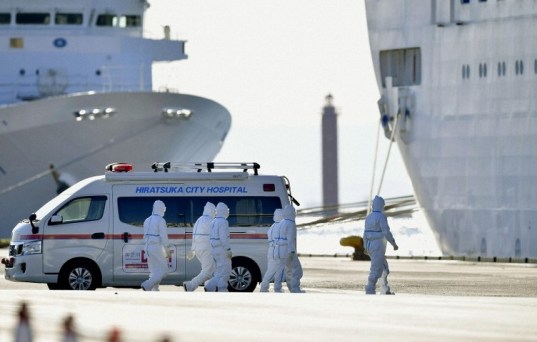
Japan wants cruise ship infected separated from country’s total over economy fears
The plutonium dilemma – Japan and UK


 What should be done with Japan’s plutonium now stored in the UK? ~ Research trip report. BY by Caitlin Stronell, CNIC
From September 11 to 21, Ban Hideyuki and Caitlin Stronell from CNIC visited the UK in order to survey opinions on what should be done with Japan’s 21.2 tons of plutonium presently stored at the Sellafield facility in the UK. As Japan does not have an operating reprocessing plant, spent fuel was shipped to the UK and France for reprocessing and fabrication into MOX fuel from the late 1970s. Including Japan’s 21 tons, a total of approximately 140 tons of separated plutonium are held in the UK, which has offered to take ownership of foreign owned plutonium on its soil, subject to acceptable commercial terms. There have already been several such cases of ownership transfers of plutonium. (For example, in January 2017 the UK took ownership of 600 kg of plutonium previously owned by a Spanish utility and 5 kg previously owned by a German organization.)
Last year Japan’s Ministry for Economy, Trade and Industry (METI) announced that a dialogue concerning plutonium between the UK and Japan had begun. Although the details of this dialogue have not been released, ownership transfer may well be one of the discussion points. If Japan does go through with the ownership transfer, it will be an admission that the plutonium, which it has spent vast sums on extracting from the spent fuel, is not a precious resource at all, but material that now has to be disposed of, again at large cost. This would be another heavy blow against Japan’s reprocessing policy. However, how do people in the UK feel about accepting 21 tons of Japanese plutonium? This was what we tried to find out on our research trip.
Closely related to the issue of plutonium in both Japan and the UK is the issue of nuclear waste and we also wanted to find out about how the UK is planning to deal with this issue, especially in terms of siting a Geological Disposal Facility (GDF). Plans to site the GDF in Cumbria were rejected by the Council in 2013 and since then the national government has introduced a new system where smaller communities are able to request that they be considered as a GDF site. We wanted to find out how people were reacting to this and what the prospects are for the government being able to successfully site a GDF under this system.
We spoke to a large range of people directly concerned with these issues, of course anti-nuclear activists, but also a scientist involved in research on direct disposal methods for plutonium, as well as a number of people who work at Sellafield and local councilors for the area. Their answers to the question of what to do with Japan’s 21 tons of plutonium were varied and, in some cases, a little unexpected. For example, I was expecting that Prof. Neil Hyatt of Sheffield University, who is conducting cutting edge research on plutonium disposal, would be more open to accepting Japan’s plutonium, but he expressed some hesitation, saying that if the UK government agrees to take ownership of such a large amount of plutonium, it will break trust with local people by increasing their waste burden.
Divided opinions
We also noticed a split opinion between the two Cumbrian Councillors we interviewed. Cumbria is the county where the Sellafield Site is located and the nuclear industry obviously plays an important part in the local economy and politics………
The NDA is also tasked with siting the GDF for radioactive waste, which has proved to be a difficult task indeed, as it is all over the world, including in Japan where little progress has been made. There have been three attempts so far in the UK to try to decide on a site for the GDF, none of which have yielded results and so a new process for finding a GDF site began in January 2019. This process allows any community, no matter how small, to express an interest in starting a dialogue regarding hosting a GDF. …….
These and many other campaigns led by local communities show that the authorities and industry claims of transparency and safety cannot be trusted and in this sense it was easy to understand comments by Cr. Celia Tibble regarding the public reaction if the UK government were to accept Japanese plutonium. It would be seen as another lie and breach of trust…….
Conclusion
I thought that there were many similarities between the situation in Japan and in the UK regarding nuclear fuel cycle policy. Both countries must deal with massive amounts of plutonium, extracted at huge cost and risk, which now has no apparent use. Both the governments of Japan and the UK try to convince themselves and the world that it can be used as MOX fuel, but without a fabrication plant or sufficient MOX reactors, this solution is totally unconvincing. In the UK, it seems at least some industry people are facing up to this reality. In Japan, however, the government, at least at a policy level, hasn’t even faced up to the reality that plutonium is not a resource. Transferring ownership of its 21 tons of plutonium held in Sellafield to the UK would be an important step in facing up to this reality and could open the door to more practical and constructive discussions on how to reduce the plutonium stockpile. These discussions will not be easy and require an honest and concerted effort on the part of local and national governments, industry, communities and citizens. https://cnic.jp/english/?p=4681
5.2-magnitude earthquake near Fukushima
 Japan is rattled by 5.2-magnitude earthquake near Fukushima, Daily Mail UK
- The earthquake struck around 20 miles off the coast of Fukushima province
- Witnesses said they had felt a 10-second long shake during the tremor today
- No tsunami warning has been put in place by Japan’s meteorological agency
By TIM STICKINGS , 12 February 2020 Japan was rattled by a 5.2-magnitude earthquake off the coast of Fukushima province today.
The quake struck just over 50 miles from the city of Fukushima where the nuclear disaster occurred in 2011.
Witnesses said they had felt a 10-second long shake during the tremor at around 7.30pm local time.
No tsunami warning has been put in place by Japan’s meteorological agency.
The US Geological Survey said today’s earthquake had struck at a depth of around 50 miles under the sea.
One witness told earthquake monitoring service EMSC that the quake produced a ‘weak but long shake’ lasting about 10 seconds.
Another said their heater had moved around on its four wheels while making a sound.
Officials in Fukushima prefecture warned residents that there could be aftershocks and directed them to official public safety advice. Energy company TEPCO, which runs four nuclear power plants in the prefecture, said it was awaiting further information about the earthquake’s impact. …..https://www.dailymail.co.uk/news/article-7995301/Japan-rattled-5-2-magnitude-earthquake-near-Fukushima.html
1 This Month
Chernobyl: The Lost Tapes – A good documentary on Chernobyl on SBS available On Demand for the next 3 weeks– https://www.sbs.com.au/ondemand/tv-program/chernobyl-the-lost-tapes/2352741955560

of the week–London Campaign for Nuclear Disarmament

Tell the Ukrainian Government to Drop Prosecution of Peace Activist Yurii Sheliazhenko
To see nuclear-related stories in greater depth and intensity – go to https://nuclearinformation.wordpress.com
-
Archives
- April 2026 (139)
- March 2026 (251)
- February 2026 (268)
- January 2026 (308)
- December 2025 (358)
- November 2025 (359)
- October 2025 (376)
- September 2025 (257)
- August 2025 (319)
- July 2025 (230)
- June 2025 (348)
- May 2025 (261)
-
Categories
- 1
- 1 NUCLEAR ISSUES
- business and costs
- climate change
- culture and arts
- ENERGY
- environment
- health
- history
- indigenous issues
- Legal
- marketing of nuclear
- media
- opposition to nuclear
- PERSONAL STORIES
- politics
- politics international
- Religion and ethics
- safety
- secrets,lies and civil liberties
- spinbuster
- technology
- Uranium
- wastes
- weapons and war
- Women
- 2 WORLD
- ACTION
- AFRICA
- Atrocities
- AUSTRALIA
- Christina's notes
- Christina's themes
- culture and arts
- Events
- Fuk 2022
- Fuk 2023
- Fukushima 2017
- Fukushima 2018
- fukushima 2019
- Fukushima 2020
- Fukushima 2021
- general
- global warming
- Humour (God we need it)
- Nuclear
- RARE EARTHS
- Reference
- resources – print
- Resources -audiovicual
- Weekly Newsletter
- World
- World Nuclear
- YouTube
-
RSS
Entries RSS
Comments RSS
 nuclear-news