16 Japanese Financial institutions won’t invest in companies involved in nuclear weapons
 Many Japanese lenders refuse to invest in companies linked to nuclear arms https://www.japantimes.co.jp/news/2020/05/03/business/corporate-business/many-japanese-lenders-refuse-invest-companies-linked-nuclear-arms/#.Xq8zaqgzbIU
KYODO Sixteen Japanese financial institutions say they refrain from investing in and extending loans to companies involved in the manufacturing of nuclear weapons and delivery systems, according to a Kyodo News survey released Sunday.
The survey found the lenders set guidelines for such issues in an effort to avert international criticism against conducting business with nuclear-related companies amid growing public perceptions about the inhumane nature of nuclear weapons and other weapons of mass destruction.
The 16 lenders include three megabanks — MUFG Bank under Mitsubishi UFJ Financial Group Inc., Mizuho Bank under Mizuho Financial Group Inc., and Sumitomo Mitsui Banking Corp. under Sumitomo Mitsui Financial Group Inc. — as well as Japan Post Bank Co. and Resona Bank under Resona Holdings Inc.
Kyodo sent a written questionnaire to a total of 119 city banks, regional banks and online banks from late February to early March. Of those, 35 responded.
About 70 percent of the total did not answer because they said they have never discussed the issue.
A Resona Bank official said the Osaka-based lender drew up written rules in March 2018 that it will not invest in nuclear, anti-personnel mines and other such fields due to rising international criticism against conducting businesses with companies involved in the manufacturing and development of weapons of mass destruction.
Eleven other lenders possessing such guidelines are Saitama Resona Bank in Saitama Prefecture, Aozora Bank in Tokyo, SBI Sumishin Net Bank, Hokkaido Bank and North Pacific Bank in Hokkaido, Tohoku Bank in Iwate Prefecture, Ogaki Kyoritsu Bank in Gifu Prefecture, Kansai Mirai Bank in Osaka Prefecture, Minato Bank in Hyogo Prefecture, Higo Bank in Kumamoto Prefecture and Kagoshima Bank in Kagoshima Prefecture.
According to the survey, nine respondents including Hokkaido Bank, the Bank of Kochi in Kochi Prefecture and Oita Bank in Oita Prefecture said they backed the Treaty on the Prohibition of Nuclear Weapons.
Of 20 lenders expressing reservation about the 2017 U.N. nuclear ban treaty, five questioned the Japanese government’s reluctance to sign it.
Japan does not possess nuclear weapons but remains under the nuclear umbrella of the United States.
Twelve respondents including Tohoku Bank, Higo Bank and the Bank of Toyama in Toyama Prefecture said they think the adoption of the U.N. pact would generate risks in the future to investment in nuclear-related companies.
None of the 35 respondents said they have provided funds to companies developing intercontinental ballistic missiles, bombers capable of loading nuclear weapons and other nuclear weapons-linked infrastructure.
However, the three megabanks declined to disclose their investments in nuclear-related companies.
 While welcoming the 16 lenders for supporting such guidelines, the International Campaign to Abolish Nuclear Weapons, or ICAN, a nongovernmental organization and the 2017 Nobel Peace Prize laureate, said it suspects some still continue to invest in nuclear-related businesses.
“Companies that manufacture nuclear weapons conduct businesses in other areas,” said Akira Kawasaki, a member of the International Steering Group of ICAN. “We see it as a perception gap between us and some banks that claim they abstain from investing in nuclear weapons manufacturing businesses.”
ICAN wants those banks to disclose details about their guidelines, Kawasaki said.
Half of highly radioactive exhaust stack dismantled at Fukushima Nuclear Reactor 1
Asahi Shimbun 30th April 2020, Work to dismantle the upper half of an exhaust stack at the crippled Fukushima No. 1 nuclear power plant finished on April 29, the first time a
structure highly contaminated by radiation was dismantled at the plant. The
chimney, which is 120 meters tall and about 3 meters in diameter, was used
for the No. 1 and No. 2 reactors of the plant, operated by Tokyo Electric
Power Co. On the morning of April 29, workers spent an hour to lower sliced
parts of the stack to the ground from a height of about 60 meters. With its
upper half removed, the chimney now stands 59 meters high.
Animals in radiation zones are not doing well

above – Chernobyl bird at right has facial tumour
Not thriving, but failing https://beyondnuclearinternational.org/2018/03/11/not-thriving-but-failing/ https://beyondnuclearinternational.org/2018/03/11/not-thriving-but-failing/ Animals in radiation zones are not doing well, By Linda Pentz Gunter
It started with wolves. The packs around the Chernobyl nuclear plant, which exploded on April 26, 1986, were thriving, said reports. Benefitting from the absence of human predators, and seemingly unaffected by the high radiation levels that still persist in the area, the wolves, they claimed, were doing better than ever.
Appearances, however, can be deceptive. Abundant does not necessarily mean healthy. And that is exactly what evolutionary biologist, Dr. Timothy Mousseau and his team began to find out as, over the years, they traveled to and researched in and around the Chernobyl disaster site in the Ukraine. Then, when a similar nuclear disaster hit in Japan — with the triple explosions and meltdowns at Fukushima Daiichi on March 11, 2011 — Mousseau’s team added that region to its research itinerary.
Mousseau has now spent more than 17 years looking at the effects on wildlife and the ecosystem of the 1986 Chernobyl nuclear disaster. He and his colleagues have also spent the last half dozen years studying how non-human biota is faring in the wake of Fukushima. Ninety articles later, they are able to conclude definitively that animals and plants around Chernobyl and Fukushima are very far indeed from flourishing.
Mousseau’s findings strongly contradicted earlier work including the 2006 Chernobyl Forum report which claimed the Chernobyl zone “has become a wildlife sanctuary,” and a subsequent article published in Current Biology in 2015 that said wildlife was “thriving”around Chernobyl.
“I suppose everyone loves a Cinderella story,” speculated Mousseau, who is based at the University of South Carolina. “They want that happy ending.” But Mousseau felt sure the moment he read the Forum report, which, he noted, “contained few scientific citations,” that the findings “could not possibly be true.
What Mousseau found was not unexpected given the levels of radiation in these areas and what is already known about the medical effects of such long-term exposures. Birds and rodents had a high frequency of tumors.
“Cancers are the first thing we think about,” Mousseau said. “We looked at birds and mice. In areas of higher radiation, the frequency of tumors is higher.” The research team found mainly liver and bladder tumors in voles and tumors on the head, body and wings of the birds studied.
But Mousseau wanted to look beyond cancers, which is what everyone expects to find and what researchers had looked for, but only in humans. There were few wildlife studies, a fact Mousseau found surprising, given nature’s ability to act as a sentinel for likely impending human health impacts.
Mousseau and his fellow researchers found cataracts in birds and rodents. Male birds had a high rate of sterility. And the brains of birds were smaller. All of these are known outcomes from radiation exposure.
“Cataracts in birds is a problem,” Mousseau said. “A death sentence.”
Mental retardation has been found among children exposed to radiation in utero. Mousseau and colleagues discovered the same pattern in the birds they studied. “Birds already have small brains, so a smaller brain size is a definite disadvantage,” he said.
There were also just fewer animals in general. “There were many fewer mammals, birds and insects in areas of higher radiation,” Mousseau said. And they had their hunch as to why.
He and his colleagues extracted sperm from the male birds they caught and were shocked to find that “up to 40% of male birds in the radiologically hottest areas were sterile.”
The birds’ sperm were either deformed or dead. None would be able to reproduce. The discovery, he said, was “not at all surprising. These are the levels of radiation known to influence reproduction. At the same time, there is no safe level of radiation below which there aren’t detectable effects.”
Fewer birds have already been observed in the contaminated areas around Fukushima, said Mousseau. “Although it’s too early to assess the long term impact on abundance and diversity around Fukushima, there are very few butterflies and many birds have declined in the more contaminated areas. If abundance is compressed, biodiversity will follow.”
The consequences of radiation exposure, says Mousseau, “will have a tremendous impact on the quality of life of these animals, and the length of quality of life. It need not necessarily be cancers,” that cause these damages he said. “There is no doubt that the levels of radiation in Chernobyl and Fukushima generate genetic damage.”
Read more about Dr. Timothy Mousseau’s work.
Buildings around Fukushima Daiichi nuclear plant in poor condition, unsafe
The company says the condition of around 10 buildings, including the one that houses the No.4 reactor, have deteriorated due to the tsunami that triggered the accident and subsequent hydrogen explosions.
The NRA argues that the walls or other structures of these buildings could collapse in the event of an earthquake and injure people engaged in decommissioning work.
TEPCO says it will announce by the end of May how and when it will address the problem.
The utility also says it has inspected 340,000 pieces of equipment at the plant, and found that 36,000 of them lack devices that prevent leaks of radioactive materials as well as leak detectors.
New tsunami estimates for megaquakes off Japan

April 21, 2020
A Japanese government panel says tsunami waves measuring more than 20 meters high could hit northern Japan if a megaquake of magnitude 9 or stronger occurs in one of two deep-sea trenches.
The government panel has been studying the possible scale of an earthquake, and tsunami waves it could trigger, in either a part of the Chishima Trench or the Japan Trench. The targeted area of the Chishima Trench extends from the Kuril Islands to Hokkaido while the area of the Japan Trench extends from Hokkaido to Iwate Prefecture. The study began after the 2011 disaster in northeastern Japan.
The panel’s latest estimate says a quake along the Chishima Trench would have a magnitude of 9.3.
Parts of eastern Hokkaido would be hit by tremors with an intensity of six-plus to seven on the Japanese scale of zero to seven.
A wide area of eastern Hokkaido would see tsunami more than 20 meters high. Waves could reach 27.9 meters in the town of Erimo.
A quake along the Japan Trench would have a magnitude of 9.1. Parts of Aomori and Iwate prefectures could have tremors with an intensity of six-plus.
Tsunami waves would top ten meters in northeastern Japan. Hachinohe City in Aomori Prefectures would be hit by tsunami as high as 26.1 meters, and Miyako City in Iwate Prefecture as high as 29.7 meters. Some areas could be hit by waves higher than those that struck in 2011.
As these areas have had powerful earthquakes in the past, the panel says massive tsunami can strike at any time.
The Cabinet Office plans to estimate the extent of damage and draw up disaster control measures based on these new figures by the end of March next year.
Tsunami could overtake Fukushima Daiichi’s seawall
Tsunami could overtake Fukushima Daiichi’s seawall, https://www3.nhk.or.jp/nhkworld/en/news/20200422_03/
An estimate by a Japanese government panel suggests that tsunami could overwhelm a new seawall at the Fukushima Daiichi nuclear power plant, if a mega-quake occurs in a deep-sea trench off northeastern Japan.
The panel of experts on Tuesday released its projection of the scale of tsunami that could be triggered by a massive quake along the Japan Trench.
The panel expects that waves as high as 13.7 meters could hit Futaba Town, Fukushima Prefecture, where the plant is located.
That is higher than the 11-meter-high seawall being built on the ocean side of the compound. The wall is one of the anti-tsunami measures taken by Tokyo Electric Power Company as it decommissions the plant.
Other measures include blocking the openings of the reactor buildings and deploying power supply vehicles on higher ground to continue cooling spent nuclear fuel.
TEPCO says it will examine the estimate and consider what measures to take.
- Nearly 1,000 tanks of radioactive wastewater are stored in the compound. The operator says the projected tsunami won’t reach the higher ground where they are located
Japanese government panel warns on risk that tsunami could overwhelm Fukushima nuclear plant in future Japan earthquake
“A massive earthquake of this class (shown in the simulation) would be difficult to deal with by developing hard infrastructure (such as coast levees),” seismologist Kenji Satake, a University of Tokyo professor and head of the panel said Tuesday. “To save people’s lives, the basic policy would be evacuation.”A future mega-quake in the Japan Trench, which extends off Hokkaido, the northernmost of Japan’s main islands, to Boso Peninsula east of Tokyo, or in the Kuril Trench, which goes from Hokkaido to Russia’s Kuri Island, could yield disastrous results.
TEPCO currently stores about 1.2 million tons of radioactive water and only has space to hold up to 1.37 million tons, or until the summer of 2022. The water — leakage of contaminated cooling water from damaged reactors mixed with groundwater — has accumulated since the accident. It is constantly pumped up, treated and stored in tanks, while part of it is recycled as coolant.
The company said Wednesday it’s assessing the new government report…….. https://www.foxnews.com/world/tsunami-fukushina-nuclear-plant-japan-wrecked-future-earthquake-government-report-disaster
To help future generations, Fukushima mothers have become radiation scientists
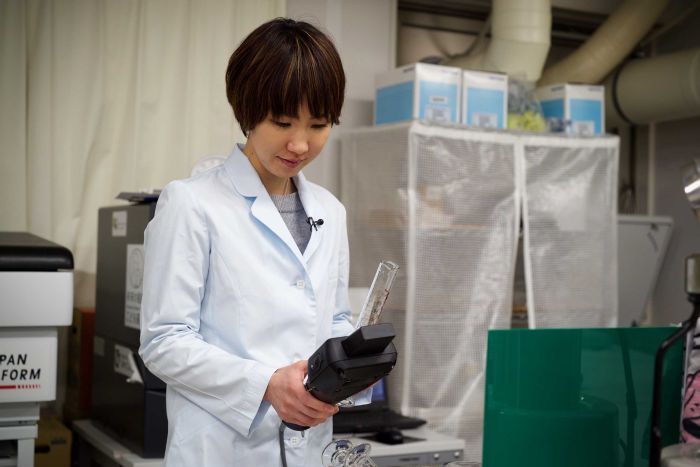
Fukushima mothers record radiation for future generations, Japan Times ,BY YUKA NAKAO, KYODO IWAKI, FUKUSHIMA PREF 10 Apr 20, . – A group of more than 10 mothers set up a citizen-led laboratory to monitor radiation levels in Fukushima communities only months after a massive earthquake and tsunami caused meltdowns at a nuclear power plant in the prefecture nine years ago.Since the foundation of the institute on Nov. 13, 2011, it has been recording and disclosing radiation data on foodstuffs and soil it collected or were brought in by people from different parts of the prefecture, as well as seawater off the Fukushima No. 1 nuclear power plant.
“If the risks of nuclear power had been thoroughly verified by the previous generations, I think the disaster would not have happened,” Kaori Suzuki, 54, an executive of Mothers’ Radiation Lab Fukushima, based in Iwaki, said in a recent interview.
“But since it did occur, what we must do now is record our measurements and changes in the environment so we won’t make the same mistake,” said Suzuki, one of the founding members. “Passing down something that will be useful when major decisions must be made is the only thing we can do.”
The laboratory of 18 staff members, many of them mothers who mostly had no prior experience in measuring radiation, have trained themselves with support from scientists, and they now gauge levels of cesium 134, cesium 137, tritium and strontium 90 with five types of machines.
Samples they have measured include dust in vacuum cleaners, vegetables grown in home gardens, seasonal mushrooms picked in mountains and soil gathered in parks.
They have occasionally detected radiation above safety levels, and reports the lab releases every month on its website have specified which machine is used and other details for each outcome to make their activities as transparent as possible.
Their efforts have made academic contributions as well, with their measuring methods and results published in scientific journals such as Applied Radiation and Isotopes in 2016.
Suzuki said they started the initiative out of desperation to protect their children.
“We had to measure and eat. It was a matter of life and death,” the mother of two said. ….
As time goes by, Tanaka has found that fewer people are discussing radiation effects.
The number of samples brought in by citizens last year was 1,573, up 131 from the year before, but it is showing a decreasing trend overall compared to years before, according to the lab.
“The Olympic Games are coming, and there are fewer media reports on radiation levels than before,” she said.
Officials have dubbed the Tokyo Summer Games the “Reconstruction Olympics,” with the hope of showcasing the country’s recovery from the 2011 catastrophe.
Because of that concept, the starting point of the Japan leg of the torch relay for the Olympics, which were recently put off for a year to the summer of 2021 due to the global coronavirus pandemic, was a soccer training center in Fukushima Prefecture that served as a front-line base in the battle against the nuclear disaster.
Tanaka said logging accurate data and keeping them publicly available are all the more important. “To protect children, having information is essential in deciding what to eat or where to go,” she said, adding that judgments based on correct data will also prevent any discrimination…….
Kimura said she feels that the fears people have toward the new coronavirus are similar to those toward radiation, as they are both invisible.
“Everyone forgets about (radiation) because its effects in 10 or 20 years are uncertain, unlike the new coronavirus that shows pneumonia-like symptoms in a couple of weeks,” she said. “I realized again that people in affected areas like us have been living every day with the same feelings toward the coronavirus pandemic.”
“It’s exhausting,” she said, adding her daughters must have had a hard time as she made them do things differently from their friends, such as wearing masks. “But I felt I was not wrong when my daughter said to me recently, ‘I was being protected by you, mom.’”
In addition to conducting surveys on radiation readings in the environment and food items, the lab in May 2017 opened a clinic with a full-time doctor to provide free medical checkups on internal exposure.
“I think it’s necessary to keep checking children’s health as they grow up, rather than drawing a conclusion saying there won’t be any problem with this level of radiation exposure,” said Misao Fujita, 58, a doctor who is a native of Tochigi Prefecture.
Fujita said the amount of radiation exposure dosage and risks of health damage differ among children even if they live in the same area, depending on such factors as their location and behavior in the days after the nuclear disaster, whether they evacuated and what they eat now.
Those who underwent Fujita’s medical checkups when they were children include a woman who now takes her own child to the clinic, in addition to a number of young decontamination workers.
“The nuclear disaster is something that’s carried on to coming generations. That’s what we have left,” Fujita said. “We must also not forget that about 30,000 people are still unable to return to their hometowns in the prefecture. The disaster isn’t over yet.” https://www.japantimes.co.jp/news/2020/04/10/national/social-issues/fukushima-mothers-record-radiation/#.XpESi_gzbIU
Coronavirus question mark still hangs over Tokyo Olympics in 2021
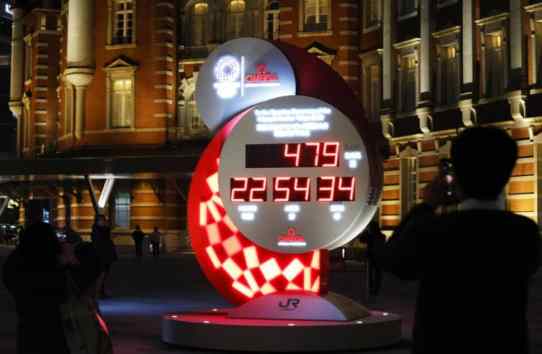 A passerby takes photos of a countdown clock in front of Tokyo Station on Monday showing the adjusted days and time for the start of the postponed Tokyo Olympic Games, which are now set to begin on July 23, 2021.
March 31, 2020
Although this summer’s Tokyo Olympics and Paralympics were postponed by about a year due to the new coronavirus pandemic, the lingering question is whether the global health crisis will be under control by then.
The capital is facing a mounting challenge following the first Olympic postponement in history, with local organizers confronted with the task of reworking the preparations of the last six years.
The International Olympic Committee and the local organizers agreed Monday that the Tokyo Olympics, originally set to open on July 24 this year, will run between July 23 and Aug. 8, 2021, followed by the Paralympics from Aug. 24 to Sept. 5.
The IOC has stressed the importance of holding the Tokyo Games in 2021, with President Thomas Bach saying the sporting event can be a “celebration of humankind after having overcome the unprecedented challenge of the coronavirus.”
However, even as the organizers try to settle one problem after another, ranging from securing venues and lodging for athletes and officials, gathering volunteers and figuring out how to shoulder the additional costs, the key to hosting a successful Tokyo Games is something they cannot control by themselves.
On March 24, Prime Minister Shinzo Abe and Bach agreed to hold the Tokyo Olympics in the summer of 2021 at the latest after they were pressured by athletes to make changes to the schedule to prevent a further spread of the coronavirus and to provide them a chance to prepare fully.
Yoshiro Mori, president of the Tokyo Organising Committee, said at a press conference shortly after the agreement was reached that the virus is their “top concern” but that he expects the situation will change due to medical advancements.
Kazuhiro Tateda, who heads the Japanese Association for Infectious Diseases, says whether infections of COVID-19, the respiratory disease caused by the new coronavirus, could be drastically curtailed by next summer is still unknown, but predicts the pace of the spread will decelerate.
“The new coronavirus has been spreading at a very rapid pace,” Tateda said. “In the next few months, the virus will spread in both the northern and southern hemispheres. If those people who recovered become immune to the virus, we can say that the outbreak will settle down.”
“But we can’t tell what the situation is like in a year,” he said.
Speaking at the press conference with Mori, the organizing committee’s CEO, Toshiro Muto, said a one-year postponement was a “reasonable” decision at a time when no health experts can say for sure when the pandemic will end.
The March 24 decision came just two days before the initial start of the 121-day torch relay in Japan and exactly four months ahead of the opening of the Olympics.
It was also made on the day Tokyo overtook Hokkaido as the region with the most infections.
“If I’m asked whether the coronavirus (situation) settles in the summer of next year, I can’t say that it will be absolutely fine,” Muto said. “But if something like that happens, not only Japan but also the rest of the world will be in a devastating situation. I predict people to come up with new drugs if that’s the case.”
Tateda, a member of the government’s panel of experts, said the organizers made a “rational” choice, but they need to monitor the situation throughout their preparation period and make changes to the schedule if necessary.
Meanwhile, Koji Wada, a professor at the International University of Health and Welfare, says staging the Olympics next summer could be “difficult,” given that the pneumonia-causing virus has spread to all of the world’s seven continents except Antarctica since it broke out in China late last year.
“I think it’s a little too optimistic to assume that many people will become immune to the virus in one year and three months and be able to travel back and forth,” he said in a recent interview.
“Two years might have been better, but barely possible. Even then, there will be cases of infections around the world, and the games will have to go ahead under tough circumstances,” he said.
Wada said staging the Olympics and Paralympics will be different from any other event because a huge number of athletes and spectators from all over the world will gather, and the development of vaccinations and medications will be unlikely in a year.
“It is difficult to place countermeasures against infections to athletes,” he said. “What are they going to do with athletes who come from countries that still have cases of infection? People will suggest putting them under quarantine for about two weeks, but what would happen if that athlete tests positive?”
The European Union’s disease control body released a report on March 25 saying that the summer heat and humidity will be unlikely to prevent the virus from spreading, adding there is no evidence that COVID-19 displays a marked seasonality.
“Based on preliminary analyses of the COVID-19 outbreak in China and other countries, high reproductive numbers were observed not only in dry and cold districts but also in tropical districts with high absolute humidity, such as Guangxi (China) and Singapore,” the European Centre for Disease Prevention and Control said in the report.
Wada warns that holding the Summer Games when the virus situation is not under control will take away from the fairness of the sporting extravaganza.
In particular, it would be difficult for athletes competing in contact sports, such as wrestling and judo.
The Tokyo Games are not the first games to be threatened by global health issues.
The 2010 Vancouver Winter Games were held following the outbreak of swine flu the previous year, while the previous Summer Games in Rio de Janeiro were held amid fears over the mosquito-transmitted Zika virus.
However, Wada said the new virus is not like any other, characterizing it as “nothing we have experienced in recent history.”
“The coronavirus is very difficult compared to other viruses because it spreads through people who do not show symptoms. And since none of us are immune to it, it can spread all over the world,” he said.
Tokyo Olympics and Paralympics: New dates confirmed for 2021
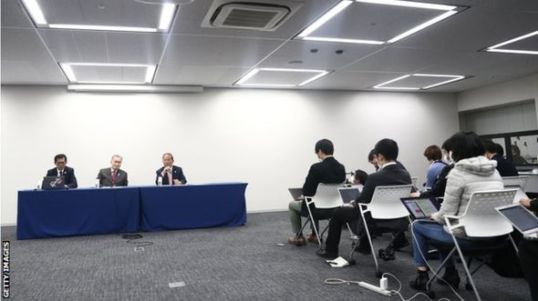 Tokyo 2020 president Yoshiro Mori (centre, at table) made the announcement at a news conference on Monday
30 March 2020
The Tokyo Olympic Games will start on 23 July, 2021 and run to 8 August after being postponed for a year because of the coronavirus pandemic.
The International Olympic Committee’s (IOC) executive board met on Monday to make the decision.
The Olympics will still be called Tokyo 2020 despite taking place in 2021.
The Paralympic Games, originally due to start on 24 August, 2020, will now take place between 24 August and 5 September, 2021.
IOC president Thomas Bach said: “I am confident that, working together with the Tokyo 2020 Organising Committee, the Tokyo Metropolitan Government, the Japanese Government and all our stakeholders, we can master this unprecedented challenge.
“Humankind currently finds itself in a dark tunnel. These Olympic Games Tokyo 2020 can be a light at the end of this tunnel.”
International Paralympic Committee president Andrew Parsons added: “When the Paralympic Games do take place in Tokyo next year, they will be an extra-special display of humanity uniting as one, a global celebration of human resilience and a sensational showcase of sport.
“With the Tokyo 2020 Paralympic Games 512 days away, the priority for all those involved in the Paralympic movement must be to focus on staying safe with their friends and family during this unprecedented and difficult time.”
If that is moved back exactly a year it would clash with the Commonwealth Games in Birmingham which is set to take place between 27 July and 7 August.
“We support the new 2021 dates for the Tokyo 2020 Olympic Games. This gives our athletes the time they need to get back into training and competition,” World Athletics said in a statement.
“Everyone needs to be flexible and compromise and to that end we are now working with the organisers of the World Athletics Championships in Oregon on new dates in 2022.
“We are also in discussions with the Commonwealth Games Federation (CGF) and the European Championships.”
Chief executive of the CGC David Grevemberg said his organisation is “fully committed to hosting a successful Commonwealth Games in Birmingham, England, during 2022”.
He added: “Over the coming days, we will continue to work collaboratively with our international federation partners to ensure the XXII Commonwealth Games maintains its position and stature on the global sporting calendar.”
Olympic organisers hope the delay will allow sufficient time to finish the qualification process which will follow the same mitigation measures planned for 2020.
It has previously been confirmed that all athletes already qualified and quota places already assigned will remain unchanged.
Purchased tickets would be valid for rescheduled events or a refund could be requested when the new dates were set, organisers previously confirmed.
On 24 March, Japan’s Prime Minister Abe Shinzo said the Games would be held in their “complete form” and no later than summer 2021.
Tokyo 2020 organising committee president Yoshiro Mori said he had proposed the 23 July to 8 August timeframe to the IOC, and that Bach had agreed, following consultations with the international sports federations.
“A certain amount of time is required for the selection and qualification of athletes and for their training and preparation, and the consensus was that staging the rescheduled Games during the summer vacation in Japan would be preferable,” Mori said.
“In terms of transport, arranging volunteers and the provision of tickets for those in Japan and overseas, as well as allowing for the Covid-19 situation, we think that it would be better to reschedule the Games to one year later than planned, in the summer of 2021.”
It is the first time in the Olympic Games’ 124-year modern history that they have been delayed, though they were cancelled altogether in 1916 because of World War One and again in 1940 and 1944 for World War Two. Cold War boycotts affected the summer Games in Moscow and Los Angeles in 1980 and 1984 respectively.
BPA “praises speed” of decision
The British Paralympic Association (BPA) has “praised the speed” with which the Tokyo 2020 Games have been rescheduled and hopes it will give athletes the “certainty they need to refocus on achieving their goals”.
Mike Sharrock, chief executive of the BPA, said: “”We recognise many challenges still lie ahead in the battle with the global Covid-19 pandemic and athletes will not be able to return to their training schedules for some time yet.
“The clear priority now is stemming this public health crisis and ensuring people follow the Government advice to stay safe and well.”
Sharrock added he believes Tokyo 2020 “has the potential to be the biggest and best Paralympics in history”.
Fukushima Daiichi nuclear power plant’s deadly hazard – highly radioactive sandbags
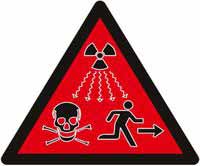 Nuclear sandbags too hot to handle, https://www.theaustralian.com.au/world/the-times/nuclear-sandbags-too-hot-to-handle/news-story/87b811443cb8e2881f55e17108872880 By RICHARD LLOYD PARRY, THE TIMES. APRIL 1, 2020
- Japanese engineers trying to dismantle the melted reactors at the Fukushima Daiichi nuclear power plant face a new hazard — radioactive sandbags so deadly that standing next to them for a few minutes could be fatal.
The sandbags were intended to make life easier for the teams dealing with the aftermath of the nuclear disaster in 2011 when three reactors melted after a tsunami destroyed their cooling systems. Twenty-six tonnes of the bags were placed in basements beneath two of the reactors to absorb radioactivity from waste water.
They were stuffed with zeolite, minerals that can absorb caesium. Nine years after the disaster, the submerged sandbags have sucked up so much radiation that they now represent a deadly danger themselves.
Samples of zeolite removed from the bags contain caesium, producing huge amounts of radiation, while the sandbags are giving off up to four sieverts of radiation an hour. Fifteen minutes of exposure to this could cause haemorrhaging. After an hour, half of those exposed would eventually die as a result. The maximum lifetime recommended dose of radiation for humans is less than half a sievert.
Tokyo Electric Power Co (Tepco), which operates the plant, had intended to remove the contaminated water by the end of 2020. The complication caused by the sand means it will take three years longer, the latest delay to the decommissioning.
Tepco managers have admitted that the technology needed to finish the job does not exist and they do not have a full idea of how it will be achieved. Their stated goal of decommissioning by 2051 may be impossible, they said.
One of the biggest problems is the 170 tonnes of irradiated water coming out of the plant every day, much of it natural ground water that flows through the earth towards the sea, picking up radiation on the way. Tepco pumps it out and stores it in huge storage tanks, filtered of some, but not all, of its contaminants — 1.17 million tonnes so far. In two years, the storage space will run out.
The government wants to pour the water away, insisting that the diluting effect of the Pacific will render the radiation harmless, but it is opposed by North and South Korea and the local fishing industry, whose reputation has been ruined by the disaster.
TEPCO’s staggering costs to remove melted nuclear fuel from Fukushima’s crippled reactors
 TEPCO puts cost to remove melted nuclear fuel at over 1 trillion yen, http://www.asahi.com/ajw/articles/13259804, By RINTARO SAKURAI/ Staff Writer, March 31, 2020 Tokyo Electric Power Co. estimates that 1.37 trillion yen ($12.6 billion) will be needed over 12 years to remove melted nuclear fuel from reactors at the crippled Fukushima No. 1 nuclear power plant.TEPCO’s announcement on March 30 covers only two of the three reactors that suffered meltdowns triggered by the 2011 Great East Japan Earthquake and tsunami. TEPCO puts cost to remove melted nuclear fuel at over 1 trillion yen, http://www.asahi.com/ajw/articles/13259804, By RINTARO SAKURAI/ Staff Writer, March 31, 2020 Tokyo Electric Power Co. estimates that 1.37 trillion yen ($12.6 billion) will be needed over 12 years to remove melted nuclear fuel from reactors at the crippled Fukushima No. 1 nuclear power plant.TEPCO’s announcement on March 30 covers only two of the three reactors that suffered meltdowns triggered by the 2011 Great East Japan Earthquake and tsunami.
No estimate was attempted for the cost to prepare for the removal of melted nuclear fuel from the No. 1 reactor. The situation at that reactor is the most difficult among the three reactors, and TEPCO officials are still struggling to come up with a plan for removing the debris from within. The estimate covers the period between fiscal 2020 and fiscal 2031. Of that amount, 350 billion yen will be applied as a special loss to the company’s balance statement for the fiscal year ending March 31, 2020. The utility had already released its plan for decommissioning the three reactors, which foresaw a start to removing melted nuclear fuel from the No. 2 reactor before the end of 2021, while removal would begin for the No. 3 reactor by 2031. In announcing its expected profits for the current fiscal year, TEPCO also outlined its estimated expenses for melted fuel removal over the next 12 years. A total of 330 billion would be needed as preparatory measures, such as further examining the interior of the No. 2 reactor and decontaminating radiation from the area around the three reactors. Another 20 billion yen is expected to be spent for trial removal of melted nuclear fuel from the No. 2 reactor, while 1.02 trillion yen would be required to construct the facilities needed to remove the melted fuel from the No. 2 and No. 3 reactors. The construction cost would be written off as a special loss from TEPCO’s balance statement in the fiscal year when the work takes place. TEPCO forecasts a net profit of 79 billion yen for the current fiscal year, a decrease of 66 percent from fiscal 2019. Sales are expected to decrease by 2.2 percent to 6.199 trillion yen. |
|
Countries may use coronavirus crisis to rein in climate commitments: Japan a case in point
Campaigners attack Japan’s ‘shameful’ climate plans release
Proposals criticised amid fears countries may use coronavirus crisis to rein in commitments, Guardian, Fiona Harvey Environment correspondent 30 Mar 20, Japan has laid out its plans to tackle greenhouse gas emissions under the Paris agreement in the run-up to UN climate talks this year, becoming the first large economy to do so.
But its proposals were criticised by campaigners as grossly inadequate, amid fears the Covid-19 crisis could prompt countries to try to water down their climate commitments.
The UK, which will host the talks, hopes every country will produce renewed targets on curbing emissions and achieving net zero carbon by 2050.
New commitments are needed to achieve the Paris goals of holding temperature rises to no more than 2C, and ideally 1.5C, above pre-industrial levels, as on current national targets the world would far exceed those limits.
Japan’s carbon targets – known as its nationally determined contribution (NDC) in the UN jargon – as announced on Monday morning are almost unchanged from its commitments made in 2015 towards the Paris accord, however.
The country’s target of a 26% reduction in emissions by 2030, based on 2013 levels, is rated as “highly insufficient” by the Climate Action Tracker analysis, meaning that if all targets were at this level, temperature rises would exceed 3C.
The country, the world’s fifth biggest emitter and third biggest economy, is one of the only developed countries still building new coal-fired power stations, although there are signs it may hold back……
Campaigners fear the coronavirus pandemic will be seen by some countries as a way to weaken their commitment to the Paris accord and present less stringent targets instead of the strong cuts needed.
“Japan should not slow down climate actions even amid the Covid-19 global fights, and must revisit and strengthen this plan swiftly in order to be in line with the Paris agreement,” said Kimiko Hirata, the international director of the Kiko Network, a climate group in Japan……
Environmental regulations and climate commitments have come under attack in the context of the coronavirus crisis. Under Donald Trump’s administration in the US, the Environmental Protection Agency has rolled back key regulations including car efficiency standards. In the EU, carmakers wrote to the European commission last week to demand a loosening of requirements on them to cut carbon.
There is still scope for Japan to revise its targets. Other countries have yet to submit their detailed NDCs, but several – including the UK and the EU, and more than 70 smaller economies – made public their intention to reach net zero carbon by 2050, at last year’s UN climate talks in Madrid……. https://www.theguardian.com/environment/2020/mar/30/campaigners-attack-japan-shameful-climate-plans-release
2020 Olympics – Abe’s plan to help the nuclear industry has fallen through
 Abe’s decision to host the Olympics in the first place, and to plan to start the torch relay in Fukushima, as mere pretense that all is well in the prefecture, despite widespread contamination that continues since 2011.
The claim about the necessity of nuclear power makes little sense. Since 2011, the country has been generating only a fraction of the nuclear electricity it used to generate, and yet the lights have not gone off in Japan.
the Abe government seems to be involved in lowering incentives for the development of solar energy, and instead promoting nuclear power.
Efforts by Prime Minister Abe to support the failing and flailing nuclear sector in Japan are indicative of the significant political power wielded by the “nuclear village,” the network of power companies, regulators, bureaucrats and researchers that control nuclear and energy policy. The actions of the nuclear village is one of the factors responsible for the Fukushima accident.

Nuclear flame fizzles in Japan, But leaders still cling to failing nuclear power
Prime Minister Shinzo Abe and the “nuclear village” hoped the Olympics would normalize Japan’s radiological aftermath. But the Fukushima effect has meant zero nuclear exports, leading the government to shore up the nuclear industry at home at the expense of renewables. Beyond Nuclear, By Cassandra Jeffery and M.V. Ramana 29 Mar 20, Last week, International Olympic Committee President Thomas Bach and Japanese Prime Minister Shinzo Abe agreed to delay the 2020 Summer Olympic Games because of the COVID-19 pandemic. However, they will keep the Olympic flame burning in Fukushima Prefecture. The torch relay route was to have begun there, a poor decision, given the meltdown of multiple reactors in Fukushima nine years ago in March 2011. While radiation levels may have declined since 2011, there are still hotspots in the prefecture, including at the sports complex where the torch relay would have begun and along the relay route.
The persistence of this contamination, and the economic fallout of the reactor accidents, should remind us of the hazardous nature of nuclear power. Simultaneously, changes in the economics of alternative sources of energy in the last decade invite us to reconsider how countries, including Japan, should generate electricity in the future….
opposition is evident in Japan too, where opinion polls show overwhelming lack of support for the government’s plans to restart nuclear plants that have been shut down after the Fukushima accidents.
One poll from February 2019 found 56 percent of respondents were opposed to resuming nuclear operations; only 32 percent in favour of resumption. Other polls show significant local opposition, one example coming out of the Miyagi Prefecture, where some local residents have filed an injunction to ban the Miyagi governor from approving a utility plan to restart a nearby reactor.
Even the Japan Atomic Energy Relations Organization, which aims to promote nuclear power, finds that only 17.3 percent of survey respondents prefer nuclear energy, with much larger majorities preferring solar, wind, and hydro power.
The costs of dealing with such accidents are immense. Estimates for the Fukushima disaster range from nearly $200 billion to over $600 billion. Estimates for the costs imposed by the Chernobyl accident amount to nearly $700 billion. In 2013, France’s nuclear safety institute estimated that a similar accident in France could end up costing $580 billion. In Japan, just the cost of bringing old nuclear power plants into compliance with post-Fukushima safety regulations has been estimated at $44.2 billion.
Even in the absence of accidents and additional safety features, nuclear power is already very expensive. For the United States, the Wall Street firm Lazard estimates an average cost of $155 per megawatt hour of nuclear electricity, more than thrice the corresponding estimates of around $40 per megawatt hour each for wind and solar energy. The latter costs have declined by around 70 to 90 percent in the last 10 years.
In the face of the high costs of nuclear power—economic, environmental, and public health—and overwhelming public opposition, it is puzzling that the Japanese government would persist in trying to restart nuclear power plants.
To explain his support for the technology, Prime Minister Shinzo Abe claims that the country cannot do without nuclear power, especially in view of climate change concerns. The claim about the necessity of nuclear power makes little sense. Since 2011, the country has been generating only a fraction of the nuclear electricity it used to generate, and yet the lights have not gone off in Japan.
Further, starting in 2015, Japan’s total greenhouse gas emissions have fallen below the levels in 2011, because of “reduced energy consumption” and the increase in “low-carbon electricity.” The latter, in turn, is because of an increasing fraction of renewable energy in electricity generation, a factor that could play an important role in the future.
Some, including the Global Energy Network Institute and a group of analysts led by Stanford University’s Mark Jacobson, argue that Japan could be 100 percent powered by renewable energy. Regardless of whether Japan reaches that goal, there is little doubt that Japan could be expanding renewable energy, and that increased reliance on renewables makes economic and environmental sense.
Instead, the Abe government seems to be involved in lowering incentives for the development of solar energy, and instead promoting nuclear power. The government has also increased the financial assistance retainer for Tokyo Electric Power Company, the company that operated the Fukushima Daiichi plant from ¥9 trillion to ¥13.5 trillion. This amount is borrowed from banks and the interest costs on this retainer will be paid by Japanese taxpayers.
Efforts by Prime Minister Abe to support the failing and flailing nuclear sector in Japan are indicative of the significant political power wielded by the “nuclear village,” the network of power companies, regulators, bureaucrats and researchers that control nuclear and energy policy. The actions of the nuclear village is one of the factors responsible for the Fukushima accident.
Indeed, the Rebuild Japan Initiative Foundation’s Independent Investigation Commission, traced the accident to, among other things, the presence of “sweetheart relationships and revolving doors that connected the regulatory bodies and electric companies, academics, and other stakeholders in the nuclear community.” Such relationships also exist between institutions involved in energy planning and the nuclear community, which accounts for some of the reluctance on the part of Japan’s energy policy makers to let go of the nuclear dream.
Nuclear sweethearts aside, Prime Minister Abe has another problem; his economic agenda, dubbed “Abenomics” by many, involves exports “of nuclear components and technology, as well as conventional arms” as an important component. So far, despite many trips to various countries by Prime Minister Abe, Japan has yet to export any reactors in the last decade; a project with the most likely client, Turkey, collapsed because of high costs. Because Prime Minister Abe and the nuclear village sees the lack of sales as a problem, they seem to want to shore up the domestic nuclear industry and “prove” that Japan has fully recovered from the 2011 nuclear disaster. But, are the financial costs and the effort worth the risk?
It is not a stretch of the imagination to regard Abe’s decision to host the Olympics in the first place, and to plan to start the torch relay in Fukushima, as mere pretense that all is well in the prefecture, despite widespread contamination that continues since 2011. Restarting nuclear reactors or constructing new ones, should that ever happen, only increases the likelihood of more nuclear accidents in the future and raises the costs of electricity. This is especially irrational when alternative, less risky, sources of electricity have become far cheaper than nuclear energy……..https://wordpress.com/read/feeds/72759838/posts/2643325783
Kansai Electric Power Co’s history of nuclear corruption
 While the depth of the scandal has
  surprised many, stories of collusion and bribery in Fukui towns hosting Kepco’s plants are quite common and date back to the 1970s when the first power plants opened.
Naito, who died in 2018, claimed to have directed illicit cash payments to prime ministers and key politicians in the ruling and opposition parties between 1972 and 1990 in exchange for favorable legislation regarding nuclear power and electricity policies.
A closer look at Kansai Electric and its gift-giving scandal https://www.japantimes.co.jp/news/2020/03/29/business/kansai-electric-gift-giving-scandal/#.XoEN-YgzbIU BY ERIC JOHNSTON, STAFF WRITER OSAKA – Earlier this month, Kansai Electric Power Co. concluded that scores of its employees had received cash and gifts worth hundreds of millions of yen from an influential politician in a Fukui Prefecture town where the utility operates a nuclear power plant. The revelations by Kepco’s investigative panel once again showed the dark side of Japan’s nuclear industry.
What is Kepco?
Kepco is the major utility providing electric power to the Kansai region, including Kyoto, Osaka, Nara, Hyogo, Shiga and Wakayama prefectures. With over 20,000 direct employees and 77 affiliated companies, it is one of Kansai’s largest and most influential corporations economically, but also politically. Kepco executives have long held high leadership positions in local business lobby groups such as the Kansai Economic Federation, which played a leading role in convincing local and national politicians, as well as the appropriate ministries in Tokyo, to approve and fund projects ranging from Kansai Airport to the 2025 Expo. Kepco’s largest shareholder is the city of Osaka, which owned about 7.3 percent of Kepco’s stock as of September 2019.
What’s the role of the Takahama plant?
Fukui Prefecture is home to 11 Kepco nuclear reactors at three plants. One of these is the Takahama plant, which hosts some of Japan’s oldest reactors. The No. 1 and 2 reactors are now over 40 years old but scheduled to be restarted later this year. The No. 3 and 4 reactors, which are 35 and 34 years old, are offline and currently being upgraded to better protect against terrorism threats. But construction is running behind schedule and the exact date of their restart is unclear.
In 2010, just before the Great East Japan Earthquake and the resulting nuclear disaster in Fukushima, nuclear power at Kepco’s three Fukui plants accounted for 51 percent of its electricity sources. That figure sat at 29 percent as of the end of the 2018 fiscal year.
What was the scandal all about? Continue reading
1 This Month



26 September – International Day for the Total Elimination of Nuclear Weapons


PLEASE OPPOSE HR 8255 AND S.3639 – bills would accelerate satellite deployment, with no environmental review or safeguards – https://ncstd5li.quorum.us/campaign/169331/
To see nuclear-related stories in greater depth and intensity – go to https://nuclearinformation.wordpress.com
-
Archives
- September 2026 (257)
- August 2026 (330)
- July 2026 (355)
- June 2026 (287)
- May 2026 (306)
- April 2026 (356)
- March 2026 (251)
- February 2026 (267)
- January 2026 (308)
- December 2025 (358)
- November 2025 (359)
- October 2025 (375)
-
Categories
- 1
- 1 NUCLEAR ISSUES
- business and costs
- climate change
- culture and arts
- ENERGY
- environment
- health
- history
- indigenous issues
- Legal
- marketing of nuclear
- media
- opposition to nuclear
- PERSONAL STORIES
- politics
- politics international
- Religion and ethics
- safety
- secrets,lies and civil liberties
- spinbuster
- technology
- Uranium
- wastes
- weapons and war
- Women
- 2 WORLD
- ACTION
- AFRICA
- Atrocities
- AUSTRALIA
- Christina's notes
- Christina's themes
- culture and arts
- Events
- Fuk 2022
- Fuk 2023
- Fukushima 2017
- Fukushima 2018
- fukushima 2019
- Fukushima 2020
- Fukushima 2021
- general
- global warming
- Humour (God we need it)
- Nuclear
- RARE EARTHS
- Reference
- resources – print
- Resources -audiovicual
- Weekly Newsletter
- World
- World Nuclear
- YouTube
-
RSS
Entries RSS
Comments RSS
 nuclear-news