Prospects for renewable energy in Japan look good, future for nuclear power uncertain.
Japan looks to renewables; role of nuclear power elusive, Japan Today By Takaki Tominaga, TOKYO, 29 Oct 21,
Japan aims to increase its reliance on renewable energy in achieving net-zero emissions, but the role of nuclear power to be played toward that end appears to be elusive even in the government’s energy plan approved by the cabinet last week ahead of Sunday’s general election.
The plan outlines ways to achieve carbon neutrality by 2050 and cut greenhouse gas emissions 46 percent in fiscal 2030 from fiscal 2013 levels, an ambitious leap from the previous reduction target of 26 percent.
The government aims to have renewables account for 36 to 38 percent of Japan’s total power generation capacity in fiscal 2030, more than double the 18 percent recorded in fiscal 2019, while the percentage of fossil-fuel-fired thermal power has been slashed to 41 percent, down from 76 percent.
But the percentage for nuclear power remains unchanged at 20 to 22 percent from the previous plan, released in 2018………………
To achieve the 2030 emissions cut target, Maeda said nuclear power plants are necessary. However, Japanese political parties cannot agree on what to do with nuclear plants even though they agree on the country’s direction toward carbon neutrality.
Prime Minister Fumio Kishida said his Liberal Democratic Party will restart idled nuclear plants, providing they have adequate safety measures, in order to supply electricity stably and at a reasonable price.
In contrast, the major opposition Constitutional Democratic Party of Japan pledges to abandon nuclear power as soon as possible and will not allow any new nuclear plants to be built.
The Democratic Party for the People, a smaller opposition party, has said it will restart nuclear plants that cleared safety rules but will not allow the construction of new ones.
Following the nuclear crisis in Fukushima Prefecture triggered by a massive earthquake and tsunami, most of the nuclear plants in Japan remain offline under stricter safety regulations.
“Realistically, I think (Japan) cannot help but to heavily rely on nuclear and solar power to achieve that 2030 goal,” said Maeda, a former Foreign Ministry official.
He stressed nuclear should not be a long-term power supply given the tremendous amount of money needed in the event of an accident and falling renewable energy costs.
In the long run, energy experts have high expectations for offshore wind power.
“Producing large quantities of electricity from renewables requires a vast amount of space. Since Japan is a maritime nation with the world’s sixth-largest exclusive economic zone, it’s got to be offshore wind,” he said, adding floating turbines will hold the key.
Solar cells produced by Miyasaka, also a fellow at the University of Tokyo’s Research Center for Advanced Science and Technology, are expected to contribute to improving the space problem for renewables if they overcome durability challenges and go into commercial mass production.
Miyasaka’s perovskite solar modules are thin, flexible, and light yet capable of generating high voltages compared with silicon photovoltaics, with their characteristics enabling them to be installed or applied on unconventional places, including low load-bearing roofs, windows and automobile bodies.
In the not too distant future, Miyasaka believes people will be able to generate power by perovskite solar modules on places such as balcony floors and car bodies, store it in batteries and then use it during the night.
In building such a society, Miyasaka said the reliance on nuclear power could be reduced soon rather than later because disaster-prone Japan faces higher risks than many other countries.
“It is time for us to seriously engage in finding ways to live without nuclear power plants,” he said. https://japantoday.com/category/politics/Japan-looks-to-renewables-role-of-nuclear-power-elusive
Stiff opposition to Japan PM’snuclear push as election approaches

Japan PM’s nuclear push faces resistance ahead of election, By Sakura Murakami, KASHIWAZAKI, Japan, Oct 27 (Reuters) – Prime Minister Fumio Kishida’s push to restart Japanese nuclear power plants idled after the Fukushima disaster faces stiff opposition ahead of a general election on Sunday, where his future as leader hangs in the balance if the vote is tight.
A decade after triple meltdowns at Fukushima forced mass evacuations and a shut-down of the nuclear industry, Japan has restarted only a third of its 33 operable reactors.
Debate over whether to fire more of them back up is highly charged, with 40% of the population opposing the move.
It matters most in rural cities hosting the idled plants which had once relied on them for economic activity, such as Kashiwazaki, 265 km (165 miles) northwest of Tokyo – home to the world’s largest atomic power complex.
“The reason why we feel so strongly about this is because we feel the danger of the nuclear power plant – it hangs over our heads every day,” said Mie Kuwabara, a resident of a town close to Kashiwazaki and anti-nuclear activist.
Voters mostly care about economic recovery from the pandemic. But energy policy came into sharp focus last month, when Kishida beat a popular anti-nuclear candidate in the race for the Liberal Democratic Party (LDP) chief.
The architect of Kishida’s victory, party veteran Akira Amari, assumed a key party post and immediately pushed for restarts of 30 reactors while also promoting new, smaller reactors to replace ageing ones…….
Amari faces a tight race in his home district, where he is struggling to attract support from anti-nuclear junior coalition partner, Komeito.
Opposition to his plan is strong in Kashiwazaki too.
“This prefecture as a whole, even within the LDP, is united behind the idea that the nuclear power plant can’t be restarted,” said Mineo Ono, who runs the LDP’s local chapter where anti-nuclear proponent Taro Kono polled higher than Kishida in the leadership race vote.
Ono cited local distrust caused by what he called multiple mishaps by the plant’s operator, Tokyo Electric Power Holdings (Tepco) (9501.T).
………… even the local chamber of commerce, instrumental in wooing the plant which started operations in 1985, says it is tired of what it sees as Tepco’s repeated failures.
“It’s almost unbearable, seeing how shoddy they are,” said chamber of commerce chief Masao Saikawa………..
Reporting by Sakura Murakami; Additional reporting by Aaron Sheldrick; Editing by Antoni Slodkowski and Lincoln Feast https://www.reuters.com/world/asia-pacific/japan-pms-nuclear-push-faces-resistance-ahead-election-2021-10-27/
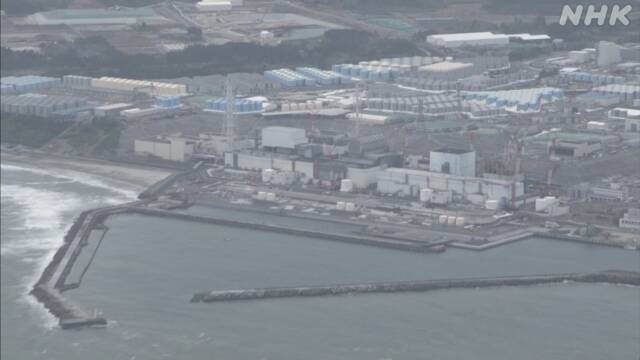
Temperature rises over 10 degrees Celsius in some parts of the “frozen earth wall” to reduce contaminated water at Fukushima Daiichi Nuclear Power Plant
October 28, 2021
As a countermeasure to reduce the amount of contaminated water from the Fukushima Daiichi Nuclear Power Plant, it was found that the temperature of the ground in some parts of the “frozen soil wall”, which freezes the ground around the buildings to prevent the inflow of underground water, has been rising above 0 degrees Celsius since the middle of last month, reaching a maximum of 10 degrees Celsius. The Tokyo Electric Power Company (TEPCO) is investigating the cause of the problem, saying that it does not affect the function of the wall to prevent the inflow of underground water.
The “frozen earth wall” is one of the measures to reduce the amount of contaminated water. Pipes are embedded around the buildings of the Fukushima Daiichi Nuclear Power Plant, and liquid at 30 degrees below zero is poured into the pipes and frozen, forming an “ice wall” that prevents groundwater from flowing into the buildings.
The Tokyo Electric Power Company (TEPCO) has installed thermometers in the “frozen earth wall” to measure the underground temperature, and in some areas located on the mountain side of the No. 4 reactor at the Fukushima Daiichi Nuclear Power Plant, the temperature, which is usually below freezing, has been rising and has been above zero since the middle of last month.
The temperature in the area where the increase was confirmed was between 1 meter and 4 meters deep, and the temperature exceeded 10 degrees Celsius on some days.
The freezing wall is about 10 meters thick, and TEPCO has stated that there is no significant difference in the water level between the inside and outside of the wall, so there is no impact on its ability to control the inflow of groundwater.
It is possible that water leaked from cracks in the drainage channel that intersects the frozen soil wall and seeped into the frozen area, causing the temperature to rise.
Pumice may affect nuclear power plants in Japan
 | |||
| to me |
| |||
| to me |
Pumice may affect nuclear power plants in Japan
Pumice may affect nuclear power plants in Japan, https://www3.nhk.or.jp/nhkworld/en/news/20211027_36/ Japan’s nuclear regulator says a massive number of pumice stones drifting in waters in the country’s southwest could affect domestic nuclear power plants.
Ishiwatari Akira, a member of the Nuclear Regulation Authority, told a regular meeting on Wednesday that the stones may affect the intake of water used for cooling nuclear reactors.
The pumice stones are being washed ashore on the coast of Okinawa Prefecture and the Amami region of Kagoshima Prefecture. They come from an undersea volcanic eruption near the Ogasawara island chain in the Pacific Ocean in August.
Japan’s nuclear regulator says a massive number of pumice stones drifting in waters in the country’s southwest could affect domestic nuclear power plants.
Ishiwatari Akira, a member of the Nuclear Regulation Authority, told a regular meeting on Wednesday that the stones may affect the intake of water used for cooling nuclear reactors.
The pumice stones are being washed ashore on the coast of Okinawa Prefecture and the Amami region of Kagoshima Prefecture. They come from an undersea volcanic eruption near the Ogasawara island chain in the Pacific Ocean in August.
Japanese government’s energy policy concentrates on restarting old nuclear reactors

Japan remains focused on restarting nuclear reactors, Argus, 25 Oct 21, Japan will continue to focus on restarting nuclear reactors instead of building new reactors….Japanese premier Fumio Kishida and cabinet ministers on 22 October endorsed a basic energy policy that did not lay out any plans for construction or replacement of nuclear reactors and only focused on the restart of safe reactors. ………..6Under the latest energy policy, Japan plans to generate 20-22pc of power ou icy B1lop paJcOput from nuclear energy, with 36-38pc from renewables, 41pc thermal power and 1pc from hydrogen and ammonia in 2030-31, which were also unchanged from the draft plans…………………….
Japan will phase out nuclear reactors without any capacity additions. Under the current nuclear safety rules, all reactors are allowed to operate for 40 years with a one-time option to extend their lifespan to 60 years. This suggests that 15 of the existing 33 reactors with a combined capacity of 14,057MW will close by December 2030 and there will be no operational reactors in 2050, assuming a 40-year lifespan.
The future of the nuclear industry also depends on which political party will take majority seats in the 31 October lower house parliamentary election, as most parties have pledged a no-nuclear society. The current ruling liberal democratic party of Japan promotes the restart of safe reactors, without directly prohibiting building reactors. But the second largest the constitutional democratic party has pledged not to allow any new building of reactors in its manifesto.
Recently restarted – Fukui nuclear unit halted for a year on safety issues.
Fukui nuclear unit halted after missing deadline on antiterror steps https://english.kyodonews.net/news/2021/10/e69ddb77abbd-fukui-nuclear-unit-halted-after-missing-deadline-on-antiterror-steps.html
KYODO NEWS – Oct 23, 2021 – A nuclear reactor in central Japan’s Fukui Prefecture was halted on Saturday, just four months after its restart as it could not meet a deadline set by regulators to implement antiterrorism measures.
The suspension of Kansai Electric Power Co.’s Mihama No. 3 unit came ahead of the deadline on Monday for such measures to be completed. After undergoing safety checks, the utility aims to make the necessary changes to its facilities around September next year and restart operations in mid-October.
In June, the No. 3 unit went online for the first time in about 10 years and became the first nuclear unit to operate beyond the government-mandated 40-year service period introduced under new rules set after the 2011 Fukushima disaster.
The reactor had stopped operations after the crisis at the Fukushima Daiichi plant triggered by a massive earthquake and tsunami. Regulators gave the green light to the aging No. 3 unit after screening the utility’s safety measures.
The Nos. 1 and 2 units of the Mihama plant were terminated in April 2015 in line with the 40-year limit.
Backlash against Japanese Prime Minister’s haste to dump Fukushima nuclear water into the ocean

Kishida triggers backlash by saying dumping Fukushima nuclear water can’t be delayed, Global Times, By Xu Keyue: Oct 19, 2021 Only two weeks after taking office, Japan’s new prime minister Fumio Kishida pressed two hot buttons on the same day on Sunday – sending a ritual offering to the war-linked Yasukuni Shrine, and claiming the Fukushima wastewater release cannot be delayed, despite opposition from home and abroad.
Instead of taking full advantage of its own science and technology to process the Fukushima wastewater and deliver a qualified answer to the world over the water treatment, Japan has opted for its irresponsible plan to dump the wastewater as soon as possible and provided self-contradictory explanations for the decision, said Chinese experts.Speaking at his first visit to the tsunami-wrecked Fukushima nuclear plant since taking office, Kishida said the planned mass disposal of wastewater stored at the facility cannot be delayed, claiming his government would work to reassure residents nearby the plant about the technical safety of the wastewater disposal project, Asahi Shimbun reported Monday.
South Korea has expressed concern over Kishida’s plan to release the radioactive wastewater, according to South Korean media on Monday.
“Japan’s decision [to discharge the wastewater] was made without enough consultations with neighboring nations,” a senior South Korean foreign ministry official said. “We have expressed serious concerns and opposition to its plan, which could affect our people’s health and security as well as the ocean environment.”
The Tokyo Electric Power Company Holdings Inc. (TEPCO) has planned to build a one-kilometer undersea tunnel to release contaminated radioactive water out to sea, amid condemnation from fishermen, media reported in late August.
The plan again showed that Japan’s “explanation” over the safety of the water is “self-contradicting,” Liu Jiangyong, vice dean of the Institute of Modern International Relations at Tsinghua University, told the Global Times on Monday.
Assuming the wastewater has been processed without any side effects or pollution as the Japanese government claimed, and that people can even drink it, why does the Japanese government not simply discharge the water into the sea but plan to dump the water 1 kilometer away from the local residents? asked Liu. He also questioned the claim that it will have no impact on the marine environment and life chain, and asked why the water could not be recycled on land if the wastewater can be processed so cleanly and safely.
Japan can’t answer any of these questions, said Liu, noting that dumping the nuclear water shows that the water is “unusual.”…………. https://mail.google.com/mail/u/0/?tab=rm&ogbl#inbox?compose=DmwnWsTJtkLTcgrqMkBKSqBpmgbKhMHpzMMgttqhvJHgDJrfsKrtFCCwkflZJkjjhwgvJbPrQhFV
Prime Minister Fumio Kishida confirms release of Fukushima wastewater to start in 2023
Release of Fukushima wastewater to proceed: Kishida, The Guardian, TOKYO, 18 Oct 21,
New Japanese Prime Minister Fumio Kishida has said that there can be no delay to plans to release contaminated water from the wrecked Fukushima Dai-ichi nuclear power plant into the sea, despite opposition from fishers and neighboring countries.
Kishida, who made his first trip to the plant on Sunday since becoming prime minister last month, said every effort would be made to reassure local people that disposing of the water in the Pacific Ocean was safe……
Researchers have used snakes fitted with tracking devices and dosimeters to measure radiation levels in the area around the Fukushima Dai-ichi Nuclear Power Plant, which suffered triple meltdowns in March 2011……
More than 1 million tonnes of water are being stored in 1,000 tanks at the site, and TEPCO has said that space would run out late next year.
The government and TEPCO in April said that work to release the heavily diluted water would begin in the spring of 2023 and take decades to complete.
The move is opposed by nearby fishing communities, which say it would undo years of hard work rebuilding their industry’s reputation since the plant was struck by a huge tsunami in March 2011, soon after Japan’s northeast coast was rocked by a magnitude 9 earthquake.
The decision ended years of debate over what to do with the water, with other options including evaporation or the construction of more storage tanks at other sites. More than 1 million tonnes of water are being stored in 1,000 tanks at the site, and TEPCO has said that space would run out late next year.
The government and TEPCO in April said that work to release the heavily diluted water would begin in the spring of 2023 and take decades to complete.
The move is opposed by nearby fishing communities, which say it would undo years of hard work rebuilding their industry’s reputation since the plant was struck by a huge tsunami in March 2011, soon after Japan’s northeast coast was rocked by a magnitude 9 earthquake.
The decision ended years of debate over what to do with the water, with other options including evaporation or the construction of more storage tanks at other sites.More than 1 million tonnes of water are being stored in 1,000 tanks at the site, and TEPCO has said that space would run out late next year.
Japan has requested help from the International Atomic Energy Agency to ensure that the discharge meets global safety standards, including treating the wastewater so its radioactivity levels are below legal limits. https://www.taipeitimes.com/News/front/archives/2021/10/19/2003766372
Japan’s new pro nuclear push – and for small nuclear reactors
Japan’s Carbon Goal Is Based on Restarting 30 Nuclear Reactors, Bloomberg, By Isabel Reynolds 17 October 2021, Japan’s goal of reducing carbon emissions by 46% by 2030 is based on the assumption it will restart 30 of its nuclear reactors, a top ruling party executive said.
Akira Amari, secretary general of the Liberal Democratic Party, made the remarks Sunday in a televised debate broadcast by NHK ahead of the Oct. 31 general election.
Much of Japan’s nuclear capacity has been offline since the 2011 Fukushima disaster and Amari said only nine reactors are currently in service. Surveys generally show the electorate is against restarting the plants.
The LDP has also been promoting the idea of building small modular reactors, saying they are safer than Japan’s existing atomic plants……..https://www.bloomberg.com/news/articles/2021-10-17/amari-says-japan-s-carbon-goal-based-on-restarting-30-reactors
Lethal radiation levels detected in Fukushima nuclear plant reactor lid

Lethal radiation levels detected in Fukushima nuke plant reactor lid https://www.asahi.com/ajw/articles/14440765
By TSUYOSHI KAWAMURA/ Staff Writer
September 15, 2021 The operator of the crippled Fukushima No. 1 nuclear plant could be forced to reconsider the plant’s decommissioning process after lethal radiation levels equivalent to those of melted nuclear fuel were detected near one of the lids covering a reactor.
The Nuclear Regulation Authority said Sept. 14 that a radiation reading near the surface of the lid of the No. 2 reactor’s containment vessel was 1.2 sieverts per hour, higher than the level previously assumed.
The discovery came on Sept. 9 during a study by the NRA and Tokyo Electric Power Co., the operator of the plant.
TEPCO plans to insert a robotic arm into the No. 2 reactor’s containment vessel from its side in a trial planned for the second half of 2022 to retrieve pieces of melted nuclear fuel.
“We will consider what we can do during the trial on the basis of the detection of the concentration of contamination” in the upper area of the containment vessel, a TEPCO official said.
The round concrete lid, called the shield plug, is 12 meters in diameter and about 60 centimeters thick.
The shield plug consists of three lids placed on top of each other to block extremely high radiation emanating from the reactor core.
Each lid weighs 150 tons.
When operators work on the decommissioning, the shield plug will be removed to allow for the entry into the containment vessel.
The NRA said a huge amount of radioactive cesium that was released during the meltdown of the No. 2 reactor in March 2011 remained between the uppermost lid and middle lid.
In the Sept. 9 study, workers bored two holes measuring 7 cm deep each on the surface of the uppermost lid to measure radiation doses there by deploying remotely controlled robots.
One radiation reading was 1.2 sieverts per hour at a location 4 cm down from the surface in a hole near the center of the lid.Prior to the study, the NRA estimated that the dose from a contamination source that existed beneath the lid was more than 10 sieverts per hour, a level lethal to humans if exposed to it for about an hour.
But the finding suggested that the actual dose would likely be dozens of sieverts per hour, thus far more dangerous.
While it is expected to be a huge challenge to dismantle the lids, TEPCO has yet to decide what to do with them during the decades-long cleanup work.
The NRA also mentioned the possibility that radioactive cesium is also concentrated between the middle lid and the lowermost lid.
But there is no way at the moment to confirm whether that is the case, according to NRA officials
Nuclear hawks under Kishida threaten Suga’s renewables push
THE ASAHI SHIMBUN, October 14, 2021 Pro-nuclear lawmakers now hold key positions under Prime Minister Fumio Kishida, sparking concern that he will stray from the prior administration’s focus on renewables to help achieve “net zero” greenhouse gas emissions by 2050.
New ministers in charge of Japan’s efforts to fight climate change and energy issues under the Kishida administration have vowed to stick with the net zero target………
The new Basic Energy Plan drafted by the Suga administration made no mention of such nuclear power-related projects despite pressure from pro-nuclear lawmakers within the LDP and the nuclear industry.
LDP lawmakers who support nuclear energy are unhappy about the Basic Energy Plan, which said Japan will “reduce its dependence on nuclear energy as much as possible.”
……………concerns have been raised over a possible return to reliance on more nuclear power following pro-nuclear lawmakers assuming key posts in the government and the ruling Liberal Democratic Party.
Koizumi, who as environment minister pushed for renewable energy, and Taro Kono, who served as minister in charge of administrative reform and is a staunch opponent of nuclear energy, were replaced when Kishida formed his Cabinet.
….. Despite his vow against new reactor projects, Hagiuda is a close ally of former Prime Minister Shinzo Abe, who serves as the most senior adviser to a group of lawmakers advocating construction of new reactors to replace aged units.
Akira Amari, the new secretary-general of the LDP, the second most powerful post after the party president, Kishida, is the most senior adviser to the group.
Sanae Takaichi, who proposed bolstering development of new technology to build a nuclear fusion reactor during the LDP
leadership race last month, landed the position of the party’s policy chief.
…Not surprisingly, the nuclear industry hailed the government and the new party lineup…….. https://www.asahi.com/ajw/articles/14460623
Japanese Prime Minister Fumio Kishida praises Treaty on the Prohibition of Nuclear Weapons
ICAN 9 Oct 21, After receiving a letter from Hiroshima survivor and long-time ICAN activist Setsuko Thurlow and ICAN, the new Japanese Prime Minister Fumio Kishida said “I believe that the Treaty on the Prohibition of Nuclear Weapons is a very important treaty for a world without nuclear weapons.” This is definitely a good sign from a nuclear allied country that previously has dismissed our treaty.
Setsuko had already met with Mr Kishida in 2018, together with ICAN partner Peace Boat, to discuss Japan’s nuclear disarmament policy and we will use the opportunity of this new Prime Minister to strengthen our work to get Japan join the treaty.
Japan’s independent English language newsletter, analysing nuclear issues, is struggling to survive
Japan NPO on nuke power issues struggling to retain English newsletter
September 27, 2021 (Mainichi Japan TOKYO (Kyodo) — A citizens’ organization in Japan that publishes independent analysis in English on nuclear power issues is struggling financially, threatening its ability to remain the major source of specialized public information on Japan’s nuclear industry for an international audience.
The Citizens’ Nuclear Information Center based in Tokyo has published the free bimonthly English newsletter Nuke Info Tokyo since 1987 but is having to crowdfund to keep publishing amid financial difficulties caused by the coronavirus pandemic.
The nonprofit organization, which also produces a monthly newsletter in Japanese for a domestic audience, had previously financed the cost of the English publication by holding paid seminars at which it also solicited donations and sold books, as well as collecting membership fees.
But it has been unable to hold the events since early 2020 when coronavirus infections began to impact Japan, Hajime Matsukubo, CNIC secretary general, told Kyodo News.
Membership — already in decline — has also dropped further amid the pandemic and its effect on the economy, he said.
“Membership decreased by about 100 last year alone under the coronavirus outbreaks and (membership) is around 2,100 now,” Matsukubo said, admitting the decline in membership also owed to a waning of public interest in nuclear issues in recent years.
…………. Philip White, a former editor of Nuke Info Tokyo, wrote that he fielded calls around the clock from the foreign media by referring to the archived English-language articles at the time of the disaster.
“The international media was hungry for critical information to counter the sanitized version offered by the government and the nuclear industry. Our English website offered clearly referenced Nuke Info Tokyo articles,” he wrote……………
Matsukubo argues that the government and electric power companies operating nuclear plants tend to withhold information, not just when accidents occur but also in normal times.
Although the government has said the Fukushima plant is under control, it is uncertain how many more years it will take to deal with over a million tons of treated radioactive water from the plant and decommission damaged reactors.
The government continues to deem nuclear power a major energy source, although, since 2014, it has said it aims to decrease its reliance on such power.
Running the English newsletter, staffed by Stronell, four freelance translators, and an editor who is also co-director of the group, costs around 1.5 million yen ($13,700) per year. While the translators used to work voluntarily, CNIC started to pay them in 2009 — though they receive half or less than the market rate.
At this time, the newsletter, which had been printed and mailed to readers with a postage fee charged only to readers in Japan, was made available for free online. Several hundred readers regularly refer to the newsletter, among them journalists, NGO staff, and academics.
Another co-director of CNIC, Hideyuki Ban, said that researchers worldwide have quoted Nuke Info Tokyo in their work.
“Nuke Info Tokyo is the only newsletter in English that specializes in the situation of nuclear power in Japan and has covered a wide range of issues from citizens’ standpoints for decades,” Ban said.
CNIC was founded in 1975 by scientists, including the late Jinzaburo Takagi, a nuclear chemist who began his career in the nuclear industry but later voiced concerns about atomic power……..
To coincide with the policy discussion, CNIC held a virtual seminar on Friday to draw attention to the issues and help people make up their minds on the right policy for Japan.
Stronell said she hopes to run an article on the seminar given by experts in the newsletter.
“I think the most important thing is having independent experts’ information on nuclear power accidents like Fukushima and other problems to let people make decisions about their own health and future,” Stronell said. “And so for us to continue to do this, and that’s what the crowdfunding project is about, any support is very much appreciated.” https://mainichi.jp/english/articles/20210927/p2g/00m/0na/078000c
Nuclear submarine for Japan? Kono says yes, Kishida says no
Poll leader believes capability is ‘extremely important’ for country

September 26, 2021
TOKYO — Following a recent deal by the U.S. and the U.K. to offer Australia classified technology to build nuclear-powered submarines, should fellow Quad member Japan also seek such a capability? The four candidates running for the Liberal Democratic Party presidential race to succeed Prime Minister Yoshihide Suga were asked the question Sunday on Fuji TV.
Poll leader Taro Kono, minister for administrative reform and also in charge of vaccine distribution, gave a thumbs-up. “As a capability, it is very important for Japan to have nuclear submarines,” he said.
“Whether there are regions [in Japan] willing to host them as a home port, or whether the operating capabilities or costs are pragmatic, these are issues we need to consider going forward,” he added.
Sanae Takaichi, the former internal affairs minister, also looked favorably upon the idea. “If we think of the worst-case risks in the international environment ahead, I do believe we could have [submarines] that can travel a little longer,” she said, referring to the advantage of nuclear propulsion in that they can stay submerged longer without refueling.
Japan’s Atomic Energy Basic Law stipulates that the use of nuclear power will be limited to peaceful purposes. Takaichi said there was “a need to sort things out” but added she did not believe nuclear-powered submarines to be unconstitutional.
Former LDP policy chief Fumio Kishida, meanwhile, was less receptive to the idea. “When I think about Japan’s national security arrangements, to what extent do we need it?” he asked.
Nuclear-powered submarines are faster and can travel longer compared to the diesel-electric submarines that Japan currently has. But Kishida was alluding to the fact that the Self-Defense Forces’ operations are primarily in areas close to Japan.
“To maintain stealth, it will require long hours of work,” he said. “We have to prioritize improving working conditions [of sailors] and secure the personnel.”
Japan’s Maritime Self-Defense Force has struggled to hire sailors in a country whose population is declining. Submarines are especially unpopular among young recruits, partly because they are unable to use their smartphones for extended periods.
Seiko Noda, the LDP’s executive acting secretary-general, said: “I have no intention to hold such a capability. I want to make clear that we are a nation with three non-nuclear principles,” she said, pointing to Japan’s long-held position of neither possessing nor manufacturing nuclear weapons, nor permitting their introduction into Japanese territory.
“This is not a situation where we can immediately buy and start to use the submarines,” she said. “We must properly establish a national consensus.”
On Sept. 16, the U.S., the U.K. and Australia announced an enhanced trilateral security partnership called AUKUS, that will see Washington and London share sensitive nuclear-propulsion technology with Canberra to develop a fleet of nuclear-powered submarines. It is a move to bolster deterrence against China’s growing maritime power.
https://asia.nikkei.com/Politics/Nuclear-submarine-for-Japan-Kono-says-yes-Kishida-says-no
1 This Month
To see nuclear-related stories in greater depth and intensity – go to https://nuclearinformation.wordpress.com/

29 Jan. Thursday 7-8 p.m. Webinar – World’s Largest Nuclear Station in Port Hope, ON?


31st January – Challenging the War Machine – a DECLASSIFIED UK SUMMIT


Website of the Week
Now until to February 10, 2026 Radioactive waste storage in France: the debate is finally open! How to participate?
-
Archives
- January 2026 (259)
- December 2025 (358)
- November 2025 (359)
- October 2025 (376)
- September 2025 (258)
- August 2025 (319)
- July 2025 (230)
- June 2025 (348)
- May 2025 (261)
- April 2025 (305)
- March 2025 (319)
- February 2025 (234)
-
Categories
- 1
- 1 NUCLEAR ISSUES
- business and costs
- climate change
- culture and arts
- ENERGY
- environment
- health
- history
- indigenous issues
- Legal
- marketing of nuclear
- media
- opposition to nuclear
- PERSONAL STORIES
- politics
- politics international
- Religion and ethics
- safety
- secrets,lies and civil liberties
- spinbuster
- technology
- Uranium
- wastes
- weapons and war
- Women
- 2 WORLD
- ACTION
- AFRICA
- Atrocities
- AUSTRALIA
- Christina's notes
- Christina's themes
- culture and arts
- Events
- Fuk 2022
- Fuk 2023
- Fukushima 2017
- Fukushima 2018
- fukushima 2019
- Fukushima 2020
- Fukushima 2021
- general
- global warming
- Humour (God we need it)
- Nuclear
- RARE EARTHS
- Reference
- resources – print
- Resources -audiovicual
- Weekly Newsletter
- World
- World Nuclear
- YouTube
-
RSS
Entries RSS
Comments RSS
 nuclear-news