Japan and USA seek treaty to prevent having to pay international nuclear compensation
 Japan eyes global nuclear compensation treaty – report, Aug 14, 2011 Reporting by Chikako Mogi; Editing by Sanjeev Miglani, TOKYO (Reuters) – Japan is considering joining a U.S.-led global nuclear compensation treaty in a bid to fend off excessive overseas damage claims related to nuclear accidents, the Nikkei newspaper reported on Sunday, without citing sources.
The U.S., Morocco, Romania and Argentina have agreed to the Convention on Supplementary Compensation for Nuclear Damage, but the treaty needs at least five countries in order to go into effect.
The newspaper said Japan would start discussions with the United States in the coming week over the pact, which defines the rules for trials for damage claims in countries where accidents happen.
The move comes in the wake of a devastating accident in March at the Fukushima Daiichi nuclear power plant, which leaked radiation and exposed wide-ranging produces from vegetables, tea to water to excessive radioactive materials….http://af.reuters.com/article/worldNews/idAFTRE77D0C620110814
Continuing radiation dangers in food chain in Japan
 Prolonged exposure to radiation in the air, ground and food can cause leukemia and other cancers, according to the London- based World Nuclear Association,
Mushrooms Join Growing List of Radioactive Threats to Japan’s Food Chain, Bloomberg, By Naoko Fujimura and Chris Cooper – Aug 14, 2011 Mushrooms joined the threats to Japan’s food chain from radiation spewed by Tokyo Electric Power Co.’s Fukushima Dai-Ichi nuclear plant, as the country expands efforts to limit the effects of the disaster.
Japan is under pressure to enhance food inspections as it has no centralized system for detecting radiation contamination. About two-thirds of Japan’s prefectures now plan to check rice crops, the Mainichi newspaper reported yesterday, citing its own survey. Half of Japan’s rice is grown within range of emissions from the crippled nuclear plant, and farmers are awaiting the results of tests before harvesting begins this month…… Continue reading
Second meltdown in No 3 Nuclear reactor caused Fukushima cleanup problems
 Report suggests second meltdown at reactor at Fukushima plant, Asahi.com, BY TOMOOKI YASUDA STAFF WRITER, 2011/08/09, A second meltdown likely occurred in the No. 3 reactor at the Fukushima No. 1 nuclear power plant, a scenario that could hinder the current strategy to end the crisis, a scientist said. Continue reading
Volunteers risk health in radiation cleanup outside Fukushima area
 “The area itself is relatively highly contaminated,” Kodama says. “Many small children playing around the ground might touch some mud or in some case, eat some sand, which would result in internal radiation..”
 Volunteers Take on Dangerous Job of Scrubbing Nuke Contamination, ABC News International. By AKIKO FUJITA (@akikofujita), Aug. 12, 2011 Tatsuhiko Kodama’s voice shakes as he addresses volunteers at Ishigami Daini Kindergarten in the city of Minamisoma, 15 miles from the troubled Fukushima Daiichi Nuclear Plant.
The director of the University of Tokyo’s Radioisotope Center is training people how to decontaminate a school filled with radiation spewed from the nuclear reactors. He has explained the process a dozen times before, yet tears well up every time Kodama sees mothers donning masks, fathers taking notes with dosimeters in hand. Continue reading
Outrage in Japan over the nuclear industry’s crooked “AstroTurf” manipulations of public opinion
 Japanese government investigations that have uncovered a nationwide pattern of attempts to manipulate the public’s opinion about nuclear power by Japan’s biggest electric utilities. Some of those power companies then pointed the finger back at regulators for having covertly urged such efforts in the first place.
The “AstroTurf”—or fake-grass-roots—campaigns, which ranged from packing events with supporters to planting questions and orchestrating email drives, have now badly backfired, sparking public outrage
 Scandal Taints Japan Nuclear Sector, WSJ By CHESTER DAWSON, AUGUST 13, 2011 SAGA, Japan—The Fukushima Daiichi accident was a big setback for nuclear power in Japan. But the industry’s hamfisted efforts to maintain support in the aftermath of that disaster may have an even bigger impact in eroding the public’s confidence in the sector.
After a series of disclosures in recent weeks painting government regulators and electric utilities as collaborating to stage-manage public community forums on local nuclear power, efforts to restart idled Japanese nuclear reactors have screeched to a halt. Continue reading
Japan doing well with energy conservation – nuclear power not necessary?
 Saving electricity has become a sort of national religion. With many air conditioners set at 82 degrees, businessmen have shed their usual suits in favor of “super cool biz” short-sleeve shirts. Car makers have been forced to operate on weekends to avoid sucking up electricity during peak weekday hours.
Peak electricity usage for the Tokyo area so far this summer was nearly 23% below the peak last summer.
The drop in electrical consumption is shaking Japan’s decades-old commitment to nuclear power
Summer Power Success Raises Heat in Energy Debate, WSJ AUGUST 12, 2011, By Peter Landers It looks as if Japan has just about survived the peak of summer electricity demand without power outages, although the Tohoku region had some close calls…..
Japan’s success at avoiding outages even with most of its nuclear reactors out of service is taking on a more strategic importance, influencing the broader debate over nuclear power’s future. Whether to phase out nuclear power will be a big issue when the Democratic Party of Japan chooses a successor to Prime Minister Naoto Kan later this month or next month……http://blogs.wsj.com/japanrealtime/2011/08/12/summer-power-success-raises-heat-in-energy-debate/
Japan Snaps Back With Less Power, Economy Survives Reactor Shutdowns, and Tokyo Rethinks Nuclear Policy, WSJ, Peter Landers. JULY 29, 2011 TOKYO—When the March 11 tsunami knocked out more than half of the nuclear power plants serving the Tokyo area, it set off one of the biggest unplanned experiments in a modern society: Could a metropolis of 30 million people get by after losing about a fifth of its power supply?
After a steaming July in Japan filled with 90-degree-plus days, the preliminary answer is in, and it is yes. Continue reading
Japan about to approve Renewable Energy Law
Japan Set to Pass Law on Renewable Energy, WSJ By MITSURU OBE 12 Aug 11, TOKYO—Japan’s parliament is set to approve a landmark bill on renewable energy that was championed by Prime Minister Naoto Kan as a way to reduce the nation’s dependence on nuclear power, and which would break the monopoly of the 10 major utilities. Continue reading
No public access to results of Japan’s tests on radiation and children’s thyroids
Japan’s nuclear agency hides radiation results, ABC Radio 774, North Asia correspondent Mark Willacy, August 11, 2011 Japan’s nuclear watchdog has denied public access to the results of thyroid check-ups for more than 1,000 Fukushima children exposed to radiation.
Critics have accused Japan’s Nuclear Safety Commission of denying the public accurate information about the crisis. The commission had earlier uploaded the test results of more than 1,000 children who were checked to see if radioactive substances were accumulating in their thyroids.
But it has been revealed that earlier this month the commission removed the data from its website, citing privacy reasons.
But health specialists have slammed the decision, saying the commission fears a negative public reaction to children’s exposure to radiation from the crippled Fukushima plant.http://www.abc.net.au/news/2011-08-11/japan27s-nuclear-watchdog-deletes-radiation-results/2835502/?site=melbourne
Japan’s nuclear regulator to be less cosy with nuclear industry?
Japan takes nuclear safety away from trade ministry, NPR by BILL CHAPPELL 11 AUG 11, Japan is removing its nuclear regulatory agency from the control of its trade ministry, dissolving a relationship that was criticized in the wake of the Fukushima nuclear plant disaster. The new nuclear safety agency will be under the environmental agency, Kyodo News reports.
The move, coming exactly five month after a powerful earthquake and tsunami set off a nuclear crisis in Japan, may help ease criticisms that regulators are too cozy with pro-nuclear interests….http://www.npr.org/blogs/thetwo-way/2011/08/11/139537870/japan-takes-nuclear-safety-agency-away-from-trade-ministry
Parents bring lawsuit to challenge Japan’s handling of nuclear radiation crisis
 Japan Held Nuclear Data, Leaving Evacuees in Peril, NYT, Norimitsu Onishi reported from Fukushima, and Martin Fackler from Tokyo. Ken Belson and Kantaro Suzuki contributed reporting from Tokyo. 9 Aug 11, FUKUSHIMA, Japan —”……..In Koriyama, a city about 40 miles west of the nuclear plant, a group of parents said they had stopped believing in government reassurances and recently did something unthinkable in a conservative, rural area: they sued. Though their suit seeks to force Koriyama to relocate their children to a safer area, their real aim is to challenge the nation’s handling of evacuations and the public health crisis.
After the nuclear disaster, the government raised the legal exposure limit to radiation from one to 20 millisieverts a year for people, including children — effectively allowing them to continue living in communities from which they would have been barred under the old standard. The limit was later scaled back to one millisievert per year, but applied only to children while they were inside school buildings.
The plaintiffs’ lawyer, Toshio Yanagihara, said the authorities were withholding information to deflect attention from the nuclear accident’s health consequences, which will become clear only years later.
“Because the effects don’t emerge immediately, they can claim later on that cigarettes or coffee caused the cancer,” he said…..http://www.nytimes.com/2011/08/09/world/asia/09japan.html?_r=1&hp
Nagasaki joins Hiroshima’s call to end nuclear energy
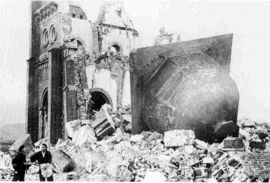 Nagasaki mayor calls for denuclearization, Asahi.com by Kenichi Ezaki and Yuji Endo. 10 Aug 11, NAGASAKI–The mayor of Nagasaki called for Japan to move away from nuclear power generation at a ceremony on Aug. 9 to commemorate the 66th anniversary of the dropping of the atomic bomb on Nagasaki. Continue reading
Japanese citizens exposed to radiation, as govt withheld information
In interviews and public statements, some current and former government officials have admitted that Japanese authorities engaged in a pattern of withholding damaging information and denying facts of the nuclear disaster — in order, some of them said, to limit the size of costly and disruptive evacuations in land-scarce Japan and to avoid public questioning of the politically powerful nuclear industry. As the nuclear plant continues to release radiation, some of which has slipped into the nation’s food supply, public anger is growing at what many here see as an official campaign to play down the scope of the accident and the potential health risks.
Japan Held Nuclear Data, Leaving Evacuees in Peril, NYT, Norimitsu Onishi reported from Fukushima, and Martin Fackler from Tokyo. Ken Belson and Kantaro Suzuki contributed reporting from Tokyo. 9 Aug 11, FUKUSHIMA, Japan — The day after a giant tsunami set off the continuing disaster at the Fukushima Daiichi nuclear plant, thousands of residents at the nearby town of Namie gathered to evacuate.
Given no guidance from Tokyo, town officials led the residents north, believing that winter winds would be blowing south and carrying away any radioactive emissions. For three nights, while hydrogen explosions at four of the reactors spewed radiation into the air, they stayed in a district called Tsushima where the children played outside and some parents used water from a mountain stream to prepare rice.
The winds, in fact, had been blowing directly toward Tsushima — and town officials would learn two months later that a government computer system designed to predict the spread of radioactive releases had been showing just that. Continue reading
TEPCO, Japan’s largest utility, likely to go broke
The March disaster at the Fukushima complex in northeast Japan spawned the world’s worst nuclear crisis since Chernobyl and has put the existence of Asia’s largest utility, known as TEPCO, in doubt.
Tepco said it has earmarked $5.1bn to compensate the victims of the crisis, who include about 80,000 people
evacuated from areas surrounding the Fukushima plant, 240km north of Tokyo.
Even before the pay-out began, Tepco posted a $15 billion net loss for the year to March 31, Japan’s biggest non-financial loss, according to Reuters news agency…..
Safecast monitors Japan’s radiation levels, and sees it as a global issue
Despite the alarm inside Japan and abroad, specific information about radiation levels and its range are still mostly unavailable. This lack of information is what Safecast is trying to overcome…..
Global debate The Japanese government does not consider non-government readings to be authentic, and has urged the public to only rely on government data on radiation.
Bonner said: “Getting into this has showed us there is a lack of data everywhere.
“We’re going to start getting devices to people around the US and Europe. We’re going to set up fixed sensors and we’re making a device that we’ll sell to the public.
“We’re hoping to continue to get lots of data from lots of sources.”
Bonner’s ambitions appear timely against the backdrop of a revitalised global debate on the dangers of nuclear energy, especially in Japan.
“………..In the months since the catastrophe, the Japanese government, its nuclear watchdogs and Tokyo Electric Power Company (TEPCO), have provided differing, confusing, and at times contradictory, information on critical health issues.
Fed up with indefinite data, a group of 50 volunteers decided to take matters, and Geiger counters, into their own hands.
In April, an independent network of like-minded individuals in the Japan and United States banded together to formSafecast and began an ongoing crusade to record and publish accurate radiation levels around Japan. Continue reading
Fukushima city cleanup begins, with no long term solution in sight
Nor has Tokyo offered any long-term solution for the radioactive waste that is quickly accumulating around the prefecture
In Fukushima City, Decontamination Begins. But What to Do with the Radioactive Waste?, TIME, With reporting by Terrence Terashima, by Krista Mahr , August 9, 2011“…..Nearly five months after March 11, the physical process of cleaning up the world’s worst nuclear accident since Chernobyl has begun. Untold numbers of buildings, sidewalks, trees, gardens, parks, streets, school yards and gutters were dusted in radioactive particles after the earthquake and tsunami crippled the Fukushima Dai-ichi nuclear power plant. Though a circle within a 20-km radius of the plant and some other high-radiation spots remain evacuated, a much larger area is still home to tens of thousands of people who want those particles out of their lives as soon as possible. Continue reading
-
Archives
- October 2026 (104)
- September 2026 (339)
- August 2026 (330)
- July 2026 (355)
- June 2026 (287)
- May 2026 (306)
- April 2026 (356)
- March 2026 (251)
- February 2026 (267)
- January 2026 (308)
- December 2025 (358)
- November 2025 (359)
-
Categories
- 1
- 1 NUCLEAR ISSUES
- business and costs
- climate change
- culture and arts
- ENERGY
- environment
- health
- history
- indigenous issues
- Legal
- marketing of nuclear
- media
- opposition to nuclear
- PERSONAL STORIES
- politics
- politics international
- Religion and ethics
- safety
- secrets,lies and civil liberties
- spinbuster
- technology
- Uranium
- wastes
- weapons and war
- Women
- 2 WORLD
- ACTION
- AFRICA
- Atrocities
- AUSTRALIA
- Christina's notes
- Christina's themes
- culture and arts
- Events
- Fuk 2022
- Fuk 2023
- Fukushima 2017
- Fukushima 2018
- fukushima 2019
- Fukushima 2020
- Fukushima 2021
- general
- global warming
- Humour (God we need it)
- Nuclear
- RARE EARTHS
- Reference
- resources – print
- Resources -audiovicual
- Weekly Newsletter
- World
- World Nuclear
- YouTube
-
RSS
Entries RSS
Comments RSS

