Governor of Shimane agrees to restart idled nuclear reactor

June 2, 2022
Shimane Governor Tatsuya Maruyama has agreed to a restart of the No. 2 reactor at Chugoku Electric Power Co.’s Shimane nuclear power plant after more than a decade.
With the governor’s consent, the company’s procedures for obtaining local consent are completed, meaning it could come back online as early as next year, although it still requires final regulatory approval.
“If the reactor does not restart, the impact on the local economy will be huge,” Maruyama said during a plenary session of the prefectural assembly meeting on June 2, and added that the restart is now “inevitable.”
“It is important that the local consent was obtained,” Chief Cabinet Secretary Hirokazu Matsuno said at a news conference on June 2.
“With the continuing rise in fuel prices and an energy supply bottleneck, it is necessary to utilize (nuclear power) to the maximum.”
After being suspended for about 10 years, this all but clears the way for the reactor, which is the only one in Japan located in a prefectural capital, to be restarted as early as fiscal 2023.
The utility had halted it in January 2012 for a regular inspection and has kept it offline since then.
The reactor passed the Nuclear Regulation Authority’s safety inspection in September 2021, and then in February this year, the city government of Matsue, which hosts the plant, agreed to restart it.
The No. 2 reactor is a boiling water reactor, the same type as the ones that melted down at the Fukushima No. 1 nuclear plant in 2011.
Restarting it would mark the first time since the 2011 Great East Japan Earthquake for a boiling water reactor to be brought back into operation.
But the company’s construction plan and safety regulations will first have to be accepted by the regulator, and construction of new safety countermeasures against the potential risk of earthquakes and tsunami must be completed.
Construction of those safeguards is expected to wrap up in February 2023.
About 460,000 people live in the evacuation area of the nuclear power plant. The figure is the third largest in Japan.
Under the evacuation plan, in the event of an emergency, many of the residents in the prefecture would be expected to evacuate to 49 municipalities in Hiroshima and Okayama prefectures.
The number of those who need support to evacuate, such as hospital patients, people with disabilities and pregnant women, is expected to be about 58,000.
They would be expected to evacuate by bus or social welfare vehicles arranged by the Shimane and Tottori prefectural governments.
But some have questioned the viability of the plan.
Concerns have been raised if adequate support exists for people who require special assistance to evacuate the area, whether Hiroshima and Okayama prefectures would be prepared to take in that many evacuees, and if evacuation routes could be secured in the event of a natural disaster.
Japan’s Shimane Prefecture OKs restart of nuclear reactor

June 2, 2022
MATSUE, Japan (Kyodo) — Shimane Prefecture in western Japan approved Thursday a plan to restart a nuclear reactor of the same type as those that suffered meltdowns at the Fukushima Daiichi plant following the massive 2011 earthquake and tsunami.
The green light for the No. 2 unit at Chugoku Electric Power Co.’s Shimane nuclear plant in the prefectural capital of Matsue was announced by Gov. Tatsuya Maruyama in a prefectural assembly session.
The company is seeking to restart the reactor in 2023 at the earliest. Inactive since 2012, it will likely be the country’s first boiling water reactor to be restarted since the Fukushima disaster.
Japan has been gradually restarting idled nuclear plants. But the reactors brought back online have been limited, so far, to another type — pressurized water reactors.
“I understand that (nuclear power) plays a certain role” in Japan’s energy policy, Maruyama said. “I thought that restarting is unavoidable at present, so I decided to accept it.”
Some residents visited the assembly to hear the governor’s remarks from the audience seats.
“I have opposed nuclear plants. Not to mention the danger, I think it is very unstable as an energy source. I want (the governor) to work by looking at citizens, not the state,” Masafumi Ashihara, a 72-year-old civic group member, said.
In Tokyo, Chief Cabinet Secretary Hirokazu Matsuno told a press conference the central government will ensure safety is prioritized.
The Shimane plant is the only one in the country located in a prefectural capital. It is some 9 kilometers away from the prefectural government office.
In Japan, evacuation plans must be formulated for people living within 30 km of a nuclear plant.
About 460,000 people in six cities across Shimane and Tottori prefectures live within the evacuation area for the Shimane plant. The other heads of local governments in the area have already approved the plan to restart the reactor.
Still, concerns remain among residents over how effective the evacuation plan would be in a nuclear accident.
In Matsue, around 28,000 people who will need assistance evacuating, such as elderly residents, live within a 5 to 30 km radius of the plant, while approximately 1,700 such residents live in a 5 km radius, according to a survey by Kyodo News. Both figures are the highest among municipalities that host nuclear plants in Japan.
“We would need to thoroughly inform people, who may or may not be concerned about an accident, of the evacuation plan,” Maruyama said at a press conference.
Chugoku Electric cleared national safety standards in September 2021 for restarting the reactor. The utility is scheduled to complete its safety measures next February.
https://mainichi.jp/english/articles/20220602/p2g/00m/0na/024000c
Hokkaido Electric ordered not to restart its nuclear reactors

May 31, 2022
SAPPORO–In a blow to Hokkaido Electric Power Co., the Sapporo District Court on May 31 ordered that the reactors at its Tomari nuclear plant remain offline.
The utility has been seeking to soon bring the plant back into operation, as surging fuel costs for thermal power plants have pushed down its revenues.
Presiding Judge Tetsuya Taniguchi cited safety concerns in the ruling, siding with a request by more than 1,000 plaintiffs from the area who raised concerns there are not sufficient safeguards to protect it from natural disasters.
“A sea wall required under the nuclear regulations does not exist,” Taniguchi said. “The plaintiffs’ right (to life) could be violated even without judging other points of contention.”
But he dismissed the plaintiffs’ demand for decommissioning the plant, saying there is no specific circumstance that would warrant it.
The court ruling cannot force the plant to halt operations unless it is finalized at a higher court.
But it could impact the assessment by the government’s nuclear watchdog, the Nuclear Regulation Authority, which has been working for nine years to determine if the plant meets the new regulations.
A group of about 1,200 plaintiffs from in and outside of Hokkaido launched the suit against the power company in November 2011, after the triple meltdown at the Fukushima nuclear plant in March that year.
They sought a halt to the operation of the plant’s three reactors, arguing that their constitutional rights to life and health would be violated in the event of an accident involving the release of radioactive substances.
The three reactors were taken offline between April 2011 and May 2012 for regular checks and have remained idle since.
Hokkaido Electric applied for a restart in 2013, soon after the more stringent reactor regulations were enforced by the government following the Fukushima nuclear disaster.
The regulator has in the meantime been assessing whether the reactors meet the new safety standards.
But it is not clear when the assessment will end, mainly due to what the watchdog says is the utility’s lack of experts capable of engaging in discussions on safeguards against earthquakes, tsunami and volcanoes with NRA inspectors.
The central issue in the lawsuit was whether concrete danger should be anticipated by restarting the plant, which is located in the Shakotan Peninsula facing the Japan Sea.
The plaintiffs contended that an active seismic fault measuring up to 100 kilometers exists in waters about 15 km from the plant. They argued that the planned sea wall would not protect the plant from the anticipated maximum height of a potential tsunami strike.
They also said that an earthquake powerful enough to cause such a tsunami would liquify the ground and cause the sea wall to sink. And they contended that the plant is also suspected to sit along an active seismic fault.
With an overall output of 2.07 gigawatts, the plant accounted for about 40 percent of the electricity needs in Hokkaido prior to the 2011 Fukushima nuclear disaster.
But the plant remaining offline does not pose serious problems to the local power supply, partly because new thermal plants went into operation.
Court rules against restarting nuclear power plant in Hokkaido

May 31, 2022
SAPPORO (Kyodo) — A Japanese court on Tuesday ordered a nuclear power plant in Hokkaido to remain offline as requested by over 1,000 plaintiffs due to safety concerns, in a rare decision issued while the operator is seeking permission from authorities to restart the plant.
The Sapporo District Court ruled that Hokkaido Electric Power Co. should not resume operation of all three reactors at its Tomari nuclear plant in northern Japan in the suit filed in November 2011. It marks the third district court ruling for a nuclear plant to be suspended.
But the court rejected that the plant be decommissioned as requested by some 1,200 plaintiffs including local residents, in the first ruling on the scrapping of a nuclear power station.
All three reactors had been taken offline for regular inspections by May 2012 and remain idled, with Hokkaido Electric Power undergoing screening by the Nuclear Regulation Authority to restart them under tighter rules introduced after the 2011 Fukushima crisis.
In the latest in a series of similar suits filed since the nuclear crisis, Presiding Judge Tetsuya Taniguchi said the power company has “not provided evidence of the safety” of spent nuclear fuel stored at the plant and the plant does not have adequate protection against tsunami.
The court ruled that in the case of a plant accident, 44 of the plaintiffs who live within a 30-kilometer radius would have their human rights hindered.
Taniguchi added that the court had decided in January to terminate the hearing as the utility was not expected to be able to provide evidence for its claims in the foreseeable future.
“This is the first step toward creating a future without nuclear power plants in Hokkaido. It’s groundbreaking,” said 69-year-old Takeichi Saito, who led the group of plaintiffs.
But Hokkaido Electric Power said it cannot accept the ruling and will “promptly” file an appeal.
The company said in a release that it had repeatedly explained to the court the safety of the plant from both scientific and technical standpoints.
The case is a setback for the government’s efforts to reboot reactors that meet the post-Fukushima regulations after the nuclear disaster led to a nationwide halt of nuclear plants and increased dependence on coal-fired and gas-fired power generation.
Japan will likely need to rely on nuclear power to meet its goal of achieving carbon neutrality by 2050 and cutting greenhouse gas emissions 46 percent in fiscal 2030 from fiscal 2013 levels. As of May 16, only 10 of the country’s 36 reactors have resumed operation under the stricter rules.
The country is also faced with the issue of reducing dependence on Russian coal and gas following Moscow’s aggression against Ukraine.
The plaintiffs argued there are active faults near the Tomari plant and in the nearby sea and the operator could be underestimating the size of potential earthquakes when designing the reactors’ quake resistance.
They claimed soil liquefaction could occur around seawalls near the plant in the event of an earthquake and the utility has not taken sufficient measures to protect against tsunami.
The power company countered that there are no active faults around the nuclear complex or in the nearby sea, and that the possibility of soil liquefaction is low.
Other district courts ordered the suspension of the Oi nuclear power plant’s No. 3 and 4 units in Fukui Prefecture in May 2014, and Tokai No. 2 located in Ibaraki Prefecture in March 2021.
However, no rulings over reactor suspension have been finalized. The order on the Oi plant was subsequently overturned by a high court and the Tokai No. 2 case is still pending.
Sapporo District Court orders injunction against operation of Tomari Nuclear Power Plant, rejects request for decommissioning

May 31, 2022
On May 31, the Sapporo District Court ruled in favor of the plaintiffs in a lawsuit filed by residents of the Tomari Nuclear Power Plant of Hokkaido Electric Power Company, demanding an injunction against the plant’s operation and its decommissioning.
The case was brought by approximately 1,200 residents of the area surrounding the Tomari Nuclear Power Plant of Hokuden, demanding an injunction against the operation of Units 1 through 3, the removal of spent nuclear fuel, and the decommissioning of the plant on the grounds that the plant is not safe enough against earthquakes and tsunami.
The case has been ongoing for more than 10 years, and arguments have been made as to whether there is an active fault line in the sea near the Tomari Nuclear Power Plant and whether tsunami countermeasures, such as seawalls, are sufficient.
In the ruling on March 31, Judge Tetsuya Taniguchi of the Sapporo District Court ruled that “the defendant (Hokuden) has failed to explain with adequate data that there is no risk of liquefaction of the ground with regard to the seawall, and that it lacks safety against tsunami and is likely to infringe on the lives and personal rights (life and body) of residents in the vicinity,” and “the danger extends within 30 km of the Tomari Nuclear Power Plant. The court ruled that “since the danger is within a 30-kilometer radius of the Tomari Nuclear Power Plant, the operation of the plant should be enjoined in relation to the plaintiffs who live within the radius.
The court dismissed the claim for removal of spent nuclear fuel, stating, “Although the danger is recognized, the plaintiffs are demanding removal of the spent fuel without limiting the destination of removal, and there is a possibility of violation of the personal rights of the residents of the destination area.” The court dismissed the claim on the grounds that “there is no danger” to the defendant. On the other hand, the court ruled that the defendant “must explain the lack of danger with reasonable data.
The court dismissed the request for decommissioning of the plant on the grounds that “even if individual preventive measures such as shutting down the reactor are necessary, it is difficult to find concrete circumstances that would make such measures necessary until the plant is abolished.
After the ruling, Hokkaido Electric Power commented, “Although we have explained the safety of the Tomari Nuclear Power Plant from a scientific and technical point of view based on the latest findings, we sincerely regret that our arguments have not been understood. We will promptly file an appeal.
https://www.uhb.jp/news/single.html?id=28578&fbclid=IwAR3i7r1omsmojtLOoTTliH2Qouj7cepCYSyhRwLM27vrcTzNtSSSW-w9BbM
Current and former residents of Tamura City, plaintiffs in case against TEPCO may appeal about low compensation
A Japanese court on Thursday ordered the operator of the crippled
Fukushima Daiichi nuclear power plant to pay a total of 73.5 million yen
($566,000) in compensation to current and former residents of Tamura City
in the west of the complex hit by the March 2011 disaster for emotional
distress. But the 525 plaintiffs, who sought 11 million yen per person in
damages from both Tokyo Electric Power Company Holdings Inc. and the
Japanese government, are considering appealing the ruling, some of them
said in a press conference.
Mainichi 2nd June 2022
https://mainichi.jp/english/articles/20220602/p2g/00m/0na/
Niigata prefectural government distributes iodine tablets to residents living within 30 km of nuclear power plant in advance and calls for pickup

May 14, 2022
Niigata Prefecture has decided to distribute in advance stable iodine tablets, which suppress internal exposure to the thyroid gland in the event of an accident at a nuclear power plant, to residents within 30 km of the plant in addition to those within 5 km of the plant. Niigata Prefecture has decided to distribute the drug in advance to residents within 30 km of the plant, in addition to those within 5 km of the plant, and is calling for their receipt.
According to the national guidelines in preparation for a serious accident at the nuclear power plant, “stable iodine tablets,” which suppress exposure to the thyroid gland, are to be distributed in advance to residents within a 5-kilometer radius of the plant, while those within a 30-kilometer radius are, in principle, to be distributed upon evacuation. The government, however, allows local governments to distribute iodine tablets in advance if they anticipate difficulties.
The prefectural government has decided to distribute the kits in advance, taking into consideration the recent string of heavy snowfalls and other factors that may prevent smooth distribution at the time of evacuation.
The distribution is targeted at people under 40 years of age and pregnant women, and will be offered to those over 40 years of age who wish to receive one.
The prefectural government plans to distribute the kits to residents of Kashiwazaki City first, and then to residents of other municipalities in turn.
The Prefectural Government’s Infectious Disease Control and Pharmaceutical Affairs Division is asking those who are eligible to receive the iodine stabilizers to carefully read the information they receive from the prefecture and receive them in advance in case of an emergency.
https://www3.nhk.or.jp/lnews/niigata/20220514/1030021071.html?fbclid=IwAR0ShjaWXJ-MqOX10Jm_62cu1wuUylVHGWWIICVrl4cLe9xbd2Sw3sMOn3s
Cancer Patients Seek Damages from Fukushima Nuclear Plant
Claims Journal , By Mari Yamaguchi | May 27, 2022 TOKYO (AP) — A Tokyo court began hearings Thursday in a lawsuit seeking nearly $5 million in damages for six people who were children in Fukushima at the time of its 2011 nuclear power plant disaster and later developed thyroid cancer.
The plaintiffs are suing the operator of the nuclear plant, saying radiation released in the accident caused their illnesses.
It is the first group lawsuit filed by Fukushima residents over health problems allegedly linked to the disaster, their lawyers say.
One plaintiff, identified only as a woman in her 20s, testified from behind a screen that she had to give up plans to attend university because of repeated operations and treatments.
“Because of the treatments, I could not attend university, or continue my studies for my future job, or go to a concert. I had to give up everything,” she said. “I want to regain my healthy body, but that’s impossible no matter how hard I wish.”
She and the five other plaintiffs are seeking a total of 616 million yen ($4.9 million) in damages from Tokyo Electric Power Company Holdings for allegedly causing their cancers.
On March 11, 2011, a magnitude 9.0 earthquake and massive tsunami destroyed the Fukushima plant’s cooling systems, causing three reactor cores to melt and release large amounts of radiation. Critics say the plant operator should have known that a large tsunami was possible at the site.
The plaintiffs, who were 6 to 16 years old at the time of the accident and lived in different parts of Fukushima, were diagnosed with thyroid cancer between 2012 and 2018, their lawyers said……………..
The Fukushima prefectural government tested 380,000 residents aged 18 or younger at the time of the accident for thyroid cancer. About 300 were diagnosed with cancer or suspected cancer.
That occurrence rate, about 77 per 100,000, is significantly higher than the usual 1-2 per million and can only be linked to radiation from the accident, the plaintiffs’ lawyers said.
………… Three other plaintiffs who attended the hearing were also behind a partition to protect their privacy because of criticism on social media accusing them of fabricating their illnesses and hurting the image of Fukushima, the lawyers said.
Ido said many people with health problems feel intimidated to speak out in Fukushima and that he hopes the lawsuit will prove a correlation between radiation and the plaintiffs’ cancers “so that we can have a society in which people can talk freely about their difficulties.”…………… https://www.claimsjournal.com/news/international/2022/05/27/310693.htm
Hiroshima man’s anime sheds light on Fukushima nuclear project
THE ASAHI SHIMBUN 27 May 22, Hiroshima resident Hidenobu Fukumoto was astonished when he learned there was once a plan to build a nuclear power plant in his hometown, the first city devastated by a nuclear bomb.
He discovered the shocking news by chance while visiting Fukushima Prefecture, which suffered its own nuclear disaster in 2011, as a “kamishibai” picture card show artist.
“I was stunned,” said Fukumoto, who has produced about 170 kamishibai titles based on the accounts of residents affected by the disaster. “I decided to face up to the new fact about Hiroshima I discovered during my visits to Fukushima.”Hiroshima resident Hidenobu Fukumoto was astonished when he learned there was once a plan to build a nuclear power plant in his hometown, the first city devastated by a nuclear bomb.
He discovered the shocking news by chance while visiting Fukushima Prefecture, which suffered its own nuclear disaster in 2011, as a “kamishibai” picture card show artist.
“I was stunned,” said Fukumoto, who has produced about 170 kamishibai titles based on the accounts of residents affected by the disaster. “I decided to face up to the new fact about Hiroshima I discovered during my visits to Fukushima.”
The anime, titled “Fukushima Genpatsu Hajimari Monogatari: Toge” (The prologue to the Fukushima nuclear power plant: Mountain pass), portrays a man in his 60s who was born in 1949 in Okuma, a town in Fukushima Prefecture that co-hosts the now-stricken plant.
When Japan’s economy begins booming following the period of postwar poverty, the protagonist enters a university in Tokyo and enjoys his college life.
The story illustrates the major events leading up to the construction of the nuclear plant in Fukushima Prefecture at a time when people in Japan were suddenly blessed with material wealth.
The anime, titled “Fukushima Genpatsu Hajimari Monogatari: Toge” (The prologue to the Fukushima nuclear power plant: Mountain pass), portrays a man in his 60s who was born in 1949 in Okuma, a town in Fukushima Prefecture that co-hosts the now-stricken plant.
When Japan’s economy begins booming following the period of postwar poverty, the protagonist enters a university in Tokyo and enjoys his college life.
The story illustrates the major events leading up to the construction of the nuclear plant in Fukushima Prefecture at a time when people in Japan were suddenly blessed with material wealth.
Another scene shows young people in Fukushima leaving their hometown to seek jobs, while long-term residents are split over whether the prefecture should host a nuclear plant.
When the protagonist eventually returns home in Okuma and sees a massive nuclear plant standing in the town, he is left speechless.
The anime then fast-forwards to 2011, when the Great East Japan Earthquake and tsunami triggered the triple meltdown at the plant.
“The move to promote atomic power prevailed globally under the pretext of the peaceful use of nuclear energy, overshadowing even the destruction of Hiroshima brought on by the atomic bomb,” the protagonist said while living as an evacuee at the end of the story. “Ordinary people like us could do nothing about it.”………………………………………….
STORY HITS HOME
Fukumoto’s kamishibai project has struck a chord with many Fukushima residents who experienced the nuclear disaster…………………………………
Kinue Ishii, 70, who also performs kamishibai with Oka as a member of a storytelling group, said people can think deeply about the nuclear accident by learning why the nuclear plant was built in Fukushima.
“I want people to imagine themselves becoming victims of a nuclear accident by watching this anime,” Ishii said.
Hisai Yashima, 56, another member of the storytelling group, said she hopes the anime will help raise awareness of what led to the construction of the nuclear plant because people from outside Fukushima often ask her why the prefecture approved the plan.
The package of an anime DVD and a 16-page, A4-size picture book costs 2,000 yen ($16). For more details, visit the production committee’s website: https://matimonogatari.iinaa.net) (Japanese only).
(This article was compiled from reports by Miki Morimoto and Yusuke Noda.) https://www.asahi.com/ajw/articles/14604129
A 5.5 Magnitude Earthquake Shakes Area Near the Fukushima Disaster Site

NatureWorld News, By Rain Jordan May 25, 2022 Scientists believe a significant earthquake was reported off the coast of Japan, near Fukushima, the location of a nuclear disaster precipitated by a quake a decade ago.
The 5.5-magnitude quake struck off the coast of Fukushima Prefecture in northeastern Japan on Sunday, but no damage or casualties were reported. A tsunami warning was not issued.
The epicenter of the quake, according to the USGS, was 82 miles southeast of Shizunai, Japan, at a depth of 19 miles. The Japanese Meteorological Agency raised the magnitude to 6.0.
After the earthquake, the JMA warned locals about the danger of landslides.
Because Japan is located in the seismically active “Pacific Rim of Fire” area, earthquakes occur often.
A 7.3-magnitude earthquake hit off the shore of Fukushima in March, killing one person and wounding scores of others.
The 2011 earthquake caused a tsunami, which resulted in an accident at the Fukushima Daiichi Nuclear Power Plant………………….. https://www.natureworldnews.com/articles/51000/20220525/a-5-5-magnitude-earthquake-shakes-area-near-the-fukushima-disaster-site.htm
Japan’s new ‘green economy’ bond may fund nuclear projects

- BY TAKASHI UMEKAWA AND SHOKO ODA, BLOOMBERG May 25, 2022
Japan plans to use its new type of sovereign debt to fund a wide range of projects designed to reduce emissions, possibly including nuclear power.
Prime Minister Fumio Kishida last week proposed a “green economy transformation bond” to raise as much as ¥20 trillion ($157 billion) to help meet climate goals. The government decided not to issue green bonds because the more standard instruments also constrain the use of proceeds, according to people familiar with the matter.,………… https://www.japantimes.co.jp/news/2022/05/25/business/green-economy-bond-nuclear/
Nuclear expert reaffirms harm of dumping nuclear-contaminated water into ocean, calls on Japan to stop pressuring opposition voices
By Zhang Changyue, May 22, 2022
Nuclear expert reaffirms harm of dumping nuclear-contaminated water into ocean, calls on Japan to stop pressuring opposition voices https://www.globaltimes.cn/page/202205/1266269.shtml
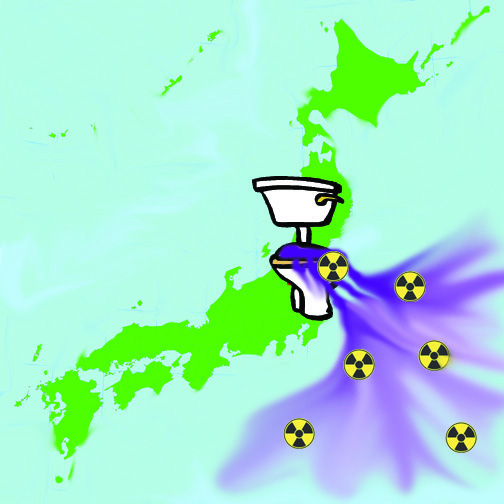
Experts have reaffirmed the inevitable radioactive pollution to be caused by the dumping of nuclear-contaminated water from the Fukushima nuclear plant into the Pacific Ocean after Japan on Wednesday initially approved the discharge plan.
They demanded the Japanese government to stop pressuring those opposed to the plan and to truly listen to concerns from domestic public and international community, as a 30-day public comment period will finally determine the fate of the plan.
The Japanese government and Tokyo Electric Power Company (TEPCO) haven’t conducted a comprehensive environmental impact assessment as required by international law, Shaun Burnie, a senior nuclear specialist at Greenpeace, a global environmental protection organization, told the Global Times.
Their assessment made fundamental mistakes in radiation protection by ignoring the evidence that many different radionuclides would be discharged from the Fukushima nuclear power plant. For example, how much radioactivity in total is planned to be discharged has not been provided,” Burnie pointed out.
“The contaminated water contains radioactive cesium, strontium, tritium and other radioactive substances, which could be incorporated and concentrated in marine biota and end up in the bodies of humans. Some could cause damage to DNA, while others result in higher risks of diseases such as leukemia and blood cancer,” said Burnie.
“To assess the consequences of the tank releases, we need a full accounting of what isotopes are left in each tank after any secondary treatments. This is not just for the nine isotopes currently reported but for a larger suite of possible contaminants, such as plutonium,” explained Burnie. The expert added that since different radionuclides behave differently in the environment, models of tritium’s rapid dispersion and dilution in the ocean cannot be used to assess the fate of other potential contaminants.
Some isotopes are more readily incorporated into marine biota or seafloor sediment, said Burnie. For example, the biological concentration factor for fish for carbon-14 is up to 50,000 times higher than for tritium. Cobalt-60 is up to 300,000 times more likely to end up associated with seafloor sediment.
Also, the discharge could in reality continue for many decades longer than the period of 30 years claimed by the Japanese government – potentially for the rest of this century and beyond, Burnie noted.
Although the Japanese government and TEPCO agreed in 2015 that the consent of the Fukushima Fishermen’s Association would be a condition for any future discharges, they are trying to pressure those opposed to say yes, said Burnie, encouraging efforts in Japan and the international community to continue to stop the unlawful and unjustified dumping plan.
Magnitude 6.0 quake shakes Japan’s east and northeast
https://www.japantimes.co.jp/news/2022/05/22/national/earthquake-ibaraki-fukushima/An earthquake with a preliminary magnitude of 6.0 struck Fukushima and other prefectures in Japan’s east and northeast on Sunday, but there was no threat of a tsunami, the Meteorological Agency said.
There were no immediate reports of injuries or serious property damage following the quake, which occurred around 12:24 p.m.
The quake’s magnitude was later revised upward from the initial estimate of 5.8, the agency said.
The quake registered lower 5 on the Japanese seismic intensity scale to 7 in the city of Iwaki in Fukushima, according to the agency. Its focus was at a depth of about 30 kilometers in the Pacific off Ibaraki Prefecture.
The quake registered 4 in some other parts of Fukushima and 3 in the neighboring prefectures of Miyagi, Yamagata, Ibaraki, Niigata and Tochigi.
No abnormalities were found at the Tokai No. 2 nuclear power plant on the coast of Ibaraki or at the Fukushima No. 1 and No. 2 nuclear power plants, their operators said.
There were also no major transport disruptions. JR East said it briefly suspended services on a section of the Tohoku Shinkansen line between Fukushima and Miyagi prefectures.
Tritium isn’t harmless — Beyond Nuclear International

Dumping Fukushima’s radioactive water is one of many wrong options
Tritium isn’t harmless — Beyond Nuclear International Japan plan to dump tritiated water into the ocean comes with big risks https://wordpress.com/read/feeds/72759838/posts/4028994254
On May 18, Japan’s Nuclear Regulation Authority gave its initial approval for Tokyo Electric Power to release radioactive water from the destroyed Fukushima nuclear power plant into the Pacific Ocean, claiming that there are no safety concerns. But science disagrees with this conclusion. In a September 2019 blog entry, now updated by the author, Dr. Ian Fairlie looks at the implications of dumping largely tritiated water into the sea and whether there are any viable alternatives.
By Ian Fairlie
At the present time, over a million tonnes of tritium-contaminated water are being held in about a thousand tanks at the site of the Fukushima Daichi nuclear power station in Japan. This is being added to at the rate of ~300 tonnes a day from the water being pumped to keep cool the melted nuclear fuels from the three destroyed reactors at Fukushima. Therefore new tanks are having to be built each week to cope with the influx.
These problems constitute a sharp reminder to the world’s media that the nuclear disaster at Fukushima did not end in 2011 and is continuing with no end in sight.
Recently TEPCO / Japanese Government have been proposing to dilute, then dump, some or all of these tritium-contaminated waters from Fukushima into the sea off the coast of Japan. This has been opposed by Japanese fishermen and environment groups.
There has been quite a media debate, especially in Japan, about the merits and demerits of dumping tritium into the sea.
Many opinions have been voiced in the debate: most are either incorrect or uninformed or both. This post aims to rectify matters and put the discussion on a more sound technical basis.
- TEPCO / Japanese Government have argued that, as tritium is naturally-occurring, it is OK to discharge more of it. This argument is partly correct but misleading. It is true that tritium is created in the stratosphere by cosmic ray bombardment, but the argument that, because it exists naturally, it’s OK to dump more is false. For example, dioxins, furans and ozone are all highly toxic and occur naturally, but dumping more of them into the environment would be regarded as anti-social and to be avoided.
- TEPCO / Japanese Government have argued that it is safe to dump tritium because it already exists in the sea. Yes, tritium is there but at low concentrations of a few becquerels per litre (Bq/l). But the tritium concentrations in the holding tanks at Fukushima are typically about a megabecquerel per litre (MBq/l). In layman’s terms, that’s about a million times more concentrated.
- TEPCO / Japanese Government have argued coastal nuclear plants routinely dump water that contains tritium into the ocean. Yes, this does (regrettably) occur as their cooling waters become tritiated during their transits of reactor cooling circuits. But two wrongs do not make a right. Moreover, the annual amounts are small compared with what is being proposed at Fukushima. A one GW(e) BWR reactor typically releases about a terabecquerel (trillion Bq) of tritium to sea annually. But Fukushima’s tanks hold about one petabecquerel (PBq or a thousand trillion Bq) of tritium – that is, a thousand times more. A much bigger problem.
- Readers may well ask where is all this tritium coming from? Most (or maybe all) the tritium will come from the concrete structures of the ruined Fukushima reactor buildings. After ~40 years’ operation they are extremely contaminated with tritium. (Recall that tritium is both an activation product and a tertiary fission product of nuclear fission.) And, yes, this is the case for all decommissioned (and by corollary, existing) reactors: their concrete structures are all highly contaminated with tritium. The older the station, the more contaminated it is. In my view, this problem constitutes an argument for not building more nuclear power stations: at the end of their lives, all reactor hulks will remain radioactive for over 100 years.
- What about other radioactive contaminants? Reports are emerging that the tank waters also remain contaminated with other nuclides such as caesium-137 and especially strontium-90. This is due to the poor performance of Hitachi’s Advanced Liquid Processing System (ALPS). Their concentrations are much lower than the tritium concentrations but they are still unacceptably high.
For example, on 16 October 2018, the UK Daily Telegraph stated:
“Tokyo Electric Power Co (Tepco) which runs the plant, has until recently claimed that the only significant
contaminant in the water is safe levels of tritium, which can be found in small amounts in drinking water, but is dangerous in large amounts. The [Japanese] government has promised that all other radioactive material [apart from tritium] is being reduced to “non-detect” levels by the sophisticated (ALPS).
“However documents provided to The Telegraph by a source in the Japanese government suggest that the ALPS has consistently failed to eliminate a cocktail of other radioactive elements, including iodine, ruthenium, rhodium, antimony, tellurium, cobalt and strontium.
“That adds to reports of a study by the regional Kahoko Shinpo newspaper which it said confirmed that levels of iodine-129 and ruthenium-106 exceeded acceptable levels in 45 samples out of 84 in 2017. Iodine 129 has a half-life of 15.7 million years and can cause cancer of the thyroid; ruthenium 106 is produced by nuclear fission and high doses can be toxic and carcinogenic when ingested.
In late September 2017, TEPCO was forced to admit that around 80 per cent of the water stored at the Fukushima site still contains radioactive substances above legal levels after the Ministry of Economy, Trade and Industry held public hearings in Tokyo and Fukushima at which local residents and fishermen protested against the plans. It admitted that levels of strontium 90, for example, are more than 100 times above legally permitted levels in 65,000 tons of water that has been through the ALPS cleansing system and are 20,000 times above levels set by the government in several storage tanks at the site.”
So what is to be done?
First of all, the ALPS system has to be drastically improved. After that, some observers have argued that, ideally, the tritium should be separated out of the tank waters. Some isotopic tritium removal technologies have been proposed, for example by the International Atomic Energy Agency, but the picture is complicated. The only operating facility I’m aware of, is located at Darlington near Toronto in Canada, though secret military separation facilities may exist in the US or France.
However the Darlington facility was extremely difficult and expensive to construct (~12 years to build and to get working properly), and its operation consumes large amounts of electricity obtained from the Darlington nuclear power station nearby. Its raison d’ȇtre is to recover very expensive deuterium for Canadian heavy water reactors.
Other proposed remedies will probably be more expensive. One problem is basic physics. The tritium is in the form of tritiated water, which is effectively the same as water itself, so that chemical separation or filtration methods simply do not work.
Another problem is inefficiency: with isotope separation, one would have to put the source hydrogen through thousands of times to get even small amounts of separated non-radioactive hydrogen. A third problem is that hydrogen, as the smallest element, is notoriously difficult to contain, so that gaseous tritium emissions would be very large each year.
None of these technologies is recommended as a solution for Japan: any such facility would release large amounts of tritium gas and tritiated water vapor to air each year, as occurs at Darlington. Tritium gas is quickly converted to tritiated water vapor in the environment. The inhalation of tritiated water vapor from any mooted Japanese facility would likely result in higher collective doses than the ingestion of tritiated sea food, were the tritium to be dumped in the sea.
I recommend neither of these proposed solutions.
There are no easy answers here. Barring a miraculous technical discovery which is unlikely, I think TEPCO/Japanese Government will have to buy more land and keep on building more holding tanks to allow for tritium decay to take place. Ten half-lives for tritium is 123 years: that’s how long these tanks will have to last – at least.
This will allow time not only for tritium to decay, but also for politicians to reflect on the wisdom of their support for nuclear power.
Japan OKs plan to release Fukushima nuclear plant wastewater
Japan’s nuclear regulator has approved plans by the operator of the wrecked Fukushima nuclear plant to release its treated radioactive wastewater into the sea next year, saying the outlined methods are safe and risks to the environment minimal
By Mari Yamaguchi Associated Press, May 18, 2022,
………. There is still concern in the community and neighboring countries about the potential health hazards of the release of the wastewater that includes tritium — a byproduct of nuclear power production and a possible carcinogen at high levels.
The government and TEPCO say more than 60 isotopes selected for treatment can be lowered to meet safety standards, except for tritium, but that it is safe if diluted. Scientists say impact of long term low-dose exposure to the environment and humans are unknown, and that tritium can have a bigger impact on humans when consumed in fish than in water.
,,,,,,,,,, Under the plan, TEPCO will transport water that has been treated to below releasable levels through a pipeline from the tanks to a coastal facility, where the water is diluted with seawater.
From there, the water will enter an undersea tunnel to be discharged at a point about 1 kilometer (0.6 mile) from the plant to ensure safety and minimize the impact on local fishing and the environment, according to TEPCO.
The plan will become official after a 30-day public review, a formality that is not expected to overturn the approval.
………..The contaminated water is being stored in about 1,000 tanks at the damaged plant, which officials say must be removed so that facilities can be built for its decommissioning. The tanks are expected to reach their capacity of 1.37 million tons next year — slower than an earlier estimate of later this year……….. https://abcnews.go.com/Technology/wireStory/japan-oks-plan-release-fukushima-nuclear-plant-wastewater-84800836
1 This Month

of the week – Shut Down Drone Warfare!


Tell the Ukrainian Government to Drop Prosecution of Peace Activist Yurii Sheliazhenko

Petition to revoke the licensing of the Near Surface Nuclear Disposal Facility (NSDF) at Chalk River. https://www.ourcommons.ca/petitions/en/Petition/Details?Petition=e-7247
To see nuclear-related stories in greater depth and intensity – go to https://nuclearinformation.wordpress.com
-
Archives
- April 2026 (103)
- March 2026 (251)
- February 2026 (268)
- January 2026 (308)
- December 2025 (358)
- November 2025 (359)
- October 2025 (376)
- September 2025 (257)
- August 2025 (319)
- July 2025 (230)
- June 2025 (348)
- May 2025 (261)
-
Categories
- 1
- 1 NUCLEAR ISSUES
- business and costs
- climate change
- culture and arts
- ENERGY
- environment
- health
- history
- indigenous issues
- Legal
- marketing of nuclear
- media
- opposition to nuclear
- PERSONAL STORIES
- politics
- politics international
- Religion and ethics
- safety
- secrets,lies and civil liberties
- spinbuster
- technology
- Uranium
- wastes
- weapons and war
- Women
- 2 WORLD
- ACTION
- AFRICA
- Atrocities
- AUSTRALIA
- Christina's notes
- Christina's themes
- culture and arts
- Events
- Fuk 2022
- Fuk 2023
- Fukushima 2017
- Fukushima 2018
- fukushima 2019
- Fukushima 2020
- Fukushima 2021
- general
- global warming
- Humour (God we need it)
- Nuclear
- RARE EARTHS
- Reference
- resources – print
- Resources -audiovicual
- Weekly Newsletter
- World
- World Nuclear
- YouTube
-
RSS
Entries RSS
Comments RSS
 nuclear-news