Shortage of workers at Fukushima – TEPCO fudges the numbers
NHK – TEPCO over-reports number of Fukushima workers http://www.youtube.com/watch?feature=player_embedded&v=Voqq-DYQ48k
NHK: Concerns rising at Fukushima plant — 16,000 workers have quit, ‘severe working conditions’ blamed (VIDEO) http://enenews.com/nhk-concerns-rising-at-fukushima-plant-16000-workers-have-quit-severe-working-conditions-blamed-video
November 5th, 2012
Title: TEPCO over-reports number of Fukushima workers
Source: NHK
Date: Nov. 5, 2012
“Concerns are rising over whether Tepco has secured enough workers to decommission the Fukushima Daiichi nuclear power plant”
[…] NHK found through an interview with TEPCO officials that only 8,000 workers are registered for the job, as of last month.
Earlier, the utility said there would be no manpower shortage as it had secured about 24,000 workers.
But this figure represents the total number of people who have worked at the crippled plant since the accident on March 11 last year.
16,000 workers have already quit the job. Many of them left due to severe working conditions. […]
USA pressure on Japan to keep with nuclear energy
 U.S. needs Japan to remain nuclear, US expert says Relations in region not likely to change with Obama or Romney, even in China tiesJapan Times, By TAKASHI KITAZUME, 3 Nov 12 A “zero-nuclear” Japan will be a serious concern for the United States as its key ally both from economic and security standpoints, the chief of an influential U.S. think tank said at a recent seminar on Japan-U.S. relations.
The policy set out in September by Prime Minister Yoshihiko Noda’s Cabinet seeking to phase out nuclear power generation in Japan by the end of the 2030s — in response to strong anti-nuclear sentiments in the country following the triple meltdowns at Tokyo Electric Power Co.’s Fukushima No. 1 Nuclear Power Plant in March 2011 — is not viable given Japan’s vast economic needs, said John Hamre, president and CEO of the Center for Strategic and International Studies in Washington.
Hamre, a former deputy U.S. defense secretary, and his CSIS colleague Michael Green were speaking at a seminar organized by the Keizai Koho Center on Oct. 25 to discuss American policy on East Asia ahead of the U.S. presidential election as well as the imminent change in leadership in China.
Nuclear power generation in Japan over the past four decades has been an important part of Japan’s economic success that provided “a strong, reliable supply of base energy” for the historically energy-poor country, Hamre said.
While he said he understood that the Fukushima crisis shook people’s confidence in nuclear power — just as the 1979 Three Mile Island incident did for Americans — he noted there is “too much of a romantic idea about alternative energy in this country as a substitute for nuclear power.”
The Democratic Party of Japan-led government’s policy does not include a specific road map to achieve the goal, but assumes that renewable sources like wind and solar power will account for a greater portion of the nation’s energy mix in coming decades.
 Citing U.S. experience in wind and solar power generation, Hamre said the low efficiency and output of these sources that rely on natural conditions will not “replace the base capacity of nuclear power generation.”……
Hamre said. “There can’t be any romanticism about alternative energy. If you’re going to be a modern, sophisticated economy, you have to address this question of making nuclear power a legitimate source of energy.”
Hamre also said the policy poses a security concern from the viewpoint of international control for nonproliferation of nuclear materials…..
If Japan is to give up nuclear energy — and if nuclear power is to wither in the U.S. due to competition with cheap natural gas and in Europe as in the case of Germany — “the countries that have given us the security system are going to diminish, and who’s going to replace them?” he said. “Americans cannot afford from a security standpoint to have Japan abandon nuclear power. It’s too important to us.”.….. http://www.japantimes.co.jp/text/nb20121103d1.html
Japan’s leaders cave in to pressure: will keep nuclear power
Japan’s leaders give up on quitting nuclear power Although Japan’s 2011 Fukushima Daiichi nuclear disaster set much of the public against nuclear power, politicians are not convinced. Christian Science Momitor By Gavin Blair, Correspondent / November 5, 2012 TOKYO In mid-September, Japan said it would close all 50 of its nuclear reactors by “the end of the 2030s.”
Days later, the administration backtracked in the face of opposition from the main business lobby and some senior lawmakers in Prime Minister Yoshihiko Noda’s own Democratic Party of Japan (DPJ). Although the 2011 Fukushima Daiichi nuclear disaster has profoundly increased the public’s antipathy toward nuclear power, politicians have yet to be convinced.

“The majority of Japanese people are now against nuclear power, but none of the major political parties are listening to them,” Continue reading
Earthquake fault under Oi nuclear reactor is definitely active
 Gov’t Nuclear Expert: Immediately halt Japan’s only 2 operating reactors — “It’s certain there’s an active fault” http://enenews.com/govt-nuclear-expert-immediately-halt-japans-only-two-operating-reactors-its-certain-there-is-an-active-fault
November 4th, 2012
Title: Panel at odds over fault at Oi nuke plant Source: Kyodo Date: Nov. 5, 2012
 A fault running under the Oi nuclear plant in Fukui Prefecture is definitely active, an expert on a Nuclear Regulation Authority panel investigating the compound’s safety said Sunday, as other members continued to debate the potential danger.
Toyo University professor Mitsuhisa Watanabe is calling for the immediate halt of two reactors at the plant, the only nuclear facility reactivated since the Fukushima disaster last year, arguing evidence points to an active fault.
“It’s certain there is an active fault. Operations should be stopped and another investigation should be conducted” at the Oi plant, Watanabe said. […]
Haphazard storage of radioactive rubble in Japan
local officials are breaking the law by failing to inform residents and ensure the sites are properly monitored.
Koriyama’s case illustrates that much related to nuclear power – and its very powerful business interests – remains hidden from an increasingly distrustful public.
Laws don’t require signs to be posted at these sites or ground water nearby to be monitored
“I’m very angry,” “The city isn’t protecting us.”
 Japan’s nuclear dilemma: What to do with all that nuclear waste?
Japanese citizens are balking at the lack of information and supervision of waste stored in public places, such as playgrounds. By Winifred Bird | Christian Science Monitor, 5 Nov 12, The small sandy square in front of Yasushi Takemoto’s apartment in Koriyama, a city of 328,000 about 150 miles north of Tokyo , looks like a normal public park. On a recent weekday morning, a group of children played on the swings while the retired dentistry professor strolled under the trees.
Beneath the soil in one unmarked, unfenced corner, however, lie hundreds of bags packed with radioactive dirt, sludge from drainage ditches, and other contaminated debris. Continue reading
Active fault under Oi nuclear power plant – restart decision is postponed
Decision on fault under Oi nuclear plant deferred http://www.yomiuri.co.jp/dy/national/T121104002958.htm Jiji Press, 5 Nov 12Nuclear regulators deferred a decision Sunday as to whether an active fault runs under Kansai Electric Power Co.’s Oi nuclear power plant in Fukui Prefecture.
Outside experts who participated in the Nuclear Regulation Authority’s on-site inspection of the plant Friday were divided in their evaluations of whether a crush zone underneath the plant is an active fault. The authority decided to hold another meeting Wednesday.
Mitsuhisa Watanabe, a professor at Toyo University, said he was certain there is an active fault under the Oi plant. But Norio Shigematsu, a research scientist at the National Institute of Advanced Industrial Science and Technology, and Atsumasa Okada, a professor at Ritsumeikan University, said it would be premature to draw a conclusion and called for further surveys.
If the authority determines the crush zone is an active fault, the Oi plant’s No. 3 and No. 4 reactors, currently the only active reactors in Japan, would face a possible shutdown.
The crush zone runs directly under a seawater intake channel to cool the No. 3 and No. 4 reactors in the event of emergencies. If the crush zone moves in an earthquake, the emergency system could become unavailable. In an interim report to the government, Kansai Electric said there are no data suggesting the crush zone is an active fault.
The reactors were brought back online in July. The rest of the country’s 50 reactors remain idled in the wake of the accident at Tokyo Electric Power Co.’s Fukushima No. 1 nuclear power plant.
Japan’s nuclear watchdog members funded by nuclear industry
 Atomic industry bankrolls Japan’s nuclear watchdog RT 04 November, 2012 Members of Japan’s nuclear watchdog who are charged with drafting nuclear safety rules have received sizable funds from the atomic industry. The reports raise concerns that regulations may be diluted after last year’s Fukushima nuclear disaster. Continue reading
Japan might shut down its only operating nuclear reactor
 AP: Japan’s only operating nuclear power plant may be closed http://enenews.com/ap-japans-only-operating-nuclear-reactor-may-be-closed November 2nd, 2012
NHK, Nov. 2: Japan’s Nuclear Regulation Authority ha surveyed the country’s only operating nuclear power plant to determine whether a seam under the facility is an active fault. The authority says it may ask the Ohi plant’s operator — Kansai Electric Power Company — to suspend operations, depending on the survey results.
By 2014, Fukushima victims lose right to claim for compensation
 Tepco has the right to reject compensation in 2014 http://fukushima-diary.com/2012/11/tepco-has-the-right-to-reject-compensation-in-2014/ by Mochizuki November 2nd, 2012 · Fukushima governor Sato asked Tepco not to claim for the right of extinctive prescription for compensation.
According to the civil code, Fukushima victims will lose the right to claim for the compensation from Tepco 3 years after 311 if Tepco claims for extinctive prescription.
Tepco president Hirose commented, it is difficult to make a statement about that yet.
In Chernobyl, major symptoms started appearing 4 years later after the accident…Tepco paid only 30,000 yen for 200 million yen of compensation claim
Japan sets 30 Km radius evacuation zones for nuclear accidents
(I understand that the USA evacuation zones have a lower radius. 10 km? – C.M. )
N-accident zones set at 30-km radius / NRA decides to use IAEA standards The Yomiuri Shimbun, 2 Nov 12 The Nuclear Regulation Authority on Wednesday issued new guidelines to establish 30-kilometer-radius zones in which intensive disaster-prevention measures will be taken in preparation for a serious nuclear accident.
About 4.8 million people in 135 municipalities are in these zones and will need particular protection under the new guidelines. Previously, only 45 municipalities were affected.
In a simulation released by the NRA on Oct. 24, the spread of radioactive substances from the nation’s nuclear power plants was recorded beyond the 30-kilometer radius in some cases.
The NRA, however, decided not to expand the key zones beyond the 30-kilometer mark, sticking to the standards of the International Atomic Energy Agency.
Within this year, the NRA will set such standards as radiation levels to determine at what level it would be necessary to evacuate residents.
Local governments, which could be affected in a nuclear plant disaster, will draw up disaster-prevention plans by the end of March….. http://www.yomiuri.co.jp/dy national/T121031003759.htm
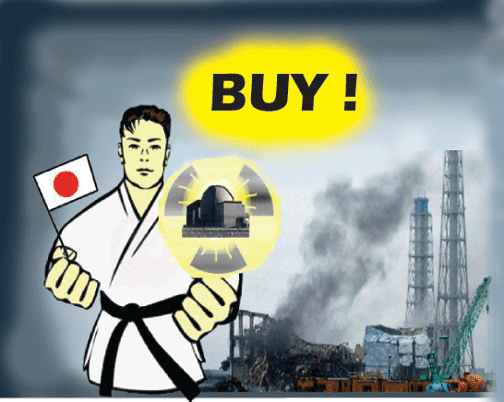
Hitachi, desperate for nuclear sales, will own Britain’s nuclear power enterprise!
 Masaharu Hanyu, head of Hitachi’s nuclear division, hinted that the Japanese conglomerate had little choice but to win business abroad.
Hitachi enters Britain’s nuclear sector TOKYO, Oct. 31 (UPI) –– Japan’s Hitachi Ltd. will build up to six new nuclear reactors in the United Kingdom as part of its agreement to acquire Horizon Nuclear Power from German energy companies RWE and
E.ON.
The $1.1 billion deal announced this week propels Hitachi into the “new and uncomfortable” role as the owner of an entire atomic-power enterprise instead of just a contract reactor builder, says a report in the Financial Times.
Domestically, in the wake of the March 2011 Fukushima nuclear disaster, Japan aims to phase out nuclear power by 2040. Continue reading
Nuclear worker takes legal action against TEPCO, for radiation negligence
 “So I decided I’ve had enough of this unjust treatment. That’s why I decided to come forward,”
 Plant worker: Radiation injuries during crisis at Japan nuke plant not mishap, files complaint Fox News,October 31, 2012 Associated Press IWAKI, Japan – The operator of a Japanese nuclear plant that went into a tsunami-triggered meltdown knew the risks from highly radioactive water at the site but sent in crews without adequate protection or warnings, a worker said in a legal complaint. Continue reading
Tepco will make all 100,000 employees work at Fukushima annually
Report: 100,000 Tepco employees being sent to Fukushima in 2013 http://enenews.com/100000-tepco-employees-expected-to-go-to-fukushima-in-2013-all-of-companys-workers-to-be-sent
Report: 100,000 Tepco employees being sent to Fukushima in 2013
October 27th, 2012
Oct. 27 ,2012 report in Nikkei with summary translation by Fukushima Diary:
In the mid-term administration plan, Tepco decided to send all of their employees to Fukushima for decontamination from 2013.
They are sent to Fukushima for 2~3 times a year, about 100,000 people in total will go to Fukushima annually.
This is not volunteer, this is obligation.
Google translation of an excerpt from the Nikkei report:
Japan’s nuclear companies desperate to sell nukes overseas
Hitachi shifts focus of nuclear business overseas, Asahi Shimbun October 27, 2012 By TOMOYA FUJITA Hitachi Ltd. is set to acquire Britain’s Horizon Nuclear Power, underscoring the company’s shift of focus to the nuclear plant sector overseas.
The move comes as no surprise as Japan’s other nuclear plant manufacturers are also struggling after last year’s disaster put a potentially permanent halt to domestic construction of new facilities. Continue reading
Fukushima cooling water might be released into ocean
 Tepco: Water used to cool Fukushima reactors could be released into ocean — Outside experts worried http://enenews.com/tepco-water-cool-fukushima-reactors-could-be-released-ocean-experts-worried-about-lasting-impact
October 25th, 2012 Title AP Interview: Japan Nuke Plant Water Worries Rise (PHOTOS)
Source: Associated Press
Author: MARI YAMAGUCHI (Malcolm Foster contributed to this report)
Date: October 25, 2012
Japan’s crippled nuclear power plant is struggling to find space to store [… a]bout 200,000 tons of radioactive water […]
TEPCO is close to running a new treatment system that could make the water safe enough to release into the ocean. […]
Outside experts worry that if contaminated water is released, there will be lasting impact on the environment. […]
TEPCO claims the treated water from this new system is clean enough to be potentially released into the ocean, although it hasn’t said whether it would do that. […]
1 This Month

Read the Public Inquiry Report, the Commissioners’ report, Surrendering Australia: The AUKUS Deception is available to download for free at aukuspublicinquiry.com. Or just watch the replay of the National Press Club Luncheon.



19 November – Webinar – The Reality of Reprocessing
Time: 11:00 AM Pacific Time (US & Canada) / 2:00 PM Eastern / 7:00 PM UK / 8:00 PM CET
Register for the Zoom Event Here



Shut down the radiation-damaged Heysham nuclear reactors now
To see nuclear-related stories in greater depth and intensity – go to https://nuclearinformation.wordpress.com

Say No to NASA’s Reckless Nuclear Reactor on the Moon
Say No to NASA’s Reckless Nuclear Reactor on the Moon
-
Archives
- November 2026 (109)
- October 2026 (302)
- September 2026 (339)
- August 2026 (330)
- July 2026 (355)
- June 2026 (287)
- May 2026 (306)
- April 2026 (356)
- March 2026 (251)
- February 2026 (267)
- January 2026 (308)
- December 2025 (358)
-
Categories
- 1
- 1 NUCLEAR ISSUES
- business and costs
- climate change
- culture and arts
- ENERGY
- environment
- health
- history
- indigenous issues
- Legal
- marketing of nuclear
- media
- opposition to nuclear
- PERSONAL STORIES
- politics
- politics international
- Religion and ethics
- safety
- secrets,lies and civil liberties
- spinbuster
- technology
- Uranium
- wastes
- weapons and war
- Women
- 2 WORLD
- ACTION
- AFRICA
- Atrocities
- AUSTRALIA
- Christina's notes
- Christina's themes
- culture and arts
- Events
- Fuk 2022
- Fuk 2023
- Fukushima 2017
- Fukushima 2018
- fukushima 2019
- Fukushima 2020
- Fukushima 2021
- general
- global warming
- Humour (God we need it)
- Nuclear
- RARE EARTHS
- Reference
- resources – print
- Resources -audiovicual
- Weekly Newsletter
- World
- World Nuclear
- YouTube
-
RSS
Entries RSS
Comments RSS

